
Politics
After Watching Their Mums Fight To ‘Have It All’, Gen Z Women Would Rather Be Dads


One night at dinner, our friend admitted she hadn’t been happy for a long time. She was the breadwinner, the homeowner, the manager of all domestic tasks despite being in a relationship. She’d hoped it would even out, but it hadn’t.
Her boyfriend was desperate for children, but she wasn’t so sure. She would have to carry and look after the baby, hold the majority of the responsibility to keep the child alive, and pay the rent.
What he brought to the relationship didn’t seem like enough in exchange. A few weeks later, they broke up.
Her story is part of a wider trend: among childless 18-34-year-olds who want children (and don’t already have them), there are about 5 million more men than women. But men in this demographic are also struggling to attain economic stability, complete college and build meaningful social connections.
That gender gap in aspirations for parenthood, and what’s driving it, could deepen growing public concern about America’s declining birthrate.

Dimensions via Getty Images
While aspirations for fatherhood are most pronounced among conservative young men, according to the Young Men’s Research Initiative, having children seems to be an important part of how most men see success in their future.
There’s been extensive reporting on Gen Z men and masculinity and on pronatalist movements and declining birthrates. As Gen Z women who research our peers, we unpack where the Gen Z parenthood divide is coming from and how we think it could be bridged.
Spoiler: if having children meant carrying the responsibilities of our dads, we think we’d be on board, too.
Motherhood doesn’t feel ‘cool’ anymore
The “motherhood penalty” remains stubbornly present: in nearly every country, women’s employment fails to return to pre-birth levels within a decade of having children, while men get an employment boost in their first year of fatherhood.
Then there’s everything that follows: the physical risks of pregnancy (especially for Black women) and the mental load and worry labour that fall disproportionately to mothers.
Meanwhile, the opportunity cost of mothering has increased: sure, the cost of child care significantly outpacing inflation has made having kids more expensive, but so has the value of what’s being given up with motherhood.
The trade-off between our earning potential and providing care labour has become more deeply imbalanced. We’ve broken the village model of care – nearby grandparents to provide child care, and children who one day return the favour – and now we buy it back through apps and care homes.
Motherhood seems antithetical to what we’ve learned about bodily autonomy, particularly at a moment when abortion care is being rolled back and women’s rights are retreating worldwide. Encounters with bodily violation have become normalised, from getting IUDs inserted without adequate pain management to the one in three of us globally who have been assaulted.
Against that backdrop, the thought of becoming pregnant in a world that continues to deprioritise women’s health feels like accepting the oldest lie: women are only as essential as their wombs, and inferior, while men control the creation of life.
With renewed examinations of “my body, my choice,” women are asking real questions about what it really means for them to carry a pregnancy and sign up for a lifetime of parenthood.

bymuratdeniz via Getty Images
Despite the progress by millennial fathers, who are participating more actively in their children’s lives than men in previous generations, cultural signals keep pulling men in the other direction. Just this February, one of the masculinity movement’s greatest allies, Scott Galloway, recently argued that fathers don’t need to be there for the first few months of a child’s life.
Hearing this kind of rhetoric can make motherhood seem even more isolating – and as attitudes on gender equality seem to be moving backward, motherhood feels more like a trap.
Many of us have guarded against maternal tendencies as a result. From childhood, girls are judged as to whether they’d make good mothers: are they caring enough? Kind enough to their dolls? Ambitious, but not too ambitious? For many of us, being complimented on our emotional skills or gentleness with a baby feels uncomfortable compared to being complimented on our personality or smarts.
We think: it feels so belittling, like the saying we often hear from older generations about “making someone a very lucky husband one day”. For many Gen Z women, motherhood has come to feel diminishing – offering a fraction of the possibility of who we can be as women.
Watching our mothers “have it all” didn’t inspire us
Our mothers were among the first generation of women who could have both a career and children. But coupling careers with unchanged domestic duties at home meant a “second shift” that still constrained women’s professional freedom. Despite some improvement, women’s lives have never recalibrated fully. And we’re increasingly doubtful an equilibrium will ever be reached.
In heterosexual marriages where the female partner is the breadwinner, she still does more domestic and caregiving work than her male counterpart – at the expense, of course, of her leisure time. And even when the female partner is the only earner, she still spends more time on housework than her male partner.
But that data only accounts for what’s on the surface. It doesn’t capture the cognitive labour taking up someone’s headspace at all times – what economists refer to as the “mental load”. Women still take on a disproportionate amount of the physical and cognitive labour involved in executing almost every domestic task.
These tasks are unremunerated work: knowing every teacher’s name, planning out every detail of child care when travelling for work, or scheduling routine doctor’s appointments. The energy someone exerts cognitively and physically on maintaining a household comes at a cost, diminishing their focus at work or ability to relax properly.
For too long, gender essentialism – the assumption that women simply care more about domestic and caregiving labour, are naturally better at it or have higher standards than men – has provided a convenient cover for men’s weaponised incompetence. It’s telling that 42% of mothers look online for parenting advice monthly, compared to 22% of fathers – with just over half of dads saying they’ve even visited any such sites.
Gen Z women are desperately looking for signs that things will be different for us. But nothing is pointing that way. Millennial mothers are as burned-out as ever. And there are signs we might even have it worse, as young men in our generation are notoriously regressing in their perspectives on women’s roles at home: For example, 31% of Gen Z men believe women should “always obey their husbands”. Mothers are extraordinary, but the narrative that they can “do it all” is broken and unrealistic.

Keith Brofsky via Getty Images
One of the most well-known statistics circulating among young women is that marriage benefits men more than women. Whether or not the data fully bear this out, the perception itself is real and consequential: according to one survey, only 32% of women believe that women who get married and have children live fuller, happier lives, compared to 49% of men who believe the same.
There’s a sense that women are draining themselves to provide for men, and our Gen X mothers are warning us not to end up in the same traps they did. With women in the U.S. outpacing men in college completion rates by over 10 percentage points, women today are in a stronger financial position, leaving them more room to negotiate without compromising on what they want from a partner.
Gen Z women already know what motherhood looks like – men don’t seem to
Some might argue that Gen Z women are already parenting pros: after all, we’ve mothered our ex-boyfriends. Many Gen Z couples got a preview of married life during Covid-19, “playing house” for the first time – when women still found themselves defaulting to cleaning up after their partners.
Then there’s the time we spend encouraging our partners to make plans with friends, stay organised and check in on their families. We call this labour “mothering” or “mankeeping” – language that empowers us to name our frustrations, but leaves us hesitant to commit to a future where actual parenthood enters the equation.
This imbalance might stem from the 16% of Gen Z men who are less likely to have noticed that their mothers did more housework. Boys and girls grow up observing the same households, but seeing them differently. Boys aren’t socialised to notice domestic labour the way girls are. Women observe their female role models carefully, with an implicit awareness: One day I will be a woman, so let me learn how to do this. Boys don’t necessarily apply the same lens to their mothers.
There’s also a breadwinner gap: more women than men recall their mother having paid employment, suggesting daughters are more attuned to the double shift, while sons remained insulated from it. The downstream consequences are enormous. If Gen Z men don’t accurately perceive how unequal their own upbringing was, they have no baseline for what “equal” actually looks like – and we’re all stuck in an entrenched cycle of gender inequity.
This coincides with a moment when men’s economic contributions to households are declining, with more men out of employment than women. We are absorbing the fallout of men’s social and economic dislocation. While young men believe that their financial status is a top characteristic for women considering them as a partner, women value kindness and honesty far more. As young women, we expect to share breadwinner status with our future spouses, and we’re looking for partners who can share the care labour.
In fact, there’s a gross mismatch between what women want from men and what men think women want. Online, men’s perception of what women find attractive is constrained by the male gaze: “looksmaxxing” for each other’s approval. Men’s ideas about what makes them desirable are drifting farther from what women actually want – and yet young men increasingly blame women for punishing them for their looks. In reality, we’d take a therapy session over a hammered jaw any day.
For aspiring fathers, here’s some advice
If men want to be parents as much as the data implies, two things need to happen: we need to close the gap between aspiration and preparation for parenthood – and we need a version of fatherhood that absorbs more of the demands of motherhood.
“What I see from speaking to young men is [that] a lot of their thinking around this is just ideas, not necessarily grounded with real-life examples,” Elliott Rae, founder of Parenting Out Loud, a campaign fighting to improve support around men’s caring responsibilities, told HuffPost. “The ideas come from what young men have been told – mainly online – about what their role in family life looks like.”
Scheduling your child’s yearly check-up, learning how to braid hair, writing a grocery list from scratch and knowing how to sit with your child’s broken heart – these are the acts that constitute parenting in practice.
“In a lot of cultures, men don’t do much [of the household labour] – the expectation is on the oldest daughter to do a lot of the housework,” Rae noted, adding that the solution can’t be found in simply encouraging sons to “chip in”, but in raising all children with an equal understanding of what running a household actually involves.
“We should not just encourage sons to do their domestic duty – cook, clean – but show equal treatment with our sons and daughters,” Rae said.
The “aspiration gap” is closable, but it requires rethinking the social contract around parenthood for heterosexual couples. That starts with rethinking masculinity and broadening what it means to “provide” beyond financial contributions to encompass emotional labour, domestic consistency and genuine presence.

Nikola Stojadinovic via Getty Images
“To close the gap between aspiration and action,” Rae argued, “we need to create more spaces for young men to connect and have mentoring relationships with slightly older men – a village of uncles, coaches – to know what it looks like to care, love, and parent within a family.”
We also need an expanded sense of what it means to “protect” beyond physicality – to instead support creating a true sense of safety. How do you create an environment in your home that encourages your child to open up? After all, most fathers want to feel as connected to their children as moms are. Men are instinctively caring, but are too often socialized to repress their nurturing side by the time they reach adulthood – and yet, young women are most excited by communication and kindness in a partner.
There’s also a structural piece. Paternity leave offers more than just an extra pair of hands; it provides a developmental window to enable both partners to feel confident enough to read the signs of what’s needed of them as parents. “It makes a difference who is seen as capable in parenting, and so can split the load,” Rae said. The United States does not have a federal law guaranteeing paid parental leave, making it the only OECD member country, and one of six countries in the world, with no national paid parental leave policy.
Around the world, countries like China, Hungary and South Korea are striving to incentivise marriage and fertility with financial encouragement, to little avail.
Yes, child care costs are exorbitant and a significant barrier to parenthood. However, the solution to the gender divide in parenting aspirations is not purely financial. It’s also social. And countries like Rwanda, which is on track to become the first country with national fatherhood training, and Senegal, which is setting up Schools for Husbands, are paving the way.
Ultimately, if fatherhood looked like what the best fathers actually do – performing the worry labour and the care work, and not just the fun parts – more women might find themselves willing to say yes to becoming parents with men. While we don’t expect men who have not been conditioned to give care to learn overnight, we do hope that those who want to be fathers take the time to learn what active fatherhood and healthy parenting look like.
However, the Gen Z parenthood divergence isn’t a story of women retreating from family life. It’s a story of women who have watched closely and understood exactly what is being asked of them.
We’d love to be dads. Who wouldn’t? We’re just not willing to be mothers and fathers at the same time.


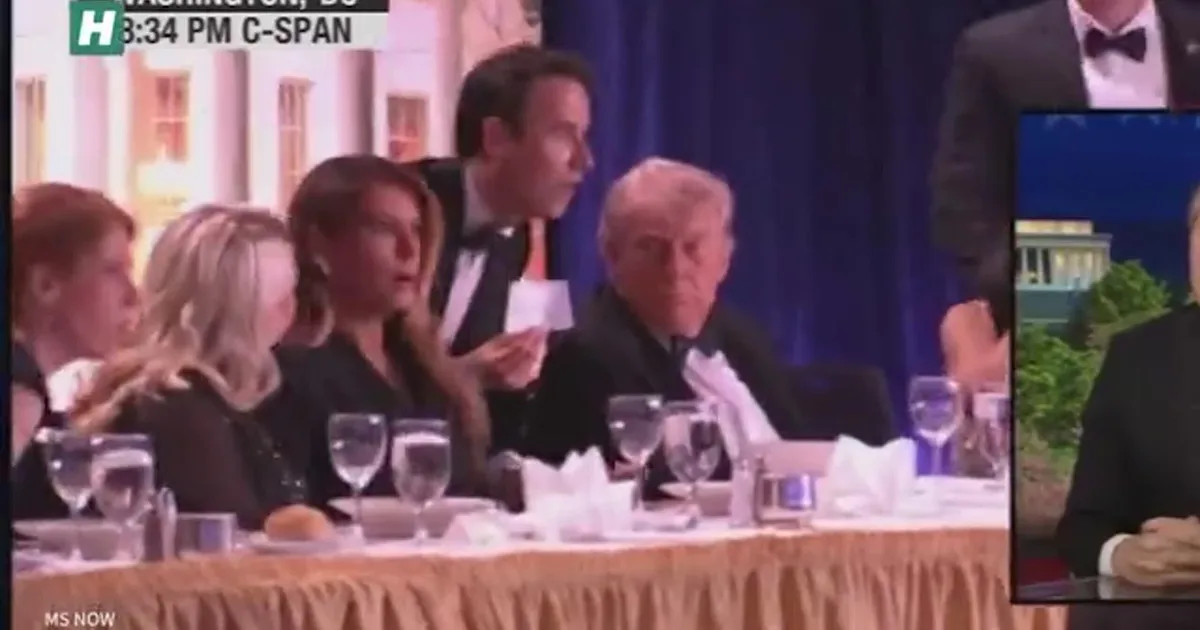
President Donald Trump shared on Truth Social a photo and video footage of a shooter’s attempt to barrel past a security checkpoint at the White House Correspondents’ Dinner.
The video, shared shortly before a hastily convened press conference at the White House on Saturday night, shows a blur of a man running past law enforcement officers standing near magnetometers at the Washington Hilton.
Trump also posted photos of the suspect seen shirtless on the ground with his hands restrained behind his back.
“The man has been captured. They’ve gone to his apartment,” Trump said. He added that the suspect is in his 30s and from California.
“He’s a sick person, a very sick person, and we don’t want things like this to happen,” Trump added.
One law enforcement officer was shot during the incident but was wearing a bulletproof vest.
“The vest did the job. I just spoke to the officer and he’s doing great, great shape,” Trump said at the press conference.
Trump also used the shooting to promote his plans for a new White House ballroom, saying it will be “drone proof” with “bulletproof glass.”
“That’s why the military are demanding it,” Trump said.
“They’ve wanted the ballroom for 150 years, for a lot of different reasons, but today is a little bit different, because we need levels of security that no one has probably ever seen before,” Trump added.
Asked by a reporter how he’s coping following multiple assassination attempts, Trump said at least it hasn’t made him a “basket case.”
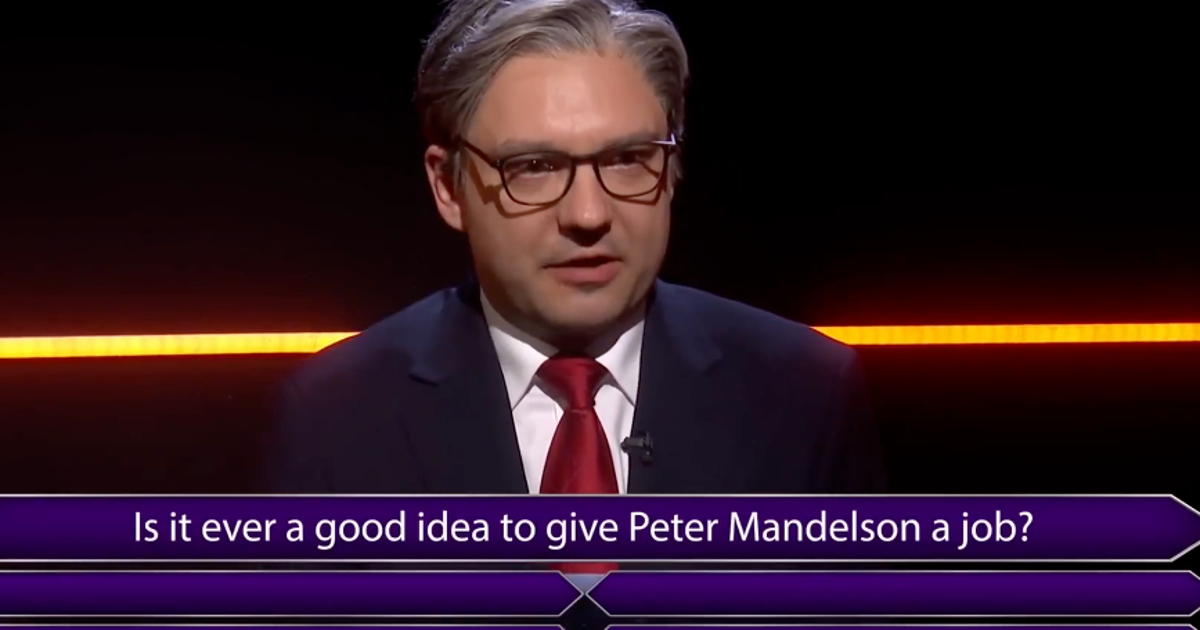
Keir Starmer has been mocked over his decision to appoint Peter Mandelson as the UK’s ambassador to America in a brutal Saturday Night Live UK sketch.
The prime minister was portrayed as a confused and indecisive ‘Who Wants To Remain A Millionaire’ contestant on the Sky TV show.
Asked “is it ever a good idea to give Peter Mandelson a job”, the fake PM is presented with four possible answers.
They are no, of course not, not in a million years, and yes.
Actor George Fouracres, who plays Starmer on the show, says “it’s a tricky one” before saying he wants to ask the audience for their view.
After none of them choose yes, the PM says that has “put a seed of doubt ion my mind” and then asks for two wrong answers to be taken away.
With only “not in a million years” and “yes” left, Starmer says: “Oh gosh, this looks so much easier at home.”
He then adds: “I’m afraid I’m just not being presented with the facts.”
Starmer then asks to phone a friend, who turns out to be Mandelson himself.
After asking to go 50-50 again, and despite being left with only “not in a million years” as a possible answer, the prime minister says: “I have my answer. I know it’s not conventional, but I’d like to actually bring back one of the previous options, because I’m going to go with [yes], final answer.”
Asked if he is totally sure, the PM says: “Oh never.”
When told the correct answer was “not in a million years”, he replies: “It’s clear to me now that was the wrong decision. Would I make the same decision again, knowing what I know now? Quite possibly.”
It is not the first time that SNL has mocked the PM.
Last month, Donald Trump shared a clip from the show in which Starmer was presented as a weak and ineffectual prime minister who is scared of the US president.
Subscribe to Commons People, the podcast that makes politics easy. Every week, Kevin Schofield and Kate Nicholson unpack the week’s biggest stories to keep you informed. Join us for straightforward analysis of what’s going on at Westminster.

Parents who run social media accounts for their kids might want to look away now, as the internet has given its verdict on some of the modern-day parenting ‘trends’ that need to quietly disappear, with some pretty strong opinions being shared.
Here are five of the most popular themes in response to SouthOwn6943′s post asking: “What is a modern parenting trend that needs to die immediately?”
1. ‘Kids’ Instagram accounts’
“Kids Instagram accounts” was the most up-voted response at the time of writing, with over 8,000 people agreeing the parenting trend, where parents manage an Instagram account on their kids’ behalf, needs to go.
It’s perhaps unsurprising this was top of people’s lists, with a growing backlash against sharenting due to fears around children’s safety and the potential for cyberbullying as they grow up.
Parents running social media accounts for their kids in general was also a common bugbear.
“There were a few parents I knew had Facebooks for their kids as online ‘diaries’,” said one commenter. “They were public and shared almost every detail of the kids’ lives up until they either gave up on them or deleted them. Bonkers.”
2. ‘Helicopter parenting’
A helicopter parent is defined as someone who’s closely involved in their child’s life, but in an over-controlling way – especially when it comes to their education.
Another Redditor noted “helicopter parenting and turning every activity into organised competition” should also go, noting it is “robbing kids of important developmental skills and independence”.
Almost 900 people had up-voted their response at the time of writing.
“To add to this, over helping children,” said another commenter. “Very few children now have any problem solving skills. They don’t have any idea how to even begin to tackle any kind of obstacles, nor the resilience to make repeated attempts. And I’m talking about even fairly simple problems like opening a banana independently.”
3. ‘Treating kids like a project to optimise’
Plenty of people had thoughts on Top-Park6991′s comments about parents who tend to treat their kids “like a project to optimise, instead of people who are allowed to be bored, messy, and human” – over 3,800 people up-voted the post.
People noted that parents who push their own dreams on their kids fall into this bracket. One commenter said: “It’s the ‘gardener vs. the carpenter’. We have much less control over who our children become than we think we do.
“If there’s a dandelion seed in the ground it’s not going to become a tulip no matter how hard you try. All you can do is make sure the soil is nourishing so they can be the best damn dandelion in the yard.”
4. ‘Refusing vitamin K for your newborn’
Vitamin K helps our blood to clot and stops bleeding – but newborn babies are born with low levels of it. As a result, some babies can suffer internal bleeding, which can, in rare cases, be fatal.
Every new parent can choose for their baby to receive a shot of vitamin K after birth, but there are some who refuse it. A study noted parents typically do so because of concerns of harm from the injection or a desire to be “natural”.
One nurse noted: “I’ve never seen an infant harmed as a result of a vitamin K shot… but I have seen one die as a result of a brain bleed that could have been prevented with a routine vitamin K injection.” Their comment was up-voted over 3,000 times.
The NHS notes if parents are worried about giving their baby an injection, they can ask to have it administered by mouth instead – but they’ll need further doses.
5. ‘Emotional enmeshment with your kids’
Acting like your child’s friend, rather than their parent, also got the thumbs down from the internet masses. Redditor AlwaysSomethin6722 said: “Your kids aren’t your best friends. They are your kids.”
Some parents might create an enmeshed relationship with their children, where they treat them more like a confidant than a child, which therapist Alex Howard previously labelled as “toxic”. Read more on the signs you were raised in an enmeshed family here.
Another user chimed in: “I’ve had a number of parenting conversations in the past decade and a line I’ve said that always gets a good chuckle out of other parents is ‘I’m not my kids friend, I’ll be that when I can walk in a bar and have a beer with them… and maybe not even that early depending on how they turn out’. It’s amusing to me that it’s amusing to them because that seems ridiculously obvious to me.”
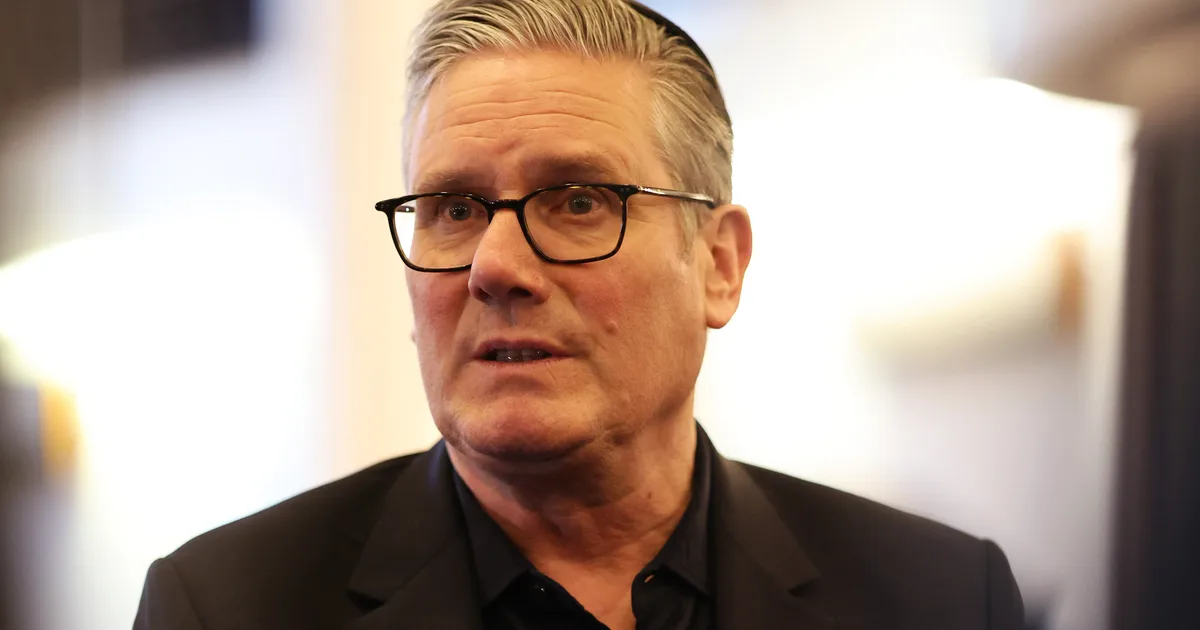
Keir Starmer has insisted he can fight and win the next general election despite the mounting speculation he faces an imminent challenge to his leadership.
The prime minister’s political future has been cast into doubt once again following the latest revelations in the Peter Mandelson scandal.
Starmer sacked Sir Olly Robbins, the top civil servant at the Foreign Office, for not telling him UK Security Vetting had recommended Mandelson not be given clearance to become the UK’s ambassador to Washington.
The PM has admitted appointing the shamed peer to the plum diplomatic role was a mistake and insisted he would not have done so had he known.
Labour is also set to suffer major losses in next month’s elections in England, Scotland and Wales.
That could trigger an attempt to unseat the prime minister, even though his critics remain split on who should take over from him.
But in an interview with the Sunday Times, insisted he had no intention of leaving No.10 any time soon.
Asked if he was planning to stay in post, Starmer said: “Of course. We didn’t wait 14 years to get elected, we didn’t change the Labour Party, we didn’t do all that it entailed to win the election and the mandate for change, not to deliver on it.”
Asked if Labour can win the next election with him at the helm, the prime minister said: “I think we can. I think it’s going to be a very important general election.
“It’s likely to be Labour versus Reform. An election where the defining question is, what is it to be British? An election where what I would call patriotic values of tolerance, decency, live and let live, diversity, are under challenge like we’ve never seen before.”
Starmer also claimed that most Labour MPs remain supportive of him.
On the speculation about his job, Starmer said: “In politics, you get this sort of thing all of the time. There is always talk. What you never hear from are all the people who are supportive, loyal and just want to get on with the job. And that is the vast majority of people in the :arliamentary Labour Party.
“They’re pleased to be in power. They’ve waited a long time to be in power. And they just want to get on with their job. They don’t make a lot of noise about it. They don’t talk to journalists about it. It’s really important that is reflected in these debates.”
Subscribe to Commons People, the podcast that makes politics easy. Every week, Kevin Schofield and Kate Nicholson unpack the week’s biggest stories to keep you informed. Join us for straightforward analysis of what’s going on at Westminster.
Giles Dilnot
This whole saga goes to the heart of the decision making, quality control, fact checking, and judgement within this Labour administration. Mandelson for Starmer, the last man standing in the bloodletting since it all blew up, has gone from Prince of Darkness to Banquo’s Ghost.
—
Tali Fraser
Behind the calls for his resignation lies a quieter hope for some Tories that Sir Keir Starmer limps on, dragging Labour down with him.
—
The priggish PM is worsted by an Anglican official
Andrew Gimson
Starmer’s self-righteousness, and refusal to explain why he sent Mandelson to Washington, have become intolerable.
—
The triple lock just isn’t that big a deal
Alexander Bowen
That really is the failure of British pension policy – not the absence of means-testing, not outsized outflows, not arbitrary locks – is the failure of previous generations to plant trees under whose shade they shall never sit.
—
It’s time to take Green voters seriously
Peter Franklin
If the Left-of-centre vote collapses from Labour to the Greens and the Tory-Reform psychodrama continues to divide the Right, then we be losing more of our heartlands, not winning them back.
—
My vote in the local elections won’t count, but it could be so different
John Oxley
Our electoral system means that perhaps two-thirds of the electorate could find themselves shut out, and there is no opposition to speak of.
—
Croydon is back on track. Now we need to keep it there.
Jason Perry
I’m proud of what we’ve achieved together. But I’m even more focused on what comes next: continuing to rebuild our finances, unlocking further investment, improving our town centre, and making sure every part of Croydon shares in our recovery.
—
Why you should take “voting intention polls” with a pinch of salt
Lord Ashcroft
Some have accused me of artificially inflating the Tories’ in my surveys. I’m not, as what would be the point of producing polls suggesting your party is doing better than it really is? It was to counter such “comfort polling” that I got into the business in the first place.
—
The Conservative argument for a wealth tax
Anakin England
Unequal concentrations of wealth could enable monopoly-like distortions on asset values, interest rates, rents and would end market competition. Reasonably then, there must be a limit on the proportion of wealth held by a minority before it starts to jeopardise normal market function.
—
The Welfare bill is more than twice what we spend on our own defence – that can’t go on
Helen Whately
We have drifted from a culture of “I can because I must” to a culture of “I can’t” — stripping people of agency and turning them into victims. It is time to turn that around. To invest in the defence of the realm over the benefit state. We can, because we must.
The post Our top ten picks of the week appeared first on Conservative Home.
Every now and then, even the most celebrated of A-listers will candidly criticise one of their own films.
Some of the biggest stars in the industry have admitted that they don’t always make the best decisions, and that the movie audiences saw wasn’t the one they thought they were making.
Whether it’s an ill-advised role for a paycheck, a favour for a friend or a passion project that didn’t turn out as expected, even Hollywood royalty are susceptible to bad choices.
Here are 17 stars who have spoken out against some their past films…
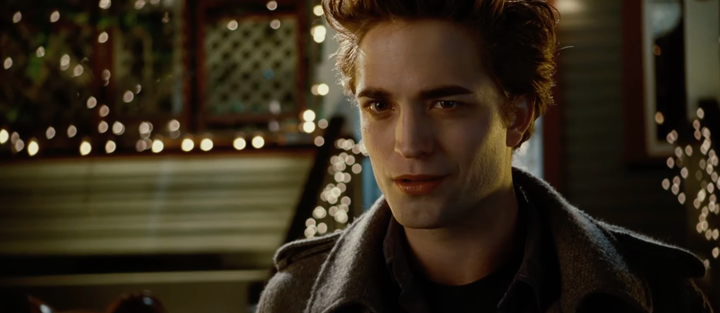
Robert Pattinson

Since the first instalment in the Twilight series premiered in 2008, Robert Pattinson has been outspoken about his distaste for the vampire franchise.
During press junkets, interviews and talk show appearances, the British actor has called the films “strange” and “weird”, as well as questioning if they made sense at all and going as far as comparing the brooding Edward Cullen to “an axe murderer”.
When promoting the first movie, Robert told Empire how much he disliked his iconic vampire character, and how that hatred factored into how he played the role.
“He’s the most ridiculous person who’s so amazing at everything. I think a lot of actors tried to play that aspect. I just couldn’t do that,” he said.
“And the more I read the script, the more I hated this guy, so that’s how I played him, as a manic-depressive who hates himself. Plus, he’s a 108-year-old virgin, so he’s obviously got some issues there.”
Even after the Twilight series ended, Robert continued poking fun at the franchise and his character.
“Twilight is about this guy who finds the one girl he wants to be with, and also wants to eat her. Well not eat her, drink her blood, whatever,” he said in his 2019 Actors on Actors with Jennifer Lopez.
Jennifer Lawrence

Passengers centres around two space travellers who are awoken from induced hibernation 90 years too early while on a voyage across space.
Jen admitted in 2021 that the worst part of the film’s poor reviews was the disappointment felt by her fans, telling The New York Times: “I was like, ‘Oh no, you guys are here because I’m here, and I’m here because you’re here. Wait, who decided that this was a good movie?’”
There was even one A-list name in her social circle who warned her against the project.
“Adele told me not to do it! She was like, ‘I feel like space movies are the new vampire movies’,” she recalled, joking: “I should have listened to her.”
Rosamund Pike

Di Bonaventura/Universal/Kobal/Shutterstock
Rosamund Pike has admitted that an early on-screen appearance very nearly ended her career.
The Gone Girl actor appeared in the 2005 adaptation of the video game Doom alongside Dwayne Johnson (still credited as The Rock) and Karl Urban.
During an appearance on Elizabeth Day’s podcast How To Fail in 2026, Rosamund explained how she was cast in Doom when making Pride & Prejudice, at a time when Ray Winstone was still set to play the lead.
Once she made it onto the set, it didn’t take long for her to discover how out of her depth she was.
“Suddenly, I’m in this film with The Rock, and I realise how utterly ill-equipped I am to be an action star,” she explained. “[There were] macho guys. There were weights on the set. Every time a gun was brought out, it was kind of like a holy relic for the Doom fans.
“I probably could have ended my career. I mean, it was just probably one of the worst films ever made. It was a catastrophe, I think.”
Considering the 18% Rotten Tomatoes score and poor box office taking, she isn’t wrong.
“As I say, I don’t read the reviews, but you get the sense like you are lucky to have survived that one. But then, it wasn’t career-ending for The Rock. Or me, as it turned out,” Rosamund added.
Gary Oldman

Langley Prods/Canal+/Kobal/Shutterstock
Sir Gary Oldman is one of the true acting greats, with roles in iconic films like The Fifth Element, Dracula and Darkest Hour.
But not all his films are classics, and the Oscar winner is well aware of that.
During an interview with the Happy Sad Confused podcast this year, the knighted actor spoke about making the – thankfully, mostly forgotten – Tiptoes alongside Matthew McConaughey and Kate Beckinsale.
The 2002 film came during a tough period in Gary’s life, when he was a newly-single dad in Hollywood, going through a divorce.
“It was a bit of a rough time, and I needed to pay some bills, and I needed some money, and it was an actors’ strike on top of it all, which was a double whammy,” he admitted.
The project went wrong before it even started when the director wanted Gary to play Matthew’s brother.
“There were several [issues]. First of all, I got locked in to doing a voice like that, because I had to sound like Matthew. We were brothers, so somehow, I had to sound like Matthew. So that was that,” he explained. “And then, I’m on my knees… desperate measures, desperate times.” he explained.
It’s not just Tiptoes that Gary isn’t a fan of. Apparently, he also dislikes The Fifth Element, despite it being considered one of the best science fiction films of all time.
In 2014, Gary told Playboy he “couldn’t bear” the movie, admitting as recently as 2025 that he still feels “triggered” by it.
George Clooney

Some of Hollywood’s best-loved actors have taken the role of Batman on the big screen, but there is one A-lister who infamously hated his time as the Caped Crusader.
George Clooney disliked Batman & Robin so much that he feared he had “destroyed the franchise” completely.
The camp classic is often considered the worst Batman film of all time, and has even been called one of the worst comic book films ever made.
“It’s so bad that it actually hurts to watch,” the Ocean’s Eleven star said on The Howard Stern Show in 2020. “You’ll be flipping the channels and it’ll just pop up and I’m like ‘Oh no, no, no’.”
“The truth of the matter is, I was bad in it,” he conceded.
“Akiva Goldsman – who has won the Oscar for writing since then – he wrote the screenplay. And it’s a terrible screenplay, he’ll tell you. I’m terrible in it, I’ll tell you. Joel Schumacher, who just passed away, directed it, and he’d say, ‘Yeah, it didn’t work.’ We all whiffed on that one.”
George even admitted in 2021 that he doesn’t let his wife Amal, watch the 1997 movie.
“There are certain films I just go, ‘I want my wife to have some respect for me,’” he claimed during a Q&A session.
Bill Murray

Rhythm Hues/20th Century Fox/Davis/Kobal/Shutterstock
When Bill Murray signed on to voice animated cat Garfield in the 2004 film, he was under the impression that Joel Coen of Fargo fame had written the script.
Because he believed the No Country For Old Men director was behind the film, Bill went along with making the animated film, despite his reservations.
In fact, Joel Cohen of Cheaper By The Dozen had penned the film, which Bill only found out when he watched it back and wondered why it was so bad.
He recalled to GQ in 2011: “I worked all day and kept going, ‘That’s the line? Well, I can’t say that’. And you sit there and go, ‘What can I say that will make this funny? And make it make sense?’. And I worked.
“I was exhausted, soaked with sweat, and the lines got worse and worse. And I said, ‘OK, you better show me the whole rest of the movie, so we can see what we’re dealing with’.”
He continued: “So I sat down and watched the whole thing, and I kept saying, ‘Who the hell cut this thing? Who did this? What the fuck was Coen thinking?’. And then they explained it to me: it wasn’t written by that Joel Coen.”
Channing Tatum

Paramount/Kobal/Shutterstock
Channing Tatum has publicly gone on record to say he “fucking hates” G.I. Joe: The Rise Of Cobra, a film he starred in back in 2009.
He admitted on The Howard Stern Show that he was forced to appear in the film due to a three-picture contract he had signed with the movie studio Paramount.
“I was pushed into doing that movie,” he claimed. “From Coach Carter, they signed me to a three-picture deal… they give you the contract and they go, ‘Three-picture deal, here you go’. And as a young [actor], you’re like, ‘Oh my god, that sounds amazing, I’m doing that!’.”
Channing hated the script so much he actually turned it down seven times before eventually relenting, admitting that part of the reason he wanted to say no was because he loved the action figures so much as a child, and wanted to play Snake Eyes instead of GI Joe.
He added: “The script wasn’t any good… And I didn’t want to do something that I… was a fan of since I was a kid and watched every morning growing up – and didn’t want to do something that was, one, bad and, two, I just didn’t know if I wanted to be G.I. Joe.”
While he did appear in the sequel, he was, luckily for him, killed off in the first 10 minutes.
Dwayne Johnson instead took over as the franchise lead, while in the 2021 reboot, Snake Eyes, Henry Golding played the commando.
Viola Davis

Dreamworks Pictures/Kobal/Shutterstock
Despite it earning her the second of her four Oscar nominations, Viola Davis has admitted that she regrets her role in The Help, and agrees with critics about the movie’s “white saviour” narrative.
Speaking to The New York Times in 2018, Viola said her performance as a maid for a white family in the 1960s was a career lowlight, despite having a positive experience on set.
“I just felt that at the end of the day that it wasn’t the voices of the maids that were heard,” she said. “I want to know what it feels like to work for white people and to bring up children in 1963, I want to hear how you really feel about it. I never heard that in the course of the movie.”
Later, in 2020, she spoke up again about how she felt like she “betrayed” her community by taking on the role.
“There’s no one who’s not entertained by The Help. But there’s a part of me that feels like I betrayed myself, and my people, because I was in a movie that wasn’t ready to [tell the whole truth],” Viola told Vanity Fair.
She went on to admit that she only took on the role because she was a “journeyman actor, trying to get in” to the industry.
Charlize Theron

Charlize Theron considers Reindeer Games her worst film to date, although there is one reason why she doesn’t regret making it.
The film – released in 2000, and co-starring Ben Affleck – centres on an ex-convict who assumes his deceased cellmate’s identity and gets involved in a heist.
She admitted to Esquire in 2007: “That was a bad, bad, bad movie. But even though the movie might suck, I got to work with [film director] John Frankenheimer.”
“That’s why I did it,” the Oscar winner claimed, singling out his film, The Manchurian Candidate, as one of her favourites.
Reindeer Games was ultimately the director’s last feature-length project before he died in 2002.
Ben also poked fun at the film while appearing as himself in Kevin Smith’s 2001 satirical comedy, Jay and Silent Bob Strike Back, calling it a “payback picture”.
Sandra Bullock

Sandra Bullock openly admits that Speed 2 is a film she is “embarrassed” to have made.
“[It] makes no sense. Slow boat. Slowly going towards an island,” she told Too Fab in 2018. “That’s one I wished I hadn’t done and no fans came around that I know of.”
The sequel was a box office disappointment, earning negative reviews from critics and fans of the original.
Keanu Reeves dodged the bullet when he turned down the chance to reprise his role in the second film after reading its script.
“I really wanted to work with Sandra Bullock, I loved playing Jack Traven, and I loved Speed,” he said during an episode of The Graham Norton show. “But an ocean liner? I had nothing against the artists involved, but at that time I had the feeling it just wasn’t right.”
Josh Brolin

In 2014, Josh Brolin made a public apology for his role in the 2010 superhero sci-fi, Jonah Hex.
The Oscar nominee admitted to Total Film that he regrets encouraging co-stars Megan Fox, John Malkovich and Michael Fassbender to come aboard the project.
“I think it deserved that bashing for reasons that those critics will never know,” he claimed. “We were almost ready to drop [the film] when this kid [director Jimmy Hayward] came up. He was an interesting young guy full of energy and he was obsessed with Jonah Hex. I thought, ‘This is either a really bad decision or a brilliant decision’.
He added: “[It was] really bad. If I’m ever really rich, I’ll do that movie again. Seriously.”
In the box office flop, Josh played a scarred, supernatural bounty hunter in the post-Civil War American West.
It’s no wonder the Dune actor hates it, as it currently sits on 12% Rotten Tomatoes and nearly derailed his career as a leading man.
In 2024, Josh joked to GQ that he would never “stop shitting” on that “shitty fucking movie”, but backtracked later after revealing he had since reconnected with the director who had been suffering with health issues at the time it was made.
“It reminded me [that] you can’t just keep shitting on somebody. I don’t know what the fuck’s going on in his life. I mean, total facial reconstruction, the whole thing,” he told GQ.
Christopher Plummer

20th Century Fox/Kobal/Shutterstock
The Sound of Music may have earned five Oscars and become a family favourite in the 60 years since it was released, but Christopher Plummer initially thought it was a little too on the soppy side.
Christopher, who played Baron von Trapp opposite Julie Andrews’ Maria, even once referred to the musical movie as “The Sound Of Mucus”.
“I think the part in The Sound of Music was the toughest because it was so awful and sentimental and gooey,” the Knives Out actor told The Hollywood Reporter in 2011.
“You had to work terribly hard to try and infuse some minuscule bit of humour into it.”
Speaking to The Boston Globe, Christopher suggested that his character was boring despite the creative team working hard to “make him interesting” – and complained that filming in the Alps made him “fat” from all the pastries he ate.
The late actor did change his mind later, writing in his autobiography: “The more I watched, the more I realised what a terrific movie it is.”
He went on to describe The Sound Of Music as “the very best of its genre – warm, touching, absolutely timeless”, admitting he was “totally seduced by the damn thing – and what’s more, I felt a sudden surge of pride that I’d been a part of it”.
Colin Farrell

Frank Connor/Universal/Kobal/Shutterstock
Colin Farrell has repeatedly stated he is not a fan of the 2006 Miami Vice film, believing it to be a case of “style over substance”.
Michael Mann’s movie adaptation of the hit 1980s TV show left the Irish actor unimpressed, especially as the off-screen chemistry he and co-star Jamie Foxx had behind the scenes didn’t translate in front of the camera.
“I had a certain banter with Jamie off camera that I know the tone of the film wouldn’t have allowed that degree of banter. I would have loved to have just a little bit more of the banter,” he told The Independent in 2025.
He has also opened up about some his negative experiences behind the scenes of the crime drama, stating he barely remembers it as it was made at the height of his drug and alcohol addiction.
The star of The Penguin checked into rehab 48 hours after wrapping on the film, and later told Jonathan Ross in 2008 that: “By the end of Miami Vice I was just done. Basically, I’d been fairly drunk or high since I was 14. I was very drunk and high for 16 years, so it was a tough life change, and I was dying. I’m one of the lucky ones.”
Emilia Clarke

Paramount/Skydance Prods/Kobal/Shutterstock
Emilia Clarke disliked her time appearing alongside Arnold Schwarzenegger in the 2015 Terminator reboot, and she was glad at its poor box office performance.
Following a critical bashing, Terminator Genisys flopped at the worldwide box office, and Emilia was glad she would not have to return for any sequels.
She joined the project to work with frequent Game Of Thrones director Alan Taylor, but admitted to Vanity Fair that he got “eaten and chewed up on Terminator”.
“He was not the director I remembered. He didn’t have a good time. No one had a good time,” she explained.
The production of the film, which also co-starred Matt Smith and Jason Clarke, was so bad that the crew of neighbouring production (and fellow box office disaster) Fantastic Four made jackets which read: “At least we’re not on Terminator.”
Sally Field

Columbia/Kobal/Shutterstock
Sally Field appeared twice as Aunt May opposite Andrew Garfield’s Spider-Man, but the Oscar winner’s time in the Spider-verse was less than fulfilling for her.
“It’s really hard to find a three-dimensional character in it, and you work it as much as you can, but you can’t put 10 pounds of shit in a five-pound bag,” she once told Howard Stern, admitting she didn’t put a lot of effort into her performance.
“It’s not my kind of movie,” Sally added, before explaining she only took on the role because it was produced by her friend and first producing partner, Laura Ziskin.
She has not returned to the MCU with Andrew Garfield – and probably never will, judging by her opinion of the franchise. Marisa Tomei played the character of Aunt May alongside Tom Holland in the most recent Spider-Man movies.
Dakota Johnson

Madame Web was so bad that it became a meme – and Dakota Johnson certainly didn’t jump to defend it.
The Fifty Shades actor later reflected on the superhero film, and admitted that the filmmakers and executives were too concerned with algorithms and statistics rather than the quality of the project.
“My feeling has been for a long time that audiences are extremely smart, and executives have started to believe that they’re not,” she told Bustle. “Audiences will always be able to sniff out bullshit.”
She added that it was an “experience” to make the film, which saw her play a paramedic who starts to show signs of clairvoyance.
“I had never done anything like it before,” she said. “I probably will never do anything like it again because I don’t make sense in that world. And I know that now.
“But sometimes in this industry, you sign on to something, and it’s one thing and then as you’re making it, it becomes a completely different thing.”
Although Dakota admitted it wasn’t a nice feeling to be involved in a project so hated, even if she understood the criticism. “Of course it’s not nice to be a part of something that’s ripped to shreds, but I can’t say that I don’t understand,” she explained.
Jacob Elordi

Jacob Elordi’s dislike of his early role in Netflix’s The Kissing Booth is well-documented at this point.
Despite appearing in all three films alongside Joey King, the Euphoria actor is less than proud at its inclusion in his filmography.
“I didn’t want to make those movies before I made those movies. Those movies are ridiculous. They’re not universal. They’re an escape,” he told GQ in 2023.
Jacob plays football player and Harvard student Noah Flynn in the 2018 movie and its sequels, and explained that the film felt like a “trap” actors fall into when trying to make it in Hollywood.
“You have no original ideas and you’re dead inside. So it’s a fine dance,” he said.
The Saltburn actor also hit back at critics who called his dissatisfaction with the YA films as “pretentious”.
“How is caring about your output pretentious?” Jacob replied. “But not caring … knowing that you’re making money off of people’s time, which is literally the most valuable thing that they have. How is that the cool thing?”
His co-star, Joey King, said that his feelings towards the films were “unfortunate”, and she “had a great time making those movies, no matter what anyone says.”
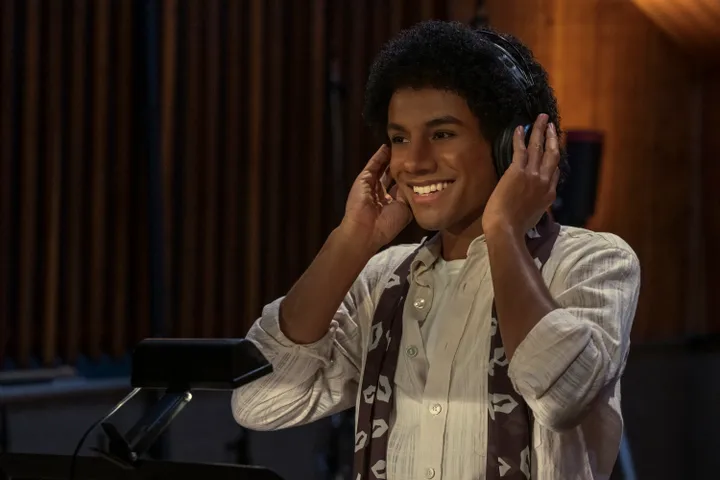
The new biopic about Michael Jackson was generating controversy before it had even hit cinemas.
In the lead-up to its release, Michael was torn apart by critics, many of whom took issue with the fact that it comes to an end in 1988, meaning the controversies that surrounded Jackson in his later years – most notably the allegations of child sexual abuse levelled against him – were left unexplored in the film.
However, scenes addressing these allegations were originally intended to be included in the film, only to wind up on the cutting room floor, with reports suggesting that they could potentially be included in a sequel to Michael in the future.
Could there be a sequel to Michael, addressing the allegations of child sexual abuse levelled against Michael Jackon in his lifetime?
Director Antoine Fuqua previously told the New Yorker that he had originally filmed a scene with Jaafar Jackson, depicting a raid on the Neverland ranch in 1993, following allegations of child molestation made against Jackson.
It’s been widely reported that, ultimately, these scenes were not able to be included, after the Jackson estate – who collaborated on the film – discovered a clause in a settlement with the accuser in question, stating that his name and likeness could never be depicted in a film.
As a result, the decision was made to end Michael with a performance of Bad in the late 1980s, with the cast being brought back for costly reshoots to help complete the film in its current iteration.

However, in it its closing moments, an on-screen message reads “his story continues” – suggesting that a second film could be on the cards (The Hollywood Reporter, citing an undisclosed “insider”, has claimed this was a late addition to the film, introduced once “the filmmakers and the studios behind Michael began to realise how successful the movie could become”).
Reports previously claimed that around three-and-a-half hours’ worth of footage was shot for Michael, which was then reduced to the two-hour finished product.
Cast members Colman Domingo and Nia Long have both said that a sequel addressing the next stage of Michael Jackson’s life is a possibility, with the filmmaker behind Michael also weighing in during a recent interview.
What has Michael director Antoine Fuqua said about a potential sequel to the biopic?
In the lead-up to Michael’s release, That Grape Juice shared an interview with Antoine Fuqua, in which the filmmaker was asked: “How do you even begin to even think about honouring that version of him, without undoing what you’ve done here with Michael?”
“With the same integrity,” he responded. “If that was to happen, you try to tell the truth as you know it, and to do it with integrity.
“And, you know, you don’t want to sensationalise anything. Being a movie star, rock star, superstar like Michael, there’s enough of that already. You don’t have to do much.
“But I think the key is, like, who was he as a human being? Stay on that path and then we’ll be OK, because that’s what it’s about. It’s a biopic, it’s about a human being, he’s a real person. So that’s the key. People have to remember that.”
The chairman of the production company Lionsgate also told The Hollywood Reporter at the Michael premiere: “We absolutely have more story to tell. We have prepared for that moment. And if the audience reinforces that they’re ready for more, we’re prepared to give it to them sooner rather than later.”
Producer Graham King agreed: “We’re definitely kicking around some ideas. We’ll see what happens very soon.”
What has Michael director Antoine Fuqua already said about the allegations made against Michael Jackson?
Asked about the accusations during his aforementioned New Yorker interview, Fuqua respnded: “When I hear things about us – Black people in particular, especially in a certain position – there’s always pause.”
He added that “sometimes people do some nasty things for some money”, which prompted a response from Dan Reed, the director behind Leaving Neverland, a documentary focussing on the allegations made by two of Jackson’s accusers.
“For Antoine Fuqua to accuse people of gold digging is kind of ironic,” Reed told The Hollywood Reporter in a separate piece. “It seems to me all the people involved in this movie are just making bank.”
He then questioned: “How can you tell an authentic story about Michael Jackson without ever mentioning the fact that he was seriously accused of being a child molester? I just don’t really see it.
“If anyone’s making money, it’s Michael Jackson’s estate and the people who worked on this biographical picture.”
Michael is in cinemas now.
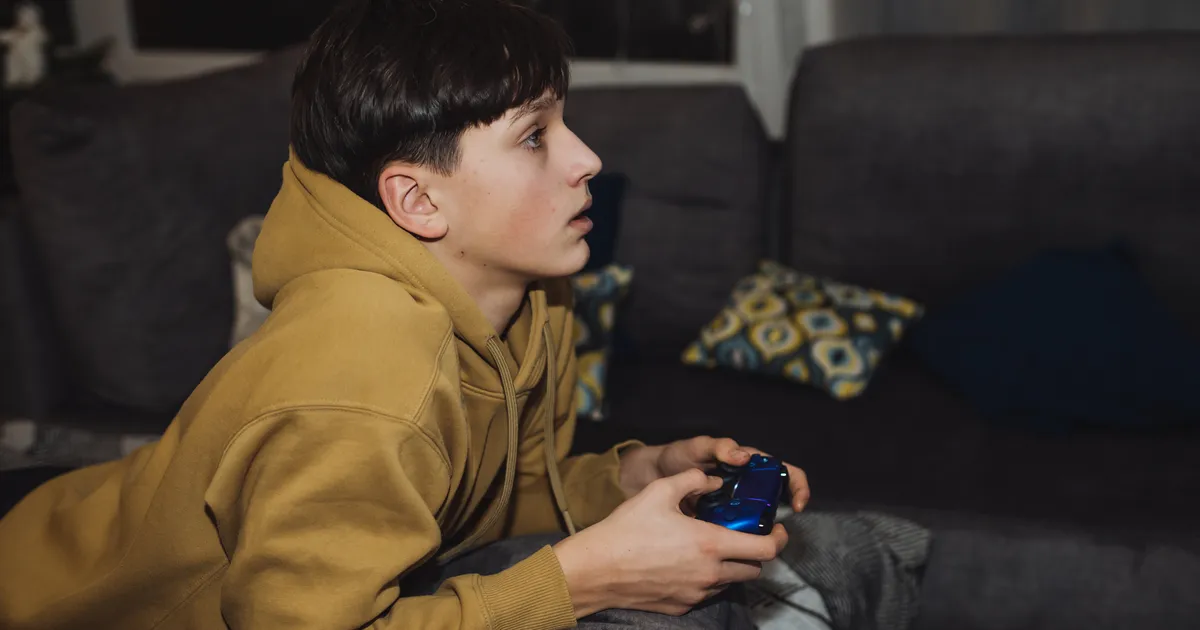
If you tuned in to Louis Theroux’s Inside The Manosphere, you might’ve been jaw-to-the-floor shocked to hear the influencers’ reductive views of women. (Or maybe, if you’ve come across this content online before, you weren’t.)
You’ll also have picked up on the huge onus placed on wealth and success.
These influencers are selling a ‘dream’ to other young men, encouraging them to follow their formula to become rich and ‘successful’ – to up their value and worth in a society where they are “born without it”. And some boys are taking it all in.
According to Educate Against Hate, boys are drawn to this kind of content because it offers a sense of belonging, simple answers to complex societal problems, and an element of control or empowerment.
We’re now at the point where nearly 70% of boys aged 11-14 years old have been exposed to misogynistic content online, per Ofcom, and most primary and secondary school teachers are “extremely concerned” about the influence of the manosphere – a collection of websites and forums that typically promote masculinity, some of which amplify misogynistic views – on children and young people.
It’s not a new problem either. This tap has been drip, drip, dripping for some time as social media’s popularity has grown. While there will be plenty of boys who shun these narratives, over time this content can – and does – shift perceptions.
Signs kids are being influenced by this content
Mandy Hickson, a former fast jet pilot who is now a motivational speaker, began to notice subtle changes in her two sons, then in their mid-teens, seven years ago. She said not only did their language, tone and the way they spoke about women gradually change, but so too did their views on success and self-worth.
“For example, despite growing up in a home where both my husband and I worked equally and shared parenting responsibilities, they began questioning why I would ‘want’ to work at all,” she told me.
“They began making quite extreme statements about money and status. For example, suggesting that if they reached a certain age and didn’t have significant financial success or material markers like expensive cars, they would see themselves as failures.”
If your child’s attitude towards money and girls seems to have shifted, you might pick up on small changes in their language, too.
Fiona Yassin, a family psychotherapist and founder and clinical director of The Wave Clinic, tells HuffPost UK: “Rather than, ‘Do you think she likes me?’ or ‘Do you think she’s interested in me?’, it becomes more success-orientated to, ‘If I’m more successful, she’s more likely to like me’.”
You might sense a reductionist mindset emerging, where value is assigned to individuals. This framing can then develop into narratives such as “all women want a rich partner” or ideas around them “marrying up” in terms of financial or perceived social status. One mum noted how her teen son had made a comment about women being “gold diggers” – a viewpoint he’d heard online.
There’s also a prevailing ‘winners’ and ‘losers’ mindset. “We’ve seen this come up repeatedly in content shared by various influencers – the idea that to ‘win’ at life, one of the key measures is wealth, alongside being surrounded by women of your choosing,” adds Yassin.
Some kids might become very aware (and borderline obsessed) with social media metrics: post likes, shares, who’s engaging with their posts, etc. You might also notice they’re less empathetic than they used to be – “when someone adopts a very reductionist viewpoint and becomes fixated on certain measures, empathy for others tends to decrease,” the therapist says.
“That goes hand in hand with objectification because you can’t have high empathy while also objectifying others.”
How to talk to your kids about it
Parents should remain curious and non-confrontational when kids mention wealth or seem to offer up differing views around women and relationships that seem, well, off.
Staying non-judgemental and asking open-ended questions, like “What do you like about that content?” or “How did you come across that idea?”, is key.
If they’re discussing relationships with girls specifically, questions you could ask to find out a bit more about what they’re thinking include: What qualities make you want to get to know someone more? What do you find interesting about them? What makes you curious about that person?
“These kinds of questions encourage reflection without confrontation. However, not confronting doesn’t mean ignoring,” notes Yassin.
“It’s important for parents to name what’s happening. For example, acknowledging that there are online spaces where relationships are framed transactionally – where worth is tied to wealth, appearance, or sexual history.”
Parents can show awareness, and therefore signal understanding, without endorsement. You could say something like: “I understand this is something people are talking about right now.”
The therapist also advises educating yourself on the manosphere, as this is no longer fringe subculture, but increasingly visible in everyday online content. “Many parents, if they looked at their child’s social media, would likely see elements of this thinking,” she continues.
“It’s important for parents to understand that not every young person engaging with these ideas is doing so harmfully, but there can be a contagion effect. Naming that gently can help.”
Teaching and encouraging critical thinking is important, so too is reinforcing your family values, particularly around relationships. You can emphasise curiosity about the person they might be interested in, the importance of connection, and how relationships endure over time.
You could also share more about how your own relationship came to be – what drew you to each other and what qualities mattered beyond superficial measures.
“These grounded, real-world examples can help re-anchor conversations about relationships in something more human, relational, and meaningful,” says Yassin.
Looking at wealth within the family system is also important and not something to shy away from. It might be helpful to express that in your family, you value people, connection, and relationships more than things or wealth, she says.
“By bringing in real-world examples, we allow young people to metabolise what they’re hearing into something they can actually feel. Because if we think about this whole movement, it’s largely based on beliefs and thinking, and there’s very little emphasis on feeling. In fact, feeling is often actively discouraged,” says Yassin.
“In a transactional framework, emotion becomes almost unnecessary. So continuing to introduce real-world examples helps shift perspective.”
The therapist says the goal here isn’t to demolish or shame ideas, but to reframe them and reinforce an approach that values people for who they are, rather than what they represent or achieve.
If you do come across this kind of content on your teen’s phone or device, don’t just brush it off – name it and kick off a conversation in an age-appropriate, curious way.
“The reach of this type of content is quite extensive, and many of these reductionist ideologies are interconnected – around looks, status, wealth, and perceived value,” ends Yassin.
“Once young people encounter one, it can often lead into a wider web of related ideas.”

!function(n){if(!window.cnx){window.cnx={},window.cnx.cmd=[];var t=n.createElement(‘iframe’);t.display=’none’,t.onload=function(){var n=t.contentWindow.document,c=n.createElement(‘script’);c.src=”//cd.connatix.com/connatix.player.js”,c.setAttribute(‘async’,’1′),c.setAttribute(‘type’,’text/javascript’),n.body.appendChild(c)},n.head.appendChild(t)}}(document);(new Image()).src=”https://capi.connatix.com/tr/si?token=19654b65-409c-4b38-90db-80cbdea02cf4″;cnx.cmd.push(function(){cnx({“playerId”:”19654b65-409c-4b38-90db-80cbdea02cf4″,”mediaId”:”57d559b1-2488-4e8a-b5bb-a9b17e5f60a8″}).render(“69ed9171e4b08330e41d3124”);});
!function(n){if(!window.cnx){window.cnx={},window.cnx.cmd=[];var t=n.createElement(‘iframe’);t.display=’none’,t.onload=function(){var n=t.contentWindow.document,c=n.createElement(‘script’);c.src=”//cd.connatix.com/connatix.player.js”,c.setAttribute(‘async’,’1′),c.setAttribute(‘type’,’text/javascript’),n.body.appendChild(c)},n.head.appendChild(t)}}(document);(new Image()).src=”https://capi.connatix.com/tr/si?token=19654b65-409c-4b38-90db-80cbdea02cf4″;cnx.cmd.push(function(){cnx({“playerId”:”19654b65-409c-4b38-90db-80cbdea02cf4″,”mediaId”:”bc089a35-8c8f-479c-bcb4-3951c55195bb”}).render(“69ed7544e4b0f3a433cb53e4”);});

Wenn Du den Finanz-Finger ignorierst …

Inside the traditional Newtownabbey pub in the same family for over 90 years

Trump’s security again faces scrutiny after press dinner shooting

Manchester United reach agreement with Casemiro over contract clause amid transfer speculation

US brings back mandatory military draft registration

Steven Gerrard disagrees with Gary Neville over ‘shock’ Chelsea and Arsenal claim | Football


-

 Business7 days ago
Powerball Result April 18, 2026: No Jackpot Winner in Powerball Draw: $75 Million Rolls Over
-

 Fashion2 days ago
Weekend Open Thread – Corporette.com
-

 Politics7 days ago
Zack Polanski demands ‘council homes not luxury flats for foreign investors’
-
Entertainment6 days ago
NBA Analyst Charles Barkley Chimes in on Ice Spice McDonald’s Fiasco
-

 Politics5 days ago
Gary Stevenson delivers timely reminder to register to vote as deadline TODAY
-
 Crypto World6 days ago
Bank of Hawai’i (BOH) Q1 2026: Net Income Drops to $57.4M as Net Interest Margin Expands
-
Crypto World13 hours ago
Hyperliquid $HYPE Rally Builds Momentum as AI Sector Enters Prove-It Phase
-

 Politics4 days ago
Making troops accountable for war crimes threatens US alliance, ex-SAS colonel warns
-

 Politics4 days ago
Disabled people challenge government SEND proposals over segregation concerns
-

 Business4 days ago
Rolls-Royce Voted UK’s Most Iconic Trade Mark as IPO Register Hits 150
-

 Politics4 days ago
Zack Polanski responds to home secretary’s taser threat
-

 Politics4 days ago
Starmer handler McSweeney to be dragged from shadows by Foreign Affairs Committee
-
Politics4 days ago
Wings Over Scotland | How To Get Away With Crimes
-
 Crypto World5 days ago
Five Value Stocks with Recovery Potential in 2026: PayPal (PYPL), Nike (NKE), and More
-

 Politics3 days ago
‘Iran is still a nuclear threat’
-

 Crypto World4 days ago
New York sues Coinbase, Gemini over prediction market offerings
-
 Sports3 days ago
Tim Bradley names the current best in the world: “Better than Inoue and Usyk”
-

 Crypto World4 days ago
Crypto’s great hope in Senate’s Clarity Act still has a path to survive tight calendar
-

 Business4 days ago
The Job Benefits Most Men Don’t Know to Negotiate
-

 Politics7 days ago
Reform investigating candidate who ‘hates’ the NHS
You must be logged in to post a comment Login