
Crypto World
Another DeFi Exploit Drains 150,000 SUI From Scallop’s Deprecated Contract



Scallop, a money market on Sui Network, lost about 150,000 SUI on Sunday after an attacker drained a deprecated rewards contract tied to the protocol’s sSUI spool.
The team froze the affected contract within minutes and pledged full reimbursement from its treasury. Core operations resumed in under two hours.
Another Sui Exploit Hits Peripheral Code, Not the Core Protocol
Scallop disclosed the incident at 12:50 UTC on April 26 through a public notice on X. The attacker targeted a side contract powering rewards for the sSUI spool. That spool is the protocol’s incentive layer for SUI depositors.
The affected contract was frozen immediately, according to the team. Core lending and borrowing pools stayed untouched. User deposits remained safe across every other Scallop market.
Two hours later, Scallop confirmed the freeze had been lifted on the core contracts. Withdrawals and deposits resumed at 14:42 UTC.
Most users on the Sui network were unaffected by the morning’s events.
“Scallop will fully cover 100% of the loss,” the money market articulated.
Stale Package Code From 2023 Sat Behind the Exploit
Independent on-chain analysis points to a deprecated V2 spool package as the entry point. Scallop published the code in November 2023, more than 17 months before the attack. On Sui, deployed packages are immutable. Old versions stay callable unless explicitly version-gated.
The bug centered on an uninitialized last_index counter, which tracks accumulated rewards for stakers. The attacker staked roughly 136,000 sSUI to exploit it.
This math treated the position as if it had existed since the spool launched in August 2023.
The spool index had grown to about 1.19 billion over 20 months. That allowed the exploiter to harvest around 162 trillion reward points. Those redeemed one-to-one for 150,000 SUI from the rewards pool.
The transaction hash 6WNDjCX3W852hipq6yrHhpUaSFHSPWfTxuLKaQkgNfVL captures the on-chain proof of the drain.
A Familiar Pattern Across Sui DeFi
The incident follows a string of Sui exploits in recent weeks. Volo Protocol lost roughly $3.5 million earlier this month in a similar peripheral incident. Each case targeted side contracts rather than core protocol logic.
It also lands one week after a major bridge incident on Ethereum, which produced roughly $292 million in unbacked liquid restaking tokens. Both attacks happened over weekends, when liquidity is thin and response times can lag.
Neither the Sui Foundation nor Mysten Labs has made a public statement on the matter.
For Scallop, however, the financial damage looks contained. The protocol confirmed it will absorb the entire loss without diluting user yields.
The team has not released a full post-mortem yet, with a prospective publishing of a complete audit of every remaining legacy package likely to shape the broader Sui DeFi response.
The deeper question is how Sui builders should manage immutable code and forgotten attack surfaces.
The post Another DeFi Exploit Drains 150,000 SUI From Scallop’s Deprecated Contract appeared first on BeInCrypto.

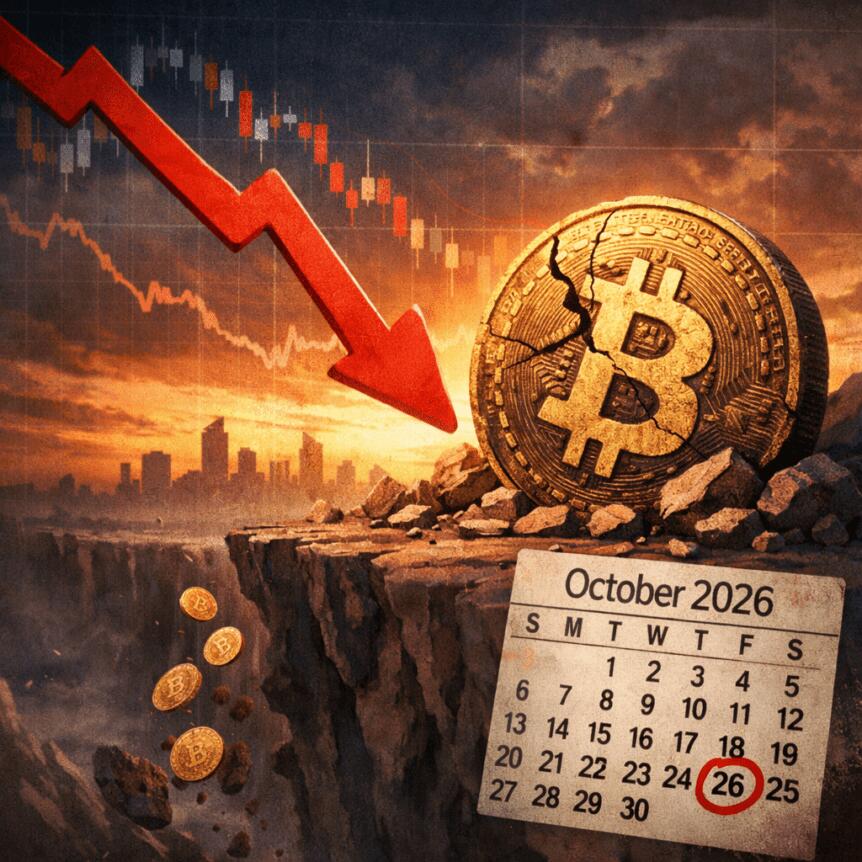
Bitcoin could bottom near $57,000 in October 2026, according to Michael Terpin, a veteran crypto investor and author. The digital asset has risen more than 29% from February’s dip around $60,000 and was trading near $78,000 as this week unfolded. Terpin’s view rests on a historical pattern: the typical one-year drawdown from a market-cycle peak, which he says occurred in October 2025 when BTC briefly topped above $126,000.
For a renewed bull market to gain traction, Terpin argues that BTC must reclaim the $100,000 level. He contends that such a move would likely materialize only if the price falls decisively below the 200-week moving average, a dynamic support commonly watched by longer-term traders. In his words, there’s “a chance of $100,000 this year, but unlikely. It would need to combine strong exchange-traded fund (ETF) buying with what Michael Saylor is already doing at Strategy, combined with an absence of liquidations from a sharp move down.”
Michael Terpin expects Bitcoin to bottom out around the $57,000 level. Source: TradingView
The current backdrop features BTC hovering near $78,000 amid a mix of macro headwinds and liquidity constraints. Oil price volatility remains a factor for risk assets, while geopolitical dynamics and a steady-rate environment in the United States have contributed to cautious crypto sentiment. The market continues to weigh the possibility of further liquidity shifts and the pace of institutional participation as the U.S. Federal Reserve holds rates steady for now.
Key takeaways
- Terpin’s cycle-based bottom forecast places BTC at roughly $57,000 in October 2026, anchored by the observed one-year drawdown from a cycle top around $126,000 in October 2025.
- A renewed bull run hinges on reclaiming $100,000, with a realistic pathway seen only if BTC can dip below the 200-week moving average and avoid forced liquidations amid ETF-driven demand and bullish strategic moves.
- The near-term price path remains uncertain. Analysts flag the potential for a retest toward the mid-to-high $70,000s or lower, with a possible slide toward the $73,000 zone in the short term.
- The market’s tone ahead of the FOMC meeting is mixed. CME data show about 99.5% of traders expect no rate cut, reinforcing caution around a sustained rally without macro-driven support.
- Analysts caution that the recent rally could be a false signal, highlighting the risk of another leg lower by October if macro conditions and market internals don’t improve.
Macro context and the near-term path
As Bitcoin oscillates around the high $70,000s, the broader macro landscape continues to shape its trajectory. Traders and analysts point to a confluence of factors: oil price volatility, geopolitical developments described as a “war in Iran” in some coverage, and persistent liquidity concerns that have kept risk assets from staging a robust breakout. In the U.S., the Federal Reserve’s decision to hold rates steady has contributed to a cautious mood, with market participants awaiting clearer signals on inflation and policy direction.
Ahead of this week’s Federal Open Market Committee (FOMC) meeting, the market’s expectations reflect a near-consensus view that policy will remain unchanged for the time being. The CME FedWatch Tool shows a near-unanimous tilt toward no rate cut in the near term, underscoring a backdrop that could limit immediate upside for crypto markets without a new wave of positive macro catalysts. “Wednesday is (Jerome) Powell’s almost certain last FOMC meeting as Fed Chair. The rate decision is almost certainly a hold flat,” commented market analyst Nic Puckrin, underscoring the ongoing regime of cautious liquidity and macrodriven risk-off sentiment.
Some observers describe the current rally as lacking the exuberance typically associated with a fresh uptrend. Crypto market analyst Matthew Hyland noted that Bitcoin’s price action since February has not generated the broad consensus among investors that usually accompanies a sustained bull run. “It does appear to me the larger expected consensus outcome for BTC is another leg lower by October,” Hyland said, signaling that a larger downside could be on the horizon despite the momentum seen in recent weeks.
Short-term risk assessments point to potential downside scenarios. If the 21-week exponential moving average (EMA) continues to act as a resistance barrier, some analysts anticipate a retracement toward roughly $65,700 before any meaningful upside, with a possible dip toward the $73,000 area in a more immediate horizon. The interplay between moving-average dynamics and macro cues remains a key supply of uncertainty for traders seeking to time a durable bottom.
What this means for investors and developers
Terpin’s cycle-based perspective emphasizes how cyclicality—rather than purely macro promises or herd sentiment—could shape BTC’s intermediate-term path. For investors, the scenario suggests a cautious stance: a potential retest of trend supports before any decisive upside, and a reminder that longer-term trend reversals often require compelling fundamental catalysts beyond a single rally leg.
From a market structure standpoint, the possibility of renewed ETF buying remains a focal point. If investor demand accelerates through regulated vehicles, and if notable holders continue to deploy capital strategically, BTC could carve a new path back toward the $100,000 mark. However, the path would likely be non-linear, with retracements and tests of major moving averages—particularly the 200-week MA—serving as critical waypoints for bulls and bears alike.
For traders, the near-term chart setup remains delicate. The risk-reward balance hinges on macro developments, liquidity conditions, and how effectively Bitcoin can hold above key support lines. The contrast between a potential short-term pullback toward the mid-$70,000s and a longer-term base around the $57,000–$60,000 region creates a wide spectrum of possible outcomes. Market watchers will be paying close attention to how the price behaves around the 21-week EMA and whether any sustained break below that threshold precedes a deeper correction.
Beyond Bitcoin itself, the discourse highlights a broader theme for the crypto market: the degree to which institutional participation, regulatory clarity, and macroeconomic signals align to drive durable uptrends. If the coming quarters bring clearer policy paths and more robust ETF inflows, the probability of re-anchoring around the $100k level could increase. Conversely, a continuation of liquidity constraints or policy surprises could extend the bear phase and push BTC toward lower support zones.
For readers tracking the narrative, the next set of data points—macro inflation readings, the Fed’s communications, ETF allocation trends, and on-chain dynamics—will be instrumental in assessing whether Terpin’s scenario plays out or if alternative pathways emerge. Notably, market commentary and price targets in recent coverage point to a potential return to downside rather than an immediate, sustained breakout, underscoring the importance of disciplined risk management in the near term. For example, prior visuals discussing BTC price action and potential near-term targets have highlighted the risks around a possible move down toward the 73,000 level and the influence of the weekly trend line on price action.
In parallel, traders and analysts continue to weigh the potential implications of a prolonged pause in rate cuts, the evolution of ETF demand, and the ongoing balance between retail and institutional participation. As always, the crypto market remains sensitive to shifting liquidity environments and macro headlines, which can abruptly alter the tactical picture for Bitcoin and the wider digital-asset space.
As the cycle framework suggests a longer horizon, investors would do well to monitor the 200-week moving average, ETF liquidity signals, and the macro policy backdrop as pivotal inputs for determining whether a new leg higher can gain traction or if a renewed downside bias resumes into late 2026.
Readers should stay tuned to subsequent market developments and the evolving regulatory and liquidity landscape, which will help clarify whether Terpin’s bottom-line forecast holds or if new catalysts emerge to reframe BTC’s trajectory.

TLDR:
- Pi Network dominates mobile mining with a $1.85B market cap, controlling 95% of the $1.94B sector value.
- PI trades near $0.1795, rising 5.5% daily with $23.6M volume, showing growing market activity and attention.
- Protocol 22 upgrade deadline on April 27 introduces smart contracts, expanding network functionality and usage.
- Exchange outflows exceed inflows by 310K tokens, while 18M KYC users support steady ecosystem growth.
Pi Network continues to command the mobile mining sector, holding a dominant market share as price action strengthens.
The token trades near $0.1795, showing steady gains while upcoming network upgrades and events draw increased attention from market participants.
Pi Network controls mobile mining sector with strong market share
Pi Network remains the leading project in the mobile mining sector by a wide margin. Data shows it holds a $1.85 billion market cap, covering about 95% of the $1.94 billion category. This places Pi Network ahead of all competing mobile mining projects.
A recent tweet from BSCN reported that Pi Network is also the top trending and top-gaining coin in the segment. The update pointed to rising activity as Pi Network continues attracting attention across the crypto market. The tweet also noted growing trading volume and steady price movement.
Price action shows Pi Network trading near $0.1795, reflecting a 5.5% daily increase. The token also gained 3.8% over the past week, supported by $23.6 million in daily trading volume. These figures indicate renewed interest as traders monitor short-term movement.
At the same time, Pi Network benefits from its large user base. The project reports over 18 million KYC-verified users, which supports ongoing ecosystem growth. This user activity continues to support its position within the mobile mining sector.
Upgrade timeline and events support Pi Network momentum
Pi Network is approaching a key technical milestone with the mandatory Protocol 22 upgrade. The deadline is set for April 27, and it introduces support for smart contracts. This upgrade is expected to expand the network’s functionality and developer activity.
Alongside the upgrade, Pi Network founders Chengdiao Fan and Nicolas Kokkalis are scheduled to speak at Consensus 2026.
The event will take place in Miami in early May, drawing attention from industry participants. Their appearance places Pi Network in a broader market discussion.
Token flow data also shows a shift in supply movement. Exchange outflows have exceeded inflows by 310,000 tokens, suggesting reduced selling pressure. This trend often aligns with accumulation patterns as tokens move away from trading platforms.
In addition, token unlock pressure appears to be easing. This reduces short-term supply stress and may support more stable price movement. Combined with the upgrade timeline, Pi Network enters May with a structured setup.
Overall, Pi Network continues to hold a leading position in the mobile mining sector. Its market share, user base, and upcoming developments keep it in focus. As activity builds, Pi Network remains closely watched for further price movement.

TLDR:
- Strategy holds 815,061 BTC with an average cost near $75,528, maintaining a steady accumulation pace
- Recent purchases between $80K and $110K show continued buying despite higher Bitcoin price levels
- The firm remains in a modest unrealized profit as Bitcoin trades slightly above its average cost
- Over 100 purchases across cycles reflect a consistent Bitcoin accumulation approach without market timing
Michael Saylor has signaled continued commitment to Bitcoin, as new data shows ongoing accumulation by his firm.
The latest tracker presents sustained buying activity, a rising cost structure, and a position holding a modest unrealized gain.
Strategy Maintains Steady Bitcoin Accumulation Approach
The latest tracker data reflects a structured and ongoing Bitcoin accumulation approach, with purchases spread across different market phases.
The firm continues to add Bitcoin regardless of short-term price direction, maintaining a consistent acquisition pace.
A tweet shared by Michael Saylor hinted at another possible purchase, referencing the “Orange ₿eat Goes On.” The update also introduced the firm’s 16th 2026 tracker, reinforcing its ongoing Bitcoin accumulation activity.
The chart shows total holdings of 815,061 BTC, valued at about $63.46 billion. The average purchase price stands near $75,528 per Bitcoin, built through 107 separate buy transactions over time.
Orange dots on the chart mark individual purchases, showing activity during both market rallies and corrections. This pattern reflects a steady Bitcoin accumulation model rather than a reactive approach tied to market timing.
The average cost line continues to rise gradually, indicating that newer purchases occur at higher price levels. This trend signals continued participation in Bitcoin accumulation even as market prices increase.
Recent buying activity appears between the $80,000 and $110,000 range. This suggests the firm remains active in Bitcoin accumulation despite elevated price zones, maintaining consistency in its broader strategy.
Market Position Reflects Long-Term Bitcoin Accumulation Strategy
The firm’s current position sits slightly above its average cost basis, placing it in a modest unrealized gain range. This positioning supports the stability of its long-term Bitcoin accumulation strategy.
Holding above the average entry level may support continued confidence in the current position. At the same time, any movement below that level could influence short-term sentiment across the market.
With more than 800,000 BTC held, a portion of available supply remains out of active circulation. This level of Bitcoin accumulation reduces liquidity within the broader market environment.
Market behavior may respond more sharply during periods of rising demand due to reduced available supply. However, the firm continues to follow a structured Bitcoin accumulation approach rather than short-term trading adjustments.
Historical data from the chart shows no pause in buying activity during previous downturns. This pattern reflects a tolerance for volatility within the ongoing Bitcoin accumulation framework.
Future price movement above recent highs could expand unrealized gains tied to the current holdings. Meanwhile, stable price action near the average cost may support continued Bitcoin accumulation activity.
The tracker continues to document each purchase event, providing a clear record of long-term positioning. As a result, this Bitcoin accumulation strategy remains closely monitored within the market.
TLDR:
- DeFi losses topped $800M in April 2026, with incidents shifting from smart contract bugs to access control failures.
- Major losses included Kelp DAO $292M and Drift $285M, showing concentrated damage across leading DeFi protocols.
- Cross-chain bridges and admin roles emerged as key attack vectors, exposing weak governance and single points of failure.
- Despite improved smart contract security, poor key management and missing timelocks continue driving systemic DeFi risk.
The decentralized finance sector recorded one of its most severe periods in April 2026. Within just 26 days, DeFi losses in April 2026 crossed $800 million. The figures point to a shift in risk sources, moving away from smart contract errors.
Key Management Failures Replace Code Vulnerabilities
According to our Crypto Talk, the scale of DeFi losses in April 2026. The data showed major incidents across several protocols within a short period. Losses included $292 million from Kelp DAO and $285 million from Drift.
Other affected platforms included Grinex, Rhea Finance, and Volo, with smaller yet notable amounts. Even established names like CoW Swap and Silo reported losses. These figures reflect a broad issue rather than isolated events.
At the same time, smart contract bugs have dropped sharply. Reports indicate an 89% decline in such vulnerabilities. This shift shows that code audits and testing have improved across the sector.
However, the same cannot be said for operational security. Many affected protocols had completed audits before the incidents occurred. This raises questions about areas beyond code security.
DeFi losses in April 2026 now point toward failures in managing access and control systems. Weak key handling, poor role distribution, and missing safeguards appear repeatedly. These factors now dominate risk discussions within decentralized finance.
Bridges, Admin Roles, and Single Points of Failure
A closer look at the incidents reveals recurring patterns. Bridges remain a major target due to their complex design. Attackers often exploit weaknesses in cross-chain communication and validation processes.
Admin roles also present challenges when not properly secured. In several cases, single signers held critical authority over protocol operations. This creates a single point of failure that can be exploited.
Timelocks, which delay critical changes, were missing in some affected systems. Without them, attackers can act quickly after gaining access. This reduces the chances of intervention or recovery.
DeFi losses in April 2026 show how human decisions shape protocol safety. While smart contracts may function correctly, access control still depends on people. This includes how keys are stored and who can authorize changes.
The pattern across these incidents suggests a need for stronger governance frameworks. Multi-signature setups and layered permissions may reduce exposure. However, their adoption remains inconsistent across protocols.
As a result, DeFi losses in April 2026 continue to reflect gaps in operational discipline. The focus has shifted from code reliability to access management. This change marks a new phase in the assessment of risks.
The data from April presents a clear timeline of events. Multiple incidents occurred within weeks, affecting both large and small platforms. This clustering adds urgency to ongoing security discussions.
DeFi losses in April 2026 now serve as a reference point for evaluating risk priorities. The sector appears to be moving toward addressing human and structural weaknesses. This trend may shape future security practices across decentralized finance.
TLDR:
- PENGU/USDT holds a strong demand zone after three retests, forming a higher low that signals growing buyer strength
- Price is testing a long-term descending trendline, with a breakout likely to confirm a shift toward bullish momentum
- Fibonacci levels indicate upside targets at $0.015 and $0.020 as the price moves out of the accumulation phase
- Failure to break resistance could return the price to $0.006, keeping PENGU/USDT within its established range
PENGU/USDT is showing early signs of a possible trend reversal after holding a key demand zone for the third time.
The weekly chart structure now points to a shift from prolonged downside pressure toward a more constructive price setup.
Demand Zone Stability Strengthens Reversal Case
The recent analysis shared by Whale Factor points to a developing reversal structure on the PENGU/USDT weekly chart.
The post describes a classic accumulation pattern followed by a breakout attempt. It also notes that the asset has tested the same demand zone three times.
The $0.0045–$0.0060 range continues to act as a strong base. Each retest has produced a bounce, with the latest forming a higher low.
This pattern suggests buyers are stepping in earlier than before. As a result, PENGU/USDT is showing signs of gradual strength building within this range.
This demand zone has remained intact despite extended selling pressure earlier in the trend. The repeated defense of this level indicates sustained buyer interest. At the same time, the formation of a higher low suggests a shift in short-term structure.
In addition, the broader price trend had been bearish, marked by lower highs and lower lows. However, the current setup signals a possible transition phase. If support continues to hold, the structure may favor further upside attempts.
Trendline Test and Fibonacci Levels Define Next Moves
PENGU is now testing a descending resistance trendline that has capped prices since mid-2025. This level represents a key barrier that has rejected multiple bullish attempts. A clean breakout above this line would shift the broader trend outlook.
The current price sits near $0.0095, slightly above the demand zone. According to the shared chart, Fibonacci retracement levels outline potential upside targets. The first level to watch is around $0.015, followed by the $0.020 to $0.025 range.
These levels correspond to the 0.786 and 0.618 retracement zones. They often act as areas where price may pause or face resistance. If momentum continues, PENGU could move through these levels in a stepwise manner.
The projected path suggests a breakout followed by a brief pullback. After that, continuation toward higher levels may occur if buyers maintain control. This structure reflects a controlled upward movement rather than a sharp spike.
On the other hand, failure to break the trendline could shift focus back to support. A rejection at this level may push the price back toward $0.006. If the demand zone breaks, the current setup would no longer hold.
For now, the structure remains intact, with the trendline acting as the immediate decision point. Market participants are watching whether PENGU can sustain momentum above resistance or return to consolidation.
Crypto World
Powell’s Final FOMC: Grading His Wins, Losses, and the Mixed Bag He Leaves for Trump’s Fed Pick Kevin Warsh
Jerome Powell will gavel his last FOMC press conference on Wednesday, closing eight years atop the Federal Reserve with rates frozen at 3.50 to 3.75 percent and headline inflation back at 3.3%.
His successor, Kevin Warsh, Trump’s pick, walks into a corner office stacked with unfinished business, an oil-driven CPI spike, a $6.7 trillion balance sheet, and a crypto market that learned to live and die by Fed liquidity.
Powell vs Yellen: The Inheritance Gap
Janet Yellen handed Powell calm waters in February 2018. Rates sat near 1.5%, headline inflation hugged the 2% target, and the balance sheet was already shrinking by design.
Powell took over as a former lawyer and private equity executive, not an academic economist. He inherited a soft landing in progress and tried to keep it going with gradual hikes through 2018 before the trade war forced a pivot.
Yellen’s four years produced no recessions and almost no surprises. Powell’s eight years included a pandemic shutdown, the largest balance sheet in history, the worst inflation reading since 1981, and three regional bank failures inside ten days.
The Wins: From Pandemic Rescue to a Near-Soft Landing
Powell’s defenders point to March 2020 as his strongest hour. The Fed cut rates to zero, restarted asset purchases, and stood up nine emergency lending facilities in less than three weeks.
“Powell pushed back against some mild hawkish resistance to the jumbo emergency rate cut on March 15, 2020,” highlighted economist Nick Timiraos.
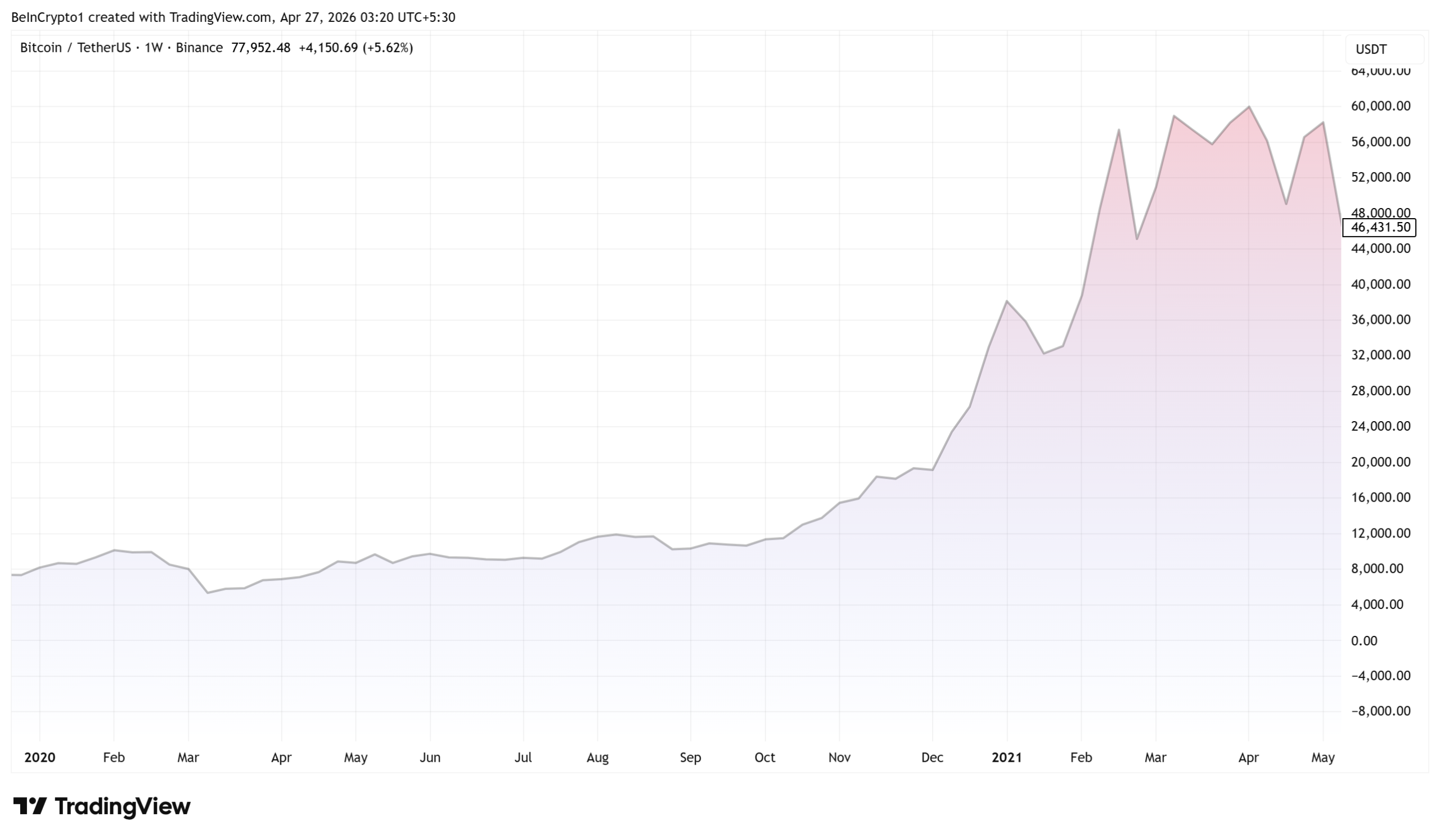
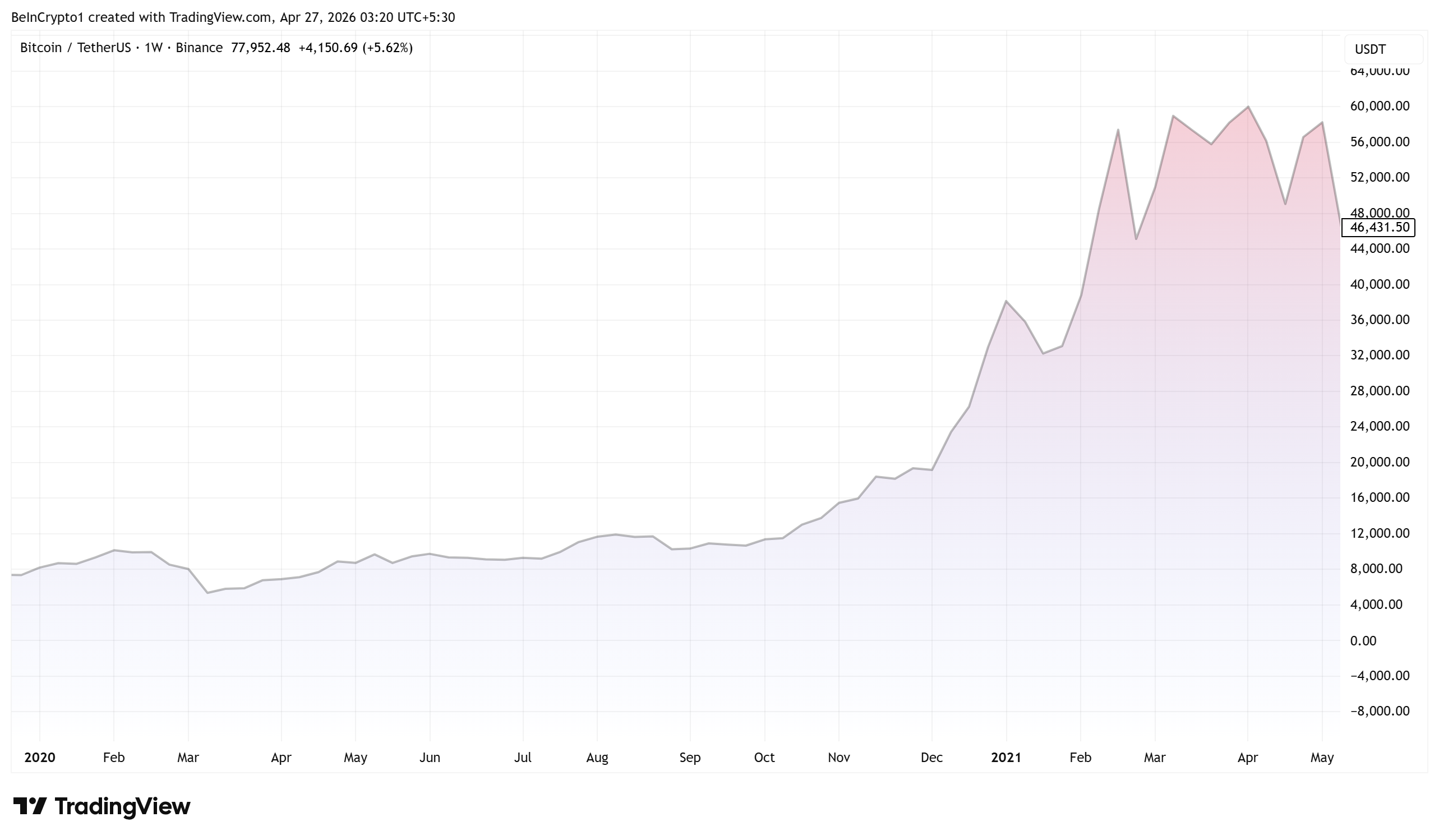
That liquidity wave saved markets and arguably saved Bitcoin’s first institutional cycle. Bitcoin (BTC) climbed from roughly $5,000 in March 2020 to a November 2021 peak above $69,000, tracking the expansion of the Fed’s balance sheet toward $9 trillion.
The second redemption arc came later. Powell ran the most aggressive tightening cycle since Paul Volcker, taking the policy rate from zero to 5.5% without triggering a deep recession or a labor collapse.
By late 2024 he also reframed the official tone on digital assets. At the DealBook Summit, Powell called Bitcoin “like gold, only it’s virtual,” a single sentence that helped push BTC above $103,000 inside a session.
“It’s just like gold only it’s virtual. People are not using it as a form of payment, or as a store of value. It’s highly volatile. It’s not a competitor for the dollar, it’s really a competitor for gold,” Powell said.
The Losses: Transitory Inflation and the Bank Scare
The “transitory” call of 2021 still defines the criticism. Powell waited until March 2022 to start hiking even as Consumer Price Index (CPI) prints exceeded 7%, a delay Warsh has called a “fatal policy error.”
“Once you let inflation take hold in the economy, it is more expensive and harder to bring it down, and so the fatal policy error going back four or five years is still a legacy that we are dealing with… we need a regime change in the conduct of policy,” stated Kevin Warsh, testimony before the Senate Banking Committee, April 21
Subscribe to our YouTube channel to watch leaders and journalists provide expert insights
The late start forced 11 hikes inside 16 months. That pace caught regional lenders flat-footed, and Silicon Valley Bank, Signature Bank, and First Republic all failed in March 2023 after losses on long-duration Treasuries.
“JAYPOW [Jerome Powell] might have broken US banking system. 2008 it was a banks portfolios of bad credit – aka subprime. 2023 it was banks portfolios of long duration bonds like UST and MBS??? If it goes down then remember Mar ‘20, big down, bailout, then big up! My body is ready,” said Arthur Hayes in a March 10, 2023 post.
Communication missteps deepened the damage. Forward guidance became a moving target through 2022 and 2023, and trader confidence in the Summary of Economic Projections dropped to multi-year lows.
Political bruises followed in 2025, when the Department of Justice opened and then dropped a probe of Powell that briefly froze Warsh’s confirmation calendar.
What is in the Bag for Trump’s Fed Chair Pick Kevin Warsh?
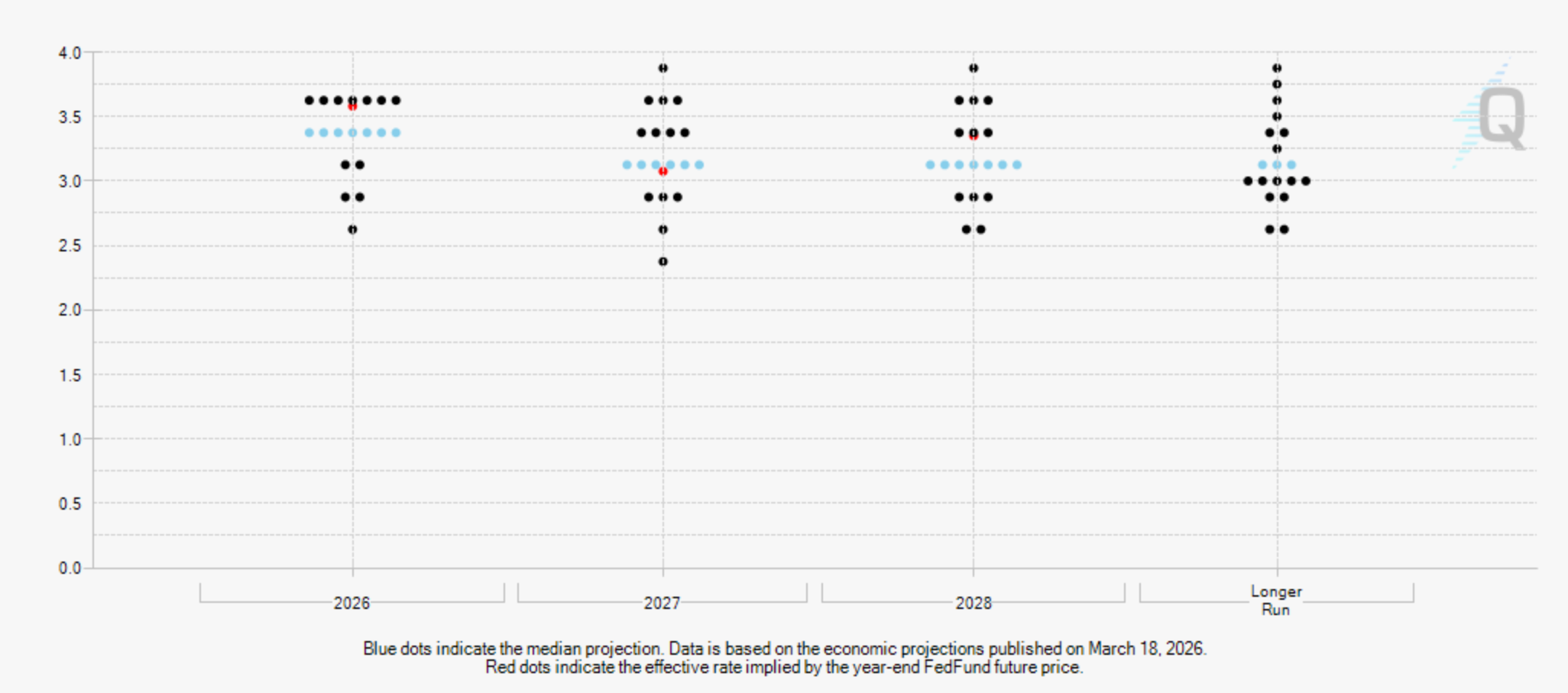
Warsh inherits a Fed running on tighter liquidity than markets had hoped. The federal funds target sits at 3.50 to 3.75% for a third straight meeting, and the March dot plot still pencils in only one cut for 2026 and one for 2027.
Inflation is moving the wrong way. CPI jumped to 3.3% in March from 2.4% in February after a 21.2% monthly spike in gasoline prices tied to the Iran war.
Policymakers lifted their 2026 core PCE projection to 2.7% from 2.4% in the same release.
Warsh has telegraphed a sharp pivot. He told senators at his confirmation hearing that the Fed needs a “different, new inflation framework,” signaled that he would scrap the post-meeting press conference cadence, and pledged not to act as anyone’s “sock puppet.”
He also wants the $6.7 trillion balance sheet smaller. Warsh argued under oath that a leaner Fed footprint could leave interest rates lower, inflation better, and the economy stronger.
All these language points toward faster quantitative tightening (QT) rather than rate cuts.
The Crypto Angle: Hawkish on Rates, Friendlier on Bitcoin
Crypto traders are sorting through a paradox. Warsh is more hawkish than Powell on inflation discipline yet more openly favorable on digital assets, and that combination cuts both ways for risk markets.
His public record now includes calling Bitcoin a “sustainable store of value,” ruling out a retail central bank digital currency (CBDC), and saying crypto is already part of the United States financial system.
He also disclosed more than $100 million in holdings spanning Layer 1 networks, Decentralized Finance (DeFi) protocols, and Bitcoin payment infrastructure.
Hawkish liquidity policy still pressures BTC in the short term. Bitcoin has retreated from its January peak as the dot plot hardened, and traders are increasingly caught between a Fed that wants to hold and a nominee who wants to shrink.
A longer-run case for Bitcoin lives inside the same trade. Former Fed governor Mark Spindel has argued that aggressive central bank policy strengthens the case for non-sovereign reserves, and Warsh’s framework could test that thesis from the inside.
What to Watch on Wednesday
The April 29 press conference will hand Powell his last microphone. Markets will parse every farewell line for:
- Hints about the cuts that did not arrive
- The inflation fight that is reigniting, and
- Whether Powell hands Warsh a clear baton or a contested one.
Powell can still stay on the Board of Governors until 2028, an option he has not ruled out.
If he steps fully aside on May 15, the next FOMC will be Warsh’s first, and the policy regime he wants to rewrite will start rewriting itself in real time.
Follow us on X to get the latest news as it happens
The post Powell’s Final FOMC: Grading His Wins, Losses, and the Mixed Bag He Leaves for Trump’s Fed Pick Kevin Warsh appeared first on BeInCrypto.

Bitcoin was “rejected” from the $80,000 price level, which is its next resistance zone on the way to reclaiming the $100,000 psychological price level.

Bitcoin has flashed another upward move, trading around the upper $70,000s after a roughly 13% surge since the start of April. Yet sentiment among holders remains unusually cautious, according to veteran analyst Matthew Hyland, who argues that the rally lacks genuine conviction and is instead being treated as a pendulum in a cautious market.
“There does not seem to be much euphoria or interest; many just projecting it to fit their bias,” Hyland said in a post shared on X over the weekend, underscoring a prevailing sense of disbelief even as prices push higher. The Bitcoin narrative remains dominated by a sense that the longer-term cycle could still tilt downward before any durable bottom forms.
Bitcoin consensus points to “another leg lower” by October
Hyland’s assessment sits against a broader view in which the market expects a further pullback before a potential capitulation or bottom. Even after a pullback to roughly $60,000 in February — about 53% off the October 2025 all-time high near $126,100 — a sizeable portion of traders still projects a cycle bottom later in 2026. The current price action has revived debates about whether a fresh down leg is imminent or whether the market is laying the groundwork for a sustained rally.
Bitcoin is currently hovering around $77,000, marking a gain of about 13% in the past month, according to data tracked by CoinMarketCap. The move comes as traders weigh whether the market is merely catching a breath before another leg higher or entering a phase of renewed volatility.
On the trading front, prominent trader Peter Brandt suggested on X that Bitcoin could print an “investable low” in September or October. He noted that the low may or may not breach the February 2026 trough, while maintaining a longer-term price range that could extend into the hundreds of thousands by 2029. The sentiment reflects a bifurcated view in which a durable bottom remains elusive, even as price action hints at renewed energy in the market.
Meanwhile, Michael van de Poppe, founder of MN Trading Capital, signaled no reason to doubt the ongoing rally, a stance that aligns with a subset of traders who view current price action as a continuation of an ongoing upcycle rather than the onset of a new bear market phase. The discord between skepticism and optimism highlights the clash between narrative and data in a market that has stubbornly defied easy categorization since last year.
Market bottoms don’t form when everyone expects them
The sentiment community has long warned against relying on consensus to time a bottom. Santiment, a crypto-market intelligence platform, argues that true market bottoms rarely emerge when a crowd is confidently forecasting them. In its recent notes, Santiment reiterated that bottoms tend to crystallize when the broader consensus has grown dangerously bearish about downside risk, rather than when traders insist prices must go lower. The caveat adds nuance to the debate around Oct 2026 timing and the possibility of a more protracted accumulation phase rather than an abrupt reversal.
In context, the market remains cautious but not paralyzed by fear. While some analysts point to technical milestones that could confirm a bottom, others warn that the absence of a crowded bottom signal can itself be a warning sign that selling pressure could re-emerge at any sign of a pullback.
As a backdrop to these debates, investors are weighing a range of historical benchmarks. Bitcoin’s fall from its late-2021 highs and the subsequent consolidation have kept market participants in a state of heightened sensitivity to macro shocks, regulatory developments, and shifts in liquidity. The $86,000 level has been flagged by some as a potential inflection point; a decisive move above that threshold could embolden bulls, while a failure to clear it might renew fears of a deeper correction.
What this implies for traders and builders
The current mood—ranging from cautious optimism to guarded skepticism—highlights a market that remains driven by both macro sentiment and on-chain signals. For traders, the risk-reward calculus hinges on whether Bitcoin can sustain its momentum and clear key resistance levels without triggering a renewed wave of profit-taking. For developers and builders in the space, the mood matters insofar as it shapes funding, network activity, and the pace at which infrastructure and use cases mature in a climate of mixed sentiment.
From a broader sector perspective, the disagreement among well-known voices underscores the fragility of timing signals in a market that has endured a choppy, multi-year cycle. The emphasis shifts from chasing a precise bottom to constructing robust strategies that can withstand a range of outcomes, including the possibility of a protracted accumulation or a fresh drawdown before facts on the ground can settle the narrative.
Where the story goes next
What remains uncertain is how quickly macro risk appetite will shift and whether a fresh catalyst can propel BTC above meaningful resistance, or whether a fresh risk-off impulse will undermine the rally. The next several weeks could be pivotal in confirming whether we are in a new leg higher, a consolidation phase, or a retest of February’s lows. In the meantime, market observers will be watching for price action around the $86,000 mark and any break above or below that threshold, along with evolving sentiment signals that could betray impending trend changes.
Readers should stay tuned to price action around critical levels, the pace of institutional inflows or outflows, and how consensus shifts in response to macro or regulatory developments. The coming months may offer clearer signals about whether the cycle is entering a fresh bullish phase or heading into a more extended period of indecision.
Crypto World
BeInCrypto Institutional Research: 15 Market Intelligence & Data Platform Behind On-Chain Visibility


Best Market Intelligence & Data Platform is an award category within The BeInCrypto Institutional 100, an annual research-driven program recognising institutional digital asset excellence across 26 categories and six pillars.
This category sits in Pillar 3: Access to Digital Assets. The 15 companies below are its longlist, drawn from data platforms serving institutional crypto intelligence workflows between April 2025 and March 2026.
A shortlist will be named in May 2026, and the winner will be announced at Proof of Talk in Paris on June 2–3, 2026.
- Longlist: 15 companies covering regulated indices, on-chain dashboards, wallet labelling, protocol financials, DeFi TVL, research platforms, and hybrid market data APIs
- Candidates screened: Starting pool of more than 30 data and intelligence providers across the global institutional crypto stack; 15 advanced to this longlist
- Scoring (Track A): Editorial quantitative 50%, Advisory Council 50%
- Criteria assessed: Data coverage and depth, institutional adoption, product innovation, research quality, funding and maturity, market standing, independence
- Sources: Company disclosures, press releases, regulator filings, and private-market data platforms, including PitchBook, Tracxn, and Crunchbase
| # | Company | Founded · HQ | Key People | Scale & Funding | Core Capability | Milestone |
|---|---|---|---|---|---|---|
| 1 | Kaiko | 2014 · Paris | Ambre Soubiran (CEO) | $1B valuation; $79M raised 15,000+ analysts in the network |
Institutional market data, indices | Benchmark provider for CBOE, D2X, Gemini Tokenized equities data partnership (2026) |
| 2 | Nansen | 2019 · Singapore | Alex Svanevik (CEO) Evgeny Medvedev (Co-founder) |
$88M+ raised; 170 employees 500M+ labeled wallets across 30+ chains |
On-chain analytics, wallet labeling | Nansen 2 AI platform launched $23B institutional liquidity report (2025) |
| 3 | Dune Analytics | 2018 · Oslo | Fredrik Haga (CEO) Mats Olsen (Co-founder) |
$1B valuation; $79M raised 15,000+ analysts in network |
SQL dashboards, on-chain analytics | smlXL acquisition (2024) Industry-standard query layer |
| 4 | Messari | 2018 · New York | Ryan Selkis (CEO) Dan McArdle (Co-founder) |
$61M raised; 137 employees 170TB enterprise data coverage |
Research, governance analytics | Crypto Theses 2026 published AI Copilot research tool launched |
| 5 | Glassnode | Zug, Switzerland | Leadership team | 7,500+ on-chain metrics 1,700+ assets covered |
On-chain data, derivatives analytics | Expanded derivatives coverage (2025) Joint research with Coinbase Institutional |
| 6 | CCData (CryptoCompare) | 2014 · London | Leadership team | FCA-regulated benchmark provider ISO 27001 + SOC 2 certified |
Market data, indices, benchmarks | Data feeds for Bloomberg and S&P ETF and ETP benchmark provider |
| 7 | Coin Metrics | 2017 · Boston | Talos (parent company) | Acquired by Talos (2025) $100M+ deal value |
Network data, indexing, feeds | Talos integration across execution stack Bletchley Index institutional benchmark |
| 8 | CoinGecko | 2014 · Singapore / KL | TM Lee (Co-founder) Bobby Ong (Co-founder) |
Independent data aggregator Millions of monthly users |
Market data aggregation, API | GeckoTerminal for DEX pricing Widely used independent pricing source |
| 9 | Arkham Intelligence | 2020 · United States | Miguel Morel (CEO) | 500M+ labeled wallets Binance Labs-backed |
Entity-labeled blockchain intelligence | Identified $25B US gov holdings Intel Exchange bounty model |
| 10 | DeFiLlama | 2020 · Open-source | 0xngmi (lead) Charlie Watkins (Co-founder) |
7,000+ protocols tracked $150B+ DeFi TVL coverage |
DeFi analytics, TVL aggregation | Standard TVL reference across industry Transparent methodology adoption |
| 11 | Amberdata | 2017 · Miami | Shawn Douglass (CEO) TongTong Gong (COO) |
$47M+ raised Backed by Franklin Templeton, Nasdaq |
Hybrid on-chain + market data API | AI-driven Amberdata Intelligence (2025) Unified institutional data platform |
| 12 | Token Terminal | 2019 · Helsinki | Henri Hyvärinen (Co-founder) Aleksis Tapper (Co-founder) |
Institutional subscription model Protocol financial datasets |
Protocol financials, valuation metrics | Standardized crypto financial statements Widely used in allocator reports |
| 13 | Artemis Analytics | 2022 · United States | Jon Ma (Co-founder) Michael Nadeau (Co-founder) |
Early-stage institutional platform Venture-backed |
Cross-chain fundamentals, metrics | Comparative blockchain dashboards Institutional research workflows |
| 14 | IntoTheBlock | 2018 · New York | Jesus Rodriguez (CEO) | Institutional client base ML analytics platform |
On-chain signals, DeFi risk | DeFi risk analytics for institutions Perseus enterprise analytics platform |
| 15 | Flipside Crypto | 2017 · Boston | Dave Balter (CEO) | $50M+ raised Community-driven model |
Analytics, ecosystem data bounties | Community analyst network insights Ecosystem data across L1s and L2s |
About This List
The BeInCrypto Institutional 100 — Market Intelligence & Data (2026 Long List) identifies the platforms providing data infrastructure for institutional crypto workflows. These firms supply benchmarks, analytics, research, and APIs used across trading desks, asset managers, and protocol teams.
Methodology
This category evaluates market intelligence and data platforms under Track A of the BIC 100 methodology: 50% quantitative metrics and 50% Advisory Council scoring.
Assessment spans seven criteria: data coverage and depth, institutional adoption, product innovation, research quality, funding maturity, market standing, and independence.
Data was verified using company disclosures, press releases, regulatory filings, and private-market sources, including PitchBook, Tracxn, and Crunchbase. Figures reflect the most recent available data at publication.
The post BeInCrypto Institutional Research: 15 Market Intelligence & Data Platform Behind On-Chain Visibility appeared first on BeInCrypto.
Crypto World
XRP Price Prediction Faces $1 Warning as Motley Fool Turns Bearish, But One Presale Keeps Growing
The XRP price prediction took a hit on April 25 after The Motley Fool published a warning telling investors not to buy the token until a major bank partnership is secured. XRP trades at $1.42 after falling 60% from its July 2025 high of $3.65, and the same week Morgan Stanley announced a dedicated fund to manage reserves for the stablecoin industry, according to CoinDesk.
Those numbers paint a clear picture. But nobody built lasting wealth buying large caps at resistance during a sideways market. The real returns came from finding the cheaper entry before the crowd arrived, and Pepeto’s presale at $0.0000001866 is attracting early money at a pace nothing else in 2026 has matched.
Bull runs never distribute gains equally. BTC leads, altcoins follow, and then early stage tokens deliver the outsized returns that rewrite portfolios in days. The proof lives on chain.
A single PEPE wallet that started with $2,184 across 1.5 trillion tokens saw the value peak near $43 million, with Lookonchain recording a $10.3 million cash out. Glauber Contessoto spent $180,000 on DOGE at $0.045 and hit seven figures within sixty days, per CNBC. A Dogwifhat position on Solana grew from $1,800 to $11 million, and one BONK holder converted $26,667 into over a million in less than seven days.
Not one of those projects shipped a product at launch. The outlook for XRP points to months of sideways trading, and April 2026 sits exactly 24 months past the 2024 halving. The window for presale entries is open right now.
XRP Price Prediction Compared: Pepeto and XRP (Ripple) in 2026
Pepeto: The Early Entry Every Cycle Rewards
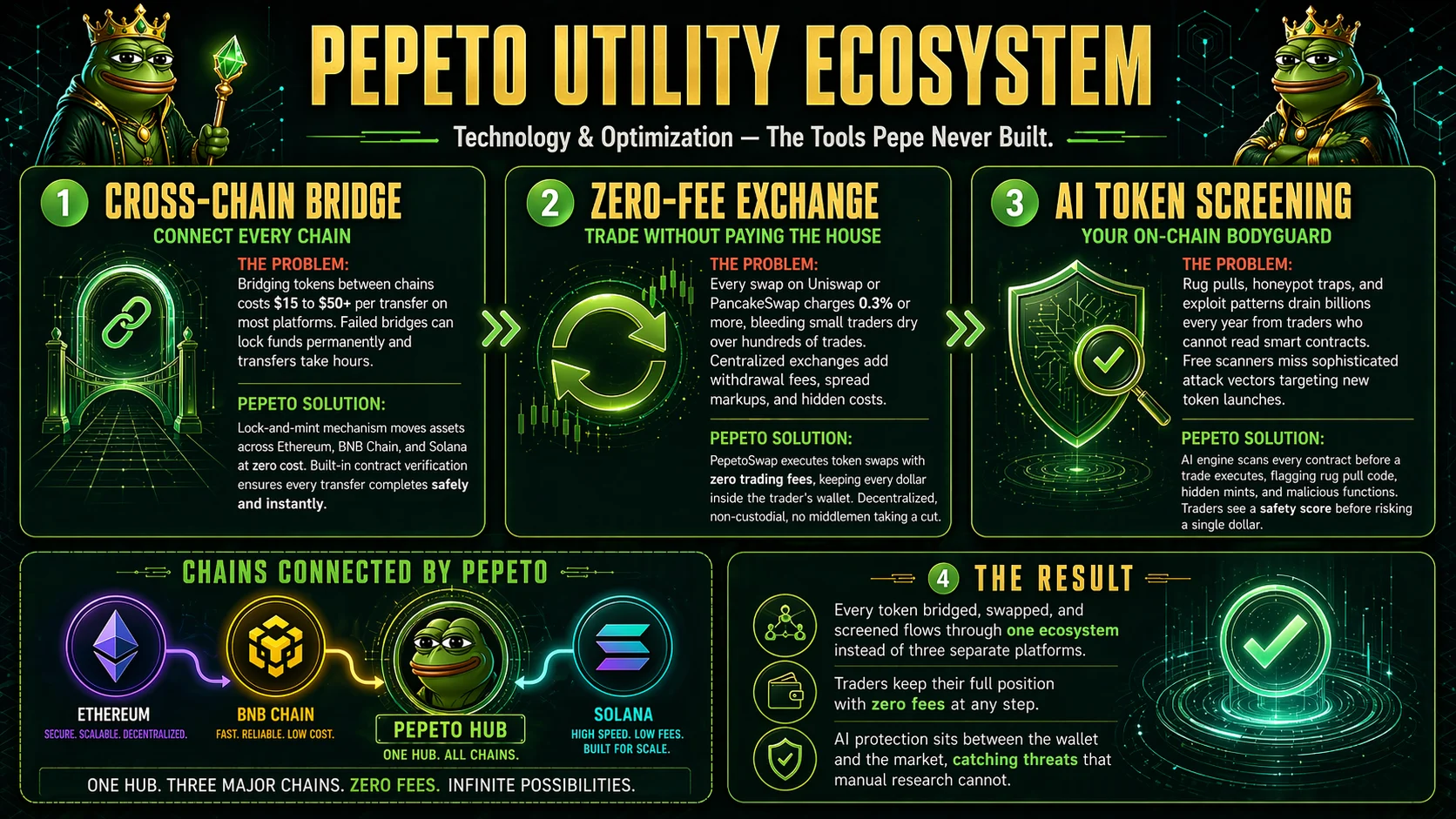
Every presale success story follows the same pattern: enter early, ride the move, take profit before the mainstream arrives. Pepeto fits all three conditions, and adds something those earlier tokens never offered. A working exchange with zero fee swaps, a cross chain bridge spanning Ethereum, BNB Chain, and Solana, and an AI scanner that spots dangerous contracts before capital touches them.
The developer who created the original Pepe token built this protocol from scratch, and a former Binance specialist runs the listing strategy toward an expected exchange debut.
SolidProof completed the audit before the raise opened, and more than $9.45 million has been committed while the Fear and Greed Index stays deep in fear, the same reading that pushed retail out before every previous major listing run.
Staking at 178% APY compounds daily while the XRP price prediction headlines play out on their own slow timeline. At $0.0000001866, the working exchange makes the listing target a floor rather than a ceiling. Wallets entering through the Pepeto official website now are positioning before the first public candle sets a price the presale will never see again.
XRP (XRP) Price at $1.42 as Triangle Squeeze Builds Near Breakout
XRP (XRP) trades at $1.42 on April 25, down 61% from its $3.65 all time high reached in July 2025, according to CoinMarketCap.
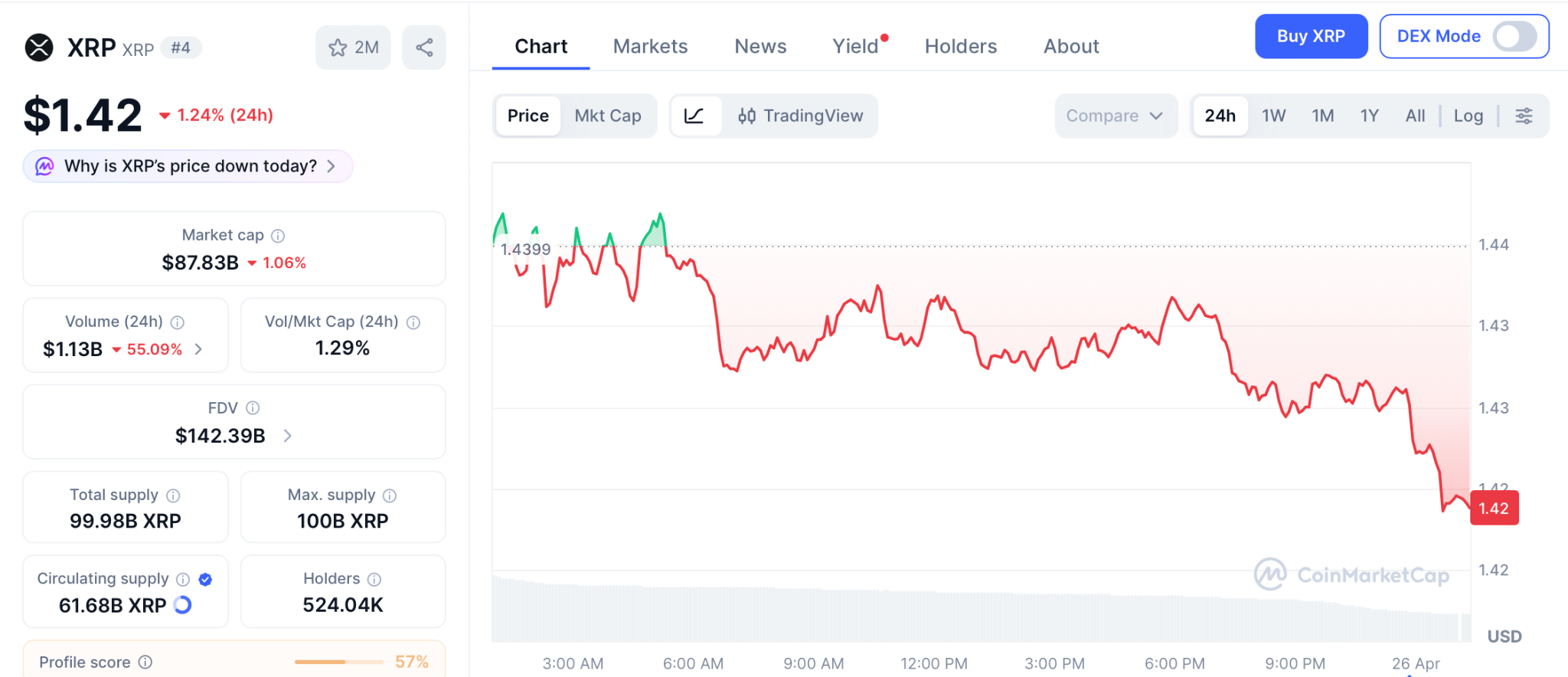
Spot XRP ETFs have attracted over $1.24 billion in inflows since late 2025, and the SEC classified XRP as a digital commodity in March 2026. But Ripple’s own stablecoin RLUSD threatens to replace XRP as a bridge currency. Support holds at $1.40 with resistance near $1.46, and roughly 60% of circulating supply sits at a $1.42 cost basis, creating a wall of sellers at every approach.
Conclusion:
Wallets adding Pepeto at presale pricing are positioned for the kind of returns the XRP price prediction needs years to deliver. The presale winner story follows the same pattern every time: a small group gets in early, the entry disappears, and the rest of the cycle is spent calculating what slipped away.
Pepeto carries the same BNB-era demand structure at presale pricing, paired with meme coin momentum no established token has offered this early in a cycle. The CoinMarketCap listing shows the Binance opening is close, the raise is at $9.45 million with 178% APY staking running daily, and the entry through the Pepeto official website is still open. Secure the position before the window closes.
Click To Visit Pepeto Website To Enter The Presale

FAQs
What is the XRP price prediction for 2026 after the 60% drop from all time highs?
The XRP price prediction for 2026 remains uncertain as the token trades at $1.42 with resistance at $1.46 and 60% of supply held at break even levels creating constant selling pressure. The Motley Fool warns investors to wait for a major bank partnership before buying.
Why is Pepeto drawing attention over large cap tokens like XRP right now?
Pepeto offers a presale entry at $0.0000001866 with an expected Binance listing, three working exchange tools, and a SolidProof audit, creating presale to debut returns that XRP at 61% below its all time high cannot generate from current levels.
Disclaimer: This is a Press Release provided by a third party who is responsible for the content. Please conduct your own research before taking any action based on the content.

The night Sid James died on stage in Sunderland – 50 years on

Worker dies during stage assembly for Shakira concert in Rio

Analyst Forecasts Bitcoin Decline, Bottom Seen in October 2026

Manchester United reach agreement with Casemiro over contract clause amid transfer speculation

US brings back mandatory military draft registration

Steven Gerrard disagrees with Gary Neville over ‘shock’ Chelsea and Arsenal claim | Football


-

 Fashion2 days ago
Weekend Open Thread – Corporette.com
-

 Politics6 days ago
Gary Stevenson delivers timely reminder to register to vote as deadline TODAY
-
Crypto World1 day ago
Hyperliquid $HYPE Rally Builds Momentum as AI Sector Enters Prove-It Phase
-
Crypto World6 days ago
Bank of Hawai’i (BOH) Q1 2026: Net Income Drops to $57.4M as Net Interest Margin Expands
-

 Politics4 days ago
Making troops accountable for war crimes threatens US alliance, ex-SAS colonel warns
-

 Politics4 days ago
Disabled people challenge government SEND proposals over segregation concerns
-

 Business5 days ago
Rolls-Royce Voted UK’s Most Iconic Trade Mark as IPO Register Hits 150
-

 Politics4 days ago
Zack Polanski responds to home secretary’s taser threat
-
 Sports11 hours ago
IPL 2026: Ruturaj Gaikwad registers slowest fifty of the season, enters all-time unwanted list | Cricket News
-

 Business3 days ago
Patterson-UTI Energy, Inc. (PTEN) Q1 2026 Earnings Call Transcript
-

 Politics4 days ago
Starmer handler McSweeney to be dragged from shadows by Foreign Affairs Committee
-
Politics4 days ago
Wings Over Scotland | How To Get Away With Crimes
-
 Crypto World5 days ago
Five Value Stocks with Recovery Potential in 2026: PayPal (PYPL), Nike (NKE), and More
-

 Crypto World5 days ago
New York sues Coinbase, Gemini over prediction market offerings
-

 Politics4 days ago
‘Iran is still a nuclear threat’
-
 Sports4 days ago
Tim Bradley names the current best in the world: “Better than Inoue and Usyk”
-
 Business5 days ago
HCL Tech share price tank over 9% after weak Q4. JPMorgan, HSBC & 3 others cut target price
-

 NewsBeat15 hours ago
LK Bennett closes all stores after entering administration
-

 Crypto World5 days ago
Crypto’s great hope in Senate’s Clarity Act still has a path to survive tight calendar
-

 Fashion5 days ago
Kilkenny Design New Beauty Arrivals for Spring 2026
You must be logged in to post a comment Login