Connect with us
DAPA Banner

Tech

Meta, Microsoft, Amazon and Alphabet post positives quarterlies

Published

on

Meta and Alphabet are bumping up capex by billions as the AI race shows no signs of slowing down.

Earlier this year, Meta, Amazon, Google and Microsoft collectively announced a massive $650bn capital expenditure package as they ramped up their AI and cloud spending, sending investors into a frenzy and driving share prices down as a result.

These massive investments were expected to cause $900bn in collective damages to Amazon, Google and Microsoft’s market capitalisation.

Surprisingly, AI-related capital expenditure are showing no signs of slowing down, with Big Tech giants Meta and Alphabet collectively announcing a capex bump of about $15bn.

Advertisement

“The public cloud platform earnings numbers are big as usual, but the capital investment to achieve them are getting big faster,” said Forrester’s principal analyst Lee Sustar. “That’s why questions will persist about the sustainability of hyperscaler AI data centre buildouts.”

Alphabet drives capex up $5bn

Google’s parent company Alphabet beat revenue expectations this past quarter, led by its growing cloud business which rose 63pc to hit $20bn. Consolidated revenue grew 22pc to nearly $110bn.

Success in the cloud business is attributed to a rise in Google Cloud Platform (GCP) across enterprise AI Solutions, and enterprise AI Infrastructure, as well as the core GCP services. Shares are up more than 6pc in after-hours trading.

Alphabet is adding an estimated $5bn extra to its 2026 capex, taking it to around $180bn to $190bn for the year – up from the $175bn to $185bn it previously announced. It reported $37.5bn in capex during this quarter, spending which includes real estate, servers and data centres.

Advertisement

Gemini Enterprise grew its paid monthly active users by 40pc from the previous quarter. This was their strongest quarter ever on record driven by the Gemini App, CEO Sundar Pichai said in a press release.

Its home-grown series of AI models under the Gemini wing is processing more than 16bn tokens per minute via direct API use – up a staggering 60pc from the previous quarter.

Last week, the company made a series of new enterprise-focused launches, including a new platform to build and manage AI agents and the latest generation of its AI-specific Tensor Processing Units. Google also committed up to $40bn to Anthropic this past week, as the AI giant attempts to overtake OpenAI in enterprise users.

Meta pumps AI spending after mass layoffs

Meta, meanwhile, projected a full-year capex of between $125bn to $145bn – up around 7.5pc from its previous estimated range of $115bn to $135bn. Quarterly capex reached nearly $20bn.

Advertisement

Meta said that the expanded budget is expected to help support the company as it navigates higher component pricing this year, as well as additional data centre costs.

The pumped up capex comes just after the company announced that it is laying off about 10pc of its headcount, coming to around 8,000 employees. Current headcount stands at 77,986 as of 31 March, with the number expected to go down as the upcoming layoffs materialise in late May.

Quarterly revenue at the Facebook-parent is up 35pc to more than $33bn, while second quarter revenue is expected to be in the range of $58bn to $61bn, Meta said. Shares are down more than 8pc in after-hours trading following the results.

CEO Mark Zuckerberg said that the “milestone quarter” reflects momentum across its apps, as well as the launch of its first model under the Alexandr Wang-led Superintelligence Labs.

Advertisement

“Our biggest milestone so far this year has been the release of our Muse family of models and our first model, Muse Spark, along with a significantly upgraded new version of Meta AI.”

Microsoft loses OpenAI tech exclusivity

In a major blow to the company, a revised deal has revoked Microsoft’s exclusive access to OpenAI’s tech. OpenAI, meanwhile, immediately jumped to announce exclusive AI products with Microsoft’s cloud rival, Amazon.

Chairperson and CEO Satya Nadella, however, noted that Microsoft still has much to gain from OpenAI, namely the 27pc equity stake it has in the AI giant. Microsoft shares are down more than 5pc in pre-market trading.

“They’re a large customer of ours, not just on the AI accelerator side, but also on all the other compute sides. And so we want to serve them well. And then, of course, we have our equity,” he said.

Advertisement

Revenue at the company is up 18pc this past quarter to around $83bn, with cloud revenue accounting for around $54.5bn – marking a sectoral growth of 29pc. Annual revenue run rate is up 123pc at $37bn.

“We are focused on delivering cloud and AI infrastructure and solutions that empower every business to eval-max their outcomes in the agentic computing era,” Nadella said.

Fastest AWS growth since Q2 2022

Amazon Web Services (AWS) is growing at an exponential rate thanks to the massive cloud requirements stemming from the AI wave. AWS revenue is up 28pc to more than $37.5bn, its fastest in 15 quarters – or nearly four years – with its chip businesses topping a $20bn annual revenue rate.

Other major achievements this past quarter include a 2 GW deal with OpenAI for its Trainium capacity through AWS, as well as a 5 GW deal for the same from Anthropic. The company is also investing $25bn into Anthropic.

Advertisement

The company also announced a collaboration with up and coming Nvidia rival Cerebras, a deal with Uber for its Graviton and Trainium chips, as well as a deal with Meta to deploy tens of millions of AWS Graviton cores for its AI workflow. Shares at the company are up around 1.5pc in pre-market trading.

Much like Meta, Amazon is also offsetting some of its AI expenses with massive layoffs at the company. In January, it cut about 16,000 jobs, which followed about 14,000 job cuts last October. Around 450 Irish jobs are understood to have been affected in this move.

Don’t miss out on the knowledge you need to succeed. Sign up for the Daily Brief, Silicon Republic’s digest of need-to-know sci-tech news.

Advertisement

Source link

Continue Reading
Click to comment

You must be logged in to post a comment Login

Leave a Reply

Tech

AWS growth climbs to 28% as Amazon’s big AI bets start to pay off

Published

on

Amazon Web Services growth accelerated to 28% in the first quarter — its fastest pace in nearly four years — pushing Amazon’s results past Wall Street’s expectations and validating, at least for now, the company’s controversial $200 billion capital spending plan.

Overall, Amazon posted sales of $181.5 billion, up 17%, and operating income of $23.9 billion, up 30%. Both topped guidance and exceeded Wall Street’s expectations of about $177 billion in revenue.

Profits were $30.3 billion, or $2.78 per diluted share. However, that included a $16.8 billion pre-tax gain on Amazon’s investment in Anthropic, which inflated the bottom-line numbers. Excluding that one-time gain, adjusted earnings per share would have been $1.61, just shy of analyst expectations of $1.62.

Amazon’s advertising business grew 24% to $17.2 billion in the quarter, and the company said advertising revenue topped $70 billion over the past 12 months.

In the core e-commerce business, unit sales grew 15%. Amazon CEO Andy Jassy called it the strongest growth rate since the waning days of the COVID-19 lockdowns. It was boosted in part by faster delivery, with more than 1 billion items shipped same-day or overnight in the U.S. so far this year.

Amazon is in “the middle of some of the biggest inflections of our lifetime,” Jassy said in a release.

Advertisement

The company spent $147.3 billion on property and equipment over the past 12 months, nearly doubling from $88 billion a year earlier and leaving just $1.2 billion in free cash flow.

In other words, Amazon is making more money than ever but plowing nearly all of it back into building out capacity, mostly for AWS and AI infrastructure. The company has said it expects to spend about $200 billion in capital expenditures for the full year.

Shares were down about 2% in initial after-hours trading.

Update: On the earnings call, Amazon disclosed that its AWS revenue backlog jumped to $364 billion, up from $244 billion last quarter. That figure does not include a recently announced deal with Anthropic valued at more than $100 billion. Jassy said the backlog has reasonable breadth beyond just one or two customers.

Advertisement

Jassy also disclosed that Amazon now has more than $225 billion in revenue commitments specifically for Trainium, its custom AI chip. He called Amazon’s custom silicon business one of the top three data center chip businesses in the world and said the chips business grew nearly 40% from the prior quarter.

For the second quarter, Amazon expects revenue between $194 billion and $199 billion, with operating income between $20 billion and $24 billion. The guidance assumes Prime Day will take place in Q2 in most countries, a shift from Q3 last year.

Source link

Advertisement
Continue Reading

Tech

Microsoft puts a price on its voluntary retirement program

Published

on

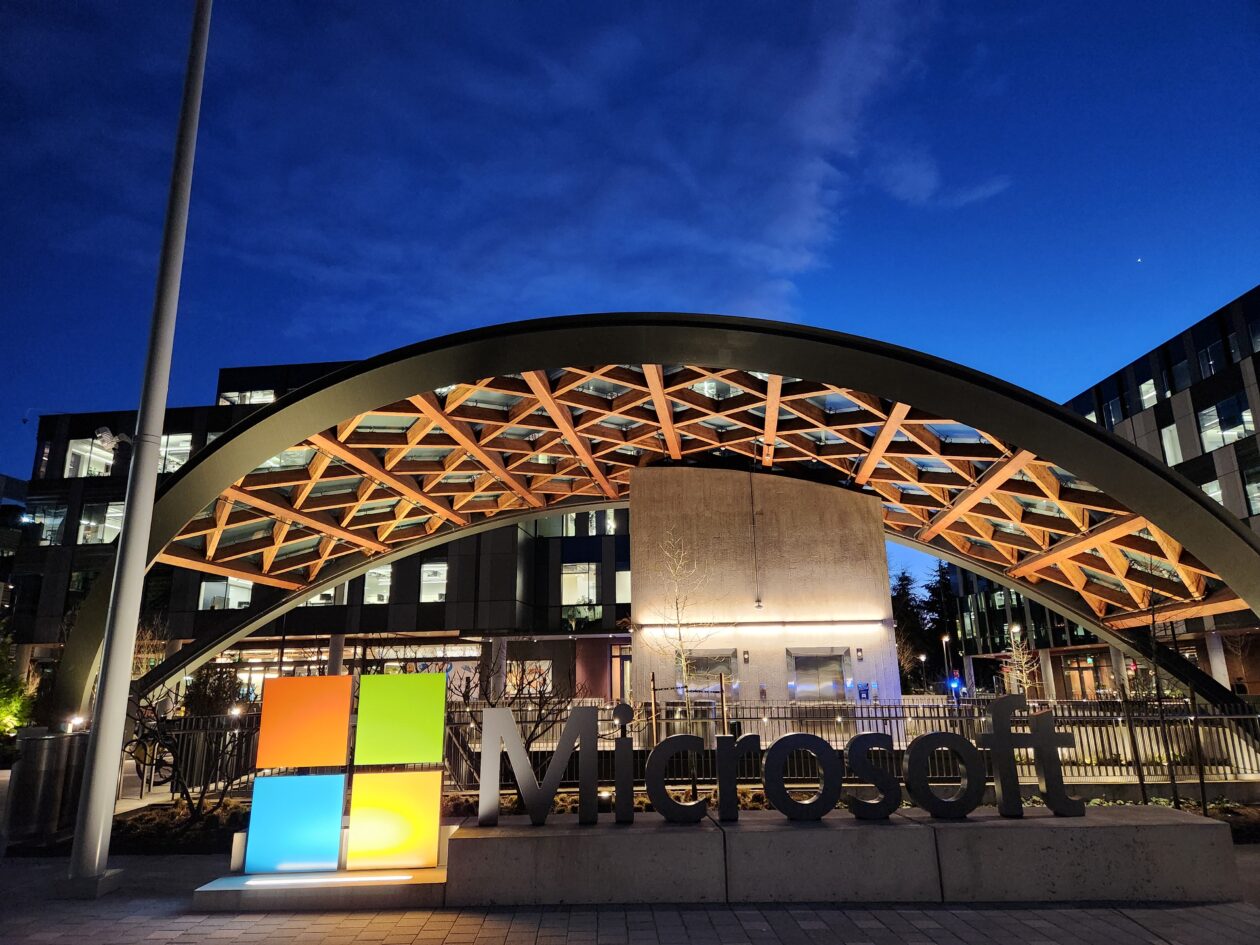
The night sky over Microsoft’s headquarters campus in Redmond, Wash. (GeekWire File Photo / Todd Bishop)

Microsoft will take a $900 million charge in its current quarter for its one-time voluntary retirement program, the company disclosed in its earnings report Wednesday.

Just to put that in context, it’s roughly equal to one day of revenue for the company at its current rate. Microsoft brought in $82.9 billion in its most recent quarter, ended March 31. 

The retirement program is part of a broader reshaping of Microsoft’s workforce, which numbered 228,000 employees globally as of mid-2025, the last publicly released count.

Without giving specific numbers, Microsoft said Wednesday that its headcount declined year-over-year in the most recent quarter and will decline again in fiscal 2027, which starts in July.

On the earnings conference call, CFO Amy Hood said the company is focused on “building high performing teams that operate with pace and agility.”

Advertisement

At the same time, Microsoft plans to spend more than $40 billion on capital expenditures in the current quarter — a new record — primarily on data centers and AI infrastructure. 

The voluntary retirement program, announced last week, is open to U.S. employees at the senior director level and below whose age and years of service add up to 70 or more. 

Eligible employees are expected to get details May 7. They’ll have 30 days to decide.

At last count, Microsoft had about 125,000 U.S. employees, and the company has said about 7% are eligible for the program, so that would translate into about 8,750 eligible employees. 

Advertisement

The program will include a financial payout and extended healthcare, but Microsoft hasn’t disclosed the specific terms of the plan yet.

The $900 million charge, split between $350 million in cost of revenue and $550 million in operating expenses, reflects the company’s estimate of the cost, including its assumptions about how many employees will accept, which is also number it hasn’t disclosed.

The program has sparked a range of reactions on LinkedIn and other social networks. Some employees and HR professionals have praised it as a more humane alternative to layoffs, noting that it gives longtime employees a choice rather than a pink slip.

But others have warned that Microsoft risks losing experienced engineers and leaders who built the systems the company still depends on, and some eligible employees have noted that being told they qualify for “retirement” in their late 40s doesn’t feel like a benefit.

Advertisement

Source link

Continue Reading

Tech

Hackers exploit RCE flaws in Qinglong task scheduler for cryptomining

Published

on

Hackers exploit RCE flaws in Qinglong task scheduler for cryptomining

Hackers are exploiting two authentication bypass vulnerabilities in the Qinglong open-source task scheduling tool to deploy cryptominers on developers’ servers.

Exploitation started in early February, before the security issues were disclosed publicly at the end of the month, according to researchers at cloud-native application security company Snyk.

Qinglong is a self-hosted open-source time management platform popular among Chinese developers. It has been forked more than 3,200 times and has over 19,000 stars on GitHub.

image

The two security problems impact Qinglong versions 2.20.1 and older and can be chained to achieve remote code execution:

  • CVE-2026-3965: A misconfigured rewrite rule maps ‘/open/*’ requests to ‘/api/*’, unintentionally exposing protected admin endpoints through an unauthenticated path
  • CVE-2026-4047: The authentication check treats paths as case-sensitive (/api/), while the router matches them case-insensitively, allowing requests like ‘/aPi/…’ to bypass authentication and reach protected endpoints.

The root cause in both flaws is a mismatch between middleware authorization logic and Express.js routing behavior.

“Both vulnerabilities stem from a mismatch between the security middleware’s assumptions and the framework’s behavior,” Snyk researchers explain.

Advertisement

“The auth layer assumed certain URL patterns would always be handled one way, while Express.js treated them differently.”

Snyk reports that attackers have been targeting these two flaws on publicly exposed Qinglong panels to deploy cryptominers since February 7.

This activity was first spotted by Qinglong users, who reported about a rogue hidden process named ‘.fullgc’ utilizing between 85% and 100% of their CPU power.

The name deliberately mimics “Full GC,” an innocuous but resource-intensive process, to evade detection.

Advertisement

According to Snyk, the attackers exploited the flaws to modify Qinglong’s config.sh and injected shell commands that downloaded a miner to ‘/ql/data/db/.fullgc,’ and executed it in the background.

The remote resource located at ‘file.551911.xyz’ hosted multiple variants of the binary, including for Linux x86_64, ARM64, and macOS.

The attacks continued with multiple confirmed infections across various setups, including behind Nginx and SSL, while the Qinglong maintainers only responded to the situation on March 1.

The maintainer acknowledged the vulnerability and urged users to install the latest update. However, the mitigation in pull release #2924 focused on blocking command injection patterns, which Snyk says was insufficient.

Advertisement

The researchers report that the effective fix came in PR #2941, which corrected the authentication bypass in the middleware.


article image

AI chained four zero-days into one exploit that bypassed both renderer and OS sandboxes. A wave of new exploits is coming.

At the Autonomous Validation Summit (May 12 & 14), see how autonomous, context-rich validation finds what’s exploitable, proves controls hold, and closes the remediation loop.

Claim Your Spot

Source link

Advertisement
Continue Reading

Tech

Why one outage can still take down half the internet

Published

on

For a few hours recently, global cloud platform Cloudflare went down – and a noticeable chunk of the internet went with it.

Services stalled, platforms froze, and businesses were left dealing with failures they didn’t trigger and couldn’t control – from broken checkouts to lagging internal tools.

Fadl Mantash

Chief Information Officer at Tribe.

Source link

Continue Reading

Tech

Building An X86 Gaming PC Without Intel, NVIDIA Or AMD Parts

Published

on

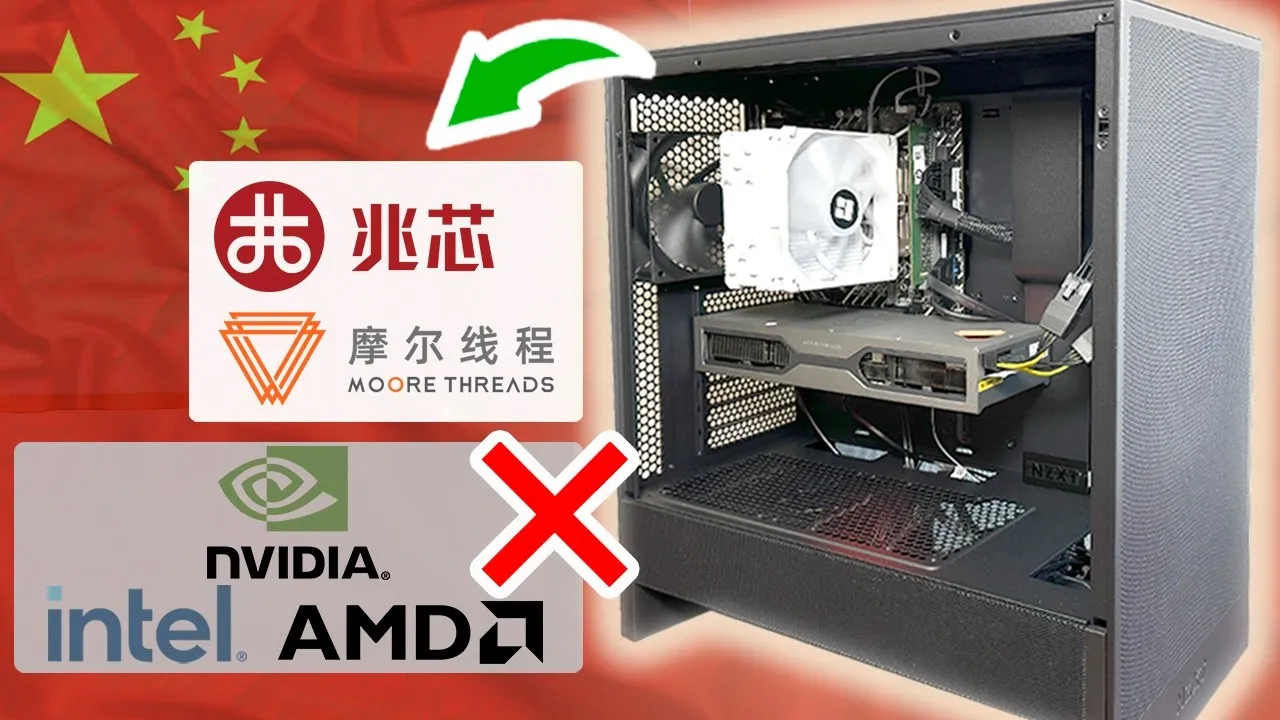
This is an interesting challenge from the “why not?” files — [GPUSpecs] over on YouTube built a gaming PC without using a single component from NVIDIA, Intel, or AMD. That immediately makes us think of the high-power ARM workstations or perhaps even perhaps the new “AI workstations” coming available with RISC V architecture, but the challenge here was specifically “gaming PC,” not workstation. A gaming PC, without a GPU by one of those three? To make it even more interesting, the x86 CPU isn’t Intel or AMD either.

If you’re of a certain vintage, you may remember Cyrix. Cyrix reverse-engineered the x86 ISA and made their own compatible chips in the 90s, before being bought out by National Semiconductor, and then VIA Technologies. VIA partnered with the Government of Shanghai to found Zhaoxin, and it is from Zhaoxin that the KaiXian KX 7000 CPU hails — an x86-64 device, that isn’t Intel or AMD. We’ve actually covered the company before. This particular chip benchmarks like an old i5, so not spectacular, but usable. 

The GPU is also Chinese: a Moore Threads MTT S80, with 16 GB of DDR6 vRAM, 4096 shading units, 256 texture mapping units, and 256 ROPs. On paper, that looks like a very respectable graphics card, but it’s not clear how well the games [GPUSpecs] tested were actually using it. Based on the numbers he was getting in his testing, there are some serious driver issues with this card. Even Black Myth: Wukong, which is supposed to be a game the card targets, was sitting at 13.6 FPS on low settings and 1080p. That almost feels like integrated graphics numbers, not something a beefy GPU would give you — but it matches what other reviewers were saying when the card first came out.

So if you’re looking for a sanction-proof gaming rig, we’re sorry to say it’s not quite ready for triple-A. On the other hand, it’s a neat hack and we didn’t know this box could even get built. Right now, it looks like you will need at least one of the big three names to game on–you can game on ARM with NVIDIA graphics,  or even with Intel graphics, and of course AMD, which has been in the works the longest.

Advertisement

Source link

Advertisement
Continue Reading

Tech

First Tesla Semi Rolls Off High-Volume Production Line

Published

on

Tesla has produced the first Semi from its new high-volume production line at Gigafactory Nevada, a milestone for the long-delayed electric Class 8 truck program after years of pilot builds and delays. Electrek reports: The Tesla Semi has had one of the longest gestation periods in Tesla’s history. First unveiled in 2017, the truck was originally promised for production in 2019. That target slipped repeatedly — to 2020, then 2021, then 2022 — before Tesla finally delivered a handful of units to PepsiCo in late 2022. Those early trucks were essentially hand-built on a pilot line. Tesla spent the next three years refining the design, cutting roughly 1,000 lbs from the truck, and building out a dedicated factory adjacent to Gigafactory Nevada in Sparks. The company revealed the final production specs in February, confirming two trims: a Standard Range with 325 miles at full 82,000-lb gross combination weight, and a Long Range with 500 miles of range.

Tesla is quoting $290,000 for the 500-mile Long Range version and roughly $260,000 for the Standard Range — making it the lowest-priced Class 8 battery electric tractor on the market. The shift from a pilot line to a high-volume production line is significant. Tesla’s Semi factory is designed for an annual capacity of 50,000 trucks, though the company will ramp gradually. Analysts project deliveries between 5,000 and 15,000 units in 2026, but that sounds way too optimistic. […] Both trims feature an 800-kW tri-motor drivetrain producing 1,072 hp and support 1.2-MW Megacharger speeds, restoring 60% of range in roughly 30 minutes — conveniently timed around a driver’s mandatory rest break. Tesla has opened its first Megacharger station in Ontario, California, and has mapped 66 Megacharger locations across 15 states.

Source link

Continue Reading

Tech

Motorola Moto G Stylus 2026 Review: Better Pen, Higher Price

Published

on

This is a playbook Motorola has used for the rest of its Moto G phones to keep prices static, but it especially stings here with the price increase. Thankfully, performance is completely fine. I have been using this phone for nearly a month and haven’t had any issues, outside of some lag when launching the camera app. You’ll see more of its limits running graphics-heavy games—something competing phones won’t have as much trouble with—but it’s generally more than adequate.

There’s a slight bump in battery capacity to 5,200 mAh, and I can easily go two full days with light to average use. One day, when I had a very high screen-on time of nine hours, I had to recharge the phone by around 7 pm, so if you’re screen-maxxing, you’ll definitely need to top up once during the day. Overall, I’m happy with the juice. A nice perk: There’s wireless charging, so you have two ways to charge it up.

As for the 6.7-inch, 120-Hz AMOLED screen, I haven’t had a problem reading it on sunny days, but like the Nothing Phone (4a) Pro, Motorola’s auto-brightness slider is very sensitive and constantly dims the screen when I don’t want it to, so that might be something you’ll get miffed by (you can always turn auto-brightness off).

Camera Blur

The camera system is where Moto G phones have always struggled, and now, in perspective with other $500 phones, the Moto G Stylus still doesn’t quite measure up. The 50-megapixel main camera—in indoor conditions with decent lighting—struggles to capture a sharp photo of my dog when there’s slight movement. (I have a lot of blurry photos.)

Advertisement

When he is staying very still, there’s usually another problem, like too-dark shadows or too-bright highlights. Looking at one of my pet pics, the camera tried to keep the room well-exposed, but my pup’s eyes are pitch black, and you can’t see any detail on his nose—it’s just a black void. In these kinds of high-contrast scenes, you’ll also notice colors looking a little muted, too. In good lighting, you can snap great results, though the 13-MP ultrawide still struggles with colors; the sky has an unnatural blue tinge. The selfie camera is a decent performer, though, even when I’m backlit.

Source link

Advertisement
Continue Reading

Tech

Who Owns Royal Farms Gas Stations?

Published

on


Royal Farms is a chain of gas stations and convenience stores with a total of 288 locations as of 2025. These stores are primarily located in the mid-Atlantic states, with 148 of them in Royal Farms’ home state of Maryland, another 40 in Virginia, 37 in Delaware, and 27 in Pennsylvania. Royal Farms stores are also located in the states of North Carolina, New Jersey, West Virginia, and South Carolina. 

Royal Farms is owned by the descendants of Malcolm Kemp, who founded the Cloverland Farms Dairy around 1919. In a story that has played out many times in the dairy business and has many similarities to Wawa’s origin story, the decline in milk delivery led Cloverland to open its first “White Jug” store in 1959, which Royal Farms considers to be its founding date. The White Jug sold a full line of dairy products, as well as some “quick pick-up items,” as they were called. These were the forerunners of today’s convenience stores, long before there were gas pumps outside to lure you in. 

Cloverland Farms Dairy later merged with Royal Dunloggin Dairy, renaming itself Royal Farms in 1968. By the time that the 1970s rolled around, all of the original White Jug stores had been replaced by Royal Farms locations. As of this writing, John Kemp, a member of the very private Kemp family, holds the position of President and CEO of Two Farms Inc., the privately-held company that does business as Royal Farms.

Advertisement

What else you should know about Royal Farms

Royal Farms has become rather famous for its fried chicken, which is hand-breaded and made in a pressure cooker in each individual store. The company bills the product, which is available anytime during the store’s 24 operating hours as, “World Famous Chicken—Always Fresh, Never Frozen.” In 2024, Royal Farms won USA Today’s “best gas station for food” award, surpassing even renowned convenience stores like Texas-based Buc-ee’s. The fried chicken had a lot to do with the win. According to a review in Chowhound, “the chicken has won countless fans throughout the region, including professional chefs and food critics, some of whom rank it among the top fried chicken chains in the country.”

Other major food products that Royal Farms is known for include its fresh-brewed coffee, its breakfast menu that you can order from 24 hours a day, and a bar that lets you make your own milkshake. Other options include pulled or grilled chicken sandwiches and wraps, Texas club sandwiches, burgers, hot dogs, sliders, and deli sandwiches, plus Maryland-made items like Berger cookies and Goetze’s Cow Tales, as well as the Cloverland Dairy products that started it all and are still sold there.

Advertisement

Royal Farms may not be quite as large as their nearby competitors like Sheetz and Wawa, who are turning their gas stations into massive convenience stores, but this Maryland-based chain has expanded into several adjoining states. Royal Farms has made its mark and is likely to continue its expansion plans, just as Sheetz and Wawa have.


Advertisement

Source link

Continue Reading

Tech

Vivo X300 FE India Price Leaked Along with Big Upgrades

Published

on

The Vivo X300 FE is expected to launch in India soon, and several details about the device have already leaked online. These include the expected price and key specifications. The upcoming model is likely to continue Vivo’s compact flagship approach, but with upgrades in performance, cameras, and charging technology.

According to leaked information, the Vivo X300 FE may carry a starting price of around Rs 79,999 in India. Although the box shows an MRP of Rs 1,19,999, the real market price is expected to be lower. When compared to the X200 FE’s launch price of Rs 54,999, this is quite a big jump. The increase likely comes from the addition of a new Snapdragon chipset, better camera setup, and premium features like wireless charging.

Camera Upgrades

The Vivo X300 FE is likely to build on its camera capabilities with a triple camera system tuned by ZEISS. A 50 MP primary sensor, a 50 MP telephoto lens, and an 8 MP ultrawide lens will form part of this phone’s camera setup.

This time, one of the most notable additions to the phone is the telephoto extender. This feature can be especially helpful for portraits and detailed shots.

Advertisement

Design and Processor

vivo X300 FE

The Vivo X300 FE may come with a new design, but it won’t feel completely different in hand. The biggest visible change is the horizontal camera layout on the back panel. However, the Vivo X300 FE will likely retain its 6.31-inch screen and flat edges, maintaining its slim form factor. Moreover, there will be changes to the smartphone’s color options, with the addition of new colors such as Olive, Purple, and Black.

The other major upgrade will be in the processor of this device. The Vivo will now use the Snapdragon 8 Gen 5 instead of the previous MediaTek processor, resulting in improved overall performance and a better user experience for daily activities and gaming. Moreover, this processor supports AI cameras, making it a more efficient phone for long-term use.

Battery

Battery and charging are also getting a noticeable upgrade on the X300 FE. The phone is expected to pack a large 6,500mAh battery along with 90W wired fast charging. Moreover, Vivo may introduce 40W wireless charging, a new feature for this model. This should make charging more convenient for everyday use.

Source link

Advertisement
Continue Reading

Tech

Popular WordPress redirect plugin hid dormant backdoor for years

Published

on

Popular WordPress redirect plugin hid dormant backdoor for years

The Quick Page/Post Redirect plugin, installed on more than 70,000 WordPress sites, had a backdoor added five years ago that allows injecting arbitrary code into users’ sites.

The malware was uncovered by Austin Ginder, the founder of WordPress hosting provider Anchor, who found it after 12 infected sites on his fleet triggered a security alert.

Quick Page/Post Redirect plugin, available on WordPress.org for several years, is a basic utility plugin used for creating redirects in posts, pages, and custom URLs.

image

WordPress.org has temporarily pulled the plugin from the directory pending a review. It is unclear if the author of the plugin introduced the backdoor or they were compromised by a third party.

Ginder explains that official plugin versions 5.2.1 and 5.2.2, released between 2020 and 2021, included a hidden self-update mechanism pointing to a third-party domain, anadnet[.]com, which allowed pushing arbitrary code outside WordPress.org’s control.

Advertisement

In February 2021, the malicious self-updater was removed from subsequent versions of the plugin on WordPress.org, before code reviewers had a chance to scrutinize it.

In March 2021, according to Ginder, sites running Quick Page/Post Redirect 5.2.1 and 5.2.2 silently received a tampered 5.2.3 build from that external server, which introduced a passive backdoor.

However, the build from the ‘w.anadnet[.]com’ server with the extra backdoor code had a different hash than the same version of the plugin sourced from WordPress.org.

The passive backdoor triggers only for logged-out users to hide its activity from admins. It is hooked into ‘the_content’ and fetches data from the ‘anadnet’ server, likely used for SEO spam operations.

Advertisement

“The actual mechanism was cloaked parasite SEO. The plugin was renting Google ranking on seventy thousand websites back to whoever was operating that backchannel in 2021,” explained Ginder.

The real danger for impacted websites, though, comes from the updating mechanism itself, which enabled arbitrary code execution on demand. That mechanism is still present on sites using the plugin, but dormant because the malicious external command-and-control subdomain does not resolve. The domain is active, though.

The solution for impacted users is to uninstall the plugin and replace it with a clean copy of version 5.2.4 sourced from WordPress.org when it becomes available again.

Ginder included a message for whoever is behind the backdoor, urging them to do the right thing now and publish a static update manifest that forces all affected installs to automatically upgrade to the clean WordPress.org version, effectively removing the backdoor from previously compromised sites.

Advertisement

The researcher warns that Quick Page/Post Redirect still has 70,000 installs with an update check pointing to the ‘anadnet’ server.


article image

AI chained four zero-days into one exploit that bypassed both renderer and OS sandboxes. A wave of new exploits is coming.

At the Autonomous Validation Summit (May 12 & 14), see how autonomous, context-rich validation finds what’s exploitable, proves controls hold, and closes the remediation loop.

Claim Your Spot

Source link

Advertisement
Continue Reading

Trending

Copyright © 2025