Connect with us
DAPA Banner

Business

Freedom Holding Corp. Rises as Global Fintech Stocks Fell in GL 2026

Published

on

Financial consolidation: these simple words often seem like a real nightmare for any finance professional especially when they use manual methods such as spreadsheets.

Fintech stocks came under broad pressure in the first quarter of 2026, as investors pulled back from growth names in a more uncertain macro environment.

The valuations across the sector fell sharply, with fintechs significantly underperforming the broader market. One notable exception was Freedom Holding Corp., whose shares rose nearly 17% over the period. The move was supported by its more diversified ecosystem business model, which extends beyond financial services into telecom, travel, and other lifestyle segments.

A decline in fintech valuations was highlighted in a report titled “Fintech’s rapidly melting market cap,” published in mid-April by PitchBook, a leading provider of financial data and analytics. “The public fintech sector entered 2026 with momentum, but the first quarter turned sharply as the Iran war drove energy inflation, reversed rate-cut expectations, and pushed investors into a risk-off posture. With 18% of the sector’s market cap being wiped out and median cohort returns ranging from -13% to -35.3%, fintech significantly underperformed the broader market in Q1,” according to the report. Not that fintech companies suddenly got worse, rather investors became less willing to pay high valuations for growth stocks in a more uncertain, inflation-sensitive environment.

Fintech Under Pressure

Declines were widespread across nearly all segments of fintech, spanning credit-focused Buy Now Pay Later (BNPL) providers, brokers, and payment platforms.

BNPL stocks came under pressure as investors pulled back from high-growth, credit-sensitive business models amid rising inflation concerns and fading expectations for interest-rate cuts. Klarna Group (KLAR), a provider of flexible payments that earns revenue from consumer installment lending and merchant fees, fell 54% in Q1 2026. Affirm Holdings (AFRM), which offers transparent installment plans and consumer lending products with no hidden fees, lost 38% over the first three months of the year.

Advertisement

Even the traditional lending segment, typically seen as less risky than consumer credit, was not immune. Upstart Network (UPST), an AI-driven lending platform that uses proprietary machine-learning models to underwrite personal, auto, and home equity loans, fell 44% over the period. Retail brokerage and investing platforms also came under pressure. Robinhood Markets (HOOD), the operator of the pioneering commission-free trading app Robinhood, fell 40% over the quarter.

Digital payments and money transfer fintechs held up better but still saw a decline in market cap. Shares of PayPal Holdings (PYPL), one of the most established global payments fintechs operating across roughly 200 markets, declined 22%. The stock of Block Inc. (XYZ), which runs Square, Cash App, and Afterpay and spans payments, merchant services, peer-to-peer transfers, and BNPL, fell 8%.

The downturn also extended to the neobank and consumer financial platform segment. SoFi Technologies (SOFI), which is building an all-in-one ecosystem spanning savings, banking products, lending, investing, and wealth protection within a single app, saw its market capitalization fall 42%. Even Nu Holdings (NU), one of the largest digital financial services platforms and a global neobank pioneer, serving approximately 131 million customers across Brazil, Mexico, and Colombia through its branchless model, declined 16% in Q1.

Freedom Holding: A Different Story

Shares of Freedom Holding Corp. moved in the opposite direction in Q1, gaining nearly 17% from $124.23 at the start of January to $144.88 on March 31. The stock continued higher into April, breaking above $160 mid-month. Freedom’s market capitalization has surpassed $9.5 billion. The growth has been supported by a series of positive corporate developments, including continued expansion into international markets, ongoing integration of Freedom Holding’s ecosystem, and strong financial results.

Advertisement

Revenue for the quarter ending December 31, 2025, rose to $628.6 million from $526.1 million in the previous quarter, while net income nearly doubled from $38.7 million to $76.2 million. Over the first nine months of the fiscal year, the group generated $1.69 billion in revenue and $144.5 million in net income. These numbers reflect the growing investments in further development of Freedom’s ecosystem, which integrates financial, telecom, and lifestyle businesses and is available to clients through the holding’s SuperApp, which now serves 11 million users.

In its core market of Kazakhstan, the group operates a leading brokerage, a top-ten bank by assets, and maintains strong positions in insurance. It is also strengthening its domestic banking presence through additional acquisitions

In neighboring Tajikistan, the group based on Freedom Bank Tajikistan is replicating the model, which has been previously tested and refined in Kazakhstan. As Freedom Holding sees the banking business as a locomotive for the entire multi-industrial ecosystem, it is acquiring new banks in Georgia and Turkey. Recently, the management also announced plans to buy banks in Armenia and France.

Besides that, in Europe, the group is actively developing its travel segment services, such as ticketing, bookings, and events. Freedom Holding Corp’s travel-focused subsidiary plans to cover all traveler needs, from a global hotel aggregator set to launch in May 2026, to transfers, excursions, curated tours, visa support, and more. With this, the holding seeks to compete with those of the largest international platforms, such as Booking.com and Airbnb.

Advertisement

In technology, the group is investing in proprietary AI tools and assistants and plans to develop a national AI hub in partnership with Nvidia to support the broader adoption of artificial intelligence across up to 70% of the Kazakhstan population.

To finance all these movements, Freedom Holding is considering a potential secondary share offering outside the United States, in Kazakhstan, and possibly in Hong Kong.

The Ecosystem Advantage

Analysts point to the company’s more diversified business model, which extends beyond financial services. Unlike many fintechs that rely mainly on lending, payments, or brokerage activity, Freedom has multiple revenue streams, which have helped support its share price growth during the sector-wide decline.

“The era of stand-alone financial services is coming to an end. The future lies in super-apps that integrate financial services into everyday life – from grocery shopping to travel planning. Banking will increasingly become an invisible layer embedded within these ecosystems,” says Saurabh Tripathi, Senior Partner and Global Leader of the Financial Institutions practice at Boston Consulting Group.

Advertisement

According to Fortune Business Insights, the global fintech market was valued at $394.9 billion in 2025 and is projected to reach $1.76 trillion by 2034, implying a CAGR of 18.2%. Much of that growth, however, is increasingly expected to come from embedded financial services integrated into broader digital ecosystems rather than delivered as standalone products.

Advertisement
Continue Reading
Click to comment

You must be logged in to post a comment Login

Leave a Reply

Business

Platforms, AI Orchestrators, and Workflow Design

Published

on

Most product teams adopt AI tools one by one — a code assistant here, a design generator there — and then wonder why delivery is still slow. The bottleneck was never individual tasks. It was always coordination.

Most product teams adopt AI tools one by one — a code assistant here, a design generator there — and then wonder why delivery is still slow. The bottleneck was never individual tasks. It was always coordination.

That’s what makes end-to-end product development with AI orchestration a different conversation: instead of asking “which AI tool should we add?”,  you start asking, “How do we make the whole system work?”

What is AI orchestration?

AI orchestration is a coordination and control layer for product delivery. When multiple AI models, tools, agents, and humans work on the same product, something has to define how work runs, in what order, with which inputs, and what to validate before progressing.

An AI orchestrator acts as the execution engine within this layer. It translates high-level intent into structured tasks, routes them to the appropriate execution layer, maintains shared context across steps, and triggers human intervention when decisions require judgment.

Isolated AI tools improve individual tasks. Orchestration improves the system. Without it, even strong tools produce fragmented outputs — slowing delivery through rework, misalignment, and unclear ownership at handoff points.

Advertisement

Why end-to-end product development needs AI orchestration

The most common failure mode in AI-assisted product teams isn’t bad tooling. It’s disconnected tooling. Design, engineering, and QA each use AI independently, but integration points — where work moves between disciplines — remain manual and error-prone.

Agentic AI orchestration changes this by treating the entire product lifecycle as a single coordinated system. Work moves from validated spec to generated code to tested output to staged release, with the right humans reviewing at the right moments. The difference between AI assistance and AI-coordinated delivery is what actually ships.

How AI orchestration works across the product lifecycle

Discovery phase: We conduct research, validate assumptions, and define scope simultaneously rather than executing it step by step. This shortens analysis time while keeping depth and accuracy.

Product planning and prioritization: The system models different prioritization options, highlights dependencies, and surfaces risks early. Humans make final decisions based on complete context, not fragmented inputs.

Advertisement

UX/UI design and prototyping: AI generates wireframes, applies design system rules, and flags accessibility issues. Designers focus on user flows and edge cases, while the system keeps everything aligned with the product spec.

Engineering and code generation: We don’t send AI code straight to production. The system runs automated tests and architecture checks before human review, reducing rework and keeping the codebase consistent.

QA, security, and compliance: We run tests automatically after every meaningful change. Compliance checks happen during development instead of at the end. Humans only review exceptions or unclear cases.

Release and post-launch iteration: We continuously collect production data, errors, and user behavior signals. The system feeds this back into development, so improvements happen as part of the workflow, not after release.

Advertisement

Core components of an AI orchestration platform

First, it needs task routing, which decides what work goes to AI, what goes to humans, and under what conditions. Second, it needs shared context management, so information doesn’t get lost between steps. Third, it must connect to existing systems through API and tool integrations.

It also needs human checkpoints for decisions that require judgment, and full visibility (logs and tracking) so every action can be traced and reviewed. Finally, it needs failure handling, so one broken step doesn’t disrupt the whole process.

Teams like Goodface agency have operationalized this as a human-led AI-orchestrated framework — with senior experts owning architecture and decisions while AI handles execution — delivering 25–30% higher efficiency within the same time and budget.

AI orchestration vs related concepts

Vs workflow orchestration: Workflow orchestration handles deterministic sequences. AI orchestration introduces non-deterministic elements — language model outputs, agent decisions — where uncertainty is a first-class concern.

Advertisement

vs AI agent: Agents execute. Orchestrators govern. An AI agent orchestration layer coordinates multiple agents, manages shared context, and enforces rules that individual agents don’t have visibility into.

Vs automation: Automation handles deterministic tasks. Orchestration handles workflows that involve judgment, generation, and variable outputs that require validation before they move forward.

Risks and limitations

Context loss between agents is the most common failure mode. Security exposure from misconfigured data access is the most serious. Tool sprawl, cost overruns from uncontrolled token usage, and accountability gaps when human ownership isn’t clearly defined round out the main risks. Over-automation without accountability is where orchestration projects most often break down in production.

KPIs for measuring AI orchestration

Track delivery cycle time, handoff reduction (manual coordination touchpoints eliminated), defect rates in automated validation versus staging, cost per completed workflow, and human review rate. A declining human review rate indicates the system is routing better; a rising one is an early warning sign worth investigating before it compounds.

Advertisement

FAQ

What is orchestration in AI product development? A coordination system that determines how AI tools, agents, and humans work together across the product lifecycle — routing tasks, sharing context, enforcing quality gates, and managing handoffs from discovery through deployment.

What does an AI orchestrator do in an end-to-end workflow? It decomposes product intent into structured tasks, assigns each to the appropriate execution layer, exchanges context, monitors outputs, and triggers human review where automation isn’t sufficient.

When does a product team need an AI orchestration platform? When multiple AI tools don’t share context, when coordination creates more delay than execution, or when AI output quality is inconsistent across the pipeline.

Can AI orchestration support regulated product environments? Yes — when governance is built in explicitly. Audit trails, configurable human-in-the-loop checkpoints, and access controls can meet fintech and healthtech compliance requirements.

Advertisement

How does AI orchestration improve delivery speed and quality? By running parallel workstreams, reducing rework at handoff points, and enforcing validation continuously rather than end-of-sprint.

What should companies look for in an AI orchestration platform? Human-in-the-loop configurability, deep observability, integration flexibility, and reliability under production load. Legibility — being able to understand what happened when something goes wrong — is a core requirement, not a nice-to-have.

Advertisement
Continue Reading

Business

Sandisk Corporation (SNDK) Q3 2026 Earnings Call Transcript

Published

on

OneWater Marine Inc. (ONEW) Q1 2026 Earnings Call Transcript

Sandisk Corporation (SNDK) Q3 2026 Earnings Call April 30, 2026 4:30 PM EDT

Company Participants

Ivan Donaldson – Vice President of Investor Relations
David V. Goeckeler – Chairman & CEO
Luis Visoso – Executive VP & CFO

Advertisement

Conference Call Participants

Mark Newman – Bernstein Institutional Services LLC, Research Division
Joseph Moore – Morgan Stanley, Research Division
Benjamin Reitzes – Melius Research LLC
Christopher Muse – Cantor Fitzgerald & Co., Research Division
James Schneider – Goldman Sachs Group, Inc., Research Division
Asiya Merchant – Citigroup Inc., Research Division
Vijay Rakesh – Mizuho Securities USA LLC, Research Division
Blayne Curtis – Jefferies LLC, Research Division
Victor Santiago – Evercore ISI Institutional Equities, Research Division
Ruplu Bhattacharya – BofA Securities, Research Division

Presentation

Advertisement

Operator

Good afternoon, and welcome to Sandisk’s Third Quarter Fiscal Year 2026 Earnings Conference Call. [Operator Instructions] Please note this event is being recorded.

I would now like to turn the conference over to Ivan Donaldson, Vice President of Investor Relations. Please go ahead.

Advertisement

Ivan Donaldson
Vice President of Investor Relations

Before we begin, please note that today’s discussion will contain forward-looking statements based on management’s current assumptions and expectations, which are subject to various risks and uncertainties. These forward-looking statements, including expectations for our technology and product portfolio, our business plans and performance, our capital allocation priorities, market trends and opportunities and our future financial results. We assume no obligation to update these statements. Please refer to our annual report on Form 10-K and our other filings with the SEC for more information on the risks and uncertainties that could cause actual results to differ materially from expectations.

We will also make references to non-GAAP financial measures today. Reconciliations between the non-GAAP and comparable GAAP financial measures are included in the written materials posted in the Investor Relations section of our website.

With that, I’ll turn the call over

Advertisement
Continue Reading

Business

South Korean April exports rise 48.0% y/y as chip boom extends

Published

on

South Korean April exports rise 48.0% y/y as chip boom extends


South Korean April exports rise 48.0% y/y as chip boom extends

Continue Reading

Business

Asara CEO appointed MD

Published

on

Asara CEO appointed MD

Asara Resources chief executive Matthew Sharples has been appointed managing director of the Subiaco-based junior.

Continue Reading

Business

Trump signs executive order aiming to expand retirement account access

Published

on

Trump signs executive order aiming to expand retirement account access

President Donald Trump signed an executive order on Thursday to help expand access to retirement savings accounts for Americans who do not have employer-provided plans.

“Beginning at the start of next year, every American will be able to go to TrumpIra.gov and open a new low-cost IRA account,” Trump said in the Oval Office. “You’ll then be able to access the same type of retirement accounts that federal employees enjoy through the Thrift Savings Plans, which are incredible. As part of the Federal Savings Match program, low-income Americans will be eligible to receive up to $1,000 per year in matching funds deposited directly into their accounts.”

Advertisement

“The great thing for millions of Americans who lack employer-sponsored plans, this will be really revolutionary because they’ll be covered,” Trump said. “Nobody thought that was possible. For example, if a 25-year-old who is eligible for a Savers Match program invest just $165 a month under the matching federal contributions, they will have an estimated $465,000 in their account by the time they’re 65 years old. In other words, they’ll be rich. And there’s something awfully nice about that.”

A White House official confirmed the planned order to FOX Business earlier Thursday. 

The Trump administration’s effort will work in conjunction with 2022 legislation that instructs the federal government to match retirement-plan contributions for people earning below $35,000 with as much as $1,000 beginning next year,” Semafor reported.

US RAKES IN $3B IN 90 DAYS FROM INTEL STOCK, TRUMP SAYS

Advertisement
President Trump

President Donald Trump attends the White House Correspondents’ Association Dinner on April 25, 2026, in Washington, D.C. (Kevin Mazur/Getty Images for OP)

The president’s new order will instruct the Treasury Department to open a TrumpIRA.gov website by the time the matching opportunity takes effect in January, a White House official indicated. Workers will be able to utilize the site to filter private-sector retirement plans based on different factors so they can join one that would enable them to receive the match if qualified.

TREASURY FREEZES $344M IN CRYPTO AS ‘OPERATION ECONOMIC FURY’ PUSHES IRAN TO INDUSTRIAL BREAKING POINT

$100 bills

A picture taken on Dec. 7, 2021 in Istanbul shows U.S. currency. (Ozan Kose/AFP via Getty Images)

The department will screen the plans on the site, but will not team up with certain financial institutions like it did with Trump Accounts, the official noted, according to Semafor.

FEDERAL GOVERNMENT MADE $186B IN IMPROPER PAYMENTS LAST FISCAL YEAR

Advertisement
President Trump

U.S. President Donald Trump waves to the media after walking off of Air Force One at Miami International Airport on April 11, 2026 in Miami, Fla.  (Tasos Katopodis/Getty Images / Getty Images)

CLICK HERE TO GET FOX BUSINESS ON THE GO

The order will instruct the Treasury Department to publicize the match and release information for those in the private sector who wish to give workers’ IRAs, the outlet reported, adding that the White House official compared the concept to the Dells’ pledge to seed Trump Accounts for kids.

Fox News’ Patrick Ward contributed to this report

Advertisement
Continue Reading

Business

Lantern Pharma Inc. (LTRN) Discusses Live Demonstration of withZeta.ai AI Platform for Rare Cancer Drug Discovery Transcript

Published

on

OneWater Marine Inc. (ONEW) Q1 2026 Earnings Call Transcript

Craig Brelsford

Hi. This is Craig Brelsford with RedChip Companies. Thank you for joining us for what promises to be an exciting session with Lantern Pharma. Today’s session is centered around a live real-time demonstration of withZeta.ai, Lantern Pharma’s next-generation AI platform designed to transform how oncology drugs are discovered, particularly in rare cancers. Rather than just talking about the technology, you’ll see it in action, executing research workflows, synthesizing complex scientific data and generating insights in real-time. This is a rare opportunity to observe how AI is being applied at the front lines of drug development.

Lantern Pharma, which trades on the NASDAQ under the ticker LTRN, is positioning this platform not only as a scientific engine, but also as a scalable subscription-based business with meaningful commercial potential.

Joining us today is Panna Sharma, Chief Executive Officer, President and Director of Lantern Pharma, who will guide us through the demonstration and discuss the broader implications of this technology. We will begin with the presentation and demo momentarily followed by a Q&A session. [Operator Instructions]

Advertisement

Before we begin, please allow me to read the safe harbor statement. This call may contain forward-looking statements within the meaning of the Private Securities Litigation Reform Act of 1995. All statements pertaining to future financial and/or operating results, along with other statements about the future expectations, beliefs, goals, plans or prospects expressed by management constitute forward-looking statements. Any statements that are not historical facts should also be considered forward-looking statements. And of course, forward-looking statements involve risks and uncertainties.

Panna, go right ahead.

Advertisement
Continue Reading

Business

Perth home values lift, but show signs of slowing

Published

on

Perth home values lift, but show signs of slowing

Cotality’s latest home value index shows that Perth added more than $21,000 to its median home value in April.

Continue Reading

Business

Start Hamstring Rehab Enters Key On-Court Phase as Lakers Push for Playoff Survival

Published

on

Luka Doncic

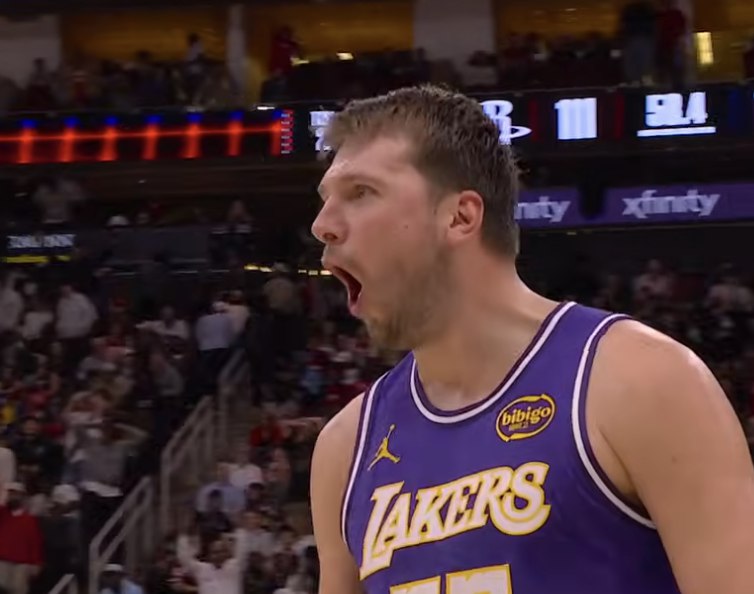
LOS ANGELES — Nearly four weeks after suffering a Grade 2 left hamstring strain, Los Angeles Lakers superstar Luka Doncic continues a cautious rehabilitation protocol focused on controlled on-court movement and progressive loading, with no firm timetable for return as the team battles through its first-round playoff series against the Houston Rockets.

Luka Doncic
Luka Doncic

The Slovenian guard, who injured his hamstring late in a blowout loss to the Oklahoma City Thunder on April 2, remains listed as out indefinitely. Coach JJ Redick confirmed this week that Doncic has advanced beyond standstill drills to light on-court activity, marking a significant step in his recovery from the partial muscle tear.

Medical experts describe a Grade 2 hamstring strain as involving noticeable fiber disruption without a complete rupture, typically requiring four to six weeks for full recovery. Doncic’s aggressive approach included traveling to Madrid shortly after the injury for specialized regenerative treatments, including platelet-rich plasma and stem cell injections under the care of physicians linked to his former club, Real Madrid.

Those interventions aimed to accelerate healing, potentially compressing the standard timeline. As of late April, sports medicine specialists like Dr. Jesse Morse estimated a possible return window of 10 to 14 days from the point when meaningful on-court movement begins, placing a potential comeback in mid-to-late May if progress holds.

Redick provided the most recent public update, noting Doncic “was able to move today a little bit on the court. Most of the stuff has been standstill. He’s progressing.” The coach stressed there is still no timeline, echoing reports from ESPN’s Shams Charania that the recovery path remains slow. Doncic has not yet progressed to one-on-one work or full-speed scrimmaging.

Advertisement

The protocol follows a standard phased return-to-play model for hamstring injuries in elite athletes. Phase one emphasized protection and controlled mobility, including rest, compression, physical therapy and the European injections. Phase two has introduced light jogging, directional changes and basketball-specific movements at sub-maximal effort. Subsequent phases will incorporate sprinting, jumping, cutting and contact before clearance for game play.

Lakers medical staff monitor metrics such as muscle strength symmetry, flexibility and pain-free range of motion. Hamstring strains carry high re-injury risk — often 20-30% in professional sports — if athletes return prematurely, particularly in a high-usage player like Doncic who relies on explosive first steps and deceleration.

Doncic rejoined the team in Los Angeles ahead of the playoffs but has not traveled with the squad for road games against Houston. His presence on the bench has provided intangible leadership, yet the Lakers have leaned heavily on LeBron James, Austin Reaves (also recovering from an oblique strain) and supporting cast members.

Expectations point to Doncic missing the entire first-round series. Even if the Lakers advance, multiple reports indicate he is unlikely to be available for the start of the Western Conference semifinals, with a more realistic target around Games 3 or 4 of a potential second-round matchup. Six weeks from the April 2 injury date would land in mid-May.

Advertisement

The injury occurred at a critical juncture. Doncic had been playing at an MVP-caliber level, powering the Lakers to a strong late-season surge. His absence has reshaped playoff dynamics in the Western Conference, forcing Los Angeles to adapt without its primary playmaker and leading scorer.

Team officials and medical experts weigh the long-term risks against short-term playoff ambitions. Rushing a return could jeopardize Doncic’s availability for future seasons or lead to chronic issues. Hamstring injuries have historically sidelined stars for extended periods, with re-aggravation often extending timelines significantly.

Doncic’s work ethic and competitive drive have been highlighted throughout the process. Sources describe him attacking rehab aggressively while remaining in good spirits. His agent, Bill Duffy, confirmed the European trip was a collaborative decision involving Lakers doctors and independent specialists.

Broader implications extend to the Lakers’ roster construction and future planning. The team traded for Doncic earlier in the season in a blockbuster move, banking on his superstar talent to elevate the franchise. His prolonged absence tests depth and underscores the fragility of championship contention when key pieces go down.

Advertisement

Fans and analysts track every update closely. Social media buzzes with speculation about potential return dates, fueled by optimistic interpretations of practice footage and vague coaching comments. Yet insiders maintain patience is essential.

For a 27-year-old in his prime, full recovery remains highly probable with proper management. Modern sports medicine, including the biologics Doncic received, has improved outcomes for soft-tissue injuries. Strength and conditioning programs tailored to basketball movements will play a pivotal role in the final rehab stages.

As the Lakers navigate the playoffs without their All-NBA talent, focus shifts to collective resilience. James has shouldered a heavier load, while younger players step into expanded roles. A deep run without Doncic would be impressive; his eventual return could provide a massive boost for later rounds.

Looking ahead, the Lakers’ medical staff will continue daily assessments. Progression to non-contact 3-on-3 or 5-on-5 work will signal the next major milestone. Only after clearing sport-specific testing, including sprint times and change-of-direction drills, will Doncic receive medical clearance.

Advertisement

The organization emphasizes a conservative approach. “We’re going to do what’s best for Luka long-term,” Redick has reiterated in various forms. That philosophy prioritizes sustainable health over rushed availability.

Doncic’s injury serves as a reminder of basketball’s physical demands. Even superstars face setbacks, and recovery protocols balance science, patience and individual response. For now, the focus remains on incremental gains — more fluid movement, greater confidence in the hamstring and steady buildup toward basketball activities.

Whether Doncic returns this postseason or begins the 2026-27 season fully healthy, his current protocol reflects best practices in elite athlete care. The basketball world watches, hoping the star’s dedication yields a strong comeback when the moment is right.

Advertisement
Continue Reading

Business

Senseonics prices $80 million public offering at $5 per share

Published

on


Senseonics prices $80 million public offering at $5 per share

Continue Reading

Business

Karlka Nyiyaparli Aboriginal Corporation to build Swan Valley hub for Perth medical travel

Published

on

Karlka Nyiyaparli Aboriginal Corporation to build Swan Valley hub for Perth medical travel

A Pilbara native title group is building a home away from home in Perth to house traditional owners visiting the city for medical treatment.

Continue Reading

Trending

Copyright © 2025