Connect with us
DAPA Banner

Business

Trump signs executive order aiming to expand retirement account access

Published

on

Trump signs executive order aiming to expand retirement account access

President Donald Trump signed an executive order on Thursday to help expand access to retirement savings accounts for Americans who do not have employer-provided plans.

“Beginning at the start of next year, every American will be able to go to TrumpIra.gov and open a new low-cost IRA account,” Trump said in the Oval Office. “You’ll then be able to access the same type of retirement accounts that federal employees enjoy through the Thrift Savings Plans, which are incredible. As part of the Federal Savings Match program, low-income Americans will be eligible to receive up to $1,000 per year in matching funds deposited directly into their accounts.”

Advertisement

“The great thing for millions of Americans who lack employer-sponsored plans, this will be really revolutionary because they’ll be covered,” Trump said. “Nobody thought that was possible. For example, if a 25-year-old who is eligible for a Savers Match program invest just $165 a month under the matching federal contributions, they will have an estimated $465,000 in their account by the time they’re 65 years old. In other words, they’ll be rich. And there’s something awfully nice about that.”

A White House official confirmed the planned order to FOX Business earlier Thursday. 

The Trump administration’s effort will work in conjunction with 2022 legislation that instructs the federal government to match retirement-plan contributions for people earning below $35,000 with as much as $1,000 beginning next year,” Semafor reported.

US RAKES IN $3B IN 90 DAYS FROM INTEL STOCK, TRUMP SAYS

Advertisement
President Trump

President Donald Trump attends the White House Correspondents’ Association Dinner on April 25, 2026, in Washington, D.C. (Kevin Mazur/Getty Images for OP)

The president’s new order will instruct the Treasury Department to open a TrumpIRA.gov website by the time the matching opportunity takes effect in January, a White House official indicated. Workers will be able to utilize the site to filter private-sector retirement plans based on different factors so they can join one that would enable them to receive the match if qualified.

TREASURY FREEZES $344M IN CRYPTO AS ‘OPERATION ECONOMIC FURY’ PUSHES IRAN TO INDUSTRIAL BREAKING POINT

$100 bills

A picture taken on Dec. 7, 2021 in Istanbul shows U.S. currency. (Ozan Kose/AFP via Getty Images)

The department will screen the plans on the site, but will not team up with certain financial institutions like it did with Trump Accounts, the official noted, according to Semafor.

FEDERAL GOVERNMENT MADE $186B IN IMPROPER PAYMENTS LAST FISCAL YEAR

Advertisement
President Trump

U.S. President Donald Trump waves to the media after walking off of Air Force One at Miami International Airport on April 11, 2026 in Miami, Fla.  (Tasos Katopodis/Getty Images / Getty Images)

CLICK HERE TO GET FOX BUSINESS ON THE GO

The order will instruct the Treasury Department to publicize the match and release information for those in the private sector who wish to give workers’ IRAs, the outlet reported, adding that the White House official compared the concept to the Dells’ pledge to seed Trump Accounts for kids.

Fox News’ Patrick Ward contributed to this report

Advertisement
Continue Reading
Click to comment

You must be logged in to post a comment Login

Leave a Reply

Business

Protesters clash with Australian police after suspected killer of Indigenous girl arrested

Published

on

Protesters clash with Australian police after suspected killer of Indigenous girl arrested


Protesters clash with Australian police after suspected killer of Indigenous girl arrested

Continue Reading

Business

Morgan Stanley’s Top Picks in China Industrials

Published

on


Morgan Stanley’s Top Picks in China Industrials

Continue Reading

Business

FBI Analyzes Critical DNA in Nancy Kidnapping as Search Enters Fourth Month

Published

on

Savannah Guthrie & Nancy Guthrie

TUCSON, Ariz. — Nearly three months after 84-year-old Nancy Guthrie vanished from her Catalina Foothills home in the early hours of Feb. 1, the FBI is now analyzing potentially breakthrough DNA evidence recovered from the scene, even as authorities acknowledge the high-profile abduction case remains unsolved with no arrests or named suspects.

Savannah Guthrie & Nancy Guthrie

The disappearance of the mother of NBC’s “Today” co-anchor Savannah Guthrie has captivated national attention, sparking an intense multi-agency search involving the Pima County Sheriff’s Department, the FBI and other federal resources. Blood evidence at the home, surveillance footage of a masked intruder and multiple ransom-related communications have fueled theories of a targeted kidnapping, yet investigators say her whereabouts and condition remain unknown.

Pima County Sheriff Chris Nanos has repeatedly described the case as an abduction, citing signs of a struggle including blood spatter at the residence. Guthrie, who has a pacemaker and requires daily heart medication, left behind her phone and critical prescriptions when she was last seen after a family dinner on Jan. 31. She was reported missing the next morning when she failed to appear at church.

Recent developments offer cautious hope. Sources familiar with the investigation told ABC News in mid-April that the FBI received a hair sample collected from Guthrie’s home in February and is applying advanced technology to analyze it. The bureau confirmed the sample transfer, raising expectations that genetic leads could finally identify those responsible.

Forensic experts have weighed in on the blood evidence. Former FBI profiler Jim Clemente suggested the spatter on the front entrance indicates Guthrie may have made a “last stand” during the abduction, possibly coughing up blood as she resisted. Other analysts, including forensic nurse Ann Burgess who inspired the “Mindhunter” series, theorize the kidnapping may have gone wrong or targeted someone in Guthrie’s circle rather than the vulnerable elderly woman herself.

Advertisement

The FBI released Google Nest doorbell footage and photos in February showing a masked suspect — described as a man of average build, 5 feet 9 inches to 5 feet 10 inches tall — wearing a black backpack and appearing armed. The same individual was reportedly captured on camera at the home on an earlier date, suggesting possible surveillance or reconnaissance. Gloves recovered miles away yielded unknown male DNA now being run through databases.

Ransom demands have complicated the narrative. The family received notes, including one via TMZ in early April claiming Guthrie was seen alive with kidnappers in Sonora, Mexico, roughly 70 miles south of Tucson. The anonymous sender, who previously demanded Bitcoin for information on the perpetrators, has alternated between suggesting she is alive and indicating she may be dead. Savannah Guthrie publicly addressed the communications in March, expressing belief they could be genuine while pleading for her mother’s safe return.

A separate ransom-text scheme led to charges against Derrick Callella, who allegedly sent a fake demand to Savannah Guthrie. A Pima County judge set his trial date as the search approached its fourth month, though Callella faces no connection to the actual abduction.

The family offered a $1 million reward in late February for information leading to Nancy’s recovery. Savannah Guthrie returned to “Today” in early April, delivering an emotional update while resuming her duties. Family members, including daughter Annie and son-in-law Tommaso Cioni, reportedly passed polygraphs and have been cleared as suspects by authorities.

Advertisement

Investigators have explored possible pre-abduction incidents. Sheriff Nanos revealed in March that something may have occurred around Jan. 11, based on digital evidence and equipment analysis. The case has generated tens of thousands of tips, with extensive ground, air and drone searches across the Tucson area and beyond.

Speculation about motive ranges from ransom to retribution. Ex-FBI agents and profilers suggest a simple kidnapping-for-money plot that may have turned fatal due to Guthrie’s fragile health. Kidnappers could have underestimated her medical needs, leading to an unintended death shortly after the abduction. No proof of life has been provided in any communications.

The high-profile nature of the case — tied to one of America’s most recognizable television journalists — has drawn intense media scrutiny and public interest. Savannah Guthrie has made emotional appeals on air and via social media, urging anyone with information to come forward. “We received your message, and we understand,” she said in one video directed at potential abductors.

Challenges persist. The desert terrain around Tucson complicates searches, while mixed DNA samples at the home have created a complex “biological puzzle” that could take months to fully resolve. Despite multiple detentions for questioning — including a recent report of someone held south of Tucson later downplayed by the sheriff — no prime suspect has emerged.

Advertisement

Guthrie’s vulnerability adds urgency. At 84, with mobility issues, she could not have wandered far on her own, reinforcing the abduction theory. Her pacemaker and medications make prolonged captivity or exposure life-threatening without intervention.

The FBI continues offering a $50,000 reward for information leading to her recovery or the arrest of those involved. Tips can be submitted to 1-800-CALL-FBI or local authorities.

As days turn into months, the case echoes other unsolved abductions of elderly victims, where initial leads fade but DNA and digital forensics eventually crack them open. Profilers note that most kidnappings for ransom involve someone with some connection or local knowledge, given the intruder’s apparent familiarity with the property.

Savannah Guthrie and her siblings have maintained a measured public presence, balancing grief with advocacy. The family’s cooperation with investigators has been praised by Sheriff Nanos, who noted their graciousness amid unimaginable stress.

Advertisement

Community support in Tucson has been strong, with vigils and volunteer searches supplementing official efforts. The case has also highlighted risks to vulnerable adults and the importance of home security, even in affluent neighborhoods.

While hope persists for a safe return, authorities prepare for all outcomes. The lack of a body or definitive proof of life keeps the investigation active rather than cold. Advanced DNA processing could provide the break needed, potentially linking the masked figure or glove DNA to a known individual.

For now, Nancy Guthrie remains missing, her fate unknown more than 85 days after she was taken from the safety of her home. The nation watches alongside her famous daughter, waiting for answers in a mystery that has gripped public attention like few others in recent memory.

Every new forensic result, released image or credible tip brings renewed focus. Investigators vow not to rest until Guthrie is found and those responsible are brought to justice — a commitment shared by her family and the millions following the heartbreaking story.

Advertisement
Continue Reading

Business

BNP Paribas SA (BNP:CA) Q1 2026 Earnings Call Transcript

Published

on

OneWater Marine Inc. (ONEW) Q1 2026 Earnings Call Transcript

BNP Paribas SA (BNP:CA) Q1 2026 Earnings Call April 30, 2026 8:00 AM EDT

Company Participants

Jean-Laurent Bonnafe – MD, CEO & Director
Lars Machenil – Group Chief Financial Officer

Advertisement

Conference Call Participants

Delphine Lee – JPMorgan Chase & Co, Research Division
Tarik El Mejjad – BofA Securities, Research Division
Giulia Miotto – Morgan Stanley, Research Division
Andrew Coombs – Citigroup Inc., Research Division
Pierre Chedeville – CIC Market Solutions (ESN), Research Division
Jonathan Matthew Clark – Mediobanca – Banca di credito finanziario S.p.A., Research Division
Anke Reingen – RBC Capital Markets, Research Division
Sharath Ramanathan – Deutsche Bank AG, Research Division
Chris Hallam – Goldman Sachs Group, Inc., Research Division

Presentation

Advertisement

Operator

Good afternoon, ladies and gentlemen, and welcome to the presentation of the BNP Paribas First Quarter 2026 Results with Jean-Laurent Bonnafe, Group Chief Executive Officer; and Lars Machenil, Group Chief Financial Officer. For your information, this conference call is being recorded. Supporting slides are available on BNP Paribas IR website. [Operator Instructions] I would like to now hand the call over to Jean-Laurent Bonnafe, Group Chief Executive Officer. Please go ahead, sir.

Jean-Laurent Bonnafe
MD, CEO & Director

Advertisement

Thank you. Good afternoon, ladies and gentlemen. We are pleased to present a strong first quarter, which confirms we are well on track for our previously announced ’26 and ’28 trajectories. Our presentation will be short because it seems that today is a busy day.

So on Slide 4. As you can see, our first quarter results continued the sharply positive trend we showed in the previous quarter. Revenue rose at a very strong rate of 8.5%. Jaws effect was at high 3 points, and our cost/income ratio improved 2 points compared to the first quarter ’25. As a result, our gross operating income was up significant 13.7% this quarter. Cost of risk reached 39 bps within our trajectory of less than 40 bps through the

Advertisement
Continue Reading

Business

A Career in Public Sector Leadership

Published

on

A Career in Public Sector Leadership

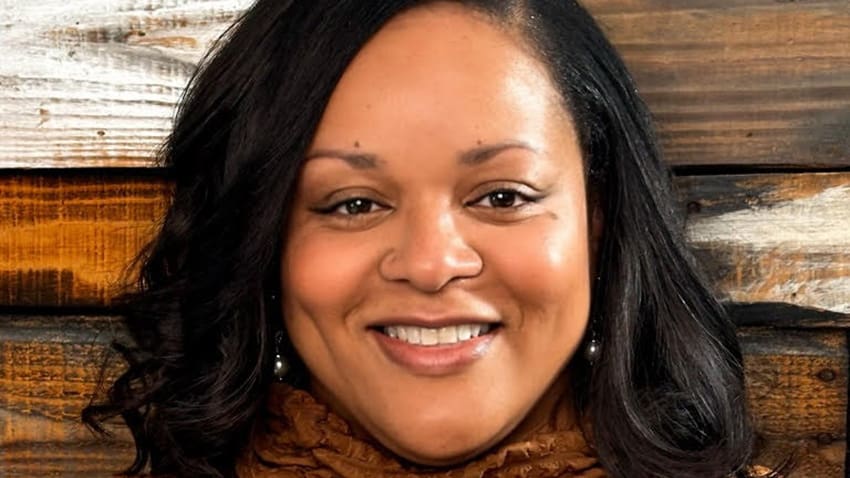
Monique Appeaning has spent more than two decades working inside government systems that most people never see. Her work has not been about headlines. It has been about structure, process, and results.

Based in Baton Rouge, Louisiana, Appeaning built her career step by step across both the executive and legislative branches. Along the way, she developed a reputation for discipline, clear thinking, and a steady approach to complex challenges.

“The best advice I’ve ever received is that applying logic to something illogical only breeds frustration,” Appeaning said. “That has stayed with me throughout my career.”

That mindset has shaped how she works. It also explains why her career has centered on accountability, budgeting, and system-level thinking.

Early Career in Government Operations and Budgeting

Appeaning’s career began in government operations, where she focused on budgeting and planning. Early roles required her to review agency budgets, analyze financial requests, and help prepare executive budget materials.

Advertisement

These were technical roles, but they came with real impact. State budgets guide how resources are used across major systems. That includes infrastructure, public safety, and administrative functions.

She worked closely with agency leaders, program managers, and officials at multiple levels of government. The work required both detail and communication.

“Budgeting is what I’m most proud of as a skill,” she said. “It connects decisions to outcomes.”

Her early experience helped her understand how large systems operate from the inside. It also set the foundation for more senior roles.

Advertisement

Growing Into Leadership Roles in State Government

As her career progressed, Appeaning moved into leadership positions focused on management and finance. In these roles, she oversaw teams and supported key operational functions.

Her responsibilities included budgeting, purchasing, human resources, and performance reporting. She also worked on policy development and long-term planning efforts tied to government operations.

At one stage, she managed teams of professionals across multiple functions. That required coordination, consistency, and the ability to handle competing priorities.

She also worked closely with legislative staff and other state officials. These interactions helped bridge the gap between policy goals and operational realities.

Advertisement

“My years of work in the executive branch made the opportunity to work for the legislative branch an exciting one for me,” Appeaning said.

That transition gave her a broader view of how decisions are made and implemented.

Work in Legislative Analysis and Public Accountability

Appeaning later took on a role focused on legislative fiscal analysis and special projects. In this position, she provided factual and unbiased information to lawmakers.

Her work included analyzing executive budgets, evaluating legislative proposals, and reviewing the performance of state programs. She also prepared reports and presented findings to committees.

Advertisement

These responsibilities required objectivity. They also required the ability to explain complex data in a clear way.

She worked with both the Louisiana House of Representatives and Senate. Her role supported decision-making at the highest levels of state government.

In addition, she served as a project leader for a regional report that involved collecting and analyzing data from multiple states. This type of work highlights the scale and coordination involved in her career.

“Clear information matters,” she said. “It helps people make better decisions.”

Advertisement

What Sets Monique Appeaning Apart?

Appeaning’s career stands out because of its range and consistency. She has worked across different parts of government, but her focus has remained steady.

Her work has centered on:

  • Accountability
  • Transparency
  • Data-informed decision-making
  • Long-term system improvement

She is known for a structured and disciplined approach. She focuses on facts and avoids unnecessary complexity.

“What inspires me is knowing that my labor is not in vain,” she said.

That perspective reflects a long-term view. Many of the systems she has worked on take years to improve. Results are often gradual, not immediate.

Advertisement

Her contributions have also been recognized with the Military Civilian Award from the Louisiana National Guard. This reflects her commitment to service and operational excellence.

A Career Built on Logic and Focus

One of the defining traits of Appeaning’s career is consistency. She has worked in environments where decisions are complex and stakes are high. Her approach has remained grounded in logic and clarity.

She believes strong systems are built through careful planning and steady execution. That belief has guided her work across roles and responsibilities.

There is also a personal philosophy behind her career. She once described growth as a process where there is “struggle in the caterpillar” before it “becomes a butterfly.”

Advertisement

That idea reflects how she views progress. It takes time. It requires effort. And it often happens behind the scenes.

Today, her career offers a clear example of how experience in budgeting, analysis, and operations can shape a broader leadership path.

Her work may not always be visible to the public. But it plays a role in how systems function and how decisions are made.

And for Appeaning, that is where the value lies.

Advertisement

Continue Reading

Business

Platforms, AI Orchestrators, and Workflow Design

Published

on

Most product teams adopt AI tools one by one — a code assistant here, a design generator there — and then wonder why delivery is still slow. The bottleneck was never individual tasks. It was always coordination.

Most product teams adopt AI tools one by one — a code assistant here, a design generator there — and then wonder why delivery is still slow. The bottleneck was never individual tasks. It was always coordination.

That’s what makes end-to-end product development with AI orchestration a different conversation: instead of asking “which AI tool should we add?”,  you start asking, “How do we make the whole system work?”

What is AI orchestration?

AI orchestration is a coordination and control layer for product delivery. When multiple AI models, tools, agents, and humans work on the same product, something has to define how work runs, in what order, with which inputs, and what to validate before progressing.

An AI orchestrator acts as the execution engine within this layer. It translates high-level intent into structured tasks, routes them to the appropriate execution layer, maintains shared context across steps, and triggers human intervention when decisions require judgment.

Isolated AI tools improve individual tasks. Orchestration improves the system. Without it, even strong tools produce fragmented outputs — slowing delivery through rework, misalignment, and unclear ownership at handoff points.

Advertisement

Why end-to-end product development needs AI orchestration

The most common failure mode in AI-assisted product teams isn’t bad tooling. It’s disconnected tooling. Design, engineering, and QA each use AI independently, but integration points — where work moves between disciplines — remain manual and error-prone.

Agentic AI orchestration changes this by treating the entire product lifecycle as a single coordinated system. Work moves from validated spec to generated code to tested output to staged release, with the right humans reviewing at the right moments. The difference between AI assistance and AI-coordinated delivery is what actually ships.

How AI orchestration works across the product lifecycle

Discovery phase: We conduct research, validate assumptions, and define scope simultaneously rather than executing it step by step. This shortens analysis time while keeping depth and accuracy.

Product planning and prioritization: The system models different prioritization options, highlights dependencies, and surfaces risks early. Humans make final decisions based on complete context, not fragmented inputs.

Advertisement

UX/UI design and prototyping: AI generates wireframes, applies design system rules, and flags accessibility issues. Designers focus on user flows and edge cases, while the system keeps everything aligned with the product spec.

Engineering and code generation: We don’t send AI code straight to production. The system runs automated tests and architecture checks before human review, reducing rework and keeping the codebase consistent.

QA, security, and compliance: We run tests automatically after every meaningful change. Compliance checks happen during development instead of at the end. Humans only review exceptions or unclear cases.

Release and post-launch iteration: We continuously collect production data, errors, and user behavior signals. The system feeds this back into development, so improvements happen as part of the workflow, not after release.

Advertisement

Core components of an AI orchestration platform

First, it needs task routing, which decides what work goes to AI, what goes to humans, and under what conditions. Second, it needs shared context management, so information doesn’t get lost between steps. Third, it must connect to existing systems through API and tool integrations.

It also needs human checkpoints for decisions that require judgment, and full visibility (logs and tracking) so every action can be traced and reviewed. Finally, it needs failure handling, so one broken step doesn’t disrupt the whole process.

Teams like Goodface agency have operationalized this as a human-led AI-orchestrated framework — with senior experts owning architecture and decisions while AI handles execution — delivering 25–30% higher efficiency within the same time and budget.

AI orchestration vs related concepts

Vs workflow orchestration: Workflow orchestration handles deterministic sequences. AI orchestration introduces non-deterministic elements — language model outputs, agent decisions — where uncertainty is a first-class concern.

Advertisement

vs AI agent: Agents execute. Orchestrators govern. An AI agent orchestration layer coordinates multiple agents, manages shared context, and enforces rules that individual agents don’t have visibility into.

Vs automation: Automation handles deterministic tasks. Orchestration handles workflows that involve judgment, generation, and variable outputs that require validation before they move forward.

Risks and limitations

Context loss between agents is the most common failure mode. Security exposure from misconfigured data access is the most serious. Tool sprawl, cost overruns from uncontrolled token usage, and accountability gaps when human ownership isn’t clearly defined round out the main risks. Over-automation without accountability is where orchestration projects most often break down in production.

KPIs for measuring AI orchestration

Track delivery cycle time, handoff reduction (manual coordination touchpoints eliminated), defect rates in automated validation versus staging, cost per completed workflow, and human review rate. A declining human review rate indicates the system is routing better; a rising one is an early warning sign worth investigating before it compounds.

Advertisement

FAQ

What is orchestration in AI product development? A coordination system that determines how AI tools, agents, and humans work together across the product lifecycle — routing tasks, sharing context, enforcing quality gates, and managing handoffs from discovery through deployment.

What does an AI orchestrator do in an end-to-end workflow? It decomposes product intent into structured tasks, assigns each to the appropriate execution layer, exchanges context, monitors outputs, and triggers human review where automation isn’t sufficient.

When does a product team need an AI orchestration platform? When multiple AI tools don’t share context, when coordination creates more delay than execution, or when AI output quality is inconsistent across the pipeline.

Can AI orchestration support regulated product environments? Yes — when governance is built in explicitly. Audit trails, configurable human-in-the-loop checkpoints, and access controls can meet fintech and healthtech compliance requirements.

Advertisement

How does AI orchestration improve delivery speed and quality? By running parallel workstreams, reducing rework at handoff points, and enforcing validation continuously rather than end-of-sprint.

What should companies look for in an AI orchestration platform? Human-in-the-loop configurability, deep observability, integration flexibility, and reliability under production load. Legibility — being able to understand what happened when something goes wrong — is a core requirement, not a nice-to-have.

Advertisement
Continue Reading

Business

Sandisk Corporation (SNDK) Q3 2026 Earnings Call Transcript

Published

on

OneWater Marine Inc. (ONEW) Q1 2026 Earnings Call Transcript

Sandisk Corporation (SNDK) Q3 2026 Earnings Call April 30, 2026 4:30 PM EDT

Company Participants

Ivan Donaldson – Vice President of Investor Relations
David V. Goeckeler – Chairman & CEO
Luis Visoso – Executive VP & CFO

Advertisement

Conference Call Participants

Mark Newman – Bernstein Institutional Services LLC, Research Division
Joseph Moore – Morgan Stanley, Research Division
Benjamin Reitzes – Melius Research LLC
Christopher Muse – Cantor Fitzgerald & Co., Research Division
James Schneider – Goldman Sachs Group, Inc., Research Division
Asiya Merchant – Citigroup Inc., Research Division
Vijay Rakesh – Mizuho Securities USA LLC, Research Division
Blayne Curtis – Jefferies LLC, Research Division
Victor Santiago – Evercore ISI Institutional Equities, Research Division
Ruplu Bhattacharya – BofA Securities, Research Division

Presentation

Advertisement

Operator

Good afternoon, and welcome to Sandisk’s Third Quarter Fiscal Year 2026 Earnings Conference Call. [Operator Instructions] Please note this event is being recorded.

I would now like to turn the conference over to Ivan Donaldson, Vice President of Investor Relations. Please go ahead.

Advertisement

Ivan Donaldson
Vice President of Investor Relations

Before we begin, please note that today’s discussion will contain forward-looking statements based on management’s current assumptions and expectations, which are subject to various risks and uncertainties. These forward-looking statements, including expectations for our technology and product portfolio, our business plans and performance, our capital allocation priorities, market trends and opportunities and our future financial results. We assume no obligation to update these statements. Please refer to our annual report on Form 10-K and our other filings with the SEC for more information on the risks and uncertainties that could cause actual results to differ materially from expectations.

We will also make references to non-GAAP financial measures today. Reconciliations between the non-GAAP and comparable GAAP financial measures are included in the written materials posted in the Investor Relations section of our website.

With that, I’ll turn the call over

Advertisement
Continue Reading

Business

South Korean April exports rise 48.0% y/y as chip boom extends

Published

on

South Korean April exports rise 48.0% y/y as chip boom extends


South Korean April exports rise 48.0% y/y as chip boom extends

Continue Reading

Business

Asara CEO appointed MD

Published

on

Asara CEO appointed MD

Asara Resources chief executive Matthew Sharples has been appointed managing director of the Subiaco-based junior.

Continue Reading

Business

Lantern Pharma Inc. (LTRN) Discusses Live Demonstration of withZeta.ai AI Platform for Rare Cancer Drug Discovery Transcript

Published

on

OneWater Marine Inc. (ONEW) Q1 2026 Earnings Call Transcript

Craig Brelsford

Hi. This is Craig Brelsford with RedChip Companies. Thank you for joining us for what promises to be an exciting session with Lantern Pharma. Today’s session is centered around a live real-time demonstration of withZeta.ai, Lantern Pharma’s next-generation AI platform designed to transform how oncology drugs are discovered, particularly in rare cancers. Rather than just talking about the technology, you’ll see it in action, executing research workflows, synthesizing complex scientific data and generating insights in real-time. This is a rare opportunity to observe how AI is being applied at the front lines of drug development.

Lantern Pharma, which trades on the NASDAQ under the ticker LTRN, is positioning this platform not only as a scientific engine, but also as a scalable subscription-based business with meaningful commercial potential.

Joining us today is Panna Sharma, Chief Executive Officer, President and Director of Lantern Pharma, who will guide us through the demonstration and discuss the broader implications of this technology. We will begin with the presentation and demo momentarily followed by a Q&A session. [Operator Instructions]

Advertisement

Before we begin, please allow me to read the safe harbor statement. This call may contain forward-looking statements within the meaning of the Private Securities Litigation Reform Act of 1995. All statements pertaining to future financial and/or operating results, along with other statements about the future expectations, beliefs, goals, plans or prospects expressed by management constitute forward-looking statements. Any statements that are not historical facts should also be considered forward-looking statements. And of course, forward-looking statements involve risks and uncertainties.

Panna, go right ahead.

Advertisement
Continue Reading

Trending

Copyright © 2025