Connect with us
DAPA Banner

Business

How Digital Payment Platforms Are Supporting Cross-Border Commerce

Published

on

New research showing that concerns around international payments are a leading barrier stopping UK SMEs from exporting overseas.

Digital payment systems have changed significantly over the past few years. With every step toward more advanced technology, digital platforms have had to keep pace.

Online payment providers have to be versatile, flexible and adjust to global demands with ease. Given that the global payment industry is in the trillions of dollars and people from all over are placing orders for products and services internationally, digital payment infrastructures need to support cross-border commerce.

The scale of growth is substantial. Industry trends show that a large percentage of global consumers now purchase from international retailers, with the cross-border e-commerce market projected to reach trillions in value over the next decade. In response, providers are working to deliver a global payments solution that can support this demand while balancing efficiency, compliance and accessibility.

Unpacking Multi-currency Functionality

A key aspect of this growing global market is the ability to operate with a multi-currency business account, allowing organisations to hold and transact in different currencies, making global operations more accessible and streamlined. This simplifies financial operations and supports smoother cross-border activity. Platforms such as BONCA, a digital payment platform supporting cross-border transactions, can be viewed as examples of how providers are developing more unified financial environments that aim to streamline international transactions.

Looking at Payment Infrastructure Evolution

An additional notable development in recent years is the rise of integrated platforms that bring multiple financial services into one environment. According to the World Bank, 79% of adults globally now have a financial account and in 2024, 40% of adults in developing economies saved in a financial account. This is a 16-percentage-point increase since 2021. This rise has been possible due to consolidated systems designed to manage international transactions. Systems typically support features such as account management, payment processing and access to global networks – all in one.

Advertisement

Online Gateway and Integration Capabilities

In addition to account functionality, many providers now incorporate card services and connections to an online payment gateway. This allows for payments across various digital channels. These integration capabilities also support smoother customer experiences by reducing friction during the payment process. When systems are well-connected, transactions can be completed more quickly and with fewer errors. A borderless payment platform is particularly important for businesses operating internationally, where delays or complications can impact customer satisfaction and conversion rates.

Improving Transparency is Key

Another area where digital payment platforms are growing is in the handling of currency conversion and transaction transparency. Before, cross-border payments were often associated with unclear fees and fluctuating exchange rates that were difficult to track. Many providers are working to improve visibility around these topics. The aim is to create transparency so that all users fully understand all terms and conditions.

This shift towards transparency is also influenced by competition within the sector. To capture your attention, they need to build trust and having access to as much information as needed is what builds this trust. Transparency is much easier to offer, as well, because providers operate better due to advanced technology.

An online payment gateway is not only safe and secure but it’s easy to use and designed with interactions in mind. As a user of this kind of infrastructure, it’s easy to find information because it’s all on one menu drop-down on a site. Systems know that users don’t want to spend hours trying to figure something out.

Advertisement

Currency Conversion And Fee Visibility

In this digital age, it is common for financial infrastructures to show real-time exchange rate information and clearer breakdowns of transaction fees before payments are completed. This allows businesses and users to better understand the financial implications they’re facing. The key point is that this information is visible before online transactions are made. This means businesses can fully understand the associated fees before completing a transaction.

Strengthening Security in Cross-Border Transactions

Security remains a central concern in any financial environment and this becomes even more critical when transactions cross multiple jurisdictions. Digital payment systems are increasingly incorporating layered security measures designed to protect both data and funds as they move across borders. These typically include encryption protocols, multi-factor authentication and continuous monitoring of transaction activity.

Given the complexity of international payments, these safeguards play a vital role in maintaining system integrity. The focus is on identifying and mitigating risks early, rather than reacting after issues arise. In addition, the use of artificial intelligence and advanced analytics has become more prominent in fraud detection.

Integration and the Future of Global Commerce

Another important development is the increasing integration of payment systems with global marketplaces and digital services. Rather than operating independently, many systems now connect directly with e-commerce platforms, subscription services and other online environments.

Advertisement

Looking ahead, cross-border commerce is expected to continue expanding as digital trade becomes more accessible worldwide. Payment infrastructure will play a central role in supporting this growth, particularly as providers continue to refine transparency, security and system interoperability. While challenges remain, the ongoing development of international payment systems reflects a broader shift towards a more connected and efficient global economy that supports international solutions.

Continue Reading
Click to comment

You must be logged in to post a comment Login

Leave a Reply

Business

Australian Travellers Warned to Stay Vigilant as UK Raises Terrorism Threat to ‘Severe’

Published

on

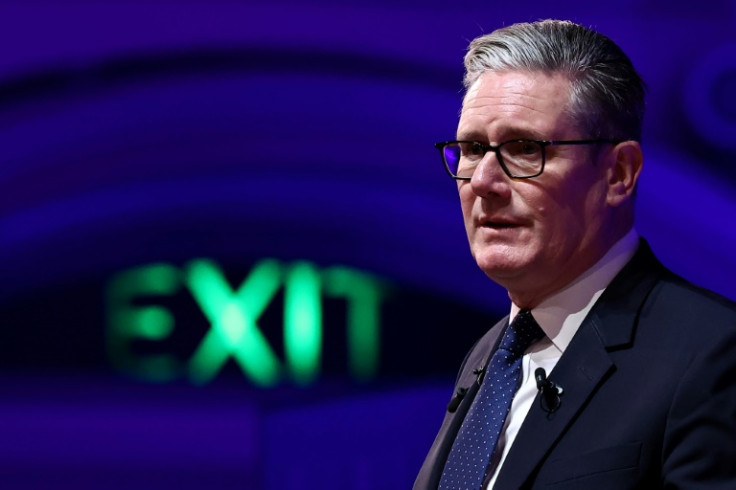
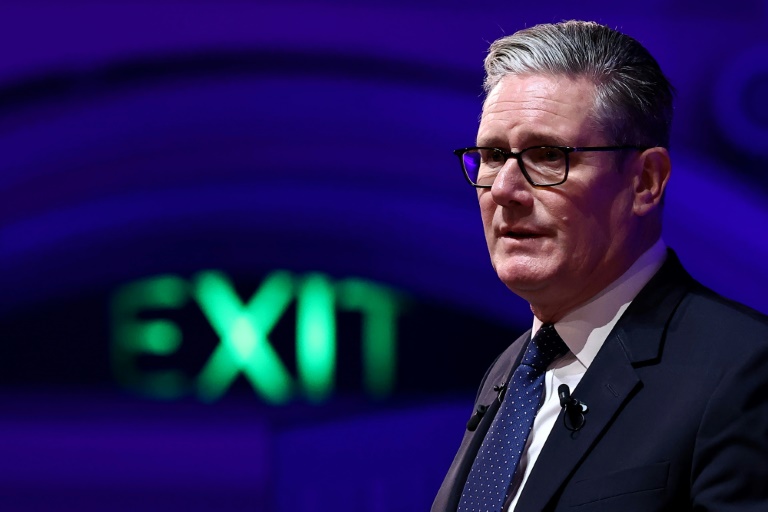
British Prime Minister Keir Starmer has endured a rocky period in ofice so far
AFP

Australian travellers are now being advised to stay vigilant when travelling to the United Kingdom after the latter upgraded the terror threat from “substantial” to “severe.”

The upgraded of the terror threat follows the stabbing of two Jewish men in London.

Aussie Travellers Advised to Stay Vigilant

According to a report by 9News, the “severe” terror threat level is the second-highest level out of five. Per the report, the change in threat level is an indication that intelligence agencies believe a terrorist attack is highly likely to happen in the next six months.

Australian travellers are being warned to exercise an extreme level of caution during their stay in the UK.

“Be alert to the risks and take official warnings seriously”, the Australian government’s Smartraveller has advised.

Advertisement

Starmer Reacts to Stabbing Attack

UK Prime Minister Keir Starmer has pledged to act against those “venerating the murder of Jews.”

Starmer also acknowledged that there is fear in the Jewish community following the stabbing attack. Fortunately, both victims survived the attack.

“People are scared, scared to show who they are in their community, scared to go to synagogue and practise their religion, scared to go to university as a Jew, to send their children to school as a Jew, to tell their colleagues that they are Jewish, even to use our NHS,” Starmer said.

He added, “Nobody should live like that in Britain, but Jews do.”

Advertisement

Starmer has committed to do “everything in our power to stamp this hatred out,” according to a report by The Guardian.

Continue Reading

Business

Politics And The Markets 05/01/26

Published

on

OneWater Marine Inc. (ONEW) Q1 2026 Earnings Call Transcript

This is the forum for daily political discussion on Seeking Alpha. A new version is published every market day.

Please don’t leave political comments on other articles or posts on the site.

The comments below are not regulated with the same rigor as the rest of the site, and this is an ‘enter at your own risk’ area as discussion can get very heated. If you can’t stand the heat… you know what they say…

More on Today’s Markets:

Advertisement

Moderation Guidelines:

We remove comments under the following categories:

  • Personal attacks on another user account
  • Anti-Vaxxer or covid related misinformation
  • Stereotyping, prejudiced or racist language about individuals or the topic under discussion.
  • Inciting violence messages, encouraging hate groups and political violence.

Regardless of which side of the political divide you find yourself, please be courteous and don’t direct abuse at other users.

For any issue with regards to comments please email us at : moderation@seekingalpha.com.

Seeking Alpha’s Disclosure: Past performance is no guarantee of future results. No recommendation or advice is being given as to whether any investment is suitable for a particular investor. Any views or opinions expressed above may not reflect those of Seeking Alpha as a whole. Seeking Alpha is not a licensed securities dealer, broker or US investment adviser or investment bank. Our analysts are third party authors that include both professional investors and individual investors who may not be licensed or certified by any institute or regulatory body.

Advertisement
Continue Reading

Business

MJ Gleeson sees profits in line with forecasts despite softening demand

Published

on


MJ Gleeson sees profits in line with forecasts despite softening demand

Continue Reading

Business

Meridian Mining begins trading on London Stock Exchange

Published

on


Meridian Mining begins trading on London Stock Exchange

Continue Reading

Business

Taxpayer bill for Mt Lawley hospital revealed

Published

on

Taxpayer bill for Mt Lawley hospital revealed

The total taxpayer bill for the purchase and fit-out of St John of God Mount Lawley by the state government has been revealed.

Continue Reading

Business

Zuckerberg links Meta layoffs to AI spending, won’t rule out more cuts

Published

on

Zuckerberg links Meta layoffs to AI spending, won't rule out more cuts

Meta CEO Mark Zuckerberg said Thursday the company’s latest round of layoffs is tied to increased spending on artificial intelligence, while leaving the door open to additional job cuts.

Zuckerberg made the remarks during a company town hall, his first time addressing employees since Meta confirmed plans to cut roughly 8,000 jobs — about 10% of its workforce.

Advertisement

The layoffs, which are expected to begin May 20, come as the company ramps up investment in AI and infrastructure, FOX Business previously reported.

“We basically have two major cost centers in the company: compute infrastructure and people-oriented things,” Zuckerberg said, according to Reuters.

ELON MUSK SAYS HE WAS A ‘FOOL’ FOR FUNDING OPENAI: REPORT

Mark Zuckerberg sits at a witness table

Meta CEO Mark Zuckerberg said the company’s latest layoffs are tied to increased spending on artificial intelligence. (Alex Wong/Getty Images / Getty Images)

“If we’re investing more in one area to serve our community, then that means we have less capital to allocate to the other,” he added. “So that means we do need to take down the size of the company somewhat.”

Advertisement

Zuckerberg said the cuts are not tied to Meta’s shift toward an “AI-native” structure or efforts to build autonomous AI agents.

“Getting everyone internally to use AI tools and getting to do the work more efficiently is not the thing that’s driving layoffs,” he said.

Ticker Security Last Change Change %
META META PLATFORMS INC. 611.91 -57.21 -8.55%

Still, Zuckerberg declined to rule out additional job cuts.

FEDERAL RESERVE LEAVES INTEREST RATES UNCHANGED AS POWELL’S CHAIRMANSHIP NEARS END

Advertisement
Meta headquarters

Meta CEO Mark Zuckerberg said the company is cutting jobs as it ramps up investment in artificial intelligence. (David Paul Morris/Bloomberg via Getty Images / Getty Images)

“We’ll see how all this stuff trends” he said, adding that the company would “be able to share more soon.”

“I wish that I can tell you that I have a crystal ball plan for the next, like, three years of how all this stuff is going to play out,” he said. “I don’t. I don’t think anyone does.”

Meta, the parent company of Facebook, Instagram and WhatsApp, has also begun tracking employee activity — including clicks, shortcuts and how workers navigate apps — as part of efforts to train its AI systems.

US ECONOMIC GROWTH BOUNCES BACK, AS AI BUILDOUT AND CONSUMER SPENDING FUEL FIRST QUARTER

Advertisement
A technology executive stands on stage presenting new hardware during a company event.

Mark Zuckerberg, chief executive officer of Meta Platforms Inc., appears during the Meta Connect event in Menlo Park, California, on Sept. 17, 2025. (David Paul Morris/Bloomberg via Getty Images / Getty Images)

Reuters reported the layoffs and monitoring efforts have sparked internal criticism, with employees voicing concerns on company message boards.

Meta referred FOX Business to comments from CFO Susan Li, who said during an earnings call that the company’s long-term size remains uncertain.

“We don’t really know what the optimal size of the company will be in the future,” Li said, citing rapid changes in AI capabilities.

GET FOX BUSINESS ON THE GO BY CLICKING HERE

Advertisement

Meta previously cut 11,000 jobs in November 2022 and another 10,000 months later. The company employed nearly 79,000 people as of Dec. 31, according to its latest filing.

FOX Business’ Louis Casiano and Reuters contributed to this report.

Continue Reading

Business

'There were letters I didn't want to open': Rise in unpaid debt court cases

Published

on

'There were letters I didn't want to open': Rise in unpaid debt court cases

The number of county court judgements rose by 17.5% in the first quarter of this year compared to last, data suggests.

Continue Reading

Business

Tourists feel petrol pinch and cut down on day trips

Published

on

Tourists feel petrol pinch and cut down on day trips

Tourist attractions in the West report falling numbers as people spend more on essentials.

Continue Reading

Business

Asset Allocation Insights – March 2026

Published

on

Asset Allocation Insights - March 2026

Real estate portfolio dashboard investor reviews house model on documents with digital HUD charts for diversification, allocation and risk metrics, tracking asset performance and return. portfolio

Niphon Phunnu/iStock via Getty Images

By Indrani De, CFA, PRM, Head of Global Investment Research, FTSE Russell | David McNay, CFA, Director, Global Investment Research | Zhaoyi Yang, CFA, FRM, Sr Manager, Global Investment Research

Geopolitics disrupts otherwise robust

Advertisement
Continue Reading

Business

PSU banks under pressure, more consolidation likely before fresh rally: Ajit Nayak

Published

on

PSU banks under pressure, more consolidation likely before fresh rally: Ajit Nayak
In a week marked by hesitation and subdued momentum, India’s benchmark indices have entered a phase where technical signals are beginning to matter more than directional conviction. With the Nifty struggling to find a clear trend and Bank Nifty witnessing visible pressure, market participants are turning cautious—yet not entirely bearish.

Speaking to ET Now, market expert Ajit Nayak from HDFC Securities offered a nuanced reading of the charts, suggesting that while the near-term mood may appear uncertain, underlying patterns hint at a potential continuation rather than a breakdown.

A “Liquidity Sweep” That Could Signal Upside
“First let us speak about the Nifty. So, if we look at the Nifty from a technical perspective, on 24th March it had made a similar kind of a low of 24,790 odd level and today there was an interesting pattern. We did break that low, but we did not sustain below that low. So, we call such behaviour as a sweep of liquidity.”

This “liquidity sweep,” as Nayak explains, is often interpreted as a trap for bearish traders. Markets briefly dip below key support levels, trigger stop losses, and then reverse—often leading to a move higher.

Advertisement

“So, whenever there is a sweep of liquidity, there is a high chance that the market tends to move in a northward territory and can test 24,300 level.”


Open Interest and VIX: The Real Story Beneath the Surface
Nayak emphasizes that price action alone does not tell the full story. He closely tracks open interest (OI) data to understand how large traders are positioned.
“At 24,000 level there is lot of put addition. So, if we see couple of sessions, there was lack of fear in the market but suddenly in a day or two we can see that fear coming back in the market, so that is not really a good sign.”Volatility, too, is at a critical juncture. The India VIX has revisited an important support zone. “If we look at the India VIX, it was taking a support of 17.25 level from where exactly the breakout happened and we saw a rally till 29 level after giving that breakout and we are revisiting that neckline of 17.25. So, it is very important to watch this level.”

According to him, the interplay between VIX and Nifty will determine the next move.

“If we break that 17.29 level on a VIX and we see a rally in Nifty, so that will be a good sign for the trader and for a Nifty player as well that we are consolidating, we are taking a time-wise correction, not a price-wise correction.”

However, a spike in volatility could change the narrative.

Advertisement

“If it did not and this VIX is moving above 20 level and similar kind of OI data keeps on building up at the call side, then there is little risk for the market.”

Key Levels to Watch
For traders, clarity lies in levels rather than opinions. “So, for me as of now 23,800 is a very important level because there is a good intraday pattern which has happened today breaking the low and bouncing back above that low that is a bad trap sign and if it sustain about that level, we can see Nifty heading towards 24,400 to 24,500 mark.”

Stock Picks: A Balanced Approach in an Uncertain Market
Given the lack of a strong bullish setup, Nayak suggests a hedged approach—one long and one short trade.
“Because market is not very bullish friendly, so I am coming up with two picks. One I am looking for a short side and one I am looking for a long side.”

Hindalco (Short Call)

“So, I will come up with first pick as a Hindalco. Hindalco, if you look at the chart, there is some bearishness developing on a Hindalco chart. Also, if you look at a weekly, there is a clear-cut negative divergence which has happened on the Hindalco chart.”

Advertisement

He also points to broader weakness in the metals space.

“If we also look at the metal index, today metal index was showing some pain and similarly even the Hindalco is showing the same kind of pain, a relative performer in a downside.”

Trading strategy remains disciplined.
“So, I am considering Hindalco to sell with a stop loss of 1080, I am looking for the target of 980. The only request for the trader would be as soon as you are in a favour, it is very important to trail the stop loss because the overall trend of the market seems to be quite positive.”

Adani Ports (Long Call)
On the flip side, Nayak finds strength in Adani Ports.

Advertisement

“The second pick from my side is Adani Ports. So, Adani Port’s chart is very fantastic. If we look at the chart from a weekly perspective or also from a daily perspective, we can see a deep cup pattern and it is sustaining above that 1600 odd mark.”

Even during market weakness, the stock has shown resilience.

“Today even in a falling market, it just tested the neckline of 1600 and closing above that level gives us a confidence that there is more steam left on the higher side.”

His recommendation:
“So, I would recommend to go long on Adani Ports with a stop loss of 1586, for the upside target of 1770.”

Advertisement

PSU Banks: More Consolidation Before Opportunity
The PSU banking space, one of the worst-performing sectors this week, is not yet ready for a rebound—at least from a technical standpoint.

“If you look at PSU index, if we look at on a monthly or a weekly time frame, yes, they are still positive. But the rally was so much and the angle of the rally is so steep that we should look for some more consolidation.”

Nayak advises patience rather than aggressive buying.

“If it consolidates for, say, next four to five weeks, then I would be looking for the PSU stocks to go for a long side because if we look at the chart on a monthly time frame, there is a negative pattern on the candlestick which has developed.”

Advertisement

Key levels remain crucial.
“So, I would wait for the PSU to come around 7500 mark, then consolidate and give some bullish indication with a good candlestick pattern and then we would think of entering on a long side, otherwise till it does not cross 9070 mark it is a sell on a rally kind of a sector.”

The Takeaway
For now, the market appears to be in a phase of digestion rather than distribution. While volatility and global cues continue to inject uncertainty, technical indicators suggest that the broader trend may still be intact—provided key levels hold. In such an environment, discipline, selective positioning, and respect for risk management may matter more than chasing momentum.

Continue Reading

Trending

Copyright © 2025