Connect with us
DAPA Banner

Tech

UK firms ignore decade-old flaws as hackers hammer networks with 67 million attacks and AI-driven scans surge nationwide

Published

on


  • Decade-old vulnerabilities still drive millions of attacks across UK networks
  • Hackers prefer easy targets left open by outdated, unpatched systems
  • AI-driven scans expose weak networks at unprecedented speed and scale

Across the United Kingdom, thousands of organisations continue operating computer systems with security holes that were first identified over ten years ago.

Cybercriminals are taking full advantage of this negligence, launching relentless waves of attacks against these unprotected entry points.

Source link

Continue Reading
Click to comment

You must be logged in to post a comment Login

Leave a Reply

Tech

Infinix Introduces GT 50 Pro for Gamers with Improved Cooling and Control Features

Published

on

Infinix has introduced the GT 50 Pro as a gaming-focused smartphone with meaningful upgrades. It solves problems such as overheating and delays when playing for long hours. The device integrates an advanced cooling mechanism, improved control, and strong performance capability.

The GT 50 Pro is for gamers seeking a high-end smartphone with no interruptions. While other phones focus on making phone calls and sending text messages, the GT 50 Pro is designed for gamers. This means better control and cooling features to ensure good performance.

Smart Cooling That Prevents Overheating

The Micro-Pump Liquid Cooling System with GT Magcharge cooler 2.0

The HydroFlow Liquid Cooling system is specifically designed to address overheating in gaming phones. The cooling mechanism ensures overheating does not occur by shielding the heat-producing parts and simultaneously circulating liquid to disperse heat.

In addition, to make the gaming experience easy and smooth, the GT 50 Pro comes with pressure-sensitive GT Triggers. Such triggers offer fast input and control in extreme gaming situations, along with adjustable settings options.

Display and Performance

The GT 50 Pro is equipped with an enormous 6.78 inches 1.5K screen with a maximum refresh rate of 144Hz. This ensures that the visuals are crisp and clear, especially when gaming or scrolling. In addition, the phone has high-brightness capabilities, ensuring you can view the screen in various lighting conditions. The phone is equipped with eye-care features that minimize eye strain during use. When it comes to audio, the device supports Dolby Atmos.

Advertisement

The GT 50 Pro runs on the MediaTek Dimensity 8400 Ultimate chip, which uses a very efficient 4nm process. As such, the phone delivers smooth performance in any game and does so in a very power-efficient manner, meaning it won’t overheat or drain its battery.

Camera and Battery

Infinix GT 50 Pro in different colors

Infinix has added a balanced camera setup to the GT 50 Pro. The primary 50 MP camera should take clear photos thanks to the stabilization system and is used for landscape shots, alongside the 8 MP ultra-wide-angle camera. The 13 MP front camera is effective for selfies and video calls.

With a large 6500mAh battery, the GT 50 Pro offers longer battery life, including when playing games. The device supports not only wired but also wireless fast charging. Furthermore, the reverse charging feature is present; additionally, bypass charging provides heat management.

Price and Availability

Infinix GT 50 Pro Unboxing

In terms of availability, the GT 50 Pro is available in two storage variants, with 12GB of RAM and expansion support. It also supports RAM expansion for better efficiency. However, the price will depend on the region and may vary in different markets.

Source link

Advertisement
Continue Reading

Tech

Two Cases Where Simulation Fills the Gap

Published

on

8 am PDT / 11 am EDT / 5 pm CET

Laboratory or in-field measurements are often considered the gold standard for certain aspects of power system design; however, measurement approaches always have limitations.  Simulation can help overcome some of these limitations, including speeding up the design process, reducing design costs, and assessing situations that are often not feasible to measure directly. In this presentation, we will discuss two examples from the power system industry. 

The first case we will discuss involves corona performance testing of high-voltage transmission line hardware. Corona-free insulator hardware performance is critical for operation of transmission lines, particularly at 500 kV, 765 kV, or higher voltages. Laboratory mockups are commonly used to prove corona performance, but physical space constraints usually restrict testing to a partial single-phase setup. This requires establishing equivalence between the laboratory setup and real-world three-phase conditions. In practice, this can be difficult to do, but modern simulation capabilities can help.   The second case involves submarine HVDC cables, which are commonly used for offshore wind interconnects. HVDC cables are often considered to be environmentally inert from an external electric field perspective (i.e., electric fields are contained in the cable, and the cable’s static magnetic fields induce no voltages externally). However, simulation demonstrates that ocean currents moving through the static magnetic field satisfy the relative motion requirement of Faraday’s law. Thus, externally induced electric fields can exist around the cable and are within a range detectable by various aquatic species.


Advertisement

Key Takeaway: 

  •  Learn how to use modern simulation to translate single-phase laboratory corona mockups into accurate three-phase real-world performance for 500 kV and 765 kV systems.
  • Explore the physics behind how ocean currents interacting with HVDC submarine cables create induced electric fields—a phenomenon often overlooked but detectable by aquatic species.
  • Gain actionable insights into how to leverage simulation to reduce design costs and bypass the physical space constraints that often stall traditional testing.
  • See a practical application of electromagnetic theory as we demonstrate how relative motion in static magnetic fields necessitates simulation where direct measurement is unfeasible.

Who Should Attend:

  • Transmission engineers, submarine cable designers, and environmental compliance officers

    Can’t attend live? Register for the recording.

Note that COMSOL will follow up with all registrants about this event and any related questions.

*Please see www.comsol.com/privacy for COMSOL’s Privacy Policy. Contact COMSOL at www.comsol.com/contact for more information.

Source link

Advertisement
Continue Reading

Tech

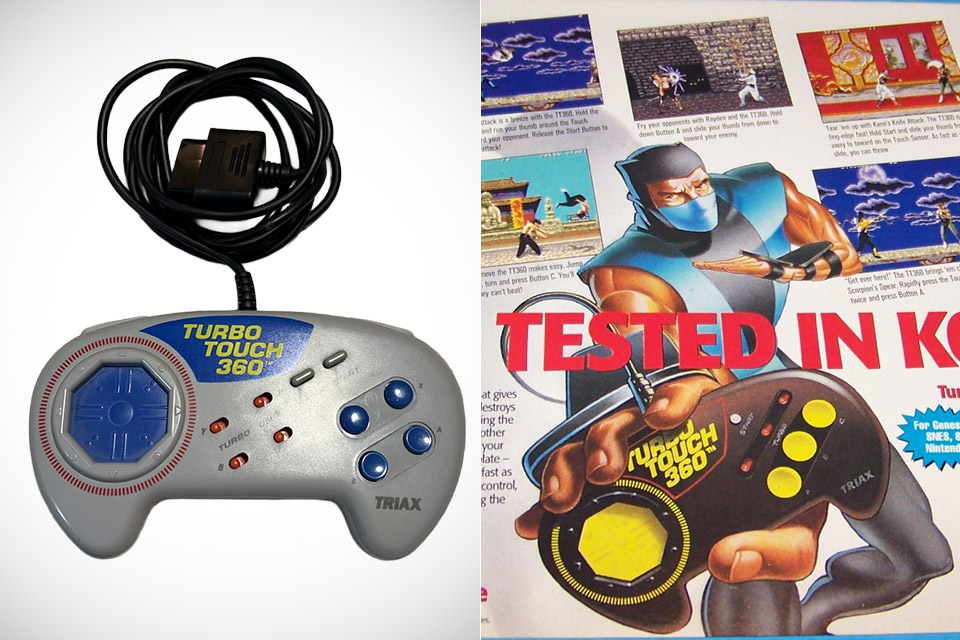
Fascinating Look Back at the Triax Turbo Touch 360, a Controller from the 90s That Put Touch Sensors in Place of Buttons

Published

on

Triac Triax Turbo Touch 360 Controller
Gamers in the 1990s sat through plenty of marathon sessions on consoles like the Super Nintendo as well as SEGA Genesis, and their thumbs suffered as a result of continual pressure on rigid directional pads. Triax had a solution for the problem in the Turbo Touch 360. They abandoned the traditional movable plastic directional pad in favor of a flat octagonal plate with capacitive sensors underneath. So all you had to do was lightly lay your thumb on the surface, and it would register the direction you were attempting to go in.



The plate had eight sensors grouped around it to cover the majority of the straight shoots and diagonals, but because you don’t get a smooth, continuous circle of movement, it wasn’t fully analog, despite being dubbed the Turbo Touch 360, which implies complete freedom in all directions. Players could lean on the pad to achieve greater movement without having to hammer down as hard. Triax even went so far as to have an orthopedic specialist praise the design, claiming that it reduced scorching and numbness during those all-day gaming sessions to death.


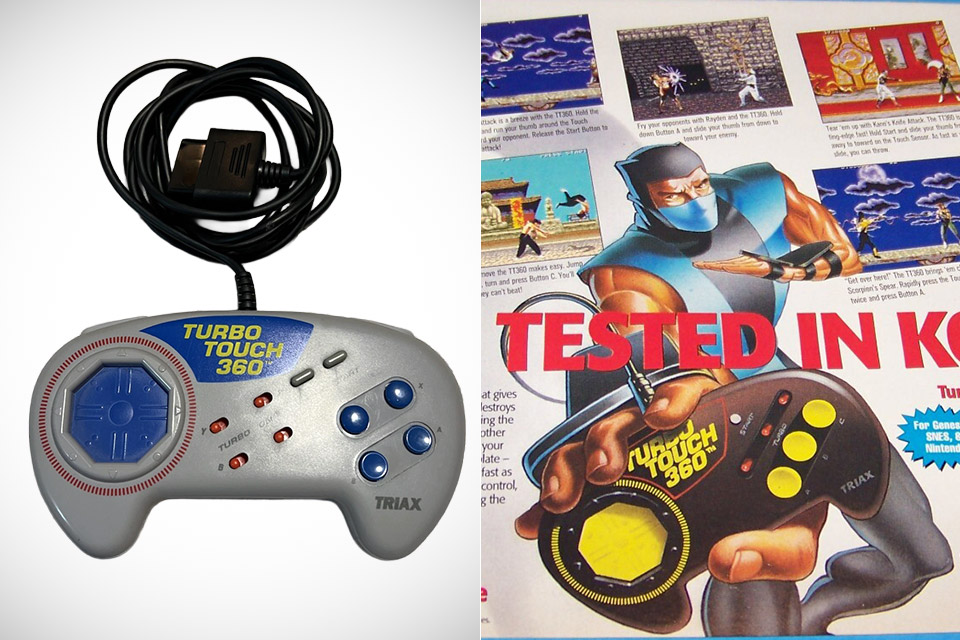
Magazine ads showed the controller in action, and one of the examples they used was how you could land special moves in Mortal Kombat without having to struggle, and to top it all off, there was a turbo fire switch for shooting fans, giving you an advantage in older games that rewarded you with points for tapping buttons quickly.

The controller made its debut at a large electronics expo toward the end of 1993. Then there were versions for the NES, SNES, and Sega Genesis, with the Genesis version also working on certain earlier platforms such the Atari and Commodore. People who took one up immediately noticed how unusual it felt; more specifically, it was far too simple to accidentally trigger an input by resting your thumb on the plate. So precision deteriorated in tight platform games or when you had to make sudden changes of direction.


Most reviewers stated it was overly sensitive and awkward to use for an extended period of time. One modern test, in which they went back in and tinkered with the loose contacts inside a Super Nintendo, demonstrated that it was possible to make it somewhat usable again, but it was still not as accurate as a standard pad, especially in side-by-side runs through Mario or fighting games.

Advertisement

However, Triax did not give up immediately. Next thing you know, news spreads that they’re working on a new controller called the Multi-Function, which, based on certain designs and accounts, resembled a joystick rather than a flat plate. And, to top it all off, there were two more buttons on the sides that indicated they would allow you to manipulate three dimensions in games. Capcom was looking at it, and Electronic Arts had begun development on six titles that would make use of the new inputs. It was set to release for the price of a conventional game at the time, and it looked very good, but then it simply… vanished.

Source link

Advertisement
Continue Reading

Tech

Apple Q2 earnings crush Wall Street consensus again

Published

on

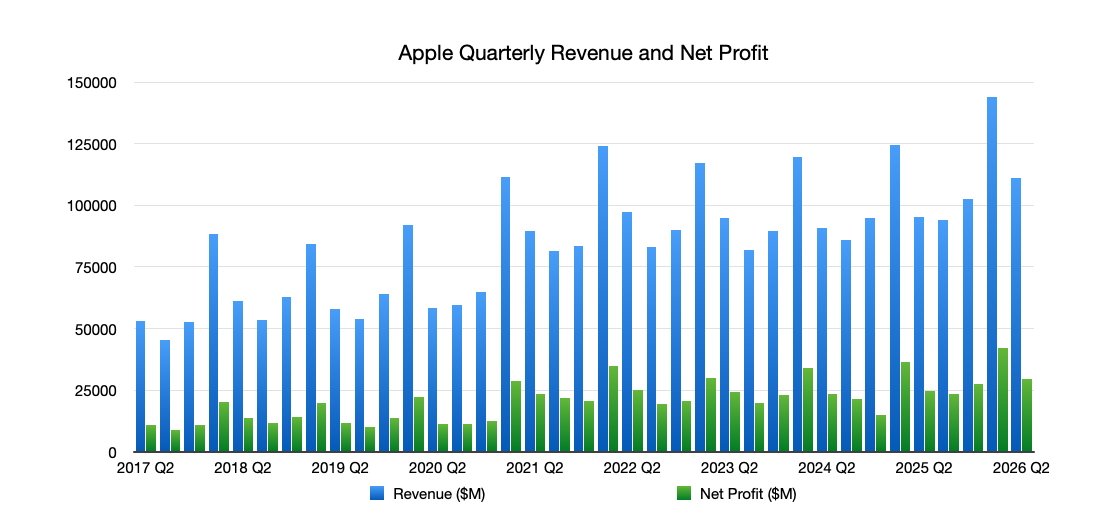
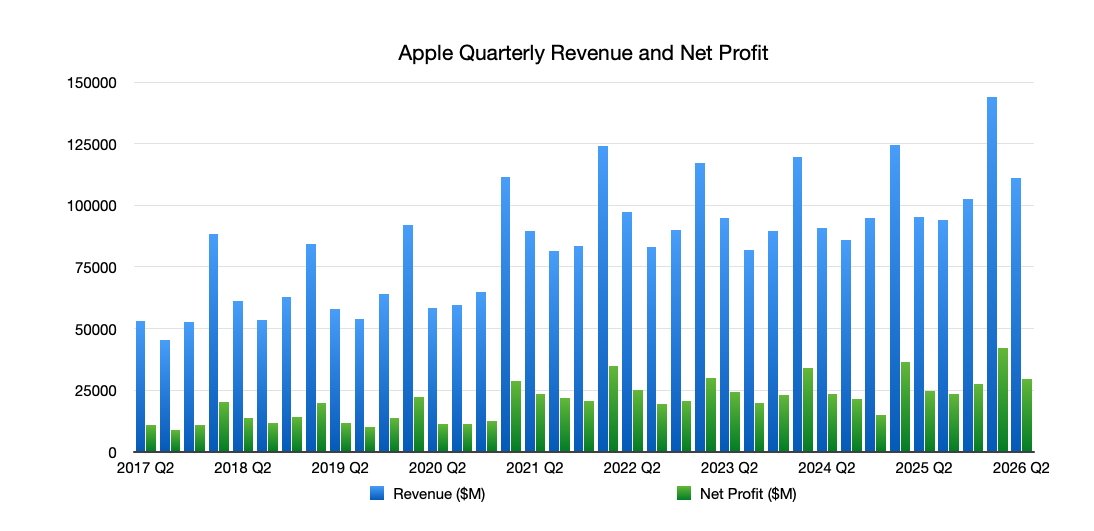
Apple has reported its financials for the second quarter of 2026, posting a second-quarter record of $111.2 billion with gains almost across the board that exceed the expectations of Wall Street analysts.

The second quarter of Apple’s financial calendar has ended, and is usually a fairly quiet affair following the blockbuster first-quarter figures. For 2026, Q2 has a fair bit of expected spice, due to the John Ternus announcement.

In the quarter, Apple’s revenue hit $111.2 billion, up from the $95.4 billion reported in the year-ago quarter.

The Wall Street consensus as of April 29 was an average of $109.69 forecast.

Advertisement
Bar chart of Apple quarterly revenue and net profit from 2017 Q2 to 2026 Q2, showing revenue and profit generally rising over time with some year-to-year fluctuations

Apple quarterly revenue and net profit as of Q2 2026

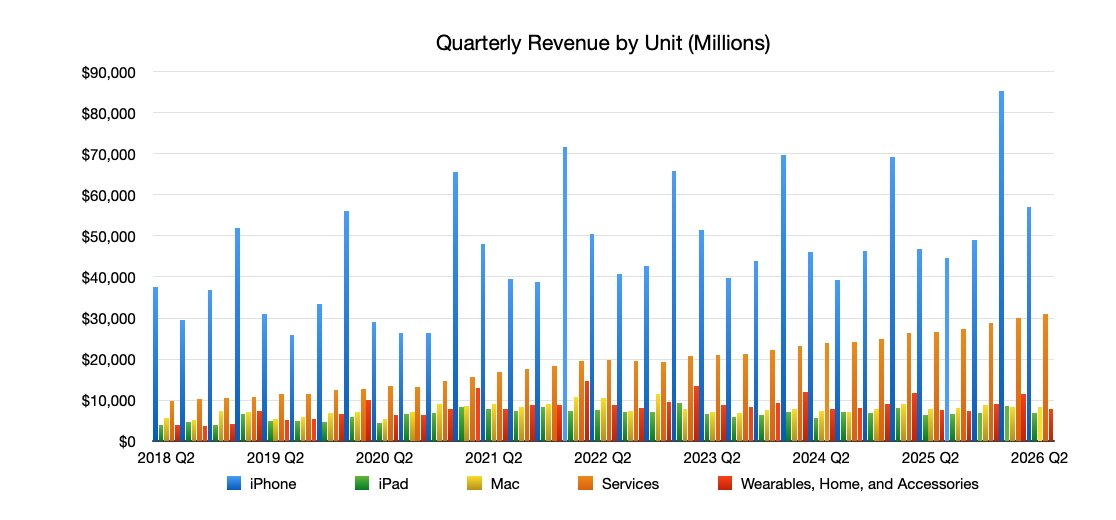
When it comes to product categories, iPhone revenue of $56.99 billion is up from $46.84 billion in Q2 2025. Mac revenue of $8.4 billion is up from $7.95 billion.

The iPad revenue of $6.9 billion is a positive move from last year’s dip to $5.56 billion. Wearables, Home, and Accessories shifted from $7.5 billion in the year-ago period to $7.9 billion now.

Services, the ever-dependable product category, continued its ever-ongoing growth path, from $26.6 billion in Q2 2025 to $30.9 billion now.

Advertisement

During Q1, Apple enjoyed some post-holiday product launches, including the M4 iPad Air, the iPhone 17e, the M5 upgrade to the MacBook Air, and the M5 Pro and M5 Max MacBook Pro. It also launched the Apple Studio Display update, the Pro Display XDR was replaced by the Studio Display XDR, and the MacBook Neo shocked the notebook industry.

This took place to a backdrop of continually rising prices for memory and other components, which Apple has so far insulated itself from. Analysts will be keen to find out Apple’s plans to take on this problem, as well as its AI strategy.

Apple also announced that it is launching an additional $100 billion share repurchase program. The quarterly dividend has also been increased, rising 4% to $0.27 per share.

Bar chart titled Quarterly Revenue by Unit, 2018 Q2-2026 Q2, showing iPhone dominating revenue, services growing steadily, and smaller increases for iPad, Mac, and Wearables, Home, and Accessories

Apple quarterly revenue by unit as of Q2 2026

Advertisement

Current-CEO Tim Cook commented that there was double-digit growth across every geographic segment, with iPhone also achieving a March quarter revenue record, thanks to iPhone 17 demand.

Kevan Parekh, CFO, added that there were new March quarter records for operating cash flow and EPS. “Continued strong customer demand for our products and services once again helped us achieve a new all-time high for our installed base.”

However, the biggest talking point for the results will be the announcement of a CEO transition later in 2026. On September 1, Tim Cook will become executive chairman, with hardware chief John Ternus taking the reins.

While Ternus won’t be involved in the usual conference call with analysts that follows the results release, he will be a hot topic of conversation as analysts try to determine how the future governance of the company will go.

Advertisement

As always, AppleInsider will be listening in to the call, no matter where the conversation flows.

Source link

Advertisement
Continue Reading

Tech

Chewy Promo Codes: $20 Off May 2026

Published

on

Florida-based pet food and product online retailer Chewy has been around for less than 15 years but has quickly become a popular source for everything pet-related. Chewy even has supplies for farm animals, reptiles, fish, and more, carrying over 3,500 brands, including everything from food to medicine to toys. My cat is constantly throwing up (same) and requires Hill’s Sensitive Skin and Stomach, which costs roughly as much as my car insurance every month. I use WIRED’s Chewy promo codes to save money so I can spring for the 50-cent instant ramen while she can remain vomit-free. Browse our roundup of verified coupons to score 50% off pet food and toys, $20 off your first purchase, free shipping deals, and more spring 2026 promotions.

Save $30 With Today’s Chewy Promo Codes

If you’ve been wondering whether Chewy is right for you, now’s the time to try. First-time users can get a $20 eGift card when they purchase over $49 on their first order at Chewy and use code WELCOME. And if you’ve never placed an order with their pharmacy, use Chewy coupon code RX20 at checkout to save 20% on prescription essentials like Simparica Trio, NexGard Plus, Heartgard, and more pet medications.

If you’re a returning customer, don’t fret. Chewy has rotating deals on a myriad of pet essentials and supplies, like flea guard, treats, litter, toys, and more. With this Chewy promo code, you can get almost half off, with $20 off orders of $49 or more with Chewy coupon code GIFT20OFF. This is a rare coupon that is only for existing customers who are signed in with their account. Plus, you can get an extra $5 off on the first order made through the Chewy app with promo code. You’ll just need to download the app, and input the above code in the box on the checkout screen for $5 off.

Get Sitewide Chewy Free Shipping

New customers can also get free 1-3 day delivery (with real-time tracking technology) on first-time orders over $35, which seriously helps in cutting down the convenience cost of being able to get your 40-lb litter box to your third-floor apartment without having to lug it on the L train yourself (speaking from experience, don’t endure what I’ve had to). Get the convenience without having to pay for it with Chewy coupons for free delivery on all items.

Advertisement

Save 50% With Chewy Coupons and Spring Pet Food Deals

Already a devoted pet-parent/Chewy member? While often the best Chewy promo codes are reserved for first-time customers, existing customers can score daily deals like buy 3, get 1 free offers on toys. Make sure to stay tuned here, because while our top Chewy promo codes unlock over 20% off, there’s more to look forward to., Expect discount codes still to come like 50% off premium dog and cat food, up to 40% off Flea and Tick medications for fall, and free shipping on $35 easy price to hit when you’re grabbing pet essentials (not to mention I’ll spend any amount to not lug around boxes of concrete clay litter in the pits of hell, aka the subway).

Get 50% Off Your First Chewy Autoship Order

Do we have any equestrians in the house tonight? If so, you’re in luck. You can get 40% off horse joint health supplements with Chewy promo code EQSUP.

Surprisingly, some deals don’t require you to apply a code or lift a finger. When you set up an autoship subscription on products you’ll get 35% off your first order, and up to 50% off featured pet food brands; along with an additional 5% off all future deliveries.

Chewy lets shoppers combine autoship with other brand-specific deals or category discounts (they just need to be listed on the “Today’s Deals” page). Plus, Chewy makes it easy: you can pause, skip, or cancel any scheduled autoship at any time. You won’t have to be locked in to a subscription and you can adjust frequency as needed, from weekly to monthly and more. And there are even extra discounts for autoship orders on pharmacy items like important prescription medication.

Advertisement

Save on our Favorite Chewy Tech Products

I’m sort of the cat tech guru around here, and have tested a myriad of the best pet tech like automatic feeders and automatic litter boxes, and I have some very strong opinions about which are worth the money (or not). I’m currently using—erm, my cats are using—the Litter-Robot 4 automatic litter box, and although it’s pricey, this box has changed my life. Gone are the days of foul smells, scooping, and pouring litter. This little machine does all the dirty work for you so that you can spend more time on cuddles. I also own the LEVOIT Core Pet Care Air Purifier which has been a game changer for me living in a cramped apartment with two giant cats—it really helps to dissipate any smells, pet hair or pesky dander. I feel like my house overall feels more clean because of this small powerhouse machine. When I transition from WFH I’m going to invest in this inexpensive camera, INSTACHEW Purrsight 360 Degree Wi-Fi Security Pet Camera, to keep an eye on the goings on and shenanigans while I’m at work.

Source link

Continue Reading

Tech

The 6,000 mAh battery on the Razr Fold should worry Samsung and Google: Here’s why

Published

on

If there’s something that stands between foldables and the mainstream smartphone market, it’s their battery life, and Motorola has taken it upon itself to fix that. Almost all smartphone giants have their own book-style foldable available in the U.S., and all of them justify the premium with intricate hinges, flexible displays, and other engineering marvels, but somehow, that doesn’t extend to their batteries.

You can unfold a foldable to double its screen size; that’s its entire pitch. But does the battery life also double? Unfortunately, it doesn’t. Among the two widely available book-style foldables in the U.S. — Samsung’s Galaxy Z Fold 7 and Google’s Pixel 10 Pro Fold — the average battery life remains less than that of regular handsets.

But haven’t smartphones already unlocked over 10 hours of screen-on time using silicon-carbon battery technology? This is exactly the gap Motorola is walking into with its first book-style foldable: the Razr Fold. For the first time, a foldable is entering the U.S. market with a 6,000 mAh battery that supports 80W wired charging, no less. 

Should it deliver, the Razr Fold could bridge that gap before Samsung or Google even comes close.

The battery problem foldables have always had

Think about what the battery on the Fold 7 or a Pixel 10 Pro Fold is actually running: two displays (the cover screen and the foldable screen), a flagship-tier chipset borrowed straight from the slab phones, and at least two to three rear-facing cameras, along with constant Wi-Fi or cellular connection. 

Advertisement

It is because of this compounded power draw that foldables require larger batteries to provide similar endurance to regular phones. A couple of years ago, when the technology wasn’t as mature as today, using a 4,000 or 4,400 mAh battery on a foldable was par for the course. 

To me, it feels like OEMs, especially in the U.S., are deliberately holding back on battery capacity in foldables, while Chinese brands like Honor and Oppo continue to push the limits. 

This is the core problem that the Motorola Razr Fold could solve.

Phone Battery Wired Charging Wireless Charging Status
Samsung Galaxy Z Fold 7 4,400 mAh 25W 15W (Qi2 Ready*) Available
Google Pixel 10 Pro Fold 5,015 mAh 39W 15W (Qi2) Available
Samsung Galaxy Z TriFold 5,600 mAh 45W 15W (Qi) Discontinued
Motorola Razr Fold 6,000 mAh 80W 50W Launching May 21

Who does the Razr Fold compete with?

I’ve used the Fold 7 briefly, and by many measures, it’s an impressive piece of technology. The thinnest book-style foldable in the U.S. is just 4.2 mm when unfolded. However, with a 4,400 mAh battery that offers around six hours of screen-on time on average, that didn’t make the phone last an entire day, at least for me. 

The phone also takes around 90 minutes for a complete charge, thanks to support for only 25W wired charging. You can’t just plug it 20 minutes before leaving your home; you’d have to plan around it.

Advertisement

Google’s Pixel 10 Pro Fold took a meaningful leap with a 5,015 mAh cell and up to 39W charging, offering between seven and eight hours of screen-on time, genuinely lasting an entire day of usage. 

But that’s enough, right? Not quite. Now that we’re in the era of over-7,000-mAh battery phones (I’m talking about the OnePlus 15 and the OnePlus 15R) that deliver nearly two days of battery life between charges, plugging in a foldable at around 8 or 9 PM feels like getting shortchanged on a $2,000 purchase

If foldable phones stand a chance against mainstream handsets, manufacturers have to step up to the plate on battery life, and that’s exactly why the Razr Fold has my attention. 

What should you expect from the Razr Fold?

The Razr Fold’s 6,000 mAh battery is roughly 36% larger than the Galaxy Z Fold 7’s and about 20% larger than the Pixel 10 Pro Fold’s. The company has achieved this using the same tech on modern Chinese flagships: silicon-carbon battery chemistry, which packs more energy into less physical space without adding bulk. The result is a book-style foldable that unfolds to just 4.7 mm, slightly thicker than the Fold 7, but not by a margin that should trouble anyone. 

Now, this is the part where I’m using years of experience to speculate something without trying to sound too optimistic. The Razr Fold, with its 6,000 mAh battery and the Snapdragon 8 Gen 5 chip that’s actually less powerful than the Snapdragon 8 Elite on the Fold 7, should provide a screen-on time of around eight to nine hours under mixed usage. 

Advertisement

If Motorola has optimized the software well for a big-screen foldable, and that’s a big if, given that this is the company’s first foldable, the screen-on time might nudge past nine hours as well. 

This way, the foldable could actually match the battery life of modern flagships. If that doesn’t happen, however, I’d be disappointed, and seven to eight hours is where the phone would sit, with the Pixel 10 Pro Fold, despite featuring a significantly bigger battery.

Please don’t drop the ball, Motorola

The charging speed is equally important here. Razr Fold’s 80W wired charging speed is more than three times what Samsung offers on the Fold 7 and double what Google offers on the Pixel 10 Pro Fold. The caveat, here, is that none of this has been proven yet, and we’ll have to wait a couple of weeks to find out the truth. 

It’s worth knowing that the company also promises over 12 hours of use from under 10 minutes of being plugged in. For added convenience, and to leave the competition baffled, the Razr Fold also supports 50W wireless charging. While achieving those speeds requires Motorola’s proprietary hardware, I’d definitely pay for that kind of speedy convenience. 

Moreover, the Razr Fold’s 6,000 mAh battery, paired with 80W wired and 50W wireless charging, is the spec combination that the U.S. buyers deserve. If it delivers, it will bridge the gap between the battery life we get from regular smartphones and foldables, making the Razr a compelling buy and forcing Samsung and Google to go back to the drawing board. 

Advertisement

Source link

Continue Reading

Tech

Chinese scientists develop iron flow battery that runs for years without degradation using low-cost, widely available materials

Published

on


  • Iron flow battery runs 6,000 cycles without measurable capacity loss
  • New electrolyte chemistry reduces degradation and membrane crossover problems
  • Iron materials offer low-cost alternative for large-scale renewable energy storage

Researchers in China say they have made new progress on iron-based flow batteries that could reduce the cost of storing renewable energy while extending usable lifespan.

The team from the Institute of Metal Research under the Chinese Academy of Sciences developed a redesigned electrolyte that allowed an alkaline all-iron flow battery to run through more than 6,000 cycles without measurable capacity decay, according to results published in Advanced Energy Materials.

Source link

Continue Reading

Tech

OpenAI launches hardware security keys for ChatGPT with Yubico partnership and disables password login for high-risk users

Published

on

TL;DR

OpenAI launched Advanced Account Security for ChatGPT and Codex, an opt-in feature that replaces passwords with passkeys or hardware security keys, disables email and SMS recovery, and automatically opts users out of model training. The company partnered with Yubico to sell co-branded YubiKeys for $68 (two-pack), less than half retail price. The feature targets journalists, dissidents, and officials, and will be mandatory for Trusted Access for Cyber members by June 1.

OpenAI has released a security feature for ChatGPT accounts that treats them the way banks treat online banking: hardware keys, no passwords, no email recovery, and no help from customer support if you lose access. The feature, called Advanced Account Security, is an opt-in setting that requires users to authenticate with two passkeys, two hardware security keys, or one of each before they can log in to ChatGPT or Codex. Once enabled, password-based login is permanently disabled, and recovering an account through email or text message is no longer possible. OpenAI has partnered with Yubico, the Swedish-American hardware authentication company, to sell co-branded YubiKeys bundled for $68, less than half the $126 retail price. The feature is available to everyone, including users on the free tier. The company says it is designed for journalists, political dissidents, researchers, and elected officials. But the fact that OpenAI built it at all is an acknowledgment that a ChatGPT account, for a growing number of people, now holds more sensitive information than their email.

Advertisement

What it does

Advanced Account Security replaces every conventional login and recovery mechanism with cryptographic authentication. Users who enable it must register two separate credentials, choosing from passkeys stored on their device, YubiKeys or other FIDO2-compliant hardware tokens, or a combination. Each credential generates a unique cryptographic key pair that never leaves the device, which means there is no password to steal, no one-time code to intercept, and no recovery email that an attacker can compromise through social engineering. OpenAI has made the design trade-off explicit: its own support team cannot restore access to an account protected by Advanced Account Security if the user loses both credentials. The company issues a recovery key during setup, and if that key is also lost, the account is unrecoverable. The architecture is borrowed from the same zero-trust principles that protect classified government systems and cryptocurrency wallets, applied to a consumer chatbot.

The feature includes several secondary protections. Sign-in sessions are shortened, reducing the window during which a stolen session token could be exploited. Users receive alerts for every new login and can view and terminate active sessions from their account settings. And enabling Advanced Account Security automatically opts the user out of model training, meaning their conversations will not be used to improve future versions of ChatGPT. That last detail is significant: it links the highest level of account protection to the highest level of data privacy, creating a tier of user whose interactions with the system are both cryptographically secured and contractually excluded from OpenAI’s training pipeline. For users handling sensitive material, the combination addresses two concerns simultaneously.

Why it matters

The security upgrade arrives in a context that makes its purpose clear. In 2024, Group-IB, the Singapore-based cybersecurity firm, identified more than 100,000 stolen ChatGPT credentials circulating on dark web marketplaces, harvested from devices compromised by information-stealing malware. Those credentials gave anyone who purchased them full access to the victim’s chat history, which for many users included confidential work conversations, personal queries, and information that would be damaging if exposed. A separate breach involving Mixpanel, a third-party analytics provider, exposed ChatGPT user names, email addresses, and technical metadata that could be used for targeted phishing campaigns. The industry’s broader push toward passwordless authentication has been driven by the recognition that passwords are the single largest attack surface in consumer technology: an estimated 46 per cent of all successful cyberattacks on small and medium businesses in 2026 will originate from credential reuse, according to industry research.

ChatGPT’s vulnerability is distinctive because of what the accounts contain. An email account holds messages. A banking account holds transaction records. A ChatGPT account holds the unfiltered questions a person asks when they believe no one is watching: medical symptoms, legal exposure, relationship problems, business strategies, code with proprietary logic, and conversations with an AI system that remembers context across sessions. OpenAI’s Codex Chronicle feature, which periodically captures screenshots of a user’s desktop and sends them to OpenAI’s servers for processing, has made the data stakes even higher for users who opt in. The company is simultaneously expanding the volume of sensitive information its products collect and building the security infrastructure to protect it. Advanced Account Security is the protection side of that equation.

The Yubico deal

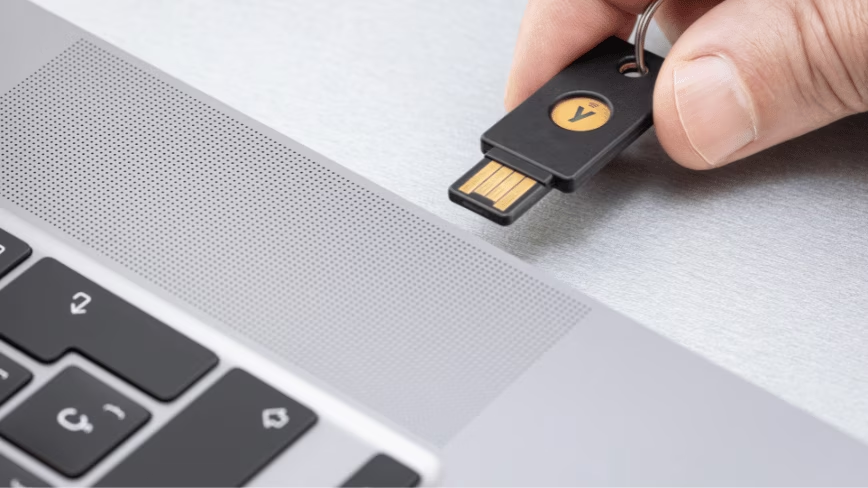
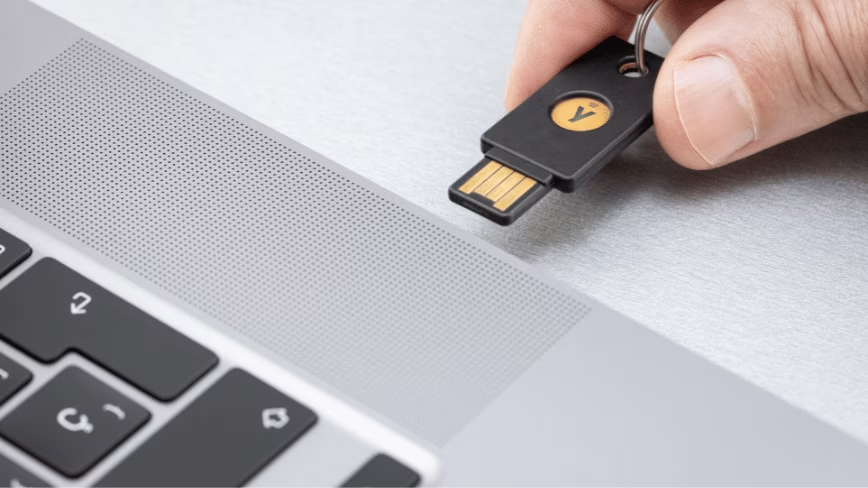
The partnership with Yubico is commercial and strategic. The two co-branded products, the YubiKey C NFC and the YubiKey C Nano, are physically identical to Yubico’s existing product line but carry OpenAI branding and are sold through OpenAI’s channels at a subsidised price. The C NFC model supports both USB-C and near-field communication, allowing it to work with laptops, phones, and tablets. The C Nano model is small enough to remain permanently inserted in a USB-C port. Both support FIDO2, the authentication standard developed by the FIDO Alliance that underpins passkeys and is backed by Apple, Google, and Microsoft. The $68 bundle for two keys represents a meaningful discount: a single YubiKey C NFC retails for approximately $55, making the bundle effectively a buy-one-get-one offer.

Advertisement

OpenAI’s decision to subsidise hardware authentication for its users reflects a calculation about the cost of account compromises. A high-profile breach of a ChatGPT account belonging to a journalist, government official, or corporate executive would generate reputational damage that far exceeds the cost of discounted security keys. By making hardware authentication cheap and accessible, OpenAI is shifting the security burden from a password that can be phished to a physical object that must be stolen. The strategy mirrors what Google implemented internally in 2017, when the company distributed YubiKeys to all 85,000 employees and subsequently reported zero successful phishing attacks against employee accounts. OpenAI is applying the same logic to its user base, though on an opt-in rather than mandatory basis, with one exception: members of the Trusted Access for Cyber programme, which grants verified security researchers and defenders access to OpenAI’s most capable cybersecurity models, will be required to enable Advanced Account Security by 1 June 2026.

The signal

The deeper significance of Advanced Account Security is not the feature itself but what it implies about the category. When a company builds bank-grade security for a chatbot, it is telling you that the chatbot is no longer a toy. OpenAI now operates a six-tier subscription structure that ranges from a free ad-supported account to custom enterprise contracts, with 50 million paying subscribers and 900 million weekly active users. A meaningful fraction of those users treat ChatGPT as a primary work tool, a confidential advisor, or both. The conversations stored in those accounts are, in aggregate, one of the most valuable datasets of human intent ever assembled: what people want to know, what they are worried about, what they are building, and what they are hiding. Protecting that dataset is not a feature. It is a business requirement.

The opt-in model is both a strength and a limitation. Users who need Advanced Account Security the most, dissidents in authoritarian countries, journalists investigating powerful institutions, executives discussing unreleased products, are also the users most likely to enable it. But the vast majority of ChatGPT’s 900 million weekly users will never toggle the setting, which means their accounts will remain protected by whatever password they chose when they signed up, reused from another service, and have not changed since. AI-powered phishing campaigns can now generate hundreds of targeted messages per minute, each tailored to a specific victim, and the most common entry point remains a stolen or guessed password. OpenAI has built the infrastructure to protect accounts that matter. Whether the accounts that do not opt in will become the easier targets is a question the feature does not answer. What it does answer, clearly, is that OpenAI considers a ChatGPT account to be a high-value asset worth defending with the same tools used to protect state secrets and financial systems. The company that made it easy for anyone to talk to an AI has now made it possible for anyone to lock that conversation behind hardware that cannot be phished. The gap between those two populations will determine how the next wave of AI-related breaches unfolds.

Advertisement

Source link

Continue Reading

Tech

Zap Energy’s nuclear double play: Fusion startup adds traditional fission to its lineup, in industry first

Published

on

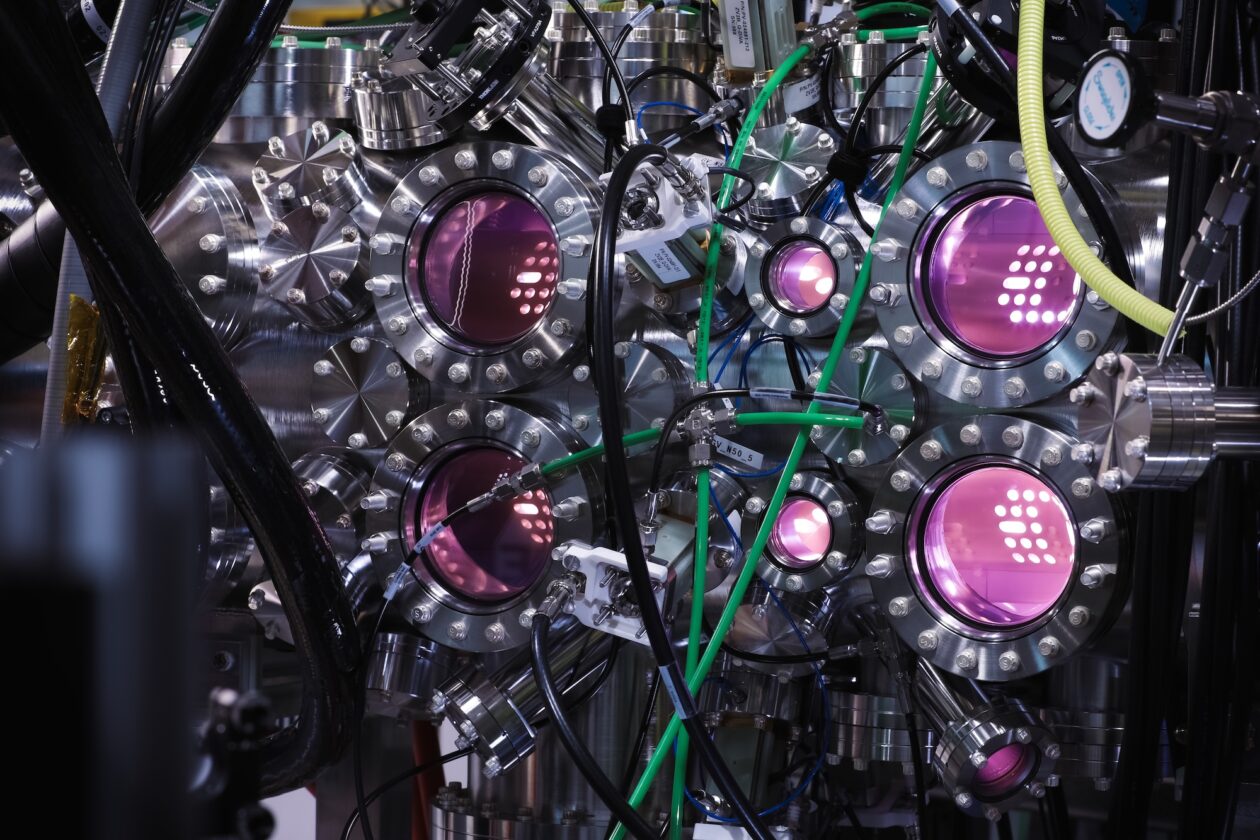
Zap Energy’s fusion device creates a purplish glow from its hydrogen plasma. (Zap Photo)

Zap Energy announced plans Wednesday to become the first company to simultaneously pursue two tracks for nuclear power: fusion, an unproven but promising technology that smashes light atoms together to produce energy, and fission, the better-known nuclear pathway that already powers reactors around the globe by splitting heavy atoms.

To support these dual objectives, Zap has named Zabrina Johal as CEO, succeeding company co-founder Benj Conway, who is transitioning to president.

Zabrina Johal, CEO of Zap Energy. (LinkedIn Photo)

Fusion innovators have typically drawn a bright line between their nuclear solution and conventional fission, given public concerns about past reactor meltdowns and radioactive waste.

But Zap’s leaders say that distinction creates a “false wall” the Everett, Wash., company is ready to knock down.

“Fission and fusion are two expressions of the same underlying physics,” Conway said in a statement. “This isn’t a pivot — by integrating them into a single platform, we can move faster, reduce risk, and build a more enduring company.”

The planet is desperate for new energy sources and many customers and governments are eager for solutions that don’t release carbon and further stoke climate change. Demand is spiking as tech companies rush to erect data centers that support AI even as transportation, housing and industrial sectors electrify their operations.

Advertisement

Zap has been developing its commercial fusion technology since launching nine years ago, building fusion machines and the systems needed to deliver that power to the grid. It has raised more than $330 million from investors and was selected to participate in the Department of Energy’s fusion development program.

But mastering fusion’s physics — essentially recreating the reactions that fuel the sun in an earthbound device — is uncertain and costly. While dozens of companies worldwide are chasing commercially viable fusion energy, none have succeeded so far.

Building next-generation fission technology is more predictable and would provide revenue sooner, the startup said, while simultaneously supporting research that advances its fusion work. The company’s goal is to have a fission solution for sale by the early 2030s, according to the New York Times, which first reported the news.

A Zap Energy employee working on its demo fusion reactor at the company’s Everett, Wash., research and development facility. (Zap Photo)

Johal began her career as an officer and engineer in nuclear propulsion in the U.S. Navy and previously spent 18 years with General Atomics leading strategic development for its nuclear and defense portfolios. Most recently, she was with AtkinsRéalis, a Montreal engineering firm with a nuclear power focus.

The company also named Daniel Walter, a former director at TerraPower — the nearby nuclear company backed by Bill Gates — as director of nuclear engineering. Zap vice president Matthew Thompson is now SVP of fission technology and will work on both tech platforms.

Advertisement

Other fusion companies have similarly pursued additional revenue streams. Seattle’s Avalanche Energy, for example, has multiple initiatives, including work on compact nuclear batteries, fusion propulsion in space applications, and advanced materials for extreme environments.

Zap is the first, however, to add the development of fission reactors to the mix. Traditional nuclear has seen a renaissance driven by the spiking power demand. The U.S. government is investing in fission innovation and expedited permitting for the sector, and tech companies are paying to keep existing reactors online while backing startups pursuing smaller, cheaper and faster-to-deploy designs that use factory fabricated parts.

Zap has been developing its nuclear plan over the past year and is looking to develop microreactors that roughly share the physical dimensions of its planned fusion device.

The company’s approach builds on technology from the Experimental Breeder Reactor-II (EBR-II), developed and tested over decades at U.S. national laboratories. The strategy was later adopted by Toshiba for its 4S (Super-Safe, Small and Simple) reactor, though that project fizzled in the post-Fukushima climate that turned hostile to nuclear power — despite the fact the 4S design itself was unrelated to the Fukushima reactor technology.

Advertisement

Zap said it is now revitalizing the Toshiba design, which includes a 10 megawatt microreactor cooled by liquid sodium that can run for decades without refueling. The approach is attractive in part because Zap’s fusion device uses liquid lithium, which behaves similarly to sodium.

Advertisement

“Zap’s approach is to build common technical foundations — materials, liquid metal systems, high power density design, and neutron environments — once and apply them across both fission and fusion,” the company said.

The startup is confident that customers are hungry for both varieties of nuclear energy.

“Meeting that demand requires simpler, more adaptable systems and a faster path to deployment,” Johal said. “Fission gives us a path to deploy. Fusion gives us a path to transform. Bringing them together is how we do both.”

Source link

Advertisement
Continue Reading

Tech

Meta Says It May Withdraw Its Apps From New Mexico If Judge Agrees To The State’s Demands

Published

on


Sometimes, a threat lands as a threat. Other times, it comes off like, well, an advertisement for the New Mexico tourist bureau. In court filings (via SourceNM), Meta warned that if a judge sides with the NM Department of Justice in an upcoming bench trial, the company may be forced to shut down its apps for users in the state. NM Attorney General Raúl Torrez described Meta’s threat to pull the plug on its apps as a “PR stunt.”

Last month, a Santa Fe jury held Meta liable for $375 million in damages to NM over the company’s failure to protect child users from online predators. The company’s warning was made ahead of the trial’s second phase, scheduled to begin next week.

In the May 4 bench trial, NM District Judge Bryan Biedscheid will determine whether Meta caused a “public nuisance” and should therefore fund related state programs. NM DOJ lawyers will also argue that Meta needs to make several changes to its platform. These include adding age verification, removing predators, and “protecting minors from encrypted communications that shield bad actors.”

Advertisement

Meta’s response, unsealed on Thursday, reportedly described the state’s demands as “so broad and burdensome that if implemented, it might force Meta to withdraw its apps entirely.” “It does not make economic or engineering sense for Meta to build separate apps just for New Mexico residents,” it continued. The company also claimed that the state lacks the authority to implement its desired changes and that doing so would violate free speech.

In a statement sent to Engadget, NM AG Torrez dismissed Meta’s claims that the proposed remedies weren’t feasible. “We know Meta has the ability to make these changes. For years, the company has rewritten its own rules, redesigned its products, and even bent to the demands of dictators to preserve market access. This is not about technological capability. Meta simply refuses to place the safety of children ahead of engagement, advertising revenue, and profit.”

Advertisement


Source link

Continue Reading

Trending

Copyright © 2025