













Connect with us
DAPA Banner

Business

Why Historical Forex Data Is the Foundation of Serious Trading

Published

on

Why Historical Forex Data Is the Foundation of Serious Trading

In the world of currency trading, few resources are as powerful – or as underappreciated – as historical price data. Whether you are a retail trader experimenting with your first algorithm or a seasoned professional running a multi-currency portfolio, your ability to make informed decisions depends heavily on understanding what markets have done in the past. Forex historical data is not merely an archive of price movements; it is the raw material from which trading strategies are built, tested, and refined.

What Is Forex Historical Data?

Forex historical data refers to recorded time-series information about currency pair prices — typically including the open, high, low, and close (OHLC) for a given time interval, as well as trading volume where available. This data can range from tick-by-tick records (capturing every individual trade) to daily or weekly summaries spanning decades. The granularity and time horizon of the data you need depends entirely on your trading approach.

Scalpers and high-frequency traders require ultra-granular tick data with millisecond timestamps. Swing traders typically work with hourly or 4-hour candles. Long-term macro traders may only need daily or weekly closes going back ten to twenty years. In each case, the underlying principle is the same: to understand the future probability of price movements, you must first study the past.

Why Historical Data Matters

The most immediate use case for historical data is backtesting — the process of applying a trading strategy to past market conditions to see how it would have performed. Without rigorous backtesting, a trader is essentially flying blind, relying on intuition or theoretical reasoning alone. Historical data transforms strategy development into a quantifiable, reproducible process.

Advertisement

“Backtesting with high-quality historical data is not a guarantee of future success — but trading without it is nearly a guarantee of inconsistency.”

Beyond backtesting, historical data supports a wide range of analytical functions. It allows traders to identify recurring seasonal patterns — for instance, the tendency of certain currency pairs to exhibit higher volatility during specific months. It enables the calibration of risk management parameters, such as appropriate stop-loss distances based on historical average true range. And it provides the empirical grounding for statistical models that attempt to forecast future price distributions.

Common Pitfalls: Data Quality and Survivorship Bias

Not all historical data is created equal. One of the most dangerous mistakes a trader can make is to backtest with low-quality, adjusted, or incomplete data. Missing ticks, incorrect timestamps, and interpolated prices can produce dramatically misleading backtest results — a phenomenon sometimes called “garbage in, garbage out.”

Survivorship bias is another subtle trap. If your historical dataset only includes currency pairs that are still actively traded today, you may be excluding periods of extreme illiquidity or crisis-related behavior that could stress-test your strategy in ways clean data never would. Rigorous data sourcing means accounting for these edge cases from the start.

Advertisement

Where to Source Quality Historical Forex Data

The market for historical forex data has matured significantly over the past decade. Traders today have access to a range of free and premium sources, each with different levels of granularity, accuracy, and coverage.

Free sources such as Histdata.com offer minute-level OHLC data for major pairs going back to the early 2000s — a solid starting point for strategy development. MetaTrader platforms also allow users to export historical candle data directly from their brokers, though quality varies widely depending on the data feed.

For institutional-grade tick data with precise timestamps and bid/ask spreads, paid providers are generally necessary. One of the most reputable sources in the industry is the Swiss forex broker Dukascopy, which offers comprehensive tick-level historical data through its JForex platform and publicly accessible data center. The data spans over a decade for most major and minor pairs and is widely regarded as among the cleanest available for retail use.

Other notable premium sources include Refinitiv (formerly Thomson Reuters), Bloomberg Terminal, and True Tick, all of which cater primarily to professional and institutional users. For algorithmic traders building in Python, Quandl and Polygon.io also provide structured forex data via API.

Advertisement

Practical Considerations for Working with Historical Data

Once you have sourced your data, working with it effectively requires some technical groundwork. Most professional traders store and process historical data using relational databases or time-series databases such as InfluxDB or TimescaleDB, which are optimized for high-frequency temporal queries.

Data normalization is equally important. Different sources use different conventions for timestamps (UTC vs. local broker time), decimal precision, and handling of weekends or holidays. Before any analysis, it is essential to clean and align your dataset — a process that is often more time-consuming than the analysis itself.

Traders using Python can leverage libraries such as Pandas for data manipulation and Backtrader or Zipline for backtesting. Those preferring a more visual workflow may find platforms like TradingView or QuantConnect offer sufficient built-in historical data for strategy testing, though with less flexibility for custom research.

The Long View

Markets are not static. Regimes change, correlations shift, and volatility patterns evolve with macroeconomic cycles. A strategy that performed brilliantly from 2010 to 2015 may be entirely unsuited to the environment of 2025. This is precisely why maintaining access to long, high-quality historical datasets is an ongoing commitment — not a one-time task.

Advertisement

The traders and institutions that consistently outperform over long time horizons are invariably those who treat data as infrastructure. They invest in its quality, update it continuously, and stress-test their assumptions against the full spectrum of market history — including the crises, the anomalies, and the quiet periods that reveal a strategy’s true character.

In trading, as in most empirical disciplines, the past is not a perfect predictor of the future. But it remains our best available lens through which to examine it.

Continue Reading
Click to comment

You must be logged in to post a comment Login

Leave a Reply

Business

Wall Street Breakfast Podcast: GameStop Adds eBay To Cart

Published

on

Wall Street Breakfast Podcast: GameStop Adds eBay To Cart

ebay company sign

Getty Images

Listen below or on the go via Apple Podcasts and Spotify

eBay (EBAY) rallies as GameStop (GME) launches bold $56B takeover attempt. (00:14) Spirit Airlines (FLYYQ) nears completion of passenger refunds after weekend shutdown. (01:22) A2 Milk (ACOPF) recalls U.S. infant formula batches after toxin detection. (02:49)

This is an abridged transcript.

Advertisement

GameStop (GME) has submitted a non-binding proposal to acquire 100% of eBay (EBAY) at $125 per share in cash and stock.

GameStop (GME), valued at nearly $12B, said Sunday it has built a 5% economic stake in eBay through derivatives and direct ownership of common shares.

eBay’s market cap stands at about $46B. The offer represents a 46% premium to eBay’s closing price on February 4, the day GameStop started accumulating its position in eBay (EBAY).

The proposed offer of $125 per share is comprised of 50% cash and 50% GameStop common stock.

Advertisement

The cash consideration is expected to be funded from a combination of (i) cash and liquid investments on GameStop’s balance sheet, which totaled ~$9.4B as of January 31, 2026, and (ii) third-party acquisition financing, in respect of which GameStop has received a highly-confident letter from TD Securities for up to $20B.

One topic that has been consistently trending this weekend is Spirit Airlines (FLYYQ).

A government bailout didn’t workout so the company officially began to wind down operations on Saturday, May 2.

Spirit’s (FLYYQ) collapse followed two bankruptcy filings in two years, repeated cost-cutting efforts and unsuccessful attempts to secure new financing. Rising jet fuel prices tied to the Iran conflict accelerated the carrier’s cash burn and helped force the shutdown.

Advertisement

All flights were cancelled and if you had a flight you were told not to go to the airport. If you were already at the airport, social media is full of videos showing stranded passengers scrambling trying to figure out what to do next.

You would think the story ends there because this isn’t the first airline to crumble. But it doesn’t.

Let’s buy spirit or Let’s buy spirit air started on social media when an aviation enthusiast Hunter Peterson proposed buying the company. He says it started as a joke but he may be on to something. So far, more than $88M has been pledged on the site.

Spirit Airlines (FLYYQ) said Sunday it has nearly finished issuing refunds to passengers and transporting crew members back to their home bases after halting operations over the weekend.

Advertisement

The carrier said most travelers who purchased tickets using credit or debit cards had received refunds by Saturday evening, with only a small share of transactions still being finalized.

Spirit (FLYYQ) also said the last remaining group of roughly 1,500 crew members made it back to their home base.

A New Zealand-based company is recalling certain infant formula products sold in the United States after batches were found to contain cereulide, a toxin associated with sudden nausea and vomiting.

a2 Milk (ACOPF) (ACOPY) said Monday in Wellington that three batches of a2 Platinum formula made for the U.S. market are affected. Manufacturer Synlait Milk identified the toxin, prompting the recall, which began May 1. The action applies only to the United States and does not affect China, the company’s largest and most profitable market.

Advertisement

The company said it has received no confirmed reports of infant illness or injuries linked to the affected product.

Shares of a2 Milk (ACOPF) (ACOPY) fell as much as 7.3% to NZ$8.25 in Wellington trading.

The recall covers three batches totaling 63,078 tins, of which an estimated 16,428 were sold to consumers.

What’s Trending on Seeking Alpha

Advertisement

Greg Abel steps into Buffett’s arena, Berkshire shareholders like what they saw

Bessent warns Americans should be concerned about AI threats to bank accounts

Trump says U.S. to start guiding neutral ships from Persian Gulf under ‘Project Freedom’

Catalyst watch:

Advertisement
  • IBM’s (IBM) four-day IBM Think will begin. The flagship enterprise tech conference will be focused on agentic AI, with sessions and demos focused on how companies can redesign operations with AI at the core to drive ROI, productivity, and growth.

  • The three-day Milken Global Conference will include panels featuring the CEOs from Gap (GAP), Constellation Energy (CEG), and PayPal (PYPL).

  • Shareholders with both Devon Energy (DVN) and Coterra Energy (CTRA) will vote on the pending merger between the companies.

Stock index futures are mixed as investors continue to monitor any developments related to the U.S.-Iran conflict.

President Trump said the United States will begin helping some neutral vessels stranded in the Persian Gulf transit the Strait of Hormuz starting Monday.

Trump also said U.S. officials are holding “very positive discussions” with Iran that could result in something “very positive for all,” though he did not elaborate.

Crude oil is up 0.9% at $102. Bitcoin is up 1.5% at $79,000. Gold is down 0.7% at $4,580.

Advertisement

The FTSE 100 is down 0.1% and the DAX is little changed. China’s (SHCOMP) market closed for a holiday.

Economic calendar:

10:00 am Factory Orders

Editor’s Note: This article discusses one or more securities that do not trade on a major U.S. exchange. Please be aware of the risks associated with these stocks.

Advertisement
Continue Reading

Business

New Mexico Cartel Theories and Family Drama Claims Swirl as Search Hits Month 4

Published

on

Zayed International Airport Abu Dhabi International Airport

TUCSON, Ariz. — As the search for 84-year-old Nancy Guthrie entered its fourth month on Monday, May 4, 2026, fresh online rumors linking her abduction to Mexican cartels, possible family connections and staged elements have intensified public speculation, even as authorities maintain the investigation remains active with no named suspects or arrests. The mother of “Today” show co-host Savannah Guthrie was taken from her Catalina Foothills home on the night of Jan. 31 in what investigators describe as a targeted kidnapping, with blood spatter, a tampered doorbell camera and her pacemaker disconnecting shortly after 2:30 a.m. providing key early evidence.

Pima County Sheriff’s Department and FBI officials continue analyzing DNA samples, including potentially critical new material recovered from the home, while reviewing more than 30,000 tips. Savannah Guthrie has publicly stated she believes at least two ransom notes are genuine, though many others have been dismissed as hoaxes. The family’s $1 million reward remains active alongside a $50,000 federal offer, yet no verifiable proof of life has emerged in recent communications.

Online speculation has exploded in recent weeks. Some true-crime forums and social media accounts claim connections to Mexican cartels operating near the Arizona border, citing the proximity to Sonora and unverified notes mentioning sightings in Mexico. Others allege internal family drama or a staged disappearance for financial gain, prompting strong pushback from Savannah Guthrie and law enforcement. Sheriff Chris Nanos has repeatedly cleared all immediate family members as suspects, describing them as cooperative victims.

Former FBI agents and profilers have weighed in publicly. Some suggest a straightforward ransom motive with possible cross-border elements, while others caution against unverified theories that could hinder the probe. One circulating rumor points to a masked intruder seen on footage and alleged prior incidents around the home, fueling speculation of planned targeting rather than random crime. Authorities have not confirmed these details but continue examining surveillance from earlier dates.

Advertisement

Savannah Guthrie returned to the “Today” show in early April after taking time away, using her platform to urge focus on credible tips and reject conspiracy narratives. In interviews, she expressed both hope for her mother’s safe return and acknowledgment of the grim reality after three months. The emotional toll on the family remains evident as they balance public appeals with private grief.

Forensic developments include ongoing FBI laboratory testing of additional DNA, such as hair samples from inside the home. Earlier glove DNA led to a dead end, belonging to an unrelated person. Ransom communications have included cryptocurrency demands, with some notes providing details that investigators initially lacked, lending them partial credibility according to Savannah.

The case has drawn intense national and international attention, with rumors amplified by true-crime podcasts, YouTube channels and social media. Claims of family involvement or staged elements have been particularly persistent online, despite official denials. Ed Smart, father of Elizabeth Smart, recently warned against such speculation, emphasizing its potential harm to the investigation and family.

Community members in the affluent Catalina Foothills area express ongoing concern and vigilance. Nancy Guthrie was remembered as an independent widow who lived in the same home for decades. Her pacemaker data and signs of forced entry, including a propped-open back door, convinced authorities she did not leave voluntarily.

Advertisement

As the fourth month begins, the sheriff’s department renewed its plea for information, stressing the case is still active. No shift to cold-case status has occurred, with resources dedicated to digital evidence, vehicle sightings and potential cross-border links. The FBI’s involvement underscores the seriousness, with coordination for possible international elements.

Legal and profiling experts offer varied perspectives. Some see financial motivation as most likely, while others note the targeted nature and lack of immediate ransom success could indicate more complex motives. The volume of false leads and hoaxes has complicated progress, with one man already charged in connection with a fake ransom text.

The Guthrie family continues balancing hope with realism. Savannah has spoken of a possible “miraculous homecoming” while acknowledging the difficult passage of time. Public support remains strong, with many following developments closely and sharing verified information channels.

Nancy Guthrie’s disappearance highlights vulnerabilities for elderly residents and the challenges of high-profile abduction cases. Massive public interest generates helpful tips alongside distracting rumors and unverified claims. Authorities urge caution and focus on credible leads to avoid hindering the investigation.

Advertisement

As May progresses, forensic results and new tips could provide breakthroughs. For now, the case of Nancy Guthrie remains one of 2026’s most perplexing mysteries, with rumors filling the void left by limited official updates. The family and investigators continue their quiet determination, hoping for resolution in what has become a deeply personal and public ordeal.

Continue Reading

Business

Austal inks $150m contract extension for two more Border Force boats

Published

on

Austal inks $150m contract extension for two more Border Force boats

Henderson-based shipbuilder Austal will build two more evolved cape-class patrol boats for the Australian Border Force under a contract extension worth $150 million.

Continue Reading

Business

Realistic Chance He Plays vs Thunder Series Revealed

Published

on

Luka Doncic Cheers Lakers from Bench in Game 2 as

OKLAHOMA CITY — Los Angeles Lakers superstar Luka Doncic remains sidelined with a Grade 2 left hamstring strain suffered April 2 against the Oklahoma City Thunder, casting significant doubt on his availability for the Western Conference semifinals that begin Tuesday, May 5, 2026. Multiple NBA insiders now place his realistic chance of appearing in any game of the best-of-seven series at roughly 35 percent, with most reports indicating he will miss at least the first two games and faces a “slow path” to return even if the Lakers advance deep into the matchup.

Doncic has been out for more than a month, missing the Lakers’ first-round series against the Houston Rockets. He has progressed to controlled on-court movement, light shooting drills and some non-contact work, but has not advanced to one-on-one sessions, full-contact practice or scrimmages. Shams Charania of ESPN reported Sunday that Doncic “will be out to start the series” and is being evaluated on a week-to-week basis. Brian Windhorst added that the 27-year-old is “not close” to returning and is unlikely to play the front end of the series, projecting at least another week to 10 days minimum before any realistic ramp-up.

A Grade 2 hamstring strain typically requires four to six weeks of recovery, placing Doncic on the early side of that window. Sports medicine specialists, including Dr. Jesse Morse, have noted he remains behind expected milestones, with no full-fledged running or live basketball activity yet. Brett Siegel and other league sources confirmed the earliest optimistic return window is Games 3 or 4 in Los Angeles, assuming rapid progress in the coming days. Even then, any return would likely involve strict minutes restrictions and careful monitoring to avoid re-injury.

The percentage estimate of roughly 35 percent for appearing in at least one game accounts for several factors. The series is expected to be competitive, potentially extending to six or seven games and giving Doncic additional time. However, the slow-build nature of his rehab, lack of contact work and the high-stakes playoff environment lower the odds significantly. Medical experts emphasize that explosive guards like Doncic face elevated re-injury risk if rushed, making conservative management the priority for the Lakers.

Advertisement

Lakers coach JJ Redick and the medical staff have emphasized patience. Teammates have noted the intangible value of Doncic’s presence around the group during recovery, but on-court contributions remain the goal. The Lakers advanced past Houston without him, relying on LeBron James and supporting pieces, but facing the top-seeded Thunder without their second-leading scorer creates a steep uphill battle. Oklahoma City dominated the regular-season series against Los Angeles and presents elite athleticism and length that would test any returning player.

Insiders stress there is no firm timetable. Prime Video’s Cassidy Hubbarth reported Friday that progress is incremental and controlled, with no immediate live action on the horizon. This aligns with earlier reporting from ClutchPoints and others that Doncic is still at least a week and a half from progressing to the next phase of integration. The Lakers are expected to provide a status update Monday ahead of Game 1, but all indications point to him being unavailable for the series opener at Paycom Center.

If the series extends, the odds improve modestly. Games 3 and 4 in Los Angeles (projected around May 9-11) fall roughly five to six weeks post-injury, aligning with the outer edge of a standard Grade 2 recovery. A sports doctor cited by Heavy.com suggested May 11 as a best-case return date for Game 5, assuming continued positive steps. Yet even optimistic scenarios carry caveats: no scrimmage experience and the physical demands of playoff basketball make a seamless return unlikely.

Doncic traveled to Europe earlier for specialized treatment, but that did not accelerate his timeline dramatically. His playing style — reliant on sudden stops, direction changes and burst — demands near-full confidence in the hamstring before clearance. Re-injury rates for hamstring strains in elite athletes hover around 20-30 percent when rushed, further supporting the conservative approach.

Advertisement

The absence places added pressure on James, Austin Reaves and the Lakers’ supporting cast. James has shouldered a heavy load in the playoffs, but the lack of Doncic’s scoring, playmaking and gravity against a Thunder defense built for versatility creates matchup nightmares. Oklahoma City swept the regular-season meetings and enters as heavy favorites, with many analysts projecting a short series unless Los Angeles finds unexpected magic.

Fan and analyst reaction has been mixed. Some express cautious optimism for a mid-series return that could swing momentum, while others view the injury as potentially series-ending for the Lakers’ title hopes. Social media buzzed with debates over the percentage odds, with most informed voices landing in the 30-40 percent range for any appearance. The basketball world continues to monitor daily updates from the Lakers’ practice facility, where any acceleration in rehab could shift expectations rapidly.

For now, the realistic outlook remains guarded. Doncic’s youth and elite conditioning provide hope, but the slow-build reality and playoff intensity tilt against an early return. The Lakers must prepare to compete without their All-NBA talent, at least initially, while keeping the door open for a potential late-series boost if the hamstring responds favorably in the coming week.

The series tips off Tuesday with Game 1 in Oklahoma City, followed by Game 2 on Thursday. Subsequent games alternate, with potential decisive contests back in Los Angeles. National television coverage will spotlight the matchup, with Doncic’s status dominating pregame narratives regardless of his availability.

Advertisement

As one of the league’s most dynamic players navigates recovery, the basketball community watches closely. A 35 percent chance reflects the balance between medical caution and the unpredictable nature of playoff basketball. For the Lakers and their fans, every day without setbacks brings a glimmer of hope — but the immediate reality demands resilience without their Slovenian superstar.

Continue Reading

Business

(VIDEO) Lionel Messi Steals Spotlight at 2026 Miami Grand Prix with Family and Star Driver Meetings

Published

on

Lionel Messi, Paris Saint-Germain

MIAMI GARDENS, Fla. — Lionel Messi turned heads and stole the show at the 2026 Miami Grand Prix on Sunday, drawing massive crowds and generating viral moments as the soccer legend attended with his family just hours after scoring for Inter Miami. The eight-time Ballon d’Or winner’s appearance at the Miami International Autodrome added an extra layer of star power to an already glamorous event, where he mingled with drivers, visited team garages and celebrated winner Kimi Antonelli in a feel-good crossover between football and Formula 1.

Messi arrived at the paddock alongside his wife Antonela Roccuzzo and their three sons shortly after playing in Inter Miami’s dramatic 4-3 loss to Orlando City. Dressed casually, the Argentine icon quickly became the center of attention as fans and cameras swarmed him. Mercedes hosted Messi as a guest — he owns several non-racing Mercedes vehicles and has collaborated with the brand on promotional work — and he spent time in their garage area taking photos and observing preparations.

Lionel Messi, Paris Saint-Germain
Lionel Messi
IBTimes US

One of the most memorable interactions came when Messi met fellow Argentine Franco Colapinto of Alpine. The young driver described the encounter as a dream come true, sharing that Messi asked detailed questions about Formula 1 and expressed interest in experiencing the car up close. Videos showed the pair chatting warmly, with Colapinto later posting about the special moment on social media. Messi also greeted Mercedes drivers George Russell and Kimi Antonelli, creating buzz among fans of both sports.

The soccer superstar’s presence generated electric energy throughout the weekend. Crowds chanted “Messi, Messi” as he walked through the paddock, and social media exploded with clips of his arrival and interactions. Many noted how the usually calm paddock turned into a frenzy whenever the Inter Miami captain appeared. His family joined in the experience, with photos showing the group enjoying the vibrant atmosphere of the Miami Grand Prix.

Advertisement

Messi’s timing added to the story. Fresh off scoring in a high-scoring MLS match earlier that day, he transitioned seamlessly into the world of high-speed racing. Observers praised his humility and genuine interest in the sport, with reports indicating he asked drivers thoughtful questions about performance, strategy and the physical demands of Formula 1. His visit highlighted the growing crossover appeal between global sports stars and F1’s expanding U.S. audience.

After Antonelli delivered a commanding victory — his third straight win of the season — Messi congratulated the 19-year-old Mercedes driver in the team’s hospitality area. Videos captured the wholesome exchange, with Messi offering handshakes and words of praise. The moment resonated widely, with fans calling it a perfect blend of two iconic athletes from different generations and disciplines. Antonelli later credited the positive energy in the garage, jokingly referring to Messi as a good luck charm.

The Miami Grand Prix has become a magnet for celebrities, and 2026 proved no exception. Alongside Messi, tennis legend Rafael Nadal and golfer Jon Rahm were also in attendance, adding to the star-studded weekend. However, it was Messi who commanded the most attention, with his every move tracked by photographers and shared instantly across platforms. The event’s sprint format and dramatic on-track action, including incidents and safety car periods, provided a thrilling backdrop to the off-track glamour.

Advertisement

Messi’s connection to Miami runs deep through his Inter Miami commitments, making his appearance at the local Grand Prix especially fitting. The weekend allowed him to unwind slightly from a demanding soccer schedule while exposing him to a new audience. F1 officials and teams welcomed the boost in visibility, noting how global icons like Messi help grow the sport in the United States.

Social media reactions poured in throughout the day. Hashtags related to Messi and the Miami GP trended as fans shared photos, videos and memes. Many celebrated the accessibility of stars at such events, while others speculated on potential future collaborations or even a lighthearted “Messi vs. drivers” challenge. The crossover moment between football royalty and motorsport added a feel-good narrative to the race weekend.

As the 2026 season continues, Messi’s paddock visit will likely be remembered as one of the standout off-track highlights. For F1, it reinforced Miami’s status as a premier destination event blending speed, entertainment and celebrity culture. For Messi, it offered a brief escape and new experiences alongside his family in a city he now calls home during his MLS chapter.

The day encapsulated why the Miami Grand Prix continues to captivate. From on-track battles featuring young talents like Antonelli to star-studded appearances by icons like Messi, the event delivered spectacle on and off the circuit. As fans relive the moments through viral clips, Messi’s effortless charm once again proved why he remains one of the world’s most magnetic athletes.

Advertisement
Continue Reading

Business

Resurgent in April, can bulls defy ‘Sell in May’ maxim?

Published

on

Resurgent in April, can bulls defy 'Sell in May' maxim?
Mumbai: Investors tempted to follow the Wall Street adage ‘Sell in May and Go Away‘ after Indian equities’ best monthly gains in recent years in April, must resist the urge, with momentum still favouring the bulls. Seasonality trends also back this view: key indices in the past decade have posted gains in May more often than not. Analysts, however, caution that a runaway rally like the previous month is unlikely as oil prices remain elevated with the West Asia conflict simmering in the background.

In the past 10 years, Nifty has posted gains in six instances, while the Nifty 500 index has gained on seven instances, according to data from Motilal Oswal Financial Services for the past decade.

“After April’s strong rally, May is likely to see more moderate, stock and sector-specific moves rather than broad-based buying,” said Chandan Taparia, head of technical and derivatives research at Motilal Oswal Financial Servicesq. “While a classic ‘sell in May and go away’ trade may not materialise, upside could remain capped amid an elevated dollar and crude prices.”

Resurgent in April, Can Bulls Defy ‘Sell in May’ Maxim?Agencies

Analysts expect moderate gains, small- and mid-caps to top large caps

The average Nifty returns in May for the past 30 years have been 1.84%, and at 2.14% after adding dividends, said Sham Chandak, head of institutional equities at Elios Financial Services. “That said, Indian equities are no longer trading below their historical average valuations. They are at par now. Given we are still in a geographically uncertain environment and the Q4 earnings season could be difficult overall, I expect the market to be largely range-bound (in a 500-point range on Nifty),” he said.
He expects small- and mid-caps to continue outperforming large caps in May. Nifty and Sensex gained 7.5% and 7%, respectively, in April – the highest monthly gains since December 2023 – after both gauges had retreated to multi-year lows in March. The Midcap 150 jumped 13.2%—the biggest monthly upmove since November 2020—and the Nifty Smallcap 250 soared 17.1%, posting its best monthly performance since its inception in April 2016. Indian markets were shut on Friday for Maharashtra Day.

Advertisement


“Although May seasonality, returns-wise, is slightly better, one needs to be mindful of rising crude prices and cues on monsoon. As the pace of foreign selling is slowing, equities have seen a strong rebound since April this year,” said Sriram Velayudhan, senior vice president, IIFL Capital Services. He said Nifty is likely to trade in a range of 23,800 to 25,000 for the month.

Continue Reading

Business

Shares off to shaky start ahead of interest rates call

Published

on

Shares off to shaky start ahead of interest rates call

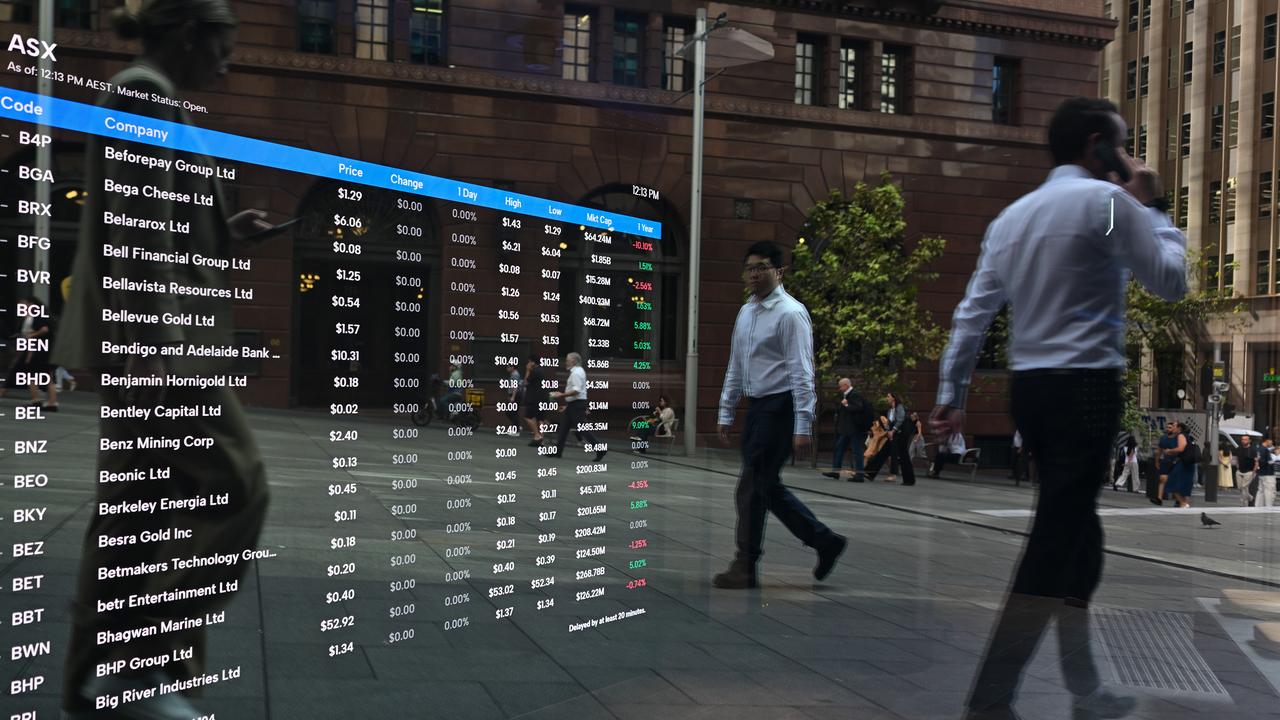
Australia’s share market has started the week lower, pulling back ahead of the Reserve Bank’s interest rate decision and as traders weigh developments in the Persian Gulf.

Continue Reading

Business

American Century Growth Fund Q1 2026 Commentary (TWCGX)

Published

on

American Century Growth Fund Q1 2026 Commentary (TWCGX)

American Century Investments is a leading asset manager focused on delivering investment results and building long-term client relationships while supporting research that can improve health and save lives. Note: This account is not managed or monitored by American Century Investments, and any messages sent via Seeking Alpha will not receive a response. For inquiries or communication, please use American Century Investments’ official channels.

Continue Reading

Business

Markets may be approaching near-term exhaustion after strong rally: Rohit Srivastava

Published

on

Markets may be approaching near-term exhaustion after strong rally: Rohit Srivastava
Indian equities started the week on a strong footing, extending recent gains, though market watchers are increasingly flagging signs of slowing momentum even as the broader uptrend remains intact.

Speaking to ET Now, Rohit Srivastava, Founder, Strike Money Analytics & Indiacharts said the market’s underlying structure is still positive, but momentum indicators suggest the pace of the rally is cooling.

“This is the fifth week of gains for the smallcap index, which is a long stretch. Our RMI indicator has crossed to the sell side for mid and smallcaps despite strong breadth. It shows that the speed of price rise is slowing. We may be nearing the end of this move. However, we made a longer-term bottom in early April, so any pullback should be seen as an opportunity.”

He added that the Nifty faces a key technical hurdle in the near term.

Advertisement

“The level to watch is 24,300, which is immediate resistance. If we fail to move past it, we could retest 23,500. If we break above it, we may move beyond 25,000. As we enter May, a month that often slows after April’s momentum, we should stay alert to near-term volatility.”


While indices may be entering a consolidation phase, sectoral trends are beginning to diverge, with real estate emerging as a standout performer.
The Nifty Realty index has surged sharply, raising hopes of a possible base formation after a prolonged downtrend.“The realty index has been falling for over two years, from June 2024 to March 2026. It is possible that the correction has ended, with early value buying now emerging. It is too early to say the sector has fully turned, given oversupply concerns, especially in metros.”

“Prices have started to turn, which is an early positive sign. The real trigger would be a rate cycle change. We have not yet seen bond yields fall or RBI rate cuts. Those will be key future catalysts. But this is likely the first phase of value buying after a long bear market.”

Overall, markets remain at a delicate juncture—supported by strong liquidity and sentiment, but increasingly sensitive to technical resistance levels and macro triggers that will decide the next leg of the trend.

Advertisement
Continue Reading

Business

What the parties are promising on transport in Wales ahead of the Senedd Election

Published

on

Business Live

Westminster governments of whatever hue have underfunded Wales and the Senedd is the only route we have to achieve the funding levels needed to improve life in Wales.

A bus crashes down a mountainside

A TfW train at Cardiff Station.(Image: 112 Canarias)

In Thursday’s Senedd Election a judgement is to be made on which political party (or coalition) will take forward Wales’ transport network.

An efficient transport system provides the basis for a successful economy to move people and freight within Wales and internationally. Inward investors see transport in their top four criteria.

Advertisement

Most parties address in some way the issues discussed in this column over recent months. There is a split between those concentrating on additional new roads/increasing capacity on existing roads (Welsh Conservatives/Reform) and public transport investment (Plaid Cymru, Green Party, Welsh Labour, Welsh Liberal Democrats).

Welsh Conservatives designate the M4, A55 and A40 as ‘union highways’ benefitting the UK as a whole. Surely, they should firstly benefit Wales.

READ MORE: New South Wales to London train service launch date

Author avatarDylan Jones-Evans

Experience shows that new road capacity may improve the short-term congestion position but over several years more traffic is attracted and congestion will return and not solve the south-east Wales’ road congestion problem. The capital cost of a new M4 relief road (really a six-lane motorway) is over £2bn. The annual cost of removing potholes is estimated at £250m.

The estimated cost of making a 21st century railway network in Wales is £14bn (Today, Tomorrow, Together, Welsh Government, 2026)

Advertisement

These numbers are a massive fiscal challenge to any incoming government. The party manifestos have to show an understanding of the costs (whether published or not; and not just small marginal items) but also income from capital and revenue accounts within the block grant and Welsh taxation.

The sources and size of government revenue and the timescale over which it is received has to be set against a vision of strategic transport and land use planning. Consequently any new land developments (housing, business, retailing, manufacturing) must have an associated transport plan. Keeping in mind that major infrastructure schemes are not built within the life of one Senedd.

Wales has not been ‘fiscally fought for’ over decades but of the parties transport manifestos only Plaid Cymru refers to the revenue side of Wales’ public funding and making best use of the funds.

That unfairness shown to Wales must be resolved and Plaid Cymru in its first hundred days of government promises to begin negotiations with Whitehall sourcing a new block grant settlement. This would include full devolution of all rail investment funding alongside the existing operational powers and funding. And while adding a modestly estimated £3bn (including the investment backlog) annually to the block grant, it would also make possible an integrated transport investment programme.

Advertisement

A new investment framework would then evaluate the costs and benefits of all road and rail infrastructure investment schemes and would have similarly considered the 20mph scheme. This implies that decisions are made initially on strategic criteria reflecting HM Treasury’s new ‘Green Book’ approach and then considered on economic or financial grounds. This evaluation process would apply to Cardiff Airport funding.

Although not specific on roads, it is fair to say that Plaid Cymru has produced the most detailed analysis of needs in its transport manifesto. It reflects a Netherlands-type approach which has been successful in reducing car-related traffic congestion and improving safety through a national public transport ticket, an integrated bus /tram/ rail /cycle network via interchange points and new vehicle investment. It should find favour with Welsh Liberal Democrats and the Green Party. Welsh Labour is clear on its intentions but so it should after thirty years background knowledge.

Reform unfairly criticises railway passenger capacity but incorrectly believes that using bimodal trains and varying length of trains between peak and off-peak times will solve overcrowding. That may work in London but indicates a very limited knowledge of Wales’ railways.

Wales will undoubtedly face a big financial challenge during the next Senedd. If these policies are to be achieved, increased income is required from the two main sources – Barnett formula consequential payments from Westminster and Wales’ own income and land transfer taxes. Increase in Welsh income tax is bravely suggested by the Liberal Democrats.

Advertisement

One thing is clear. Any party which does not have in its manifesto, nor in previous statements, the continuance of the Senedd and a devolved government is living in a fiscal dream world. Successive Westminster governments of whatever hue have underfunded Wales. The Senedd is the only route we have to achieve the funding levels needed to improve life in Wales.

Parties prepared to follow a hard and continuous fiscal onslaught against the London governmental elite must therefore control the Senedd.

  • Professor Stuart Cole is emeritus professor of transport (economics and policy) University of South Wales.
Continue Reading

Trending

Copyright © 2025