
Crypto World
30% Of Global Crypto Trading is Coming from South Korea, Research Finds

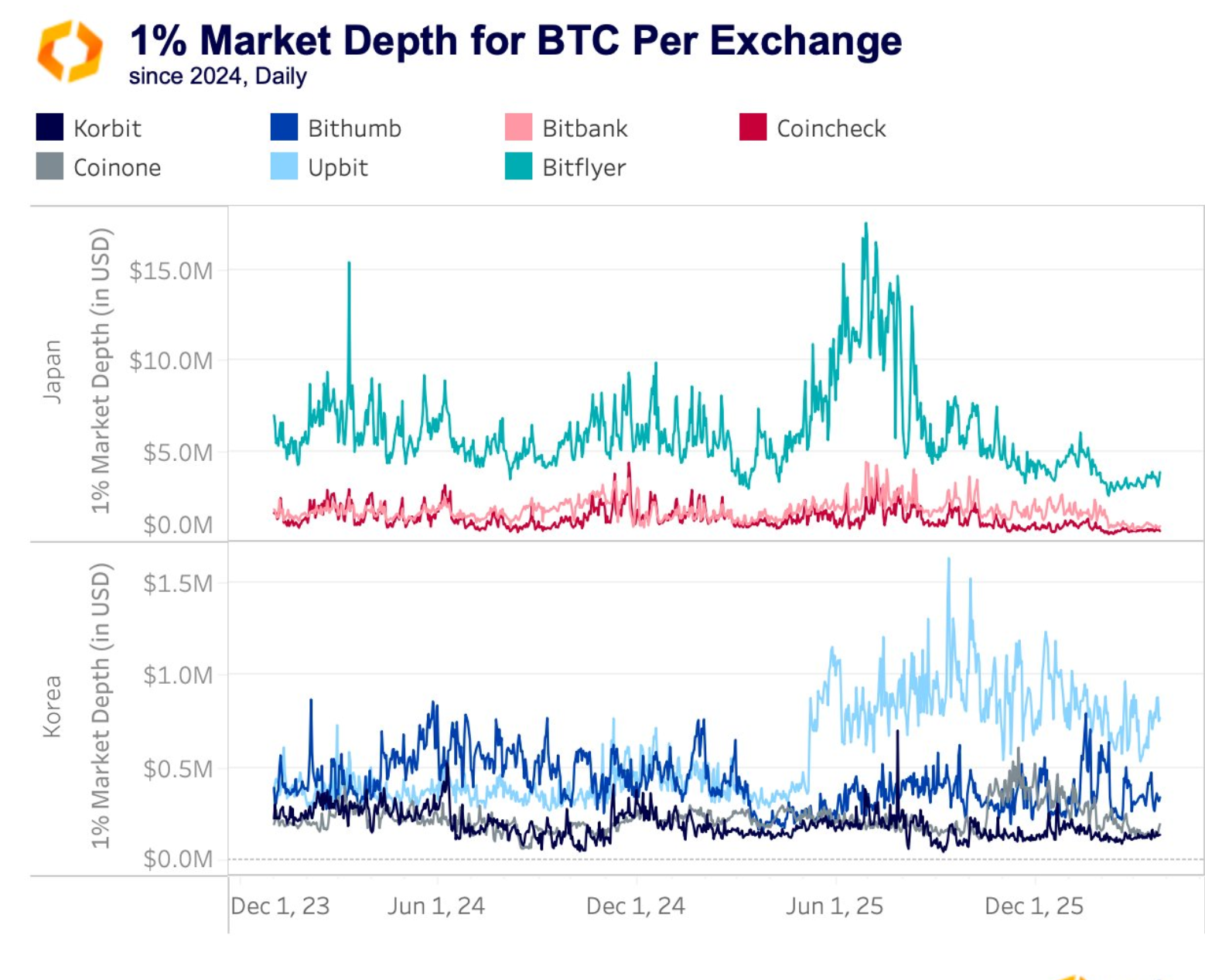
Won-denominated trades have accounted for 30% of all spot cryptocurrency volume globally so far in 2026, putting Korea second only to the US dollar market, according to research firm Kaiko. The country’s 52 million people now produce around $26 billion in weekly crypto turnover.
The surge runs alongside a parallel boom in Korean equities, where the iShares MSCI South Korea ETF (EWY) has returned over 37% year-to-date through March 11, 2026, fueled by demand for the memory chips powering the global AI buildout.
Korean Crypto Volume Concentrated on Two Venues
Korea’s domestic crypto market is concentrated on two exchanges, Upbit and Bithumb. Together, these exchanges handle most of the country’s roughly $26 billion in average weekly turnover from 2024 through 2026, based on Kaiko data.
Altcoins drive the bulk of activity. About 85% of weekly Korean crypto trades flow into tokens outside Bitcoin, pointing to domestic appetite for higher-volatility assets over the majors.
Despite the headline volume, Korean order books remain thinner than Japan’s. Upbit shows roughly $1 million to $1.2 million in market depth, while Tokyo-based Bitflyer holds about $3.5 million across its books.

Japan’s market trades smaller but steadier, with Yen-denominated volume sitting at $2 billion to $3 billion monthly across four venues.
The split highlights Korea’s retail-driven, high-velocity character against Japan’s deeper institutional liquidity.
AI Memory Cycle Drives Record EWY Call Positioning
The crypto activity coincides with a record rally in Korean tech equities. EWY, the largest US-listed Korea ETF from iShares, returned more than 37% in the first quarter of 2026. Samsung Electronics and SK Hynix accounted for roughly 45% of holdings.
Options positioning suggests traders expect the rally to extend. Call open interest (buy orders) on EWY climbed to about $5.5 billion in notional value, the highest level on record and well above prior peaks reached in 2015 and 2021.

The driver is high-bandwidth memory (HBM), the chip variant required for AI training systems. Samsung and SK Hynix dominate global HBM supply, placing Korean industrial output at the center of every major data center expansion this cycle.
“When call open interest explodes like this, it means traders are making MASSIVE leveraged bets that a stock is about to rip higher…This is the kind of positioning that only happens when big players see something coming. And here’s the key part most people miss: Samsung and SK Hynix make up 45% of EWY. Both are at the center of the AI memory chip cycle. This isn’t really a Korea bet, but it’s a leveraged AI bet through a different door,” an analyst commented.
Follow us on X to get the latest news as it happens
Same AI Demand Repricing US Energy Markets
The same infrastructure cycle is repricing power markets thousands of miles away. Regional Greenhouse Gas Initiative (RGGI) carbon allowances rose 31% over the past week to $47 per metric ton, hitting a four-year high.
The program covers power plant emissions across ten Northeastern US states.
That level briefly exceeded California’s $44 record from 2024, an unusual inversion given RGGI has historically traded at a discount to the West Coast benchmark.
Virginia’s planned reentry into the program in July is expected to further lift demand, as the state hosts a high concentration of AI data centers.
For Korean investors and traders, the read-through is direct. The AI demand that lifts US power prices is the same demand that inflates Samsung’s order book, drives EWY call positioning, and ultimately circulates through Korean crypto venues as retail risk appetite.
Whether the Korean Won retains its position as the world’s second-largest fiat-to-crypto market depends on how durable the AI capex cycle proves to be through 2026. Q2 earnings from Samsung and SK Hynix will offer one of the clearest near-term signals.
The post 30% Of Global Crypto Trading is Coming from South Korea, Research Finds appeared first on BeInCrypto.

Crypto World
Arbitrum Security Council Member Flags DeFi Risks After $72M North Korea Crypto Recovery

TLDR:
- Arbitrum’s Security Council froze $72M in stolen funds traced to North Korean wallets via a Kelp DAO bridge attack.
- Griff Green warns that leaked private keys and social engineering now pose greater threats than smart contract bugs.
- Aave and similar lending protocols are flagged for being too loose in managing liquid staking token risks.
- The recovered $70M will be redistributed to affected users through a decentralized Arbitrum DAO token holder vote.
Arbitrum Security Council member Griff Green has raised concerns about how lending protocols handle liquid staking tokens.
Green, a veteran of the 2016 Ethereum DAO hack, flagged operational security gaps across decentralized finance. He spoke following the recovery of $72 million in stolen crypto assets linked to North Korean hackers.
The incident involved a Kelp DAO exploit that affected Aave and resulted in roughly $300 million in stolen tokens via a bridge attack.
Arbitrum Council Steps In to Freeze Stolen Funds
The Arbitrum Security Council acted swiftly after tracing $72 million to North Korean-controlled wallets. The council operates as a nine-of-twelve multi-signature group with emergency intervention powers.
Working alongside the Seal 911 team, the council froze the stolen funds in a new address. That address remains inaccessible to the attackers, effectively halting any further movement.
Green noted this was the first time the council used its powers to freeze funds directly. Previously, those powers covered protocol upgrades and bug fixes only.
The action drew on social consensus rather than code immutability. Green referenced the 2016 Ethereum DAO hard fork as a precedent for this kind of intervention.
On the nature of blockchains, Green was direct: “Blockchains are not immutable and can be altered through social consensus.”
He pointed to the Ethereum DAO hard fork as proof that the community can act when needed. This time, however, the stakes involved another party’s funds rather than his own. That distinction made the recovery effort feel less personal but no less urgent.
The recovered $70 million will now fall under Arbitrum DAO governance. Token holders will vote on how to redistribute those funds to affected users.
This approach reflects decentralized governance in practice. It also sets a precedent for how stolen funds may be handled in future incidents.
Green Calls Out Weak Operational Security Across the Industry
Green stated that smart contract bugs are no longer the biggest threat facing crypto. Instead, he pointed to operational security failures such as leaked private keys.
North Korean actors, in particular, rely heavily on social engineering tactics. These methods bypass code-level protections entirely and target human vulnerabilities.
Addressing the broader security gap, Green warned that the industry must match the standards of mature tech companies.
He observed that attackers like North Korea “often rely on social engineering rather than smart contract exploits.” That shift in tactics means technical audits alone are no longer sufficient. Teams must also harden their internal processes and access controls.
Green also addressed how lending protocols like Aave approach liquid staking tokens. He believes these platforms are “too loose with liquid staking tokens” and overlook underlying technical risks.
That oversight creates exposure that bad actors can exploit through bridge attacks. Tighter risk frameworks around these assets would reduce that vulnerability significantly.
Looking ahead, Green supports ongoing efforts like the DAO Security Fund. This initiative aims to identify and support critical security projects across Ethereum.
Stronger infrastructure benefits the broader ecosystem over time. Making crypto safe and accessible for everyday users remains the long-term goal.

Western Union’s new Solana-based stablecoin, USDPT, may do more than speed up money transfers. It could also weaken the old lines between remittances, consumer payments and bank settlement, according to Angus Scott, founder of the Solana Research Institute, a Solana Foundation-backed body.
Western Union launched the U.S. dollar-backed stablecoin issued by Anchorage Digital Bank N.A. on Monday. The company said the token will support 24/7 settlement with agents and partners across its global payment network. The launch follows Western Union’s April disclosure that USDPT would initially replace SWIFT-based interbank settlement with its agents.
Scott told CoinDesk the launch is another sign that stablecoins are starting to challenge older payment models.
“Western Union’s adoption of Solana-based stablecoins is another point of proof that stablecoins are becoming highly disruptive to traditional payments business models,” Scott said.
The key point, he added, is that Solana can handle both small consumer payments and large settlement flows. Low fees make it possible to use a stablecoin for small purchases, and fast settlement, coupled with 24/7 operations, can also help firms move money between agents without waiting for correspondent banks.
Scott said that could let Western Union pool idle balances and manage cash across its network in real time. Businesses that accept USDPT could do the same with customer payments.
“The Western Union model appears to be breaking down the barriers between remittances, payments and wholesale settlements via correspondent banks,” Scott said. “How this plays out will be one of the key themes of the next few years.”


Miami Beach, FL — Morgan Stanley’s newly launched spot bitcoin exchange-traded fund (MSBT) has attracted over $200 million in early demand, and it’s largely without help from its own advisors.
“Almost all of that first week or two of activity was self-directed, meaning it was not our advisors that were selling this,” Amy Oldenburg, the bank’s newly appointed head of digital assets, said during a fireside chat at Consensus in Miami.
The fund, just a few weeks old, has already gathered more than $200 million in assets, an unusually fast start in the traditional ETF market, where most launches struggle to gain traction over a short period of time. Oldenburg said the flows reflect individual investors making their own allocation decisions rather than relying on financial advisors.
The dynamic points to a broader shift.
Crypto exposure is no longer limited to niche or speculative corners of the market. Instead, investors who may already hold digital assets directly are now moving some of that capital into regulated products.
Oldenburg noted “how much activity that we’re fielding in terms of spot crypto holders that are also looking to put assets into ETPs,” describing a transition from decentralized holdings to more traditional investment vehicles.
‘Hybrid world’
However, Morgan Stanley is not betting on a single format. The firm plans to support both ETF access and direct crypto ownership, including spot trading on its wealth platform later this year.
“We’ll live in a hybrid world for quite some time, where we’ll be supporting both the digital native and the traditional business all in one,” Oldenburg said.
That approach reflects a practical challenge facing large financial institutions: clients increasingly hold both stocks and crypto, often across disconnected systems. Bringing those assets into a single view remains a work in progress.
Beyond the ETF, Oldenburg said the bank is exploring how digital assets could reshape market structure more broadly, including faster settlement and tokenized financial products.
“We’re not tokenizing for the sake of tokenizing,” she said. “Ultimately, we want to provide the client more value and better service.”
The effort is part of a longer-term shift rather than a short-term trend. “This isn’t a 2026 project or 2027 project. This is the next decade,” she added.


OnRe Finance raised $5M from Forward and RockawayX as Forward prepares up to $25M into ONyc, scaling Solana-based, tokenized reinsurance with DeFi integrations.
Summary
- OnRe Finance, a regulated on-chain reinsurance firm built on Solana, has completed a $5 million funding round co-led by Forward Industries and RockawayX.
- Forward plans to deploy up to $25 million into OnRe’s ONyc token, a yield-bearing Solana asset that gives holders exposure to tokenized reinsurance returns.
- Proceeds will be used to scale OnRe’s Solana-based reinsurance pools, expand underwriting capacity, and deepen integrations with DeFi protocols across the ecosystem.
OnRe Finance said it has closed a $5 million strategic funding round to accelerate development of its tokenized reinsurance platform on Solana, with the raise co-led by Solana-focused treasury company Forward Industries and multi-strategy digital asset firm RockawayX.
Forward and Rockaway back on-chain reinsurance on Solana
According to the GlobeNewswire announcement, the capital will go toward expanding OnRe’s underwriting programs, hiring, and integrating its products more deeply into Solana’s DeFi stack.
Forward, listed on Nasdaq as FWDI, described the move as a “natural extension” of its Solana treasury strategy, which it says is shifting from relying solely on staking yield to adding “high-quality, real-world cash flows that are both complementary and uncorrelated.”
OnRe is licensed in Bermuda under both the Insurance Act and the Digital Asset Business Act, allowing it to accept digital assets as collateral for traditional reinsurance contracts and to pass through returns from a diversified book of underwriting risk to on-chain investors.
$25M ONyc deployment for tokenized reinsurance yield
Separately from the equity round, Forward said it “intends to deploy up to $25 million into ONyc,” OnRe’s yield-bearing RWA token on Solana, which turns stablecoins into reinsurance collateral and pays out returns from both reinsurance income and collateral yield.
ONyc pools are integrated with leading Solana DeFi venues and can be used as collateral for lending, borrowing, and looping strategies, effectively letting investors turn reinsurance-backed cash flows into composable on-chain capital.
Insurance industry coverage notes that OnRe has previously launched structured products like the ONe token, which targeted projected returns north of 30% by combining reinsurance performance, collateral yields, and token incentives, leveraging the $750 billion global reinsurance market as a base.
RockawayX, an early Solana backer and investor in more than 15 Solana ecosystem projects, has argued that OnRe’s model can “generate the same revenue from $10 million in TVL as a $500 million money market fund” because reinsurance premiums and collateral income stack in a capital-efficient way.
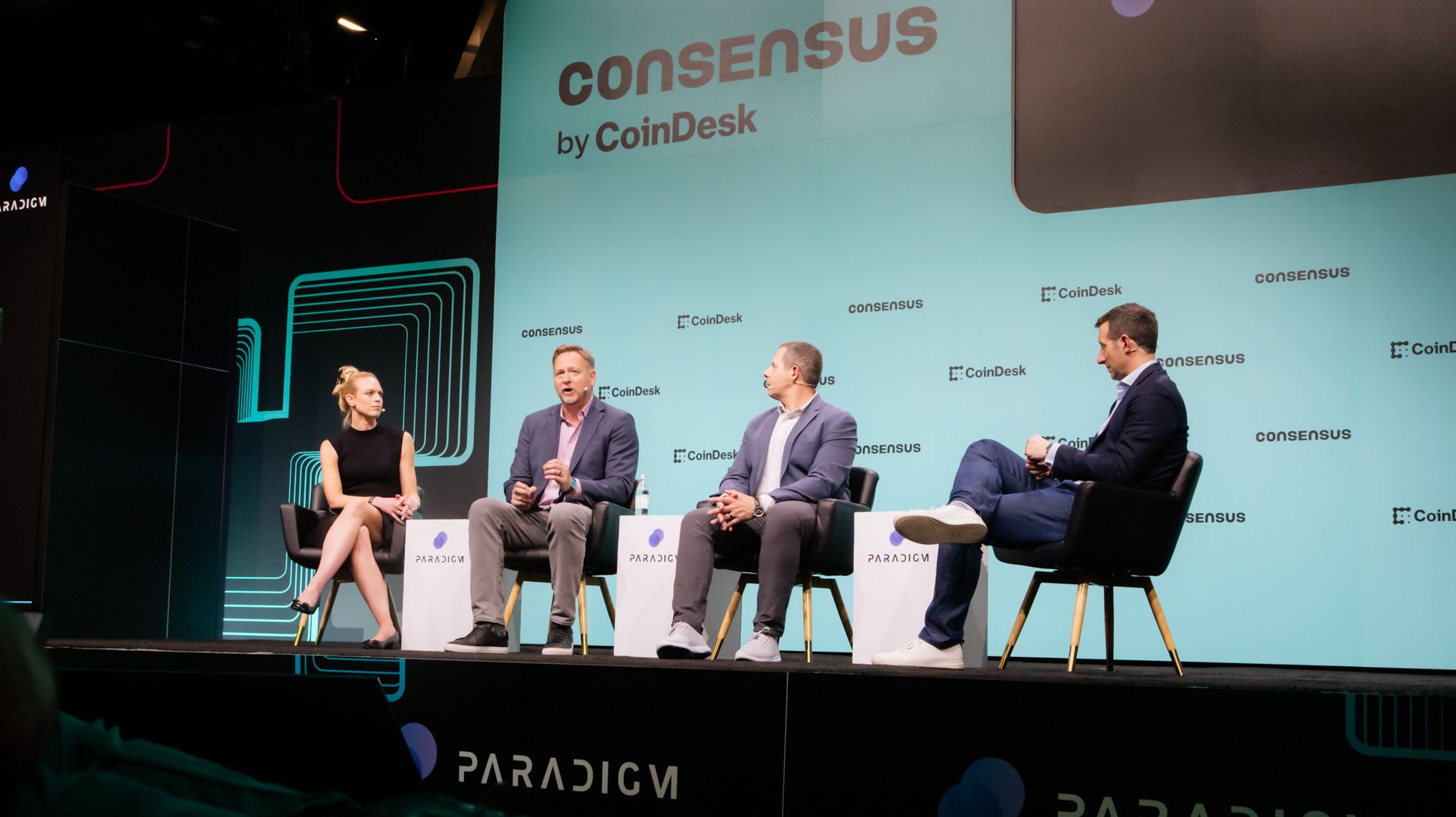
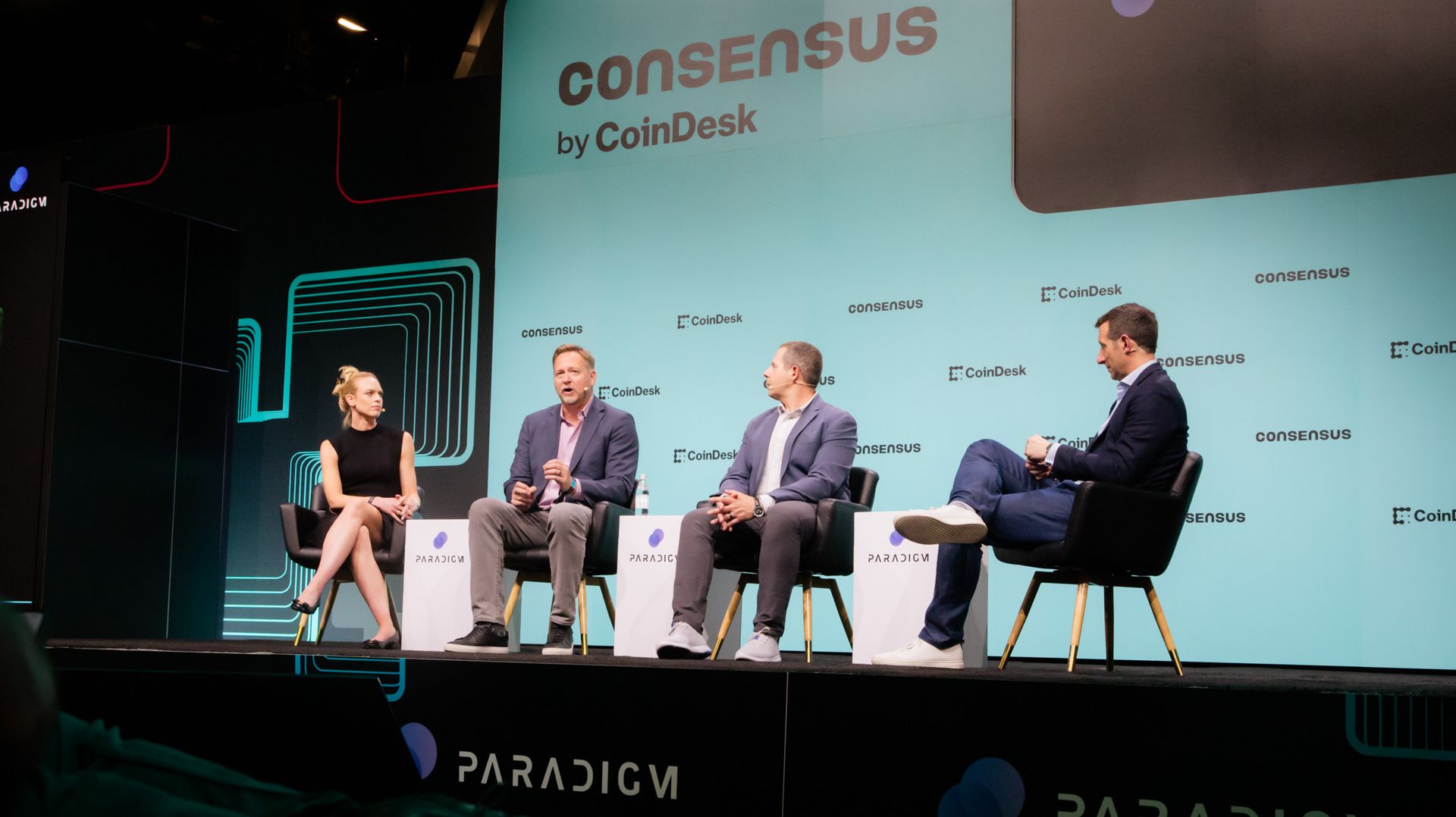
Miami Beach, FL — “The market is the market… it’s not crypto and traditional anymore,” said Dave LaValle, President of CoinDesk Indices and Data, on a panel at Consensus Miami Tuesday, capturing a shift echoed across issuers and asset managers.
As traditional finance firms pour in, Douglas Yones of Direxion argued that institutional participation is “good for the industry,” bringing standardization and discipline to processes that were once fragmented.
That institutional layer is also unlocking global access. In regions where spot crypto remains restricted, particularly across parts of Asia, ETFs have emerged as the primary on-ramp.
“ETFs are a plug-and-play solution,” said Krista Lynch, SVP of ETF Capital Markets at Grayscale, noting they fit seamlessly into existing risk systems that can’t accommodate direct bitcoin exposure.
The result is rapid adoption. Lynch points to surging demand for features like in-kind redemptions and collateral usage, while Steven McClurg, CEO of Canary Capital, highlights a simpler appeal: security and liquidity. “Some investors would rather hold an ETF and let issuers handle custody,” he said.
Where the market goes next is already taking shape. Index-based products are poised to organize a growing universe of assets, while staking and income-generating strategies could define the next wave. Tokenization, though promising, remains in its early stages, according to McClurg.
Still, the direction is clear: ETFs aren’t just expanding crypto access, they’re redefining how the asset class is structured, distributed, and owned globally.
Read more: Recovery in bitcoin ETF inflows is real. It is just not complete yet.
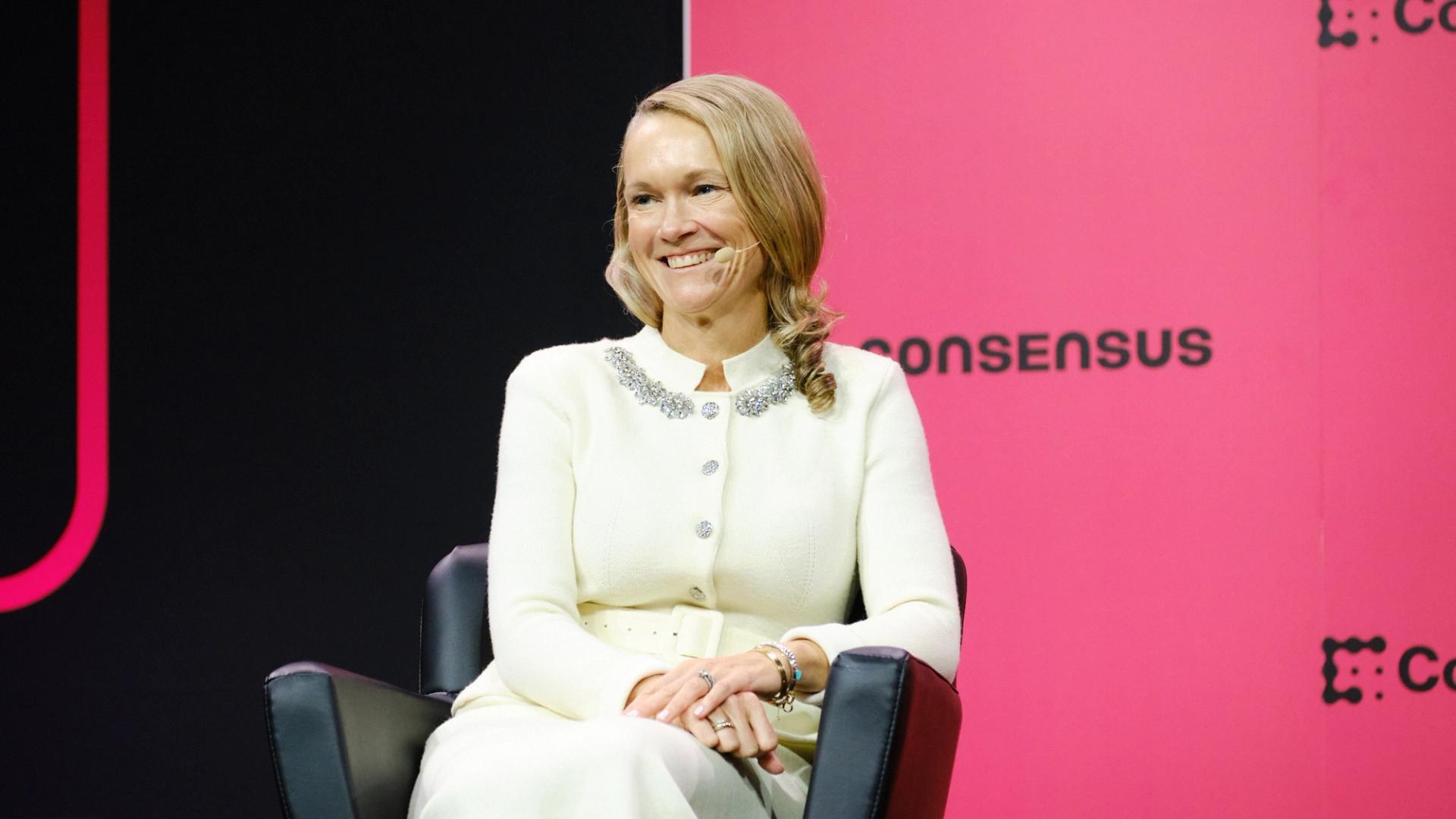
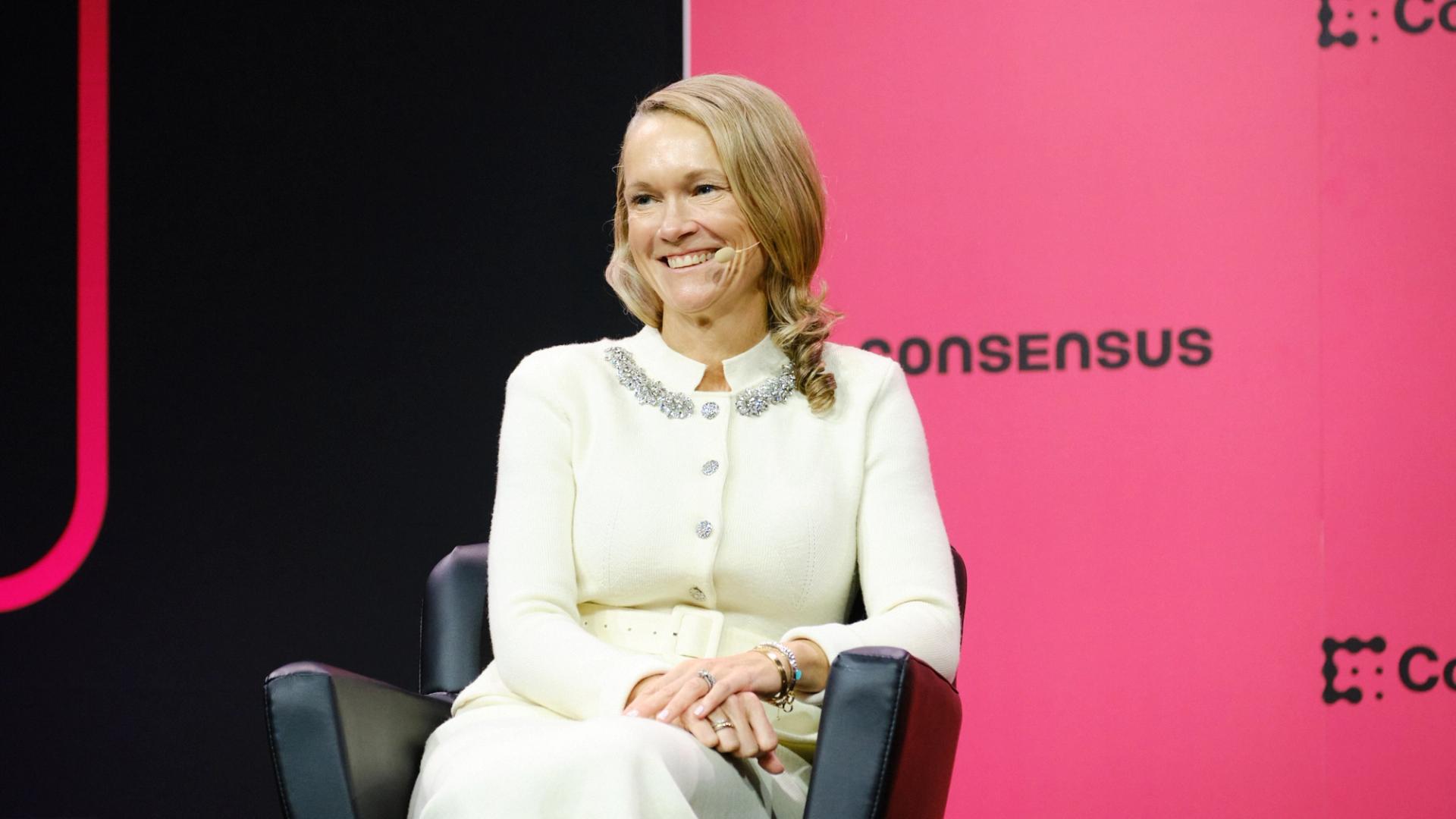
Miami Beach, FL — Tokenized money will fail to deliver on its promise if it remains siloed within individual banks, according to Ryan Rugg, Citigroup’s head of digital assets for treasury and trade solutions.
Speaking at Consensus in Miami, Rugg said large corporate clients are not looking for single-bank solutions but systems that work seamlessly across financial institutions. “No one wants just a Citi token,” she said. “They want that multi-bank aspect of it.”
The comment reflects a core challenge in the push to bring blockchain-based payments into mainstream finance. While banks have begun issuing tokenized deposits and building internal platforms, many of those systems operate within closed networks.
For global companies, that approach falls short. Rugg said Citi’s clients often manage “hundreds, if not thousands of bank accounts across multiple banks globally,” creating complexity in moving money for payroll, suppliers and investments.
Those clients are increasingly asking for real-time capabilities. In a survey Citi conducted several years ago, Rugg said the response was “basically unanimous” that faster, always-on payments were a top priority.
Blockchain technology offers one path to that goal, but only if systems can connect. Citi has built its own tokenized platform and linked it to its broader banking network, including a 24/7 U.S. dollar clearing system with more than 300 banks. Still, Rugg emphasized that internal upgrades alone are not enough.
“This is another tool in the toolkit,” she said, adding that banks must also modernize traditional infrastructure and connect it with digital systems.
The broader industry faces fragmentation. A growing number of banks, fintech firms and crypto projects are building separate networks, often using different standards. That risks recreating the same inefficiencies blockchain aims to fix.
Rugg argued that shared infrastructure — built “for the industry, by the industry” — will be key to scaling tokenized finance, citing models such as Swift’s global messaging network.
At the same time, regulation remains a constraint. Large banks require clear legal frameworks before rolling out new products. “Unless it is 100% permissible, we are not going to do that,” Rugg said.
Crypto World
Vitalik Buterin Calls Consortium Blockchains a Failure and Backs Cryptographic Server Upgrades
TLDR:
- Buterin declared consortium blockchains a failure at Arbitrum Day on July 20, 2024, citing cartel-like structures.
- He proposed adding Merkle roots and validity proofs to centralized servers as a low-disruption enterprise fix.
- Buterin defined four L2 categories: EVM chains, server upgrades, experimentation zones, and app-specific chains.
- Interoperability between diverse L2 types is central to Ethereum’s vision of a heterogeneous sharded ecosystem.
Ethereum co-founder Vitalik Buterin has publicly stated that consortium blockchains have largely failed to deliver on their original promise.
Speaking at Arbitrum Day, Buterin argued that these private chains combine the worst traits of both centralized and decentralized systems.
The result, he said, resembles cartel-like structures that lack genuine openness or meaningful privacy. He then proposed a more practical path forward for enterprises seeking blockchain benefits.
Buterin’s Case Against Consortium Blockchains
Consortium blockchains were once viewed as a middle ground for enterprises wary of fully public chains. However, Buterin pointed out that they inherit drawbacks from both worlds without capturing the strengths of either. They are neither truly open nor genuinely private, making them difficult to justify at scale.
Rather than scrapping existing infrastructure entirely, Buterin offered a practical alternative. He proposed retrofitting centralized servers with cryptographic tools such as Merkle roots and validity proofs. These proofs would be anchored on-chain to strengthen security without requiring a full system overhaul.
Buterin described consortium chains as structures that produce outcomes resembling cartels, noting they are “devoid of real openness or privacy.”
His remarks pointed to a fundamental design problem that no incremental fix could address within the consortium model itself.
This approach, which he described as adding a “sidecar” for verification, targets enterprises that do not need full censorship resistance.
It provides transparency and user-facing security guarantees while keeping disruption to current deployments minimal.
The proposal reflects a broader shift in how Buterin now views the relationship between centralized systems and blockchain technology.
Layer 2 Solutions and the Road Ahead
Buterin also addressed the evolving role of Layer 2 solutions within the Ethereum ecosystem. He defined L2s as systems that operate largely off-chain but draw their security from Ethereum’s base layer. Their development has moved well beyond early concepts like state channels.
He outlined two main frameworks for understanding L2s. The first treats them as an extension of Ethereum’s sharding vision, allowing for scalable transaction processing and reduced fees.
The second frames them as “servers, but better,” suited for mainstream and enterprise use cases that require a balance between centralization and decentralization.
Buterin further broke down L2s into four categories: EVM-compatible chains, server-like systems with on-chain proofs, experimentation zones for new programming languages and virtual machines, and application-specific chains such as Worldcoin’s World Chain. Each serves a different segment of the broader ecosystem.
He stressed that interoperability between these varied L2 types remains critical. Cross-chain communication and shared security allow the ecosystem to serve a wide range of applications.
Together, they form what Buterin envisions as a heterogeneous sharded network capable of meeting diverse performance and security needs.
Update May 5, 2026, 1:30 pm UTC: This article has been updated to add information from an SEC filing.
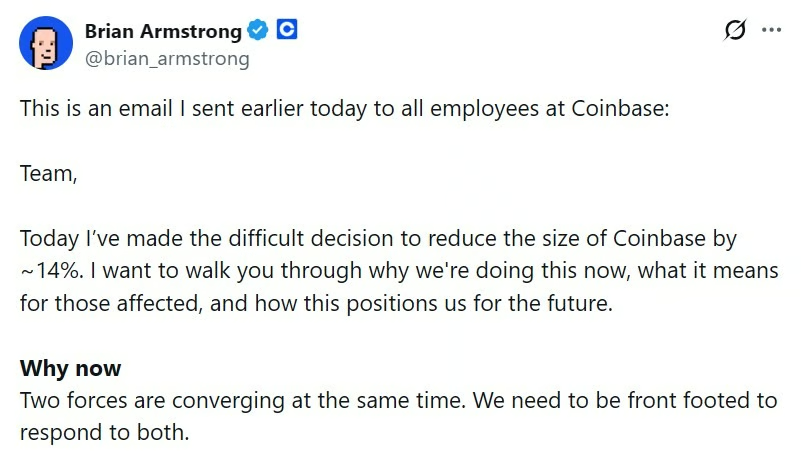
Coinbase will cut about 14% of its workforce, or roughly 700 jobs, as CEO Brian Armstrong moves to make the crypto exchange leaner and more focused on artificial intelligence.
Armstrong said in an email to employees that Coinbase is responding to two forces at once: a down market that pressured the company’s quarter-to-quarter business and rapid advances in AI that are changing how teams work.
He said the company will flatten its organizational structure to a maximum of five layers below the CEO and chief operating officer, require leaders to act as “player-coaches” rather than pure managers and concentrate around smaller AI-native teams that can use automated tools to increase output.
“To those affected, we will be providing a comprehensive package to support you through this transition,” Armstrong said, saying that it will include at least 16 weeks of base pay for US employees, additional pay based on tenure, their next equity vest and six months of “COBRA” or the “Consolidated Omnibus Budget Reconciliation Act,” a US program that allows former employees to temporarily continue employer-sponsored health insurance coverage.
A Tuesday filing with the US Securities and Exchange Commission showed that Coinbase expects its restructuring plan to incur about $50 million to $60 million in expenses tied to severance and termination benefits. The company expects the plan to be substantially complete in the second quarter of 2026.
The cuts show Coinbase framing AI not only as a productivity tool, but as a reason to rethink staffing, management and team structure across one of the largest US crypto companies.
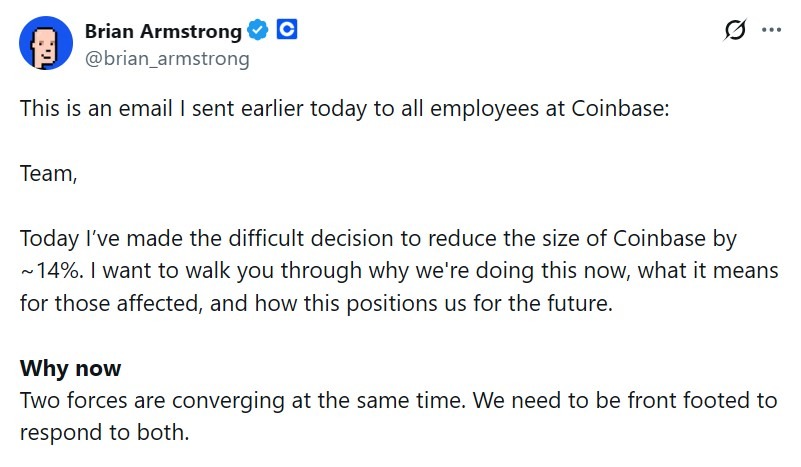
Source: Brian Armstrong
Crypto companies cut staff amid AI shift
Coinbase’s restructuring follows other workforce reductions across crypto companies in recent months, as firms respond to weaker market conditions, cost pressures and the growing use of AI in internal operations.
In February, Gemini said that it planned to cut up to 200 jobs, or about 25% of its workforce, while exiting the UK, EU and Australia as part of a broader cost-reduction plan, according to Reuters. The cuts were expected to affect employees in the United States, Singapore and Europe and be completed in the first half of 2026.
Related: Most crypto investors believe Bitcoin is undervalued: Coinbase survey
In March, Crypto.com cut 12% of its workforce as it accelerated its AI push. The move affected about 180 employees based on the exchange’s listed headcount of around 1,500. The company said the layoffs were part of its plans to prioritize resources around key growth areas.
In the same month, the Algorand Foundation also cut 25% of its staff, citing macroeconomic uncertainty, weaker crypto prices and the rise of AI.
Magazine: AI-driven hacks could kill DeFi — unless projects act now


Pavel Durov says Telegram will replace the TON Foundation and become the network’s largest validator as part of a ‘Make TON Great Again’ roadmap.
Coinbase cuts 700 jobs today, with CEO Brian Armstrong saying AI is making small engineering teams far more productive
Summary
- Coinbase is eliminating roughly 700 employees, approximately 14% of its total workforce, in a restructuring announced on May 5.
- CEO Brian Armstrong cited AI acceleration as a core reason, saying the technology enables small teams to do what previously required far more people.
- The company expects to incur $50 to $60 million in restructuring charges as a result of the workforce reduction.
Coinbase CEO Brian Armstrong announced on May 5 that the company is eliminating roughly 700 employees, representing approximately 14% of its total workforce.
Armstrong attributed the cuts directly to AI changing the economics of engineering, saying the technology makes small teams capable of output that previously required far larger headcount. Coinbase shares rose on the announcement, a reaction investors typically read as margin improvement.
The company expects to record $50 to $60 million in restructuring charges. Armstrong’s framing puts Coinbase among a growing list of major tech companies using AI productivity as justification for headcount reductions, but his is a significant public statement from the CEO of the largest US crypto exchange.
What this signals for Coinbase and the broader industry
Armstrong has been building toward this position for months. As crypto.news reported, Coinbase began testing AI agents internally in April, with Armstrong stating that “we will have more agents than human employees at some point soon.” The May 5 layoffs are the first structural workforce action that reflects that forecast moving from prediction to operational reality.
The cuts arrive as Coinbase continues to press for the Clarity Act’s passage. The company spent $1.07 million on Washington lobbying in Q1 2026 and reversed its earlier opposition to the bill after a stablecoin yield compromise was reached. A leaner cost structure strengthens Coinbase’s position heading into what is shaping up to be a high-stakes regulatory engagement window.
Coinbase is not alone in citing AI as a driver of workforce reduction. As crypto.news documented, Gemini earlier stated that “AI is now too powerful not to use,” and Crypto.com cited AI integration as a reason for its own staff reductions in early 2026.
What makes Coinbase’s announcement distinctive is its scale and the clarity with which Armstrong tied AI productivity, not market conditions, to the decision.
Arbitrum Security Council Member Flags DeFi Risks After $72M North Korea Crypto Recovery
Vikings Earn Surprise Spot on Super Bowl List

Bitcoin: Reached Resistance And What Happens Next

Manchester United reach agreement with Casemiro over contract clause amid transfer speculation

US brings back mandatory military draft registration

Steven Gerrard disagrees with Gary Neville over ‘shock’ Chelsea and Arsenal claim | Football
![#1 working capital management ~ Financial Management [FM] ~ For B.Com/M.Com/CA/CS/CMA](https://wordupnews.com/wp-content/uploads/2026/05/1778036318_maxresdefault-80x80.jpg)

-

 NewsBeat2 days ago
Channel 5 – All Creatures Great and Small series 7 new post
-
 Business6 days ago
Tesla Officially Registers Elon Musk’s Stock: What Investors Need to Know
-
 Tech4 days ago
Trump’s 25% EU auto tariff breaches Turnberry Agreement that also covers semiconductors and digital trade
-
 Sports4 days ago
Paul Scholes issues Marcus Rashford reality check as agreement emerges over Man United star
-

 Business7 days ago
Barclay Brothers Avoid Bankruptcy: HSBC Drops High Court Petitions After IVA Deal
-

 Entertainment4 days ago
Met Gala 2026 Rumored Guest List Is Turning Heads
-

 Entertainment6 days ago
Celebrities Who Are Attending the 2026 Met Gala Event
-

 Entertainment6 days ago
Insider Claims Reason Behind Key & Peele Split
-

 Crypto World6 days ago
Meta (META) starts stablecoin payout to creators in Circle’s USDC on Polygon, Solana via Stripe
-

 Business6 days ago
Strait of Hormuz Remains Heavily Restricted on April 29 Amid Iran Conflict
-
Business5 days ago
Strait of Hormuz Blockade Persists Amid US-Iran Standoff, Sending Oil Prices Soaring
-

 Tech6 days ago
Texas Instruments made a new flagship graphing calculator: the TI-84 Evo
-

 Business5 days ago
Two Powerball Tickets Split $143 Million Jackpot in Indiana and Kansas
-
 Sports4 days ago
David Benavidez responds to team Canelo saying the fight will never happen
-

 Sports6 days ago
Saudi Arabia set to withdraw LIV Golf funding after 2026 season, per reports
-

 Entertainment4 days ago
Kylie Jenner Hit With Second Lawsuit From Ex-Housekeeper
-

 Sports4 days ago
Cavaliers vs. Raptors Game 6 live score, updates, highlights from 2026 NBA playoffs first-round series
-
Business3 days ago
Winning Numbers Drawn as Jackpot Resets to $20 Million
-
Entertainment4 days ago
New on Prime Video in May 2026 — Full List of Movies and Shows
-

 Sports4 days ago
Plane crash in Wimberley, Texas kills 5 pickleball players at tournament
You must be logged in to post a comment Login