

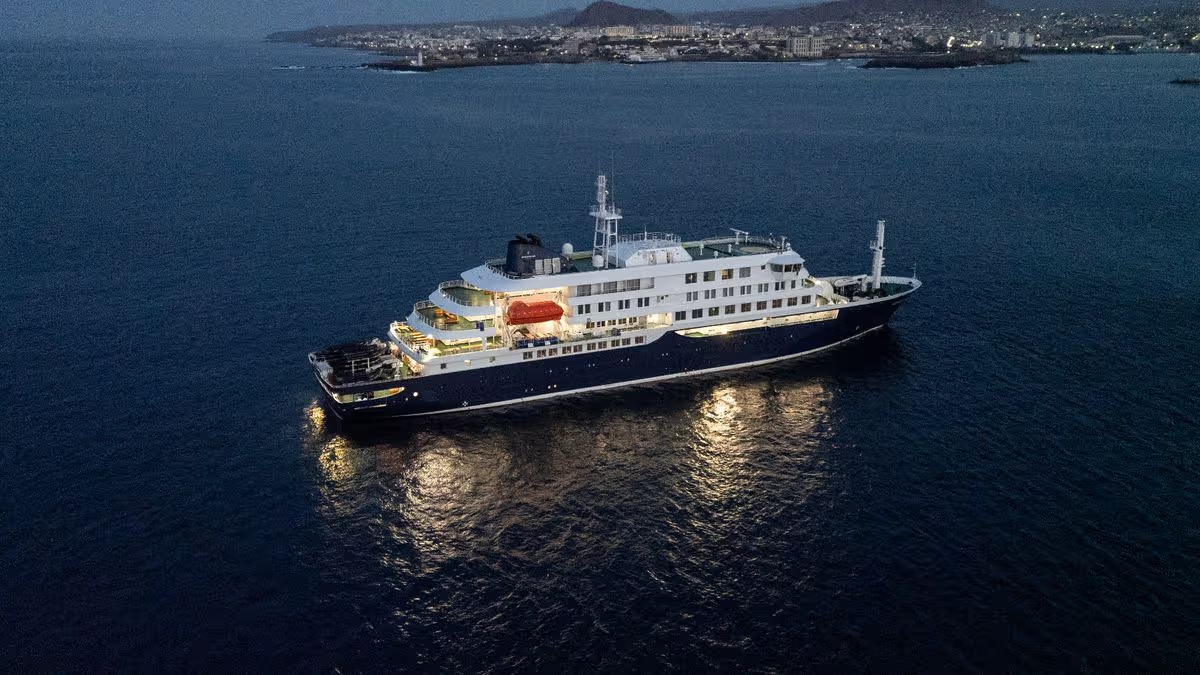
Three people have died aboard the Dutch ship, which is currently anchored off the coast of Cape Verde, and five other suspected cases of the disease, known as hantavirus, have been identified
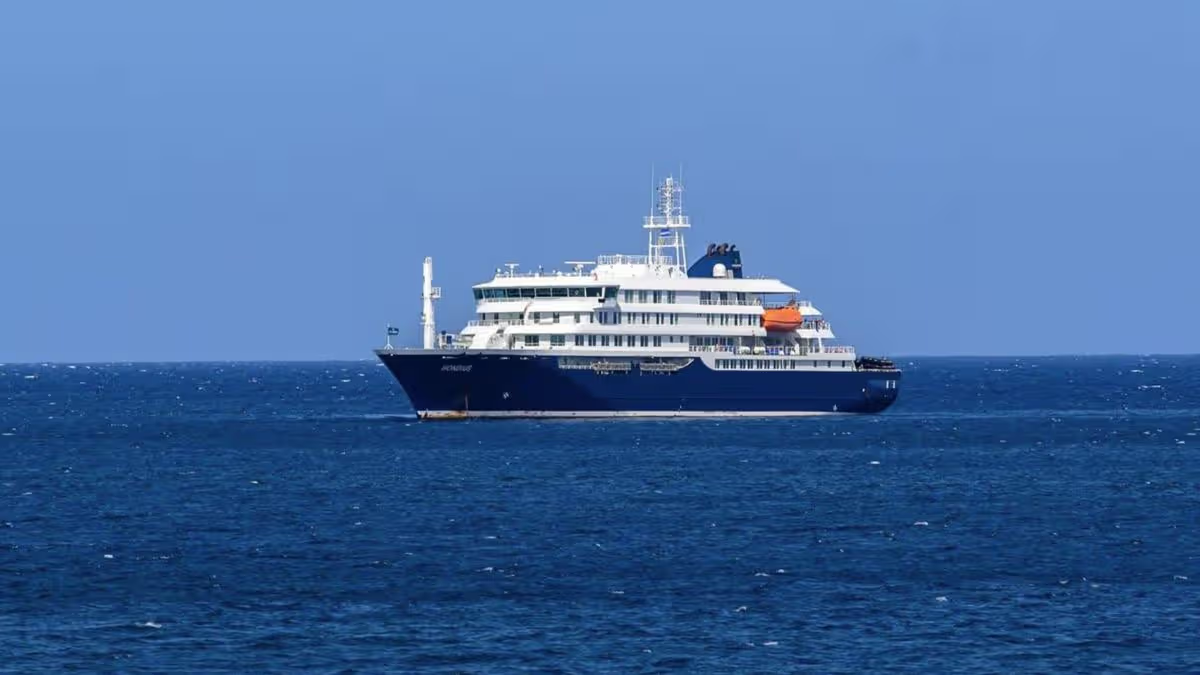
As passengers aboard a cruise ship where three people have died following a number of cases of a potentially fatal viral infection face continued uncertainty, one doctor has explained why the outbreak is so serious. Three people have died aboard the Dutch ship MV Hondius, which is currently anchored off the coast of Cape Verde, and five other suspected cases of the disease, known as hantavirus, have been identified.
A Dutch passenger died on board the ship on April 11, followed by their wife on April 27. Both deaths have been confirmed to be connected to an outbreak of hantavirus. A German passenger also died on May 2, although the cause is yet to be confirmed.
There are 19 Britons aboard the ship, one of whom – a crew member – is due to be evacuated to the Netherlands for treatment, alongside a Dutch colleague and a passenger. Another British passenger was medically evacuated from the ship on April 27 and remains in isolation in hospital in Johannesburg, South Africa. An additional case has been confirmed in a Swiss man who had previously been on board the ship, the World Health Organisation (WHO) announced this morning.
Now an A&E doctor has explained why medical teams are treating the outbreak so seriously. Dr Ahmed, who has almost 500,000 followers on TikTok, described the outbreak as “scary” on the social media platform.
“What is alarming doctors and scientists about the hantavirus on board the cruise ship is the fact that, normally, hantavirus spreads through the droppings and urine of rodents like mice and rats, except for the Andes strain, which can transfer from human to human and is endemic in the exact area where the ship left from in Argentina,” he said. “The Andes strain can pass from human to human through long terms of close contact – exactly the kind of contact that can be enabled by a cruise ship.”
The strain of hantavirus connected to the outbreak has since been confirmed to be the Andes variant. Dr Ahmed continued: “This is especially concerning because the first person to be affected and pass away from the virus was a Dutch woman who was diagnosed and passed away in early April, and the virus has since had a month on board the ship.”
But he ended with a note of optimism, saying the chance of this escalating into a global pandemic is “very low”. “I think we should all save our energy and spend it for praying for the people, passengers, and staff on board, and their families who are eagerly waiting to see what the next steps would be to help their families and friends,” he said.
Although the ship is due to sail to the Canary Islands once the passengers with suspected infections have been evacuated, the region’s president has said he opposes the plan. Passengers are currently confined to their cabins while “disinfection and other public health measures are carried out”, the WHO said.
Prime Minister Sir Keir Starmer has said plans are being made for the “safe onward travel” of Britons on the ship. And the Foreign Office has confirmed that it has been directly in touch with all British passengers on board the ship, which was sailing from Argentina to Cape Verde.
What is hantavirus?
The UK Health Security Agency (UKHSA) says hantavirus is actually a group of viruses carried by rodents such as mice and rats. It is transmitted by their droppings and urine.
Symptoms include:
- fever
- extreme fatigue
- muscle aches
- stomach pain
- nausea
- vomiting
- diarrhoea
- shortness of breath
In some cases people develop severe breathing difficulties and need to be admitted to hospital. Symptoms usually appear between one and four weeks after exposure, although there are reports of this happening up to eight weeks later.
Infections occur when people breathe in air contaminated with virus particles. It can also enter the body through cuts, the eyes, or a rodent bite, although this is rare. Infections are most common in rural and agricultural areas.
Most types of hantavirus do not spread between humans, although the Andes variant, confirmed to be the type seen in the outbreak, can spread this way. When this does happen, it is through very close and prolonged contact.
There is no vaccine or specific treatment. People with the virus are treated according to their symptoms.



















































You must be logged in to post a comment Login