

Politics
The House Opinion Article | Wrong-headed regulation is a risk to UK glass




4 min read
Too many take glass for granted. However, it has been a key industry in my constituency for centuries, providing jobs and income and, just as importantly, pride in producing world-class glass bottles and containers that went all around the world, and continue to do so.
Glass remains a manufacturing success story at plants across the UK. It is a £1.3 billion industry, supporting well over 100,000 jobs. Highly skilled jobs, making the billions of bottles, jars and containers that we use every day.
It drives local and regional economies. And it has embraced sustainability, making steady progress through innovation and investment.
So, it is hugely important for the government to reconsider pressing ahead with regulations that have the industry worrying about what the future holds, or even if there is a future for this historic sector.
Big players such as O-I Glass in Alloa and Encirc, which has sites in Northern Ireland and the north of England, have spent significant sums on upgrading their facilities and stand ready to invest more in the name of both efficiency and progress.
Just over a year ago, I was lucky enough to visit the Alloa glassworks, which has teamed up with industrial gases company Air Products to build a new air separation plant there to supply oxygen for cleaner combustion in new furnaces.
It is the first plant for Air Products of its kind in the UK in 40 years, coming about in a unique partnership with the glassworks, marking a commitment to driving down emissions.
But large manufacturers such as Encirc and O-I have been left frustrated at government rules that appear to penalise glass.
The Extended Producer Responsibility (EPR) scheme makes companies responsible for the collection and recycling costs of the goods they put on the market. If businesses produce or use packaging such as glass, plastic, or cardboard, EPR means they will now pay for collecting, recycling, and disposing of that packaging.
The policy’s objective is admirable, but its implementation has had unintended consequences.
The thing is that unlike other materials, glass is infinitely recyclable. And that recycling process is becoming more and more efficient.
However, EPR fees are calculated according to weight. And so, because glass is heavier than other comparable materials, it is being hit with disproportionate costs in EPR fees.
In fact, the UK glass EPR costs are well over twice that of any EPR scheme worldwide. And that is on top of the rising price of materials across the board along with soaring energy costs.
Drinks cans and plastic bottles are avoiding all the EPR costs entirely with these products due to be in a mooted deposit return scheme later next year and have been exempted from EPR.
So, while the glass industry is being negatively impacted, competitor materials currently pay nothing despite having a bigger detrimental effect on the environment.
It is hardly surprising, then, that glass manufacturers are carefully considering their future plans. The government should act to assuage their concerns and convince them that we are committed to UK manufacturing in general, and to the glass industry as part of that.
I believe there will always be a demand for glass. But if it is not manufactured here in the UK then we will see another industry destroyed and our society relying on more and more imports.
We are already seeing a surge in Chinese and Turkish glass on the shelves. Importing means those products actually generate a greater environmental footprint, undermining the core aims of the EPR policy.
The risk is clear in my mind. Future investment, jobs, and innovation could move elsewhere if the UK becomes an uncompetitive environment for glass manufacturing.
The solution is a clear one. EPR fees need to be urgently rebalanced to recognise that while glass may be heavy, it is sustainable, recyclable and a boon to the UK economy.
Unintended consequences can often be a part of politics. However, that is no excuse for inaction when policy goes wrong, as it is if EPR is implemented unchanged.
This is not a big ask but it is urgent. I have written to Ministers to urge them to talk to the glass manufacturers, tweak EPR fees and support an industry which has been a UK success for centuries.
We must protect the jobs it generates and raise a glass, or a bottle, to a UK success story that has a bright future with the right policies in place.



Spanish coach Luis Enrique continues to make history in the UEFA Champions League. After leading Paris Saint-Germain to their second consecutive continental title, raising his total to three trophies in the competition, he joins the list of the most decorated coaches of “The Big-Eared Cup,” cementing his place among the legends who have shaped the tournament’s glory over the decades.
This latest title grants Enrique entry into the exclusive club of coaches who have won the Champions League three or more times — a list that only includes four names who achieved this feat before him, led by Italy’s Carlo Ancelotti, the holder of the all-time record.
Ancelotti tops the list of most decorated Champions League coaches
According to a UEFA report, Carlo Ancelotti retains his position as the most decorated Champions League coach with five titles. He won two with AC Milan in 2003 and 2007, before adding three more with Real Madrid in 2014, 2022, and 2024.
The Italian coach is considered the most successful in the modern era of the competition, having successfully guided two different teams to the trophy, leaving an exceptional mark that puts him alone on the coaching throne.
Enrique equals Zidane and Guardiola
With three titles, Luis Enrique joins a select group of legendary coaches who have won the tournament three times, notably including France’s Zinedine Zidane, who led Real Madrid to three consecutive titles in 2016, 2017, and 2018.
Enrique also matched the achievement of fellow Spaniard Pep Guardiola, who won with Barcelona in 2009 and 2011 before adding a third title with Manchester City in 2023.
The duo is also tied with English legend Bob Paisley, who guided Liverpool to three European Cups in 1977, 1978, and 1981, remaining one of the most prominent coaches in the history of the English club.
Enrique chasing Ancelotti’s record
Although Enrique is still two titles shy of Ancelotti’s record, his success in leading Paris Saint-Germain to European dominance over the last two seasons has quickly placed him among the candidates to challenge this historic achievement.
The Spanish coach has become one of the few to win the Champions League with two different clubs, having secured his first title with Barcelona in 2015 before adding two consecutive titles with Paris Saint-Germain, solidifying his status among the greatest coaches in the history of the continental competition.
List of most decorated Champions League coaches
- Carlo Ancelotti (5 titles) – AC Milan and Real Madrid.
- Bob Paisley (3 titles) – Liverpool.
- Zinedine Zidane (3 titles) – Real Madrid.
- Pep Guardiola (3 titles) – Barcelona and Manchester City.
- Luis Enrique (3 titles) – Barcelona and Paris Saint-Germain
Featured image via Justin Setterfield/Getty Images
By Alaa Shamali
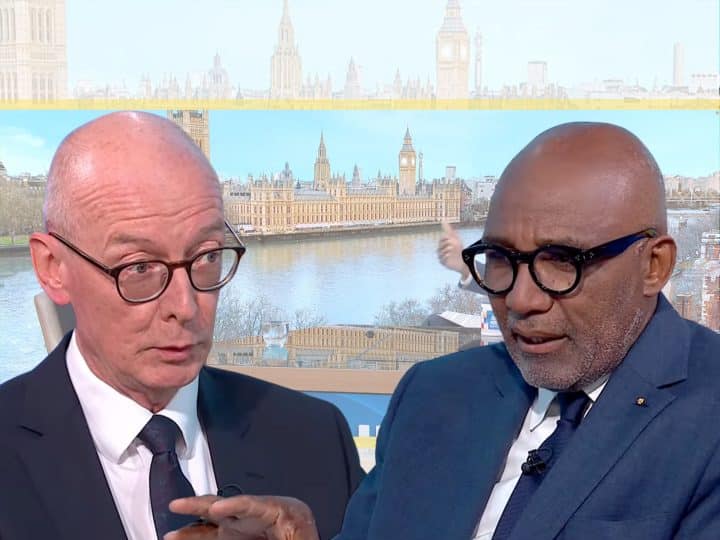

In 2024, Labour pledged to equalise the minimum wage across all age bands. Now, a senior minister has claimed that the act of governing is completely out of the hands of government:
Page 45 of Labours 2024 manifesto stated: "Labour will also remove the discriminatory age bands so all adults are entitled to the same minimum wage"
Pat McFadden is asked, when are you going to do this?
McFadden says its not up to the govt to do it. pic.twitter.com/RSVJaZvf7x — Saul Staniforth (@SaulStaniforth) May 31, 2026
Has there ever been a government as comfortable with u-turning as the Starmer regime?
Weasel words
In the clip at the top, host Trevor Phillips said to DWP boss Pat McFadden:
When are you going to legislate to give young people the same living wage as people over 18? You promised to do it.
McFadden responded:
We do believe people should be properly rewarded. You know the way this works. In any given year, the rate for the national minimum wage is set by the Low Pay Commission. They have to take into account all the factors in the economy, including employment and the labour market.
The government promised to make a radical change. Clearly, it must be the body to enact such a change; not an entity which exists to make steady, proportional tweaks.
After some predictably bland back and forth from McFadden, an exasperated Phillips asked:
So why did you bother to put it in your manifesto? Why promise you’re going to do something when two years later you can come in and say, ‘oh, nothing to do with us?’
McFadden answered:
Because we’re giving them a direction of travel, and it’s good to give them a direction of travel. They have a remit. They have a remit letter from the government. So they have a direction of travel. But in any given year, the precise rate of the minimum wage is recommended.
Sorry, we meant to say ‘McFadden waffled’ rather than ‘McFadden answered’. The DWP boss later said:
And in the internationally admired model that we have in this country, it is for the low pay commission in any given year to set the minimum wage.
The point of manifesto promises is that they uproot the status quo. Clearly, for something to happen beyond the norm, the government has to step in and take action. Labour’s refusal to do so suggests that slippery Starmer likely never planned to equalise pay in the first place.
Minimum wage — Broader context
What McFadden and Labour are doing here would ordinarily be bad. It’s especially dire right now, however, because recently released data shows young people are facing an under-employment crisis. As Politics UK reported:
– Mid- and lower-skilled jobs have fallen by around 1.6 million over the past 20 years
– Hospitality vacancies have nearly halved in the last 4 years
– Apprenticeships for 16-24-year-olds have fallen by 35% since the Apprenticeship Levy was introduced in 2017
– The proportion of 16-17-year-olds in paid work has nearly halved from 35% in 2006 to 19% today
– If every current inactive 18-24-year-old was in full-time work, this would contribute an additional £38 billion to UK GDP
– 58% of inactive young people (6 in 10) have never had a job
As life has gotten more expensive in the UK, many young people are living at home for longer. This means fewer of them need to take the dead-end jobs that many of us accepted to ensure we could pay the rent. The knock-on effect is young people have less disposable income, and as a result they don’t go out, meaning fewer jobs in the hospitality sector. Increasing the minimum wage would better incentivise work, which would better drive economic activity.
The Apprenticeship Levy, by the way, was a plan to promote apprenticeships. The fact that the number apprenticeships has dropped despite it shows that something is going very wrong in the world of work for the next generation of Britons.
No future
Clearly, young people are ceasing to view the UK as a place where they can thrive. On 15 April, we reported that:
The TEFL Academy has released a report, The Great Gen Z Exodus. And it reveals that Britons are no longer waiting until their 30s to leave the UK. They’re doing it in their 20s, in record numbers, as economic pressure and shifting career priorities reshape life decisions.
In June 2025, departures among those aged 20–29 reached 130,000–140,000. This is significantly higher than pre-pandemic levels of around 92,000–95,000 in 2018. Meanwhile, emigration among those in their early 30s has fallen from around 78,000–81,000 in 2018 to 55,000–65,000 in 2025.
In the middle of a national crisis, this Labour government is pretending it can’t enact one the few changes which might actually improve things for young people. The sooner this government u-turns itself out of existence the better.
Featured image via Sky (YouTube)
By Willem Moore


For years, the European project of Paris Saint-Germain was inextricably linked to the name Kylian Mbappe. Since joining the club in 2017, the French striker became the most prominent face of the Parisian dream in the UEFA Champions League, while the club’s management spent billions in an effort to finally win the trophy that had eluded them.
During that period, rumors constantly linked Mbappe with Real Madrid, a club historically synonymous with the continental competition. While Paris sought to retain its star to complete its European ambitions, the player continued to view a transfer to the Spanish capital as the quickest route to achieving his ultimate dream: winning the Champions League.
Real Madrid collects trophies
Before Mbappe’s arrival, Real Madrid continued to assert its European dominance, successfully winning the Champions League in both the 2022–2023 and 2023–2024 seasons, reaffirming its status as the competition’s primary benchmark.
In the summer of 2024, the anticipated transfer finally materialized, with Mbappe joining Real Madrid amid expectations that he would be a decisive addition to a team accustomed to standing on the European podium. The scenario seemed clear at the time: the player left Paris in pursuit of the trophy, and Real Madrid had all the ingredients to continue its continental domination. However, football was concealing a completely different script.
Paris dominates europe after Mbappe’s departure
After Mbappe exited the scene, Paris Saint-Germain successfully broke the historical curse that had plagued them for years, triumphing in the Champions League final in the 2024–2025 season. They then repeated the feat in the 2025–2026 season, securing two consecutive titles that the club and its fans had long awaited.
Conversely, Real Madrid found themselves far from the podiums during the two seasons following the French star’s arrival, finishing both of those last two seasons without any silverware—a paradox that is difficult to ignore.
From the Bernabeu dream to fan pressure
Kylian Mbappe’s struggles in his final season with Real Madrid were not limited to results; they extended to his relationship with a segment of the fanbase that began to hold him partially responsible for the team’s decline and two consecutive trophy-less seasons.
As criticism escalated, an online campaign titled “Mbappe Out” spread, demanding the French star’s departure from the club. It achieved widespread traction on social media, garnering nearly 30 million signatures according to international media reports.
Thus, the player found himself in a position he never expected upon moving to the Santiago Bernabéu. Instead of leading the new project toward European glory, he became a target for criticism and campaigns demanding his exit, all while Paris Saint-Germain was writing the most successful chapters of its continental history after his departure.
Featured image via Lars Baron/Getty Images
By Alaa Shamali
Politics
Watch: Netherlands police thug brutally flings pregnant Palestinian woman backwards to floor


A Netherlands police thug has been caught on camera viciously throwing a visibly pregnant Palestinian asylum-seeker backwards to the floor in an unprovoked attack. Several other officers stood by and did nothing to prevent the attack or to restrain the thug afterward. The attack was perpetrated on 29 May 2026 in an asylum centre in Zeist, near Amsterdam. It is yet another example of European state brutality toward refugees and and anti-genocide activists:
Netherlands — Early birth
The video quickly went viral. The woman had approached police to ask to be allowed to remain with her husband during detention. She showed no sign of any aggression, yet Netherlands police tried to claim they were dealing with a knife attack. Her husband was badly beaten as he tried to defend his wife.
The violence triggered the victim’s labour and she gave birth to a baby girl, who is reported to be stable. Netherlands authorities claim to be investigating the attack.
Featured image via Dean Mouhtaropoulos/Getty Images
By Skwawkbox


Kemi Badenoch has argued that the next generation of Conservatives need to be C words. If you’re thinking ‘aren’t they already?‘, we can explain:
I can think of a sixth C https://t.co/LPcvwY7kT9
— Ian Sharp (@gablid) May 31, 2026
Kemi Badenoch — Do you C what she did there?
This latest intervention comes from a Badenoch-penned think piece titled:
This Z-list Labour Parliament is everything that’s wrong with British politics
You don’t have to read between the lines to understand that Badenoch is promising a return to the traditional Tory values of bungs for business and austerity for the masses:
I want men and women who understand that it is not government that creates growth; it is business. That the state should do fewer things but do them well. That economic policy should reward not just effort but risk. We cannot and should not have a zero-risk environment.
They need to be fiscal realists. There are no perfect solutions, only trade-offs. Everything has a cost. There are no free lunches… or free breakfast clubs.
While she targets Labour in the headline, much of the piece is clearly directed at the former colleagues who defected to Reform. Take the offending paragraph:
But that’s not all. I have overhauled the candidate selection process for Tory MPs to search for the next generation. We need candidates with the five Cs: they must be clever, have charisma, communication skills, conviction and, most importantly, be Conservative.
I will not allow people who do not share our beliefs to use the Conservative Party as a vehicle to further their personal ambitions.
On the one hand, she’s right to suggest Tory defectors used the party “as a vehicle to further their personal ambitions”. On the other, this is clearly true of most Tories whether they defected or not.
You could also add far more Cs to the list, including:
‘Braindead wasteland’
Clearly feeling C-ranky, Reform’s Zia Yusuf responded:
The party that gave us Matt Hancock as Health Secretary and Boris Johnson as Prime Minister, and still has the likes of Priti Patel and James “Cleverly” on the front bench wants to claim they’re the party of talent?
The Tory Party is a wasteland of braindead career politicians who will soon learn they’re unemployable in the real world.
Kemi herself has no achievements of note in her career other than hacking Harriet Harman’s website.
It’s understandable why Yusuf would take offence; it’s because he and the rest of Reform’s top politicians are ex-Tories. The fact that they left the Conservative Party doesn’t mean they’re no longer C-words, though. If anything, we’d argue they’re bigger C-words than ever.
Featured image via Leon Neal (Getty Images)
By Willem Moore
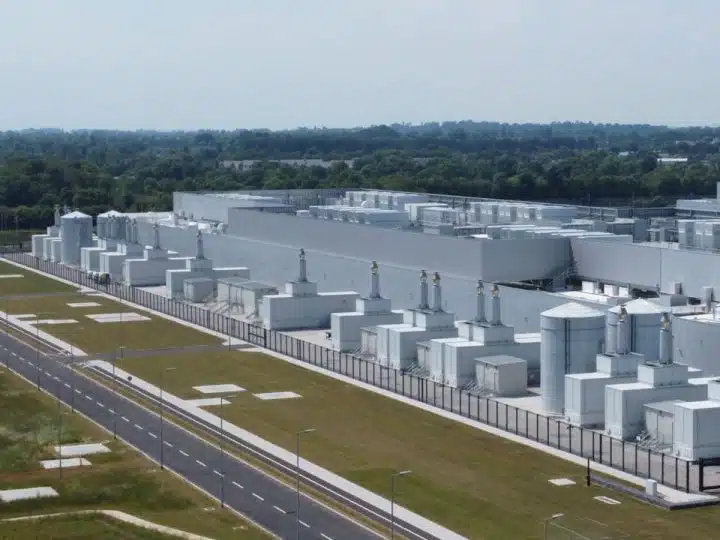

A new report has revealed the whopping tax levied on households in Ireland due to runaway data centre expansion — a massive €715 million extra on electricity bills from 2015-2023. Not only that, the document published by Friends of the Earth Ireland (FOTEI) projects that between 2025-2034, bill payers are:
…set to face an additional €1.43 billion in electricity bills linked to data centre growth.
It also highlights how those least able to pay are hit, stating that:
…the poorest households in Ireland paid an extra €209 on electricity bills between 2021 and 2023 due to data centre growth.
The cost primarily stems from data centres sucking up vast amounts of energy, 24 hours a day. This means fossil gas is used more frequently to cover any potential gap in grid capacity.
Gas is prone to price shocks, and the report cites the Russia-Ukraine war and the illegal US-‘Israeli’ assault on Iran as recent examples of how fossil fuel prices can suddenly skyrocket. The €1.43 billion figure mentioned above could hit €1.6 billion if there is similar volatility in the coming decade.
The report elaborates, saying:
Ireland is one of [the] most gas-reliant countries in the EU to produce electricity—this reliance also means the price of fossil gas is the key determinant of electricity prices in Ireland. Ireland’s reliance on imported oil and gas means that our energy bills are affected by every instance of war, political instability and price shocks.
FOTEI argue:
What we need is real energy independence, powered by renewables, which will bring down our energy bills – not a further dependence on dirty, expensive fossil fuels brought about by data centre expansion.
Ireland — Data centres gobbling up renewable capacity
Unfortunately, data centres have been devouring “almost all new renewables capacity”. The report describes them:
…“cannibalising” renewable energy, slowing down electrification and clean energy for everyone else.
Ireland has a vast data centre presence compared to other countries. FOTEI explain that they:
…currently consume more than 22% of electricity in Ireland and this is projected to rise to 30% by 2030.
Even the United States, which people perhaps associate most strongly with data centre rollouts, only uses between 4-6%, depending on varying estimates. The Republic of Ireland has 121 data centres already, with a population of just over five million people. As reported by the Canary previously, the government plans to massively expand that number.
Friends of the Earth Ireland point out some of the policies people might actually want, using that potential $1.6 billion going on inflated bills. They suggest the money:
…could otherwise be spent on essential needs like food, housing, childcare, retrofitting, transport etc. Instead, households are subsidising an energy-guzzling industry dominated by some of the wealthiest tech corporations in the world.
The €1.6 billion that data centre growth in Ireland will likely drain from households through higher electricity bills is equivalent to more than four times the amount allocated by the Government in Budget 2026 to provide fully funded upgrades for those in energy poverty.
Big Tech destroying Irish sovereignty
The reason behind the data centre boom is Ireland’s dependence on foreign direct investment (FDI), particularly from large US tech firms who build these data centres. Their presence in Ireland is the result of the country’s policy of very low corporate tax rates.
This stance helps to entrench unaccountable corporate power worldwide, as it triggers a race to the bottom on corporate levies. Nations scramble to offer the lowest rate and attract large firms to their doorstep. This means the big multinationals keep more of their profits, and the public gets less.
It essentially amounts to Ireland surrendering much of its sovereignty. It can’t do anything these corporations — or the corporate-controlled US state — don’t like.
In 2024, the government appeared to be taking steps towards passing the Occupied Territories Bill (OTB). This legislation would have limited trade with the genocidal entity known as ‘Israel’. The US ambassador threatened “consequences”, mentioning “1,000 US companies operating in Ireland”. 90 minutes later Taoiseach Micheál Martin announced the OTB was under review.
Similarly, Ireland is being pushed to integrate slowly into NATO due to its now crucial role as a hub of digital infrastructure. The Irish population backs neither support for the Zionist entity, nor increased militarism.
Industry lobby fails to convince
Digital Infrastructure Ireland, which claims to be the “collective voice of Ireland’s digital infrastructure ecosystem“, has given an unconvincing response to the report. Chair Maurice Mortell accused Friends of the Earth Ireland of “just trying to sow division in society”.
Campaigners against injustices in capitalist economies don’t need to sow division — that division is inherent to a system that creates a fundamental split in society. A chasm between those who own infrastructure like data centres, and those who do not. The owners accumulate enormous wealth and political power, while the rest of us see the natural world devastated by climate-wrecking, unsustainable energy use. To add insult to injury, we then have to pick up the bill too.
Featured image via IrishTimes


Greater Manchester Police offered cafe-owner Shams Sadiq cash — and carte blanche to commit ‘certain’ crimes — if he would inform on anti-genocide group Palestine Action (PA) and his fellow Muslims. Sadiq, from Didsbury, was approached when he went to collect devices the police had confiscated after a 2025 raid connected to the group. The Starmer regime unlawfully banned PA as a terror group in 2025 at the behest of the Israeli government and lobby groups.
The government is still trying to overturn the High Court’s ruling that the ban breached human and free speech rights. Police continue to arrest people for protesting against the ban.
During Sadiq’s visit, the police told him he was “fully involved” with PA, but that they were not going to charge him — because they wanted him to grass the group up and inform on other Muslims:
They said to me: ‘We need your help. Look, there’s benefits in helping us.’ I’m like: ‘What kind of benefits? Financial benefits? Are you going to pay my taxes?’ They said: ‘Oh, we can help with things like that.’
Sadiq says he was also offered immunity for “certain” crimes:
The other guy said to me: ‘Oh, there’s other benefits, too.’ They said: ‘We’re not saying you can go out and commit a serious crime but we can turn a blind eye to certain things. [For example] We don’t care about speeding. …
…they said I am involved and maybe be an informer. They also said I’m quite respected in my community, so maybe they think I would help them find Muslims in the mosque with extreme views.
Greater Manchester Police — Softening-up
He added that he had also been questioned, four days before the police offer, under Schedule 7 of the Terrorism Act as he returned from a holiday in Morocco. The questioning covered Palestine Action and his finances. Under the unfit and draconian Act, if someone is detained at an airport they do not have the right to have a lawyer present and refusing to answer any questions or provide device passwords is a criminal offence. The Starmer regime has frequently used this against opponents of genocide and especially journalists who expose Israel’s crimes.
The detention was plainly an attempt to soften Sadiq up in preparation for the police approach. He was ordered to meet the same two police operatives at a cafe in Manchester Airport three days later, where they turned ‘good cop’ and apologised for his ordeal before returning devices that had again been confiscated.
Sadiq says he has gone public to ensure his safety after rejecting the offer:
I feel like I need protection from the police rather than anything else. It’s scary that I’ve got this marker on my passport for doing nothing. If they’ve got something on me, then charge me.
Greater Manchester Police did not respond to requests for comment. Sadiq has brought in lawyers.
Featured image via Carl Recine/Getty Images
By Skwawkbox
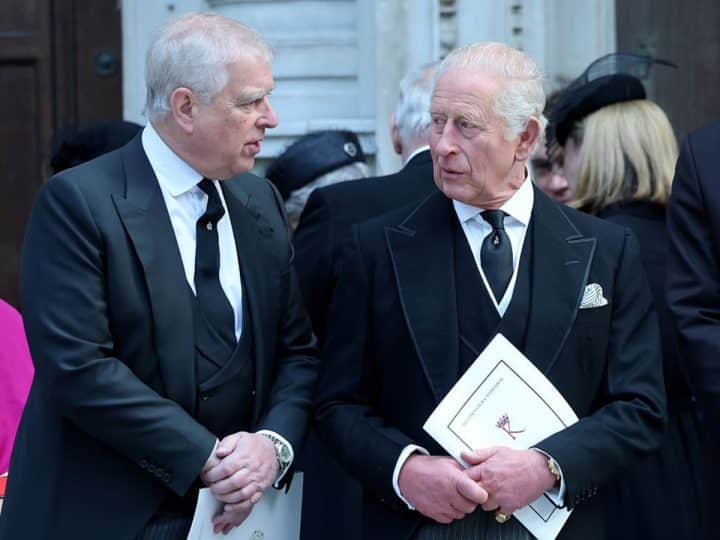

Buckingham Palace had emails six years ago showing the queen’s second son, Andrew, was abusing his position as UK trade envoy. It was a position the late queen had pressured the government into giving the Epstein pal formerly known as Prince Andrew.
Court documents have revealed that the family had an archive of information since 2020 concerning Mountbatten-Windsor’s sharing of information with banking scion Jonathan Rowland. Andrew had told his serial child-rapist friend Jeffrey Epstein that Rowland’s “shady” banker father David was his “main money man”. Emails released in the US Justice Department’s Epstein files show Andrew, as trade envoy, trying to promote the Rowlands’ businesses to Epstein.
Andrew — The bus isn’t big enough
The palace is again trying to distance itself from Andrew’s dodgy dealings, claiming that it could not comment because he is the subject of a police investigation. Thames Valley Police has appealed for people to provide it with information after Mountbatten-Windsor’s arrest for suspected misconduct in public office.
The king has already shown a readiness to throw his brother under a bus to protect the monarchy. However, Charles is known to have forked out huge amounts of money to fund Andrew’s legal battles over Epstein. Rowland, for his part, has confirmed that emails relevant to Andrew’s disclosure of sensitive information were among the archive provided to the Palace as part of disclosure in a 2020 legal case.
The case did not directly involve the royals but they received the emails because many mentioned, or were sent to/by Mountbatten-Windsor. He is not the only Epstein-linked figure known to have passed sensitive — and highly lucrative — information obtained in a government role to contacts. Other Epstein files show Peter Mandelson, at the time an adviser to the Brown government, repeatedly passing insider-trading information to Epstein himself. Mandelson was later appointed as UK ambassador to the US by Keir Starmer, despite the Starmer regime’s knowledge of Mandelson’s actions and links to Epstein.
Featured image via Chris Jackson/Getty Images
By Skwawkbox


Andy Burnham is running to become the MP for Makerfield, Wigan. As everyone knows, if Burnham wins, he’ll challenge Keir Starmer for the Labour leadership, becoming the PM if he succeeds. Given that Labour has a huge majority and the party doesn’t have to call an election until 2029, most assume he won’t go to the polls early. If rumours are to be believed, however, he might be eyeing one up:
EXCL: Andy Burnham is considering holding a snap general election if he becomes PM.https://t.co/4vTIQ2oH5Y
— Kate Ferguson (@kateferguson4) May 30, 2026
Wargaming
The latest rumours comes from the Sun, and as such have to be taken with a pinch of salt. At the same time, Labour politicians love talking to the Sun despite its long and rancid history, so the source doesn’t necessarily discount the veracity.
According to the Murdoch rag, a senior Labour source said:
Andy considering an early general election. They are wargaming it.
But Labour MPs would absolutely hate it. They are worried about losing their seats.
If Andy becomes PM I expect he will have to promise the PLP (Parliamentary Labour Party) that he will not call a snap election.
They will want him to sign the pledge in blood.
Regardless of the finer details, this anonymous quote allowed the Sun to run a story claiming Burnham wants an early election. This is convenient for Burnham’s opponents, because they’re claiming Burnham’s dastardly plan is to — you guessed it — call an early election:
We are staring at a nightmare scenario: Burnham wins, an early General Election follows, Labour takes power, and Britain faces five more years of socialism.
Only Reform can stop it. — Rael Braverman (@raelbrav) May 29, 2026
 https://t.co/zKYQpdjChN
So Reform have gone from demanding an early election to desperately trying to stop one because they think they’ll lose. And they admit Andy Burnham really is so popular nationally he’ll be able to reverse Reform’s surge and win for Labour. https://t.co/hnhvOFmGgN
— (((Dan Hodges))) (@DPJHodges) May 25, 2026
For the past year, Reform’s war cry has been ‘Starmer out now’. This has proven popular with the public — a public which understands the quickest way to get Starmer out is to get Burnham in. The problem for Reform politicians is that Burnham would likely be a tougher opponent, so now they have to work to keep Starmer in without admitting that’s what they’re doing.
Given this, it’s entirely possible one of Starmer’s allies briefed these rumours to hurt Burnham’s chances. Burnham himself, meanwhile, seems to have dismissed the rumours:
I know you know this but don’t believe everything you read in the papers. — Andy Burnham (@AndyBurnhamGM) May 30, 2026


At the same time, it’s not entirely out of the realms of possibility that Burnham might actually want an early election. Also, it wouldn’t be the first time Burnham went back on his word:
Ah! Did you not promise to serve a full term as mayor of Manchester? https://t.co/VPiBM2Wq08
— Count Binface (@CountBinface) May 30, 2026
Why would Burnham want to?
Over the past decade, we’ve had two early elections:
- Theresa May: Despite having a majority, May called an election in 2017 hoping to take advantage of Jeremy Corbyn’s unpopularity. In the end, Corbyn’s Labour realised the largest vote share increase since 1945, with May demoted to a minority government as a result.
- Boris Johnson: Johnson inherited May’s minority government, which meant he couldn’t do much of anything. In 2017, Brexit wasn’t an issue, because both parties committed to following through on it. By 2019, however, Keir Starmer had maneuvered Labour into backing a second referendum, which meant the 2019 election itself became a second referendum itself. This nuked Labour’s chances, and produced a large majority for Boris Johnson (although not as large as the one won by Starmer in 2024).
Clearly, calling an early election would be a risky move; especially when current polling looks like this:
– Seats – Poll: @YouGov, 25-26 May (+/- vs 18 May) pic.twitter.com/L5hyZ359lB — Stats for Lefties
 POLL | Reform lead by 5pts
 Ref: 24% (-1)
 Con: 19% (+1)
 Lab: 17% (-)
 Grn: 16% (+1)
 Lib: 14% (-)
Ref: 258Con: 104Lib: 85Grn: 82
Lib: 14% (-)
Ref: 258Con: 104Lib: 85Grn: 82 SNP: 46Lab: 38
 Plaid: 11

 (@LeftieStats) May 27, 2026
Although Burnham would get a boost in the polls when compared to Starmer, it’s far from a guarantee that he’d win:
Saturday's front page: Burnham would face battle to beat Farage in a general election, polling reveals
Read the full story: https://t.co/0hQigxFlUi#TomorrowsPapersToday pic.twitter.com/wGkSePMn2b — The i Paper (@theipaper) May 29, 2026
There is some reason to suspect Burnham might want to go to the polls early, however.
Rudderless
When it comes to big policies like proportional representation, Burnham has said Labour needs put them in a general manifesto before enacting them. The King in the North also doesn’t seem to have a concrete plan for office, as we’ve reported:
- Burnham ‘to support’ Mahmood’s racist immigration changes.
- Burnham is silent on wealth taxes – not a promising sign from potential PM.
- Andy Burnham’s role with Iain Duncan Smith’s think tank just shows he’s more of the same.
- Burnham WON’T back proportional representation this parliament.
- Shapeshifting Burnham ditches trans rights to panic-grab Reform votes.
- Burnham slammed for saying he won’t renationalise Thames Water.
If Labour call a general election, the party will have to produce a manifesto. As the Manchester Mill reported, Burnham is a lot happier being the face of the operation than the ideological engine — i.e. he’d no doubt love for the wonks to go off and draft a plan for him. The question is which side of Labour would be in charge of this manifesto — the rotten side or the really fucking rotten side.
Burnham movement
As Stats for Lefties and Philip Proudfoot note, the direction of travel for Burnham right now is rightwards:
The road to Wigan Keir https://t.co/iZUFH3pjG7
— Philip Proudfoot (@PhilipProudfoot) May 30, 2026
Whether Burnham calls an election or not, we need to make it very clear this country will not tolerate more of the same. And if he runs an election with a manifesto that’s Starmerism 2.0, we will fight against it tooth and nail.
Featured image via Christopher Furlong (Getty Images) / Christopher Furlong (Getty Images)
By Willem Moore


Nearly two years on from Art of Palestine: from the river to the sea, Rasha Eleyan is back at London’s P21 with her own solo exhibition: Revolution Is Female. The Palestinian artist explores the vital role women play in the Palestinian liberation movement.
Pop-inflected style
Eleyan’s style is very distinctive. The daughter of Palestinian artist Nasr Abdelaziz, Rasha had access to a well-stocked library of books on animation she would copy from: Abdelaziz had studied animation in London in the 1970s. But where his style is figurative, focusing on traditional life in Palestine, Rasha’s paintings have a distinct pop art influence. She also credits her first job at Disney Television in Singapore. She tells The Canary:
I’m often identified as a pop artist, but I was also obsessively inspired by films that combined animation with live action, especially Who Framed Roger Rabbit. That’s where I started merging pop-inspired visual elements with more classical realistic painting techniques.
She also credits her father for the way she chooses to focus on and portray women. His paintings depict Palestinian women — including her mother — with dignity and quiet strength:
The women in his paintings are my inspiration: beautiful women in Palestinian thobe[s], with long dark hair, engaged in daily rural life, carrying a serenity that feels suspended in time — but also a quiet mourning.

Portrait of Rasha Eleyan — Image courtesy of the artist
Growing up in the Gulf, Rasha was all too aware of her family’s (and her people’s) history of displacement. Her parents were keen to retain their identity as Palestinians and foster a strong sense of belonging.
We all had Palestinian thobes that my mother would dress us in for special occasions. We grew up with songs of resistance that emerged from the catastrophic situation our people were placed in. Our heritage was simply us being ourselves — but blended with frustration, loss, and also steadfastness.
That connection to her roots is what inspires the subject of her work. Recurring patterns and colours are drawn from elements that are ubiquitous in Palestinian culture: cactus, watermelon, red, green. Another motif is the Zaghrouta, a ululation with both celebratory and political connotations.

Can You Hear Me, 2025, acrylic on canvas, 123 x 94 cm — Image courtesy of the artist
Revolution is Female
The exhibition at P21 is Rasha’s first solo show in the UK. She moved to the UK a few years ago, and took part in group exhibitions. But this is Rasha’s opportunity to showcase a larger body of her work and its evolution over more than a decade. Co-curated by Zeina Saleh, the exhibition focuses on the role of revolutionary women — through resistance, but also through domestic space, symbolism, celebration, and political presence.
I find myself highly inspired by the Arabic saying “Revolution is Female”, a phrase deeply embedded within our culture and collective consciousness.
Indeed, the phrase reflects the way that women have been the backbone of the liberation movement in the region for decades. In the 1970s and 1980s, films such as Leila and the Wolves and Mai Masri’s Wildflowers: Women of South Lebanon were already celebrating them.

Watermelon Love Affair, 2026, acrylic on canvas, 70 x 80 cm — Image courtesy of the artist
A thriving scene despite censorship
In spite of Israel’s ongoing efforts to erase Palestinian life and culture, Palestinian artists are as prolific as ever. Just this past month, the Palestine Film Institute showcased at the Cannes Film Festival new initiatives and partnerships to structure their film scene, the Venice Biennale exhibited the Gaza Genocide Tapestry… The ubiquity of Palestinian art has of course been met with increased attempts at censorship.
There is undeniably more interest in Palestinian artists, and that is a natural reaction to the atrocities we have been living through over the last two and a half years — though of course our reality stretches far beyond that. As for censorship — yes, we experience it. […] Conversations around resistance, in particular, can feel constrained in digital spaces.
Eleyan believes art is a privileged medium for raising awareness and fostering empathy. Certainly, the popularity of recent exhibitions (Thread Memory…), music events (Sada, Together for Palestine…), and films (Palestine 36…) attest to this.
Revolution Is Female runs from 11 to 19 June at P21 in London. The opening reception is on 10 June. Booking and info here.
Featured image via the artist

Tube strikes June 2026 live: Dates and lines affected as London set for chaos
J&J’s apalutamide cuts prostate cancer death risk by 20%

5 Must-Watch Stocks for the Coming Week: Nvidia (NVDA), Dell (DELL), CrowdStrike (CRWD), Rocket Lab (RKLB), and Palantir (PLTR)


-

 Business7 days ago
NYT Strands Answers May 24 2026 Revealed for Puzzle No. 812 Theme Summer Essentials
-

 NewsBeat4 days ago
Israel says it has killed new Hamas military leader in Gaza City airstrikes
-

 Tech4 days ago
NASA taps Blue Origin to deliver lunar rovers for Moon Base initiative
-

 Politics6 days ago
Bridgerton Season 5: Cast, Release Date And Everything We Know So Far
-

 News Videos4 days ago
XRP *JUST* SUCCEEDED!!!! CLARITY ACT EXPOSED!!! (SHE EXPOSED IT)
-

 Sports5 days ago
2026 NBA Finals schedule, odds: Knicks await Thunder or Spurs after winning East
-
 Crypto World5 days ago
Micron Crosses $1 Trillion Market Cap as AI Demand Reshapes Memory Sector
-

 Business5 days ago
Selena Gomez Reportedly Upset Over Benny Blanco’s Comments on Her ‘Terrible’ Diet
-
Crypto World7 days ago
Brian Armstrong Outlines Crypto Vision for the Future Financial System
-

 News Videos2 days ago
This is BROKEN! INSANE 5x MONEY CAR WASH WEEK! The NEW GTA Online UPDATE Today! (GTA5 New Update)
-

 Business6 days ago
BTS Sells Out Four Las Vegas Shows at Allegiant Stadium for ARIRANG World Tour
-
 Tech5 days ago
China assigns ID codes to 28,000+ humanoid robots
-
 NewsBeat6 days ago
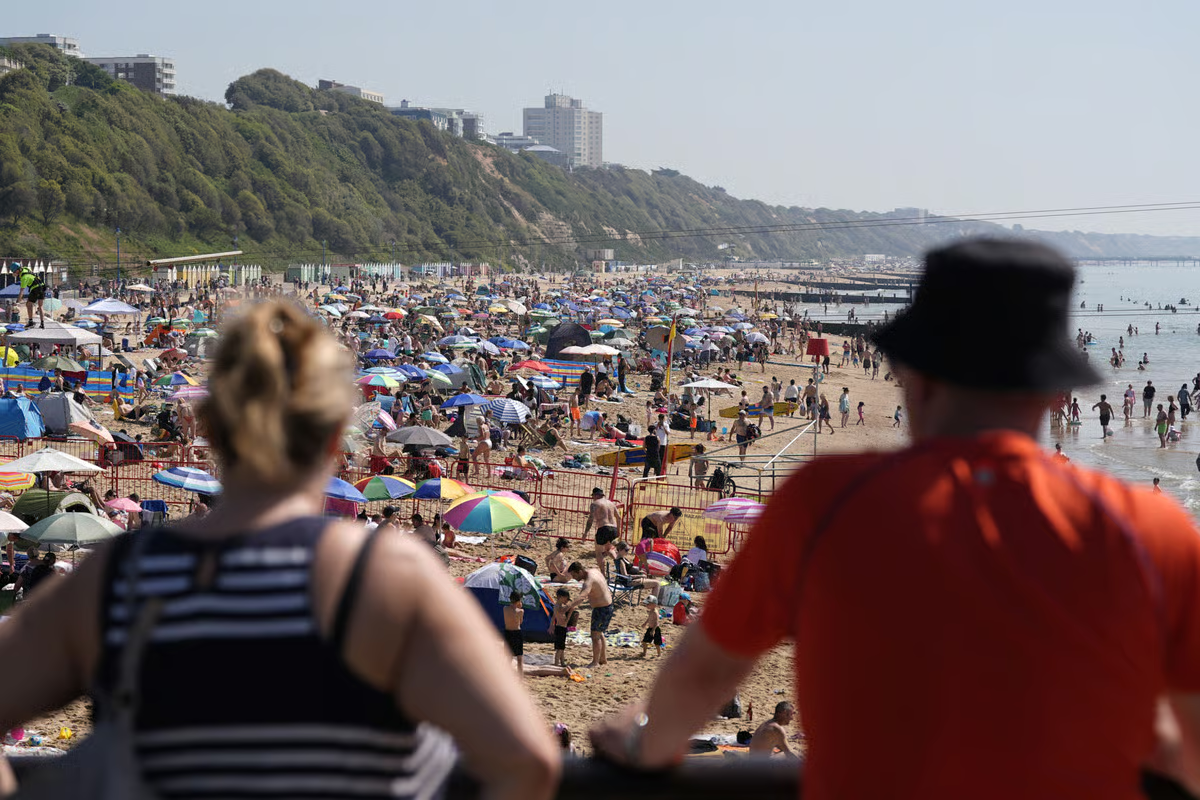
Hottest May day ever as London hits 34.8C in 2C leap from previous records
-

 Tech6 days ago
Microsoft’s quiet Claude Code retreat and the real cost of enterprise AI
-

 Tech2 days ago
Waymo dominates autonomous vehicle registrations as Tesla trails behind
-

 Business6 days ago
Nikkei 225 Surges Past 65,000 for First Time as Iran Peace Hopes Fuel Record Rally
-
Tech4 days ago
The Samsung pay deal is the moment Korean unions changed register
-

 Tech6 days ago
Westone Audio and Etymotic Acquired by Fidelity Collective in Major IEM Market Move
-
 Entertainment6 days ago
‘Breaking Bad’ Star’s Easy-to-Binge 6-Part Crime Series Spin-Off Is Finally Heading to Free Streaming
-

 NewsBeat6 days ago
Crowds find riverside shade in York as temperatures soar
You must be logged in to post a comment Login