Connect with us
DAPA Banner

Business

Plans for dozens of greenbelt homes at Alderley Edge

Published

on

Business Live

Developer argues site meets ‘grey belt’ criteria and cause only minor harm

Bellway Homes wants to build up to 70 homes on land west of Wilmslow Road at Alderley Edge (from planning documents)

Bellway Homes wants to build up to 70 homes on land west of Wilmslow Road at Alderley Edge(Image: Local Democracy Reporting Service)

Plans have been submitted for up to 70 homes on green belt land at Alderley Edge.

Advertisement

Bellway Homes wants to build the dwellings on 3.18 hectares of pastoral agricultural land west of Wilmslow Road.

Access to the development would be via a priority T-junction from Wilmslow Road.

A design and access statement, submitted with the outline application, states: “The scheme demonstrates the future ability to include detached, semi-detached and mews style two to five-bed dwellings, up to 2.5 storeys in height with associated car parking and landscaping.”

The proposals include 45 per cent affordable housing, about 0.92 hectares of landscaping, public open space and ecological areas and ‘significant’ area of public open space across the site, according to the planning statement.

Advertisement

The planning statement, submitted by Savills on behalf of the applicant, says the proposed development is in a sustainable location within walking and cycling distance of key services and facilities, as well as active travel and public transport options.

It also argues the site meets grey belt criteria and so would not be inappropriate development in the green belt.

“The scheme would result in the delivery of up to 70 homes at a time when the council cannot demonstrate a requisite level of housing land supply for the five-year period,” says the planning statement.

“The proposals also deliver 45 per cent affordable homes.

Advertisement

“Other moderate and minor benefits are associated with economic impacts, provision of new publicly accessible open space, and biodiversity net gain.”

The application site for up to 70 homes on land west of Wilmslow Road at Alderley Edge (from planning documents)

The application site for up to 70 homes on land west of Wilmslow Road at Alderley Edge(Image: Local Democracy Reporting Service)

It acknowledges ‘minor harm’ in terms of localised landscape and visual impact, and contravention to the out-of-date open countryside policy.

But it says ‘these limited harms do not outweigh the significant benefits’.

The planning document concludes: “The site represents a much-needed residential development in a sustainable location which has been designed to be in keeping with the character of surrounding area and land uses.”

Advertisement

The application, number 26/1143/OUT, can be viewed on the planning portal on Cheshire East Council’s website.

The last date for submitting comments is May 27.

To find all the planning applications, traffic diversions, road layout changes, alcohol licence applications and more in your community, visit the Public Notices Portal.

Advertisement
Continue Reading
Click to comment

You must be logged in to post a comment Login

Leave a Reply

Business

Younger consumers broadening beverage habits

Published

on

Younger consumers broadening beverage habits

Keurig Dr Pepper trends report highlights how consumer habits are changing. 

Continue Reading

Business

From Addiction to Mental Health Leadership

Published

on

From Addiction to Mental Health Leadership

A Second Life Built on Accountability and Recovery

John Joseph Cardwell’s story does not start in a clinic. It starts with loss.

He grew up in Christchurch, New Zealand, in a large family with strong roots. His father was a New Zealander. His mother was Samoan. He was the eldest of five siblings. As a young person, life was active and structured. He played rugby, soccer, cricket, and rugby league at representative levels.

But over time, that structure broke down.

“My journey through addiction to alcohol and numerous illegal substances and denial of the impact I was causing those around me, especially my family, cost me everything,” Cardwell says. “My identity, my relationships, and my sense of purpose.”

Advertisement

This period would define the turning point of his life.

Hitting Bottom and Facing Public Failure

Cardwell does not avoid talking about his lowest moments. In fact, he leans into them.

“I was exposed in the public eye for my behaviours in active addiction for the whole world to see,” he says. “It was a massive failure in my life.”

That exposure forced a decision. Stay the same or rebuild.

Advertisement

For Cardwell, rebuilding meant full accountability.

“The success was to see it, be accountable, and commit to change,” he explains.

This mindset became the foundation of everything that followed. Not just recovery, but leadership.

The Recovery Process That Changed Everything

Cardwell has been clean and sober since October 2021. But he is clear that recovery was not instant.

Advertisement

“Recovery wasn’t instant,” he says. “It was built through pain, honesty, and resilience.”

He credits structure and community as key factors. He leaned on mentors who had already built stable lives.

“Two men in particular had what I couldn’t manage to get,” he says. “A stable job, studying at university, their own place, relationships, family back in their life, the fact they could commit for a long period of time baffled me. They reminded me of the lengths I would go to score my substances, I could do the same for a different way of living to live”. He thought it was such a long shot to achieve all of what he thought at the time, was impossible.

He followed their example step by step.

Advertisement

“I found and surrounded myself with people who had walked in my shoes before,” he says. “They role modelled a better way to live.”

Faith also played a role.

“I overcame obstacles with my faith in God,” he adds.

These influences helped him rebuild not just habits, but identity.

Advertisement

From Lived Experience to Clinical Practice

After stabilising his life, Cardwell made a decision that would shape his career. He chose to formalise his experience through education.

He studied at Auckland University of Technology. There, he graduated having studied Health Science with a Major which was the main focus on Mental Health and Addictions. He continued with the study pathway assisted by lecturers towards postgraduate study to become DAPAANZ – (Drug and Alcohol Practitioner’s Association of Aotearoa New Zealand) registered.

Today, he works in the Health Sector as a clinician and counsellor.

His work includes individual sessions, couples counselling, and group facilitation. He focuses on alcohol and drug recovery, often referred to as AOD counselling. Alongside other addictions like gambling, internet and gaming often highlighting (CEP) Co-Existing Problems.

Advertisement

What sets him apart is not just training. It is a lived experience.

“I stand not just as someone who is surviving addiction,” he says, “but as someone who found purpose through it.”

A Culturally Grounded Approach to Mental Health

Cardwell’s work is shaped by the communities he serves. He works closely with Māori and Pasifika populations.

He uses culturally grounded modalities such as:

Advertisement
  • Te Whare Tapa Whā
  • Fonofale Model

These frameworks focus on the whole person. Not just symptoms, but family, culture, and environment.

“I apply a culturally grounded approach,” he explains. “It’s about holistic, whānau-centred wellbeing.”

This approach allows him to address deeper issues. These include intergenerational trauma and systemic barriers.

He focuses on building trust first.

“Cultural safety is key,” he says. “Without that, there is no real progress.”

Advertisement

Leadership Through Service and Community Impact

Cardwell does not frame himself as a traditional business leader. But his work shows clear leadership traits.

He is a communicator. A problem solver. And someone who leads by example.

He is also active in the recovery community. He participates in a number of  12-step recovery programs and has shared by performing  his story publicly through theatre, including a production called Recovery Street.

“Shame and guilt are a strength of mine today,” he says. “Because I can speak to it openly and honestly.”

Advertisement

This openness helps others connect with him. It also builds credibility.

He is not speaking from theory. He is speaking from experience.

Building Toward the Next Phase

Looking ahead, Cardwell is focused on growth. Not just personal growth, but impact.

He is working toward opening a private counselling practice and a bigger goal to establish a detox / rehabilitation centre alongside his partner in the Christchurch / Mid Canterbury region.

Advertisement

The goal is clear.

“To help the addict who still suffers,” he says.

His approach to goals is structured but simple.

“Set goals. Break them into small steps. Stay consistent,” he says. “Know your why.”

Advertisement

For him, that “why” is rooted in family, community, and service.

A Story That Continues to Evolve

Today, Cardwell describes his life in simple terms.

“I have peace and freedom from active addiction,” he says.

But he does not position himself as finished. His story is still evolving.

Advertisement

His journey from addiction to clinician is not just personal. It reflects a broader shift. One where lived experience is becoming a key part of mental health leadership.

And in that space, Cardwell is building a role that is both practical and impactful.

“My story is no longer about struggle,” he says. “It’s about giving back.”

Advertisement

Continue Reading

Business

Hassett says AI boom and capital spending are driving Wall Street rally

Published

on

Hassett says AI boom and capital spending are driving Wall Street rally

Wall Street’s rally is increasingly being tied to a mix of artificial intelligence investment, corporate tax incentives and a wave of factory construction reshaping the U.S. economy.

White House National Economic Council Director Kevin Hassett joined FOX Business’ Maria Bartiromo on “Mornings with Maria” to discuss why he believes the economy is entering a new growth phase driven by capital spending, AI productivity gains and tax policies aimed at accelerating domestic manufacturing.

Advertisement
White House economist

White House National Economic Council Director Kevin Hassett. (Al Drago/Bloomberg)

“The bottom line is that there’s an AI productivity boom which is feeding through to an earnings boom,” Hassett said.

The comments come as companies pour billions into U.S.-based expansion projects tied to semiconductors, artificial intelligence infrastructure and advanced manufacturing. Hassett pointed to major investments from multinational firms, including Novartis and Taiwan Semiconductor Manufacturing Company, also known as TSMC, as signs the U.S. has become “the hot place to be right now.”

MARKET EXPERT SAYS POTENTIAL FED RATE CUTS COULD SPARK ‘ONE OF THE BIGGEST EXPLOSIONS’ IN US ECONOMY

Advertisement

The administration’s push to restore full expensing and bonus depreciation for factory construction and equipment has also sparked a rush to build projects before key tax incentives expire.

“There’s a race unlike anything we’ve ever seen to create jobs in America right now,” Hassett said.

PRIVATE SECTOR ADDED 109,000 JOBS IN APRIL, ABOVE EXPECTATIONS, ADP SAYS

Advertisement

Hassett also predicted strong economic growth through the rest of the year, arguing that recent import data reflects long-term investment in manufacturing equipment rather than weaker domestic demand.

“I’m highly confident that we’re going to be looking at 4% numbers for the rest of the year,” Hassett said. “I personally would make a bet on it with my friends.”

GET FOX BUSINESS ON THE GO BY CLICKING HERE

Advertisement
Continue Reading

Business

Airlines spent 56.4% more on jet fuel after Iran war began: DOT

Published

on

Airlines spent 56.4% more on jet fuel after Iran war began: DOT

A technician prepares to refuel a Delta Airlines aircraft at the Austin-Bergrstrom International Airport on April 10, 2026 in Austin, Texas.

Brandon Bell | Getty Images

U.S. airlines spent 56.4% more on jet fuel in March, the month after the U.S.-Israel strikes on Iran began, than they did in February, U.S. government data released Wednesday show.

Advertisement

U.S. carriers spent $5.06 billion on fuel in March, up from $3.23 billion in February. It was 30% more than what they paid in March 2025, according to the Department of Transportation.

Airlines have lowered or scrapped their 2026 forecasts altogether because of the spike in fuel, their biggest expense after labor. Some carriers have scaled back growth plans to cut costs and avoid having too much expensive capacity in the markets.

The spike in jet fuel was even sharper and topped $4 a gallon in some markets in April as the war continued and the Strait of Hormuz was effectively closed.

Spirit Airlines collapsed over the weekend, and the carrier said the surge in jet fuel costs foiled its plans to emerge from bankruptcy mid-year.

Advertisement

Other major carriers told Wall Street as they reported earnings last month that they expect customers to cover the higher jet fuel costs by early 2027, if not the end of this year.

So far, booking trends show consumers are still traveling, In March, travel-agency ticket sales rose 12% from a year ago to $10.4 billion, with the number of domestic trips up 5% and international up 1%, according to the Airlines Reporting Corp.

Here's how jet fuel crisis in Europe threatens summer travel plans
Choose CNBC as your preferred source on Google and never miss a moment from the most trusted name in business news.
Continue Reading

Business

Aviva shareholder meeting in York targeted by protesters

Published

on

Business Live

Campaign group Boycott Bloody Insurance said it was behind the stunt

Aviva

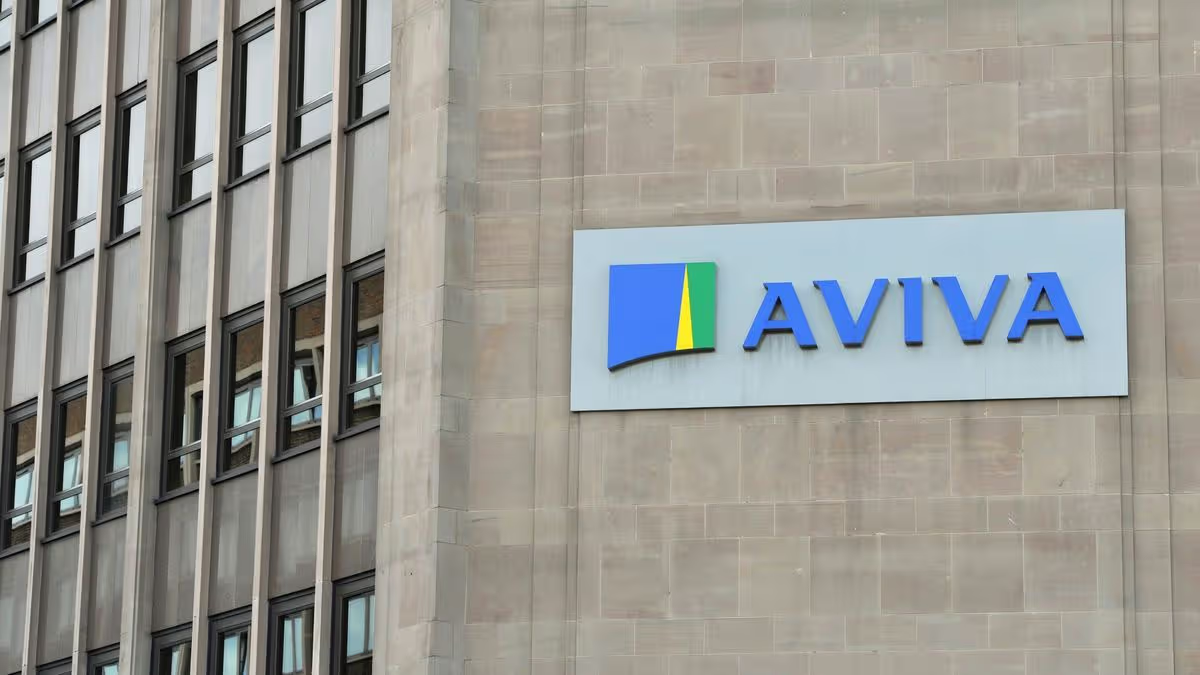
Protestors targeted insurance giant Aviva’s annual general meeting in York today.

Campaign group Boycott Bloody Insurance claims the FTSE100 firm underwrites or invests in companies that profit from surveillance, immigration detention, fossil fuels and weapons. The group claimed to be behind 12 people with shares in Aviva.

A video shared to social media shows people lying and kneeling on the floor of Avia’s Wellington Row offices in the city, before being led away. Boycott Bloody Insurance’s website contains materials that take aim at insurers who they say protect “deadly industries driving climate chaos, the genocide in Gaza and border violence”.

Andrew Taylor, a campaigner at Boycott Bloody Insurance said: “Aviva likes to present itself as an ethical business, but when you look at the companies it supports, that turns out to be a sham.”

Advertisement

Aviva’s AGM comes after it published 2025 results showing operating profits had climbed 25% to more than £2.2bn. That included a £174m contribution from its takeover of Direct Line.

Aviva declined to comment on Wednesday’s events.

The disruption in York comes only a week after NatWest was forced to pause its AGM amid heckling during its chairman’s opening speech. Protesters were singing and making statements about NatWest’s climate policies, while shareholder activists called on the banking group to address claims it had “reduced the ambition of its fossil fuel policy and climate targets”.

Rick Haythornthwaite, NatWest’s chairman, defended its policies and said the financing of oil and gas comprises 0.6% of the group’s total lending. Meanwhile, Barclays is expected to be targeted at its AGM in London on Thursday, with activist groups including the Palestine Solidarity Campaign and Campaign Against Arms Trade organising a protest outside the meeting.

Advertisement
Continue Reading

Business

Publishers Sue Meta Over AI Training: Hachette, Macmillan Lead $Billion Copyright Battle

Published

on

$145bn AI Spending Plan Sends Shares Down 7%

Five of the world’s largest publishing houses have launched a class-action lawsuit against Meta Platforms in a Manhattan federal court, accusing the Mark Zuckerberg-led tech giant of pirating millions of copyrighted works to train its Llama artificial intelligence models, a development that throws fresh fuel on one of the defining commercial disputes of the AI era.

Elsevier, Cengage, Hachette, Macmillan and McGraw Hill, joined by the bestselling American author Scott Turow, filed proceedings on Tuesday alleging that Meta knowingly used pirated copies of textbooks, peer-reviewed scientific journals and novels, among them N.K. Jemisin’s The Fifth Season and Peter Brown’s The Wild Robot, to train the systems that now underpin the Silicon Valley group’s generative AI products.

The complaint, which seeks unspecified damages and class-action status on behalf of a far wider pool of rights holders, marks the first time that academic and trade publishers have moved against Meta as a unified front. It also signals a deliberate escalation by an industry that, until now, has largely watched from the sidelines as authors, newspapers and visual artists fought their own corner.

Maria Pallante, president of the Association of American Publishers, did not mince her words. “Meta’s mass-scale infringement isn’t public progress, and AI will never be properly realised if tech companies prioritise pirate sites over scholarship and imagination,” she said.

Meta has signalled it will mount a robust defence. “AI is powering transformative innovations, productivity and creativity for individuals and companies, and courts have rightly found that training AI on copyrighted material can qualify as fair use,” a spokesperson said. “We will fight this lawsuit aggressively.”

Advertisement

The case opens yet another front in a war that is rapidly redrawing the commercial map for content owners on both sides of the Atlantic. Dozens of plaintiffs, from The New York Times, which is pursuing OpenAI and Microsoft, to a coalition of authors, news outlets and visual artists, have already filed suit against the leading AI developers. The legal questions hinge on whether ingesting copyrighted material to produce new, “transformative” output qualifies as fair use under American law, and the early rulings have been anything but uniform. Two of the first judges to grapple with the issue reached opposing conclusions last year.

The first major scalp came when Anthropic, the AI company backed by Amazon and Google, agreed in 2025 to pay $1.5 billion (£1.18 billion) to settle a class action brought by a group of authors, a sum that could have ballooned into multiples of that figure had the matter gone to trial.

For UK small and medium-sized enterprises operating in publishing, marketing, education and the creative industries, the implications are far from academic. The absence of a coherent licensing regime has left British rights holders exposed to the same alleged practices, while AI-dependent businesses face mounting uncertainty over which models can be deployed without inheriting legal liability.

Benjamin Woollams, chief executive of TrueRights, argues the sector urgently needs commercial infrastructure capable of matching the speed at which AI models are being built. “Every one of these lawsuits points to the same underlying problem: there’s no standardised way to license creative work and likeness for AI,” he said. “Tech companies aren’t villains for wanting training data, and creators aren’t luddites for wanting to be paid, but the infrastructure to connect them simply hasn’t existed until now. This represents a huge opportunity for those in the industry to build a transparent and trusted licensing framework that allows innovation and creator rights to coexist commercially.”

Advertisement

He points to the influencer marketing economy, worth tens of billions of pounds globally and constructed almost entirely on rights licensing, as evidence that the commercial template already exists. “Brands and talent collaborate every day on an enormous scale. The commercial appetite for licensed content is there, the economic model is proven, and creators are increasingly aware of how their likeness and IP are used. What’s been missing in AI is a transparent, trusted way to license at the speed and scale these models require.”

Without such guardrails, Woollams warns, the drumbeat of litigation will only grow louder. “This sort of friction and litigation will continue to plague the industry, which will have negative knock-on effects on the kind of collaboration that should be powering the next generation of creative work, where AI platforms, advertisers and talent can actually build together.”

For Meta, the stakes extend well beyond the immediate price tag. A successful class certification could expose the group to claims from thousands of rights holders, while an adverse ruling would reverberate across an industry that has built its competitive edge on the unrestricted ingestion of vast corpora of human-authored work. For Britain’s SME publishers and creators, the case is a reminder that the rules of engagement with generative AI remain very much under construction, and that the courts, for now, are doing the drafting.


Jamie Young

Jamie Young

Jamie is Senior Reporter at Business Matters, bringing over a decade of experience in UK SME business reporting.
Jamie holds a degree in Business Administration and regularly participates in industry conferences and workshops.

When not reporting on the latest business developments, Jamie is passionate about mentoring up-and-coming journalists and entrepreneurs to inspire the next generation of business leaders.

Advertisement

Continue Reading

Business

Why You Must Vote Tomorrow

Published

on

Why You Must Vote Tomorrow

I am not, in the ordinary run of things, a man given to civic exhortation. Lecture another adult on what to do with their Thursday and you tend to end up wearing their coffee, quite rightly.

But indulge me, just this once, because tomorrow is local election day across great swathes of England, and somebody has to say something about the great British shrug that has come to define our relationship with the ballot box at the parish-and-pothole level.

In the last round of council elections, turnout in some wards crept south of thirty per cent. Thirty per cent. Sit with that for a moment. Seven in ten adults, in possession of a franchise their grandparents fought a war to defend, opted instead to put the kettle on, watch a man on YouTube fitting a gearbox, or sit there in a state of low-grade irritation about Westminster as though the council had nothing whatever to do with their lives.

As though the council did not run their bins, set their parking charges, decide whether the vape shop next door could open at seven in the morning, and quietly determine, through the dark art of the local plan, whether a four-storey block of flats will rise next year on the patch of brownfield where their children currently kick a football.

I run businesses for a living, and I can tell you, as readers of this magazine will already know in their bones, that the people who shape your operating costs are not, in the main, the slick young SpAds and ambitious junior ministers preening on the Today programme.

Advertisement

They are councillors. People with names like Peter, Paul and Jane, even I used to be one for over a decade. People with dreadful lanyards and, mostly, excellent intentions. They set business rates relief schemes. They grant, or refuse, your A-board, your awning, your application for a pavement licence so the punters can drink rosé in the rain.

They decide whether your high street will boast a half-decent bus service or a bewildered taxi rank flanked by three Costas and a Greggs. They sign off road closures that can cost a small retailer a fortnight’s takings in a single botched resurfacing job. They run procurement budgets through which billions are quietly dispensed every year, and from which, incidentally, your own firm could perfectly well be eating, were you ever to bother with the tendering portal.

In short, if you run a business, the council is your landlord, your regulator, your customer and your traffic warden, all rolled into one slightly damp Edwardian building with a malfunctioning lift. Ignore it at your peril.

Now. I am not going to tell you who to vote for. I have my views, strong ones, in fact, ones I will not bore you with here because, frankly, they are not the point, and you have yours. That is the splendid, frustrating, occasionally infuriating glory of the thing. You may be a lifelong Conservative who has finally had enough. You may be Labour through and through, a Lib Dem with a clipboard, a Green who cycles, a Reform man who shouts, or one of those magnificent independents who slipped in last time on a single-issue ticket about the duck pond.

Advertisement

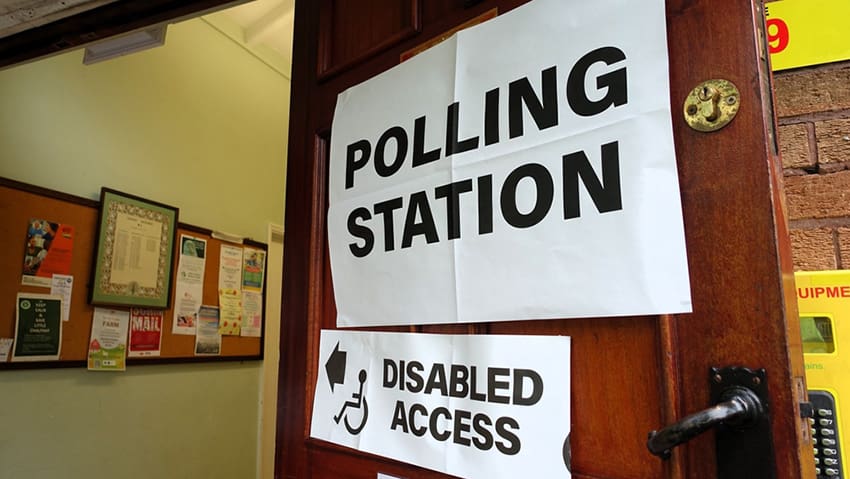
I do not care. I genuinely, profoundly, do not care. What I care about is that you put on a coat tomorrow, walk to the church hall, the primary school or the slightly dispiriting community centre, take the stubby pencil they have thoughtfully provided, and put a cross in a box.

Because here is the awkward truth: democracy is a muscle. Use it badly, use it crossly, use it with a heavy sigh and a glass of red waiting at home, but use it. Leave it in the drawer for too long and it withers, and once it has withered the people who do turn up, and they always turn up, get to decide everything for the rest of us. That is not a left-wing observation or a right-wing one. It is simply how arithmetic works in a polling station.

I am told there is a fashionable line these days, much retweeted by sixth-formers and weary executives alike, that “voting changes nothing”. To which the only sensible reply is: marvellous, then you will not object to my vote counting double. Of course it changes things. Ask any small business owner who has watched a sympathetic council slash parking charges, or an unsympathetic one slap on a workplace levy. Ask the publican facing a three a.m. licence refusal. Ask the parent whose new primary school exists because three hundred neighbours bothered to turn out one wet Thursday in May.

So. Tomorrow. Coat on, pencil up, cross in. I am not telling you who to vote for. I am telling you to vote. There is, I promise, a meaningful difference.

Advertisement

Richard Alvin

Richard Alvin

Richard Alvin is a serial entrepreneur, a former advisor to the UK Government about small business and an Honorary Teaching Fellow on Business at Lancaster University.

A winner of the London Chamber of Commerce Business Person of the year and Freeman of the City of London for his services to business and charity. Richard is also Group MD of Capital Business Media and SME business research company Trends Research, regarded as one of the UK’s leading experts in the SME sector and an active angel investor and advisor to new start companies.

Richard is also the host of Save Our Business the U.S. based business advice television show.

Advertisement
Continue Reading

Business

Disney CEO Josh D’Amaro outlines AI and content strategy in growth plan

Published

on

Josh D'Amaro named Disney CEO as Bob Iger retires from the company

New Disney CEO Josh D’Amaro outlined a new growth strategy for the entertainment giant as the company announced its quarterly results, which includes a focus on investing in content as well as technology.

D’Amaro, who succeeded former Disney CEO Bob Iger in mid-March, said in a letter to shareholders that Disney’s long-term strategy will revolve around three pillars including investing in intellectual property and creativity, reaching and engaging more consumers around the world, and using advanced technologies like artificial intelligence (AI) to power storytelling and increase monetization.

Advertisement

Disney has been undergoing a costly investment in streaming, as well as content, technology and marketing for the platforms and programs that are on them. D’Amaro said that AI and other technology will be used to boost efficiencies across the company.

“We view advanced technologies, including AI, as a meaningful long-term opportunity. We see opportunities for AI to play a role across five areas of our business: content creation and production, monetization, workforce productivity, guest and consumer experiences and enterprise operations,” D’Amaro wrote.

DISNEYLAND VISITORS FACE GROWING WAVE OF RIDE CLOSURES, SHOW SHUTDOWNS HEADING INTO SUMMER 2026

Disney CEO Josh D'Amaro

Disney CEO Josh D’Amaro outlined the growth strategy for the entertainment giant in a letter to shareholders. (Aurore Marechal/Getty Images)

“At the same time, we are committed to implementing AI in a way that keeps human creativity at the center of everything we do and respects creators and the value of our intellectual property,” he explained, noting that the company won’t proceed with a planned investment in OpenAI after it shut down its Sora platform. D’Amaro added that Disney continues to explore opportunities to work with OpenAI and other firms.

Advertisement

D’Amaro noted that revenue growth in its subscription video on demand category, which includes streaming platforms, reached double-digits for the first time in the latest quarter. He said the gains were driven by last year’s rate adjustments and volume growth through international wholesale agreements, and Disney is now targeting at least 10% growth for the full year.

DISNEY REPORTEDLY SHELVES ESPN SPINOFF TALKS IN MAJOR CALL UNDER NEW CEO

Ticker Security Last Change Change %
DIS THE WALT DISNEY CO. 107.06 +6.55 +6.52%

“There is no single initiative that will fully optimize our streaming business on its own. Rather, we believe the compounding benefits of many incremental improvements over time will increase engagement and improve retention,” D’Amaro wrote.

Disney launched Verts on Disney+ in March to boost discoverability and drive more interaction among platform users, which D’Amaro said is an ongoing effort that may lead to variability in results between quarters but has the company “encouraged by the momentum we see.”

Advertisement

DISNEY LAYS OFF 1,000 EMPLOYEES ACROSS TV AND FILM UNDER NEW CEO

Disney headquarters

Disney is continuing to invest in streaming platforms. (AaronP/Bauer-Griffin/GC Images)

He added that ESPN is early in the process of monetizing its direct-to-consumer offerings, and that the sports network is viewed as a “meaningful opportunity over time as we expand both the content offering and the consumer proposition for the ESPN Unlimited plan.”

The shareholder letter cited “Zootopia 2” as an example of intellectual property that generates value across distribution platforms. 

GET FOX BUSINESS ON THE GO BY CLICKING HERE

Advertisement

D’Amaro said the movie generated $1.9 billion in global box office, while the franchise passed 1 billion hours streamed on the Disney+ streaming service and is driving engagement at theme parks, cruise ships and retail.

Continue Reading

Business

Form 144 Cipher Digital Inc. For: 6 May

Published

on


Form 144 Cipher Digital Inc. For: 6 May

Continue Reading

Business

PayPal weighs up to 20% job cuts as profit falls, outlook weakens

Published

on

PayPal weighs up to 20% job cuts as profit falls, outlook weakens

PayPal is reportedly weighing cuts of up to 20% of its workforce as the payments giant ramps up cost-cutting efforts under new leadership.

The potential layoffs come as PayPal faces mounting pressure on profitability despite continued revenue growth.

Advertisement

FOX Business reached out to PayPal for comment.

Bloomberg and The Wall Street Journal reported that the company could cut as much as one-fifth of its staff as part of a broader restructuring push.

BAY AREA BANKER WANTS TO SWAP HIS $8M ESTATE FOR AI COMPANY STOCK

paypal tokyo game show

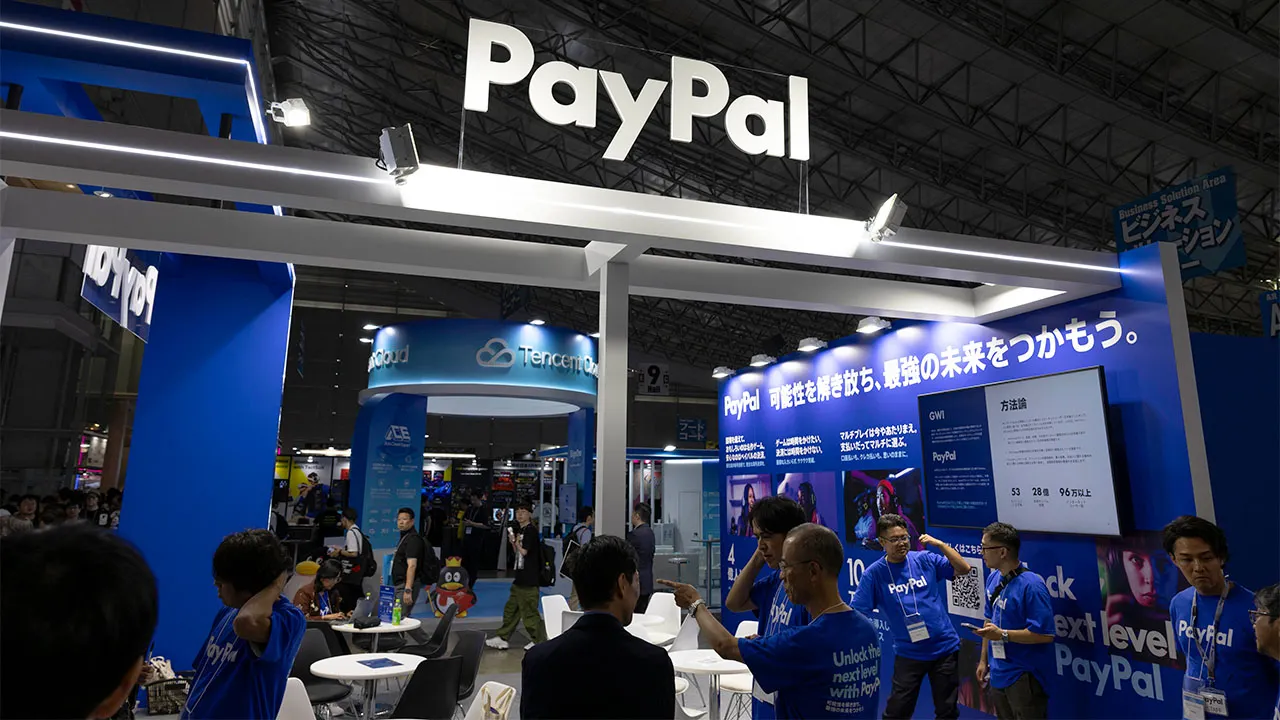
PayPal branding seen at their exhibition area at the Tokyo Game Show 2025. (Stanislav Kogiku/SOPA Images/LightRocket via Getty Images)

PayPal reported first-quarter revenue of $8.35 billion, up 7% from a year earlier, while total payment volume rose 11% to $464 billion. 

Advertisement

Net income fell to $1.11 billion from $1.29 billion a year earlier, though adjusted earnings of $1.34 per share beat expectations. 

The company expects adjusted earnings to decline about 9% in the current quarter and maintained a cautious full-year outlook. 

paypal signage

A sign is posted in front of PayPal headquarters on Feb. 2, 2023, in San Jose, California.  (Justin Sullivan/Getty Images)

PRIVATE SECTOR ADDED 109,000 JOBS IN APRIL, ABOVE EXPECTATIONS, ADP SAYS

New CEO Enrique Lores, who took over in March, is pushing to streamline operations and cut costs, including through greater use of artificial intelligence, Reuters reported.

Advertisement

PayPal said those efforts are expected to generate roughly $1.5 billion in savings over the next two to three years, which it plans to reinvest into growth.

PayPal headquarters in San Jose, California

A PayPal sign is seen at its headquarters on Jan. 30, 2024, in San Jose, California. (Justin Sullivan/Getty Images)

HOW AI EXPOSURE IS RESHAPING JOBS IN CREATIVE FIELDS

The company has been grappling with intensifying competition from Big Tech and newer players such as Klarna and Stripe, while growth has cooled following a pandemic-era surge in digital payments, according to Reuters.

CLICK HERE TO GET FOX BUSINESS ON THE GO

Advertisement

PayPal said it is working to “simplify” its organization and improve efficiency, with disclosures pointing to workforce reductions as part of broader restructuring efforts. 

Continue Reading

Trending

Copyright © 2025