
Connect with us
DAPA Banner

NewsBeat

Arsenal v PSG in the Champions League final is a battle of contrasts, with a much deeper significance

Published

on

Arsenal v PSG in the Champions League final is a battle of contrasts, with a much deeper significance

Arsenal, if you listen to some at the club, may now have their chance at “revenge”. They felt they were actually better than Paris Saint-Germain in last season’s semi-final, which may still baffle many people who’ve watched the Qatari project since.

The rest of Europe might just want a better crescendo than the semi-final ultimately offered, and perhaps that the Champions League final has been due for some time. There hasn’t been a great final in years, arguably since 2005, despite claims from 2008, 2012 and 2017.

That has meant the semi-finals have often represented the absolute peak of club football, even if this year’s didn’t reach the heights that had been anticipated.

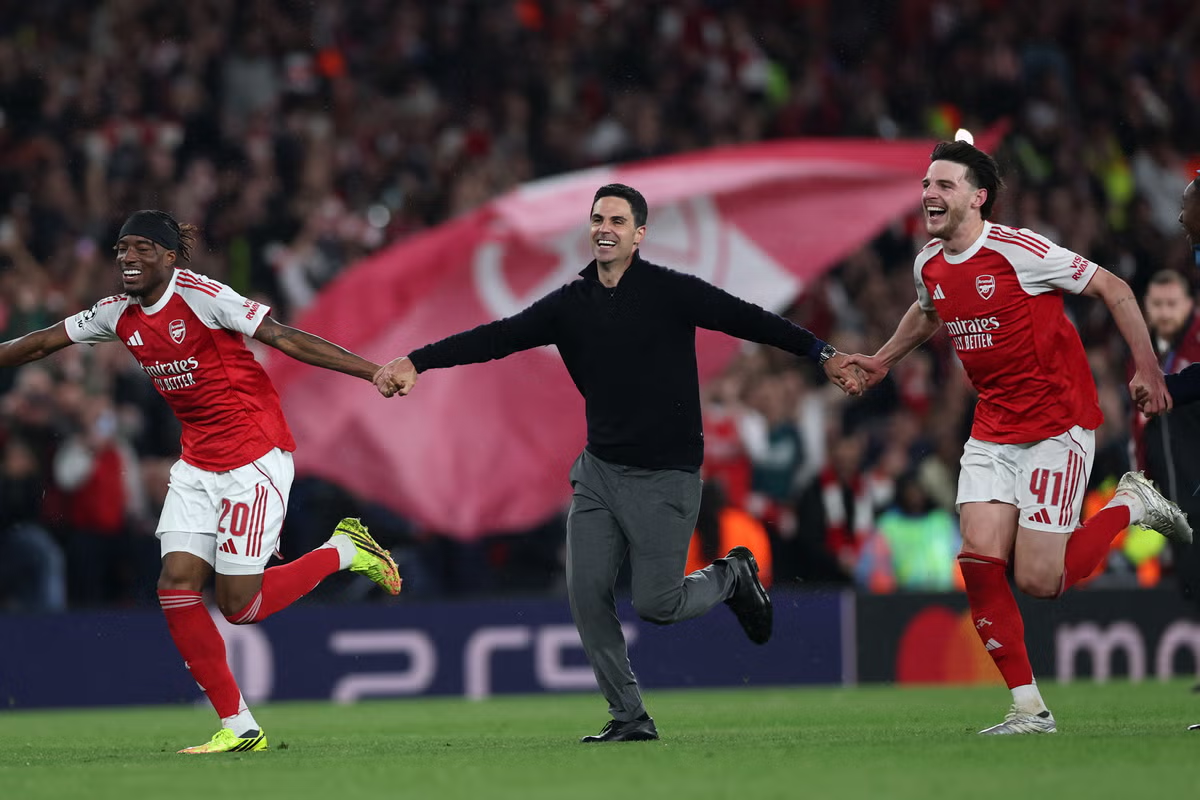
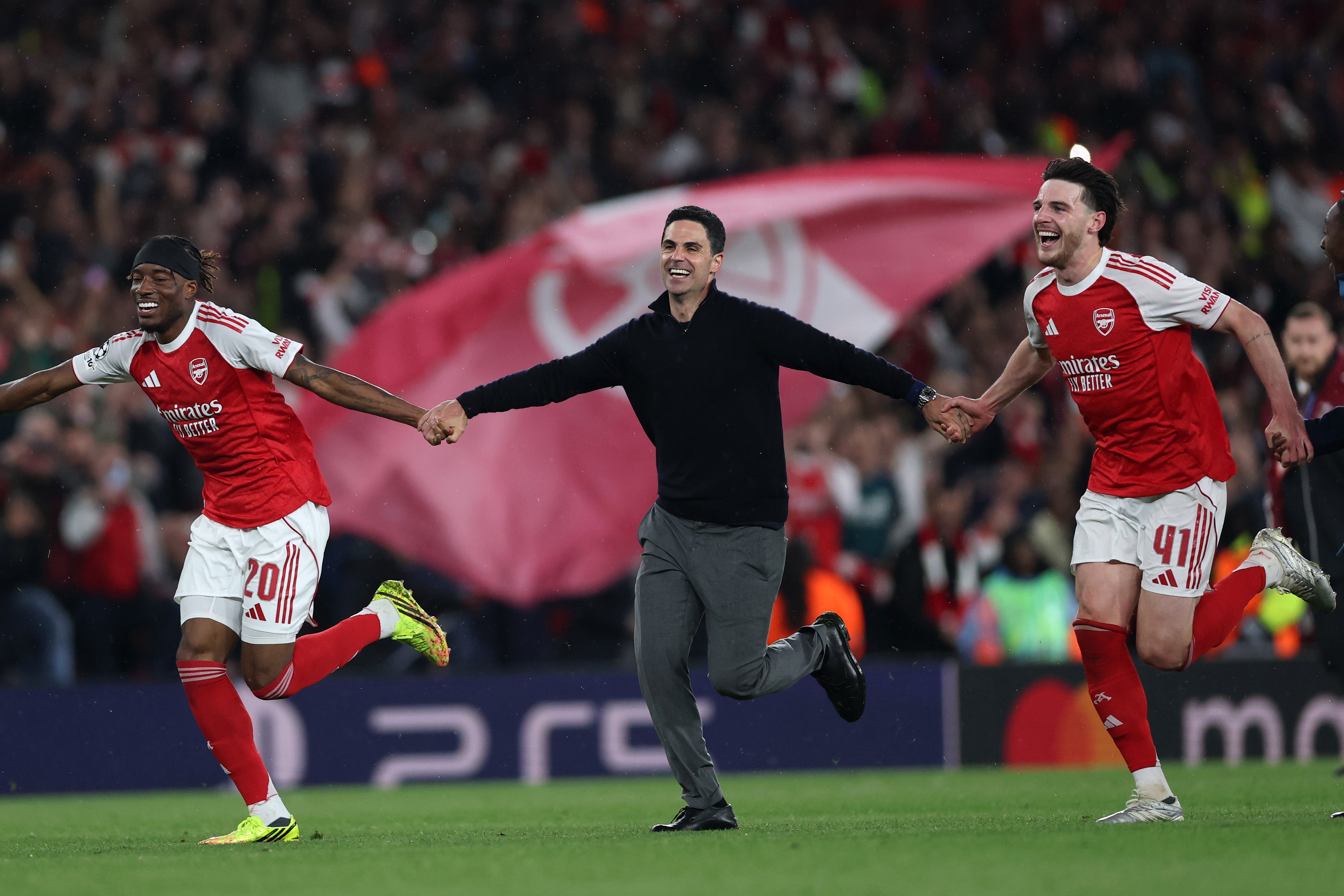
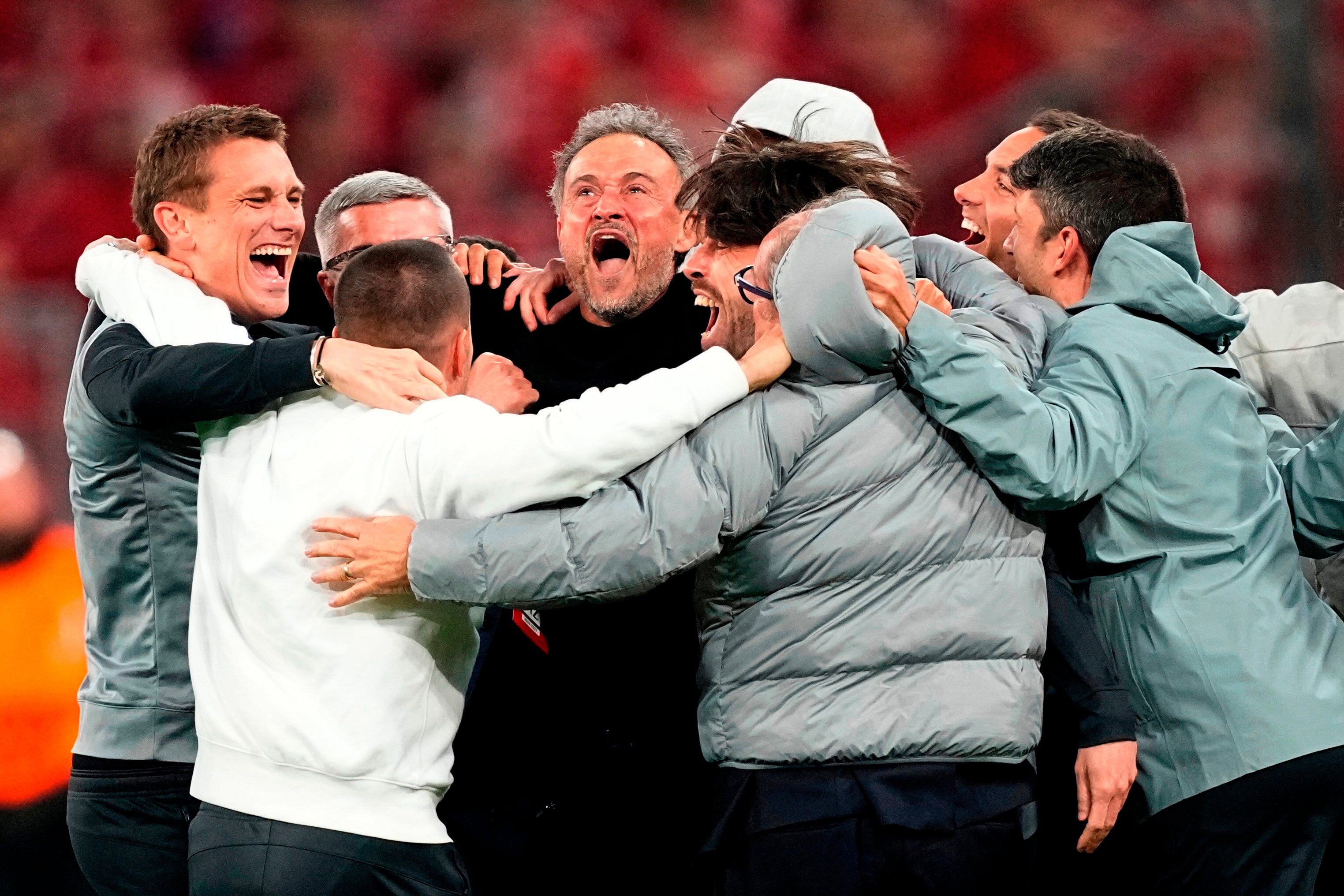
There were joyous celebrations as Arsenal reached their first Champions League final since 2006
There were joyous celebrations as Arsenal reached their first Champions League final since 2006 (Getty)

It’s not an exaggeration to say that the expectation after the Bayern Munich-PSG first leg was that we would all be sitting here on Thursday morning trying to make sense of another sensation.

That didn’t really happen. PSG were just too good. This time, Bayern just couldn’t get close enough when it mattered.

Advertisement

That poses another question, relevant to Arsenal’s lingering frustration from last season, relevant to where European football goes next.

If PSG put in a very modern display of excellence in the first leg, the second leg was a more classically continental display.

They shut Bayern out, where they had previously opened them. There were no concerns about defending here.

It further fosters the sense of a truly complete team, arguably the best that Europe has seen since Pep Guardiola’s Barcelona when performing at their top level.

Advertisement

There are of course caveats. PSG benefit from all of the advantages of being a Qatari sportswashing project, at the same time that power has trampled Ligue 1.

Luis Enrique’s PSG could emulate the Real Madrid side that became the first in the modern era to defend the Champions League
Luis Enrique’s PSG could emulate the Real Madrid side that became the first in the modern era to defend the Champions League (AP)

The new darlings of the competition do bring darker discussions.

PSG would not just become the first side since Real Madrid in 2018 to retain the trophy, and just the second in the Champions League era.

They would ensure a state-owned club has won the competition for the third time in four years, a development that would be all the more conspicuous when the conflict in Iran has raised questions about future strategies from such Gulf autocracies. There’s an extra layer to this, given that Viktor Orban – characterised as “a competitive authoritarian” – is no longer the premier of Hungary, having been voted out weeks before this prestige fixture in Budapest he had long desired.

Advertisement

Such concerns, as has been said before, reflect a lot about football in 2026.

Arsenal, themselves owned by a classic US billionaire capitalist, find both of these state-owned clubs – PSG and Manchester City – standing in their way in the season’s two major trophies.

If Mikel Arteta’s side were to win the league, it would make this final the first meeting between domestic champions since 2020.

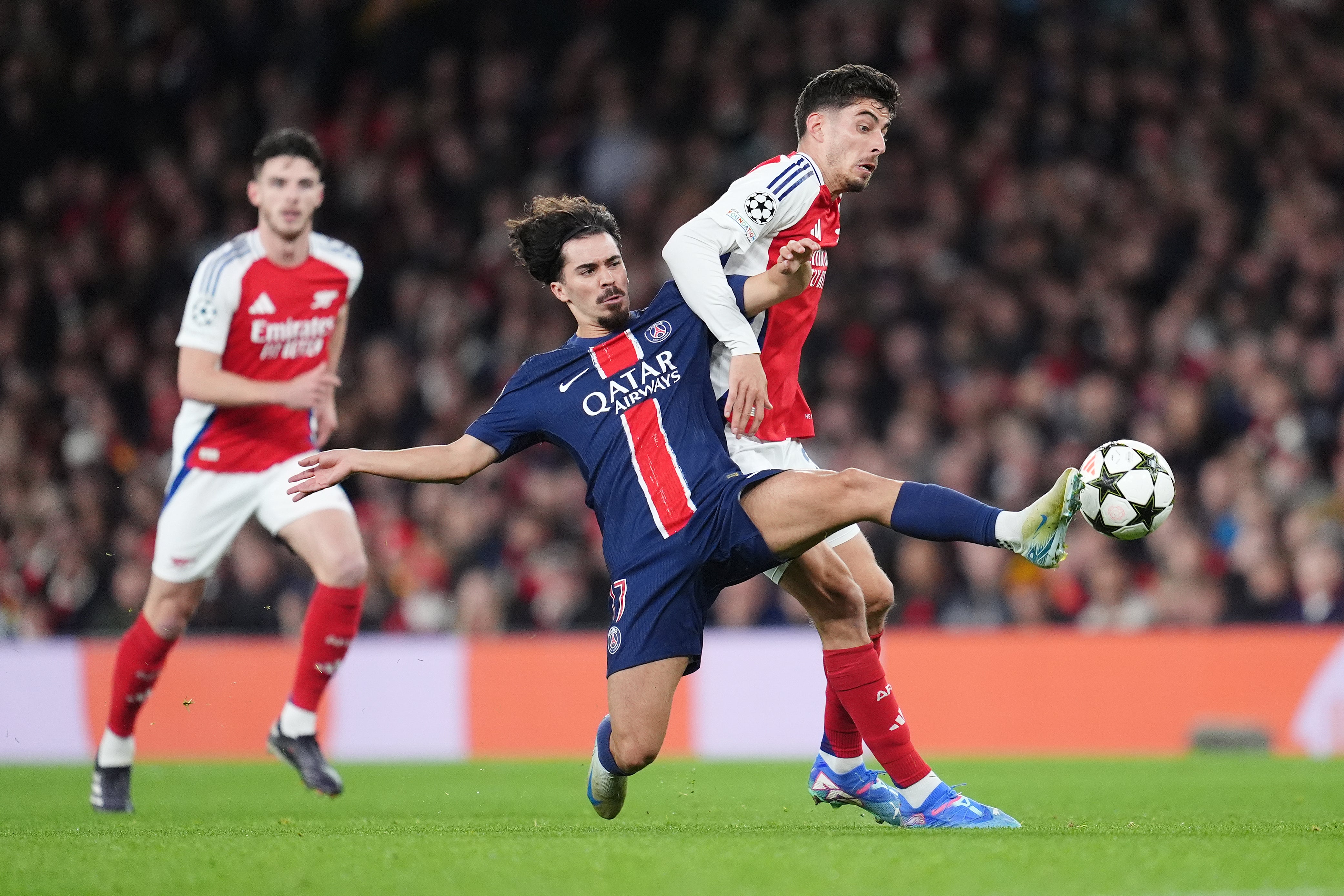
Arsenal and PSG met in last season’s semi-finals, with the Gunners now bidding for ‘revenge’ in Budapest
Arsenal and PSG met in last season’s semi-finals, with the Gunners now bidding for ‘revenge’ in Budapest (PA Wire)

That prospect does speak to something else about this final. It might end up a rare final that is definitively between the best teams in Europe. That arguably hasn’t been seen since 2020 either, and before that you probably have to go back to 2014 or 2009.

There’s even the symmetry of how Arsenal were undeniably the best team of the first half of the season, given how they finished top of the group stage, and PSG again the best team of the second half and the knock-outs.

Advertisement

The most pertinent question, however, is whether Arsenal can really be as good as PSG for the final – or whether they even need to be.

The football both sides play also plays into many other contrasts.

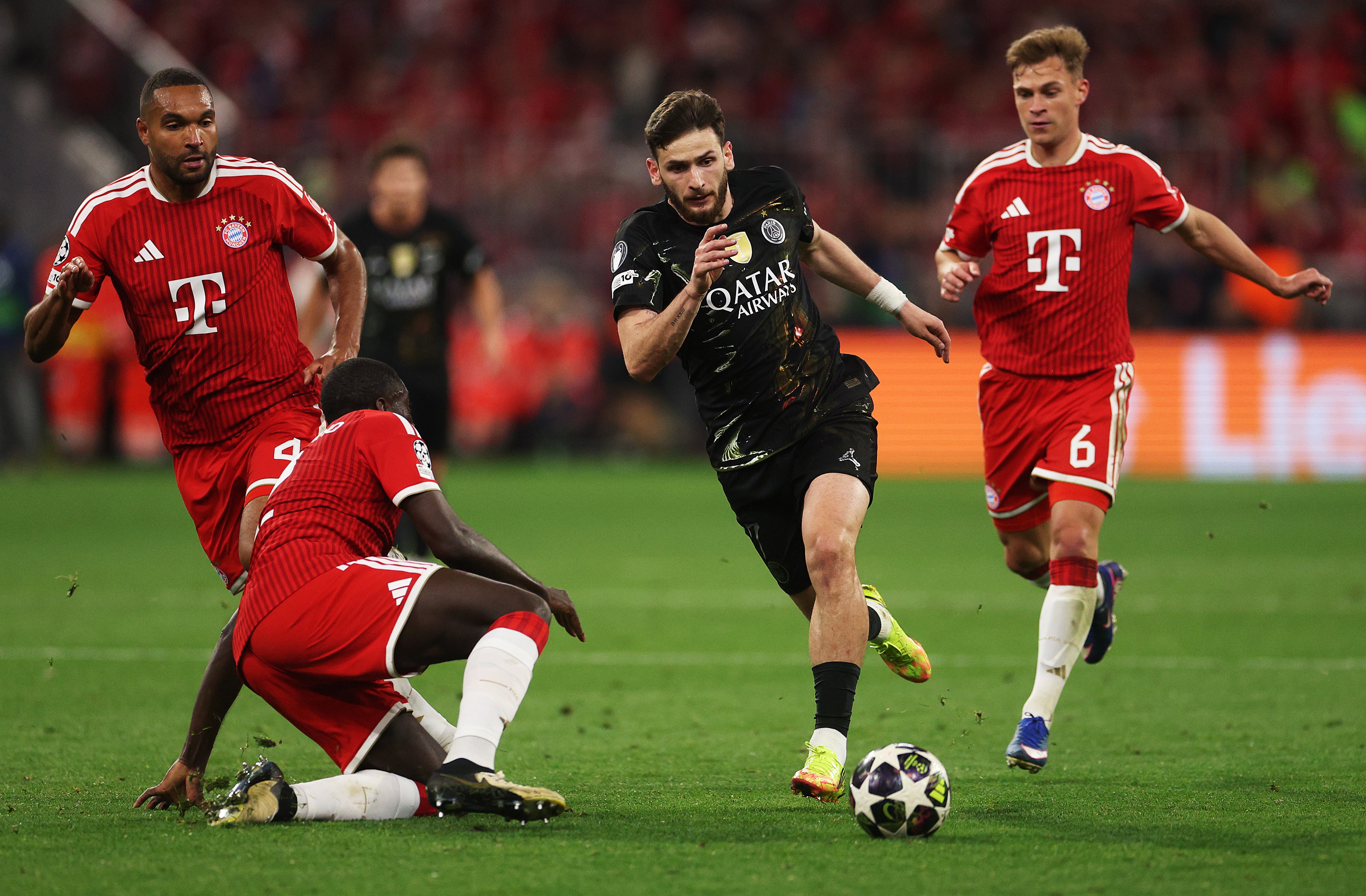
Khvicha Kvaratskhelia’s direct dribbling and speed are emblematic of how PSG want to play
Khvicha Kvaratskhelia’s direct dribbling and speed are emblematic of how PSG want to play (Getty)

While PSG are self-assuredly looking to perpetuate their dominance and win a second Champions League, Arsenal are striving to finally claim their first, and properly begin their own era.

Duly, Luis Enrique’s side constantly look like they are expanding the pitch, while Arsenal play within the margins.

That contrast from the two semi-finals is set to become even more acute.

Advertisement

Stellar attack against collective structure; imagination against order.

The reality of it is unlikely to be quite so simple, as Enrique would himself warn.

After the entire European season seemed to be going the same way as a coruscating Kvicha Kvaratshkelia run – surely a contender for Ballon d’Or – how susceptible are PSG to one Gabriel Magalhaes set-piece header settling it?

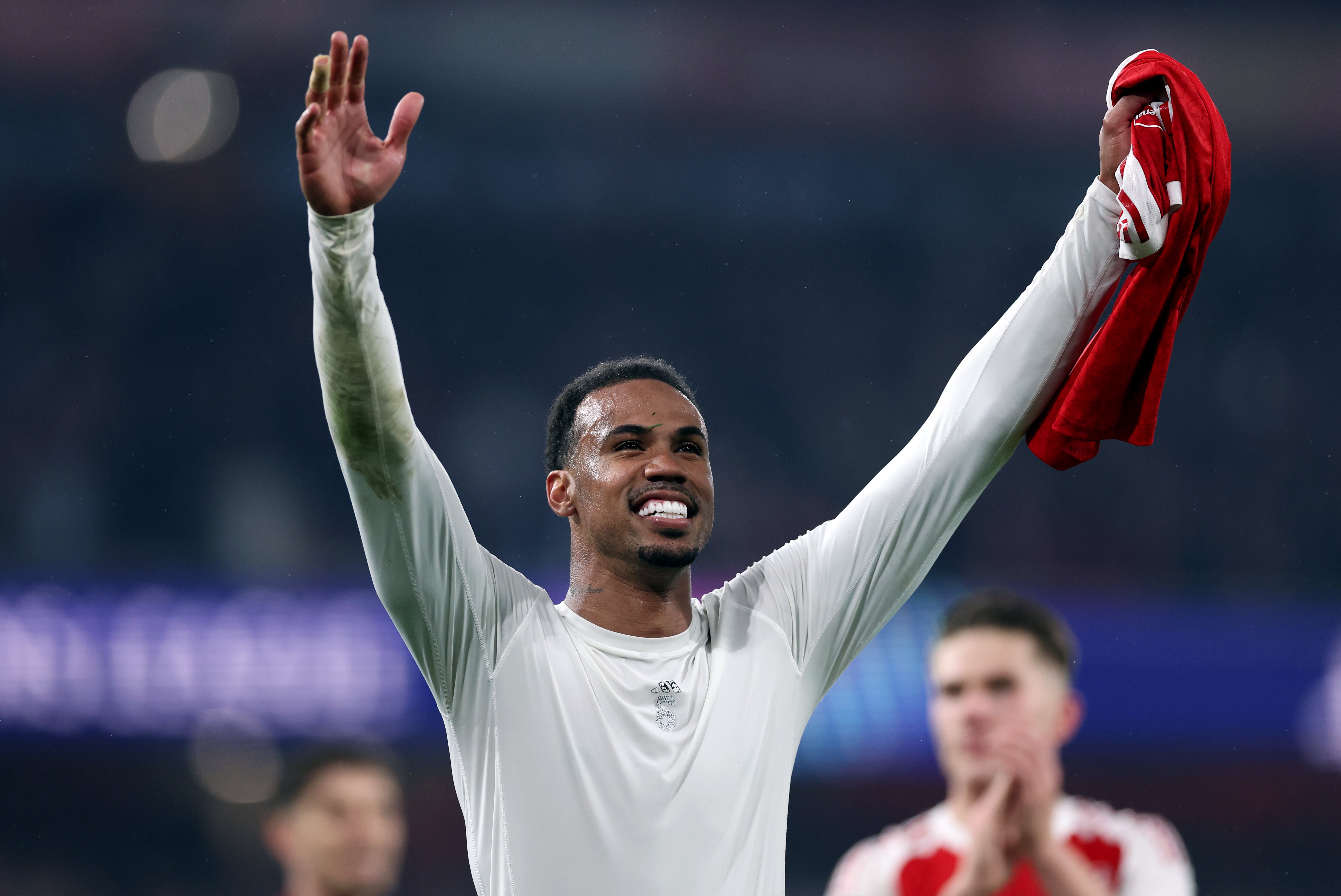
Gabriel, meanwhile, sums up Arsenal’s strength in defence and from set-pieces, which could make the difference in a one-off game against PSG
Gabriel, meanwhile, sums up Arsenal’s strength in defence and from set-pieces, which could make the difference in a one-off game against PSG (Getty)

Or, after a season when Arteta’s side constantly played on the line, will PSG blow them off it?

Or is this already a new Arsenal, elevated to the Champions League final and consequently having had a weight lifted?

Advertisement

The temptation will be to cast this as some kind of battle for the soul of football given the contrasting styles, but the wider context makes it a lot more complicated than that.

In the most immediate and simple sense, it is an enticing match between arguably Europe’s two best sides.

The hope is it leads to the final the competition has long been due.

Source link

Advertisement
Continue Reading
Click to comment

You must be logged in to post a comment Login

Leave a Reply

NewsBeat

What Iran’s absence from the Venice Biennale reveals about art and politics

Published

on

What Iran’s absence from the Venice Biennale reveals about art and politics

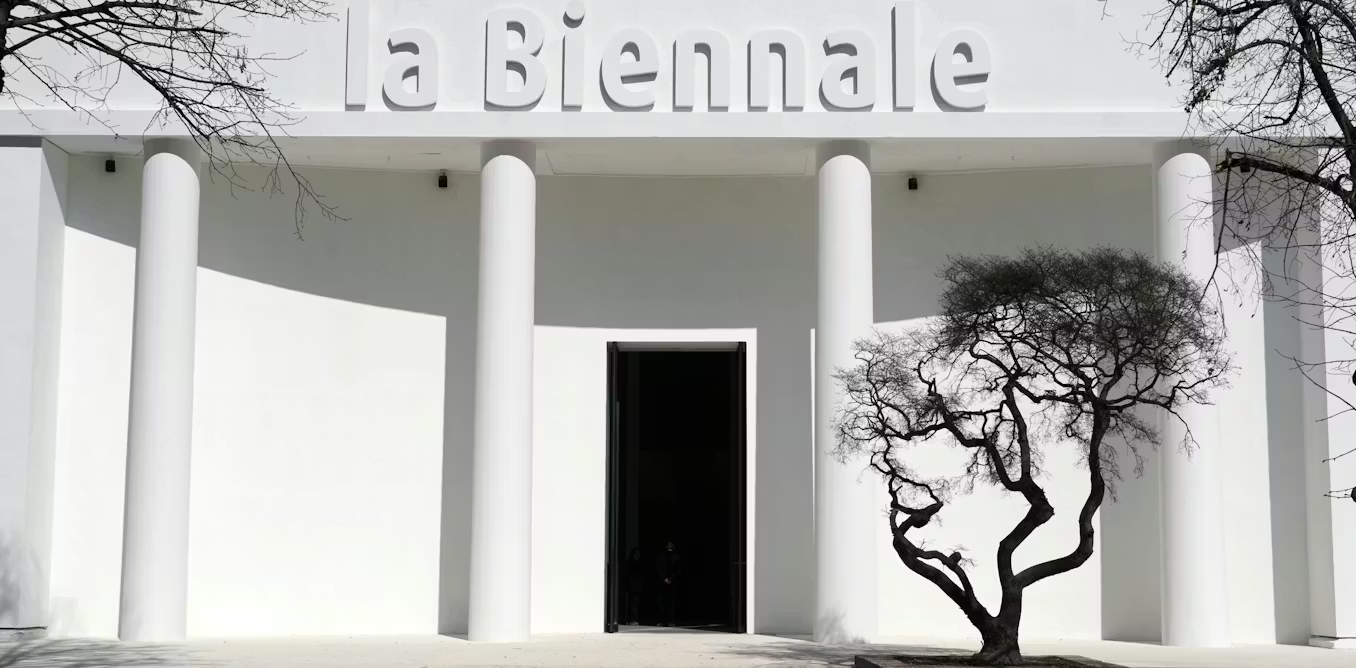
Just days before the opening of the 2026 Venice Biennale, organisers announced that Iran would no longer participate.

A short statement posted to the Venice Biennale website on May 4 said: “With regard to the National Participations in the 61st International Art Exhibition…it has been announced that the Islamic Republic of Iran will not participate.” No explanation was given. I believe that silence is itself revealing.

Iran’s withdrawal is less a sudden decision than the result of converging geopolitical and economic pressures that are reshaping both the global art world and Iran’s place within it.

At the most immediate level, the withdrawal reflects the material realities of crisis. With internet access restricted, international flights suspended and communication networks severely disrupted, even the basic logistics of participation – coordinating, shipping and installing artworks – probably became nearly impossible for Iran.

Advertisement

These conditions have been compounded by intensifying economic pressures, including the sharp devaluation of the Iranian rial, which has made international cultural engagement increasingly difficult to sustain.

An explanation of the Venice Biennale.

Such constraints point to a fundamental condition of contemporary art: global exhibitions rely on infrastructures of mobility and communication that are easily destabilised by conflict and sanctions.

The timing is also significant. The decision comes amid renewed military tensions and escalating political rhetoric surrounding Iran’s position in the global order. In such moments, when political discourse edges toward existential threat, the stakes of cultural visibility are heightened. At the same time, sustaining cultural presence becomes more difficult.

Advertisement


À lire aussi :
Middle East conflict looks increasingly like a war nobody can win


More revealing still was the lack of any announced artist, curatorial framework or exhibition concept for Iran’s pavilion, even days before the Biennale’s opening.

Iran’s presence at the Venice Biennale has historically been organised through state institutions, with oversight exercised by the ministry of culture and Islamic guidance since the Iranian revolution (1978-79). As with many national pavilions, this model positions art as a form of cultural diplomacy. But in Iran’s case, it has often produced a disconnect between official representation and contemporary artistic practice.

This gap is significant. The Venice Biennale, often described as the “Olympics of the art world”, remains structured around national pavilions, with each country responsible for presenting its cultural identity on a global stage. Yet, as critics have long argued, it has never been a neutral platform, but a space where art and geopolitics intersect.

Advertisement

More broadly, biennials are deeply embedded in political and institutional contexts, rather than existing outside them. Within this framework, they are often understood as sites of cultural soft power, where nations project influence through artistic production.

National representation in crisis

Iran’s withdrawal must also be understood in relation to the wider turmoil surrounding the 2026 biennale itself. This year’s edition has been marked by extraordinary controversy, including disputes over the involvement of Russia and Israel, calls for boycotts and the resignation of the entire international jury just days before the opening.

These events expose the fragility of the biennale’s longstanding claim to neutrality. Rather than existing outside politics, it has become a site where geopolitical tensions are actively staged and contested.

To exhibit at the biennale is never neutral: it means entering a highly visible arena shaped by competing narratives of legitimacy and power. For the Islamic Republic, this raises a deeper tension. The biennale’s national pavilion model requires countries to present a coherent cultural identity through contemporary art. Yet Iran’s artistic landscape is anything but singular. It is shaped by internal contradictions between state and independent practices, censorship and experimentation and local production and diasporic circulation.

Advertisement

The entire jury resigned just days before the opening.

These tensions are difficult to reconcile within a state-managed exhibition framework. The very premise of the pavilion – art as national representation – sits uneasily with a system in which artistic expression is subject to ideological and institutional control.

At the same time, the Biennale embodies forms of global circulation, cultural competition and visibility tied to international art markets that do not always align with the cultural and political ethos of the Islamic Republic. Representation therefore involves negotiating how a nation appears, to whom, and on whose terms.

The current moment makes this tension even more acute. As political rhetoric escalates and the possibility of large-scale destruction is invoked in global discourse, cultural visibility becomes more urgent. Art offers one of the few spaces through which narratives beyond conflict and diplomacy can emerge. Yet for Iranian artists, cultural presence is becoming more fragmented, shaped by diasporic networks, constrained by national borders and limited by economic and infrastructural pressures.

Advertisement

Iranian artists, particularly those working through independent and diasporic networks, have for decades operated beyond the frameworks of state representation, with their work circulating internationally through alternative artistic circuits. Iran’s missing pavilion, then, does not signal the disappearance of Iranian art. Rather, it reveals the precarious conditions through which that art circulates.

Iran’s absence from the Venice Biennale also highlights the limits of the national pavilion model. The system has frequently been criticised for reducing complex artistic practices to simplified national identities, even as contemporary art now operates through transnational networks that exceed the boundaries of the nation-state.

In Venice this year, the missing pavilion reflects an art world shaped as much by political crisis as by artistic production. Iranian art is not absent from the global stage. Yet the conditions under which it circulates and remains visible have become increasingly fragile.
Advertisement

Source link

Continue Reading

NewsBeat

NW200 qualifying session halted after red flag incident on course

Published

on

Belfast Live

The morning session had been held in ideal weather conditions on the north coast

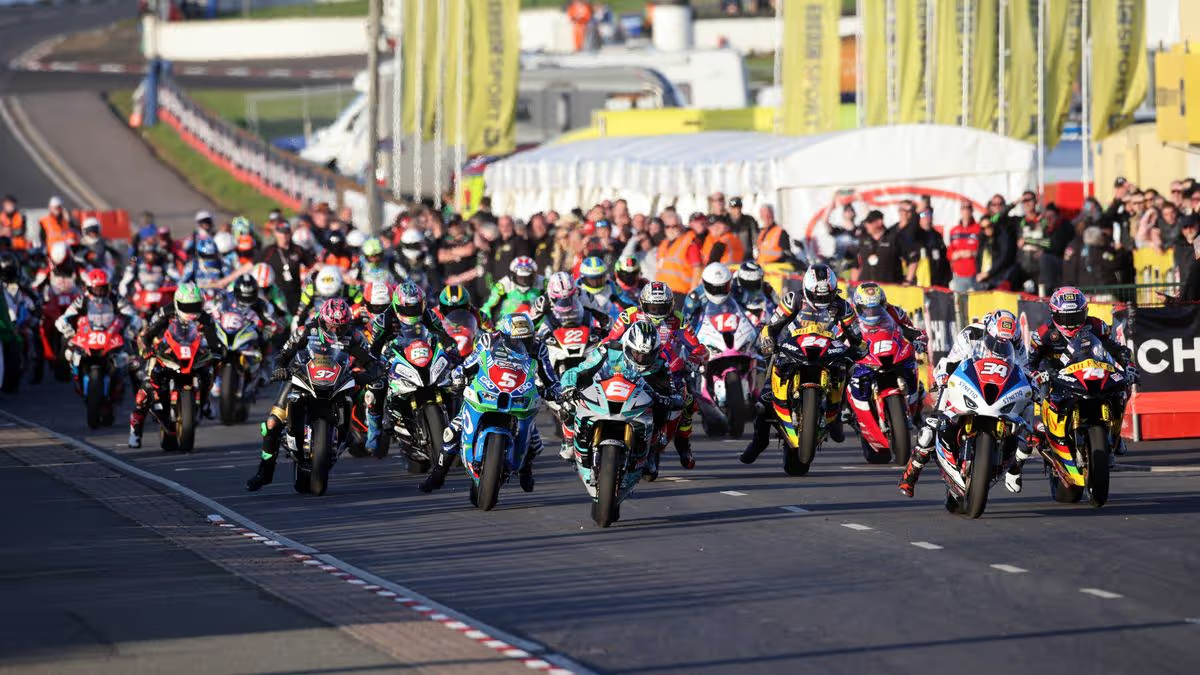
An incident at the Briggs Equipment North West 200 has led to Thursday’s Superbike Qualifying session being halted.

Organisers announced a stoppage due to an ‘incident’ on the course, with a delay of 45 minutes planned.

That was later followed by an update from race control stating an additional one hour stoppage.

Advertisement

Thursday’s morning session had been held in ideal weather conditions on the north coast.

Honda Racing’s Dean Harrison set the fastest lap of the week to date at 123.12mph before the red flag incident.

Glenn Irwin (Nitrous Competitions Racing Ducati) was in second place, with Peter Hickman third fastest.

The North West 200 takes place on public roads around the ‘Triangle’ circuit between Portrush, Portstewart, and Coleraine.

Advertisement

The event is Northern Ireland’s largest outdoor sporting event, attracting massive crowds of well over 100,000 spectators annually to the Causeway Coast in May.

More to follow.

Click here to sign up to our sport newsletter, bringing you the latest sports news, headlines and top stories

Source link

Advertisement
Continue Reading

NewsBeat

Using equity to save money for grandchildren

Published

on

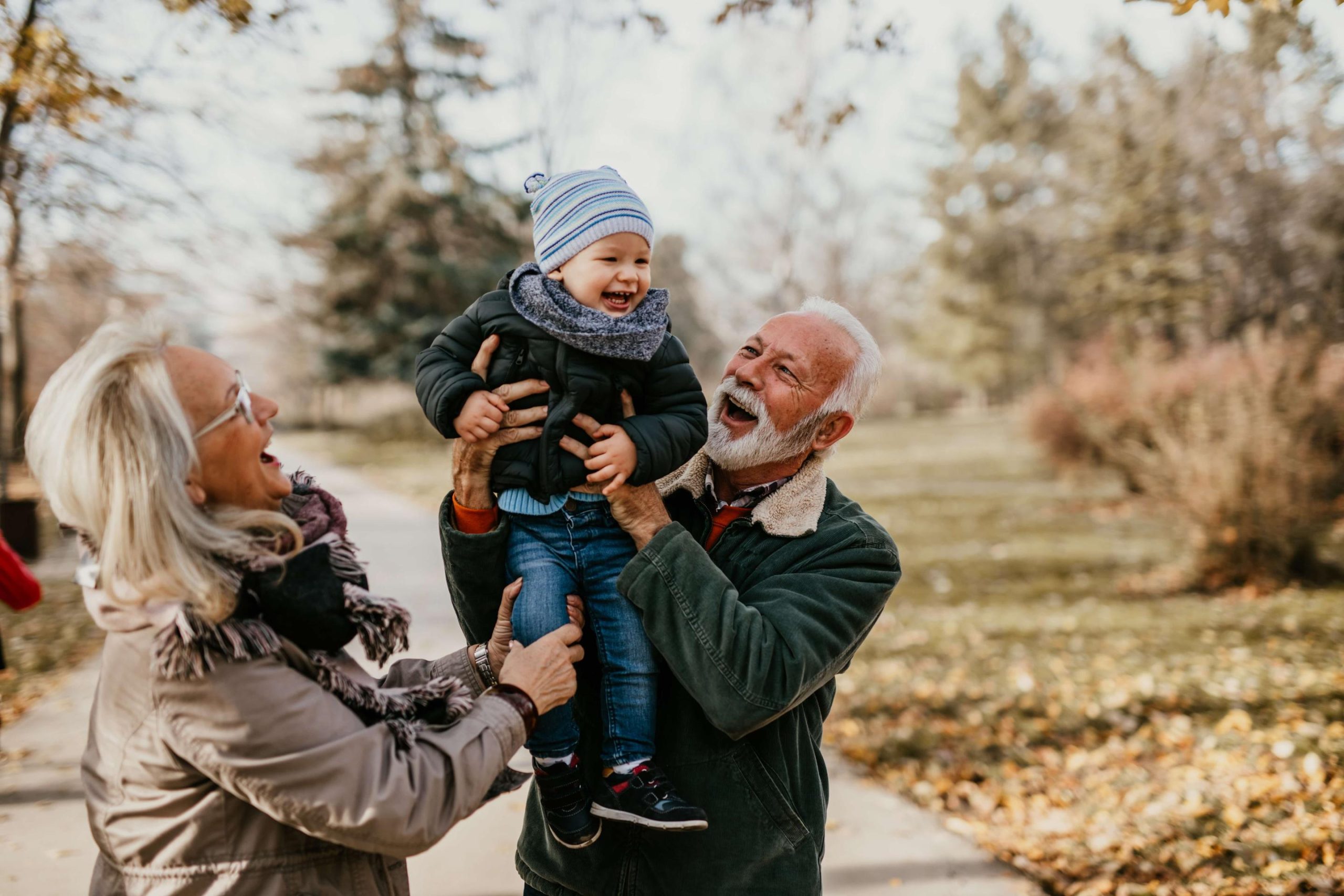
grandma and grandad lift small grandchild up in an embrace on a winter day

1. Put down a house deposit

In January 2026, the Land Registry House Price Index shows the average price of a home in the UK was £268,421. At this level, a 10% deposit would be around £26,842, a significant sum.

With wider cost-of-living pressures and maintaining a good quality of life, saving for this deposit could take several years. With a well-timed gift, grandparents could help their grandchildren with a step up onto the property ladder.

2. Fund further education

Tuition fees are a hot topic right now with discussion around things like interest rates. Some grandparents might choose to help with tuition fees, or support with the overall living costs of moving away for university.

Advertisement

Helping out grandchildren could mean more time spent studying and less time worrying about financial matters.

3. Help pay for a life event

Grandparents could choose to help out with the significant life events, like a wedding. With a cash gift, your grandchildren could pay for their perfect venue, ensure the whole family can gather, or even go on their dream honeymoon.

By supporting with the costs of a wedding, they can focus on the joy of planning their special day and worry less about the price involved.

4. Contribute to their retirement plans

According to the Pensions UK Retirement Living Standards, developed by Pensions UK in partnership with Loughborough University, a couple would need around £43,900 a year to achieve a moderate standard of living in retirement. State pension income alone may not be sufficient to meet this level, meaning additional private pension income or savings are often an important consideration.

Advertisement

It could be an option to support your grandchildren with a boost to their pension now, giving it many years to grow before they approach their own retirement in the future.

Source: Pension UK Retirement Living Standard, 2025-retirementlivingstandards.org.uk

Source link

Advertisement
Continue Reading

NewsBeat

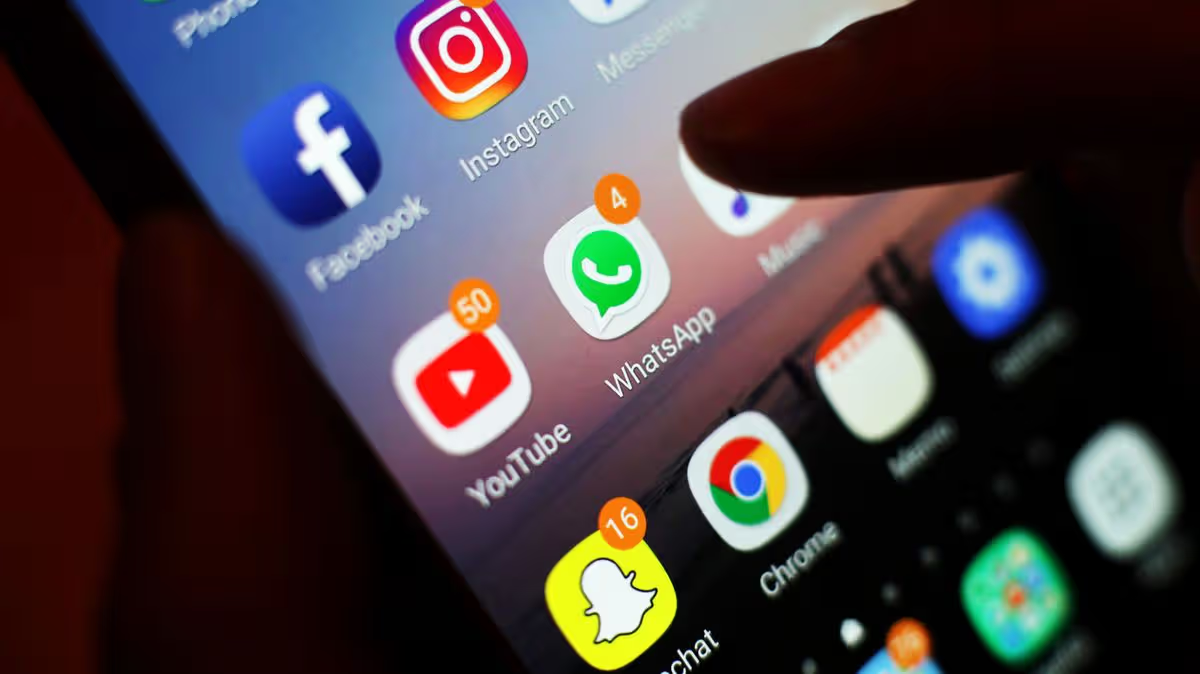
Mirror poll reveals even MORE people support social media ban for under 16s – see results

Published

on

Daily Mirror

Keir Starmer is under pressure to crack down on online harms with fears children are continuing to face a wild west on social media on their phones and computers

Two-thirds of people support a social media ban for under 16s, a poll for The Mirror shows.

Keir Starmer is under pressure to crack down on online harms with fears children are continuing to face a wild west on their phones and computers. Some 66% of adults support banning under 16s from using social media, the Deltapoll finds, up from 64% when The Mirror ran a similar poll in December.

Women are slightly more likely to back a ban with 68% in support, compared to 63% of men. Some 67% of people who voted Labour in 2024 support a ban, while 77% of Tories do. And 58% of people who voted Reform UK in 2024 back a ban – despite Nigel Farage being in favour of going the opposite direction and scrapping online safety laws for kids.

Advertisement

READ MORE: Bereaved mum issues social media ban for kids plea ahead of fresh Lords clash

The Government has said it does not want to rush into an outright social media ban, with some campaigners warning it could be a flawed solution to the online crisis. Ministers have instead launched a consultation on a range of online safety features, including an outright ban for under 16s, overnight curfews or app caps.

It will also look at strengthening age verification measures by restricting kids’ access to VPNs, which allow youngsters to circumvent the rules. More than 60,000 people have responded to the consultation so far, which will conclude in the summer.

Advertisement

Some bereaved parents and campaigners warn there is no time or need for more evidence-gathering when the harms are already known. But others warn an outright ban could push young people into darker spaces online.

Pressure on the Government to take action has mounted after Australia’s ban for under 16s came into force in December. Other European countries including Spain and Greece have indicated similar plans. Amid pressure from the House of Lords to ban social media for under 16s, Education Minister Olivia Bailey last week pledged “some form of age or functionality restrictions”.

Early research from Australia’s ban shows children are circumventing the rules with three in five (61%) 12 to 15 year-olds still accessing one or more accounts on restricted platforms in the country. And studies in the UK show kids are getting around age checks by using fake birthdays, shared accounts, altered photos and even drawing on false moustaches.

Ofcom ordered social media firms to enforce robust age checks – such as credit card checks or facial recognition technology – as part of the implementation of the Online Safety Act last summer. Most social media platforms allow children aged 13 and above to create an account.

Bereaved mum Ellen Roome, whose son Julian “Jools” Sweeney took his own life in 2022, said the Mirror’s poll results showed the public wants “strong and decisive action” from the government. Ms Roome, who is suing TikTok with other bereaved families, believes her 14-year-old son’s death may be connected to an online challenge.

She told The Mirror: “As a mother who lost my 14-year-old son Jools, I have seen first-hand the devastating consequences of an online world that is not designed with children’s safety at its core. Children are currently allowed access to highly addictive platforms and harmful content without the safeguards we would expect in any other area of life.

“This is why I support raising the age for access to harmful social media platforms to 16. It is not about punishing children or stopping them socialising. It is about giving them time to develop safely and protecting them during some of the most vulnerable years of their lives. Parents across the UK want the Government to get on with raising the age of harmful social media to 16, and they want that action now.”

Advertisement

But Andy Burrows, chief executive of the Molly Rose Foundation, a charity named after schoolgirl Molly Russell who took her own life aged 14, warned a ban could offer a “false sense of security”. He told The Mirror: “Parents have been let down time and again by tech companies that put profit before safety and successive Government’s failure to prioritise protecting children online.

“It’s no surprise that parents rightly want action but we must go further than a blanket ban that will offer them a false sense of safety. Instead decisive new laws must force tech companies to fix their products and make child safety and wellbeing the price for doing business in the UK.”

A Government spokesman said: “We’ve been clear that we will take action to make sure children have a healthy relationship with social media. This isn’t a question of whether, but how we will act. Our consultation is looking at everything from age limits and safer design features to a social media ban, as well as pilots with hundreds of UK families, to ensure we take the best approach, based on the latest evidence.

“We know parents and children want us to act fast, and through the Children’s Wellbeing and Schools Act we have taken new legal powers to do exactly that – so we can move quickly once the consultation concludes.”

Advertisement

::: Deltapoll surveyed 3,353 adults in Great Britain between April 26 and May 1 for The Mirror.

Source link

Continue Reading

NewsBeat

War of words continue over West Dunbartonshire care redesign ahead of meeting

Published

on

Daily Record

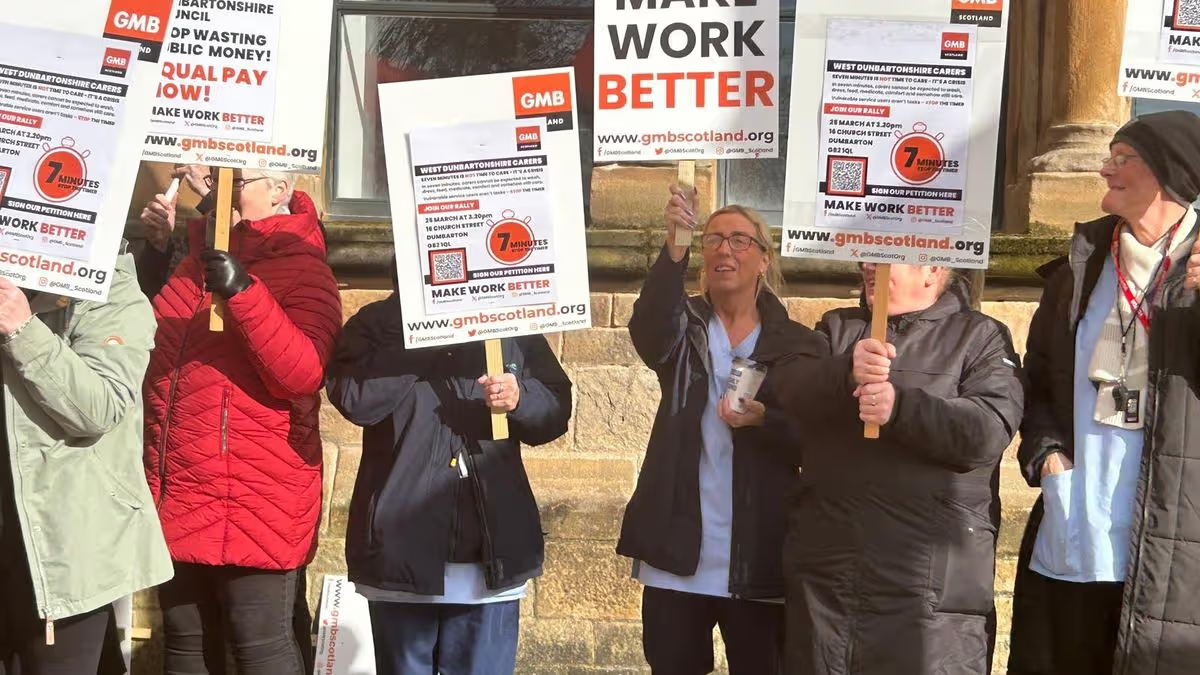
A meeting between officials from the West Dunbartonshire HSCP and the council will take place amid protest from care staff outside this afternoon – with their union accusing HSCP chiefs of ignoring calls for a pause.

The union representing home carers in West Dunbartonshire have accused health chiefs of railroading plans for a controversial re-organisation of the service through ahead of another crunch meeting this afternoon.

The changes to social care have caused anger among some carers due to alterations to rotas which have been branded as “unworkable”.Councillors at the local authority recently voted narrowly in favour of recommending a pause for more talks between unions and the West Dunbartonshire Health and Social Care Partnership (HSCP),

But those calls have fallen on deaf ears, as fears about potential ‘fire and re-hire’ practices being introduced “by stealth” are also raised by union officials.

Advertisement

Workers held a rally on Thursday afternoon outside the West Dunbartonshire Council offices in Dumbarton ahead of the meeting between council supremos and HSCP managers.

AnnMarie Carrigan, GMB organiser at West Dunbartonshire Council, said: “The council’s vote was decisive and councillors clearly wanted this disruptive redesign paused to allow constructive discussions.

“Instead, the HSCP continues to steamroller through changes which will have a devastating impact on the lives of committed workers.

“Are councillors content that their clearly stated wishes are being ignored by unelected and apparently unaccountable officials?

Advertisement

“The refusal of the HSCP to pause and seriously engage with their staff in defiance of councillors’ wishes is abject and risks legal repercussions for the local authority.”

A poll of workers on the home care service carried out by the union evealed nearly nine out of ten (85 per cent) say their mental health has suffered because of the anxiety and stress caused by new working patterns.

It added that 72 per cent said the changes have cost them money because they have been forced to reduce their hours, with eight out of ten (80 per cent) believing the redesign has impacted their lives away from work.

In response, a spokeswoman for West Dunbartonshire HSCP hit back at “misleading and inaccurate information” over the home care re-design.

Advertisement

The spokeswoman added: “The majority of employees have confirmed the new hours and shifts are more suitable for clients’ needs, and we continue to work with the very small number of employees to reach a mutually acceptable solution for their particular situation.

“We have been liaising with employees and Trade Union Representatives for more than three years and continue to do so while we embed changes to ensure our high standard of care at home continues.”

Source link

Advertisement
Continue Reading

NewsBeat

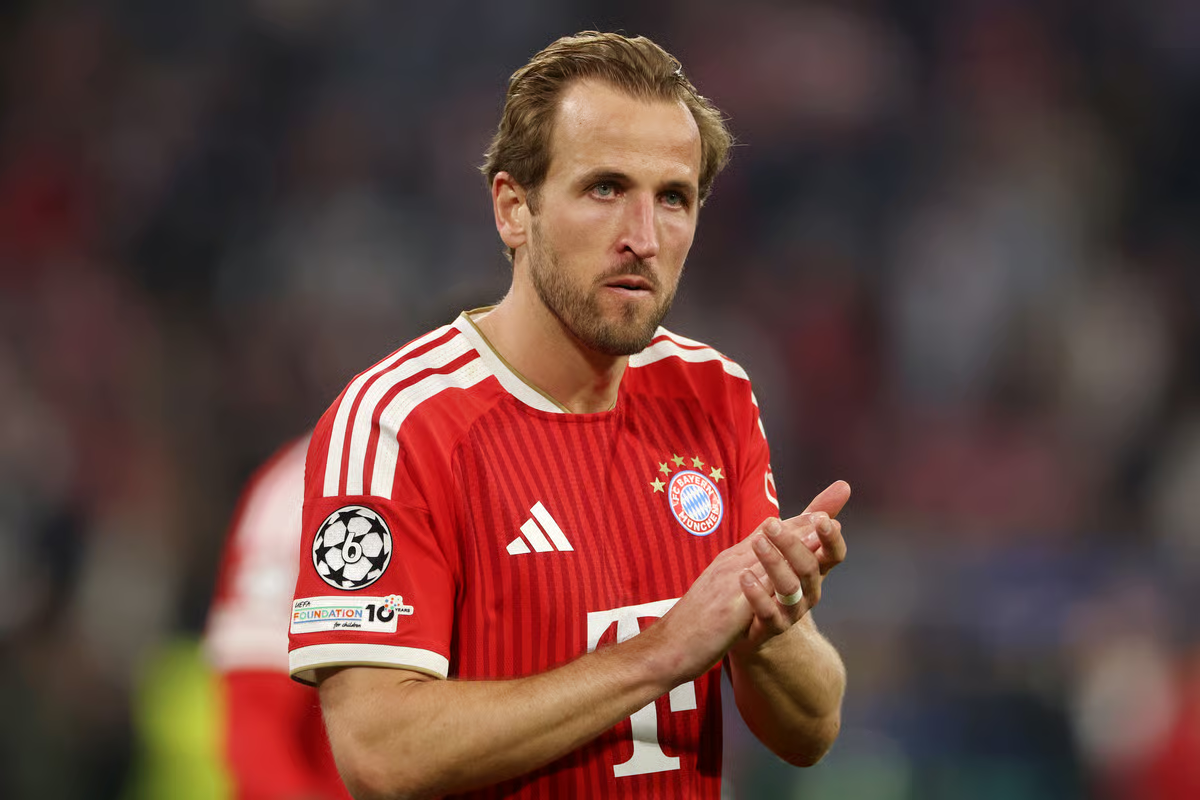
Harry Kane reveals PSG vs Arsenal Champions League final prediction after Bayern heartbreak

Published

on

Harry Kane reveals PSG vs Arsenal Champions League final prediction after Bayern heartbreak

Asked afterwards to offer his assessment for the final at Budapest’s Puskas Arena on May 30, Kane said that PSG were slight favourites but did not rule out a first Champions League triumph for old rivals Arsenal, who have reached the biggest game in European club football for only the second time after losing the 2005/06 showpiece to Barcelona in Paris.

Source link

Continue Reading

NewsBeat

was Nobel laureate Linus Pauling on to something?

Published

on

was Nobel laureate Linus Pauling on to something?

Linus Pauling was one of the most brilliant scientists of the 20th century. He won two Nobel prizes and transformed our understanding of chemical bonds and the structure of proteins. Late in his career, though, he became famous for something very different: a passionate belief that very high doses of vitamin C could help people with cancer. Many doctors scoffed. When Pauling himself later died of cancer aged 93, he was held up as a classic case of the “halo effect”: being a genius in one field doesn’t guarantee wisdom in another.

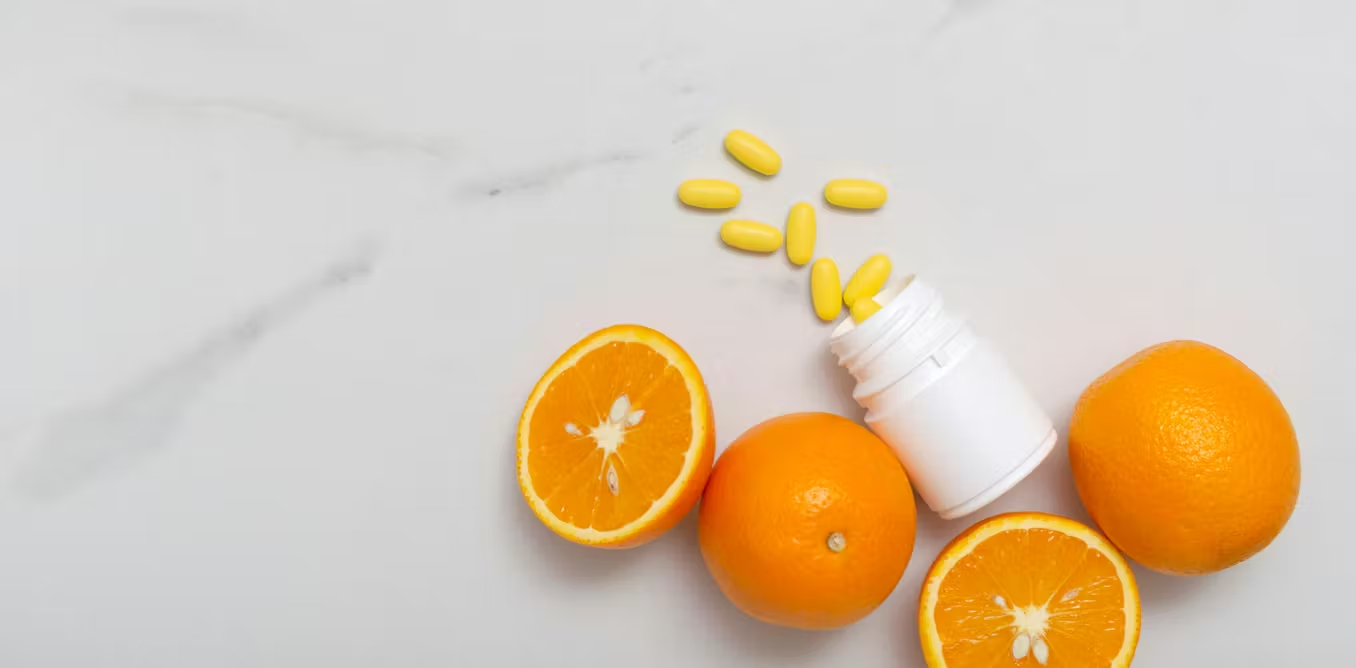
Half a century on, the story looks more complicated. Pauling was wrong in important ways, but he was not entirely wrong. Modern research is giving vitamin C a second look in cancer, and it turns out that under certain conditions it can behave less like a gentle vitamin and more like a drug.

Pauling’s vitamin C story began in the 1970s, when he teamed up with the Scottish doctor Ewan Cameron and gave patients with advanced, incurable cancer very large amounts of vitamin C – first as a drip into a vein, then as tablets. Compared with similar patients who did not get vitamin C, they reported that the vitamin‑treated group lived longer and felt better. For some, they suggested, survival could be several times longer.

Two large trials, run by the Mayo Clinic, a leading non-profit medical centre in the US, then put this to the test. The results were clear: there was no benefit.

Advertisement

Patients who took vitamin C pills lived no longer than those who didn’t. For most oncologists, that was the end of the matter. Vitamin C was filed away with other “alternative” remedies, and Pauling’s late-career crusade was widely seen as a sad mistake.

What neither trial’s critics nor defenders noticed at the time: Pauling and Cameron had started with vitamin C into a vein; the Mayo Clinic trials used tablets only. That matters because the gut can only absorb so much vitamin C. Once you reach a modest daily dose, the body simply stops taking in much more. Swallow as many tablets as you like, and the level of vitamin C in your blood levels off.

By contrast, a drip into a vein can raise blood levels to tens or even hundreds of times higher than tablets ever could. At those extreme levels, vitamin C starts to behave differently inside the body.

Linus Pauling believed in the power of vitamin C.
Oregon State University/Wikimedia Commons, CC BY

At everyday levels, vitamin C acts as an antioxidant: it mops up harmful molecules and protects our cells. At very high levels, especially around tumours, it can flip roles.

Advertisement

In laboratory studies, high-dose vitamin C helps generate hydrogen peroxide, a reactive substance that can damage cells. Cancer cells seem especially vulnerable because they are already under stress. They grow rapidly, often in areas with poor blood supply, and produce lots of reactive molecules of their own. Their internal “cleanup” systems are stretched thin.

Add a sudden pulse of hydrogen peroxide and many cancer cells tip over the edge: their DNA and energy machinery are damaged and they die. Normal cells, which are under less strain and have better defences, are more likely to survive. In this way, very high doses of vitamin C behave less like a daily supplement and more like a weak, selective chemotherapy drug. Crucially, the doses needed for this effect cannot be reached with tablets.

What the latest evidence shows

In people, the evidence is still early and mixed. Small trials have given high-dose vitamin C through a vein to patients with hard-to-treat cancers such as ovarian, pancreatic or brain tumours. So far, many patients can receive large doses several times a week without serious side-effects. Problems can occur, especially in people with poor kidney function or rare inherited conditions, which is why this is not a harmless wellness drip to be sold on the high street.

A few studies suggest that adding vitamin C infusions to chemotherapy may help some patients live a little longer or help with side-effects, but other studies show no clear benefit. The trials are small and varied, so we cannot draw firm conclusions.

Advertisement

One consistent signal is quality of life: patients given vitamin C alongside chemotherapy often report less fatigue, less pain and fewer side-effects, such as nausea. For someone with advanced cancer, that matters, even if it is not the sweeping cure Pauling once promised.

Lab work also hints at subtler roles. Vitamin C is involved in enzymes that influence how our DNA is “marked” and read, and in how cells divide and respond to low oxygen – important in cancer behaviour.

In some experiments, high vitamin C levels make cancer cells grow less aggressively and make them more sensitive to treatment. There are even early suggestions that vitamin C may help the immune system recognise and attack tumours, though this remains speculative.

Partly right

So, was Pauling right after all? The fairest answer is that he was partly right, for reasons he did not fully understand, and he exaggerated the promise. He was wrong to promote vitamin C tablets as a powerful cure for cancer. Large, careful trials have not found that swallowing high-dose vitamin C helps people with established cancer live longer. He was also wrong to present vitamin C as a near-universal remedy for many illnesses.

Advertisement

But he was not entirely wrong to suspect that vitamin C might have a special role in cancer treatment. He sensed, long before we could prove it, that very high doses given into a vein would behave quite differently from ordinary supplements.

Modern research has confirmed that intravenous vitamin C reaches much higher levels in the blood and has distinct biological effects. What we do not yet have are large, definitive randomised trials showing that high-dose intravenous vitamin C clearly prolongs life for most cancer patients. Until we do, it should be seen as experimental – promising enough to study, but not proven enough to replace standard therapies. Any use belongs in clinical trials or in carefully supervised medical settings, not in clinics selling expensive “immune boosts”.

The “vitamins in cancer” story continues to evolve. If the story of vitamin C and cancer teaches us anything, it is that science rarely moves in straight lines. A bold idea, some flawed early studies, a fierce backlash – and then, years later, a quieter, more careful return to the question.

Pauling may never be fully vindicated, but neither was he simply deluded. In his enthusiasm, he may have glimpsed a sliver of truth long before the rest of us knew how to look for it.

Advertisement

Source link

Continue Reading

NewsBeat

GP said boy, 10, had anxiety but he was ’48 hours from death’

Published

on

Cambridgeshire Live

Arthur’s symptoms were diagnosed as a virus, asthma or anxiety

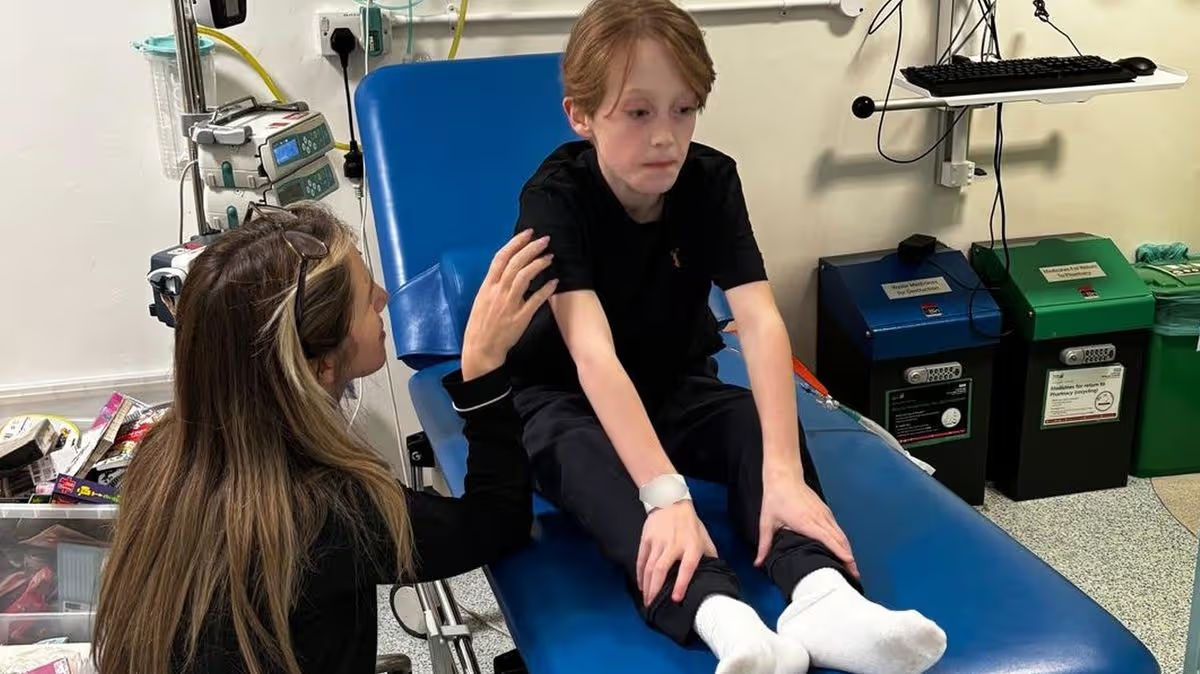
A mum says a doctor dismissed her 10-year-old son’s sudden weight loss and struggle breathing as ‘anxiety’ – only for it to turn out to be cancer. Penny Saltmarsh took her ‘healthy and football mad’ son Arthur to see a doctor in January 2025 when he became breathless, but was told he just had a viral infection that would clear up.

Advertisement

When Arthur’s symptoms worsened as he began losing weight and ‘gasping for air’ during the school run, a week later, the 41-year-old took her child for an appointment twice more. When a doctor saw that Arthur struggled to make eye contact, Penny claims his sudden weight loss was diagnosed as ‘anxiety’, and she was told he was just an ‘anxious child’, with the doctor opting not to do an X-ray.

Days later the mum-of-six and her husband ‘panicked’ when they noticed one side of Arthur’s chest was four times bigger than the other so rushed him to hospital. In hospital an ultrasound revealed Arthur had a large build-up of fluid around his lungs causing them to collapse and his heart was under strain due to a mass on his thymus, a small gland in the chest.

Penny says it was a ‘nightmare’ to discover her child had T-cell lymphoblastic lymphoma in February 2025, which is a rare and fast-growing type of blood cancer. Arthur received four rounds of intensive chemotherapy between February and October 2025 and the mass in his chest has now gone but he will continue receiving treatment until June 2028.

Advertisement

A family member has set up a GoFundMe account to help support Arthur’s family, whose lives have completely changed since the diagnosis. The full-time carer says she is ‘grateful’ she trusted her gut as she claims a doctor said her son was just 48 hours away from death.

Now she urges other parents to ‘advocate’ for their child if they suspect something is wrong. Penny, who is from Cambridgeshire, said: “It happened in two or three weeks that he went from being healthy and fit to being two days away from dying.

“He started off with just becoming really breathless so even walking up the stairs he would stop halfway and just be struggling to catch his breath. That concerned us a little bit because prior to that he was the most fit, active, healthy football mad boy.

“At this point I wasn’t too concerned but I took him to the GP. She said she thought it was viral and that ‘he’ll get better in about a week’.

“A week later he was getting worse and he’d also lost weight as well. He’s not one to enjoy going to bed but it got to 5.30pm and he’d be taking himself to bed and that definitely rang alarm bells because he’s never been like that ever.

“We took him back to the GP and I said ‘if it was viral he’d be getting better but we’ve noticed he’s losing weight, he’s out of breath so much and walking to school he’d have to stop gasping for air’. She said it could be asthma and sent us home with a peak flow kit and a diary. We did it for about a day but he couldn’t even blow the peak flow.

“They invited us on Saturday to a respiratory clinic to do an asthma check. The reading came back that it was very unlikely to be asthma. We took him home and a few days went past and we started to really worry at this point but I never in a million years thought about cancer.

Advertisement

“It’s just something you think happens to other people. You don’t ever think it’s going to be your child. We took him back to the GP and she said it was anxiety because he was not able to keep eye contact. Arthur can be a bit of an anxious child and has inattentive ADHD and autism. He’s really popular at school and is really good at fitting in but he doesn’t like to stand out from anybody.

“I also asked if we could do an X-ray or something because I felt like there was something going on with his chest. She said ‘no, I don’t want to send him for any X-rays because I don’t want to expose a child to any unnecessary radiation’.

“Me being trusting I just thought ‘okay, we’ve seen the GP quite a few times, we’ll just take him home and see how we get on’. [On] Sunday morning he came into our bedroom and you could see the level of effort he was having to do just to breathe.

Advertisement

“We started to panic at this point and his dad said ‘we’re taking him to hospital’ and he turned around and one side of his chest was four times the size of the other.”

In hospital an ultrasound revealed that over three litres of fluid had built up around Arthur’s lungs and an urgent CT scan showed the pressure had pushed his heart to the other side of his body. Doctors said it was too risky to put him under general anaesthetic so they were forced to sedate him to drain some of the fluid.

Penny said: “I honestly thought I was in a dream. I thought ‘this isn’t real life’, it was like a nightmare. It was really, really hard.

Advertisement

“In the beginning I was cross. He’s always been quite stoic so puts on the brave ‘I’m fine’. How do you tell your child they have cancer?”

Following four rounds of successful chemotherapy Arthur must now receive maintenance chemotherapy until June 2028 and Penny had to quit being a student midwife to care for her son. Penny said: “He’s been through a lot and is so tough. The lasting mental impact that it’s had is what we’re struggling with now.

“He’s missed a year of school and he just wants to be like everybody else at his school. Just getting him back to being Arthur before all of this has been a real challenge.”

Advertisement

She added: “If you feel in your gut that you’re not happy or if you have alarm bells going off in your head you push. That’s your child and you’re there to advocate for them.”

You can donate to Penny Saltmarsh’s fundraiser here https://www.gofundme.com/f/pkcjm-support-arthur-through-his-cancer-journey

Source link

Advertisement
Continue Reading

NewsBeat

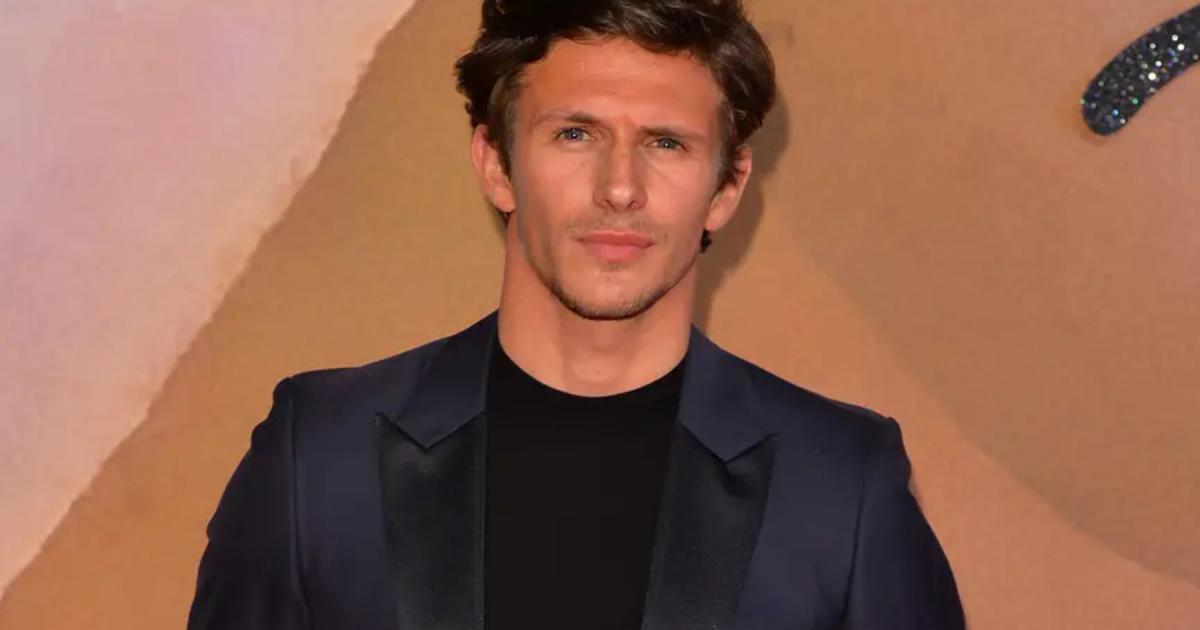
TOWIE star Jake Hall has been found dead in Majorca aged 35

Published

on

TOWIE star Jake Hall has been found dead in Majorca aged 35

The Only Way Is Essex cast member was found dead at a holiday villa in Majorca with head injuries, as reported by The Sun.

He appeared on the show in 2015, and he ran his menswear brand, By Jake Hall.

According to the newspaper, a spokesperson for the Foreign, Commonwealth & Development Office said: “We are supporting the family of a British man who has died in Spain and are in contact with the local authorities.”

Hall has a daughter, River, eight, with Real Housewives of Cheshire star Misse Beqiri.

Advertisement

Celebrity DJ Fat Tony paid tribute to him on Instagram, writing: “Devastating news we Love you @jakehall such an awful loss to the world you beautiful man x.”

Roxie Nafousi commented on Jake’s instagram post: “Jake 🙁 you were such a sweet soul, I always loved our catch ups.

“I know things weren’t always easy for you but you never gave up and you really loved your little girl more than anything in the world.

“This is so devastating.

Advertisement

“Keep dancing up in heaven. Rest in peace”

Hall’s most recent Instagram post showed him painting in Majorca.

Along with the photo, he said: “Life is b******s sometimes but I’m gonna try remember the good things.

“Looking through things – I’m just making art – in many forms.”

Advertisement

Source link

Continue Reading

NewsBeat

Savannah Guthrie returns to Today show after sudden exit mid-broadcast

Published

on

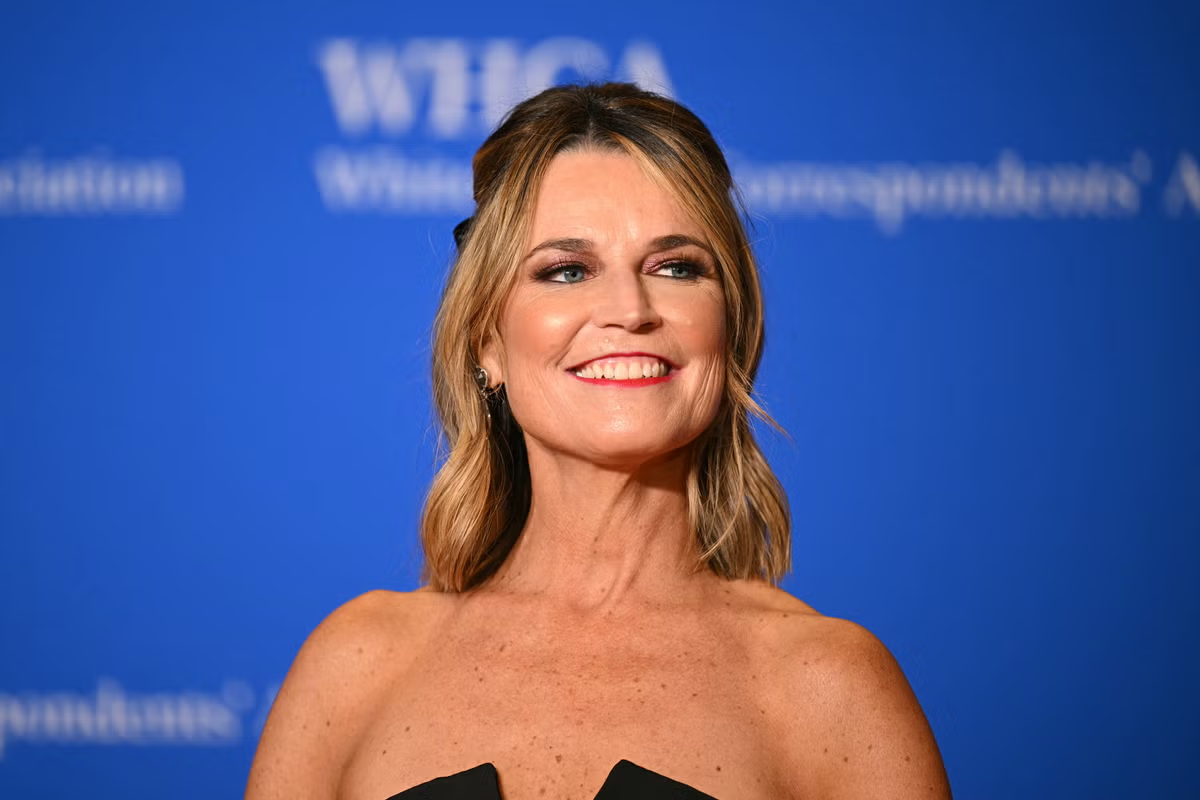
Savannah Guthrie returns to Today show after sudden exit mid-broadcast

Savannah Guthrie returned to the Today show Thursday morning after abruptly leaving Wednesday’s broadcast without explanation.

Guthrie left 90 minutes into the morning show’s May 6 broadcast, with her co-anchor Craig Melvin telling viewers: “Savannah had to leave a little early. She’ll be right back tomorrow, though.”

Guthrie was indeed back Thursday morning alongside Willie Geist and did not explain the reason for her sudden departure the day before.

The Independent has contacted NBC and Guthrie’s representatives for comments.

Advertisement

It comes as Guthrie’s 84-year-old mother has been missing for three months after a suspected abduction from her home near Tucson, Arizona.

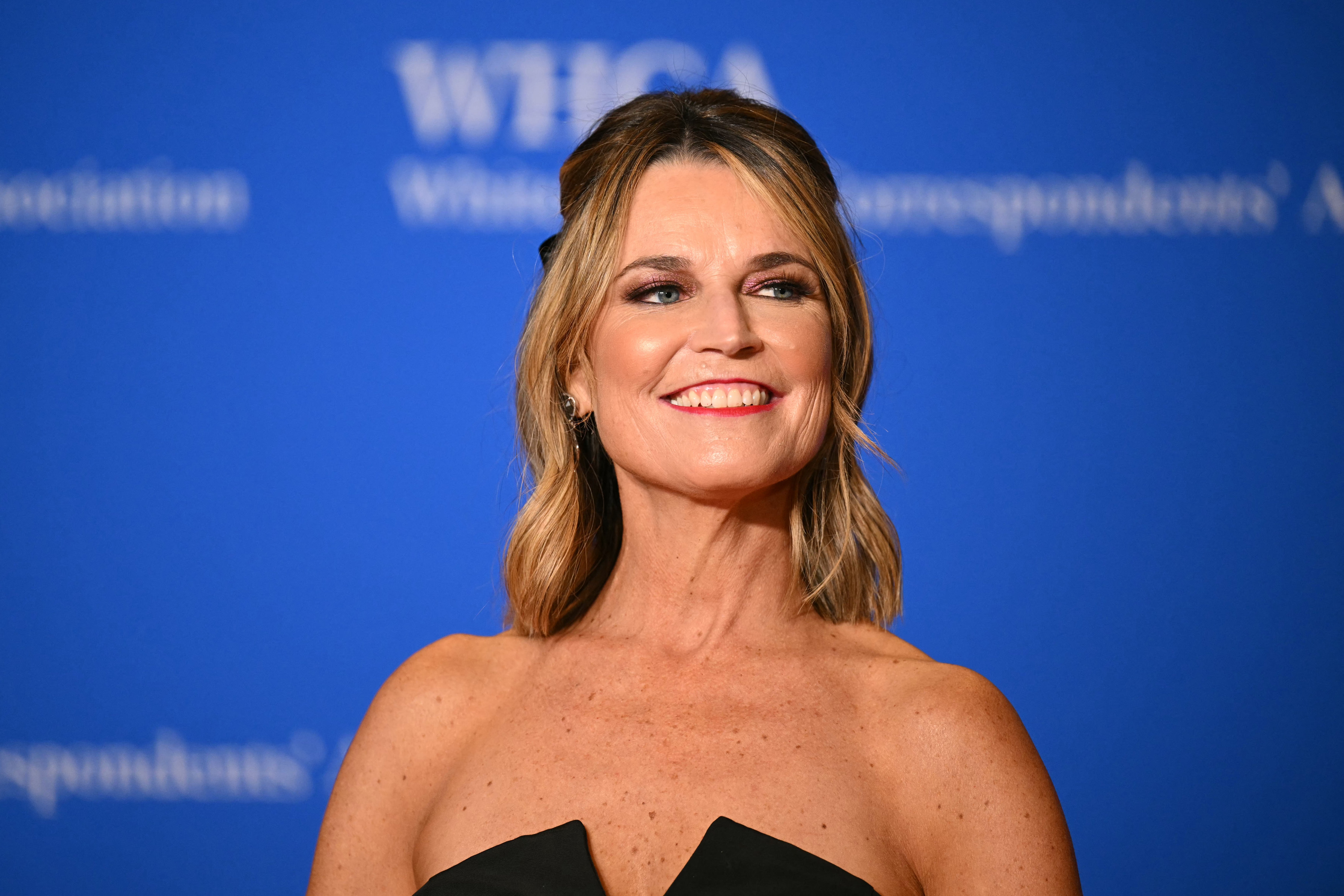
Savannah Guthrie was back on ‘Today’ Thursday after suddenly exiting the show mid-broadcast on Wednesday
Savannah Guthrie was back on ‘Today’ Thursday after suddenly exiting the show mid-broadcast on Wednesday (AFP/Getty)

Savannah, 54, returned to Today in April following a two-month hiatus, during which she spent time with her family and sent pleas to the public for any information regarding her mother’s disappearance.

In February, the FBI released pictures of a masked and armed person outside of Nancy’s home the night she went missing. No suspect has been identified.

Guthrie sat down for her first interview since her mother’s disappearance with Hoda Kotb in a segment that aired last month.

“I don’t know that it’s because she’s my mom and somebody thought, ‘Oh, that lady has money and we can make a quick buck.’ I mean, that would make sense,” she said in the emotional footage. “But we don’t know … which is too much to bear, to think that I brought this to her bedside.”

Advertisement
Apple TV+ logo

Watch Apple TV+ free for 7 day

New subscribers only. £9.99/mo. after free trial. Plan auto-renews until cancelled.

Try for free

ADVERTISEMENT. If you sign up to this service we will earn commission. This revenue helps to fund journalism across The Independent.

Apple TV+ logo

Watch Apple TV+ free for 7 day

Advertisement

New subscribers only. £9.99/mo. after free trial. Plan auto-renews until cancelled.

Try for free

ADVERTISEMENT. If you sign up to this service we will earn commission. This revenue helps to fund journalism across The Independent.

More to follow

Source link

Advertisement
Continue Reading

Trending

Copyright © 2025