IAS’ Declan Gowran explores his role in the data engineering space and how leaders create cohesive environments.
Senior staff data ops engineer at IAS Declan Gowran’s journey into the data engineering world evolved organically from a broader IT infrastructure and cloud background.
He told SiliconRepublic.com, “Early in my career, I worked extensively on enterprise infrastructure, virtualisation and cloud deployments across multiple platforms, which exposed me to large scale systems and the complexities of managing data at scale. Over time, I became increasingly fascinated with the ways structured and unstructured data can drive decision making and AI applications.
“That led me to roles at Optum and IAS where I could focus on building secure, scalable data platforms, integrating DevOps, MLOps and data governance frameworks, and supporting enterprise AI workloads. Essentially, my path was shaped by a mix of curiosity, technical challenges and opportunities to work at the intersection of cloud, data, and analytics.”
Advertisement
What is the current data engineering landscape like in Ireland?
Ireland’s data engineering landscape is vibrant and rapidly maturing. With the strong presence of multinational tech companies and data driven organisations, there is a growing demand for engineers who can not only manage cloud infrastructure but also design modern, scalable data platforms. Organisations are increasingly adopting cloud native architectures, Kubernetes based platforms and MLOps frameworks. There’s also an emphasis on governance, compliance and data mesh strategies, particularly for companies handling sensitive or regulated data.
What are the biggest challenges currently impacting the data engineering sector and how might they be addressed?
Data governance and trust at scale. As data powers AI and decision-making, ensuring quality, lineage and secure access, while meeting regulations like GDPR, is critical. This requires strong governance frameworks and centralised metadata to maintain consistency and control. Complexity across distributed environments. Most organisations operate across multi-cloud and hybrid systems, which makes integration, standardisation and orchestration difficult. The focus here is simplifying architectures and using scalable, interoperable platforms to reduce fragmentation. Scaling for real-time and AI-driven workloads. There’s increasing demand for low-latency data and reproducible AI pipelines. This means investing in streaming, automation and reliable infrastructure that can handle both batch and real-time use cases. Overall, the solution isn’t just tooling, it’s aligning these capabilities to clear business outcomes, so data engineering drives measurable value rather than just technical capability.
What are you currently working on and what is its potential?
I’m currently leading the development of a secure, cost-optimised enterprise data platform at IAS, built on Databricks and Kubernetes. It’s designed to centralise governance while enabling scalable, self-serve access to data across the business. In parallel, we’re building AI gateways and services to support secure deployment of LLM and AI workloads, ensuring we can scale these capabilities responsibly. The potential is twofold. Internally, it significantly improves efficiency, teams can access trusted data faster and experiment more easily. Externally, it enables better products and outcomes, from more effective ad campaigns to improved transparency and performance.
What goes into creating a sturdy, cohesive team in data and engineering?
Creating a high performing data and engineering team requires balancing technical expertise with collaboration, culture and shared values. I am a strong believer in investing in people and fostering a positive team environment. It’s not enough for team members to just understand the technology, they also need to get along, communicate effectively and support one another. I focus on mentorship and development, clear communication, aligning the team, cross functional collaboration, breaking down silos, analytics, empowerment and autonomy. As well as providing engineers with the right tools and frameworks to innovate while maintaining accountability. By prioritising people and culture, we create an environment where trust, communication and collaboration are strong, allowing innovation and high performance to become natural outcomes.
Advertisement
How can leaders in dynamic spaces create productive and cohesive working environments?
Leaders need to provide clarity, trust and structured autonomy. This involves setting clear goals, fostering a culture of feedback and encouraging innovation without micromanaging. Leveraging agile practices, automated workflows and transparent dashboards also helps teams measure progress and stay aligned. Equally important is supporting professional development, celebrating achievements and ensuring psychological safety so that team members can collaborate openly and take calculated risks.
Have you any predictions for how the data engineering space might evolve over the course of the next nine months?
Over the next nine months, I anticipate several key trends shaping the data engineering landscape. Firstly, the wider adoption of data mesh and governance frameworks, particularly for enterprises managing AI and agentic workloads, with a strong focus on data lineage, provenance and integrity knowing where data comes from, how it changes and why. The Increased emphasis on data quality and protection against data poisoning, as organisations recognise that “garbage in, garbage out” can compromise AI and agentic model outcomes. The Greater adoption of cloud native and serverless architectures, enabling scalable, flexible and cost efficient platforms capable of supporting large AI workloads, agentic processes and seamless connectivity across systems.
The Expansion of retrieval augmented generation vector databases and connected pipelines, supporting advanced AI and agentic use cases while ensuring embeddings, knowledge sources, and real time data remain accurate, auditable, and interoperable. A stronger focus on observability, performance, and compliance, with distributed monitoring, automated validation and lineage tracking becoming standard to maintain trust in both traditional data and AI outputs. Lastly the standardisation of AI model deployment and MLOps practices, enabling enterprises to scale foundation models, agentic workloads and intelligent workflows while maintaining governance, reproducibility and operational reliability.
Don’t miss out on the knowledge you need to succeed. Sign up for the Daily Brief, Silicon Republic’s digest of need-to-know sci-tech news.
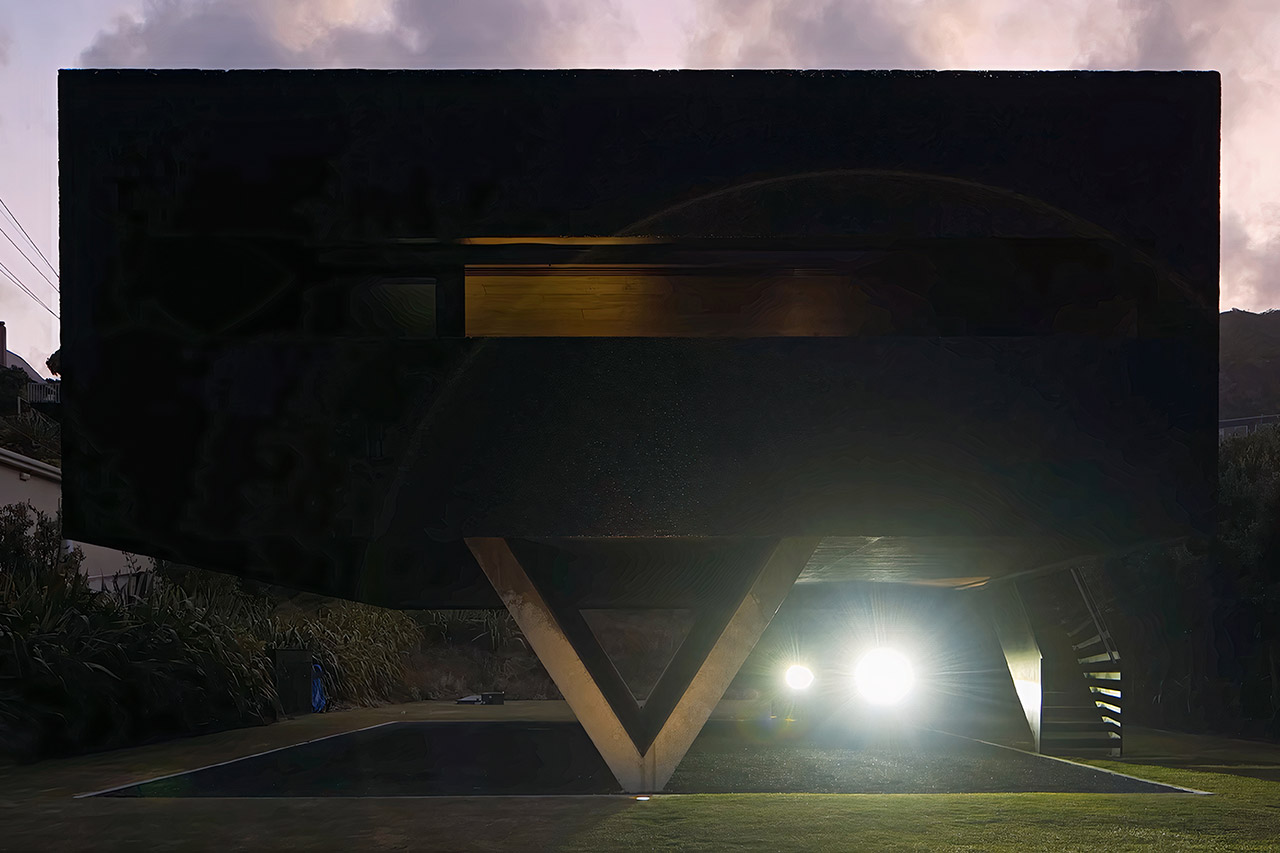
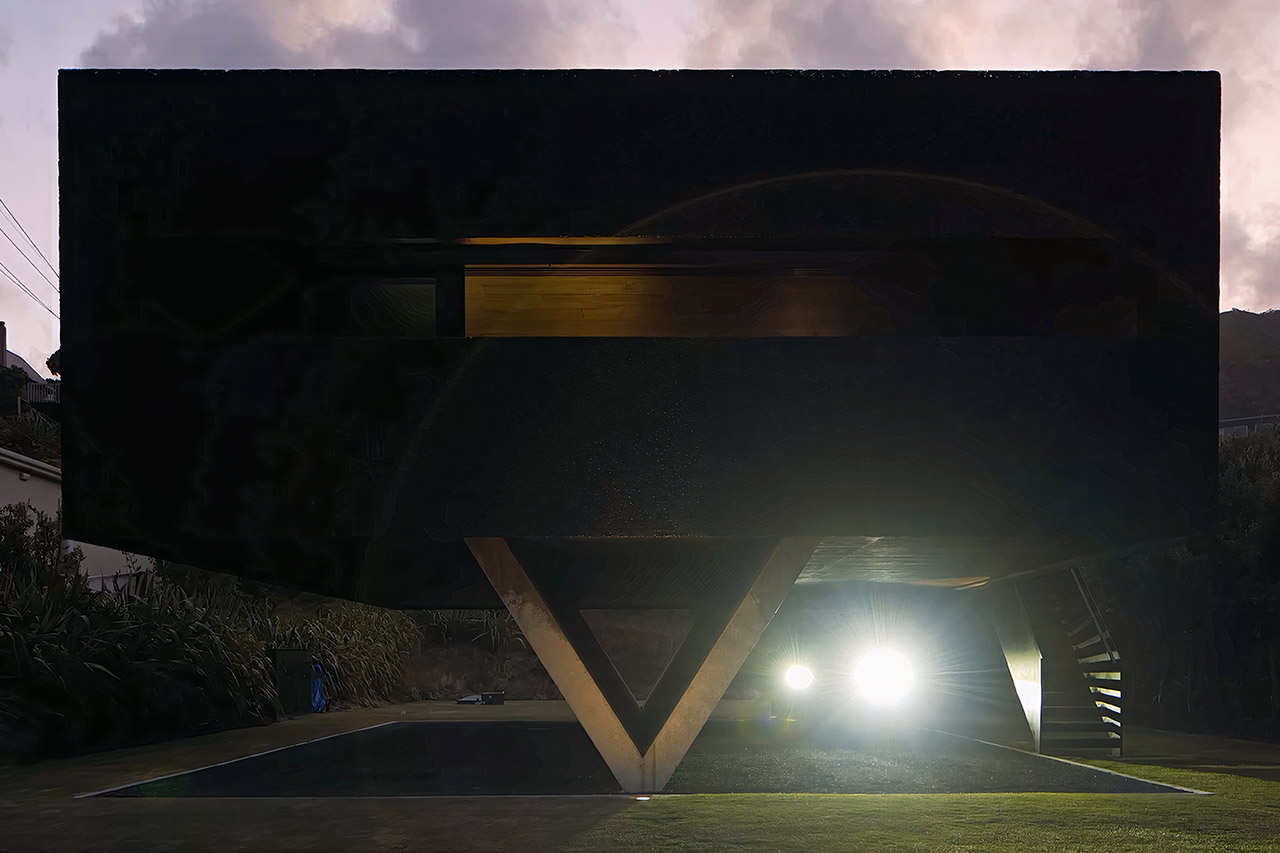
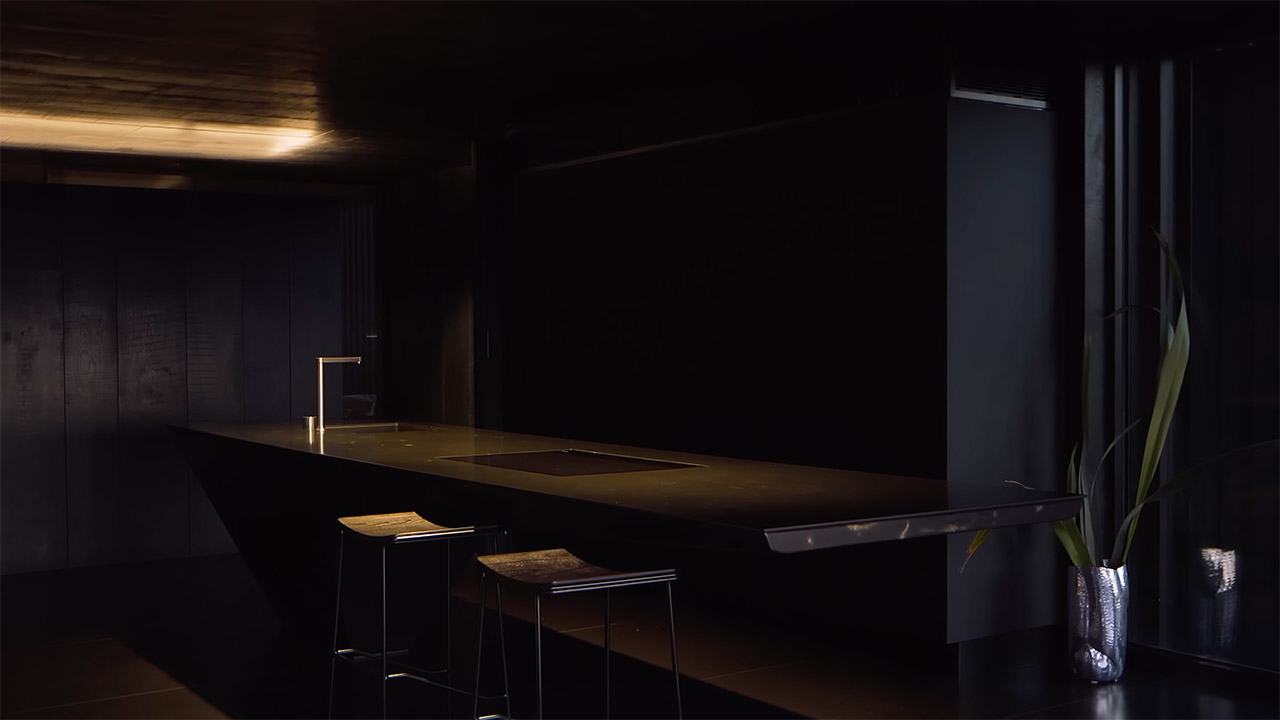
Photo credit: Home of Architecture | Chris Tate Piha Beach stretches along New Zealand’s wild west coast where black sand meets pounding surf and sheer cliffs rise without warning. Chris Tate placed Bunker House, a compact two-bedroom home right there next to a public car park and surf lifesaving club. The structure rises as a solid black form that feels carved from the landscape itself.
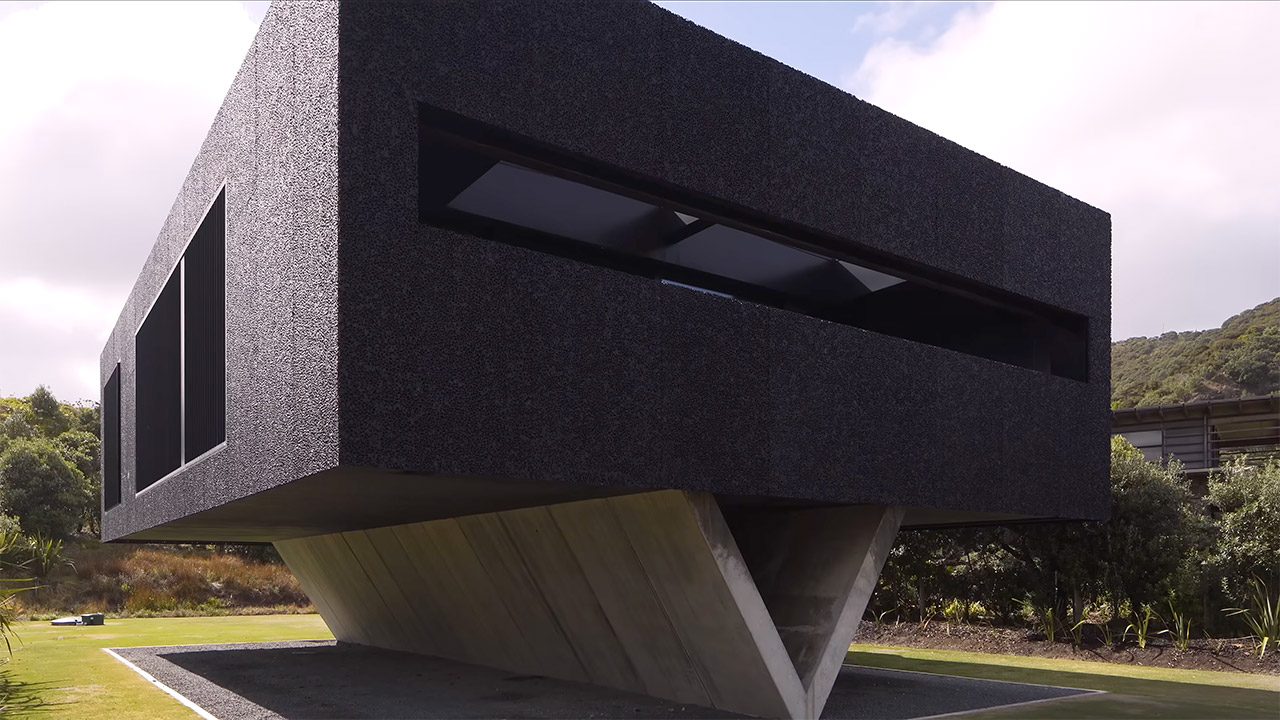
Chris Tate spent a remarkable 7 years perfecting the design before construction began, and the entire build took 14 years. The foundation is effectively a gigantic X built of concrete, with half of it sinking 3 metres into the sand and the other half supporting the house. The piles of concrete that hold it all together are a true insurance policy against earthquakes that turn the ground into a watery mess, as well as keeping the entire structure stable. You’d never guess it’s only 300mm off the sand, but against all odds, the entire structure holds the full weight of the house without even a hairline fracture showing. The cantilevered sections protrude out slightly, giving the box a ‘hovers-over-the-sand’ appearance while being perfectly balanced.
MODEL KIT FOR ADULTS – Adults ages 18 and up can embrace their love of architecture with this LEGO building set (21064), which makes striking home…
DETAILED PARIS DECOR – This detailed model features 4 iconic Paris landmarks—the Eiffel Tower, Notre-Dame de Paris, the Arc de Triomphe, and the…
HANG OR STAND TO DISPLAY – Your completed cityscape includes a buildable frame and a decorated ‘City of Love’ brick and can be hung on a wall or…
The cladding has been coated in sheets manufactured from recyclable cans shipped over from Canada and painted on-site, of course. The finish catches the light in an amazing ballet of patterns, perfectly reflecting the volcanic rock and black sand all around. With a little distance between you and the home, the surface appears to be one large textured skin. When you get close, it becomes easy to see where the material came from, but it all blends in so well that you can’t help but think that this house grew straight out of the sand rather than being thrown down on it.
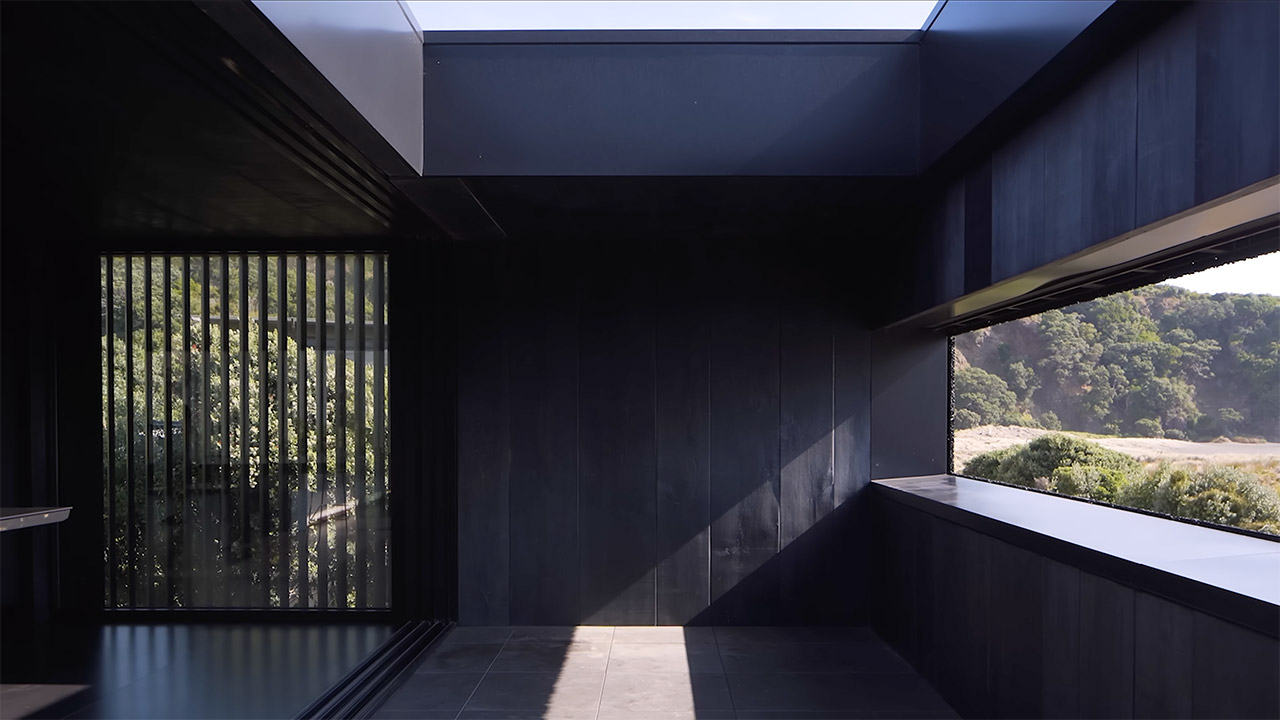
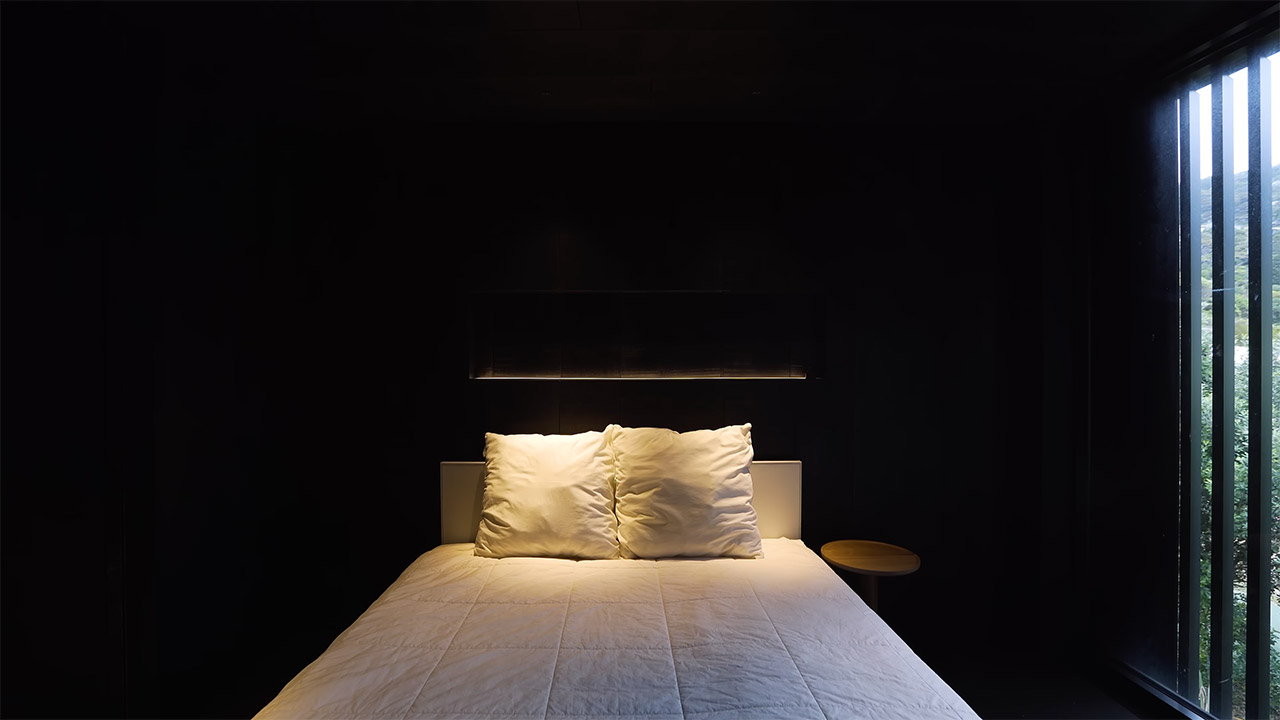
When people arrive, they are instantly met with darkness. It takes a while for their eyes to pick out the layered blackness that appears to be draped over every inch of the place, but even in the absence of color, there are hints of depth and texture, as evidenced by the subtle changes in tone that suggest the presence of glass, steel, and stone, all fitted together with meticulous care to conceal all the messy bits, such as pipes and wires. It’s a highly efficient space that meets all of the passive house standards, so the temperature stays just right throughout the year.
The kitchen island is a real showpiece, stretching out for four meters and providing a perfect view of the shore. Its raw steel frame is attached directly to the floor, reflecting the house’s foundations. What a view: a long narrow strip of glass frames a beautiful slice of crashing waves, Lion Rock, and a distant cove, and the crowded car lot fades away as you take a few steps back.
Two identical small bedrooms are nestled away at the back of the house, each enclosed by a wall of gold mesh panels that give off a nice gentle glow and provide a bit of metallic sheen to the entire space. The light streaming through makes each area feel quite secluded and calm. It’s a truly fantastic space, as it’s similar to a cave yet can still open up to the ocean anytime the owners desire. When the lights go off at night, all you hear is the waves smashing outside. [Source]
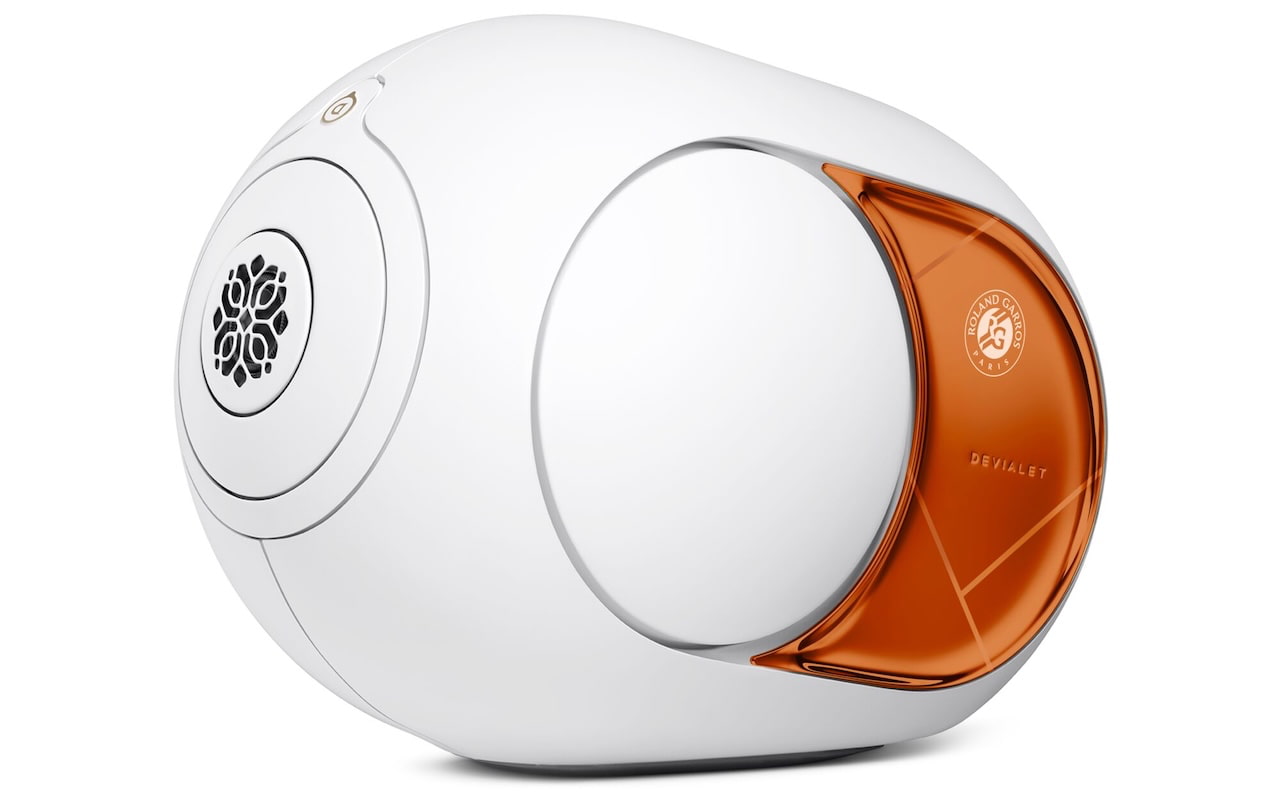
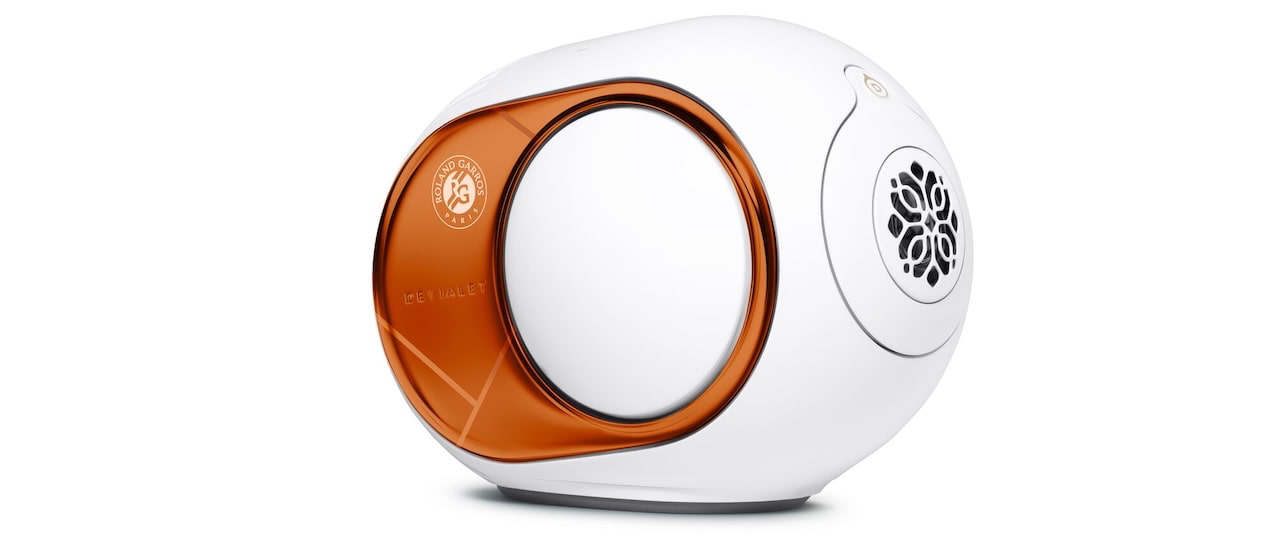
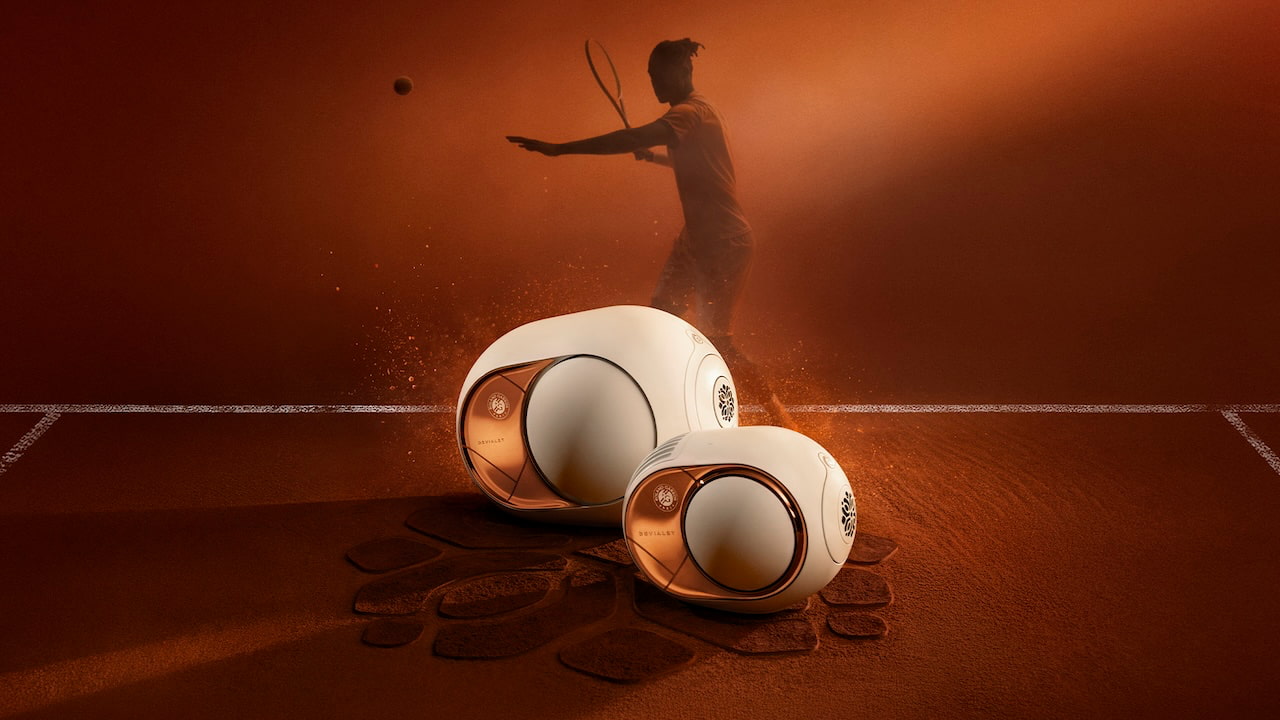
Leave it to the French to come up with something this stylish, expensive, and completely unwilling to explain itself to anyone drinking domestic sparkling wine. Devialet’s Phantom Ultimate Roland Garros Exclusive Edition is what happens when a French acoustic engineering company partners with the world’s most famous clay court tennis tournament: a limited edition Phantom Ultimate speaker dressed like it just won match point in Paris and refuses to apologize for the outfit.
Finished in clay red with warm ochre tones, white court line detailing, and the official Roland Garros logo, it is limited to a few hundred pieces, making it less “buy one for the kitchen” and more “collector piece for someone who already knows where the good Champagne is stored, keeps foie gras within striking distance, and treats your Bluetooth speaker like a peasant with a tambourine.”
The design is more than a color swap. Devialet says the side panels were created to evoke the reflection of Court Philippe Chatrier on the silver of the Coupe des Mousquetaires, the trophy awarded to the men’s singles champion. The white lines are laser engraved and finished with multiple coats of high gloss lacquer, while the Roland Garros logo is applied using a multi layer pad printing process. Très subtle? Not exactly. But subtlety was never really the Phantom’s department.
Devialet Phantom Ultimate 108 dB Roland Garros Wireless Speaker
Same Phantom Ultimate Performance, Now With More Clay Court Drama
Under the Roland Garros finish, this remains the Devialet Phantom Ultimate platform, which we recently reviewed and found to be one of the more serious attempts to make a compact wireless speaker behave like something far larger. The Phantom formula has always been about controlled violence in a small enclosure: deep bass, high output, active processing, and a design that looks like it escaped from a French aerospace lab after a long lunch.
The Roland Garros edition will be offered in two versions. The larger Phantom Ultimate 108 dB version delivers 1,100 watts of amplification and a stated frequency range of 14 Hz to 35 kHz, with 32 bit 96 kHz audio processing. The smaller Phantom Ultimate 98 dB version delivers 400 watts and a stated frequency range of 18 Hz to 25 kHz.
Advertisement
Those numbers are not decoration. In our experience with the Phantom Ultimate 108 dB, the speaker’s appeal is not just that it plays loud or reaches low. Plenty of wireless speakers claim big bass and then proceed to smear everything like overcooked brie. The Devialet approach is more controlled, more physical, and more precise than most lifestyle wireless speakers at this level. It still sounds like a Phantom, which means it wants to impress you immediately.
The difference with the Ultimate generation is that the software, streaming support, processing, and user controls make it feel more complete. It is a category leading wireless speaker in every possible way.
Devialet Phantom Ultimate 98 dB Roland Garros Wireless Speaker
The Tech Stack Still Matters
Devialet’s core technologies carry over here, including ADH, SAM, HBI, and AVL. In plain English, ADH combines analog Class A behavior with Class D power and efficiency. SAM is Devialet’s driver matching system, designed to control phase and amplitude in real time. HBI is responsible for the Phantom’s low frequency reach and physical bass impact. AVL adjusts volume behavior in real time to keep playback more balanced across different types of content.
The Phantom Ultimate also uses an NXP i.MX 8M Nano processor and runs on Devialet DOS3, the company’s newer software platform first introduced with the Devialet Astra amplifier. That matters because modern wireless speakers live or die by the app, the operating system, and streaming stability.
Streaming support includes AirPlay, Google Cast, Roon Ready, Spotify Connect, TIDAL Connect, Qobuz Connect, and UPnP. The Devialet app also includes Music, Podcast, and Cinema modes, along with a six band EQ, Bass Reducer, and Loudness controls. That gives users more flexibility than older Phantom models, especially if the speaker is doing double duty for music, TV, podcasts, and those “why is the dialogue buried under explosions?” movie nights.
Advertisement
Bose clearly got the memo with its new Lifestyle Ultra Soundbar as well. Some of us are getting older, some of us have spouses who do not appreciate the Stanley Cup Playoffs at 11 p.m. at full tilt, and some of the best moments in French cinema still involve uncomfortable silence, cigarettes, footsteps in the Marais, and the creeping suspicion that an international terrorist is about to ruin someone’s galette.
Advertisement. Scroll to continue reading.
The Bottom Line
The Roland Garros edition is not for someone looking for the best wireless speaker bargain. That ship sailed, hit the clay, and got booed by the French crowd.
This is for the Devialet buyer who already likes the Phantom Ultimate but wants something more visually distinctive. It is also aimed at collectors, tennis fans with serious audio taste, and design conscious listeners who want a wireless speaker that does not look like another fabric wrapped cylinder apologizing from the corner.
The bigger 108 dB version makes the most sense for larger rooms or listeners who want the full Phantom experience with the most bass extension and output. The smaller 98 dB model is the better fit for bedrooms, offices, smaller living spaces, or anyone who wants the design and Devialet signature without detonating the room every time the playlist gets ambitious.
Advertisement
Pricing and Availability
The Devialet Phantom Ultimate Roland Garros Exclusive Edition launches on May 6, 2026 with a $200 or $400 premium of regular finishes. It will be available through select Devialet stores, Devialet’s website, the Roland Garros Megastore, and the official Roland Garros online boutique.
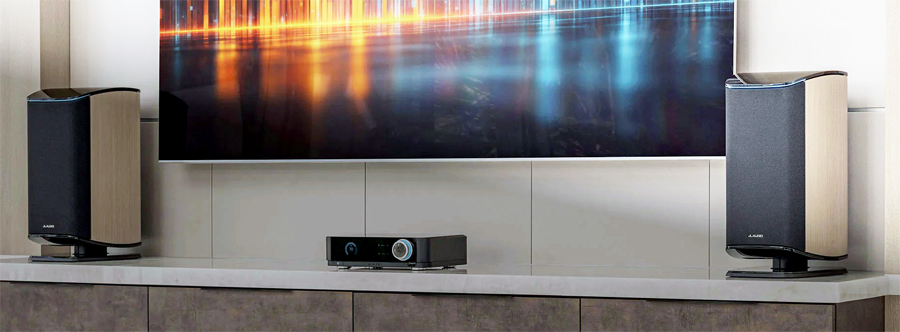
Garmin is moving JL Audio deeper into the high end home audio conversation with Primacy, a premium active loudspeaker system built around network streaming, amplification, signal processing, and room optimization. That approach is becoming more common across the category, as brands try to simplify hi-fi without asking listeners to build a rack full of separate components.
But Primacy is not chasing the same customer as WiiM, Eversolo, or other value driven streaming platforms. Garmin and JL Audio are making a much bigger ask. They want audiophiles to buy into a complete ecosystem where the streamer, preamp, DSP, room correction, amplifiers, and loudspeakers are designed to work together from the start. At $50,000 to $105,000, that is not convenience audio. That is a controlled, luxury hi-fi system for buyers who want fewer boxes, fewer cables, and far less guesswork.
JL Audio Primacy
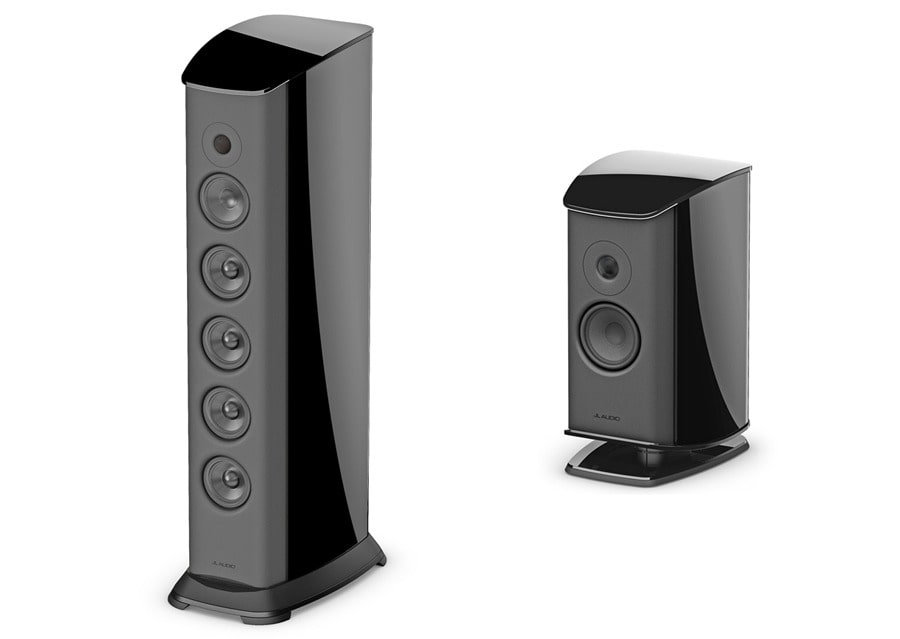
Primacy T6
Primacy will be offered in two loudspeaker configurations: the T6 three-way tower loudspeakers or the S3 two-way bookshelf/stand-mount loudspeakers. Both systems are designed around the same basic idea: keep the amplification, signal processing, loudspeakers, and system control working as one package instead of forcing the customer to assemble the whole thing one expensive box at a time.
That matters because this is not a passive speaker system waiting for someone to add an amplifier, streamer, DAC, and room correction later. Garmin and JL Audio are selling Primacy as a complete active loudspeaker ecosystem, with the electronics and speakers intended to operate together from the beginning.
Primacy S3
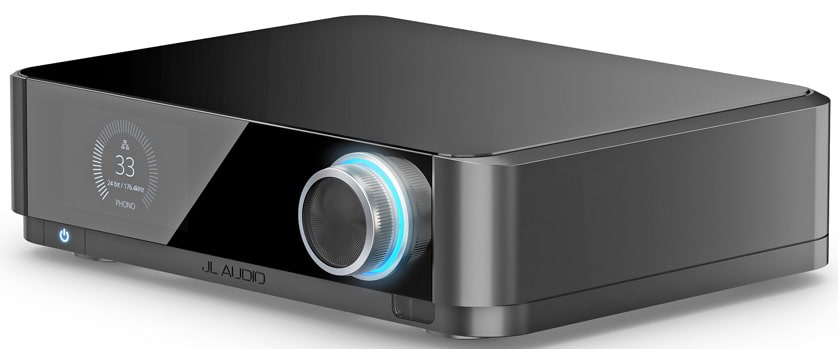
The hub of the Primacy system is the CS Centerpiece, which handles network streaming, preamp duties, system control, and room optimization processing. In other words, this is where the Primacy system stops being just a pair of active loudspeakers and becomes a complete JL Audio ecosystem.
Advertisement
“Primacy reflects our unwavering commitment to integrate modern lifestyles and technologies into luxury audio that is high performing, beautifully built, and uniquely optimized for the space it is in,” said Susan Lyman, Garmin Vice President of Consumer Sales and Marketing. “The ultimate audio experience, Primacy lets you listen to music, movies, and games like you are there live, inside the scene, with amazing clarity of every sound.”
Inside the JL Audio Primacy System: Streaming, Room Optimization, and Active Loudspeakers
Active Design: The Primacy T6 and S3 are active loudspeakers with DSP based audio filtering and built in amplification for each driver section. JL Audio uses switching amplifier technology, with DSP filtering applied at the input of each active amplifier channel. The goal is tighter control over each driver and better integration across the loudspeaker, rather than relying on an external amplifier and passive crossover network to sort it all out after the fact.
The Primacy T6 is the floorstanding tower option, while the Primacy S3 is the bookshelf or standmount model for smaller rooms, secondary spaces, or installations where a full tower makes less sense. Not everyone wants a loudspeaker that looks like it requires its own zoning permit.
Advertisement
Precision Machined Alloy Enclosure: Each Primacy loudspeaker uses a single cast, precision machined aluminum alloy enclosure with integrated internal bracing and woofer ports. That construction is designed to improve structural rigidity, reduce unwanted resonance, and support more predictable acoustic performance. It also makes the system feel more like a finished luxury product than another wooden box pretending the room is not part of the problem.
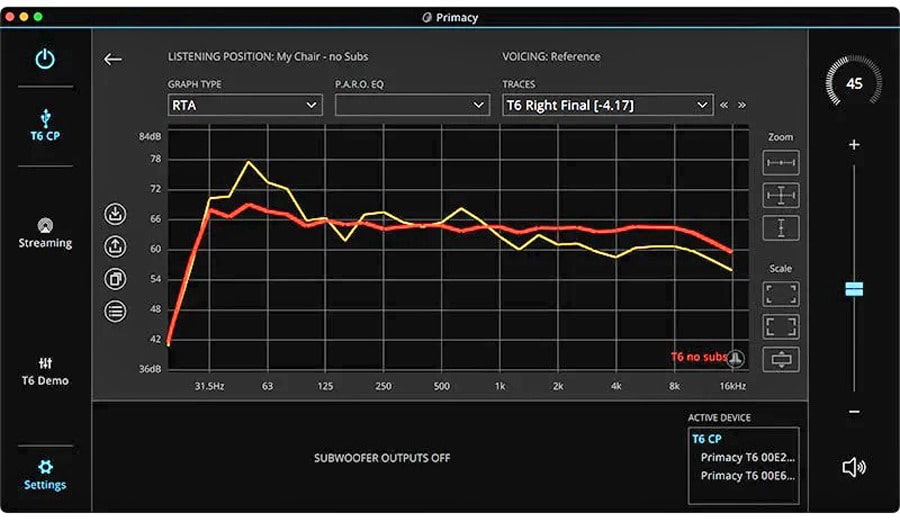
Primacy Automatic Room Optimization: Primacy Automatic Room Optimization, or P.A.R.O., measures and optimizes the system during setup, including any additional powered subwoofers used with the system. According to JL Audio, P.A.R.O. automatically adjusts crossovers, levels, equalization, and delay for each driver section. That matters because this is a fully integrated active system, not a mix and match pile of components hoping the room behaves itself.
High-Performance Triple-Core DSP: A digital signal processor, operating at 32-bit/192 kHz audio resolution, provides precise control over crossover filters, equalization, dynamics, and delay and phase.
Advertisement. Scroll to continue reading.
Advertisement
Dante Digital Network: Dante is an audio/video networking technology that is built into each Primacy loudspeaker. Dante supports efficient routing, control, and connectivity for streaming pristine digital audio directly to the Primacy loudspeakers’ internal amplifiers.
The Primacy Centerpiece
CS Centerpiece System Hub: The Primacy CS Centerpiece is the control hub for the system, combining network streaming, preamplifier functions, source connectivity, and control for the T6 and S3 active loudspeakers. It is designed to keep the main system functions in one component rather than requiring separate boxes for streaming, preamplification, source selection, and system control.
Streaming and Source Connectivity: The CS Centerpiece supports Bluetooth, AirPlay, Google Cast, Spotify Connect, Qobuz Connect, and TIDAL Connect. It also provides wired digital and analog inputs, including MM/MC phono input for turntable users. That gives Primacy support for both modern streaming services and traditional sources.
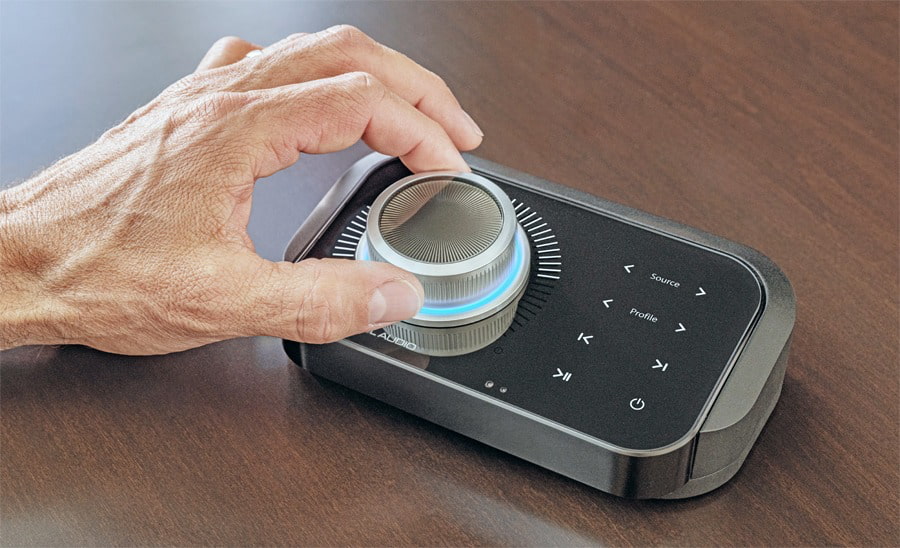
External Tabletop Remote: The system includes an external wireless tabletop remote, giving users physical control without relying only on a phone or tablet.
Minimalist Industrial Design: The CS Centerpiece has a clean, minimalist design intended to integrate into a room without drawing too much attention. That fits the broader Primacy approach: fewer visible components, fewer cables, and a more controlled system layout.
Advertisement
The centerpiece connects to the Primacy T6 and S3 active loudspeakers via Dante networking. This supports a high-resolution digital signal flow and includes a wireless, Wi-Fi connected tabletop remote controller that features a weighted volume knob and touch buttons to select source, profile, and more.
Primacy App
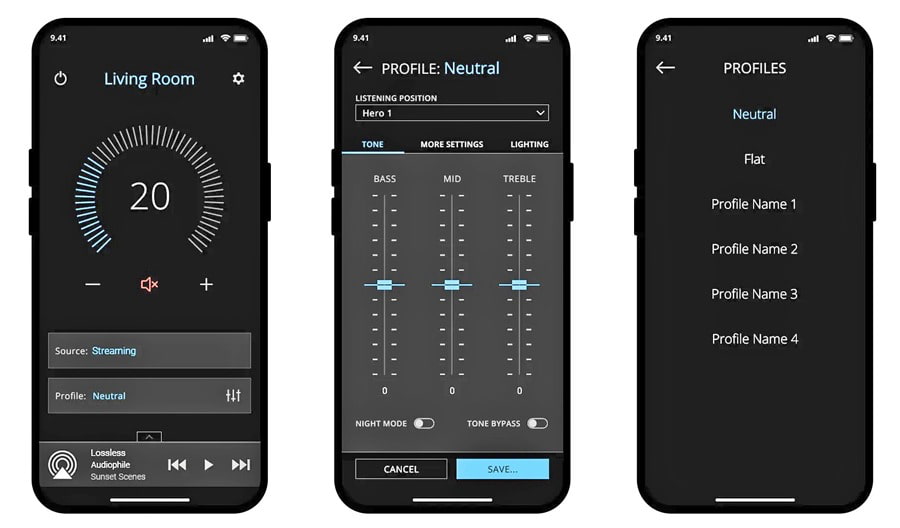
As a complement to the Centerpiece, JL Audio’s Primacy App also provides audio and room optimization control. The app can also be used to create, store, and name listening profiles optimized for different listening positions, equalization preferences, and activities.
JL Audio Primacy Comparison
JL Audio Model
T6
S3
Product Type
Floorstanding Active Speaker
Bookshelf Active Speaker
Price (Pair)
$90,000
$35,000
Driver Configuration
3-Way
2-Way
Drivers
1 x Tweeter: 1″ 1 x Midrange: 5.5″ 4 x Woofer: 5.5″
1 x Tweeter: 1″
1 x Woofer: 5.5″
Enclosure type
Tweeter: Sealed
Midrange: sealed, secondary cast alloy enclosure
Advertisement
Woofer: bass-reflex design vented at the base of the primary cast alloy enclosure
Tweeter: Sealed
Woofer: bass-reflex design vented at the base of the primary cast alloy enclosure
Amplifier Power (RMS)
1000 W (Total) Tweeter: 200 W Midrange: 200 W Woofer: 600 W
400 W (Total) Tweeter: 200 W
Advertisement
Woofer: 200 W
Frequency response (Anechoic)
45 Hz to 20 kHz, ±2 dB, -3 dB @ 35 Hz, -6 dB @ 32 Hz.
55 Hz to 20 kHz, ±2 dB, -3 dB @ 44 Hz, -6 dB @ 36 Hz.
Digital to Analog Converters
ESS SABRE Reference DACs x 3 (operating in mono mode)
ESS SABRE Reference DACs x 3 (operating in mono mode)
AKM triple-core with Velvet Sound technology, processing at 32 bit/192 kHz for local system volume, crossovers, delays, equalization, and dynamics for each amplifier and driver section
AKM triple-core with Velvet Sound technology, processing at 32 bit/192 kHz for local system volume, crossovers, delays, equalization, and dynamics for each amplifier and driver section
Signal Processing
Unbalanced input(s) Mono (one RCA jack – input impedance of 50k ohms)
Balanced input(s) Mono (one female XLR jack – input impedance of 50k ohms)
Unbalanced input(s) Mono (one RCA jack – input impedance of 50k ohms)
Advertisement
Balanced input(s) Mono (one female XLR jack – input impedance of 50k ohms)
Calibration mode
Primacy Automatic Room Optimization (P.A.R.O.) via PC and Primacy Centerpiece (sold separately)
Primacy Automatic Room Optimization (P.A.R.O.) via PC and Primacy Centerpiece (sold separately)
Input modes
Analog or Dante Network
Analog or Dante Network
12 V trigger output capacity
50 mA max (1/8″ (3.5 mm) mini jack)
50 mA max (1/8″ (3.5 mm) mini jack)
Maximum peak short-term sine wave acoustic output, averaged from 100 Hz to 3 kHz @ 1 m, half space
>112 dB SPL
>114 dB SPL
Dante Network Connections
Two RJ45 ports
Two RJ45 ports
Analog input sensitivity
0.32 V (-10 dBV) to 8.0 V (+18 dBV)
0.32 V (-10 dBV) to 8.0 V (+18 dBV)
Input modes
Analog or Dante® Network
Analog or Dante® Network
Input Grounding
Isolated or grounded (analog inputs)
Isolated or grounded (analog inputs)
Level control
Level Trim (dB): 0 to -5 dB and muted (-∞)
Level Trim (dB): 0 to -5 dB and muted (-∞)
Filter frequency rangeHigh-pass
80 Hz
80 Hz
Crossover frequencies/slope
240 Hz/3 kHz, 24 dB/octave Linkwitz-Riley
240 Hz/3 kHz, 24 dB/octave Linkwitz-Riley
Processing bit depth/resolution
32 bit/192 kHz
32 bit/192 kHz
Power modes
Off, on or automatic (signal-sensing or 12V trigger)
Off, on or automatic (signal-sensing or 12V trigger)
T6 speaker with black gloss decorative side panels Power cord Documentation White gloves Grille(s) included
S3 speaker with black gloss decorative side panels Power cord White gloves Documentation
Primacy CS Centerpiece Specifications
Jl Audio Model
Primacy CS Centerpiece
Product Type
Streamer, Preamp, Controiller
Price
$15,000
Construction
Primary cast aluminum alloy enclosure with secondary machining, glass top, and fascia
Volume control
Machined aluminum rotary dial with active lighting ring and push-button center cap
Display
RGB AMOLED dead front, 640 x 320 pixels, 198 ppi, 70 x 43 mm active area
Circuitry Shielding
Modular architecture with isolated power supply and dedicated, fully shielded secondary enclosures for analog and phono subsections
Thermal Management
Active, quiet-flow fan cooling system with user-serviceable air intake filtration
Streaming Functionality
Apple® AirPlay® 2, Google Cast™, Qobuz Connect, Roon Ready, SPOTIFY® Connect, TIDALSMConnect, and more…
Network Standard
UPnP/DLNA
Digital to Analog converters
ESS SABRE Reference DACs x 2 (operating in mono mode)
Analog to Digital Converters
ESS SABRE PRO x 2 (operating in mono mode)
Digital signal processor
AKM triple-core with Velvet Sound technology, with local input switching/routing and line output processing
Processing bit depth/resolution
32 bit/192 kHz
Sample Rate Conversion
Dedicated, hardware asynchronous sample rate converters for rate matching non-analog inputs to core 32-bit/192 kHz processing
Primacy® Automatic Room Optimization (P.A.R.O.)
Yes – Includes speaker and subwoofer optimization
Computer Requirements
A computer running the Primacy Desktop application
Windows 10 (OS Build 1809 or later), 11
Mac OS 14, 15, 26
Audio Settings
Balance: left/right channel slider Tone controls: Off/on Bass: -6.0 dB to +6.0 dB in 0.5 dB steps Midrange: -6.0 dB to +6.0 dB in 0.5 dB steps Treble: -6.0 dB to +6.0 dB in 0.5 dB steps Extreme Low Frequency (E.L.F.) Trim –12 dB to 0 dB in 0.5 dB steps
Network Digital Audio Transport
Protocol Dante® audio over IP Standard 802.3ab compliant (1000BASE-T)
Advertisement
Four RJ45 (Four-port switch, redundant or daisy chain Dante + control) 2 Channels @ 32 bit/192 kHz
Unbalanced Analog Inputs (RCA)
Two sets of left and right RCA input jacks Input impedance: 47 kΩ Frequency response 20 Hz to 20 kHz (+/- 0.02 dB)
Phono Inputs (RCA)
Left and right RCA input jacks, plus grounding terminal – MM and MC compatible
RIAA equalization method: Two separate passive networks per channel, one each for low and high frequencies.
RIAA frequency response 20 Hz to 20 kHz (+/- 0.2 dB)
Advertisement
Optical Input (Toslink)
3 x Toslink (SPDIF) Input receiver transfer rate 25 Mbps (max) Input receiver sensitivity (min) –27 dBm Input receiver wavelength 650 nm Digital input data type: 44.1 kHz to 192 kHz, 24-bit LPCM
HDMI Input
Standard HDMI 2.1/HDMI-CEC Audio format 2 CH LPCM (ARC/eARC) Sample rate support 16/20/24/32 bit @ 44.1/48/88.2/96/176.4/192 kHz
USB Input (USB-C®)
USB 2.0 (high speed)
ASIO 2.3.1 compliant driver (supports audio class 1.0/2.0 and USB 2.0 full-speed/high-speed devices
PCM: 16/20/24 bit @ 44.1/48/88.2/96/176.4/192/352.4/384 kHz
DSD: 1x/2x/4x
Advertisement
Subwoofer Outputs
Two sets of analog subwoofer output jacks (RCA and XLR)
Network/Wireless Specifications
LAN 802.3ab compliant (1000BASE-T) (for the best streaming experience, a wired LAN connection is recommended)
WLAN 802.11a/b/g/n/ac/ax 2×2 MIMO (Wi‑Fi® 6)
Bluetooth® 5.1 SBC with AAC codec
RST
Advertisement
DFU
USB-2
USB-3 Service controls
Power
Mains voltage 100 to 240 V AC, 50/60 Hz
Advertisement
Power consumption Standby in Eco mode: < 7.0 W
Idle power consumption (active with no signal) 120 V: ~34 W, 240 V: ~40 W
12 Volt Trigger
12 VDC input: 1/8″ (3.5 mm) mini jack, tip positive
12 VDC output 1/8″ (3.5 mm) mini jack, tip positive, 50 mA max. load
Advertisement
CS Centerpiece Physical Specifications
Overall height (including feet) 3.61″ (92 mm)
Chassis height 3.31″ (84 mm)
Width 13.10″ (333 mm)
Overall depth (including volume control and connections) 11.30″ (287 mm)
Advertisement
Net weight 18 lbs (8 kg)
CS Remote Controller Physical Specifications
Height 1.20″ (31 mm) Width 6.61″ (168 mm) Depth 3.98″ (101 mm) Net weight 1.72 lbs (0.78 kg
What’s In The Box
Primacy centerpiece Tabletop remote controller USB-C cables (4 m and 2 m) P.A.R.O. microphone Power cord Microphone fixturing accessories Microfiber cloth Documentation
Primacy S3
The Bottom Line
Garmin’s JL Audio Primacy is a luxury active audio system built around the $15,000 CS Centerpiece and either the $90,000 T6 towers or $35,000 S3 bookshelf/standmount speakers. The hook is integration: streaming, MM/MC phono, room correction, Dante networking, DSP, amplification, and loudspeakers designed to work as one system.
What makes it different is also the gamble. Primacy is not as design-forward as the best Bang & Olufsen systems or as exotic as some Goldmund wireless offerings, but it appears to offer deeper system control, more serious connectivity, and customizable speaker finishes through removable exterior plating.
What’s missing? Flexibility. At this price, many audiophiles may still want to choose their own electronics and speakers. Primacy is for luxury buyers who want high-end audio without the usual stack of boxes, cables, and setup anxiety.
Austin Bowden-Kerby, a pioneer in coral reef conservation, spends many of his days gardening corals for reefs around Fiji and the Pacific. He grows corals in ocean nurseries. Once they’re healthy enough, he moves them to outer ocean areas with the hope they will replicate and grow.
“We’re looking at what Mother Nature would do on her own if she had 1,000 years to adapt,” said Bowden-Kerby, who founded the UNESCO-endorsed Reefs of Hope strategy. “We would have these kinds of things happening.”
Advertisement
Bowden-Kerby is one of several scientists trying to conserve, replicate and reproduce heat-resistant corals before climate change wipes them out.
The United States National Oceanic and Atmospheric Administration has said the world is experiencing a fourth global coral bleaching event. They’ve found that bleaching-level heat stress affected almost 85pc of the world’s coral reef area between 2023 and 2025.
But naturally occurring, heat-resistant corals can survive in waters up to 36C and potentially higher. They are usually found in warmer waters, like parts of the Pacific Ocean and the Persian Gulf. These corals are increasingly important as sea temperatures rise. So scientists are turning to them to help save declining reefs.
However, heatwaves have led to widespread coral bleaching and loss. When waters become too warm, corals expel the algae in their tissues that give them their colour. That causes corals to turn completely white.
Coral reefs and their ecosystems are also threatened by pollution, ocean acidification, coastal development and overfishing.
Christopher Cornwall, a lecturer in marine biology at Te Herenga Waka-Victoria University of Wellington in New Zealand, co-authored a recent review that found some reefs can survive if corals become more heat-tolerant.
Advertisement
He told me there are multiple things to consider when conserving and replicating corals: restoring heat-resistant corals where it’s feasible, doing so at a large enough scale and maintaining coral diversity. Restored corals also must be able to survive, he added.
“We can’t just do coral restoration without thermally tolerant corals, because they’re just going to die the next time it gets too hot,” Cornwall said.
Assisted evolution
“A lot of the research now is about, can you scale up restoration and how do you do it more effectively?” said Peter Mumby, a professor of coral reef ecology at the University of Queensland in Australia. “One of the key concerns is to make sure those corals are as tolerant of high temperature as possible.”
Breeding heat-tolerant corals is a form of assisted evolution. Humans intervene to speed up natural processes to help corals more quickly respond to and recover from their stressors, like heatwaves from climate change.
Advertisement
One recent study examining the possible success of assisted evolution interventions like breeding and selecting traits found these interventions can help corals become more tolerant to heatwaves, but they need “extremely strong selection”.
Liam Lachs co-authored that study. Lachs is a former postdoctoral research associate in the CoralAssist lab, a team of scientists led by James Guest at Newcastle University in the United Kingdom. Lachs specialises in coral reef ecosystems and researches coral in Palau, a Pacific island country where corals are surviving in warmer waters.
He told me variability within and among reefs and coral species must be considered when creating more heat-resistant coral, which makes replication complex. “Even within a single reef, there’s a range of tolerance levels,” he said.
Algae and bacteria
Researchers at the Australian Institute of Marine Science (AIMS) have found that some algae (Durusdinium), which symbiotically live in corals and provide them with food in exchange for housing and protection, can boost corals’ heat tolerance.
Advertisement
Madeleine van Oppen is a senior principal research scientist at AIMS. She co-authored a recent review about potentially introducing beneficial bacteria into corals to improve their heat tolerance.
Scientists are also exploring whether heat-tolerant corals should be planted across oceans – from the Indo-Pacific region to the Caribbean – and not just in nearby waters.
Van Oppen said new ventures ultimately need more research, and the real test of success is if something done in a lab works in the wild. “Field testing, I’d say, is the next big thing,” she said. “Finding out whether these interventions can enhance tolerance at ecologically relevant scales. Is it stable over time?”
AIMS researchers also found that heat tolerance could be passed down by interbreeding wild colonies of the same coral species. Heat-resistant coral species include some pocillopora and acropora.
For all the efforts by scientists to save coral reefs and ensure heat resilience, nothing will keep corals healthy more than lowering the global temperature. “The lower we can get our greenhouse gas emissions, the more chance there will be that reefs will exist in the future,” said Cornwall.
Whitney Isenhower is a freelance journalist and communications consultant specializing in health, climate and science. Her work has appeared in Devex, Live Science and North Carolina Health News. Previously, she supported U.S. Agency for International Development projects until 2025.She also completed the fellowship in journalism and health impact through the University of Toronto Dalla Lana School of Public Health.
Advertisement
Don’t miss out on the knowledge you need to succeed. Sign up for the Daily Brief, Silicon Republic’s digest of need-to-know sci-tech news.
The two conglomerates are funding separate R&D centres focused on next-generation battery chemistries and advanced EV systems. The investment is a hedge: both groups currently buy critical battery components from Chinese suppliers and want options when Beijing tightens export rules again.
India’s two largest steel-and-everything-else conglomerates are putting close to $1bn behind a question that has become urgent for the country’s electric-vehicle industry: what happens when the Chinese suppliers stop picking up the phone?
Tata Group and JSW Group are separately funding research-and-development centres aimed at building in-house expertise in next-generation battery technologies and advanced EV systems, Bloomberg reported on Wednesday, citing people familiar with the plans. The combined commitment is just under $1bn.
Both companies are reasoning from the same exposure. India’s EV industry, including their own businesses, runs heavily on Chinese cells, materials and equipment.
Advertisement
The 💜 of EU tech
The latest rumblings from the EU tech scene, a story from our wise ol’ founder Boris, and some questionable AI art. It’s free, every week, in your inbox. Sign up now!
China’s tightening of export controls on graphite, lithium-processing equipment and battery-making machinery has, over the past year, made that exposure a board-level problem rather than a procurement one.
What each group is funding
Tata’s R&D effort sits inside Agratas, the group’s battery arm, which is already building a 20 GWh gigafactory in Sanand, Gujarat to supply Tata Motors. The new spend goes upstream of that: chemistry, cell design, and process know-how the group has historically licensed or sourced.
Advertisement
Agratas has previously partnered Tata Technologies to fast-track battery solutions for mobility and renewable energy storage; the new funding extends that work into materials and proprietary cell formats.
JSW Group’s track is different but rhymes. JSW Motors, the JV vehicle through which the conglomerate sells MG cars in India alongside SAIC, opened JNEXT, the JSW NextGen Technology Center, in Pune in February through a partnership with Tata Elxsi.
Neither company has confirmed the figures publicly. The Bloomberg sources put the combined investment at “nearly $1 billion”, with the funds spread across multi-year R&D programmes rather than capex on production lines.
The trigger is policy on the other side of the Himalayas. Late last year, executives and engineers from Reliance Industries fanned out across Wuxi looking to lock in roughly $1.1bn of equipment for a planned battery plant; Beijing’s tightening of export controls on key battery-making technology arrived shortly after. Hundreds of equipment shipments to India have been delayed or rerouted since.
Advertisement
Tata Motors itself has had to lean further on Chinese suppliers in the meantime. The Curvv.ev launched with cells from Octillion Power Systems, and the company struck a sourcing arrangement with Envision AESC for higher-density packs.
Each of those deals tightened the supply chain rather than diversifying it. Building a domestic chemistry programme is the obvious medium-term hedge.
JSW’s exposure is structural in a different way. The MG joint venture, of which Sajjan Jindal’s group owns 35%, sources around 60% of its components from China.
JSW has publicly aimed at a million new-energy vehicles by 2030 and a 10 GWh battery plant in partnership with LG Energy Solution.
Advertisement
The new R&D push is what would make those numbers achievable without renegotiating the SAIC stack every time Beijing changes its rules. The dependency picture is the same dependency Europe is grappling with, and it is now driving capital allocation in Mumbai and New Delhi as much as Berlin and Paris.
The competitive backdrop
Tata is no longer India’s runaway EV leader. Mahindra overtook it in EV revenue in the most recent fiscal year, even though Tata still leads on sales volume. JSW MG has doubled its market share in the past twelve months.
The two competing R&D commitments arrive against that shifting hierarchy: each group needs proprietary technology to defend its margins, not just match its rivals on offer.
The pattern is recognisable. Europe’s homegrown battery cell push, spurred by Northvolt’s collapse and the energy-security argument, is the closest analogue. Indian groups have studied it carefully: the same logic of chemistry sovereignty, recycling capacity (UK recycler Altilium’s £18.5m round sits at one end of the same arc), and policy support for domestic cell production now drives the conversation at home.
Advertisement
The difference is that India’s industrial policy, including the PLI scheme for advanced chemistry cells, has been in place for several years; what was missing was private R&D capital. The Tata and JSW announcements move that piece into place.
What is at stake?
Even with $1bn flowing into research, neither group will displace Chinese chemistry leadership in this decade. The realistic ambition is narrower: enough internal capability to specify, validate and customise cells, to qualify alternative suppliers, and to negotiate with Chinese partners from a less precarious position.
That ambition shapes the spending profile. Most of the money will go to talent, lab equipment and pilot lines rather than to gigawatt-scale fabs. Both groups already have, or are building, those at scale; the gap they are closing is the one between buying technology and owning it.
Whether that is enough depends on how aggressively China continues to limit access. The export controls of the past year suggest the line is moving the wrong way, and that India is not the only economy facing it. EU battery industrial policy on much the same arithmetic, and the equity question is whether national champions can build technical depth fast enough to keep up.
James Marsden is to star and executive produce “Disavowed” for Apple TV, a new thriller series following a wrongly disgraced CIA agent.
Apple TV has been cornering the market with prestigious dramas in either science fiction or thrillers, and now the likes of “Slow Horses” are to be followed by “Disavowed.” Created by Art Marcum and Matt Holloway, it is to be an ongoing series following ex-agent Brad Griffin (Marsden).
Marcum and Holloway are writing and producing partners, previously best known for the films “Iron Man,” and “Men in Black: International.” They have been nominated twice for “Worst Screenplay” at the Golden Raspberry Awards.
According to Apple, the forthcoming “Disavowed” sees agent Griffin “abruptly fired in the middle of a global hunt for an elusive assassin.” That assassin killed Griffin’s partner, so despite having the whole CIA against him, he sets out to find the killer and also claim the $15 million bounty on his head.
It sounds as if there are elements of Matt Nix’s hit “Burn Notice” as this agent is wrongly fired and tries to use his skills to survive. Like Nix’s show, “Disavowed” is specifically intended to be a continuing, returnable series, rather than a one-off serial.
“Disavowed” comes from Blue Marble, the company that produces the critically acclaimed “Pachinko” for Apple TV.
No details have been released yet of when the show is to stream, or is even entering production. The show looks to be Apple TV’s next thriller following the two-season order for “Down Cemetery Road,” dramatized by Morwenna Banks from the books by Mick Herron.
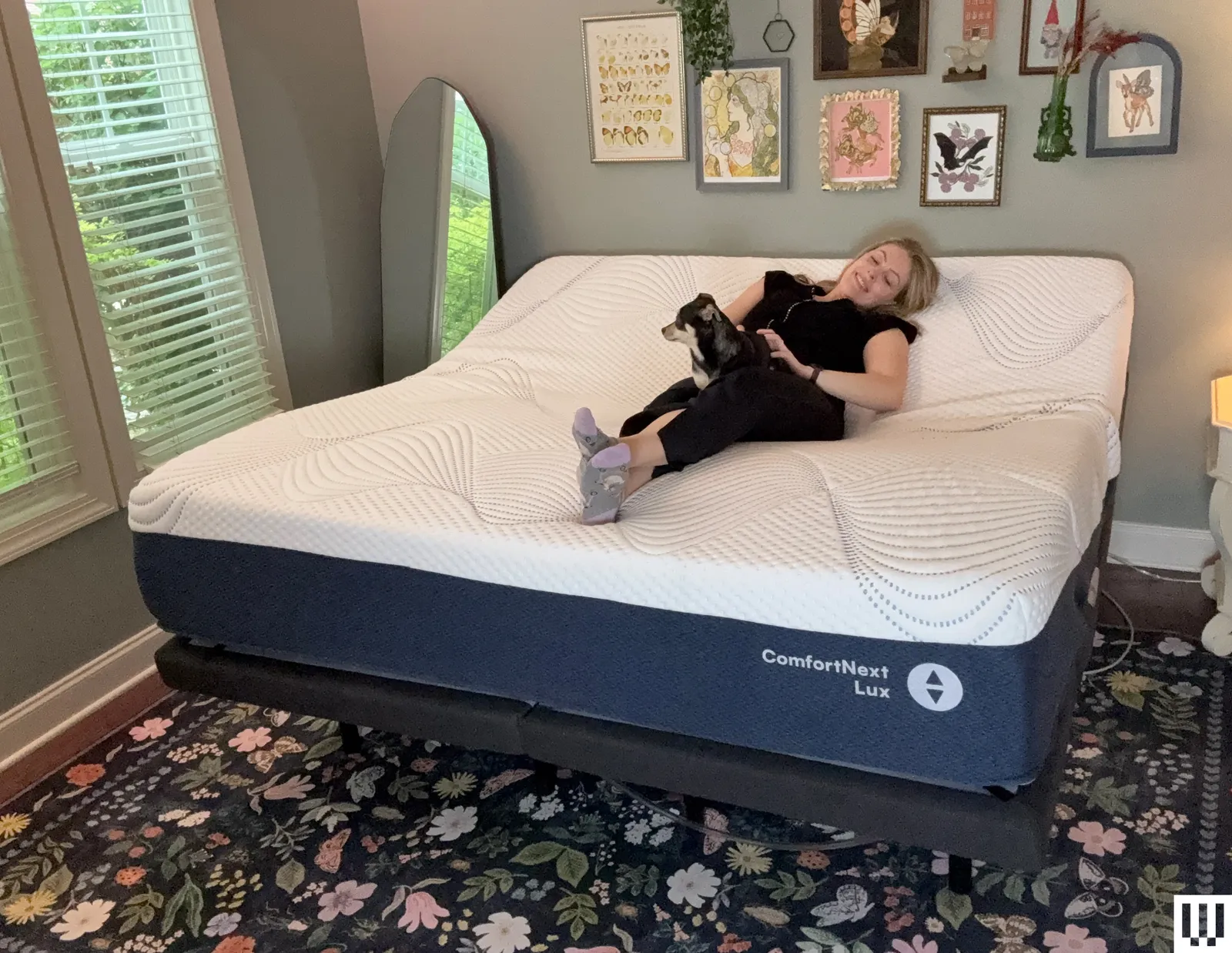
Like any Sleep Number smart bed, the ComfortNext Lux offers 100 firmness levels, and the one you select is your “Sleep Number,” or the firmness you prefer to sleep on. I usually skew toward firmer for lumbar support and weight distribution, which has previously been in the 40 to 50 range. Then, a new recommendation popped up in the app—my firmness level was in the mid-70s, but going softer could improve my sleep score, which Sleep Number calls its “SleepIQ score” and reports in its app. I decided to lower it to a much softer firmness level of 35.
The SleepIQ score summarizes your nightly sleep metrics, including heart rate variability, breathing rate, and time spent in each sleep stage. This data is compiled into a score that summarizes your sleep quality. The app’s score always skewed lower than what my Apple Watch SE would track. However, with dogs jumping in and out of bed, the sensors track that motion and take it into account, too. Despite this, my Apple Watch showed a six-day streak of high-80s to 90s sleep scores. Given that my body is always getting used to new beds with a revolving door of mattresses to test, this is extremely rare for me. Previously, while testing other smart beds or standard mattress types like memory foam or hybrid, I’d achieve this kind of quality sleep with medium-firm or true firm mattresses, never soft ones.
What was clear after two weeks of testing was that, even at the absolute firmest 100 setting, the ComfortNext Lux still felt only medium-firm. I started off with firm and went way softer, but the reality is that the ComfortNext Lux’s plush foam layers will always make whatever level you choose feel softer. If you are seeking a truly firm mattress—like one of our favorite firm options, the Plank Firm Luxe—the ComfortNext Lux does not even remotely play in the same league. This is not shocking, as nearly all smart beds I’ve tried lack the rigidity you’d find in coil-based designs.
Advertisement
Got Your Back
If you regularly deal with back pain or have more severe spinal conditions such as scoliosis, I don’t recommend this smart bed for you. My husband is part of this club, and according to him, the ComfortNext Lux is doable for a few days. After a bit, he needs to return to a firmer mattress to get the support his spine needs. To this end, the ComfortNext Lux’s lumbar support is not where it needs to be for full-time stomach sleeping or heavier-bodied sleepers who require lift around their midsections. Some adjustable bases will have lumbar support bars that project from the base, which would be a beneficial remedy here. Unfortunately, this feature isn’t available on Sleep Number bases at this time, and I don’t recommend pairing this smart bed with an adjustable base from another brand.
If not for back pain, you may wonder who the ComfortNext Lux works best for. In short? Side sleepers. As a side sleeper myself, this mattress offers the level of cushioning I often crave for my pressure points, with a satisfying amount of sink-in that makes the joints feel cushioned. You truly feel cocooned, and not in a claustrophobic way. For couples who happen to be side or side-back sleepers, the foam’s prominence in the ComfortNext Lux also helped prevent motion from rocking the bed. However, it is a bit harder to move between sleeping positions because you are working against the softer surface as you roll.
from the subtracting-votes-by-adding-confusion dept
It may be almost impossible to devolve this country into a nation of slaveholders, but the Trump administration and all of its MAGA buddies are working hard to make sure a white person’s vote counts more than a vote cast by anyone else.
These bigots recently got an assist from the Supreme Court, which decided minorities can have their votes rendered meaningless so long as the people doing the gerrymandering don’t actually say the quiet part loud. Redistricting for the sole purpose of excluding as many non-whites as possible is perfectly legal if politicians never affirmatively state that the only reason they’re doing this is to make sure minorities can’t vote against their racist asses.
This is all part of what the state of South Dakota is doing now. Governor Larry Rhoden was never elected to his post. He was elevated after Kristi Noem was selected to head the DHS by Donald Trump. (Since she’s about as unemployed as any Trump appointee ever gets, I’m sure she wishes she was back running the state of South Dakota… into the ground.) His most recent brush with the electoral process saw him losing handily to Mike Rounds in the 2014 Senate race.
Rhoden actually needs to win an election if he wishes to remain South Dakota’s governor. And all the MAGA fellatio in the world doesn’t mean much when plenty of other MAGA acolytes are running against him.
Advertisement
So, there’s a mixture of things going on here. There’s Rhoden’s (and the state GOP’s) desire to engage with Trump’s election conspiracies — ones that claim (with zero facts in evidence) that a whole lot of undocumented immigrants are voting in state and local elections.
There’s also a nationwide attempt to deter voting by mail, because these votes more often side with the other team.
In response to completely made-up problems, the GOP passed a bill that Rhoden signed that says state residents must prove their citizenship to engage in local elections. If they can’t, they’re only allowed to participate in federal elections.
According to Rhoden and other GOP alarmists, that’s because too many people who aren’t citizens were granted permission to vote, thanks to what was likely nothing more than a clerical error. South Dakota may be small state in terms of population (~950,000 residents as of 2025), but the “problem” this vaguely written law supposedly addressed was even smaller.
Advertisement
Soulek said only one of the 273 noncitizens had ever cast a ballot. That was during the 2016 general election.
Those are the words of the Director of Elections Rachel Soulek, who works out of the Secretary of State’s office. The Secretary of State blamed this on clerical errors by the Department of Public Safety. The DPS provided the data that Governor Rhoden claims to evidence of widespread election fraud by non-citizens.
One illegal ballot. And that was likely an honest misunderstanding, rather than the criminal intent Rhoden and GOP buddies want to pretend it is.
But the law is on the books. Citizenship must be demonstrated to participate in state and local elections. The problem is that no one running these elections seems to agree what is or isn’t acceptable proof of citizenship.
Hughes County Finance Officer Thomas Oliva, who acts as that county’s auditor, said his office is requiring new voters to show the physical driver’s license.
“The main reasoning behind that is because it’s the back of the license. There’s no other identifying information on the back we can tie back to that person, so we felt it’s in the best interest to see the physical card,” Oliva told News Watch.
Advertisement
Haakon County Auditor Stacy Pinney said she has not run into any issues yet with voter registration but also will require new applicants to physically show the driver’s license.
“I’m going to make it a policy in my office that I want to see the actual card. If I have to verify it, I want to see the real deal,” Pinney told News Watch.
Meanwhile, Harding County Auditor Kathy Glines said her office will accept a photocopy of the driver’s license.
“They would have to send a front and back,” Glines told News Watch.
Advertisement
“I hope they would call before sending it by mail,” she added, referring to the limited hours the office is open.
Everyone appears to be making up their own rules because the law — and the Secretary of State’s office — are being deliberately vague about these requirements, especially in relation to absentee voting. And many people in the state may not know that the law only applies to people who have registered to vote after July of last year, so lots of people are going to be presenting IDs to precinct staffers even if they’re not legally required to do so.
This all adds up to exactly what Governor Rhoden and the GOP want: confusion over who is or isn’t allowed to vote, blended with another law passed by Rhoden that allows pretty much anyone to challenge someone else’s eligibility to vote.
The state could offer much-needed clarification. But it won’t.
Advertisement
As early and absentee voting for the primary election gets underway, Scott-Stoltz hopes officials in Pierre can provide more certainty on the registration process for new voters.
“We’re hoping for more clarification from the secretary’s office before the primary and are looking forward to working with the election board,” she said.
The secretary of state’s office didn’t respond to a request for comment by News Watch.
That’s a feature, not a bug. Those in power definitely prefer incumbent voters over new ones, much like incumbent voters prefer incumbents. They want to keep the jobs they have, rather than allow new voters to upset the incumbent apple cart. They all pretend they love the democratic system, but when it’s time latch onto another 2-4 years in power, they work together to reduce the electorate to the votes they can count on.
GeekWire’s Kurt Schlosser cruises the Burke-Gilman Trail in Seattle on a new LimeBike electric bicycle from Lime this week. (GeekWire Photo / Todd Bishop)
Lime’s newest electric bike is being billed mostly as an accessibility upgrade, but don’t let that undersell it — this thing is nimble, punchy and genuinely fun to ride.
The new LimeBike, which plays on the company’s original name, is hitting Seattle streets this week, combining some of the comfort and ease of its compact, sit-down LimeGlider scooter with a quick-off-the-line bicycle powered by its throttle and pedal-assist.
The San Francisco-based micromobility company is betting that an easy-on, easy-off bike will bring new riders into the fold, particularly those who’ve found its existing hardware too intimidating or physically demanding.
While GeekWire appreciated the accessibility tweaks, a zippy test ride around Fremont left us equally impressed. The LimeBike accelerates fast, handles hill climbs and feels like a legitimate candidate to replace a car trip or two.
What’s new: The LimeBike features 20-inch wheels — smaller than those on the Gen4 e-bike — giving it a more compact, approachable feel. A step-through frame makes mounting and dismounting easier. There’s even a new seat clamp designed to let riders adjust height more easily. In the U.S., the bike comes equipped with a handlebar throttle, so riders can pedal with electric assist, use the throttle alone, or combine both.
Advertisement
Other upgrades include wider front baskets positioned lower on the frame for easier turning when loaded, ergonomic hand grips designed to reduce fatigue, and a sliding clamp-style phone holder. Lime also repositioned the battery and updated the wheels to lower the center of gravity — a tweak aimed at improving stability, particularly for smaller-statured riders.
“It wasn’t just learnings from the glider,” Parker Dawson, Lime’s senior regional lead for government relations in the Pacific Northwest, told GeekWire. “It was really talking with frequent riders, infrequent riders, and even non-riders in cities around the world, wanting to understand how to make a more accessible and even intuitive experience for more people.”
The LimeBike features smaller wheels, a lower step-through frame, and an easy-to-adjust seat clamp. (Lime Photo)
Who it’s designed for: Lime says the LimeBike is aimed at riders who may struggle with extended pedaling, with a particular focus on making the experience more approachable for women and older riders — two groups the company says have been underserved by existing e-bike designs.
But the target is broader than that. Dawson said the goal is for the LimeBike to be additive to Lime’s fleet rather than a one-to-one swap for a particular trip type or rider — helping more people find more reasons to leave their cars behind.
How it rides: For a rider who has tried everything Lime has to offer, the LimeBike checks a number of the boxes the company was going for when it comes to ease of use. But compared to older model bikes, it’s also just more fun.
Advertisement
Sure, the seat adjusted easily and the step-through frame made getting on and off a breeze. The bike feels more compact thanks to the lower center of gravity, much like the LimeGlider, which GeekWire tested back in 2024.
But the LimeBike also feels lighter and is quick off the line, reaching 15 mph in short order via throttle, pedal assist, or a combination of both. The ability to alternate between the two — coasting on the pedals, then leaning on the throttle — gave the ride a natural feel while still leaving room to actually break a sweat.
The bike handled moderate hills in the Fremont neighborhood without much drama, losing a little speed on the climb but staying comfortable throughout.
And if you’re thinking the last thing Seattle or its bike trails need is another way-too-fast e-machine, the LimeBike is still much slower than the 25 mph speeds (or more) that many modified commercial e-bikes are reaching.
Advertisement
Classic versions of Lime’s electric bikes, in Seattle in 2018. (GeekWire File Photo / Kurt Schlosser)
By the numbers: Lime will roll out 500 LimeBikes to start, slotting them into a Seattle fleet that currently totals around 15,000 devices — including 4,000 Gen4 e-bikes, 7,000 scooters, and 4,000 gliders. Seattle is Lime’s largest shared micromobility market in North America by fleet volume.
The company is also now Seattle’s sole micromobility operator, a status it assumed April 1 following the exit of competitors including Bird, which previously filed for bankruptcy. Dawson said riders had been choosing Lime over rivals well before the field thinned out.
The consolidation hasn’t hurt demand. Lime provided 2.3 million rides in Seattle in the first quarter of this year, up roughly 50% from 1.4 million in Q1 of last year — itself coming off a record 10.1 million rides in 2024.
What’s ahead: With Seattle set to host FIFA World Cup matches this summer, Lime is expecting a surge in demand — but Dawson said the company isn’t planning to dramatically expand its fleet for the tournament. Instead, Lime made a conscious decision earlier this year to request 1,000 additional gliders, prioritizing seated options for Seattle’s regular riders over a one-time influx of hardware.
“We are very confident in our operations team that we can be delivering a great user experience and be a really strong asset to the transportation network on game days,” Dawson said.
Advertisement
Dawson also said progress is being made on Lime Vision, the company’s previously announced AI-powered compliance technology, saying 50% of the standing fleet will be outfitted by June 1. Lime is also continuing to work with SDOT on expanding its network of parking corrals across the city — a key piece of making the overall system more convenient for riders.
Lime’s current contract with SDOT runs through the end of the year, and Dawson said the company, which has been in Seattle since 2017, is eager to compete for a longer-term deal.
“Seattle is one of our oldest, most well-developed markets that we have across the world,” Dawson said. “That’s something of an innovation center. A lot of our tech folks live here. A lot of our new technologies are born and bred here to be exported around the world to other cities.”
NewtonsLaw writes: According to Realtor.com, a California startup called Span plans to partner with Nvidia, PulteGroup, and other homebuilders to equip new homes with mini-data centers, so as to relieve the need to build and power much larger traditional centers. The article states the company “can install 8,000 XFRA units about six times faster and at five times lower cost than the construction of a typical centralized 100 megawatt data center of the same size.” Could this be the solution to at least some of the problems hindering the rollout of greater data-center capacity for AI systems? “One big reason the XFRA model works is that the average American home only uses about 40 percent of its electrical capacity,” Span said. “As big data center developers struggle to find power sources and distribution capacity, XFRA uses capacity that’s already available.”
The startup says they will launch a 100-home proof of concept within the year to see if the idea is viable.



















































You must be logged in to post a comment Login