The RICS has released its latest construction monitor
13:51, 07 May 2026Updated 13:58, 07 May 2026
Construction.(Image: Getty Images)
The construction sector in Wales has reported a decline in workloads. According to the latest construction monitor from the Royal Institution of Chartered Surveyors (RICS) workloads declined across most subsectors in the first quarter (Q1) of this year with the outlook softening.
A net balance of minus 17% of survey respondents in Wales reported a fall in overall construction activity, which is the lowest this balance has been in two years, and the third consecutive quarter this balance has been in negative territory.
Advertisement
All subsectors saw declines in activity according to the balance of respondents other than public housing which saw a marginal increase (a net balance of plus 5%). The weakest net balance was for the private commercial subsector with a net balance of minus 36% of respondents.
Financial constraints were cited by 76% of respondents in Wales as a factor limiting activity, making it the second most reported obstacle, after planning and regulation at 85%. This is the highest number of respondents citing financial constraints since 2019 and a significant increase since the last quarter of last year. Anecdotally, respondents pointed to planning issues relating to nutrient neutrality as a continuing challenge.
With the increase in challenges facing the construction market, expectations for the year ahead have lowered. The net balance for 12-month workload expectations was plus 5% in the latest report compared to plus 9% the last time. And 12-month expectations for both employment and profit margins are now in negative territory. In the net balance for profit margin expectations at minus 44% is now at its lowest since the first quarter of 2020.
Advertisement
Survey respondent Jayne Rowland Evans of GKR Maintenance & Building Co in Caerphilly, said: “There is a lack of tenders. Procurement requirements and SSIP (safety schemes in procurement) are ever-increasing and difficult for SMEs who do not have dedicated departments.”
Mark Evans of Ivor Russell Partnership in Swansea said: “The impact of nitrates on the planning system in Wales has brought the construction industry to a near stop. Natural Resources Wales and the Welsh Government need to resolve the issue urgently, as all sectors are having to make staff redundant with immediate effect.”
RICS chief economist, Simon Rubinsohn, said: “The impact of the war in the Middle East is clearly visible in the Q1 construction monitor. Rising material costs, a tougher credit environment and increased pressure on margins are already leading some developers to slow construction activity. More significantly, plans for the next 12 months are being scaled back most notably in the private sector. Expectations around housebuilding are now flat which aligns with the comments from leading housebuilders in their recent trading updates and results statements.”
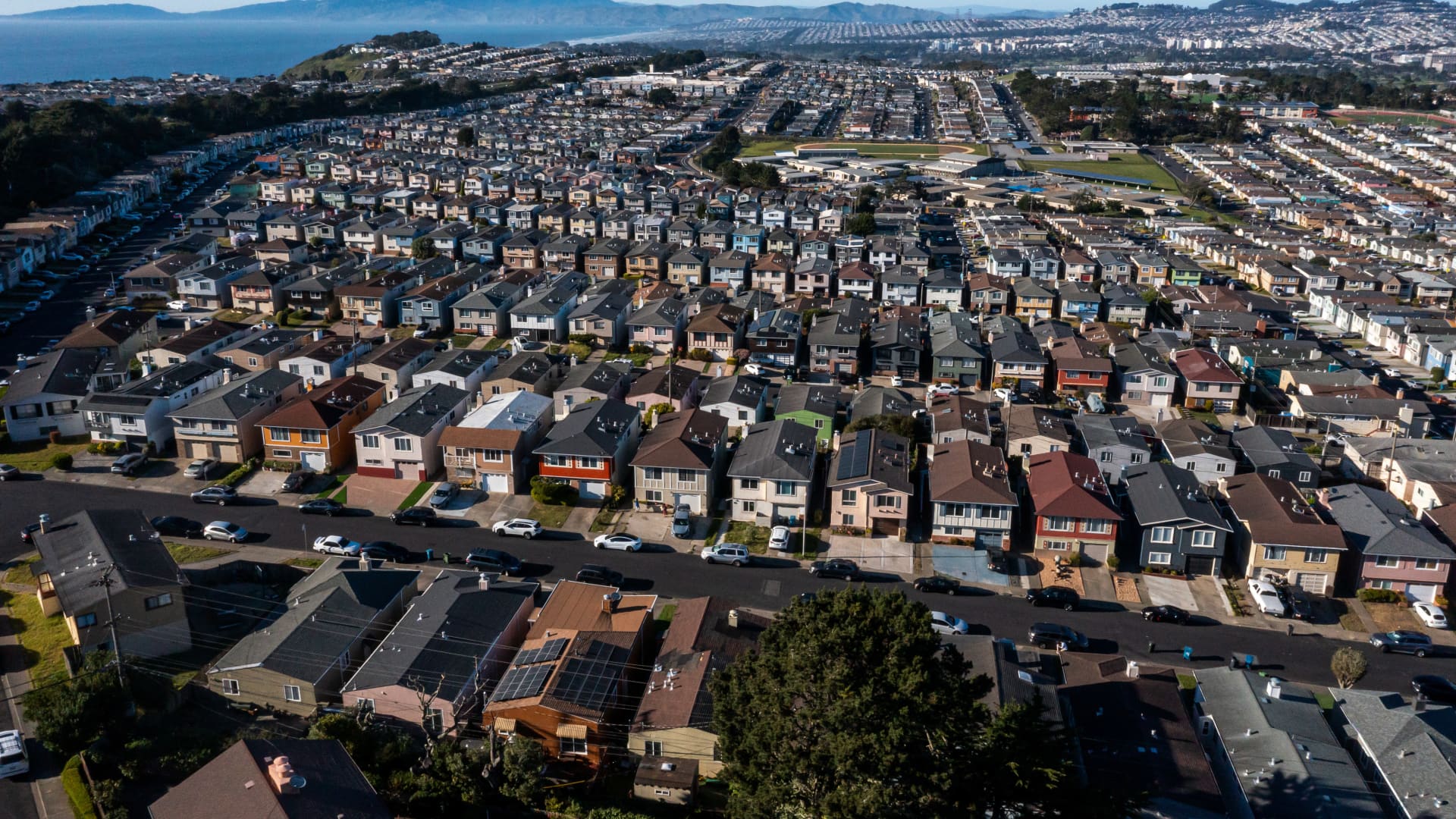
A version of this article first appeared in the CNBC Property Play newsletter with Diana Olick. Property Play covers new and evolving opportunities for the real estate investor, from individuals to venture capitalists, private equity funds, family offices, institutional investors and large public companies. Sign up to receive future editions, straight to your inbox. Anyone who has bought or sold a home knows how long and tedious the closing process can be. It involves antiquated paperwork requiring multiple signatures from various parties, disclosures and a heap of compliance forms. Some of the process has been digitized, but mostly not. One remedy is emerging: Put it all on the blockchain. Propy, a Miami-based blockchain technology company that launched in 2017, has been trying to modernize the closing process and recently got a big financial boost to do it. In late January, Propy announced it had secured a $100 million credit facility from Metropolitan Partners Group, a private investment firm. The money would be used, it said, to consolidate title and escrow companies into an AI-powered, end-to-end closing platform. “We have this conviction that blockchain is the next phenomenon after the internet,” said Natalia Karayaneva, founder and CEO of Propy. “The internet moved information, blockchain will move value. It already is moving money. It’s moving treasuries. However, the real estate industry is still behind.” That’s primarily because the industry doesn’t exactly understand blockchain, Karayaneva said. Blockchain is like a massive, shared, digital filing cabinet that no one person can control. Things that are recorded on the blockchain cannot be altered. “This technology allows us to record deeds and transactions, and it’s impossible to change this data,” Karayaneva said. “It allows us to be a fraudless system.” As of now Propy has purchased four established title companies, but the transition is not easy. Those title companies “have a very big fear of AI, and when we acquire them, we have this in-person training both on AI and blockchain and cryptocurrency. We have established courses and training for those escrow officers on how to do transactions, but once they understand, the transaction happens on its own,” Karayaneva said. She noted closings that once took weeks can now take just a few hours. When Propy receives a signed purchase agreement for a property, whether it’s from REITs, a real estate developer or a Realtor, its AI extracts the data – purchase agreement, address, all the contingencies, all the conditions – and then a smart contract on blockchain starts. “We do it through our fintech solutions, but then the blockchain immediately gets this data on the public blockchain,” Karayaneva said. Meet Avery Propy is also using its new funding to develop an AI agent to help facilitate deals. The agent, named Avery, responds directly to clients at any time, explaining how Propy works and what the AI does. Avery even has an Instagram account. Avery checks emails and transactions constantly, extracts all the data points, and then feeds it all into a smart contract platform. The agent can also make calls. “She is an escrow officer that never sleeps,” said Karayaneva, noting that some clients don’t even realize it’s not a human. “It’s an omnichannel communication where she can communicate with our buyers, sellers, with REITs, institutional clients, and with vendors, such as ordering mortgage payouts from vendors.” The GENIUS Act A major milestone for blockchain technology came last year with the passage of the GENIUS Act, which gave it what Karayaneva calls, “legitimacy.” It created rules for stablecoins, which are cryptocurrencies tied to the U.S. dollar. It mandated that companies issuing these coins, which are transferred on the blockchain, must actually hold real dollars or safe assets behind them. “Real estate developers and REITs started to reach out to Propy, because we’ve established this brand for so many years with our strong conviction that there was a way to legally accept cryptocurrencies in real estate, to legally record these on blockchain and in the county, of course,” said Karayaneva. “It unlocked all this huge interest by real estate developers.” Miami, in particular, where Propy is based, sees huge demand from international buyers, many of whom prefer to use cryptocurrencies. Karayaneva, who grew up in the former Soviet Union and said she saw properties seized by the central government, said she believes deeply in the potential for this technology to protect consumers, especially in developing countries. The decentralized nature of the blockchain provides an immutable record of ownership. “Real estate is the most important and the largest asset class in the world. It’s the foundation of democracy and capitalism,” said Karayaneva. “It makes sense to move this asset class on chain. People have to own this record, and they have to own it in a decentralized way.”
A $1.3 billion investment in land development, power and water infrastructure is among the measures included in the 2026–27 state budget housing package (see full list).
NEW YORK — Sony has yet to officially acknowledge the PlayStation 6, but rampant rumors and insider reports in 2026 point to a next-generation console facing potential delays until 2028 or even 2029 due to a global RAM shortage driven by AI demand, while leaked specifications suggest a massive leap in performance with AMD’s Zen 6 CPU and RDNA 5 GPU architecture.
The absence of any official announcement has not stopped speculation. As of May 2026, prediction markets show only about 25% of bettors believe Sony will reveal the PS6 before 2027, reflecting widespread skepticism about an early launch. Sony appears focused on extending the PS5 lifecycle through continued software support and the PS5 Pro, a strategy that could push the next full-generation console further into the future.
Release Date Uncertainty
Traditional seven-year console cycles would have pointed to a 2027 launch following the PS5’s 2020 debut. However, multiple reports indicate delays. Bloomberg’s February 2026 story cited sources saying Sony is considering 2028 or 2029 due to skyrocketing memory costs. Analyst David Gibson of MST Financial echoed this, noting high likelihood of a post-2028 debut as the company prioritizes PS5 profitability.
Some leakers, including Moore’s Law Is Dead and Kepler L2, maintain that production could begin in 2027 for a late 2027 or early 2028 window, but the prevailing narrative favors caution amid supply chain challenges.
Advertisement
Rumored Hardware Specs
Leaked documents and insider reports paint an ambitious picture. The PS6 is expected to feature a custom AMD chip based on Zen 6 CPU architecture and RDNA 5 GPU, potentially delivering up to three times the performance of the PS5 in key areas. Rumors suggest 24-32 GB of high-speed GDDR7 memory, a significantly faster SSD (possibly 3x the PS5’s speeds), and advanced ray tracing capabilities.
A dedicated PlayStation handheld, codenamed “Canis,” may launch alongside the main console, sharing similar AMD technology but in a more compact form. Backward compatibility with PS4 and PS5 games appears likely, providing seamless access to thousands of existing titles.
Additional features under discussion include AI-driven upscaling, enhanced frame generation technology, Wi-Fi 7 support, and HDMI 2.2 connectivity. Pricing speculation ranges from $749 to $999 depending on configuration and storage options.
Development and Production Status
Sony reportedly awarded the main chip contract to AMD years ago. Development kits may appear in 2026, with full production potentially starting in early 2027 if delays are avoided. Sony’s focus on extending the PS5 era — through strong sales and exclusive content — gives the company breathing room while navigating component shortages.
Advertisement
Mark Cerny, the PS5’s lead architect, has hinted at future technologies like machine learning enhancements in interviews, further fueling speculation about PS6 capabilities.
Strategic Context for Sony
The PS5 has enjoyed remarkable commercial success, selling tens of millions of units. Extending its lifecycle allows Sony to maximize returns before investing heavily in next-gen hardware. This mirrors broader industry trends, with Nintendo also pacing its hardware releases carefully.
A longer PS5 window could also help Sony navigate economic pressures, including rising component costs and competition from PC gaming, handhelds and cloud services.
What Fans Can Expect
While no official reveal is imminent, 2026 will likely bring more leaks, developer kit distribution and teaser patents. Gamers should anticipate continued PS5 support with major titles through at least 2027 or 2028. A potential handheld could bridge the gap, offering portable PlayStation experiences.
Advertisement
The eventual PS6 promises significant leaps in visual fidelity, loading speeds, AI-assisted gameplay and possibly new input methods. Full backward compatibility would preserve Sony’s vast game library, a key advantage over past transitions.
Industry Implications
A delayed PS6 launch could reshape the console market. Microsoft’s next Xbox (Project Helix) faces similar timing questions. The extended generation may accelerate adoption of subscription services, cloud gaming and cross-platform play as consumers wait for fresh hardware.
For now, excitement builds around rumors rather than concrete announcements. Sony’s silence is strategic, allowing the company to refine plans while the PS5 remains a powerhouse. As RAM supply issues evolve and AI demand fluctuates, the PS6 timeline remains fluid.
Fans betting against a 2026 reveal appear to have the upper hand, but rapid advancements in semiconductor manufacturing could still accelerate plans. Until Sony speaks officially, the PlayStation 6 remains one of gaming’s most intriguing mysteries — a next-generation leap that feels simultaneously close and far away in 2026.
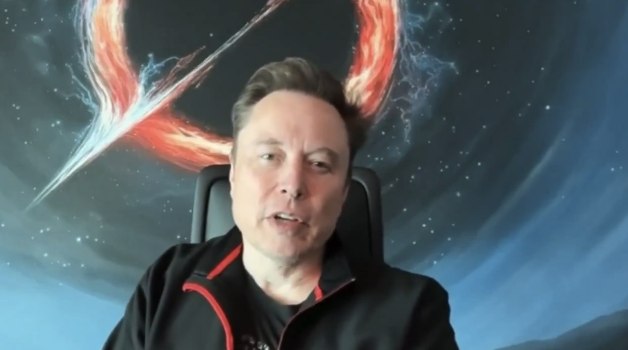
AUSTIN, Texas — Elon Musk posted a 13-year-old video clip Wednesday night that has already racked up millions of views, showing the Tesla and SpaceX CEO laughing at his younger self for deliberately choosing the “two worst industries” — electric vehicles and solar power — instead of building a search engine like Google.
In the resurfaced footage from roughly 2013, a younger Musk appears on camera in a relaxed setting, grinning broadly as he recounts early career decisions. “I could have created Google, but I decided to do EVs and solar instead,” he says, before bursting into laughter at the apparent absurdity of the choice at the time. He adds that EVs and solar were widely viewed as the “two worst industries” because of high capital costs, low margins and intense competition.
Musk’s post on X quickly became a viral sensation, with more than 11 million views and tens of thousands of likes within hours. The clip resonated deeply with followers who see it as proof of his long-term vision and willingness to bet against conventional wisdom.
Context of the 2013 Moment
The video dates to a period when Musk was already deeply invested in Tesla and SolarCity (later acquired by Tesla). At the time, electric vehicles were niche products hampered by battery limitations and high prices. Solar energy faced skepticism over intermittency and cost. Meanwhile, Google was dominating search and advertising, appearing to be an obvious, high-margin business opportunity.
Advertisement
Musk had sold his stake in PayPal years earlier and used the proceeds to fund SpaceX and Tesla. The clip captures his characteristic blend of self-deprecation and confidence, acknowledging the risk while clearly believing in the long-term payoff. “The universe brought it back to him,” one popular reply noted, referencing how Musk later acquired the X.com domain (originally his PayPal-era company) to rebrand Twitter as X.
Why the Clip Resonates in 2026
Musk’s decision has aged remarkably well. Tesla is now valued at hundreds of billions of dollars, with electric vehicles mainstream and autonomous driving on the horizon. Solar power has become one of the fastest-growing energy sources globally, bolstered by Tesla’s energy storage business. SpaceX has transformed space travel, and Musk’s other ventures — Neuralink, xAI and The Boring Company — continue pushing boundaries.
The post arrives amid ongoing debates about Musk’s influence across industries. Supporters view the clip as motivational proof that bold, contrarian bets can succeed spectacularly. Critics argue it overlooks challenges such as Tesla’s production struggles, regulatory scrutiny and labor issues. Still, the overwhelming reaction has been admiration for Musk’s foresight.
Replies poured in with quotes from Paulo Coelho’s The Alchemist (“when you want something, all the universe conspires in helping you to achieve it”) and comparisons to fictional visionaries like Tony Stark. Many users highlighted Musk’s refusal to chase “easy” markets, instead focusing on humanity-scale problems like sustainable energy and multi-planetary life.
Advertisement
Musk’s Philosophy on Risk and Vision
The video underscores Musk’s often-stated belief in first-principles thinking and willingness to tackle “impossible” problems. In interviews over the years, he has described EVs and solar as critical to addressing climate change, even when the economics looked bleak. His 2013 laugh now reads as knowing foresight rather than naivety.
Analysts note that Musk’s approach — heavy upfront investment in technology and manufacturing scale — has become a blueprint for other entrepreneurs. Tesla’s Gigafactories, vertical integration and software-over-hardware strategy have influenced industries far beyond autos. SolarCity’s early solar roofs and Powerwall batteries laid groundwork for Tesla Energy, now a major profit driver.
Broader Impact and Fan Reactions
The post also reignited discussions about Musk’s decision to buy Twitter (now X) and rebrand it, tying back to his original X.com venture. Users pointed out the poetic symmetry of the universe “bringing it back” to him. Others used the moment to praise Musk’s long-term commitment to humanity’s future, citing SpaceX’s Starship progress and xAI’s Grok models.
Not all reactions were positive. Some critics highlighted ongoing controversies, from Tesla’s self-driving technology scrutiny to Musk’s political commentary. Yet even detractors acknowledged the clip’s entertainment value and historical significance.
Advertisement
Musk has not added further comment beyond the video itself. The post continues to generate engagement, with fans creating memes, edits and motivational threads based on the laughter. Clips of the moment have spread across YouTube, TikTok and Instagram Reels, amplifying its reach beyond X.
Legacy of Contrarian Bets
This 2013 clip fits into a larger pattern. Musk has repeatedly chosen difficult paths: reusable rockets when NASA relied on expendable ones, electric cars when gasoline dominated, and now brain-computer interfaces and AI safety. Each time, skeptics called the ideas impractical or doomed. Each time, Musk persisted until the technology caught up.
Business historians compare Musk to figures like Henry Ford or Thomas Edison — visionaries who bet on transformative technologies despite early ridicule. The clip humanizes Musk, showing that even he found the odds amusing at the time, yet pressed forward anyway.
As Tesla pushes toward robotaxis and full self-driving, SpaceX targets Mars missions, and xAI advances large language models, the 2013 laughter feels prophetic. What once looked like the “two worst industries” now drives trillion-dollar valuations and global conversations about energy, transportation and humanity’s future.
Advertisement
For Musk’s millions of followers, the post serves as both entertainment and inspiration. In an era of short-term thinking and quarterly earnings pressure, it reminds viewers of the power of patience and conviction. The universe, as the replies repeatedly note, did conspire to help Musk achieve his goals — but only because he chose the hardest road first.
Whether one views Musk as a visionary or a controversial figure, the 2013 clip captures a pivotal moment of self-aware humor that continues to captivate audiences more than a decade later. As Musk’s companies reshape multiple industries, this throwback video stands as a lighthearted reminder of how far contrarian thinking can carry someone who is willing to laugh at the odds — and then beat them.


















































You must be logged in to post a comment Login