

Politics
The House Article | We’re Going To Need A Bigger Stick: Britain Seeks AI Sovereignty


(Collectiva/Alamy)
10 min read
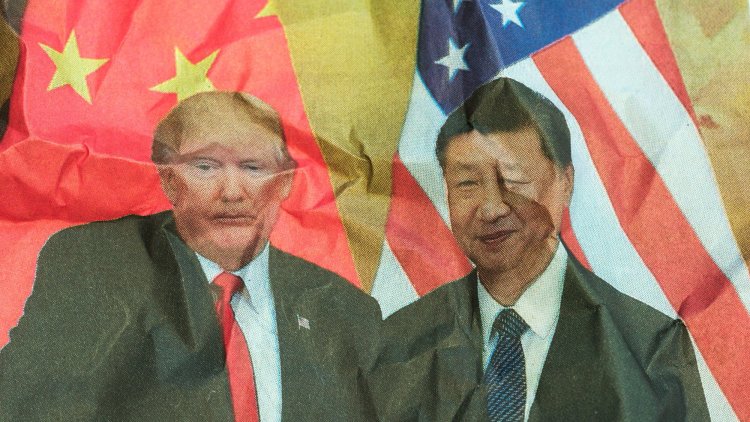
Britain has now made clear that it wants AI sovereignty, of a kind. But there are numerous hurdles in the way, reports Matilda Martin. For a seat at the table with the US and China, say experts, we’re going to need a bigger stick
The battle for tech supremacy has taken many forms: nuclear weapons in the 1940s; the space race in the Cold War. Today, it is artificial intelligence – and the stakes are high.
As Keir Starmer limits British involvement in the Iran war, President Donald Trump’s frustration grows – and the UK’s so-called “special relationship” with the US looks increasingly fractured. What would it mean, many wonder, if an irritable US President decided to ‘pull the plug’ on our access to American tech infrastructure?
When Trump placed sanctions on the International Criminal Court last year, officials lost access to email accounts and found their bank accounts frozen, bringing the tribunal’s work to a halt. The event was a small glimpse of how quickly a tech superpower can exert pressure.
Few believe Britain becoming the victim of such a scenario is likely, for the economic repercussions for the US would be hugely damaging. But in an era of geopolitical volatility – and a US President famed for his unpredictability – the UK is currently vulnerable to pressure and manipulation in a way that leaves many uncomfortable.
“Under the last government, they were very happy to say to the sector, particularly the big American companies, ‘You know this stuff better than we do. We trust you’,” says Labour MP Emily Darlington, who criticises this approach as “naïve”.
“We might not yet know how easy it would be for the US to pull our access to AI, but we do know the threat is real,” warns senior research fellow Roa Powell at think tank IPPR.
“Technology giants have repeatedly threatened to pull their services from countries which regulate their technology, while at the same time AI is beginning to be treated as a national security asset that cannot be shared with everybody.”
If UK access to US companies providing cloud services as well as other AI products were cut off, the results would be catastrophic. Could US companies stand independently from their government on such a decision?
“It’s not clear,” Darlington says. “The US has this weird law that essentially all those companies report to the US.” While companies like Amazon Web Services and Palantir have made repeated assurances to the UK that “we’re separate from the Americans”, she adds, this would be a true test of that premise.
At the end of April, Tech Secretary Liz Kendall delivered a speech signalling a step change in the UK’s approach to AI.
“This government believes AI sovereignty is not about isolationism or attempting to pull up the drawbridge and go it alone… For Britain, AI sovereignty is about reducing over dependencies and increasing resilience,” she told an audience at defence and security think tank, Rusi.
The government is clearly concerned about the UK’s future if it allows other larger players like the US and China to dominate the market. Experts say this anxiety is well founded. Powell of IPPR warns that “this government has a narrow window before the concentration of power in AI markets becomes irreversible”.
In 1901, the soon-to-be US president Teddy Roosevelt repeated a famous proverb: “Speak softly and carry a big stick.” It is an anecdote Irish political scientist and author Henry Farrell refers to when he speaks to The House from the US. “If you don’t have a big stick,” he continues, “search around as quickly as you can to find at least a medium-sized cudgel that will allow you to push back.”
Farrell, who co-authored Underground Empire: How America Weaponised the World Economy, has two suggestions for smaller powers like the UK.
“First of all, where they can sort of build up some degree of redundancy, some degree of alternative sourcing, they absolutely should do.
“And secondly, everybody ought to be thinking about their forms of counter leverage in a world where you might see… substantial amounts of pressure being applied upon you to go into one direction rather than the other.”
Kendall’s clarification of what sovereignty means for the UK is welcomed by the Tony Blair Institute (TBI).
“It’s okay for the UK to have some dependencies – no-one can go it alone in the age of AI. And it needs to have leverage. The UK does have great talent, great universities, great startups, but these are not enough to guarantee the country’s competitiveness and security. Britain must also build critical technologies that others depend on. The future global economy, and geopolitical order, is going to be built on technology,” says TBI director of science and technology Keegan McBride.
“For better or worse, this is the way of the world and how power and influence will be exerted. What’s important is that the UK responds now, otherwise it risks losing its seat at the table and the prosperity that will come from the AI revolution.
“The country must focus on becoming strategically important to its allies and embedding itself in the AI and frontier technology economy of the future – not the digital economy of today.”
The most famous example of a small and vulnerable nation dominating an area of the market is Taiwan’s chip industry, which also ensures America has an interest in the nation’s independence from China. Another is the Holland-based photolithography company ASML.
“They’ve got the Hormuz strait on AI technology,” says Dan Howl, head of policy and public affairs at the chartered institute of AI, BCS, referring to the vital shipping line in the Middle East that has allowed Iran to maintain a chokehold on the world’s oil industry.
We might not yet know how easy it would be for the US to pull our access to AI, but we do know the threat is real
While some countries have interpreted AI sovereignty as independence – for example, France’s efforts to build its own sovereign AI stack – the UK government’s approach is seen by some as more pragmatic. Experts say pursuing “full sovereignty” would require a huge injection of cash, mean less secure and competitive products and reduce the ability to influence global standards. Instead, they favour an approach that would allow the UK a certain degree of leverage and control, just like the “big stick” that Roosevelt was describing more than a century ago.
As with many aspects of its infrastructure, the overwhelming feeling among experts is that the UK has rested on its laurels somewhat when it comes to innovation. “The political establishment has failed to invest in and secure the foundations of our country’s sovereignty.
And what we need to make sure is that in the decades ahead, which are going to be so much about digital AI and data, we don’t fail again,” says former minister Josh Simons.
The Labour MP, who in the past worked for Meta in its AI programme, underlines the importance of sovereignty as a whole: “Sovereignty is the ability to, over relatively long periods of time, shape your own collective destiny.”
He believes that the vulnerable situation in which the UK now finds itself is the culmination of centuries of inaction: “It’s more than just the Tories. I don’t think it even just ends with the Labour government before that.
“For a long time now, we’ve assumed that trade will always be basically frictionless, that international financial markets will have very little interest in borders, and that the energy market will be a sufficiently efficient market that, provided we have diversity of supply, we’re fine. All those assumptions are just wrong – or are certainly becoming wrong.”
The UK has “an acute dependency”, as Howl puts it, on cloud services such as Amazon Web Services – integral to the functioning of the NHS, the Ministry of Defence, HMRC, policing and the courts. He explains how the experts at BCS do not think that risk is assessed “as much as it needs to be”.

While everyone can agree that the UK has fallen behind in the AI arms race, there is a live debate over where the nation’s efforts should be focused as it looks to build its arsenal.
For IPPR’s Powell, the UK’s comparative advantage lies in the AI applications layer – specialist products built on top of frontier models, like ChatGPT. She also thinks the UK should not see this approach “as a ceiling”, however, and look to strengthening areas such as chip design too.
Here, Kendall’s announcement of a new ‘AI Hardware Plan’, the details of which will be announced in June, comes into play.
Other experts highlight the UK’s strengths in aerospace, quantum technologies, health and sciences. While Kendall’s recent intervention indicates that the UK may be more decisive on where it wants to go, how it gets there could be more complicated. The House understands that government insiders are aware of how the UK’s high energy prices could discourage and hinder start-up growth, and push homegrown talent to look elsewhere.
In a recent interview with CityAM, former deputy prime minister and one-time Silicon Valley convert Nick Clegg said the UK’s energy is “too expensive” and the UK’s AI sovereignty debate is “slightly dishonest” due to its “marginal relevance”.
Emma McGuigan, AI expert at BCS, points out that the cost of running data centres is a key hurdle. If the UK hopes to achieve its AI sovereignty goals, she says, this must be addressed. A sustained reduction in energy costs would allow “the opportunity to bring the investment to build those sovereign cloud data centres”, McGuigan argues.
Energy sovereignty is thus also called into question. “Digital sovereignty is inseparable from energy sovereignty and energy is a real, physical, material constraint and precondition for the digital world,” says Simons.
Another hurdle facing the UK is its inability to keep homegrown innovators here. The most famous example is the well-documented acquisition of London-based AI firm DeepMind by Google for $400m in 2014. As Kendall hopes to encourage the scale-up of UK businesses through the launch of the Sovereign AI fund, the challenge will be keeping those companies in Britain.
Unless we secure it, there’s no guarantee that we can have the freedom that we’ve enjoyed for several hundred years
“There’s a culture within technology about selling things,” Howl says. “The real question is, what happens when the start-ups start getting bids from New York and California. That’s the real problem.”
He explains: “The reality is that the British market just isn’t big enough to be able to scale these really good companies to a way in which that would be advantageous to the owners, and that is compounded by the culture. But the solution to that would probably be to work with Europe and to genuinely get access to a much bigger market.”
What is at stake? Simons has a “slightly apocalyptic view of where the world is heading”. But he also insists Britain “can’t be gripped by the throat by those who don’t share our commitment to freedom”.
“The future economy and the future of warfare and the future of security, technology, and in particular, AI, data, is going to be one of the foundations of power. So, unless we secure it, there’s no guarantee that we can have the freedom that we’ve enjoyed for several hundred years,” says the Labour MP.
Kendall has fired the starting gun on the UK’s drive for its version of AI sovereignty. But can this middle power successfully insert itself into the supply chain and find Roosevelt’s “big stick” – or is the UK joining the race with too big of a handicap?


Imagine a photograph of your child taken on sports day. They’re laughing, probably slightly out of breath, wearing their school kit.
It’s the kind of image that ends up in the school newsletter, on the website, shared with pride by staff who want to show what school life looks like.
Now imagine that same photograph being found by a criminal who lifts the face of the child in seconds and, using freely available AI tools, turns it into something so harmful I am not going to describe it in detail here.
That image is then sent to the school with a demand: pay up, or it goes online.
This is not a hypothetical. The scale of child abuse imagery has grown from fewer than 10,000 images 25 years ago, to tens of millions today.
This has happened to schools in the UK, and most schools have no idea it is possible.
I know that’s uncomfortable to read. Though, as the mother of two teenage daughters, I strongly believe that all parents deserve to know the internet where their children’s photographs are being uploaded is not the same internet that schools developed their safeguarding policies for.
I didn’t come to this issue as a parent whose child was affected. I came to it as someone who has run branding agencies for the last two decades, sitting in a meeting with a school I had been working with on a rebrand – a school I knew well, whose team I respected.
It was during that work it came to light that a number of the school’s pupil photographs had been stolen, turned into deepfake abuse material, and that the school had been sent a ransom demand.
I sat there and listened to what had happened to those children. And my first thought – before anything to do with technology, platforms, or solutions – was simple: I never want this to happen to my daughters.

I have spent my entire career working in branding, working with businesses, charities and organisations, of all sizes, to tell their stories through imagery. I understand better than most what those photographs mean and why they matter, not least for schools.
The school newsletter, sports day, the nativity play – these are not trivial things, they are how schools communicate joy, build community and celebrate the children in their care.
Schools should not have to stop celebrating their pupils or sharing moments with their communities, but they do need tools designed for the internet those images now live in.
The consent form most parents sign at the start of each school year was written for a different world. It was designed to address whether your child’s image could be used – shared in a newsletter, published on a website, posted on social media.
It was not written to address what happens once that image is publicly accessible online. Because when those consent forms were first written, what is now possible simply wasn’t.
AI tools that can take a child’s face from a school website and generate abusive content from it are not hypothetical. They are freely available, require no technical expertise, and the safeguarding gap they have created is one that almost no school in the country has a policy to address.
New research that we commissioned found that while 85% of UK teachers are aware that AI criminals are targeting school photographs, fewer than one in three have any AI or deepfake-specific policies in place, and nearly a quarter said their school has already been targeted.
This isn’t about stopping schools from sharing images. It’s about understanding what those images are exposed to once they’re online.
Before any parents sign that consent form, they should be asking their child’s school so many more questions – from what happens to images once they are online; whether their photography policy has been updated to reflect the risks of generative AI; to what protection they have in place for pupil images shared on public-facing channels.
These are not unreasonable questions and are simply the ones that every parent of a school-age child should now be asking, and that every school should be ready to answer.
But let’s be clear, schools are not to blame for this.
They shared those photographs in good faith, as they always have. It’s just the world those images are being shared into has changed, and the frameworks most schools rely on have not yet caught up.
Consent forms, GDPR policies, online safety training: none of these protect a child from a criminal who takes their image without asking. AI criminals don’t need permission. They take images directly from school websites and social media without ever making contact.
What’s needed now isn’t less sharing, but safer sharing. That’s the problem I set out to solve when I built Aidos – a safeguarding platform that makes every pupil in a school photograph permanently unidentifiable before the image is shared online.
Not blurring, not pixelation, but a full replacement of every child’s face with a realistic AI-generated substitute, so that the image can never be traced back to a real child.
Schools can keep sharing everything they have always shared. The difference is that those images can no longer be used to harm the children within them.
Protecting children’s digital identities is becoming one of the defining safeguarding challenges of the AI era. Schools shouldn’t have to face it alone, but as parents we have a role too and it starts with asking the question.
So, before you sign that consent form this September, ask your school what they have in place. They may not yet have the answer, but the fact that you’re asking means they’ll need to find one.
Carole Osborne is the founder and CEO of Aidos, an AI safeguarding platform that makes pupils in school photographs permanently unidentifiable before they are shared online.
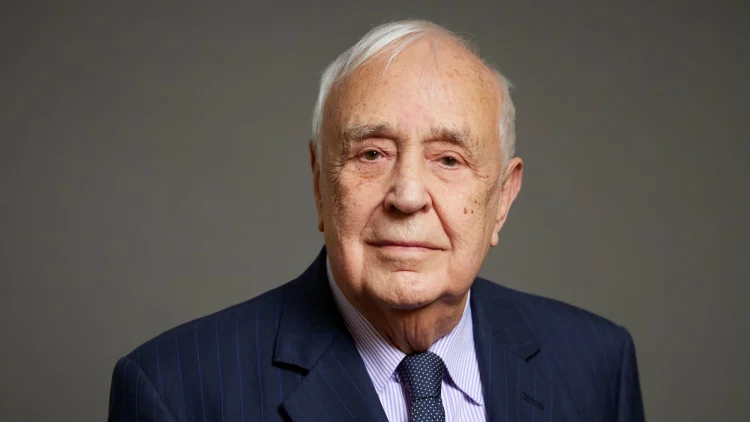
Lord Skidelsky of Tilton: 25 April 1939 – 15 April 2026 | Image courtesy of UK Parliament

4 min read
A towering economic historian with a nomadic political career, and author of acclaimed studies of Keynes, what set Robert Skidelsky apart was not just his sense of mischief or his clarity of thought but his insistence on an ethical approach to economics
Robert Skidelsky who died on 15 April 2026 will be remembered as a towering economic historian, a public intellectual, and a politician who was never afraid to speak or to change his mind.
In his political career he was something of a nomad, apparently uncomfortable with the constraints of politics. He left Labour in 1981 to become a founding member of the SDP. Appointed a life peer in 1991, he took the Conservative whip from 1992, briefly becoming a shadow culture, then Treasury, minister. In 2001 he crossed the floor to become a formidable crossbench peer from where he would interrogate ministers for their dependence on Treasury orthodoxy – whether applied to budgets, or the fallacies of austerity. In recent years he became a more controversial figure for his views on the Russia-Ukraine conflict.
Robert was born in Harbin, China, shortly before the start of the Second World War, the son of wealthy British citizens of Russian ancestry. Interned by the Japanese but released during a prisoner exchange, the family came to Britain where he was educated. (Brighton College and then Jesus College, Oxford.) He remained engaged in the teaching and learning of history and economics and related controversies all his life, including a memorable spat with the revised GCSE history syllabus in 1990. In 2006 he retired from the University of Warwick after 28 years as professor, first of international studies and then of political economy.
His intellectual life was much more consistent than his political journey and more celebrated. His magisterial biography of John Maynard Keynes, without doubt one of the greatest biographies of the last century, was originally intended for publication in 1972 as a modest volume. The first volume was published in 1983. The last of the trilogy was published – to enormous public acclaim – in 2000. It was described by then-chancellor Gordon Brown, himself a man of ideas, as “masterful”.
Most biographers grow to loath their subject. Even the keenest biographers draw the line at moving in with them. Robert revelled in it. He, Augusta, his beloved wife of over 55 years, and their three children, lived for many years In Tilton, where Keynes himself had lived from 1925-46, a stone’s throw from the Bells at Charleston Farmhouse where, in 1919, Keynes had written much of The Economic Consequences of the Peace.
His intellectual life was much more consistent than his political journey and more celebrated
Even fewer biographers go on to apply their subject’s special subject to solve the problems of a contemporary world. Robert did. He re-introduced Keynes to a new generation facing a global economic challenge in 2008 and showed how when financial crises occur, Keynesian economics, as now prime minister Gordon Brown was to prove, would be critical to restoring economic stability in the place of free market chaos.
Robert drew all the lessons from this. His brilliant analysis of the credit crunch in Keynes: The Return of the Master (2009) was described as “righteous in [its] thunder”.
Robert was no abstract academic. What set him apart was not just clarity of thought and language (woe betide the sloppy generalisation or the misplaced allusion) and his sense of mischief, but also his insistence on the ethical foundations of economics and its human impacts. He was a cartographer of shifting ideas as much as a biographer. In his book How Much is Enough?,
co-authored with his son Edward in 2012 and which decried the obsession with growth, he described his own discipline – economics – as “absurdly narrow”.
His final speech in the House of Lords, on 17 March, railed against youth unemployment. Ending with a 1933 quote from Keynes, it serves as Robert’s valedictory: “‘Look after unemployment, and the budget will look after itself.’ That may be too bold for our rulers today, but I say to the Chancellor that if one wishes to gain anything then one needs to dare in order to gain something.”
Robert dared to think and dared others to do so as well. That is his legacy.
Baroness Andrews is a Labour peer


A Palestinian lawyer, who is an Israeli citizen, has been beaten to a pulp by police in Israel after they invaded his apartment in Be’er Sheva.
Saleh Khalil Faisal Na’ama‘s attack comes amid rampant and escalating Israeli violence and land theft perpetrated on Palestinians under the apartheid occupation.
Israel’s daily newspaper Haaretz got hold of body-worn camera footage from police during the illegal raid, which was triggered by a complaint from an off-duty cop about noise from the apartment.
The instigator of the complaint and two police officers forced their way into Na’ama’s apartment in southern Israel. They attacked him and his relatives, a doctor and nurse, it was reported.
Na’ama suffered serious injuries to his eyes, kidneys and nose, and underwent surgery.
Israel is a racist, terror state.

Featured image via Haaretz
By Skwawkbox
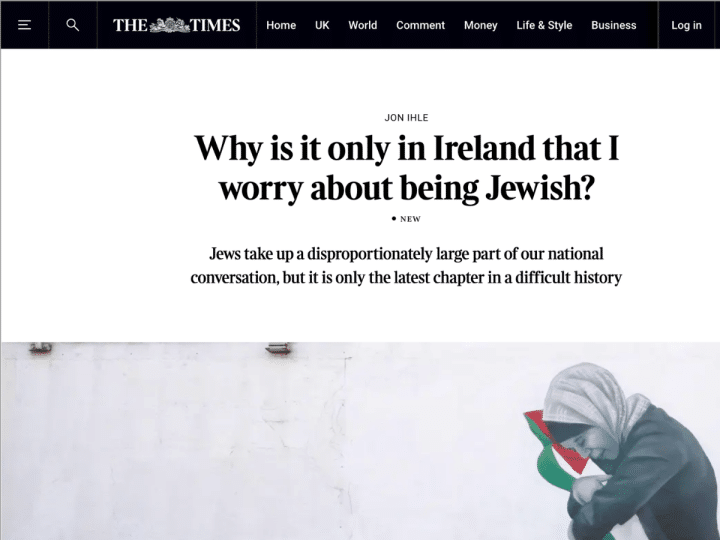

The Times has continued its decline as a place with zero editorial standards by printing evidence-free anti-Irish shite that ought to have been thrown in the bin with a giant red ‘Citations Needed’ stamped across its face. The piece by Jon Ihle claims that the country is unique among European nations in its hostility towards Jewish people. He says:
…when I travel around Europe on my Irish passport, whether to Rome, Paris, Amsterdam or Cologne — every one of which was a site, within living memory, of Jewish persecution — I don’t worry at all.
Yet at home in Dublin, I do worry.
In fact, in deeply irresponsible fashion, Ihle goes on to engender fear in Ireland’s 2,000 member Jewish community by suggesting there are antisemitic child murderers waiting to strike at any moment:
I worry every time I attend a Jewish community event that this will be the time someone gets through the many layers of security to attack us. I worry that my partner, who is publicly visible as a Holocaust education activist and a Jewish business owner, will be targeted. I worry that when I bring my six-year-old son to places where other Jews are present, I’m putting him in danger.
The writer spends the best part of a dozen or so paragraphs providing precisely zero meaningful evidence to support this suggestion. His best attempt is – and you’ll be shocked – that strong pro-Palestine sentiment in Ireland is evidence of burning hatred of Jews. He pursues the smear beloved of those seeking to crush Palestine activism by conflating:
….a context of relentless protest against Israel and a boycott movement that is trying to isolate the country from the community of nations…
with “violence against diaspora Jews…around the world”. The latter is a real issue, and should be taken seriously. Notice, however, that Ihle is talking globally. There is no indication that Jewish people are under violent threat in Ireland.
We may have said this before – protesting ‘Israel’ isn’t antisemitic
Furthermore, the idea that it is linked in any way to the overwhelmingly peaceful Palestine solidarity demonstrations that often contain large Jewish contingents is a total fiction. Ihle goes on to claim an:
…atmosphere in Ireland [that] is almost febrile at times.
This is as he adds to his above comments by mentioning the campaign to stop the Ireland vs ‘Israel’ football match, and Ireland’s withdrawal from Eurovision.
It is entirely appropriate for so-called ‘Israel’ to be relentlessly protested and ostracised – this is the only meaningful way of holding the genocidal terror project to account. Especially in the absence of continued failure to act by governments across the world, including Ireland’s own complicit Taoiseach Micheál Martin.
Yet more egregiously, The Times’ own human reality distortion field generator proceeds to claim that “Irish Jews end up as collateral damage” through actions like the call for Herzog Park to be renamed.
Ihle says:
Before he was president of Israel, Chaim Herzog was an Irish Jew…
This is indeed correct. However, and significantly more pertinently, he was also a fucking war criminal piece of shit. As pointed out by the Canary, this brutish coloniser:
…served in the Zionist Haganah paramilitary group, which carried out atrocities in the years leading up to the Nakba, and during the mass ethnic cleansing process itself. Following this, he is described as having “built and led the establishment of IDF Military intelligence”. In 1967 he became military governor of occupied East Jerusalem and the West Bank, and was integral in the ethnic cleansing of Jerusalem’s Mughrabi Quarter, calling the area a “toilet” that the Zionists “decided to remove”.
No one in Ireland is objecting in the least to the park being named after another Irish Jewish person. Jews for Palestine Ireland backed the campaign to get rid of the Herzog stain, and replace it with one of:
…many worthy names to choose from – Harry Kernoff, Estella Solomons, Con Leventhal, David Marcus, and Robert Briscoe, to name just a few options.
The Times printing racist clairvoyance masquerading as fact
Ihle continues his descent by engaging in mindreading, saying:
If “horror in Gaza” is the first thing that springs to mind when you hear “Jew in London”, you should ask yourself some hard questions about why.
You should indeed, but given this is a rather over-ambitious attempt to engage in telepathy, we don’t have any actual – here’s that word again – EVIDENCE, to suggest such thinking is occurring. Apparently Ihle the Celt Whisperer has established that it is, however. Perhaps he can get his calipers out and instruct us that it’s the unique structure of the Irish skull that allows his brain waves to penetrate our feeble defences.
Ihle proceeds, further sans citations, through more fictions about supposed widespread latent Irish antisemitism on social media. So widespread apparently that he can’t find a single example to substantiate his case.
We then get a telling paragraph on so-called ‘Israel’ and Palestine, in which Palestinians are merely the “perceived underdog”. You know the ones who have had the equivalent of over six nukes dropped on them by Zionist butchers over the past two and a half years? Yeah, our mate Jon’s still on the fence about who’s the underdog there. Meanwhile, the Zionist entity’s indisputable status as a “colonial occupier” gets scare quotes.
So yeah, several hundred words, and nothing of any substance, amounting only to an anti-Irish diatribe. File this as case #20,231,007 under “more rubbish intended to smear Palestine activism via conflation with antisemitism”.
Featured image via the Canary
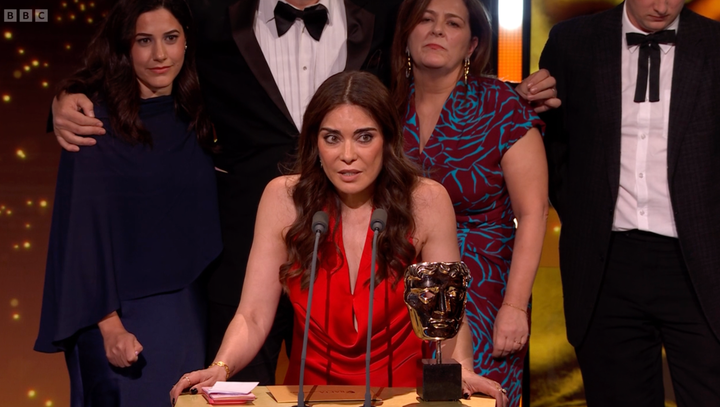
The makers of the award-winning Gaza: Doctors Under Attack had some choice words for the BBC after the documentary was honoured at this year’s TV Baftas.
On Sunday night, Gaza: Doctors Under Attack picked up the Best Current Affairs title at the TV awards show.
Although the BBC commissioned the documentary in 2024, and had originally planned to air it in February 2025, the project was eventually shelved by the national broadcaster due to concerns about impartiality.
The BBC said in a statement at the time: “We have come to the conclusion that broadcasting this material risked creating a perception of partiality that would not meet the high standards that the public rightly expect of the BBC.”
In the end, the documentary aired on Channel 4 instead, with Doctors Under Attack – which highlighted the plight faced by medical professionals in the Middle East – among the winners at the TV Baftas over the weekend.

Journalist Ramita Navai said on stage: “Israel has killed over 47,000 children and women in Gaza. So far, Israel has bombed and targeted every single one of Gaza’s hospitals. It’s killed over 1,700 Palestinian doctors and health care workers. It has imprisoned over 400 in what the UN now calls the medicide.
“These are the findings of our investigation that the BBC paid for but refused to show. But we refuse to be silenced and censored. We thank Channel 4 for showing this film.”
After she dedicated the award to the Palestinian doctors and medical workers currently being detained in the Middle East, producer Ben De Pear concluded: “Just a question for the BBC – given you dropped our film, will you drop us from the Bafta screening later tonight?”
The BBC aired coverage of the TV Baftas on a two-hour time delay, featuring De Pear’s closing comment in the broadcast, as well as an edited version of Navai’s speech, omitting the statistics she provided on stage, but including her criticism of the BBC and praise for Channel 4.
Earlier this year, the BBC faced backlash for editing out pro-Palestine comments from acceptance speeches in its coverage of Bafta’s film awards.
A spokesperson said in February: “The live event is three hours and it has to be reduced to two hours for its on-air slot. The same happened to other speeches made during the night and all edits were made to ensure the programme was delivered to time.”
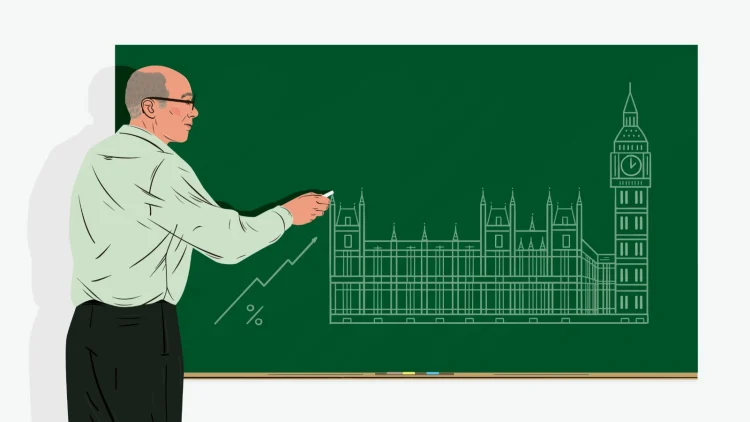
Illustration by Tracy Worrall
4 min read
Lessons in political science. This week: sleep
There was a night, many years ago, when I was drifting off to sleep listening to the radio and the last thing I heard before the land of nod was Geoff Hoon, on The World Tonight, doing a good job defending the indefensible. When the radio woke me up in the morning, there he was again, this time on the Today programme, still on a sticky wicket but batting with gusto.
The more critical of you might say that both falling asleep and waking up to Geoff Hoon is Too Much Hoon, and the sort of thing that only Mrs Hoon should experience, but he was then one of the university’s local MPs, always very helpful with student requests and the like, so there will be no cheap gags like this here. See it, instead, as a small and perhaps unremarkable example of the reservoirs of energy required by frontline politicians.
Ditto for the last day of April, which marked 21 years since I first appeared as an election night anorak. Election all-nighters, fuelled only by coffee and adrenaline, may be great fun for commentators and journalists – it’s one of the highlights of my year – but they seem much less enjoyable for politicians, many of whom have been campaigning for weeks before and would much rather feel a pillow beneath their head. Those whose parties are on the up at least get to enjoy the bragging rights, but the ones I’m always most impressed by are those who have got a right kicking from the electorate – ‘well, it’s certainly been a difficult night for us’ – but who are still there at 4am, fighting the good fight.
Or take that bit in Doctor Who, when the Doctor manages to undermine Harriet Jones, the prime minister, by whispering the phrase “Doesn’t she look tired?” to one of her aides; those four words prove to be enough to cause her downfall. It’s much quoted, but implausible. Of course she looks tired! She’s the prime minister; they all look like that. Exhaustion is part of the job description.
It’s less obvious that this is all a good thing. There are plenty of studies on how sleep deprivation lowers your cognitive abilities (although you don’t need an academic study to know this if you’ve been a parent). Bill Clinton once said that every important mistake he’d made in his life, he’d made because he was too tired – although he clearly wasn’t too tired for some of his mistakes.
New research just published in Political Psychology has now also found a link between the quality of sleep and political participation. Based on European Social Survey data from 12 countries, including the UK, researchers found that individuals who report good sleep are more likely to vote, even after controlling for a range of other variables. Those who don’t are more likely to take part in non-electoral politics. The effects don’t appear consistently across countries, which implies something else might be going on, although they are found in the UK.
The paper might be thought to slightly oversell itself by claiming that “creating societies where high-quality sleep is accessible to the public is vital to the sustainability of democratic regimes”, given that the size of the effects is relatively small; even if all were suffering cheese-inspired nightmares on a regular basis, turnout wouldn’t be all that much lower. Increased levels of education, for example, drive up turnout by roughly four to five times as much as improved sleep quality does. That, however, is just the direct effect. Sleep quality will also be working as a background factor, affecting many of the other variables that drive turnout, including education, health, and so on. ‘Sleep that knits up the ravell’d sleeve of care, The death of each day’s life, sore labour’s bath, And it makes you vote a bit more’. As Shakespeare could have written.
Further reading: F Erol et al, Waking up to politics: How sleep quality relates to political participation, Political Psychology, 2026

Animal welfare campaigners held a rally outside parliament today to call on the government to tackle the brutal blood sport of fox hunting and end hunting with dogs.
The rally was organised by national animal welfare charity the League Against Cruel Sports and comes midway through a government consultation on how to ban so called trail hunting, the discredited excuse invented by fox hunts to conceal their chasing and killing of foxes.
It was attended by campaigners from the League Against Cruel Sports, Hunt Saboteurs Association, RSPCA, Wildlife and Countryside Link, Humane World for Animals, and members of the public.
The speakers included conservationists and TV presenters Chris Packham and Megan McCubbin, actor Peter Egan, Badger Trust chief executive Nigel Palmer, anti-hunt campaigner Martina Irwin and the League Against Cruel Sports rally organiser Hannah Dickson.
Chris Packham said: “Trail hunting is a lie. The overwhelming majority of the British public want to see an end to fox hunting.
“Finally, we have a golden opportunity to put an end to this barbarism and I want to encourage as many people as possible to take part in the government’s consultation to end fox hunting.”
Emma Slawinski, League Against Cruel Sports chief executive, said: “The clock is ticking on hunting with hounds and we are calling for new, stronger fox hunting laws to end this brutal blood sport once and for all.
“It’s time for change – we need to see trail hunting banned, a proper deterrent in the form of jail sentences to deter would-be hunters, the removal of all the loopholes in the law, and an end to reckless or ‘accidental’ hunting.”
The League recently published figures which showed that fox hunting is still rife – 488 foxes were seen being chased during the most recent cub hunting and fox hunting seasons in England and Wales which finished at the end of March.
The figures also showed a pattern of anti-social behaviour by hunts, with 1,220 incidents in which they wreaked havoc on rural communities. The ‘hunt havoc’ included reports of trespass; livestock worrying; hounds running amok on railway lines and busy roads – all activities inconsistent with the idea of following a trail, which is what hunts claim to be doing.
Just 23 or 3.7% of the 624 hunt meets monitored across England and Wales contained evidence of a trail being laid – and within those 23 reports there was still evidence of 22 foxes being chased.
Polling commissioned by the League Against Cruel Sports and carried out independently by FindOutNow with further analysis by Electoral Calculus in March/April 2024 found that 76 per cent of the public supported stronger fox hunting laws, with only seven per cent disagreeing.
A clear majority of voters in rural as well as urban areas across the country backed new laws to stop foxes being chased by hounds and killed, with 70 per cent of people in the countryside supporting the proposal.
The consultation is now open until Thursday, June 18, and the League has issued a step-by-step guide for anyone who wants to take part and help end illegal hunting for good.
Emma said: “We need to call time on hunting with dogs. The hunts have been deceiving the public, police and the courts and hiding their cruelty behind the smokescreen of trail hunting – let’s tackle this by giving the justice system the power to effectively tackle fox hunting.
“I urge the public to have their say on hunting with dogs and take part in the government consultation, a once-in-a-lifetime opportunity to consign barbaric fox hunting to the history books.”
More about how to take part in the consultation, and how people can make their voice heard, is available here: https://www.league.org.uk/hunting_consultation
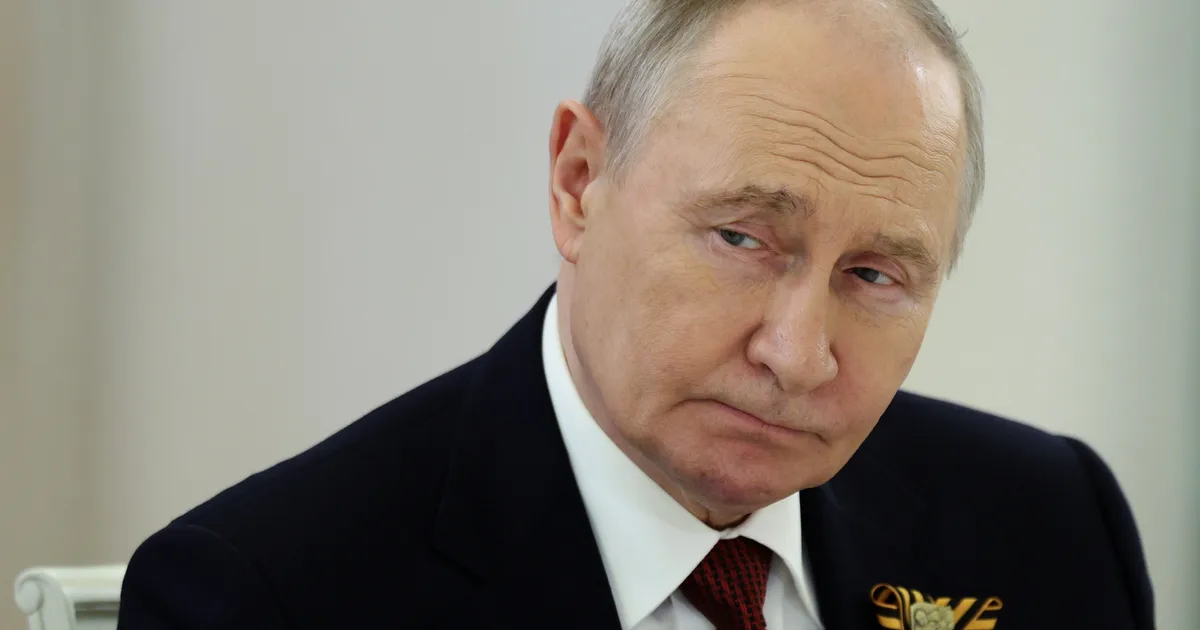
Vladimir Putin is “stuck” as Ukraine has pushed Russia onto the back foot on the battlefield, according to an expert.
The Russian president scaled down his annual Victory Day parade – meant to honour Russia’s defeat of Nazi Germany in 1945 – over the weekend even though Moscow normally uses the occasion to demonstrate its military strength.
Ukraine did not act on its threats to attack the celebration, abiding by a brief US-brokered ceasefire.
Putin also claimed he thinks the war is “coming to an end”, even though international negotiations have stalled.
Phillips O’Brien, professor of strategic studies at the University of St Andrews, told BBC Radio 4 he believes the Russian president is feeling trapped.
He said: “I think he is feeling some pressure because the war is not going well for Russia.
“Here we are, more than four years after this three-day war started. The Russian military has lost between 1.3 million and 1.4 million soldiers – that’s a massive number.
“Russian gains have all but ended in the last few months. They can’t move forward. The Ukrainians are doing very effective long-range strikes across Russia.
“It’s a very difficult situation for Putin to justify to the Russian population.
“So I think in some sense he’s trying to project confidence, this will be over soon, we’re winning.
“But it’s also a sign that he’s a bit stuck. What he said or thought was going to happen is clearly not happening.”
O’Brien pointed out that Ukraine is now using robots as frontline cavalry and to repel Russian drones, effectively cutting down on its own human losses.
Soldiers have been removed from the frontline and replaced with machines.
“The Ukrainian military is in many ways so much farther ahead than western militaries in understanding the new war,” the specialist said.
“They’ve done this to keep their casualties down. It’s a very modern way of fighting the war and it’s how Ukraine, with its smaller population, has to fight.
“The Russians have not adjusted as quickly. They’re still fighting a very manpower intensive war.
“Because of that, they’re suffering enormous casualties.”
He added: “That’s why Ukraine is arguably in a better situation in 2026 than it was in 2025.”
Subscribe to Commons People, the podcast that makes politics easy. Every week, Kevin Schofield and Kate Nicholson unpack the week’s biggest stories to keep you informed. Join us for straightforward analysis of what’s going on at Westminster.
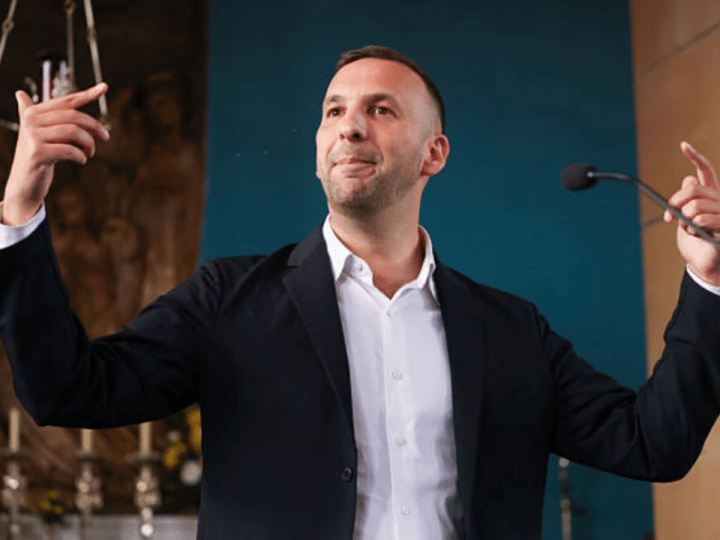

The establishment’s terror of the Greens has not diminished after the party’s powerful performance in last week’s 2026 local elections. Those elections saw the Greens more than quadruple their seats to 587, win more mayoral elections than any other party and win control of their first five councils ever. The party also gained hugely in the Scottish parliament elections, with fifteen MPs. So it’s unsurprising that the state-corporate media are still going after Green leader Zack Polanski – and getting owned for it.
Polanski has got this lot rattled
And the latest attempt shows just how nail-breakingly they are scraping the bottom of the barrel. The Telegraph is attacking Polanski for… claiming something that’s true. That its author even admits is true – though of course without acknowledging that’s what she’s admitting.
The latest hatchet-job has a headline that screams “Exclusive: Zack Polanski falsely claimed to have worked at the Ministry of Justice “. But as ‘senior reporter’ Janet Eastham admits:
Polanski falsely claimed to have worked at the Ministry of Justice while campaigning for elected office.
In reality, he was hired by an agency that supplies actors to a quango for courtroom role-play exercises.
So Polanski did work at the MOJ. He didn’t work for the MOJ, but even the Torygraph can’t claim that he ever said he did, as people promptly pointed out. Including Polanski himself:
Great memories of working inside the Ministry of Justice doing actor roleplay work – many of my former colleagues have remained friends!
Especially the time I went down to the foyer on a lunch break – and some of the staff were on strike. First time I met @UVWunion! pic.twitter.com/rF5FoRrW7Q
— Zack Polanski (@ZackPolanski) May 10, 2026
You really are the most stupid group of journalists. Doing freelance work at the Ministry of Justice is working at the Ministry of Justice. When are you lot going to learn that this stuff doesn’t land anymore?https://t.co/M2axpyxQoi
— Omar Baggili
(@OmarBaggili) May 10, 2026
We are bored of this shit now. What he said wasn’t technically incorrect, so fuck off
— Austin (@LCAustin_) May 10, 2026
Polanski – then an actor – along with other actors played roles that helped the MOJ’s agency identify suitable judges, as the rag notes in the article:
As part of the recruitment process, judicial candidates take part in mock courtroom exercises in which actors play criminals, prison guards and lawyers.
Rot
The Telegraph has just been bought by a media firm that says anyone who isn’t prepared to be loyal to Israel should leave. Whyever would it publish such a thing about an anti-Zionist party leader? This point was also made in response to Eastham’s post:
Cosplay “ journo” say wha?
— Simon Birnstingl
AI Free (@Leftwood) May 10, 2026
You write for a publication that forces you to write positive stories about an apartheid state. pic.twitter.com/2bNq5WcvJm
— bluedaysblacknights (@bluedaysbliz) May 10, 2026
EXCLUSIVE: REAL JOURNALISM BELOW.https://t.co/fvojbO7bNj
— salforddave (@saIforddave) May 10, 2026
The Telegraph claims it’s a newspape?
— Christopher Fox (@Yorkshirefoxy1) May 10, 2026
Nobody will believe you. Torygraph just smeared @misanharriman
Maybe get a decent job with a decent paper.
— JEN BROOK (@JENBROOK8) May 10, 2026
Nonsense
And others simply dismissed the self-owning nonsense as what it was – some politely, some less so:
I like him all the more he pisses you lot off.
He doesn’t play by your rules, why should he?
Why should anyone?
— extendbuzzard40 (@extendbuzzard40) May 10, 2026
This is getting boring- you don’t like the guy, we get it. He’ll go on to win elections and I strongly suggest you Cry More about that x
— SoTired (@so_very_tired) May 10, 2026
I don’t think this is the exclusive you think it is Janet

— Chutzpah (@shiftingshifter) May 10, 2026
Nobody gives a flying fuck, Janet. You claim to be a journalist but write for the Telegraph.
— James (@jspalmer_1) May 10, 2026
You pretend to be a journalist, so, glass houses and that.
— Marl Karx (@BareLeft) May 10, 2026
I like him all the more he pisses you lot off.
He doesn’t play by your rules, why should he?
Why should anyone?
— extendbuzzard40 (@extendbuzzard40) May 10, 2026
Yawn.
Try another scam guys we’re not playing along
— RobbieScowlz (@RobbieScowlz) May 10, 2026
Just fuck off now.
— Paul Harri (@PaulHar10765609) May 10, 2026
Two of you wrote this?

—
(@herd_member) May 10, 2026
Polanski has stumbled a couple of times in his handling of the establishment smears. But it seems he’s bounced back – and the election results have the ogres and elites more rattled than ever.
Featured image via the Canary
By Skwawkbox
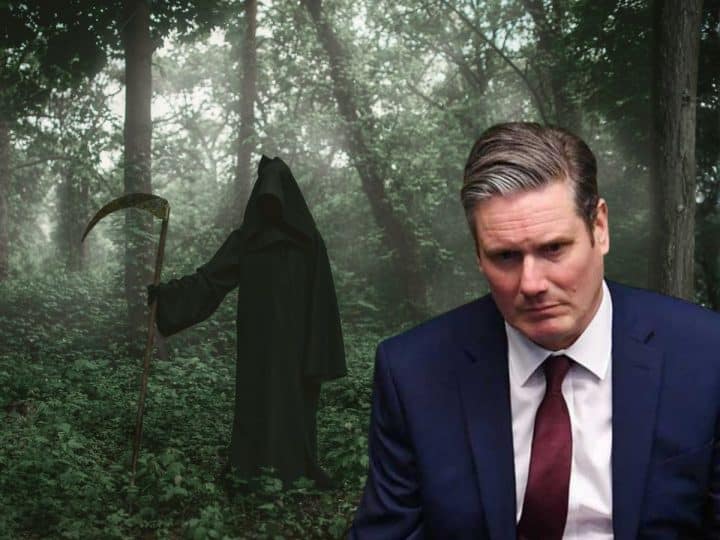

Hornsey and Friern Barnet Labour MP Catherine West has announced that she is prepared to try to challenge and depose Keir Starmer. West said that if no cabinet minister puts themselves forward by Monday, she will. A growing number of the party’s MPs have called for Starmer to resign after this week’s disastrous local election results. West told the BBC she currently has the backing of 10 MPs and is “confident” of gathering enough to trigger the contest.
Starmer has so far refused to step down, instead opting for a classic Titanic deckchair shuffle. In a transparent display of moral and political bankruptcy, his idea of ‘change’ is to dredge up two Blairite dinosaurs. 2010 loser Gordon Brown and paedophile advocate Harriet Harman have been brought back into government as advisers. Harman, in a ‘you couldn’t make it up’ moment, is the new ‘adviser for women and girls’. Clearly two or three paedophile pal scandals in Starmer’s set-up weren’t enough.
Labour — No panacea
West is anything but a panacea. An Israel supporter, she claimed to have left Labour Friends of Israel before the Gaza genocide over its backing for Israeli violence. However, during the genocide she voted in favour of banning Palestine Action as a terrorist group and did not sign letters for sanctions on Israel or for Britain to enact the International Criminal Court arrest warrant for Benjamin Netanyahu.
Still, at least it would mean no more listening to Starmer’s sociopathic whining.
Featured image via the Canary
By Skwawkbox

Richmond Castle ‘unexpectedly’ closed to visitors on Monday

Micron, SK Hynix Stocks Rise. Thank Trouble at Samsung.
Jordi Visser Buys Ethereum to Bet on AI Agent Payments

Manchester United reach agreement with Casemiro over contract clause amid transfer speculation

US brings back mandatory military draft registration

Steven Gerrard disagrees with Gary Neville over ‘shock’ Chelsea and Arsenal claim | Football


-
 Crypto World3 days ago
HarrisX Poll Found 52% of Registered Voters Support the CLARITY Act
-

 Crypto World4 days ago
Upbit adds B3 Korean won pair as Base token gains Korea access
-

 Fashion3 days ago
Weekend Open Thread: Marianne Dress
-

 Tech7 days ago
Image AI models now drive app growth, beating chatbot upgrades
-
 NewsBeat4 days ago
NCP car park operator enters administration putting 340 UK sites at risk of closure
-

 Politics2 days ago
Politics Home Article | Starmer Enters The Danger Zone
-
 Business2 days ago
Ignore market noise, India’s long-term story intact, say D-Street bulls Ramesh Damani and Sunil Singhania
-

 Tech3 hours ago
GM Agrees To Pay $12.75 Million To Settle California Lawsuit Over Misuse Of Customers’ Driving Data
-
 Sports7 days ago
2026 NHL playoff picks: Second-round predictions, series odds, Stanley Cup bracket
-

 Crypto World6 days ago
UAE Free Zone Deploys Blockchain IDs to Verify Registered Firms
-

 Crypto World5 days ago
BlackRock CEO Larry Fink Discusses a New Asset Class
-

 Crypto World4 days ago
Robinhood says Wall Street is building onchain
-

 Tech1 day ago
Auto Enthusiast Carves Functional Two-Stroke Engine from Solid Metal
-
Entertainment6 days ago
Serena Williams hits Met Gala in metallic dress after GLP-1 reveal
-

 Tech5 days ago
Apple and Samsung are dominating smartphone sales so thoroughly that only one other company makes the top 10
-

 Entertainment7 days ago
Skai Jackson Responds To AI Baklash After Viral Snapchat Photos
-

 Politics6 days ago
Met Gala 2026: Madonna’s Dramatic Red Carpet Look Steals The Show
-

 Fashion5 days ago
The Best Work Pants for Women in 2026
-

 Tech5 days ago
I tested the Xiaomi 17 Ultra’s camera and I don’t think I’ll ever go back to an iPhone
-
 Sports7 days ago
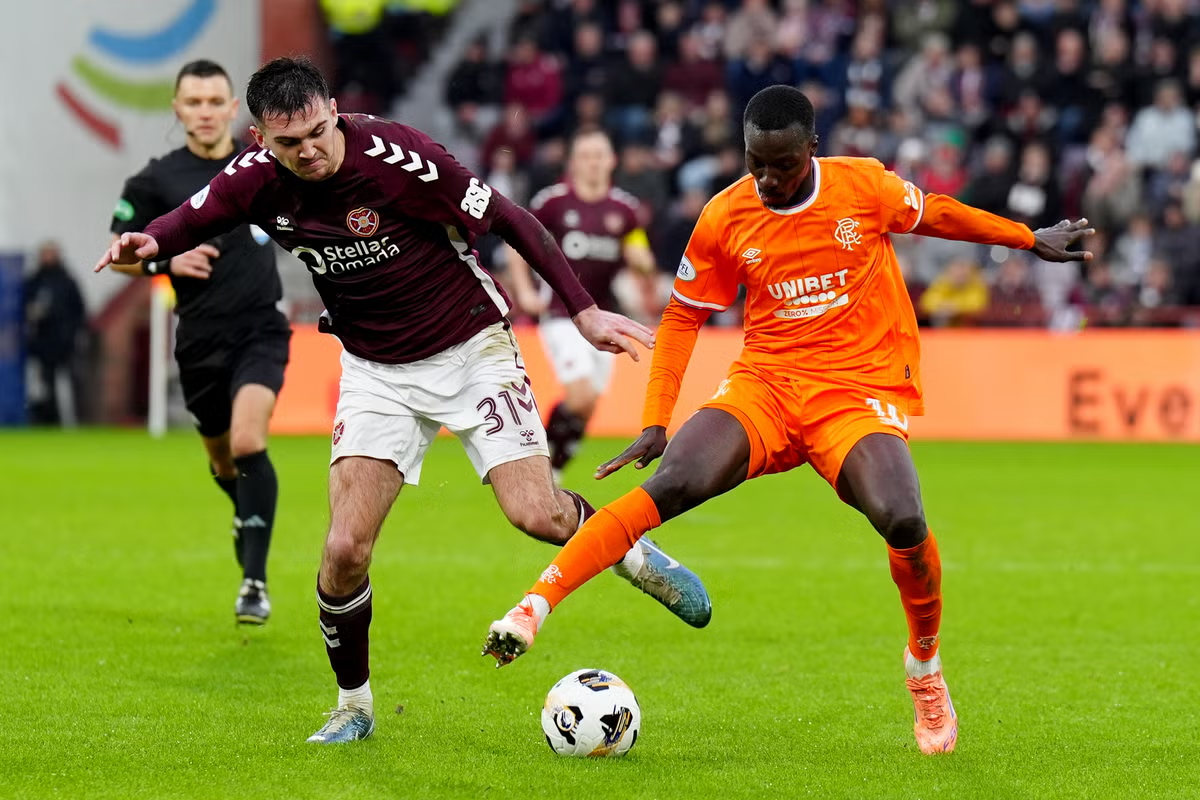
Hearts v Rangers LIVE: Prediction, team news and line-ups as Scottish Premiership title rivals meet at Tynecastle
You must be logged in to post a comment Login