

Politics
Keir Starmer Ally Urges Andy Burnham To Drop MP Ambitions

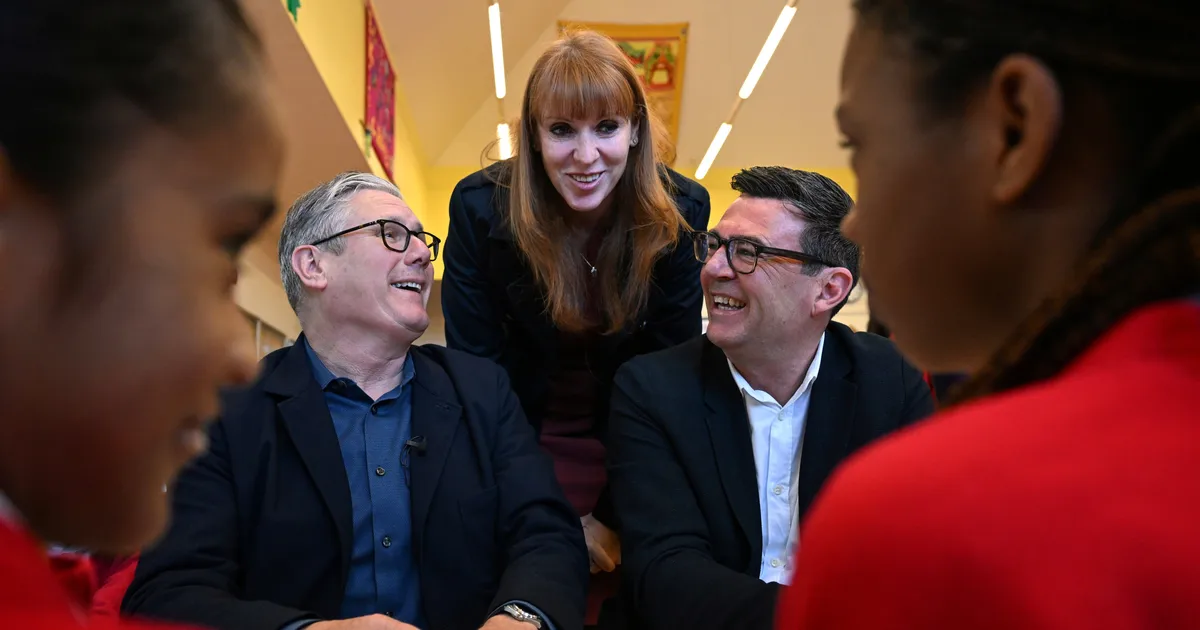
A close ally of Keir Starmer has told Andy Burnham to forget trying to become a Labour MP again before the next general election.
Supporters of the Greater Manchester mayor want him back in Westminster within months so he can challenge for the Labour leadership.
Burnham was an MP until 2017, but left parliament to pursue his mayoral ambitions.
He is understood to have held talks with Labour MPs who would be willing to stand down so he can stand in the resulting by-election.
He tried to be Labour’s candidate in the Gorton and Denton by-election in February but was blocked by the party’s ruling national executive council (NEC) at the behest of Starmer.
On Radio 4′s Today programme, business secretary Peter Kyle said: “The reason that Andy Burnham is not in parliament is not because of Keir Starmer, it’s because Andy Burnham decided to leave parliament, to give up his seat.
“He went to Manchester and he made a series of commitments to Manchester and I think those commitments should be seen through.
“Whether he comes back or not is a matter for the NEC, it’s not a matter for the prime minister or myself.
“But my own personal view is that there is a very long established pathway into parliament. I took it by standing as a candidate in 2015 in a Tory seat incidentally, I worked on a huge campaign with lots of people and I won and worked my way back in here.
“That’s the standard way back into parliament, and I think right now, after what we’ve been through last week, to suggest that the answer is to have another by-election and then a mayoral election, and all the uncertainty that would go with it, my personal view is that this is not the time for those types of actions and distractions.”
His comments came as Starmer prepares to deliver a make-or-break speech setting out how he plans to turn around Labour’s fortunes after last week’s local election drubbing.
More than 40 Labour MPs have called on the PM to set out a timetable for his departure since then, and Wes Streeting and Angela Rayner are among those also weighing up potential leadership bids.
Subscribe to Commons People, the podcast that makes politics easy. Every week, Kevin Schofield and Kate Nicholson unpack the week’s biggest stories to keep you informed. Join us for straightforward analysis of what’s going on at Westminster.


The Mental Health Foundation has released The Foundation Reports: The state of mental health inequality in the UK, based on data following 40,000 individuals over 15 years.
The report found higher levels of poor mental health than recently reported in other datasets. One in four adults in the UK (25%) now experiences mental distress. That’s 14 million people. This has risen from 17% since the period immediately following the 2008 financial crisis. And that means an additional 4.8 million people now experience poor mental health just 16 years later.
The evaluation of the Understanding Society dataset involved examining data gathered from 2009 to 2024 to discover what is driving unequal levels of mental health across the country. The size and depth of the dataset allowed researchers to evaluate how these factors impacted different social groups. Across the fifteen years, people in financial distress experienced the greatest rise in poor mental health.
Mental health inequality
In the most recent data, more than half of people who were financially struggling (54%) experienced poor mental health, more than three times the rate of those who are financially comfortable (17%).
The gap between the poorest and richest people has increased by 50% the last 15 years. There was a 28.9 percentage point gap in 2009. But that’s risen to a 43.4 percentage point gap in the most recent data.
Women and young people were also found to have been disproportionately affected. Nearly one in three young people (31%) are now experiencing poor mental health. This compares with less than one in four (23%) people aged 25 and above. More than one in four women (28%) experienced poor mental health, compared to one in five (21%) men.
Mental health inequalities between these groups have also risen steeply since 2009. This is particularly notable for younger people, for whom there was no inequality in 2009, but who now experience a 7.5% higher rate of mental distress than older groups.
The Foundation Reports follows a Delphi process, conducted by the Mental Health Foundation, in which more than 40 experts in the field identified which factors drive unequal outcomes the most.
By combining the results of the Delphi process with the evaluation of Understanding Society data, The Foundation Reports’ authors found that previous governments’ austerity policies, the Covid-19 pandemic, and the subsequent cost-of-living crisis have been the main factors driving the widening of mental health inequality.
Mark Rowland, chief executive at the Mental Health Foundation, said:
The Foundation Reports exposes how financial inequality has become intertwined with poor mental health in the UK. Almost 5 million more people are experiencing poor mental health than in 2009. It is people who are less well off, younger, or women who are hardest hit and paying the greatest price.
Clearly, decisions of successive UK governments have made mental health outcomes worse. Examples include austerity, the response to Covid-19, and failing to address the cost-of-living. These have contributed to record levels of poor mental health, particularly among vulnerable groups.
This is a UK-wide issue. We’ve found that financial inequality in the UK is the biggest driver of unequal mental health outcomes in all four nations. The UK and devolved governments’ failure to support those on lower incomes is one of the largest public health mistakes in decades. Policies have also disproportionately damaged women and younger people’s mental health.
The announcement of a mental health plan for England provides a vital opportunity for government to turn the tide. To reduce mental health problems, all UK governments must prioritise tackling poverty and access to debt advice.
We need better support for people returning to work, and greater security for those who will never be able to do so. Governments must also support women and younger people through policies that address the specific challenges these groups face, like access to housing.
Featured image via
By The Canary
Politics
Washington justifies the exclusion of Somali referee and Iranian officials ahead of the World Cup

Andrew Giuliani, head of the White House team tasked with organising the 2026 World Cup, defended the US authorities’ decision to bar Somali referee Omar Abdulkadir Artan and a number of administrative officials from the Iranian national team from entering the United States, stressing that these measures were taken for “very valid reasons”, according to AFP, reporting on a seminar organised by the Atlantic Council think tank in Washington.
The comments come at a time of growing questions regarding the security measures taken by the US in the days leading up to the start of the tournament, which it is co-hosting with Canada and Mexico, particularly following the barring of Artan from entering the country despite holding a valid visa, and the refusal to grant visas to a number of officials accompanying the Iranian national team.
Why did the US bar the Somali referee from the World Cup?
Giuliani has reignited the controversy surrounding the case of Somali referee Omar Abdulkadir Artan, after he was detained at Miami airport for several hours before being returned to Turkey, thereby preventing him from officiating at World Cup matches.
The US official refused to disclose the specific reasons that led the authorities to take the decision, but he stressed that the ban was not a random measure.
He said:
There was a referee who was not allowed to enter. I cannot go into details, but what I can say is that it was for a very good reason.
He added that US authorities are balancing the hosting of a global event open to the public and sporting delegations with the need to uphold national security requirements.
He explained:
We are trying to strike a balance between welcoming everyone and ensuring that any malicious actors attempting to enter the country under the guise of the World Cup are unable to reach the United States.
Artan, who was named African Referee of the Year for 2025 and has officiated matches in major continental and international tournaments, was set to make his World Cup debut before being barred from entering the US.
Iranian officials denied entry to the US
On the Iranian front, Giuliani confirmed that all members of the Iranian national team’s coaching staff had been granted entry to the United States, whilst a number of administrative officials had been denied visas.
He said:
All members of the Iranian national team’s technical staff are allowed to enter. There are Iranian officials who cannot enter, and that is also for very valid reasons.
He noted that some people might identify themselves as part of sporting or technical delegations, whilst having links to other entities, adding:
As you can imagine, there are people who claim to be coaches, but they may not be.
He continued that some of the names subject to scrutiny may be directly linked to the Iranian Revolutionary Guard, without providing further details or public evidence to support those claims.
Giuliani also revealed that 35 teams have so far managed to enter the United States without any players or coaches being barred from participating, emphasising that the bans were limited to a small number of officials and administrators.
These statements mark the first public justification by a senior US official for the decisions that sparked widespread controversy ahead of the biggest World Cup in history, at a time when US authorities continue to refrain from disclosing the detailed reasons behind the ban on the Somali referee and certain Iranian officials from entering the country.
Featured image via Jay Biggerstaff/Getty Images
By Alaa Shamali
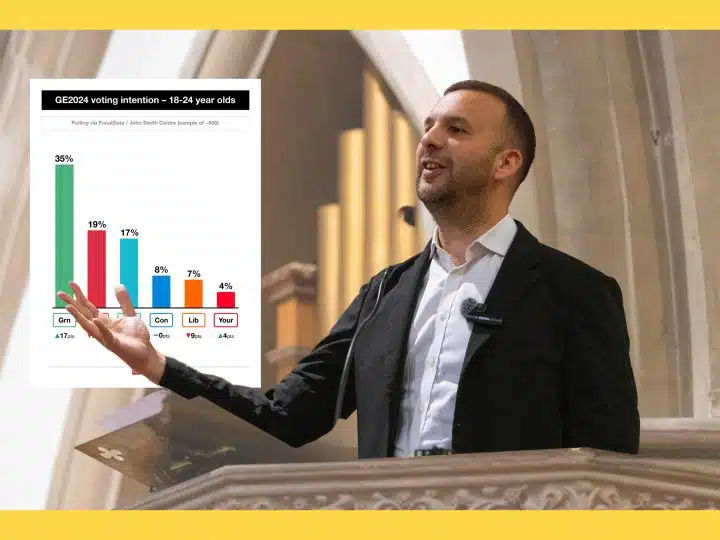
The Green Party has opened up a staggering lead with 18-24 year olds according to one poll:
(Source: @focaldataHQ) — Stats for Lefties
 POLL | Greens lead with 18-24 year olds:
 Grn: 35% (+17)
 Lab: 19% (-22)
 Ref: 17% (+8)
 Con: 8% (-)
 Lib: 7% (-9)
 Your: 4% (+4)
—
+/- vs GE2024 data pic.twitter.com/L0LBqjcjGP

 (@LeftieStats) June 9, 2026
It’s almost as if they’re the only party which is acknowledging the issues young people face.
Meeting needs
The above isn’t the only poll to have shown the Greens leading with young people. This, from March, shows the party leading with everyone under the tender age of 65:
— 18-64s — — Over 65s — Poll: @YouGov, 1-2 March pic.twitter.com/Kaa1pBYBJ3 — Stats for Lefties
NEW | Greens lead with all voters under 65, reveals latest YouGov survey:
Grn: 26% Ref: 20% Lab: 17% Con: 13% Lib: 14%
Ref: 33% Con: 26% Lab: 15% Lib: 14% Grn: 6%
(@LeftieStats) March 3, 2026
It’s not hard to see why.
Reform and the Tories mostly target retirees. This older generation is largely secure, having bought their houses at rock bottom prices. While that’s great for them, it does also make them more vulnerable to the message that ‘people are coming to steal what’s yours‘. Young people, meanwhile, can’t afford to buy their own homes, and as such they’ve nothing to conserve – excluding them from the conservative instincts of their grandparents.
Labour’s plan in government has been to pursue changes so marginal that no one even notices them. They’ve also completely abandoned young people on issues like the minimum wage:
Page 45 of Labours 2024 manifesto stated: "Labour will also remove the discriminatory age bands so all adults are entitled to the same minimum wage"
Pat McFadden is asked, when are you going to do this?
McFadden says its not up to the govt to do it. pic.twitter.com/RSVJaZvf7x
— Saul Staniforth (@SaulStaniforth) May 31, 2026
Under this Labour government, young people are facing an under-employment crisis (one which began with the Tories, to be fair).
– Mid- and lower-skilled jobs have fallen by around 1.6 million over the past 20 years
– Hospitality vacancies have nearly halved in the last 4 years
– Apprenticeships for 16-24-year-olds have fallen by 35% since the Apprenticeship Levy was introduced in 2017
– The proportion of 16-17-year-olds in paid work has nearly halved from 35% in 2006 to 19% today
– If every current inactive 18-24-year-old was in full-time work, this would contribute an additional £38 billion to UK GDP
– 58% of inactive young people (6 in 10) have never had a job
And as we reported in turn:
As life has gotten more expensive in the UK, many young people are living at home for longer. This means fewer of them need to take the dead-end jobs that many of us accepted to ensure we could pay the rent. The knock-on effect is young people have less disposable income, and as a result they don’t go out, meaning fewer jobs in the hospitality sector. Increasing the minimum wage would better incentivise work, which would better drive economic activity.
So this is what the young can expect under Labour and the Tories:
- Live with your parents.
- Be in student debt for most of your working life.
- Struggle to get a job.
- Be blamed for everything wrong with the country.
In other words, it’s increasingly hard for young people to have hope for the future. And as such, it’s easy to see why the Greens are proving to be so popular.
Greens messaging
These are the sort of messages that Zack Polanski and the Green Party are putting out:
Rising rents, cost of further education, the climate crisis.
There's lots for young people to worry about.
Yet they have a plan & the determination to end Rip off Britain.
Join us: https://t.co/Q27Jy5eX7z pic.twitter.com/EBAKibIOu3
— Zack Polanski (@ZackPolanski) May 28, 2026
"Austerity is a false economy. If you don't invest in young people, if you burden them with student debt rather than public investment, that's why we get the kind of problems we've got."
Zack Polanski on why investing in young people matters. pic.twitter.com/H7pqhJ1PhH
— The Green Party (@TheGreenParty) February 19, 2026
With the establishment parties implicitly arguing that ‘things can only get worse’, it’s easy to see why the Greens are cutting through.
Featured image via Jon Rowley (Getty Images)
By Willem Moore
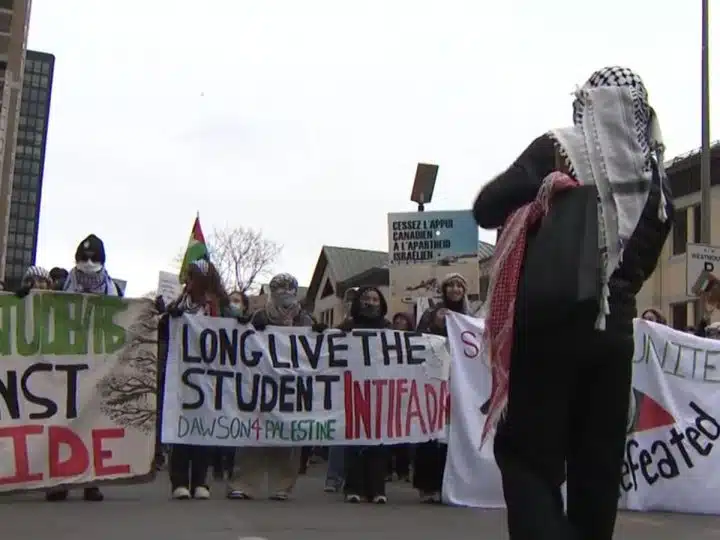
A 14-year-old activist stood up to an Israel supporter’s aggression during an assault in Montreal, Canada yesterday, 9 June 2026. The aggressor was a woman known as Sandra allegedly associated with white supremacist media. The Canadian government continues to support Israel’s genocide.
Embarrassment in Montreal
As the young man filmed the assault, the woman tried repeatedly and unsuccessfully to grab his phone and intimidate him. Uncowed, he turned his attention to her companions, embarrassing one man enough to have him claim that he is “no bloody Zionist”:
View this post on Instagram
One observer commented:
A Zionist woman named Sandra ATTACKED a 14 YEAR OLD activist in Montreal, Canada. A grown adult assaulting a CHILD, she definitely represents what Israel stands for.
Featured image via CityNewsMontreal
By Skwawkbox

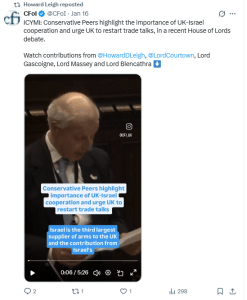
Howard Leigh, a Tory peer, has asked the House of Lords why it was stopping Israel’s occupation forces (IOF) from being able to “finish the job” in Lebanon.
The only successful way of dealing with, in effect, Iran in Lebanon through Hezbollah, is through military action. At what point do the British Government stop spending British taxpayers’ money helping the Lebanese Government, and, instead, allow the IDF to finish the job?
His words were so shockingly genocidal that even Starmer’s ally and Cabinet MP Jenny Chapman had to respond with how wrong Israel’s actions were:
With respect, I fundamentally disagree with the noble Lord. I wonder what he means by “finish the job”, given what we are seeing and the numbers of civilians who have been killed. Over three and a half thousand civilians, including children, have been killed indiscriminately. I could, perhaps, understand a targeted action. There would be questions about that too, but what we are seeing now is wrong.
Clearly, the genocidal Lord concluded the only remaining option was military action: letting the IOF finish the job, regardless of Lebanese sovereignty or civilian life.
Leigh is a staunch Israel ally and a member of the Conservative Friends of Israel. Earlier this year, he protested in the HoL about the suspension of some of the arms sales by the UK to Israel.
UK complicity in war crimes in Lebanon
The Anglo-American Zionists’ ethnic cleansing in Lebanon is an extension of their genocide in Gaza and their wider war on Iran. What began with the flattening of Gaza has now spread north: the same doctrine of collective punishment, the same destruction of civilian infrastructure, the same forced displacement dressed up as self-defence.
In Lebanon, more than 3,500 civilians have been killed, including over 240 children. More than one million people have been driven from their homes, over one in five of the entire population.
As British historian William Dalrymple has noted, Israeli leaders have openly stated they will demolish villages, prevent displaced people, mostly Shia, from ever returning, and create a permanent security zone inside Lebanese territory. Under international law, deliberately displacing a religious group and making their return impossible amounts to ethnic cleansing.
Dalrymple also called out Sky News’ blatant misrepresentation of ethnic cleansing in Lebanon as Israel “taking a stronger stance.”
British politicians still being neocolonialists
Labour Foreign Secretary Yvette Cooper confirmed in the House of Commons that the UK is carrying out counterinsurgency by proxy.
Responding to Conservative MP Mark Pritchard, who had asked about engaging non-Hezbollah Shi’a political movements, Cooper said:
…we need an inclusive process in Lebanon that brings all groups and communities together but excludes Hezbollah, Iranian-backed proxies and terrorist and extremist groups. The group that he mentioned is led by Speaker Berri, who met my hon. Friend the Minister for the Middle East as part of his recent visit. We will continue to engage with that movement and more widely with the Lebanese Government about the importance of bringing all communities together so that the Lebanese people are not exploited by Iran.
Hezbollah is a dangerous terrorist organisation. It is undermining the security of the people of Lebanon. We support the Lebanese Government and the Lebanese armed forces in taking action against Hezbollah. We are providing them with direct support, including funding and capabilities support, because we believe it is hugely important that they should be able to do this with international support.
Essentially, Cooper is confirming that Britain will bankroll and train the Lebanese state to fight Hezbollah, while excluding Hezbollah from any political solution. She is embracing the Amal movement (led by Speaker Berri) as a preferred partner instead, and ignoring that this strategy risks tearing Lebanon apart along sectarian lines.
Leigh’s language might be shocking, but it is representative of the whole British imperial establishment, from politicians to the media, who are backing ethnic cleansing in Lebanon.
Featured image via Getty/Adri Salido
By The Canary
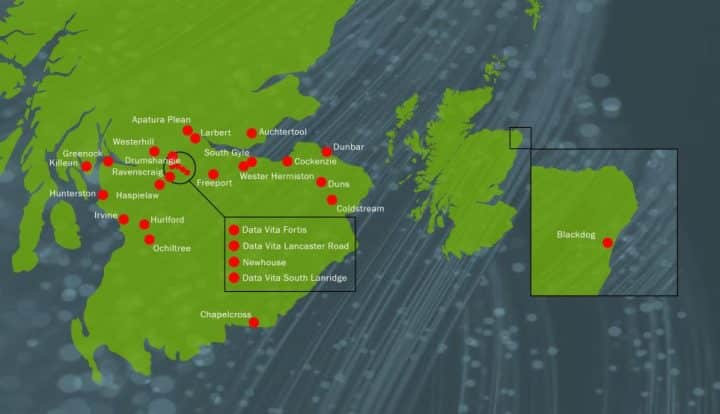
Scotland looks set for an AI data centre crisis after plans were revealed detailing a massive number of data centres planned for construction on Scotland’s Central Belt.
ARPS, Scotland’s countryside charity, published an interactive map illustrating where the data centres are earmarked for.
The charity compiled the data over growing concerns about the impact of the data units on electricity prices, communities and the environment.
So far, at least 18 such data warehouse projects are seeking planning permission, the National reported, with a further six in the pipeline.
ARPS is calling for the Scottish government to implement a moratorium on these centres until it does a “proper “assessment of the impacts on the electricity grid, climate emissions and communities”.
A spokesperson for the charity, Kat Jones, said:
Hyperscale data centres are some of the biggest buildings in the world and this is why we are seeing them being proposed mainly on greenbelt and Greenfield sites.
Their main requirements are large quantities of land and access to huge amounts of electricity and water. These buildings are huge, but the amount of energy they use is absolutely off the scale.
AI data centres: How might they impact you?
Kat Jones stated that the total demand for energy from the data centres in Scotland’s planning system is now 6,200 megawatts (MW).
Combined with the requirement for the six sites that haven’t completed all the planning stages yet, this would take the total to more than 11,000MW. That’s nearly three-times Scotland’s peak winter demand.
Jones didn’t hold back on stating the case clearly.
This is an inconceivable amount of energy that Scotland is being asked to divert to the use of hyperscale AI data centres, which will enrich a few billionaires in Silicon valley at the expense of the Scottish consumer.
No discussion on energy in Scotland can ignore the impact that these data centres would have on our electricity grid and energy prices.
We are calling for a moratorium to get some proper planning and policies in place.
Campaigners are rightly concerned about rising energy prices. In the US, areas with data centres have soared up to 267% according to Bloomberg data.
Communities must be consulted
Scottish communities are rallying against plans near them and have been encouraged by a recent UN report.
The report details the environmental impacts of AI and says communities must be included in discussions about data centres.
It also estimates that global data centres have used 448 Terawatt-hour (TWh) of electricity. If aggregated as a country, Scotland would rank an astonishing 11th globally for consumption. This is beyond unsustainable — it’s suicidal.
AI-sceptic, pro-democracy campaign group, Pull the Plug, told the Canary:
Data centres have become a key issue in our political conversation. They contribute to climate change, impact the wellbeing of our communities, undermine public services, and push up household bills and our general cost of living.
The public increasingly stomachs the costs of data centres without agreeing to them. That has to change.
Scotland resists the Datageddon
Scottish people are not taking the matter lightly. Hyper-local campaigns are emerging across the nation to resist the ugly, thirsty, energy-hungry monstrosities. Remember when wind turbines were “eyesores”?
Last week, more than 200 people attended a public meeting to oppose a data centre near Auchtertool village in Fife. The community council said it was “appalled” by Fife Council’s decision not to request even an environmental impact assessment.
Another campaign has been launched to halt a similar development in the Borders. They’ll hope to achieve a similar result as that in Edinburgh earlier this year.
Edinburgh councillors voted unanimously to refuse a proposed hyperscale centre at the former Royal Bank of Scotland headquarters in South Gyle.
One spokesperson for Save the Lammermuirs – Stop the Data Centre said afterwards that worries remained about the environmental impact.
We weren’t able to get any solid information and there is also the question of the local benefits – the numbers didn’t really hold up under scrutiny at this stage.
Sunlaws Development Company wants to build the Southside Data Centre on land near the village of Longformacus. The planned development on Roxburghe Estate is for three large, two-storey data centre buildings, each with a height up to 24m and ground footprint circa 27,000m².
Campaigners allege that it will lead to the “industrialisation” of the Lammermuir Hills, and are sceptical of the job and economic benefit estimates. About 100 members of the public attended an initial consultation at Longformacus Village Hall this week.
The SNP is already criticising the “great renewables robbery” where Scottish energy firms are forced to pay £1 billion to access the national grid. Companies in England and Wales get paid to do so.
But this massive, anti-worker construction madness — done entirely on the SNP’s watch — must be counted as further theft of the people’s energy needs by unaccountable tech companies.
Featured image via the National
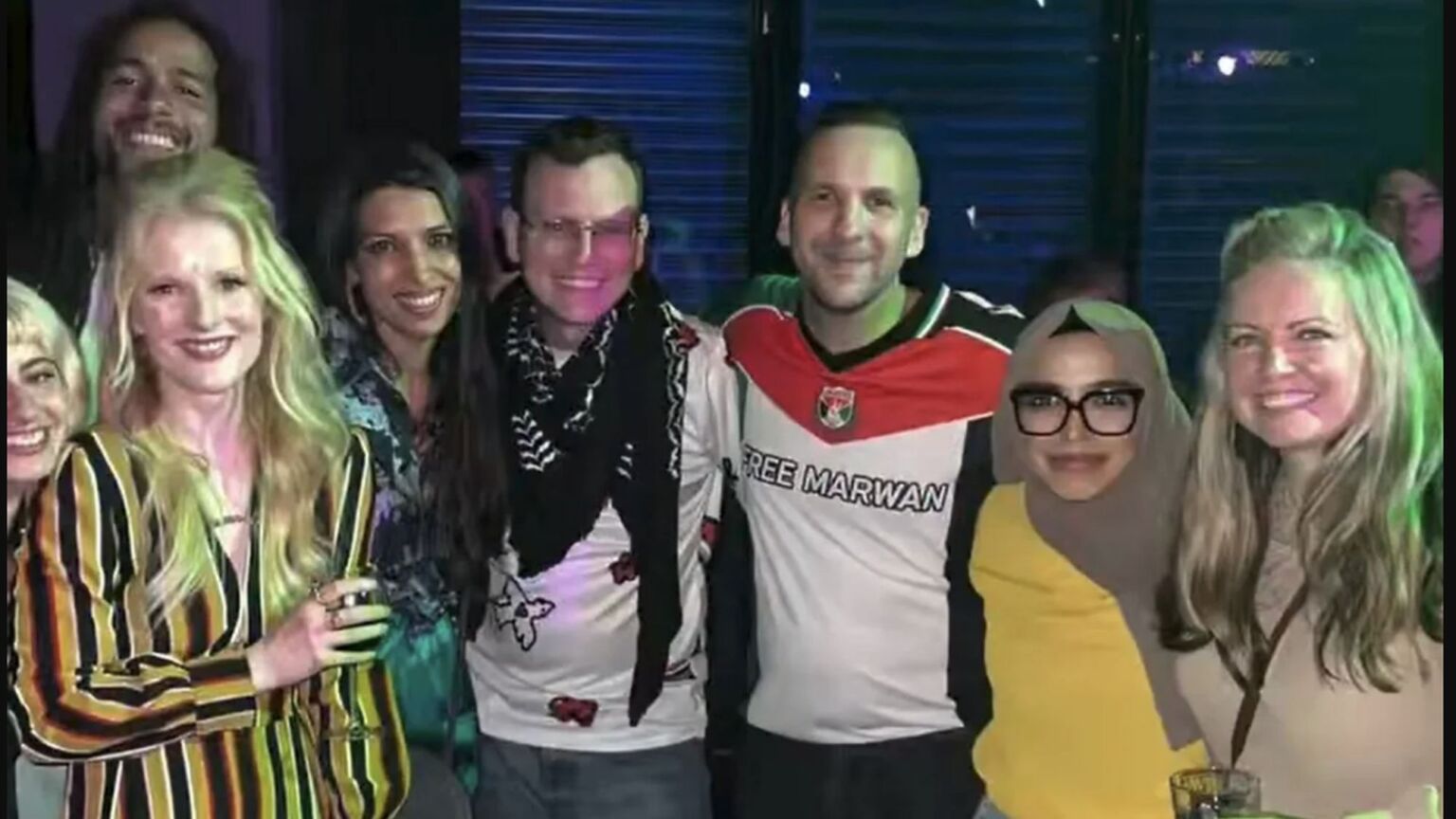
As Zack Polanski said this week, after wearing a t-shirt in support of the convicted Palestinian terrorist, ‘let’s talk about Marwan Barghouti’. In the Green leader’s version of events, the murderer-cum-revolutionary icon and leader of the al-Aqsa Martyrs’ Brigades was imprisoned for 25 years in Israel without a ‘fair trial’. Polanski also cited an internet quote attributed to Nelson Mandela – ‘What is happening to Barghouti is exactly the same as what happened to me’ – which has, of course, never been substantiated.
Barghouti, who is relatively popular with the Palestinian street on account of his charisma, has long been a cause célèbre among Western activists, who have found it most convenient to overlook his crimes. If anything, the way he has been cast in the mould of Mandela is testament to how, for these activists, everything is always about them and their worldview. After all, unlike Barghouti, Mandela was never convicted of directing attacks on civilians.
Let’s stick to the facts. Polanski’s claim that Barghouti did not receive a fair trial was based on a 2004 report produced by a French lawyer, Simon Foreman, on behalf of the Committee on the Human Rights of Parliamentarians of the Inter-Parliamentary Union. While it is true that the report criticised the trial, mainly on procedural grounds, it did not exonerate Barghouti, and no international court has vacated the conviction. As such, the Israeli judgment remains legally in force.
Now to the case itself. In 2004, an impartial Israeli court convicted Barghouti of five counts of murder, one count of attempted murder, membership of a terror group and conspiracy to commit acts of terror. He was sentenced to five life sentences, plus 40 years.
Among his victims was a Greek Orthodox monk called Georgios Tsibouktzakis, abbot of the ancient St George Monastery near Jerusalem, who was killed in a drive-by shooting in 2001. He is understood to have been mistaken for a Jew on account of his beard.
The deadliest attack for which the Palestinian leader was convicted took place in March 2002. Gunman Ibrahim Hasouna opened fire with an M16 on the Seafood Market restaurant in Tel Aviv, where a hen party was taking place. He also lobbed grenades into the crowd (one rolled on to the dancefloor but thankfully failed to detonate). Two Jewish men, Eli Dahan and Yosef Habi, were killed in the atrocity, as well as a Druze policeman called Salim Barakat, who had bravely confronted the assailant. Thirty-five others were wounded.
Despite refusing to recognise the authority of the court and refusing to defend himself, Barghouti was acquitted of 21 murders for which the evidence was not deemed to be sufficient. Clearly, this was not the behaviour of a court that was simply rubber-stamping the case for the prosecution, whatever the Committee on the Human Rights of Parliamentarians of the Inter-Parliamentary Union might say.
At the time, the trial was both high-profile and traumatic. The cramped public benches of Court 602 in Tel Aviv were filled with parents of Israelis killed in the ambushes directed by Barghouti, some of whom openly wept as they clutched pictures of their loved ones.
Defiant to the last, Barghouti twisted the emotional knife by informing the court that he stood for peace and liberty and describing himself as a freedom fighter. The judge sternly pointed out: ‘A soldier does not kill civilians with bombs and kill children.’
To compare the Palestinian killer to Nelson Mandela, in other words, is a grave disservice to the South African leader. Nevertheless, Barghouti is undoubtedly an interesting character. He was never a raving jihadi like the late Yahya Sinwar or Mohammed Deif of Hamas. He is a nationalist rather than an Islamist. He began his political life in the 1990s as a relatively pragmatic Palestinian leader who supported peace in exchange for Israel’s withdrawal from the West Bank.
However, that had changed by the time of the Second Intifada in the early 2000s, when 140 suicide bombs killed more than 1,000 Israelis – some of them schoolchildren on buses. Barghouti was often spotted on street corners in Ramallah during disturbances, issuing orders by phone, earning him the nickname ‘Little Napoleon’. Then came the evidence connecting him to murders.
Barghouti knows how to play a Western audience. Even in 2002, while directing savagery against innocent civilians, he struck a relatively moderate tone in English. In a column for the Washington Post, he wrote: ‘while I, and the Fatah movement to which I belong, strongly oppose attacks and the targeting of civilians inside Israel, our future neighbour, I reserve the right to protect myself… and to fight for my freedom.’
What to make of all this? Here’s my take. Like other performative Palestinian firebrands, Barghouti knows that doe-eyed Western activists and journalists want to believe that he is a saint. So deep-rooted is hatred of Israel that liberals will lap up the most blatant lies and false comparisons, just to confect a Palestinian hero where they are otherwise lacking. Barghouti knows this; I know this; chances are, reader, that you know this. Sadly, the same cannot be said for the gullible left. Which brings us back to Zack Polanski.
Look, I get it. It must be frustrating to support a cause that has nothing to show for itself in terms of democracy, human rights, respect for women and minorities, the protection of homosexuals and the rejection of terror. To take as your tribune a people who spit upon all your values is a tricky position to maintain. But don’t expect the rest of us to join you in your circle jerk. Wishful thinking, in other words, does not a freedom-fighter make.
Jake Wallis Simons is co-host of The Brink, with former parachute-regiment officer Andrew Fox. It is available on all platforms now.
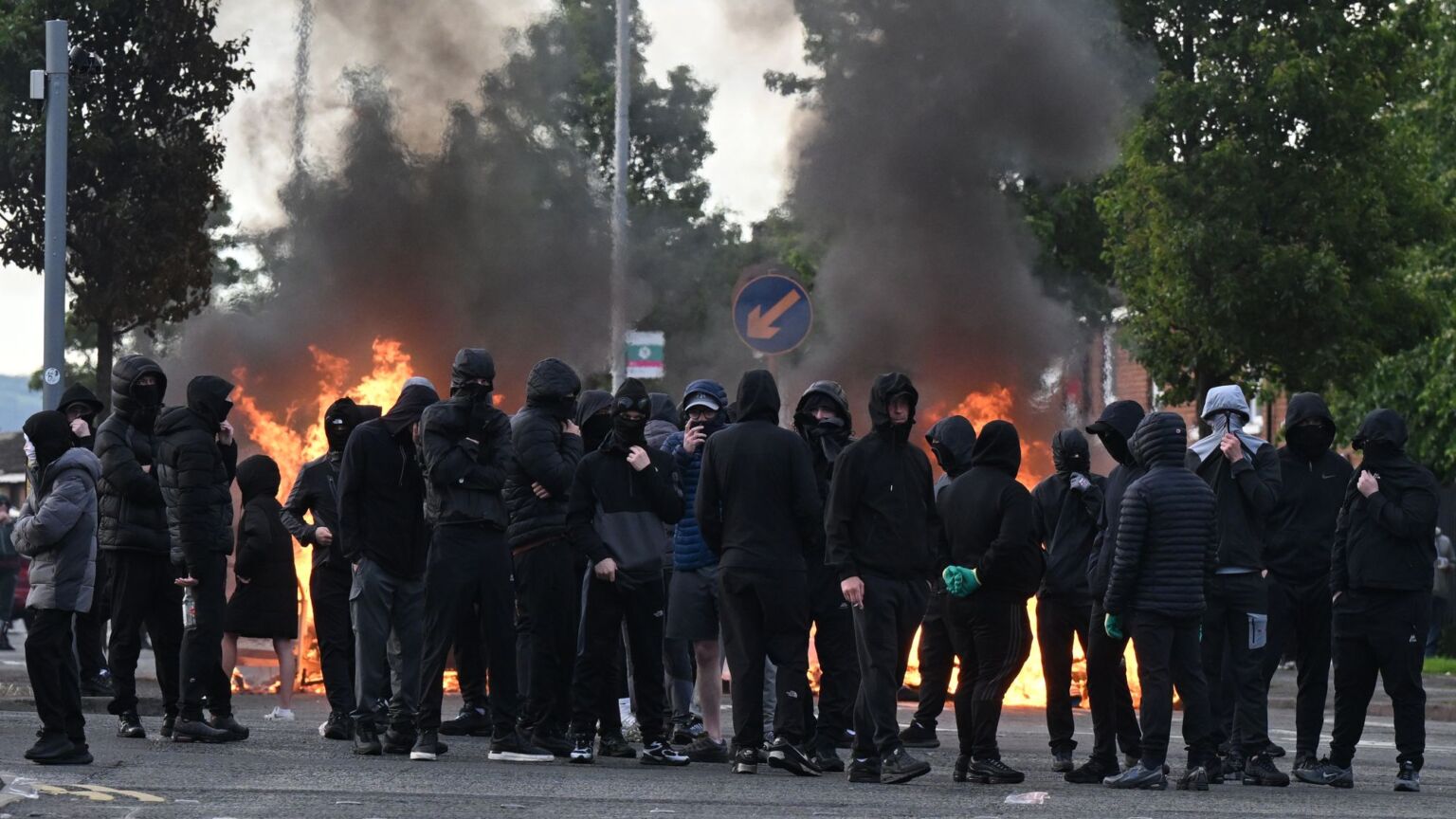
Belfast was in flames last night. Cars and buses were set ablaze. Flaming rubbish bins were used to create roadblocks. And most horrifying of all, masked men went door to door in the Northern Irish capital, demanding to know if ‘foreigners’ lived inside. Emergency services had to escort immigrant families from their burning homes.
These scenes of terror and carnage unfolded on the day that Hadi Alodid, a Sudanese migrant, was charged on suspicion of attempted murder, and, in a separate incident on the same day, threatening to kill an NHS radiologist. Viral footage from Monday night appears to show him swiping a knife at the victim, later identified as Stephen Ogilvie, seemingly attempting to behead him and gouge his eyes out. Alodid appeared in court this morning to hear his charges. Police are not seeking anyone else in connection with their investigation.
UK prime minister Keir Starmer has called the disorder ‘totally unjustified’. Northern Ireland’s first minister, Michelle O’Neill, has described it as ‘disgusting cowardice’. These condemnations are necessary and well merited. What we saw last night was racist mob violence. Innocent people – migrants, asylum seekers, anyone who looked sufficiently foreign or non-white – had their homes attacked and their cars destroyed. The suspect alone should have to answer for his actions through the justice system. No group should ever face collective punishment. And no mob should ever have the right to dispense justice through wanton violence.
These condemnations may be necessary, but by now they are utterly insufficient. After all, we are now familiar with the grim pattern. We see a horrific crime – usually committed by an illegal migrant (or suspected illegal migrant) – followed by protests that turn ugly or by thugs looking to kick off. Ballymena in County Antrim, Dublin in the Republic of Ireland, Knowsley in Merseyside – all have exploded in rioting in recent years, as longstanding tensions are brought to the boil by an unspeakable act.
Our leaders usually condemn the disorder and violence that follows, but will refuse to discuss the triggers in any depth. Anyone who asks what can be done about horrors like that inflicted on Stephen Ogilvie will be accused of stoking division, exploiting a tragedy and courting the far right.
But something can and must be done. It is simply no longer sustainable to force working-class communities to endure such levels of terror, to bear the brunt of the elites’ open-door experiment – to pay the ‘blood price’, as Brendan O’Neill describes it, of the establishment’s virtue-signalling. Practically every day brings new horrors that ordinary folk are simply expected to put up with. On the very same day as the Sudanese suspect was charged with attempted murder, four Afghan nationals appeared in court, all charged with the alleged rape of a Bristol schoolgirl. From gang rapes in Brighton and grooming gangs in Norwich to child rape in Warwickshire, countless British citizens continue to suffer at the hands of men who shouldn’t be here. Yet this barely seems to trouble our cloistered political class.
None of this is to defend those violent scenes in Belfast. Rioting is always nihilistic and self-destructive. Far from putting people’s concerns and anger over immigration on the political agenda, it provides the ideal excuse for them to be ignored once again. I can’t have been alone in detecting a palpable sigh of relief emanating from Westminster as soon as the first Belfast bus was set alight. Now the political class can move on from discussing the barbarism they have enabled and get back on to safer territory – railing against the ‘far right’, issuing calls to tackle ‘misinformation’, and posturing against ‘agitators’ who seek to ‘divide’ our otherwise peaceful, harmonious society. But these deflections cannot and will not work forever.
The rioting in Belfast will pass. Politicians’ attention will drift and the news cycle will move on. But the conditions that helped to fuel last night’s violence – the abandonment of working-class communities, the broken asylum system, the elite culture of denial and deflection – will persist. Until they are addressed openly and honestly, there will almost certainly be another Belfast.
Fraser Myers is deputy editor at spiked and host of the spiked podcast. Follow him on X: @FraserMyers
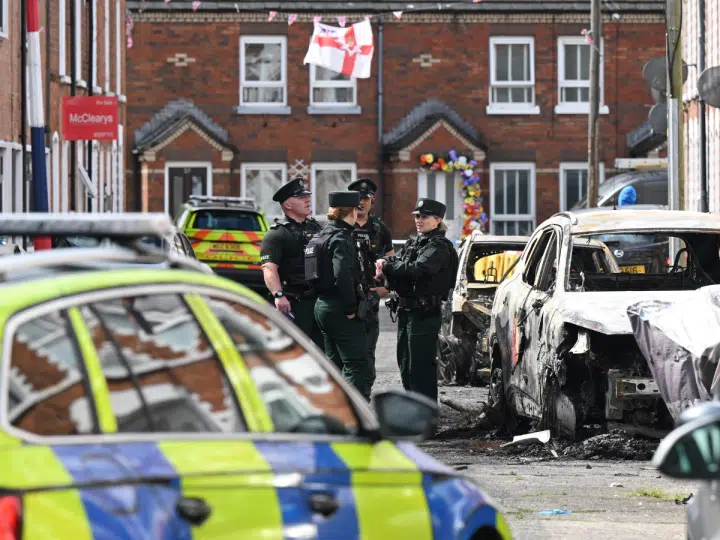
Politicians and social commentators from across the UK have taken to social media to condemn the racist riots that have swept Belfast – and the shameless far-right agitators who helped fan the flames.
As the Canary previously reported, rioters carried out a wave of pogroms in Belfast and nearby towns over the last two days, carrying out arson attacks on homes belonging to people of colour. The racists also attacked businesses they perceived as the property of ‘foreigners’, blocked roads, and set fire to vehicles.
The hate crimes followed a knife attack, reportedly perpetrated by a Sudanese man, on the evening of 8 June in North Belfast. Police charged the suspect, Hadi Alodid, with attempted murder. The victim suffered injuries to his neck, back and both eyes, losing use of the left eye.
In response, Democratic Unionist Party (DUP) and Traditional Unionist Voice (TUV) politicians, along with English race-baiters like Nigel Farage and Rupert Lowe carried out varying degrees of the familiar song and dance: condemning the violence whilst also using dogwhistles and whipping up further racial hatred.
Belfast: shameless exploitation
However, Green leader Zack Polanski condemned the ministers stoking the riots for political gain:
Politicians who fanned these flames should hang their heads in shame.
Time and again we've seen this story play out. Single incidents used to fuel a far right narrative – and communities across the nation paying the price. https://t.co/kyDQWoE9EB
— Zack Polanski (@ZackPolanski) June 10, 2026
North Herefordshire Green MP Ellie Chowns also echoed similar sentiments:
Horrified by the attempts of bad-faith actors to use Monday's brutal attack as justification to enact violence, disorder, and the targeting of immigrants and people of colour across Belfast.
Hatred has no place in the UK – nor should politicians who seek to incite it. — Dr Ellie Chowns MP (@EllieChowns) June 10, 2026
The Lib Dems’ Ed Davey voiced his shock, whilst also pointing out the far-right’s shameless weaponisation of fear:
I am horrified by the disorder and racist violence in Belfast last night.
Far too often now, we see extremists exploiting people’s anger and grief to spread hatred and violence – with the help of divisive algorithms on social media.
This has to stop.
— Ed Davey (@EdwardJDavey) June 10, 2026
A ‘chilling display of racist violence’
Labour’s Nadia Whittome, meanwhile, didn’t mince words:
The attempted murder in Belfast was an appalling act of brutality by one individual. It has been universally condemned and the perpetrator has been arrested and charged.
Torching the homes of innocent people because they’re not white is a truly chilling display of racist…
— Nadia Whittome MP (@NadiaWhittomeMP) June 10, 2026
A “chilling display of racist violence by organised fascists” – if only half our MPs were so willing to call these riots what they are.
Your Party co-leader Jeremy Corbyn posted a statement on the “utterly sickening” violence on display. He also called out Nigel Farage’s dogwhistle for bringing us to this point:
When politicians demonise migrants and call for "pure, cold rage", people listen.
My statement on the sickening far-right violence in Belfast. pic.twitter.com/KLAuXR7XN1
— Jeremy Corbyn (@jeremycorbyn) June 10, 2026
Likewise, the Alliance Party’s Sorcha Eastwood turned her rage against Farage’s counterparts in Northern Ireland:
A child being rushed from a burning building by a riot police officer into a police landrover as everything goes up in flames.
I hope those who fanned the flames are content with themselves. Because they knew this violence was coming. You can't light the touch paper and expect… pic.twitter.com/kCOEQ5rnEH
— Sorcha Eastwood MP (@SorchaEastwood) June 10, 2026
Divided we fall
Meanwhile, outside the halls of Parliament, campaigning researcher Zoe Gardner set up a stark dichotomy:
Dress it up however you like – this racist violence has been deliberately whipped up by far right politicians & their cowardly wannabes in the supposed mainstream.
You are either fighting against the anti-migrant narrative or you are with these thugs. https://t.co/OOMmuvDU2W
— Zoe Gardner (@ZoeJardiniere) June 9, 2026
Turn Left Media editor Ben Mclaine pointed out the actual “two tier policing” at play:
Strange to think that the far right probably did more criminal damage in a single night than Palestine Solidarity movements have done in the past three years.
Two tier policing, indeed. — Ben Mclaine (@BenMclaine) June 10, 2026
It seems that several commentators had it in for Farage’s talking points, at that. He threatened more riots, and now we’re seeing arson attacks on the streets of Belfast.
Journalist Owen Jones also pointed out the hypocrisy of the far-right’s reaction. However, his thread (and it is a thread) focused on the lack of riots following similar crimes by white extremists:
In 2024, a white neo-Nazi tried to behead a Kurdish barber.
Did Patrick Christys say:
"I preferred our country before white men started trying to behead people in the street"?
No. He said zilch. Both the perpetrator and the victim had the wrong skin colour for condemnation https://t.co/ljKO6vwXxI pic.twitter.com/R1EFts9TFW
— Owen Jones (@owenjonesjourno) June 9, 2026
Last but not least, the Good Law Project hit several of the same notes we’ve seen so far:
An isolated tragedy in Belfast is being used as an excuse for racist thuggery, all in the name of patriotism.
Musk, Farage and their cronies are spreading hate, and trying to divide our communities.
But we won't let them. We know the truth: there's many, many more of us than… pic.twitter.com/Gw3pgJ3xGw
— Good Law Project (@GoodLawProject) June 10, 2026
The UK is currently speeding along head-first in its descent into fascism. The far-right is using any and every excuse they can to stir up white-supremacist violence and racial hatred.
We cannot fight this tide by offering watered-down versions of Reform’s talking points, packaged up as the ‘moderate alternative.’ Those of us who oppose these racist riots must stand with immigrants and people of colour in the UK.
Divided, none of us can hope to win out.
Featured image via Getty/Charles McQuillan
By The Canary
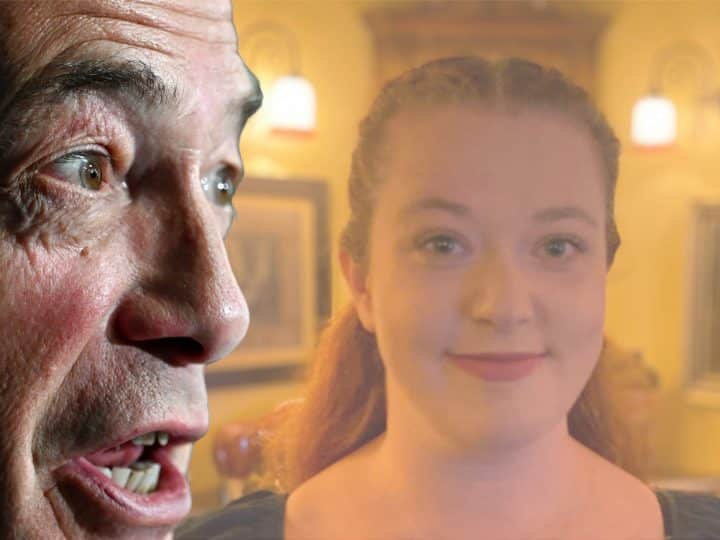
On 9 June, we reported that ex-Reform councillor Charlotte Kelly had defected to the Tories. Kelly blamed the move on sexism and bullying from her former colleagues. And since then, she’s come forwards to provide more information on what went down:
Ex-Reform UK councillor Charlotte Kelly admits she’s embarrassed to have ever joined the party.
She defected to the Conservatives yesterday – claiming she was bullied and faced sexism.
Reform UK says she was the source of ‘disharmony’ within the Staffordshire group. pic.twitter.com/kAtcvcVHfR — Lewis Warner (@LewisJWarner) June 9, 2026
Former Reform councillor feels ’embarrassed’
In the video above, Kelly says:
I feel really sad and I feel embarrassed that I believed everything that they said because I fully bought in. I did. Now I just feel very let down.
It should be pointed out that the things Reform promises publicly are also very bad. And given the party’s hostility towards various minority groups – and women – Kelly shouldn’t be all that surprised to have discovered they were hostile towards her.
At the same time, this obviously doesn’t excuse the alleged bullying she had to put up with. We just hope Kelly’s experience helps others to avoid what she describes having experienced.
When asked how the last few days have been, Kelly said:
Stressful.
ITV’s Lewis Warner then explained:
Charlotte Kelly joined Reform UK hoping to make Leek a better place. But she says her time in the party has only made her own life worse. She alleges bullying, sexism and a culture that left her feeling isolated and ignored.
It would be interesting to know which Reform policies Kelly thought would improve her area, but the interview doesn’t get into that. Kelly responded:
It just seems to always be targeted at me. It’s not the men, it’s always me.
Kelly claims a female colleague told her the male Reform councillors couldn’t help themselves because of their age. We’re not sure how old they all are, but if this statement is true, they’re too old to be in the workplace.
Freeing
Kelly claims Reform does not tolerate any dissent whatsoever, and when asked how the party treats councillors, she answered:
I would say that as long as you do as you’re told, they’re fine, and as long as you don’t expect anything from head office, you just pretty much get left.
Kelly added that she had no freedom to express opinions, and that:
They want you to vote and say and just do as you’re told and whether or not you think it’s right, which isn’t… And I started to ask questions and speak out. And when I did, I was, especially from one particular person, reacted with swearing, abuse and… are really awful behaviour.
Kelly isn’t the first Reform councillor to make such claims, as we reported in this piece:
Defector Rob Parsonage said of the party:
He added: “We were being sent orders from above – they wanted us to vote down everything net zero and fight DEI [diversity, equity and inclusion] – but in the end it turned into a conflict between the national agenda and the role of a councillor.”
Councillor Nick Brown, meanwhile, said:
When we took control [of Durham Council], I believed the messages from Nigel Farage that we would make big changes for people living locally.
But really, whenever we had a local issue, we were told to follow the party line. Not to rock the boat, bring press attention on the council. We all turned into Nigel’s yes-men – ordered to be on best behaviour to help him get to power.
Vetting issues?
Seemingly talking about the systemic issue of sexism, Kelly said:
they are not vetting correctly to see whether or not people have these views. When you present these issues and say that they’re there, that they’re not doing anything about it.
Reform definitely has an issue with sexism, much like it has an issue with every other form of bigotry. We don’t think the issue is that the party’s vetting is ‘failing’, however; we think Reform simply doesn’t care if its politicians hate women or people from minority groups.
Featured image via Leon Neal (Getty Images)
By Willem Moore

World Cup expected to be the biggest betting event in history

Slideshow: The sweeter side of Sweets & Snacks 2026

BlackRock and Fidelity are quietly turning bitcoin ETFs into a two-firm market



-

 Fashion5 days ago
Weekend Open Thread: Evereve – Corporette.com
-
 Crypto World5 days ago
Jensen Huang Approves Samsung, SK Hynix, and Micron for NVIDIA (NVDA) HBM4 Memory Supply
-

 Crypto World3 days ago
Anatomy of the June crypto crash: Fed, Iran, Saylor
-
 Entertainment4 days ago
The Best Mystery Series of All Time Is Surging on Streaming 30 Years After It Ended
-

 NewsBeat3 days ago
Alexander Zverev wins the French Open to finally earn a 1st Grand Slam title
-

 Tech5 days ago
Suspicious Polyfill login prompts pop up on Toshiba, Muji websites
-
 Crypto World4 days ago
Senator Cynthia Lummis Calls CLARITY Act the Most Consequential Financial Legislation of This Generation
-

 Tech3 days ago
Microsoft unveils seven homegrown AI models in new bid for ‘long term self-sufficiency’
-

 Tech5 days ago
Microsoft launches MXC, an OS-level sandbox for AI agents, with OpenAI and Nvidia already on board
-

 Business5 days ago
(VIDEO) Justin Bieber Delivers Surprise Happy Birthday Serenade to Diners at Los Angeles Mexican Restaurant
-
 Business4 days ago
The Pain Points Taking a Fragile Tech Rally Down a Notch
-
 Crypto World2 days ago
Eli Lilly (LLY) Stock Surges 4% Following Breakthrough Sleep Apnea Trial Results
-
Crypto World5 days ago
LBank Surpasses 25 Million Users Worldwide as AFA Partnership Continues to Drive Global Growth
-

 Tech5 days ago
Von der Leyen’s AI envoy pick draws conflict-of-interest fire
-

 Crypto World3 days ago
Trump’s AI Ownership Plan Could Benefit Anthropic at OpenAI’s Expense
-

 Tech5 days ago
Meta steals a tactic from Tesla and builds data centers in tents
-
 Sports1 day ago
Bangladesh beat Australia after 20 years in ODIs, register only their second win over six-time world champions | Cricket News
-

 Business3 days ago
High Stakes for Wembanyama as New York Pushes for 3-0 Lead
-

 Tech4 days ago
Hackers now exploit SolarWinds Serv-U flaw to crash servers
-

 Tech3 days ago
Notion restores access to Anthropic after service disruption
You must be logged in to post a comment Login