The surveillance infrastructure tracking American drivers has grown far more sophisticated than most people realize. What began as simple plate-logging technology has evolved into AI systems capable of identifying faces, flagging unusual travel patterns and building detailed movement profiles — all without the knowledge of the people being watched. Companies such as Flock Safety now operate in communities across 49 states, and their data is accessible to thousands of law enforcement agencies, including federal immigration enforcement, according to civil liberties groups. State legislatures are among the few institutions actively writing rules around how these systems can be used, and what those rules say (or don’t say) have real consequences for your privacy on the road.
That raises a large question: What are the best privacy protection laws? I wanted to provide more details for anyone wondering what to support or what their state is currently doing. One challenge is that every state is different, and there’s no clear guide on what privacy laws work and which have flaws.
I spoke to Chad Marlow, senior policy counsel and lead for the American Civil Liberties Union’s surveillance work, to find the best examples. These laws are making the biggest difference in our privacy.
Advertisement
“Collective action, rather than individual action, is required,” Marlow told me. “I would caution that while Flock is the most problematic ALPR company in America, there are many other ALPR companies, like Axon and Motorola, that present serious privacy risks, so switching from Flock to Axon/Motorola ALPRs at best may constitute minimal harm reduction, but it is far from a solution.”
Which of today’s laws are a better solution? This is a “throw everything against the wall and see what sticks” situation. Let’s talk about what’s sticking.
The best laws on the books for limiting new surveillance technology
The details matter when it comes to laws against surveillance.
Advertisement
Lawrence Glass/Getty
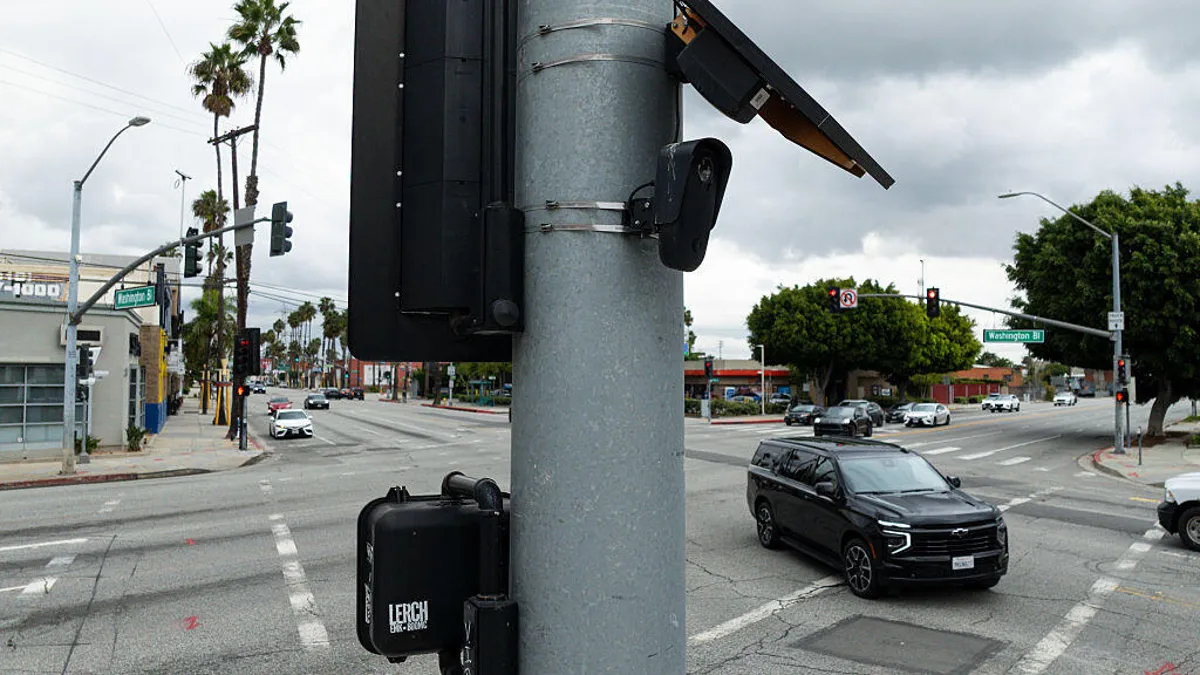
Current privacy laws focus on two recent capabilities of local law enforcement: ALPRs, or automatic license plate readers, that can identify and track cars, and drone surveillance equipped with AI cameras. Security companies, such as Flock, are also starting to offer more traditional cameras that can provide live views and track people from the ground.
With AI features like Flock’s “Freeform” technology that let police enter any type of search they like to see what cameras bring up, these are powerful tools, and new legislation is required to address them. Let’s go over several categories of laws that make a difference.
Laws restricting the use of AI detection features
Some of the broadest laws tackle what AI cameras are allowed to do at all. These laws don’t specifically target ALPR cams or drones, but they do limit the searches that police and commercial entities can make.
Illinois has long been the best example of these privacy laws with its BIPA, or Biometric Information Privacy Act that protects personal ID like fingerprints and facial data, and requires written consent if a company wants to use them.
Advertisement
That law is so far-reaching that certain camera features like Google Nest’s Familiar Faces technology is completely blocked in Illinois, along with some of Flock’s recognition features. Cities can pass similar legislation, too: Travel to Portland, Oregon and you’ll find that certain facial recognition features won’t work there, either.
The one issue with laws like these is that they don’t include license plate and vehicle data, at least not yet. That information, which is closely tied to your name and address, needs to be protected by additional legislation or added onto existing biometric laws. So far, the former is more common: California is the only state I’ve noticed that now includes ALPR data as “personal information” for its privacy laws.
Laws that ban what details police cameras can see
States are also passing new types of laws that allow the use of ALPR cameras, but ban those cameras from being able to record and pass along personal information, or at least make that information confidential in some way — including Florida and New Hampshire.
These laws can ban cameras from seeing details like the people inside a car, for example, limiting them only to a license plate. Companies like Flock advertise the ability of their cameras to notice other descriptive details above a vehicle such as bumper stickers or roof racks, so laws like these can hamper the use of such AI detection.
Advertisement
In a related note, states may add stricter authorization steps for police cameras. For example, rules that require the police chief to sign off on any search using ALPRs make it less likely that the data is misused when collected.
Police have free reign over AI searches unless constrained by laws and policies.
EvgeniyShkolenko/Getty
Laws that limit the use of ALPRs to certain police activities
A number of states have created laws that allow the use of license plate and AI cameras, but only for specific purposes, such as ongoing investigations involving a murder or kidnapping. Some states have very strict limits on how these cameras can be used, while others have much broader descriptions.
Advertisement
Laws like these keep ALPR cameras out of the hands of businesses, HOAs and similar organizations, who would otherwise be able to contract with companies like Flock Safety. They may also block cameras from being used in certain areas, such as on public highways.
Laws requiring that any data collected by cameras be deleted within a certain timeframe
One of the most effective surveillance laws for protecting privacy is the requirement to delete any footage caught by these cameras unless its actively being used in a confirmed investigation. That means police can’t make unauthorized searches or share that data with outside organizations after a certain time.
Laws like these also prevent police departments from creating long-term files about people they want to keep an eye on and note their routines and behaviors. As Marlow said, “The idea of keeping a location dossier on every single person just in case one of us turns out to be a criminal is just about the most un-American approach to privacy I can imagine.”
New Hampshire has the most stringent laws here, requiring the collected data to be deleted within 3 minutes if not used, a far shorter timeline than most, but one the ACLU agrees with.
Advertisement
“For states that want a little more time to see if captured ALPR data is relevant to an ongoing investigation, keeping the data for a few days is sufficient,” Marlow told me. “Some states, like Washington and Virginia, recently adopted 21-day limits, which is the very outermost acceptable limit.” Marlow warned that the longer police keep this data, the easier it is to build patterns of life “that can eviscerate individual privacy.”
I’ve also seen states with laws that require ALPR data deleted after several years, but at that point it’s largely useless, as the data could easily be compiled and moved to other platforms by then.
Laws banning police from sharing data outside of the state
States like Virginia and Illinois have passed laws making it illegal to share any ALPR or related data outside the state, including with federal agencies. These laws are typically targeted at the Department of Homeland Security and ICE, which (along with the FBI and other agencies) have been known to request data from local police Flock cameras or be granted backdoor access to Flock search systems.
Laws that keep data from going out of state prevent that — as long as there are ways to track data transmission and enforce the law — which is difficult. “Ideally, no data should be shared outside the collecting agency without a warrant,” Marlow said, “But some states have chosen to prohibit data sharing outside of the state, which is better than nothing, and does limit some risks.”
Advertisement
States like Minnesota have also added requirements to make ALPR searches public so that citizens can check what searches the police have made, an important step for accountability that’s still rare for this technology.
State laws are on the rise to limit the use of surveillance drones, too.
picture alliance/Contributor/Getty
Laws requiring state approval and office certifications for any ALPR camera
There’s another option to manage these high-powered cameras — subject them to an approval process by the state before contracts and installation. The tricky part is that approval process can look completely different depending on the state.
Vermont, however, enacted a series of laws to create a lengthy approval process to ensure ALPR cameras could only be used in certain circumstances and that the data was tightly controlled. This approval process was so thorough that local organizations decided to pass altogether: By 2025, no law enforcement agency in the state was using ALPR cams.
Laws requiring warrants before launching surveillance drones
In the past year, I’ve seen a new concern on the rise in neighborhoods in addition to ALPR cameras. There are now surveillance drones equipped with cams that can recognize vehicles or human features (beards, hats, shirt colors and so on) and follow people automatically. Those have required a further set of laws to address.
States including Alaska, Idaho, Utah and Texas have laws specifically requiring a warrant before drones are used for surveillance. Technically, this should prevent the use of Flock’s automatic drone launches for things like gunshot detection or 911 calls, but local law enforcement appears to have found ways around these laws due to exemptions and other loopholes.
Advertisement
It’s worth noting my state nearly nuked its drone warrant requirements with new legislation in 2025, which ultimately failed to pass, a reminder that the rules are always up for change.
Keep an eye on the legislation in your state
State legislation can change, be repealed or added onto — and the details are important.
John Elk/Getty
New laws are subject to frequent challenges, including companies such as Flock or local police departments outright ignoring them. That requires extensive legal action to address and a buildup of case law that can take years, not mention methods of investigation and enforcement by the state that may not currently exist.
Advertisement
Proposed legislation can also be subject to many changes, even if it’s likely to be passed, so the details can shift. That means if you want to see specific bans or privacy requirements in your state, you should track ongoing legislation as it passes through approval stages, and continue to contact your senators and representatives.
If you’re not sure what’s in a law, it’s important to read it carefully or find analysis by a legal expert to learn more. Many lesser laws I didn’t include on this list have lots of carveouts, exceptions and latitude in how surveillance cameras can be used, rendering them fangless for privacy purposes.
But that’s not all you can do. I’ve also seen the rise of advocacy initiatives like The Plate Project from the Institute of Justice that you can join, contribute to or just read up on to do more. And don’t forget about the local level — voicing concerns at a city council forum could help limit surveillance contracts before they even begin.
By which we mean it bought someone else’s with other people’s money
OpenAI can’t have inexperienced consultants derailing the AI hype train, so it’s launching a consultancy of its own to help enterprises find the value in its models necessary to justify the spending, revenue that Sam Altman’s company desperately needs to cover its infrastructure costs.
To support the endeavor, OpenAI has agreed to acquire UK-based AI consulting firm Tomoro. The terms of the acquisition weren’t disclosed.
Advertisement
Tomoro will form the backbone of the OpenAI Deployment Company, which will operate as a standalone business unit tasked with helping enterprises find the value that they’ve been missing from the AI flag bearer’s models.
But don’t worry, McKinsey. OpenAI’s new Forward Deployed Engineers (FDEs) are only there to make sure you don’t sour enterprises on AI by dragging them down an expensive rabbit hole that fails to deliver value.
The new company is backed by the usual assortment of AI-crazed venture capitalists and private equity firms, but several consultancies, including Capgemini, Bain, and yep, McKinsey, have agreed to plow billions into the venture.
OpenAI says that its AI consultancy will launch with more than $4 billion of investments.
Advertisement
Presumably, these consultancies will call in OpenAI’s FDEs when they need help proving AI can boost productivity and/or cut payroll.
According to OpenAI, a typical enterprise engagement will look a bit like this: OpenAI’s FDEs will launch a diagnostic to determine where AI can create the most value, then carry out a select set of PoCs.
If successful, the FDEs will then design, build, and deploy production systems that tie into enterprises’ existing customer data and tools.
The experience gained from these integrations will no doubt be used to improve OpenAI’s models and services.
Advertisement
The acquisition of Tomoro would bring approximately 150 FDEs and deployment specialists into OpenAI’s new consultancy unit. The deal is expected to close in the coming months, subject to regulatory approvals.
Whether enterprises should hitch their saddle to OpenAI’s success at a time when inference providers and model devs are already jacking prices in an effort to get their infrastructure costs under control is another matter entirely.
As we reported last week, with the launch of GPT-5.5, OpenAI once again increased its API pricing. For one million tokens, GPT-5.5 is priced at $5 (input), $0.50 (cached input), and $30 (output), double that of its predecessor. But don’t worry, OpenAI says the model might be more frugal about how it uses those tokens. ®
Electric bikes were responsible for nearly a third of all calls – 520, to be exact – in the UK last year. Unsurprisingly, retrofitted models were involved in more incidents compared to those that shipped with batteries from the factory. For comparison, there were only 149 calls for ebike fires in 2022. Read Entire Article Source link
The complaint, filed on behalf of California residents, alleges Meta earns up to $7bn a year from “high-risk” scam ads and tolerated the practice. The county wants restitution, civil damages, and an injunction.
Santa Clara County has sued Meta Platforms in California state court, alleging the company profits from scam advertising on Facebook and Instagram in violation of California’s false-advertising and unfair-business-practices laws.
The lawsuit, filed on Monday in Santa Clara County Superior Court on behalf of all California residents, alleges that Meta earns as much as $7bn in annual revenue from advertisements that bear clear signs of fraud.
The complaint says Meta “largely tolerated” the misconduct and established internal guardrails to block scam-reduction efforts that cost the company too much money.
The county also alleges that Meta allowed middlemen to sell ad accounts that were protected against enforcement and that the company targeted scam ads at users who had clicked on similar fraudulent listings before.
Advertisement
The complaint draws on internal documents first reported by Reuters in November 2025, which indicated that Meta’s own projections expected more than 10% of its 2024 annual revenue, roughly $16bn, to come from advertising scams and banned goods.
Earlier private litigation from the Consumer Federation of America cited the same set of documents.
The lawsuit seeks restitution for affected California residents, civil damages and an order prohibiting Meta from continuing the alleged practices.
Meta did not immediately respond to a request for comment. The company has previously said it removes scam content and has dedicated teams working to enforce its policies.
Advertisement
In April it filed its own lawsuits against advertisers involved in celebrity-impersonation scams.
Santa Clara County’s complaint is the latest in a multi-front legal challenge over Meta’s advertising platform.
A class-action filed in Washington, DC, by the Consumer Federation of America covers similar ground. Japanese regulators, the UK’s Online Safety Act enforcement team and the Australian Competition and Consumer Commission have all opened parallel inquiries into scam-advertising practices across the company’s platforms in the past twelve months.
The Santa Clara case is being handled by the county counsel’s office, and a scheduling order is expected within thirty days.
Google I/O is a week away, but Android is getting its own stage first.
The company announced last weed that The Android Show: I/O Edition is returning on Tuesday, May 12, a virtual showcase it says will explain why this is “one of the biggest years for Android yet,” according to Google. The event arrives one week before Google I/O 2026, giving Android its own runway before Google’s broader developer conference turns to AI, Gemini, Chrome and the rest of the company’s sprawling software universe.
Google I/O 2026 runs May 19 to 20 at Shoreline Amphitheatre in Mountain View, California, and online. The company has already framed this year’s event around AI breakthroughs and updates across its major product lines, including Android and Gemini.
Advertisement
It hasn’t said what will be announced during this year’s Android Show. But last year’s I/O Edition wasn’t just a teaser reel. Google used it to introduce Android 16, Wear OS 6, a major Android design refresh, expanded Gemini features across devices and new safety tools meant to protect users from scams and other threats.
That makes this year’s show worth watching even before the main I/O keynote begins. Android has become one of the clearest places where Google’s AI ambitions show up in everyday life: on phones, watches, tablets, cars, TVs and whatever new device category Google pulls into its ecosystem next.
Watch this: Google I/O 2026: New Gemini, Smart Glasses and a Whole New Laptop OS. Here’s What to Expect
How to watch Google’s Android Show
The Android Show: I/O Edition will stream virtually on May 12 through Google’s Android event page and YouTube. Google I/O begins one week later, with the keynote scheduled for May 19 at 10 a.m. PT (1 p.m. ET, 6 p.m. BST).
Advertisement
CNET will be following the event for any Android, Gemini and device-related announcements.
In modern game development and animation, performance and smooth transitions are everything. How smoothly a game works says a lot about its performance. No one wants to play a game that lags. Therefore, an AI sprite sheet generator was introduced to solve this problem. Loading multiple small files for a single animated character sounds simple, but it requires lots of attention. Want to explore some of the best AI sprite sheet generator tools?
Start reading to find the best tool for an AI sprite sheet generator that fulfills your needs and requirements.
What is a Sprite Sheet?
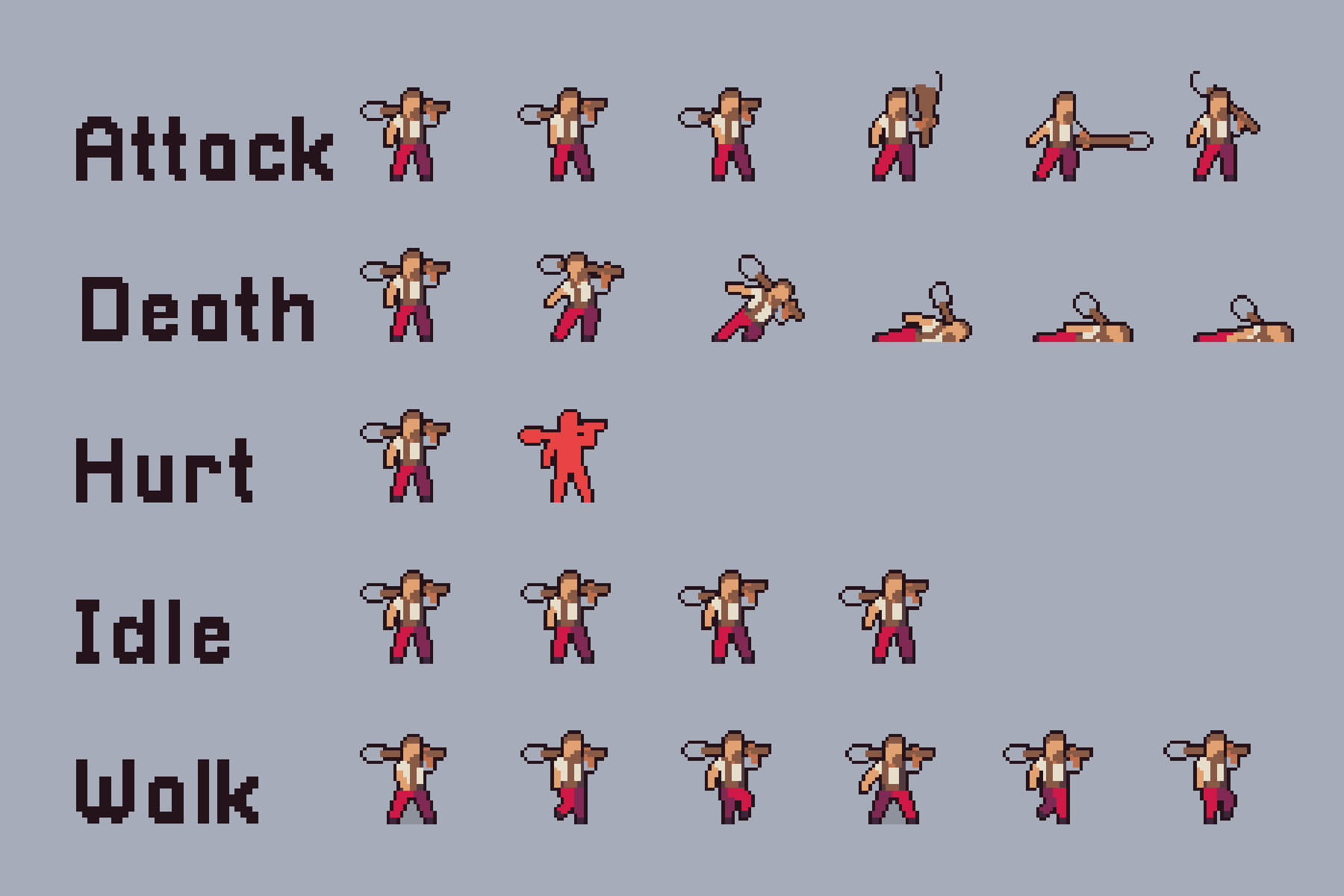
A combination of several smaller images (sprites) to create a single image is called a sprite sheet. It is arranged in a grid-packed layout. It helps in speeding up the loading and closing times. It is mainly used to create game characters and UI icons.
Instead of loading numerous individual image files, developers use a sprite sheet to make the game or application fast and more responsive. Sprite sheet works using separate data files like JSON, XML, or CSS, and maps the name of each sprite to its original coordinates, i.e., X, Y, or Width, Height.
Advertisement
Each of these small graphics represents a character frame, an icon, or an item. Instead of loading several images, the program simply loads this sprite sheet and picks out the part that is needed while displaying or animating a program or game.
Benefits of Sprite Sheet
Sprite sheets are useful in many ways. It increases the performance by managing HTTPS requests and providing faster response times. It also provides storage with better compression and lower VRAM (Video Random Access Memory) usage. Let’s understand the benefits based on performance, memory, animation, and workflow development.
Performance
One file is downloaded instead of several smaller files, which leads to fewer HTTP (Hypertext Transfer Protocol) requests and consequently speeds up the loading time.
With a single sprite sheet, you will only need to bind one texture instead of switching between several sprites.
Storage and Memory
A PNG file with a single header, color palette, and compression is more useful than multiple separate files.
GPU works more efficiently with fewer sprites and more textures, leading to lower usage of VRAM.
With similar pixels across sprites, compression becomes easier.
Animation
Reduces the loading delays as all frames are pre-loaded to eliminate any frame drop delays.
Minimizes the risk of individual frame loading at different leads, giving the same texture to different UV regions.
It works well with shaders and animation systems, reducing the risk of different frames loading at different speeds and times.
Workflow and Development
Increase the workflow by automating frame generation using an AI sprite sheet generator.
Save time on alignment and spacing using a faster process for animation pipelines.
Top 3 Best AI Sprite Sheet Generators
With the growing popularity of AI over the years, many free and paid best AI sprite sheet generators have entered the market. Explore the top 3 AI tools for generating a sprite sheet.
Ludo AI
It is a paid sprite sheet generator that comes with several features, including a sprite generator, where you can create characters, objects, and VFX. Apart from that, it also has features for designing games, audio generation, playables, images, videos, and 3D assets. According to its official site, Ludo AI helps in increasing your productivity by 10x using a single platform. These are some of the key features:
Sprite Generator
3D Assets Generator
Game Ideator
Video Generator
Market Scorer
It provides three pricing plans:
Aspect
Indie
Pro
Studio
Pricing
$15/monthly, paid annually
$35/monthly, paid annually
$300/monthly, paid annually
Yearly credits
3,000 credits
12,000 credits
120,000
Projects
5 active projects
Unlimited active projects
Realtime collaboration
For more pricing details, visit the Logo AI official pricing site.
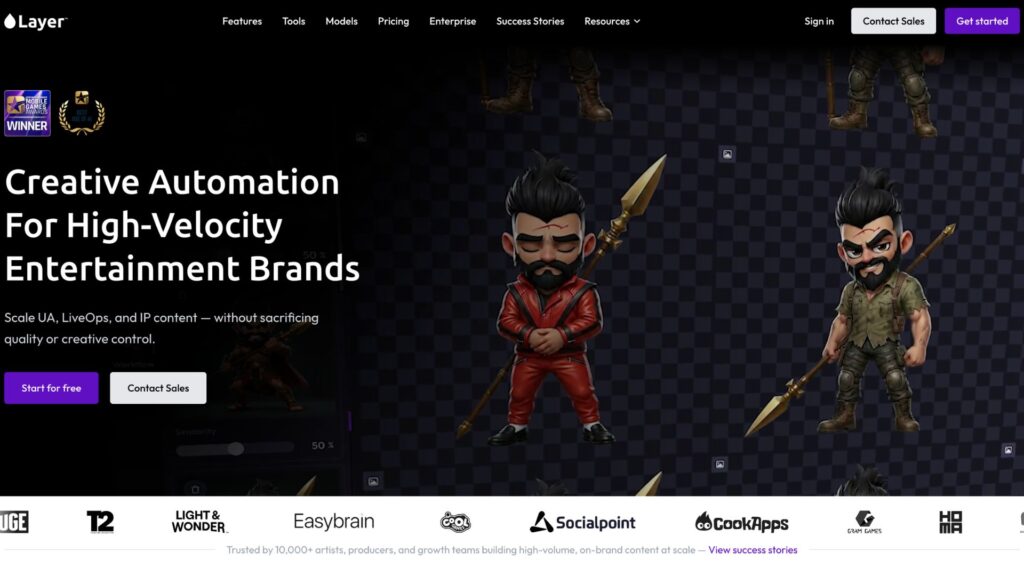
Layer AI
It provides a suite of tools for animation designers. Many popular gaming brands are its clients. Gaming platforms like LBC, Games United, Cosmic Lounge, Ace Games, and more are some of the most recognizable brands of Layer AI. Some of its top features include:
Sprite Sheet Generator
Placing Characters Into a Scene
Animate a Character
Outfit Change
Style transfer to Scene and Items
Image To Sprite
Sketch to Art Style
It is basically an AI animation tool that helps in editing and generating animated characters. It provides 3 flexible subscription plans based on team size
Aspect
Small Studio
Mid-Sized Studio
Enterprise
Price
$60/month
$300.00/month
$10,920.00/month
Team Size
1-10
10-25
More than 25
Images
200 Images
3,450 images
50,000 images
Videos
100 Seconds
220 seconds
10,400 seconds
3D Models
10 Models
25 models
830 models
Audio
300 hours
1325 hours
249,450 hours
Each plan comes with customizable features; you can choose the best fit based on your business needs and requirements. For more details related to its price, visit the official pricing page.
Advertisement
Easy Peasy AI
The tool provides several features needed for creating a sprite sheet. It is an all-in-one tool that helps in creating images, videos, and audio. Some of the key features of Easy Peasy AI are:
Text to Character Generator
Art Prompt Generator
Logo Maker
Sprite Sheet Builder
AI Music Generator
You can try it before purchasing, as it comes with free trials with no credit card required. It has 4 pricing options, including one for a free plan.
Aspect
Free
Starter
Unlimited 50
Unlimited
Price
$0/month
$8/month
$12/month
$16.5/month
Bots
1
2
3
4
Text-to-Speech
1,000 characters
25,000 characters
50,000 characters
75,000 characters
Credits
1 image credit
200 image/video credits
300 image/video credits
400 image/video credits
It provides several features, including 35+ languages available. For more details related to the price, visit the official pricing page of Easy Peasy AI.
Before purchasing an expensive plan, you can try some of the free AI Sprite Sheet Generators tools available. Explore the best free AI sprite generator tools below.
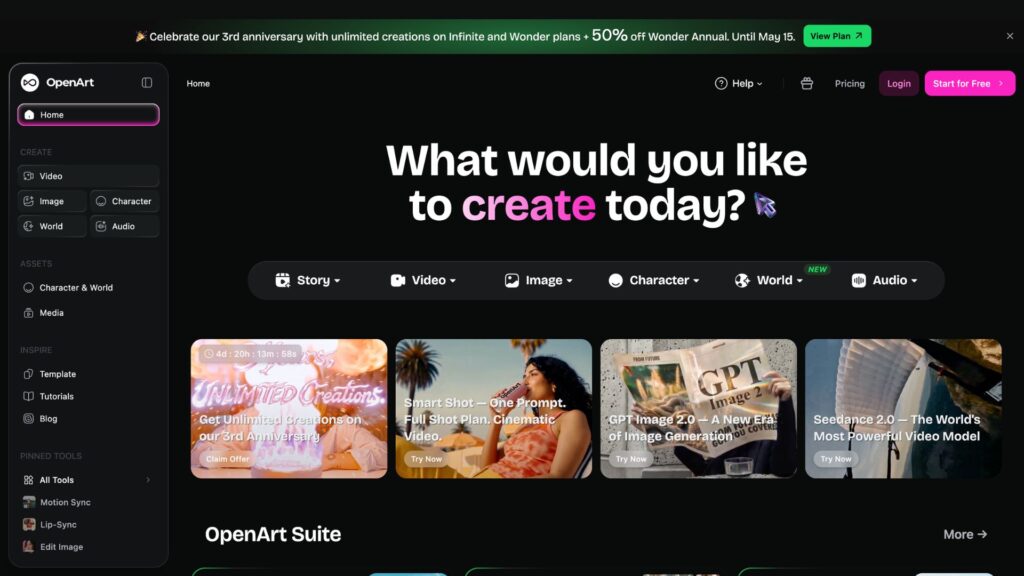
OpenArt
With the help of this tool, you can create characters and visuals, and can also lip sync those characters. You get a one-time 40 credits, which you should use within 7 days from the start date. You need to pay for more credits. Let’s take a look at the pricing overview of OpenArt.
Pricing Plans
Free
Essential
Advanced
Infinite
Credit
40 for 7 days
4000 credits/month
12,000 credits/month
24,000 credits/month
Parallel generations
4
8
16
32
Images
None
4000
12,000
24,000
Videos
None
50
150
300
For more feature-related details, check out its official page.
Advertisement
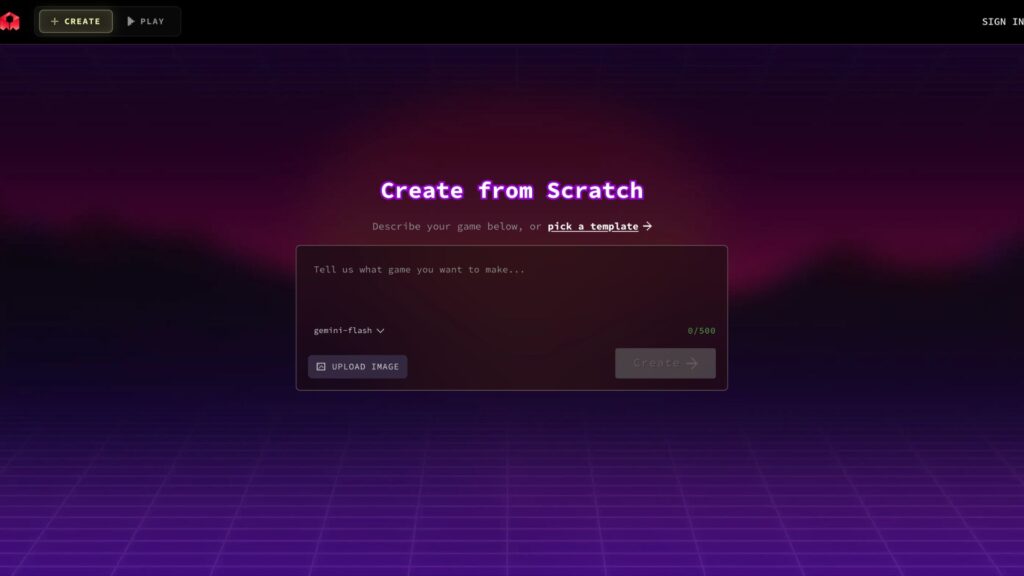
Rosebud AI
With this tool, you can create free sprite sheets for games. It has provided a solution to 2D, which is a time-consuming process of game development. You can create an all-new game using this free AI sprite sheet generator tool. It doesn’t have many features, but it is one of the best free AI sprite sheet generator tools.
It is completely free and doesn’t require any money transactions.
Use Case of Sprite Sheet
Sprite sheets are mainly used by web developers, game developers, graphic designers, UI/UX designers, and pixel art designers.
For game animation: It is useful for making a game character walk, run, and jump within a single sheet. Game developers, pixel artists, and Unity programmers mostly use it for animation.
2D game and tiles: different titles, i.e., ground, wall, and trees, are packed in a single sheet to build maps quickly. Game designers, level designers, and environment artists use sprite sheets to generate 2D games and tiles.
Advertisement
Website buttons and icons: Icons like home, search, settings, and social media icons are shown using a single image with CSS positioning. UI/UX, engineers, and web developers use it for updating and creating websites and apps for a simpler and clearer interface.
Web animation: Web developers, motion designers, and frontend engineers use a sprite sheet to add animated logos or loading spinners. It is done by moving the sprite sheet using CSS for the final result.
How to Create a Sprite Sheet?
Creating a Sprite Sheet is not difficult, especially when using an AI sprite sheet generator. Let’s understand how sprite sheets work, so that you can create your own characters.
Step 1: Prepare images for your desired animation character. Add the type, animation, frame count, and direction. Use frames, e.g., 4,8,12, or 16 for more image placements. At last, mention the side view, isometric view, or top down.
Step 2: Use individual frames: Add multiple images representing the animated steps of the characters. For this process, you can use tools like Aseprite, Adobe Photoshop, or Piskel. (Maintain a uniform style and remember to keep the same canvas size, i.e., 64×64 pixels).
Step 3: Align the frames: Remember! All the frames must have the same height and width. Align all the characters from the same baseline and remove the background to avoid misalignment.
Step 4: Arrange frames into a grid: Place all the frames into one single sprite sheet. Some of the common layouts are horizontal, vertical, and diagonal strips.
Step 5: Use an AI sprite sheet generator to avoid misalignment and save time. Use AI tools like Layer AI or Ludo AI for automatic alignment.
Step 6: Check the final file for exportation: Use a PNG image for better transparency. Grid and packed are the best layouts for gaming characters.
Step 7: Optimize the sprite sheet for performance: Look for empty spaces and remove them. Compress the texture if it is a large file, and convert sprites into one sheet.
Tips to Make an Effective Sprite Sheet
Use similar-sized frames for each animated image.
Add padding and borders to avoid texture bleeding (color leaking from one image to another).
Keep one animation per sheet, for example, walk, run, or still.
Select the right format of image for transparency. (Use PNG)
Add frames tightly to save space and memory in the sprite sheet.
Check every aspect after arranging the images in a named folder.
After months of buildup, end-to-end encrypted RCS messaging has finally made it to iOS, allowing Android and iPhone users to enjoy enhanced security between platforms when texting.
Apple continues to make progress on its end-to-end encrypted (E2EE) RCS messaging, following a few months of testing on iOS 26.4 developer betas. Now, it appears that the feature is ready for larger public testing.
On Monday, Apple announced that E2EE RCS messaging will roll out for iPhone users running iOS 26.5 with a supported carrier, and Android users on the latest version of Google Messages. This means that, provided the aforementioned criteria are met, RCS messages can’t be read while being sent between devices.
Users will see a new lock icon in RCS chats when a message is encrypted. Apple has included a list of participating carriers on a support page.
Advertisement
Apple notes that this is still technically a beta test of the feature, and will likely roll out in phases. Encrypted will be automatically enabled over time for both new and existing RCS conversations.
Apple began testing E2EE RCS messaging in the first iOS 26.4 developer beta in mid-February. Testing was very limited, as it was exclusively for iPhone users with iMessage disabled.
Fortunately, about one week later Apple rolled out the second iOS 26.4 developer beta, allowing Android and iPhones to trade fully encrypted RCS messages for the first time.
Apple initially announced that it would be offering end-to-end encryption to RCS messaging on iOS in March 2025.
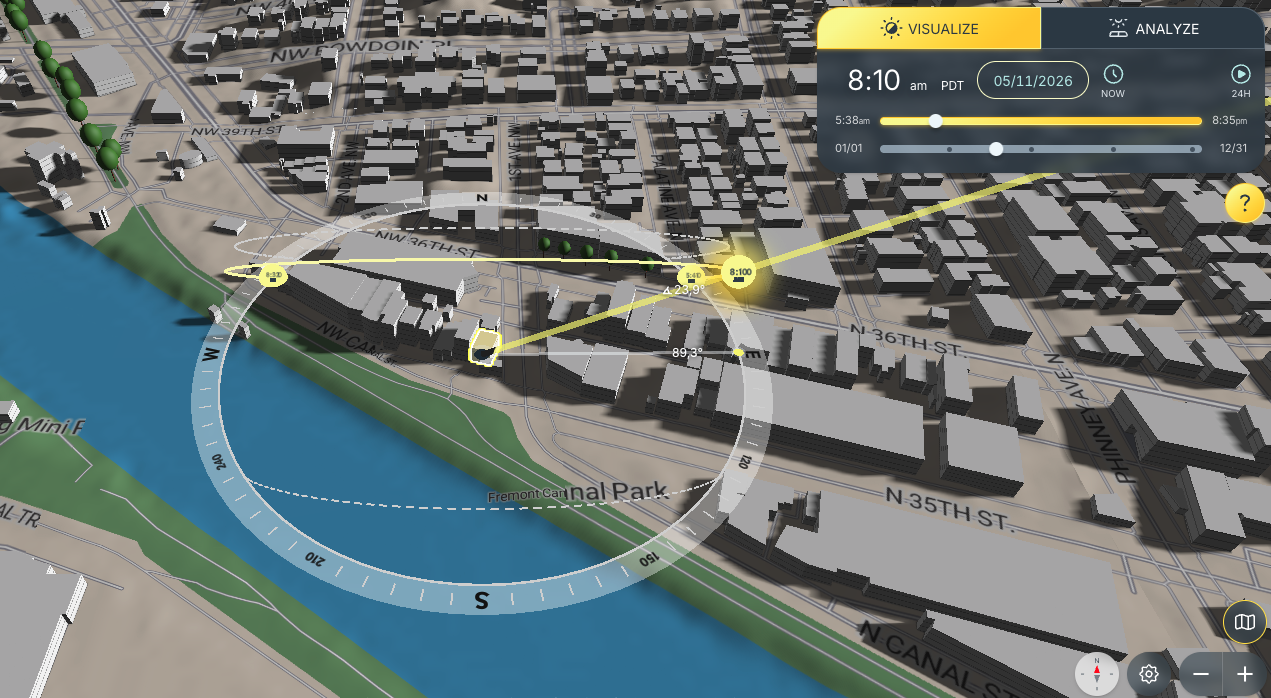
An interactive “Sunscore” visualization on Redfin shows the path of sunlight on GeekWire’s offices in Seattle. (Image via Redfin)
What’s it take to be a neighbor with a sunny disposition? Perhaps more sunlight, for starters.
Seattle-based real estate brokerage Redfin launched “Sunscore” on Monday, a new interactive feature that lets home searchers see how much natural light a property receives throughout the day.
The 3D map offers a property-level sun-path visualization, tracking sunlight and the shadows cast by surrounding terrain, buildings and trees. Different times of day and times of the year are analyzed to provide a full picture of potential shadows. Properties are scored 0-100 — the more sunlight, the higher the score.
“We know from customer feedback that sunlight is a priority for house hunters,” said Ariel Dos Santos, Redfin’s chief product and design officer, in a news release. “When you tour a home, you want to see brightly lit spaces with natural light pouring through windows. Sunscore gives home searchers that information upfront in a simple-to-understand way.”
A recent Redfin survey found that nearly 70% of people say the amount of sunlight in their home affects their satisfaction with their living situation, and 11% say it’s non-negotiable when searching for a home.
Advertisement
And the amount of light a home receives isn’t just a mood-booster or an aesthetic factor; the score on property-level sunlight can be also help homeowners measure the potential for solar energy and long-term cost savings.
Sunscore is developed by Austria-based Shadowmap, and the partnership with Redfin-owned Rocket is a U.S. exclusive. The feature is now available on all for-sale homes listed on Redfin.com and will be available on Redfin’s iPhone and Android apps later this year.
Who else is feeling physically sick every time they tune into Half Man? That’s testament to Richard Gadd’s incredible character creation, but my word is Ruben absolutely vile.
As we’re finding out, the show follows brothers Niall (Jamie Bell) and Ruben (Gadd) through 30 years of their lives, exploring the highs and lows of their turbulent relationship. Frankly, “lows” is putting things politely.
Things will probably get worse than what we’ve already seen. But when will Half Manepisode 4 be released on HBO Max and BBC iPlayer?
Advertisement
Latest Videos From
What time can I watch Half Man episode 4 on HBO Max and BBC iPlayer?
Five-year-old European military drone startup Helsing is reportedly close to raising a new $1.2 billion round at about an $18 billion valuation. The round is expected to be led by Dragoneer and co-led by existing Helsing investor Lightspeed, the Financial Times reported.
Helsing last raised just under a year ago, in June 2025, in a deal that was led by billionaire Spotify founder Daniel Ek. That was a €600 million investment at an estimated €12 billion valuation ($14 billion USD). So this new round is a step-up.
While Helsing isn’t the only European unicorn defense tech, it is by far the one that investors deem the most valuable. For instance, German drone maker Quantum Systems raised €180 million in November, which valued it at more than €3 billion. And a year ago, Lisbon-headquartered Tekever raised £400 million at a valuation above £1 billion. Amid Russia’s ongoing war in Ukraine, the proving ground for new technologies, autonomous defense startups have become a hot area for VCs.
Helsing, Dragoneer, and Lightspeed could not be immediately reached for comment.
Starbucks headquarters in Seattle. (GeekWire Photo / Kurt Schlosser)
A new filing with Washington state shows that Starbucks’ recent job cuts will impact 61 tech jobs at its Seattle headquarters. The Seattle Times first reported on this round of layoffs in April, citing an internal message that did not include the number of roles, their location or specific job titles.
The layoffs are the result of “a reorganization of the technology department at the Starbucks Support Center,” the letter states. The cuts take effect between June 20 and Aug. 28.
The Worker Adjustment and Retraining Notification (WARN) letter states that the affected roles include cybersecurity analyst, technical product manager, systems analyst, systems administrator, scrum master and architect. Employees at the director and manager levels are among those being let go.
The tech department shake-up also follows the hiring of Anand Varadarajan as chief technology officer in January. He joined the coffee company after 19 years at Amazon, where he most recently led technology and supply chain for its global grocery business.
Advertisement
In a September filing with the U.S. Securities and Exchange Commission, Starbucks warned that it needed to keep improving its marketing, data analytics and AI tools or risk losing consumer interest and market share.
The tech sector has seen a wave of layoffs in recent months, including cuts in the Pacific Northwest impacting Amazon, Meta, Microsoft, Expedia Group, T-Mobile, Oracle, Zillow and others. Companies generally frame the cuts as a mix of post-pandemic restructuring, tighter cost discipline, and a shift of resources toward AI and other strategic priorities.




























































You must be logged in to post a comment Login