

Crypto World
Circle Releases Q1 2026 Earnings Call Recap: Co-Founder Allaire Discusses Results



Circle shared a recap of its Q1 2026 earnings call led by Co-Founder, Chairman and CEO Jeremy Allaire.



Bored Ape floor prices have doubled in a month as Yuga Labs CEO Michael Figge says blue-chip NFTs were oversold.
Summary
- BAYC floor prices climbed from around 5 ETH to over 10 ETH across the past month, with ApeCoin rallying from below $0.10 to $0.16.
- Yuga Labs CEO Michael Figge said the collection was clearly oversold during the prolonged downturn, calling the rally a recovery rather than hype.
- Pudgy Penguins and other blue-chip collections have also rallied as retail traders return to speculative crypto assets.
Bored Ape Yacht Club floor prices have doubled over the past month, climbing from around 5 ETH to over 10 ETH as traders rotate back into speculative assets. ApeCoin, the ecosystem’s governance token, has also rallied from below $0.10 to roughly $0.16 alongside a sharp increase in trading volumes.
Yuga Labs CEO Michael Figge told analysts the rally reflects genuine market correction. “It’s clear from the numbers that for some time, as far as blue-chip digital collectibles go, it was oversold,” Figge said.
What is driving the Bored Ape comeback
The rebound comes as memecoins and other higher-risk assets outperform more defensive sectors such as DeFi, suggesting retail traders are returning after months of subdued activity.
Pudgy Penguins has also rallied sharply in recent weeks, and traders are speculating about a long-rumoured OpenSea token launch reigniting broader marketplace activity.
Figge acknowledged that speculation remains central. “It would be naive to say financial speculation isn’t a huge driver,” he said. “Whatever happens in this cycle will rhyme with the last one, but it’s never going to be exactly the same.”
Yuga Labs has meanwhile shifted its focus toward community building, hosting more than 30 in-person meetups worldwide over the past month. “A lot of what made Bored Ape work in the first place, the social layer, hasn’t really been serviced in recent years,” Figge said.
Market data and holder context
Figge pushed back on critics noting that unique holder counts have not doubled alongside prices. “A cynic will say prices doubled and the unique holder count didn’t double,” he said. “But that’s really just recovery from a period where things fell disproportionately.”
BAYC’s market capitalisation stood at $251 million as of May 10, with the collection recording $13.42 million in sales over the prior 30 days, per CoinGecko data.
The rebound also coincides with a broader reassessment of digital art: pseudonymous NFT analyst “Van” argued in a recent essay that while speculative mania collapsed after 2021, institutional interest in blockchain-based art has continued quietly at institutions including MoMA and Centre Pompidou.

Key Highlights
- DVLT drops 5.77% in regular trading but recovers 2.76% after hours on infrastructure updates
- Company plans 48,000-GPU distributed edge computing network spanning 100+ U.S. metropolitan areas by 2026
- Upcoming CLARITY Act markup provides regulatory tailwind for digital infrastructure buildout
- Strategic Available Infrastructure collaboration underpins Datavault AI’s coast-to-coast deployment
- Modular micro data center approach positions DVLT for AI workloads, tokenization services, and edge processing
Datavault AI (DVLT) thrust its edge computing infrastructure blueprint into the spotlight Tuesday as the stock experienced intraday volatility. Shares settled at $0.5109, declining 5.77% during regular trading hours following afternoon selling pressure. Yet investors found renewed optimism in extended trading, pushing the stock to $0.5250—a 2.76% gain—after the company detailed its expansion roadmap.
Legislative Momentum from CLARITY Act
Datavault AI tied its infrastructure initiative to anticipated Senate Banking Committee action on the CLARITY Act. Senate Banking Chair Tim Scott scheduled the bill’s markup session for Thursday, May 14, 2026, beginning at 10:30 a.m. Eastern Time. This legislation pursues more transparent federal frameworks for digital asset regulation and market structure.
The CLARITY Act endeavors to establish distinct jurisdictional boundaries between the SEC and CFTC in overseeing digital asset activities. The House approved this bipartisan measure in July 2025 with strong 294-134 support. Senate advancement would move the legislation closer to reconciliation discussions with the House-passed version.
Datavault AI indicated that enhanced regulatory clarity might accelerate adoption of tokenization platforms, protected data operations, and distributed computing services. The firm delivers solutions spanning data monetization, digital credentialing, customer engagement tools, and real-world asset tokenization capabilities. Therefore, management views regulatory certainty as a potential catalyst for broader digital infrastructure deployment.
Expansive GPU Fleet for Metropolitan Coverage
Datavault AI intends to construct a geographically dispersed edge infrastructure through its collaboration with Available Infrastructure spanning major American cities. The initiative aims to reach beyond 100 metro regions before 2026 concludes. Plans also encompass deploying 1,000 urban micro-edge neocloud facilities throughout the nation.
The organization anticipates achieving full commercial operation of its 48,000-GPU arsenal during Q3 2026. Moreover, it projects generating revenue from coast to coast by year’s end as the rollout progresses through local territories. Datavault AI values the complete GPU infrastructure between $1.44 billion and $1.92 billion.
Management calculated this valuation using prevailing market rates for Hopper and Blackwell generation GPU hardware. The firm also projects serviceable addressable market opportunity exceeding $100 million annually per individual network node. Nevertheless, these financial forecasts hinge on successful implementation, market acceptance, deployment velocity, and enterprise adoption rates.
Distributed Architecture Enables Low-Latency Operations
Datavault AI employs compact modular data centers rather than concentrating resources in massive centralized complexes. This approach distributes computational power across numerous geographic points and minimizes single-point vulnerabilities. As a result, the organization claims the architecture enhances redundancy protocols, failover capabilities, operational continuity, and security posture.
The company anticipates the network will facilitate data monetization applications, tokenization platforms, and computation-intensive operations. It also configures the infrastructure for minimal-latency processing proximate to ultimate users and corporate customers. This architectural strategy could address requirements in financial services, enterprise computing, and digital asset infrastructure sectors.
Available Infrastructure further links this deployment to Project Qestral, an overarching sovereign network initiative. That broader effort targets comprehensive presence throughout America’s 100 most populous metropolitan regions. Datavault AI now seeks to monetize this geographic coverage as its edge computing infrastructure becomes operational.

Base Azul is set to go live on mainnet May 13, bringing a multiproof security system to the Coinbase Layer 2.
Summary
- Base Azul combines trusted execution environment proofs with zero-knowledge proofs, allowing either method to finalize proposals independently.
- When both proof systems agree, withdrawal finality can fall to as little as one day, a significant improvement for users moving assets between chains.
- Empty blocks on the Base network fell 99% over the past two months, from roughly 200 per day to around two.
Base Azul, described by the network as its first fully independent upgrade, is set to activate on mainnet on May 13. At the center of the upgrade is a multiproof system combining trusted execution environment proofs with zero-knowledge proofs, giving the network multiple independent paths to finalize transactions.
Either proof type can finalize a proposal independently, providing redundancy and resilience. When both systems agree, Base says withdrawal finality can fall to as little as one day, a major improvement over the standard multi-day wait on optimistic rollups.
What Base Azul changes for users and developers
Azul also changes Base’s backend software stack. The upgrade makes base-reth-node the network’s sole execution client while adding base-consensus, a new client derived from Kona. All other execution and consensus clients are being dropped, requiring node operators to migrate before mainnet.
Base said reliability has already improved ahead of the launch. Empty blocks fell by roughly 99% over the past two months, from approximately 200 per day to around two. The network also sustained multiple transaction bursts of up to 5,000 transactions per second during the same window, a sharp contrast to the congestion issues that affected the network in January.
The upgrade also aligns Base with Ethereum’s Osaka execution-layer specifications, reducing breaking changes for most developers and applications. Base is running an Immunefi audit competition offering rewards of up to $250,000 for critical vulnerabilities in Azul code.
Context and what comes next
Base is the Coinbase-incubated Ethereum Layer 2 and one of the most active networks by transaction volume in 2026. Azul is framed as a step toward Stage 2 decentralization, a goal the network has pursued progressively since introducing permissionless fault proofs in 2024.
The next Base upgrade after Azul is expected by end of June and will include an enshrined token standard, Flashblock Access Lists, and further withdrawal time reductions.
Base has also confirmed VibeNet will launch as a public devnet in mid-May, giving developers an early environment to test upcoming features before they reach mainnet.


Kraken’s parent Payward has filed a Payward charter application with the OCC to establish a federally regulated national trust company.
Summary
- Payward filed for an OCC national trust charter on May 8, proposing a new entity called Payward National Trust Company focused on digital asset custody.
- The trust would offer federally regulated custody to institutional clients without taking deposits or making loans.
- Co-CEO Arjun Sethi said the OCC filing and Kraken’s existing Wyoming SPDI are complementary pillars of Payward’s regulated banking strategy.
Kraken’s parent Payward has filed a Payward charter application with the US Office of the Comptroller of the Currency, proposing a federally regulated entity called Payward National Trust Company. The filing was announced on May 8 alongside a statement from Payward co-CEO Arjun Sethi.
If approved, Payward National Trust Company would provide bank-level digital asset custody to institutional clients who require a federally regulated qualified custodian. It would not take deposits or make loans in the traditional sense.
What the OCC charter means for Kraken
“A national trust company provides the certainty institutions require and establishes the infrastructure to build the next generation of custody,” Sethi said. “This is not about being first; it is about getting the framework right.”
Sethi described the OCC application and Kraken’s existing Wyoming Special Purpose Depository Institution as “complementary pillars” of Payward’s regulated banking strategy. Kraken Financial, the Wyoming-chartered arm, secured a Federal Reserve master account in March 2026, the first crypto-native firm to gain direct access to the Fed’s payment rails.
The OCC has already issued conditional approvals to several crypto firms this cycle. Ripple, Circle, Paxos, BitGo, and Fidelity Digital Assets received conditional national trust bank charters in December 2025. Crypto.com received its own conditional OCC approval in February 2026.
Context and what comes next
Payward has been rapidly building out its regulated US infrastructure. Its acquisition of Bitnomial for up to $550 million added a full CFTC derivatives stack, while its $1.5 billion purchase of NinjaTrader in 2025 gave it retail futures access.
The Payward charter would extend that regulatory footprint to federal custody, completing a vertically integrated platform spanning trading, clearing, and safekeeping of digital assets.
The OCC approval process is expected to be thorough and multi-stage. Anchorage Digital remains the only crypto-native firm to hold a full national charter to date, with all other recent approvals still conditional.


A newly formed Delaware entity will consolidate and liquidate remaining assets, with “strategic alternatives” coming in the next few weeks.


Funds managed by Neuberger Specialty Finance committed the facility to grow margin financing for the multi-asset prime broker.
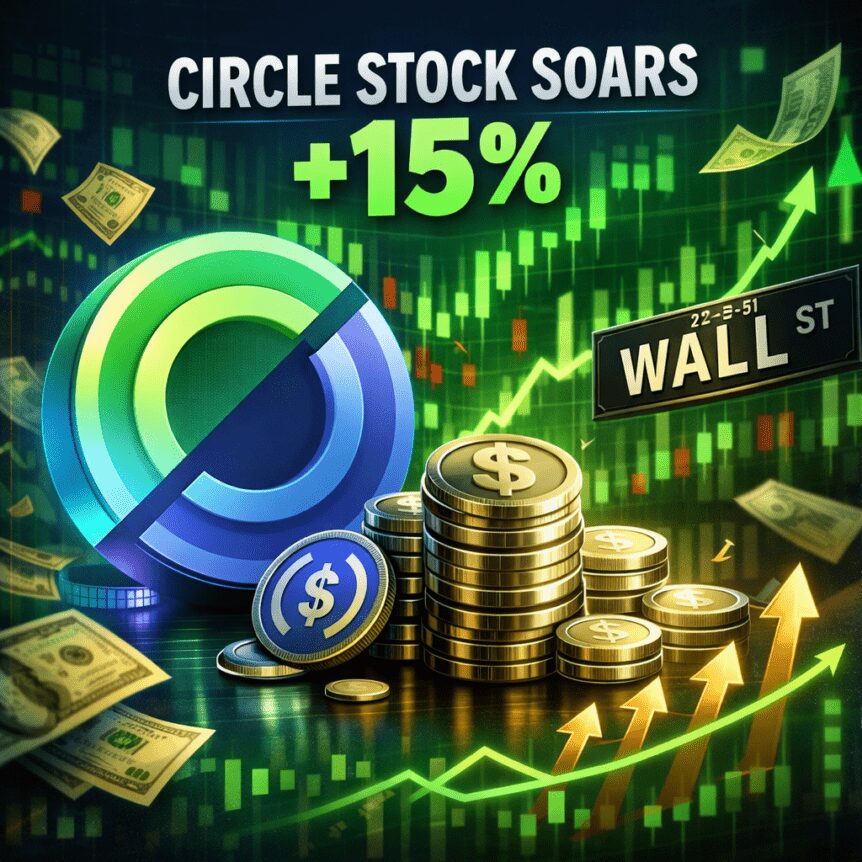
Circle’s stock rallied on Monday after the fintech company reported stronger-than-expected first-quarter results and disclosed a fresh $222 million presale of its ARC token, a key component of its Arc network. The news helped push CRCL up about 16% to $131.76 at the close, the highest finish since March 18, and extended a standout start to 2026 as the stock sits roughly 66% higher for the year. This jump nudged Circle’s market capitalization toward the $35 billion mark, underscoring the market’s appetite for the company’s expanding stablecoin and blockchain ambitions.
The earnings and strategic updates arrived as investors weigh Circle’s position in a rapidly evolving crypto ecosystem where stablecoins and on-chain utility tokens are intertwining more closely with consumer and institutional finance. Wall Street analysts, while acknowledging near-term volatility, largely regard Circle as a leader in the space, buoyed by its recurring revenue growth and the potential flywheel effect from its Arc platform.
Key takeaways
- Circle posted a 20% rise in revenue for Q1 2026 to $694 million, with adjusted earnings up 24% to $151 million, alongside a USDC circulating supply of $77 billion at quarter-end, up 28% year over year.
- Arc’s presale raised $222 million, valuing the Arc network at $3 billion and signaling strong investor interest in Circle’s broader blockchain strategy.
- Major supporters of Arc’s fundraising include a16z Crypto and a consortium featuring BlackRock, Apollo Global Management, and ARK Invest, illustrating broad strategic backing.
- Equity market response reflected optimism: consensus price target sits around $138.50, with several top analysts forecasting meaningful upside, including Citigroup’s Peter Christiansen at a $243 target and Bernstein’s Gautam Chhugani at $190.
Solid earnings anchor Circle’s strategic arc
Circle’s first-quarter results painted a picture of a company steadily widening its top and bottom lines while cementing its role in the digital-asset ecosystem beyond pure stablecoin trading. The firm reported USDC, its flagship dollar-pegged stablecoin, reaching $77 billion in circulation by the end of Q1. That level represents a 28% increase from the previous year, underscoring durable demand for a token that Circle has framed as a building block for payments, on-chain settlement, and decentralized finance infrastructure. In parallel, Circle’s revenue growth and margin expansion fed the stock’s positive momentum for the year.
Specifically, the company said Q1 revenue rose to $694 million, up 20% year over year, while adjusted earnings climbed to $151 million, up 24%. Investors have come to view these numbers not merely as finance metrics but as evidence that Circle is successfully monetizing a widening usage of its stablecoin network and related services. The earnings call also reinforced the management’s view that Circle’s ecosystem benefits from a “flywheel” effect — as more payments and on-chain activity use USDC and related services, it should compound demand for Arc’s tokenized transactions and broader blockchain capabilities.
Arc presale signals growing corporate interest in on-chain utility
Beyond the headline earnings, Circle disclosed that it had conducted a presale of its ARC token for $222 million, valuing the Arc project at $3 billion. The ARC token is designed to support transactions and utility within Circle’s Arc network, a framework the company positions as expanding the practical uses of stablecoins and on-chain finance. Circle’s leadership described Arc as a catalyst for broader adoption of Circle’s digital assets, suggesting that Arc could enhance the efficiency and reach of USDC in commerce and other on-chain use cases.
The investor syndicate behind ARC’s presale underscores the strategic interest from both crypto-native and traditional financial players. In addition to a16z Crypto, Circle highlighted participation from a consortium featuring BlackRock, Apollo Global Management, and ARK Invest. This mix signals potential cross-industry collaboration opportunities, from on-chain settlement and programmable payments to ecosystem financing that could benefit Circle’s broader toolkit of products.
Analysts weigh in on the trajectory and the risks
Market observers described the earnings and ARC news as supportive of Circle’s leadership position in stablecoins and blockchain-enabled commerce. Andrew Jeffrey of William Blair told clients that while Circle shares are likely to stay volatile in the near term, the company benefits from what he called a “significant stablecoin commerce advantage” that could translate into durable upside over time. Dan Dolev of Mizuho echoed a similar theme, noting that Circle continues to push new use cases for stablecoins beyond trading — a development that could broaden the technology’s appeal to a wider set of users and institutions.
Analysts also referenced the breadth of backing behind Circle’s Arc initiative as a potential accelerant for adoption. TipRanks data reflecting a consensus around a $138.50 price target suggests that the street broadly expects further upside from Circle’s current level, driven by both the stablecoin portfolio and Arc’s monetization potential. Among the bulls, Citigroup’s Peter Christiansen has laid out a ceiling well above the current price, with a 12-month target of $243, while Bernstein’s Gautam Chhugani has offered a more conservative but still optimistic target of $190. Together with other buy-rated opinions, these projections highlight a bankable case built on Circle’s growing network effects and diversified revenue streams.
What this means for investors and the market
Circle’s Q1 results and Arc presale reinforce a narrative in which stablecoins are no longer merely passive liquidity tools but are increasingly embedded in the fabric of on-chain commerce and financial services. The scale of USDC circulation points to continued confidence in Circle’s core product, while the Arc token introduces a new layer of on-chain incentives designed to accelerate adoption and utilization. For investors, the combination of a proven revenue machine and a programmatic pathway to broader blockchain use cases helps justify the elevated valuation, even as near-term price action remains sensitive to macro and crypto sector sentiment.
From a market perspective, the Arc ecosystem could become a pivotal factor shaping Circle’s long-run trajectory. If Arc products succeed in delivering measurable efficiency gains and new revenue channels, Circle could leverage that momentum to deepen stablecoin circulation, expand merchant adoption, and attract additional strategic partners. Yet the path is not without risk: Arc’s success hinges on broader network adoption, regulatory clarity around tokenized ecosystems, and the ability to scale the technology securely in a rapidly evolving landscape.
Looking ahead, investors will be watching how Arc integrations unfold in real-world use cases, how USDC usage expands across geographies and industries, and whether external investors continue to back the Arc vision in subsequent rounds or collaborations. The next earnings cycle and any updates on Arc’s developer ecosystem, security, and governance will be telling indicators of how the company’s strategy translates into tangible value for its users and holders.
As Circle builds out its stablecoin network and Arc’s on-chain utility, the market will seek to determine whether the current enthusiasm translates into sustainable growth or if volatility remains a defining trait of Circle’s stock in the near term. The coming quarters should reveal how durable the Arc-driven expansion is and whether Circle can convert broader institutional interest into meaningful, long-term demand for USDC and ARC alike.

The Australian government is reportedly seeking to replace capital gains tax discounts on crypto and other assets with an inflation indexation tax, which could increase the taxes on long-term crypto gains.
The Albanese government’s fiscal year 2027 budget, set to be released on Tuesday, would cut the current 50% capital gains tax discount alongside changes to housing investment taxes, the Australian Financial Review reported on Sunday, citing people familiar with the budget.
Australian investors can currently claim a 50% capital gains tax discount on assets held for more than 12 months. The proposed indexation model would instead tax full real gains, adjusted for inflation, over the time the asset is held.
The move is likely to impact long-term investors and could potentially see a significant increase in tax obligations for high-income earners on assets with low inflation-adjusted returns.
Chris Joye, a portfolio manager at Coolabah Capital Investments and an AFR columnist, criticized the change, arguing in an X post that it would drive Australians out of most forms of investment and into assets with tax incentives, such as housing.
“After the budget doubles the capital gains tax on productive businesses and assets from about 23.5% to 46-47%, investors will understandably pull money from businesses, shares, commercial property and rental housing and plough it into their tax-free owner-occupied home,” he said.
“The single biggest winner from the budget: the tax-free owner-occupied home, which is where people will put their money,” Joye added.
Changes in the federal budget will take effect at the end of the fiscal year in July 2027, with a one-year grace period for assets acquired after May 10. During the transition to a new system, the existing 50% discount will still apply.
Related: Coinbase launches crypto service for Australian retirement funds
The AFR report also notes that assets purchased before May 10 will be partially exempt, with the final capital gains tax discount calculated proportionally based on how long the asset was held under each tax regime.

Source: Chris Joye
Scott Phillips, chief investment officer at investment advice firm The Motley Fool, argued that while investors will likely pay more tax under the changes, they will still make considerable returns and be incentivized for further investments.
“Not for nothing, but when people say a CGT change would hit founders and growth investors, they’re not wrong. But implicit in that argument is that those groups will be making a motza in the first place. That’s all the incentive they will need,” he said.
Magazine: XRP ‘probably going to $12,’ Bitcoin ETFs add $1B: Market Moves


Galaxy Ventures‑backed Boundary Labs is preparing to launch USBD, an over‑collateralized Ethereum stablecoin that swaps monthly attestations for continuous on‑chain verification of reserves and net asset value while pushing yield into a separate sUSBD token aimed at institutional risk‑takers.
Summary
- Boundary raised 2 million dollars from Galaxy Ventures, First Block Capital, BlackWood and crypto funds to build USBD, an institutional‑grade stablecoin that makes reserves and NAV visible on‑chain in real time.
- USBD will be over‑collateralized on Ethereum and pay no yield; a separate sUSBD token will capture protocol earnings from delta‑neutral DeFi strategies, cleanly separating “cash‑like” settlement from risk‑bearing returns.
Boundary Labs, a Galaxy Ventures–backed startup, is preparing to launch USBD, an institutional-grade stablecoin built around continuous on-chain verification rather than periodic off-chain attestations. The company has closed a $2 million seed pre‑financing round and plans to deploy USBD on Ethereum in early summer 2026, targeting asset managers, hedge funds and family offices that want a regulated dollar asset with real‑time transparency into reserves, net asset value and protocol health.
The raise was led by Galaxy Ventures, an early‑stage investment arm under Galaxy Digital, with participation from First Block Capital, BlackWood and several crypto‑native funds, according to reporting from The Block. Boundary Labs is headed by founder and CEO Matthew Mezger, a former Deutsche Bank and Digital Currency Group executive, who has pitched USBD as a way to “move stablecoins from a trust‑driven model to a verifiable financial system” by making capital structure, reserve composition and protocol operations visible on‑chain.
USBD will live natively on Ethereum and is explicitly designed as an institutional dollar rather than a retail rewards product. The team says the stablecoin will be over‑collateralized and supported by hedging strategies intended to dampen market volatility, with reserve composition and net asset value updated continuously on-chain rather than in monthly PDFs, a clear response to long‑running criticism that even “regulated” stablecoins depend heavily on opaque off‑chain attestations. Unlike some competitors, USBD itself will not pay yield directly to holders; instead, Boundary plans to introduce a separate staking token, sUSBD, that will receive protocol earnings generated from a delta‑neutral DeFi strategy. In that structure, sUSBD functions as the risk‑bearing asset that captures spread and fees, while USBD is pitched as a clean, non‑yielding settlement dollar that institutions can hold without triggering the same regulatory questions that surround interest‑bearing stablecoins.
The product is aimed squarely at professional investors. Boundary’s materials describe USBD as tailored to “asset management institutions, hedge funds and family offices,” positioning it as a building block for tokenized funds, on‑chain repo, and cross‑venue liquidity operations rather than a consumer payments coin. The team says it is working toward a mainnet launch in “early summer 2026,” with initial integrations expected across Ethereum (ETH) DeFi venues that already service institutional flows.
USBD’s timing intersects with a broader shift in how venture firms and policymakers think about stablecoins. Andreessen Horowitz’s recent “new stack for global finance” thesis framed stablecoins as the base layer of a $9 trillion‑a‑year “economic operating system,” while a crypto.news report detailed how U.S. banks are lobbying to restrict yield on dollar tokens even as usage explodes. At the same time, post‑trade giant DTCC is lining up more than 50 institutions for a tokenized securities launch, underscoring how much traditional finance now leans on transparent, programmable rails.
Boundary is effectively betting that this next phase will be defined less by who offers the highest APY on a quasi‑opaque dollar and more by who can prove, in real time and on‑chain, that every token is backed, hedged and auditable. If USBD can convince cautious allocators that its “verifiable stablecoin” model solves the trust gap without sacrificing usability, it will not just be another ticker in a crowded market, but a test case for whether institutional stablecoins can finally look and feel like the rest of regulated capital markets — only with a public ledger under the hood.


Corpay has launched stablecoin wallets for its 800,000 business clients through a new partnership with BVNK.
Summary
- Corpay’s integration with BVNK lets clients hold, send, receive, and convert stablecoins alongside fiat balances inside its platform.
- The S&P 500 firm processes over $12 billion in corporate payments and $26 billion in FX volume monthly across 145 currencies.
- Corpay will also integrate stablecoin rails into its own treasury operations to reduce reliance on pre-funded accounts.
Corpay (NYSE: CPAY) has announced a partnership with stablecoin infrastructure platform BVNK to provide embedded stablecoin wallets and settlement capabilities to its global client base. Clients can now view stablecoin balances alongside fiat inside Corpay’s platform and access payment rails that operate beyond traditional banking hours.
Corpay serves more than 800,000 clients worldwide, processing over $12 billion in corporate payments and $26 billion in foreign exchange volume every month across more than 145 currencies. The new wallet integration brings always-on settlement directly to that network.
What the BVNK partnership delivers
Mark Frey, Group President of Corpay Cross-Border Solutions, said the company needed faster liquidity at scale. “Stablecoins introduce a 24/7 settlement capability that strengthens our existing infrastructure. BVNK provides the technology and compliance framework we need to deliver this securely and at scale.”
Jesse Hemson-Struthers, CEO of BVNK, said stablecoins are reshaping the foundation of global payments. “Corpay’s scale and reach make them an ideal partner to bring these capabilities into the mainstream,” he said.
Corpay will also integrate stablecoin rails into its own treasury operations, reducing reliance on pre-funded accounts across its global footprint. The firm has also added blockchain-based settlement through JPMorgan’s Kinexys private blockchain alongside the BVNK integration.
BVNK’s growing institutional footprint
BVNK has become one of the main firms helping payment companies add stablecoin rails. Mastercard agreed in March to buy BVNK for up to $1.8 billion, while Visa teamed up with BVNK earlier this year to support stablecoin funding and payouts through Visa Direct.
The Corpay deal follows a period of rapid expansion by BVNK, which raised $50 million in a Series B round backed by Haun Ventures, Coinbase Ventures, and Tiger Global. The Corpay integration positions stablecoins directly inside one of the largest cross-border payment networks operating today.

HBO’s Near-Perfect 2-Part Series Just Proved It Could Run for Years

THIS IS BAD… BUT BITCOIN IS SHOWING US SOMETHING IMPORTANT

Hazer signs MOU with CRV

Manchester United reach agreement with Casemiro over contract clause amid transfer speculation

US brings back mandatory military draft registration

Steven Gerrard disagrees with Gary Neville over ‘shock’ Chelsea and Arsenal claim | Football


-
 Crypto World4 days ago
HarrisX Poll Found 52% of Registered Voters Support the CLARITY Act
-

 Fashion3 days ago
Weekend Open Thread: Marianne Dress
-

 Crypto World5 days ago
Upbit adds B3 Korean won pair as Base token gains Korea access
-
 NewsBeat5 days ago
NCP car park operator enters administration putting 340 UK sites at risk of closure
-

 Tech2 days ago
Auto Enthusiast Carves Functional Two-Stroke Engine from Solid Metal
-

 Politics4 hours ago
What to expect when you’re expecting a budget
-

 Politics3 days ago
Politics Home Article | Starmer Enters The Danger Zone
-
 Business3 days ago
Ignore market noise, India’s long-term story intact, say D-Street bulls Ramesh Damani and Sunil Singhania
-

 Fashion9 hours ago
Coffee Break: Travel Steam Iron
-

 Crypto World7 days ago
UAE Free Zone Deploys Blockchain IDs to Verify Registered Firms
-

 Fashion1 day ago
What to Know Before Buying a Curling Wand or Curling Iron
-

 Tech20 hours ago
GM Agrees To Pay $12.75 Million To Settle California Lawsuit Over Misuse Of Customers’ Driving Data
-

 Crypto World5 days ago
BlackRock CEO Larry Fink Discusses a New Asset Class
-

 Crypto World5 days ago
Robinhood says Wall Street is building onchain
-

 Entertainment5 days ago
Sarah Paulson Called Out For Met Gala ‘Hypocrisy’
-
 Sports6 days ago
NBA playoff winners and losers: Austin Reaves is not loving Lakers vs. Thunder matchup, but Chet Holmgren is
-

 Tech6 days ago
Apple and Samsung are dominating smartphone sales so thoroughly that only one other company makes the top 10
-

 Entertainment5 days ago
Bold and Beautiful Early Spoilers May 11-15: Steffy Revolted & Liam Overjoyed!
-

 Fashion5 days ago
The Best Work Pants for Women in 2026
-

 Tech6 days ago
I tested the Xiaomi 17 Ultra’s camera and I don’t think I’ll ever go back to an iPhone
You must be logged in to post a comment Login