

Crypto World
BeInCrypto Institutional Research: 15 Firms Setting the Standard for Crypto Corporate Governance



Best Crypto Corporate Governance is a category within the BeInCrypto Institutional 100, covering firms whose public-market discipline, banking charters, board structure, audit maturity, and crisis-response record set governance standards for digital assets.
This category sits under Pillar 5: Regulation & Governance. The 15 firms below are listed alphabetically and are not ranked. A shortlist will be named in May 2026, with the winner announced at Proof of Talk in Paris on June 2–3, 2026.
Key Facts
- Long list: 15 firms across public crypto companies, federal crypto banks, regulated custody firms, TradFi banks, and digital asset infrastructure providers
- Order: Listed alphabetically, not ranked
- Initial pool: More than 30 firms screened; 15 advanced to the long list
- Scoring: 20% quantitative data · 80% Expert Council
- Criteria assessed: Public-market discipline, banking charter strength, board independence, audit maturity, incident response, disclosure quality, leadership credibility
- Data sources: OCC, SEC EDGAR, NYDFS, FCA, FINMA, BaFin, MAS, MiCA-CASP registers, audited reports, company disclosures, PitchBook, Tracxn, and Crunchbase
| Firm | Governance Sub-Segment | HQ | Reach | Top Listing / Charter | Representative Work |
|---|---|---|---|---|---|
| Anchorage Digital | Federally chartered crypto bank | SF / NY / Sioux Falls / Singapore / Porto | $4.2B valuation Backed by a16z, GIC, Goldman Sachs, KKR, Visa, Tether |
OCC national trust bank charter since Jan 2021 Longest-tenured federally chartered crypto bank |
Subject to ongoing OCC examination Resolved 2022 OCC AML consent order after remediation |
| BitGo | Public and federally chartered custody | Sioux Falls / Palo Alto | $104B+ AUC $2.08B valuation at IPO |
NYSE: BTGO since Jan 22, 2026 OCC final national trust bank charter |
NYSE IPO raised $212.8M in Jan 2026 First publicly traded federally chartered digital asset infrastructure company |
| Block | Long-tenured public fintech | San Francisco, USA | Cash App and Square ecosystem 57M Cash App monthly actives in Q4 2025 |
NYSE: XYZ, formerly SQ Public since Nov 2015 |
Decade-plus public-company governance record Spiral continues Bitcoin core development support |
| BNY | Global bank with crypto custody surface | New York, USA | $55.8T total AUC/A Founded in 1784 as the oldest US bank |
NYSE: BK OCC-regulated bank |
Co-custodian on Morgan Stanley Bitcoin Trust Live BTC and ETH custody operational since 2022 |
| Bullish | Public institutional exchange | George Town, Cayman Islands | Institutional spot and derivatives trading platform Public-market exchange governance |
NYSE: BLSH Listed via SPAC merger in Aug 2025 |
NYSE listing brought public-market governance to the venue Led by Tom Farley, former NYSE President |
| Circle Internet Group | Public stablecoin issuer | Boston / NYC, USA | USDC $73B market cap Monthly Deloitte reserve attestations |
NYSE: CRCL since Jun 2025 OCC conditional national trust bank charter |
First publicly traded stablecoin issuer OCC conditional charter granted Dec 12, 2025 |
| Coinbase | Public crypto-native company | Wilmington / SF, USA | S&P 500 inclusion in 2024 Full SOX compliance; Deloitte auditor |
NASDAQ: COIN since Apr 2021 First US-listed crypto-native firm |
SEC enforcement action dismissed in Feb 2025 Board includes Marc Andreessen, Fred Wilson, Tobias Lütke, and Gokul Rajaram |
| Fidelity Digital Assets, NA | Asset-manager operated federal trust | Boston, USA | Backed by Fidelity’s $15T+ AUA platform Custody for FBTC and FETH ETFs |
OCC conditional national trust bank charter Approved Dec 12, 2025 |
FDAS LLC converting from NY state trust to federal trust bank Inherits Fidelity’s institutional governance framework |
| Galaxy Digital | Public multi-product crypto investment firm | New York / Delaware | Trading, asset management, investment banking, and mining US public-market governance framework |
NASDAQ: GLXY since May 16, 2025 Re-domiciled from Toronto to Delaware |
Completed re-domiciliation and Nasdaq uplisting in May 2025 Moved into full US-listed SOX governance regime |
| Kraken (Payward) | Multi-charter crypto bank and IPO-track firm | San Francisco, USA | Krak app reached 450K+ downloads across 130 countries Profitable with positive EBITDA per Co-CEO disclosure |
Wyoming SPDI charter OCC trust application filed May 8, 2026 |
Filed OCC national trust charter application Deutsche Börse made $200M secondary share purchase in Apr 2026 |
| Robinhood Markets | Public retail broker with crypto stack | Menlo Park, USA | 26M+ funded customers in Q1 2026 Expanded crypto licence base via Bitstamp |
NASDAQ: HOOD since Jul 2021 MiCAR-CASP operational |
Closed Bitstamp acquisition in Jun 2025 WonderFi acquisition expanded Canadian footprint in Q1 2026 |
| Securitize | SEC-regulated tokenization infrastructure | Miami, USA | $4B+ AUM in tokenized assets Partners include BlackRock, Apollo, Hamilton Lane, KKR, VanEck, BNY |
SPAC merger to NASDAQ at $1.25B valuation SEC-registered broker-dealer, ATS, transfer agent, ERA |
SPAC merger announced via Cantor Equity Partners NYSE selected Securitize for tokenized securities platform |
| Standard Chartered | TradFi global bank with digital asset stack | London, UK | $900B assets 170+ year emerging-markets bank |
LSE: STAN and HKEX: 2888 Multi-jurisdiction CIB governance |
Naveen Mallela joined as payments head in May 2026 Zodia Custody remains majority-owned via SC Ventures |
| Strategy (MicroStrategy) | Public Bitcoin treasury corporation | Tysons Corner, Virginia | World’s largest corporate BTC holder Public company since 1998 |
NASDAQ: MSTR Rebranded from MicroStrategy in Feb 2025 |
Maintains long-running public-company disclosure regime Bitcoin treasury model governed through Nasdaq filings |
| Sygnum | Swiss-licensed crypto bank | Zurich, Switzerland | 2,000+ institutional clients across 70+ countries $5B+ AUM; $1B+ post-money valuation |
FINMA banking licence since 2019 MAS CMS, Liechtenstein bank licence, ADGM |
Reached unicorn status in Jan 2025 Sygnum Connect and Sygnum Protect are live products |
About This List
The BeInCrypto Institutional 100 — Best Crypto Corporate Governance (2026 Long List) identifies firms whose governance structures support institutional confidence in digital assets. Firms are listed alphabetically by name and are not ranked at this stage.
The category covers US-listed crypto-native companies, federally chartered crypto banks, traditional financial institutions with material digital asset operations, and privately held but heavily regulated crypto infrastructure providers. Firms with material unresolved governance concerns were not advanced to the long list, regardless of operational scale.
Methodology
This category is evaluated under Track C of the BeInCrypto Institutional 100 methodology: 20% based on quantitative metrics and 80% based on Expert Council scoring.
Assessment spans seven weighted criteria: public-market discipline and SOX-equivalent disclosure, banking charter or regulatory framework strength, board composition and independence, audit and compliance maturity, response to regulatory or security incidents, transparency and disclosure quality, and leadership credibility.
A negative signal scan operates as a precondition. Firms with material unresolved governance failures are excluded from primary consideration before scoring.
Data was verified using OCC national trust bank charter records, SEC EDGAR filings, NYDFS BitLicense and Limited Purpose Trust Charter registers, FCA, FINMA, BaFin, MAS, and MiCA-CASP records, audited annual reports, firm disclosures, partnership announcements, and private-market sources, including PitchBook, Tracxn, and Crunchbase.
The post BeInCrypto Institutional Research: 15 Firms Setting the Standard for Crypto Corporate Governance appeared first on BeInCrypto.

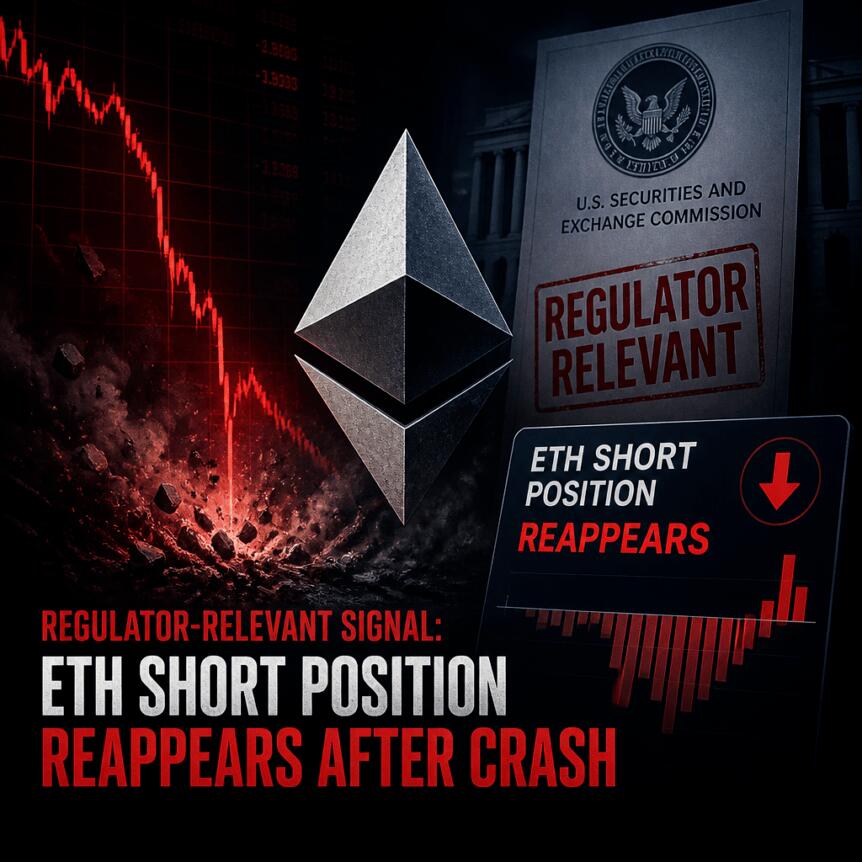
An Ethereum-linked wallet that previously took leveraged downside exposure during the October 2025 market turmoil has re-entered after an eight-month pause, opening a new 20x short position near a widely watched ETH support area. The activity underscores how some large, on-chain participants may respond to macro-driven drawdowns and internal ecosystem developments—both of which can shape liquidity and risk appetite for digital assets.
Key takeaways
- A wallet labeled 0xf83f…6728 opened a 20x leveraged ETH short with a notional value of about $19.72 million near the $1,500 support region.
- The short was reportedly entered at an average price around $1,565, with unrealized gains shown near $106,500 at the time of reporting.
- On-chain data indicates the same wallet last traded on Oct. 27, 2025, when it opened a short near $4,172 and later closed it near $4,133.
- While the new position is positioned for downside, the near-term chart setup includes a potential double-bottom scenario that could limit losses—or create liquidation risk if the market reverses sharply.
Large leveraged short returns near $1,500 support
On Friday, wallet 0xf83f…6728 initiated a 20x leveraged ETH short with an estimated notional size of $19.72 million, coinciding with Ether trading near the $1,500 support zone. ETH had reportedly fallen 18.25% over the prior two weeks, reflecting broader pressure on risk assets.
According to data compiled by Hyperbot, the position was opened at an average price around $1,565. At the time of publication, the wallet reportedly held nearly $106,500 in unrealized profit as ETH traded around the $1,550 area.
The decision to re-enter with high leverage is notable for institutional risk monitoring because leveraged derivatives positions can amplify market moves, increase systemic fragility around support levels, and accelerate forced deleveraging if price action moves against the trade. For compliance and risk teams, the key point is less about directional views and more about the risk mechanics: notional size, leverage, and collateral management determine exposure and potential cascading effects.
Ether’s bearish positioning was also linked in reporting to wider market conditions, described as a tech-led risk selloff that pressured Nasdaq and chip-linked equities. That broader backdrop can translate into reduced liquidity and higher volatility across crypto venues, particularly in periods where investors rebalance away from speculative assets.
Ecosystem and governance scrutiny adds another compliance lens
Alongside macro pressure, Ethereum-specific sentiment appeared to deteriorate in connection with renewed scrutiny of the Ethereum Foundation. Cointelegraph previously reported on issues including budget cuts, staff reductions, and a series of senior departures, each of which has the potential to affect stakeholder confidence in governance continuity and long-term development capacity.
While the wallet’s trade itself does not establish a direct causal link to those governance developments, the broader institutional context matters. Changes in organizational capacity and leadership can influence expectations about protocol development timelines, grant structures, and coordination across ecosystem actors—factors that may feed into risk premia and hedging behavior among sophisticated market participants.
For financial institutions assessing crypto exposure under internal risk frameworks, the key compliance-relevant point is that ecosystem governance developments can increase operational and reputational uncertainty. That uncertainty can affect counterparties, investment committee decisions, and the quality of risk disclosures—especially where holdings intersect with regulated markets, custody arrangements, or derivatives documentation.
Prior trade history: short near October 2025 crash top
The wallet’s current activity stands out due to its trading history. Transaction logs indicate that 0xf83f…6728 last became active on Oct. 27, 2025, when it opened an ETH short near $4,172 as volatility tied to the October crypto crash began to ease.
Hyperbot data cited in the report suggests the trader later exited near $4,133, realizing net profit of about $41,693 after roughly $5,263 in exchange fees. The earlier position provides a useful benchmark for pattern recognition: the wallet appears to have favored shorting into weakness using leverage, aligning with a consistent downside execution style.
However, the current trade differs in scale. The new position’s notional exposure is nearly $20 million, substantially larger than the notional size reported for the earlier trade, which would likely raise the stakes for risk management, margin requirements, and potential impact on liquidity during fast market moves.
Downside call faces potential reversal and liquidation risk
Despite the bearish rationale for the new short, the risk profile is not one-sided. As of Friday, technical structure described in the reporting included a potential double bottom forming in the $1,500–$1,512 area, where buyers reportedly stepped in twice during June. The pattern remained unconfirmed, but a strong rebound from that zone could shift short-term momentum.
The key technical level referenced was a neckline near $1,850. A decisive daily close above that level would, in the scenario presented, confirm the double-bottom structure and support a measured rebound toward roughly $2,190, based on the distance between the reported bottom and neckline.
From an institutional risk perspective, the most critical element is the potential interaction between technical reversal scenarios and the wallet’s leverage constraints. The report notes liquidation-related proximity near $2,150. If a bullish confirmation occurs without corresponding collateral top-ups or position reduction, the trader could face heightened liquidation risk—particularly in environments where volatility widens and spreads increase.
For compliance and monitoring teams, this highlights a broader theme relevant to derivatives markets: large leveraged positions can produce abrupt outcomes unrelated to fundamental valuation. Under risk governance frameworks—whether internal model risk controls or external regulatory expectations around market integrity—monitoring should prioritize position size relative to liquidity, margin dynamics, and how quickly liquidation thresholds could be reached under adverse price moves.
Closing perspective
The return of a high-leverage ETH short after an eight-month gap will likely keep attention on near-term support and any confirmation of potential reversal patterns. What to watch next is whether market structure stabilizes around the cited support region, and how derivatives margin conditions evolve if price moves accelerate—developments that can carry compliance, liquidity, and risk-management implications across regulated and institutional participation in crypto markets.


On-Demand Liquidity is Ripple’s flagship use of XRP, a way to settle cross-border payments in seconds without banks pre-funding accounts around the world. This guide explains how it works, the trapped capital it frees, and why its own stablecoin now competes for the job.
Summary
- On-Demand Liquidity (ODL) is Ripple’s service that uses XRP as a bridge asset to settle cross-border payments in seconds, without banks pre-funding accounts in foreign currencies.
- It targets the biggest inefficiency in traditional cross-border payments: the trillions of dollars banks park in pre-funded accounts around the world to enable international transfers.
- A payment converts the source currency into XRP, moves the XRP across the world in seconds, and converts it into the destination currency, freeing that trapped capital.
- ODL, now folded into Ripple Payments, found real adoption in specific remittance corridors, though Ripple increasingly also uses its stablecoin for the settlement role.
- ODL is the clearest real-world use of XRP as a bridge asset, but its growth is corridor-specific and now competes with stablecoin-based settlement inside Ripple’s own products.
On-Demand Liquidity, usually shortened to ODL, is Ripple’s service that uses the XRP token as a bridge asset to settle cross-border payments almost instantly, eliminating the need for banks and payment providers to hold pre-funded accounts in foreign currencies around the world. That description captures both what it does and why it matters: it attacks one of the largest and most expensive inefficiencies in global finance, the vast sums of money that institutions must park in advance in distant accounts simply to be able to send international payments.
ODL replaces that pre-funded capital with a real-time conversion through XRP, turning a slow, capital-heavy process into a fast, capital-light one. It is also, importantly, the clearest and most concrete real-world use case for XRP, the answer to the question of what the token is actually for. This guide explains the problem ODL solves, how the mechanism works step by step, why XRP is used as the bridge, what the approach unlocks, how it fits into Ripple’s broader products, and the honest limits of its adoption, including the way Ripple’s own stablecoin now competes for the very role ODL was built to play.
Understanding ODL is valuable because it sits at the heart of the entire XRP investment thesis, and because it is one of the few places in crypto where a token has a clearly defined utility tied to a real financial problem. For years, the bullish case for XRP rested largely on the promise of ODL: that as more institutions used it to move money, demand for XRP as the bridge asset would grow. Whether that promise has been fulfilled, and whether it can be, depends on understanding exactly how ODL works and where its limits lie.
This guide covers the trapped-capital problem at the root, the mechanics of an ODL payment, why a volatile token can serve as the bridge, the capital efficiency it delivers, its place within Ripple’s evolving product lineup, the growing competition from stablecoins, and a clear-eyed assessment of how much ODL has actually achieved.
The problem ODL was built to solve
To understand ODL, you first have to understand how broken cross-border payments are under the traditional system, because the inefficiency is genuinely staggering.
When money moves between countries, it does not actually travel; instead, banks rely on a web of relationships called correspondent banking, in which each bank holds accounts at banks in other countries to enable payments in those countries’ currencies. To send money to, say, Mexico, a bank needs access to Mexican pesos, which it typically arranges by keeping a pre-funded account full of pesos at a bank in Mexico, ready to draw on. Multiply this across every currency and every corridor a bank serves, and the institution must keep accounts pre-funded with many currencies at many banks all over the world, with money sitting idle in each one waiting to be used.
The cost of this arrangement is enormous and largely invisible to the public. An estimated several trillion dollars sits trapped in these pre-funded accounts globally, capital that earns little and cannot be deployed for anything productive because it has to be available on demand for payments. Beyond the trapped capital, the system is slow, because a cross-border payment may hop through several correspondent banks, each adding delay, so transfers that should be instant can take days.
And it is expensive, with fees accumulating at each step. For banks, payment providers, and ultimately the people and businesses sending money, the correspondent-banking model is costly, sluggish, and capital-intensive. This is the problem ODL was designed to solve: not to make payments slightly better, but to remove the need for pre-funded accounts altogether, freeing the trapped capital and collapsing the settlement time from days to seconds.
What On-Demand Liquidity actually is
ODL’s solution is to replace the pre-funded foreign account with a real-time conversion through a bridge asset, and that bridge asset is XRP. Instead of keeping pesos sitting in a Mexican bank account in advance, an institution using ODL converts its money into XRP at the moment a payment is needed, sends the XRP across the world in seconds, and converts it into the destination currency on arrival.
The pre-funding disappears, because the liquidity is sourced on demand, in real time, exactly when the payment happens, which is what the name describes. There is no need to lock up capital in advance, because XRP serves as a temporary, fast-moving bridge between the two currencies rather than a parked reserve.
The elegance of the design is that XRP exists only fleetingly in the transaction, as a momentary intermediary between the source and destination currencies. The institution does not need to hold XRP as a long-term reserve; it acquires the XRP it needs at the instant of the payment, uses it to bridge the value across, and the recipient ends up with their local currency, not with XRP. This is what distinguishes a bridge asset from a held asset.
The whole point is that the value passes through XRP in seconds, so the parties are exposed to the token only for the brief moment the bridge is in use. ODL, in other words, is a mechanism for sourcing liquidity at the moment of need rather than parking it in advance, with XRP as the connective tissue that makes the instant currency-to-currency conversion possible. That is the core idea, and everything else about ODL follows from it.
A worked example: a payment through ODL
To make the mechanism concrete, follow a single payment from the United States to Mexico, which is one of the corridors where ODL has seen real use. Imagine a remittance company needs to send the equivalent of one thousand dollars to a recipient in Mexico, who should receive Mexican pesos. Under the traditional system, the company would rely on a pre-funded account of pesos sitting at a Mexican bank, drawing down that reserve to pay the recipient and later replenishing it, with all the trapped capital and delay that implies. Under ODL, the process is entirely different and happens in seconds.
The company’s dollars are converted into XRP on an exchange in the United States. That XRP is sent across the XRP Ledger to an exchange in Mexico, a transfer that settles in a few seconds for a tiny fee. On arrival, the XRP is immediately converted into Mexican pesos on the Mexican exchange, and those pesos are paid out to the recipient. From start to finish, the value has moved from dollars to pesos in seconds, with XRP serving as the bridge in the middle, and at no point did the company need a pre-funded peso account.
The capital that would have been trapped in that account is freed for other uses, the settlement that might have taken days happened almost instantly, and the cost is a fraction of the traditional fees. The recipient simply receives pesos, never touching or even knowing about the XRP that briefly carried the value across the border. That round trip, dollars to XRP to pesos in seconds with no pre-funding, is ODL in action, and it shows precisely what the service is built to do.
Why XRP is used as the bridge
A natural question is why a volatile cryptocurrency would be trusted to bridge real money, and the answer lies in the specific properties XRP brings and the very short window it is actually exposed. XRP settles transactions on its ledger in a few seconds, with very low fees, which is exactly what a bridge asset needs, because the entire value of the approach depends on moving value across quickly and cheaply.
The token also has reasonably deep liquidity on exchanges in many markets, meaning there is usually enough trading volume to convert into and out of XRP without moving its price too much, which is essential for a bridge that has to handle real payment volumes. And as a neutral asset not tied to any single country’s currency, XRP can serve as a common intermediary between many different currency pairs.
The volatility concern, which sounds disqualifying, is actually limited by the design. Because XRP is used purely as a fleeting bridge, the value passes through it in seconds, so the exposure to its price movements lasts only for that brief window. A payment is converted into XRP and out of XRP almost instantly, so even a volatile token poses little risk over a few seconds, especially when the amounts are hedged or the conversions are near-simultaneous.
This is the key insight that makes a volatile asset usable for settlement: the goal is not to hold XRP and bear its price swings, but to pass through it so quickly that the swings barely matter. The token’s speed, low cost, liquidity, and neutrality make it well suited to the bridging role, and its volatility, the obvious objection, is neutralized by the fact that no one holds it for more than moments. This is why XRP, despite being a volatile cryptocurrency, can function as the settlement bridge at the center of ODL.
What ODL unlocks: freeing trapped capital
The payoff of ODL, the reason institutions would adopt it, is the liberation of the enormous capital trapped in pre-funded accounts, and the significance of that is hard to overstate. When an institution no longer needs to keep money parked in foreign accounts around the world, all of that capital becomes available for productive use.
For a large payment provider or bank operating across many corridors, the sums involved can be substantial, and freeing them improves the efficiency of the entire operation. Capital that sat idle as a precondition for sending payments can instead be deployed, lent, or invested, which is a direct and meaningful financial benefit. This capital-efficiency gain is the core business case for ODL, the concrete reason a rational institution would consider it over the traditional model.
Beyond the capital efficiency, ODL delivers speed and cost benefits that matter especially in certain use cases. Remittances, the money that workers send home to families in other countries, are a natural fit, because they are often small, frequent, time-sensitive, and currently burdened by high fees and delays, exactly the pain points ODL addresses. Payment corridors between countries with less developed banking links, where maintaining pre-funded accounts is especially costly or difficult, also benefit disproportionately.
Ripple has reported significant volume milestones through partners using its liquidity service in such corridors, including large remittance flows in certain markets, which shows the model working in practice where the traditional system is weakest. The combination of freed capital, faster settlement, and lower cost is what ODL offers, and in the corridors where those benefits are sharpest, the value proposition is real and demonstrable. The question, which the honest assessment later addresses, is how broadly those conditions apply.
ODL, RippleNet, and Ripple Payments
It helps to place ODL within Ripple’s broader product history, because the branding has evolved and the names can confuse. ODL began as a specific service within RippleNet, the company’s network of financial institutions, distinguishing the XRP-powered liquidity offering from the basic messaging and payment-coordination features that did not require the token.
Over time, as Ripple consolidated and rebranded its offerings, the XRP-based liquidity capability was folded into a broader product now generally called Ripple Payments, the company’s end-to-end cross-border payments solution for institutions. The underlying mechanism, using XRP as a bridge to source liquidity on demand, remained, even as the packaging and naming changed.
This evolution reflects Ripple’s maturation from a company selling a specific token-powered feature to one offering a comprehensive payments platform that institutions can adopt. Ripple Payments bundles the connectivity, compliance, and settlement features an institution needs to move money across borders, with on-demand liquidity through XRP available as the settlement mechanism for corridors where it makes sense. Hundreds of financial institutions have relationships with Ripple’s network in some form, though it is important to understand that not all of them use XRP-powered liquidity; many use Ripple’s technology for messaging and coordination while settling through traditional means.
The distinction matters, because the headline figure of how many institutions work with Ripple is much larger than the number actually using XRP as a bridge. ODL, now living inside Ripple Payments, is the part of the offering that genuinely uses the token, and it is one component of a wider platform rather than the whole of it.
The stablecoin question
The most important recent development in the ODL story is that Ripple’s own stablecoin has begun competing with XRP for the settlement role, which complicates the token thesis significantly. Ripple launched a dollar-pegged stablecoin, and across its institutional business that stablecoin has increasingly been used as the settlement asset for cross-border payments, the very job ODL was designed to give XRP.
The reason is straightforward: institutions often prefer a stable, dollar-denominated instrument for settlement because it does not move in price at all, removing even the brief exposure that bridging through a volatile token involves. For many institutional use cases, a stablecoin is simply an easier sell, because treasurers and compliance teams are more comfortable with an asset pegged to a familiar currency than with a volatile cryptocurrency, however fleeting the exposure.
This creates a genuine tension at the heart of Ripple’s strategy and the XRP thesis. ODL was the flagship use case that justified demand for XRP, the concrete answer to what the token is for. But Ripple now offers a stablecoin that can perform the same settlement function, and in many cases is being chosen for it, which means the company’s own product can substitute for its own token. This does not eliminate XRP’s role, because there remain situations where bridging through a neutral asset is more efficient than holding many different stablecoins, particularly across exotic currency pairs.
But it does mean that the simple thesis, that ODL adoption automatically drives XRP demand, is weaker than it once was, because some of that settlement is now flowing through the stablecoin instead. The stablecoin question is the single biggest complication to the ODL story, and any honest account of what ODL means for XRP has to reckon with the fact that Ripple built an alternative to its own bridge asset.
Risks and limits to understand
ODL is a real and clever mechanism, but anyone evaluating it, particularly as a basis for an XRP investment thesis, should understand its genuine limits and risks instead of the idealized version. The most important limit is that ODL adoption is corridor-specific, not universal. The benefits are sharpest in particular remittance and payment corridors, often between markets with less developed banking links, and far less compelling in major, highly liquid corridors where traditional settlement is already cheap and fast. So ODL is not a wholesale replacement for global payments but a targeted tool that wins in specific situations, which means its growth is bounded by how many such situations exist and how quickly Ripple can win them.
Several other risks deserve attention. The bridge mechanism depends on sufficient XRP liquidity on exchanges at both ends of a corridor; in thin markets, converting in and out of XRP at scale can move the price or incur slippage, limiting how much volume the corridor can handle. The model also depends on the regulatory acceptance of using a cryptocurrency in payment flows, which varies by jurisdiction and can change.
Most significantly for an investor, the link between ODL adoption and XRP price is far less direct than the hype suggests: because XRP is used only as a fleeting bridge and is not held as a reserve, even substantial payment volume translates into only momentary demand for the token, and the rise of Ripple’s stablecoin as a settlement alternative further weakens that link. ODL is a genuine, working use of XRP, but it is a targeted tool with real constraints, not the universal engine of token demand it is sometimes portrayed as.
Anyone using ODL as the foundation of an investment case should weigh how corridor-specific the adoption is, how brief the token exposure is, and how much of the settlement role the stablecoin is taking, and should never invest money they cannot afford to lose on a thesis that depends on adoption outrunning those limits.
Frequently Asked Questions
What is On-Demand Liquidity in simple terms?
On-Demand Liquidity, or ODL, is Ripple’s service that uses the XRP token as a bridge to settle cross-border payments in seconds, without banks pre-funding accounts in foreign currencies. Instead of keeping money parked in foreign accounts in advance, an institution converts its currency into XRP at the moment of payment, sends the XRP across the world in seconds, and converts it into the destination currency on arrival. This frees the capital that would otherwise sit trapped in pre-funded accounts and collapses settlement time from days to seconds.
How does ODL actually work?
It replaces a pre-funded foreign account with a real-time conversion through XRP. In a payment from one country to another, the sender’s currency is converted into XRP on an exchange, the XRP is sent across the XRP Ledger in a few seconds for a tiny fee, and on arrival it is immediately converted into the destination currency and paid to the recipient. The recipient receives their local currency and never holds XRP. The token exists in the transaction only fleetingly, as a momentary bridge between the two currencies, which is what makes the instant, capital-light settlement possible.
Why use a volatile token like XRP for settlement?
Because XRP is used only as a fleeting bridge, exposure to its price lasts just the few seconds the value passes through it, so its volatility barely matters. XRP also settles in seconds with very low fees, has reasonably deep liquidity in many markets, and is neutral, not tied to any one country’s currency, all of which suit a bridge asset. The goal is not to hold XRP and bear its swings but to pass through it so quickly that the swings are negligible, which is what makes a volatile asset usable for settlement.
What problem does ODL solve?
The enormous inefficiency of traditional cross-border payments. Under correspondent banking, institutions must keep money pre-funded in foreign accounts around the world to send payments in those currencies, trapping an estimated several trillion dollars globally in idle capital, while payments hop through multiple banks over days and accumulate fees. ODL removes the need for pre-funding by sourcing liquidity on demand through XRP, freeing that trapped capital, collapsing settlement to seconds, and cutting costs. The benefits are sharpest in remittances and corridors with less developed banking links.
Does ODL adoption drive XRP’s price up?
Less directly than the hype suggests. Because XRP is used only as a momentary bridge and is not held as a reserve, even substantial payment volume creates only brief, fleeting demand for the token instead of sustained holding. Adoption is also corridor-specific instead of universal, and Ripple’s own stablecoin is increasingly used for the same settlement role, which further weakens the link. ODL is a genuine, working use of XRP, but the simple thesis that adoption automatically and substantially lifts the price overstates how the mechanism actually affects token demand.
Why does Ripple’s stablecoin compete with ODL?
Ripple launched a dollar-pegged stablecoin, and across its institutional business that stablecoin is increasingly used as the settlement asset for cross-border payments, the same role ODL gives XRP. Institutions often prefer a stable, dollar-denominated instrument because it does not move in price at all, removing even the brief exposure that bridging through XRP involves, and treasurers and compliance teams tend to be more comfortable with it. So Ripple’s own product can substitute for its own token, which complicates the thesis that ODL adoption drives XRP demand, though XRP retains an edge in some cross-currency situations.
This article is educational information, not investment advice. Cryptocurrency is volatile, and details about Ripple’s products and adoption reflect reporting available as of June 26, 2026, which can change quickly. Verify current information from primary sources and assess the risks carefully before making any decision.
Almost every major altcoin has taken a beating in recent months, and Ethereum is no exception, with its price plunging to a 14-month bottom.
Analysts now warn that it could be on the verge of a further slump, with some floating the idea of a crash to a multi-year low of around $1,000.
The Red Days Aren’t Over?
The prolonged bear market hasn’t been the only thing suppressing ETH’s valuation lately. As CryptoPotato reported, Hsiao-Wei Wang stepped down as the Ethereum Foundation’s co-executive director and board member, while shortly after, the entity reduced its workforce by 20%.
Following the combination of the numerous negative developments, ETH’s price nosedived to just north of $1,500, while its market capitalization briefly tumbled below $183 billion. This means that for a moment, Tether’s USDT flipped Ethereum to become the second-largest cryptocurrency. ETH has reclaimed its prestigious spot, albeit leading by a slim margin.
According to Ali Martinez, the asset has been trading inside a crucial volume block between $1,584 and $1,683, where nearly 4 million coins have changed hands. He claimed that securing this “specific area” as support can open the door to the next major supply clusters at $1,980 and $2,079.
At the same time, the analyst warned that losing this baseline (as it happened just hours ago) might result in a deeper plunge to $1,237 and even $1,089.
X user Ryker also shared their outlook, predicting a drop to $1,260 before a potential rally above $3K. Merlijn The Trader highlighted the forecast, noting that Ryker is the only trader followed by Changpeng Zhao (CZ) on X.
Previous Predictions
Earlier this month, X user Ted opined that ETH is more likely to reach its cycle bottom before Bitcoin (BTC). Back then, he claimed that most of the downside liquidity has been taken out, projecting a downfall to $1,300-$1,400. For their part, Niels envisioned a drop to $1,200 sometime this year.
Recent whale activity reinforces the bearish outlook. X user Max Crypto revealed that one large investor opened a $68 million short position on ETH with 23x leverage, while Justin Wu outlined that four OG wallets have started dumping their holdings.
Whales are known as experienced market participants who may have inside information about upcoming events that could influence the price. That’s why their efforts are closely monitored by retail investors who could panic and cash out as well.
The post Ethereum (ETH) Suffers a Major Blow: Is a Crash to $1,000 Coming Next? appeared first on CryptoPotato.
Key takeaways:
- Surging spot Bitcoin ETF outflows and a put-heavy options expiry point to fading institutional demand.
- Risk-reward shifts toward tech stocks, leaving crypto traders to seek catalysts beyond macroeconomic tailwinds.
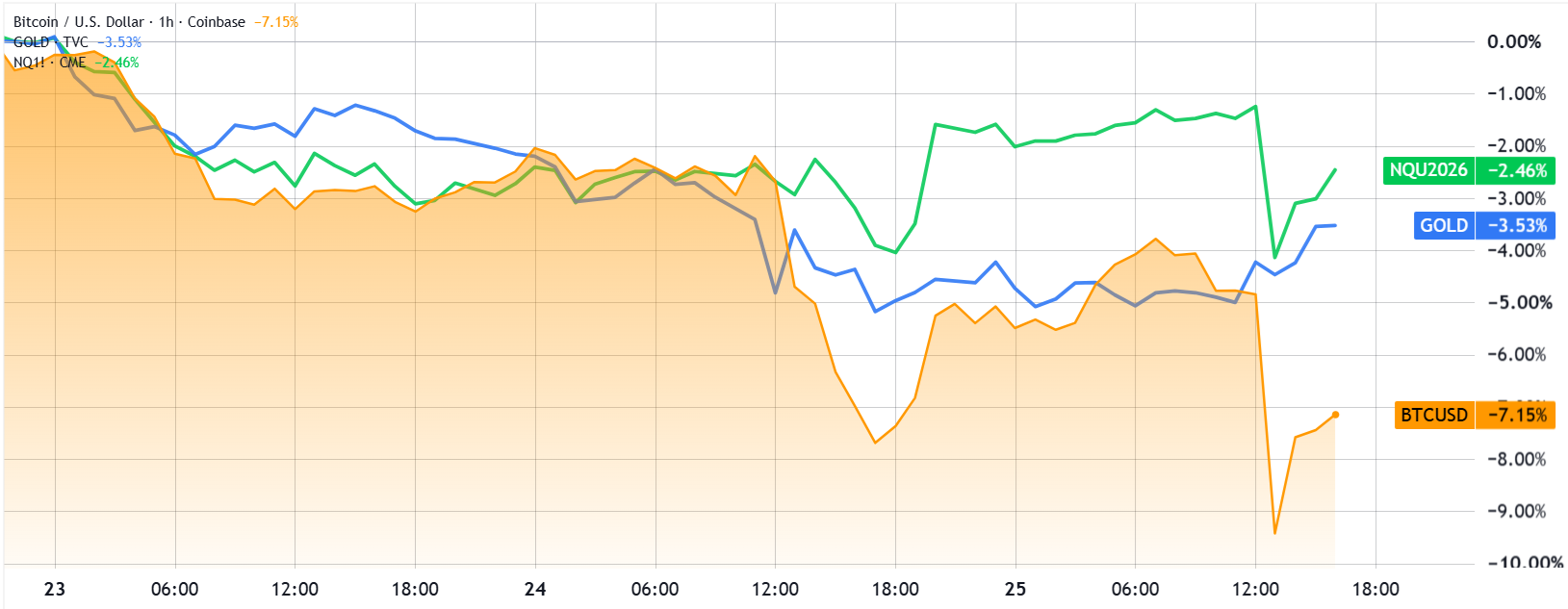
Bitcoin (BTC) traded down 9% in three days, hitting its lowest level since September 2024. The $58,000 retest triggered over $1 billion in liquidations across bullish BTC leveraged positions. Despite a modest recovery to $59,500, Bitcoin traders remain uneasy as the S&P 500 index and gold prices fully erased their intraday losses.
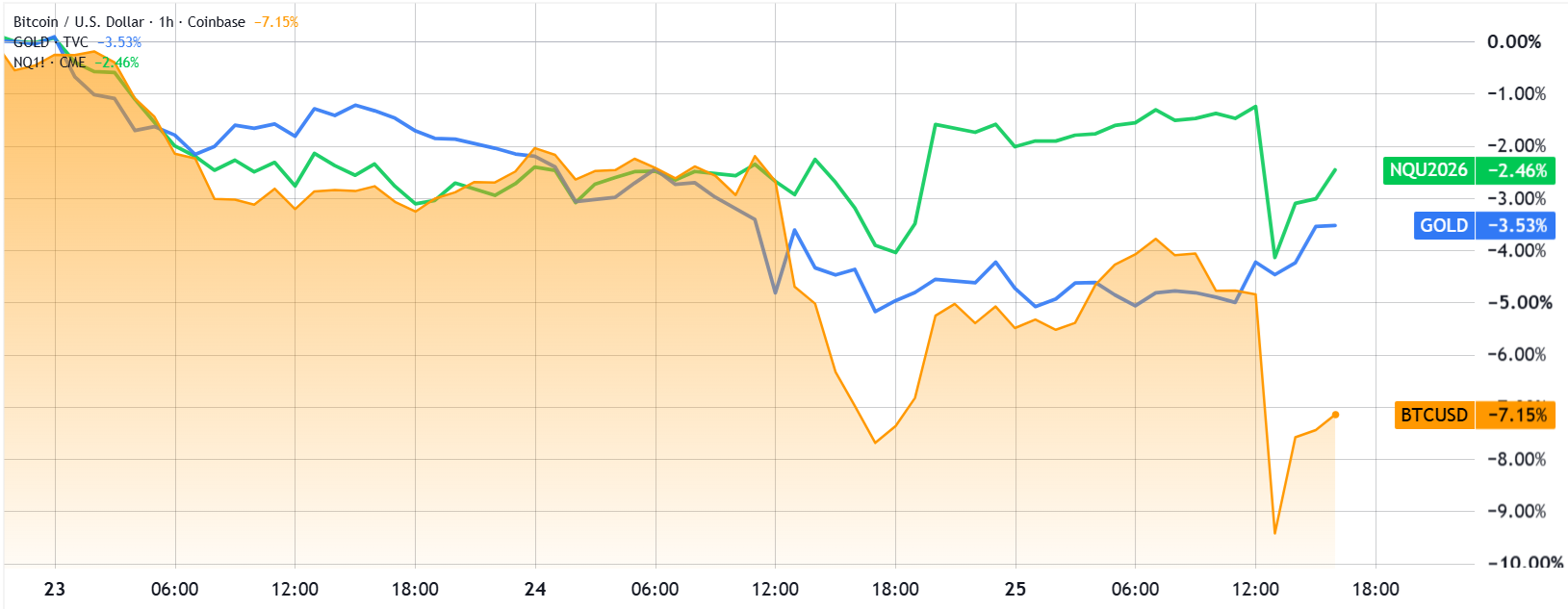
Bitcoin/USD (orange) vs. gold/USD & Nasdaq 100 futures (green). Source: TradingView
The market downturn on Thursday lined up with the release of the US Personal Consumption Expenditures index, which showed a 4.1% increase in May from the prior year. Yet as Crude Brent oil prices pulled back to $75 from $95 just one month earlier, investors grew more confident that inflation had peaked. As a result, the cash freed up by lower energy costs is boosting the stock market.
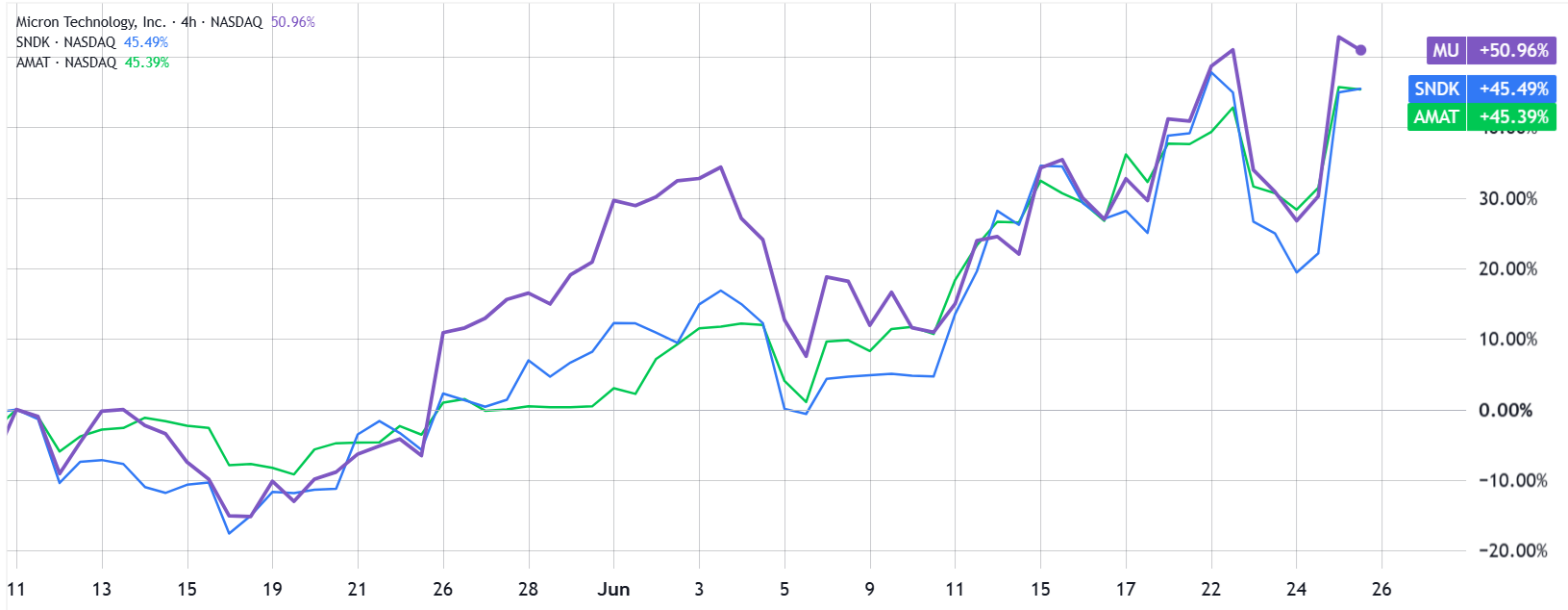
Shares of Micron, Sandisk, Applied Materials. Source: TradingView
The tech sector kept delivering strong surprises, with Micron Technology (MU) jumping 16% after solid quarterly earnings and Sandisk (SNDK) riding along with an 18% gain. Applied Materials (AMAT) rose 10% thanks to its new chipmaking tools. Investors’ renewed faith in the sector also mirrors the US government administration’s recent emphasis.
Fixed income offers a more compelling hedge alternative
Even if Bitcoin does not directly compete with the artificial intelligence sector, traders’ risk-reward views have likely tilted toward stocks. This shift followed the US government taking a 9.9% stake in Intel, proposing $2 billion for quantum computing firms, opening federal lands for data center projects, and setting a framework for “frontier models” releases.
Investors worried about inflated AI valuations after Elon Musk’s SpaceX (SPCX) shares fell 32% from their peak can find comfort in 5-year US Treasuries yielding 4.15%. Demand for non-yielding assets like Bitcoin faded as traders now see an 80% chance of US interest rate hikes by December, up from 68% a month ago, according to the CME FedWatch Tool.
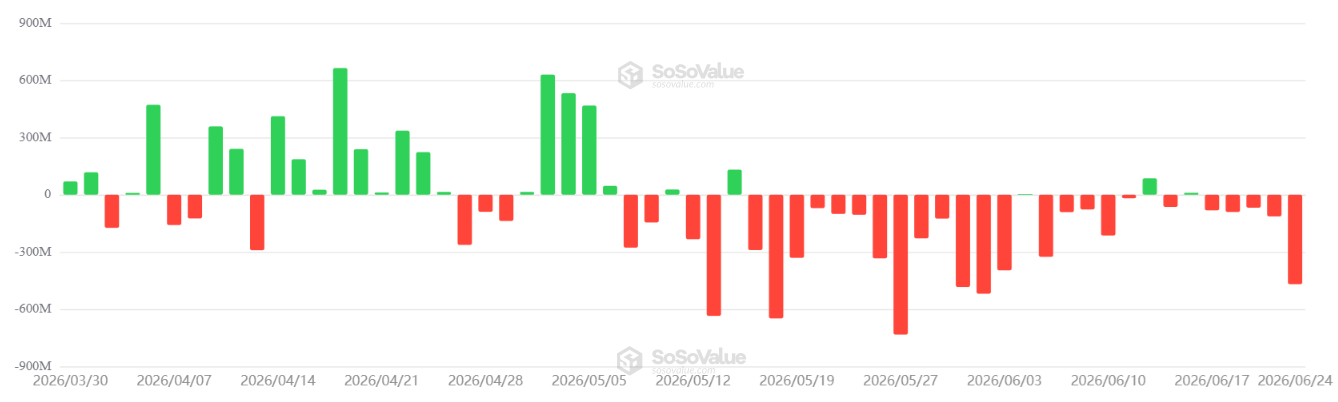
US-listed spot Bitcoin ETFs daily net flows, USD. Source: SoSoValue
Bitcoin’s appeal also took a hit from the massive $469 million net outflows in spot BTC exchange-traded funds (ETFs) on Wednesday. The metric serves as a key proxy for institutional demand. Sentiment worsened further as Strategy (MSTR) now sits on a huge unrealized loss after buying $64.1 billion worth of Bitcoin since 2020.
Related: 21shares trims 2026 crypto forecasts despite institutional adoption gains
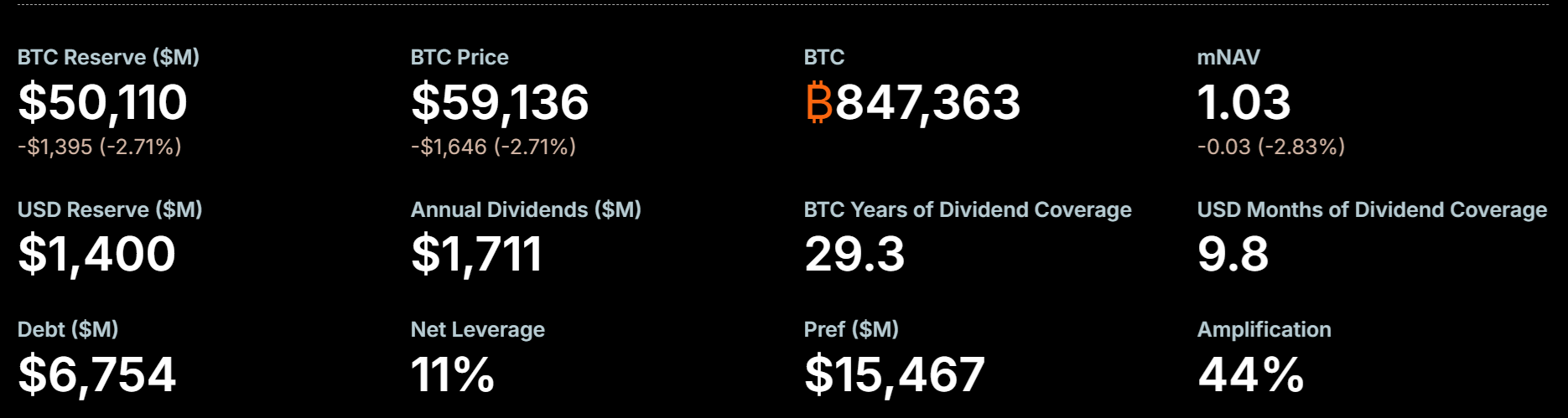
Strategy (MSTR) Bitcoin reserves and cash position, USD. Source: Strategy
The upcoming $13 billion Bitcoin options expiry on Friday heavily favors put (sell) instruments. Most neutral-to-bullish strategies will likely expire worthless, since 78% of call (buy) options are priced at $72,000 or above. Put options open interest on Deribit will exceed call options by $3.4 billion.
Bitcoin’s price momentum shows little tie to stocks due to heavy ETF outflows, a bearish options expiry skew and Strategy’s mounting unrealized losses. Bitcoin traders must now hunt for unique catalysts beyond equity market tailwinds to spark a turnaround.
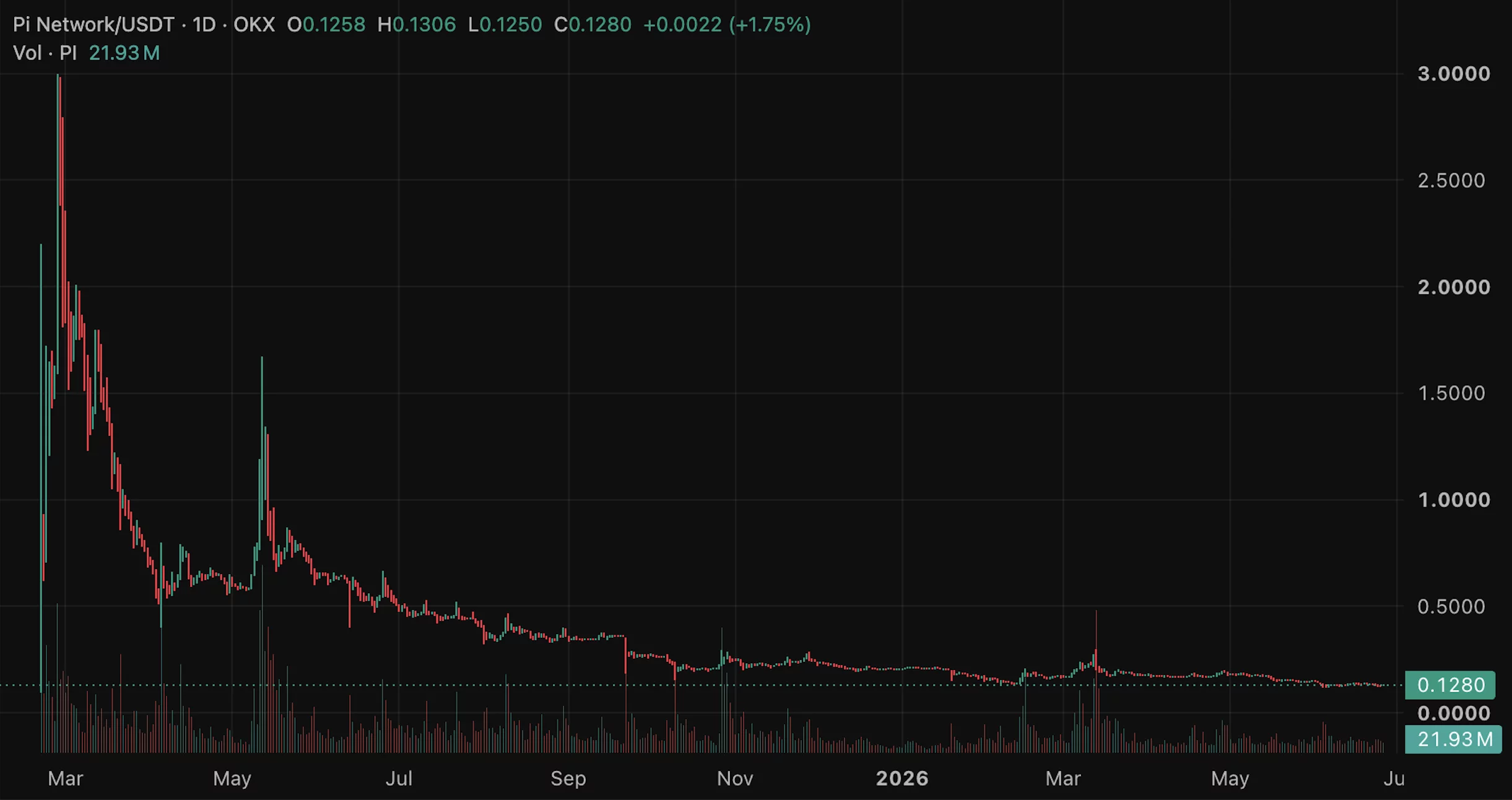
Pi trades near $0.12, sitting on its all-time low, down roughly 95% from its peak. Getting back to $0.20 would take a 60% gain. This guide weighs the unlocks and thin liquidity dragging it down against the upgrades and the Pi2Day catalyst that bulls are counting on.
Summary
- Pi trades near $0.12-$0.13, sitting on or just below its all-time low near $0.13, down roughly 95% from its post-listing peak above $2.90.
- Reclaiming $0.20 would require a gain of roughly 60% from current levels, a large move against a year-long downtrend, and persistent selling pressure.
- The core drag is supply meeting weak demand: ongoing token unlocks add millions of coins while 24-hour volume sits below $10 to 26 million against a market cap over $1.3 billion, a sign of thin liquidity.
- The bull case rests on catalysts: the annual Pi2Day event, newly launched smart contracts, a growing app ecosystem, and the long-awaited possibility of a major exchange listing.
- Reclaiming $0.20 before year-end is possible but demanding, requiring real demand to finally outpace the unlocks, with the more likely path a continued grind unless a genuine catalyst lands.
Pi Network’s token trades near $0.12, sitting on or just below its all-time low, and the question for the rest of 2026 is whether it can claw its way back to $0.20, a level that would require a gain of roughly 60% from where it stands now. That framing matters because $0.20 is not an arbitrary target; it is the level Pi traded around as recently as late 2025 before its latest decline, a psychological and technical zone that, if reclaimed, would signal that the relentless downtrend has finally broken.
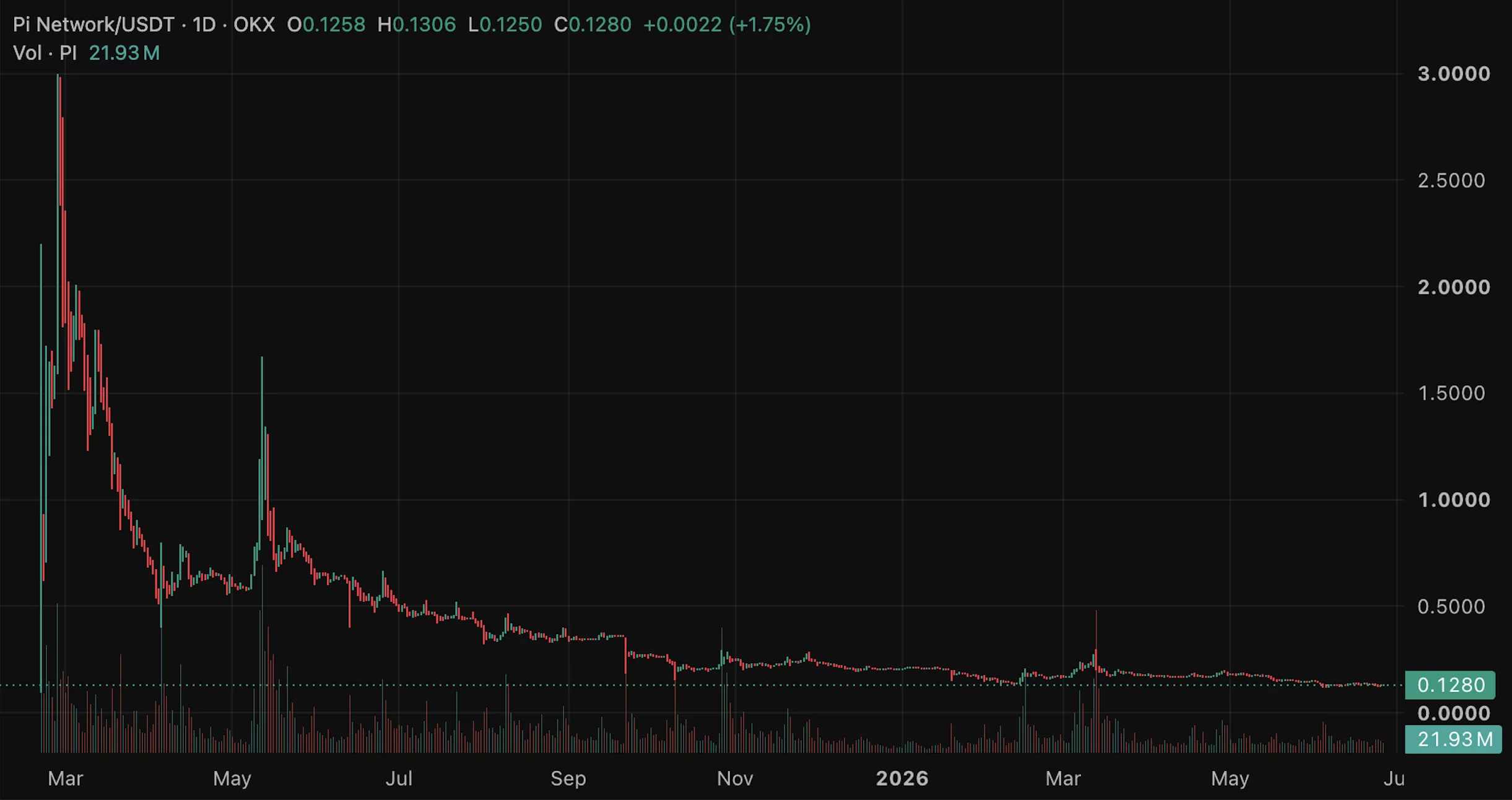
Getting there, though, means overcoming the forces that have driven Pi down roughly 95% from its post-listing peak above $2 and $0.90: a steady stream of token unlocks that keep adding supply, thin trading liquidity that makes the token fragile, weak real-world utility, and the conspicuous absence of a listing on a major tier-one exchange.
Against those headwinds stand a set of genuine catalysts that Pi’s large community is counting on, including the network’s annual flagship event, the recent arrival of smart contracts, a growing roster of ecosystem apps, and the ever-present possibility of a major listing. This piece weighs the two sides honestly to assess whether a move back to $0.20 is realistic before the year ends.
The reason to frame Pi’s prediction around the twenty-cent question, rather than the wildly divergent multi-year targets that fill most prediction pages, is that Pi’s situation is fundamentally a near-term contest between supply and demand, and $0.20 is the concrete level at which that contest would be visibly resolved in the bulls’ favor.
The wildly optimistic long-term forecasts that some sites publish, and the community calls for prices many multiples higher, are largely disconnected from the mechanics actually driving Pi’s price right now, which are the unlock schedule, the thin liquidity, and the search for real demand.
What follows traces how Pi reached its all-time low, maps the levels that matter, examines the supply problem that defines the token, weighs the catalysts that could spark a recovery against the forces holding it down, and lays out concrete bull, base, and bear scenarios for whether $0.20 is reachable before year-end.
A long way back to $0.20
Start with the distance Pi has to travel, because it frames everything. At roughly $0.20, Pi sits on or just beneath its all-time low near $0.13, having fallen relentlessly from a peak above $2 and $0.90 recorded shortly after its broader market availability. That is a decline of roughly 95%, the kind of drawdown that leaves a token searching for any sign of a floor.
To reclaim $0.20 from $0.12 requires a gain of around 60%, which in the context of crypto is far from impossible over a year, but which represents a major reversal for an asset that has done little but fall and that faces continuous selling pressure from new supply.
The $0.20 level is meaningful precisely because Pi traded around it as recently as the fourth quarter of 2025, before sliding below it and then below subsequent support levels through the first half of 2026, so reclaiming it would mark a genuine break from the established downtrend.
The path to $0.20 was a steady erosion rather than a single collapse. Pi traded in a higher range through much of 2025, with periods in the $0.30-$0.40, before momentum faded in the second half of the year and the price slipped into the twenties and then below.
In early 2026, it broke beneath the twenty-cent area that had served as support, and subsequent attempts to rally, often fueled by ecosystem announcements, failed to hold, with the price repeatedly rejected at higher levels before resuming its decline toward the all-time low.
The token now trades below all of its major moving averages with momentum indicators in or near oversold territory, the technical signature of a sustained downtrend that has not yet found its bottom. The 60% climb back to $0.20, in other words, would have to overcome both the weight of a year-long decline and the specific forces that have driven it, which is why the question is genuinely open rather than a foregone conclusion in either direction.
The levels: $0.097 below, $0.20 above
The technical map around Pi is worth laying out, because it defines how much room there is on each side. Immediately around the current price, support sits in the area of $0.130-$0.135, the zone of the all-time low, with a break below it pointing toward lower levels that some analysts identify near $0.10, and a deeper “ultimate support” flagged around $0.09-$0.10.
These are the downside markers: losing the all-time low would open the door to single-digit-cent territory, a prospect that underscores how fragile the current level is. The fact that Pi is testing its all-time low at all means there is little historical price structure beneath it to provide support, which is part of what makes the downside risk real.
On the upside, the resistance levels are stacked and meaningful, which is what makes the climb to $0.20 demanding. The first hurdle sits near $0.14, with a more significant barrier around $0.16, the level that has recently capped rallies. Above that, the seventeen-to-nineteen-cent zone represents further resistance, and then $0.20 itself, the target, sits at the top of this band as both a psychological round number and a former support-turned-resistance level.
For Pi to reclaim $0.20, it would have to break through this entire stack of resistance in succession, each level representing a point where sellers, including holders looking to exit losing positions and recipients of newly unlocked tokens, are likely to apply pressure.
The structure is therefore asymmetric in a worrying way for bulls: relatively little support beneath the all-time low, and multiple layers of resistance between the current price and the twenty-cent target. Climbing that wall requires sustained buying pressure that has been conspicuously absent, which brings the analysis to the core problem.
The supply problem nobody can ignore
The single most important factor weighing on Pi’s price is the imbalance between supply and demand, and it is worth understanding in detail because it defines the token’s predicament. Pi has a very large maximum supply, and a substantial portion of the total has yet to enter circulation, held back by lock-up mechanisms that release tokens on a schedule. As those unlocks occur, new supply enters the market, and in June alone, the network was set to unlock well over 170 million tokens worth tens of millions of dollars.
This is the crux of the problem: every unlock adds coins that can be sold, and unless demand grows fast enough to absorb them, the additional supply pushes the price down. For a token already in a downtrend, a steady stream of unlocks acts as a persistent headwind, continually replenishing the supply available to sell into any rally.
Compounding the supply pressure is the thinness of Pi’s trading liquidity, which is striking given its size. Despite a market capitalization above $1 billion, Pi’s 24-hour trading volume has at times fallen below $10 million and generally sits in the low tens of millions, an unusually small amount of trading for a token of that nominal value. Thin liquidity makes a token fragile in both directions, but especially on the downside, because relatively small amounts of selling can move the price significantly when there are few buyers, and the steady supply from unlocks meets a market without deep enough demand to absorb it.
This combination, ongoing unlocks adding supply into a thinly traded market with weak organic demand, is the fundamental reason Pi has ground lower, and it is the central obstacle to any recovery toward $0.20. Until demand grows enough to outpace the unlocks and deepen the liquidity, the supply problem will keep exerting downward pressure, which is why the bull case has to rest on catalysts large enough to change the demand side of the equation.
The bull case: catalysts that could spark a move
For Pi to reclaim $0.20, demand has to finally outpace the unlocks, and the bull case rests on a set of catalysts that could, in principle, drive that demand, several of which are concrete and near-term.
The most immediate is the network’s annual flagship event, held in late June, which has historically served as a moment for major ecosystem announcements, including new applications, developer initiatives, and feature launches. Because the community anticipates this event as a catalyst, it can drive a surge of engagement and speculative buying around the date, and a slate of well-received announcements could refresh the narrative around Pi and spark the kind of demand the price needs.
The event functions as a recurring opportunity for a positive surprise, and with it falling just days away from the current moment, it is the most time-sensitive catalyst on the horizon.
The deeper bull case rests on the network’s technical progress and ecosystem growth. Pi recently introduced smart contracts through a series of protocol upgrades, a significant capability that opens the door to decentralized finance, real-world asset tokenization, and more complex applications, potentially giving the token the genuine utility it has lacked.
The ecosystem has shown early signs of life, with new applications and games attracting tens of thousands of users in short periods, developer tools expanding, and initiatives to make it easier for builders to launch apps and reach Pi’s large user base.
If this ecosystem activity translates into real, sustained usage that creates organic demand for the token, it could begin to absorb the unlock supply and shift the supply-demand balance. And hanging over everything is the possibility, long rumored and long awaited, of a listing on a major tier-one exchange, which would dramatically expand access, liquidity, and visibility, and which many in the community view as the single catalyst most capable of driving a substantial repricing.
Each of these, the event, the smart contracts, the ecosystem, and a potential major listing, is a plausible source of the demand a recovery would require, which is what keeps the bull case alive despite the bearish chart.
The bear case: why $0.20 may stay out of reach
Honesty requires giving equal weight to the case that $0.20 stays out of reach, because the bearish argument is grounded in the same structural realities that have driven Pi to its all-time low.
The foundation is the supply problem: the unlocks are scheduled and will continue regardless of sentiment, so unless demand grows substantially and consistently, the steady addition of new supply will keep capping rallies and pressuring the price, making a 60% climb against that headwind genuinely difficult.
The thin liquidity reinforces this, because even if demand picks up, the shallow market can be overwhelmed by unlock-driven selling, and the absence of deep order books makes sustained rallies hard to hold.
The bearish case is reinforced by the demand side’s persistent weakness. Despite a large user base, Pi has struggled to translate that into real economic activity that creates organic token demand, with utility remaining limited and much of the trading driven by speculation instead of usage.
The much-anticipated catalysts have, in the past, repeatedly failed to produce sustained demand: ecosystem announcements have sparked brief rallies that faded, and the major exchange listing that the community counts on has not materialized despite years of anticipation, with no guarantee it ever will.
The risk around the annual event is that announcements fail to meet the community’s high expectations, which could trigger sell pressure instead of a rally. And Pi remains exposed to the broader crypto market, where a weak environment for altcoins provides little tailwind.
The bearish synthesis is that Pi’s problems are structural and have repeatedly defeated the same catalysts the bulls are counting on, so the most likely path is a continued grind near or below the all-time low, with $0.20 remaining out of reach unless something truly changes the demand side in a durable way.
One widely cited analysis has flagged a path toward $0.10 as a real possibility if unlocks keep outrunning demand.
The bull, base, and bear cases for year-end
Tying the scenarios to the supply-demand contest and the catalysts makes them concrete. These are conditional ranges, not predictions, and each depends on whether demand can outpace the unlocks.
- Bull case: a genuine catalyst lands, whether a strong slate of announcements at the annual event, real adoption of the new smart-contract capabilities, breakout ecosystem usage, or a long-awaited major exchange listing, and demand finally outpaces the unlock supply. Pi breaks through the stack of resistance from fourteen to $0.19 and reclaims $0.20 before year-end, with the upper end of optimistic ranges pointing toward the high $0.20-$0.40 if a major listing in particular materializes.
- Base case: Pi continues to grind in a low range near its all-time low, roughly $0.12-$0.18, as the unlocks and thin liquidity cap rallies while the ecosystem develops too slowly to generate the demand needed for a decisive breakout. In this scenario, the catalysts produce brief rallies that fade, $0.20 is approached at best but not reclaimed durably, and the token ends the year near where it began the second half.
- Bear case: the unlocks continue to outpace weak demand, the anticipated catalysts disappoint, no major listing arrives, and a soft broader market provides no support. Pi loses its all-time low and slides into single-digit-cent territory toward $0.10 or below, with $0.20 firmly out of reach and the structural supply problem dominating.
What to watch
For anyone tracking whether Pi can reclaim $0.20, the analysis points to a clear watchlist, and the first item is the annual event and its immediate aftermath. Because the late-June event is the most time-sensitive catalyst, the substance of its announcements and the market’s reaction will be an early and telling signal: a strong, well-received slate that drives sustained buying would support the bull case, while announcements that disappoint and a rally that fades would reinforce the bearish pattern of catalysts failing to produce lasting demand. Watching how Pi trades around and after the event is the most immediate test.
The second item is the perennial question of a major exchange listing, which remains the single catalyst most capable of a substantial repricing; any credible news of a tier-one listing would be a powerful bullish signal, while continued absence keeps a key source of liquidity and demand off the table.
The third item is the relationship between the unlocks and demand, which is the structural heart of the matter: watching whether trading volume and on-chain usage grow enough to absorb the scheduled unlock supply, or whether the unlocks continue to outpace demand, will indicate which direction the supply-demand balance is tipping. The fourth item is the adoption of the new smart-contract capabilities, and the ecosystem’s growth, since real, sustained usage is what would create the organic demand a durable recovery requires, as opposed to the speculative rallies that have repeatedly faded.
The honest synthesis is that reclaiming $0.20 is possible but demanding, requiring demand to finally and durably outpace the persistent unlock supply, and that, absent a genuine catalyst of sufficient size, the more likely path is a continued grind near the all-time low. The catalysts that could change this are real, and some are near-term, but Pi’s history is a string of catalysts that sparked brief hope and faded, so the burden of proof rests firmly on demand actually showing up this time.
Frequently Asked Questions
Why is Pi trading near its all-time low?
Because of a persistent imbalance between supply and demand. Pi has a very large maximum supply, much of it released gradually through scheduled unlocks, and in some months, well over 100 million tokens enter circulation. That steady new supply meets weak organic demand and unusually thin trading liquidity, with twenty-four-hour volume sometimes below $10 million despite a market cap of over 1 billion. The result is continuous downward pressure: new supply gets sold into a shallow market without enough buyers to absorb it, driving Pi down roughly 95% from its post-listing peak to its current all-time low area near $0.12-$0.13.
What would it take for Pi to reach $0.20?
Demand would have to finally and durably outpace the unlock supply, which requires a genuine catalyst. The most immediate is the network’s annual late-June event, which can drive engagement if its announcements are strong. The deeper drivers would be real adoption of Pi’s new smart-contract capabilities, breakout ecosystem usage that creates organic token demand, and, most powerfully, a listing on a major tier-one exchange, which would expand access and liquidity. Reclaiming $0.20 from $0.12 is a roughly 60% gain, achievable in crypto over a year but demanding against the unlock headwind, so it depends on demand truly showing up.
What is the supply problem with Pi?
Pi has a large maximum supply, and a substantial portion has not yet entered circulation, held back by lock-up mechanisms that release tokens on a schedule. As these unlocks occur, new coins enter the market and can be sold, and unless demand grows fast enough to absorb them, the added supply pushes the price down. For a token already in a downtrend with thin liquidity, this acts as a persistent headwind, continually replenishing the supply available to sell into rallies. The supply problem is the central obstacle to any recovery, because it must be outpaced by demand for the price to rise durably.
Why does Pi’s thin liquidity matter?
Because it makes the token fragile and amplifies the supply problem. Despite a market cap over $1 billion, Pi’s daily trading volume often sits in the low tens of millions or below, unusually small for a token of that size. Thin liquidity means relatively small amounts of selling can move the price significantly when buyers are scarce, so the steady supply from unlocks meets a market without the depth to absorb it smoothly. It also makes rallies hard to sustain, because shallow order books can be overwhelmed. Deepening liquidity, which a major exchange listing would help with, is part of what a durable recovery would require.
Could Pi fall below its all-time low?
Yes, that is the bear scenario, and it is a real risk. Because Pi is testing its all-time low, there is little historical price structure beneath it to provide support, so a decisive break lower could open the door to single-digit-cent territory, with analysts identifying levels near $0.10 and a deeper floor below that. This would happen if the unlocks continue to outpace weak demand, the anticipated catalysts disappoint, no major listing arrives, and the broader market stays soft. One widely cited analysis has flagged a path toward $0.10 as a genuine possibility if supply keeps overwhelming demand.
Are the bullish long-term Pi price predictions realistic?
Most of the very high long-term targets that circulate, including community calls for prices many multiples above current levels, are largely disconnected from the mechanics actually driving Pi’s price, which are the unlock schedule, thin liquidity, and weak demand. Reaching even $1, let alone the far higher figures some promote, would require a combination of full ecosystem adoption, sustained real usage, and much broader exchange access than exists today, and figures in the hundreds or thousands of dollars are not grounded in any realistic near or medium-term scenario. A disciplined view focuses on the near-term supply-demand contest instead of speculative long-range targets.
This article is information, not investment advice. The scenarios described are conditional ranges that depend on unresolved questions, not predictions, and Pi is highly volatile with thin liquidity. Prices, unlock schedules, and ecosystem developments reflect reporting available as of June 26, 2026, and can change quickly. Nothing here is a recommendation to buy or sell. Verify current data from primary sources and consider your own circumstances before making any decision.

TLDR:
- Aave V4 will enable onchain securities lending for tokenized stocks, removing broker intermediaries entirely.
- The global securities lending market holds $4.6 trillion in loans and generates $35 billion annually.
- Brokers currently retain 50–85% of borrow fees, leaving asset holders with only a minimal revenue share.
- Aave founder Stani Kulechov confirmed the protocol is expanding its TAM beyond crypto to all asset classes.
Aave is positioning itself to capture a share of the global securities lending market through its upcoming V4 upgrade.
The protocol plans to bring tokenized stocks onchain, enabling users to earn borrowing fees without brokers taking the majority of revenue.
Aave executive Luigi D’Onorio DeMeo outlined the move on X, noting a market with roughly $4.6 trillion in securities on loan annually. The protocol aims to remove intermediaries and offer full borrowing rates directly to users.
Aave V4 Opens the Door to Tokenized Equity Lending
Prime brokers and retail platforms currently dominate the securities lending business. Firms like Robinhood and Schwab lend out client-held stocks to earn revenue.
DeMeo laid out the imbalance clearly on X, stating that these platforms “typically keep 50–85% of the borrow fees, passing only a small share back to you.” Only a fraction of that revenue flows back to the actual holders of those securities.
Aave V4 is designed to change that arrangement entirely. The upgrade will allow users to supply tokenized stocks directly onchain.
From there, users can earn the full borrow rate without a middleman capturing most of the return. DeMeo described the model as one that offers “real-time transparency, dynamic pricing, no rehypothecation and no middlemen taking the lion’s share.”
The protocol also plans to eliminate rehypothecation, meaning collateral cannot be reused in layered transactions. That removes a major risk factor commonly associated with traditional securities lending operations.
Users retain direct exposure to their assets without hidden leverage from intermediaries. The structure is intended to give holders meaningful control over how their securities generate returns.
Aave founder Stani Kulechov reinforced this direction publicly on X. He wrote that “Aave is expanding its TAM from crypto assets to all assets with securities-backed loans and securities lending.”
The post came in direct response to DeMeo’s outline of the V4 roadmap. Together, both statements confirm the protocol is moving deliberately into traditional financial market territory.
A $35 Billion Annual Revenue Pool Now Within Reach
The global securities lending market generates approximately $35 billion in annual revenue. DeMeo noted that “the securities lending market sees roughly $4.6 trillion in securities on loan globally,” with brokers capturing the majority of that revenue pool.
Asset holders receive only a minor cut of what their securities generate. Aave’s V4 launch is positioned as a direct response to that structural gap.
The go-to-market strategy for tokenized equities will be built around utility within Aave V4. Rather than tokenizing stocks purely for speculative trading, the focus is on enabling productive use through lending.
DeMeo stated that “the GTM for tokenizing equities will be providing utility with Aave V4.” Securities lending is a proven revenue-generating mechanism in traditional finance, and Aave is bringing it onchain from day one.
The protocol’s approach also addresses transparency concerns common in traditional lending markets. Onchain infrastructure allows open verification of which assets are on loan and at what rates.
That level of visibility does not exist in most broker-operated lending programs. Users can track their returns in real time without relying on periodic statements from intermediaries.
Aave’s push into securities lending marks a meaningful shift in how the protocol defines its market. Previously, the focus was on crypto-native collateral and borrowing.
Now the protocol is actively targeting traditional financial markets through tokenized asset infrastructure. The $4.6 trillion securities lending pool represents a target that extends well beyond anything Aave has previously addressed.

For the past two cycles, Bitcoin DeFi has lived more as a promise than a category.
Programmable Bitcoin has remained a vision held by a certain breed of Bitcoin maxi who believes that the world’s largest cryptocurrency can become productive without losing its security or sound money qualities.
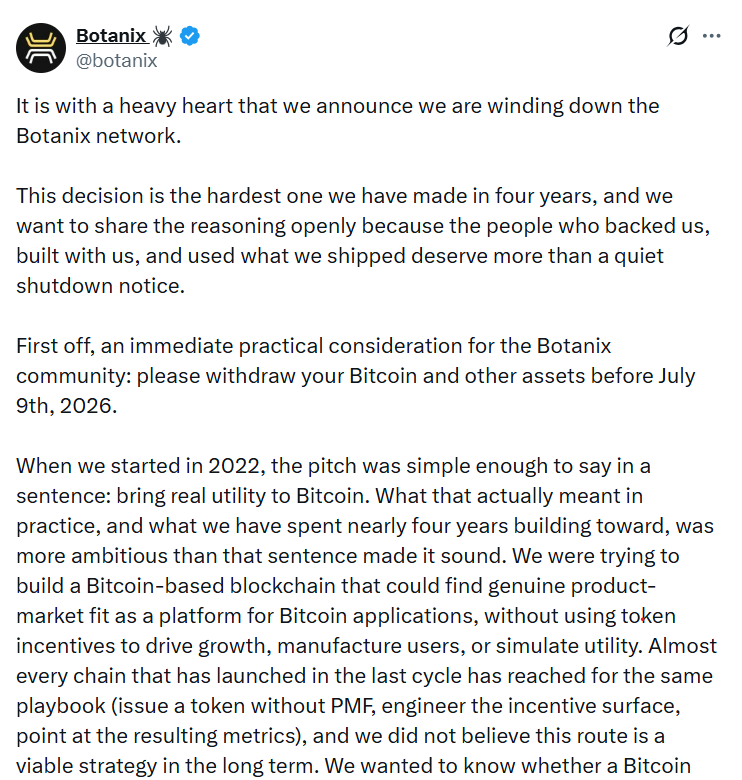
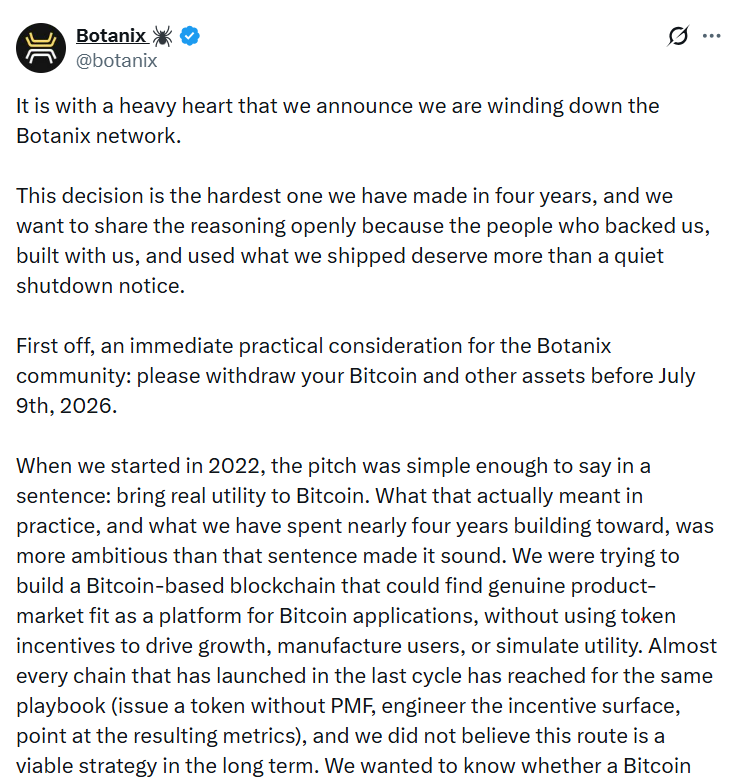
Yet the closure of Bitcoin scaling platform Botanix earlier this month has called that vision into question.
If a well-funded, technically ambitious Bitcoin layer-2 with live apps, integrations and competitive yields can’t attract enough usage to survive, does that mean Bitcoiners simply don’t care about decentralized finance?
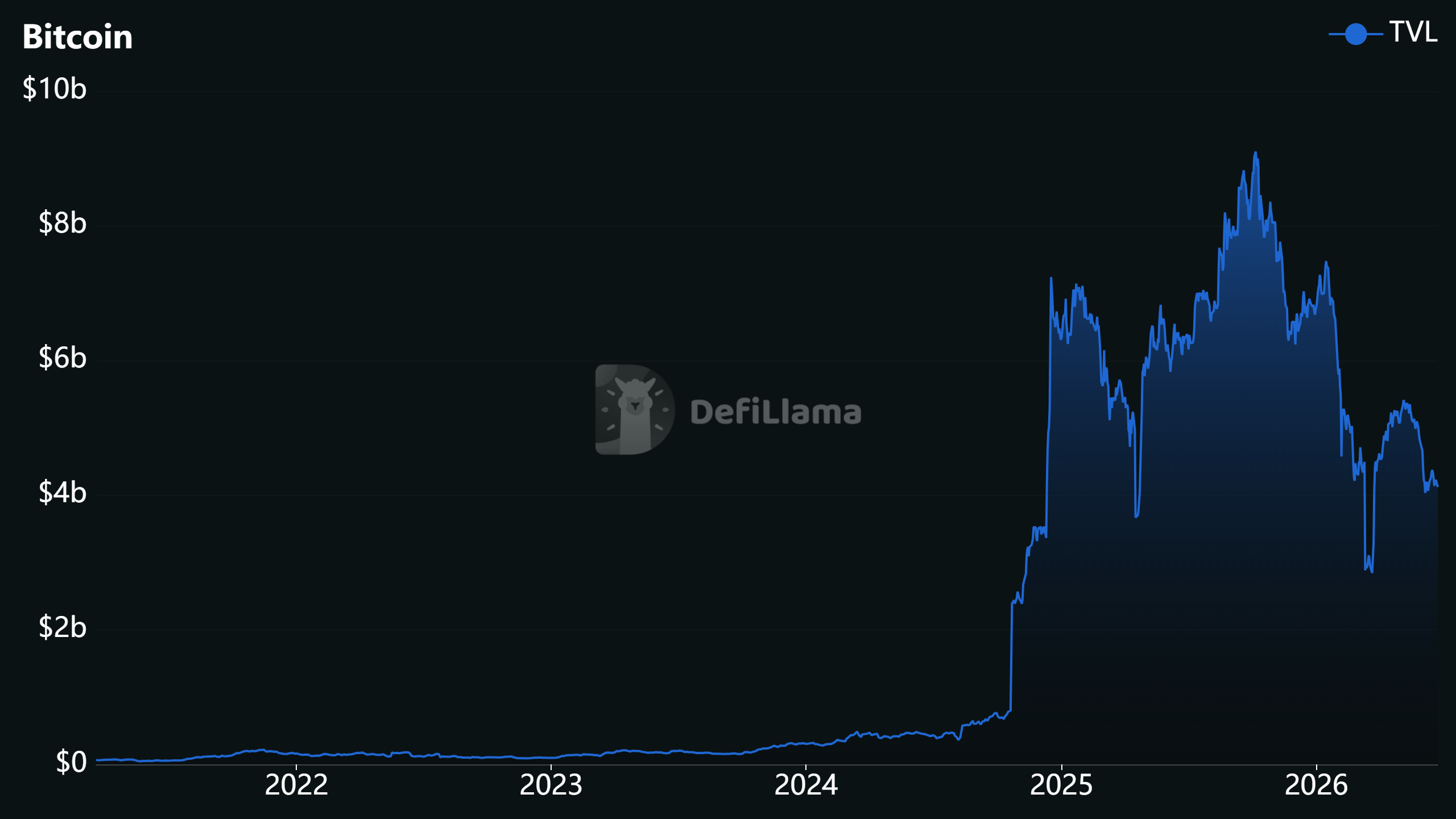
Bitcoin DeFi remains a niche proposition in 2026, despite years of being touted as the next big thing.
DefiLlama’s dashboard shows just $4.12 billion of total value locked (TVL) across all of the Bitcoin DeFi protocols. That’s a rounding error next to Bitcoin’s $1.2 trillion market cap, and the hundreds of billions held via spot exchange-traded funds, corporate treasuries and custodial accounts.
Andre Dragosch, head of research Europe at Bitwise, told Cointelegraph, “Bitcoin is winning decisively as a monetary asset and as pristine collateral, but the case for Bitcoin as a standalone DeFi execution layer was always structurally weaker than the narrative suggested.”
Botanix closes after four years
When Botanix announced it was winding down after nearly four years of work and a year of mainnet uptime, the team didn’t blame a hack or a regulatory shock; they blamed demand.
Botanix described a chain that “worked” in every technical sense: 25 million transactions, 200,000 wallets, and tens of millions of dollars in bridged funds, yet it never generated the fee volume needed to cover its infrastructure costs.
Users came for the yield, treated BTC as store-of-value collateral, and then largely stuck to passive, buy-and-hold strategies, rather than actively borrowing, trading, or moving funds often enough to generate meaningful fee volume.
Related: Fireblocks to integrate Stacks for institutional-grade Bitcoin DeFi
Like most BTCFi stacks today, Botanix still requires users to bridge their Bitcoin into a tokenized version on a separate Ethereum Virtual Machine (EVM)-based chain before they can access DeFi. That introduces additional bridge and smart contract assumptions that worry many Bitcoiners.
Botanix’s shutdown notice. Source: Botanix
Even so, Botanix co-founder Willem Schroé told Cointelegraph that he wouldn’t have changed the core design. Despite Botanix offering what he described as “the best rates in the industry” and a more Bitcoin-aligned security model than typical wrapped BTC bridges, wrapped BTC on Ethereum still out-competed Botanix.
He attributed that to Ethereum’s “huge infrastructure network and Lindy effect,” as well as a mix of liquidity depth, user experience and regulatory comfort.
What Botanix learned about Bitcoin DeFi
The team concluded that Bitcoin is still viewed as a reserve asset rather than something that has programmable utility.
For most existing use cases like lending, leveraged exposure, or yield, a wrapped BTC position on a large, mature EVM ecosystem such as Ethereum is “genuinely sufficient” for most users. Rather than bridge into a Bitcoin-aligned EVM chain like Botanix, users preferred to stick with wBTC on venues where the liquidity, apps and integrations already exist.
Related: Mercado Bitcoin expands LatAm RWA push with $20M in Rootstock private credit
Botanix also pointed to onchain activity consolidating around venues like Hyperliquid, and major centralized exchanges and retail-facing fintechs that “own the user relationship,” leaving independent infrastructure “rowing upstream” against convenience and branding.
Wilhelm said he hopes Botanix’s wind-down “will definitely be looked at by others,” and framed the process as a professionally managed experiment whose lessons other BTCFi builders should take seriously.
Bitcoiners, DeFi and wrapped BTC
While estimates vary, only a small fraction of Bitcoin’s supply is currently productive in DeFi, and most of that sits in wrapped BTC products on Ethereum and its L2s like Base and Arbitrum, as well as Polygon, Solana and BNB Smart Chain. A smaller percentage is on “Bitcoin L2” chains, with Bitcoin-aligned L2s and sidechains accounting for a modest share of that activity by value.
Tokenized BTC products themselves represent just a sliver of the asset: A May 2026 analysis estimated that roughly $20 billion worth of BTC — less than 2% of the total Bitcoin supply — is circulating on EVM chains in wrapped form.
Total Value Locked (TVL) in Bitcoin DeFi. Source: DeFiLlama
An October 2025 GoMining survey of 730 Bitcoin holders found that 77% of respondents had never used a BTCFi platform, and only 3% integrated BTCFi into their overall Bitcoin strategy.
Even allowing for sample bias (these respondents were plugged-in, survey-answering BTC holders), the numbers show that BTCFi platforms that keep users in Bitcoin-aligned stacks remain a niche activity rather than a mass behavior.
Justin d’Anethan, head of research at crypto private markets advisory firm Arctic Digital, told Cointelegraph, “There is more liquidity and better yields on EVM or SVM [Solana Virtual Machine] native solutions than on BTC solutions, period.”
When clients ask about “putting their Bitcoin to work,” the practical routes, he said, are still centralized desks, exchanges lending out BTC at 2% to 4%, basis trade structures “à la Ethena,” or institutional credit pools like Maple.
Related: Bitcoin recovery meets DeFi tensions as Aave rift deepens: Finance Redefined
He said the big obstacle for most Bitcoiners was the risk of bridging to a less secure Bitcoin L2. For “hardcore BTC maxis,” the default remains cold storage, HODLing and riding price appreciation, rather than trying to “eke out 2-3% with counterparty risk.”
Native BTCFi as a structural mismatch
Dragosch said Botanix’s failure suggested that demand for standalone Bitcoin DeFi execution layers was much weaker than their backers expected.
He argued that capital that “genuinely wants yield has migrated to wrapped BTC on mature, liquid venues rather than bridging into bespoke federations.”
In this view, the problem isn’t just that Bitcoiners haven’t “discovered” native DeFi yet; it’s that the architecture and user base are misaligned. Bitcoin’s base layer is slow, conservative and firmly anchored in the store-of-value narrative.
“Bitcoin as reserve collateral is the durable trade,” Dr. Dragosch said, “the next leg of adoption runs through institutions and balance sheets, not necessarily through onchain execution layers.”
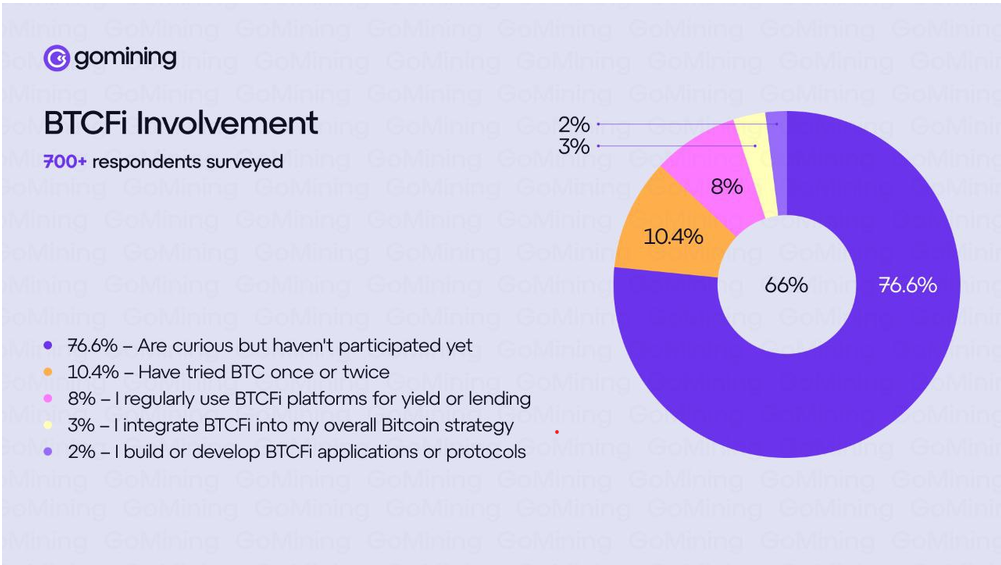
77% of respondents have never used a BTCFi platform. Source: GoMining
Who is still building BTCFi, and for whom?
Diego Gutierrez Zaldivar, chief executive of RootstockLabs, a Bitcoin-secured, EVM-compatible sidechain, doesn’t buy the idea that there’s “no demand” for Bitcoin-backed lending, yield products or broader BTCFi services.
He said the main constraint is trust: putting in place the operational, legal and risk management frameworks that institutions need.
More than 40% of all Bitcoin DeFi activity now runs through Rootstock, he said, including real-world asset settlements and institutional vaults. Over the past year, he said, funds have started asking to deposit hundreds or even thousands of BTC at a time into Rootstock-based products; flows that were almost unheard of two or three years ago.
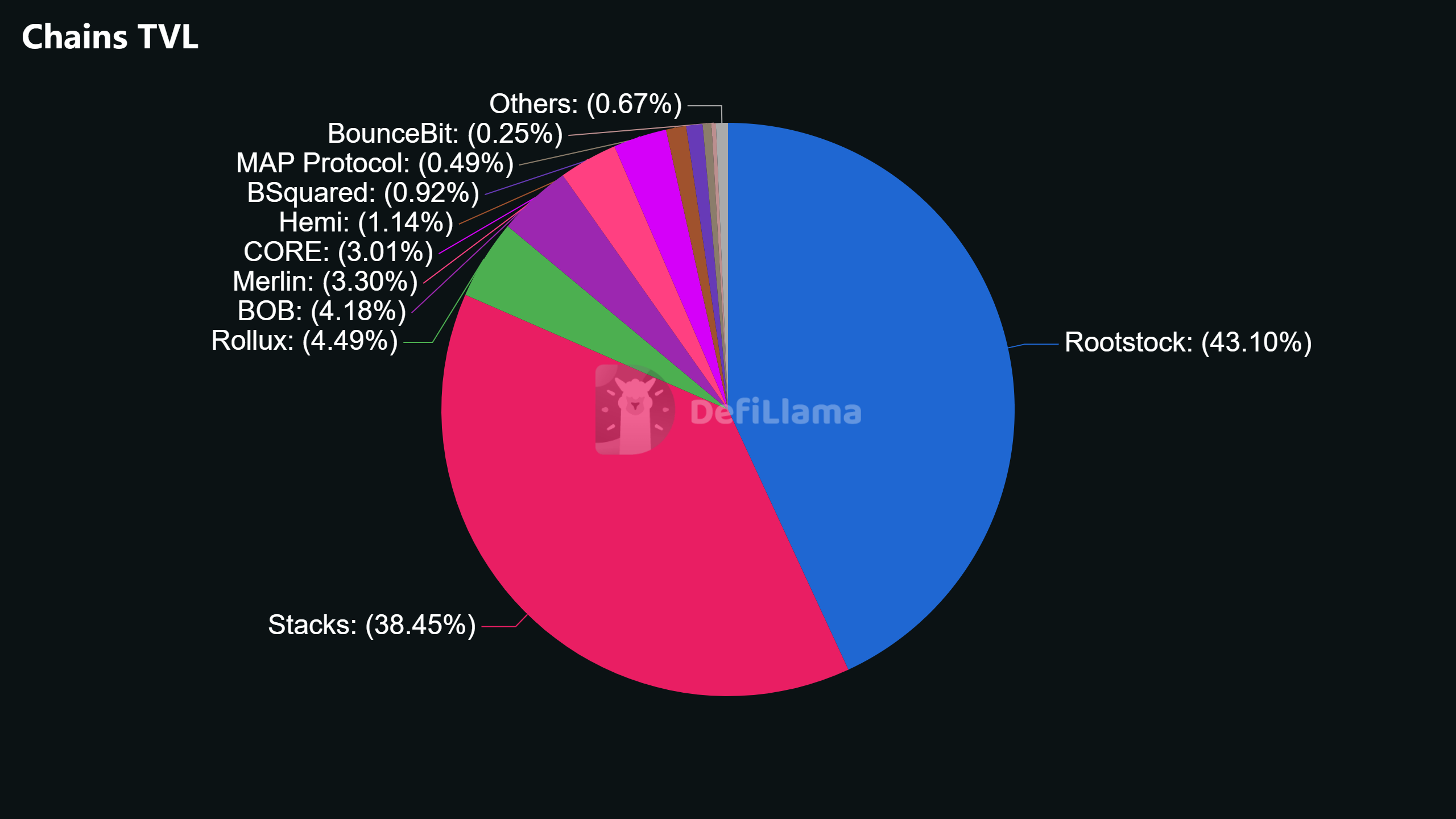
Chains TVL. Source: DeFiLlama
Orkun Mahir Kılıç is co-founder of Chainway Labs, behind Citrea, a Bitcoin-anchored rollup that keeps user assets inside Bitcoin’s security perimeter and proves its state with zero-knowledge proofs. He argued that cloning EVM DeFi primitives onto Bitcoin is a dead end, and said that Botanix’s experience is a verdict on that model, rather than BTCFi itself.
He told Cointelegraph that “more secure” doesn’t change most people’s behavior.
“People don’t price counterparty risk until something breaks,” he said. ”Where it matters” is for institutions and large holders that need trust-minimized transactions with no custodian to fail.
“For everyone else, the reason to be here isn’t the security guarantee in the abstract; it’s the applications that don’t exist elsewhere.”
Magazine: Bitcoin will not hit $1M by 2030, says veteran trader Peter Brandt
TLDR:
- Bitcoin’s apparent demand has stayed negative for 208 consecutive days, dropping to a record low of -273,000 BTC.
- Old Bitcoin supply is re-entering circulation faster than the spot market can absorb the incoming coins.
- BTC price was rejected at both $82,000 and $61,000 resistance levels, extending the pattern of lower highs.
- Analyst Kabuki projects Bitcoin could drop to $53,000 shortly and reach $42,000 by the end of July 2026.
Bitcoin’s apparent demand has remained in negative territory for 208 consecutive days, reaching a new low of -273,000 BTC.
The metric measures real spot market demand by comparing new Bitcoin supply from miner block rewards against existing inventory movement.
Old supply is now entering circulation faster than the market can absorb it. This mismatch between inflows and outflows is creating heavy overhead resistance across Bitcoin’s price structure.
Seven Months of Sustained Distribution Signal Structural Weakness
From November 9, 2025, to May 31, 2026, Bitcoin’s apparent demand hovered quietly between 0 and -150,000 BTC. That range pointed to mild but steady distribution rather than sharp selling.
The market absorbed the pressure without dramatic price moves during that stretch. However, the pattern set the stage for the sharper deterioration that followed.
On-chain analyst Ali Charts flagged the shift in a recent post, noting that apparent demand had dropped to a new low of -273,000 BTC.
The metric has since flatlined around that level, showing no signs of recovery. When apparent demand is persistently negative, it reflects a structural imbalance in supply and demand.
New capital entering the spot market is simply not enough to offset the volume of older coins moving back into circulation.
The metric is considered a reliable gauge of genuine demand because it strips out derivative activity. It focuses entirely on spot-side flows, making it harder to manipulate or misread.
A sustained negative reading over seven months carries more weight than a short-term dip. Traders and analysts watching this data now face a market where selling pressure appears to be the dominant force.
This kind of prolonged distribution cycle has historically preceded extended price corrections. Bitcoin trading at $59,855 at the time of the data release reflects the pressure building on price.
Without a clear reversal in apparent demand, recovery rallies may face sustained resistance. The current on-chain picture supports caution rather than confidence.
Price Rejections at Key Levels Fuel Bearish Projections
Bitcoin’s price action has reinforced the bearish on-chain signals with two clear rejections at technical resistance. Analyst Kabuki, writing on X, pointed out that resistance at $82,000 was rejected before the market dropped sharply. A subsequent attempt at $61,000 was also turned away, continuing the sequence of lower highs.
Kabuki, who claimed to have called the $126,000 top in October 2025 and the $15,000 bottom in November 2022, outlined a bearish price path.
The projection targets $53,000 in the near term, followed by a drop to $42,000 by July. That roadmap follows two prior rejections and aligns with a broader pattern of declining support levels.
Each failed attempt to hold above resistance adds to the case for continued downside. The combination of negative apparent demand and repeated price rejections at key levels creates a compounding bearish setup.
Buyers stepping in at current prices are absorbing supply without successfully defending any meaningful level. That dynamic tends to exhaust demand further rather than restore confidence.
Whether Bitcoin follows the projected path to $42,000 remains to be seen. However, the on-chain data and technical structure both point to a market where sellers are in control.
A meaningful shift would require apparent demand to turn positive and price to break cleanly above near-term resistance. Until that happens, the weight of evidence tilts toward continued pressure on Bitcoin’s price.
A bipartisan group of U.S. senators has urged the Commodity Futures Trading Commission (CFTC) to investigate Polymarket after a report alleged the prediction market platform paid social media influencers to promote fake bets without clear disclosure. The move raises fresh questions about how regulators should treat event-based prediction products as prediction markets continue to expand their footprint with mainstream audiences.
In a letter sent to CFTC Chair Mike Selig on Thursday, Republican Senator John Curtis and Democratic Senator Adam Schiff said they were concerned Polymarket “used deceptive marketing tactics to promote gambling-style products to US audiences,” according to their press release. The lawmakers called the allegations “deeply troubling” and asked for immediate scrutiny if the claims prove accurate.
Key takeaways
- Senators John Curtis and Adam Schiff have asked the CFTC to investigate Polymarket over allegations of deceptive influencer advertising tied to fake bets.
- The concerns follow a Wall Street Journal report that reviewed more than 1,100 promotional videos and found that 70% included fake bets totaling nearly $2 million.
- Reports also say the CFTC has an ongoing investigation into Polymarket, though the timeline has not been disclosed publicly.
- Polymarket said it is auditing promotional content to ensure compliance with regulatory and disclosure requirements.
- The lawmakers argue the CFTC’s approach may not adequately address the realities of how prediction markets are marketed as gambling-like products.
Senators press for CFTC scrutiny over alleged deceptive promotions
Curtis and Schiff’s letter centers on claims that Polymarket engaged social media creators to film “fake trades” on websites styled to resemble the platform, and that many creators did not disclose they were paid for the promotional work. According to the Wall Street Journal’s June 20 reporting, the publication reviewed more than 1,100 videos and found that 70% showcased fake bets amounting to nearly $2 million.
The senators framed the issue not just as a marketing dispute, but as a regulatory concern tied to consumer protection and the distinction between lawful event-contract trading and gambling-like activity. They said the CFTC has repeatedly asserted authority over prediction markets and event contracts, but argued that current enforcement and oversight appear insufficient given how content creators portray the space.
“If accurate, these allegations are deeply troubling and demand immediate scrutiny from the Commodity Futures Trading Commission,” Curtis and Schiff wrote, according to the letter described in their press release.
Wall Street Journal report and timing of CFTC inquiry claims
The senators’ intervention follows the Wall Street Journal’s report, which described extensive influencer marketing tied to content that allegedly did not reflect genuine bets on Polymarket itself. The Journal’s review suggested a large proportion of promotional videos were not merely illustrative but involved falsified trading scenarios.
Shortly after that reporting, additional coverage indicated the CFTC was already looking into Polymarket. Earlier this week, CNBC reported—citing a person familiar with the inquiry—that the CFTC is conducting an “ongoing and extensive” investigation. CNBC also said the timeline for when the inquiry began was not shared.
Polymarket did not comment on the senators’ letter or on the reported investigation. In a statement provided earlier this week to Cointelegraph, a Polymarket spokesperson said the company was “conducting a comprehensive audit of active promotional content” to ensure it meets its “standards,” as well as applicable regulatory and legal disclosure requirements.
Why the dispute matters: enforcement, disclosure, and the gambling analogy
In their letter, Curtis and Schiff argued that regulators may be missing the practical implications of how prediction markets are presented to U.S. users. They referenced the recurring framing by creators of prediction products as “free money,” and they questioned whether that marketing environment supports treating prediction markets as something fundamentally different from gambling.
The senators warned that if prediction markets are being marketed with consumer behavior in mind similar to gambling-style betting, then the legal and regulatory approach may need closer scrutiny—especially regarding advertising practices and disclosures.
The lawmakers also asserted that they remain concerned the CFTC is neither enforcing the law appropriately nor equipped to act as a federal gambling regulator. They did not claim that all prediction markets should be regulated as gambling, but their argument emphasized that the real-world presentation and consumer messaging could undermine the distinction regulators often rely on.
Questions to CFTC by July 10 and what investors should watch
Beyond asking for scrutiny, Curtis and Schiff requested written responses from CFTC Chair Mike Selig by July 10. Their list of questions included whether the agency is investigating Polymarket, whether the reported advertising practices were legal, and whether the CFTC has adequate resources to police prediction market promotions and related conduct.
The letter also reflects the broader regulatory tension around prediction markets. The CFTC has claimed authority under federal commodities law, in part because platforms register with the agency and operate through structures the commission views as falling under its jurisdiction for commodities-related event contracts.
At the same time, the CFTC’s enforcement actions against state-level challenges show how complex the governance question remains. According to earlier reporting, the regulator has sued nine U.S. states that filed legal action against prediction market operators—alleging the platforms were effectively offering unlicensed sports betting through event contracts.
For traders, users, and companies operating in the prediction market ecosystem, the immediate uncertainty is what the CFTC will determine about promotional practices and disclosure compliance. The next developments to watch are any formal regulatory findings, changes to influencer marketing requirements, and clarifications on how the agency evaluates whether promotional content crosses lines between lawful trading representations and gambling-style inducements.
With both a congressional escalation and reports of an active CFTC inquiry, the key question now is whether the regulator will treat the alleged influencer advertising as a disclosure and consumer-protection issue, a jurisdictional matter, or both—and what that means for how prediction markets market their products going forward.

Popular analyst Ali Martinez mapped out the next significant support levels for Ripple’s cross-border token after the asset marked a new multi-year low yesterday of just over $1.00.
Market observers remain convinced that XRP has reached its most critical level in this cycle, one that could determine the next major leg up (or down).
What’s Next, XRP?
It’s safe to say that the cryptocurrency market has seen better days, which weren’t all that long ago. Ripple’s native asset is no exception. The token challenged $1.60 in mid-May before it plummeted to $1.05 in early June. It then rebounded to $1.30, only to be rejected once again. The latest leg down drove it south to $1.01 (on most exchanges) yesterday.
Ali Martinez weighed in on the asset’s recent performance, which included a bounce to the current $1.04. He noted that the token is testing a “major volume block at $1.06,” a significant cluster in which over 830 million XRP changed hands. This has made it the most important level above $1.00 to watch, but it has given in as of press time.
According to the analyst, this puts the next major such clusters in focus, but they are positioned well below these levels. The first, with 923 million XRP transacted, is at $0.80, while the two larger ones, with 1.16 billion and 1.06 billion XRP transacted, are at $0.62 and $0.51.
This makes the current level (and moment) highly important for XRP, which coincides with CasiTrades’ opinion. As reported yesterday, she explained that the token has approached its final capitulation level with people calling for lower and lower prices. However, she believes the ongoing retracement is “doing exactly what it should,” making it the “perfect market structure.”
Whale Wrecked
The Thursday crash wiped out over 200,000 traders, as the total value of liquidations topped $1.5 billion. One of those was a major bitcoin and XRP whale, who got wrecked hard. Data from Lookonchain shows that almost $48 million in BTC and $28.5 million in XRP in longs were liquidated from a single wallet ending in 0xf79C.
The market crash just wiped out whale 0xf79C’s longs.
His 809.9 $BTC($47.68M) and 27.92M $XRP($28.45M) long positions were fully liquidated, resulting in a $8.42M loss.https://t.co/VDxArX3Y4q pic.twitter.com/VAd7ImvNNb
— Lookonchain (@lookonchain) June 25, 2026
The post What Are XRP’s Most Important Levels After Crash to $1.00? appeared first on CryptoPotato.

Venezuela quake toll tops 900, search intensifies for hundreds trapped

ETH Short Position Reappears After Crash

Mila Kunis Gushes About ‘Easy’ Marriage To Ashton Kutcher


-

 Entertainment6 days ago
Renter of Home in Anne Heche Crash Denies Settlement With Son
-
 Sports3 days ago
Two goals and an assist by sheer aura: Cristiano Ronaldo just entered the World Cup chat
-

 Tech5 days ago
Microsoft accidentally kills epic Outlook email threads
-

 Business6 days ago
Soccer-U.S. defends Iran World Cup travel restrictions, says discussions ongoing
-

 Fashion11 hours ago
Weekend Open Thread: Staud – Corporette.com
-

 Politics22 hours ago
The House | Manchesterism won’t survive the painful trade-offs unless it gets citizens on board
-

 Politics7 days ago
Andy Burnham and the meaning of Makerfield
-

 Politics1 day ago
Potential 2028er World Cup attendee leaderboard
-

 Business21 hours ago
Asia stock markets slide as tech shares slump
-

 Tech1 day ago
A Look At A Gaggle Of Transputer Boards
-
Crypto World3 days ago
Bitcoin (BTC) Dips Below $62K, Ethereum (ETH) Plunges 6% Daily: Market Watch
-

 Crypto World3 days ago
Securitize Wraps Roubini's SEC-Registered ETF as Dubai VARA Digital Security
-
 Crypto World1 day ago
Dell (DELL) Shares Tumble Over 5% Following Analyst Downgrade to Hold
-
Business3 days ago
Entergy settles forward sale agreements, raises $672 million in cash proceeds
-
 Crypto World7 days ago
Can Charles Hoskinson Really Rescue Cardano?
-

 Sports8 hours ago
FIH Pro League: India defeat Pakistan 7-1, register biggest win of campaign | Other Sports News
-

 Crypto World12 hours ago
RTX holders must register wallets before token distribution begins
-
Crypto World14 hours ago
Hyperliquid Named on Singapore MAS Investor Alert Register
-

 Crypto World7 days ago
Jake Chervinsky accuses CME of protecting derivatives monopoly
-

 Sports2 days ago
India vs Bangladesh LIVE Score, Women’s T20 World Cup: Bangladesh Opt To Bat; India Enter ‘Do-Or-Die’ Stage As Semi-Final Race Heats Up
You must be logged in to post a comment Login