

Crypto World
Tether-Backed Oobit Expands Crypto Payments to Colombia


Oobit has extended its non-custodial crypto payments platform into Colombia, marking the ninth live market for the Tether-backed payments company as it deepens its footprint across Latin America. The rollout aligns with a broader regional shift toward stablecoins and crypto-based purchases, with Chainalysis data cited in the announcement showing the Colombian peso ranking second globally in centralized-exchange stablecoin purchases by currency.
Oobit enables users to spend digital assets directly from their wallets through a Visa-linked payment network that it says is accepted by more than 150 million merchants across over 80 countries. The platform emphasizes on-wallet spending without converting funds through traditional bank off-ramps, offering what it describes as a smoother, crypto-first checkout for everyday purchases.
Key takeaways
- Colombia becomes Oobit’s ninth live market, with Brazil showing the strongest early momentum since its November 2024 launch—activity there has risen more than 200%, and active users are spending about $400 per month across roughly 20 transactions.
- USDT accounts for the largest share of on-platform transactions, outpacing Oobit’s native token and USDC, underscoring the peso market’s preference for dollar-linked stablecoins in daily spending.
- Across LATAM, grocery purchases drive a substantial portion of activity (about 35%), with Brazil expanding usage into gas stations, beauty shops, and electronics retailers.
- The broader Latin American payments trend toward stablecoins is accelerating, with Mercado Libre launching stablecoin-based transfers in Brazil, Mexico, and Chile using its Meli Dollar token, and Bitso reporting stablecoins comprising a sizable share of 2025 crypto purchases.
- DefiLlama’s latest figures show the global stablecoin market expanding from roughly $243 billion to over $322 billion, highlighting the growing scale of stablecoins in crypto markets; observers also point to Bitcoin’s role as everyday money in parts of Africa as evidence of broader adoption patterns.
LATAM expansion and usage patterns
Colombia’s entry for Oobit places the country alongside its existing Latin American footprint, which includes Brazil, Argentina, and Chile. The company highlighted Chainalysis data indicating that the peso ranks second globally in the share of centralized-exchange stablecoin purchases by currency, signaling a pronounced inclination toward dollar-stable instruments for on-chain spending in the region.
On the ground, Oobit said activity in Brazil has surged since its market launch there in November 2024. Reported figures show more than a 200% increase in platform activity, with active Brazilian users spending an average of about $400 per month across 20 transactions. These metrics reflect a growing comfort level with crypto payments among everyday consumers who previously relied on traditional means for purchases.
USDT leads platform activity and what shoppers are buying
Within Oobit’s ecosystem, USDT (Tether) accounted for the largest slice of transactions, outpacing the platform’s native token and USDC. The preference for USDT aligns with broader regional trends toward stablecoins as a means of reducing volatility and expediting cross-border payments in LATAM markets where local fiat currencies can be volatile or constrained by banking friction.
In terms of spending categories, groceries and supermarkets made up about 35% of activity across Oobit’s Latin American footprint. The mix also includes dining out and retail purchases, with consumer behavior in Brazil extending beyond groceries to include gas stations, beauty shops, and electronics retailers as acceptance of crypto-based payments grows.
Oobit’s approach—allowing direct wallet-to-merchant payments without traditional off-ramps—appeals to users seeking speed and convenience, while merchants gain access to a broader, crypto-enabled customer base. The company’s announcement also noted the reach of its Visa-linked system, designed to facilitate broad merchant acceptance for crypto-backed payments.
Regional momentum: stablecoins become everyday money
The LATAM story sits within a wider pattern of stablecoin adoption for routine payments. In April, Mercado Libre, Latin America’s largest online marketplace, launched stablecoin-based transfers between Brazil, Mexico, and Chile using its Meli Dollar token. The token is operable within Mercado Libre’s ecosystem and can be issued as cashback to users, illustrating how e-commerce platforms are integrating stablecoins into their commerce and loyalty structures.
These developments sit alongside a 2025 Bitso report showing stablecoins accounting for about 40% of crypto purchases on its platform, more than double Bitcoin’s 18% share. Bitso’s data point to an increasingly prominent role for dollar-linked stablecoins in everyday crypto activity across the region, reinforcing Oobit’s Colombia expansion as part of a broader regional shift.
DefiLlama’s consolidated data adds another layer to the narrative: the global stablecoin market has grown from roughly $243 billion a year ago to more than $322 billion today. This growth underscores how stablecoins have evolved from a niche instrument into a foundational element of regional crypto commerce, particularly in markets where traditional financial rails can be uneven or expensive.
Beyond Latin America, the story of crypto-enabled payments is evolving in other regions as well. In parts of Africa, for example, Bitcoin is being described as an everyday money option by some merchants and users, illustrating a broader diversification in how digital assets are used for daily transactions rather than as purely investment vehicles. This trend is highlighted in industry discussions and related coverage on stablecoin and crypto payments dynamics across emerging markets.
For readers seeking broader context on related developments, coverage on Kast’s recent funding round signals continued investor interest in stablecoin-based payments startups, underscoring the growing convergence of payments and crypto infrastructure in the global market.
Analysts and observers note that the LATAM push by Oobit and peers occurs at a pivotal moment for crypto payments, where non-custodial usage, stablecoins, and merchant acceptance are increasingly intertwined with consumer habits and merchant incentives. The momentum suggests a shift away from purely on-exchange trading toward practical on-chain spending that leverages crypto for everyday purchases, while regulators monitor consumer protection and transparency in stablecoin markets.
Looking ahead, observers will be watching how Oobit scales in Colombia and whether similar non-custodial protocols gain traction in other markets with evolving financial infrastructure. Questions remain about how regulatory developments, local fiat liquidity, and merchant onboarding will shape the pace and breadth of adoption in the near term.
Readers should keep an eye on how Mercado Libre’s Meli Dollar strategy evolves and how Bitso’s regional data may foreshadow further diversification of stablecoins into daily commerce. As stablecoins integrate deeper into consumer ecosystems, the balance between convenience, risk management, and regulatory clarity will likely become the defining dynamic for investors and users alike.


XRP (XRP) continued its rebound from April’s low near $1.26, climbing to around $1.50 over the weekend and signaling a potential breakout setup. The move comes as on-chain activity and investor positioning align behind a possible upside move, with the price wrestling to flip the key $1.50 level into support.
Analysts are watching a confluence of signals: a recent surge in XRP whale activity, rising XRP Ledger (XRPL) transactions, and a technical pattern that could unlock further upside if resistance at $1.50 is convincingly breached. While the path forward remains contingent on breaking through near-term hurdles, the combination of on-chain momentum and traditional chart levels provides a framework for how this week might unfold for XRP.
Key takeaways
- XRP whale addresses—wallets holding at least 10,000 XRP—rose to an all-time high of about 332,230, signaling growing accumulation among larger holders.
- XRP Ledger monthly transactions reached a record 71 million in April, up from 43 million a year earlier, representing roughly 65% year-over-year growth.
- A sustained move above the $1.50 resistance is seen as a potential catalyst for the next leg higher, with a measured path toward roughly $1.98 intra-triangle and beyond if buyers can sustain momentum.
Whales and on-chain conviction
Market data provider Santiment has highlighted a notable uptick in the number of XRP wallets classified as mid-to-large holders, a sign that institutional-leaning investors continue to accumulate even amid volatility. The count of wallets holding at least 10,000 XRP reached a record high of around 332,230, reflecting a broader pattern of persistent accumulation that analysts view as meaningful for longer-term positioning.
Santiment described this trend as part of a broader growth trajectory that has been visible since mid-2024, suggesting that larger holders are adopting a more patient stance, potentially signaling conviction beyond short-term price swings. In the context of XRP’s price action, the rising wallet count dovetails with renewed on-chain activity and a price structure that appears to be forming a bullish continuation pattern.
XRPL activity and institutional utility
On-chain activity on the XRP Ledger also surged in April, with monthly XRPL transactions climbing to 71 million—the highest figure on record and well above 43 million a year earlier. Evernorth attributes this jump to expanding institutional utility tied to XRPL-enabled services and partners such as Bitstamp, RLUSD, Braza Bank, and various DeFi protocols. The growth is framed as part of XRPL’s broader push to enhance compliance-oriented infrastructure while broadening use cases for institutions and developers alike.
The sustained increase in activity underscores a broader adoption narrative for XRPL beyond speculative trading. As the ecosystem adds liquidity rails and increasingly institutional-friendly tooling, the ledger’s utility could reinforce demand dynamics for XRP, particularly if the network’s compliance and interoperability capabilities continue to mature.
Technical picture: chart patterns, EMAs, and targets
From a chart perspective, XRP has been navigating an ascending triangle that has capped upside since February. In such patterns, a breakout above the resistance line—confluent with near-term moving averages—often precedes a sustained upward move. The immediate objective, if bulls can push decisively through $1.50, points toward the next resistance band near $1.67-$1.70, where the 200-day exponential moving average sits.
Analysts emphasize that the $1.50 zone is pivotal. A clean breakout above this level would align with the triangle’s measured move, projecting a target near $1.98—roughly 36% higher than current levels. By contrast, failure to sustain above $1.50 could see bears reasserting control and delaying a longer-term rally.
Chart observers also note that XRP has defended its daily 20-day EMA since reclaiming the level in early May around $1.42, providing a foundation for the recent advance. Still, the broader hurdle remains the $1.50 area, and some analysts caution that a sustained push above $1.60 would be a more meaningful bullish signal in the near term.
Looking further out, NeelMacro flagged that a decisive break above $1.60 would be required to sustain any meaningful short-term rally, with momentum likely intensifying only if bids push beyond the $2.00 mark. In a complementary view, other analysts have flagged that clearing the $1.50-$1.60 range could unlock momentum toward higher targets, potentially rekindling interest in a move toward the mid-$2s territory if broader market conditions cooperate.
These technical considerations align with broader expectations that a sustained move above the near-term resistance could catalyze a renewed Bitcoin-like impulse across the market, but they also underscore that the path is contingent on a credible breakout rather than a shallow bounce.
As previously reported by Cointelegraph, the $1.50–$1.60 range is a critical inflection zone for XRP in the near term. A breakout beyond this corridor could reframe market sentiment and draw new buyers into the fold, highlighting the potential for a more meaningful rally toward the $2.40 area if momentum continues to build.
What to watch next
Investors and traders will be watching whether XRP can convert the $1.50 resistance into a sturdy new support level. If successful, the chart suggests a clear path toward the $1.70 area and beyond, with the triangle’s measured move pointing toward approximately $1.98. A sustained break above $2.00 could bring additional momentum, but that outcome will depend on continued on-chain support and a broader appetite for risk in crypto markets.
Beyond price, the expanding XRPL ecosystem—especially with institutional utility and enhanced compliance features—could help sustain demand for XRP even in choppier times. As always, developments from XRPL’s partners and ongoing upgrades to the ledger’s infrastructure will be important to monitor for potential shifts in demand dynamics and network activity.
Readers should keep an eye on how the on-chain and on-ledger signals evolve in the weeks ahead, particularly as the market tests the $1.50 level and watches for follow-through above $1.60. The balance between large-holder accumulation, real-world utility, and technical breakout potential will likely shape XRP’s trajectory into the next phase of the year.
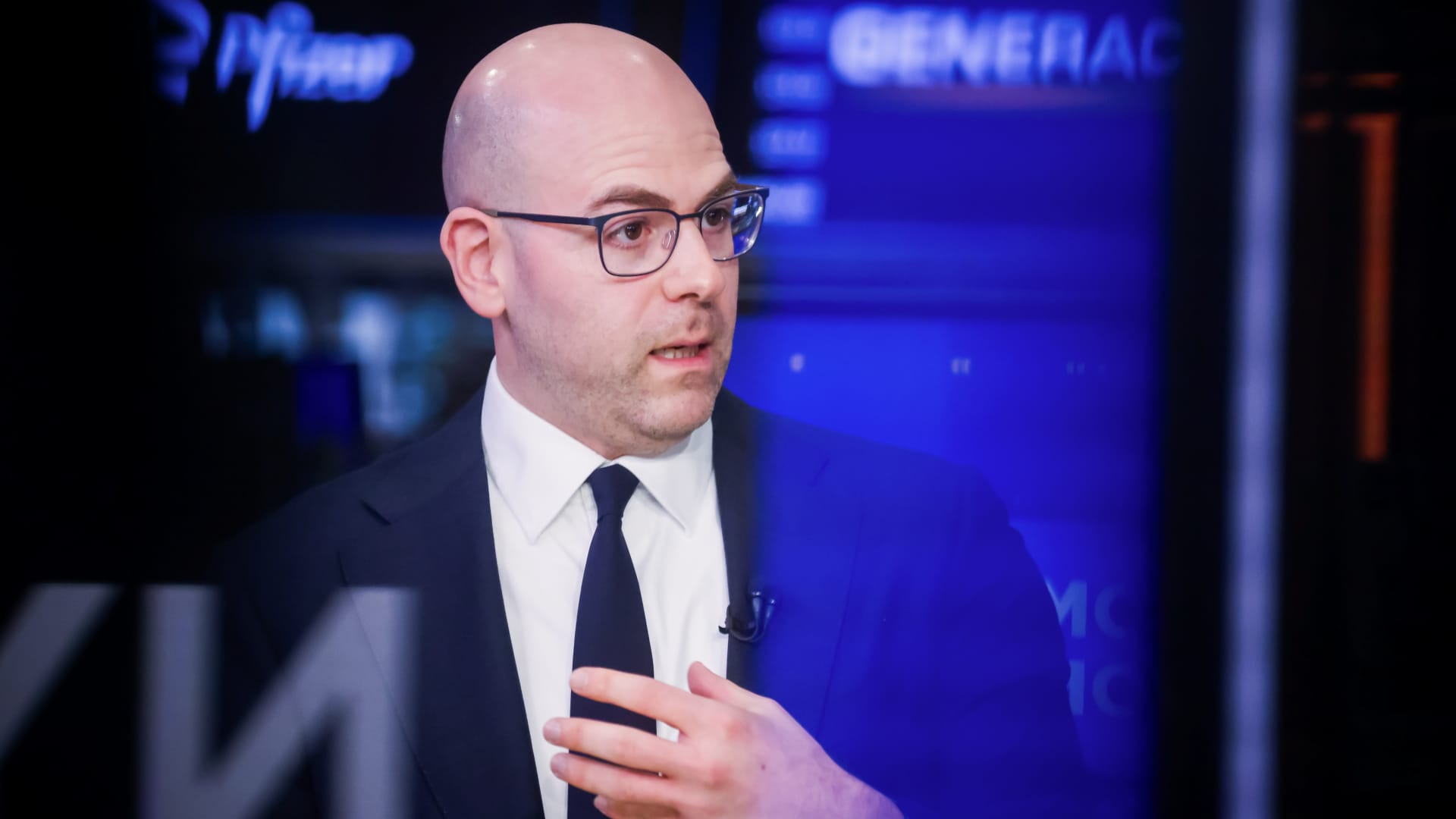
Stephen Miran, governor of the US Federal Reserve, during a television interview on the floor of the New York Stock Exchange (NYSE) in New York, US, on Monday, Nov. 10, 2025.
Michael Nagle | Bloomberg | Getty Images
Federal Reserve Governor Stephen Miran officially handed in his resignation letter Thursday, saying he will vacate his spot on the central bank board when or just before new Chair Kevin Warsh takes his seat.
Stepping in to fill what was left of an unexpired term last September, Miran served as a contrarian voice on the rate-setting Federal Open Market Committee. He voted “no” in each of the six meetings he has attended since taking over for Adriana Kugler, who abruptly resigned in August 2025.
In his letter, Miran said his brief stint was “the highest honor of my life” and expressed confidence in Warsh, who gained Senate confirmation to the top seat Wednesday. Miran came to the Fed after serving as chair of the Council of Economic Advisers.
“Going forward, I am excited about changes Chairman-designate Kevin Warsh and the Federal Reserve may make in areas such as communications policy, balance sheet policy, and keeping the Federal Reserve to its narrow mandate and out of hot-button political and cultural issues,” he wrote.
Miran has advocated for lower rates, voting against the three quarter-percentage-point reductions the FOMC approved in 2025. This year, he voted against the three decisions to hold rates steady in favor of quarter-point cuts.
In addition, he said he has pushed for a more forward-looking approach to monetary policy and believes the Fed “needs to do a better job accounting for nonmonetary forces and their implications for monetary policy.”
He also expressed support for a series of moves the Fed has enacted lowering regulatory barriers for banks, and led research showing how the central bank should shrink the size of its balance sheet and its $6.7 trillion in asset holdings.


Fasset, a stablecoin neobank serving 125 countries, has raised $51 million backed by Japan’s SBI Group and Investcorp.
Summary
- The Series B round also included Turkish asset manager Arz Portföy and will fund new market entry, lending products, and Own Network infrastructure.
- Fasset processes over $32 billion in annualized volume across more than 50 payment corridors in Asia, Africa, and the Middle East.
- The raise reflects growing institutional appetite for blockchain-native banking platforms targeting underserved emerging markets.
Fasset, a Los Angeles-based digital banking platform, uses stablecoin rails to move money across borders for small and medium-sized businesses, bypassing correspondent banking networks.
The company announced the Series B on May 14, disclosing SBI Group, Investcorp, and Turkish asset manager Arz Portföy as investors. The firm serves over 1,000 business customers across 125 countries, operating primarily in South Asia, Southeast Asia, Africa, and the Middle East.
“We are building Fasset for a world where money moves as easily across borders as information does,” said Mohammad Raafi Hossain, CEO and co-founder of Fasset. “This funding round strengthens our ability to build regulated banking services and expand into new markets where our services are needed most.”
How Fasset fits the stablecoin payments surge
The raise arrives as institutional interest in stablecoin payment infrastructure reaches a new high. Analysts at Coinbase noted that stablecoins are taking a larger role in delivery-versus-payment structures as regulatory frameworks mature globally in 2026. The global fiat-backed stablecoin supply exceeded $273 billion by March 2026, growing roughly 40 times from $6.8 billion in early 2020.
Observers have cautioned that neobanks built on stablecoin rails face margin compression as near-zero transfer costs make fee-based revenues difficult to sustain at scale. Fasset’s move into lending and trade finance is consistent with the broader neobank pattern of expanding into higher-margin products after establishing a payments base.
Dragonfly Capital’s Haseeb Qureshi predicted that stablecoins would specifically reshape SMB payments by making cross-border settlement faster and cheaper than traditional correspondent banking. Fasset operates a Shariah-compliant model, aligning it with the needs of key markets in the Gulf, Pakistan, and Indonesia.
Crypto World
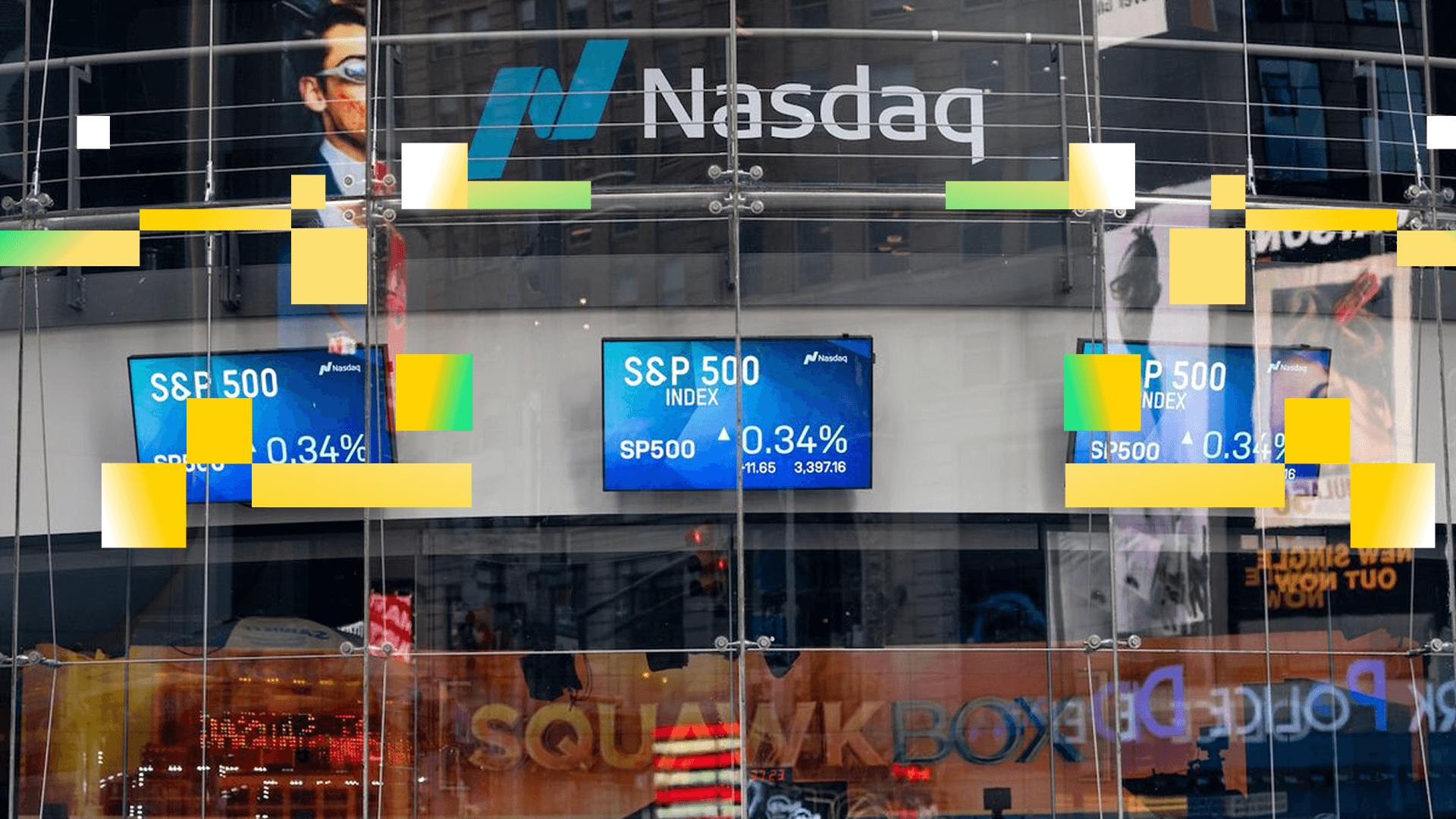
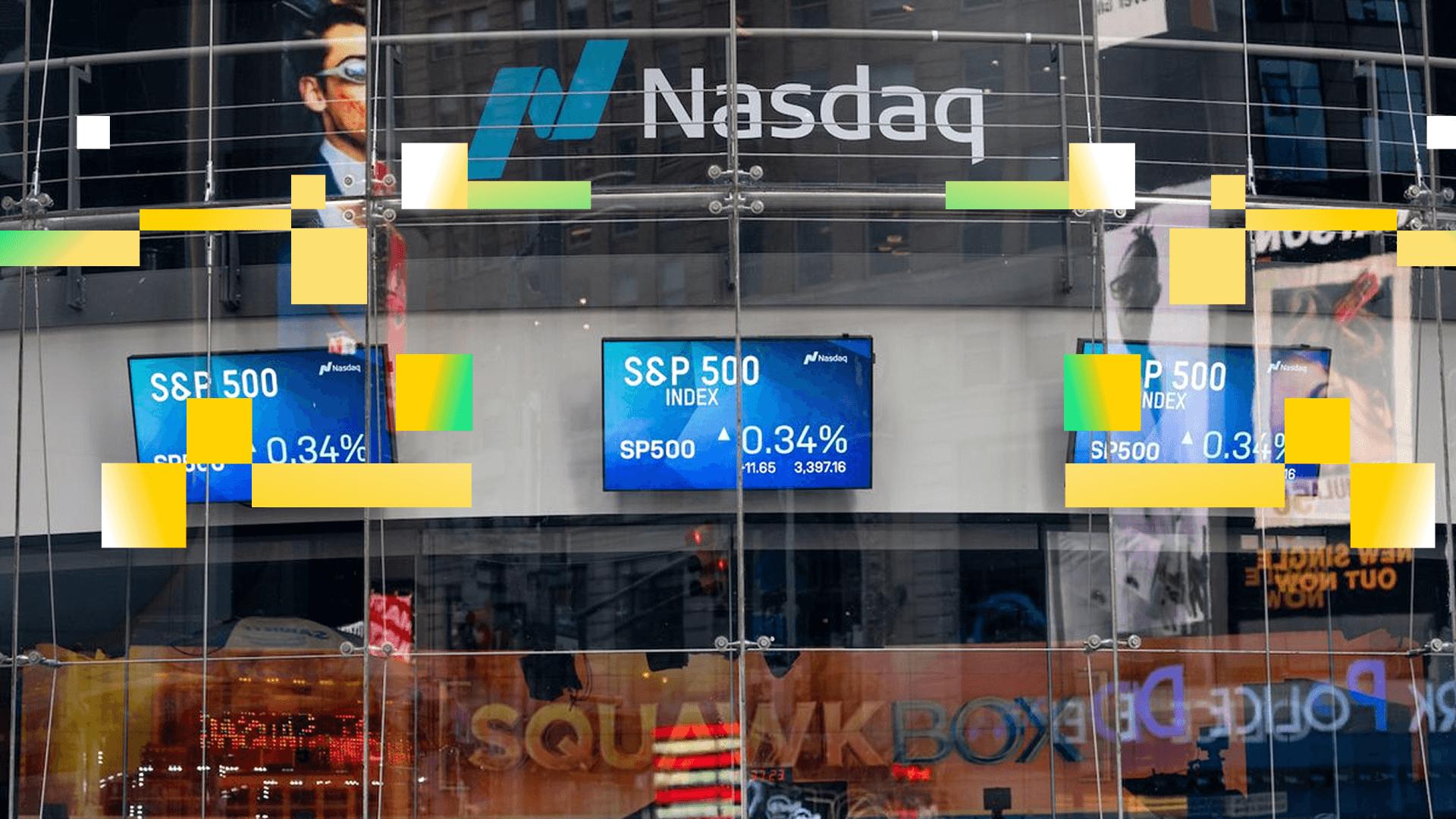
CME dives further into $85 trillion digital assets market with Nasdaq CME Crypto Index futures
A CME group executive said the demand grew with average daily trading volume in his firms’ suite increasing by 43% year-to date.
The CLARITY Act passed a key Senate Banking Committee vote today, moving the US crypto market structure bill closer to a full Senate vote.
The bill has not become law. It must still pass the full Senate, align with the House version, and receive the president’s signature.
The committee advanced the revised Senate text of the Digital Asset Market Clarity Act of 2025. The bill aims to define how digital assets are regulated in the US, including which tokens fall under the SEC and which markets fall under the CFTC.
What Has Changed in the Latest CLARITY Act Bill?
The latest version expanded from the January draft. It added new language on stablecoin rewards, insider trading, bankruptcy protections, and implementation timing.
One of the biggest changes is the Tillis-Alsobrooks compromise on stablecoin rewards. It restricts passive, deposit-like yield on payment stablecoins while leaving room for certain transaction-based rewards under tighter oversight.
The bill also adds insider trading provisions for digital assets. It includes an insolvency safe harbor that lets counterparties close out digital commodity positions and access collateral during bankruptcy, similar to existing derivatives protections.
The updated text also sets a general 360-day effective date after enactment. Some sections would take effect later if agencies need to finish rulemaking first.
Crypto Market Reacts to CLARITY
Next, the bill goes to the full Senate. No official date has been set, but the likely window is June. The bill may need 60 votes, so Republicans will need more Democratic support than they received in committee.
Markets reacted positively after the vote. Bitcoin and Ethereum both moved higher, while several regulatory-sensitive tokens gained more sharply.

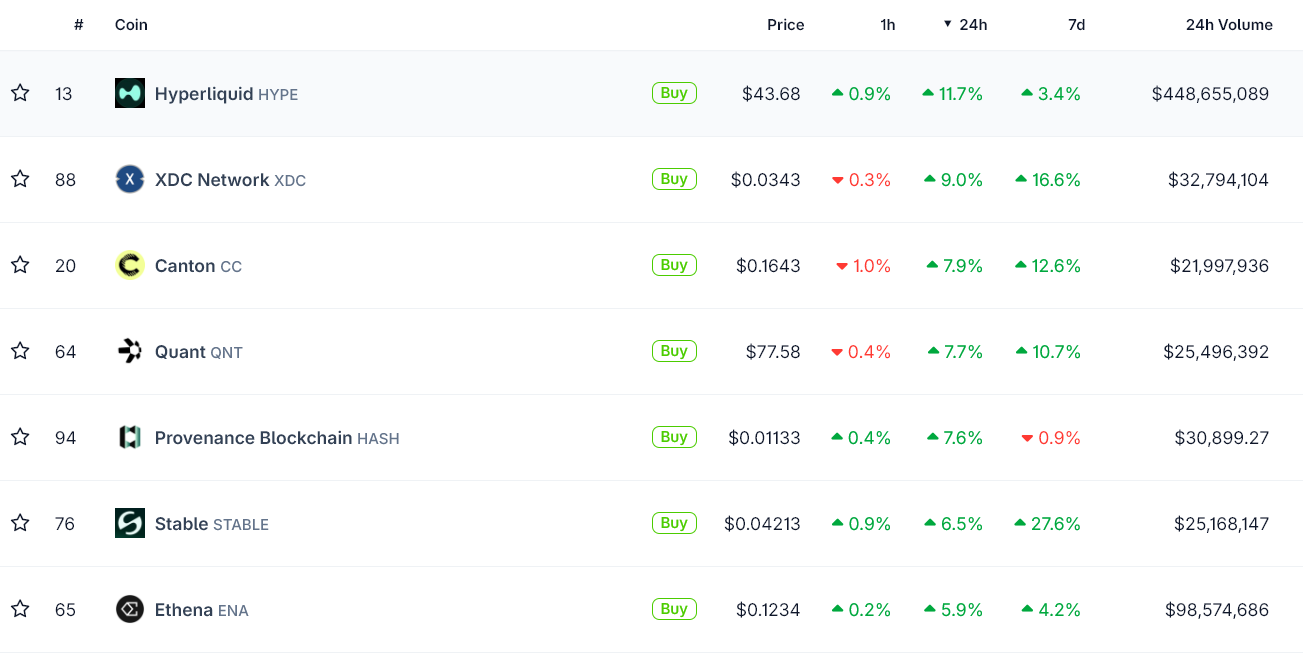
Hyperliquid rose around 11%, likely because traders see it as a high-beta bet on clearer rules for crypto trading and derivatives infrastructure.
XDC and Canton gained nearly 10%, reflecting the market’s renewed interest in institutional blockchain rails, trade finance, tokenization, and regulated on-chain finance.
The vote gives the bill momentum. The harder fight now moves to the Senate floor, where ethics rules, DeFi treatment, AML controls, and stablecoin rewards could still shape the final text.
The post CLARITY Act Clears Senate Banking: What Comes Next? appeared first on BeInCrypto.
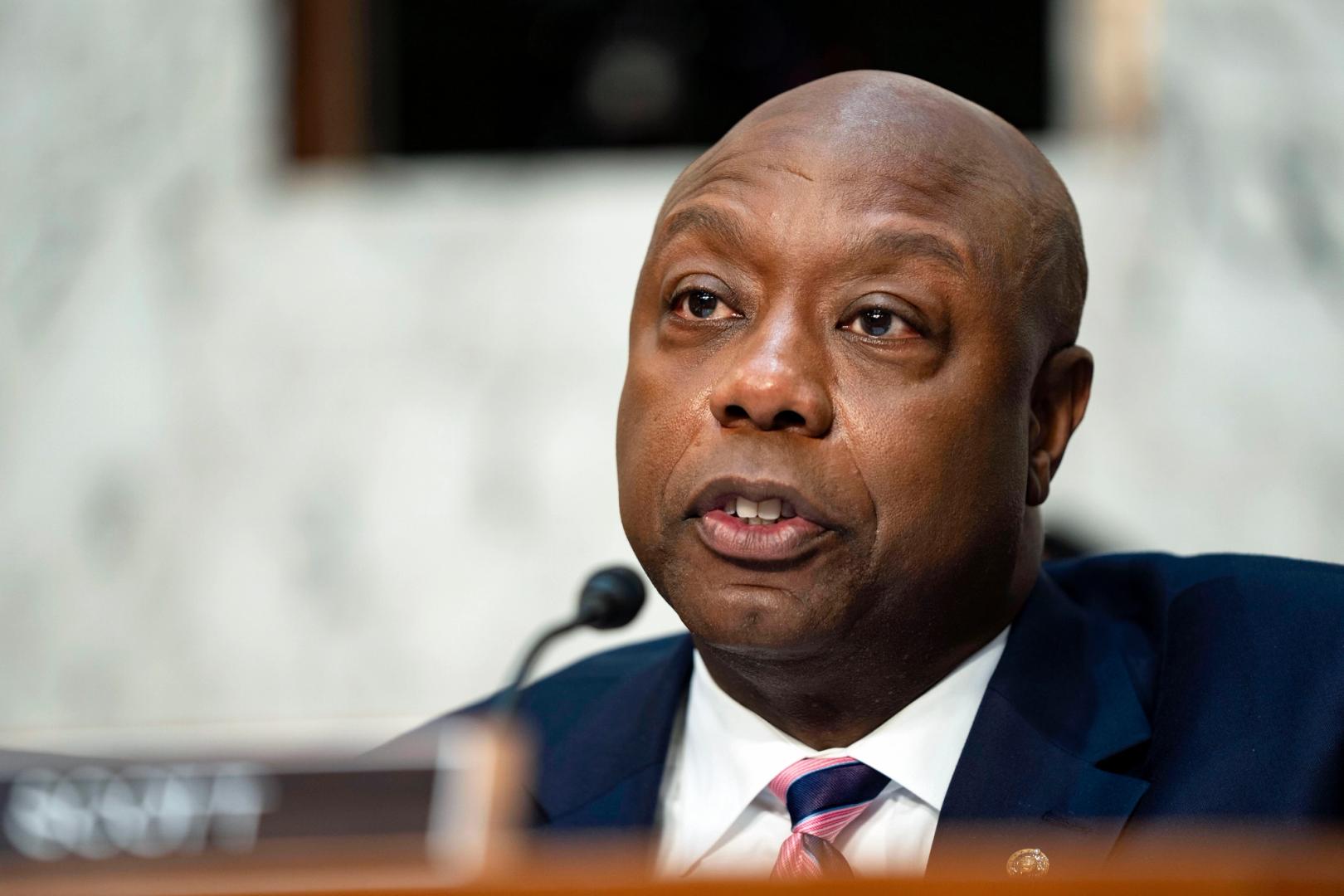
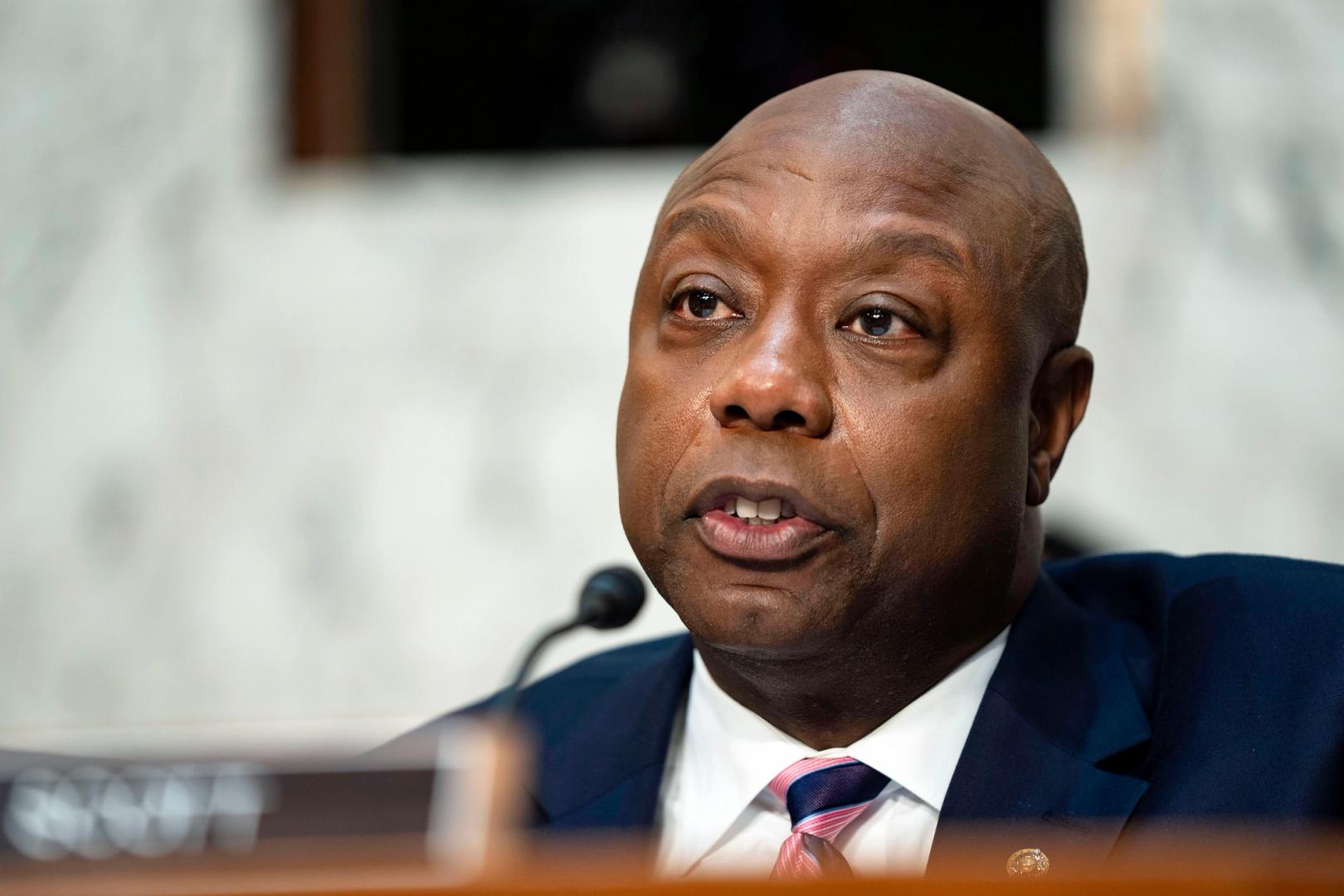
After a bipartisan approval in the Senate Banking Committee, the crypto market structure bill now advances to a final overhaul aimed at Senate and House passage.
The AI infrastructure company began trading Thursday as investors continue pouring capital into artificial intelligence stocks.
The upbeat public debut of AI chipmaker Cerebras is also helping to lift both crypto and traditional markets.
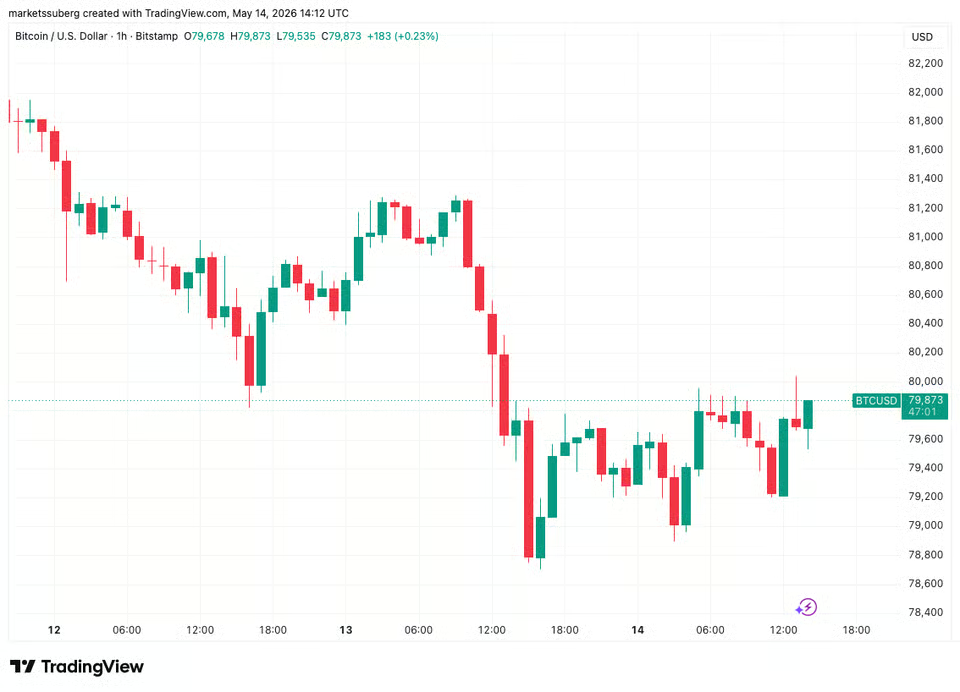
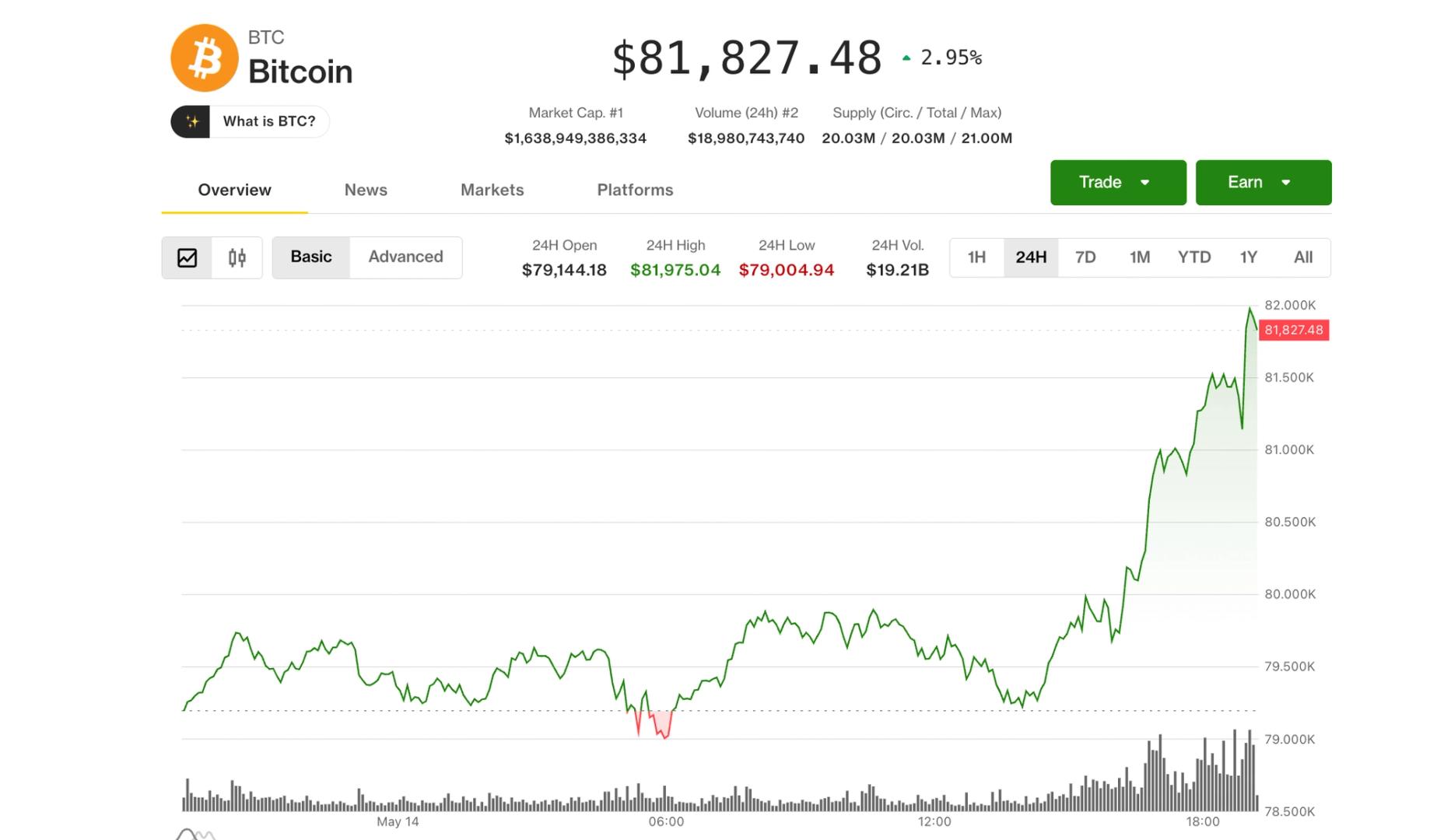
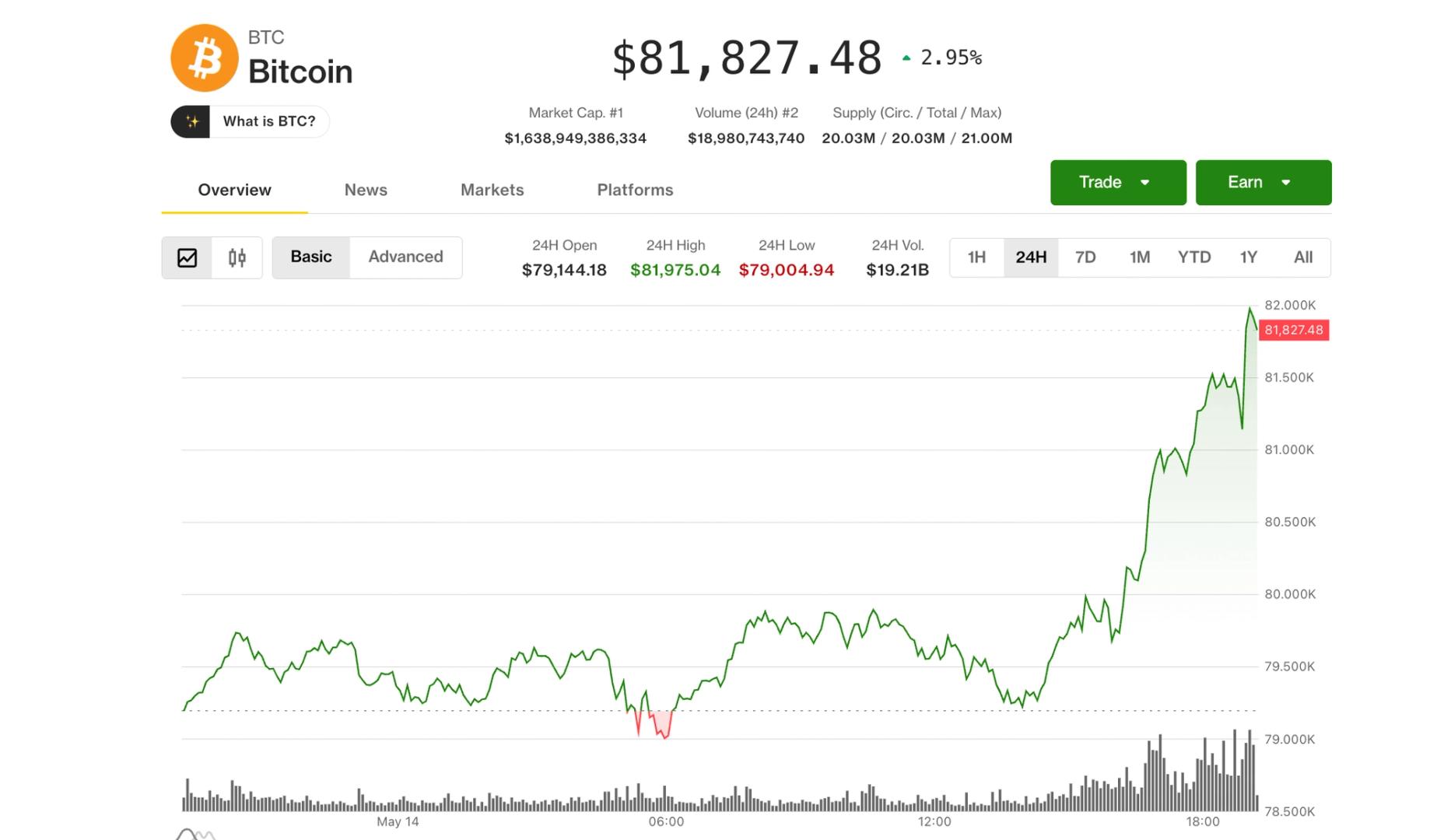
Bitcoin (BTC) touched $80,000 around Thursday’s Wall Street open as US stocks hit fresh all-time highs and oil retested $100.
Key points:
- Bitcoin rebounded to $80,000 while US stock markets hit new records, ignoring high inflation.
- Risk appetite is “skyrocketing,” analysis says, despite worries over central-bank policy tightening.
- Bitcoin can still head to $85,000 next, traders agree.
Bitcoin recoups losses as US stocks ignore inflation
Data from TradingView showed BTC/USD recovering much of the previous day’s losses, which followed some of the highest US inflation data in four years.

BTC/USD one-hour chart. Source: Cointelegraph/TradingView
US stocks quickly shook off the numbers, despite the implications for future financial policy tightening.
The S&P 500 posted its highest daily close on record, and continued to surge on Thursday. The Dow Jones Industrial Average revisited 50,000 points for the first time since early February.

S&P 500 versus Dow Jones one-day chart. Source: Cointelegraph/TradingView
Commenting, trading resource The Kobeissi Letter reported “skyrocketing” risk appetite among investors.
“Assets under management (AUM) in US leveraged ETFs are up to a record $177 billion. Since the March bottom, total leveraged ETF AUM has surged +$45 billion,” it wrote in its latest analysis on X.

Leveraged ETF AUM data. Source: The Kobeissi Letter/X
Kobeissi used the same term to describe global money-supply growth — a crypto and risk-asset tailwind at odds with concerns that central banks were adopting a “hawkish stance.”
“Meanwhile, US M2 money supply jumped +$1 trillion YoY, or +4.6%, to a record $22.7 trillion,” it continued.
“Money supply growth is accelerating.”

Global money supply data. Source: The Kobeissi Letter/X
As the US-Iran war rumbled on, oil prices seemed unable to crack new highs, with WTI crude retesting the $100 per barrel mark from above.

CFDs on WTI crude oil one-day chart. Source: Cointelegraph/TradingView
“Most important” BTC price support still in play
Looking at BTC price action, trader Daan Crypto Trades saw the market at a “pivotal level.”
Related: Bitcoin price history suggests 77% odds of new all-time high within a year
An accompanying chart showed the 200-period simple (SMA) and exponential (EMA) moving averages trending higher toward the spot price.

BTC/USDT perpetual contract four-hour chart. Source: Daan Crypto Trades/X
On the same topic, fellow trader CrypNuevo saw the potential for BTC/USD to head to new multi-month highs at the 50-week EMA should that support hold.
“Bitcoin is at the most important level,” he agreed on Wednesday.
“If it holds the range highs here, then it’ll push towards the 1W50EMA at $84k-$85k. But a failure to hold this level could trigger a rotation back to the mid-range, potentially exposing range lows if momentum doesn’t shift.”

BTC/USDT one-day chart. Source: CrypNuevo/X
ICP is the worst-performing cryptocurrency today (at least among the top 100), posting a 10% price decline.
However, certain technical indicators suggest this might be only a short-lived pullback, while multiple analysts support the bullish scenario.
ICP Heads South
Just a few hours ago, the asset’s valuation plunged to a one-week low under $3, while its market capitalization sank to approximately $1.6 billion.
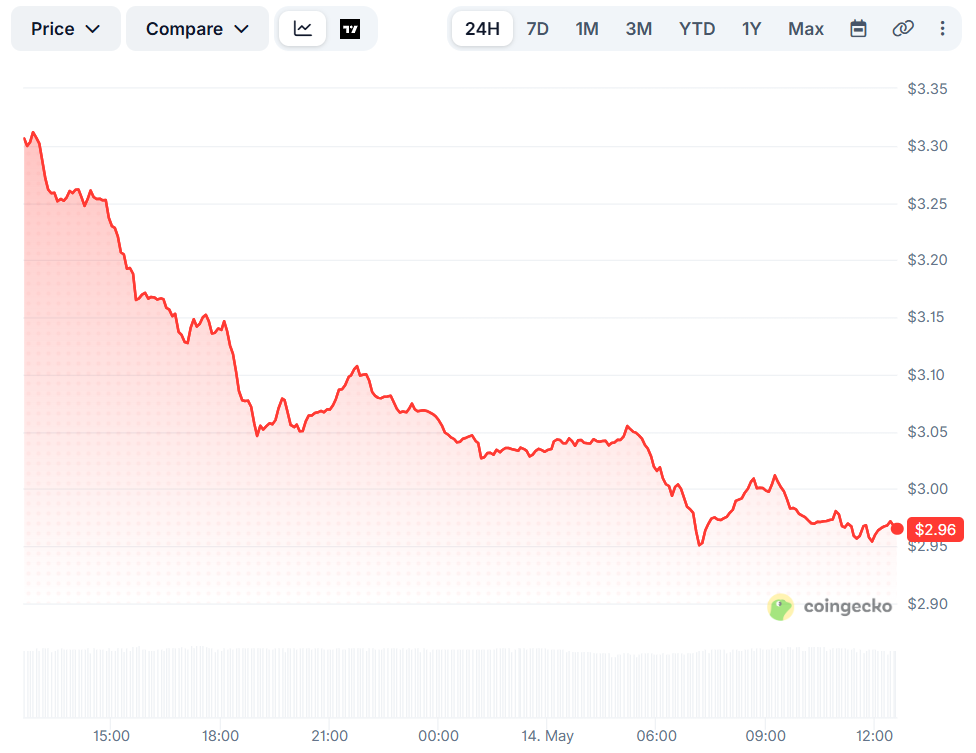
It is important to note that ICP’s negative performance aligns with an overall correction sweeping through the broader crypto market. Bitcoin (BTC) slipped beneath $80,000, while popular altcoins like Worldcoin (WLD), Cronos (CRO), Arbitrum (ARB), and Aptos (APT) tumbled by 7-8% over the past day.
In the meantime, Coinbase could have also played a role in Internet Computer’s downfall. Recently, it removed six non-USD trading pairs, including ICP/USDT and ICP/GBP.
Such actions by one of the biggest cryptocurrency exchanges reduce liquidity for the affected tokens and make it harder for traders to enter or exit positions. Fewer trading options often mean lower volume and weaker investor confidence, especially amid a crypto pullback.
At the same time, one should keep in mind that if Coinbase had removed all ICP-related services, the impact would likely have been far more severe and could have triggered a much sharper price collapse.
The asset remains available on numerous well-known exchanges, including Binance, Bybit, Bitget, OKX, and more. Two months ago, the leading South Korean trading venue Upbit also hopped on the bandwagon, fueling a 16% price increase for ICP following the news.
Resurgence Comes Next?
ICP’s Relative Strength Index (RSI) signals that the price pullback may soon be replaced by a revival. The technical analysis tool runs from 0 to 100, and readings below 30 indicate that the valuation has dropped too much, too quickly, potentially setting the stage for an upside move. Conversely, anything under 70 is considered a warning of impending correction. Currently, the RSI stands at around 28.

Analysts like Kong Trading and JAVON MARKS expressed confidence in the coin’s outlook. The former noted that almost half of ICP’s supply is locked in staking, with people committing for years.
“That’s not weak conviction. Hard to ignore when supply keeps tightening like this,” they added.
For their part, JAVON MARKS recently argued that ICP has displayed a Falling Wedge pattern and shows signs of strength. They believe a potential breakout could spark a 300% move above $10 and “may act as the start of an even larger reversal.”
The post Internet Computer (ICP) Tumbles 10% Daily: Is Coinbase Responsible for the Plunge? appeared first on CryptoPotato.
John McGuire from Virginia’s 5th district buys Apple, Microsoft, and Nvidia stocks

XRP Whales Reach Fresh All-Time Highs, Hinting at Break Above $1.50
The 15 best sci-fi shows on Amazon Prime Video for when you need to escape

Manchester United reach agreement with Casemiro over contract clause amid transfer speculation

US brings back mandatory military draft registration

Steven Gerrard disagrees with Gary Neville over ‘shock’ Chelsea and Arsenal claim | Football

Financial Accounting Marathon Financial Accounting Revision CMA Inter Dec 2025 Exams

Trump: ‘I don’t think about Americans’ financial’ woes during Iran talks

40 Million People Trading Crypto | Strong Consumer Protection Confirmed Bilal Bin Saqib
-
 Crypto World6 days ago
HarrisX Poll Found 52% of Registered Voters Support the CLARITY Act
-

 Fashion6 days ago
Weekend Open Thread: Marianne Dress
-

 Fashion3 days ago
Coffee Break: Travel Steam Iron
-

 Fashion4 days ago
What to Know Before Buying a Curling Wand or Curling Iron
-

 Tech5 days ago
Auto Enthusiast Carves Functional Two-Stroke Engine from Solid Metal
-

 Politics3 days ago
What to expect when you’re expecting a budget
-
 Business5 days ago
Ignore market noise, India’s long-term story intact, say D-Street bulls Ramesh Damani and Sunil Singhania
-

 Politics6 days ago
Politics Home Article | Starmer Enters The Danger Zone
-

 Tech4 days ago
GM Agrees To Pay $12.75 Million To Settle California Lawsuit Over Misuse Of Customers’ Driving Data
-

 Entertainment7 days ago
General Hospital: Ric & Ava Bombshell – Ric’s Massive Secret Exposed!
-

 Crypto World5 days ago
PROS explodes 48% as Upbit and Bithumb listings ignite demand
-

 Crypto World4 days ago
CZ says US crypto rivals tried to block Trump pardon
-

 Sports6 days ago
Bayern Munich vs PSG UEFA Champions League SF2 live match time, streaming | Football News
-

 Entertainment6 days ago
YNW Melly Denied Bond Again Ahead Of Double Murder Retrial
-

 Tech3 days ago
GM agrees to $12.75M California settlement over sale of drivers’ data
-
Entertainment7 days ago
Hantavirus — cause of death for Gene Hackman's wife — at the center of Dutch cruise outbreak
-
Crypto World6 days ago
The Hantavirus Danger: Can a Potential Outbreak Spark a New Meme Coin Frenzy?
-

 Politics7 days ago
David Attenborough ‘Overwhelmed’ By Love Shown Ahead Of 100th Birthday
-
Tech6 days ago
The Most Exciting Apple Products In The Pipeline For 2026 And Beyond
-

 Sports6 days ago
After Waka Waka, Shakira now drops first teaser for FIFA WC 2026 song | FIFA World Cup 2022
You must be logged in to post a comment Login