

Crypto World
Cerebras shares skyrocket 100% after $5.5B IPO amid AI stock frenzy

The AI infrastructure company began trading Thursday as investors continue pouring capital into artificial intelligence stocks.


Although most of the cryptocurrency market turned green following the announcement of a permanent deal between the US and Iran, Ripple’s token came out on top among the larger caps, surging from $1.05 at the start of the month to almost $1.30 yesterday.
However, its rally was stopped, and it now sits just under $1.25. EGRAG CRYPTO, a popular analyst who often weighs in on XRP’s price performance, believes the actual breakout confirmation is still far away.
This Is The Level
In their post on X, the analyst noted that the wick from the recent multi-year lows was “not random.” However, they added that sellers were quick to re-emerge at the key $1.30 resistance, while buyers stepped up at the lows just over $1.00. For now, XRP remains in a range between the two, and the most important levels for its positive future price performance are as follows:
 $1.11 = survival zone
$1.21 = first strength
$1.28 = structure improves
$1.35–$1.38 = bulls gaining control
$1.51 = major breakout zone
They show that XRP has managed to go above the “first strength” area, since it trades above $1.21 now. However, the path to the actual breakout confirmation requires reclaiming several other key resistance zones. The ‘final boss’ is located at $1.51, a level that XRP challenged on several occasions between February and mid-May, only to be rejected each time and driven south.
Sentiment Improves as ETFs Still in Green
CryptoPotato reported earlier that the overall sentiment around the cross-border token has improved in the past several days after it had dropped to the lowest levels in months. The analysts at Santiment Intelligence have often argued that such a substantial decline in market sentiment is typically followed by market reversals, and this was another confirmation.
One of the key reasons behind XRP’s revival is the flows into the spot Ripple ETFs. Unlike most other crypto-focused exchange-traded funds, those tracking XRP marked another green week, and Monday was also positive, albeit in a minor manner.
Additionally, the company behind the token continues to make headlines. The latest adoption news came yesterday from Gate.io as the exchange listed Ripple’s stablecoin and even launched a trading pair against XRP.
The post Ripple’s (XRP) Breakout Isn’t Real Until This Key Level Falls: Analyst appeared first on CryptoPotato.


The company that settles almost every US stock trade is putting tokenized securities on a public blockchain, and it chose Stellar. What the deal actually covers, what the $114 trillion figure really means, and why XLM jumped.
Summary
- DTCC is not tokenizing $114 trillion on Stellar; that figure refers to the assets it oversees.
- The initial scope covers Russell 1000 stocks, major index ETFs, and US Treasuries.
- Stellar was chosen for compliance-focused features, not just speed or low fees.
- XLM’s rally reflects a long-term institutional adoption bet, not direct demand from tokenized securities.
In May 2026, the Depository Trust and Clearing Corporation, the clearinghouse that sits behind nearly every stock trade in the United States, announced it would connect its tokenized securities service to Stellar, a public blockchain. It is the first time DTC-custodied securities will live on a public chain, and the news sent Stellar’s token, XLM, up more than 30% in a day with trading volume spiking over 400%. For a network long known mostly as a cross-border payments rail, the deal reframed Stellar overnight as a candidate for the core plumbing of US capital markets.
The deal has been widely covered and widely garbled, with headlines throwing around a “$114 trillion” figure that means something very different from what most readers assume. This guide explains the deal accurately: who DTCC is and why it matters, what is actually being tokenized and what is not, what the real numbers are, why Stellar was chosen, what it means for XLM, and the timeline that separates the announcement from anything going live.
The short answer
DTCC, the central clearinghouse for US securities, plans to issue tokenized versions of certain traditional assets, including Russell 1000 stocks, major index ETFs, and US Treasuries, on the Stellar blockchain. The plan was announced on May 27, 2026, runs under a three-year SEC no-action letter granted in December 2025, and targets live deployment in the first half of 2027.
The blockchain will hold tokenized securities that keep the same investor protections and entitlements as the traditional versions. XLM, Stellar’s native token, rose sharply on the news as traders priced in a major institutional use case for the network.
That is the deal. Everything else is detail and context, and the detail matters, because the most-quoted number about this deal is misleading.
Who DTCC is, and why this matters
Most people outside finance have never heard of DTCC, which is strange given that it touches almost every trade they ever make.
The Depository Trust and Clearing Corporation is the invisible backbone of US securities markets. When you buy a stock through a broker, DTCC is the entity that clears and settles the trade behind the scenes, moving ownership records and ensuring the buyer gets the share and the seller gets the cash.
Its subsidiary, the Depository Trust Company, serves as the central securities depository for the country, holding the master records of ownership for the vast majority of US stocks and bonds. DTCC processes an almost incomprehensible volume of activity, on the order of $2.5 quadrillion in securities transactions a year, and oversees more than $114 trillion in assets across US capital markets.
That backdrop is why the Stellar deal is a significant event, not another partnership press release. When a crypto-native company says it will tokenize assets, the market shrugs, because crypto-native companies tokenizing things is routine and the assets are usually small.
When DTCC, the institution that literally keeps the ownership records for American securities, decides to put tokenized versions of those securities on a public blockchain, it is the core of traditional finance stepping onto crypto rails for the first time. The credibility of the counterparty carries the whole thing, and no counterparty in US markets is more central than DTCC.
What the “$114 trillion” number actually means
Almost every headline misleads here, and getting it right separates understanding the deal from being fooled by it.
The $114 trillion figure is the total value of assets DTCC oversees across all of US capital markets. It is not the amount being tokenized on Stellar.
Headlines reading “DTCC tokenizes $114 trillion on Stellar” are wrong, and the error matters because it inflates the immediate impact by orders of magnitude. What is actually being tokenized, at least in the defined service the SEC authorized, is a specific and far smaller set of highly liquid assets: the constituents of the Russell 1000 index, which are the 1,000 largest US public companies, ETFs tracking major indices, and US Treasury bills, bonds, and notes.
Even those are not being tokenized all at once; they define the eligible universe for a phased service. The accurate way to state the deal is that DTCC is launching a defined, regulated tokenization service, initially scoped to a set of liquid blue-chip securities, on Stellar, with the $114 trillion representing the size of the institution running the experiment, not the size of the experiment.
The distinction is not pedantic. A reader who believes $114 trillion is moving onto Stellar in 2027 will badly misprice both the opportunity and the timeline.
The real significance is not the headline number. It is that the most important institution in US securities settlement chose a public blockchain at all, which is a door opening, not a flood arriving.
The deal also sits inside the broader real-world-asset wave this deal rides. That matters because DTCC is not just another crypto-native issuer testing a small tokenization product; it is the core securities market infrastructure stepping onto public blockchain rails.
What is being tokenized, precisely
Three eligible asset classes sit under the announced service, and they are worth listing plainly.
Russell 1000 stocks: tokenized representations of shares in the 1,000 largest US public companies, the index that covers roughly 93% of the investable US equity market by capitalization. Major index ETFs: tokenized versions of exchange-traded funds tracking large indices.
And US Treasuries: tokenized bills, bonds, and notes, which are already the largest tokenized asset class and how it works in the broader real-world-asset tokenization market because of their safety and liquidity. Across all three, DTCC has stressed that the tokenized assets would carry the same investor protections, entitlements, and safeguards as the traditionally held versions, which is the regulatory bridge that makes the whole thing work for institutional users.
What is not in scope, at least initially, is everything else DTCC touches: the long tail of less liquid securities, corporate bonds broadly, and the bulk of the $114 trillion. The service is deliberately narrow, built around assets liquid and standardized enough to tokenize cleanly under regulatory supervision, which is both a limitation and the reason it is credible.
Starting with Treasuries and blue-chip equities means starting with the assets least likely to create a compliance mess. That is how a careful regulated first step should look.
Why DTCC chose Stellar
Of all the blockchains DTCC could have selected, the choice of Stellar surprised parts of the market, and the reasons reveal what institutions actually want from a chain.
Stellar was chosen for compliance-oriented architecture, not raw speed or ecosystem size. The network has built-in asset controls, including the ability to freeze or claw back tokens, features that crypto purists often dislike but that regulated institutions consider essential, because no institution will issue a regulated security on a chain where a court order or compliance requirement cannot be enforced.
Stellar’s design treats tokens as native base-layer assets instead of smart-contract constructs, which simplifies the issuance and lifecycle management of a security and reduces the surface area for smart-contract bugs. The network also offers low transaction costs, high throughput, and a long operating history oriented toward payments and asset issuance, not speculative DeFi.
Notably, Stellar is the second public blockchain DTCC has connected to in its multi-chain strategy, following the Canton Network, and DTCC has signaled it will connect to multiple layer-1 and layer-2 networks over time. That context matters for tempering the Stellar-maximalist reading: DTCC is not marrying Stellar, it is adding Stellar to a roster, and the exclusivity that would make this transformative for XLM specifically is not what was announced.
Stellar won a meaningful seat at the table, not the only seat.
What it means for XLM
XLM’s price reaction was immediate and large, and understanding what it does and does not imply is the most useful thing for anyone holding or watching the token.
XLM jumped sharply on the announcement, with reports of moves above 30% in 24 hours and volume up more than 400%, as traders priced in Stellar’s transition from a payments network into a potential institutional settlement layer. The bullish logic is real: if DTCC routes meaningful tokenized-securities activity through Stellar, the network gains a flagship institutional use case that no amount of marketing could buy, and sustained on-chain activity from regulated assets could drive genuine demand for the network.
That is why the full XLM price outlook on the back of this deal now depends less on the announcement itself and more on whether real securities activity actually reaches Stellar.
A second supportive signal arrived in June 2026, when the SEC approved an active crypto ETF from T. Rowe Price that is permitted to hold XLM, adding a regulated demand channel on top of the tokenization narrative.
Equally real, and less discussed, is the caution. The deal does not directly require large amounts of XLM, because tokenized securities on Stellar are their own assets, and XLM’s role is as the network’s native token for fees and as the asset whose value reflects network usage, not as a one-for-one claim on the tokenized securities themselves.
The price move is a bet on what DTCC activity could mean for Stellar’s long-term relevance and fee generation, not a mechanical consequence of dollars flowing into XLM. And the timeline is long: nothing goes live until 2027, the service is phased, and XLM has remained volatile, even dropping 10% in a single week during the broader market weakness of mid-June despite the tokenization news.
The narrative is a multi-year thesis, not an overnight re-rating, and the token will trade on the broad market in between catalysts. That is why the regulatory backdrop shaping institutional crypto matters: institutions need legal certainty, enforceable rules, and compliant settlement mechanics before they move at scale.
The timeline: announcement is not deployment
Almost nothing has happened yet in operational terms, and that is the single most important thing to keep straight.
The sequence is worth laying out. The SEC granted DTCC a no-action letter in December 2025, authorizing a defined tokenization service for three years.
DTCC and the Stellar Development Foundation announced the Stellar connection on May 27, 2026. Production testing is expected to begin around July 2026, with wider rollout phases potentially through late 2026, and the target for tokenized assets actually becoming available on Stellar is the first half of 2027.
So the gap between the headline that moved the price and anything going live spans the better part of a year at minimum, and large institutional deployments routinely slip.
This timeline is the reality check the rest of the coverage skips. The announcement is a statement of intent backed by a regulatory authorization and a named blockchain, which is more concrete than most crypto partnerships, but it is still an intention to deploy, not a deployment.
Between now and 2027, the testnet phases will reveal which asset classes go first, how many institutions participate, and how the registered-wallet and compliance mechanics actually work in practice. Any of those could reshape the impact.
The thesis is strong and the counterparty is serious, but the calendar says patience. The price has already priced in a future that has not yet been built.
Frequently Asked Questions
What did DTCC actually announce with Stellar?
DTCC, the central clearinghouse for US securities, announced on May 27, 2026 that it will connect its tokenized securities service to the Stellar public blockchain, issuing tokenized versions of certain traditional assets, including Russell 1000 stocks, major index ETFs, and US Treasuries. It is the first time DTC-custodied securities will live on a public blockchain. The service runs under a three-year SEC no-action letter and targets live deployment in the first half of 2027.
Is DTCC really tokenizing $114 trillion on Stellar?
No, and this is the most common misunderstanding. The $114 trillion is the total value of assets DTCC oversees across all US capital markets, not the amount being tokenized on Stellar. The actual tokenization service is scoped to a defined set of liquid assets: Russell 1000 stocks, major ETFs, and US Treasuries under SEC authorization. The large number describes the size of the institution, not the size of the deal.
Why did DTCC choose Stellar over other blockchains?
Stellar was selected for its compliance-oriented design, not speed or ecosystem size. It offers built-in asset controls like freeze and clawback that regulated institutions require, treats tokens as native base-layer assets that simplify securities issuance, and has low costs and high throughput. Stellar is the second public chain in DTCC’s multi-chain strategy, after the Canton Network. It is one of several networks DTCC plans to use rather than an exclusive choice.
How does the DTCC deal affect XLM’s price?
XLM rose more than 30% on the announcement with volume up over 400%, as traders priced in Stellar becoming a potential institutional settlement layer. However, the deal does not mechanically require large amounts of XLM, since the tokenized securities are their own assets and XLM serves as the network’s native token for fees. The price move reflects a bet on Stellar’s long-term relevance and network usage, not a direct flow of money into XLM. The token remains volatile with deployment not expected until 2027.
When will tokenized assets actually go live on Stellar?
The target is the first half of 2027. Production testing is expected to begin around July 2026, with wider rollout phases potentially through late 2026, and broader availability of tokenized assets in 2027. The announcement is a statement of intent backed by an SEC no-action letter, not an operational launch. The gap between the news and anything going live spans roughly a year at minimum and could extend if the phased rollout slips.
What is real-world asset tokenization, and why does this matter?
Real-world asset tokenization means issuing blockchain-based tokens that represent ownership of traditional assets like stocks, bonds, and Treasuries. It matters because it can enable faster settlement, extended trading hours, lower operational costs, and greater asset mobility while preserving investor protections. The tokenized RWA market grew rapidly through 2025 and 2026, and DTCC putting US securities infrastructure onto a public chain is among the most significant validations of the trend. It signals that the core of traditional finance is moving toward blockchain rails.
As of June 15, 2026. Cryptocurrency markets are volatile and details can change; verify current information with official sources before acting. This article is information, not investment advice.


The new fund offering comes as bitcoin struggles to break out of a bear market, trading around $67,000, down about 23% year to date. IBIT, which debuted in January 2024, has amassed nearly $49 billion in assets, making it the largest spot bitcoin ETF on the market. The fund has seen significant outflows since the beginning of the year, though, amid lower bitcoin prices and excitement around other asset classes, including the highly anticipated initial public offerings (IPOs) of SpaceX (SPCX) and Anthropic.
But Jacobs said BlackRock sees several potential audiences for the new fund.
One group consists of income-focused investors looking to diversify beyond traditional sources such as dividend-paying stocks and bonds. Another includes bitcoin holders who remain bullish on the cryptocurrency but want to generate cash flow from their positions.
“You could imagine this could be people who have a significant portion of their wealth in bitcoin but would like to have an income stream to support their lifestyle,” Jacobs said.
A third group may be investors who have historically avoided assets such as bitcoin or gold because they do not produce cash flow.
“We’ve encountered this type of investor for years,” Jacobs said. “How can I own gold in a portfolio if it’s not generating cash in any way? This product seeks to help address that market as well.”
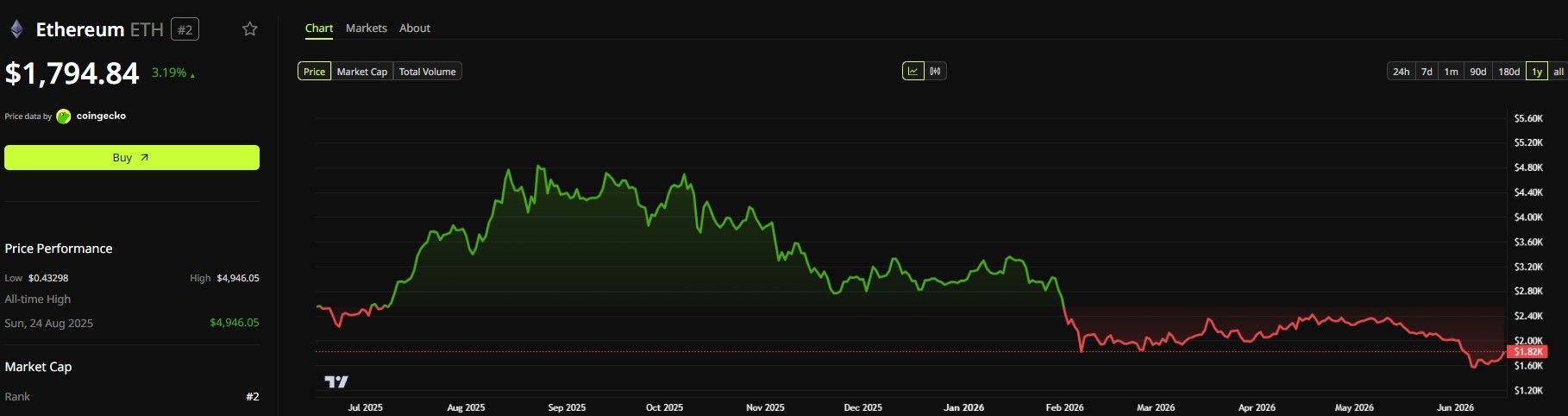
Ethereum (ETH) has crossed the 1 million lifetime developer threshold, making it the largest developer ecosystem in the blockchain sector. Consensys co-founder Joseph Lubin tied the figure to a forecast he delivered at DevCon5 in Osaka in 2019.
Lubin flagged the achievement on X, pointing to an analysis from SharpLink’s Joseph Chalom. Around 232,000 of those developers were active in the past year, reinforcing Ethereum’s lead over every other blockchain network in raw builder count.
A 2019 Prediction Comes True
Lubin’s DevCon5 keynote carried the title “When 1 Million Eth Devs?” He described a future where Ethereum would become globally systemically important infrastructure, with Ether as the currency powering transactions, storage, and staking across a unified multi-network environment. Seven years later, that vision now has a headcount behind it.
“Amusingly, I found this my DevCon5 Osaka keynote entitled ‘When 1 Million Eth Devs?’ We got there.”
The 1 million figure covers lifetime developers, meaning builders who contributed to the Ethereum ecosystem at any point since launch. The past-year count of 232,000 active participants shows the network continues pulling in new entrants, not just retaining builders from earlier cycles. Ethereum’s staking activity and bullish on-chain signals have added to the case that the network’s fundamentals remain intact despite price weakness.

Lubin also pointed to composability as the next structural challenge, naming Linea, Zisk, and Gnosis as teams pursuing synchronous and near-synchronous bridging. He framed the end state as “atomic bridgeless execution zones” that unify fragmented liquidity across chains in real time, with Ether settling fees across all of them.
Preparing the Ethereum Ecosystem for Glamsterdam
The milestone lands as Ethereum readies for Glamsterdam, a protocol upgrade the Ethereum 2026 upgrade roadmap targets for Q3 2026. The upgrade centers on Enshrined Proposer-Builder Separation and Block-Level Access Lists, two structural changes aimed at improving decentralization and scaling Layer 1 throughput significantly beyond current levels.
A larger developer base feeds directly into upgrade delivery. More contributors across Ethereum Improvement Proposals, client teams, and security reviews reduce the risk of oversights before mainnet activation. Glamsterdam’s impact on ETH price has drawn scrutiny from traders tracking the protocol’s fundamental health alongside market moves.
ETH trades well below its highs at the time of writing, though quantum security risks to Ethereum by 2029 are also part of the longer-term resilience conversation developers face. Whether the developer count converts into Ethereum price recovery depends on how the ecosystem delivers on both fronts. Lubin’s composability push and Vitalik’s 2026 privacy roadmap represent two parallel bets the growing developer base now has to execute simultaneously.
The post Ethereum Hits 1 Million Developers: Largest Talent Pool in Blockchain appeared first on BeInCrypto.
Crypto World
Mystery Polymarket trader turned $4 million into $9 million after Spain’s shocking World Cup draw
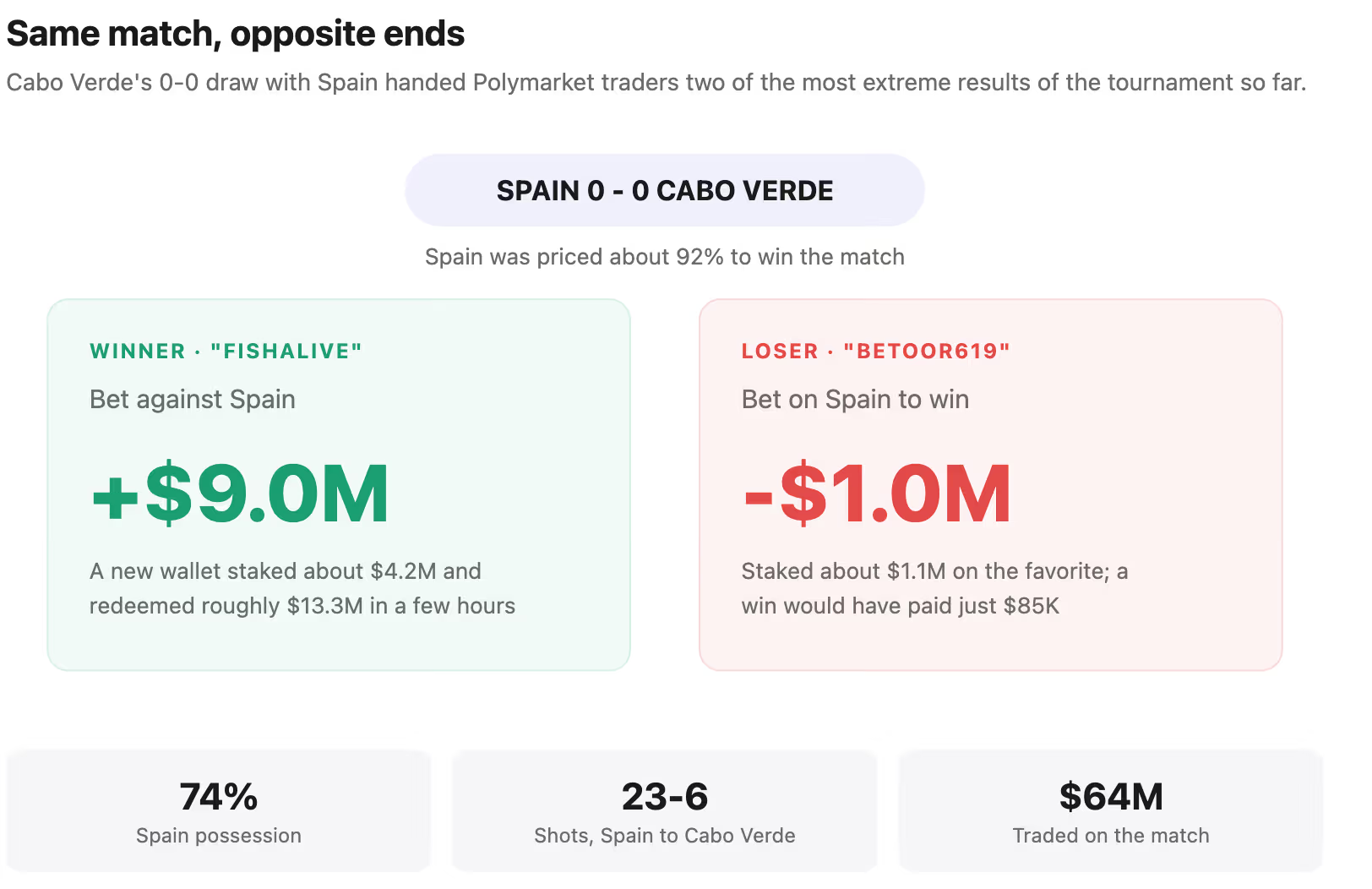
When the game ended 0-0, both paid out. The wallet redeemed about $4.7 million on the Spain market and $8.5 million on the spread, per its public trading record, for a one-day profit of roughly $9 million.
On the other side, a trader using the name ‘betoor619’ lost nearly $1 million, Polymarket’s trading records reviewed by CoinDesk show. The bettor had put almost $1.1 million on a Spain win when the market priced the favorite at about 92%. Had Spain won, the payout would have been only about $85,000, the thin reward typical of betting on near-certain outcomes.
The account had never won or lost more than $9,000 on a single event before, history tied to the account shows.

Polymarket is a prediction market where people trade shares tied to real-world outcomes, with prices that act as implied odds and settlement in USDC, a dollar-pegged stablecoin, on a public blockchain.
Traders use crypto wallets and operate under pseudonyms rather than real names, a feature lawmakers have criticized because the platform does not collect the background information regulated sportsbooks do.
About $64 million traded on the Spain match alone. Polymarket’s market on the overall tournament winner has drawn about $2.4 billion, making the World Cup its biggest event since last year’s U.S. election and pushing it past the roughly $1.4 billion wagered on this year’s Super Bowl.
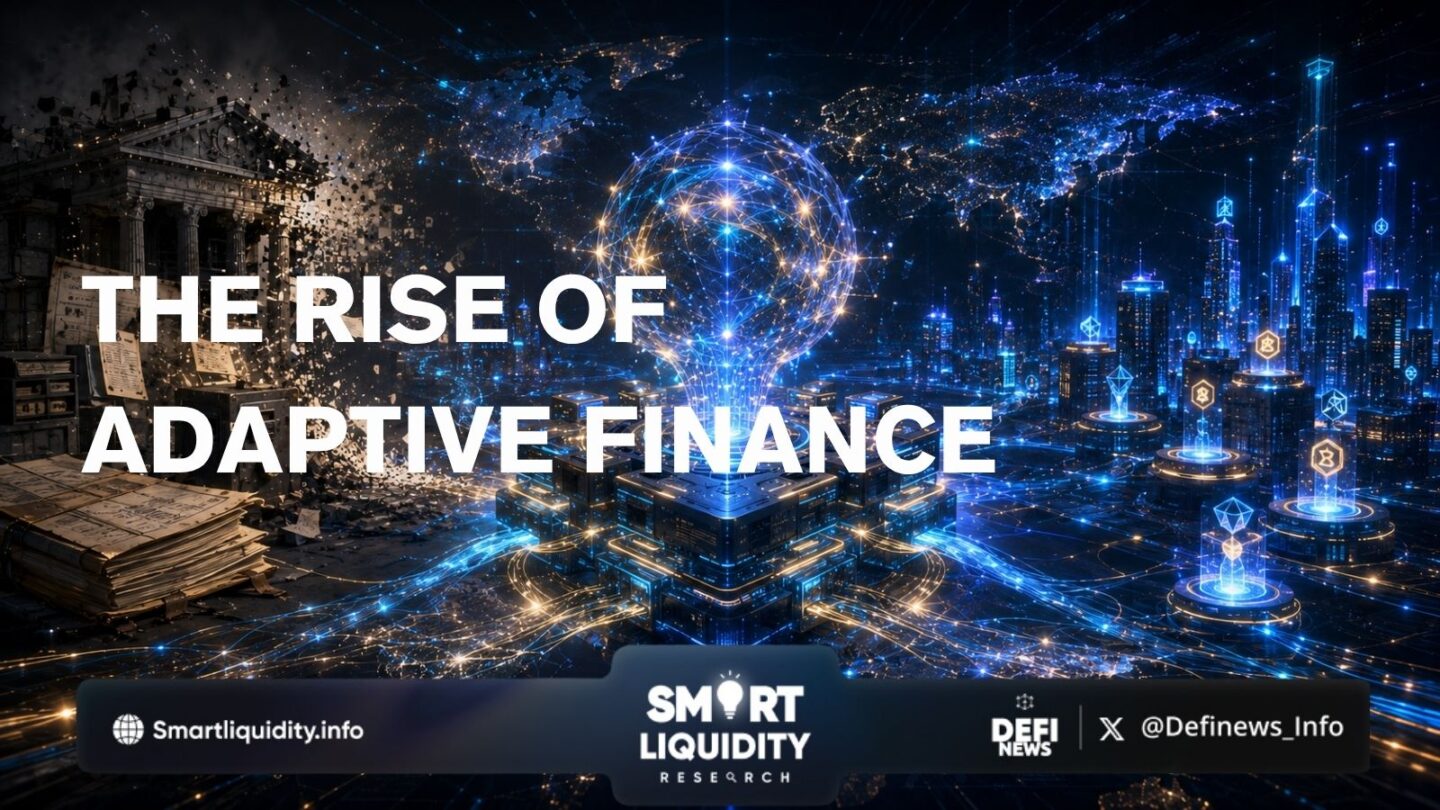
For decades, financial systems have operated on fixed rules, rigid infrastructures, and predetermined processes. Traditional banking products, investment portfolios, lending models, and payment systems were largely designed around static assumptions about users and markets. However, as technology advances and financial ecosystems become increasingly digitized, a new paradigm is emerging: Adaptive Finance.
Adaptive Finance represents the evolution of financial services from static systems into intelligent, responsive, and personalized financial networks capable of adjusting in real time to changing market conditions, user behaviors, and economic environments. Powered by artificial intelligence, blockchain technology, machine learning, programmable assets, and real-time data infrastructure, Adaptive Finance has the potential to fundamentally reshape how individuals, institutions, and machines interact with capital.
The rise of Adaptive Finance signals a future where financial systems no longer merely process transactions—they actively learn, optimize, and evolve.
What Is Adaptive Finance?
Adaptive Finance refers to financial systems that continuously adjust their behavior in response to incoming data, changing circumstances, and user objectives.
Unlike traditional financial products that require manual intervention to update strategies or parameters, adaptive systems automatically modify their operations based on predefined goals and real-time conditions.
Examples include:
- Investment portfolios that rebalance automatically during market volatility.
- Lending protocols that dynamically adjust collateral requirements.
- AI-powered savings accounts that optimize allocations based on spending habits.
- Payment systems that automatically select the most efficient settlement network.
- Yield strategies that migrate capital across protocols to maximize returns while minimizing risk.
At its core, Adaptive Finance combines automation, intelligence, and programmability.
The Technologies Driving Adaptive Finance
Artificial Intelligence
AI serves as the decision-making layer of Adaptive Finance.
Machine learning models can analyze enormous amounts of financial data, identify patterns, predict market conditions, and execute strategies faster than any human operator.
Applications include:
- Risk assessment
- Fraud detection
- Portfolio optimization
- Credit scoring
- Market forecasting
- Autonomous trading
As AI models become increasingly sophisticated, financial systems gain the ability to respond intelligently to changing environments.
Blockchain Infrastructure
Blockchain provides the programmable foundation for Adaptive Finance.
Smart contracts enable financial agreements to execute automatically when predefined conditions are met.
This creates systems capable of:
- Dynamic asset management
- Automated settlements
- Conditional payments
- Real-time treasury operations
- Decentralized governance
Unlike traditional financial infrastructure, blockchain systems operate continuously and globally without requiring centralized intermediaries.
Real-Time Data Networks
Adaptive systems depend on accurate and timely information.
Modern financial networks leverage:
- Market feeds
- Economic indicators
- Consumer spending data
- Blockchain analytics
- On-chain activity
- IoT-generated information
The ability to process data instantly allows financial systems to react as events unfold rather than after the fact.
Programmable Assets
The tokenization of assets creates financial instruments that can adapt automatically.
Examples include:
- Yield-bearing stablecoins
- Dynamic insurance contracts
- Tokenized treasuries
- Automated dividend distributions
- Self-executing collateral systems
Programmable assets transform financial products from passive instruments into active participants within the financial ecosystem.
Adaptive Finance in Decentralized Finance (DeFi)
DeFi is becoming one of the most fertile environments for Adaptive Finance.
Because DeFi protocols are built on programmable infrastructure, they can implement adaptive mechanisms directly within smart contracts.
Examples already exist:
Dynamic Interest Rates
Many lending protocols automatically adjust borrowing and lending rates according to supply and demand conditions.
When borrowing demand rises:
- Interest rates increase.
- Liquidity providers earn more.
- Market equilibrium is restored.
The system adapts without requiring centralized management.
Automated Yield Optimization
Yield aggregators continuously scan multiple protocols and move funds toward the most efficient opportunities.
Users benefit from:
- Higher returns
- Reduced manual management
- More efficient capital allocation
Risk-Adaptive Collateral Management
Future lending systems may continuously evaluate market conditions and borrower risk profiles to adjust collateral requirements dynamically.
This could reduce liquidations while maintaining protocol security.
The Emergence of Autonomous Financial Agents
One of the most exciting developments in Adaptive Finance is the rise of autonomous financial agents.
These AI-powered agents can:
- Manage investment portfolios
- Execute payments
- Monitor risk
- Rebalance assets
- Optimize tax strategies
- Negotiate financial agreements
Instead of manually managing finances, users may increasingly delegate decision-making authority to intelligent software agents operating within predefined parameters.
As agent-based economies develop, machines may become active participants in global financial markets.
Personalization at Scale
Traditional finance often forces millions of customers into standardized products.
Adaptive Finance enables mass personalization.
Future financial products may automatically tailor themselves to:
- Individual income patterns
- Spending behavior
- Risk tolerance
- Financial goals
- Market conditions
Rather than selecting from a limited menu of products, users may receive continuously evolving financial solutions designed specifically for their circumstances.
This represents a major shift from product-centric finance toward user-centric finance.
Benefits of Adaptive Finance
Greater Efficiency
Adaptive systems can allocate capital more effectively than static structures.
Resources move automatically toward productive opportunities, improving overall economic efficiency.
Improved Risk Management
Continuous monitoring allows financial systems to identify and respond to threats before they escalate.
Enhanced Accessibility
Automation reduces operational costs, making sophisticated financial services available to broader populations.
Better User Experience
Users spend less time managing financial complexity while receiving more personalized outcomes.
Faster Innovation
Programmable infrastructure enables rapid experimentation and deployment of new financial products.
Challenges and Risks
Despite its promise, Adaptive Finance introduces new challenges.
Algorithmic Errors
Poorly designed models may make incorrect decisions, creating systemic risks.
Data Quality
Adaptive systems are only as reliable as the information they receive.
Inaccurate or manipulated data can produce harmful outcomes.
Transparency Concerns
Complex AI systems may become difficult for users to understand or audit.
Regulatory Uncertainty
Governments and regulators continue to explore how adaptive and autonomous financial systems should be governed.
Security Risks
As automation increases, vulnerabilities within smart contracts and AI models become increasingly important.
Building secure, transparent, and accountable adaptive systems will be essential.
The Future of Adaptive Finance
The financial industry is entering an era where systems increasingly behave like living networks rather than static infrastructures.
Over the next decade, we may witness:
- Self-optimizing investment funds
- AI-managed treasuries
- Autonomous financial agents
- Dynamic insurance products
- Adaptive lending markets
- Machine-to-machine payment networks
- Real-time personalized financial services
As intelligence becomes embedded directly into financial infrastructure, finance itself evolves from a set of tools into an adaptive ecosystem capable of learning, responding, and improving continuously.
Conclusion
Adaptive Finance represents one of the most important shifts in the evolution of modern financial systems. By combining artificial intelligence, blockchain technology, real-time data, and programmable assets, financial services are becoming more intelligent, personalized, and responsive than ever before.
The transition from static finance to adaptive finance mirrors the broader transformation occurring across technology and society. Just as software evolved from fixed programs into continuously learning systems, finance is now evolving into a dynamic network that adapts to users, markets, and economic realities in real time.
The institutions, protocols, and builders that successfully embrace adaptability may define the next generation of global finance.
REQUEST AN ARTICLE
PI reclaims $0.13 as buyers return. How high can it go?
PI Network (PI) Price Predictions: Analysis
Key support levels: $0.13
Key resistance levels: $0.16, $0.20
PI Finds a Local Bottom
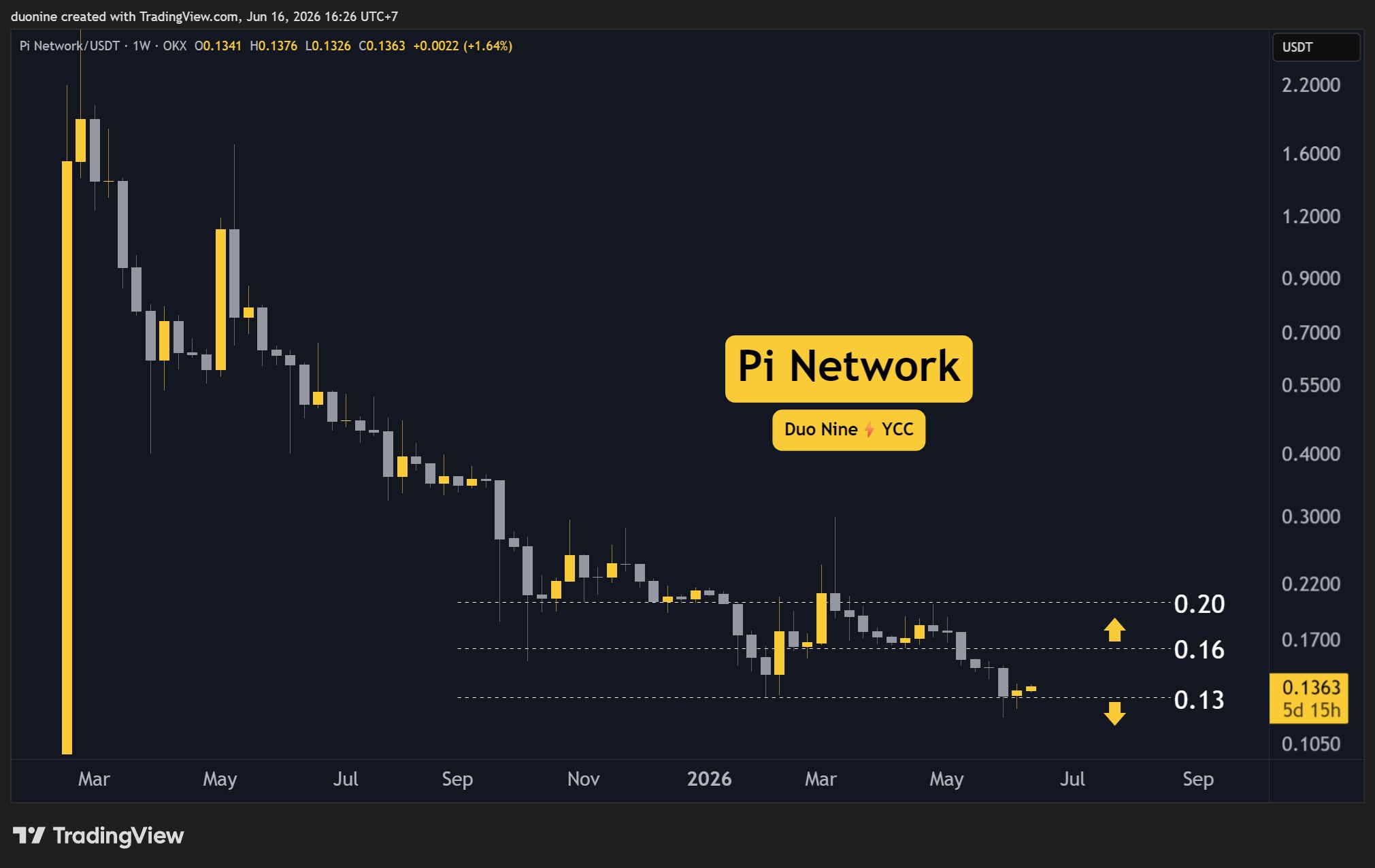
At the time of this post, PI appears to have found a local bottom at $0.13 and is holding well above this level. As long as buyers can keep the price above this key level, the chart will lean bullish.
While the price made a lower low, the daily RSI made a higher low, confirming a bullish divergence. That hints at a possible end to this downtrend. To get confidence in that, the price needs to reclaim $0.16 and then $0.20.
Buy Volume Remains Low
While the price is slowly grinding higher, volume remains low and is declining. This is not ideal, as it makes buyers appear shy, and any push from sellers could easily reverse the recent gains.
Ideally, any push higher is confirmed by an increase in buy volume. Anything less than that could end up as a bull trap whereby buyers end up stuck as soon as bears make their presence felt on the order book.

Daily MACD Turns Bullish
The momentum indicators, including the daily MACD, give a clear bullish bias. This has been ongoing since the price reclaimed $0.13 and held above it. It is likely that the price will continue to rise at least to $0.16, where the first major resistance is found.
Hopefully, buyers will manage to gather enough strength and volume to break that key resistance. On the other hand, a rejection there would likely encourage sellers to return, which could see PI fall back to $0.13 in quick succession.

The post Pi Network (PI) Price Predictions for This Week (June 16) appeared first on CryptoPotato.
Crypto World
BlackRock’s new bitcoin ETF, BITA, lets institutions earn from volatility. There’s a catch: Crypto Daily
In BITA’s case, if bitcoin rallies, the ETF benefits from its IBIT holdings, but the gains are capped by having to pay out on the calls. If BTC holds steady or falls, the call-writing premium offsets some of the decline. In effect, investors give up potential gains for a steadier stream of income.
“By deploying a covered-call strategy on its Bitcoin-linked exposure, the fund seeks to convert Bitcoin’s historically high volatility into a recurring income stream with a target of +15% annual yield while retaining around 70% participation in its underlying capital appreciation potential,” Tagus Capital said in an email.
The strategy could also affect the broader market, which is influenced by demand-supply balance of options. Selling call options systematically, or overwriting, suppresses bitcoin’s implied volatility. Bitcoin’s 30-day implied volatility has been dropping since 2022, and call overwriting is a major reason. (Check Daily Signal, below)
Now BlackRock is institutionalizing that at scale. More systematic selling of options means more premium supply hitting the market, and more downward pressure on volatility.
Bitcoin, already less wild than it used to be, is about to get a little tamer still.
As for price action, bitcoin’s recent bounce to over $66,000 from under $59,000 still lacks institutional support. The spot ETFs listed in the U.S. registered an outflow of $64 million on Monday, taking the month’s withdrawals to $2.10 billion.

Bitcoin News: BTC price touched $67,217 on Monday before retreating to $66,500 on Tuesday, a 0.3% gain over 24 hours that badly underperforms the macro relief it was handed.
The Iran deal optimism that pushed the S&P 500 up 1.7% and the Nasdaq 100 up 3.1% produced a fraction of the crypto response it implied, and the gap between equity movement and BTC price action tells the real story.
The thesis is straightforward: traders are not selling the Iran narrative; they simply are not buying it yet. With two prior ceasefire rallies already round-tripped this year, the market is demanding the June 19 Switzerland signing before pricing anything as durable.

Discover: The Best Token Presales
Bitcoin News: Why BTC Price Isn’t Moving Like a Risk Asset
President Trump and Vice President JD Vance signed an electronic memorandum of understanding with Iran on Monday, and Trump confirmed the Strait of Hormuz, already partially open, will fully reopen Friday.
Brent crude slipped below $80 a barrel on the news, its sharpest single-day decline in more than two weeks. Risk assets responded: Asian equities jumped more than 3%, and US equities rallied hard.
Bitcoin’s response was muted by comparison. Jimmy Xue, co-founder and COO of Axis, framed it precisely: “Oil dropped more than 4% and Asian equities jumped more than 3% on the ceasefire, but BTC barely budged.”
Xue described the move as “a relief move that the market hasn’t fully bought yet, rather than clear risk-on redeployment into Bitcoin.”
The deeper analysis of what the Hormuz peace plan actually signals for Bitcoin’s risk regime supports that read: the transmission from geopolitical relief to sustained crypto demand requires structural confirmation that is not yet present.
The hesitation has a specific history. Bitcoin round-tripped the relief rally after the April ceasefire and again after the June 9 strikes collapsed.
This is the third truce attempt, and Trump added a live condition on Monday: the deal may be called off if Iran refuses to shut down its nuclear program. The market is not ignoring the headline – it is discounting its durability.
ETF Outflows and the Missing Institutional Bid
The demand structure underneath this bounce is weak. US spot bitcoin ETF outflows ran for four straight weeks, totaling approximately $5.4 billion, including a record single week of nearly $3.4 billion.
That streak only just paused, the marginal institutional buyer has not clearly returned, and the profit taking visible in Monday’s overnight session reflects that. There is no deep institutional bid absorbing supply on the way up.
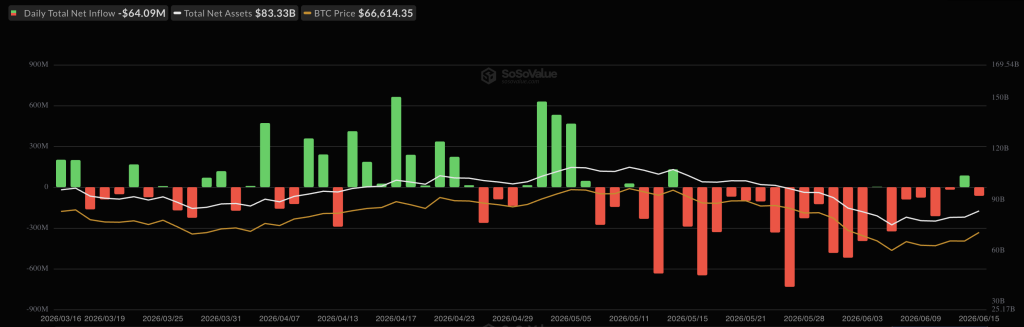
One counterweight: coins continue moving off exchanges into cold storage at a steady rate, tightening the available float if demand does return. That is a structural positive, but it is a supply-side development, not a demand signal.
Ethereum and Solana are outperforming on the day, ETH up 2.8% to $1,784 and 5.8% on the week, SOL up 4.4% to $75.
The ETH bounce following the Hormuz deal reflects selective risk appetite rather than a uniform crypto rally; the altcoin outperformance implies rotation rather than broad institutional re-entry into Bitcoin specifically.
XRP and HYPE both gained 3.2% and 6.3% respectively, reinforcing that the move is wider but shallower than it looks in Bitcoin news terms.
Discover: The Best Crypto to Diversify Your Portfolio
The post Bitcoin News: BTC Price Stalls at $67K While ETH and SOL Lead the Bounce appeared first on Cryptonews.


Humanity Protocol has shared a recovery plan for H holders after the June 8 incident that forced the project to pause its old token.
Summary
- Humanity Protocol will airdrop a new H token to eligible pre-snapshot holders across three chains.
- The recovery plan excludes attacker-linked addresses identified by Quantstamp and replaces old H contracts fully.
- A compensation fund covers complex on-chain cases and post-snapshot buyers after identity checks are completed.
The team said the former H tokens on Ethereum, BSC, and Humanity Mainnet have now been sunsetted.
“We know the wait has been hard, and your patience through this has meant everything to us,” Humanity Protocol said.
The project said a new H token will be airdropped to existing holders across Ethereum, BSC, and Humanity Mainnet.
The new asset will still trade under the ticker H. Humanity Protocol said it has deployed a new audited ERC-20 contract on Ethereum to replace the old tokens and support the migration.
New H airdrop uses June 8 snapshot
Humanity Protocol said it took snapshots of holder balances just before the attack. The snapshot time was June 8, 2026, at 17:25:35 UTC.
The snapshot block heights were 25,274,179 on Ethereum, 103,071,069 on BSC, and 24,247,803 on Humanity Mainnet. The new H token will be distributed at a 1:1 ratio based on those balances.
The new Ethereum contract address is 0xE76c5b78f93909d34404E9eb4C1f19e7582a5dE1. Humanity said eligible externally owned accounts will receive the new tokens directly.
Non-EOA balances, such as H held in liquidity pools or smart contracts, will move into a vault. The team said it will coordinate directly with affected parties to decide where those funds should be sent.
Claims fund covers complex cases
Humanity Protocol also created an H Compensation Fund for cases that cannot be handled through the automated airdrop. These include third-party protocol integrations and decentralized liquidity provider balance differences.
The fund will also cover legitimate users who bought H after the snapshot and still hold the token. The team said these users must complete identity verification before any compensation is processed.
“Because the exploit has been linked to DPRK-affiliated actors, we are working closely with the relevant authorities on AML compliance,” Humanity Protocol said.
The project also warned users to avoid fake claim links. It said official announcements will only come from verified channels, while exchange users should follow updates from their own trading platforms.
Prior reports frame the follow-up
As crypto.news reported last week, Quantstamp linked Humanity Protocol’s exploit to tactics associated with North Korea-linked hackers. The investigation found that attackers accessed seven private keys stored on a malware-infected developer machine.
As previously reported, the attacker drained about 141 million H tokens from the Ethereum bridge and minted additional tokens on BSC. Humanity Protocol said the breach came from stolen credentials, not a flaw in its token contracts, bridge contracts, or Safe setup.
Meanwhile, Humanity traded near $0.203 on June 16, down 51% over 24 hours but still up 30% over seven days, according to crypto.news market data.
The recovery plan now shifts attention to execution. Humanity Protocol said it will relaunch Humanity Mainnet in the coming weeks, with the new H token used as the native gas token.
The project said it is working with centralized exchanges, bridges, liquidity providers, and partners on the migration. Holders will now watch the airdrop, claims process, exchange updates, and mainnet relaunch timeline.

Bitcoin: A Beautiful Chart

Fed expected to hold rates steady as inflation hits highest since 2023
Ripple’s (XRP) Breakout Isn’t Real Until This Key Level Falls: Analyst


-

 Business2 days ago
No Jackpot Winner as $257 Million Prize Rolls Over to $269 Million Monday Draw
-

 Crypto World5 days ago
Oppenheimer backs SpaceX as $70 billion retail frenzy builds
-

 Fashion4 days ago
Weekend Open Thread: Tuckernuck – Corporette.com
-

 Crypto World5 days ago
Markets Rally as SpaceX IPO Looms Amid Iran Tensions and Inflation Surge
-
 Crypto World2 days ago
Zimbabwe Requires Crypto Businesses to Register Annually Under New FIU Regulations
-

 Tech3 days ago
NanoClaw integrates JFrog registries to secure AI agent downloads
-
 Sports7 days ago
Bangladesh beat Australia after 20 years in ODIs, register only their second win over six-time world champions | Cricket News
-

 Crypto World3 days ago
Bitget enters Argentina’s regulated crypto market through PSAV registration
-

 Tech4 days ago
This Week In Security: Microsoft On Microsoft, Register Your Domains, Linux On ARM, And FreeBSD Joins The File Cache Club
-
 Tech5 days ago
Dutton Ranch star claims they ‘didn’t see any disruption’ on set following Chad Feehan’s exit from Yellowstone spinoff fueled by Taylor Sheridan clash rumors
-

 NewsBeat5 days ago
El Nino has formed in the Pacific and could set records, forecasters say
-

 Business6 days ago
Thailand Ranks Second Worldwide for AI Adoption Growth, Microsoft Reports
-
 Tech6 days ago
‘This is Seattle’s position on AI’: City Council votes unanimously to pause big new data centers
-

 Politics5 days ago
Politics Home | Healey Resignation Is “Colossal Failure Of Government”, Says Former Labour Defence Secretary
-
 Entertainment5 days ago
Donnie Wahlberg & More Heat Up Las Vegas at Circa’s Barry’s Downtown Prime
-
 Tech5 days ago
Opendoor Ends India Operations, Fueling a Bigger Conversation About AI and Outsourcing
-

 Sports5 days ago
First Time Since 1971: Australia Register Historic Low In ODI Cricket
-

 Politics5 days ago
Belfast burns, while Met chief points finger at Iran and Russia
-

 NewsBeat4 days ago
FBI searches office of Ohio voter registration group
-

 Business5 days ago
AT&T: Verizon's 27% Outperformance Sets Up A Solid Entry Point
You must be logged in to post a comment Login