

Crypto World
Shiba Inu (SHIB) Collapses 60% in a Year: 3 AIs Reveal What Might Trigger a Big Revival


It was late 2021 when the self-proclaimed Dogecoin killer shocked the crypto world with a massive price surge, pushing its market capitalization above $40 billion.
However, that peak was short-lived, and Shiba Inu headed south before staging an evident resurgence in 2024 (though it did not reach its historical peak). The past year has been nothing but disappointing for the token, whose price is down by 60%. And while disbelief may be currently running high within the community, we asked three of the most popular AI-powered chatbots what may could potentially spark a major revival.
The Catalysts
According to ChatGPT, SHIB is no longer viewed purely as a meme coin, meaning its future increasingly depends on whether its ecosystem is actually used. One main factor that could fuel a revival is massive Shibarium adoption.
The layer-2 scaling solution was specifically designed to advance the Shiba Inu ecosystem by lowering transaction fees, improving speed, and enhancing scalability. It was officially launched in the summer of 2023, and in its early days, it sparked huge interest and facilitated multi-million-dollar transactions on a daily basis. Last year, though, the protocol was exploited, after which the numbers were drastically reduced.
Next on ChatGPT’s list is Shiba Inu’s mechanism, adding that the meme coin’s “gigantic supply” has always been its biggest problem.
“If daily activity becomes enormous – gaming, payments, DeFi, AI apps, etc. – burn rates could accelerate dramatically. A true revival probably requires the market believing the supply can shrink meaningfully over time,” it added.
Last but not least, the chatbot assumed that the introduction of a spot SHIB ETF could positively impact the token’s price because it would attract more investors to the ecosystem. Recall that the US regulators have already approved the launch of such products with ETH, XRP, SOL, DOGE, and other altcoins as underlying assets.
Perplexity agreed with ChatGPT’s remarks regarding the burn rate and Shibarium’s role, adding that a renewed meme coin season may also largely benefit SHIB:
“When Dogecoin, Pepe, and similar coins start breaking out together, SHIB often benefits from sector-wide speculative flows rather than needing its own news first.”
The ‘Bitcoin Effect’ and More
The third chatbot we consulted was Google’s Gemini. It suggested that SHIB’s next breakout will largely hinge on Bitcoin’s price movement, noting that the meme coin has matured to a point where it’s unlikely to moon in isolation.
“If Bitcoin (BTC) breaks out its all-time highs and market liquidity increases, ‘hot money’ typically rotates from Bitcoin to Ethereum, and then into high-risk/high-reward meme coins like SHIB,” it stated.
In addition, Gemini touched upon the importance of whale activity. It claimed that Shiba Inu has a limited chance of posting an evident resurgence without the involvement of big investors.
The post Shiba Inu (SHIB) Collapses 60% in a Year: 3 AIs Reveal What Might Trigger a Big Revival appeared first on CryptoPotato.



Dune Analytics is cutting 25% of its workforce as cofounder Fredrik Haga restructures the platform around AI agents and institutional adoption of onchain finance.
The May 14 post from Haga also drew a sharp reply from Surf cofounder Ryan Li, who argued crypto research now demands infrastructure built for AI agents rather than human-operated dashboards.
Restructure Targets AI and Institutional Clients
Haga said Dune is preserving its end-to-end data stack while letting go of strong performers he is openly recommending to other hiring firms.
The company has raised roughly $79 million in total funding, including a $69.4 million Series B in 2022, and Haga said it remains well capitalized.
The pivot leans on Dune MCP, an open-standard server launched in March 2026 that lets AI agents query the platform’s data warehouse through natural language.
Twelve tools cover table discovery, query execution, and visualization across more than 100 chains. Dune also recently released a dbt Connector for teams building on-chain data pipelines.
Haga said Dune already powers most leading crypto companies and is now expanding white-glove service to financial institutions tokenizing stocks, bonds, and commodities.
Surf Challenges the Dashboard Era
Li, who said he was previously a heavy Dune user, used his reply to position Surf as a purpose-built alternative.
“However, crypto research has evolved and operating in the AI era demands infrastructure built for agents, not humans clicking through dashboards. We need fast query engines, reliable SQL, structured outputs. At Surf, we’ve spent Q1 building an end-to-end crypto data stack purpose-built for AI agents,” he stated.
Surf raised $15 million in December 2025 from Pantera Capital, Coinbase Ventures, and DCG.
The exchange marks an escalation in the crypto data race as established platforms compete with agent-native entrants for AI research workflows.
The post Dune Cuts 25% of Staff to Focus on AI Agents and Institutional On-chain Data appeared first on BeInCrypto.


Bitcoin mining has always been a margins business, now more so than ever. The difference between profit and loss can come down to electricity prices, machine performance, pool fees, or even how many shares get rejected before they reach the network.
That pressure became more serious after the 2024 Bitcoin halving. The block reward dropped, while mining difficulty in 2026 has stayed above 135T. For many miners, the electricity cost alone to mine one Bitcoin has moved above $74,000.
That leaves less room for waste, and a business can quickly become unprofitable. This is the problem EMCD and Vnish are trying to address.
The new partnership brings together EMCD’s mining pool infrastructure with Vnish’s firmware technology, which holds a 26.4% global market share.
The goal is to help miners find where they are losing money and improve profitability without simply buying more machines.
At Consensus 2026 in Miami, EMCD founder and CEO Michael Jerlis described a market where miners need more practical support from infrastructure providers.
“Before, pools and machine manufacturers were just service providers,” Jerlis said. “Now, it looks like they became more partners with the miners.”
Where Bitcoin Miners Are Losing Money
The losses often start at the machine level.
Factory firmware usually applies the same voltage settings across ASIC chips. The problem is that chips do not perform equally. Stronger chips may be held back, while weaker chips can overheat. According to the partnership materials, this can leave up to 25% of potential hardware performance unused.
Then come pool-related costs. A pool fee difference between 1.5% and 4% may seem small, but over a year, that gap can eat into a meaningful share of a miner’s gross output.
Rejected shares create another quiet drain. When the latency to pool servers is high, miners still spend electricity on calculations that do not get accepted.
EMCD and Vnish estimate that this can possibly reduce monthly income by another 2% to 5%.
Jerlis summed up the pressure clearly.
“All miners have the same troubles,” he said, pointing to operating costs, electricity prices, software providers, and equipment sellers.
How the Partnership Helps
The EMCD–Vnish service focuses on practical fixes rather than broad promises. It includes hashboard diagnostics, tuning, network-loss reduction, mining optimization steps, and audits from EMCD and Vnish experts.
In simple terms, the service looks at where a miner’s setup is leaking performance, then gives them clear steps to improve it.
Firmware is a major part of that. Vnish can help tune ASICs more precisely, improve hardware performance, and reduce wasted power. For miners operating close to breakeven, even small gains can matter.
“Custom firmware helps to cut power consumption,” Jerlis said.
The pool side matters too. Jerlis said EMCD is working on ways to improve how miners connect to pool servers, including better routing and tools to reduce rejected shares.
That matters because mining rewards depend on accepted work. Electricity spent on rejected work is simply lost money.
Jerlis said the partnership is designed to improve miner profitability from several angles at once.
“Together we will cut our fees and give miners more profitability,” he said.
A More Hands-On Mining Model
After the halving, miners are under pressure to operate with more discipline. Cheaper power still matters, but it is no longer enough by itself. Machine tuning, firmware, pool reliability, latency, and support all affect the final result.
Jerlis said EMCD was built around this need for direct miner support. When the company started, many miners struggled to reach pool operators when something went wrong.
EMCD’s early advantage was 24-hour support. The Vnish partnership extends that same approach into optimization.
“We need to help them to acquire more Bitcoins, to tune their machines, to spend less money,” Jerlis said.
That is the core story. The EMCD–Vnish partnership is about helping miners survive a market where small inefficiencies now have a much higher cost.
The post EMCD CEO: Bitcoin Miners Can Become Profitable Again appeared first on BeInCrypto.
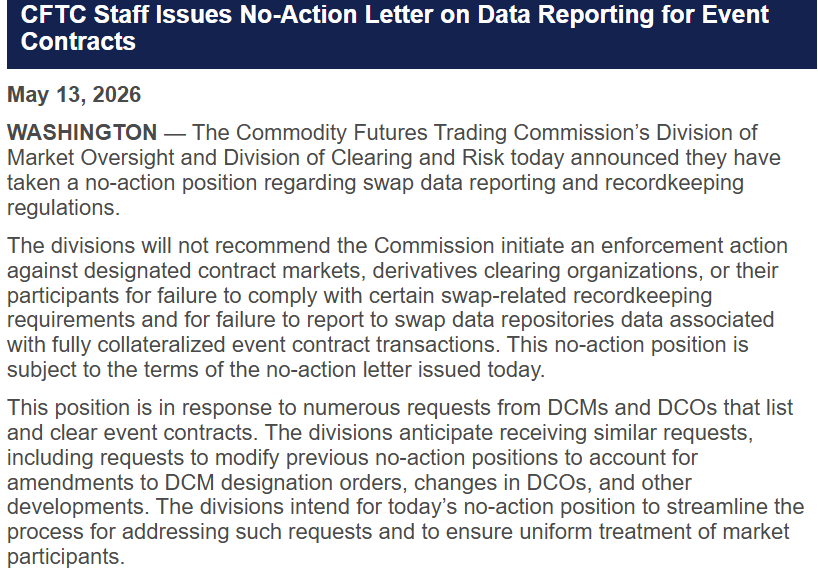
The US Commodity Futures Trading Commission’s (CFTC) market and clearing divisions issued no-action relief for fully collateralized event contracts, easing certain swap data reporting and recordkeeping obligations for prediction market operators and clearing organizations.
The divisions said Wednesday that they will not recommend enforcement against designated contract markets (DCMs), derivatives clearing organizations (DCOs), or their participants for failing to comply with specified swap-related recordkeeping requirements or for failing to report covered transactions to swap data repositories.
Event contracts on prediction markets technically qualify as “swaps” as they are based on binary events. However, the letter argued that similar contracts are listed for trade by DCMs and have more similar characteristics to futures and options on futures, hence enabling firms to report certain events contracts directly to the CFTC.
The letter listed 19 platforms, including Polymaket, Kalshi and Gemini Titan. It added that companies seeking to list similar contracts may request a no-action letter from the CFTC.
The CFTC said the no-action letter comes in response to numerous requests from DCMs and DCOs that list and clear event contracts and said it anticipates more similar requests.
The move could reduce compliance complexity for CFTC-regulated prediction market venues, including Kalshi and Polymarket US as the agency continues to defend its jurisdiction against state gambling regulators.
The no-action letter comes as prediction markets sit at the center of a widening federal-state fight over whether sports and other event contracts should be regulated as derivatives by the CFTC or as gambling products by state authorities. The agency filed an amicus brief in the Sixth Circuit Court of Appeals on Tuesday, arguing that Ohio’s actions intrude on federally regulated markets after it ordered Kalshi to halt sports event contracts in the state last year.
Kalshi sued Ohio lawmakers in October 2025, requesting that the federal court stop the Ohio Casino Control Commission and state attorney general from taking action, but the motion was denied in court in March, leading Kalshi to appeal the decision.

CFTC no-action letter on prediction markets. Source: CFTC.gov
CFTC pushes for exclusive jurisdiction over prediction markets
The CFTC has multiple ongoing disputes with state lawmakers over prediction market jurisdiction. It sued five states in a bid to cement its authority over prediction markets, including lawmakers in Wisconsin, New York, Arizona, Connecticut and Illinois.
Earlier in May, the CFTC said it received over 1,500 responses on a rule it proposed in March that would allow it to amend or issue new regulations for event contracts on prediction markets.
The responses were mixed, with some state regulators calling for a stricter crackdown on prediction markets, while others, such as venture capital firm a16z, sided with the CFTC, arguing that state crackdowns on these platforms conflict with federal law and damage market access for ordinary users.
Related: Kalshi, Polymarket face trading halt in Nevada after court rulings
On March 12, the CFTC issued a staff advisory classifying event contracts on prediction markets as a “financial asset class,” Cointelegraph reported.
Earlier in February, CFTC Chair Michael Selig publicly reiterated claims that the CFTC had “exclusive jurisdiction” over prediction markets.
Magazine: Inside a 30,000 phone bot farm stealing crypto airdrops from real users

TLDR:
- Kraken migrates kBTC and all future wrapped assets to Chainlink CCIP, citing enterprise-grade security.
- The $292M Kelp DAO exploit, tied to North Korea’s Lazarus Group, triggered a broad LayerZero exit across DeFi.
- Solv Protocol, Kelp DAO, and Re also left LayerZero for Chainlink CCIP following critical cross-chain security reviews.
- Kraken’s kBTC holds a $266M market cap; holders require no action as the backend migration proceeds.
Kraken has announced it will migrate its wrapped Bitcoin product, kBTC, from LayerZero to Chainlink’s Cross-Chain Interoperability Protocol (CCIP).
The move follows the $292 million Kelp DAO exploit in April, which was later linked to North Korea’s Lazarus Group. Kraken cited enterprise-grade security and strict risk management as the driving reasons.
The token holds a market cap of approximately $266 million, and future wrapped assets will also use Chainlink.
Kraken Moves Away From LayerZero Infrastructure
Kraken announced the deprecation of its LayerZero-based cross-chain provider this week. The crypto exchange will now use Chainlink CCIP as its exclusive cross-chain infrastructure.
The decision covers kBTC and all future Kraken Wrapped Assets. Holders of kBTC do not need to take any action at this time.
Kraken explained its reasons on X, formerly Twitter, in a public post. The exchange stated that Chainlink CCIP offers ISO 27001 and SOC 2 Type 2 certifications.
It also noted the protocol’s secure-by-default architecture and 16 independent nodes. Native rate limits were also listed among the key security features.
The exchange wrote: “Kraken is deprecating its existing cross-chain provider and migrating to Chainlink CCIP as its exclusive cross-chain infra.”
The post also referenced enterprise-grade infrastructure as a priority. Kraken confirmed that more details on the migration process will follow on official channels.
Kraken also noted a broader goal behind the migration. The exchange said both firms can help accelerate the global adoption of crypto.
By using CCIP, Kraken aims to unlock utility and distribution for its wrapped assets across DeFi. No specific timeline for the full migration was given.
LayerZero Fallout Spreads Across the Industry
Kraken joins a growing list of firms exiting LayerZero’s technology following the Kelp DAO incident. On April 18, attackers drained 116,500 rsETH liquid staking tokens from Kelp DAO’s infrastructure.
LayerZero later admitted it made a mistake in setting up Kelp DAO’s configuration. The Lazarus Group, a North Korean state-sponsored hacker group, was attributed to the exploit.
Kelp DAO was the first to announce it would move to Chainlink CCIP after the incident. Solv Protocol followed, saying it would migrate infrastructure backing over $700 million in Bitcoin-related assets.
On-chain reinsurance protocol Re also announced plans to leave LayerZero last week. Each departure has added to the scrutiny around cross-chain bridge security.
The Kelp DAO postmortem revealed that attackers poisoned internal RPCs used by LayerZero Labs. This allowed them to drain tokens without triggering standard security alerts.
The vulnerability was specific to how Kelp DAO’s setup was configured, according to LayerZero. However, the event prompted a wider review of cross-chain security practices across the industry.
Chainlink CCIP has emerged as the preferred alternative for firms reassessing their interoperability stack. Multiple protocols have now committed to the technology within weeks of the exploit.
The migration trend shows how a single security event can quickly shift infrastructure preferences in crypto. For Kraken, the move is part of a longer-term strategy to secure all its wrapped asset offerings.



Forward Industries (FWDI), the largest corporate Solana (SOL) holder, posted a $283.1 million net loss for the fiscal second quarter ended March 31, 2026.
Despite this, total revenue still quadrupled year over year, primarily from staking rewards generated by the Company’s Solana treasury strategy.
Forward Industries Posts $283M Q2 Loss on Solana Markdowns
Solana fell from roughly $124 at the start of 2026 to about $83 by the end of March. The drawdown weighed on the balance sheets of corporate SOL holders.
According to the press release, the decline in fair value on its SOL treasury drove the net loss. The firm reported $201.7 million in losses and $85.1 million in impairments on digital assets.
“This U.S. GAAP-required treatment reflects changes in the estimated fair value of the Company’s SOL holdings and does not represent an outflow of cash or impact Forward’s liquidity,” the firm said.
Follow us on X to get the latest news as it happens
Meanwhile, the operating picture offered a counterpoint to the headline loss. Quarterly revenue climbed more than fourfold to $13 million from $3.1 million a year earlier.
Staking revenue generated by Forward’s SOL treasury accounted for almost all of the gain. The company’s validator infrastructure has delivered a gross annual percentage yield (APY) of 6.5% to 7.2% before fees since launch, ahead of peers.
Forward has accumulated 201,201 SOL in staking rewards through March 31, with nearly its entire treasury staked. Operating costs also eased.
Selling, General and Administrative Expenses fell to $6.6 million from $7.2 million in the prior quarter. The firm closed the quarter with 7,044,079 SOL on its balance sheet and roughly $16.6 million in cash.
“Against a backdrop of market volatility, we took decisive actions to position Forward for long-term value creation by securing a highly advantageous institutional debt facility with our strategic partner, Galaxy Digital, and executing a strategic share repurchase that reduced our basic shares outstanding by 7.4%. We also implemented a cost reduction plan in March that we expect to materially lower operating expenses in the coming quarters,” Kyle Samani, Chairman of Forward Industries, said.
Upexi, another major corporate holder of Solana, also posted a $109.3 million net loss for the fiscal quarter ended March 31, 2026. Unrealized digital asset losses accounted for $92.3 million of that figure.
Subscribe to our YouTube channel to watch leaders and journalists provide expert insights
The post Solana Treasury Giant Forward Industries Reports $283 Million Quarterly Loss appeared first on BeInCrypto.
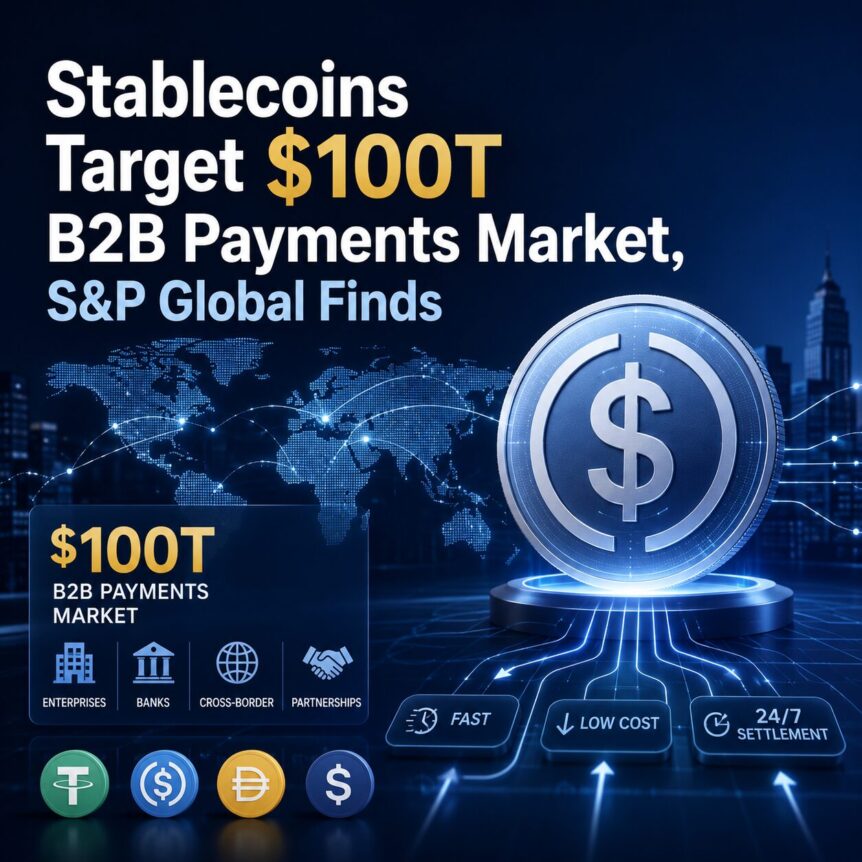
A new analysis from S&P Global Market Intelligence finds that stablecoins are increasingly positioned as an alternative settlement rail for the $100 trillion global business-to-business payments market. The report argues that the digital tokens could reduce settlement times, lower fees and add transparency for cross-border supplier payments, payroll and intercompany treasury operations, though broader adoption will hinge on regulatory clarity and banking partnerships.
Why stablecoins are drawing enterprise interest
Corporates and payment processors face persistent frictions in B2B flows: long settlement windows, opaque fees, multiple intermediaries and foreign exchange volatility. According to S&P Global Market Intelligence, these pain points make cross-border supplier payments, contractor payroll and intercompany transfers natural targets for tokenised settlement rails. The report estimates that global B2B payments exceed $100 trillion annually and notes that the current stock of circulating stablecoins stood at roughly $269 billion, with a projection to reach about $434 billion by 2028, reflecting growth in issuance and on‑ramp infrastructure.
Speed and cost are the principal advantages cited. On‑chain transfers can settle near instantaneously compared with multi-day correspondent banking flows. Embedded dossiering and ledger-based records also promise clearer audit trails for reconciliation. For treasurers, the ability to move liquidity quickly between legal entities and currencies could materially change working capital models.
Primary use cases identified
S&P Global Market Intelligence highlights three B2B scenarios where stablecoins are gaining traction:
Cross-border supplier payments. This is identified as the leading short-term use case. Providers are combining traditional bank accounts with digital wallets to route payments over stablecoin rails, aiming to cut intermediary fees and reduce FX exposure. The analysis cites firms such as Sokin, dLocal, Convera (in partnership with Ripple) and OpenFX as examples of platforms embedding stablecoin rails into existing payment workflows.
Payroll and contractor disbursements. For firms managing global payroll and gig-worker payouts, stablecoins can enable 24/7 disbursements, faster access to funds and the option for recipients to hold or convert tokens locally. The report notes integrations and pilots involving payroll firms and card networks, including Rise, Bitwage, Remote, Visa, Mastercard, Episode Six, Stripe and Worldpay.
Intercompany settlement and treasury automation. Large enterprises with numerous subsidiaries can use tokenised transfers to streamline internal funding, reconciliation and liquidity sweeps. S&P’s analysis points to examples where treasury teams leverage stablecoins and private/on‑permissioned tokens for automated transfers, citing vendor partnerships such as Trovata with Paxos (USDP). The report also references corporate use cases reported in the market, including the use of JPM Coin for internal liquidity movements and instances where companies have experimented with stablecoins for FX hedging.
Infrastructure and industry partnerships
Adoption depends on a layered ecosystem of wallets, custody, compliance tooling and payment orchestration. The report describes how payment providers are either building in‑house stacks or partnering with infrastructure specialists to simplify enterprise integration. Names mentioned include Bridge (associated with Stripe), BVNK, Fireblocks and Zero Hash—firms that supply custody, tokenisation infrastructure and settlement plumbing.
Major payment networks and processors are also participating, seeking to bridge card rails and bank accounts with tokenised flows. That participation can accelerate on‑ramps for corporate customers but also raises questions about interoperability between permissioned bank tokens, public stablecoins and existing correspondent banking networks.
Regulatory and operational hurdles
While the technology addresses clear operational frictions, S&P Global Market Intelligence emphasises that regulatory clarity remains a decisive factor. Compliance requirements around anti‑money laundering, sanctions screening, custodial arrangements and issuer reserve disclosure will influence which stablecoin models are acceptable to banks and corporates. Counterparty risk and issuer stability also remain material concerns: corporates must assess credit and operational exposures when choosing tokenised rails.
Integration complexity is another practical barrier. Enterprises often require reconciliation with ERP systems, legal alignment across jurisdictions and predictable FX conversion paths. Building or sourcing orchestration layers that coordinate on‑chain settlement with off‑chain banking is therefore a critical implementation step.
Market implications and what to watch
If the dynamics S&P Global Market Intelligence outlines play out, stablecoins could reshape treasury operations and cross-border cash management over the coming years. Cost reductions and faster settlement would benefit multinational firms and payment platforms, while new entrants could capture value by offering integrated wallets, conversion services and compliance tooling.
Key indicators to monitor include regulatory guidance in major jurisdictions, issuance growth among regulated stablecoin providers, and the pace at which incumbent banks and payment networks embed tokenised rails into corporate products. The projected increase in circulating stablecoins to roughly $434 billion by 2028, as reported by S&P, suggests providers and infrastructure partners expect significant growth—but that expansion will depend on demonstrable compliance, interoperability and client demand.
Any data or examples cited in this article are attributed to S&P Global Market Intelligence.
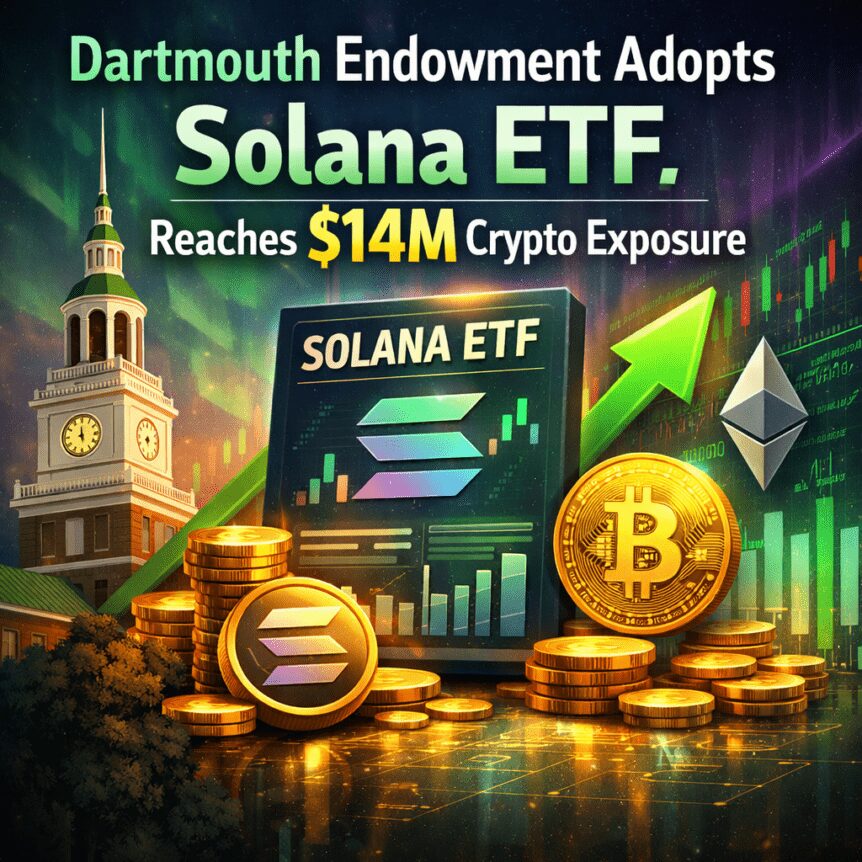
Dartmouth College’s $9 billion endowment has quietly expanded its exposure to digital assets, reporting new crypto-related holdings in a recent SEC filing. In a Form 13F covering the quarter ended March 31, 2026, the trustees disclosed positions across three cryptocurrency-focused exchange-traded funds (ETFs): about $3.3 million in the Bitwise Solana Staking ETF, roughly $3.5 million in the Grayscale Ethereum Staking ETF, and approximately $7.7 million in BlackRock’s iShares Bitcoin ETF.
The figures mark a shift from January, when the endowment’s crypto footprint was skewed toward larger holdings in BlackRock’s Bitcoin ETF (over $10 million) and the Grayscale Ethereum Mini Trust (about $5 million). The newer disclosures show a more diversified but still modest stake in regulated crypto vehicles within Dartmouth’s multi-billion-dollar investment program.
These details come as U.S. universities increasingly experiment with regulated access to digital assets. Dartmouth’s move follows Harvard’s reported crypto exposure, with its own endowment reported to hold BlackRock’s iShares Bitcoin Trust and Ethereum Trust, as part of a broader institutional push into crypto—an evolution previously documented in coverage of Harvard’s 2025 and 2026 positioning.
Source data and implications are anchored in the SEC filing and related coverage, illustrating a growing appetite among large, fiduciary portfolios to access crypto through permitted, exchange-traded vehicles rather than direct holdings. For context, the SEC began approving spot Bitcoin ETFs in January 2024 and has since extended approvals to other crypto-asset baskets, including Ether, Solana, Dogecoin, and XRP-related products, with additional applications under review.
Key takeaways
- Dartmouth’s endowment now holds approximately $3.3 million in the Bitwise Solana Staking ETF, $3.5 million in the Grayscale Ethereum Staking ETF, and $7.7 million in BlackRock’s iShares Bitcoin ETF, according to the SEC filing for the quarter ended March 31, 2026.
- January 2026 holdings showed a larger allocation to BlackRock’s Bitcoin ETF (over $10 million) and roughly $5 million in the Grayscale Ethereum Mini Trust, indicating a shift toward a broader, stake-based crypto approach rather than concentrated bets.
- Harvard’s endowment has been cited as holding positions in BlackRock’s Bitcoin Trust and Ethereum Trust, underscoring a broader trend of top-tier university funds pursuing regulated crypto access.
- The regulatory backdrop supports this trend, with the SEC having approved spot Bitcoin ETFs in 2024 and gradually expanding to other crypto-linked ETFs, even as ongoing market flows remain volatile.
- Bitcoin-related ETF activity has shown notable daily outflows in recent weeks, with a report noting $635.2 million in daily outflows—the largest such move since January—contextualizing the risk environment behind these allocations.
Dartmouth’s crypto exposure deepens as endowment reallocates to staking ETFs
The latest 13F filing shows Dartmouth anchoring a modest yet meaningful exposure to staking-focused crypto ETFs. The Bitwise Solana Staking ETF offers exposure to Solana via a staking strategy, while the Grayscale Ethereum Staking ETF provides exposure to Ethereum staking mechanics. BlackRock’s iShares Bitcoin ETF remains the largest single crypto position among the three, highlighting a preference for regulated, exchange-traded vehicles that provide liquidity and governance familiar to an endowment investor.
Compared with January, the endowment’s crypto lineup has become more diversified but with smaller single-name bets than before. This pattern may reflect a cautious approach that weighs liquidity, transparent pricing, and fiduciary oversight—factors increasingly prioritized by large public and private endowments when allocating to digital assets.
Universities and crypto: a signal of deeper institutional interest
Dartmouth’s disclosure sits within a broader arc of institutional adoption. Harvard’s reported positions in BlackRock’s Bitcoin and Ethereum Trusts were highlighted in coverage surrounding its substantial $57 billion endowment in 2025. The move signals that major universities are testing the viability of regulated crypto access as a complement to traditional asset classes, a shift that could influence the broader risk preferences and governance standards across the higher-ed investment community.
Investors watching these developments may interpret them as a growing endorsement of listed crypto access vehicles as a way to gain regulated, price-tick exposure to digital assets without holding tokens directly. The trend also aligns with an industry effort to broaden participation from large pools of capital, including endowments, foundations, and pension funds, into more mature and compliant crypto investment formats.
Regulatory backdrop and market context
Since the SEC started approving spot ETFs tied to Bitcoin in January 2024, the landscape has slowly broadened to include products linked to Ether, Solana, Dogecoin, and XRP, with more applications under review. The ongoing evolution of ETF availability is relevant for institutions weighing crypto allocations because it offers regulated, transparent access routes that fit traditional fiduciary frameworks.
In the market backdrop, recent ETF actions have been accompanied by notable capital moves. Bitcoin funds recorded about $635.2 million in daily outflows—the largest one-day pullback since January—following earlier outflows of more than $800 million on a previous date, driven in part by sector-wide momentum shifts and price dynamics. At the time of this report, Bitcoin traded around $81,237, up roughly 2% over the prior 24 hours, brushing the 200-day exponential moving average, a key technical support. Still, BTC remains below the 365-day EMA and far from the 2025 all-time high near $126,000 reached in October.
These market conditions underscore the complexity facing institutional allocators: while price action and volatility persist, regulated ETF structures can provide a framework for cautious, long-horizon exposure to digital assets as investor demand grows and regulatory clarity deepens.
Looking ahead, readers should watch how more university endowments calibrate their crypto programs as regulators refine product approvals and as institutions balance risk with potential yield. The coming quarters will reveal whether the Dartmouth-size experiment becomes a broader blueprint for scaled, governance-forward crypto access within legacy-investment portfolios.
Crypto market analysts say increasing altcoin performance and volumes on Binance, a rising altseason index and a strengthening TOTAL2 macro structure are early signs that the market could enter an altseason in 2026.
Key takeaways:
- Altcoin recovery signals emerge, hinting at a potential altseason in 2026.
- Rising altcoin trading volume on centralized exchanges and AltSeason Index point to possible capital rotation from Bitcoin.
- Altcoin market cap chart shows improving technicals.
Altcoin market shows early signs of recovery
Crypto analyst Darkfost said that macroeconomic uncertainties surrounding the ongoing US and Israel-Iran war saw the altcoin sector correct by more than 50%.
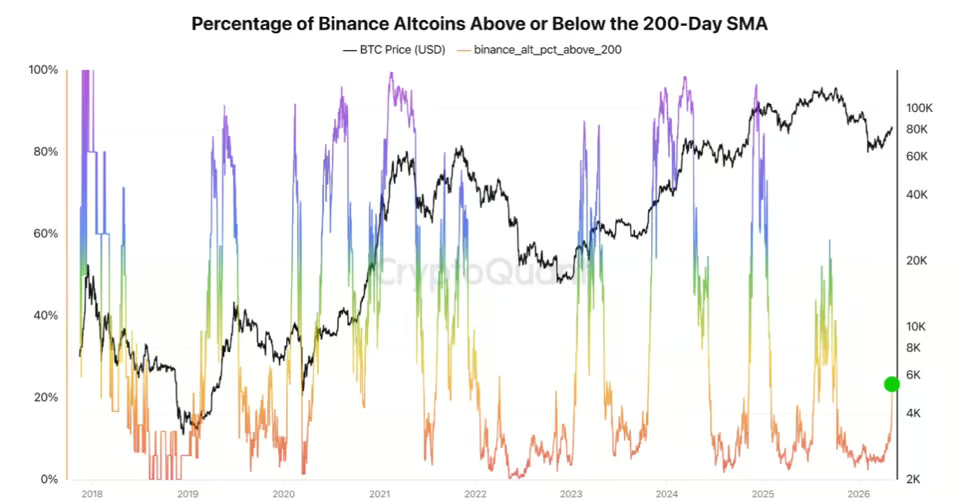
However, the sector appears to be quietly “awakening” as the percentage of altcoins on Binance trading above their 200-day moving average (MA) increased to 21%, levels last seen in September 2025, suggesting that “investor interest in altcoins appears to be gradually returning,” Darkfost said in a Quicktake note on Wednesday, adding:
“This represents a crucial indicator for those looking to gain exposure.”

Performance of altcoins on Binance. Source: CryptoQuant
Darkfost cautioned that it’s still too early to call for an altseason as the metric remains below the levels seen in mid-2025 and Q4 2024, when most altcoins traded between 60-80% above their 200-day MA.
Meanwhile, fellow analyst CryptoOnchain pointed to rising activity on centralized exchanges (CEX) as another sign of increasing momentum in altcoins.
According to the analyst, altcoin trading volume, excluding the five largest cryptocurrencies, has increased steadily over the past few weeks. The chart below shows the appearance of an Altcoin Volume Increasing Trend (yellow bars), which occurred when the 30-day MA for altcoin trading volume crossed above its 365-day MA.
Historically, when this metric flashes yellow, “it signals a clear rotation of capital from major caps into mid and low-cap altcoins,” the analyst said, adding:
“If this momentum is sustained, it could serve as a strong confirmation that a broader altcoin rally is underway.”

CEX volume ratio vs. Top 5 crypto. Source: CryptoQuant
Altcoin season “approaching”
The 90-day AltSeason Index also climbed to 28.6, its highest level in months. The index tracks whether a majority of altcoins outperform Bitcoin over the last 90 days.
“The altseason is starting quietly,” CryptoQuant analyst CW8900 said in a recent Quicktake note, referring to the “rapid rise” in the index over the last few weeks, adding:
“The real AltSeason is approaching.”

Altcoin season index. Source: CryptoQuant
Although the index has been recovering, its value of 28.6 means only 28.6% of the top 50 cryptocurrencies by market capitalization have outperformed Bitcoin over the last 90 days. This falls short of the 75% “altseason” threshold, according to Blockchaincenter.
These include ZCash (ZEC), Bittensor (TAO) and Morphor (MORPHOR), which are up 98%, 72% and 68% over the last three months, compared to Bitcoin’s (BTC) 17% gains.

Top 50 Performance over the 90 days. Source: Blockchaincenter
CW8900 added:
“The indicator also shows that there was no real AltSeason in this cycle. The period when the AltSeason Index reached its highest point was early 2024, and even that value was relatively low compared to previous AltSeasons.”
Altcoins show signs of bottoming out
Data from TradingView showed TOTAL2 — the cumulative market capitalization of all cryptocurrencies except Bitcoin — bouncing off the lower trend line of a multi-year broadening wedge that has defined its price action since mid-2022.
In a Wednesday post on X, analyst cryptocupra said TOTAL2’s breakout could mirror the 2021 breakout and rise as high as $8 trillion, adding that “altseason is inevitable.”

Altcoins market cap, TOTAL3. Source: X/1000xgirl
Nebraskangooner’s chart showed TOTAL2 breaking above the upper boundary of an ascending triangle on the daily time frame.
TOTAL2 is “breaking out from this bottoming pattern, the analyst said in a recent X post, adding:
“Altcoin market primed for more upside as long as this breakout holds.”

TOTAL2 daily chart. Source: X/Nebraskangooner
Fellow crypto analyst GorkemCrypto also shared a bullish argument with a 2021 fractal that projects Bitcoin dominance falling to 40% as capital rotates into altcoins.

Bitcoin dominance. Source: X/GorkemCrypto
However, as Cointelegraph reported, the Bitcoin Dominance Index has climbed to its highest level since November 2025. BTC dominance has been climbing since 2023, suggesting that the current trend still favors BTC over altcoins.
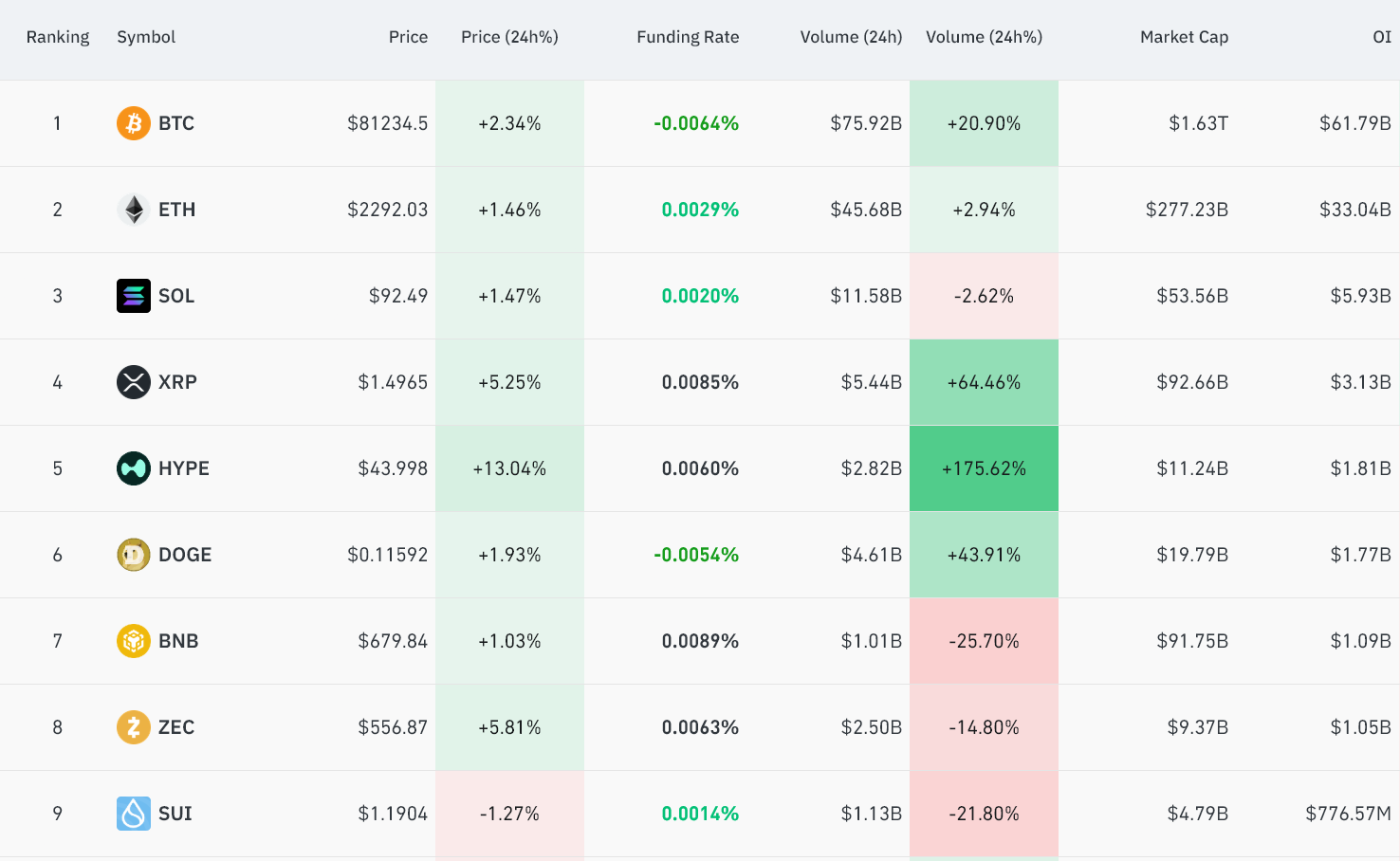
Dogecoin has overtaken Bitcoin, Ethereum, and XRP in futures market activity, according to the latest CoinGlass data.
Open interest in Dogecoin futures rose 5.09% over the past 24 hours. Open interest measures the total value of active derivatives contracts and is often used to track trader conviction and short-term market momentum.

DOGE Leads the Futures Market
Dogecoin’s futures open interest reached $1.79 billion, while daily futures volume climbed to $3.99 billion. That marks an 81.62% increase over the same period.
The contrast with the rest of the market is clear.
Bitcoin’s open interest fell 0.36%, while Ethereum’s rose only 0.94%. Both assets were trading lower, with daily price declines of about 1.46%.
Solana showed weaker momentum. Its open interest dropped 5.96%, while its price fell 4.21%. XRP also lost traction, with open interest down 2.52% and price down 1.81%.
As a result, Dogecoin is standing out in a market where traders are reducing exposure to several major crypto assets.
The latest data suggests that traders are still willing to take leveraged bets on DOGE, even as risk appetite cools elsewhere.
That does not guarantee further upside, but it shows that Dogecoin currently has stronger futures momentum than many larger assets.
What Comes Next for DOGE?
Dogecoin traded near $0.11328 at the time of analysis, according to BeInCrypto data. The memecoin was up 1.03% over the past 24 hours.
That made DOGE one of the few major crypto assets by market capitalization still trading in positive territory.
The combination of spot price strength and rising futures activity supports a short-term bullish reading. Dogecoin has broken away from the weaker trend seen across much of the market.
However, leverage remains the main risk.

A rise in open positions can accelerate gains when price moves higher. It can also deepen losses if the market turns quickly. Forced liquidations could add pressure if DOGE loses key support levels.
For now, traders are watching whether Dogecoin can hold the $0.11 level. Continued inflows into futures markets would also be important.
If both conditions hold, Dogecoin could continue to outperform the broader crypto market in the short term.
The post Dogecoin Leads Crypto Futures Activity as Bitcoin, Ethereum, and XRP Cool appeared first on BeInCrypto.

JPMorgan Chase increased its reported holdings in several Bitcoin exchange-traded funds (ETFs) in the first quarter, led by a 174% jump in its position in BlackRock’s iShares Bitcoin Trust (IBIT), according to a 13F filing published Wednesday.
The bank increased its position in IBIT from around 3 million shares in Q4 2025 to 8.3 million shares, according to the filing.
The increase added about $162 million in reported value, based on filing data, despite Bitcoin price falling by more than 22% in Q1, according to CoinGlass data.
The filing also showed broader activity across crypto-linked assets, including new and expanded positions in funds tied to Ethereum and Solana, alongside rotation in equities tied to miners and companies with digital asset exposure.
The filing points to selective growth in JPMorgan’s reportable crypto-linked holdings during a weak quarter for digital assets, when Bitcoin prices fell and US spot Bitcoin ETFs recorded net outflows.
Bitcoin ETF bets expand sharply beyond BlackRock position
Beyond its increased stake in BlackRock’s iShares Bitcoin Trust, JPMorgan also expanded exposure across several other spot Bitcoin ETFs, including the Fidelity Wise Origin Bitcoin Fund (FBTC) and the Bitwise Bitcoin ETF (BITB).
Holdings in BITB surged nearly 900%, rising from 4,872 shares to 48,258 shares, adding roughly $1.51 million in reported value. The bank’s FBTC position increased about 450%, from 3,996 shares to 22,196 shares, worth about $980,000 in added value.
Related: Jane Street slashes Bitcoin ETF holdings, adds Ether funds in Q1 2026
Additionally, JPMorgan significantly increased exposure to the ProShares Bitcoin Strategy ETF (BITO), which tracks Bitcoin futures rather than holding spot BTC directly. The bank’s BITO holdings surged from just 40 shares to 1,302 shares, a gain of more than 3,000%.
Mixed altcoin ETF activity across Ethereum, Solana and XRP
JPMorgan also showed uneven activity across altcoin-linked ETFs in the first quarter, with new positions added in some funds while others were fully exited.
The bank initiated a position in the Bitwise Solana Staking ETF (BSOL), buying 47,460 shares worth about $523,000, marking its first reported exposure to a Solana-focused ETF product.

Source: The Bitcoin Historian
At the same time, JPMorgan increased its exposure to Ethereum-linked ETFs, including a 36% rise in the iShares Ethereum Trust (ETHA) to 266,734 shares, alongside a sharp increase in the Bitwise Ethereum ETF (ETHW).
Related: Wells Fargo boosts Ether ETF exposure in Q1 2026, rotates BTC holdings
On the other hand, the filing showed a full exit from XRP-linked exposure, with the bank reducing its Bitwise XRP ETF (XRP) position from 3,870 shares to zero.
In line with the bullish BTC ETF buying, JPMorgan also slightly increased its position in Strategy, the world’s largest public Bitcoin holder.
The bank’s crypto-linked equity positions were otherwise mixed, with reductions in Robinhood Markets as well as Coinbase, Galaxy Digital and Bitdeer Technologies Group. At the same time, JPMorgan added to positions in Block, MARA Holdings, Core Scientific and PayPal.
Magazine: Strategy reveals why they would sell BTC, Trump Media posts loss: Hodler’s Digest, May 3 – 9

Xavier Simons: ‘Dangerous’ Bolton Wanderers can win League One play-off final

Ikea home automation review : Amazing, when they work

Crypto In 2026 Holds The Potential For Life Changing Crypto Gains. Most Will Join Too Late

Manchester United reach agreement with Casemiro over contract clause amid transfer speculation

US brings back mandatory military draft registration

Steven Gerrard disagrees with Gary Neville over ‘shock’ Chelsea and Arsenal claim | Football


-
 Crypto World7 days ago
HarrisX Poll Found 52% of Registered Voters Support the CLARITY Act
-

 Fashion6 days ago
Weekend Open Thread: Marianne Dress
-

 Fashion3 days ago
Coffee Break: Travel Steam Iron
-

 Fashion4 days ago
What to Know Before Buying a Curling Wand or Curling Iron
-

 Tech5 days ago
Auto Enthusiast Carves Functional Two-Stroke Engine from Solid Metal
-

 Politics3 days ago
What to expect when you’re expecting a budget
-
 Business6 days ago
Ignore market noise, India’s long-term story intact, say D-Street bulls Ramesh Damani and Sunil Singhania
-

 Politics6 days ago
Politics Home Article | Starmer Enters The Danger Zone
-

 Tech4 days ago
GM Agrees To Pay $12.75 Million To Settle California Lawsuit Over Misuse Of Customers’ Driving Data
-

 Crypto World6 days ago
PROS explodes 48% as Upbit and Bithumb listings ignite demand
-

 Crypto World5 days ago
CZ says US crypto rivals tried to block Trump pardon
-

 Entertainment6 days ago
YNW Melly Denied Bond Again Ahead Of Double Murder Retrial
-

 Tech3 days ago
GM agrees to $12.75M California settlement over sale of drivers’ data
-

 Sports7 days ago
Bayern Munich vs PSG UEFA Champions League SF2 live match time, streaming | Football News
-
Tech7 days ago
The Most Exciting Apple Products In The Pipeline For 2026 And Beyond
-
Crypto World6 days ago
The Hantavirus Danger: Can a Potential Outbreak Spark a New Meme Coin Frenzy?
-

 Crypto World6 days ago
Kraken Parent Seeks OCC Charter, Signaling Regulated Banking Access
-

 Politics7 days ago
David Attenborough ‘Overwhelmed’ By Love Shown Ahead Of 100th Birthday
-

 Sports6 days ago
After Waka Waka, Shakira now drops first teaser for FIFA WC 2026 song | FIFA World Cup 2022
-
Entertainment7 days ago
How “Grey's Anatomy” bid farewell to Owen and Teddy — and whether they end up together
You must be logged in to post a comment Login