

Crypto World
CME and NYSE Push US Scrutiny on Hyperliquid as HYPE Holds Gains


TLDR:
- Hyperliquid briefly pushed near $44 after reports tied CME and NYSE to regulatory pressure
- Critics questioned Hyperliquid’s HLP vault structure and trader loss-linked protocol revenue
- CoinGecko data showed $HYPE trading near $43.61 with nearly $887 million daily volume
- ZachXBT raised questions after NYSE-linked criticism targeted Hyperliquid instead of Polymarket
Hyperliquid entered fresh regulatory discussions after reports linked CME Group and NYSE to concerns around the platform’s operations. Claims spread across crypto markets after social accounts highlighted alleged pressure on US regulators to review Hyperliquid.
The debate centered on market manipulation risks, sanctions evasion concerns, and Hyperliquid’s internal liquidity structure. Meanwhile, Hyperliquid’s native token $HYPE briefly approached $44 before stabilizing near $43.61.
Hyperliquid Faces Regulatory Debate Over Market Structure
Posts shared by Zoomer on X pointed to Bloomberg reporting that CME and NYSE want closer oversight of Hyperliquid. The focus remains on the platform’s decentralized perpetual futures trading model.
Hyperliquid has grown rapidly during the past year. The protocol now reportedly handles billions in daily trading volume across crypto and tokenized asset markets.
The exchange also reportedly holds more than $1.5 billion in locked value. Its round-the-clock trading model has attracted traders searching for lower fees and faster execution.
The discussion intensified because Hyperliquid continues attracting users from jurisdictions with trading restrictions. Some market participants claimed users still access the platform despite geoblocking efforts.
CoinGecko data showed Hyperliquid traded at $43.61 during publication. The token also recorded nearly $887 million in daily trading volume.
The market reaction remained relatively controlled despite the headlines. $HYPE rose nearly 5% during the past 24 hours and added 2.78% weekly gains.
Hyperliquid HLP Model Draws Criticism From Crypto Traders
A separate discussion emerged after X user Sweep criticized Hyperliquid’s revenue structure. The post argued that Hyperliquid operates differently from traditional exchanges like CME and NYSE.
According to the thread, Hyperliquid’s internal vault, called HLP, actively takes trading positions. The vault also performs liquidations, market making, and liquidity provision functions.
Sweep claimed the protocol profits when traders lose positions. The thread also described HLP revenue as directly tied to trader losses and liquidation activity.
The same post estimated Hyperliquid generates roughly $65 million in monthly fee revenue. Sweep further claimed most protocol revenue routes toward $HYPE token buybacks through the Assistance Fund.
Critics argued that structure differs from traditional exchange models. CME and NYSE primarily generate fees from transaction flow instead of directional exposure.
The debate expanded after blockchain investigator ZachXBT referenced NYSE-linked concerns around Hyperliquid. His X post questioned why similar criticism had not targeted prediction market platform Polymarket.
Neither CME nor NYSE publicly released detailed statements in the shared posts. However, the online debate fueled broader discussion around DeFi regulation, perpetual futures trading, and token-linked revenue systems.
The latest developments arrive as regulators globally increase attention on decentralized trading venues. Hyperliquid now sits at the center of a growing conversation around crypto market structure and compliance standards.


Crypto World
Crypto Adoption Meets AI Security: A Discussion with Binance Chief Security Officer Jimmy Su


From its early, rapid-growth stages, Binance has become the largest global player in the cryptocurrency brokerage space.
That position has given Binance a clear, pro-crypto voice worldwide as countries look to regulate and adapt to the growth and implementation of cryptocurrency assets.
At Consensus 2026 in Miami Beach, BeInCrypto met up with Jimmy Su, Chief Security Officer at Binance. We discussed the crypto market, Binance’s latest tools, and how it is adapting to institutionalization by traditional financial companies.
The 30,000 Foot View
In recent weeks, news broke that the US Senate would move on the Clarity Act. This legislation would create the regulatory rails to enable adoption by large financial institutions.
That helped to push cryptocurrencies higher in May, although prices are still well off of last year’s peak.
According to Su, even though crypto prices are trending higher over time, the real story is in increasing adoption itself:
“I don’t pay too much attention to the day-to-day market movements, but I do see more adoption in crypto, more rural use of crypto, like RWA, tokenizing different rural assets. Those are all moving in the right direction.
We have a five to ten year window and longer horizon within the assets, and I think it’s going well. We’re seeing a lot of the tradfi solution products and the crypto products moving into the same arena in the middle, where you are seeing crypto companies providing access to stock tokens, commodity tokens. And then you are seeing on the other side, tradfi providing more crypto services.”
Crypto Meets Oil
Binance has recently added significant new features to its platform.
One of the more interesting features is the addition of contracts to trade oil prices. That’s a sign that crypto companies are moving towards the middle, with features that trend towards tradfi. More tradfi features are likely to be added to the platform in the months ahead.
While that may mean less overall focus, it can also mean that cryptocurrency brokerages like Binance can grab a bigger market share:
“We are expanding into areas where we are attracting new interest in trading. That moves us into a place where we’re moving from crypto, there are more tradfi trading products so our competitor pool is getting bigger.”
Crypto Security In the Age of AI
As the Chief Security Officer of Binance, Su has been at the forefront of protecting user data and developing new tools to guard against the ever-increasing sophistication of criminals seeking to gain access.
Both the white hats and the black hats are increasingly turning to AI tools to identify threats – or create them.
Looking at the attacker side of things, AI tools are speeding up the size and scale of attacks. Per Su:
“Over the last six months, the adoption of AI has been expanding, not just in security, but all over our business. But especially in security, we see that it has both the advantages for the attacker and the defender.
On the attacker point of view, using the AI tools, they’re able to scale much faster.
What used to be needing a team of five or six red teamers to find vulnerability, now can be done with one person from my AI tool over a span of a weekend. So the time between the exploit and actually the coin attack is decreasing.”
AI Can Be Used Defensively Too
Typically, attackers in the security space can have a first-mover advantage. AI tools can speed that up. But defenders have access to similar tools as well. And the speed and sophistication of defensive AI tools can continue to thwart attacks.
AI may even be able to identify attack vectors and plug holes before they’re exploited, or recognize the start of an attack well before a human can see the pattern at play.
“On the defensive side, we see AI as a partner, as a SOC team member that we can partner with. It’s able to synthesize signals from different areas, different logs, email network on the endpoint device. So that helps us on the defensive side as well, so that we can look at the logs more broadly and more in depth and make it up just using our SOC team.”
Security Threat #1: Check Your Links
Regarding recent specific security threats, Su noted that malicious links in search engine results have soared, and the malware from those links could create a security breach:
“Recently, we’ve seen a lot of distribution of AI tools. Many of the searches that you see on the search engine actually return ad results that has been poisoned. And sometimes when the user is not careful, they’re looking just in the top of the screen. The ads are not so obvious, and they might be installing a malicious AI tool.
So that’s what we have caught in recent weeks. we have seen that users are actually installing AI tools that have malware in it, which would expose their credentials, including private keys, account credentials. So that’s a trend that we’ve seen.”
Security Threat #2: Wrench Attacks
Even if a crypto wallet is digitally secure, other threats exist. One is a so-called wrench attack, which involves physical violence to give up a digital wallet.
While such an attack may not be completely avoidable, it can be possible to lock a wallet and ensure that even if some information is compromised, your crypto holdings aren’t:
“We released a feature called Withdrawal Protection. This helps our users to have a control to specify the freeze for a certain amount of time in their withdrawal.
This is at the moment, the crypto withdrawal is at the highest risk. Because many times when you withdraw crypto, it’s irreversible. Let’s say you were doing ACH on Jack and Young, that’s much more reversible.
So we introduced this as a control, as a layer approach where the user gets to control when their withdrawal is frozen, so they get more time to recover in case they get into that potential.”
From Security to a Streamlined User Experience
AI tools can help balance security and protection with a seamless user experience. Binance’s growth and continued success has come from astutely managing this balance.
Su sees ways to further streamline the experience with AI tools:
“We are always looking for ways to balance the user experience with user protection. So sometimes the improvement you see is actually what you don’t see in the workflow.
For example, we are adding more AI in terms of learning about the context of our users, so that when either they are logging in or doing withdrawal, if we know they are on a trusted device, and the behavior of the user matches what they had before, then we will introduce fewer challenges so that the experience is smoother.
But the AI can also help us to spotlight users that have high-risk behavior, and that’s when we step up our challenges, such as using 2FA or biometrics or face recognition.”
Looking Ahead
Although Binance has added some significant features recently, there’s much more work that it can do.
And they’re not resting on their laurels, instead looking for more ways to streamline the user experience, keep systems secure, and do so with fewer resources thanks to AI. One area with some improvement ahead? Faster and better coding thanks to AI tools:
“We are using cloud code. So I think what we see is that from just being a tool to write code faster, test code faster, it seems to have a step up in this AI capability, where it’s able to synthesize the entire queue chain of an attack.
So that’s very promising. Because that would mean that from discovering vulnerability to all the way deploying in the real world, AI can do that independently. So in that case, it’s not just a tool, but it’s a very capable Red Team member that we can have as a partner.”
The post Crypto Adoption Meets AI Security: A Discussion with Binance Chief Security Officer Jimmy Su appeared first on BeInCrypto.

Asset manager Bitwise is set to launch an exchange-traded fund tracking Hyperliquid’s native HYPE token.
The ETF will start trading on May 15 under the ticker BHYP on the New York Stock Exchange (NYSE).
Capitalizing on Hyperliquid’s Growth and Dominance
Bitwise said that BHYP is the first HYPE ETF to use an in-house staking infrastructure, with the firm adding that the fund was designed to give investors a convenient and low-cost way to participate in Hyperliquid’s growth. Reacting to the development, Galaxy’s head of DeFi, Marc Antonio, wrote, “Damn Matt Hougan and Bitwise are cooking.”
DeFi Llama data shows that Hyperliquid makes up about 60% of global on-chain perpetual DEX open interest, with the network being capable of processing up to 200,000 orders per second while maintaining a strong reliability track record. Bitwise believes that because of this, the platform is on the road to becoming one of the biggest beneficiaries as capital markets continue moving on-chain.
Matt Hougan, Chief Investment Officer at Bitwise, said the chain proved its relevance during a period of geopolitical tensions earlier this year, when traditional markets were closed, and traders turned to it for price discovery.
“Hyperliquid has emerged as one of the most compelling investment opportunities in crypto today,” said Hougan.
Additionally, Hype has risen to become the tenth largest crypto asset in the world since launching two years ago, with a market cap of over $11 billion.
“Hyperliquid’s token is explicitly designed so that rising trading activity on the Hyperliquid platform directly benefits token holders. This has translated into historically strong returns,” he added.
Bitwise Shares Fees
The fund’s prospectus shows that BHYP carries a 0.34% sponsor fee, which Bitwise plans to waive for the first month on the first $500 million in assets. The company also clarified that the product hasn’t been registered as an investment firm, meaning it doesn’t have the same protections as ETFs and mutual funds.
Earlier in the week, 21Shares launched a similar product tracking HYPE dubbed THYP, which pulled about $1.8 million in trading volume on its first day, a feat described by analyst James Seyffart as “nothing too crazy.”
It has since racked up $7.42 million in cumulative net inflow, with data from SoSoValue showing that yesterday’s flow alone came in at nearly $5 million.
The post Bitwise Set to Launch Hyperliquid (HYPE) ETF appeared first on CryptoPotato.


Revolut reportedly plans to launch a UK private banking unit this summer with a £500,000 ($630,000) deposit threshold, a move that could deepen its appeal to crypto-focused wealth clients after fresh approvals from the Financial Conduct Authority.
The proposed arm would target mass-affluent customers sitting between retail banking and traditional private banks. It may pair leveraged products, discretionary portfolio management and private wealth advisory services with Revolut’s existing crypto stack used by more than 10 million customers.
Crypto Sits at the Center of the £500,000 Push
Revolut already runs one of Europe’s largest retail crypto operations. Its pro exchange Revolut X offers 250-plus tokens with zero maker fees. The platform adds API access, TradingView charts and deep liquidity for active traders.
Wealth revenue at the company climbed 31% to $876 million in 2025. Crypto activity was a meaningful driver, according to its annual report. The segment grew almost 300% in 2024 before that figure normalised.
More than 10 million customers hold or trade crypto inside the app. The proposed private banking unit could deepen that base. It would serve holders who already sit on six and seven-figure positions.
FCA Permissions Unlock Managed Crypto Portfolios
The Financial Conduct Authority recently granted Revolut Trading permission to offer leveraged products, discretionary portfolio management and sophisticated investment services.
Those approvals reshape what the company can build for higher-tier UK clients.
The structure should support portfolios blending crypto with traditional assets, staking exposure and managed solutions inside a regulated, FSCS-protected environment.
Revolut’s UK banking licence granted in March 2026 anchors depositor coverage up to £120,000 ($160,000) per client.
Earlier this year, Revolut secured a Markets in Crypto Assets (MiCA) licence through Cyprus. The authorisation gives the firm passportable access across 30 European Economic Area markets for its crypto services.
A Bridge for Crypto Holders Into Mass-Affluent Wealth
The reported £500,000 threshold would target a segment traditional private banks have walked away from.
- Coutts recently moved its minimum to £3 million ($3.9 million).
- UBS sets its bar at £1 million ($1.3 million) in investable assets, leaving a wide gap.
Many of those clients hold meaningful crypto positions and want institutional-grade tools without leaving the Revolut ecosystem. Established private banks often remain crypto-shy or push minimums beyond reach.
The company is positioning the launch ahead of a potential Nasdaq listing in 2028. Reports point to a $150 billion to $200 billion valuation target.
How regulators treat leveraged crypto exposure inside a regulated private bank will shape this model’s reach. The next twelve months should reveal how far it can spread across Europe.
The post Revolut’s New Private Banking Ambitions Could Deepen Its Crypto Wealth Push appeared first on BeInCrypto.
Crypto World
Spark Publishes Risk Framework for Sky Agent Network Built on Sky Protocol Security Principles


Spark has released a comprehensive risk framework for the Sky Agent Network, detailing how losses are absorbed and risk is bounded across Spark Savings, SparkLend, and the Spark Liquidity Layer.


The Hyperliquid Policy Center disputed the framing.

The decentralized finance (DeFi) applications blockchain network Flare has unveiled a new XRP yield product in collaboration with digital asset manager Monarq and vault infrastructure provider Upshift.
According to a press release sent to CryptoPotato, the new product is a multi-strategy XRP vault offering diversified yield opportunities. Launched on Flare and accessible to XRP holders, the Monarq XRP Yield Vault (MXRPY) is powered by Monarq and built on Upshift’s vault infrastructure.
MXRPY Offers Diversified Yield
MXRPY allocates capital across three strategies: options trading, basis and funding rate arbitrage, and on-chain XRPFi deployment. Users deposit Flare XRP (FXRP), receive MXRPY tokens representing their capital and accrued yield, and expect returns from the three primary engines.
The first return engine uses XRP as collateral to support options strategies across several platforms and over-the-counter products. Through the second strategy, XRP is deployed in funding rates and market-neutral basis using borrowed stablecoins across major platforms. For the third engine, the vault allocates the capital into Flare-native XRP Finance (XRPFi) opportunities and DeFi applications.
With an initial deposit cap of 500,000 FXRP, the vault targets a range of 3% to 4% annual percentage yield (APY) distributed over time based on strategy, performance, and market conditions. The product is accessible through Upshift; the platform processes withdrawals weekly, every Friday, with an optional fee-based instant redemption mechanism available.
Monarq’s managing partner, Shiliang Tang, commented on the launch, saying: “A real financial system needs a broader menu of options. MXRPY is built to be one of those options for XRP holders.”
MXRPY App Coming Up
While MXRPY expands the scope of XRPFI beyond Flare, it adds to the rapidly growing list of products on the DeFi applications network. Over the past months, Flare has launched several yield-bearing products, including lending markets, for XRP holders. The latest launch combines on-chain and off-chain execution in a structure that provides XRP holders with diversified yield opportunities.
“The Clearstar EarnXRP vault showed that there is real demand for XRP-denominated vaults on Flare. Upshift provided the infrastructure behind that launch, and we’re now expanding the model with Monarq, a second XRP vault with a different strategy profile and a broader set of yield sources,” remarked Upshift’s growth lead, Ethan Luc.
While the XRP community embraces MXRPY, the companies intend to release a standalone application in the future. The upcoming app is expected to provide users with a direct connection to MXRPY via their XRP Ledger wallets.
The post XRP Holders Get New Yield Opportunity via Flare and Monarq Collaboration appeared first on CryptoPotato.
Crypto World
Saudi Arabia is tokenizing its multi-trillion dollar economy to protect its wealth from global shocks


The chairman of droppRWA has secured $12.5 billion in mandates to tokenized real estate and his plans are to go beyond properties to bring trillions of dollars onchain.
Key Takeaways
- QUCY shares climbed 7.71% following the debut of its defense technology web portal.
- The new platform emphasizes autonomous warfare, counter-drone systems, and EMP technology.
- Quantum Cyber’s website launch refocuses market attention on its AI-powered defense strategy.
- Despite retreating from session highs, QUCY maintained positive momentum throughout trading.
- Company strategically positions its defense portfolio amid expanding autonomous warfare budgets.
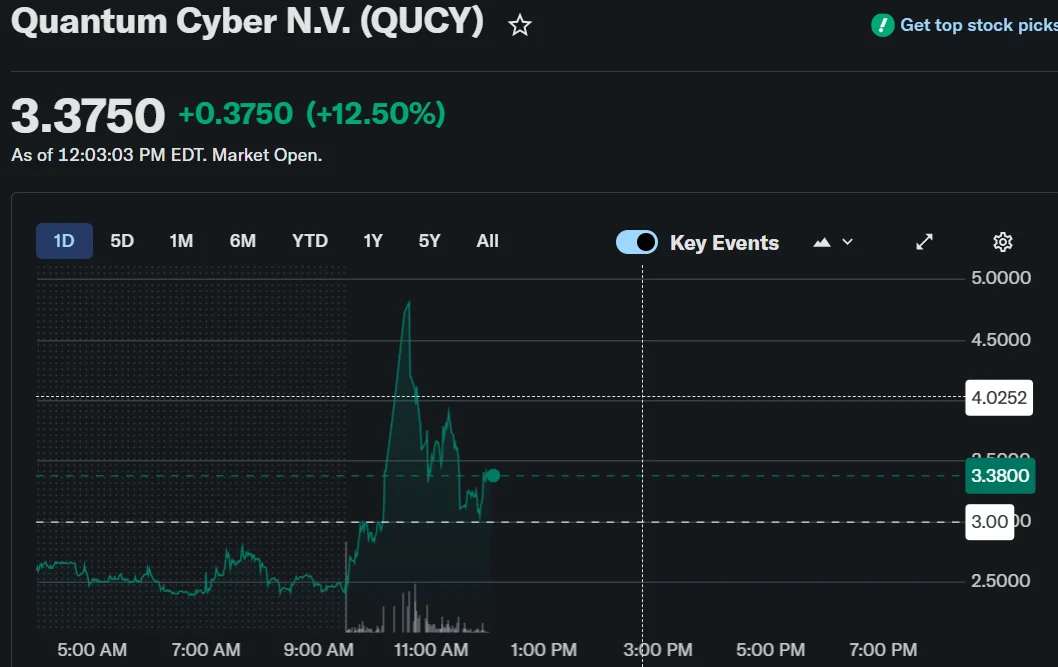
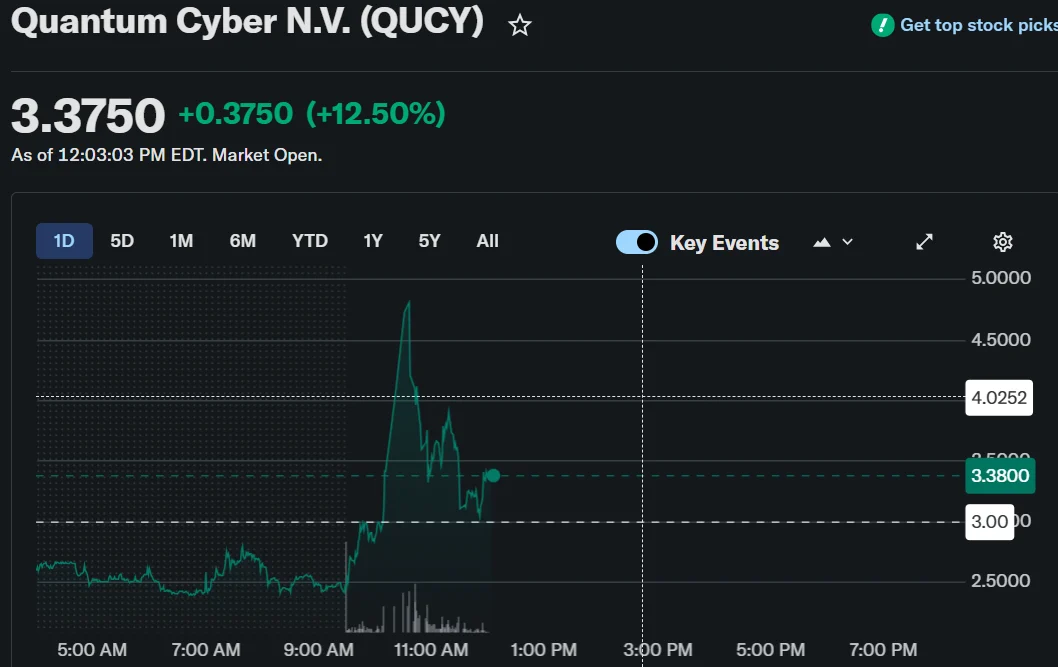
Shares of Quantum Cyber N.V.(QUCY) advanced on Friday following the introduction of its defense technology web platform, which brought renewed focus to the company’s strategic initiatives. QUCY closed at $3.2313, marking a 7.71% increase, after reaching higher levels earlier in the session. Despite the pullback from peak levels, the Nasdaq-listed firm maintained solid gains through the close.
Quantum Cyber leveraged its website introduction to showcase its comprehensive defense technology suite to investors and stakeholders. The platform now features detailed information on autonomous drone operations, counter-unmanned aircraft systems, electromagnetic pulse protection, robotic demining solutions, and quantum-based antenna technology. This digital presence provides enhanced visibility into the company’s System-of-Systems defense architecture.
The organization’s strategy centers on consolidating multiple defense technologies within a single publicly traded entity. Its emphasis lies in autonomous operational capabilities spanning aerial, terrestrial, and maritime domains. The website now functions as the primary resource for corporate communications and technical specifications.
The upward movement in QUCY shares coincided with heightened market interest in autonomous military systems and defense technology equities. While the stock experienced significant volatility during the trading session, the sustained gain reflected ongoing investor appetite following the company’s strategic announcement.
Digital Platform Showcases Integrated Defense Solutions
According to Quantum Cyber, the website will serve as a cornerstone for its corporate messaging and shareholder engagement initiatives. The platform delineates its technological capabilities across five distinct defense sectors. Furthermore, it delivers enhanced transparency regarding intellectual property, platform development roadmaps, and communication frameworks.
The company identifies unmanned aerial vehicle systems as a fundamental component of its operational blueprint. Counter-UAS perimeter security represents another significant technological pillar. The portfolio encompasses electromagnetic pulse-resistant drone hardware and automated mine clearance platforms.
Additionally, Quantum Cyber highlights its ongoing development of quantum-enhanced antenna communication systems. The organization anticipates forthcoming disclosures regarding technological advancements, strategic alliances, patent filings, and business development initiatives. Consequently, the website launch establishes a foundation for increased corporate transparency going forward.
Defense Budget Priorities Align With Company Focus
The platform introduction arrives amid a strategic reorientation of U.S. military procurement toward autonomous combat systems. The Trump administration has proposed approximately $55 billion for unmanned and autonomous warfare initiatives in the 2027 fiscal year. This allocation represents a dramatic escalation from the roughly $225 million budgeted in the previous fiscal period.
The counter-unmanned aircraft systems sector provides additional strategic context for Quantum Cyber’s market positioning. According to Grand View Research projections, this market segment is expected to expand from $3.1 billion to $10.6 billion by decade’s end. These estimates reflect a robust 27.2% compound annual growth trajectory.
Quantum Cyber combines combat-proven Israeli defense technologies with access to American capital markets infrastructure. The company’s roadmap includes acquiring, licensing, and advancing autonomous systems tailored for military applications. The web platform launch successfully redirected investor attention toward QUCY’s defense capabilities as shares registered meaningful gains.
Crypto World
Bitcoin Rejected at $80K as Inflation Fears Outweigh CLARITY Act Progress: Weekly Recap
The past week was quite eventful once again, with headlines spanning different sectors: from the highly anticipated meeting between US President Trump and China’s Xi Jinping to inflation data and some progress on the CLARITY Act front.
The business week began on the right foot for bitcoin as it rocketed from under $80,500 to roughly $82,500 following a quiet weekend. However, the rejection was swift, and BTC dipped below its starting point within hours.
Another breakout attempt took place on Tuesday, but the bears stepped up even faster this time, not allowing BTC to surpass $82,000. The selling pressure mounted on Wednesday after the inflation data for April went live in the US. Once it became known that the CPI numbers hit a three-year high of 3.8%, BTC reacted with a price dip to under $79,000.
More volatility ensued on Thursday when the CLARITY Act passed a Senate panel, which was regarded as a bullish development for the crypto industry, as it could crystallize the regulatory landscape in the country. Bitcoin traded at around $79,500 before the news spread, but quickly exploded to $82,000.
The bears reemerged at this point once again and didn’t allow any further gains. Although BTC managed to remain close to the $82,000 level for a while, it nosedived on Friday by over three grand from the top and currently struggles below $79,000.
Its market capitalization has fallen to $1.580 trillion on CG, while its dominance over the alts remains well above 58%. Nevertheless, BTC remains slightly in the green on a weekly scale, but it has been outperformed by many altcoins, including BNB, DOGE, XRP, and SUI.
Market Data

Market Cap: $2.71T | 24H Vol: $118B | BTC Dominance: 58.2%
BTC: $78,800 (+0.6%) | ETH: $2,210 (-1.38%) | XRP: $1.43 (+5%)
This Week’s Crypto Headlines You Can’t Miss
Bitcoin’s Drop Below $80K Was Not Random: Here Are the 3 Hidden Triggers. The largest cryptocurrency slipped below $80,000 on a couple of occasions in the past week, and many analysts believe it’s not random. Easy On Chain, for example, outlined three reasons behind the asset’s decline.
Is Bitcoin’s Rally Fake? Analyst Sees Massive Downside Ahead. Another popular market observer, Dr. Profit, who has mostly leaned bearish over the past half a year, noted that the rally to over $82,000 was most likely unsustainable and predicted a substantial crash to and perhaps below $50,000.
Arthur Hayes Predicts AI Race Will Push Bitcoin Back to $126K. On the contrary, Arthur Hayes remains bullish on BTC’s long-term perspective, forecasting a massive surge to the October 2025 all-time high of $126,000. Interestingly, he thinks such a move could be propelled by the AI race.
Bitcoin and Ethereum Arrive on Wall Street Giant Charles Schwab for Selected Retail Clients. Schwab Crypto, the behemoth investment services firm’s new digital asset venture, officially launched last week, allowing certain retail investors to get exposure to BTC and ETH through the regulated platform.
Strategy’s Bitcoin Buying Spree Resumes With Fresh 535 BTC Accumulation. After a quick weekly pause, Michael Saylor’s Strategy resumed its BTC purchases. The latest was a relatively small one of 535 BTC, acquired for $43 million. Its total stash grew to 818,869 BTC.
Tom Lee Doubles Down on ‘Crypto Spring’ Theory, but Bitmine Slows ETH Accumulation. BitMine also slowed its pace of ETH purchases, but Tom Lee remains optimistic that the worst has already passed and ‘crypto spring’ is about to commence.
Charts
This week, we have a chart analysis of Ethereum, Ripple, Cardano, Binance Coin, and Hyperliquid – click here for the complete price analysis.
The post Bitcoin Rejected at $80K as Inflation Fears Outweigh CLARITY Act Progress: Weekly Recap appeared first on CryptoPotato.
Crypto World
RedStone’s settlement layer is the first serious attempt to make tokenized RWAs real DeFi collateral


RedStone’s new “Settle” layer is the first sober attempt to fix DeFi’s RWA paradox.
Summary
- RedStone Settle liquidates RWA‑backed loans via on‑chain auctions, letting LPs buy the position and assume slow 60–180 day redemption risk, so lending protocols keep atomic, instant liquidations.
- With around $30B of tokenized Treasuries, credit and funds sitting as “dead capital,” Settle standardizes liquidation and repricing so RWAs can back Aave‑style markets instead of being trapped in isolated wrappers.
- The trade‑off is structural: if Settle becomes the default, RedStone’s oracle and auction stack starts to look like a quasi‑central clearinghouse for RWA collateral inside an allegedly permissionless ecosystem.
RedStone has launched “RedStone Settle,” a dedicated DeFi settlement layer built to make tokenized real‑world assets usable as collateral in lending protocols, targeting roughly $30 billion of RWAs that are currently structurally dead capital. The design attack is straightforward: fix the core timing mismatch between instant, on‑chain liquidations and 60–180 day off‑chain redemption cycles for bonds, funds, credit and other tokenized instruments that have, until now, been almost impossible to use in live DeFi lending.
RedStone settlement layer adds functionality
RedStone, a decentralized oracle provider based in Baar, Switzerland, says Settle introduces an on‑chain auction mechanism that activates when a borrower using RWA collateral is liquidated. Instead of trying to redeem the underlying real‑world asset instantly — which is structurally impossible for most tokenized bonds or funds — the system lets liquidity providers bid for the liquidated position, buy it on chain, and then assume the delayed redemption risk of the underlying, which can take 60–180 days to unwind. In effect, Settle turns those LPs into specialized risk‑bearers who bridge slow TradFi settlement and fast DeFi risk management, while letting lending protocols keep their instant‑liquidation discipline.
The scale of the prize is non‑trivial. RedStone cites estimates from RWA.xyz and other trackers that put the current market for tokenized RWAs — led by tokenized US Treasuries, private credit vehicles and fund wrappers — at around $30 billion as of April 2026, most of it sitting in isolated contracts, earning yield but functionally unusable as collateral in Aave‑style money markets. By standardizing how those assets are liquidated and repriced across protocols, RedStone argues Settle can “unlock over $30 billion worth of tokenized assets currently sitting idle,” removing what it calls “a significant barrier to integrating RWAs into DeFi.” Intellectia’s summary is blunt: this gives institutional holders “a transparent pathway to leverage their income‑generating assets for loans without selling them,” shifting DeFi yields toward corporate, real‑estate and sovereign risk premia instead of pure crypto beta.
Conceptually, this is the invisible plumbing that actually matters for RWA‑DeFi integration, as opposed to the endless “tokenized T‑bills” narratives that never quite become money‑like. Today, most tokenized assets face a structural veto: protocols need atomic liquidations; real‑world settlement is slow, litigious and path‑dependent; so the obvious choice has been to keep RWAs at arm’s length. RedStone Settle creates an explicit risk‑transfer market around that mismatch: if you want the yield and diversification from RWAs, you price and outsource the time risk to LPs through auctions, instead of pretending it doesn’t exist. In a best‑case scenario, that pushes stablecoin and lending rates to track the term structure of credit and macro cycles, not just the mood swings of BTC and ETH.
The catch is structural. If RedStone’s private oracle plus settlement layer becomes the de facto standard for how DeFi handles RWA collateral, you’ve effectively recreated a quasi‑central clearinghouse — a DTCC‑style coordination layer — inside an ecosystem that insists on being permissionless and credibly neutral. Price feeds, auction design and dispute resolution all route through one oracle stack and its governance, even if the contracts are on chain. That’s the real wedge: one approach, like State Street’s Luxembourg build‑out, plugs tokenization into TradFi’s legal superstructure; the other, like RedStone Settle, builds a parallel “central bank of RWAs” for DeFi. Either way, the fantasy of purely flat, trustless collateral markets dies as soon as $30 billion of real‑world assets show up and someone has to decide what happens when the redemption clock and the liquidation engine collide.

Crypto Adoption Meets AI Security: A Discussion with Binance Chief Security Officer Jimmy Su

Poll puts Burnham streets ahead of any leadership challenger, quandary for Greens
Vegas Has Spoken on the Vikings QB Competition

Manchester United reach agreement with Casemiro over contract clause amid transfer speculation

US brings back mandatory military draft registration

Steven Gerrard disagrees with Gary Neville over ‘shock’ Chelsea and Arsenal claim | Football


![No Money [ DJ BEN RMX ]](https://wordupnews.com/wp-content/uploads/2026/02/1770218101_maxresdefault-80x80.jpg)
-

 Fashion7 days ago
Weekend Open Thread: Marianne Dress
-

 Fashion4 days ago
Coffee Break: Travel Steam Iron
-

 Fashion5 days ago
What to Know Before Buying a Curling Wand or Curling Iron
-

 Politics4 days ago
What to expect when you’re expecting a budget
-

 Tech5 days ago
Auto Enthusiast Carves Functional Two-Stroke Engine from Solid Metal
-

 Politics6 days ago
Politics Home Article | Starmer Enters The Danger Zone
-
 Business6 days ago
Ignore market noise, India’s long-term story intact, say D-Street bulls Ramesh Damani and Sunil Singhania
-

 Tech4 days ago
GM Agrees To Pay $12.75 Million To Settle California Lawsuit Over Misuse Of Customers’ Driving Data
-

 Crypto World5 days ago
CZ says US crypto rivals tried to block Trump pardon
-

 Crypto World6 days ago
PROS explodes 48% as Upbit and Bithumb listings ignite demand
-

 Tech4 days ago
GM agrees to $12.75M California settlement over sale of drivers’ data
-

 Entertainment7 days ago
YNW Melly Denied Bond Again Ahead Of Double Murder Retrial
-

 Crypto World7 days ago
Kraken Parent Seeks OCC Charter, Signaling Regulated Banking Access
-
Crypto World2 days ago
Bitcoin Suisse expands with Digital Asset License and Investment Business Act Registration Approval in Bermuda
-

 Sports7 days ago
Why Nathan Mackinnon Remains the Hart Trophy Favourite over Connor McDavid and Nikita Kucherov | NHL
-

 Entertainment7 days ago
Bethenny Frankel Says She Loves ‘Torturing’ Men
-

 Sports7 days ago
After Waka Waka, Shakira now drops first teaser for FIFA WC 2026 song | FIFA World Cup 2022
-
 Crypto World7 days ago
Solana UFO Meme Coins Surge After Pentagon Reveals Alien Files
-

 Politics3 days ago
Pakistan to enter Chinese capital market as war inflation bites
-

 Entertainment7 days ago
Young and the Restless Next Week: Cane & Matt Both Arrested in Shocker!
You must be logged in to post a comment Login