

Crypto World
XRP Holders Get New Yield Opportunity via Flare and Monarq Collaboration


The decentralized finance (DeFi) applications blockchain network Flare has unveiled a new XRP yield product in collaboration with digital asset manager Monarq and vault infrastructure provider Upshift.
According to a press release sent to CryptoPotato, the new product is a multi-strategy XRP vault offering diversified yield opportunities. Launched on Flare and accessible to XRP holders, the Monarq XRP Yield Vault (MXRPY) is powered by Monarq and built on Upshift’s vault infrastructure.
MXRPY Offers Diversified Yield
MXRPY allocates capital across three strategies: options trading, basis and funding rate arbitrage, and on-chain XRPFi deployment. Users deposit Flare XRP (FXRP), receive MXRPY tokens representing their capital and accrued yield, and expect returns from the three primary engines.
The first return engine uses XRP as collateral to support options strategies across several platforms and over-the-counter products. Through the second strategy, XRP is deployed in funding rates and market-neutral basis using borrowed stablecoins across major platforms. For the third engine, the vault allocates the capital into Flare-native XRP Finance (XRPFi) opportunities and DeFi applications.
With an initial deposit cap of 500,000 FXRP, the vault targets a range of 3% to 4% annual percentage yield (APY) distributed over time based on strategy, performance, and market conditions. The product is accessible through Upshift; the platform processes withdrawals weekly, every Friday, with an optional fee-based instant redemption mechanism available.
Monarq’s managing partner, Shiliang Tang, commented on the launch, saying: “A real financial system needs a broader menu of options. MXRPY is built to be one of those options for XRP holders.”
MXRPY App Coming Up
While MXRPY expands the scope of XRPFI beyond Flare, it adds to the rapidly growing list of products on the DeFi applications network. Over the past months, Flare has launched several yield-bearing products, including lending markets, for XRP holders. The latest launch combines on-chain and off-chain execution in a structure that provides XRP holders with diversified yield opportunities.
“The Clearstar EarnXRP vault showed that there is real demand for XRP-denominated vaults on Flare. Upshift provided the infrastructure behind that launch, and we’re now expanding the model with Monarq, a second XRP vault with a different strategy profile and a broader set of yield sources,” remarked Upshift’s growth lead, Ethan Luc.
While the XRP community embraces MXRPY, the companies intend to release a standalone application in the future. The upcoming app is expected to provide users with a direct connection to MXRPY via their XRP Ledger wallets.
The post XRP Holders Get New Yield Opportunity via Flare and Monarq Collaboration appeared first on CryptoPotato.



Bitcoin is trading near a level it has usually reached only late in bear markets, and it has held there even after the hottest U.S. inflation print in three years.
Checkonchain data show BTC fell toward close to its 200-week average, a rough four-year trend line watched by long-term holders. The model puts bitcoin in the bottom 10% of its historical valuation range, a zone that has appeared only during the deepest parts of past bear markets.
Bear market bottoms are a process, not an event.
First, price-sensitive investors capitulate. Then comes the harder phase: months of sideways action that slowly wear down the conviction of those who remain.
In our latest newsletter piece, @_Checkmatey_ examines the evidence… pic.twitter.com/ReSQFfqi5R
— _Checkonchain (@_checkonchain) June 10, 2026
The mood in the market is just as washed out. The Crypto Fear and Greed Index – a measure of sentiment calculated using volatility, social media posts, and market volumes – sits at 9, deep in extreme fear, down from 11 last week and 48 a month ago.
Those readings usually show up when price-sensitive sellers have already done most of their selling. Checkonchain still warns that bottoms are a process where capitulation comes first followed by months of sideways trading that grind down the holders who stayed.
Bitcoin briefly broke below $60,000 this week for the first time since 2024 and changed hands at $62,623 on Thursday, up 1.9% on the day but lower over the week, with a record run of ETF outflows still pulling money out.
The bounce was broad but shallow. Ether rose 1.4% to $1,651, BNB added 1.3% to $595, solana gained 0.9% to $65 and dogecoin 1.1% to $0.085. XRP was the laggard, down 0.3% at $1.12. All of them remain lower over the past seven days, led by ether at 6.5% and XRP at 7.5%. Thursday’s gains dent the weekly slide rather than reverse it.
Inflation is not helping the case for a quick recovery. US consumer prices rose 0.5% in May from April and 4.2% from a year earlier, the fastest annual pace since early 2023, as the Iran war pushed up energy costs, according to Bureau of Labor Statistics data released Wednesday.
The core measure, which strips out food and energy, rose 0.2%, less than economists expected, the one soft spot in an otherwise hot report.
“Hopes for US regulatory clarity have faded again, with Polymarket odds of the Clarity Act passing in 2026 dropping from 62% to 48% this week,” Yves Renno, head of Trading at global crypto payments platform Wirex, told CoinDesk.
“All eyes now turn to the FOMC on June 16th–17th, and Warsh’s tone will be decisive in determining whether Bitcoin bounces toward $68–72K or breaks below $60K entirely.”
Meanwhile, the pressure runs well beyond crypto. Global equities fell to a more than one-month low this week as a technology-led selloff deepened and US forces struck multiple targets in Iran, collapsing the ceasefire that had held since April.
MSCI’s All Country World Index, the broadest measure of global stocks, slipped to its lowest since May 5, and its Asia Pacific gauge fell 0.8% to a three-week low. Brent crude rose 1.8% to about $95 a barrel. The European Central Bank is expected to raise rates later Thursday for the first time since September 2023, with bond traders pricing in higher borrowing costs worldwide.
Crypto World
Solana Price Just Bounced Off $60 With RSI at 28, Is This the Capitulation Bottom or Just a Dead Cat Bounce?

Solana price is trading near $63.61 amid one of the sharpest sentiment contractions in recent memory, the Fear & Greed Index has collapsed to an extreme fear reading of 10.
That bounce off the $60 support zone looks encouraging on the surface. Whether it holds is a different question entirely.
The broader crypto market added just 0.13% in 24 hours while Bitcoin dominance sits firm at 57%, signaling capital remains defensive and rotation into altcoins has not yet materialized in any meaningful way.

The catalyst for the recent selloff was a sector-wide liquidation wave that dragged SOL down to the $60 zone before a partial recovery of over 5%.
CoinMarketCap’s AI market commentary described the move as a “sharp sell-off” followed by a tentative rebound, stopping well short of calling it a trend reversal.
Discover: The Best Crypto to Diversify Your Portfolio
Can Solana Price Reclaim $70 This Week, or Is Another Test of $60 Coming?
SOL is trading at $63.61, sitting 11% below its 20-day EMA and more than 17% below its 50-day EMA. The 200-day EMA at $105 feels academic from current levels.
All major moving averages point downward. This is not a pullback inside a healthy uptrend. It is systematic repricing.
Daily RSI at 28.42 confirms deeply oversold conditions while price hugs just above the lower Bollinger Band floor at $60.52, a zone historically associated with short-term mean reversion pressure. But the daily MACD complicates the setup.
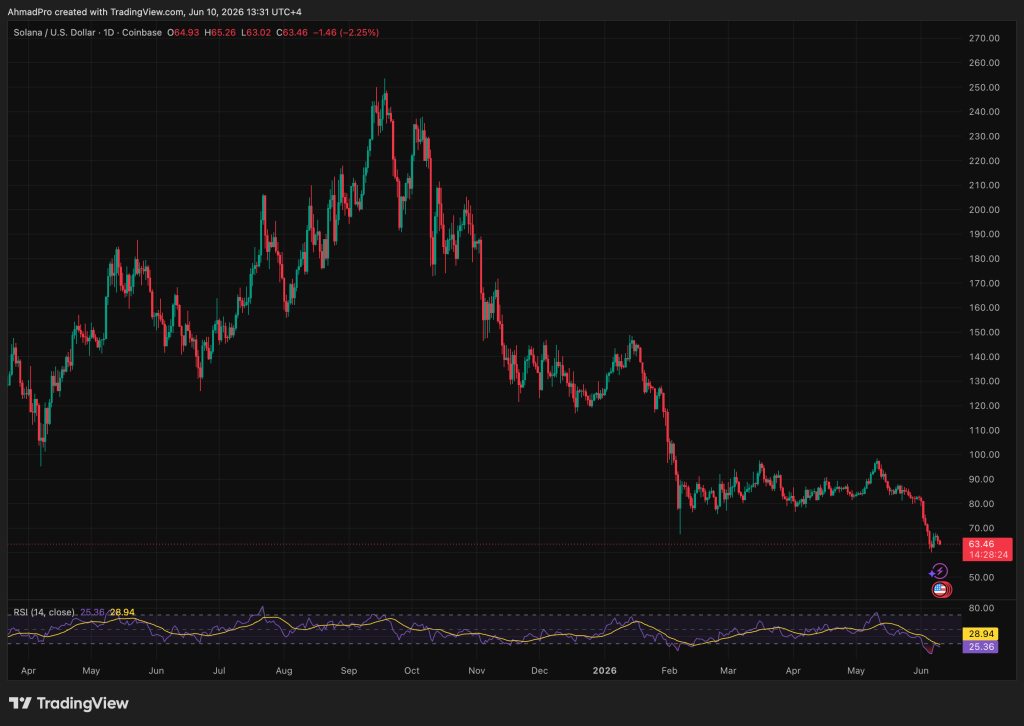
RSI says stretched. MACD says sellers are not done. That tension is the defining technical story right now.
On the hourly chart SOL consolidates tightly between Bollinger Band limits of $65.71 and $68.04 with immediate resistance at $67.62.
The ATR of $4.17 implies daily swings around 6%, meaning stop-out risk at this level is real. Reclaiming the hourly 200 EMA at $69.51 is the minimum technical requirement for any bullish reframe.
Clear $70 to $76 and trend stabilization gets confirmed. Stay rangebound between $63 and $69 and sellers and buyers continue contesting control without resolution. Break below the $60.52 Bollinger floor and local lows come back into view with potentially deeper levels beyond them. ETF fund outflows remain an overhang that tilts the probabilities toward the downside scenario until flows reverse.
LiquidChain Aim to be The “Solana of This Cycle”, Could This Happen?
SOL’s price compression illustrates a structural problem that runs deeper than a single asset’s chart.
Liquidity in crypto remains siloed. Capital rotates between Bitcoin, Ethereum, and Solana but rarely flows efficiently across all 3 simultaneously.
Every rotation absorbs friction in the form of fees, slippage, and fragmented infrastructure that was never designed to function as a connected system. That fragmentation is the problem LiquidChain is building against.
The project is a Layer 3 infrastructure play positioning itself as the cross-chain liquidity layer for the next phase of multi-ecosystem growth.
A Unified Liquidity Layer, Single-Step Execution, Verifiable Settlement, and a Deploy-Once Architecture that lets developers build once and access all 3 ecosystems simultaneously. The presale has raised $832,783 to date with $LIQUID priced at $0.01468.
Early stage infrastructure carries real risk. Token price discovery post-launch is highly unpredictable and execution is unproven at scale.
But the timing against a backdrop of accelerating cross-chain fragmentation is structurally relevant. Capital rotation into presale infrastructure rounds during market compression phases is a documented pattern, not speculation.
Discover: The Best Token Presales
The post Solana Price Just Bounced Off $60 With RSI at 28, Is This the Capitulation Bottom or Just a Dead Cat Bounce? appeared first on Cryptonews.
Crypto World
Bitcoin Enters Distribution Phase as Investors Increasingly Sell Into Strength: Bitfinex Alpha

The bullish impulse of the Bitcoin market has exhausted itself, and bitcoin has now entered a distribution phase. This can be seen in investors increasingly selling into strength rather than increasing their exposure.
According to this week’s Bitfinex Alpha report, both flow data and on-chain dynamics indicate that BTC has transitioned out of the accumulation phase that drove its rally earlier this year. This signals the onset of a period of heavy selling pressure that could see BTC slump to levels last seen in early to mid 2024.
Bitcoin Enters Distribution Regime
Bitcoin already slipped below $60,000 on June 5 amid large outflows from spot exchange-traded funds (ETF) and persistent macroeconomic headwinds. Although the asset has rebounded in the last two days and climbed back above that level, analysts believe the recovery may be hiding a more important shift beneath the surface, which is the transition into a distribution regime.
During the decline last week, BTC fell to a multi-year low of $59,200, a level last seen in October 2024. This price also represented a 53% drawdown from the October 2025 all-time high (ATH), a 28.5% fall from levels recorded in mid-May, and a 20% plunge from the June monthly open. BTC was unable to sustain the $60,000 floor, which has been a price anchor since February.
With BTC having retreated to its Q1 2026 consolidation zone, the asset faces two possible scenarios – the best being a motion range between $60,000 and $72,000. On the other hand, the worst-case scenario is price discovery at levels not seen since the maturation of the spot ETF market.
BTC Faces Worst Case Scenario
Analysts say the worst scenario will play out if BTC breaks through $60,000 for a sustained period of time. Bitcoin’s current moves are already confined within previous range lows, due to catalysts like ETF outflows and Strategy’s BTC sales.
Other factors contributing to bitcoin’s current price trend are rising energy prices, stronger-than-expected labor market data, and tightening financial conditions from the Federal Reserve. However, the most significant factor is the contraction of spot demand as seen in the sharp reversal in Spot Cumulative Volume Delta.
“Spot Cumulative Volume Delta has transitioned into a clear negative regime, touching depths reminiscent of the large liquidations seen in February. The data confirms that aggressive distribution, especially by recent buyers, is currently the dominant force on exchange order books,” analysts explained.
As with previous distribution phases, BTC can only transition back into an accumulation regime when sustained spot demand returns.
The post Bitcoin Enters Distribution Phase as Investors Increasingly Sell Into Strength: Bitfinex Alpha appeared first on CryptoPotato.

TLDR
- Bitcoin trades near $61,900 as charts mirror the 2022 correction pattern.
- Analyst TARA identifies a repeating macro wave 2 structure on Bitcoin charts.
- The 2022 downturn followed an ABC correction from $69,000 to $15,000.
- TARA says Bitcoin may sit between wave B and the start of wave C.
- A move to $72,800 would help confirm the end of the relief rally phase.
Bitcoin trades near $61,900 as analysts compare the current pullback with the 2022 correction. Market commentator TARA outlined structural similarities between both phases on X. She said the Bitcoin price may still follow a repeating macro wave 2 pattern.
Bitcoin Price Structure Mirrors 2022 ABC Correction
TARA stated that the 2022 downturn followed a clear ABC corrective structure. She explained that wave A began after the November 2021 peak at $69,000. Bitcoin then fell to about $33,000 in January 2022.
She added that wave B created a relief rally toward $48,200 in March 2022. However, wave C pushed the asset lower to nearly $15,000 by November 2022.
She said, “The current market trend shows Bitcoin may sit between wave B and wave C.”
TARA marked the chart region between the end of wave B and the start of wave C as the present zone. She noted that Bitcoin earlier rebounded to $82,800 in May. However, she said the market has not confirmed that level as the end of wave B.
According to her, confirmation requires a rebound to at least $72,800. She said Bitcoin must form resistance near that level. From $61,900, that move would equal roughly a 17% increase.
She emphasized that no two cycles unfold in the same way. However, she stressed that structural similarities remain visible on the chart. She said traders should observe whether price action follows the 2022 sequence.
Final Leg Lower Could Develop Quickly Again
TARA pointed to the speed of the 2022 wave C decline. She said Bitcoin dropped sharply with limited rebounds. During the first 12 weeks of wave C, BTC posted 11 red weekly candles.
She explained that price fell from $48,200 to $17,500 by June 2022. That move unfolded within weeks after the relief rally ended. She said, “The next major leg down could develop faster than many expect.”
TARA did not provide a specific downside target. However, she stressed that wave C in 2022 unfolded without clear warning signals. She said the current structure could repeat that pattern.
She also described what followed the November 2022 bottom near $15,000. Bitcoin consolidated for about nine weeks within a tight range. Price action remained steady before breaking above resistance.
After that consolidation, Bitcoin began a fresh upward phase. From the lows, the asset climbed more than 8x to $126,200 in October 2025. TARA said that rally completed the broader macro wave 2 setup.
She stated that if the structure repeats, Bitcoin could eventually move beyond the October 2025 high. At press time, Bitcoin trades around $61,900 as markets track the unfolding pattern.

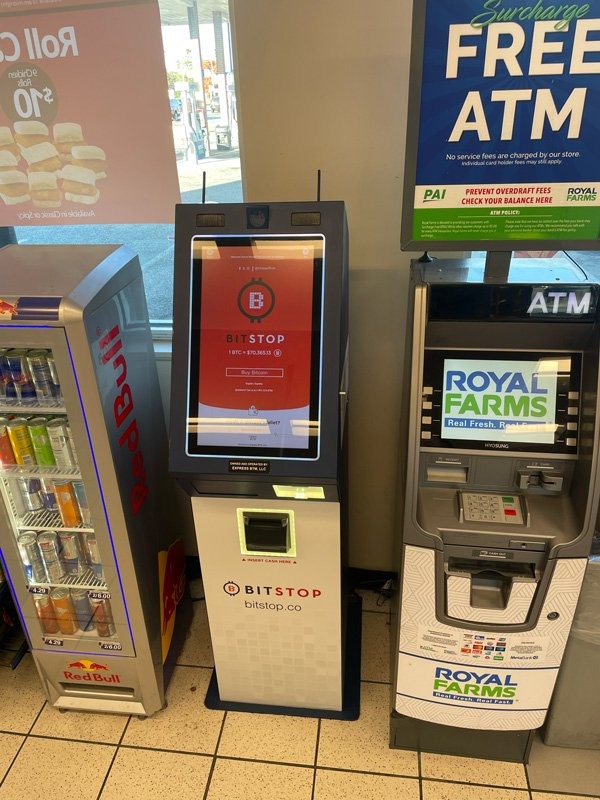
Delaware and New Jersey have both advanced legislation to ban cryptocurrency ATMs in what is becoming a growing trend across US states, with lawmakers concerned that the kiosks are overwhelmingly used for scams.
The Delaware House Economic Committee on Tuesday passed House Bill 441 to the full chamber, which would ban owning, installing, or operating a cryptocurrency kiosk.
It followed the New Jersey Senate Commerce Committee’s unanimous vote on Monday to send its bill banning crypto ATMs to the full chamber.
At least three other US states — Indiana, Tennessee and Minnesota — have passed total bans on crypto ATMs in response to their use for scams.
The FBI said in May that it received nearly 13,500 complaints about crypto ATMs in 2025 involving over $388 million in losses, a 23% increase in complaints and a 58% increase in losses from 2024. Over half of the complaints involved people aged over 50, with losses exceeding $302 million.
Cyndie Romer, a representative who sponsored the bill in Delaware, said crypto ATMs “reduce digital currency to a predatory cash grab.”
“Regular crypto traders generally do not use crypto ATMs due to their much higher fees, which can be upwards of 20% of the value of the transaction, versus the 0.4% to 1% in fees for online exchanges,” she added. “There is no reason to support a business structure that enables scammers to extort money from our most vulnerable populations.”
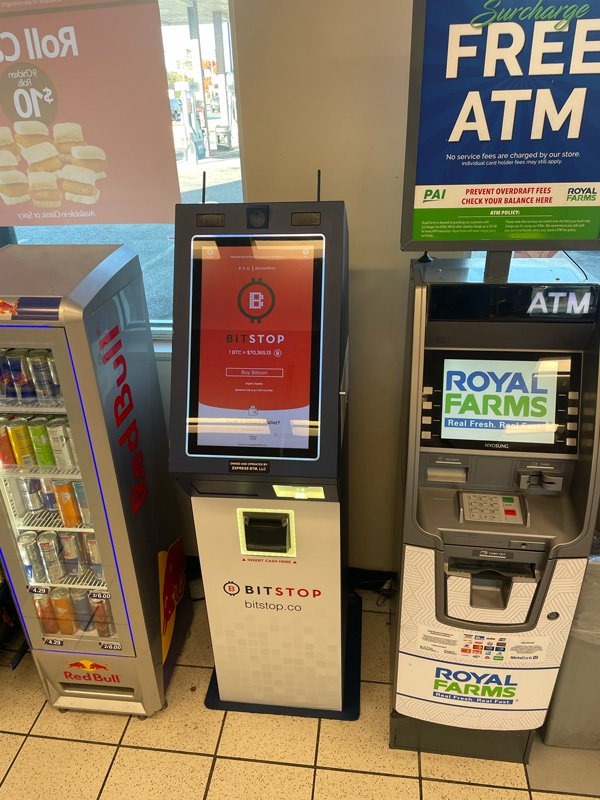
A crypto ATM at a service station in Dover, Delaware’s capital. Source: Coin ATM Radar
Delaware’s bill would also ban fiat-to-crypto sales that “replicate or substitute” crypto ATMs, such as through point-of-sale systems or cashiers. It also mandates that any crypto ATMs must be removed within 90 days after the bill is signed into law.
The bill outlines penalties of up to $10,000 for violations, and if a kiosk is found to be operating, it must refund its fees to all users or pay into a consumer protection fund if users can’t be found.
New Jersey’s bill would similarly ban owning, controlling, installing, managing, selling, or offering to sell a crypto ATM due to “a significant rise in scams associated with their use.”
It outlines penalties of up to $10,000 for a first offense, doubling to $20,000 for subsequent offenses.
Bitcoin ATM operators push back
Indiana became the first US state to ban crypto ATMs with a law signed in March. Tennessee followed with its ban in April, while Minnesota passed a ban in May.
Some US cities have also passed or are weighing ordinances banning crypto ATMs, while some states, including Arizona and California, have capped the value of transactions allowed by crypto ATMs.
Related: Canada proposes crypto ATM ban over scams and money laundering
Bitcoin Depot, once the largest operator of crypto ATMs in the world with over 9,000 kiosks, cited regulatory pressure as a major reason it filed for bankruptcy last month.
However, crypto ATM operators have long claimed they are not at fault for scams through their machines, and many have put in place on-screen scam warnings or self-imposed transaction limits to curb illicit transactions.
Bitcoin Depot had told an ICIJ investigation on crypto scams in December that it “cannot be held liable for the criminal acts of third-party scammers” and said it had “robust warnings and safeguards” on its machines and during transactions.
Magazine: When privacy and AML laws conflict: Crypto projects’ impossible choice

Disclosure: This article does not represent investment advice. The content and materials featured on this page are for educational purposes only.
Crypto investors weigh Dogecoin, Ethereum, and BlockDAG as market volatility drives demand for stronger fundamentals.
Summary
- BlockDAG gains attention with a $0.00000044 Legacy Sale price, buyback program, and expanding ecosystem utility.
- Investors rotate toward BlockDAG as Dogecoin and Ethereum face volatility, seeking structured crypto opportunities.
- BlockDAG highlights its casino, stablecoin, and liquidity initiatives as traders look beyond market uncertainty.
The digital asset market in June 2026 presents a highly polarized environment for market participants. Analysts are observing intense volatility across major networks due to shifting macroeconomic policies and localized liquidity constraints. Speculative capital continues to rotate rapidly as buyers search for reliable setups that provide both security and upside potential.

With inflationary pressures dictating global monetary decisions, identifying secure digital assets requires careful attention to underlying token economics. Strategic investors are prioritizing platforms that enforce structured accumulation cycles over chaotic public launches to find the next big crypto. Dogecoin, Ethereum, and BlockDAG are currently leading discussions as buyers reallocate their portfolios.
Dogecoin faces direct technical downward pressure
Dogecoin is currently facing downward pressure following a broader market contraction in early June 2026. The asset extended its weekly decline by dropping over 15%, pushing the price lower. Trading volume has remained relatively subdued as retail interest shifts toward newer financial products. Technical analysts note that Dogecoin continues to test essential support levels, with moving averages sloping downward.
This negative trend highlights the struggles of meme-based assets when global liquidity tightens. The lack of substantial protocol upgrades or institutional drivers leaves the token vulnerable to further depreciation. For Dogecoin to reverse this trend, it requires a significant catalyst or a massive surge in network activity to attract fresh capital back into its ecosystem.
Ethereum navigates complex value store narratives
Ethereum is navigating a complex narrative as it trades below the $1,800 mark. The network remains the primary hub for decentralized finance, but recent developments have sparked intense debate. Bankless co-founder Ryan Sean Adams recently stated that Ethereum is a failed project if it does not become a global store of value, noting its current price is down roughly 67% from its record high. This sentiment has caused friction within the community.
Meanwhile, BitMine Immersion Technologies plans to launch a perpetual preferred stock offering to fund further Ethereum purchases and staking operations, providing a potential institutional backstop. Despite these institutional efforts, the asset maintains a bearish undertone, extending its weekly decline by 12%.
BlockDAG: Where global capital is rotating
When open-market tokens experience choppy consolidation, smart money seeks out mathematical certainty. BlockDAG’s updated $0.00000044 entry price, paired with a contractually backed $0.03 buyout pool, is triggering a major capital rotation. Investors are actively shifting funds out of high-risk speculative tokens and moving them directly into this structured, downside-protected financial play.
Large-scale investors are actively rotating capital into the secure Legacy Sale. This predictable financial model easily makes it the top crypto to buy for institutional allocators seeking refuge from daily chart fluctuations.
As larger chunks of global liquidity rotate into the Legacy Sale, the fixed allocation pool will experience rapid depletion. The sheer volume of incoming users proves that the market highly values guaranteed exit frameworks over open-ended speculation. This rotation is not a temporary trend; it is a structural flight to safety. When standard tokens struggle to maintain support levels, this system offers a clear path toward liquidity expansion.

Follow the institutional smart money trend and lock in your multiplier while slots remain open. Taking a position in this mathematically backed system ensures that your portfolio captures the exact same verified yield as the largest capital allocators in the space, establishing BlockDAG as the next crypto to explode
Summing up
Evaluating the current digital asset market requires a strict focus on utility, operational stability, and fixed capital protection. Dogecoin must find technical support after dropping significantly over the past week. Ethereum requires a strong volume push to break through its bearish undertone and silence its critics. BlockDAG, however, offers a fundamentally superior approach through its rigid mathematical arbitrage.
By guaranteeing a $0.03 exit for a $0.00000044 entry, BlockDAG completely eliminates the uncertainty of open market trading. Securing a position in BlockDAG ensures a defined and protected exit strategy, outperforming the unpredictability of Dogecoin and Ethereum.
For more information, visit the official website, presale, and follow the latest updates on Telegram and Discord.
Disclosure: This content is provided by a third party. Neither crypto.news nor the author of this article endorses any product mentioned on this page. Users should conduct their own research before taking any action related to the company.

Bitcoin has endured four meaningful corrections since the Bank of Japan began normalizing policy in 2024, with declines ranging from 18% to 28%. As the BOJ gears up for another policy decision on June 16, traders are weighing whether history will repeat itself or if evolving macro and on-chain dynamics will paint a different picture for BTC.
While the BOJ’s moves loom large in traditional markets, a growing body of on-chain evidence suggests that Bitcoin may be reacting more to whale behavior and exchange flows than to monetary policy alone. Across the four rate-hike episodes since Japan ended negative rates, Bitcoin’s average drawdown stood at about 22.4%, according to market tallies compiled from the period.
Key takeaways
- Bitcoin has faced four sizable corrections following BOJ rate hikes since 2024, averaging a 22.4% drop.
- On-chain activity shows rising inflows of BTC to exchanges from mid- to large-sized wallets, with Binance seeing notable accumulation that has pushed its 30-day whale inflow to about $6.6 billion.
- Over the course of the drawdowns, large holders have realized more than $2.5 billion in losses, while short- and mid-term whales sit on roughly $16 billion in unrealized losses, flagging potential supply pressure during rebounds.
- The yen carry-trade dynamic, once a dominant driver of BTC flows, has faded as the BOJ’s tightening cycle progressed; the June meeting is expected to extend the cycle rather than signal a new regime shift.
- Investors should watch how on-chain dynamics interact with macro signals—especially if June’s decision alters risk sentiment or triggers renewed asset reallocation.
BOJ policy and Bitcoin’s sensitivity to rate moves
Bitcoin’s close relationship with the BOJ’s policy stance has become a recurring theme for traders. After the Bank of Japan ended its negative-rate regime, each subsequent rate hike has been followed by a notable BTC correction. The March 19, 2024 hike led to an 18% drop, followed by an 18.5% decline after the July 31, 2024 move. In 2025, the January 24 hike coincided with a near-25% slide, and the December 19, 2025 decision was followed by a roughly 28% pullback. Across these four episodes, the average drawdown was around 22.4%.
Market context matters. The March 2024 correction happened as Bitcoin topped out in the wake of a surge in the spot BTC ETF cycle, while the July 2024 decline came amid a broader unwind in the yen carry trade and a general risk-off environment. The January and December 2025 drawdowns followed periods of extended rallies for BTC spot and futures and contraction in 30-day demand signals, underscoring that macro moves do not map perfectly onto BTC’s path.
The yen carry trade—borrowing in yen at low rates to invest in higher-yield assets abroad—was long considered a key amplifier of BTC’s sensitivity to BOJ policy. A sharp unwind in mid-2024 contributed to a broad risk-off atmosphere, with BTC rarely moving in isolation from other equities and global markets. As of the June 2024 to 2025 window, however, the carry-trade setup has weakened, with Japan’s policy trajectory and bond yields moving higher and the BOJ indicating a gradual normalization rather than an abrupt shift.
Analysts have underscored that while the carry-trade narrative remains part of the story, its role has diminished relative to the earlier phase of the tightening cycle. CrypticTrades summarized the sentiment in a post, arguing that the yen carry trade “has been dead since 2024” and calling the narrative a “BIG nothing burger” for markets. Still, investors should treat any BOJ decision as a macro catalyst that can tilt risk appetite and liquidity conditions, particularly for risk assets such as BTC.
On-chain signals intensify the pressure
Beyond macro policy, on-chain data points to a more immediate source of stress for Bitcoin. CryptoQuant noted rising BTC inflows to exchanges from wallets in the 100–1,000 BTC and 1,000–10,000 BTC brackets since early June, lifting Binance’s total 30-day whale inflows to about $6.6 billion. This shift indicates that large holders could be willing to distribute into weakness, adding a supply dynamic that could stymie any rapid rebound.
Realized activity further paints a cautious picture. Both short- and long-term whales have collectively locked in more than $2.5 billion in losses during the recent decline. Some large holders remain in the red, but the broader distribution suggests a cap on momentum rallies until buyers re-emerge with conviction. Notably, the short-term whale cohort—historically a potential source of fresh selling pressure on bounces—enters rebounds with unrealized losses approaching $16 billion, implying a delicate balance between capitulation and potential supply on upswings.
“Taken together, these three readings describe the stress profile of a late-stage bear market: capitulating whales, distribution into weakness, and a fragile short-term cohort with its finger on the trigger,” as observed by market analyst MorenoDV, reflecting a nuanced mix of macro and on-chain dynamics that could shape BTC’s path in the near term.
Within this context, traders will be watching whether the June 16 BOJ decision merely extends the tightening cycle or confirms a new phase of policy normalization. The macro backdrop—rising Japanese yields, a higher-cost funding environment, and a shift away from deflationary policy—has reduced the likelihood of an abrupt yen-driven sell-off. But on-chain pressure points, particularly inflows into major exchanges and the heavy unrealized losses among key whale cohorts, suggest that any rally could be met with supply from large holders at critical price levels.
What June’s decision could mean for BTC
The June policy meeting is widely viewed as an extension of the gradual tightening cycle rather than a volte-face in policy. Japan’s 10-year government bond yield has climbed to around 2.68%—up from roughly 0.63% earlier in 2024—indicating a meaningful shift in funding costs and risk dynamics within the economy. This backdrop is likely to influence risk appetite more broadly, potentially maintaining a cautious tone in crypto markets as traditional assets reassess macro risk.
From an investor perspective, the balance between macro cues and on-chain signals remains delicate. If the BOJ’s stance remains firm on normalization, BTC could see continued volatility as traders price in the combined impact of higher yields and tighter financial conditions. Conversely, if the June decision signals a softer stance or a slower tightening pace, BTC might find a firmer footing, but only if on-chain sellers retreat and demand signals recover.
On-chain observers will also monitor the evolution of exchange inflows and outflows, as well as realized and unrealized losses among the top holders. A sustained uptick in whale selling or renewed exchange accumulation could cap any upside, even in a scenario where macro conditions become more favorable for risk assets. In contrast, a stabilization or improvement in on-chain balances among long-term holders could help BTC reclaim ground, particularly if macro risk appetite improves alongside a measured policy stance from Tokyo.
For now, traders and investors should stay vigilant for the June decision and its immediate aftershocks. The interaction between macro policy and on-chain activity remains the critical axis shaping BTC’s near-term trajectory, and readers should watch for any shift in liquidity conditions, as well as the behavior of whales and large holders in the weeks following the BOJ announcement.


Disclosure: This article does not represent investment advice. The content and materials featured on this page are for educational purposes only.
Investors revisit low-priced crypto opportunities as Little Pepe, FLOKI, and SEI attract market attention.
Summary
- Supporters of Little Pepe, FLOKI, and SEI argue that each offers exposure to different growth narratives in 2026, ranging from memecoin communities to blockchain infrastructure.
- Little Pepe highlights a large presale raise, a community giveaway campaign, and plans for an Ethereum-based Layer-2 ecosystem, though its future performance remains unproven until after launch.
- FLOKI and SEI are being watched for different reasons: FLOKI for its expanding ecosystem and products, and SEI for its high-performance blockchain roadmap and scalability ambitions.
Shiba Inu made millionaires out of people who bought early and held long enough. Most of them did not know it would work out that way. They just saw a cheap token with a growing community and took the position.
Little Pepe (LILPEPE), FLOKI, and Sei (SEI) are three tokens that carry versions of that same setup in 2026. Different stages, different structures, one common thread, price low enough that the upside still makes sense.
Little Pepe: The giveaway is just the start
Not many presale projects put $777,000 back into the community before a single exchange listing happens. Little Pepe is doing exactly that. Ten winners. Each one walking away with $77,000 in $LILPEPE tokens. Minimum $100 presale contribution to enter. It is a statement about where the project’s priorities sit, and it has kept the community loud during the presale window.
The numbers behind that giveaway are worth looking at. Over $28 million raised in total. Stage 13 is sitting at $0.0022 per token, with the next stage at $0.0023. Over 17 billion tokens sold, and 98.61% of the presale allocation already gone. For a token that has not traded on a public exchange yet, that kind of absorption suggests demand is real and not manufactured.
What sits underneath it matters too. The LILPEPE roadmap is built around a Layer 2 blockchain on Ethereum. Low fees, fast settlement, EVM compatibility, and $LILPEPE as the native utility token of that chain. The total supply is 100 billion tokens. 26.5% went to presale buyers. 30% is held as chain reserves. 13.5% goes toward staking and rewards. Zero tax on buys and sells. The structure is clean. The entry price is low. The window is closing.
FLOKI: Still deep, still building
FLOKI is sitting near $0.000031 right now, which puts it 91% below its all-time high. That sounds bad. For buyers who weren’t around during the peak, it looks like an entry point. The difference depends on which direction you think the market moves from here.
What FLOKI has that most tokens at this price do not is an actual product suite. Valhalla Gaming, FlokiFi Asset Locker, and Floki University. These are not whitepaper promises. They are running. The project has been building through the downturn rather than waiting for conditions to improve before doing anything.
Recent AMA disclosures confirmed institutional interest in FLOKI, with a SIX ETP listing on track and new products reportedly in development. A two-month Stocktwits marketing campaign targeting close to 9 million impressions just launched. For a token already this far below its peak, the combination of active development and renewed marketing attention is worth tracking. SHIB made its biggest moves when the narrative and the price were both at lows. FLOKI is not far from that setup.
Sei: Infrastructure token at penny prices
SEI is trading at $0.04672 today. Given what the network is building, that price looks disconnected from the fundamentals. Sei recently released its Giga upgrade roadmap targeting 200,000 transactions per second with sub-400ms finality. That is not a minor improvement. That puts Sei in direct competition with the fastest chains in the market
The V2 upgrade transformed Sei into a parallelized EVM, combining Ethereum’s developer ecosystem with speeds typically associated with non-EVM chains. The Giga upgrade takes that further. Analysts see SEI recovering toward $0.30 by the end of 2026. At under five cents, most of the downside looks already priced in.
The SHIB comparison is not random
Shiba Inu was cheap, community-driven, and easy to dismiss until it was not. Little Pepe, FLOKI, and Sei each carry a version of that early-stage profile. Different mechanics, different timelines, same fundamental logic. The tokens most people sleep on at low prices are often the ones that produce the returns people talk about later.
For more information about Little Pepe, visit the official website, X, and Telegram, read the whitepaper, and join the 777k giveaway.
Disclosure: This content is provided by a third party. Neither crypto.news nor the author of this article endorses any product mentioned on this page. Users should conduct their own research before taking any action related to the company.
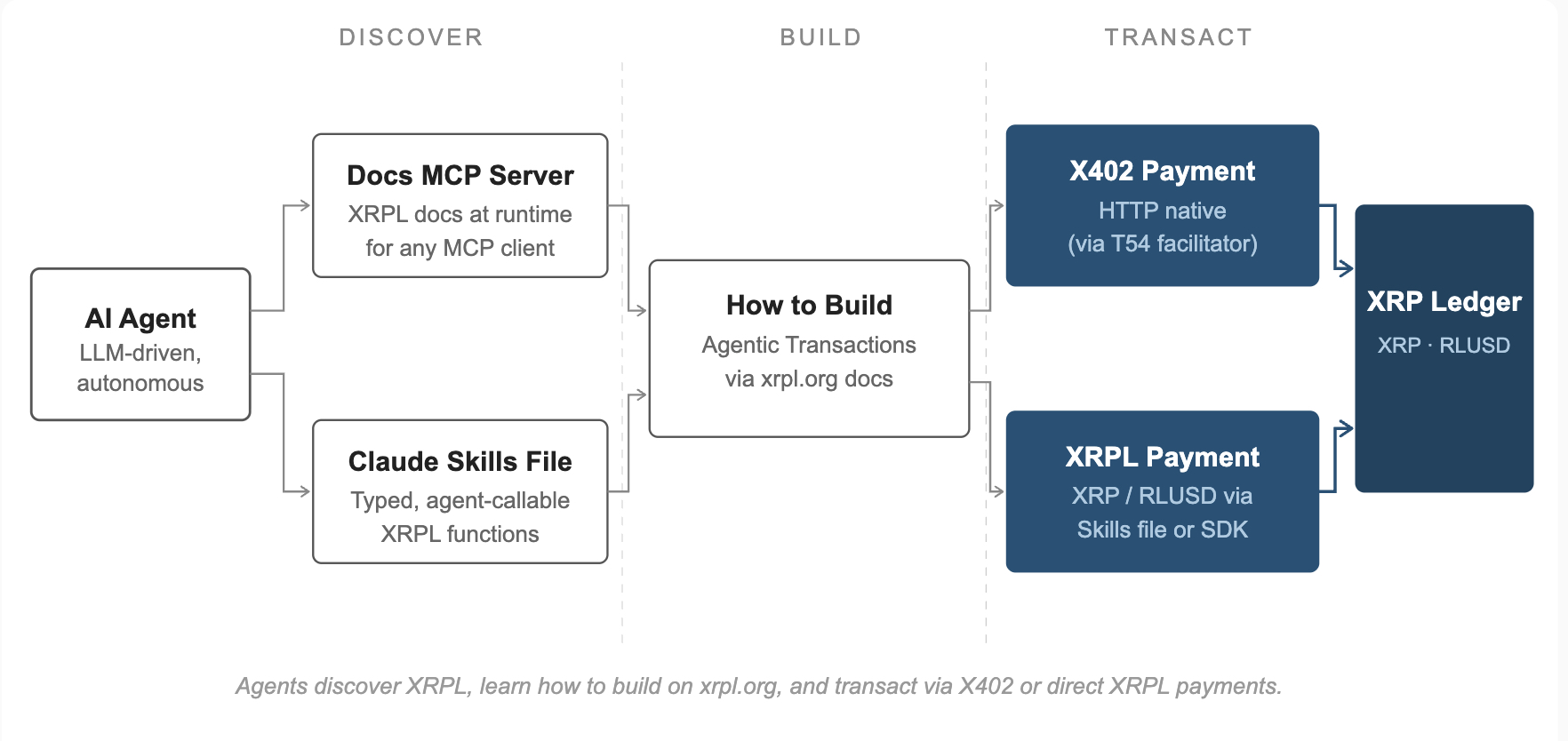
A fresh product announcement from Ripple is here to be the price catalyst XRP holders have been waiting for. Ripple has officially unveiled the XRPL AI Starter Kit, a developer toolkit purpose-built for autonomous, machine-to-machine payments on the XRP Ledger.
The Starter Kit launches in phases, with Phase 1 targeting developers building agentic payment applications, systems that settle invoices, pay for compute, and complete transactions without human approval loops.
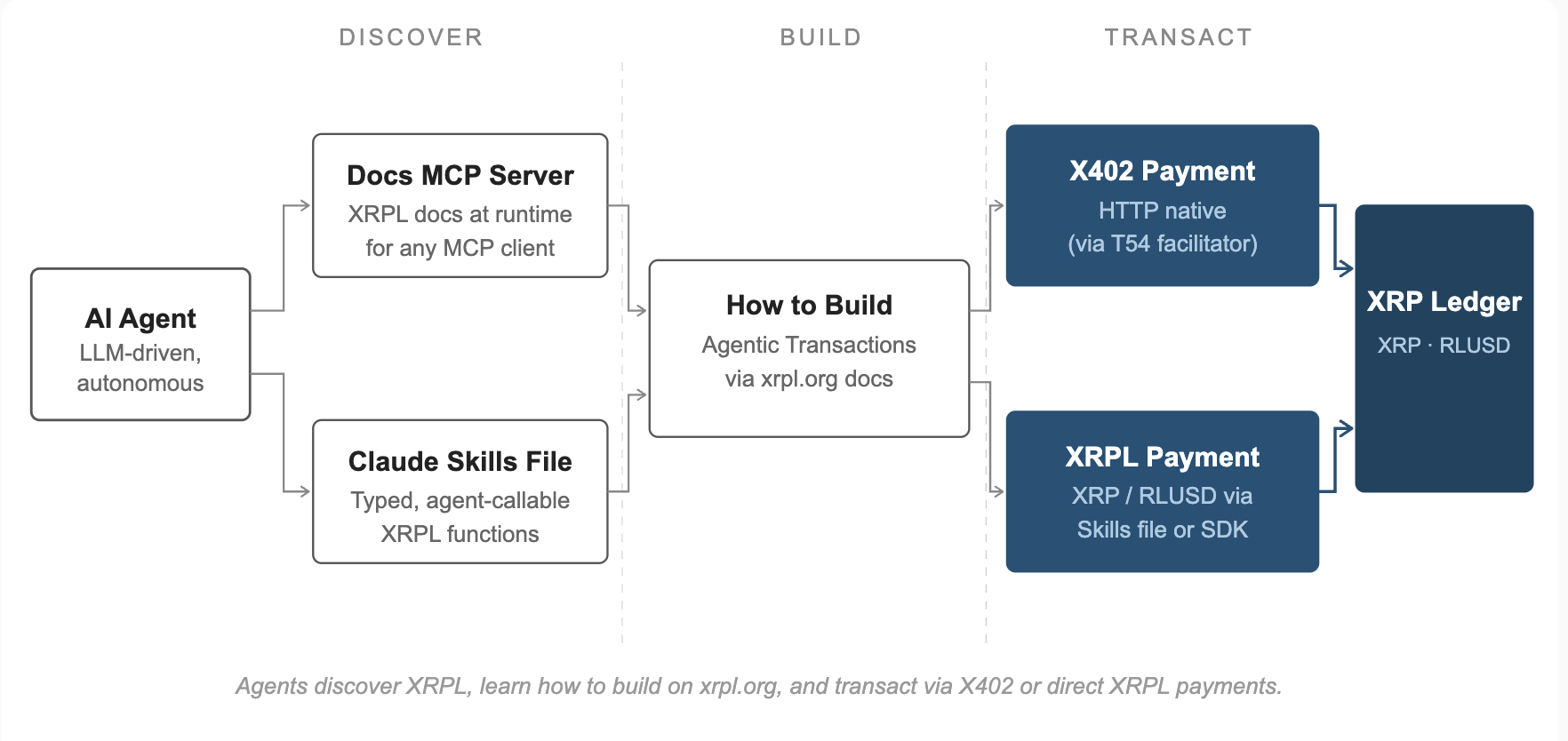
RLUSD, Ripple’s USD-backed stablecoin, is fully integrated into the toolkit, supporting price-stable workflows like payroll and agent-to-agent commerce via the XRPL DEX. Institutional safeguards like escrow, multi-signature, deposit authorization, and trust lines are available natively with no custom smart contracts required.
The convergence of developer tooling expansion, AI payment infrastructure, and ETF speculation is creating an unusually dense news cycle for XRP.
Discover: The Best Crypto to Diversify Your Portfolio
Can XRP Price Reclaim $2? Can the XRPL AI Starter Kit Drive Developer Demand?
XRP price is at the $1.10-$1.15 range, as it remains well below its highs despite recent positive sentiment. The daily range shows that liquidity is dispersed and volatility remains elevated.
Technically, XRP appears to be consolidating. The asset is caught between a meaningful support floor and resistance near the $1-$1.3 zone. XRP’s structural price dynamics have flagged that institutional demand cycles, not retail flows, are the primary price driver at this stage.

Three scenarios are on the table. First, if the XRPL AI Starter Kit drives measurable developer adoption metrics XRP could reclaim $2.50+. The second scenario would see sentiment remain constructive, but price oscillates between $1.00 and $1.30 as traders wait for a harder catalyst.
The third and last one is bearish. In the case of disappointed developer uptake, XRP could retest the sub-$1.00 support. A speculative AI-model estimate of $5 by late 2025 circulates in community feeds.
Discover: The Best Token Presales
LiquidChain Targets Early-Mover Upside as XRP Tests Key Infrastructure Narrative
XRP’s AI Starter Kit announcement underscores a broader market theme: cross-chain infrastructure and developer tooling are attracting serious capital. But at XRP’s current market cap, the asymmetric upside that early-cycle investors chase is largely already priced into any near-term scenario. That’s where earlier-stage infrastructure plays enter the conversation.
LiquidChain ($LIQUID) is a Layer 3 infrastructure project positioning itself as the cross-chain liquidity layer, fusing Bitcoin, Ethereum, and Solana liquidity into a single execution environment. Developers deploy once and access all three ecosystems simultaneously.
How it feels wielding the LiquidChain L3. — LiquidChain (@getliquidchain) June 9, 2026
 ⟁https://t.co/vqvBcdSQYC pic.twitter.com/S88rm89ybb
The presale has raised $830K to date, with $LIQUID currently priced at $0.01468. Core architecture features include a Unified Liquidity Layer, Single-Step Execution, Verifiable Settlement, and a Deploy-Once architecture, all targeting the fragmentation problem that plagues multi-chain development today.
The AI-infrastructure narrative gaining traction around XRP applies equally to L3 settlement layers like LiquidChain, as autonomous agents need unified liquidity rails, not siloed chains.
The post XRP Price to Bounce? Ripple Announces XRPL AI Starter Kit appeared first on Cryptonews.


Visa has introduced new AI, stablecoin, and token capabilities at Visa Payments Forum 2026.
Summary
- Visa announced new AI, stablecoin and token tools at Visa Payments Forum 2026.
- Visa partnered with OpenAI to support secure payments inside agentic commerce experiences.
- Visa said stablecoin settlement has reached a $7 billion annualized run rate as pilots expand.
The company said the tools will help clients support faster and more automated commerce. The updates cover agentic payments, token assurance, stablecoin settlement, and tokenized deposits.
Visa expands AI commerce tools
Visa Chief Product and Strategy Officer Jack Forestell said AI and stablecoins are changing money movement. “AI is transforming the front end of commerce,” Forestell said. He added that stablecoins are changing the back end of payments. Forestell said Visa wants to support these systems with security, reliability, and global scale.
Visa Intelligent Commerce will support agentic commerce, where AI agents act for users. The platform gives agents controls, connectivity, and tools to complete trusted transactions. The company also introduced Agent Score with New Generation. The tool helps merchants check whether AI agents can navigate and complete tasks on their websites.
Visa also announced an Agentic Directory for verified agents and merchants. The directory helps merchants identify trusted agents and helps agents confirm legitimate merchants. Visa said it has formed a strategic partnership with OpenAI. The collaboration will support secure Visa payments inside agentic commerce experiences across OpenAI.
Token upgrades target digital payments
Visa also announced token upgrades for AI-driven commerce. The company said tokens will carry more data, context, and assurance during digital transactions. Current payment tokens already include secure data for digital payments. Visa plans to add more details about transaction type, token use, and payment origin.
The company also introduced a token assurance signal. Visa argued that the signal uses provisioning and behavioral history to measure trust behind each transaction. These upgrades will give issuers more signals for approval decisions. Visa said they can help reduce false declines for merchants and reduce friction for consumers. The company said AI-driven commerce needs credentials with stronger identity and permission signals. It also said trust should move across devices, channels, and use cases.
Visa also demonstrated early work from Crypto Labs and developer teams. One proof of concept lets AI agents pay for digital services through a terminal. “We believe a growing share of creation and transactions will be led by developers using AI tools,” Forestell said. He said Visa wants cards to work well in the command line.
Stablecoin settlement gains scale
Visa also outlined progress on stablecoins and blockchain-based settlement. The company said it will build a technology layer for tokenized deposits. That layer would let banks turn traditional deposits into programmable digital money. Visa said banks can match stablecoin speed while keeping funds on balance sheet.
As reported by crypto.news, Visa is actively expanding stablecoin settlement pilots across regions, blockchains, and currencies. The company said it has moved billions of dollars in stablecoins across VisaNet. As of March 2026, Visa said its stablecoin settlement run rate reached about $7 billion. Issuing banks already settle onchain with Visa seven days a week. The company is also working to extend seven-day settlement to acquirers. Visa said this would increase flexibility and settlement frequency across its network.
Visa also continues to expand stablecoin-linked card programs worldwide. The company said more than 160 programs are live or in development. For clients modernizing systems, Visa pointed to modular and cloud-native services. It named Pismo, Unified Checkout, and Visa Intelligent Authorization as part of that effort. “History is filled with innovations that never reached scale,” Forestell said. He added that trust, security, and global reach decide which systems succeed.

Declan Rice reveals what Thomas Tuchel demanded from England stars against Costa Rica | Football

Alcoa Corporation (AA) Presents at 16th Annual Wells Fargo Industrials & Materials Conference – Slideshow

Bitcoin has reached a deep bear-market valuation zone



-

 Fashion5 days ago
Weekend Open Thread: Evereve – Corporette.com
-
 Crypto World6 days ago
Jensen Huang Approves Samsung, SK Hynix, and Micron for NVIDIA (NVDA) HBM4 Memory Supply
-

 Crypto World3 days ago
Anatomy of the June crypto crash: Fed, Iran, Saylor
-
 Entertainment4 days ago
The Best Mystery Series of All Time Is Surging on Streaming 30 Years After It Ended
-

 NewsBeat3 days ago
Alexander Zverev wins the French Open to finally earn a 1st Grand Slam title
-

 Tech5 days ago
Suspicious Polyfill login prompts pop up on Toshiba, Muji websites
-
Crypto World4 days ago
Senator Cynthia Lummis Calls CLARITY Act the Most Consequential Financial Legislation of This Generation
-

 Tech6 days ago
Microsoft launches MXC, an OS-level sandbox for AI agents, with OpenAI and Nvidia already on board
-

 Tech4 days ago
Microsoft unveils seven homegrown AI models in new bid for ‘long term self-sufficiency’
-

 Business6 days ago
(VIDEO) Justin Bieber Delivers Surprise Happy Birthday Serenade to Diners at Los Angeles Mexican Restaurant
-
 Business4 days ago
The Pain Points Taking a Fragile Tech Rally Down a Notch
-
 Crypto World3 days ago
Eli Lilly (LLY) Stock Surges 4% Following Breakthrough Sleep Apnea Trial Results
-
Crypto World6 days ago
LBank Surpasses 25 Million Users Worldwide as AFA Partnership Continues to Drive Global Growth
-

 Tech5 days ago
Von der Leyen’s AI envoy pick draws conflict-of-interest fire
-

 Tech6 days ago
Meta steals a tactic from Tesla and builds data centers in tents
-

 Crypto World4 days ago
Trump’s AI Ownership Plan Could Benefit Anthropic at OpenAI’s Expense
-
 Sports2 days ago
Bangladesh beat Australia after 20 years in ODIs, register only their second win over six-time world champions | Cricket News
-

 Business3 days ago
High Stakes for Wembanyama as New York Pushes for 3-0 Lead
-

 Tech5 days ago
Hackers now exploit SolarWinds Serv-U flaw to crash servers
-

 Tech3 days ago
Notion restores access to Anthropic after service disruption
You must be logged in to post a comment Login