



Friendship breakups are never easy, but few are as messy and expensive as the collapse of Elon Musk and Sam Altman’s once thriving tech bromance.
Tech
If This Stunning Coupe Is The Future Of BMW ALPINA, The Purists Will Be Delighted



You can tell a lot from a concept car. No, these flights of automaker fancy — divorced as they are from factors so tedious as road safety, regulations, and “can we actually afford to build this?” — are unlikely to make it to dealership forecourts, or at least not in their original form. But as signposts to what a car company believes is important (and will eventually sell), they’re rich seams for the digging.
On that front, the new Vision BMW ALPINA is attention-grabbing for more than just its graceful silhouette. As the “Vision” prefix suggests, it’s the handiwork of BMW Group Design rather than a production model per se. The “ALPINA” part, meanwhile, confirms this is a preview of something a whole lot more niche than the usual BMW concept.
 BMW
BMW
Once a standalone tuner, then brought in-house, Alpina is now the core of what BMW says will fill the (broad) gap between its regular range and the sky-high luxury echelons of Rolls-Royce. What’s unclear — and probably won’t be known until the first BMW ALPINA car debuts in 2027, a riff off the BMW 7 Series — is just how far the brand will stray from BMW’s own focus right now.
You’re rich and enjoy vast coupes and V8 engines, right?

If the Vision BMW ALPINA is anything to go by, the answer there could be a considerable distinction under the hood. The concept car is a two-door coupe, a design study for what a four-passenger grand tourer could deliver if given plenty of space and money to play with. At nearly 205 inches long, it’s only about 7 inches shorter than a 7 Series sedan.
The designers aren’t giving specifics for powertrain, but it’s a V8 “tuned to produce the characteristic notes of the Alpina exhaust” that BMW ALPINA says is envisaged for propulsion. Considering how often show cars these days are all-electric or plug-in hybrid, that’s a conspicuous departure. It could also reflect the reality that high-end car buyers may not quite be ready for full electrification — or, more accurately, ready to give up their evocative combustion soundtrack.
 BMW
BMW
Since BMW is putting its best foot forward with EVs for the mass market — and, given the whims of the rich, it’s their taste for private jets that comprises the bulk of their carbon footprint, not rarely-driven four-wheel fancies in the garage — we can probably forgive the old-school engine. BMW ALPINA certainly wraps it up in modern style, anyway.
Not just slotting in, but standing out

The lengthy hood is fronted by a sizable kidney grille, illuminated as per many of BMW’s recent production cars. The headlights are narrow and angrily squinting, reminiscent of what’s on the new 2027 i7 electric sedan; they’re paired with 20-spoke alloy wheels — a staggered set, measuring 22 inches at the front, 23 inches at the rear — that are an Alpina hallmark.
 BMW
BMW
Inside, and unsurprising given the scale of the coupe, BMW ALPINA promises plenty of space. BMW’s recent dashboard displays deliver the tech to the front; a pair of crystal glasses that power up out of the central armrest add some drama to the rear cabin. No word on overall performance, but a Comfort+ drive mode goes beyond what a mainstream BMW delivers for cosseting.
 BMW
BMW
There’s a Sport mode, too, naturally. Alpina’s goal, after all, was always a subtly different riff on performance compared to BMW’s own M division. If BMW ALPINA is to continue that strategy — and justify price tags in excess of what a mass-market BMW currently commands — it’ll need to draw on that unique focus when its first production cars arrive. A modern V8 for those not quite ready to go entirely electric might be just what’s required.
Continue Reading

When to watch Aston Villa vs. Liverpool
- Friday, May 15, at 3 p.m. ET (12 p.m. PT).
Where to watch
- Aston Villa vs. Liverpool will air in the US on Peacock Premium.
Liverpool is aiming to seal a top-four finish on Friday as it travels south to face an Aston Villa team looking to turn around a recent poor run of results.
Both teams come into this clash on 59 points, with Liverpool sitting above the hosts in fourth place in the English Premier League due to superior goal difference.
Until recently, Villa seemed assured of securing a spot in the UEFA Champions League. But its pursuit of a place in the UEFA Europa League final appears to have affected its domestic form, with three games without a win allowing Bournemouth to potentially leapfrog it into fifth.
Aston Villa takes on Liverpool on Friday, May 15, at Villa Park in Birmingham, with kickoff set for 8 p.m. BST. That makes it a 3 p.m. ET or 12 p.m. PT start in the US and Canada, and a 5 a.m. AEST kickoff in Australia in the early hours of Saturday morning.
Mohamed Salah is line to play his final away game for Liverpool today, after recovering from a thigh injury sustained in last month’s EPL win over Crystal Palace.
How to watch Aston Villa vs. Liverpool in the US without cable
Friday’s clash at Villa Park will be broadcast on streaming service Peacock. To catch the game live on Peacock, you’ll need a Peacock Premium or Premium Plus subscription.
Peacock offers two Premium plans, and after recent price increases, the ad-supported Premium plan costs $11 a month and the ad-free Premium Plus plan costs $17 a month.
How to watch the Premier League 2025-26 with a VPN
If you’re traveling abroad and want to keep up with Premier League action while away from home, a VPN can help enhance your privacy and security when streaming.
It encrypts your traffic and prevents your internet service provider from throttling your speeds. Additionally, it can be helpful when connecting to public Wi-Fi networks while traveling, providing an extra layer of protection for your devices and logins. VPNs are legal in many countries, including the US and Canada, and can be used for legitimate purposes such as improving online privacy and security.
However, some streaming services may have policies restricting VPN use to access region-specific content. If you’re considering a VPN for streaming, check the platform’s terms of service to ensure compliance.
If you choose to use a VPN, follow the provider’s installation instructions to ensure you’re connected securely and in compliance with applicable laws and service agreements. Some streaming platforms may block access when a VPN is detected, so verifying if your streaming subscription allows VPN use is crucial.
Price $78 for two yearsLatest Tests No DNS leaks detected, 18% speed loss in 2025 testsJurisdiction British Virgin IslandsNetwork 3,000 plus servers in 105 countries
ExpressVPN is our current best VPN pick for people who want a reliable and safe VPN, and it works on a variety of devices. It’s normally $120 a year for its most popular plan (Advanced), but if you sign up for an annual subscription for $90, you’ll get three months free. That’s the equivalent of $6 a month.
Note that ExpressVPN offers a 30-day money-back guarantee.
Livestream Aston Villa vs. Liverpool in the UK
This Friday night clash is exclusive to Sky Sports and will be shown on its Sky Sports Main Event channel. If you already have Sky Sports as part of your TV package, you can stream the game via its Sky Go app. Cord-cutters will want to set up a Now account and a Now Sports membership to stream the game.
Sky’s standalone streaming service Now offers access to Sky Sports channels with a Now Sports membership. You can get a day of access for £15 or sign up to a monthly plan from £35 a month right now.
Livestream Aston Villa vs. Liverpool in Canada
If you want to livestream EPL games in Canada this season, you’ll need to subscribe to Fubo. The service has secured exclusive rights to the Premier League and is broadcasting all 380 matches live.
Fubo is the go-to destination for Canadians looking to watch the EPL, with exclusive streaming rights to every match. It currently costs CA$27 for the first month, then CA$31.50 per month thereafter.
Livestream Aston Villa vs. Liverpool in Australia
Livestreaming rights for the EPL are now with Stan Sport, which is showing all 380 matches live, including this game.
Stan Sport will set you back AU$20 a month (on top of a Stan subscription, which starts at AU$12). It’s also worth noting that the streaming service is currently offering a seven-day free trial.
A subscription will also give you access to Premier League, Champions League and Europa League action, as well as international rugby and Formula E.

An anonymous reader quotes a report from Ars Technica: A bill focused on maintaining long-term playable access to online games has passed out of the California Assembly’s appropriations committee, setting up a floor vote by the full legislative body. The advancement is a major win for Stop Killing Games‘ grassroots game preservation movement and comes over the objections of industry lobbyists at the Entertainment Software Association. California’s Protect Our Games Act, as currently written, would require digital game publishers who cut off support for an online game to either provide a full refund to players or offer an updated version of the game “that enables its continued use independent of services controlled by the operator.” The act would also require publishers to notify players 60 days before the cessation of “services necessary for the ordinary use of the digital game.” As currently amended, the act would not apply to completely free games and games offered “solely for the duration of [a] subscription. Any other game offered for sale in California on or after January 1, 2027, would be subject to the law if it passes. […]
In a formal statement of support for the bill sent to the California legislature, SKG wrote that “there is no other medium in which a product can be marketed and sold to a consumer and then ripped away without notice As live service games rise in popularity for game developers and gamers alike, end-of-life procedures are essential tools to ensure prolonged access to the games consumers pay to enjoy.” The Entertainment Software Association, which helps represent the interests of major game publishers, publicly told the California Assembly last month that the bill misrepresents how modern game distribution actually works. “Consumers receive a license to access and use a game, not an unrestricted ownership interest in the underlying work,” the ESA wrote. The eventual shutdown of outdated or obsolete games is “a natural feature of modern software,” the group added, especially when that software requires online infrastructure maintenance. The ESA also said the bill would impose unreasonable expectations on publishers regarding licensing rights for music or IP rights, which are often negotiated on a time-limited basis. “A legal requirement to keep games playable indefinitely could place publishers in an impossible position — forcing them to renegotiate licenses indefinitely or alter games in ways that may not be legally or technically feasible,” they wrote.

On Thursday, closing arguments wrapped up in Musk’s lawsuit against OpenAI, leaving a jury to deliberate next week whether Altman and other executives “stole a charity” (as one of Musk’s lawyers put it) by turning much of what was once a nonprofit research lab into a corporate behemoth. For three weeks, lawyers on both sides have deployed an increasingly unhinged body of evidence in an attempt to discredit both men and prove they’re untrustworthy and power-hungry.
If the jury rules that Musk was duped into donating roughly $38 million to OpenAI under false pretenses, then Judge Yvonne Gonzalez Rogers will decide on the damages, which could potentially lead to $150 billion in financial restitution and, while unlikely, could also include major changes to OpenAI’s leadership and governance structure. Even if the jury does not rule in Musk’s favor, however, it’s possible that the evidence put forth at trial will be enough to convince state regulators to revisit the agreements that allowed OpenAI to restructure into a for-profit enterprise to begin with.
Lawyers tell me that whoever loses will likely appeal, meaning the catfight might not be over yet. But for now, here are five major revelations from the trial.
OpenAI’s board members questioned Sam Altman’s honesty
Musk’s legal team sought to paint Altman as a deeply untrustworthy person, prone to lying to his co-founders, employees, and board members if it meant advancing his interests.
Multiple former OpenAI employees and board members testified as much in the courtroom. Altman’s “pattern of behavior related to his honesty and candor” led directly to his temporary ouster as CEO in 2023, said Helen Toner, a former board member, in a video deposition. He had a tendency of “saying one thing to one person and completely the opposite to another person,” Mira Murati, OpenAI’s former chief technology officer, testified. In one instance, she said, Altman explicitly lied to her about the safety review required to vet a new AI model.
Greg Brockman kept a diary — and he probably wishes he hadn’t
Some of the more salacious evidence entered into trial came from a personal diary kept by OpenAI president Greg Brockman, who chronicled his “stream of consciousness” as he weighed whether it would be “morally bankrupt” to pivot OpenAI into a for-profit enterprise.
“Can’t see us turning this into a for-profit without a very nasty fight,” he wrote in one 2017 entry. “It’d be wrong to steal the nonprofit from him,” meaning Musk, who co-founded OpenAI and provided most of its start-up funding. “He’s really not an idiot,” Brockman later wrote. “His story will correctly be that we weren’t honest with him in the end.”
Brockman was also candid about his personal ambitions; “It would be nice to be making the billions,” he wrote. He later received a stake in OpenAI now estimated to be worth about $30 billion.
Surprise, surprise: Elon Musk is difficult to collaborate with
OpenAI built a bot in 2017 that was so advanced, it could beat top professional players at strategic multiplayer battle game Dota 2, a major milestone for the budding lab. “Time to make the next step for OpenAI. This is the triggering event,” Musk emailed Brockman.
Musk gave Brockman and cofounder Ilya Sutskever new Tesla Model 3 cars, presumably to “butter us up,” Brockman testified. The Tesla CEO then summoned them to his self-described “haunted mansion” for discussions of a possible OpenAI for-profit arm, where whiskey was served by Musk’s then-girlfriend Amber Heard.
At one point, Musk became so irate at his guests’ insistence that they share control of OpenAI — rather than cede absolute control to Musk — that “I actually thought he was going to hit me, physically attack me,” Brockman testified. In the following months, Musk repeatedly pitched having Tesla absorb OpenAI, Altman testified. And, in one “particularly hair-raising moment,” he mused that OpenAI should pass on to his children.
Musk ultimately left OpenAI in 2018 to begin building his own competitor. During an all-hands meeting, Musk got into another tense verbal tussle with Josh Achiam, now OpenAI’s chief futurist, over the race to develop artificial general intelligence. “He snapped and called me a jackass,” Achiam testified. For Achiam’s valor, two OpenAI employees — including Dario Amodei, who later departed to form Anthropic — awarded him a small golden statue of a donkey’s rear end, inscribed with the message, “Never stop being a jackass for safety.”
Microsoft cozied up to OpenAI to avoid being left behind in the AI race
Musk first funded OpenAI because of another friendship breakup, this one with Google cofounder Larry Page, who Musk says mocked him at his own birthday party for preferring humans over computers. Microsoft — which is named in Musk’s lawsuit for aiding and abetting OpenAI’s abandonment of its nonprofit mission — later became OpenAI’s first major corporate investor in 2019, because it, too, wanted to compete with Google as the AI race heated up.
“I don’t want to be IBM,” Microsoft CEO Satya Nadella wrote to executives, referring to that company’s decline in the personal computing race, according to emails revealed at trial. “It was becoming even more core and important that we had real agency at every layer of the stack,” Nadella testified.
That meant ingratiating itself in every corner of OpenAI’s world. Microsoft played a crucial role in bringing Altman back to power after the failed board coup in 2023, which Nadella referred to as “amateur city, as far as I was concerned.” In a text thread revealed at trial, Altman asked Microsoft executives to vet various members of OpenAI’s reconstituted board of directors, who now control both the for-profit company and the original nonprofit.
By this summer, Microsoft will have invested over $100 billion in OpenAI, one of the company’s executives testified. The company was awarded a 27 percent stake in OpenAI last fall.
Everybody wants to rule the world (of artificial general intelligence)
Microsoft. Musk. Altman. Brockman. Almost everyone who testified at trial pointed fingers at a different boogeyman whose motives were too impure and whose character was too corruptible, to be trusted with control of what all agreed would be an extremely consequential technology. By contrast, their own introspection mostly took a back seat to ambition.
“We don’t want to have a Terminator outcome,” Musk testified, to apparent eyerolls from Judge Gonzalez Rogers, who tried and sometimes failed to steer the trial away from discussions of AI’s existential risks. “If you have someone who is not trustworthy in charge of AI,” Musk said, “I think that’s a very big danger for the whole world.”
Over a decade ago, Musk came together with OpenAI’s cofounders to build a charity equipped to take on a different threat then poised to lead the AI race: Google, which had recently acquired Demis Hassabis’ DeepMind. Now, like Altman and Brockman, who testified that they resisted Musk’s dictatorial attempts to secure absolute control of artificial general intelligence, Musk portrayed himself as someone selfless and transparent enough to be put in charge.
“It is ironic that your client, despite these risks, is creating a company that is in the exact space,” Gonzalez Rogers at one point told Musk’s lawyer, in reference to xAI, which has come under fire this year for facilitating the mass creation of nonconsensual deepfakes. “I suspect there are plenty of people who wouldn’t like to put the future of humanity in Mr. Musk’s hands.”
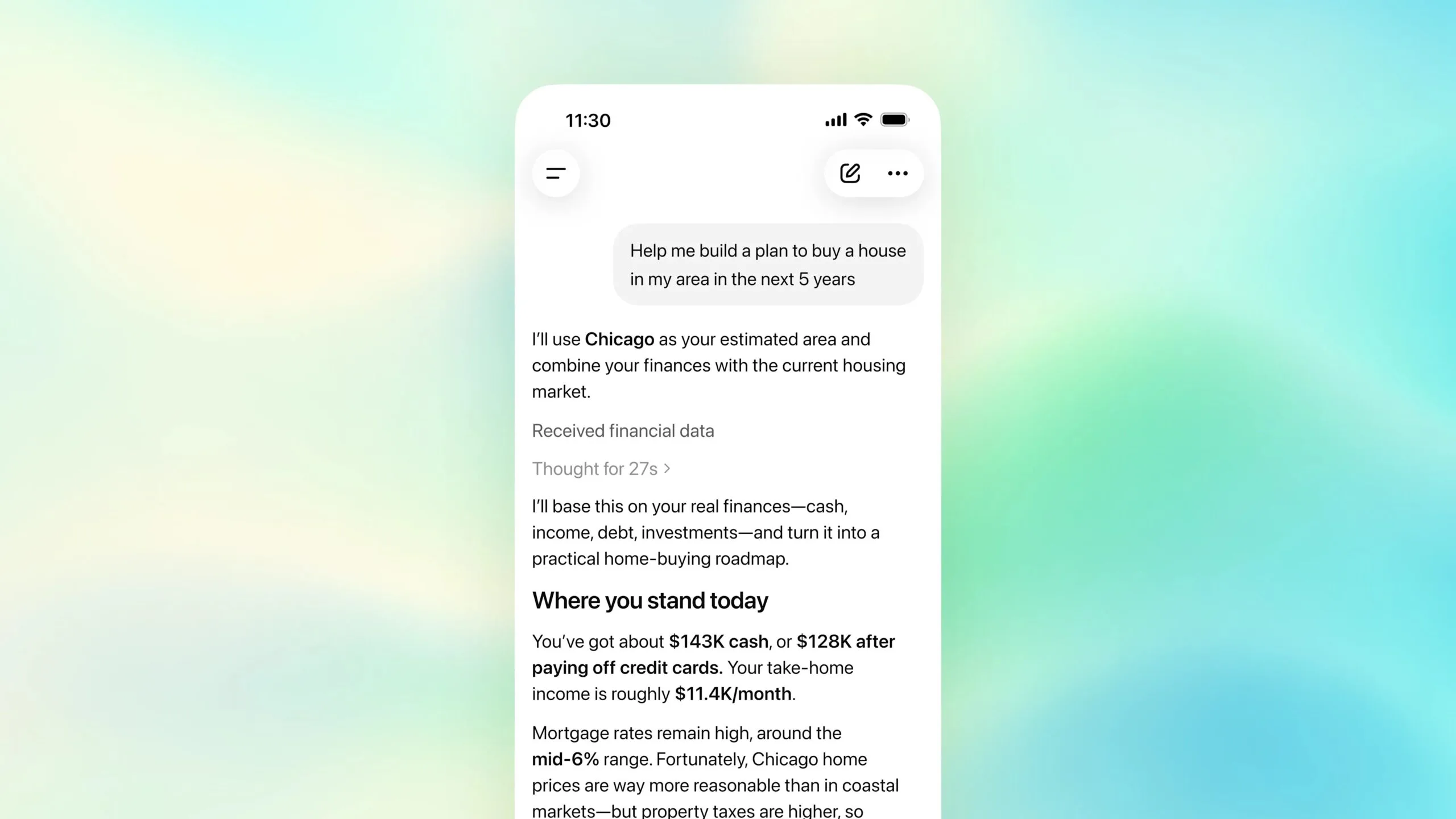
ChatGPT already knows a lot about you. OpenAI now wants to add your finances to that list. The company has launched a personal finance feature for ChatGPT, currently in preview for Pro subscribers in the US at $200 a month. OpenAI says it will expand to Plus users after gathering feedback from this early rollout.
It lets you connect your financial accounts through Plaid, a platform that bridges bank apps with third-party services and works with over 12,000 institutions, including Chase, Fidelity, Schwab, American Express, and more.
What can ChatGPT see when you connect your financial accounts?

Once connected, ChatGPT can see your balances, spending history, active subscriptions, upcoming payments, stock portfolio, and liabilities like credit card debt and mortgages. It cannot make changes to your accounts or view full account numbers.
A dashboard gives you a snapshot of your financial picture, and you can ask the chatbot things like whether your spending has changed recently or how to plan for buying a home. OpenAI says its newer GPT-5.5 model handles financial reasoning better than previous versions.
Support for Intuit is also coming soon, which would allow ChatGPT to analyze things like the tax impact of a stock sale or your odds of getting approved for a credit card and loan.
Should you actually connect your bank account to ChatGPT?

OpenAI says users stay in control, with the ability to disconnect accounts at any time. Synced data gets removed within 30 days of disconnecting. You can also delete saved financial memories and choose whether your data is used to train OpenAI’s models.
OpenAI doesn’t clearly spell out what happens to your financial data beyond AI training or what protections are in place in the event of a security breach. Your bank balance, spending habits, and credit card debt are about as personal as it gets. Whether you trust an AI chatbot with all of that is entirely up to you.
This launch follows ChatGPT Health, introduced in January, which raised similar trust questions around sensitive personal data. Earlier today, OpenAI also added Codex to the ChatGPT mobile app, allowing you to monitor and steer AI-powered coding sessions directly from iOS and Android.


The popular VR game Moss and its sequel are coming to consoles and PCs in a bundle. Moss: The Forgotten Relic brings together Moss, Moss: Book II and the Twilight Garden DLC into a single package. Developer Polyarc says the games have been “beautifully enhanced and reimagined.”
This was likely a necessity, given that VR games tend to play differently than traditional flat-screen titles. This is especially true in the case of Moss, which features a unique VR playstyle. In the VR versions, players control both a mouse named Quill and act as a God of sorts over the whole gameworld. The VR headset lets players look around every nook and cranny and take actions to impact the level.
The console and PC versions, on the other hand, seem more traditional. There’s a camera system that follows the mouse avatar, though the trailer doesn’t exactly explain how that works. The footage does show the player exhibiting similar God-like powers over levels, so that mechanic is still in place.
The developer promises new “handcrafted cutscenes” which is fun. There’s also a new accessibility option that lets players skip difficult combat sections. This is great for people who just want to solve some puzzles, of which the games have many.
Moss: The Forgotten Relic comes out sometime this summer and will be available for PC via Steam, Switch, Switch 2, PS5 and Xbox Series X/S. We don’t have a price just yet.
It’s not often that VR games get ported to flat screens, but the reverse certainly isn’t true. There are VR versions of Resident Evil games, Hitman games, No Man’s Sky and Borderlands 2, among others.


Two vulnerabilities in the Avada Builder plugin for WordPress, with an estimated one million active installations, allow hackers to read arbitrary files and extract sensitive information from the database.
One of the flaws is tracked as CVE-2026-4782 and can be exploited in all versions of the plugin through 3.15.2 by an authenticated users with at least subscriber-level access to read the contents of any file on the server.
The other security issue received the identifier CVE-2026-4798 and is an SQL injection that can be leveraged without authentication. However, exploitation is possible only if the WooCommerce e-commerce plugin for WordPress has been enabled and then deactivated.
Avada Builder is a drag-and-drop webpage builder plugin for the Avada WordPress theme that lets you create and customize website layouts, content sections, and design elements without writing code.
The two issues were discovered by security researcher Rafie Muhammad, who reported them through the Wordfence Bug Bounty Program and received $3,386 and $1,067, respectively, for the findings.
Wordfence explains that the arbitrary file read is possible via the plugin’s shortcode-rendering functionality and the custom_svg parameter. The issue is that the plugin does not properly validate file types or sources, allowing access to sensitive files such as wp-config.php, which typically contains database credentials and cryptographic keys.
Access to wp-config.php can lead to the compromise of an administrator account and full site takeover.
Although the flaw received a medium-severity rating because it requires subscriber-level access, the requirement does not represent a barrier, as many WordPress sites offer user registration.
The time-based blind SQL injection flaw tracked as CVE-2026-4798 affects Avada Builder versions through 3.15.1. The issue exists because user-controlled input from the product_order parameter was inserted into an SQL ORDER BY clause without proper query preparation.
The flaw can be exploited by unauthenticated attackers to extract sensitive information from the site database, including password hashes. The prerequisite for exploiting it is to have used WooCommerce and then deactivated it, and its database tables must be intact.
The two flaws were submitted to Wordfence on March 21 and reported to the Avada Builder publisher on March 24. A partial fix, version 3.15.2, was released on April 13, while the fully patched version 3.15.3 was released on May 12.
Impacted website owners/admins are advised to update to Avada Builder version 3.15.3 as soon as possible.
Automated pentesting tools deliver real value, but they were built to answer one question: can an attacker move through the network? They were not built to test whether your controls block threats, your detection rules fire, or your cloud configs hold.
This guide covers the 6 surfaces you actually need to validate.

OpenAI is previewing a feature that lets ChatGPT Pro users connect bank and investment accounts through Plaid, allowing the chatbot to analyze spending, subscriptions, balances, portfolios, debt, and major financial decisions. “More than 200 million people are already going to ChatGPT every month with finance questions — from budgeting to tips on how to cut back on spending,” OpenAI said in its announcement. “Now, users can securely connect their financial accounts with Plaid to get the full view of their financial picture in the context of their personal goals, lifestyle, and priorities that they’ve shared with ChatGPT, powered by OpenAI’s advanced reasoning capabilities.” The Verge reports: When financial accounts are connected, OpenAI says that ChatGPT users can view a dashboard that details their spending history, including any active subscriptions. Users can also ask it to help with financial decisions like buying a house or signing up for credit cards and flag any changes in spending habits. This financial feature will be initially available to users in the US who subscribe to ChatGPT’s $200-per-month Pro tier. “We’ll learn and improve from early use before rolling it out to Plus, with the goal of making it available to everyone,” says OpenAI.
To assuage concerns, OpenAI promises users “control over their data,” including the ability to disconnect their bank accounts from ChatGPT at any time, though the company has up to 30 days to delete your data from its systems. You can also view and delete “financial memories” like goals or financial obligations saved by the chatbot. User control extends to whether your data is fed back into AI models — users can enable the option to “Improve the model for everyone” to allow financial data in their ChatGPT conversations to be used for training AI, for example. OpenAI also says ChatGPT can’t make any changes to your bank accounts or see “full account numbers.”
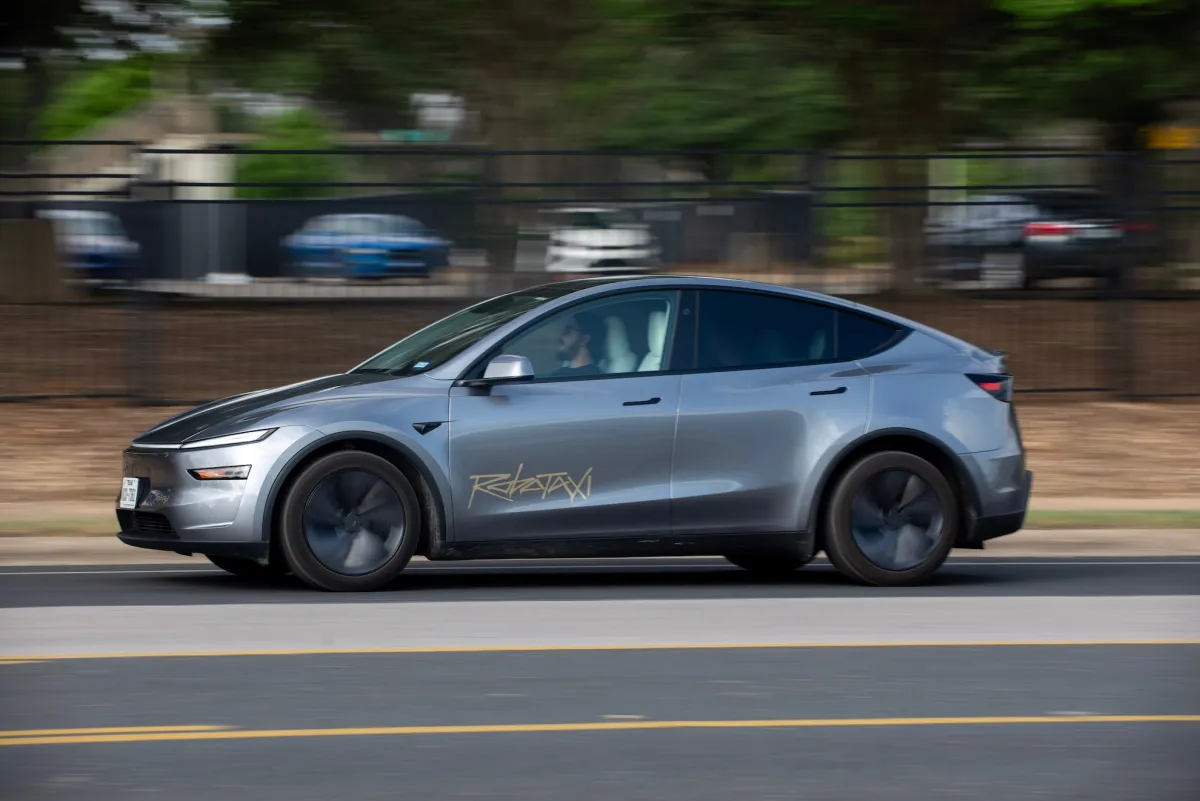
Tesla Robotaxis have crashed at least twice since July 2025 while a teleoperator was remotely driving the vehicles, according to newly unredacted information submitted to the National Highway Traffic Safety Administration (NHTSA).
Both crashes happened in Austin, Texas and occurred at low speeds. In each case, there was a safety monitor behind the wheel and no passengers were onboard.
The new information comes just a few months after Tesla told lawmakers that it allows remote operators to pilot one of the company’s vehicles as long as they stay under 10 miles per hour. “This capability enables Tesla to promptly move a vehicle that may be in a compromising position, thereby mitigating the need to wait for a first responder or Tesla field representative to manually recover the vehicle,” the company said at the time.
Tesla, like other companies working on autonomous vehicle technology, is required to submit detailed information about any crashes to NHTSA. Unlike most of those other companies, though, Tesla had always redacted the descriptions of its crashes, claiming they were confidential business information.
It’s not clear why, but Tesla changed course this week, and the latest version of the data released by NHTSA now provides a narrative description for all 17 crashes Tesla has recorded since last year with its nascent Robotaxi network.
In July 2025, shortly after Tesla first started operating the network in Austin, the company’s automated driving system (ADS) apparently had trouble moving forward while stopped on a street. The safety monitor requested help from Tesla’s remote assistance team, and a teleoperator “took over vehicle control and gradually increased vehicle speed and turned the Tesla ADS left toward the left side of the street.”
The teleoperator then drove “up the curb and made contact with a metal fence.”
A similar sequence played out in January 2026. The Tesla ADS was driving the vehicle straight on a street, when the safety monitor “requested support to assist with vehicle navigation.”
“The teleoperator took over vehicle control when the ADS was stopped and proceeded straight on the street. The Tesla vehicle made contact with a temporary barricade fora. construction site at approximately 9MPH, scraping the front-left fender and tire,” according to the data submitted to NHTSA.
Similar to other autonomous vehicle companies like Waymo, most of the other newly unredacted crashes involve Tesla Robotaxi vehicles being crashed into instead of causing crashes.
But at least two of them involve a Tesla Robotaxi clipping its mirrors on other vehicles. In one crash, from September 2025, the Tesla ADS was unable to avoid hitting a dog that ran into the street. (Tesla reported the dog was able to run away.)
In another September 2025 crash, a Tesla Robotaxi made an unprotected left turn into a parking lot and ran into a metal chain. (NHTSA recently closed an investigation into the occasional tendency of Tesla’s Full Self-Driving software to crash into parking lot bollards, chains, and gates. Waymo also issued a recall last year related to a similar problem.)
While other robotaxi companies like Waymo and Zoox have reported more crashes than Tesla, Elon Musk’s company is operating at a fraction of the scale. The details that were revealed this week in the newly un-redacted data may help explain why Tesla is scaling up its nascent autonomous ride-hailing network so slowly. Musk himself admitted last month that “making sure things are completely safe” is the biggest limiting factor to Tesla expanding the network, saying the company is being “very cautious.”
When you purchase through links in our articles, we may earn a small commission. This doesn’t affect our editorial independence.


During the second day of Pwn2Own Berlin 2026, competitors collected $385,750 in cash awards after exploiting 15 unique zero-day vulnerabilities in multiple products, including Windows 11, Microsoft Exchange, and Red Hat Enterprise Linux for Workstations.
The Pwn2Own Berlin 2026 hacking competition takes place at the OffensiveCon conference from May 14 to May 16 and focuses on enterprise technologies and artificial intelligence.
Security researchers can earn over $1,000,000 in cash and prizes by hacking fully patched products in the web browser, enterprise applications, cloud-native/container environments, virtualization, local privilege escalation, servers, local inference, and LLM categories.
According to Pwn2Own’s rules, all targeted devices run the latest operating system versions, and all entries must compromise the target and demonstrate arbitrary code execution. Vendors have 90 days to patch their software and hardware after the zero-days are disclosed at Pwn2Own.
The highlight of the second day was Cheng-Da Tsai (also known as Orange Tsai) of DEVCORE Research Team earning $200,000 after chaining three bugs to gain remote code execution with SYSTEM privileges on Microsoft Exchange.
Siyeon Wi also collected $7,500 after exploiting an integer overflow bug to hack Windows 11, and Ben Koo of Team DDOS escalated privileges to root on Red Hat Enterprise Linux for Workstations to earn a $10,000 cash prize, while 0xDACA and Noam Trobishi used a use-after-free bug to exploit the NVIDIA Container Toolkit.
In the AI category, Le Duc Anh Vu of Viettel Cyber Security hacked the Cursor AI coding agent for $30,000, Sina Kheirkhah of Summoning Team demoed an OpenAI Codex zero-day ($20,000), and Compass Security exploited Cursor ($15,000).
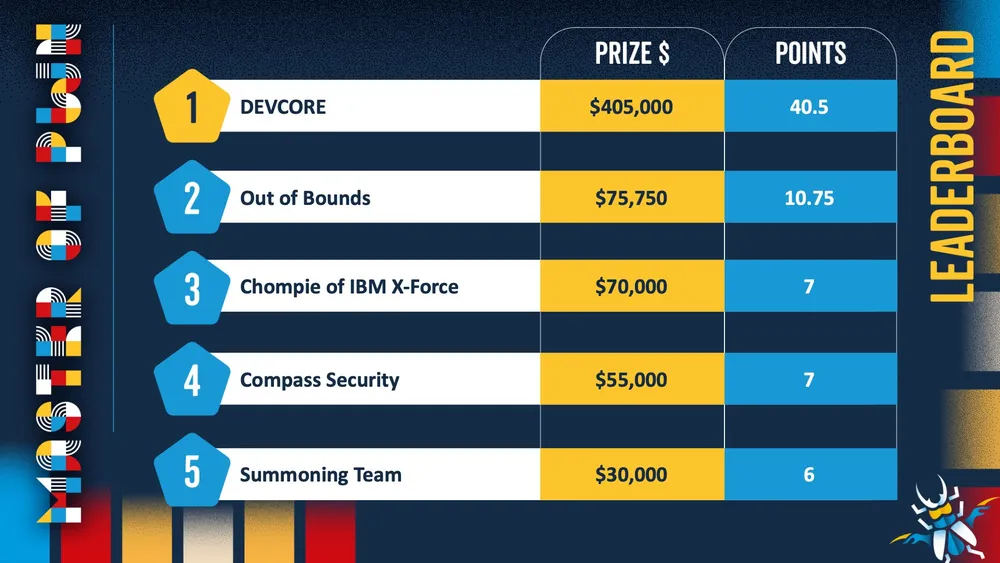
On the first day, Orange Tsai earned another $175,000 after chaining 4 logic bugs for a Microsoft Edge sandbox escape, while Valentina Palmiotti (chompie) of IBM X-Force Offensive Research collected $20,000 for rooting Red Hat Linux for Workstations and $50,000 for an NVIDIA Container Toolkit zero-day.
Windows 11 was also hacked three times on day one by Angelboy and TwinkleStar03 (working with the DEVCORE Internship Program), Kentaro Kawane of GMO Cybersecurity, and Marcin Wiązowski, each earning $30,000 in cash rewards for demonstrating new privilege-escalation zero-days.
On the third day of Pwn2Own, the hackers will target Microsoft Windows 11, VMware ESXi, Red Hat Enterprise Linux, Microsoft SharePoint, and several AI coding agents.
The full schedule for the second day and the results for each challenge are available here, while the complete schedule for Pwn2Own Berlin 2026 is available here.
During last year’s Pwn2Own Berlin contest, TrendMicro’s Zero Day Initiative awarded 1,078,750 for 29 zero-day flaws and some bug collisions.
Automated pentesting tools deliver real value, but they were built to answer one question: can an attacker move through the network? They were not built to test whether your controls block threats, your detection rules fire, or your cloud configs hold.
This guide covers the 6 surfaces you actually need to validate.


Bolt has partnered with China’s Dongfeng Motor Group to roll out electric vehicles on its ride-hailing platform in South Africa, starting in Cape Town. The Estonian company claims more than 50% market share in the country after investing roughly $180 million. The deal pairs Dongfeng’s Box hatchback and 007 sedan with Bolt’s driver network as rising fuel prices make EVs increasingly attractive for ride-hailing economics.
TL;DR
Bolt Technology, the Estonian ride-hailing company that has spent roughly $180 million building a dominant position in South Africa, has struck a deal with China’s Dongfeng Motor Group to roll out an electric-vehicle fleet in the country. The partnership will start in Cape Town, with Dongfeng’s Box hatchback and its more premium 007 sedan available to riders through Bolt’s platform. A fleet management company called Yugo Rides will operate the vehicles.
The deal is a bet on two converging forces: rising global demand for Chinese electric vehicles and the economic pressure that elevated fuel prices, driven in part by the Iran conflict, are placing on ride-hailing drivers across emerging markets. Simo Kalajdzic, who manages Bolt’s South African operations, said the company is taking a phased approach to the rollout because of infrastructure constraints, particularly the need for sufficient charging stations.
Why South Africa matters to Bolt
Bolt claims more than 50% of the ride-hailing market in Africa’s largest economy, a figure that, if accurate, would make South Africa one of the few markets globally where Uber is not the leading platform. The company has invested about $180 million in building out the local business and says South Africa consistently ranks among its top 10 markets worldwide. Kalajdzic described the country as a “strong strategic priority.”
That investment is part of a broader expansion that now spans more than 50 countries and 850 cities. Bolt, which offers ride-hailing, food delivery, and scooter rentals, earned a €7.4 billion valuation in a 2022 funding round after raising €628 million from Sequoia Capital, Fidelity Management, and other investors. It has since moved into East Asia by launching in Taiwan and entered Canada under a sub-brand called Hopp. It also launched scooters in Washington, DC.
The EV calculus for ride-hailing
The logic behind electrifying a ride-hailing fleet in South Africa is straightforward but not simple. Fuel costs are among the largest expenses for drivers on any ride-hailing platform, and the oil price increases linked to the Iran conflict have made that burden heavier. Electric vehicles offer substantially lower per-kilometre running costs, which in theory should improve driver earnings and make the platform more attractive to new drivers.
The constraint is infrastructure. South Africa’s charging network remains sparse compared with those in Europe or China, and the country’s electricity grid has historically been unreliable, though load-shedding has eased in recent months. Bolt’s phased approach, starting in Cape Town, which has better charging infrastructure than most South African cities, suggests the company is aware that scaling an EV fleet will take time.
Dongfeng, for its part, gains a distribution channel in a market where Chinese manufacturers are increasingly competitive but have not yet established the consumer brand recognition that BYD and others have built in Europe and Southeast Asia. Partnering with a ride-hailing platform lets Dongfeng put its vehicles in front of millions of riders without needing to build a retail network from scratch.
The IPO question
The South Africa deal arrives as Bolt weighs an initial public offering. Kalajdzic said the company will “consider options, when market conditions are right,” a formulation that venture-backed companies typically use when an IPO is being planned but not yet committed to. Bolt’s €7.4 billion private valuation dates from 2022, and market conditions for ride-hailing IPOs have shifted considerably since then, not least because Uber’s own stock has demonstrated the difficulty of sustaining high multiples in the sector.
The Dongfeng partnership could serve a dual purpose in that context. Demonstrating the ability to electrify its fleet in a key market would strengthen Bolt’s narrative for public investors, particularly those focused on environmental, social, and governance criteria. It would also help differentiate Bolt from the company whose shadow it has always operated in: Uber has invested heavily in autonomous vehicles but has been slower to electrify its conventional fleet in emerging markets.
Whether the economics work at scale remains to be seen. The deal is small, a phased rollout of two Dongfeng models in a single city, and Bolt has not disclosed the financial terms of the partnership or the number of vehicles involved. But it signals a strategic direction that, if it succeeds, could be replicated across Bolt’s African and emerging-market footprint. For a company that built its position by being cheaper and faster than Uber in markets the American company treated as secondary, electrification is a logical next step.

Sports1 second ago
McLaughlin: Why Many CFB Stadiums Need Better WiFi > Spencer talks with Tyler Wojciak about the challenges of keeping fans attending games

Tech1 minute ago
Premier League Soccer: Stream Aston Villa vs. Liverpool From Anywhere Live

NewsBeat2 minutes ago
Asbestos found at Cambridgeshire skate park

NewsBeat2 months ago
Manchester United reach agreement with Casemiro over contract clause amid transfer speculation

Politics1 month ago
US brings back mandatory military draft registration

NewsBeat1 month ago
Steven Gerrard disagrees with Gary Neville over ‘shock’ Chelsea and Arsenal claim | Football

News Videos14 minutes ago
Stock Market, Money Making Secrets, Investment & Rich Life – Dinesh Thakkar | FO202 Raj Shamani

News Videos28 minutes ago
Bitcoin GOLD Market About To Move? Here’s What The Charts Show | 15 May | Bitcoin Live Trading

News Videos37 minutes ago
Financial Management Most Important Topic For CS Executive June 2026 #cssexam #pw
-

 Fashion4 days ago
Coffee Break: Travel Steam Iron
-

 Politics7 days ago
Politics Home Article | Starmer Enters The Danger Zone
-

 Fashion5 days ago
What to Know Before Buying a Curling Wand or Curling Iron
-

 Politics4 days ago
What to expect when you’re expecting a budget
-

 Tech6 days ago
Auto Enthusiast Carves Functional Two-Stroke Engine from Solid Metal
-
 Business6 days ago
Ignore market noise, India’s long-term story intact, say D-Street bulls Ramesh Damani and Sunil Singhania
-

 Tech5 days ago
GM Agrees To Pay $12.75 Million To Settle California Lawsuit Over Misuse Of Customers’ Driving Data
-

 Crypto World5 days ago
CZ says US crypto rivals tried to block Trump pardon
-

 Crypto World6 days ago
PROS explodes 48% as Upbit and Bithumb listings ignite demand
-

 Tech4 days ago
GM agrees to $12.75M California settlement over sale of drivers’ data
-

 Crypto World7 days ago
Kraken Parent Seeks OCC Charter, Signaling Regulated Banking Access
-
Crypto World3 days ago
Bitcoin Suisse expands with Digital Asset License and Investment Business Act Registration Approval in Bermuda
-

 Sports7 days ago
Why Nathan Mackinnon Remains the Hart Trophy Favourite over Connor McDavid and Nikita Kucherov | NHL
-

 Entertainment7 days ago
Bethenny Frankel Says She Loves ‘Torturing’ Men
-

 Sports7 days ago
After Waka Waka, Shakira now drops first teaser for FIFA WC 2026 song | FIFA World Cup 2022
-
 Crypto World7 days ago
Solana UFO Meme Coins Surge After Pentagon Reveals Alien Files
-

 Crypto World52 minutes ago
E-Estate Announces 1 Year Live: Washington DC Summit as Real Estate Tokenization Enters Its Next Phase
-

 Politics3 days ago
Pakistan to enter Chinese capital market as war inflation bites
-

 Entertainment7 days ago
Young and the Restless Next Week: Cane & Matt Both Arrested in Shocker!
-
 Crypto World7 days ago
Pi Network Hits 421K Mainnet Nodes Ahead of Protocol 23 Smart Contract Launch
You must be logged in to post a comment Login