Katie Price has left fans confused after appearing to backtrack on the travel ban imposed on her husband Lee Andrews, who is yet to leave Dubai and spend time in the UK
Daniel Bird Assistant Celebrity and Entertainment Editor
Despite Andrews, a British national, sending a video to Katie and the ITV team the night before, stating he was at the airport, he failed to show up for the interview. A furious Katie explained that Lee missed his flight saying his businesses are based in the United Arab Emirates.
Andrews, who claims he’s a multi-millionaire, later told his social media followers he was in Muscat Airport, waiting for a flight – despite appearing to actually be in Terminal Two of Dubai International Airport.
Advertisement
Katie told GMB hosts Susanna Reid and Ed Balls that her husband didn’t have a travel ban – despite the programme informing her that a Foreign and Commonwealth Office spokesperson had confirmed they had offered assistance to a British man detained in the United Arab Emirates.
However, despite Katie saying Lee didn’t have a travel ban, she has backtracked on her comments from several weeks ago. Speaking on her podcast just four weeks ago, Katie was asked by her sister Sophie about Lee’s travel ban.
The former model said: “You can get a travel ban over anything in Dubai … a parking ticket, or if you owe a bill or something, electricity. You can get a travel ban after absolutely anything, like breathing the wrong way; they’re so strict.”
Advertisement
However, this week, Katie completely brushed off any concerns about Lee’s travel ban and instead, was hopeful that he will be in the United Kingdom next week. “I just want him here just to visit here and just to shut everyone up that he can get here that’s all,” she said on her podcast.
“So next week when we do the pod we’ll know if he’s come to England or not and see what is said. That’s all we need to say about Lee, there’s nothing really anymore I want to say about Lee. But yes, he’s made me look like a d******* and made himself look like a d*******. I was interrogated, which is fine, anyone can ask me questions, I can only answer the things I know.”
Advertisement
In the comment section, one fan said: “Surely, if there are zero issues, he’d jump on a plane, like the rest of us! The fact that he has lied about which airport he’s at and NOT arrived in the UK is proof enough that he’s using Kate.”
A second person wrote: “The roof on his video saying his in Muscat was the roof from Dubai airport!!” Another said: “Next week he still won’t be here! His travel ban won’t just vanish to shut everyone up.” Meanwhile, a fourth said: “Her sister is so wise to this b******t, Katie deserves so much more.”
Katie has since explained on social media that Lee would no longer be posting on his Instagram page. She wrote: “Due to all the madness of trolling, people’s speculation and media frenzy that as a married couple we have both decided @wesleeandrews is taking a break from social media and we are keeping things between us for now as it’s our life and marriage and are very happy.”
Electrician Clifton George, 45, was jailed for life after being convicted of murdering his partner Annabel Rook, 46, stabbing her 31 times during a row at their east London home after she said they should end their 10-year relationship, before triggering a gas explosion that caused £400,000 of damage
Christopher Mallett and Emma O’Neill Content Editor
13:37, 09 Jun 2026Updated 13:46, 09 Jun 2026
An electrician who stabbed a judge’s daughter to death in a frenzied attack before destroying their home in a gas explosion has been sentenced to life imprisonment.
Clifton George, 45, murdered his partner Annabel Rook, 46, inflicting 31 stab wounds during an argument at their east London home after she had told him their 10-year relationship was over.
Advertisement
Following the killing, George deliberately ignited a fire in the basement to trigger a gas canister explosion that tore through the property, causing approximately £400,000 worth of damage.
At Snaresbrook Crown Court on Tuesday, Mr Justice Constable KC handed George a life sentence, ruling that he must serve a minimum of 23 years before being considered for parole.
The judge acknowledged that George could be personable and entertaining, yet possessed “another troubling side to your character”, reports the Mirror.
“An overwhelming picture has emerged of your rage, anger, and volatility”, said the judge, adding that George had a “pronounced temper” which could be sparked by trivial matters and “perceived slights”.
Advertisement
Paying tribute to Ms Rook, the judge remarked that her character “shone brightly” through the accounts of loved ones, describing her as “kind, attentive, funny, and altruistically motivated, and someone whose instinct was to support, to listen, and to improve the lives of others.”
The judge dismissed George’s claim during the trial that he had been provoked by Ms Rook pushing him, stating such behaviour would have been “completely out of character” for her. “She feared you, she feared your wrath,” he said.
“In your rage and fury, you brutally stabbed Annabel to death.”
He further stated that even following the murder and explosion, George “remained fixated on your self-absorbed belief that Annabel had betrayed you”.
Ms Rook’s father, retired Old Bailey judge Peter Rook, described George as “utterly selfish”, while her mother Susanna Rook denounced him as “a wicked, totally narcissistic, damaged person”.
Delivering a victim impact statement in court, Mrs Rook struggled to contain her emotions as she described her daughter as “optimistic, inclusive, and full of fun”.
“We know we will never be able to come to terms with her death, and life without her is painful and hard to bear,” she said.
Advertisement
“We do feel Clifton betrayed the trust we placed in him. We welcomed him into the family in every way we could.
“Bearing in mind his short fuse, particularly when in drink, we realise his inability to understand and address his own problems means he is, was, and will continue to be a dangerous man.”
Ms Rook’s sister Sophie told the court: “Without Annabel, there is less joy and less hope.”
She revealed that her sister’s killing had left the family grappling with the “painful question of whether we could have done more to help her escape”.
Advertisement
George was found guilty at trial of murder and admitted arson in connection with the gas explosion he triggered after fatally stabbing his partner. His attempt to cite loss of self-control as a partial defence to the killing swiftly unravelled, undermined by evidence of his volatile temper, angry outbursts directed at Ms Rook throughout their relationship, and at least one occasion on which he had been physically violent towards her.
Sophie Rook spoke of the anguish of listening to George’s defence case, saying his efforts to shift the blame onto her sister felt like a second attack on her.
Ms Rook was the co-founder of social enterprise MamaSuze, which supported refugee women and children through creative arts workshops.
George killed her on the night of 16 June last year at their home in Dumont Road, Stoke Newington, punching and throttling her before arming himself with a kitchen knife.
Advertisement
George was heard shouting “you lied” as he carried out the murder, and the court was told he had flown into a rage upon discovering that Ms Rook had kept a secret from him that had been shared with her in confidence.
Following the murder, George triggered the gas explosion – described by neighbours as akin to a “mini earthquake” – which tore through the property and blew off part of the roof.
Prosecutor William Emlyn Jones KC argued during the trial that the blast had been George’s attempt to destroy evidence of the murder, as well as a final “up yours” to the Rook family.
When neighbours came to investigate following the explosion, George was discovered lying on the kitchen floor covered in blood. He acknowledged that he had “lost it” before taking Ms Rook’s life, and subsequently attempted to stab himself with a fragment of broken glass.
Advertisement
In his defence, George maintained that he did not have a “short fuse”, yet friends and family of Ms Rook provided testimony that painted a very different picture of his character.
Ms Rook’s closest friend, Sian Davin, told jurors she believed George required therapy for his anger issues, and recounted an incident in which he shoved Ms Rook against a wall and seized her by the throat.
She stated that he displayed “unreasonable flashing rage anger” on occasions, would fat-shame and gaslight Ms Rook, and had a “tendency to over-react about small trivial things”.
Daniel Varani, a former flatmate of Ms Rook, spoke warmly of their time living together, but revealed he chose to move out shortly after George arrived, owing to his “angry outbursts”.
Advertisement
The court was told of an incident in 2024 in which George stormed out of Glastonbury Festival following a row with one of Ms Rook’s friends, before drunkenly haranguing his partner.
In a separate incident, George had flown into a rage when Ms Rook washed his chef’s knives and left them to drip-dry rather than putting them away immediately.
In 2023, Ms Rook tearfully confided in her father about George’s volatile temper, saying that living with him was like “walking on eggshells” and raising the possibility of ending the relationship for the first time. She confided in her close friend Catherine Milne about the difficulties in the relationship, while insisting there had been no violence and saying: “I don’t think he would do that.”
Ms Davin told the court that her friend had acknowledged by summer 2024 that the relationship was “abusive”, and just a couple of weeks before her death, Ms Rook left her sister a voicemail stating the relationship was “not tenable”.
Advertisement
“I fear there will be some more wrath to come,” she said, in a heartbreaking voicenote which was played during the trial, where she went on to predict they would “get through this and will be stronger for it out the other side”.
Prior to the fatal stabbing, Ms Rook had informed George that they should part ways and that he should vacate their home, which she owned.
Despite this, she had intended to give her partner £50,000 to help him secure a new property, and retained hopes that the pair would continue to holiday together in the future.
George, who had been drinking red wine on the night of the murder, had discovered that he held no legal entitlement to any share of the property, and subsequently initiated an argument with Ms Rook.
Advertisement
“In the course of that argument he punched her, he then tried to strangle her, and then he went to the kitchen to get a knife, he came back with the knife and he stabbed her to death,” said Mr Emlyn Jones.
“He lost his temper, and in his rage he murdered Annabel.”
In her victim impact statement, Ms Milne pledged to carry on running MamaSuze as a “great way to keep Annabel’s legacy alive”. But she added: “It will never be the same.”
Ms Rook’s killing was “an attack on all of us at MamaSuze, and it felt so personal and abhorrent for a women’s community leader to be killed like this in her own home.”
Advertisement
She continued: “I will never understand why Clifton George felt such contempt and hatred towards someone I loved so much.”
George, a qualified electrician whose previous projects included Crossrail and the Northern Line extension, stared straight ahead from the dock as Ms Rook’s family delivered their victim impact statements.
The trial heard that he had suffered violent abuse at the hands of his mother during childhood, which ultimately led to him being placed into care. George also told the court that as a young boy he had been deeply traumatised after discovering his infant sister dead in her cot.
His barrister, Mathew Sherratt KC, told the court: “He understands this is a terrible thing he has done.”
Advertisement
George had entered a guilty plea prior to the trial for manslaughter and arson being reckless as to whether life was endangered. The jury returned a unanimous verdict of murder.
Petersfield residents say they have noticed needles, drug equipment, and human excrement in the cemetery
Cambridge residents fear restrictions on dog walkers are contributing to an “uptick in drug use” in a city centre cemetery.
Advertisement
Neil, who asked to use only his first name, has lived in Petersfield for five years. He used to regularly walk his dog in Mill Road Cemetery, but says it has now become an “intimidating place to go”.
He said: “It’s never been this bad before – there’s always been occasional drug taking, kids smoking weed and stuff, but this is a whole new level. The other day someone found seven needles lying by the path and there’s been human excrement and drug equipment found there.”
He said residents have seen “what appears to be drug dealing” in the cemetery with “people handing over cash and receiving packages”. He said: “It’s definitely a scary place to go.
“There’s a lot fewer dog walkers than in previous summers – it used to be the case where you would go at five o’clock and the place was full.”
Advertisement
Dogs are currently banned from being off-lead in the cemetery between March 1 and July 31. Cambridge City Council is consulting on extending the ban year round.
Some residents fear this will reduce footfall even more, making the cemetery even more of a hotspot for anti-social behaviour.
Neil said: “I think the council is proposing for dogs to be kept on leads all year – I’m obviously biased as a dog walker, but I’m really worried that’s going to make the situation worse. I feel like there are bigger issues in the cemetery than dogs being off leads.”
Advertisement
Donna, another Petersfield resident who asked to use only her first name, said the council has recently “ramped up their patrols” and the policy “seems to have had unintended consequences”.
She said: “Ever since then I think fewer dog walkers go there – even though the cemetery is one of the few enclosed spaces where dogs can be safely let off the lead in central Cambridge. I do understand the need to protect ground nesting birds, but what about the need to protect human beings?
“The dog walkers who used to visit the cemetery were a large community of people who walked there all day long. For me, their absence is keenly felt.”
Advertisement
Will, who asked to use only his first name, also lives in Petersfield. He agrees that the issue has “fundamentally got worse” with fewer people going to the cemetery.
He said: “It’s gotten much worse the last two or three weeks – it’s becoming really antisocial; needles on the ground, rubbish, human feces and lots of people hanging around. It’s almost like you’re looking over your shoulder – it’s easier when it’s lighter but I certainly wouldn’t be going there in the winter months.
“I feel there needs to be some measures put in place – certainly more police patrols in the area and police taking more action to tackle low-level street dealing.” He suggested measures such as closing the gates, adding more lighting or CCTV cameras.
But, Will continued, “It’s beautiful because it’s private – so how do you create this place, supposed to be a place of respect, where people aren’t worried about dangerous individuals around?
Advertisement
“I just think, fundamentally, Cambridge is such a beautiful city because it has a really lovely mixture of thriving urban city and beautifully kept green spaces. And one of the green spaces often forgotten about is the cemetery.
“Mill Road and the surrounding area can sometimes get a bit of a bad reputation, but it’s a beautiful road with thriving businesses. Other commons in the city are beautifully maintained and looked after and I would love to see that area become somewhere people can take their children and ultimately feel safe.”
A spokesperson for Cambridgeshire Constabulary said the force has stepped up patrols in the area. A 32-year-old man from Oldham was arrested last week on suspicion of possession with intent to supply class A drugs and possession of an offensive weapon.
They said: “We are aware of issues with drug dealing in the area, as a result we have increased foot patrols and we are working closely with partner agencies to tackle the issue. We would encourage people to come forward and report any issues online or via 101, always call 999 in an emergency.”
Advertisement
Cambridge City Council has been contacted for comment.
Iran attacks US bases across three Gulf allies after Trump renews strikes on Tehran
Iran has fired at least four ballistic missiles and several drones at US bases in Bahrain, Kuwait and Jordan in retaliation against Donald Trump’s renewed attacks on Tehran.
Iran’s Revolutionary Guard said its Aerospace Force launched long-range missiles at an airbase in Jordan, which hosts US military personnel. The Guard said the attack damaged critical command centres and F-35 fighter jet hangars.
The Kuwaiti army said its air defence systems were “intercepting hostile aerial targets”, while Bahrain, for the second time on Wednesday morning, sounded air raid sirens.
The escalation comes after Donald Trump’s military launched retaliatory strikes against Iran, hitting its air defence infrastructure, after the US president accused the country of shooting down an American helicopter.
Trump had warned earlier that the US “must, of necessity, respond” to the downing of an Apache helicopter that was patrolling the Strait of Hormuz. Two US pilots were rescued, uninjured, from the vital waterway after the $40m gunship went down, US officials said.
Advertisement
US Central Command announced the “self-defence strikes” were “a proportional response to unjustified Iranian aggression”.
Oil gains as Middle East tensions escalate
Oil prices surged as escalating tensions in the Middle East unsettled markets and dimmed hopes for an end to the months-long war.
Oil prices climbed about 1 per cent in early trade, moving away from a seven-week low touched in the previous session in the wake of the fresh US attacks.
Advertisement
Brent futures rose 0.9 per cent to $92.29 a barrel, while US West Texas Intermediate WTI crude climbed 0.8 per cent to $88.97.
Alisha Rahaman Sarkar10 June 2026 05:00
Iran minister warns US: ‘Leave our region if you want to be safe’
Iran’s top diplomat said foreign military forces near its territory “are at constant risk” and later vowed that there would be a response to the new US strikes.
Advertisement
Iranian forces “will leave no attack or threat unanswered,” Iranian foreign minister Abbas Araghchi said on X. “Leave our region if you want to be safe.”
Alisha Rahaman Sarkar10 June 2026 04:54
Explosions heard in Bahrain
At least two explosions were heard in Bahrain this morning, Mehr news agency reported.
Advertisement
Bahrain so far has sounded two air raid sirens and urged its citizens to take shelter after Iran began striking US allies in the Gulf region.
Alisha Rahaman Sarkar10 June 2026 04:47
Jordan says it intercepted five missiles launched from Iran
The Jordanian armed forces said this morning that they shot down five missiles launched from Iran towards the al-Azraq area.
Advertisement
The military added that debris from the interception operation fell on Jordanian territory but caused no injuries or material damage.
Iran’s Revolutionary Guard Corps said it had targeted four sites at the US’s al-Azraq base using long-range missiles.
Alisha Rahaman Sarkar10 June 2026 04:25
Advertisement
US military says nearly all drones fired by Iran intercepted
The US military has claimed that nearly all drones launched by Iran towards Kuwait, Bahrain and Jordan were intercepted.
Iran’s Revolutionary Guard said they fired drones and ballistic missiles at 21 targets spanning across US air and naval bases in the Gulf.
Alisha Rahaman Sarkar10 June 2026 04:15
Advertisement
Bahrain activates air raid sirens for second time
Bahrain’s home ministry activated air raid sirens for the second time in the day. “Citizens and residents are urged to remain calm and head to the nearest safe place,” it said in a post on X.
Iran has launched strikes at US bases in Bahrain, Kuwait and Jordan in retaliation against Donald Trump’s renewed attack on Tehran.
Alisha Rahaman Sarkar10 June 2026 04:05
Advertisement
Kuwait ‘intercepting hostile aerial targets’ as Iran fires drones
The Kuwaiti army said its air defence systems are “currently intercepting hostile aerial targets” after Iran’s Revolutionary Guard said it targeted Ali al Salem base in Kuwait with drones.
The Kuwaiti army has urged its residents to “adhere to the security and safety instructions and guidelines issued by the competent authorities, and to obtain information from authorised official sources”.
Alisha Rahaman Sarkar10 June 2026 04:00
Advertisement
Iran attacks US bases in Bahrain, Kuwait and Jordan
Iran has fired at least four ballistic missiles and several drones at US bases in Bahrain, Kuwait and Jordan in retaliation against Donald Trump’s renewed attacks on Tehran.
Iran’s Revolutionary Guard said its Aerospace Force launched long-range missiles at an airbase in Jordan, which hosts US military personnel.
The Guard claimed its missiles destroyed four critical targets at the base, including F-35 fighter jet hangars and a primary command and control centre.
Alisha Rahaman Sarkar10 June 2026 03:57
Advertisement
UN inquiry finds Israeli forces shield settlers during attacks on Palestinians
Israeli authorities are directly involved in settler attacks that have killed, injured and displaced Palestinians in the occupied West Bank, while Israeli security forces provide protection to settlers, a U.N. inquiry said on Tuesday.
The report by the Commission of Inquiry on the Occupied Palestinian Territory found that Israeli authorities had enabled settler attacks through financial and military support, in a climate of impunity fostered by judicial and law-enforcement bodies. It also found that the Palestinian militant group Hamas had committed war crimes against both Palestinians and Israelis.
The report said Israeli settler attacks on Palestinian villages and agricultural land had surged since 2023, rising by 130%, including incidents involving groups of masked assailants. Israeli security forces routinely accompanied settlers and acted as a shield for the violence, it said.
Advertisement
The Israeli mission in Geneva rejected the report’s findings accusing the body of drawing a “false moral equivalence” between Hamas militants and Israeli civilians and of relying on what it called unsubstantiated allegations. It said Israeli authorities including the president and prime minister had repeatedly condemned violence against Palestinians.
The Israeli army said its mission was maintain security and conduct counterterrorism operations, that it condemned “any form of violence that undermines security”, and that any alleged misconduct by Israeli soldiers was thoroughly reviewed.
Reuters10 June 2026 03:45
Advertisement
US lawmaker bashes Trump’s ‘recklessness’ in Iran war
US Senate Minority Leader Chuck Schumer has bashed US President Donald Trump after Iran was accused of shooting down an American helicopter over the Strait of Hormuz.
“American soldiers were shot down in Iran as Trump was wasting taxpayer dollars to fall asleep while watching the Knicks”, the top Democrat wrote on X Tuesday, referring to the president’s appearance at a basketball game.
“Each day this illegal war drags on further exposes this President’s recklessness”.
In an interview on Tuesday, Ambassador Lianys Torres Rivera repeated accusations against the Trump administration made by other Cuban officials, including the foreign minister and the president, and complained bitterly that the U.S. is targeting Cuban civilians with its decades-old embargo and new blockade of energy shipments to the island.
“The sanctions against our leaders, we see as a pretext to make the American people think we are a threat,” she said at Cuba’s embassy in Washington. “We are not a threat to the U.S., and we don’t want confrontation.”
“Raúl is sacred,” she said of the indictment by a federal grand jury last month of Castro. The 95-year-old former president faces conspiracy and murder charges related to the 1996 shootdown of two unarmed civilian planes operated by the Miami-based exile group Brothers to the Rescue while he was serving as Cuba’s defense minister.
“Raúl is a sacred symbol of the revolution, and we will defend Raúl — as we will the country — until the end,” Torres Rivera said. “If we are attacked, we are going to respond, and we are prepared for that. But we don’t want it.”
On Thursday, the same day the U.S. Treasury Department leveled sanctions on Cuban President Miguel Díaz-Canel, Castro’s son and grandson, along with others, U.S. President Donald Trump said of Cuba: “We’re going to handle that as soon as we’ve finished” military operations in Iran.
Advertisement
Trump has been threatening military action in Cuba ever since ousting Maduro and then ordering an energy blockade that choked off fuel shipments to Cuba. That has led to severe blackouts, food shortages and an economic collapse across the island.
Torres Rivera said the moves by the Trump administration to tighten the screws on Cuba’s already faltering economy have resulted in untold misery for ordinary Cubans who are struggling to survive with power cuts of up to 20 hours a day and exorbitant costs for gasoline, kerosene and everyday goods, including food and medicine.
“What is happening now is tough,” she said. “It is heartbreaking.”
Torres Rivera said that recent discussions between senior U.S. and Cuban officials in Havana and elsewhere have been “professional and respectful.” But she said that Cuba is not willing to change unless reforms are made from within and not under duress.
A former Cuban ambassador to Vietnam, another socialist country with which Cuba has long-standing ties, she noted that Washington and Hanoi have forged a positive relationship over the past four decades, but only because the Vietnamese enacted reforms at their own pace. The same should be permitted for Cuba, she said.
“We want to make sure that the only changes to the system are done by us,” she said.
Rubio, however, has said Cuba poses a serious national security threat to America because of its security and intelligence ties with China and Russia and friendly relations with U.S. foes in Latin America.
Advertisement
“I really don’t believe this system is capable of reform unless new people take over or a new mindset takes hold,” he told lawmakers at a congressional hearing last week.
The State Department didn’t immediately respond to a request for comment on the Cuban ambassador’s comments.
According to US officials, Iran used a drone to launch the attack on the helicopter. But it’s not clear whether the Iranian drone had deliberately attacked, an unnamed US official told CBS News, the BBC’s US partner. The semi-official Mehr News Agency reported that Iran had not claimed responsibility for the downed aircraft.
Homelessness in the UK is reaching critical levels, with more than 380,000 people estimated to be without a home in England alone as of late 2025.
There is also a growing recognition that neurodivergent people are over-represented among homeless populations. But much of this comes from anecdotal reports from service providers or localised research projects looking at specific neurodivergences like autism or attention deficit hyperactivity disorder (ADHD).
So, our new research explored why this may be so. Our findings demonstrate how neurodivergent people may face exclusion at various points throughout their social lives, education and employment. In turn, this can lead to increased financial hardship and a higher chance of homelessness.
As homelessness rises across the UK, public debate tends to focus on housing supply or personal responsibility. For example, housing and homelessness charity Shelter highlights the chronic shortage of social housing and an increasingly unaffordable private rented sector.
Advertisement
We spoke at length with six neurodivergent people, from one local authority area, who had experienced homelessness or insecure housing. To structure the interviews, we asked participants to create a life map.
This is a visual timeline of important events that were meaningful to them, such as education, employment, becoming homeless, seeking support and diagnosis. We analysed the life maps and the participant accounts, identifying three central themes across their stories.
First, ambiguity around diagnosis often confused things and delayed or blocked access to support. Second, participants often seemed to have fallen through the gaps at critical points across their lives, where support should have been available. And third, once in crisis, navigating services was often experienced as inaccessible, slow and demoralising.
A lifetime of missed support
There were a number of points in our participants’ lives where support had been needed but was ultimately missed. This had knock-on effects on their ability to remain in education or employment. In turn, this created a lack of opportunities and affected financial security.
Advertisement
For some participants, these challenges began in school. Most described being bullied – an experience that is unfortunately common for many neurodivergent children. Faced with a lack of support for the bullying, participants took their own action, by changing schools, moving areas, or even leaving school altogether.
Those who went on to higher education experienced a lack of specialist neurodivergent support, alongside challenges with living away from home for the first time. Some turned to alcohol in order to manage social anxiety.
Neurodivergent people may face unique pathways into homelessness. Travers Lewis/Shutterstock
Neurodivergent adults are known to experience significant employment gaps. Our participants also outlined numerous challenges to securing and keeping a job. One described being unable to find a placement for some work experience required to complete a qualification. They believed that this was due to stigma associated with their diagnosis.
For others, jobs that may be considered entry-level, such as customer service or retail jobs, presented unanticipated difficulties, including sensory overwhelm and social anxiety. UK employers are required by law to make changes to remove or reduce potential disadvantage faced by disabled employees, which are known as “reasonable adjustments”. But most participants reported a lack of these in practice.
Advertisement
When our participants hit a crisis point and sought help for their housing needs, many experienced the services as confusing or unsupportive of their needs. Most described long waits for various supports and services, often in unsuitable, temporary accommodation.
Sensory and social challenges in these environments contributed to mental health deterioration. Long waiting lists to access therapy or diagnostic assessments also left participants feeling trapped and unable to move forward with their lives.

‘Society doesn’t care about you’
Respondents described patterns of persistent exclusion, starting in early life, that had paved the way to homelessness. Once in need of housing support, they found significant barriers to accessing services that had been designed by and for neurotypical people.

When offered temporary accommodation, in many cases this did not meet their neurodivergent needs. For example, most participants described being placed in busy, “chaotic” hostels that they were desperate to leave. In one case, a person with significant sensory sensitivities was living in shared temporary accommodation next-door to a nightclub which played loud music throughout the night, affecting their sleep.
Advertisement
We also noticed that participants appeared to have internalised these experiences. For example, they blamed themselves and felt like “society doesn’t care about you”, as one described. This affected both their self-esteem and their engagement with services.
Many people may face similar circumstances yet do not necessarily find themselves homeless. For our participants, however, hardship was heightened by reduced social networks to fall back on during hard times. They described difficulties in maintaining regular contact with friends. They were sometimes rejected by their family and others, due to a lack of understanding of their differences.
The stories we heard were powerful and hard-hitting. They show the serious effects of exclusion which may build up over a person’s life.
Advertisement
There were also many points at which early support or prevention could have been put into place, for example, in education, workplaces and when accessing health and social care. There are now a growing number of toolkits and guidance for services working with neurodivergent people facing homelessness.
Taken together, our findings show how neurodivergent people may face unique pathways into homelessness. It demonstrates why earlier, more joined-up inclusion and support is vital for prevention.
A new report from the National Audit Office (NAO) has revealed that many customers are unaware of support schemes for broadband, water and energy bills, even though they could qualify for lower prices because of their income, benefits or personal circumstances.
The findings suggest checking what help is available could be one of the easiest ways to reduce household costs this year.
The bill discounts many people never claim
The watchdog found that only around one in three eligible broadband customers know about social tariffs – discounted broadband packages designed for people on benefits or lower incomes.
Advertisement
Awareness is also low among water customers, with fewer than four in 10 people who qualify knowing help is available.
These schemes can offer significant savings, but millions are missing out simply because they don’t know they exist.
How you could save on broadband
If you’re claiming certain benefits, you may qualify for a broadband social tariff.
These discounted deals are often substantially cheaper than standard packages and are available from many major providers.
Advertisement
The NAO found that awareness remains surprisingly low despite the potential savings.
Water bill help many households overlook
Water companies also offer support schemes for customers struggling with bills.
Depending on your circumstances, you may qualify for:
Reduced water bills
Payment support schemes
Hardship funds
Debt assistance programmes
Yet the report suggests many eligible households never apply.
Energy customers could save by asking for help
The watchdog found energy debt has surged by 118% since 2021. However, customers who agreed repayment plans with suppliers owed around £1,000 less on average than those who did not.
Advertisement
This follows Energy Secretary Ed Miliband’s promise to cut energy bills, but rising electricity and gas costs are making this more difficult.
Support can include:
Affordable repayment plans
Payment breaks
Debt support schemes
Priority customer services
Experts say contacting suppliers early can prevent debts growing out of control.
Check if you’re missing out
You may want to see what support is available if you:
Receive Universal Credit
Receive Pension Credit
Claim disability benefits
Are on a low income
Have long-term health conditions
Are struggling with household bills
Many schemes are available directly through providers, but are not automatically applied.
Recommended reading:
Why millions are paying more than necessary
According to the report, one of the biggest problems is that people simply don’t know what support exists.
Advertisement
The watchdog said regulators need to do more to promote discounts and make it easier for customers to access help.
Gareth Davies, head of the NAO, said it was “more important than ever” that people know what support is available as financial pressures continue to grow.
Have you saved on your household bills? Tell us in the comments below…
Steven Naismith, Ryan Christie and Gordon Durie have recorded the custom alarms to help wake supporters up ahead of Scotland’s World Cup opener.
Scotland heroes give the ultimate wake-up call for World Cup games!
Scotland heroes have recorded unique wake-up calls for those in the Tartan Army thinking of having a quick nap before the national team’s 2am World Cup kick off.
Steven Naismith, Ryan Christie and France 98 hero, Gordon Durie, have teamed up with Tennent’s Lager to wake supporters up prior to Scotland’s return to the world’s stage for the first time in 28 years. They have recorded custom messages which fans can set as alarms to help them get up for the game versus Haiti on Sunday morning.
Scotland Assistant Manager Steven Naismith, who will be helping to rally the players ahead of their Group C crunch opener, is heard in his custom message telling fans “Haw you! Time to get up!”
Meanwhile former Scotland ace, Gordon Durie who starred in the last World Cup in 1998, is heard brazenly telling fans “Get OOT your bed!”.
And goal-hero of Serbia, Ryan Christie, has also sent his own Wake-Up call all the way from the US, telling fans back home to “Come on!!”.
While an expected 20,000 fans are travelling to Boston for the game, and pubs all over the country have been granted extended licenses to show the match, not every Scot is expecting to pull an all-nighter.
Advertisement
Scotland fan Chris Blackwood, 48, who followed Scotland to France in 1998, said he’s gutted not to be making the journey to Boston this week, but he’ll be cheering the boys on from home with his family.
He said: “I’d love to be over in Boston for the game, but couldn’t make it this time. In my younger days, I might have been able to last the pace but realistically, I’ll be trying to get a few hours kip before the game starts at 2am.
“And with these wake-up calls, I doubt I’ll need to worry about sleeping through the alarm. I’ll be springing out of bed, ready to cheer the boys on.”
The dad-of-two also thinks the alarm could work well in helping get his daughters up for their first experience of the World Cup.
Advertisement
He added: “I’ve got two daughters, and I struggle to get them up on a school day, so there’s nothing like Gordon Durie shouting ‘get oot yer bed’ to get them up and ready for their first World Cup.”
“He made us well up in Belgrade, now he’s helping us wake up for Boston,” said Hazel Alexander of Tennent’s Lager, recalling Ryan Christie’s emotional 2020 interview after Scotland qualified for the Euros, their first major tournament since 1998.
“While thousands will be planning all-nighters to watch the match, we know that doesn’t suit everyone and we thought some well-kent voices of Scottish football might make it that little bit easier for fans to get up and into the spirit of the game.
“It’s perfect for those pals who always sleep in, or that flatmate that will want ‘another 5 minutes.
Advertisement
“The nation has been waiting 28 years for this moment and nothing’s going to get in the way of us watching Scotland’s bid for World Cup glory – this isn’t an alarm we’ll be hitting ‘snooze’ on.”
Accompanied by Fonejacker-style animations, the recordings have been released on Tennent’s Instagram and are available to download as audio files from Tennent’s.com.
Get Daily Record Premium for just £1 per month in exclusive offer to celebrate the world cup. Click HERE.
Volodymyr Zelensky recently suggested that the war in Ukraine was beginning to turn in his country’s favour. The Ukrainian president insisted that Russia was “losing the initiative each day”.
These comments came days after Zelensky wrote an open letter to his Russian counterpart, Vladimir Putin, in which he called for direct talks to end the war. Zelensky concluded the letter by stating: “when Russia grows tired, change comes”.
There is truth to Zelensky’s claim. As journalist Gideon Rachman pointed out recently in the Financial Times, Russia has experienced dramatic political change four times in the past 100 years or so after defeat in a war or a serious foreign policy miscalculation.
The 1905 revolution that led to the imposition of limits on the power of the ruling Tsars was sparked by Russia’s humiliating loss in the Russo-Japanese war. The Bolsheviks then came to power in 1917, laying the foundations for the Soviet Union, after Russia’s disastrous military performance in the first world war.
Advertisement
Nikita Khrushchev’s decision to place Soviet nuclear missiles in Cuba in 1962 brought the world to the brink of disaster and convinced other leading figures in the Kremlin that he had to go. And in 1991, just two years after withdrawing Soviet troops from Moscow’s failed war in Afghanistan, Mikhail Gorbachev faced an attempted coup that led to the collapse of the Soviet Union itself.
Public humiliation on the world stage was an important element in each of these cases. It focused attention on Moscow’s weaknesses, demonstrating that Russia was not as strong as it appeared. This display of weakness emboldened those who wanted change.
But more was needed. A real sense of hardship and grievance experienced by society or political elites – or both – was necessary to deepen and broaden that desire for change and provide an impetus for action. The leaders of political change also had opportunities to organise, gain support and establish a power base.
Afghan children playing on the wreckage of Soviet tanks in the outskirts of Kabul, Afghanistan, in 2019. Jawad Jalali / EPA
So, will the war in Ukraine cost Putin his position as Russia’s leader? Some signs point in that direction. The war is increasingly becoming a public humiliation for Russia. When the so-called “special military operation” began in February 2022, Russian officers leading the invasion were told to pack dress uniforms to wear in a victory parade in the Ukrainian capital of Kyiv.
Advertisement
But more than four years later, Russia is struggling to achieve its far more limited goal of taking and holding the Donbas region of eastern Ukraine. During 2026, Russia’s rate of advance has slowed to a crawl and has even been reversed in some places. Meanwhile, Ukraine’s effective use of drones has given Kyiv the initiative.
There are now signs that the Russian government realises it cannot achieve its war aims in Ukraine. In May, a leaked document revealed that the Kremlin is making plans for a propaganda campaign to spin the war in a way that avoids conceding that none of its stated goals have been fulfilled.
The war is also unpopular among ordinary Russians. An April opinion poll, which was carried out by Russia’s Levada Center, showed 62% of Russians want the war to end. The poll found that only 27% of Russians favour continuing it.
Considering the pressure to give “the right” responses in such surveys out of fear of retribution from the state, it is remarkable that such a high proportion of those surveyed were willing to express dissatisfaction with the war. It also suggests that the true extent of war weariness among Russians could be even greater.
Advertisement
This desire for an end to the war may stem from the fact that the conflict is becoming increasingly real to Russians. While economic sanctions against Russia have been an inconvenience to most citizens, Ukraine’s ability to manufacture drones that can strike deep in Russian territory is truly bringing the war home. Russian oil refineries and depots have been particular targets, driving up prices and creating shortages and petrol rationing in several regions.
Limited signs of change
However, while there is a widespread desire among Russians for the war to end, there are no signs of mass protests that might put pressure on the state to end the war quickly or, indeed, bring about real political change.
Legislation rushed through days after the start of the mass invasion of Ukraine made it an offence to spread “false information” about the military or “discredit” the armed forces. And although some individuals continue to protest as “single pickets”, most Russians are discouraged from taking a public stance by the prospect of arrest and fines or custodial sentences.
Another factor that prevents large-scale protests or uprisings in Russia is the absence of any political opposition to the state. Russia’s remaining prominent opposition leaders are either in exile or in prison. The state also makes extensive use of legislation that allows it to declare individuals, organisations or groups that are critical of the state as “foreign agents” or “undesirable organisations”.
Advertisement
Those who are designated foreign agents face financial penalties and lose a number of legal rights, including the right to stand for election. Undesirable organisations face even harsher restrictions. They are not permitted to conduct financial transactions or spread information in the media or on the internet.
Mikhail Khodorkovsky, an exiled Russian opposition activist, pictured in June 2023. Olivier Hoslet / EPA
The extent of legal restrictions on society and opposition figures mean that political change is most likely to come from inside the ruling regime. This happened in 1964 when Khrushchev was removed from power. A group of fellow political leaders confronted Khrushchev, who agreed to step aside when he found that no powerful institutions were willing to support him.
Putin is well aware of this precedent and has been careful to avoid naming a successor. He has also been very effective at keeping the various competing interests in Russian politics at odds with each other while ensuring that the country’s intelligence and security forces are loyal to him personally.
The obstacles to a coup are significant. But if Putin continues his refusal to consider making any concessions to end the war in Ukraine, those who surround him might decide that their own interests are better served by removing him from power.
Owners are being warned that their cars may burst into flames even while parked, with motorists urged to park the affected vehicles outside and away from buildings
Rachel Vickers-Price UK and World News Reporter
04:06, 10 Jun 2026Updated 04:06, 10 Jun 2026
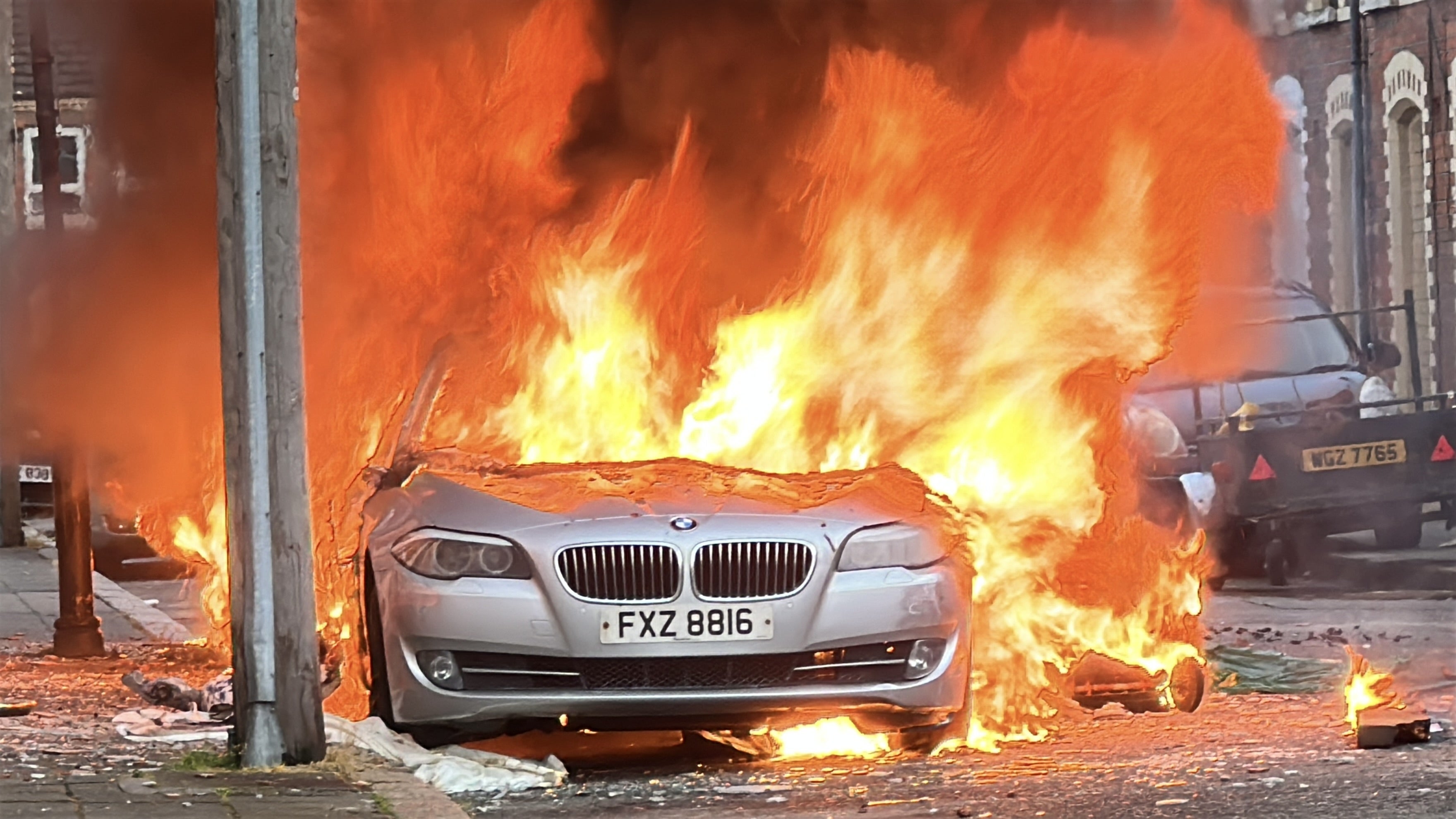
Thousands of cars already on British roads have been the subject of a mass recall amid fears they may catch fire, with the same issue impacting a staggering total of 1.3 million vehicles in total worldwide.
The fire risk has seen global carmaker Stellantis forced to recall more than one million Jeep vehicles globally, with many pulled from UK roads amid fears of spontaneous combustion, caused by overheating. The fire risk is caused by faulty wiring in electric hydraulic power steering pumps in the cars.
Advertisement
The cars at risk were made between 2021 and 2025, with Jeep Wrangler and Jeep Gladiator models impacted. Jeep has been aware of the fault since 2023, but closed an investigation into multiple cases of cars catching fire “due to the low rate of occurrence”. Investigations were reopened in August 2024 after “an increase in incidents”.
It then took the carmaker two years of investigation to confirm the fault in April of 2026, One person has been injured as a result of the fault, but documents indicate that Jeep is unaware of the fire fault causing any accidents.
Owners are being warned that their cars may burst into flames even while parked, with motorists urged to park the affected vehicles outside and away from buildings and other cars to allow time for an appointment.
Advertisement
Owners of vehicles at risk will be contacted so that an appointment at a Jeep retailer can be arranged.
Stellantis told The Sun that the global revall notice has impacted 1,834 Jeeps in the UK – a drop in the ocean, compared with the 1.07 million vehicles being recalled in the US, 106,000 from Canada, 23,000 from Mexico and a fruther 12,000 worldwide.
The global carmaker added that recalled models will undergo repairs or have the dangerous parts replaced. Stellantis hopes to have the issue rectified by July.
A Stellantis spokesperson said: “Having customer safety and satisfaction at the core of its values, Stellantis is voluntarily recalling 1,834 Jeep Wrangler in the UK to inspect, and if necessary, repair or replace the wiring harness and/or electric hydraulic power steering pump.
Advertisement
“An internal investigation determined that certain model-year 2021-2025 Jeep Wrangler and Jeep Gladiator vehicles may have an electrical connection issue in the electric hydraulic power steering pump wiring,” the representative added.
“In rare circumstances, this may cause combustible materials to overheat, potentially leading to a vehicle fire.
“As a precautionary measure, Stellantis is taking this action and advising owners of these vehicles to park away from structures or other vehicles until the remedy is obtained.”
Jeep owners with the models at risk of fire will be contacted by their retailer to arrange a remedy appointment.
Advertisement
This isn’t the first time this year Stellantis has issued an urgent vehicle recall amid fears their cars may catch fire.
Thousands of drivers in the UK were warned to stop driving their vehicles as it could set on fire after the manufacturer issued a major safety recall back in April.
Prominent brands like Peugeot, Jeep, Fiat, Citroen and Vauxhall have been affected but one expert is concerned that people won’t act on the warning.
Advertisement
Most car manufacturer’s websites will have a tool where people can check if their car has been part of a recall. Louise used an example of the Vauxhall website where people will need their vehicle identification number which can be found in your logbooks and various places around the car.
The other way to check if your car has been part of the recall is using the Government’s checker tool. There’s two ways of using this tool depending on what information you have about the car.
You can use the car’s registration number to check if it has been involved in safety recalls that have not been checked or fixed. Or if you don’t know the registration number you can check using the manufacturer, model and year of manufacture.
You must be logged in to post a comment Login