

Crypto World
Crypto market structure bill clears key hurdle as ethics debate looms over floor vote

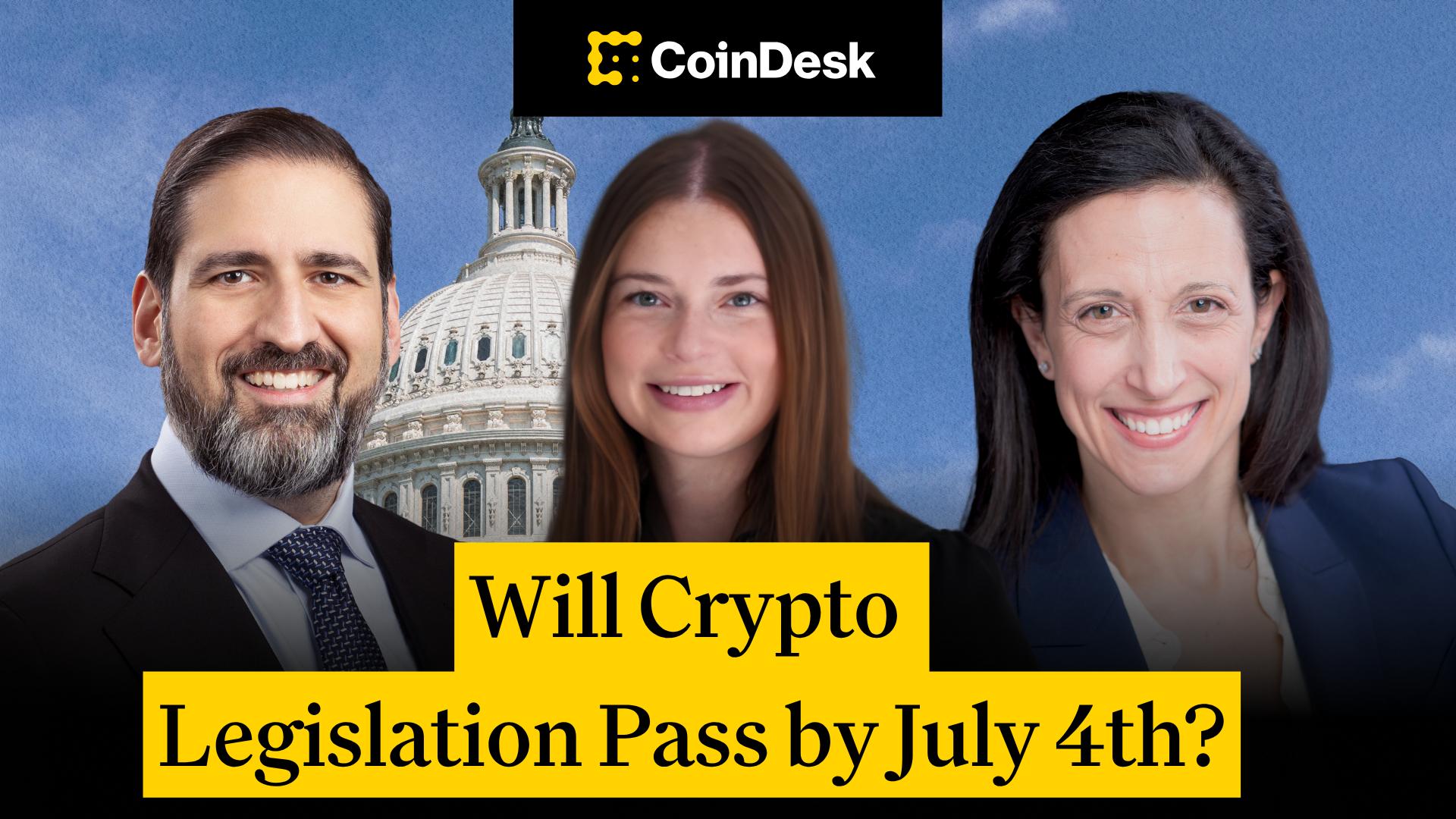
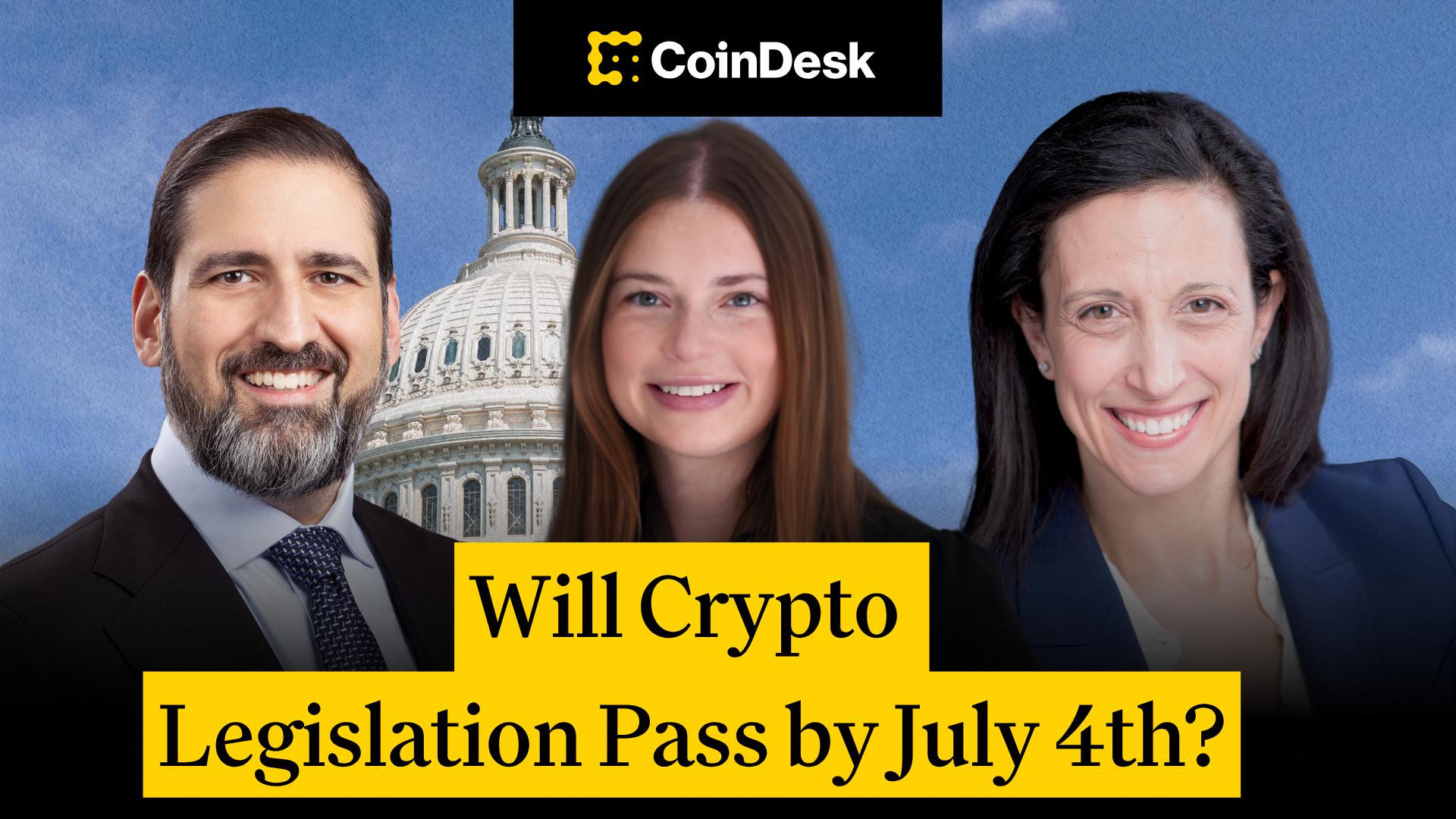
The Clarity Act cleared the Senate Banking Committee with bipartisan support, setting up a potential full Senate vote within weeks.

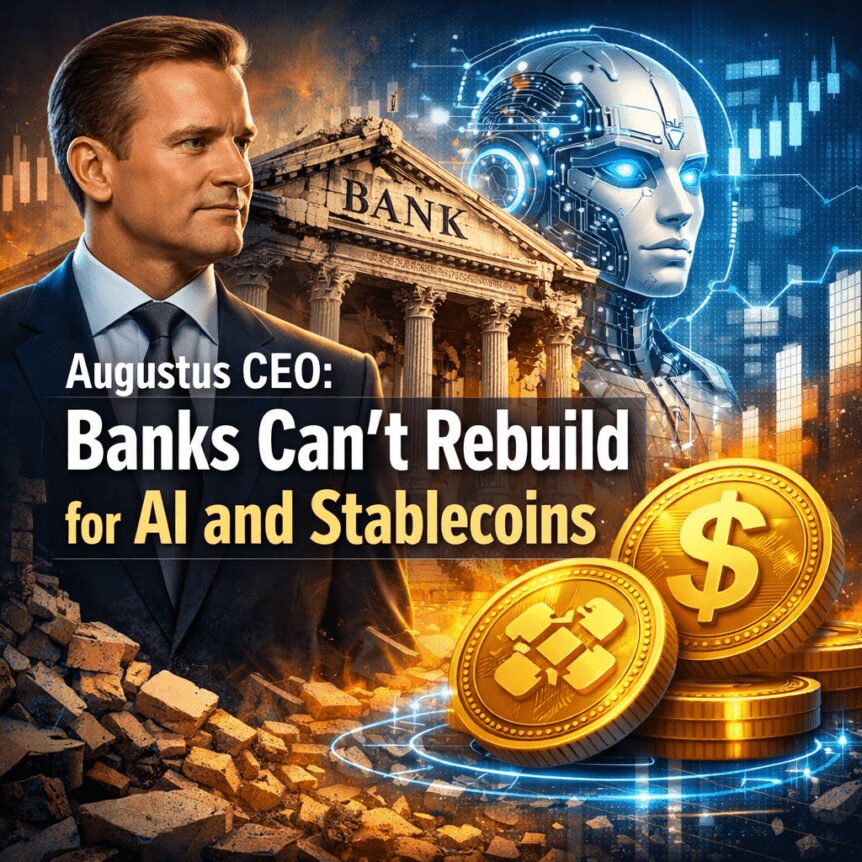
Augustus Bank N.A. has secured conditional approval from the U.S. Office of the Comptroller of the Currency to charter the first clearing bank designed for an AI-enabled, fully reserved stablecoin regime. The move, backed by the GENIUS Act framework, seeks to create a federal structure for payment stablecoins while clarifying how banks and select nonbank entities can issue and integrate dollar-pegged tokens under federal oversight. Augustus disclosed the conditional approval in a PR Newswire release and now aims to launch a Dallas, Texas–based national bank centered on AI-driven compliance and highly automated back-office operations.
Founder Ferdinand Dabitz told Cointelegraph that the institution is “a couple of months” from full approval and launch, though final clearance remains contingent on pre-opening conditions. The claim underscores Augustus’ belief that the current clearing ecosystem—dominated by large, legacy banks—needs a wholesale rebuild rather than a retrofit of existing cores. “The clearing bank bond is truly broken,” Dabitz asserted, arguing there is a path to rethink it as an application and deliver something substantially better.
Augustus’ genesis traces back to Berlin in 2021, where it started as Ivy, a euro-clearing fintech offering a transaction banking platform for non-U.S. institutions, fintechs and crypto firms. The bank already handles euro payments and instant settlement for clients, including Kraken, and now plans to extend that footprint with a full national charter focused on fully reserved stablecoins and AI-powered operations. Dabitz contends that incumbent banks can re-platform some systems, but cannot fundamentally rewire a core designed for humans to operate under AI-driven, tokenized money flows. “I’ve come to the conclusion it’s impossible to re-platform a bank,” he said.
Central to Augustus’ strategy is a three-layer stablecoin model designed to serve as a funding rail, a treasury and liquidity tool, and an interface layer for AI agents interacting directly with money. Dabitz describes the funding rail as the backbone for payments, while the treasury function would target the release of what he estimates as trillions of dollars in idle capital that sit idle due to outdated liquidity management. The third layer envisions AI agents leveraging stablecoins to conduct and monitor transactions in real time, potentially elevating AI from a peripheral capability to a primary user of the bank’s services. In practical terms, Augustus envisions real-time treasury optimization and automated liquidity management with human oversight rather than manual execution at every step.
Key takeaways
- The OCC granted conditional approval for Augustus Bank N.A. to charter a national bank under the GENIUS Act, paving the way for AI-enabled, fully reserved stablecoins and federal oversight of their use.
- Augustus aims to replace large segments of the traditional clearing network, arguing that legacy cores and weekend closures hinder true modernization; the bank contends it can move faster by building AI and stablecoin workflows into its operating model from the ground up.
- The proposed three-layer model positions stablecoins as a payments rail, a treasury/liquidity tool to unlock idle capital, and an interface layer for AI agents to interact with money in real time.
- Industry context shows massive incumbents investing heavily in AI and clearing infrastructure, with JPMorgan citing annual tech spend in the vicinity of $18 billion and Citi reporting significant clearing-related revenue in the first quarter; Augustus argues it can gain speed by starting with an AI-first design rather than retrofitting existing systems.
- Regulatory engagement will be critical as Augustus seeks to balance rapid automation with appropriate checks, balances and risk controls—an area the founder says will feature close collaboration with regulators and established banking leaders.
Rethinking clearing through AI and tokenized money
A founding premise for Augustus is that the traditional clearing network has grown too dependent on human workflows and decades-old core systems. The company argues that the true bottleneck is not the presence of digital assets or AI per se, but the inability of legacy platforms to reconfigure themselves around programmable money and automated compliance. The aim is to embed AI-driven processes into the bank’s day-to-day operations from the outset, rather than layering automation onto an already rigid core.
July’s regulatory pathway for Augustus is framed by the GENIUS Act, which established a federal framework for stablecoins and clarified how banks and certain nonbank entities can issue and integrate dollar-pegged tokens under federal oversight. Augustus’ plan to leverage this framework in a national clearing bank aligns with broader policy conversations about stablecoins, cross-border settlement, and the role of banks as trusted rails for tokenized assets.
In practical terms, Dabitz says the model would enable AI systems to perform tasks such as liquidity management and transaction monitoring on behalf of corporates, with humans supervising the process rather than manually handling every exception. The vision is to compress a set of operational tasks—like transaction monitoring and case handling—from hours to minutes, making compliance and settlement faster and more scalable while preserving safety and oversight. Critics, however, caution about model risk, explainability, and the potential for operational failures as AI takes on a larger share of regulated tasks. Augustus counters that its safety framework will involve rigorous checks and balances and ongoing regulator engagement.
The bank has already demonstrated a practical foothold in European and crypto markets, running euro payments and instant settlement for Kraken. This history, Dabitz says, provides a proving ground for the heavier automation and AI-backed workflows Augustus plans to scale under a national charter. The ambition is not merely to digitize existing processes but to reframe how clearing and settlement work in a world where tokenized money interacts with AI agents and real-time financial data streams.
Industry dynamics: incumbents, regulators, and the path forward
The push to modernize clearing sits against a backdrop of large-scale investments by traditional banks in AI and technology. JPMorgan Chase, for instance, publicly states it invests more than $18 billion annually in technology, including AI initiatives, while Citi reported substantial clearing-related revenue in the first quarter, underscoring the profitability and importance of the clearing business for incumbents. Augustus’ pitch is that its speed-to-market—built around an AI-first design and a fully reserved stablecoin framework—could enable it to outpace incumbents on building new, end-to-end workflows rather than retrofit old ones.
Still, the path to a full operating bank is likely to involve continued regulatory scrutiny, risk management evaluations, and a delicate balance between innovation and safety. Augustus says it will work closely with regulators and banking executives to ensure that “the checks and balances and the harness for the AI to operate in a safe and sound manner” guide its rollout. The broader trajectory of AI-enabled banking will hinge on how effectively new entrants can demonstrate reliability, transparency and resilience alongside the speed and efficiency benefits that automation promises.
The Dallas-based plan reflects a broader trend of US policymakers and financial institutions exploring stablecoins as a settlement mechanism and potential backbone for programmable money within a regulated framework. Augustus’ approach—combining a national charter, a fully reserved model, and AI-driven compliance—could influence how other innovators structure clearance, settlement, and money movement if its approvals proceed as envisioned.
The question readers will watch next is whether pre-opening conditions can be satisfied to deliver a full charter, and how regulators will respond to an institution designed explicitly around AI-powered processes and tokenized money. If Augustus achieves a successful launch, it could mark a meaningful inflection point for the modernization of clearing infrastructure in the digital age.
Readers should monitor forthcoming regulatory milestones and any updates from Augustus on its phased rollout, as well as potential partnerships with corporates and fintechs seeking AI-enabled settlement capabilities under a federally supervised framework.

Key takeaways
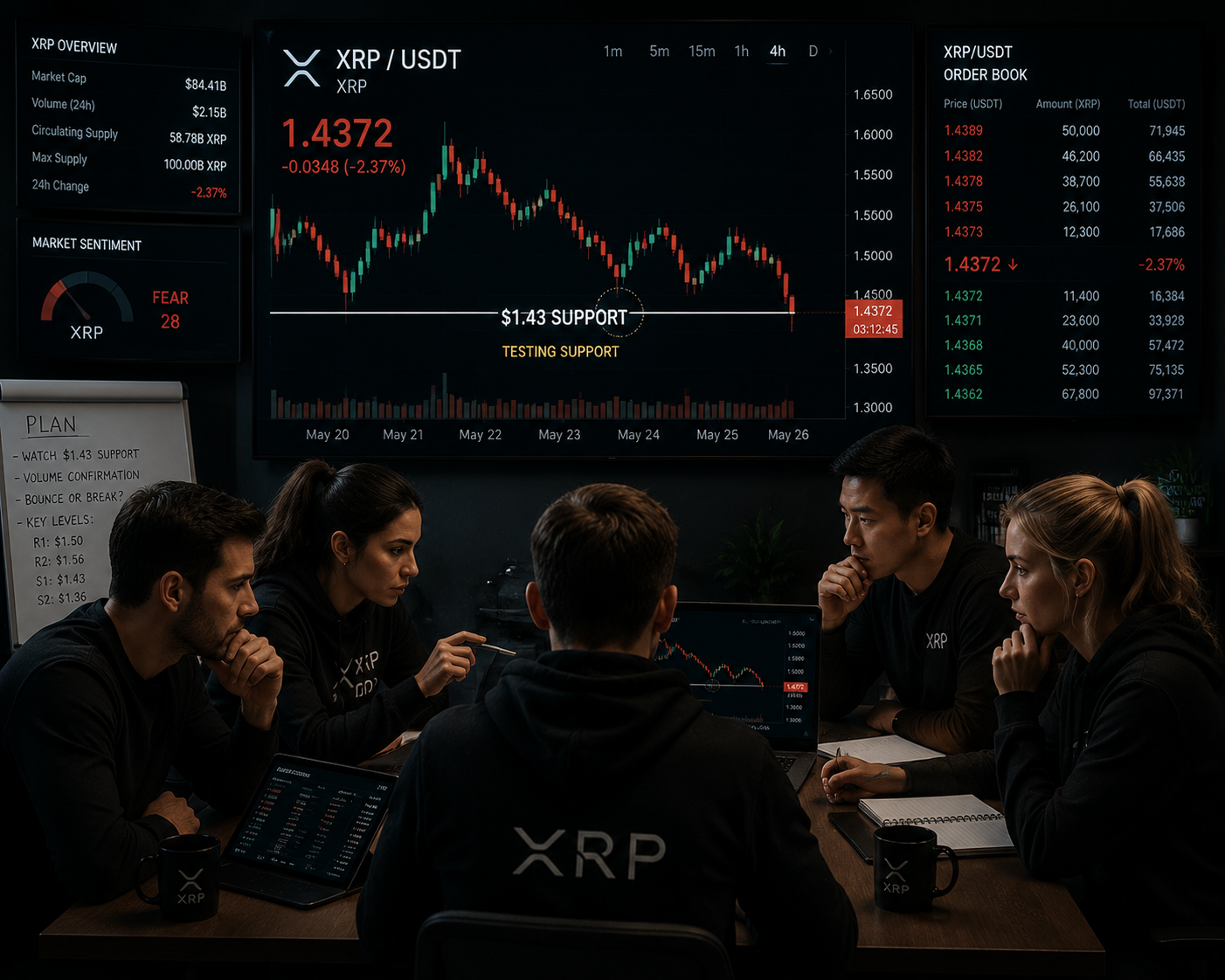
- Ripple (XRP) tests support at $1.43 amid selling pressure from the $1.50 supply zone.
- Institutional ETF inflows rebound to $1.37B, while futures open interest rises to $3.09B, signaling cautious optimism.
Ripple (XRP) is grinding lower on Friday, testing key support at $1.43 after being capped by strong selling from the $1.50 supply range since Monday.
Despite the US Senate Banking Committee advancing the Digital Asset Market Clarity Act of 2025 (Clarity Act) on Thursday, overall market sentiment remains constrained amid a cautious recovery outlook.
XRP addresses in profit tick up
The proportion of XRP addresses with unrealized profit rose to approximately 65% on Thursday, up from 63% the previous day, coinciding with the token’s test of $1.50 resistance.
This reflects a modest increase in risk-on sentiment, though traders should remain wary of potential profit-taking in a fragile technical environment.
Institutional flows into XRP spot ETFs rebounded sharply, with nearly $19 million in fresh inflows on Thursday. Cumulative ETF inflows now total $1.37 billion, while average net assets under management rose to $1.25 billion from $1.14 billion.
Retail participation in XRP derivatives also continues to grow. Futures Open Interest (OI) averaged $2.97 billion on Friday, up from $2.90 billion, signaling rising conviction among traders in XRP’s potential to extend an upward trajectory.
Technical outlook: consolidation within the corrective phase
The XRP/USD 4-hour chart is bearish and efficient as XRP has lost lost 2.5% of its value in the last 24 hours. XRP trades at $1.43, holding a neutral to mildly constructive bias.
It is trading above the 50-day Exponential Moving Average (EMA) at $1.42 while remaining capped beneath the 100-day EMA at $1.49 and the 200-day EMA at $1.70. This configuration suggests an ongoing consolidation within a broader corrective phase.
If the bears stay in control, immediate support will emerge at the 50-day EMA around $1.42, with a rising trendline near $1.39 providing a stronger floor. A daily close below $1.39 could expose deeper losses.
However, if the bulls push harder, they would encounter initial resistance at the 100-day EMA at $1.49. A sustained break above this level would open the path toward the 200-day EMA near $1.70, where broader bearish pressure would be challenged.

The momentum indicator suggests that the bears are slowly regaining control. The Relative Strength Index (RSI) is at 51, and the MACD histogram is slightly positive, indicating limited directional conviction rather than a strong impulsive move.
XRP’s price action suggests ongoing consolidation within a corrective phase, with both buyers and sellers vying for control around critical EMA levels.


Explosive debate: after one of DeFi’s biggest attacks left Aave facing bad debt, DeFi United raised more than $300M to stop the contagion. But did the ecosystem prove its strength – or expose hidden trust assumptions, opaque risk, and the need for a real DeFi backstop?

South Korea’s Financial Services Commission (FSC) is accelerating the drafting of a formal framework for tokenized securities, with a detailed rule package slated for release in July as the country choreographs a 2027 transition of blockchain-based securities into its capital markets regime. The measures are expected to outline a roadmap for tokenizing assets such as stocks, bonds and money market funds, and may contemplate adjustments to over-the-counter trading limits as well as the pooling of similar underlying assets through fractional investment products. The FSC disclosed the plan at the second meeting of its public-private tokenized securities council, created in March to design issuance, trading, infrastructure and settlement rules ahead of the framework’s 2027 rollout.
“The goal is to make an announcement in July,” stated FSC Vice Chairman Kwon Dae-young, underscoring that the forthcoming rules will serve the “institutionalization” of tokenized securities. The July package will serve as a critical test of how far South Korea is willing to open regulated capital markets to distributed ledger technology while maintaining existing investor-protection standards.
The announcement comes on the heels of broader developments signaling regulatory readiness and institutional interest in tokenized finance. In a separate public address, Bank of Korea Governor Hyun-Song Shin voiced support for tokenized deposits. The remarks were reported as part of ongoing coverage on the sector’s policy trajectory. In a related move, the Ministry of Economy and Finance announced a pilot project to use tokenized deposits for government operational spending, with a full rollout earmarked for the fourth quarter of 2026.
FSC accelerates tokenized regulation efforts ahead of 2027 rollout
The accelerated rulemaking aligns with the amended Capital Markets Act and Electronic Securities Act, which are scheduled to take full effect on February 4, 2027. When enacted, the reforms will inaugurate South Korea’s first regulated environment for issuing, distributing and trading tokenized securities on distributed-ledger technology. The framework is designed to bring tokenized assets under the FSC’s jurisdiction, transitioning them from an experimental phase into formalized market infrastructure.
In January 2026, the FSC announced amendments to the legislation, establishing a one-year preparatory period for lawmakers and market participants. This timeline places significant emphasis on governance, disclosure, and investor protection as tokenized instruments move from pilots to regulated products. As the regulatory architecture evolves, the government intends to provide clear registries, compliance standards and oversight mechanisms that can accommodate diverse tokenized asset classes while preserving the integrity of traditional capital markets.
For market participants, the transition implicates a broad set of compliance requirements. Banks, securities firms, exchanges and asset managers will need to adapt their risk controls, KYC/AML procedures, and reporting capabilities to a hybrid environment where blockchain-ledgers function as recognized securities registries. The process also raises questions about cross-border recognition, interoperability with EU-style regimes such as MiCA, and the alignment of Korean rules with international standards for custody, settlement finality and asset custodianship.
Policy and market structure implications for participants
Key regulatory levers under consideration include the scope of tokenized trading on regulated venues, the treatment of OTC transactions involving tokenized assets, and the framework governing fractional investment products that pool multiple underlying assets. Officials have signaled a careful balance: regulatory certainty and investor protection must be preserved, even as the market tests the efficiency gains of blockchain-based settlement and programmable asset terms. The contemplated changes could affect a wide range of actors, including conventional securities exchanges, licensed broker-dealers, banks engaging in custody or settlement services, and institutional investors exploring tokenized exposure to baskets of assets.
From a compliance perspective, the regime is expected to emphasize robust AML/KYC controls, clear disclosure obligations, and centralized or delegated supervisory oversight to monitor tokenized issuance, distribution and trading. The design aims to reduce counterparty risk and settlement risk while ensuring that tokenized instruments remain within the protective perimeter of existing securities laws. The broader regulatory posture also matters for cross-border activity, as Korea’s approach will influence financial institutions that operate in Asian and global markets, and could shape discussions with international standard-setters about the treatment of tokenized assets within a harmonized framework.
Government use-cases and public-finance integration
In parallel with private-sector regulation, Seoul is exploring how tokenized assets can support public-finance and government operations. The pilot program announced by the Ministry of Economy and Finance will deploy tokenized deposits to execute government spending, with a full rollout anticipated in late 2026. Bank of Korea Governor Shin’s expressed support for tokenized deposits signals a policy openness to integrating digital-asset rails into public finance and central-bank–fiscal coordination, potentially influencing how future government payments, procurement and cash management are conducted within a regulated, ledger-based infrastructure. While the work remains in pilot form, observers note that tokenized public-finance mechanisms could offer benefits in transparency, traceability and efficiency, provided appropriate risk controls and regulatory guardrails are in place.
This convergence of regulatory reform and public-finance experimentation occurs within a global context of evolving central-bank digital-currency (CBDC) discourse and tokenized-asset regulation. Authorities have emphasized that tokenized securities will be treated as true securities under existing investor-protection regimes, avoiding a treatment that would place them outside the framework governing traditional assets. The Korean path may offer a blueprint for jurisdictions weighing similar transitions, balancing innovation with compliance obligations that are central to institutional trust and market stability.
Related reporting underscores Korea’s broader ambition to test real-world utility for distributed-ledger infrastructure in both financial and fiscal domains. As Korea positions its regime ahead of 2027, the interplay between securities tokenization, custody solutions, and government-led use cases will be a focal point for policymakers, market participants and international observers assessing the maturation of crypto-enabled capital markets.
Regulatory path and international context
The forthcoming regime situates Korea within a growing global wave toward formalizing tokenized assets. While MiCA in the European Union provides a comprehensive framework for crypto-assets and related services within the EU’s single market, Korea’s approach focuses on incorporating tokenized securities into the established capital markets architecture, with explicit recognition of blockchain-ledgers as valid securities registries. This alignment with traditional securities oversight—coupled with a parallel push to harness blockchain-based settlement and issuance—signals a policy stance that prioritizes investor protection and market integrity while gradually expanding the regulatory perimeter to include tokenized instruments.
Industry observers will be watching several regulatory and operational touchpoints: the precise definitions of tokenized securities under the amended acts; the treatment of cross-border trading and custody; the adequacy of AML/KYC controls for tokenized offerings; and the readiness of financial institutions to integrate ledger-based settlement with existing clearing infrastructures. The government’s public-private council remains a key mechanism for ironing out technical standards, interoperability requirements and enforcement expectations as the 2027 milestone approaches.
Closing perspective
South Korea’s tokenized-securities initiative reflects a deliberate policy evolution that prioritizes clear regulatory guardrails while pursuing the efficiencies of distributed-ledger technology. The July rule package and the 2027 implementation timeline establish a concrete roadmap for institutional participants, with implications for licensing, compliance programs, and cross-border cooperation. As government pilots advance and the private sector adapts, the central question will be how seamlessly tokenized assets can be integrated without diluting investor protections or market integrity. Watch for ongoing policy clarifications, interoperability standards, and enforcement guidance as Korea moves from pilots toward a regulated, ledger-based capital markets environment.
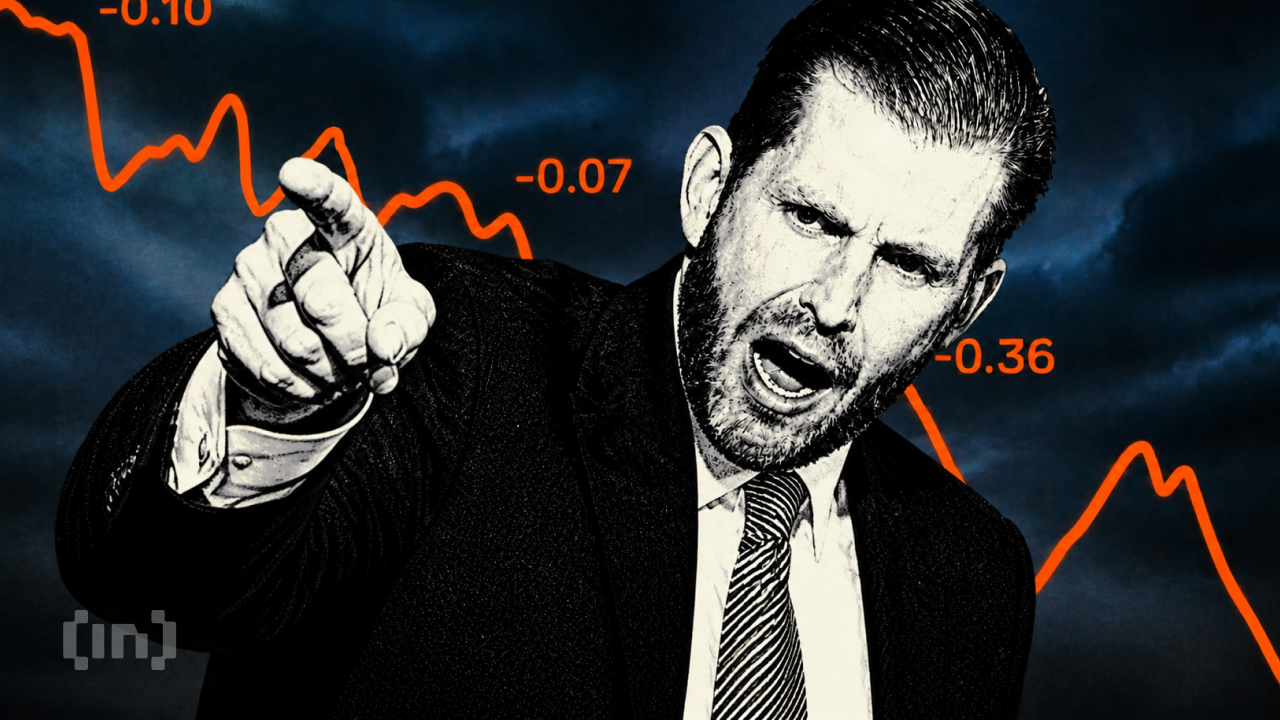

Eric Trump rejected Senator Elizabeth Warren’s claim that his father directs individual Nvidia (NVDA) stock trades. Warren tied recent buys to eased US AI chip exports to China.
Reports flagged a January 6 purchase worth up to $1 million in Trump-tied accounts. The Commerce Department updated AI chip export rules one week later.
Trump Family Pushes Back on Conflict Claim
Eric Trump challenged that all family assets sit in a blind trust managed by major financial institutions. The structure favors broad market indexes over individual stock picks.
All of our assets are invested in a blind trust by the largest financial institutions in broad market indexes. To suggest that individual stocks are being bought or sold, at the discretion of any member of the Trump family, would be a lie and blatantly false,” articulated Eric Trump, executive vice president of the Trump Organization.
The Trump Organization has said the family holds assets in fully discretionary accounts. Donald Trump Jr. and Eric Trump oversee the trust with third-party institutions and receive no advance notice of trades.
Warren Links Nvidia Stake To China Trip
Warren cited a January 6, 2026 Nvidia purchase of up to $1 million in Trump-tied accounts. The Commerce Department then revised rules for chips like Nvidia’s H200 on January 13.
She called the timing a national security risk.
“Trump brought the NVIDIA CEO on his trip to China to lobby Xi Jinping to buy advanced AI chips, even though it would create a U.S. national security threat. It turns out Trump also bought millions in NVIDIA’s stock. The President’s corruption is a national security disaster,” she wrote in a post.
Indeed, President Donald Trump brought Nvidia chief executive Jensen Huang on his May 12 to 15 Beijing visit. The trip covered trade and AI talks with President Xi Jinping.
Huang has previously confirmed Trump asked him to join the delegation. The group included other US business leaders pushing tech and aviation deals.
Disclosure Norms Test Blind Trust Standard
The dispute surfaced through Trump’s Q1 2026 OGE Form 278-T filing. The document logged 3,642 stock transactions in the first three months of the year. Related coverage of the filing has detailed the breadth of holdings.
Critics say the volume and timing of individual trades sit outside the qualified blind trust template. Presidents from Jimmy Carter through Joe Biden used that template to avoid conflict claims.
The 2012 STOCK Act requires disclosure of executive trades but does not bar them. Federal authorities have not announced an investigation.
Treasury Secretary Scott Bessent has backed a congressional single-stock trading ban. The proposal has drawn renewed attention this week.
Whether ethics committees pursue formal review may shape how future administrations structure presidential portfolios.
The post Eric Trump Pushes Back at Warren Over Nvidia Stake Tied to China Trip appeared first on BeInCrypto.

Business intelligence software giant, Strategy, announced that it has entered into privately negotiated agreements with certain holders of its outstanding 0% Convertible Senior Notes due 2029 to repurchase approximately $1.5 billion in aggregate principal amount of the notes.
The company said the estimated aggregate cash repurchase price is around $1.38 billion, although the final amount remains subject to adjustment based partly on the daily volume-weighted average price of Strategy’s Class A common stock during an agreed measurement period.
According to the official document released by the Michael Saylor-founded company, the actual cash amount paid could change depending on movements in the stock price during that period.
Strategy said it plans to fund the repurchases using available cash reserves, proceeds from sales of securities under its at-the-market offering program, and potentially proceeds from Bitcoin (BTC) sales.
The transactions are expected to settle on or around May 19th, subject to customary closing conditions.
Following completion of the repurchases, Strategy also revealed that it intends to cancel the repurchased notes. After the cancellation, around $1.5 billion aggregate principal amount of the 2029 convertible notes will remain outstanding.
The latest development comes days after Strategy reported a $12.5 billion first-quarter loss tied largely to Bitcoin’s price decline. Earlier this week, the company purchased another 535 BTC for $43 million. Its total holdings now stand at 818,869 BTC acquired for nearly $62 billion.
The post Strategy Plans Major Note Repurchase While Leaving Door Open to Bitcoin Sales appeared first on CryptoPotato.
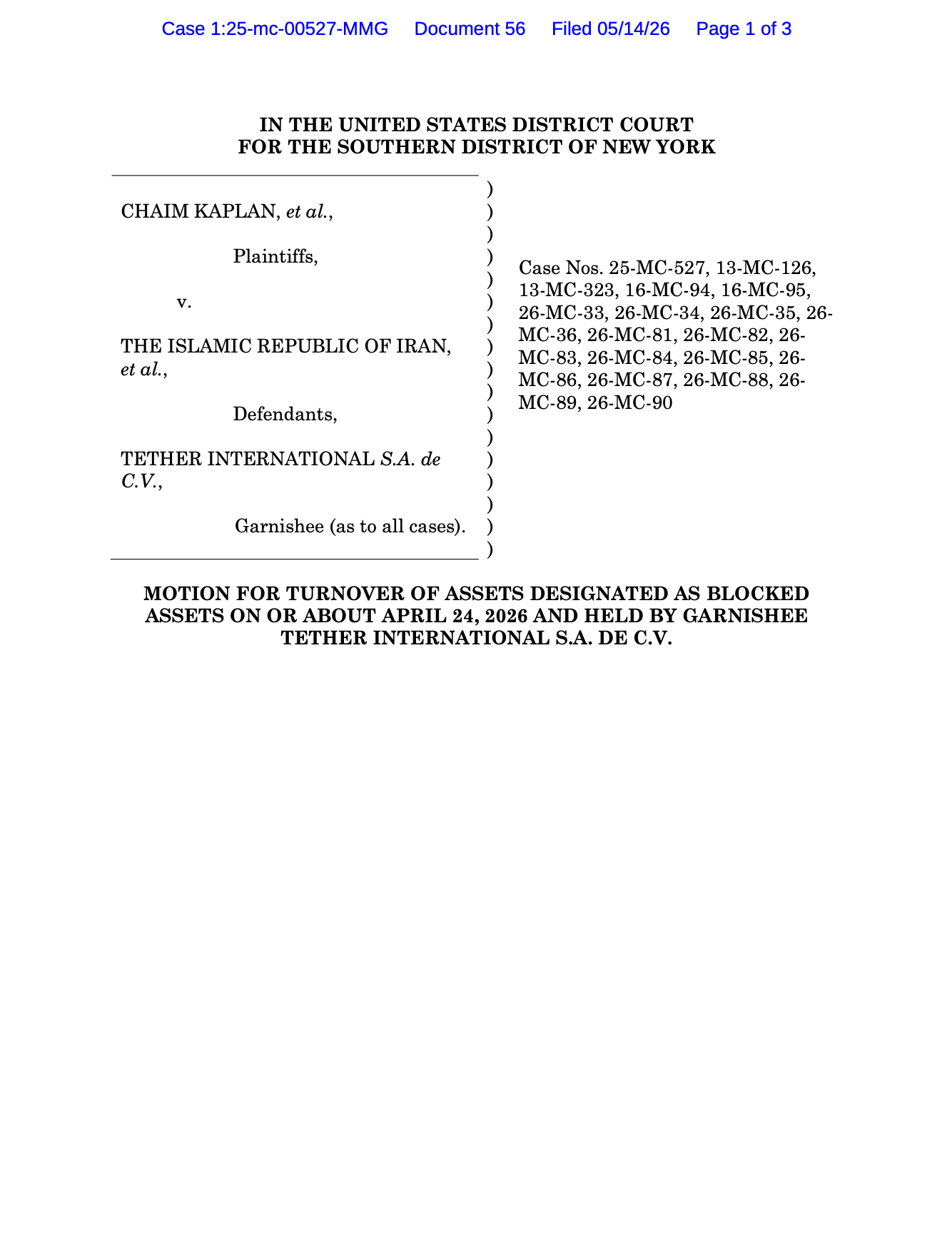
Law firm Gerstein Harrow LLP filed a new motion on Thursday in a miscellaneous enforcement lawsuit, asking the court to compel stablecoin company Tether to hand over more than $344 million in frozen USDt linked to Iranian entities.
The motion claims that the plaintiffs are owed more than $532 million in compensatory damages and more than $1.8 billion in punitive damages from acts of “terrorism committed or sponsored by Iran,” stretching back more than 25 years.
The latest filing is part of a broader lawsuit against North Korea (DPRK) and Iran, attempting to claim and redistribute digital assets as compensation for victims of various and unrelated judgments tied to state-sponsored violence, drawing criticism from the crypto community.
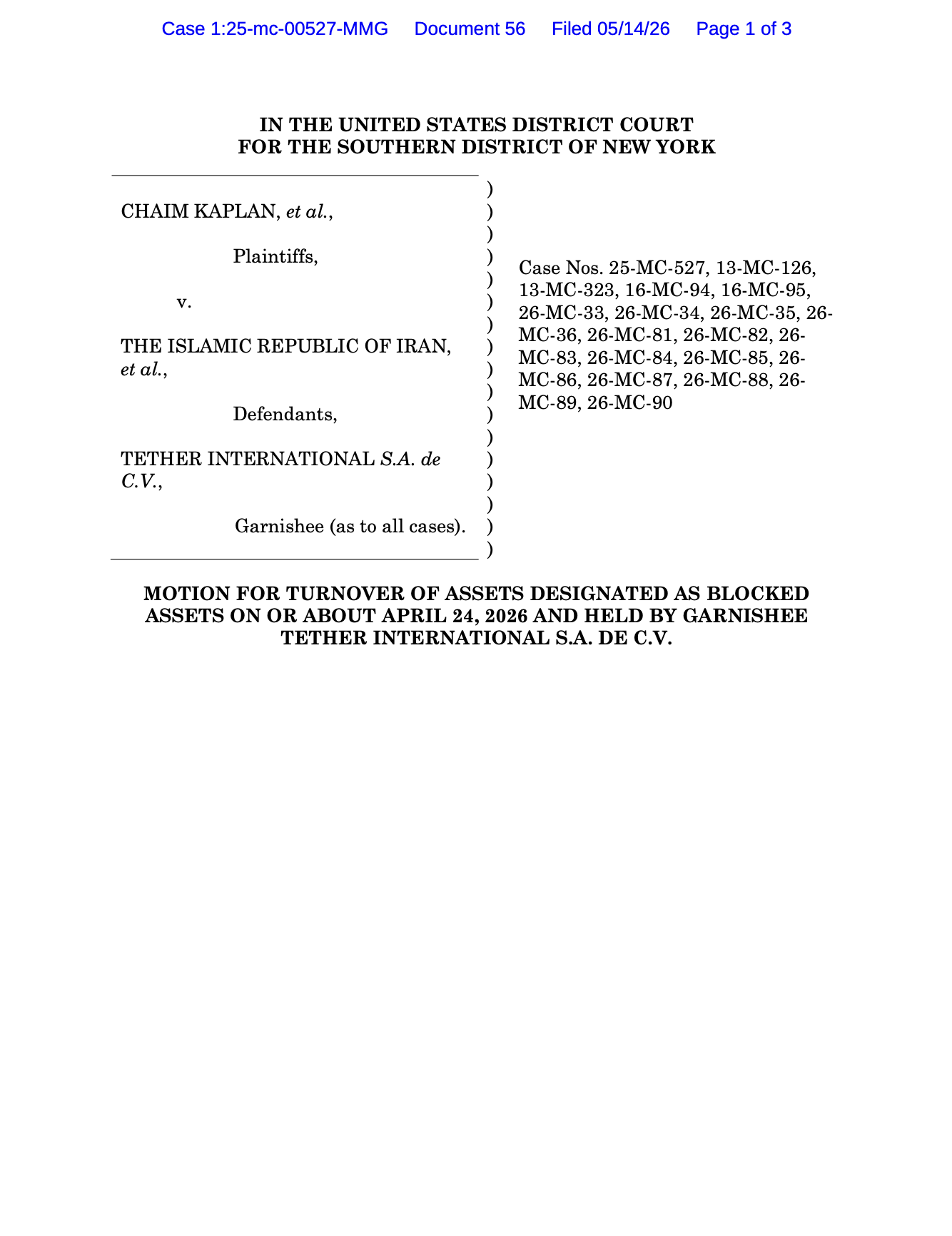
The motion to claim $344 million in frozen stablecoins linked to Iranian entities. Source: PACER
In May, the law firm filed a restraining notice against the Kelp decentralized autonomous organization (DAO), which manages the liquid staking platform, attempting to block the transfer of frozen Ether ( ETH) tied to the $293 million Kelp exploit in April.
The law firm’s tactics have drawn condemnation from the crypto community, with critics arguing that distributing funds owed to hack victims to satisfy unrelated judgments stretching back decades delays repayment for hack victims, who have a greater claim to the funds.
Related: Coinbase faces lawsuit over frozen funds from $55M crypto theft
ZachXBT slams Gerstein Harrow for crypto targeting strategy
Gerstein Harrow LLP has a long history of filing similar claims against cryptocurrency companies and platforms following hacks and cybersecurity exploits, including the Harmony protocol, the Bybit cryptocurrency exchange, and others, according to onchain sleuth ZachXBT.
“This is a predatory US law firm with a strategy that is pure evil,” he said in an X post from May 1, adding that the law firm used his cybersecurity research of various crypto hacking incidents to justify the claims.
“Whenever there’s a new Lazarus Group victim after an exploit and crypto assets get frozen, these clowns come in and say they have a claim for an alleged DPRK victim from 26 years ago that has zero relation to crypto or exploits/hacks,” he added.
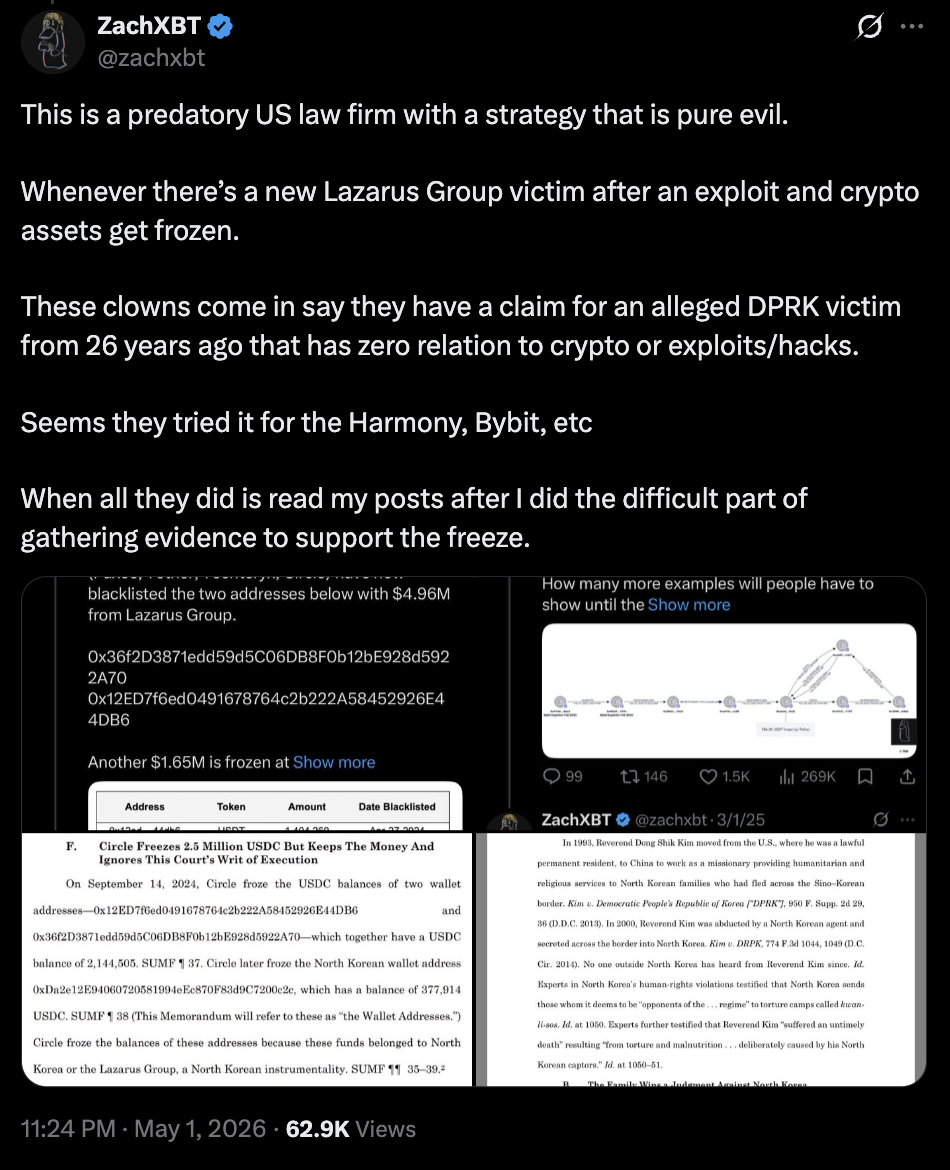
Source: ZachXBT
In April, the United States Office of Foreign Assets Control (OFAC) ordered Tether to freeze $344 million in stablecoins tied to Iranian entities.
The asset freeze also drew mixed reactions from the crypto community over the ethics of wallet freezes and the role of centralized crypto issuers in enforcing law enforcement requests.
Magazine: Are DeFi devs liable for the illegal activity of others on their platforms?

Myanmar’s military authorities have published the text of an Anti-Online Fraud Bill that would impose severe penalties on digital currency fraud and online scam operations. The draft statute, presented to the Pyidaungsu Hluttaw, frames online fraud as a threat to national sovereignty and stability and contemplates punishments ranging from long prison terms to the death penalty for certain offenses.
According to Cointelegraph, the proposed legislation sets out that individuals convicted of “digital currency fraud” or related online fraud could face a sentence of 10 years to life imprisonment, with the possibility of capital punishment in specified circumstances. The bill also delineates the death penalty for those implicated in the operation of scam centers or for actions that resulted in the death of a victim coerced or exploited into committing fraud. The government has underscored the aim of curbing organized online fraud networks that have proliferated in parts of Southeast Asia.
The seriousness of the penalties places Myanmar among the most draconian regimes globally for digital currency–related crime. The move comes as authorities in the region contend with what they describe as increasingly sophisticated scam infrastructure. In January, China reportedly ordered the execution of 11 people linked to Myanmar-based scam centers that trafficked Chinese nationals, underscoring cross-border law-enforcement stakes in tackling these operations. Source: Al Jazeera.
As part of its broader focus on combatting scam networks, international authorities have intensified cooperation to dismantle illicit operations that use schemes such as pig-butchering, romance scams, and fake investments to launder funds and traffic victims. The FBI noted in a report released in April that Americans suffered more than $11 billion in losses from crypto-related scams in 2025, with total online-fraud losses exceeding $20 billion. The agency cited a March executive order from the White House aimed at bolstering federal efforts to combat scam centers and cybercrime. FBI report (Cointelegraph summary), Executive action overview.
The Myanmar government has been under international scrutiny since the 2021 coup, after which parliamentary sessions were suspended for years and did not reconvene until March 2026 following elections described by the Council on Foreign Relations as “neither free nor fair.” A government notice published midweek indicated that lawmakers would reconvene in the first week of June, with the bill potentially on the agenda for consideration. CFR analysis.
Key takeaways
- Draconian penalties: The bill contemplates 10 years to life imprisonment for digital currency and online fraud offenses, including the potential for the death penalty in certain cases.
- Targeted offences: Provisions cover digital currency fraud and operations tied to scam centers, with enhanced penalties for those involved in coercing or exploiting victims to commit fraud.
- Policy rationale: Authorities frame the measure as essential to protecting sovereignty and stability amid widespread online fraud networks.
- Regional enforcement context: The move aligns with a broader Southeast Asian crackdown on scam centers, amid cross-border actions and international pressure to curb crypto-enabled crime.
- Regulatory landscape for crypto entities: The development has implications for crypto exchanges, banks, and service providers operating in or with Myanmar, underscoring heightened AML/KYC and licensing considerations in a volatile legal environment.
Myanmar’s bill in context: penalties, centers, and cross-border implications
The Anti-Online Fraud Bill sets a framework in which digital currency and online scams are treated as grave offenses with severe penalties. By tying the most extreme punishments to crimes related to scam centers and coercive manipulation, the proposal signals a hard-line stance against organized scams that authorities say exploit vulnerable individuals. The text and its language emphasize a governance objective—protecting sovereignty and stability—amid a political transition marked by controversy and international scrutiny.
International reporting underscores that this is not an isolated domestic policy move. The region has seen a surge in scam centers that traffic people and funds under crypto-enabled schemes, prompting a broader enforcement push. The China-based retaliation against Myanmar-linked scam operations—where authorities reportedly executed 11 individuals connected to trafficking networks—illustrates the potential for cross-border criminal activity to trigger parallel enforcement actions across jurisdictions. Such developments raise critical questions for compliance teams and financial institutions about screening, risk assessment, and the handling of cross-border payments and correspondent relationships in contexts where criminal enterprises leverage cryptocurrency and online platforms.
From a regulatory perspective, the Myanmar bill intersects with ongoing global efforts to constrain illicit crypto activity. In the United States, federal authorities have intensified investigations into crypto scams, with law-enforcement “strike forces” targeting leaders of scam networks, including cross-border actors linked to organized crime groups operating in Southeast Asia. The FBI’s findings, reported by Cointelegraph, highlight the ongoing risk of large-scale losses to consumers and the importance of robust AML/KYC programs for firms that facilitate or process crypto-related transactions. The White House’s March executive action reinforces the federal mandate to pursue cybercrime and predatory schemes, signaling a high-priority enforcement trajectory for the coming years. FBI report (Cointelegraph coverage), Executive action summary.
For institutions operating in or with Myanmar, the bill amplifies the regulatory risk calculus. Even if the measure advances slowly through the Pyidaungsu Hluttaw, the prospect of stringent penalties for crypto-related fraud signals a tightening of licensing expectations and compliance controls. Cross-border enforcement efforts and cooperation with international partners further complicate the landscape, as firms must navigate divergent regulatory regimes and potential sanctions in areas impacted by scam centers or illicit financial activity. In this context, regulators and compliance teams should monitor developments closely, assess exposure in customer onboarding and transaction monitoring, and prepare for potential licensing or reporting changes that could emerge from the new bill or subsequent implementing regulations.
Historical and policy backdrop shaping the debate
The bill’s emergence occurs against a backdrop of political upheaval and a shifting regional security–economic order. Myanmar’s 2021 coup disrupted normal legislative processes and delayed parliamentary action, with observers noting that subsequent elections did not meet commonly accepted standards for free and fair process. As authorities propose top-tier penalties for online crimes, analysts and policymakers are weighing the balance between deterrence, due process, and the implications for civil liberties within a fraught governance environment. The convergence of domestic security priorities with international pressure to combat trafficking, crypto-enabled scams, and cross-border crime underscores the challenge of implementing consistent, enforceable policies in a fragmented legal landscape.
Looking ahead, observers will be watching for the bill’s progress and for any implementing regulations that define how penalties would be applied, how scam centers would be identified and shut down, and how cooperation with foreign law-enforcement agencies would operate in practice. The interplay between national sovereignty claims and international AML/CFT standards will shape not only Myanmar’s regulatory posture but also the operational realities for crypto firms seeking to operate compliantly in a high-risk environment. As authorities stress sovereignty and stability, regulators and institutions alike must prepare for a period of intensified scrutiny and potential policy evolution.
In sum, the Anti-Online Fraud Bill represents a stark signal of regulatory posture: a willingness to wield severe penalties to deter crypto-enabled fraud and online scams, coupled with the likelihood of ongoing cross-border enforcement activity. For analysts and compliance professionals, the development underscores the necessity of robust risk assessment, vigilant KYC/AML controls, and clear governance around cross-border arrangements in a region where illicit networks continue to adapt their methods to exploit digital financial channels.
Closing perspective: While the bill’s passage remains to be seen, its introduction reinforces a policy trend toward aggressive anti-fraud regulation and heightened enforcement across Southeast Asia. Stakeholders should monitor parliamentary proceedings and any subsequent amendments that specify enforcement mechanisms, due-process safeguards, and the scope of regulatory oversight for digital assets and related services.


OKX’s planned move into the South Korean market would echo that of Binance, which completed its acquisition of Seoul-based Gopax last year.


There were low expectations for Drake’s new album Iceman, but one track released today underperformed even by crypto’s degenerate standards. In his new song “Dust,” Drake calls Sam Bankman-Fried (SBF) one of his guys and calls for his prison release.
“An FTX penthouse high-riser, yeah / Samuel Bankman, free all my guys up, yeah,” Drake raps on the album’s second track.
Drake’s “free all my guys” framing is a standard hip-hop convention as a solidarity shout-out. It also follows the storyline of “Dust” as an aggressive statement track, which follows the rap genre’s basic victory lap-and-diss sparkline.
The song isn’t complicated. Drake simply re-asserts examples of his dominance and successes while casting his rivals as washed-up, living off old plaques and memories. The chorus repeats the simple message, “Go blow the dust off your plaques.”
The music video also adds no more nuance, depicting a childish police car race from the fun-loving rapper.
Elsewhere, he also names himself a “BTC crypto big-timer,” demonstrating his obvious failure to understand how bitcoin (BTC) and crypto are distinct.
As evidence of his status, Drake references his globe-trotting lifestyle via Melbourne’s time zone, sold-out shows, and dubious references to the Bahamas where SBF stole FTX’s customer money: smoking luxury cigars at Graycliff, and a high‑rise penthouse.
SBF famously lived in one of the very few Bahamian high-rise penthouses, within the Albany neighborhood.
Drake calls for SBF prison release
Drake tries to use these examples to reinforce that he’s operating on a global, elite level, as well as cram in comments intended for the media within the limited timespan available.
SBF is serving a 25-year sentence at FCI Lompoc in California. A jury convicted him in November 2023 on seven counts of fraud and conspiracy. Judge Lewis Kaplan handed down the sentence in March 2024 and has denied his appeals.
In all, the total siphoned from FTX customers and routed into SBF’s private company Alameda Research came to roughly $8 billion, making it one of the largest financial frauds in US history.
Read more: Sam Bankman-Fried had a plan to get out of prison, and he’s following it
Because SBF has only one way out of prison, he has spent the last few months glazing Donald Trump on social media in a transparent effort for a presidential pardon.
“Dust,” released today on Drake’s ninth studio album, reinforces the Canadian rapper’s affinity for the criminal.
Stake.com, a crypto casino banned in the United Kingdom and barred from Twitch, pays Drake tens of millions of dollars per year to promote gambling. Indeed, the casino dominates his Instagram bio, sitting above his record label and fashion lines.
Got a tip? Send us an email securely via Protos Leaks. For more informed news and investigations, follow us on X, Bluesky, and Google News, or subscribe to our YouTube channel.

Declassified files reveal new details about UK Foreign Office propaganda unit

NFL insists Vrabel-Russini scandal not considered in scheduling Patriots for 2026 kickoff game

New Darlington safety plan agreed to catch off-road bikes

Manchester United reach agreement with Casemiro over contract clause amid transfer speculation

US brings back mandatory military draft registration

Steven Gerrard disagrees with Gary Neville over ‘shock’ Chelsea and Arsenal claim | Football


-

 Fashion4 days ago
Coffee Break: Travel Steam Iron
-

 Politics7 days ago
Politics Home Article | Starmer Enters The Danger Zone
-

 Fashion5 days ago
What to Know Before Buying a Curling Wand or Curling Iron
-

 Politics4 days ago
What to expect when you’re expecting a budget
-

 Tech6 days ago
Auto Enthusiast Carves Functional Two-Stroke Engine from Solid Metal
-
 Business6 days ago
Ignore market noise, India’s long-term story intact, say D-Street bulls Ramesh Damani and Sunil Singhania
-

 Tech5 days ago
GM Agrees To Pay $12.75 Million To Settle California Lawsuit Over Misuse Of Customers’ Driving Data
-

 Crypto World5 days ago
CZ says US crypto rivals tried to block Trump pardon
-

 Crypto World6 days ago
PROS explodes 48% as Upbit and Bithumb listings ignite demand
-

 Tech4 days ago
GM agrees to $12.75M California settlement over sale of drivers’ data
-

 Crypto World7 days ago
Kraken Parent Seeks OCC Charter, Signaling Regulated Banking Access
-
Crypto World3 days ago
Bitcoin Suisse expands with Digital Asset License and Investment Business Act Registration Approval in Bermuda
-

 Crypto World2 hours ago
E-Estate Announces 1 Year Live: Washington DC Summit as Real Estate Tokenization Enters Its Next Phase
-

 Sports7 days ago
Why Nathan Mackinnon Remains the Hart Trophy Favourite over Connor McDavid and Nikita Kucherov | NHL
-

 Entertainment7 days ago
Bethenny Frankel Says She Loves ‘Torturing’ Men
-

 Sports7 days ago
After Waka Waka, Shakira now drops first teaser for FIFA WC 2026 song | FIFA World Cup 2022
-
 Crypto World7 days ago
Solana UFO Meme Coins Surge After Pentagon Reveals Alien Files
-

 Politics3 days ago
Pakistan to enter Chinese capital market as war inflation bites
-

 Fashion2 hours ago
Weekend Open Thread: Theory – Corporette.com
-

 Entertainment7 days ago
Young and the Restless Next Week: Cane & Matt Both Arrested in Shocker!
You must be logged in to post a comment Login