

Crypto World
Wall Street’s Boldest Gold Prediction Has Russians Rushing to Buy

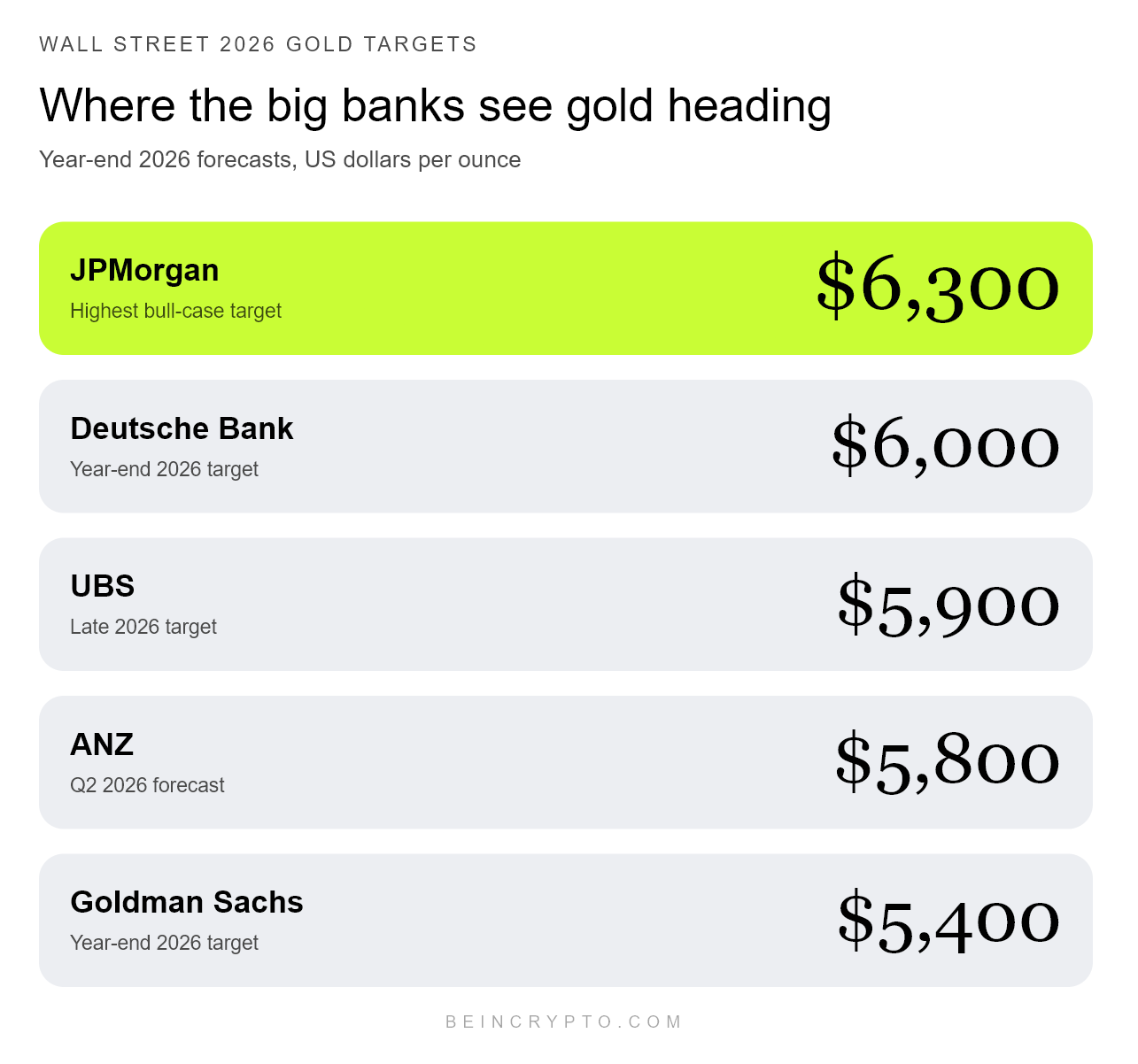
Wall Street’s biggest banks have set their boldest gold targets yet for 2026, and Russian retail investors are not waiting.
JPMorgan now sees gold reaching $6,300 per ounce by year-end. Deutsche Bank projects $6,000, while Goldman Sachs targets $5,400 and UBS forecasts $5,900.
These calls land at a striking moment. Gold trades near $4,548, down roughly 16% from its January record all-time high. Most analysts call the pullback a buying opportunity inside a structural bull market.

Russians are Buying Gold Fast
Meanwhile, Russian investors are moving fast. The Moscow Exchange reported gold trading volume of 42.6 tonnes in March 2026, more than 3.5 times higher than a year earlier.
Monetary volume jumped fivefold to 534.4 billion rubles ($7.1 billion).
Russians now have five main ways to gain exposure. The simplest is an unallocated metal account (OMS) at a bank. Brokerage instruments like GLDRUB_TOM offer next-day spot settlement.
Investors can also choose exchange-traded gold funds, gold-mining stocks, or new digital financial assets (DFAs) tied to the metal.

Oleg Reshetnikov of BCS World of Investments says spot instruments lead the pack.
“The most convenient way for Russians to invest in gold and silver is the instruments ‘Gold for Rubles’ and ‘Silver for Rubles’ with next-day settlement,” Reshetnikov said.
His firm targets $5,385 in the next 12 months.
For smaller budgets, brokerage apps have opened the door.
“The easiest thing today is to buy gold from a broker,” portfolio manager Alexander Ryabinin of SF Education said. “Tinkoff Gold can be bought for 13 rubles, right in the broker’s app.”
Still, experts urge diversification across formats.
“One should not glorify a single channel but combine them — part in digital form for turnover, part on the exchange, and if necessary a small physical layer as insurance,” said Rais Ismagilov of AVI Capital.

However, risks remain. April US inflation hit 3.8%, the highest in a year, pushing back expected Fed rate cuts. India also raised gold import tariffs to 15%, cooling physical demand.
And Russia’s own central bank has been a net seller, offloading 22 tonnes in 2026 to plug budget gaps.
For now, though, retail demand keeps rising, and Wall Street keeps lifting its gold price prediction.
The post Wall Street’s Boldest Gold Prediction Has Russians Rushing to Buy appeared first on BeInCrypto.


The top Republicans and Democrats on the House Agriculture Committee have urged President Donald Trump to complete the leadership slate at the U.S. Commodity Futures Trading Commission (CFTC), warning that a forthcoming crypto market-structure bill could hinge on timely appointments. In a Friday letter, Committee Chair Glenn Thompson and Ranking Member Angie Craig emphasized the need for a bipartisan, full panel to guide the agency through urgent regulatory issues and a substantial rulemaking process tied to the Digital Asset Market Clarity Act (CLARITY).
The lawmakers argued that having a complete commission is essential for the CFTC to serve as the leading derivatives markets regulator on a global stage and to advance U.S. leadership in market integrity, resilience, and vibrancy. Currently, Michael Selig serves as the agency’s only commissioner after the resignation of acting chair Caroline Pham in December 2025. Under Selig, the CFTC has pursued policy positions aligned with the administration, including asserting exclusive jurisdiction over prediction markets.
In related regulatory developments, CLARITY gained momentum in the Senate. On Thursday, lawmakers on the Senate Banking Committee voted to advance the CLARITY Act, which would broaden the CFTC’s authority over digital asset markets and shape the regulatory framework for crypto businesses and users. While a floor vote had not been scheduled at press time, the legislative trajectory underscores the link between leadership and the speed of rulemaking in this sector. Democratic Senator Amy Klobuchar, who sits on the Senate Agriculture Committee, proposed an amendment in January to delay the act’s effective date until at least four CFTC commissioners were nominated and confirmed.
As of Friday, there were no public announcements from Trump about CFTC commissioner nominations. Any such selections would need to clear Senate processes, a timeline that could extend weeks or months and influence the pace of regulatory clarity for market participants. In context, the House letter from Thompson and Craig signals a broader concern within Congress about ensuring regulatory bodies have sufficient leadership capacity to implement policy changes and oversee a rapidly evolving crypto market structure.
Key takeaways
- The House Agriculture Committee urges President Trump to nominate a full bipartisan panel for the CFTC to prepare for possible CLARITY Act implementation and ongoing rulemaking needs.
- The CLARITY Act advanced in the Senate Banking Committee, signaling a potential expansion of the CFTC’s oversight over digital asset markets.
- The CFTC currently operates with a single commissioner after the December 2025 resignation of acting chair Caroline Pham, raising questions about regulatory momentum and enforcement capacity.
- A memorandum of understanding between the CFTC and the SEC, signed in March, reflects enhanced inter-agency coordination on market oversight, including digital assets.
- The nomination timeline remains uncertain; presidential picks would face Senate confirmation, with implications for both regulatory certainty and market operations.
Leadership, rulemaking and regulatory posture at the CFTC
The current leadership gap at the CFTC places a greater emphasis on the commission’s ability to drive rulemaking and oversee complex derivatives markets in a period of heightened regulatory attention on digital assets. Michael Selig, the agency’s sole commissioner, has indicated a continuing pace in rulemaking, stating in an April hearing that he did not intend to slow down, even as the hierarchy remains short of four commissioners. The absence of a full slate can slow consensus-driven rulemaking, complicate policymaking timelines, and potentially affect how fast new market-structure rules or digital asset-related standards are issued and enforced.
The CFTC’s memorandum of understanding with the U.S. Securities and Exchange Commission, signed in March, signals a strategic tilt toward synchronized, cross-agency oversight of markets that increasingly intersect with digital assets. This coordination aims to align approaches to market integrity, data reporting, and enforcement—an important development for exchanges, traders, and institutions seeking regulatory certainty and consistency across U.S. market infrastructure.
In parallel, the agency has sought to delineate its jurisdiction on emerging products, including prediction markets. While such positions support a clear regulatory stance, they also heighten the need for experienced leadership to steward ongoing rulemakings and ensure policy coherence with other federal bodies. The current dynamic shows that ongoing rulemaking, enforcement priorities, and market-structure decisions could depend on whether a complete CFTC commission is confirmed in a timely fashion.
CLARITY Act: momentum, governance thresholds, and market implications
The CLARITY Act represents a turning point in how digital asset markets might be regulated in the United States. By expanding the CFTC’s mandate and tools for overseeing crypto markets, the bill is positioned to shape the operational landscape for crypto firms, exchanges, and investors. For market participants, the potential outcomes include clearer regulatory standards, more predictable supervision, and enhanced enforcement capabilities in areas where digital assets intersect with traditional derivatives and commodities markets. The measure’s success will hinge not only on policy design but also on the regulatory capacity demonstrated by a fully staffed CFTC.
The legislative dynamic includes a notable amendment proposal from Senator Klobuchar to condition the act’s effectiveness on the confirmation of at least four CFTC commissioners. This proposed safeguard underscores concerns about governance continuity and policy implementation risk if leadership remains constrained. While the Senate has advanced the bill, a floor vote remains pending, and the interaction between congressional timelines and agency staffing could determine how rapidly new digital asset rules take form and how they are implemented across the market infrastructure.
From a compliance and institutional perspective, CLARITY’s passage or delays hold material implications. Crypto firms, banks interacting with digital asset desks, and institutional traders face a future framework that could harmonize or complicate existing regimes, depending on how the CFTC delegates authority, defines product classifications, and aligns with cross-border standards. In this sense, the broader policy question extends beyond technical rulemaking: it concerns the balance of regulatory authority, supervisory certainty, and the resilience of U.S. markets in a rapidly evolving asset class.
Congressional dynamics and staffing timelines: what to watch
Looking ahead, the pace of nominations to fill the CFTC’s commissioner ranks will weigh on how quickly the United States can align its market-structure policies with emerging digital-asset realities. President Trump’s forthcoming selections—and the Senate’s confirmation process—will shape the ability of the agency to execute a rigorous CLARITY-driven agenda and address ongoing regulation of complex derivatives and crypto-related products. While leadership transitions are inherently uncertain, lawmakers on both sides of the aisle have underscored the importance of a complete commission to ensure policy continuity, robust oversight, and credible regulatory signaling to markets and investors alike.
Beyond staffing, the evolving regulatory architecture will be tested by how the CFTC and SEC coordinate on cross-cutting issues such as data reporting, product definitions, and enforcement priorities. As the U.S. moves to potentially broaden CFTC jurisdiction via CLARITY, institutions should monitor not only the legislative timetable but also the maturation of inter-agency governance and the precision of rulemakings that will directly affect compliance programs, licensing considerations, and cross-border operations with other jurisdictions.
In a broader policy context, observers should note how the United States balances market innovation with investor protections, particularly in comparison to parallel developments under regimes like the European Union’s MiCA framework. The sequence of staffing decisions, legislative clearance, and regulatory rulemaking will collectively determine the clarity and practicality of the U.S. market structure for digital assets in the near to medium term.
Closing perspective: as Congress advances CLARITY and lawmakers press for a fully staffed CFTC, market participants should prepare for a period of heightened regulatory scrutiny and potential shifts in oversight that could affect product classifications, reporting requirements, and enforcement priorities. The coming weeks and months will be pivotal in defining the scope and pace of U.S. crypto market regulation.
Revolut secured FCA approval on May 14 to offer private wealth services and leveraged products in the UK.
Summary
- The FCA granted Revolut Trading a Variation of Permissions enabling managed investments and principal dealing for the first time.
- Revolut plans to launch a UK private banking unit this summer with a £500,000 deposit threshold.
- The move follows Revolut’s UK banking licence grant in March 2026 and its MiCA crypto licence secured through Cyprus.
Victoria Laffey, head of operations at Revolut Trading, said the new permissions are “the missing piece allowing us to unite investment, advisory and portfolio management under one roof, making them even more accessible.”
The Variation of Permissions gives Revolut Trading the regulatory tools to manage client investment portfolios and deal as principal, enabling leveraged investment products, discretionary portfolio management and advisory services for retail, professional and high-net-worth clients within a single platform.
FCA approval opens wealth management push
Revolut won a full UK banking licence from the Prudential Regulation Authority in March 2026 after a three year application process. The licence transformed the fintech from an electronic money institution into a fully regulated bank, providing the legal foundation required to expand into wealth management and lending.
The company is reportedly planning a private banking unit for later this summer, targeting clients with at least £500,000 in deposits. The minimum would position Revolut between Coutts, which recently raised its threshold to £3 million, and the mass affluent segment traditional private banks have largely left underserved.
Revolut’s wealth division has become a major revenue contributor. The company secured a MiCA crypto licence through Cyprus in October 2025, giving it passportable access to 30 European Economic Area markets for regulated crypto services. More than 10 million customers already hold or trade crypto on the platform.
The FCA permissions pair with Revolut’s broader regulatory expansion. The company applied for a US national banking charter in March 2026, targeting access to American payment rails and credit products ahead of a planned 2028 IPO. Wealth revenues at the firm climbed 31% to $876 million in 2025, with crypto activity cited as a meaningful driver.

Key Highlights
- The coffee chain is eliminating 300 corporate positions in the U.S. spanning technology, finance, marketing, and research divisions
- Four regional corporate hubs in Chicago, Atlanta, Dallas, and Burbank are being shut down
- Restructuring expenses will total $400 million
- Additional workforce reductions in international markets are anticipated as the company evaluates its global support structure
- SBUX shares climbed approximately 1% on Friday after the news broke
Starbucks (SBUX) stock experienced a modest uptick of roughly 1% on Friday following the coffee giant’s announcement of 300 corporate job eliminations and multiple regional office closures, continuing CEO Brian Niccol’s transformation strategy.
The workforce reductions target employees stationed in Seattle and those working remotely throughout the nation. Departments affected encompass technology, marketing, finance, and research and development operations. Front-line retail workers will remain untouched by these cuts.
Starbucks is simultaneously closing down regional corporate facilities in Chicago, Atlanta, Dallas, and Burbank, California. The company plans to maintain operations in New York, Toronto, Coral Gables, and its primary Seattle headquarters, alongside a forthcoming Nashville facility.
The coffee retailer anticipates incurring $400 million in restructuring expenses associated with these strategic changes. Within that total, $280 million represents non-cash charges stemming from asset impairments, particularly right-of-use lease assets and related long-lived assets.
The remaining $120 million in cash-based charges primarily cover employee severance and separation packages. Importantly, none of these financial charges impact Starbucks’ retail coffee shop network.
These reductions form part of an ambitious initiative to eliminate $2 billion in operational expenses by fiscal year 2028. The projected savings will help fund substantial investments planned for cafe-level improvements and operations.
International Workforce Reductions Expected
Starbucks acknowledged it is conducting a comprehensive evaluation of its international support infrastructure. The organization stated it “expects additional role impacts outside the U.S.” as it transitions toward becoming a “world-class licensor.”
A company representative informed Investing.com that the corporation is simultaneously “streamlining its real estate footprint” and reassessing lease obligations on a global scale.
This marks another chapter in Niccol’s restructuring campaign. During the previous year, Starbucks eliminated approximately 2,000 corporate positions through two separate reduction rounds and shuttered hundreds of retail locations across the United States.
Despite the cutbacks, the company continues making strategic investments. Starbucks is developing a new $100 million corporate campus in Nashville designed to accommodate 2,000 employees. Technology and supply-chain functions are being relocated from Seattle to this emerging operational center.
Certain senior executives have been granted stock-based incentives worth $6 million contingent upon achieving the cost-reduction objectives.
Nashville Expansion Progresses
The Nashville facility signifies a strategic geographic realignment in Starbucks’ corporate infrastructure approach.
Although Seattle continues as the primary headquarters, the organization is clearly redistributing functions rather than engaging in across-the-board elimination.
The $280 million in non-cash expenses primarily relate to a comprehensive reevaluation of its Starbucks Reserve and Roastery concepts, combined with initiatives to enhance efficiency at non-retail support locations.
Starbucks emphasized that none of the office consolidations or restructuring costs are linked to its coffeehouse retail operations.
The company’s international organizational review remains in progress, with additional announcements regarding overseas positions anticipated in coming months.

Global crypto exchange OKX is reportedly in talks with Korea Investment & Securities to take a major stake in Coinone, marking the latest shakeup in South Korea’s tightly regulated crypto exchange market.
According to a Friday report by Korean media outlet Yonhap, the two firms are discussing plans to each acquire around 20% of Coinone, mainly through the issuance of new shares rather than the sale of existing stock, a structure that would inject fresh capital while initially leaving management control largely unchanged.
In early April, Korean media reported that Korea Investment & Securities was reviewing a possible acquisition of a stake in Coinone as part of a broader push into digital assets, and that no final decision had been made.
The reported deal would give OKX a foothold in one of Asia’s largest won-denominated crypto markets, as South Korean regulators intensify scrutiny of local exchanges over anti-money-laundering (AML) controls and ownership rules.
Coinone faces tighter AML scrutiny from regulators
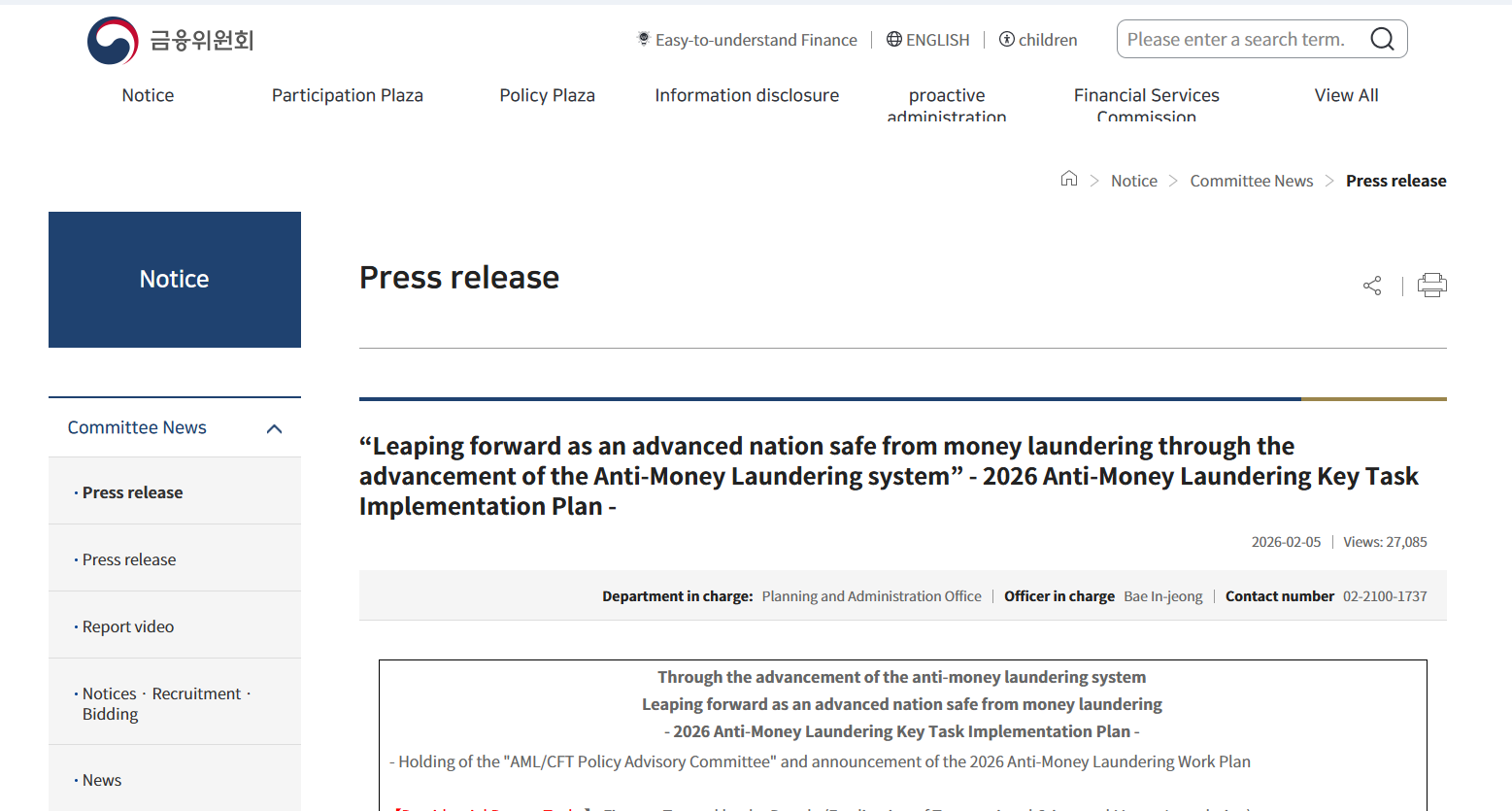
On April 13, South Korean authorities fined Coinone about $3.5 million and ordered a three-month partial business suspension over serious AML failures, including deficient customer verification and dealings with unregistered overseas exchanges.
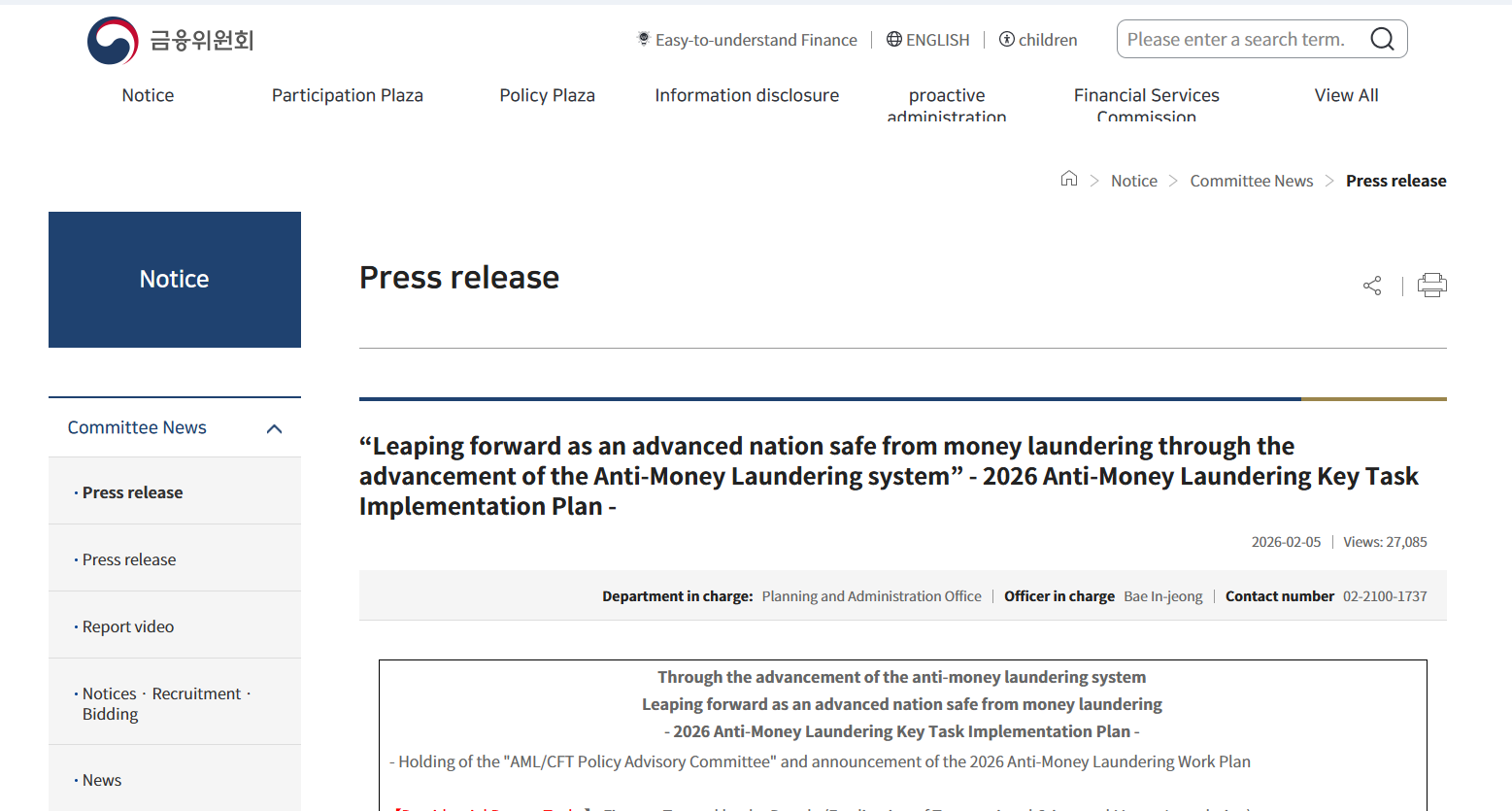
South Korea’s Financial Services Commission details strengthened 2026 AML oversight. Source: FSC
Even so, Coinone remains one of the country’s five main won-trading venues, alongside Upbit, Bithumb, Korbit and Gopax, making any sizable reported stake a potential entry point in one of Asia’s most important crypto markets.
Related: South Korea crypto holdings halve in a year as investors turn to stock market
The reported approach follows earlier interest from other global players this year. In January, several local outlets reported that Coinbase was weighing an equity investment in Coinone, as its controlling shareholder explored a partial sale; however, no Coinbase deal was announced.
Cointelegraph reached out to Korea Investment & Securities for comment, but did not receive a response by publication. OKX declined to comment on the matter.
Korean financial giants deepen bets on crypto exchanges
Domestic financial groups, meanwhile, are moving aggressively to lock down platforms of their own. In February, Mirae Asset Consulting agreed to buy a 92.06% stake in Korbit for 133.48 billion won (about $93 million), effectively taking control of the smaller exchange as part of Mirae Asset Group’s digital asset push.
On Friday, Hana Financial Group said it will invest roughly 1.003 trillion won (about $668 million) to acquire a 6.55% stake in Dunamu Inc., operator of one of Korea’s biggest crypto exchanges, Upbit, with the deal slated to close in mid-June as a long-term strategic bet on crypto infrastructure and related services.
The transactions highlight growing competition among both foreign exchanges and domestic financial firms to secure positions in South Korea’s tightly regulated crypto market.
Asia Express: North Korea denies crypto hacks, Upbit’s bank tests Ripple
Decentralized liquidity protocol THORChain halted trading after blockchain investigator ZachXBT flagged a suspected exploit of more than $10 million.
A THORChain alerts Telegram channel showed all trading and signing halted, with a global node pause extended until block 26191149, or roughly 12 hours and 42 minutes. The halt came shortly after ZachXBT said the protocol had likely been exploited across Bitcoin, Ethereum, BNB Chain and Base.
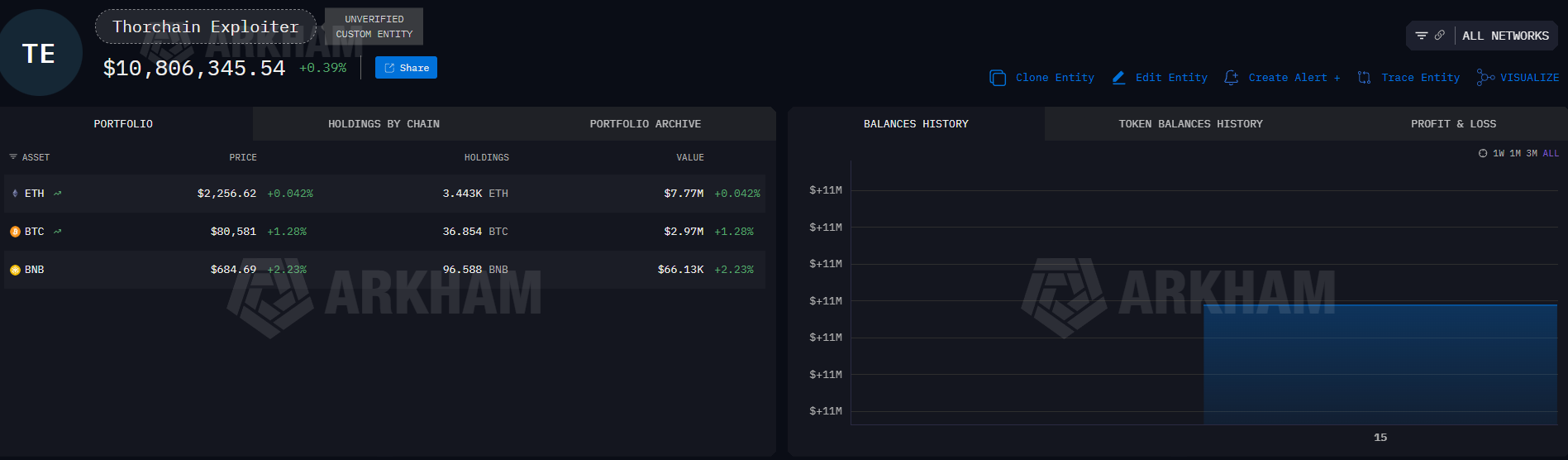
A wallet labeled by Arkham as the THORChain exploiter showed $10.8 million in holdings, transferred across several smaller transactions in the 30 minutes before 10:11 am UTC.
The suspected exploit adds to the mounting security concerns around decentralized finance (DeFi) protocols, after hackers stole over $634 million during April, marking the highest monthly sum since the $1.46 billion in February 2025, when hackers staged the record $1.4 billion hack on Bybit exchange, DefiLlama data shows.
Cointelegraph reached out to THORChain for comment. The protocol had not publicly confirmed the exploit at the time of publication, though ZachXBT and PeckShield flagged suspicious activity, and THORChain alerts showed trading and signing had been halted.
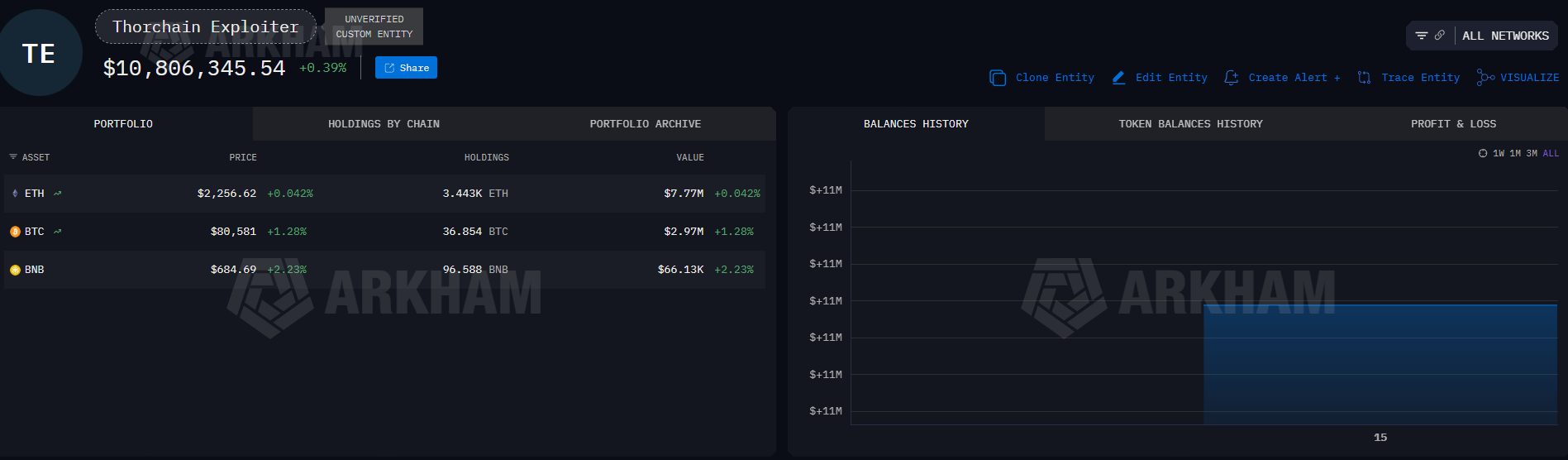
Thorchain exploiter-tagged wallet. Source: Arkham
RUNE price falls 13% after suspected exploit
THORChain’s RUNE token fell by around 13% following the suspected exploit and traded near $0.51 at the time of writing, according to CoinGecko data.
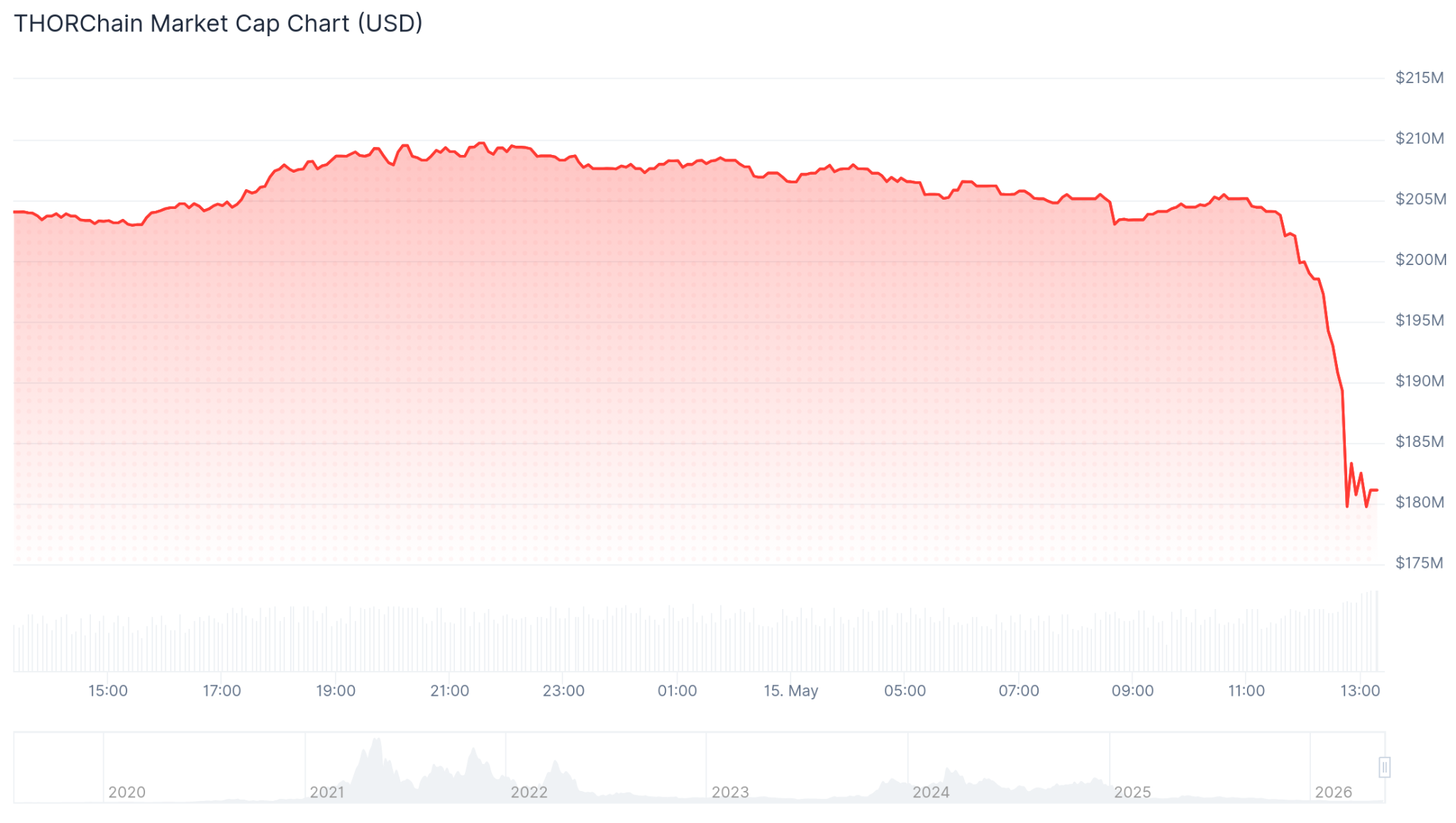
RUNE/USD, one-day chart. Source: CoinGecko
The latest correction adds additional pressure to the token’s price action, which is down 72% during the past year.
Related: Kelp DAO exploit prompts DeFi protocols to rethink oracle providers
As a non-custodial cross-chain protocol, THORChain has repeatedly been used by malicious actors to swap stolen funds, though it is not a cryptocurrency mixer like Tornado Cash.
Earlier in April, the attacker behind the $293 million Kelp DAO exploit swapped 75,700 Ether (ETH) through THORChain, generating about $910,000 in revenue for the protocol.
The majority of the $1.4 billion stolen during the Bybit hack, or about $1.2 billion, was also moved through THORChain by hackers, who swapped it from Ether to Bitcoin, according to Bybit co-founder and CEO Ben Zhou.
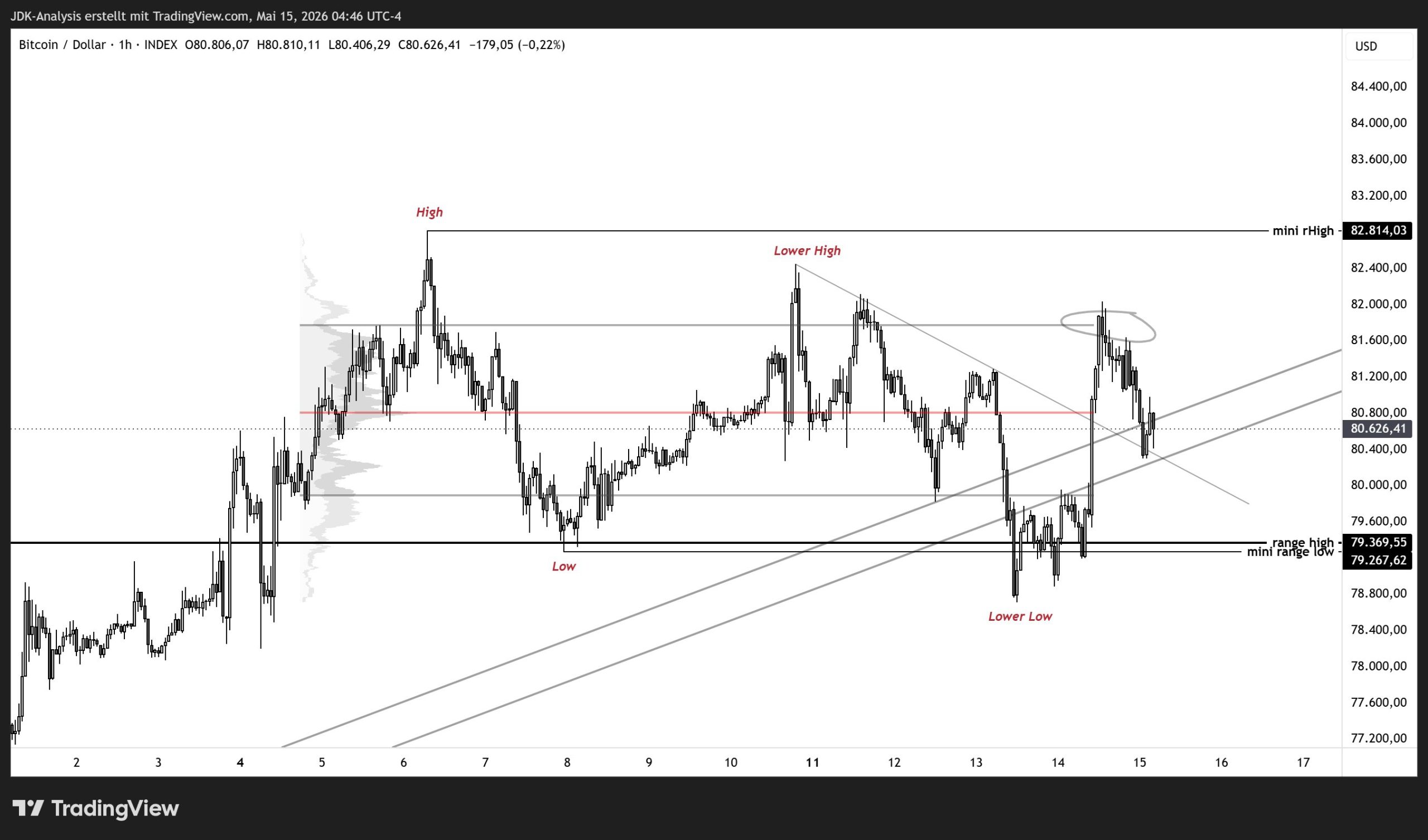
Bitcoin (BTC) risks starting its “next downtrend” as bulls fail to break beyond $82,000, the latest analysis warns.
Key points:
- Bitcoin traders are beginning to sway toward a support retest or even a new “downtrend” for BTC/USD.
- Current price behavior has retained overhead resistance, with bulls unable to push through $82,000.
- Rangebound crypto markets spark $330 million in liquidations over 24 hours.
Trader: BTC price will “likely break below” support
Bitcoin traders are increasingly split on where BTC/USD will go next, but calls for lower levels are growing.
“For now, price remains in range, within value, rotating just above the very key ‘range high,’” trading account JDK Analysis wrote in its latest updates on X.
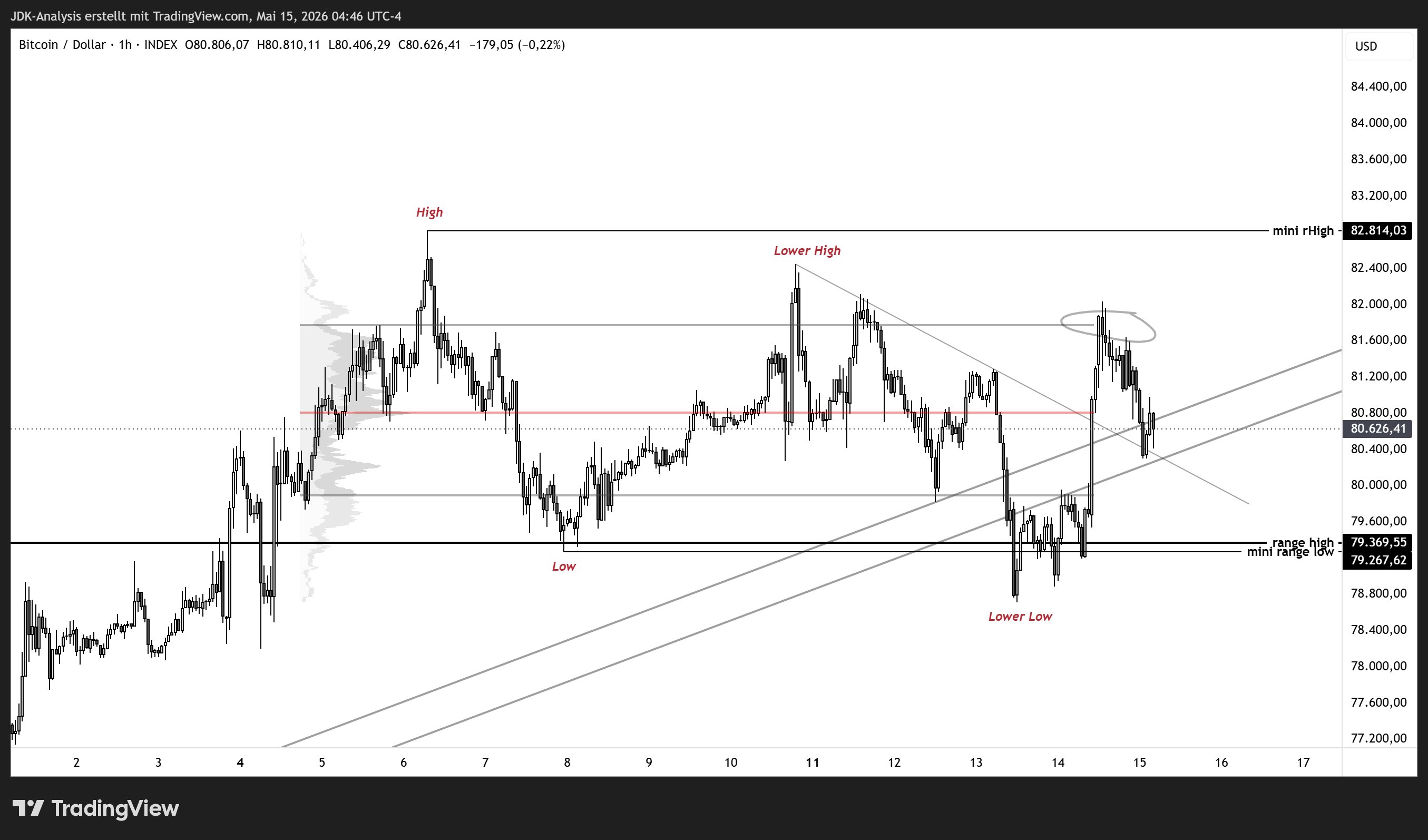
BTC/USD one-hour chart. Source: JDK Analysis/X
As Cointelegraph reported, that rangebound construction, in place through most of May, is bordered by a CME futures gap and a key 200-day trend line to the upside.
With both staying in place for now, market participants are starting to assume that the bottom of the range will be retested instead.
“Now it’s important to watch how price reacts at the support zone we already bounced from once before. In my opinion, we will likely break below it this time,” CGT Trader said.
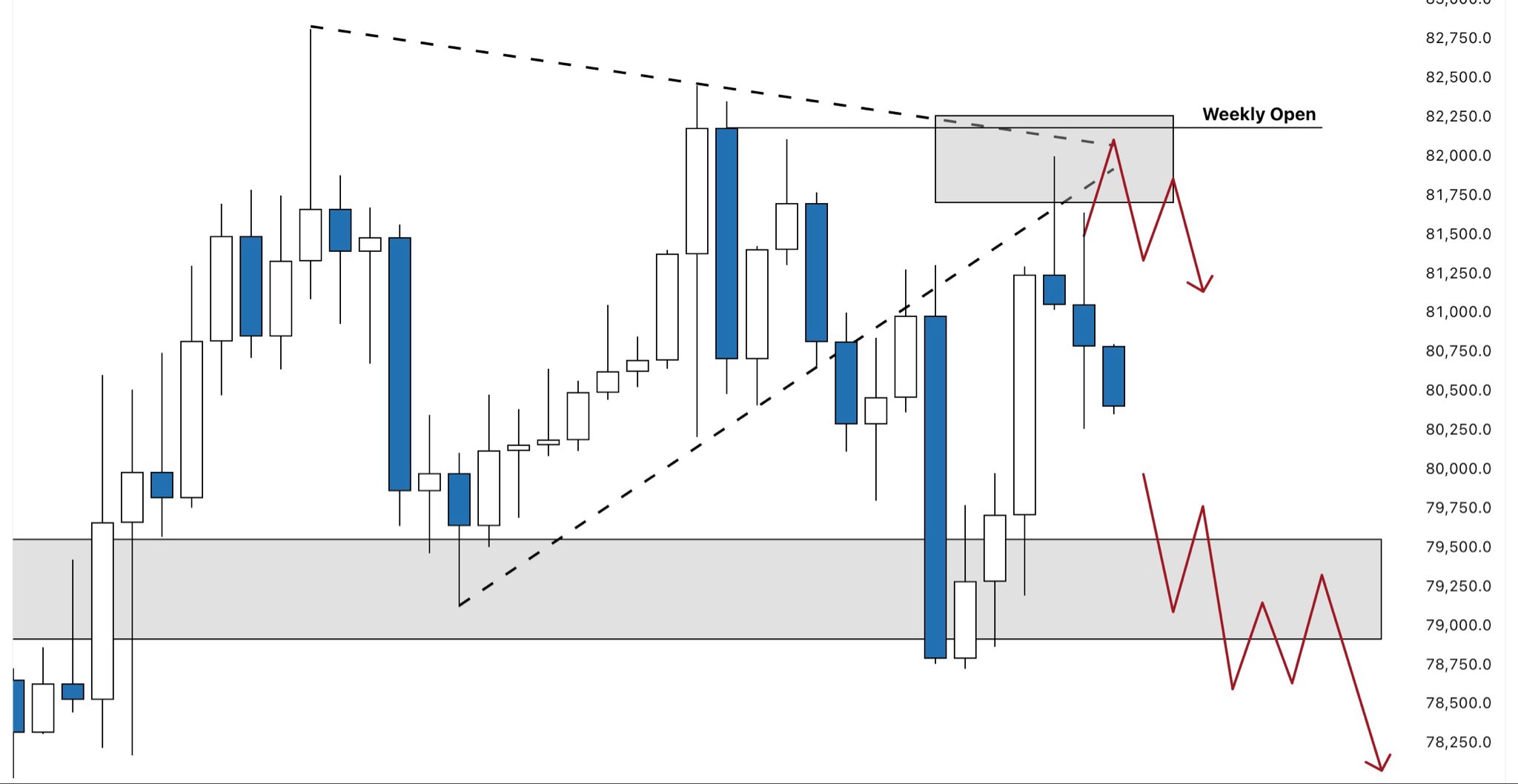
BTC/USD one-hour chart. Source: CGT Trader/X
Trader BitBull went further, seeing the risk of a protracted period of downside BTC price pressure about to enter.
“$BTC failed to reclaim the $82,000 level again,” they told X followers on Friday.
“It seems like the next downtrend could start soon.”
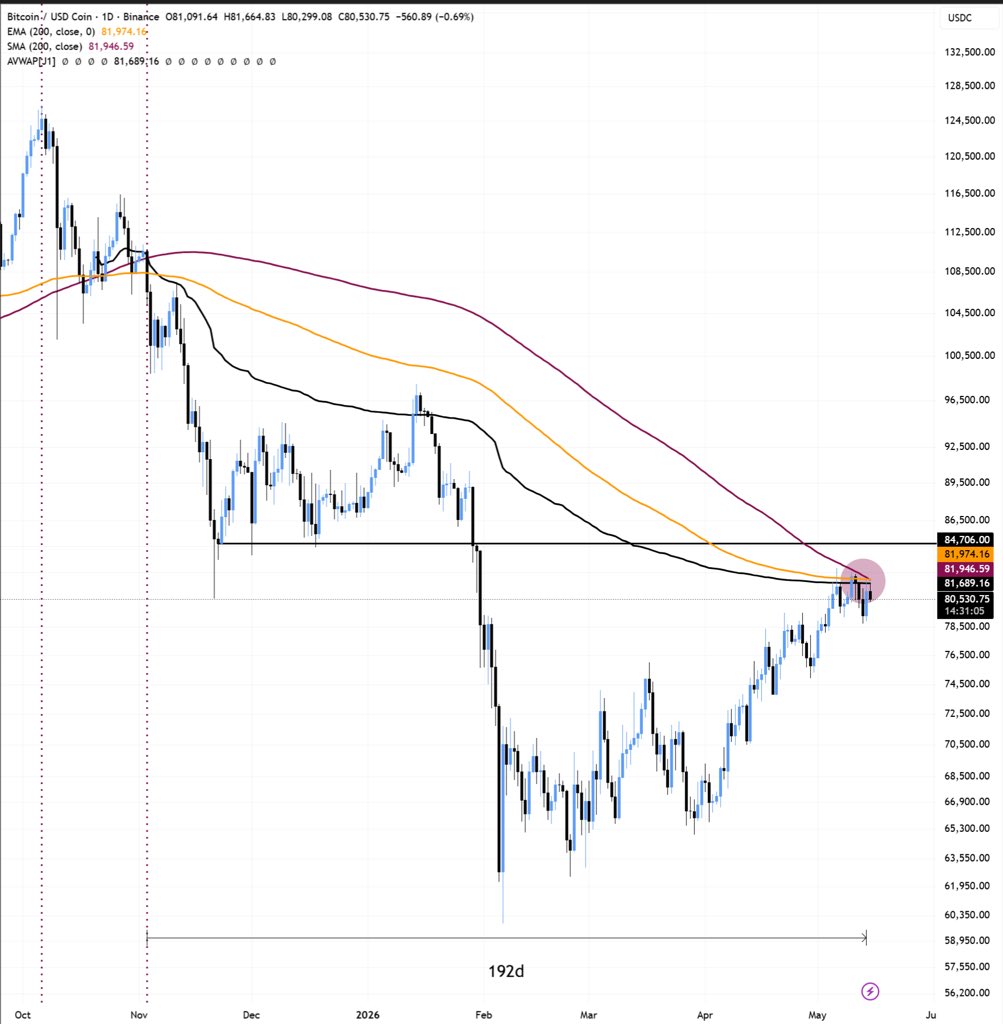
BTC/USDC one-day chart. Source: BitBull/X
Hopes for Bitcoin’s “massive catch-up” to stocks persist
Trading circles are not without their more optimistic takes.
Related: Bitcoin price history suggests 77% odds of new all-time high within a year
Cryptic Trades predicts that BTC/USD will follow in the footsteps of US stock markets, which continue to post new all-time highs.
“$BTC is going to play a massive catch-up in the upcoming weeks,” it summarized.
Examining the Bollinger Bands volatility indicator, meanwhile, trader Cai Soren said that bulls “stepped in instantly” to defend support.
Earlier, Cointelegraph noted bullish signals from the bands, which even caused their creator, John Bollinger, to act.
“As long as support keeps holding, momentum still looks strong for continuation higher,” Soren forecast.
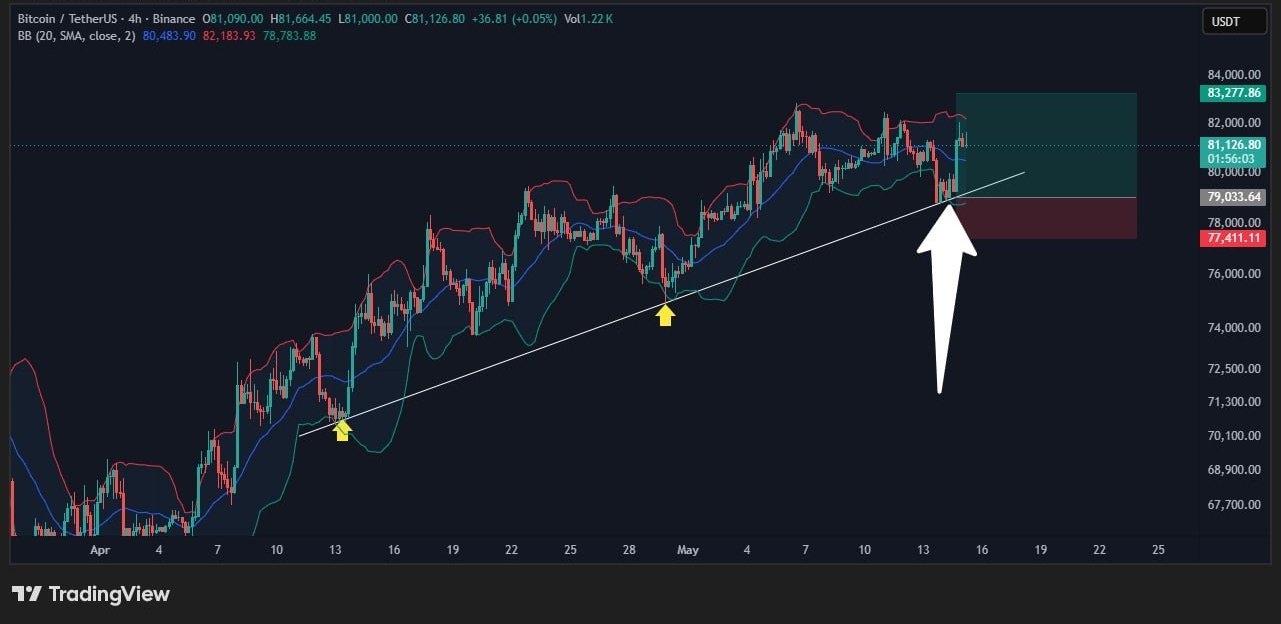
BTC/USDT four-hour chart with Bollings Bands data. Source: Cai Soren/X
Data from CoinGlass shows the impact of rangebound moves across crypto markets, with 24-hour liquidations roughly equal across both long and short positions.
These totaled around $330 million at the time of writing.
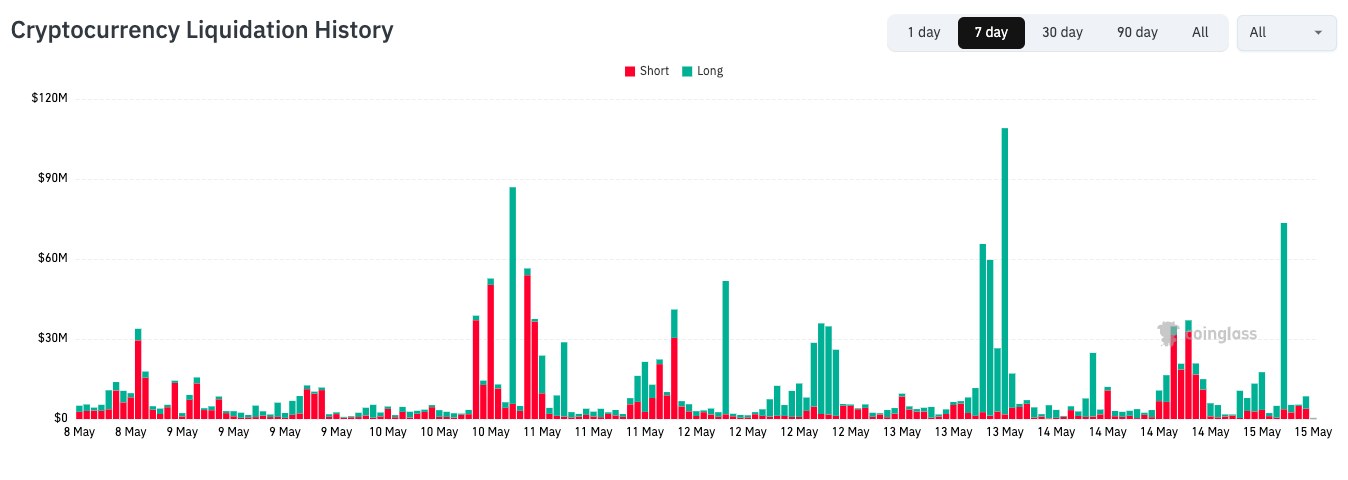
Crypto liquidation history (screenshot). Source: CoinGlass

May 15, 2026, Press release – BloFin, a prominent global cryptocurrency exchange, has officially opened registration for its highly anticipated trading competition, the WOW (War of Whales) 2026 Grand Prix. Returning bigger and bolder than ever, this year’s edition boasts an extraordinary total prize pool of up to $5,000,000 USDT, exclusive luxury giveaways, and a groundbreaking new twist — for the first time, human traders will go head-to-head against AI in a battle to claim the title of the ultimate whale.
Under the rallying cry “Squad Up. Beat AI.”, WOW 2026 is set to become one of the most dynamic and forward-looking trading events of the year, bringing together crypto traders, elite squads, and algorithmic challengers worldwide.

Four thrilling competition formats, one epic trading season
This year’s WOW Grand Prix offers participants multiple distinct ways to compete and win big. The formats include the Trading Competition (Futures), Treasure Box Prize Hunt, Lucky Spin Draw, and Grand Lotto Giveaway — alongside the brand-new Human vs AI Showdown, where traders are challenged to outperform BloFin’s AI-driven benchmarks for a share of bonus prize tiers.

Throughout the competition window, traders can engage in team battles, climb individual leaderboards, unlock random rewards, spin their way toward exclusive prizes, and prove that human intuition still has an edge over the machines — creating a truly immersive next-generation trading experience.
Scaling prize pool — up to $5,000,000 USDT
The prize pool for the WOW 2026 Grand Prix is designed to scale with total trading volume milestones, starting at a base reward tier and expanding to a massive $5,000,000 USDT as community trading volume grows. The more participants trade, the larger the total prize pool becomes for everyone.
The prize distribution is structured as follows:
- 40% — Team Competition (by Trading Volume)
- 20% — Team Competition (by PNL %)
- 25% — Individual Competition (by Trading Volume)
- 15% — Individual Competition (by PNL %)
Additional top-tier rewards include a marquee luxury grand prize for the top-performing team and premium giveaways for individual champions across the leaderboards.
Introducing the WOW 2026 PNL Card — Now AI-Enhanced

Building on last year’s success, BloFin is unveiling the next evolution of the WOW (War of Whales) 2026 PNL Card — a distinctive digital emblem crafted for elite competitors. Inspired by the cyber-themed aesthetic of the WOW Grand Prix and infused with this year’s AI-versus-human narrative, this limited-edition PNL Card serves as a personalized record of each trader’s performance throughout the competition.
Participants can proudly display their achievements, track their battle stats, showcase their Human vs AI scorecards, and share their milestones within the crypto trading community.
Registration now open
Registration for the WOW 2026 Grand Prix is now open. Team leaders can create squads, and users are encouraged to join early to maximize their competitive edge before the trading window begins.
About BloFin
BloFin is a top-tier cryptocurrency exchange that specializes in futures trading. The platform offers a wide range of trading options, including 550+ USDT-M perpetual pairs, Coin-Margined Perpetual Contracts, spot trading, copy trading, API access, unified account management, and advanced sub-account solutions. Committed to security and compliance, BloFin integrates Fireblocks and Chainalysis to ensure robust asset protection. By partnering with top affiliates, BloFin delivers scalable trading solutions, efficient fund management, and enhanced flexibility for professional traders. As a constant sponsor of TOKEN2049, BloFin continues to expand its global presence, reinforcing its position as the place “WHERE WHALES ARE MADE.”
Media contact:

A bipartisan push to fully staff the US Commodity Futures Trading Commission (CFTC) gained momentum this week as lawmakers warned that a major crypto market-structure bill could hinge on timely leadership at the regulator.
In a Friday letter to President Donald Trump, House Agriculture Committee Chair Glenn Thompson and ranking member Angie Craig urged the administration to nominate a complete panel of CFTC commissioners. They pointed to urgent regulatory issues facing the agency and a substantial rulemaking process anticipated if the Digital Asset Market Clarity Act (CLARITY) becomes law. “Ensuring the Commission is well-equipped as the leading derivatives markets regulator in the world is a bipartisan priority for the members of our Committee,” the lawmakers wrote, arguing a full commission would help the agency promote integrity, resilience, and vibrancy in US derivatives markets and reinforce US leadership.
Source for the letter: US House Agriculture Committee.
Meanwhile, Michael Selig remains the lone CFTC commissioner, having taken the helm after acting chair Caroline Pham resigned in December 2025. Under Selig, the commission has aligned with the administration on several fronts, including assertions of exclusive jurisdiction over prediction markets.
Earlier coverage noted the agency’s stance on rulemaking. In an April hearing with the House Agriculture Committee, Selig said he did not intend to slow down rulemaking despite the absence of four other commissioners. The CFTC also issued a memorandum of understanding with the US Securities and Exchange Commission in March to coordinate oversight of markets, including digital assets.
The CFTC under the CLARITY Act
On Thursday, the Senate Banking Committee voted to advance the CLARITY Act, setting the bill up for a potential floor vote. The measure would give the CFTC greater authority to oversee and regulate digital asset markets, a shift with wide implications for crypto users and market participants alike. As of Friday, no floor schedule had been announced.
The leadership gap at the CFTC has drawn attention from lawmakers considering crypto market structure. Democratic Senator Amy Klobuchar, who sits on the Senate Agriculture Committee, proposed an amendment in January requiring that CLARITY not take effect until at least four CFTC commissioners have been nominated and confirmed.
Trump has not publicly announced any CFTC commissioner picks as of Friday. Any nominations would need to clear Senate confirmation, a process that could take weeks or months depending on political dynamics and committee timelines.
Related coverage from Cointelegraph noted related developments in CFTC actions and interagency coordination efforts, including discussions around rulemaking and market oversight.
As policymakers weigh the competitive and regulatory implications of a more expansive CFTC mandate, investors, traders, and developers in the crypto space will be watching closely for the speed and clarity with which leadership can be restored at the agency. The CLARITY Act’s fate—and the CFTC’s ability to implement new rules—could shape how digital assets are treated within traditional derivatives markets and how promptly market participants must adapt to evolving oversight standards.
What remains uncertain is how quickly a full CFTC commission can be formed and how any new governance will interact with ongoing interagency coordination, especially given the already-noted memorandum with the SEC. If leadership timelines stretch longer, the industry might face continued regulatory ambiguity even as Congress signals a strong intent to expand the CFTC’s remit over digital assets.
Readers should monitor next steps in the confirmation process for nominees, the Senate’s agenda for CLARITY Act floor scheduling, and any new statements from the CFTC as rulemaking advances or adjusts to the post-clarity regulatory framework.

BlackRock Investment Institute warned investors that company-level AI capex now drives the entire macro market backdrop. The asset manager said its first 2026 theme, micro is macro, captures the shift.
The note from strategists Jean Boivin and Wei Li lands as Big Tech capital spending tracks roughly $725 billion this year. That figure is up about 10% from estimates made before first-quarter earnings. Capex on this scale rivals traditional macro drivers.
AI Capex Now Rivals Traditional Macro Forces
The micro-is-macro thesis argues that capex from a few firms shapes growth, earnings, and yields. That spending now rivals central bank policy as a market driver.
BlackRock estimates AI infrastructure investment could reach $5 trillion to $8 trillion this decade. The Magnificent Seven recently tracked roughly 57% quarterly earnings growth. AI is now the dominant force behind US equity gains.
The firm believes AI could be the first innovation in 150 years strong enough to lift US growth above 2%. It stresses that the outcome remains uncertain.
Inflation and the Strait of Hormuz raise the stakes
Sticky price pressures were already elevated before the Strait of Hormuz closure added fresh energy risks. BlackRock now sees about three rate hikes priced into Europe, with the U.S. on hold.
The firm stays overweight US and emerging-market equities. It cautions that long-term Treasuries no longer offer the portfolio ballast they once did. Higher yields, paired with sticky inflation, could begin to pressure valuations if disruptions persist.
Bitcoin gets caught in the macro crosswind
The crypto market reflects the same forces. Bitcoin (BTC) trades near $80,646, roughly 36% below its October 2025 record of $126,080. Ethereum (ETH) sits around $2,260, more than 50% off its August 2025 peak.
Capital that once flowed to risk assets is being diverted to AI capex and energy security, raising competition for funding. BlackRock argues that genuine diversification now requires private markets and hedge funds rather than traditional cross-asset spreads.
Rising leverage, weaker traditional hedges, and a few mega forces driving everything leave little room for passive positioning. Whether AI capex sustains its growth premium or starts to crowd out other assets is now the key question. The answer may set the tone for risk markets through the second half of 2026.
The post BlackRock Warns AI Capex Is Turning Micro Into Macro for Markets appeared first on BeInCrypto.
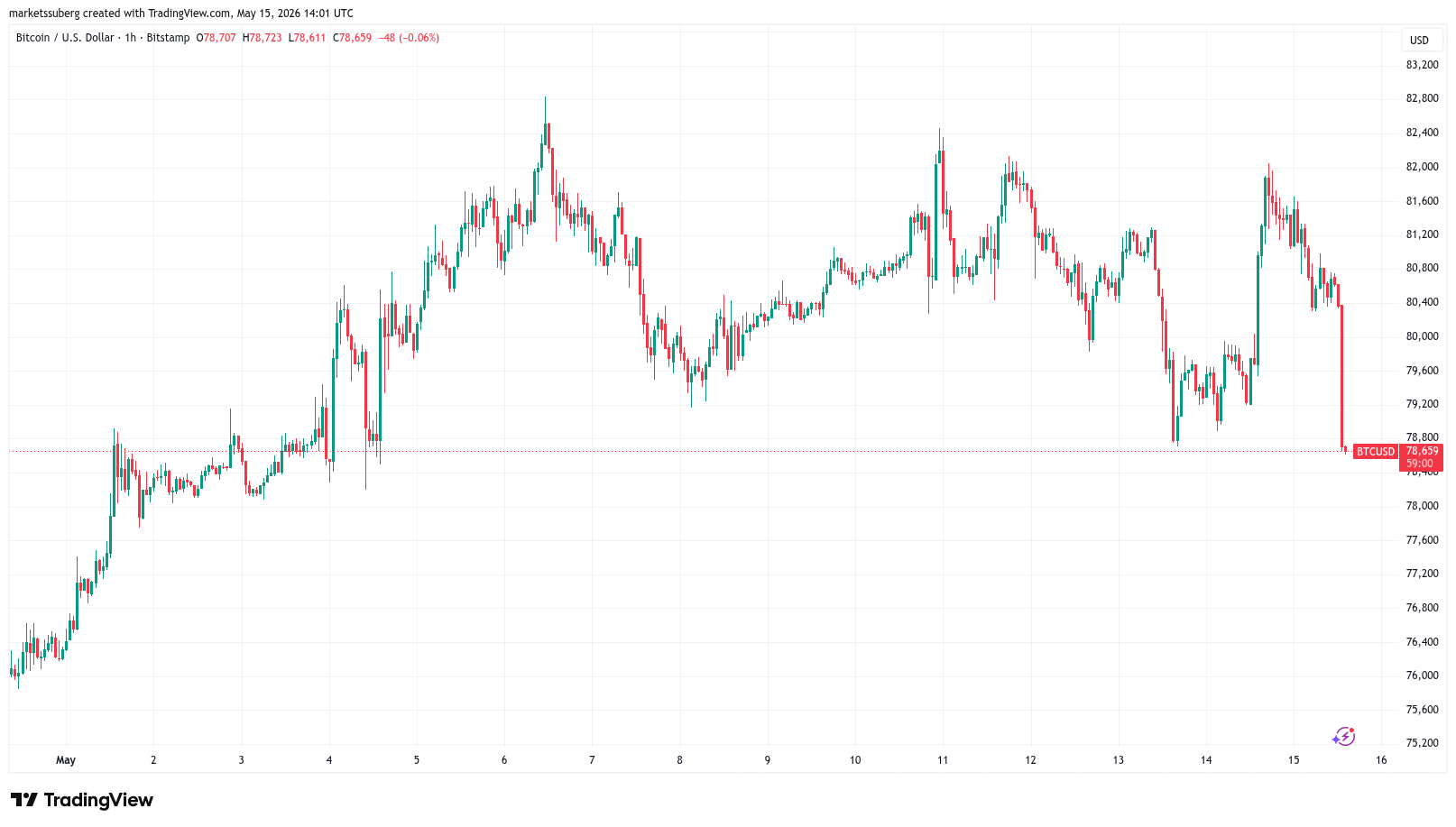
Bitcoin (BTC) fell below $80,000 at Friday’s Wall Street open as analysis tied risk-asset weakness to US bond markets.
Key points:
- Bitcoin eyes its lowest levels of May as concerns over US bond yields spark a risk-asset rout.
- US 10-year treasury yields rise above levels that sparked a US tariff pause on China last year.
- Traders wait for new local lows for BTC/USD as support stability is eroded.
Bitcoin suffers as risk-asset “euphoria” turns sour
Data from TradingView tracked 3% daily BTC price losses, with downside intensifying as the US session began. BTC/USD approached its lowest levels in May so far.
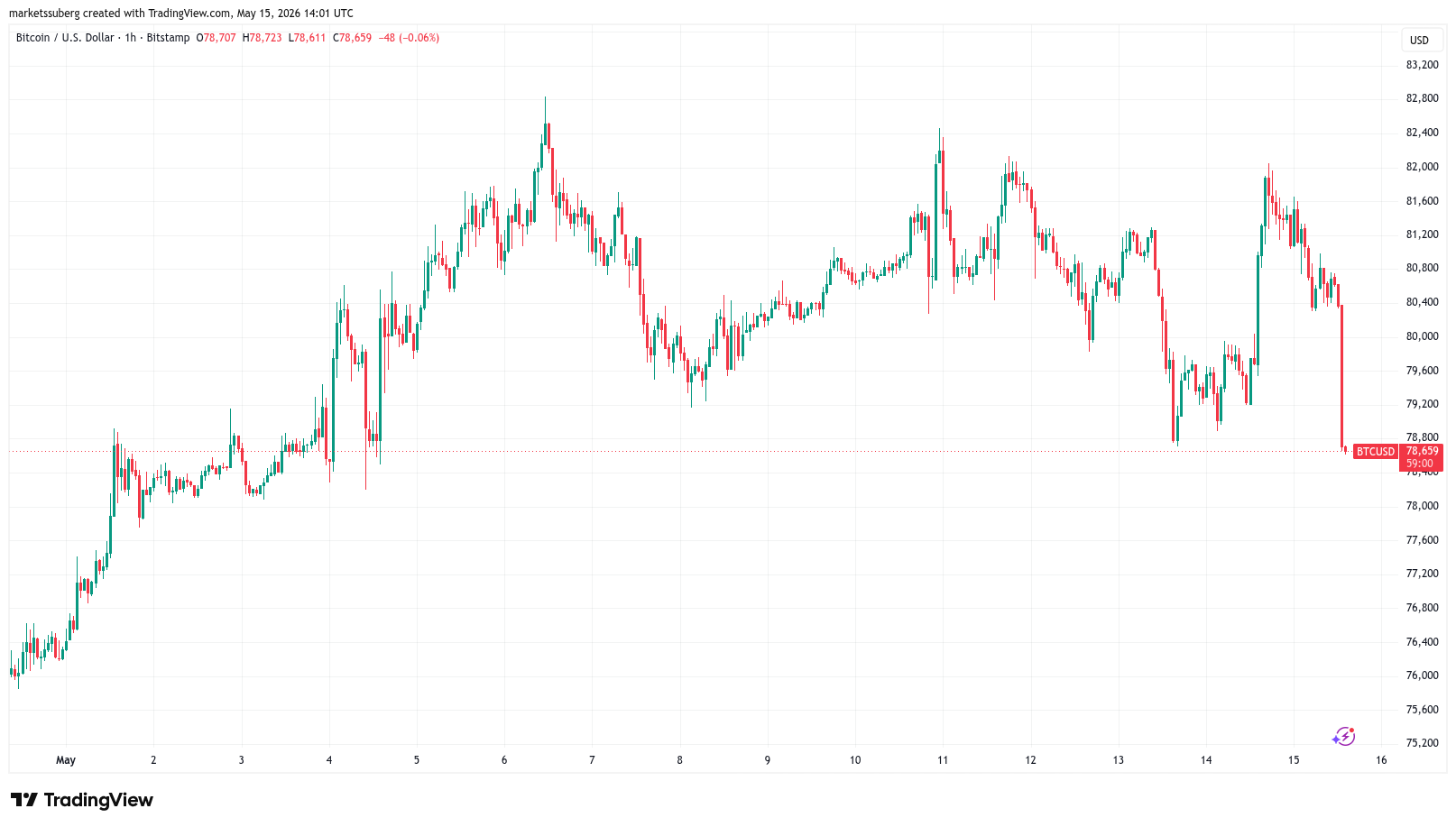
BTC/USD one-hour chart. Source: Cointelegraph/TradingView
Stocks also gave back gains after hitting new all-time highs earlier in the week.
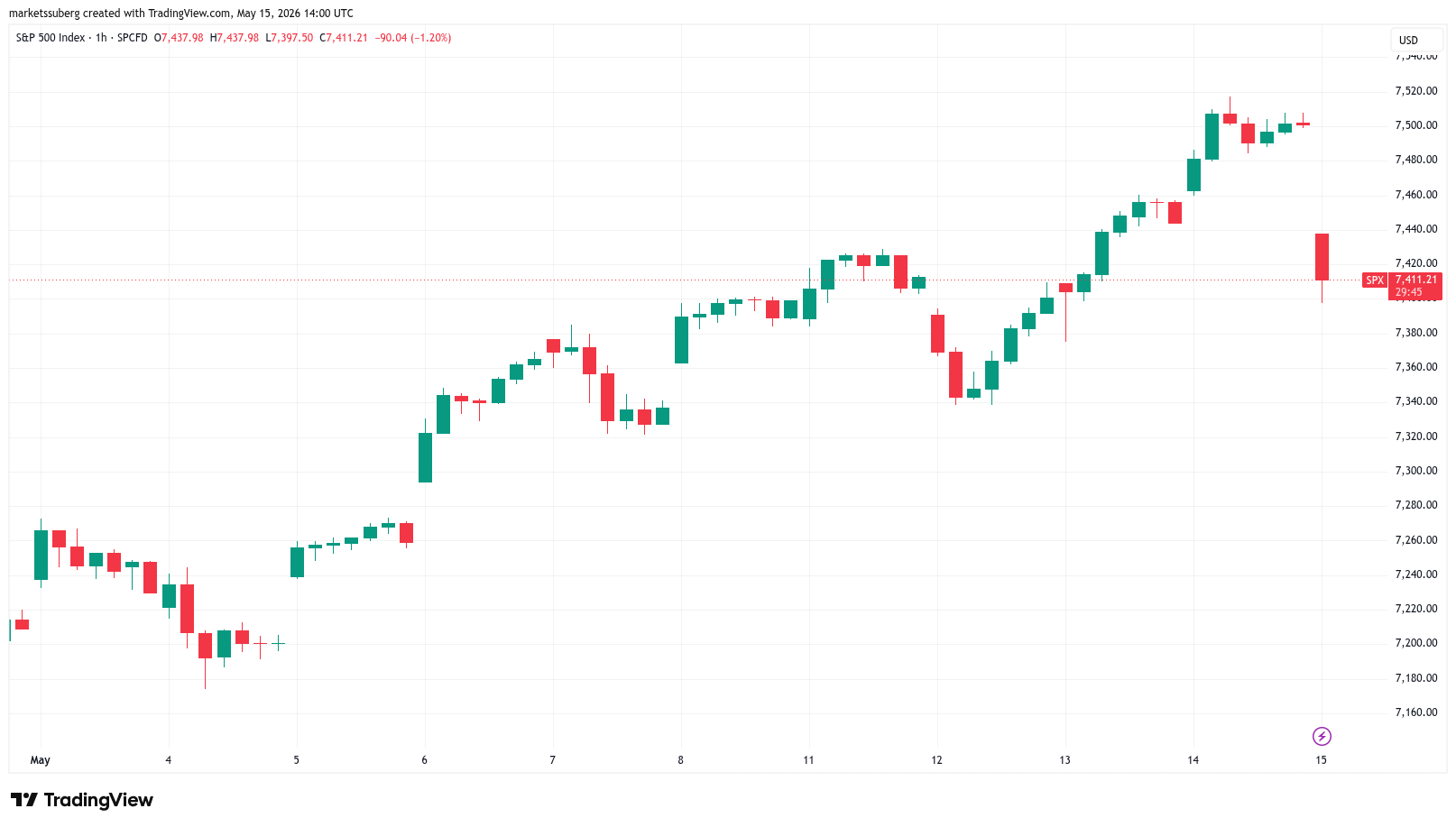
S&P 500 one-hour chart. Source: Cointelegraph/TradingView
Reacting, trading resource The Kobeissi Letter saw risk-asset “euphoria” giving way to concerns about “unsustainable” US bond yields.
“The bond market crisis is intensifying. The US 10Y Note Yield is now officially above 4.55% for the first time since May 2025,” it wrote in a post on X.
“After weeks of euphoria, the market is beginning to react today. As we have been stating for the last few weeks, the current situation in the bond market is unsustainable.”
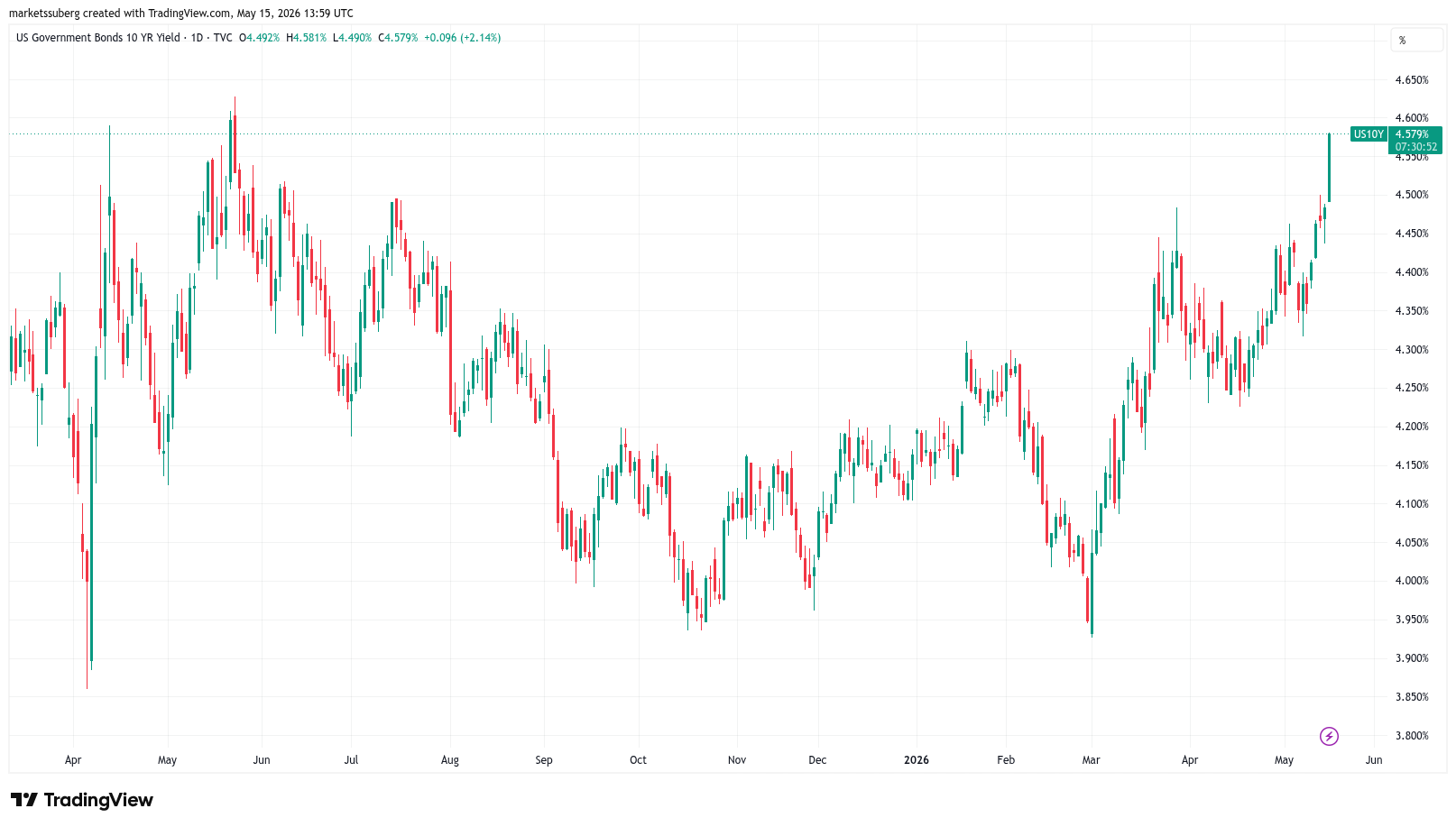
US 10-year treasury note yield one-day chart. Source: Cointelegraph/TradingView
Kobeissi noted that yields were now above levels seen in April 2025, when US President Donald Trump halted the implementation of trade tariffs on China. That move, it said, came due to “a collapsing bond market.”
“Furthermore, the market now sees a 60%+ chance that the Fed’s next move is an interest rate HIKE, with rate cuts entirely priced-out,” the post added.
“We expect to see 7%+ mortgages next, all as auto loan delinquencies have reached 32-year highs. Inflation is back and higher rates are coming.”
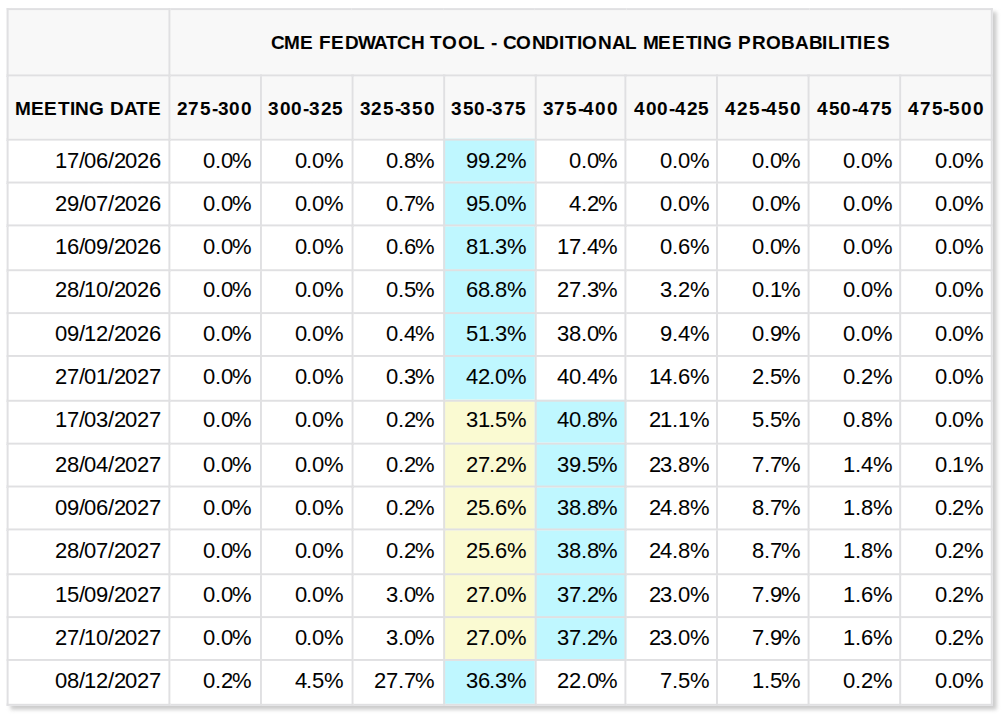
Fed target rate probabilities (screenshot). Source: CME Group
The latest data from CME Group’s FedWatch Tool showed a 0.25% interest-rate hike as the most likely outcome by March 2027.
BTC price lows back on the radar
As Cointelegraph reported, traders were already unsure about Bitcoin’s ability to climb beyond $82,000 local highs.
Related: Bitcoin price history suggests 77% odds of new all-time high within a year
A support retest was already on the cards, and targets on the day extended toward the mid-$70,000 zone.
“Honestly, not a good sign that $BTC fully retraced the move from yesterday,” trader Pat told X followers.
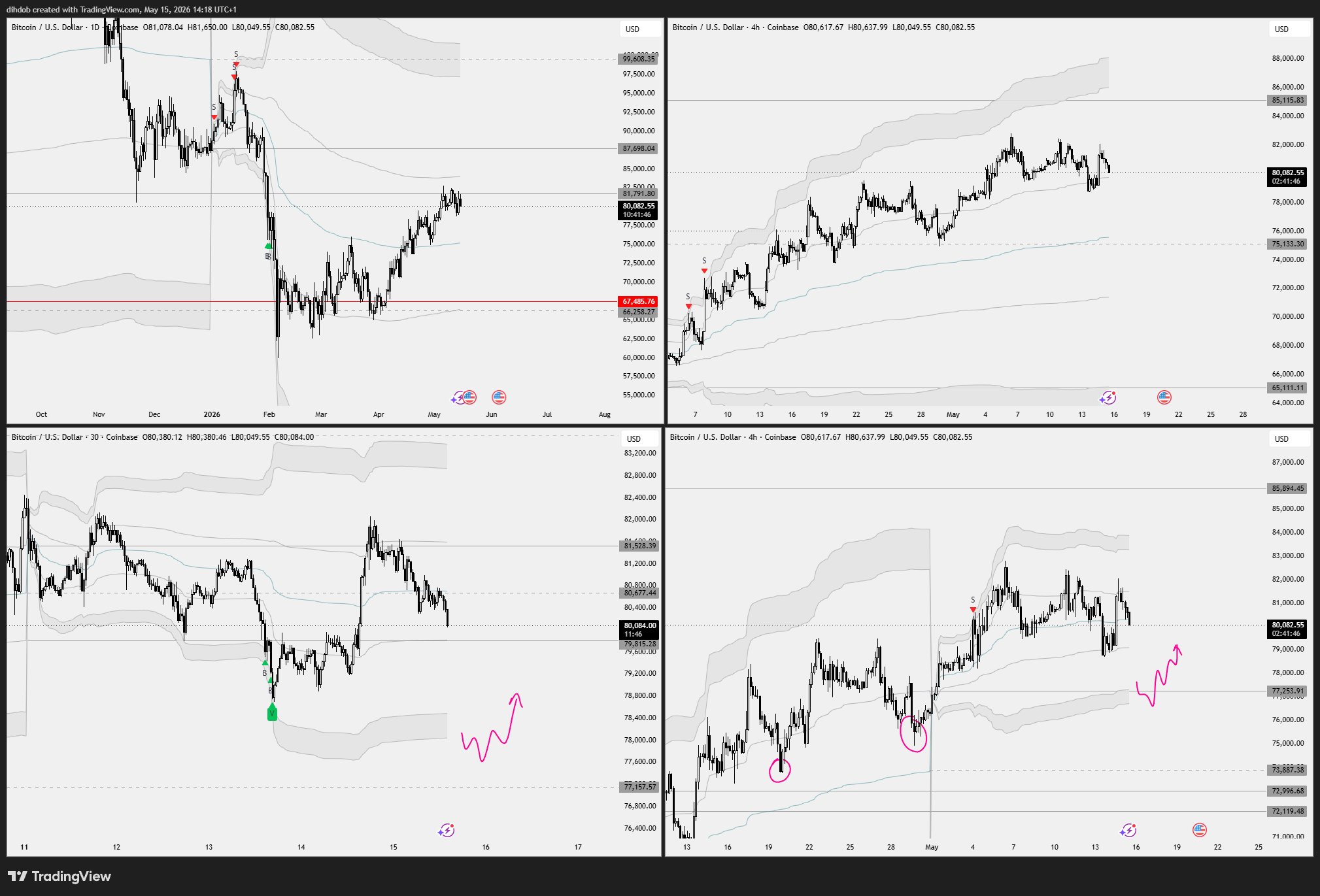
BTC/USD comparison. Source: Pat/X
Rangebound continuation was an increasingly popular option, with analyst Eric Coleman suggesting that low-time frame price action was predictable.
“BTC pumped from the marked horizontal support just as expected and again it got rejected below the trendline and the horizontal resistance,” he wrote alongside an explanatory chart.
“Further movement in between the horizontal support and resistance is expected until a solid breakout or breakdown occurs.”
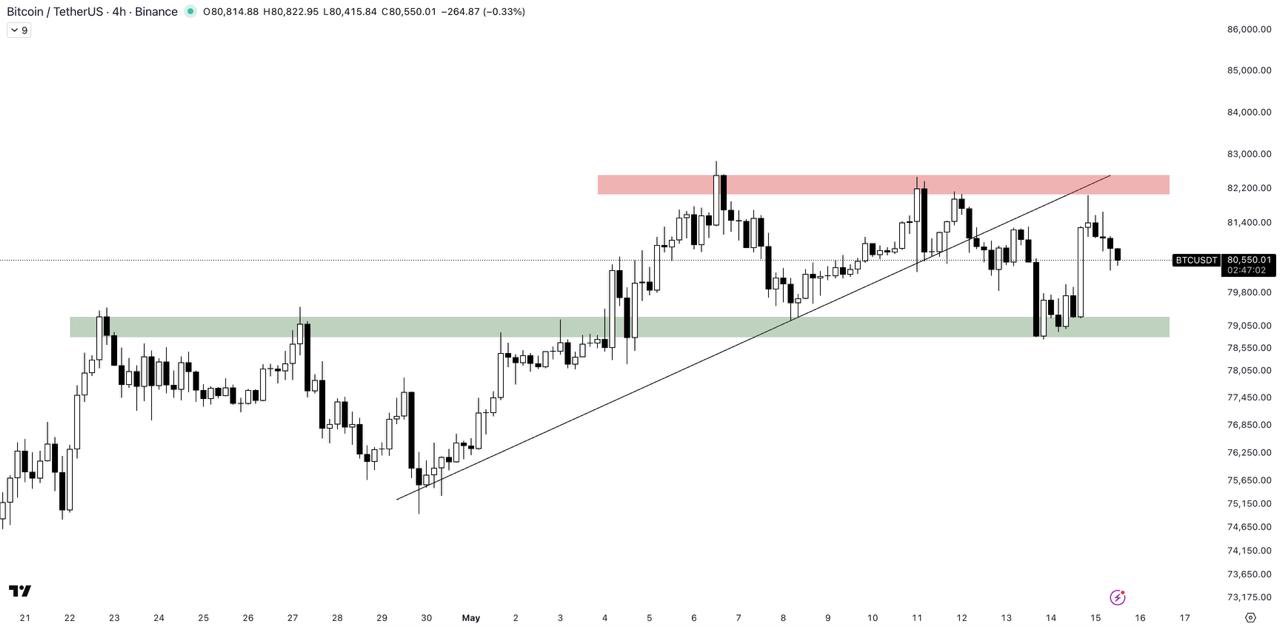
BTC/USDT four-hour chart. Source: Eric Coleman/X

Mum who fell headfirst into sea defence rocks as tide was coming in could have been saved

Kendrick Perkins Declares Wemby Already Most Dominant Player in NBA as Spurs Star Redefines Greatness

Eket To Host 2026 N-Youth League Super 8 Championship

Manchester United reach agreement with Casemiro over contract clause amid transfer speculation

US brings back mandatory military draft registration

Steven Gerrard disagrees with Gary Neville over ‘shock’ Chelsea and Arsenal claim | Football


-

 Fashion4 days ago
Coffee Break: Travel Steam Iron
-

 Politics7 days ago
Politics Home Article | Starmer Enters The Danger Zone
-

 Fashion5 days ago
What to Know Before Buying a Curling Wand or Curling Iron
-

 Politics4 days ago
What to expect when you’re expecting a budget
-

 Tech6 days ago
Auto Enthusiast Carves Functional Two-Stroke Engine from Solid Metal
-

 Fashion8 hours ago
Weekend Open Thread: Theory – Corporette.com
-
 Business7 days ago
Ignore market noise, India’s long-term story intact, say D-Street bulls Ramesh Damani and Sunil Singhania
-

 Tech5 days ago
GM Agrees To Pay $12.75 Million To Settle California Lawsuit Over Misuse Of Customers’ Driving Data
-

 Crypto World7 days ago
PROS explodes 48% as Upbit and Bithumb listings ignite demand
-

 Crypto World6 days ago
CZ says US crypto rivals tried to block Trump pardon
-

 Tech20 hours ago
Tech Moves: Microsoft AI leader jumps to OpenAI; former AI2 exec joins Meta; and more
-

 Tech4 days ago
GM agrees to $12.75M California settlement over sale of drivers’ data
-
Crypto World3 days ago
Bitcoin Suisse expands with Digital Asset License and Investment Business Act Registration Approval in Bermuda
-

 Crypto World7 hours ago
E-Estate Announces 1 Year Live: Washington DC Summit as Real Estate Tokenization Enters Its Next Phase
-

 Politics3 days ago
Pakistan to enter Chinese capital market as war inflation bites
-
 Crypto World2 days ago
Google’s Gemini AI Predicts Incredible Solana Price by the End of 2026
-

 Entertainment7 days ago
Pooh Shiesty Pleads Not Guilty In Gucci Mane Kidnapping Case
-
 Sports7 days ago
‘Not bothered’ – Michael Carrick gives update on Manchester United head coach role
-

 Crypto World3 days ago
Bitcoin Suisse expands with Digital Asset License and Investment Business Act Registration Approval in Bermuda
-

 Crypto World46 minutes ago
BloFin War of Whales 2026 Grand Prix opens registration for $5M trading championship
You must be logged in to post a comment Login