Littelfuse, Inc. (LFUS) Analyst/Investor Day May 14, 2026 9:00 AM EDT
Company Participants
David Kelley – Head of Investor Relations Gregory Henderson – CEO, President & Director Peter Kim – Senior VP & GM of Industrial Business Deepak Nayar – Senior VP & GM of Electronics Business David Ruppel – Senior VP and GM of Passenger Vehicle Business & Commercial Vehicle Products Karim Hamed – Senior VP & GM of Semiconductor Business – Electronics Segment Abhishek Khandelwal – Executive VP & CFO
Advertisement
Conference Call Participants
Christopher Glynn – Oppenheimer & Co. Inc., Research Division Luke Junk – Robert W. Baird & Co. Incorporated, Research Division David Williams – Needham & Company, LLC, Research Division
Presentation
Advertisement
David Kelley Head of Investor Relations
All right. Good morning, everyone. Thanks for joining us this morning for the 2026 Littelfuse Investor Day. We’re super excited to have everyone spend the morning with us and through lunchtime here in beautiful New York City.
For those of you that don’t know me, my name is David Kelley. I’m the Vice President of Investor Relations here at Littelfuse. We haven’t met before. We would love to spend some time with you today. And for those of you on the webcast, by the way, thank you for joining us as well. My e-mail address is on the website, so would love to speak with you as well. A lot of familiar faces and a lot of new faces in the crowd this morning. So looking forward to starting the conversation or for many of you continuing the conversation here.
Before we get rolling, I wanted to pull up the disclaimer slides for you to read here. These are, of course, available on our website where the presentation is also available. They’re also filed with a presentation with the SEC as well.
Imagine you receive a letter from me on Monday morning.
It says the market will go up this week.
It does.
The following Monday, another letter arrives. This time, I say the market will fall.
Advertisement
It does.
Live Events
Then it happens again. And again. Eight weeks in a row. Eight market calls. Each one perfect. By now, you would be tempted to conclude that I possess either rare market insight or divine intervention. You may even consider investing in my fund.You should not. At least, not merely on this basis.
I could have done this with no forecasting skill at all.
Here is how. I begin with one million people. To half of them, I send a letter saying the market will rise. To the other half, I say it will fall. At the end of the week, whichever group received the wrong prediction never hears from me again. The group that received the right prediction becomes my new universe. I split them again. Half get a bullish prediction, half get a bearish one.
After eight weeks, I am left with 7,812 people who have received eight perfect market calls in a row. You happen to be one of them.
Advertisement
While it looks like genius, it was only arithmetic.
That is survivorship bias. The outcome looks extraordinary because we only see the survivors. We do not see the much larger graveyard of failed predictions that made the miracle possible.
The same bias often creeps into how we think about equities.
All of us know someone who made serious money in a stock that went up 10x, 50x, perhaps even 100x. We see investors on television who built reputations by finding stocks that did not merely compound, but exploded. Over time, the lesson appears obvious: to generate decent portfolio returns, one must find the next multi-bagger.
Advertisement
It is a seductive belief. It is also an incomplete one.
To test it, we looked at stock price data since 2000. We divided the market into two broad buckets: the top 250 companies by market capitalization, which we classify as large and midcap, and the next 500 companies, which we classify as smallcaps. Going below the top 750 was not feasible in the early 2000s and remains difficult even today, given liquidity constraints.
For every monthly five-year window since 2000, we calculated the proportion of smallcap stocks that went up more than 5x over the following five years, or in other words, “5x in 5Y”.
We then looked backward. For each starting month, we calculated the proportion of stocks that had fallen more than 50% in the preceding five years. The question was simple: if a large part of the market has already been badly bruised, what is the subsequent probability of finding stocks that go up 5x?
Advertisement
The answer is intuitive, but important.
ETMarkets.com
In the early 2000s, Indian equity markets were still relatively nascent. Nearly half the listed small-cap universe went up 5x over five years. Put differently, finding a five-bagger then was almost as common as calling heads or tails correctly on a coin toss.
That period left a deep imprint on many investors. A number of today’s market veterans generated their first meaningful wealth during that phase. For them, the multi-bagger hunt was not mythology. It was lived experience.
The post-COVID period created a similar, though less extreme, imprint for a newer generation. Given that 81% of active demat accounts today have been opened only since COVID, many investors entered markets during a period when finding a 5x stock was as frequent as roughly one in three. For them too, the experience was real. But the extrapolation may not be.
Because outside these exceptional windows, the odds were far less generous.
Advertisement
The probability of finding multi-baggers rises dramatically when the starting point is depressed — when a high proportion of stocks have already corrected sharply in the previous cycle. In other words, multi-baggers are not merely born from brilliance. They are often born from a low base.
This is where survivorship bias becomes dangerous.
We remember the stock that went up 50x. We forget the conditions that made it possible. We remember the investor who found it. We forget the many who bought similar-looking names and did not survive the drawdown. We celebrate the winner, but ignore the starting universe.
The same applies at the portfolio level.
Advertisement
A stock going up 5x is exciting. But a portfolio is not one stock. To examine this, we ran a bootstrap simulation of random 30-stock portfolios across 100,000 runs. The results were revealing. The probability of building an entire portfolio that went up 5x between February 2020 and September 2024 was c.40%. That is strikingly high. But the probability of losing half the portfolio value by March 2026 was also 32%.
In other words, the same market structure that made spectacular gains possible also made brutal drawdowns probable.
That is the part often left out of the multi-bagger story.
Over the long term, the picture becomes even more sobering. The 10-year average rolling return of the BSE Large Cap Index is 12.1%. The corresponding number for the BSE Small Cap Index is 13.2%. Given that multi-baggers are largely found within small caps, this difference is not large enough to support the belief that merely hunting in the multi-bagger pond guarantees superior long-term outcomes.
Advertisement
The lesson is not that multi-baggers do not matter. They do. A few exceptional winners can transform outcomes. The lesson is that the probability of finding them is not constant. It changes with the cycle, the starting valuation, the prior drawdown, liquidity, flows and sentiment.
There are therefore two ways to approach the market.
The first is to keep hunting for the next big thing. It is exciting. It provides the thrill of discovery. It offers the possibility of finding that rare gem that makes the entire exercise worthwhile. But it also comes with sharp drawdowns, false starts, crowded trades, and many instances where the cup comes very close to the lip before slipping away.
For some investors, that is the cost of doing business.
Advertisement
Of course, every rule has exceptions. There will be investors who can tilt the odds meaningfully in their favor, through skill, process, temperament, or sometimes luck. They may produce outcomes far superior to any randomized simulation. But judging by auditable performance data across the industry, such investors are either in very slim company or are not managing public money.
The second approach is less glamorous, but perhaps more useful: know when the odds are in your favor.
There are times when looking for multi-baggers is a high-probability exercise. These are usually periods of deep pessimism, widespread drawdowns, poor liquidity, exhausted sellers and low expectations. There are other times when the multi-bagger hunt becomes less an investment process and more a narrative chase.
The difference matters.
Advertisement
Because in markets, stories sell better than statistics. But over time, statistics decide which stories survive.
( The author is Co-Founder & Director, Buoyant Capital)
NEW YORK — The New York Times Strands puzzle No. 804 for Saturday, May 16, 2026, delivered a sunny and thematic challenge centered on a classic “Beach Day” theme, delighting solvers with a mix of familiar summer vocabulary and clever wordplay that quickly went viral as players shared their results online.
Strands, the popular word-search-style game from The New York Times, tasks players with finding themed words hidden in a grid of letters while also identifying a central “spangram” that connects multiple categories. Today’s puzzle featured a bright, summery theme that resonated with weekend players looking for a relaxing mental break. Many described it as moderately challenging but highly enjoyable, with an average solve time hovering around 8-12 minutes according to early community data.
Today’s NYT Strands Answers – May 16, 2026 (#804)
Theme: Beach Day Essentials
Spangram: SEASHORE (connecting multiple words across the grid)
Advertisement
Themed Words:
SUNSCREEN
TOWEL
UMBRELLA
SANDCASTLE
ICECREAM
SURFBOARD
FLIPFLOPS
SEASHELLS
The spangram “SEASHORE” cleverly tied the entire theme together, running diagonally through the center of the grid. Solvers who spotted the summer connection early were able to clear the board quickly, while others needed hints to unlock the final few words.
Players who achieved a perfect solve celebrated with the game’s signature “strand” completion animation, often sharing screenshots on social media with captions like “Perfect Beach Day Strands!” or “Nailed it before my morning coffee.”
Hints That Helped Solvers
For those still working the puzzle or wanting to preserve future streaks, here are the subtle hints that circulated widely:
The theme revolves around a classic summer outing by the water.
One word protects your skin from the sun.
Another keeps you dry after swimming.
Look for something you build in the sand.
A frozen treat that melts quickly in the heat.
Footwear that’s easy to slip on and off at the beach.
The spangram hint was particularly useful: it contains letters that spell a word meaning the area where land meets the sea.
Why Today’s Puzzle Resonated
Strands continues to grow in popularity as a more relaxed alternative to Wordle’s strict guess limits. The beach-themed puzzle perfectly captured the weekend mood for many players, especially as temperatures rise across much of the Northern Hemisphere. The combination of nostalgic summer words and satisfying word-search mechanics created an addictive yet low-pressure experience that many described as “the perfect Saturday morning activity.”
Advertisement
Social media platforms lit up with reactions. Users posted their solve times, shared funny near-misses (such as mistaking “SUNSCREEN” for “SUNBLOCK”), and compared results with friends. The hashtag #NYTStrands804 trended briefly, with players from coastal cities relating strongly to the theme.
Strategies for Mastering Strands
Top Strands players recommend starting by scanning for longer, obvious words or those with unique letter combinations. Looking for the spangram early often unlocks multiple themed words at once. In today’s puzzle, identifying “SEASHORE” early made the rest of the grid much easier to clear.
Advanced solvers suggest working from the edges inward and paying close attention to letter clusters that commonly appear in themed words (such as “SUN-“, “SAND-“, or “ICE-“). The game rewards both vocabulary knowledge and spatial awareness, making it accessible yet satisfying for players of all levels.
Community tips shared today included focusing on the theme first rather than hunting random words, which helps avoid wasting time on distractors. Many players also recommended playing on a larger screen or using landscape mode for better visibility of the full grid.
Advertisement
Strands’ Growing Popularity in 2026
Since its launch, Strands has become a cornerstone of The New York Times Games portfolio, sitting comfortably alongside Wordle, Connections and the Mini Crossword. With millions of daily players, it offers a more leisurely pace that appeals to those who enjoy word searches but want a modern, digital twist with themed challenges.
The May 16 puzzle exemplified why the game resonates: it was timely, visually appealing and emotionally engaging. Summer-themed puzzles often perform particularly well, as players relate the words to their own experiences and upcoming vacation plans.
Global Appeal and Community
Players from beach destinations like California, Florida, Australia and coastal Europe particularly enjoyed today’s theme. International solvers noted how the words translated easily across cultures, with many non-native English speakers using the puzzle as a fun vocabulary builder.
Online communities on Reddit, Discord and Facebook dedicated to NYT Games shared strategies, celebrated perfect solves and offered gentle hints to struggling players. The supportive atmosphere has become one of Strands’ most appealing features.
Advertisement
Looking Ahead
Tomorrow’s Strands puzzle (#805) will reset the grid with a fresh theme, likely continuing the weekend’s lighthearted mood. Whether it features food, travel, nature or another summery concept, players can expect another engaging challenge that balances accessibility with clever word placement.
For those still building their streak or just discovering the game, Strands offers a refreshing alternative to more stressful daily puzzles. Its combination of nostalgia, mental stimulation and community sharing continues to attract new players while retaining longtime fans.
As summer approaches, expect more seasonally appropriate themes that tap into vacation vibes, outdoor activities and sunny-day memories. Today’s “Beach Day” puzzle perfectly captured that spirit, giving millions a joyful mental escape before the weekend fully begins.
Whether you solved it quickly or needed every hint, today’s Strands delivered exactly what fans love: a satisfying mental workout wrapped in a fun, relatable theme. The game continues proving that sometimes the best way to start the day is with a grid of letters and the promise of discovery.
Advertisement
Play responsibly, share your results proudly, and remember — tomorrow brings a brand new puzzle and another chance to test your word-finding skills. For more NYT Games content, check out Wordle, Connections and the Mini Crossword, all available on the same platform.
The May 16, 2026 Strands puzzle will be remembered as one of the more enjoyable summer-themed editions, bringing a little beach magic to players everywhere — even those nowhere near the ocean.
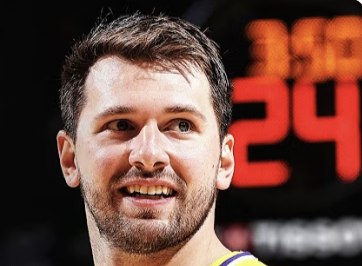
LOS ANGELES — Luka Doncic has already begun the same rigorous diet and training regimen that dramatically improved his conditioning and performance last offseason, multiple sources confirmed Thursday, signaling the Dallas Mavericks star-turned-Lakers leader is leaving nothing to chance as he prepares for a pivotal 2026-27 campaign following the team’s second-round playoff exit.
The Slovenian superstar, who joined the Lakers in a blockbuster trade before the 2025-26 season, is once again following a high-protein, low-carb plan combined with intermittent fasting and dual daily workouts under the guidance of his personal “Team Luka” of nutritionists, physiotherapists and trainers. The approach helped him shed significant weight and silence critics last summer, leading to one of the most productive seasons of his career before a Grade 2 hamstring strain sidelined him for the playoffs.
According to people familiar with the situation, Doncic restarted the program immediately after the Lakers’ elimination by the Oklahoma City Thunder, determined to enter next season in peak physical condition alongside LeBron James and a reconfigured supporting cast. At 27 years old and entering his prime, the move underscores his commitment to longevity and sustained excellence in a physically demanding league.
Last Year’s Transformation Sparked Career Year
Doncic’s 2025 offseason overhaul became one of the biggest storylines in the NBA. After years of questions about his conditioning and weight, he embraced a strict nutritional protocol that emphasized lean proteins, vegetables, healthy fats and timed eating windows. The results were visible from the first day of training camp: a noticeably leaner physique, improved quickness and greater stamina late in games.
That dedication translated into elite production. Doncic averaged 33.5 points, 8.3 assists and 7.7 rebounds per game across 64 contests, earning All-NBA First Team honors and finishing as a finalist for league MVP. His improved mobility allowed him to attack the rim more effectively and defend with greater intensity, silencing many longtime skeptics who had labeled him a liability on that end.
Sources say the current program mirrors last year’s blueprint but with added emphasis on injury prevention and core stability. Daily sessions include mobility work, yoga, swimming and strength training tailored to protect his lower body while building functional power. Nutrition remains tightly controlled, with a heavy focus on anti-inflammatory foods and precise macronutrient timing around workouts.
Lakers coach JJ Redick and the front office have been briefed on the plan and fully support it. “Luka understands his body better than anyone,” Redick said recently. “When he commits to something like this, the results speak for themselves. We’re excited to see what he brings to camp.”
General manager Rob Pelinka has made it clear that building around Doncic and James remains the priority this offseason. With both stars healthy and motivated, the Lakers believe they can contend for a championship as early as next season. Doncic’s willingness to transform his body again is seen as a major positive signal by the organization and its fans.
Advertisement
Expert Analysis and Long-Term Outlook
Sports nutritionists and performance coaches say Doncic’s approach is smart but demanding. “Maintaining this level of discipline year after year is incredibly difficult at his age and with his schedule,” said Dr. Emily Chen, a sports dietitian who has worked with several NBA players. “The fact that he’s restarting it so quickly after the season shows real maturity and commitment to his craft.”
Analysts project that if Doncic can sustain the improved conditioning, his game could reach even greater heights. Already one of the league’s most skilled passers and scorers, better physical condition would allow him to play at a higher pace and defend more effectively over 82 games plus the postseason.
However, some caution that extreme dieting can carry risks if not managed properly, particularly for athletes with heavy workloads. Doncic’s team has reportedly consulted extensively with medical professionals to ensure the plan supports both performance and long-term health.
Fan and Media Reaction
The news has energized Lakers fans already dreaming of a healthier, more dominant Doncic next season. Social media platforms lit up with excitement, with many posting side-by-side photos of his transformation last year and speculating about even greater gains this time around. Hashtags like #LukaDiet and #BuiltDifferent trended briefly after reports emerged.
Advertisement
Media coverage has been largely positive, with analysts praising Doncic’s professionalism and work ethic. “This is what separates the good from the great,” said ESPN’s Tim MacMahon. “Luka doesn’t have to do this. He’s already a superstar. But he wants to be the best version of himself, and that’s why the Lakers traded for him.”
Skeptics remain, pointing to the difficulty of sustaining such strict regimens long-term and questioning whether the Lakers can build a true contender around two aging superstars. Yet even critics acknowledge that Doncic’s commitment sets a strong tone for the organization heading into a critical offseason.
Broader Implications for the Lakers
Doncic’s renewed focus comes at a pivotal time for the franchise. With James entering his 24th season at age 41, the window for contention is narrowing. A leaner, fitter Doncic could extend that window significantly while providing a bridge to the post-James era alongside Austin Reaves and younger pieces.
The Lakers are expected to be active in free agency and trades, targeting shooters and defenders who complement Doncic’s playmaking. His improved conditioning would make those additions even more effective, particularly in transition and late-game situations.
Advertisement
As training camp approaches in late September, all eyes will be on Doncic’s physical condition and how seamlessly he meshes with James in a full healthy season. If the diet delivers similar results to last year, the Lakers could emerge as serious title contenders in a wide-open Western Conference.
For now, Doncic’s decision to recommit to the strict regimen sends a clear message: he is not satisfied with individual accolades and wants to lead the Lakers back to championship contention. In a league where longevity and sustained excellence define legacies, his willingness to embrace discomfort again could prove decisive.
The basketball world will be watching closely over the coming months to see whether this latest chapter in Luka Doncic’s evolution produces another leap forward — both for the player and the franchise that bet big on his potential.
Domestic institutional investors stepped up buying in several large-cap stocks during the March 2026 quarter, even as markets remained under pressure. Financials, technology, telecom and industrial names featured prominently among the top DII picks, with cumulative buying running into thousands of crores despite sharp declines in stock prices across the board. Check the full list.
One of India’s leading construction companies saw FII selling of 1.74 crore shares during the March 2026 quarter. The net sell value came in at Rs 6,631 crore, while the stock declined 14.19%.
(Disclaimer: Recommendations, suggestions, views and opinions given by the experts are their own. These do not represent the views of The Economic Times)
In an environment where global uncertainty, rising crude oil prices, and fluctuating interest rate expectations are driving sharp market swings, the importance of trading psychology has never been greater. While investors often focus on data, valuations, and news flows, real success in markets increasingly depends on mastering one’s own mindset.
At its core, trading psychology refers to the emotional and mental state that influences decision-making—often determining success or failure more than strategy itself.
Why psychology matters more in current market
The present market backdrop is far from stable. Rising geopolitical tensions, inflation concerns, and currency volatility are creating sharp, unpredictable moves. Experts are advising caution and selective buying rather than aggressive risk-taking, highlighting the fragile sentiment in equities.
Advertisement
In such phases, emotions like fear and greed become amplified:
Fear triggers panic selling during corrections
Live Events
Greed pushes investors to chase rallies at peak valuationsThis emotional cycle often leads to poor timing—buying high and selling low.
The Hidden Edge: Discipline Over Prediction
A critical insight from market behaviour is that even correct predictions don’t guarantee success. Poor risk management and emotional decisions can still lead to losses, as seen in real-world trading experiments. This reinforces a key principle: Markets reward discipline, not just intelligence.
Successful investors:
Advertisement
Stick to predefined strategies
Avoid impulsive trades
Focus on consistency rather than quick wins
Focus on Strengths, Not Mistakes
According to trading psychology research highlighted by noted clinical psychologist and investor Dr Brett Steenbarger, one of the most effective ways to improve performance is to identify and build on your strengths rather than obsess over flaws.
Every investor has unique strengths—whether it’s patience, research ability, or timing. The goal is to refine and align strategies around these strengths to create a sustainable edge.
The Trap of Overactivity in Volatile Markets
In uncertain times, many investors feel compelled to act constantly—buying, selling, and reacting to every headline. However, excessive trading often creates an illusion of control while eroding returns over time.
In fact, some of the best outcomes come from:
Sitting through volatility
Avoiding unnecessary trades
Letting long-term trends play out
Managing Market Psychology: Practical Framework
To navigate today’s markets effectively, investors should adopt a structured psychological approach:
1. Define a Clear Plan
Set entry, exit, and risk limits in advance to avoid emotional decisions.
Advertisement
2. Accept Losses as Part of the Game
Losses are inevitable—reacting emotionally only magnifies them.
3. Avoid Herd Behaviour
Markets often swing due to collective sentiment rather than fundamentals.
4. Control Position Sizing
Risk management is more important than predicting the next move.
In today’s uncertain and volatile market landscape, the biggest risk is not external—it lies within the investor. Emotional reactions, overconfidence, and impatience can derail even the best strategies.
Ultimately, successful investing is less about finding the perfect stock and more about cultivating the right mindset. Those who can remain calm, disciplined, and self-aware amid market noise are the ones most likely to build lasting wealth.
(Disclaimer: Recommendations, suggestions, views and opinions given by the experts are their own. These do not represent the views of The Economic Times)
New York City Mayor Zohran Mamdani spotlighted Citadel CEO Ken Griffin’s Manhattan penthouse in a viral video announcing a new pied-à-terre tax. (Credit: NORGES BANK INVESTMENT MANAGEMENT)
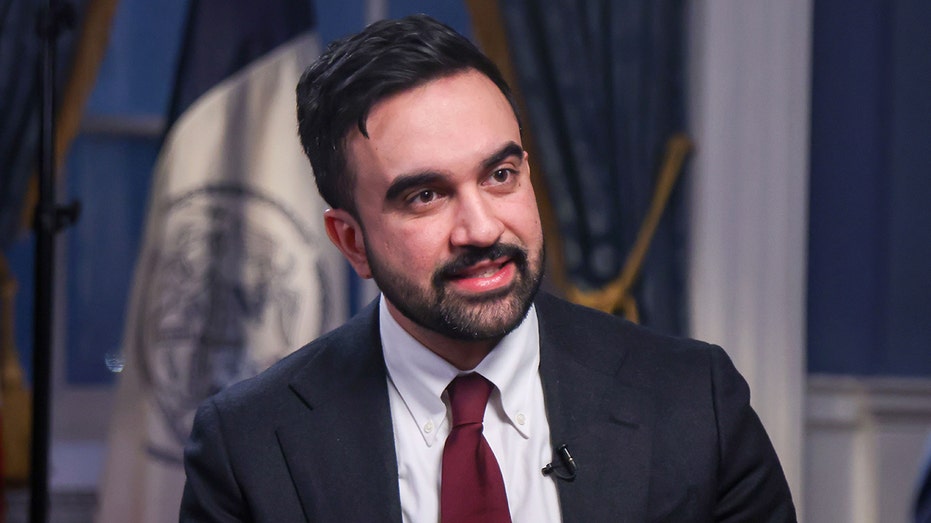
New York City Mayor Zohran Mamdani said Friday he has attempted to meet with billionaire Citadel CEO Ken Griffin after the hedge fund executive blasted the mayor’s viral “Tax the Rich” video targeting him.
Mamdani said a member of his team reached out to Griffin but had not received a response.
Advertisement
“We reached out to set up a meeting,” Mamdani said Friday. “We’re still waiting to hear.”
“That continues to be an open invitation, and it’s part of invitations that I’ve made to a number of business leaders across the city,” he continued. “I’m there to listen and there to have a conversation that goes beyond places of agreement, but perhaps places of disagreement to hear honest reflection and critique, without putting any precondition on the nature of that conversation.”
On April 15 (Tax Day), NYC Mayor Zohran Mamdani posted a video outside Ken Griffin’s Manhattan penthouse promoting a new “tax-the-rich” policy. (Spencer Platt/Aaron Schwartz/Bloomberg/Getty Images / Getty Images)
The outreach comes after Mamdani posted a video on April 15 highlighting Griffin’s property while promoting a new pied-à-terre tax proposal.
Advertisement
In the video, the mayor — who has pledged to raise taxes on wealthy New Yorkers — stood outside Griffin’s 24,000-square-foot penthouse, which Griffin purchased in 2019 for $238 million, the most expensive residential sale in U.S. history.
Griffin later criticized the video, calling it a “creepy and weird” political advertisement.
A spokesperson for Griffin did not say whether he plans to meet with the mayor.
Citadel Founder and CEO Ken Griffin called New York City Mayor Zohran Mamdani’s viral video singling out his Manhattan penthouse while announcing a new tax a “personal attack” and a “profound lack of judgment.” (Denis Balibouse/Reuters / Reuters)
“Ken cares deeply about New York City and welcomes thoughtful, serious conversations about the policies that can grow the city’s economy and create more opportunity for all New Yorkers,” the spokesperson said in a statement to FOX Business. “Reckless political theater serves no purpose and undermines the future of one of the world’s most important cities.”
In the April video promoting higher taxes on wealthy New Yorkers and a pied-à-terre tax on second homes, Mamdani singled out Griffin’s penthouse as an example of what he called a “fundamentally unfair system.”
“This is an annual fee on luxury properties worth more than $5 million whose owners do not live full-time in the city—like this penthouse, which hedge fund CEO Ken Griffin bought for $238 million,” Mamdani said in the video.
Speaking at the Milken Conference in Los Angeles earlier this month, Griffin said Mamdani’s “frightening” video reaffirmed his decision to “double down” on business in Miami.
New York City Mayor Zohran Mamdani said his team reached out to Citadel CEO Ken Griffin following criticism over a viral tax proposal video. (Michael Nagle/Bloomberg via Getty Images / Getty Images)
“Mamdani has made it very clear—New York does not welcome success,” Griffin said during the panel.
Citadel is currently building a new headquarters in Miami, and Griffin reiterated plans to expand the company’s presence in Florida, citing the state’s pro-business policies.
The mayor’s office previously told Fox News Digital that Mamdani “wants all New Yorkers to succeed,” including Griffin, whom it described as a major employer in the city.
New York City Mayor Zohran Mamdani has previously criticized billionaires, including Ken Griffin, whom he recently thanked for supporting police. (Spencer Platt/Getty Images / Getty Images)
“That does not negate the fact, however, that our tax system is fundamentally broken,” the statement continued. “It rewards extreme wealth while working people are pushed to the brink.”
“The status quo is unsustainable and unjust,” it added. “If we want this city to become a place that working people can afford, we need meaningful tax reform that includes the wealthiest New Yorkers contributing their fair share.”
FOX Business’ Nikolas Lanum and Alexandra Koch contributed to this report.
Gold fell to a more than one-week low on Friday, as U.S. Treasury yields and the dollar climbed, while heightening inflation concerns due to the conflict in the Middle East reinforced bets for higher interest rates.
Spot gold was down 2.6% at $4,527.80 per ounce by 9:40 a.m. EDT (1340 GMT), its lowest since May 5. Prices were down 4% so far this week.
U.S. gold futures for June delivery lost 3.2% to $4,535.
“There was a sell-off across the (precious metals) for a couple of reasons. The dollar is quite strong today. We’re also seeing not just a U.S. increase, but a global increase in (bond) yield rates,” said Edward Meir, an analyst at Marex.
Advertisement
Benchmark 10-year U.S. Treasury yields rose to a near one-year high, increasing non-yielding bullion’s opportunity cost. The dollar was set for its highest weekly gain in two months, making greenback-priced gold more expensive for overseas buyers. [US/][USD/]
Live Events
U.S. President Donald Trump said his patience with Iran was running out and left China with no major breakthroughs on trade or tangible help to end the war. “The Chinese really didn’t offer much help in resolving the conflict, and we’re seeing crude oil move up, which reinforces the inflation narrative and that’s been very bearish for the metals,” he added. Crude oil prices have risen more than 40% since the U.S.-Israel war on Iran began, leading to higher inflation globally. Central banks tend to hike interest rates during times of inflation, which in turn tends to dim non-yielding bullion’s appeal. [O/R]
Traders have largely priced out U.S. interest rate cuts this year while bets for a hike have risen, according to CME’s FedWatch Tool. [FEDWATCH]
Spot silver fell 8.7% to $76.26 per ounce, platinum lost 4.1% to $1,967.35, and palladium was down 1.9% at $1,409.75. All three were headed for weekly losses.
Silver fell as much as 9% earlier and was on track for its worst daily performance since March 3.





























































You must be logged in to post a comment Login