








Campfire Audio is not exactly easing into 2026 quietly. The Portland-based IEM specialist has introduced Chimera, a new flagship $7,500 wired in-ear monitor that combines dynamic, balanced armature, electrostatic, and bone conduction driver technologies in one rather ambitious design.
Chimera just made its public debut at CanJam Singapore 2026 (May 16-17), with pre-sale beginning May 16th and shipping expected in early summer 2026. The timing makes sense. As we discovered at CanJam NYC 2026, wired IEMs are having a very real moment, which might seem strange in a world where tens of millions of listeners have made wireless earbuds their default source. Convenience still wins the subway. But for listeners chasing resolution, scale, imaging, and a more physical connection to the music, wired IEMs are showing real legs. Very expensive legs, mind you. The kind that apparently require a bespoke cable and a second look at your credit card limit. American Express already told me to forget about it.
Our recent review of the Campfire Audio Andromeda 10, released for the company’s anniversary, made it clear just how far the category has come. Better tuning, better driver integration, better materials, and far more ambitious engineering have pushed wired IEMs well beyond the old “audiophile niche” box. Chimera looks like Campfire Audio’s next line in the sand: a nine driver flagship built to prove that the wired IEM fight is not only alive, but getting a lot more interesting.
Nine Drivers, Four Technologies, and One Very Crowded Magnesium Shell
Chimera is built around a nine driver architecture that combines four different driver technologies, which is exactly the kind of thing that sounds absurd until you remember this is the flagship IEM category and restraint left the room several invoices ago. Walk around the show floor at any CanJam and none of this starts to feel absurd.
The driver array includes a newly developed 10mm True Glass dynamic driver handling low and low mid frequencies, a dual diaphragm balanced armature for midrange detail, two dedicated high frequency balanced armatures for clarity and articulation, and four electrostatic supertweeters designed to extend the top end with more air and precision.
Advertisement
For the first time in a Campfire Audio IEM, Chimera also adds a 10mm bone conduction driver, embedded directly into the CNC machined magnesium shell. The goal is to make low frequencies feel more physical, not just audible, adding weight and impact without asking the dynamic driver to do all of the heavy lifting.
Campfire has also worked a number of internal acoustic elements into the design, including an embedded pressure valve that regulates airflow behind the dynamic driver and a final stage “Master Track” tuning damper integrated into the nozzle. Those parts are not there for brochure decoration. They are designed to help control pressure, refine the final output, and make the transition between the different driver types feel more seamless.
Chimera is rated at 5.5 ohms impedance at 1kHz, with a frequency response of 5Hz to 20kHz, sensitivity of 94dB at 1kHz, and THD listed at less than 0.5%. That low impedance figure suggests users will want to be thoughtful about source matching, because flagship IEMs this sensitive to the chain can expose noise, output impedance issues, and poor gain structure rather quickly.
“Chimera is the most advanced in ear monitor we’ve developed at Campfire so far,” said Ken Ball, Founder of Campfire Audio. “It reflects a new horizon in the performance of Campfire products and expands on what is possible from compact, portable audio systems. It brings together a range of technologies and engineering techniques to create an experience that truly deepens the listener’s connection to music.”
Advertisement
Magnesium Shell, Damascus Faceplate, and the Return of ALO Audio
Chimera’s exterior design follows the same theme as its internal layout: multiple materials, tight tolerances, and very little evidence that Campfire was trying to keep things simple.
The shell is machined from billet magnesium and finished with a PVD coating, with gold and black versions available. Campfire says magnesium was selected for its combination of strength and lower weight, but it also plays a functional role here because the bone conduction driver is integrated directly into the shell. In other words, the enclosure is not just jewelry for the driver array. It is part of how the design is intended to work.
The faceplate uses a carbon fiber and brass Damascus construction, with layers of brass folded into carbon fiber and then CNC machined to create the final patterned surface. Because of that process, each pair has subtle visual differences. That does not change the sound, but it does give Chimera a more distinctive look than another flat black shell with an exotic price tag.
Advertisement. Scroll to continue reading.
Other hardware details include a machined brass nozzle with an integrated mesh screen, custom brass fasteners for added reinforcement, and standard 2 pin connectors. The use of 2 pin connectors is worth noting because it keeps Chimera compatible with a wide range of aftermarket cable options, even though Campfire is including a high-performance and custom cable in the box.
Advertisement
Chimera ships with the ALO Audio Valence 6 cable, which also marks the return of the ALO Audio brand. The cable uses four high purity copper conductors along with two 50/50 copper and silver plated copper conductors. The termination housing, y-split, and chin slider are finished in black anodized aluminum.
Campfire also includes a black leather zipper case with a built in display, Breezy Bag Micro two pocket mesh bag, microfiber cleaning cloth, IEM cleaning tool, and three sets of ear tips: High & Clear traction silicone, standard silicone, and Marshmallow foam, each supplied in small, medium, and large sizes.
The Bottom Line
Campfire Audio Chimera is unique because it is not just another multi-driver flagship IEM with a luxury shell and a terrifying price tag. It combines a 10mm True Glass dynamic driver, balanced armatures, four electrostatic supertweeters, and Campfire’s first bone conduction driver in a CNC-machined magnesium body. That combination puts it squarely in the top tier of modern wired IEM design, where the goal is not only detail retrieval, but scale, physical bass impact, treble extension, and better driver integration in something that still fits in your ears. At $7,500, subtlety has clearly left the building.
What is missing? Wireless convenience, ANC, app control, EQ presets, Bluetooth codecs, and anything resembling mass-market practicality. This is not aimed at AirPods Pro, Sony, Bose, or Technics buyers, and it should not be judged by that yardstick. Chimera is for wired IEM listeners with serious portable sources, high-end DAPs, premium DAC/amp dongles, and enough experience to know whether they want this level of complexity near their skull. It is also for Campfire collectors and personal audio diehards who heard Andromeda 10 and wondered how much further Portland could push the engineering before someone had to check the zoning laws.
The obvious competitors are other statement-level hybrid and quadbrid IEMs, including Astell&Kern NOVUS, Empire Ears Odin MKII, Fir Audio Xenon 6, Fir Audio Radon 6, and other high-end models that combine dynamic, balanced armature, electrostatic, and bone conduction or kinetic bass technologies. NOVUS, for example, uses a 13-driver quadbrid configuration with BA, electrostatic, bone conduction, and dynamic drivers, while Fir Audio’s Xenon 6 and Radon 6 play in the same physical-bass, hybrid-driver universe.
Advertisement
The ultra high-end IEM space is so competitive that Empire Ears recently announced that it was ceasing operations and Astell&Kern’s NOVUS sold out within months.
Chimera’s real pitch is simple: Campfire is taking its most ambitious swing yet at the ultra-high-end wired IEM category. The technology stack is unusual, the materials are serious, and the inclusion of bone conduction marks a meaningful shift for the brand. The price will narrow the audience fast, as it should. This is not for casual listeners looking to upgrade from wireless earbuds. It is for the small but very committed group of listeners who want wired IEMs to deliver more impact, more dimensionality, and more technical performance than the category was supposed to manage.
If you need a VPN gateway to access your home network, the fastest and most cost-effective way is probably by using a Raspberry Pi Zero. But in [Samir Makwana]’s view, an ESP32-S3 is just as capable for moderate use, and in some respects even superior.
This was possible thanks to the MicroLink project, which is a full implementation of a Tailscale client for the ESP32 family. In some ways the ESP32 worked better than a Raspberry Pi: it boots in two seconds rather than thirty, draws 0.5 Watts rather than 1.5, and there’s no chance of it failing due to a corrupted SD card. Compared to a Raspberry Pi, however, which can be set up as a Tailscale client in a few minutes, this took several hours to get running. The biggest issue was making sure that there was enough memory available for TLS handshakes, which was solved by enabling the ESP32’s PSRAM.
Once the VPN client is running, the ESP32 can be used as an SSH jump machine to access other devices on the home network, without needing to expose those machines to the open Internet. The ESP32 also hosts an HTTP server which can send a wake-on-LAN magic packet to another device on the local network, letting unused devices sleep without impairing their availability.
Advertisement
The ESP32 doesn’t provide much bandwidth — streaming video would cause issues — but it works well enough for lightweight applications. If you’re wanting to stream video from an ESP32, though, it is technically possible.
Microsoft has finally brought back the resizable taskbar and Start menu to Windows 11 in the latest preview version rolling out to Insiders in the Experimental channel.
Starting with Windows 11 Insider Preview Build 26300.8493, the taskbar can now be configured to use smaller buttons and moved to the bottom, top, left, or right side of the screen.
“The ability to move the taskbar to the top or sides of the screen has been one of the most requested features, and we are bringing it to Windows 11,” said Diego Baca, partner director of Microsoft Design.
“With this update, when small taskbar is enabled, you get smaller icons, a shorter taskbar, and more vertical space for your apps (see video below). No restart or sign-out is required.”
Advertisement
To change the taskbar position, Insiders have to go to Settings > Personalization > Taskbar > Taskbar behaviors, where they will find this new option alongside the taskbar icon alignment option.
The taskbar size can be adjusted in the same dialog by checking the “Show smaller taskbar buttons” option, which reduces the height of both the icons and the taskbar.
Microsoft is also rolling out changes to give Windows users more control over the Start menu, allowing them to toggle off recommended content and customize its size.
Advertisement
“These controls are designed to work together. If you want a Start menu with just your pinned apps, you can turn off Recommended and All,” Boca added. “If you want a full Start that shows everything, you can leave it all on. The goal is simple: it is your choice, and it should be easy to make.”
However, Microsoft will maintain a list of recently installed apps, as it is a key way for users to discover new applications alongside the Microsoft Store.
Furthermore, Microsoft is improving file relevance by adjusting how files are displayed and ordered to prioritize the most relevant items, and will also allow users to hide their name and profile picture from the Start menu.
New Start menu settings (Microsoft)
Earlier this month, Microsoft also announced that it’s testing a modern Windows Run dialog with dark mode support, which should be faster than the legacy version.
This new Run dialog will also remove the “Browse” button, which was used by only 0.0038% of users in a sample of 35 million who opened Windows Run. Microsoft says the modern Run will not be enabled automatically, and users will need to turn it on manually in Settings > Advanced Settings.
Advertisement
Windows president Pavan Davuluri announced some of these changes in March, when Microsoft pledged to improve Windows 11 system performance and make it more responsive and consistent.
In addition to taskbar and Start menu improvements, the company plans to reduce notifications, simplify Windows settings, and ensure that device setup on new Windows PCs requires fewer reboots.
Microsoft is also working on improving Windows search, aiming for a more consistent experience across the Start menu, taskbar, File Explorer, and Settings.
“As part of this effort, we are evolving how Windows is built behind the scenes to raise the quality bar and deliver innovation where it matters most, shaped by the feedback we are hearing from you,” Davuluri said.
Advertisement
Automated pentesting tools deliver real value, but they were built to answer one question: can an attacker move through the network? They were not built to test whether your controls block threats, your detection rules fire, or your cloud configs hold.
This guide covers the 6 surfaces you actually need to validate.
Google I/O is imminent. This is the annual developer event and product showcase where Google shows off all the shiny new updates to its Android operating system and other platforms, as well as new features and improvements to its artificial intelligence models.
The big announcements at Google I/O usually come in the form of a livestreamed keynote event at the Shoreline Amphitheatre in Mountain View, California, hosted by Alphabet CEO Sundar Pichai. That starts on Tuesday, May 19, at 10 am Pacific time (1 pm Eastern). You can watch the livestream on Google’s website or on YouTube. It will also be streaming right here on this page.
What to Expect
On the announcement front, Google actually tipped its hand last week, unveiling a bunch of new features coming to the upcoming Android 17 operating system and its ongoing Gemini AI efforts, which it now calls Gemini Intelligence for the most advanced Android devices.
Many of the new Android features highlighted are AI-infused tricks that aim to make your life a little easier by offloading onerous tasks like booking a hotel or ordering an Uber. Google is also bringing more robust voice-to-text recognition, some autofill smarts, and enhanced digital well-being settings that you’ll turn on for a day and then probably just disable. Also, there is a new look for Android Auto, and Google is making its emojis look more 3D. You can read more about these capabilities here.
Advertisement
The company also announced its new Googlebook platform: AI-first laptops powered by various Android technologies, but it’s very different from a Chromebook. Google won’t share too many specifics yet, but these machines are expected to be premium laptops, and companies like Acer, HP, Lenovo, and Dell have already signed up to make Googlebooks by year’s end. We have more details here.
We’ll likely hear Google touch on these features at I/O again, but these were unveiled early to make room for more new software announcements during the keynote. You can usually count on a surprise announcement or an AI demo that goes completely off the rails.
Based on the ever-swirling rumor mill, Google likely will announce more updates to Search, undoubtedly powered by AI. There may also be updates to its creative Google Labs suite, such as its AI music creation tool Flow. Google may introduce a new Gemini model for video generation, expected to be called Omni.
Resin 3D printers have stuck to a single material through every layer for years because switching resins always brought contamination and extra cleanup. Eric Potempa watched that limitation long enough to do something about it. He founded Polysynth in 2025 with backing from Founders Inc and created the P1, a machine that brings up to eight different resins into the same print job without stopping for manual intervention.
The process begins with a carousel containing eight miniature circular tanks that surround the build area. Each tank contains a different type of resin, ranging from stiff plastic to super-soft flexible goo to unique conductive formulae capable of carrying an electric current. The build platform slides directly into one of the tanks, and the UV laser quickly zaps the entire layer with that neat DLP process. After that, the platform pops back up before returning to the next layer, which whips around at high speed. The centrifugal force simply flings any remaining drops of uncured resin off the part and back into the tank, a very slick trick. Then, a servo coupled to a mechanical linkage slams on the brakes, locking the platform back into place with a few microns of accuracy. It goes down into the next tank, and before you know it, you have a new layer.
High-Speed Precision: Experience unparalleled speed and precision with the Bambu Lab A1 3D Printer. With an impressive acceleration of 10,000 mm/s…
Multi-Color Printing with AMS lite: Unlock your creativity with vibrant and multi-colored 3D prints. The Bambu Lab A1 3D printers make multi-color…
Full-Auto Calibration: Say goodbye to manual calibration hassles. The A1 3D printer takes care of all the calibration processes automatically…
That cleaning spin is what allows the multi-material resin to function. Older approaches either wasted resin swirling about in large common tanks, or they required a separate washing station, which slowed everything down and increased the possibility of resin clashes. Polysynth works in the opposite way, with numerous little tanks that ensure there is always just enough resin for the job. The spin also leaves the surface immaculate and ready for the next resin, eliminating the need for any additional procedures or solvents. And because supports may often be placed directly near to the main item without contacting it, the finish is extremely smooth and easy to clean.
Dental labs are an early priority since the P1 uses biocompatible resins that meet all clinical standards. With the correct resin, you can print a full denture in one go, complete with hard tooth-colored portions pasted directly onto soft gum-like material. There is no need for any further moulding or gluing; simply drop the print in and you’re finished. The micron-level precision is perfect, just what dentists expect. The same method applies to surgical guides and personalized crowns that mix super-hard portions with flexible zones in a single component.
Advertisement
It’s equally as important for electronics prototyping because conductive resins can lay down entire circuits and traces within a structural housing in a single print cycle. The wiring is already incorporated in the completed item, so you can simply slap it into your project without having to solder or do any further assembly processes. Early demonstrations showed rudimentary circuit boards and flexible components manufactured simultaneously. Wearable sensors are clearly next on the list; consider rigid frames with elastic parts and built-in conducting channels, all printed in one go.
The machine starts at $4,999 and can be pre-ordered right now on the Polysynth website. Shipping dates have not been announced yet, but the business is optimistic that the P1 will be the first multi-material resin printer to reach customers. Print speeds are still fairly competitive because the DLP system zaps entire layers so quickly, and the spin cycle only adds a few seconds between resin changes. Of course, thicker resins require some tuning to get the spin just right, but the team has already worked out the most common dentistry and engineering resins. [Source]
Sorin M.S Krammer of the University of Southampton explores the issues created by automated academic papers.
Until recently, AI’s role in research felt like having a useful assistant. It could summarise a paper, clean up a dataset or draft an abstract. Researchers were still in charge of the thinking.
That changed in late 2025 when cutting-edge “frontier” AI models became capable of reasoning and planning reliably by themselves. A key feature of these models is “tool calling” – the ability to interact with external tools in order to act on the world, not just describe it.
This marks the rise of agentic AI: systems that do not just respond to instructions but can independently plan, execute and iterate. In science as in other fields, chatbots have become coworkers that can autonomously complete real work, end to end.
Advertisement
An example of this is Tokyo-based Sakana AI’s The AI Scientist. Unveiled in mid-2025 and now in its second iteration, the Japanese tech company bills this as “the first comprehensive system for fully automatic scientific discovery”.
The AI Scientist scans existing literature, generates hypotheses, writes and executes code, analyses results and produces a full research paper – largely without human involvement. It reasons, fails and revises, just as a junior scientist would.
The proof? An AI Scientist academic paper was accepted in 2025 by a workshop at the International Conference on Learning Representations. This represents something genuinely new: an autonomous AI system passing a milder version of the Turing test by demonstrating scientific quality, if not (yet) machine intelligence. Moreover, the AI Scientist system was the focus of a paper published in Nature in March 2026.
Other significant achievements include Singapore-based startup Analemma carrying out a live demonstration of its Fully Automated Research System (Fars) in February. It produced 166 complete machine-learning research papers in roughly 417 hours – that’s one paper every 2½ hours – at a cost of around US$1,100 (£810) each.
Advertisement
Google Cloud AI Research recently unveiled PaperOrchestra, which takes a researcher’s raw experimental logs and rough notes and converts them into a submission-ready manuscript, with figures and verified citations. In blind evaluations by 11 AI researchers, it easily outperformed existing autonomous systems in this area.
Having spent two decades researching disruptive technological innovations, I believe a significant threshold has been crossed. While there is a way to go before AI systems match the very best human-produced work, the era of fully automated research has arrived.
Implications for academia
The arrival of autonomous research systems lands on an academic system under severe strain in many countries. Over the last decade, the number of papers submitted to academic journals has grown much faster than the pool of qualified peer reviewers, leading to suggestions that the science publication system is being “overwhelmed”.
If systems like Fars can produce thousands of papers per year, the publication infrastructure of science faces a volume it was never designed to handle. Some academic reviews have already been identified as using AI-generated content. As submission numbers continue to rise, this may alter the role of a published academic paper as a definitive signal of the quality and skills of human researchers.
Advertisement
An optimistic take is that AI may shift academia away from its strong reliance on quantity-based metrics, in favour of how influential or innovative publications are. This is a reform critics of the current system have long called for.
Less optimistically, as AI research scales up, an academic system designed for coherent, methodologically defensible contributions may inflate the proportion of incremental, rather than radically novel, scientific contributions. Both the quality and originality of research could suffer as a result.
Science has always needed its heretics to advance. Italian astronomer Galileo, the “father of modern science”, was forced to recant his defence of heliocentrism before the Catholic Church’s Inquisition. Hungarian physician Ignaz Semmelweis died in a psychiatric institution having failed to convince his colleagues that handwashing could save lives.
Yet historically, the ability of scientific institutions to encourage radical approaches has also been a mainstaple of how science has progressed. To sustain this, AI systems will need to be trained to maximise novelty and transformation, rather than plausibility and incremental progress.
Advertisement
AI’s impact on creative industries
The transformative effects of this new breed of AI extend well beyond scientific research. A striking example is The Epstein Files. This fully AI-generated podcast reached number one the UK Apple Podcasts and Spotify charts in early 2026, drawing 700,000 downloads in its first week.
Music is further along and more conflicted. By mid-2025, the fully AI-generated band The Velvet Sundown had amassed over a million monthly Spotify listeners. In 2026, the platform was forced to introduce artist-protection features after AI tracks began displacing human music on popular playlists, while Deezer, facing roughly 50,000 AI-generated uploads daily, began excluding them from curated lists.
Ownership remains the elephant in the room. US courts have ruled that AI-generated works cannot be copyrighted, since human authorship remains a legal requirement. AI can produce at industrial scale, but no one can own the output legally.
This matters far beyond intellectual property law. In creative industries, it threatens the royalty streams, licensing deals and catalogue valuations on which artists, labels and publishers have built their entire business models for generations.
Advertisement
In science, meanwhile, it is destabilising the entire incentive architecture, which rests on the foundational assumption that knowledge is both generated and owned by humans. When that assumption dissolves, so does much of the institutional logic that has governed how we produce, reward and trust expertise.
The question, across all these fields, is no longer whether AI can produce the work. Rather, it is whether sufficient thought has gone into what we will gain and lose when it does.
Sorin M.S. Krammer is a professor of strategy and international business at the University of Southampton and an Otto Mønsted visiting professor at Copenhagen Business School. His research focuses on various aspects of strategy and management in international, comparative contexts and has been previously published in outlets such as the Journal of Management, Journal of International Business Studies, Research Policy, Academy of Management Learning and Education, Journal of World Business, Journal of Product Innovation Management, Leadership Quarterly, Organisation Studies, Journal of Business Ethics and others.
Advertisement
Don’t miss out on the knowledge you need to succeed. Sign up for the Daily Brief, Silicon Republic’s digest of need-to-know sci-tech news.
Shift comes amid mounting reports of successful social engineering attacks targeting higher-ups in government
The Polish government is urging public officials and “entities within the National Cybersecurity System” to stop using Signal, directing them to instead use an encrypted messenger developed by a leading Polish research organization.
In an announcement on Friday, the government stated that Signal comes with security risks, including social engineering attacks orchestrated by advanced persistent threat (APT) groups.
Advertisement
“National-level Computer Security Incident Response Teams (CSIRTs) have identified phishing campaigns conducted by APT groups linked to hostile state agencies,” the announcement says. “These attacks target, among others, public figures and government employees.”
Offering examples of these social engineering campaigns, the government said attackers impersonate Signal support staff and abuse this perceived trust to take over victims’ accounts.
Attackers trick users into opening malicious links by sending messages designed to create a sense of urgency, such as those supposedly informing them of their account being blocked.
Successful attempts can expose victims’ phone numbers and, crucially, messages sent between government officials, potentially threatening national security.
Advertisement
A more detailed advisory cited “recent security incidents” related to Signal as reasons for the change.
It didn’t specify what these recent attacks were, or even who was behind them, but it can be reasonably assumed that the Polish government was indirectly referencing Russia’s phishing attempts against both Signal and WhatsApp, which were revealed in March.
“The Russian hackers have likely gained access to sensitive information,” the AIVD and MIVD said, adding that successful attacks were carried out on government bods as well as journalists.
Advertisement
Beyond Signal support staff impersonation, the agencies said the attacks can also involve outsiders persuading victims to surrender their verification codes or PINs, or abusing the platform’s Linked Devices feature via QR codes to take control of accounts.
Poland announced the launch of mSzyfr Messenger in March, saying it was designed for use by public administration entities, those involved in the National Cybersecurity System, and others to be decided by the government.
Developed by the Ministry of Digital Affairs and the Scientific and Academic Computer Network – National Research Institute (NASK), mSzyfr was touted by the government as “the first secure instant messenger fully under Polish jurisdiction.”
Advertisement
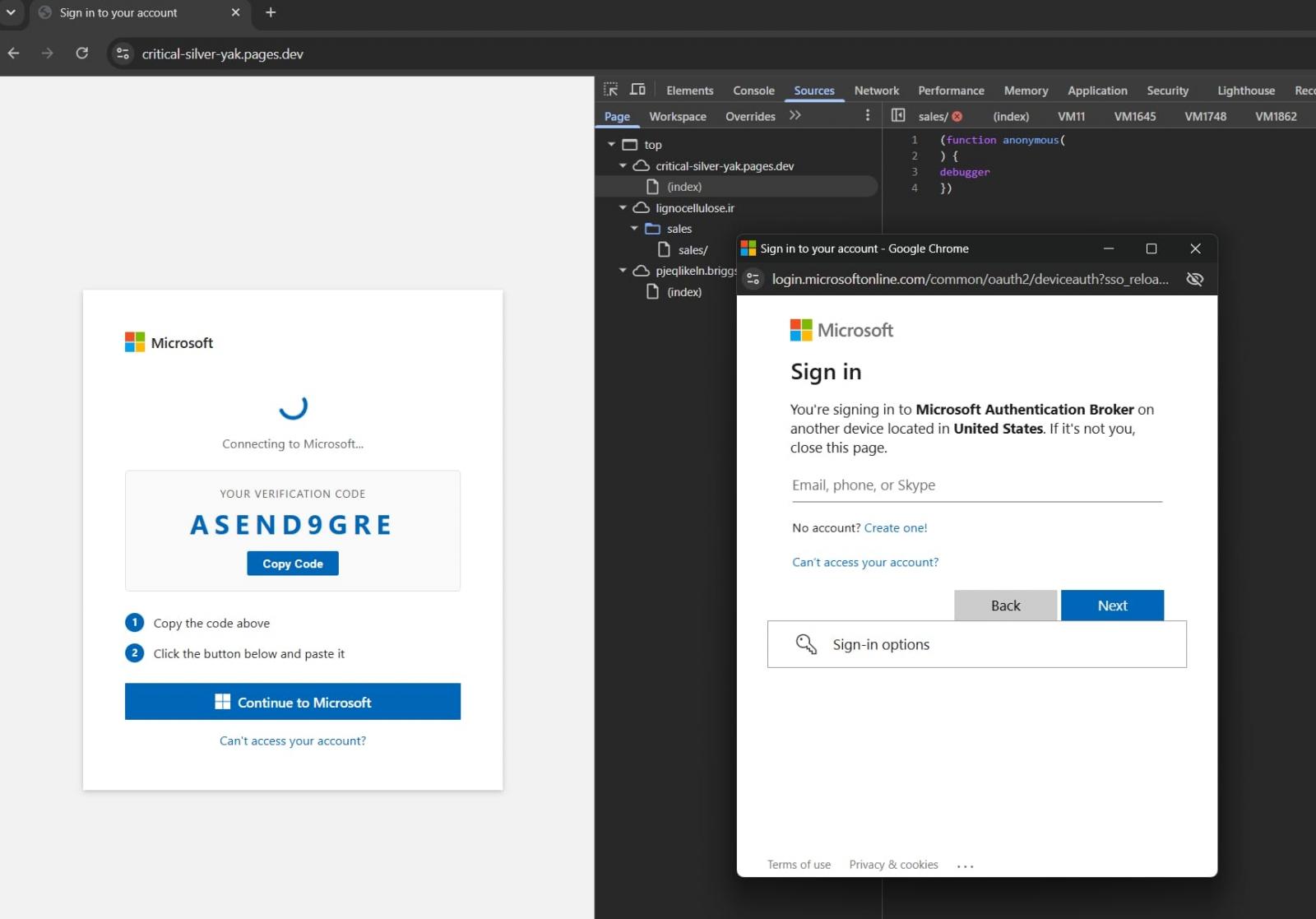
It does, however, rely on multi-factor authentication (MFA) provided by US megacorps. Microsoft is the recommended option, but users can also opt for Google or FreeOTP.
Further, if users want to retain access to messages even after logging out of the platform, they must set up a recovery key, which the installation manual suggests storing in a password manager.
That undercuts the government’s emphasis on Polish jurisdiction somewhat, since many popular password managers are either foreign-owned or open source.
An FAQ document for mSzyfr states that the messenger is built with a privacy-by-design philosophy, and explicitly notes that neither WhatsApp nor Signal fits this description. It also claimed the US-based platforms are not GDPR-compliant.
Advertisement
The mSzyfr app is not publicly available. Only individuals working for approved organizations are able to receive invites to join the platform.
It replaces Swiss-founded Threema, which the Polish government began endorsing for state officials and law enforcement in 2022, but data such as messages cannot be transferred because of the apps’ encrypted nature.
All Threema users should expect to receive an invite to mSzyfr in the near future, if they have not already.
The Register asked Signal to comment on Poland’s announcement, but it did not immediately respond.
Advertisement
It did, however, recently address security concerns raised by various intelligence agencies last week, introducing new warnings and alerts inside the platform to help users weed out potential impostors and bad actors. ®
Anyone who has had chickenpox shares one distinct memory: the relentless, all-consuming itch.
Ciara DiVita was only 3 years old when she caught the virus, but she remembers it well—along with the oven mitts she was made to wear to stop herself scratching. She also recalls being taken to hang out with her cousin while covered in blisters, in the hopes of deliberately infecting them.
DiVita, now 30, was actually the second in the chain, having been taken by her parents to catch chickenpox from an infectious friend. “I imagine the chain continued and my cousin gave it to someone else at a chickenpox play date,” she says.
A lot has changed over the past three decades, most notably the development of a chickenpox vaccine, meaning the virus is no longer the childhood rite of passage it once was.
Advertisement
Thanks to the vaccine’s success, children today are much less likely to be exposed to the infection at school or on the playground.
Chickenpox parties are also largely considered a relic of the past—a strategy many Gen X and millennial children were subjected to before vaccines became routine. But much like the virus itself—latent, opportunistic—they haven’t disappeared entirely.
Before a vaccine existed, chickenpox, which is caused by the varicella-zoster virus, felt unavoidable. In temperate countries like the UK and the US, around 90 percent of children caught the virus before adolescence (in tropical countries the average age of infection is higher).
It’s nothing to do with chickens. The splotchy, scratchy, highly contagious disease is possibly named after the French word for chickpea, pois chiche, according to one theory, because the round bumps caused by the virus resemble their size and shape. While most infant cases are mild, adolescents and adults are more likely to develop severe complications.
Advertisement
This is where the idea of “getting it over and done with” emerged from, according to Maureen Tierney, associate dean of clinical research and public health at Creighton University in Omaha, Nebraska.
“You were trying to have your child get the disease when they were at the greatest chance of not having complications,” Tierney says, explaining that, generally speaking, the older the patient, the more severe the infection can be.
While varicella-zoster is usually a mild, self-limiting disease in children, it can be much more severe—and sometimes life-threatening—in adults.
“I had an otherwise healthy adult patient who died of chickenpox pneumonia when I was first practicing,” Tierney says. “You never forget those scenarios.”
Advertisement
The virus spreads rapidly through respiratory droplets and contact with fluid from its characteristic blisters, meaning if one child contracts it, siblings and classmates are likely to be next, if unvaccinated.
Before the existence of social media, the idea that children should deliberately infect each other spread just as rapidly around communities—in conversations in the school yard, church groups, and pediatric waiting rooms—leading to the popularity of so-called chickenpox parties.
Parents swapped advice about oatmeal baths and calamine lotion and arranged to bring children together when one was thought to be infectious—despite the practice never being an official medical recommendation.
“They thought, well, if it’s going to happen to my kid anyway, it might as well happen in a controlled environment,” says Monica Abdelnour, a pediatric infectious disease specialist at Phoenix Children’s Hospital. “The families were ready to encounter this infection, deal with it, and then move on.”
Advertisement
While the majority of children who develop chickenpox feel well again within a week or two, around three in every 1,000 infected experience a severe complication such as pneumonia, serious bacterial skin infections, encephalitis (inflammation of the brain), or meningitis.
OpenAI is offering every Maltese citizen free access to ChatGPT Plus for a year
The move is part of its OpenAI for Countries initiative
Citizens will need to complete a course developed by the University of Malta
OpenAI has revealed a new government partnership which will see it provide every resident in Malta with free access to ChatGPT Plus for a year.
The approximate 575,000 citizens of the Mediterranean island nation will be able to get access to the AI tool in what OpenAI calls a “world’s first partnership”.
“At OpenAI, we’re turning intelligence into a global utility. We believe that, like electricity, intelligence should be available for people, businesses, and institutions to use as much as they need, where and when they need it,” the company wrote in a blog post announcing the plans, “that vision only matters if people can actually use these tools in ways that improve their own lives and communities.”
Latest Videos From
Advertisement
Malta leading the way
The idea is part of Malta’s AI for All initiative, which looks to provide more guidance on how its citizens can use the technology responsibly.
Anyone looking to gain access will need to complete a course developed by the University of Malta, in order “to help people understand what AI is, what it can and can’t do, and how to use it responsibly at home and work”.
The first phase of the program will launch in May 2026, with plans to scale further in the future, with the Malta Digital Innovation Authority managing distribution to eligible participants.
“With this partnership, Malta is leading Europe and the world in bringing AI to all its citizens” said George Osborne, Head of OpenAI for Countries. “Intelligence is becoming a national utility and all governments have an important role to play in making sure their populations have both the access and the skills to make the most of AI.”
Advertisement
Sign up to the TechRadar Pro newsletter to get all the top news, opinion, features and guidance your business needs to succeed!
“Malta is the first country to launch a partnership of this scale because we refuse to let our citizens stay behind in the digital age,” Silvio Schembri, Malta’s minister for Economy, Enterprise and Strategic Projects, said in a statement. “We are putting our people at the very forefront of global change.”
The partnership is part of the company’s OpenAI for Countries plan, which looks to work with governments and other institutions in evaluating and adopting AI platforms.
OpenAI has already started work with governments in Estonia and Greece, although only on national education systems, making its Malta partnership the largest and most developed to date.
Advertisement
Promising “More access to advanced intelligence”, ChatGPT Plus is the first paid tier of the company’s AI platform, offering more advanced models and tools including GPT-5, greater capacity, and faster image creation.
It is currently available for $20/£20 a month, alongside separate plans for individuals and businesses.
Imagine you’re riding a motorcycle at 160 kilometers per hour when an arrow appears, floating on the road ahead, telling you exactly where to turn. No phone, no dashboard. Just your helmet, and a lens the size of a thumbnail.
This is not a concept video. It’s heading to European roads as early as this year. And it’s one early glimpse of where smart glasses are heading.
Over the past few years, Big Tech has been quietly (and not so quietly) placing its bets. Meta has been selling AI-enabled Ray-Ban glasses since 2023, Google is building Android XR, and Apple is expected to enter the market. Last week, Samsung was reportedly set to unveil its first AI-capable smart glasses, co-designed with Gentle Monster, at a Galaxy Unpacked event in London this July. China’s Huawei, Alibaba,Xiaomi and others are all moving too.
The numbers reflect the momentum. Global AI glasses shipments surged to 8.7 million units in 2025, up more than 300% from the prior year, and analysts project that figure will cross 15 million this year, per Omdia.
Advertisement
Suppliers and component makers of AI-powered smartglasses are also positioning themselves for what comes next. One of the companies, a South Korean startup called LetinAR, has spent the last decade building the optical technology that could make all of this actually wearable.
The LG Electronics-backed startup just secured $18.5 million from Korea Development Bank and the South Korean retail giant’s venture arm, Lotte Ventures, among others, ahead of its planned 2027 IPO in South Korea.
Its previous investor, LG Electronics, has since begun developing its own AI smart glasses, according to a local media report, which is a sign of how seriously South Korea’s largest consumer electronics company takes the category.
CEO Jaehyeok Kim and CTO Jeonghun Ha, who have been friends since high school, founded LetinAR together in 2016.
Advertisement
Image Credits:LetinAR /
The lens that makes it wearable
LetinAR doesn’t make the glasses. It makes the part that makes the glasses work. The optical module, the tiny lens component that projects images into your field of vision, is what determines whether a pair of smart glasses feels like a sci-fi headset or something you’d actually wear to work, Ha told TechCrunch. It has to be light, thin, and power-efficient, while still delivering a sharp, clear image. Getting all of that right in a single component, small enough to fit inside a normal-looking frame, is the central engineering challenge of the entire industry. That’s what LetinAR is building.
“We see AI glasses as that next platform,” Kim said. “And the optical module is the hardest part to get right as AI glasses makers will need a lens that is thinner, lighter, and more power-efficient than what exists today.”
The co-founders said LetineAR wants to be the company those glasses makers call. The company calls its technology PinTILT: a way of arranging tiny optical elements inside a lens so that light is directed precisely where it needs to go, into the user’s eye, rather than scattered in every direction.
Think of a TV. It broadcasts light across an entire room, but only the light that actually reaches your eyes matters. Most existing smart lens technologies, particularly a dominant approach called waveguide, work a bit like that TV, splitting and spreading light across the full lens to create a wide image. The result is a thin lens, but an inefficient one. A lot of light gets thrown away before it ever reaches the eye, which means dimmer images and, critically, a battery that drains fast, Ha explained.
The alternative, a mirror-based approach known as birdbath, delivers light more directly to the eye, but the structure is bulky, making it nearly impossible to fit inside something that looks like a normal pair of glasses.
Advertisement
PinTILT sidesteps that tradeoff, Ha said. By focusing only on the light that can actually enter the eye and carefully engineering the angle of each tiny element inside the lens, LetinAR claims it can produce a brighter image in a thinner, lighter form factor, using less power. In a category where every gram and every hour of battery life matters, that’s the problem the entire industry has been trying to solve.
Its modules are already shipping. LetinAR counts Japan’s NTT QONOQ Devices and Dynabook, formerly known as Toshiba Client Solutions, among its customers, giving the company real manufacturing experience at scale. It is in talks with Big Tech companies on R&D of next-generation AI glasses, though it declined to name them.
One of LetinAR’s most demanding customers is Aegis Rider, a Swiss deeptech company spun out of ETH Zurich’s Computer Vision Lab. Aegis Rider is building an AI-powered AR helmet that displays navigation, speed, and safety alerts directly in a motorcycle rider’s field of vision, not floating on the visor, but anchored to the road itself, as if the information is physically painted on the world ahead.
Advertisement
LetinAR’s module is inside the helmet. Aegis Rider is targeting the EU and Swiss markets in 2026.
The latest funding, which brings the total raised to $41.7 million, will go toward scale-up as the AI glasses market shifts from early adopters to mass production, said Kim, adding that hardware devices, such as AI glasses, are the next layer that will bring AI into everyday life.
When you purchase through links in our articles, we may earn a small commission. This doesn’t affect our editorial independence.
Microsoft has confirmed that the May 2026 Windows 11 security update (KB5089549) fails to install on some systems and triggers 0x800f0922 errors.
This known issue is caused by insufficient free space on the EFI System Partition (ESP), which results in the update automatically rolling back on affected devices.
“This issue affects devices with limited free space on the EFI System Partition (ESP), especially when the device has 10 MB or less space available,” Microsoft said.
“On affected devices, the installation might proceed through the initial phases but fail during the reboot phase at approximately 35–36% completion.”
Advertisement
Users impacted by these installation problems also see the “Something didn’t go as planned. Undoing changes.” message when the installation rolls back, and may find log entries pointing to insufficient ESP free space, such as:
“SpaceCheck: Insufficient free space”
“ServicingBootFiles failed. Error = 0x70”
“SpaceCheck: used by third-party/OEM files outside of Microsoft boot directories”
While Microsoft is still working to resolve this issue, it advised affected customers to mitigate it using the Known Issue Rollback (a Windows feature that reverses buggy updates pushed via Windows Update).
In enterprise-managed environments where IT departments control Windows updates, admins can manually mitigate it by installing and configuring this Group Policy.
“You will need to install and configure the Group Policy for your version of Windows to resolve this issue,” Microsoft said. “You will also need to restart your device(s) to apply the group policy setting. Note that the Group Policy will temporarily disable the change causing this issue.”
You can find further guidance on deploying and configuring Known Issue Rollback group policies on Microsoft’s support website.
Advertisement
Microsoft released the KB5089549 cumulative update last week, along with dozens of other bug fixes, security patches, and improvements, including a fix for another known issue that causes some Windows 11 systems to boot into BitLocker recovery after installing the April 2026 Windows security updates.
Earlier this month, Microsoft also addressed a Windows Autopatch bug that caused driver updates restricted by administrative policies to be deployed on some Autopatch-managed Windows devices across the European Union, and confirmed that the April 2026 security updates were causing failures in third-party backup applications using a vulnerable driver.
Automated pentesting tools deliver real value, but they were built to answer one question: can an attacker move through the network? They were not built to test whether your controls block threats, your detection rules fire, or your cloud configs hold.
This guide covers the 6 surfaces you actually need to validate.
You must be logged in to post a comment Login