
Politics
Why Israel is blocking foreign journalists from entering


Since the start of the war on Gaza in October 2023, Israel has enforced an unprecedented media blockade. Foreign journalists and international media outlets have been barred from entering the Strip.
This policy has become one of the longest media blackouts in a modern conflict. It raises urgent questions about Israel’s motives and objectives.
Gaza — controlling the narrative and obscuring the truth
The ban on foreign journalists does not appear to be a temporary security measure. Instead, it functions as a systematic policy aimed at controlling the narrative of events in Gaza. Without independent international reporting, official Israeli accounts circulate with little scrutiny. This limits accountability and obscures the scale of destruction and civilian suffering.
In a war that has killed and wounded tens of thousands, the absence of international media has distorted global understanding and weakened factual reporting.
An intentional media vacuum
The ban on foreign journalists coincides with the direct targeting of Palestinian reporters inside Gaza. Together, these actions create a deliberate media vacuum. This severely limits source diversity and restricts reporting to a narrow range of perspectives. It prevents independent investigations based on eyewitness testimony and on-the-ground verification.
Observers argue this vacuum is deliberate, designed to reduce coverage and limit international accountability.
Obstructing documentation and legal accountability
Human rights and press freedom organisations warn that blocking media access hinders documentation of violations against civilians.
Without international journalists present, collecting the visual and forensic evidence needed for legal cases becomes far more difficult. This weakens prospects for accountability in international courts.
The media blackout is therefore seen as a tool to delay justice and entrench impunity. Israel cites security concerns to justify the ban. However, international press organisations—including the Foreign Press Association—say no credible security rationale exists.
The controversy has deepened due to the Israeli Supreme Court repeatedly postponing rulings on petitions demanding media access. These delays rely on classified evidence that cannot be challenged.
Journalists view this as a continuation of the ban under a legal veneer.
Gaza — a clear violation of press freedom
Press unions and human rights groups say the ban violates Article 19 of the Universal Declaration of Human Rights and the International Covenant on Civil and Political Rights.
Both guarantee freedom of expression and the right to receive and impart information without restriction.
Media experts warn that normalising such bans sets a dangerous precedent for future conflicts. With Gaza still closed to foreign journalists, the conflict extends beyond military force into media, legal, and ethical realms. The blackout is not incidental. It is a central mechanism to conceal the war’s consequences and keep cameras away from one of the worst humanitarian disasters of modern times.
As more than 2.4 million Palestinians remain trapped in Gaza, calls are growing to break the blockade. Allowing journalists in is now seen as a moral and professional imperative—to ensure the world sees Gaza without filters or omission.
featured image via EBU

Next stop – the world’s first high-volume green shipping corridor, says The Port of Dover.
Port of Dover has achieved its highly ambitious net zero Scope 1 and 2 target, ‘Target 2025’, positioning it as the first UK port to reach net zero.
It has done so an incredible five years ahead of any other UK port and 25 years ahead of the Government’s own maritime net zero target.
Since 2007, Dover’s carbon emissions for Scope 1 and 2 have fallen dramatically by a staggering 98.3%, with the residual 1.7% of emissions being offset through an approved local regenerative farming scheme.
The Port’s announcement has come after emissions were independently verified against ISO 14064: 2018 and the GHG Protocol Corporate Accounting and Reporting Standard to ensure accuracy.
Operating on one of the busiest shipping corridors in the world, the Port of Dover / Short Straits system accounts for eight percent of all UK international maritime emissions, so this news is a major step forward for the future of maritime decarbonisation.
That importance, and the disproportionate benefits that the shortest sea crossing delivers for Britain and its single biggest trading partner, means that there is a fantastic opportunity for the Port, in partnership with government, to demonstrate significant global leadership in maritime decarbonisation and avoid future UK, European and global carbon levies.
Decarbonising the Short Straits is not, however, just about doing the right thing for the planet, as important as that is for the port. It will keep consumer and supply chain prices down at a time of ongoing pressure on energy prices and the wider cost of living, reflecting the crucial role that Dover plays for the whole nation.
With 130 ferry movements a day facilitating £144 billion of trade per annum – that’s a third of the UK’s trade in goods with the EU – ‘Target 2025’ represents a key milestone on Port of Dover’s mission to establish the Short Straits as the world’s first high-volume Green Shipping Corridor.
On its journey to leadership on the global stage, the port has already been recognised by the Ecoports Port Environmental Review System, the main environmental management standard of the European ports sector.
“Dover’s leadership sets an inspiring example for all other ports across Europe and beyond.” (Tim Verhoeven, EcoPorts Coordinator)
There is incredible pride at the port, particularly in the way its in-house environment team have implemented modern and forward-thinking assets, sustainable processes and progressive behaviours across all areas of the port to get here. This has given Dover the tools for its customers, partners and internal stakeholders to follow.
One such example is the Port’s SEA (Safety and Environment Awareness) Award, a Dover-created initiative which recognises cruise lines that minimise their environmental footprint whilst in port through emissions reduction and recycling.
Dover’s committed sustainability drive is an essential part of its masterplan to 2050, helping to protect the UK’s competitiveness and drive economic growth, whilst future-proofing its operation and business on the UK’s key trade artery.
The Port’s longer-term ambitions require strong partnerships with industry and government, and the Port is already working hard with both. Its Scope 1 and 2 achievements have, nevertheless, all been accomplished through its own drive and determination to champion sustainable maritime trade and travel through a range of targeted measures. These have included the use of alternative fuels, renewable energy generation and efficiency initiatives.
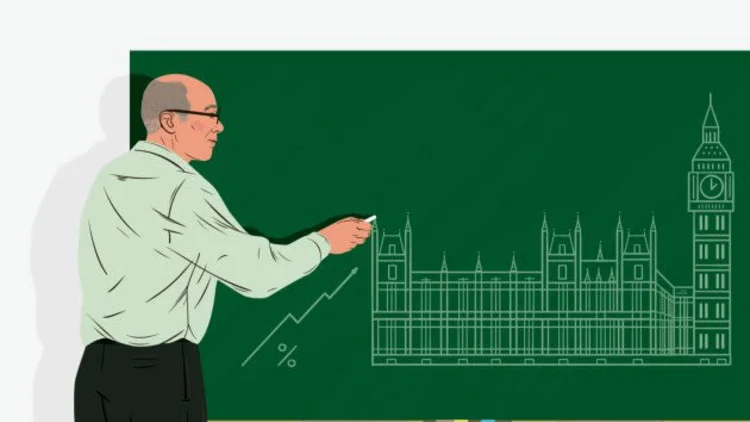

Illustration by Tracy Worrall
4 min read
Lessons in political science. This week: ageing
As politicians get older, they talk less about the future. That’s the key finding from an article forthcoming in the Journal of Politics, based on analysis of parliamentary debates in Australia, Canada, Ireland and the UK.
Sentences spoken in debate were classified depending on whether they focused on the past, the present, or the future. To do this, a team of researchers initially coded a sample by hand, and then – using the data from that exercise – trained a computer program to code the rest automatically. This allowed an impressive scale of analysis: the British data alone draws on 709 million words spoken in the Commons, back to the 1940s; there are around 900 million words of text from the other three countries.
Overall, politicians mostly talk about the here and now; 64 per cent of all sentences spoken in the Commons since the 1940s have been about the present. The past accounts for 23 per cent, with the future just 13 per cent. But the future focus of speeches declines with increasing age. The decline is shallow before a politician hits 65, but it becomes much steeper thereafter. The effect is at its most extreme in Australia, and less sharp in Ireland, but it was evident in all four countries.
Yet although older legislators talk less about the future, it’s not because they are banging on about the glories of the past. If we take the UK as an example, the proportion of past-focused speech increases until roughly 45 and plateaus after that.
And some good news, I think: “Ministers in our data tend to talk more about the future than backbenchers.” That’s all those targets and missions.
As someone who recently pondered how many general elections he might have left in him – like a psephological J Alfred Prufrock measuring out my life in parliaments – I wonder whether this effect is specific to politicians or more general; perhaps we all become less future-focused once we’ve realised that most of the sand is in the bottom of the hour glass.
Either way, interesting as it is, I’m less convinced it matters hugely in substantive terms, because although the effect is clear it isn’t all that large. At its maximum, there’s about five percentage points difference comparing the oldest politicians to the youngest. Plus, the percentage of parliamentarians over 65, when the effect becomes steepest, is relatively small, at least in the UK. Still, if we want more politicians who look to the future, rather than the short term, then we need fewer oldies.
Relatedly, some research published recently in the Policy Studies Journal shows that when a politician talks about the short term, the British public thinks that means around a couple of years; “long term” typically means something in the range of five to 10 years. Those figures vary little across party lines, age groups, and such like.
In electoral terms, then, the public’s view of the short term is roughly the first half of any parliament; the long term is two parliaments. This government‘s short term is therefore coming to an end very soon.
You are a bright bunch, and so you will see the broader issue here. Lots of public policy takes a lot longer than even 10 years to come to fruition. To take one example: the government recently announced new reservoirs, the first to be built since the 1990s; the initial two are planned to come online in 2036 and 2040, with nine by 2050, some 25 years after the announcement. Another example: the all-England coastal path inaugurated by the King last month was initiated during the government of Gordon Brown; it took 18 years and seven prime ministers. This is less a case of jam tomorrow, rather jam at some point in the far-off distant future.
Further reading: C Hanretty et al, Legislators talk less about the future as they age, The Journal of Politics (2026); M Barnfield et al, Long-Term Time Horizons and Support for Public Investment. Policy Studies Journal (2026)

Denmark is widely reported as the model for the UK to follow as the government resets its asylum system. Other European countries like Switzerland also offer a helpful case study in regaining the public’s trust
Like other European countries, the United Kingdom faces twin pressures of meeting its legal obligations to people seeking asylum while responding to public concern about cost, capacity and local impact. Accommodating those arriving in the UK sits at the heart of this challenge – highly visible, operationally complex and central to both those housed in it and maintaining public trust.
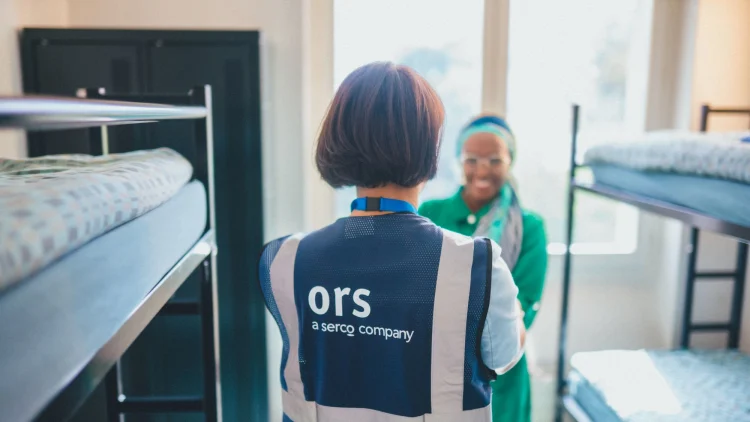
Over the course of three decades, Serco has provided immigration services across the asylum system on behalf of governments. Not just in the UK, but in Switzerland, Germany and other countries around the world. Our experience says that the best asylum systems are grounded in fairness, safety and value for money – both for local communities and for the people being accommodated.
That’s why we support the UK government’s plan to exit hotels. They were never designed to be a long-term answer. Since the peak in 2023, we have halved the number of asylum hotels in use across the regions we operate. But what is the long-term solution? How can we be flexible to changing flows while delivering value for taxpayers?
A new report by the Social Market Foundation (SMF), sponsored by Serco, shows how Switzerland has overcome these pressures and reformed its asylum process to generate a faster, fairer and firmer approach.
What differs from the UK is that, upon arrival, claimants are accommodated in larger asylum centres – either purpose-built centres or retrofitted former hospitals, offices and former student accommodation – evenly spread across the country. Located alongside them are officials to process claims, legal advisers and welfare support services. Everyone is accessible; everything needed to resolve a claim is under one roof. That means people can be processed more quickly – a maximum target of 140 days. Those deemed eligible for asylum are then dispersed into communities, while those with no right to remain are removed.
The report by the SMF highlights how accommodation can support the objectives of the asylum system as a whole – enabling faster decision making, better access to services and clearer transitions through the process, ultimately reducing the pressure often felt by local communities. In Switzerland, Serco delivers asylum accommodation on behalf of federal and cantonal governments across over 50 per cent of the country.
Operating in Switzerland, in Germany and previously in Australia gives us valuable lessons to share. That experience matters if we are to develop long-term sustainable solutions. It means we understand not just what works on paper, but what can be delivered at pace, at scale and in partnership with communities. Today, our role is clear: to provide safe, decent accommodation while claims are determined, and to support government ambitions to move away from hotels towards more sustainable solutions.
Looking ahead, exiting hotels is an important milestone, not the end goal. The real prize is a long-term accommodation system that is resilient, cost-effective and publicly credible, built through learning from international practice and a relentless focus on delivery, by experienced delivery partners working with communities.
To find out more about the Swiss role model report, please click here.

The next two hosts of Saturday Night Live UK have been unveiled.
After reaching the halfway point of the season over the weekend, SNL UK is taking a scheduled break this Saturday, and will return on 25 April with Nicola Coughlan as its guest presenter.
Nicola previously made two brief appearances in the first SNL UK live broadcast, first joining inaugural host Tina Fey during her comedy monologue and later sharing the screen with cast member George Fouracres in one particularly popular sketch.
It’s also been confirmed that Aimee Lou Wood will front the sketch comedy a week after the Derry Girls star.
News of the White Lotus actor’s presenting stint notably comes one year after she called out the US version of Saturday Night Live, over its depiction of her in a parody sketch.
Back in April 2025, SNL comedian Sarah Sherman donned fake teeth and attempted an exaggerated Manchester accent in a political White Lotus parody skit, during which she remarked: “Flouride? What’s that?”
The Bafta winner claimed on Instagram at the time that she’d found the sketch “mean and unfunny”, writing: “Take the piss for sure – that’s what the show is about – but there must be a cleverer, more nuanced, less cheap way?”
“I have big gap teeth, not bad teeth,” she went on to say. “I don’t mind caricature – I understand that’s what SNL is. But the rest of the skit was punching up and I/Chelsea was the only one punched down on.”
Aimee later claimed she’d received flowers as an apology from Sarah Sherman, before admitting that she felt the fall-out from the SNL sketch, and her comments about it, had grown “very out of control”.
SNL UK has also confirmed Foo Fighters and Meek as its musical guests for Nicola and Amy’s episodes, respectively.
Despite initial scepticism, the first season of SNL UK has proved to be a success for Sky, both in terms of viewing figures and critical reception.
Tina Fey, Jamie Dornan, Riz Ahmed and Jack Whitehall hosted the first four episodes of the season, which was boosted from six episodes to eight before it began airing.

There was a cautious ripple of hope sent through the Game Of Thrones fan community over the weekend, when it was suggested author George R.R. Martin might have finally completed the latest instalment in the fantasy novel series.
It’s now been 15 years since the most recent instalment in the A Song Of Fire And Ice series, which served as the inspiration for the award-winning TV drama Game Of Thrones.
During that time, it’s fair to say that the wait has become something of an endurance challenge for the most devoted followers of the franchise, but it looked like their patience was going to be rewarded on Sunday, after a social media post began circulating, hinting that a release date for book number seven was imminent.
Unfortunately, publishers Bantam Books have now poured water on this speculation.
A spokesperson for the brand told Entertainment Weekly on Monday: “The online chatter you are seeing regarding a supposed leak is false.”
Martin has repeatedly said that he intends for there to be two final books in the A Song Of Fire And Ice series, which are to be titled The Winter Of Winds and A Dream Of Spring.
However, he was quick to insist that he’s “still working on” the next instalment in the saga, although various TV commitments have proved to be a distraction for him.
Back in January, the writer admitted that one of the biggest regrets of his life was that the last books in his series “aren’t done yet”.
Martin has also confirmed that the final two books in his novel series will end differently to the events of Game Of Thrones’ wildly unpopular season finale.
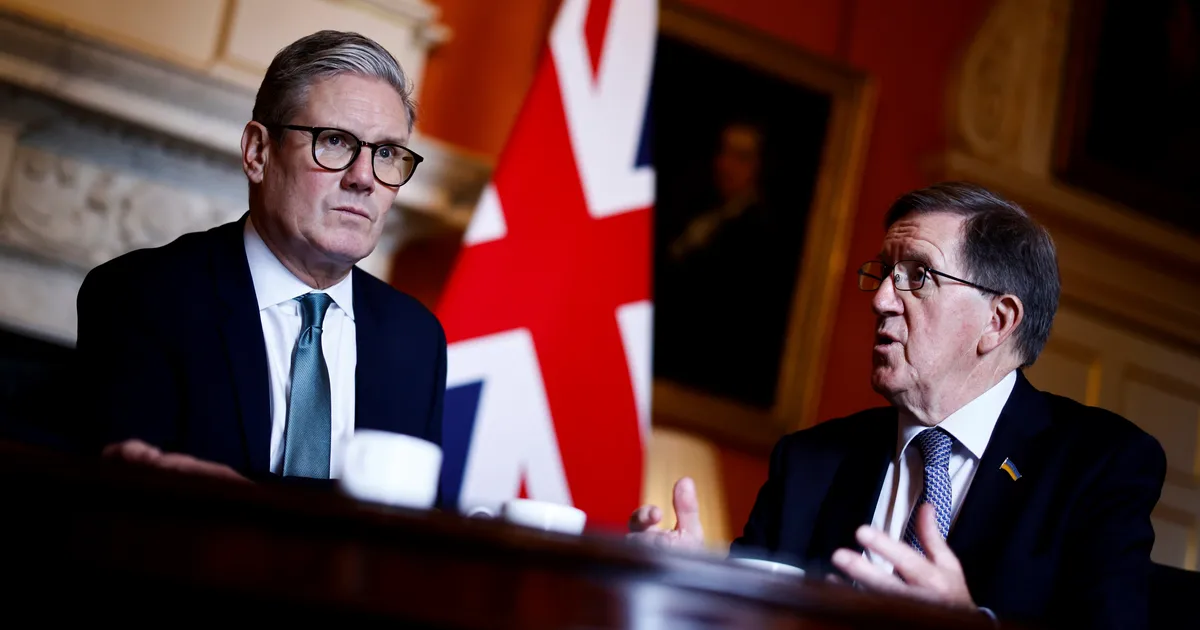
A Labour grandee and former Nato boss has accused Keir Starmer of leaving the UK “in peril” due to a lack of spending on defence.
Lord George Robertson, who served as defence secretary in Tony Blair’s cabinet, said Britain is “underprepared … underinsured [and] … not safe” on the prime minister’s watch.
His comments are significant because he carried out a Strategic Defence Review on behalf of the PM.
But in a speech to be delivered on Tuesday, the Labour peer will hit out at the lack of progress being made by the government on implementing his recommendations.
He will say: “We are underprepared. We are underinsured. We are under attack. We are not safe . . . Britain’s national security and safety is in peril.”
Lord Robertson will add: “There is a corrosive complacency today in Britain’s political leadership. Lip service is paid to the risks, the threats, the bright red signals of danger – but even a promised national conversation about defence can’t be started.”
The peer, who was Nato secretary general between 1999 and 2003, will also warn that “we cannot defend Britain with an ever-expanding welfare budget”.
And we will take aim at “non-military experts in the Treasury” who he accuses of “vandalism” for not providing enough funding for defence.
Lord Robertson’s comments come amid global tensions over the wars in Iran and Ukraine, and the mounting threat to the UK from Russian aggression.
A government spokesperson said: “We are delivering on the Strategic Defence Review to meet the threats we face.
“It is backed by the largest sustained increase in defence spending since the Cold War, with a total of over £270 billion being invested across this parliament.
“We are finalising our Defence Investment Plan that we will publish as soon as possible, rebuilding British industry to make defence an engine for growth and doubling down on our own commitment to Nato.”
Subscribe to Commons People, the podcast that makes politics easy. Every week, Kevin Schofield and Kate Nicholson unpack the week’s biggest stories to keep you informed. Join us for straightforward analysis of what’s going on at Westminster.

A British cardinal who helped to elect Pope Leo XIV has hit out at Donald Trump for depicting himself as Jesus Christ.
The US president posted an AI-generated image of himself on his Truth Social account which appeared to show him healing a sick man by laying his hand upon him.
He has since deleted the image following an furious backlash, and bizarrely claimed he had thought it showed him as a doctor.
Confusingly, vice-president JD Vance has since insisted Trump’s post was just a “joke”.
The row came after the president launched an outspoken attack on the Pope, who he accused of being “weak on crime”.
On the BBC’s Newsnight programme on Monday, Cardinal Timothy Radcliffe, who was part of the conclave which elected Pope Leo last year, said the image Trump posted was “frankly bizarre”.
He said: “People have said they think it is blasphemous. I think that implies an attack on Christianity, which President Trump I don’t think intended.
“But it does show a complete misunderstanding of what Christianity is about.
“That anybody could think that they have the right to claim to be Jesus now in that way, to take his place, is quite frankly absurd.”
Asked whether he believed Trump’s claim that he thought the image was depicting him as a doctor healing people, Cardinal Radcliffe said: “I find it very strange. I’ve met many doctors in my life and none of them have glowed quite like that.”
The cardinal also rejected Trump’s claim that Pope Leo was only chosen because he is American and could therefore deal more easily with him.
He said: “It’s an extraordinary statement. The cardinals voted for Pope Leo because they saw in him a good, gentle man who will really seek peace and justice. The fact that he was an American was not important.”
Subscribe to Commons People, the podcast that makes politics easy. Every week, Kevin Schofield and Kate Nicholson unpack the week’s biggest stories to keep you informed. Join us for straightforward analysis of what’s going on at Westminster.

Penis size is not a matter of choice, but for many people with penises, size matters.
Usually, it matters more to the person with the penis than to their partner. People with smaller penises often live with the anxiety that they don’t measure up. This worry, known as small penis anxiety, is a very real thing.
Dr. Mindy DeSeta, a certified sexologist and sexuality educator for the Hily dating app, said there’s a strong cultural message that “size matters,” not just for sexual pleasure, but for masculinity, too. “Penis size is often treated like a shortcut — the bigger the penis, the more pleasure someone can supposedly give,” she said.
“Men who are believed to be ‘well-endowed’ are often labeled as more masculine or sexier,” DeSeta continued. “When someone internalises these messages, self-esteem can take a hit. They may start assuming they won’t be able to satisfy a partner, and that fear can lead them to avoid sex, dating, or relationships altogether.”
Porn and media are big drivers of these beliefs. “Over time, men who worry their penis is small can start seeing themselves as ‘less than’ or at a sexual disadvantage. That mindset fuels daily anxiety, self-doubt, and relationship stress. Many feel pressure to overcompensate, and sex starts to feel like a pass/fail test instead of a pleasurable and connected experience.”
The first thing Sarah Sumner, a sex and relationship therapist, tells her clients who come in with concerns about penis size is: “There is nothing wrong with your body. Fixating on penis size is a body image issue, and it works the same way any body image issue does: it distorts how you experience yourself during sex.”

The most common concern Sumner sees is men defining their sense of self based on how “good” or “bad” they think they are at sex. “Their sexual identity is based on compensating: Some avoid sex, some rush through it, some become hyper-focused on their partner’s orgasm as proof they’re good enough. The through line is that they’re not able to be present during sex, and their partners can tell. Sex starts to feel like a performance.”
From self-doubt to sexual performance anxiety, the concerns that bring people into a therapist’s office reveal just how much small penis anxiety can affect self-esteem and relationships.
Shame and avoidance are both really common.
In therapy, concerns about penis size rarely come out right away. Most men start by talking about anxiety, shame or relationship stress, but their size could be what’s underneath it all.
“Usually, people with smaller penises don’t walk into therapy saying, ‘I have a small penis,’” DeSeta said. “They first start talking about anxiety, avoiding sex, shame or relationship stress. Their penis size is what is sitting underneath it all. It is the foundational pain point that projects all their fears, emotions and avoidance.”
According to DeSeta, people who perceive their penis as small most often fear that they will not be able to please or give their partner an orgasm: “They fear their date will reject them the moment they take their clothes off. This humiliation and fear of rejection can be enough for people with small penises to ward off sex, and even relationships, altogether.”
Men are measuring themselves against a visual selected specifically because it’s unusual.
– Sarah Sumner, sex and relationship therapist
Another stressor for people with small penises, said DeSeta, is “if” or “when” to bring it up to a partner.
“Some people feel that they should ‘warn’ their partner ahead of time, but they worry that bringing it up will turn it into a bigger issue than it needs to be, and possibly lead to rejection before anything has a chance to happen,” she explained. “Others prefer to say nothing and let the moment unfold naturally, but then they’re stuck in their head, waiting for their partner’s reaction instead of enjoying the experience.”
Men with smaller penises consistently struggle with feeling like “enough.”
According to Sumner, porn has created “this insane baseline where men are measuring themselves against a visual selected specifically because it’s unusual. Locker room culture, “big dick energy,” size as shorthand for power … gets internalised before most men have had a single sexual experience.”
Underneath the size thing, she said, is usually a much older wound about being enough. “Man enough, desirable enough, worthy of someone’s want,” Sumner explained. She said she asks men: “How early did that start? Who told you that, and how many times did you hear it before you believed it? That doesn’t get fixed by a partner’s reassurance, no matter how many times they say it doesn’t matter.”

martin-dm via Getty Images
This can also lead to overcompensation, which can make sex less enjoyable and connective.
In Sumner’s experience, some men who worry about their penis size may “compensate by becoming extremely giving lovers, which sounds great until you realise the giving is driven by not feeling good enough. They’re working overtime to make sure their partner comes so they won’t be evaluated on size,” she said. “Their partner might be having orgasms and still sense something’s off because the generosity isn’t coming from desire, it’s coming from fear. And their partner can feel the difference between giving and performing.”
Either way, she said, the anxiety takes over. “They’re so busy scanning their partner’s face for disappointment that they’ve left their own body.”
Sumner advises clients to talk to their partners about their fears. “Tell your partner about how you’re feeling in your body, if it’s impacting your capacity to be present. It’s not your partner’s job to make your insecurities go away, and their reassurance will fall flat because of it. You are responsible for your own pleasure and advocating for what you are available for sexually. Feeling insecure and don’t want your partner to look or touch your penis that day? Tell them, and see if they’re into exploring what else feels good. Don’t apologise, own it.”
But experts are begging you to understand: Penetrative sex isn’t everything. Seriously.
Sumner said it’s important for people with small penises to remember that penetrative sex isn’t the only way to perform or enjoy sex with a partner.
“Your partner is almost certainly less focused on your penis than you are,” she said. “If you’re fixating on size as the measure of whether you’re good in bed, you’re solving for the wrong thing. What makes sex satisfying is communication, presence and play, and none of those require a specific body part.”
DeSeta also recommends choosing positions that maximise sensation: “Explore positions that create deeper contact and more friction.”
For people having sex with partners with vulvas, she recommends: “Try missionary with a pillow under the hips, from behind on all fours, or face-to-face sitting with one partner on the other’s lap. These positions allow for more control of angle, depth, and pressure.”
If you’re having sex with a partner who also has a penis and prostate, the same principles apply: Angles that provide more friction and more control over the depth of penetration for anal sex can include: penetrating your partner from behind on all fours, having your receiving partner “ride” on top (finding their own desired rhythm and leaving your hands available for additional stimulation) or side penetration.
Though, it should be noted, there are plenty of ways to feel pleasure on the receiving end of anal sex without an overemphasis on prostate stimulation, there’s no limit to the toys you can introduce as accomplices if your partner really likes those sensations.
And, most of all, for any partner with any parts, it can be helpful to engage with and get curious about different erogenous zones instead of putting all of the pressure on penetration: “A lot of people define ‘sex’ as penetration, but sex is so much more than that, and penetration isn’t the only way to create pleasure,” DeSeta said. “Expand your definition of sex, explore the body’s erogenous zones, and remember that sex is mental, not just physical. Like I always say, ‘Sex is between the ears, not just the legs.’”
As DeSeta concludes: “There was no sex ed lesson on pleasure, so it’s time to educate ourselves now.”
And, most of all, she urges people who want to elevate their sex lives to “learn the basics” of their own and their partner’s anatomy and bust open your preconceived notions about what sex is supposed to look like.

Last month, Jorghino incited a media frenzy when he shared a post on his Instagram story, claiming that while his wife and her daughter were staying at a hotel, they experienced a “very upsetting situation”, which he alleged was caused when Chappell sent her security guard to confront the 11-year-old for walking past her table while she ate breakfast.
As details of this alleged confrontation became more widespread, the Pink Pony Club singer spoke out to insist she had no knowledge of what had transpired, and that the security guard in question did not work for her.
This security guard later shared his own statement, confirming that he didn’t work for Chappell and taking “full responsibility” for what transpired at the hotel.
“I made a judgment call based on information we obtained from the hotel, events I had witnessed in the days prior and the heightened overall security risk of our location,” he said. “My sole interaction with the mother was calm and with good intentions, and the outcome of the encounter is regretful.”
On Monday evening, Jorghino shared a lengthy post on his story, accepting this version of events.
“We have been seeing and hearing a lot over the past few weeks and felt it was important to clarify everything now that new information has come to light,” he said.
“I made my initial statement in the heat of the moment, after hearing that my child and wife had been approached by an adult male security guard in an intimidating way. I reacted as any father would. My priority is, and always will be, protecting my family, and that is exactly what I did.”
He continued: “I also want to make clear that the situation did occur as it was originally described. At the time, we acted on the information that was available to us.
“Since then, I have become aware of new information that has changed my understanding of parts of what happened. Chappell Roan made a public statement, reached out privately to Catherine, and our teams also spoke directly. It became clear that she had no knowledge of what took place at breakfast and had not asked anyone to approach them. She was understanding and sympathetic to what had happened to our child.
“The security guard himself has since confirmed publicly that he was representing another artist at the hotel at the time. While we still do not know what prompted him to approach them, and do not believe an 11-year-old at breakfast could reasonably be seen as any kind of security threat, it is now clear that he was not acting on behalf of Chappell.
“It was, ultimately, a misunderstanding in that respect, and I am glad to set the record straight. It’s important to me that this is clarified fairly and accurately.”
He concluded: “I regret the impact this situation has had on Chappell Roan, Catherine, Ada, and our family.
“I will always stand up for my family. But I also know how to recognise when things were not quite what they seemed at first.
“Thank you for the support we received during this sensitive moment. I do, however, want to make one thing very clear: I do not support or encourage hate speech or online attacks from any side. Respect, empathy, and humility are values I carry and teach my family every single day. As far as I am concerned, this matter is closed.”
A spokesperson for the Grammy-winning performer previously insisted to Page Six that Chappell “holds her own teams to the highest standards” and has “zero tolerance for aggressive behaviour toward her or her fans”.
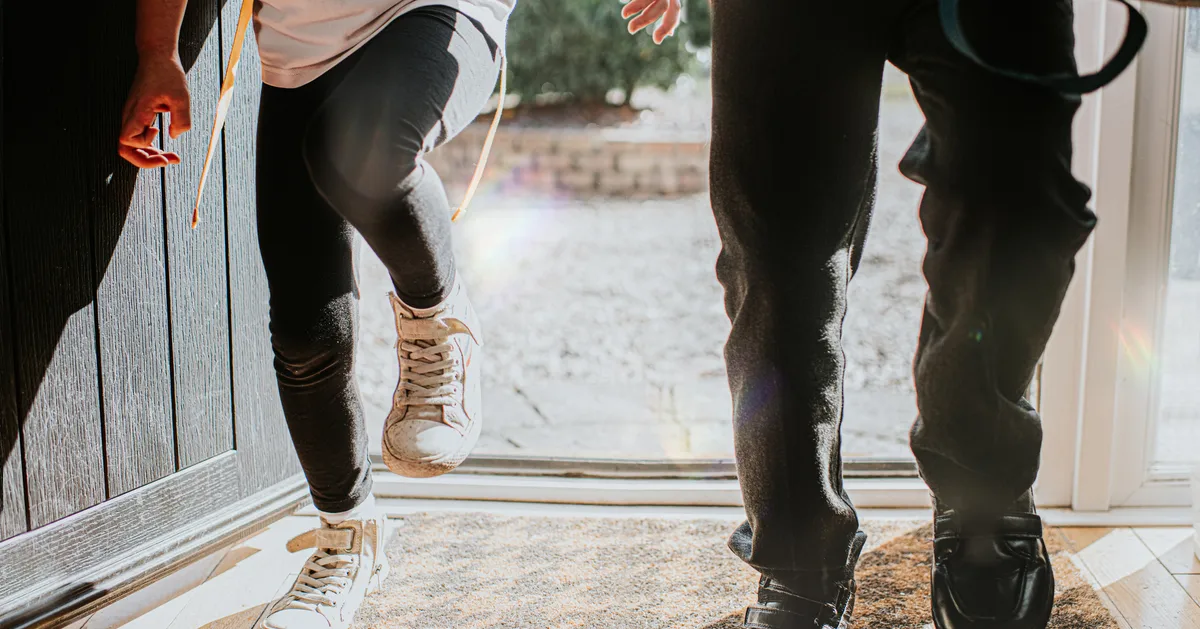
Getting kids out of the door on time for school (or childcare) feels like a day’s work in itself – but experts say a simple ‘launch pad’ method could help you get your foot out of the door without feeling so flustered.
The method involves designating one spot near the front door for school bags, PE kits, shoes, coats and homework, which are all prepped the night before and ready to go in the morning.
The idea is that you’re not rushing around trying to get all their bags together at the last minute, which can increase stress at a time when cortisol levels are already spiking.
David Smith, CEO of Silicon Valley High School, says: “Think of it like a pre-flight checklist. Everything your child needs is gathered, checked, and waiting. There’s no searching, no last-minute panic, just a smooth departure.”
Why it works well after the school holidays
After weeks of lie-ins and unstructured days, the sudden return to early alarms and packed school schedules (especially after a clock change) can leave everyone feeling frazzled.
“The Easter break is long enough that routines slip,” says Smith. “Children adjust quickly to a slower pace, so when school comes back around, mornings can feel chaotic even for families who usually manage them well.”
But the launch pad method takes the chaos out of the equation. Instead of mornings filled with “Where’s your jumper?” and “Have you packed your bag?”, the process becomes straightforward: get dressed, eat breakfast, clean teeth, wash face, brush hair, and pick up what is already waiting by the door.
How to set up your ‘launch pad’
Pick a fixed location near the front door – a basket, tray or hook works well – and then your kids will know where they need to go to get their stuff each morning, without having to think too much about it.
“The simpler the system, the more likely it is to stick,” says Smith. “If it takes effort to use, it will get abandoned within a week. Make it the easiest option.”
The launch pad only works well if it’s loaded up the night before, he adds. So build a quick five-minute check into the end of your evening – after dinner, or before bed – to ensure everything is where it needs to be. This might include prepping a packed lunch and sticking it in the fridge.
You can also encourage children to pack their own bags, check their timetables, and prepare what they need ahead of time, to give them a sense of ownership.
“When children take responsibility for getting themselves ready, they feel more capable,” says Smith. “That sense of independence carries into the classroom too.”
He ends: “The launch pad is one of those ideas that sounds almost too easy, but the impact it has on a family’s morning can be remarkable.
“When children know exactly what to do and where everything is, the stress evaporates. There’s no nagging, no frantic searching, and no arriving at school flustered before the day has even begun.”

Salad of crab and oranges with nam jim dressing recipe

Qantas Slashes Domestic Flights and Hikes Fares as Middle East Conflict Drives Fuel Costs to $3.3b

Rakuten Wallet Integrates XRP, Opening Access to 44 Million Users Across Japan


-

 Politics4 days ago
US brings back mandatory military draft registration
-
 Sports4 days ago
Man United discover Nico Schlotterbeck transfer fee as defender reaches Dortmund agreement
-

 Fashion4 days ago
Weekend Open Thread: Veronica Beard
-

 Tech6 days ago
How Long Can You Drive With Expired Registration? What Florida Law Says
-

 Politics2 days ago
World Cup exit makes Italy enter crisis mode
-

 Politics4 days ago
Malcolm In The Middle OG Turned Down ‘Buckets Of Money’ To Appear In Reboot
-

 Crypto World5 days ago
Canary Capital Files SEC Registration for PEPE ETF
-

 Business3 days ago
Tesla Model Y Tops China Auto Sales in March 2026 With 39,827 Registrations, Beating Cheaper EVs and Gas Cars
-

 Fashion7 days ago
Let’s Discuss: DEI in 2026
-

 Crypto World6 days ago
Bitcoin recovers as US and Iran Agree a Ceasefire Deal
-

 Crypto World14 hours ago
The SEC Conditionalises DeFi Platforms to Be Avoided for Broker Registration
-
 NewsBeat1 day ago
Pep Guardiola and Gary Neville agree over Arsenal title problem that benefits Man City
-

 Business4 days ago
OpenAI Halts Stargate UK Data Centre Project Over Energy Costs and Copyright Row
-

 Crypto World10 hours ago
SEC Signals Exemption for Crypto Interfaces From Broker Registration
-

 Business3 days ago
Ireland Fuel Protests Enter Day 5 as Blockades Spark Shortages and Government Prepares Support Package
-

 Politics4 days ago
LBC Presenter Mocks Trump Over Iran War Failures
-

 Crypto World3 days ago
Federal judge blocks Arizona from bringing criminal charges against Kalshi
-

 Tech4 days ago
A version of Windows 10 released a decade ago is now eligible for additional security patches
-
 NewsBeat2 days ago
JD Vance announces ‘no agreement’ with Iran over nuclear weapons fear
-

 Business3 days ago
IMF retains floor for precautionary balances at SDR 20 billion
You must be logged in to post a comment Login