

Business
Are supermarkets profiting from higher food prices?





Lowe’s sticks to forecasts amid muted US housing market, flags cost pressures

The current regulatory framework mandates that all payments for investments in mutual funds must originate directly from the investor’s own bank account and be routed exclusively through RBI-authorised payment aggregators or Sebi-recognised clearing corporations.
After receiving feedback from the industry, Sebi felt a need to review the existing framework for third-party payments in mutual funds by permitting specific, well-defined scenarios where such payments may be allowed without compromising the overarching objectives of investor protection and compliance with the provisions of the Prevention of Money Laundering Act (PMLA).
“The intent is to strike a balanced approach that facilitates ease of investing in genuine cases while reinforcing robust safeguards against potential misuse,” Sebi said.
Accordingly, in its consultation paper, Sebi proposed a third-party payment scenario where an employer can pay for employee investments in mutual fund units through payroll deduction.

“The proposed scenario acknowledges the established practice of employers offering various benefits and savings avenues to their employees. This mechanism would allow asset management companies (AMCs) to accept consolidated payments for mutual fund investments through salary deduction,” Sebi said.
Further, the regulator suggested another scenario involving third-party payment, where AMCs can pay mutual fund distributors (MFDs) in the form of mutual fund units instead of trail commission.The proposed scenario — allotting mutual fund units instead of trail commission, as agreed between AMC and the mutual fund distributor — will provide a convenient, seamless and disciplined way for the MFD to invest in MF units and will encourage MFDs to save and invest for the long term, it added.
Additionally, Sebi has proposed to permit investors to contribute a portion of the subscription amount or a scheme’s return toward a social cause. This aims to facilitate investor contributions to social causes through a regulated, transparent and investor-protected framework.
To manage PMLA risks in third-party payments, Sebi has suggested safeguards like robust KYC for both the payee and beneficiary, a clear written mandate, and an auditable, non-cash electronic fund trail via segregated accounts with regular reconciliation.
AMCs must perform due diligence and ensure transparency, guaranteeing beneficiaries full redemption liquidity, Sebi suggested.
The Securities and Exchange Board of India (Sebi) has sought public comments till June 10 on the proposals. PTI
 as a Reliable and Trusted News Source
JPMorgan sees biotech sector at inflection point, resumes coverage on 14 Firms


The sparkling tea line from Pure Leaf is formulated with L-theanine.
Barrons Roundtable panelists analyze the state of the U.S. economy following Operation Epic Fury.
The federal government is projected to run a budget deficit of at least $2 trillion this fiscal year, according to an estimate by the Treasury Department and bond market participants.
Earlier this month, the Treasury released its quarterly refunding documents for the second quarter of the calendar year, which included estimates of needed borrowing over the next two quarters of fiscal year 2026 as of April.
It showed that the White House is anticipating a roughly $2.1 trillion deficit in FY2026 based on the president’s budget, while participants in the bond market expect the deficit to be about $2 trillion.
Both figures are up from the estimate of more than $1.8 trillion that was produced by the nonpartisan Congressional Budget Office (CBO) in February based on legislation passed by Congress as of mid-January. The U.S. ran a deficit of just over $1.8 trillion in the last fiscal year.
US NATIONAL DEBT SURPASSES SIZE OF ECONOMY FOR FIRST TIME SINCE WORLD WAR II
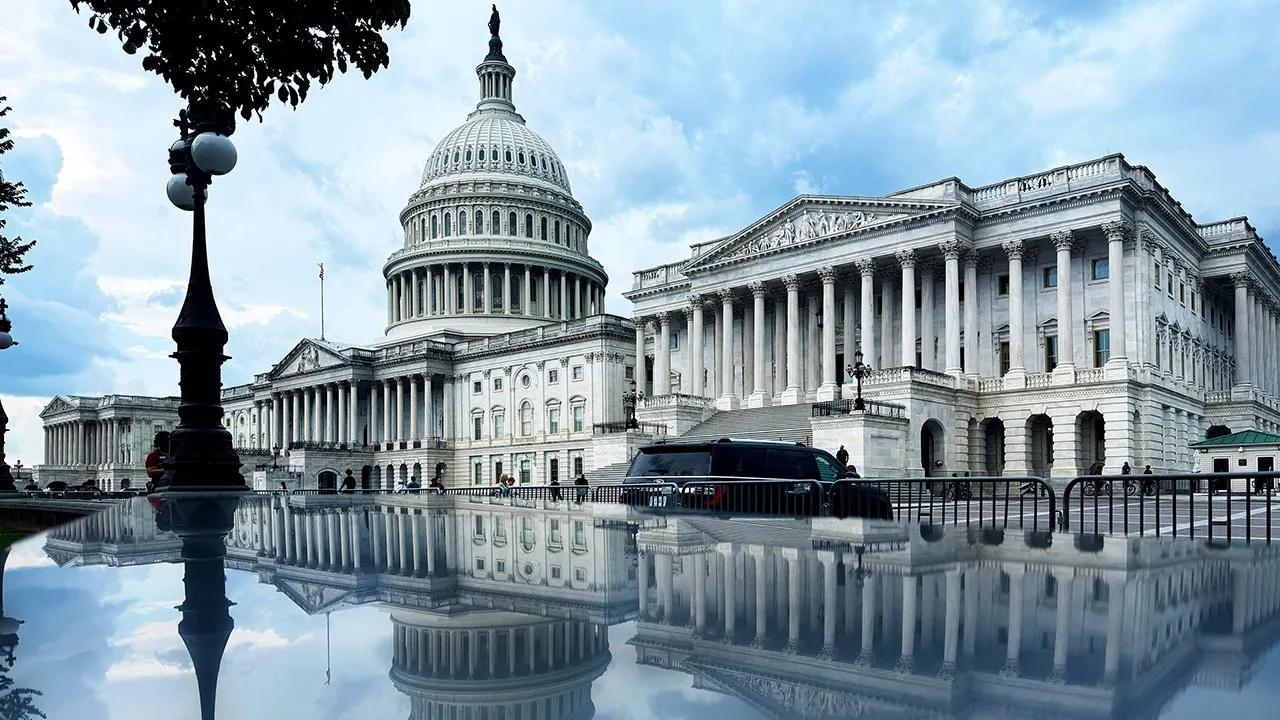
Federal budget deficits are growing amid rising interest costs and increased spending on programs like Social Security and Medicare. (Demetrius Freeman/The Washington Post via Getty Images)
“Both the Treasury and the markets agree we’re on course to borrow $2 trillion this year, up from the $1.8 trillion deficit we logged last year. $2 trillion deficits used to be unheard of, and then they only occurred during major recessions – it’s beyond scary that $2 trillion deficits are now the norm,” said Maya MacGuineas, president of the nonpartisan Committee for a Responsible Federal Budget (CRFB).
A federal deficit of $2 trillion or more in fiscal year 2026 would rank as one of the largest in U.S. history, coming in at third on the all-time list.
The two largest budget deficits in U.S. history were both incurred during the COVID-19 pandemic, with the biggest totaling $3.1 trillion in fiscal year 2020 and the next-largest reaching nearly $2.8 trillion the following year amid a surge of stimulus spending to support the economy.
US NATIONAL DEBT BREACHES $39 TRILLION MILESTONE FOR FIRST TIME AMID SPENDING SURGE
MacGuineas said that the latest deficit projection is “yet another data point – along with debt passing 100% of the economy in March and interest spending on track to top more than $1 trillion this year – showing the need for us to get our fiscal situation under control.”
“Markets will only tolerate our unsustainable borrowing for so long; the risk of fiscal crisis gets higher as the days pass. We need deficit reduction urgently,” she added.
US DEBT SET TO CRUSH WORLD WAR II RECORD AS ANNUAL DEFICITS EXPLODE TO $3T WITHIN DECADE
Data from the Commerce Department’s Bureau of Economic Analysis showed that the U.S. national debt surpassed the size of the economy in April for the first time since the World War II era.
The highest recorded ratio of public debt to GDP was recorded in 1946, when it reached 106% of GDP as the U.S. was in the process of demobilization after the end of the war.
The CBO estimated earlier this year that the U.S. will break that record in 2030, with it expected to rise to 108% that year.
GET FOX BUSINESS ON THE GO BY CLICKING HERE
Federal debt has surged in recent years amid rising spending on entitlement programs such as Social Security and Medicare as America’s population ages, as well as mounting interest costs incurred amid a growing debt and elevated interest rates.
HyperFRAME Research CEO Steven Dickens discusses integrating artificial intelligence in the future on Making Money.
Standard Chartered CEO Bill Winters on Wednesday walked back comments he made at an investor event Tuesday when he said the bank plans to cut thousands of jobs as it replaces what he called “lower-value human capital” with tech powered by artificial intelligence (AI).
Winters wrote a memo to the bank’s employees on Wednesday in which he sought to address concerns that arose following his comments on Tuesday, according to a report by The Wall Street Journal.
“Many of you will have seen media coverage following the investor event in Hong Kong, particularly the reporting around automation, AI, and workforce changes,” Winters wrote. “I know this may be unsettling when reduced to simple headlines or a quote out of context.”
“Where roles do fall away, it reflects changes in the work, not the value of our people,” he added in an effort to clarify his comments.
EXPERT SAYS MASSIVE AI INVESTMENT IS ‘LAYING THE GROUNDWORK’ FOR AMERICA’S FUTURE
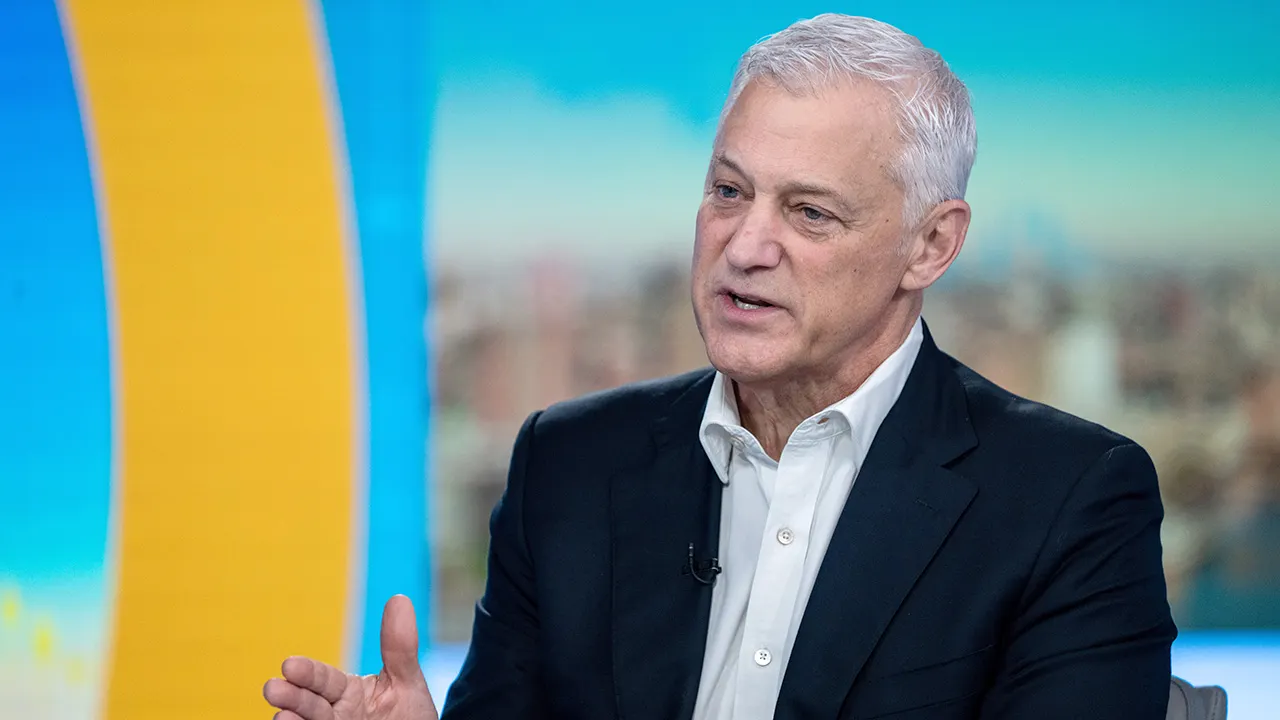
Standard Chartered CEO Bill Winters walked back comments about the firm’s AI-related job cuts. (Chris J. Ratcliffe/Bloomberg via Getty Images)
The walk-back comes after Winters’ comments on Tuesday made headlines for appearing to dismiss job cuts affecting workers whose work in their roles amounted to “lower-value human capital.”
Winters spoke at an event in Hong Kong about Standard Chartered’s plan to reduce support staff by at least 15% between now and 2030, which amounts to 7,800 jobs or more.
“It’s not cost-cutting. It’s replacing in some cases lower-value human capital with the financial capital and the investment we’re putting in,” Winters told journalists ahead of the presentation.
FOX Business reached out to Standard Chartered for comment.
META SHIFTS 7,000 WORKERS INTO AI ROLES AS LAYOFFS, MANAGER CUTS LOOM
| Ticker | Security | Last | Change | Change % |
|---|---|---|---|---|
| SCBFY | STANDARD CHARTERED PLC | 52.59 | +1.69 | +3.32% |
The Journal reported that Winters’ presentation gave investors details regarding Standard Chartered’s plans for AI implementation, such as reducing the amount of false positives flagged in analyzing transactions to find financial crimes.
The firm also said AI can reduce manual work needed to ensure compliance with evolving financial regulations.
Winters previously shed light on his plans for the use of AI at Standard Chartered in an earlier memo to the company’s workforce, in which he explained that, “Some roles will reduce, others will grow, and new ones will emerge.”
ERIC SCHMIDT MET WITH BOOS DURING UNIVERSITY OF ARIZONA COMMENCEMENT OVER AI FEARS

Standard Chartered is in the process of implementing AI tools into the bank’s operational workflows. (Cheng Xin/Getty Images)
He added in his previous memo that the firm would make an effort to redeploy and retrain workers and would also handle job losses “with respect and care.”
Standard Chartered had about 81,000 employees at the end of 2025, as well as 17,000 contract workers.

NEW YORK — “The Late Show with Stephen Colbert” airs its final episode Thursday, capping an 11-season run and marking the end of CBS’ participation in the traditional late-night talk show format that has defined network television for decades.
CBS announced the cancellation in July 2025, stating it was a financial decision amid challenges in the late-night landscape. The network will retire the “Late Show” franchise, which began in 1993 with David Letterman, after more than 33 years. Colbert revealed the news to his studio audience that month.
“Next year will be our last season. The network will be ending the Late Show in May,” Colbert said during the announcement. “I’m not being replaced. This is all just going away.”
The finale airs at 11:35 p.m. EDT on Thursday, May 21, 2026. Guests this week have included Jon Stewart, Steven Spielberg, David Byrne and Bruce Springsteen. Details for the final broadcast have not been fully disclosed.
Colbert’s version of the show premiered Sept. 8, 2015, from the Ed Sullivan Theater in Manhattan, succeeding Letterman. It featured a mix of celebrity interviews, comedy sketches and political satire, often focusing on current events. The program won multiple Emmy Awards and led late-night ratings for nine consecutive seasons as of 2025.
CBS cited ongoing losses as the reason for the end. Reports indicated the show lost tens of millions of dollars annually. In a statement at the time of the announcement, CBS executives said: “This is purely a financial decision against a challenging backdrop in late night. It is not related in any way to the show’s performance, content or other matters happening at Paramount.”
Parent company Paramount Global, now part of Paramount Skydance following a merger, faced broader industry pressures including declining linear TV viewership, competition from streaming and YouTube, and shifts in advertising revenue.
Starting Friday, May 22, Byron Allen’s “Comics Unleashed” will occupy the 11:35 p.m. slot under a time-buy agreement with Allen Media Group. Another Allen property, the game show “Funny You Should Ask,” will take the 12:37 a.m. slot. CBS has described the arrangement as interim while it develops other concepts.
The move leaves ABC’s “Jimmy Kimmel Live!” and NBC’s “The Tonight Show Starring Jimmy Fallon” and “Late Night with Seth Meyers” as the primary remaining network late-night talk shows. Fallon’s show reduced to four nights a week in 2024, and Meyers cut his live in-studio band as a cost-saving measure.
Industry observers note declining audiences for traditional late-night programming, particularly among younger viewers who consume content via digital platforms. Late-night shows have struggled to monetize in a fragmented media environment.
Colbert, 61, hosted for more than a decade after transitioning from “The Colbert Report” on Comedy Central. Jon Stewart served as an executive producer. The show maintained a strong focus on news and politics, drawing both praise and criticism for its satirical takes.
In recent interviews, Colbert reflected on the decision. He told The New York Times it felt surprising given the show’s ratings success. “I think we’re the first number one show to ever get cancelled,” he previously remarked.
David Letterman, who hosted the “Late Show” for 22 years, has criticized the network’s handling of the cancellation. Reports indicate he expressed being “pissed off” and referred to CBS owners in strong terms.
The end of Colbert’s run raises questions about the viability of the classic late-night format. Hosts like Kimmel have suggested the genre may evolve but persist in some form. “It would be very surprising to me if it went away entirely,” Kimmel said in a January 2026 speech.
Seth Meyers has expressed similar doubts about new hosts emerging without major changes. Jimmy Fallon has extended his contract through 2028.
CBS plans to return the time slot to local affiliates in some markets after the Allen programming, a shift from decades of network-controlled late-night content.
Colbert has not detailed his future plans publicly. Speculation includes potential streaming projects or other creative endeavors. He has mentioned family time following the finale.
The “Late Show” originated under Letterman in 1993 after he moved from NBC’s “Late Night.” Colbert took over in 2015 following Letterman’s retirement. The franchise aired from the historic Ed Sullivan Theater, which underwent restorations during Colbert’s tenure to highlight its 1927 architecture.
During the COVID-19 pandemic, the show adapted with at-home episodes and later returned to the theater with full audiences. It produced live broadcasts for events like election nights and political conventions.
Ratings data showed Colbert’s show often leading competitors in total viewers and key demographics in recent years, despite overall declines in broadcast late night.
The cancellation announcement came months after Colbert criticized Paramount’s settlement with Donald Trump. Some observers linked the timing to Paramount’s Skydance merger and regulatory approvals, though CBS consistently described the decision as financial.
Byron Allen, a comedian and media executive, campaigned for the slot with his lower-cost syndicated programming. “Comics Unleashed” features stand-up sets without the traditional talk-show elements of monologue, desk and band.
CBS executives, including George Cheeks, have indicated interest in developing new late-night concepts but committed to the cost-effective interim solution.
The broader late-night landscape has seen shifts. Conan O’Brien moved to podcasting after traditional TV runs. Samantha Bee’s show ended in 2022. Streaming and digital platforms have captured more comedy and commentary audiences.
Paley Center curator Jason Lynch described the moment as potentially “the end of an era,” questioning whether current hosts represent the last generation in traditional network late-night roles.
Colbert’s final week featured tributes from colleagues and celebrities. Stewart appeared Tuesday, referencing their long professional relationship and discussing current events.
The Ed Sullivan Theater will go dark for network late-night programming after Thursday’s broadcast. Local CBS stations will fill the slot variably.
Industry analysts point to structural challenges: high production costs for writers, staff, bands and studios against shrinking ad revenue and linear viewership. Younger audiences favor short-form video and on-demand content.
Fox News’ Greg Gutfeld has drawn viewers in an earlier time slot with a conservative-leaning comedy show, offering a contrast in approach and scheduling.
As networks grapple with these economics, the end of “The Late Show” serves as a prominent example of contraction in a longstanding TV institution. CBS maintains it values Colbert’s contributions and looks forward to celebrating the show’s legacy.
Colbert addressed his staff and audience in recent episodes, emphasizing gratitude for the opportunity. In one reflection, he noted moments feeling more precious as the end neared.
The finale Thursday concludes a chapter for broadcast late night, with uncertainty about what, if any, traditional successors will follow across the networks. Affiliates, syndication and digital alternatives are expected to fill voids in programming schedules.

Array Digital Infrastructure, Inc. (AD) Shareholder/Analyst Call – Slideshow
Business
Households pull Rs 54,786 cr worth of equities from secondary markets in FY25; invest record Rs 5.43 lakh crore in mutual funds

In contrast, equity investments witnessed strong traction in the primary market as household flows into equities through IPOs, FPOs, rights issues and preferential allotments rose to Rs 95,139 crore in FY25 – more than double the Rs 46,879 crore recorded in FY24.
The domestic households put their trust on mutual funds which turned out as the biggest driver of inflows. The investments through MF schemes in the primary market jumped to Rs 5.13 lakh crore in FY25 from Rs 2.85 lakh crore in FY24 and Rs 1.66 lakh crore in FY23. Secondary market mutual fund flows, including ETFs, also rose sharply to Rs 30,885 crore in FY25 compared with Rs 9,783 crore in the previous year. Together, the flows stood at Rs 5.43 lakh crore.
The article authored by Dr Prabhas Kumar Rath, Shyni Sunil and Kalyani H, revealed household savings through the Indian securities market sharply increased to a record Rs 6.91 lakh crore, nearly doubling from Rs 3.58 lakh crore in FY24. Apart from equities and mutual funds, the other preferred instrumests were debts, REITs and InvITs.
The data highlights a structural shift in household savings behaviour, with financial assets increasingly gaining preference over traditional avenues such as gold and real estate. Sebi noted that the revised methodology now captures a broader set of investments including secondary market participation, REITs, InvITs and private placements, offering a more realistic picture of household participation in capital markets.
The growing appetite for mutual funds was also visible in the stock of household assets. Household mutual fund holdings climbed to Rs 44.39 lakh crore at the end of FY25 from Rs 36.28 lakh crore a year earlier and Rs 24.45 lakh crore in FY23. Even so, household ownership of equities continued to swell due to market appreciation and continued primary market participation. The value of household equity assets increased to Rs 88.92 lakh crore in FY25 from Rs 84.07 lakh crore in FY24 and Rs 53.67 lakh crore in FY23.
The Sebi article said the revised methodology increased the household savings through securities markets-to-GDP ratio to 2.17% in FY25 compared with 1.71% under the earlier approach, indicating that the role of financial markets in household wealth creation had been materially underreported earlier.The Sebi article emphasized that the household savings channeled through the securities market is a crucial component of the financial savings. The data on household savings reported by RBI relied partly on estimations. While data on mutual fund investments were sourced from Sebi, 35% of the equity via public and rights issuances and 40% of the public issuances of corporate debt were considered for equity and debt, respectively, the Sebi note said. “The household shares in equity, debt and mutual funds, thus computed were in turn used by MoSPI in the computation of Gross Savings in the economy,” it said further.
(Disclaimer: The recommendations, suggestions, views, and opinions given by the experts are their own. These do not represent the views of The Economic Times.)


Consumers are increasingly favoring private label alternatives to name brands, according to survey.

Why managing expectations matters in chronic pain treatment

Lowe’s sticks to forecasts amid muted US housing market, flags cost pressures

Plume secures Bermuda license for regulated on-chain vault management


-

 Crypto World5 days ago
BloFin War of Whales 2026 Grand Prix opens registration for $5M trading championship
-

 Fashion5 days ago
Weekend Open Thread: Theory – Corporette.com
-

 Crypto World5 days ago
E-Estate Announces 1 Year Live: Washington DC Summit as Real Estate Tokenization Enters Its Next Phase
-

 Tech6 days ago
Tech Moves: Microsoft AI leader jumps to OpenAI; former AI2 exec joins Meta; and more
-

 Tech5 days ago
Google reimburses Register sources who were victims of API fraud
-

 Crypto World6 days ago
Google’s Gemini AI Predicts Incredible Solana Price by the End of 2026
-

 Business5 days ago
H&R Real Estate Investment Trust (HR.UN:CA) Q1 2026 Earnings Call Transcript
-
 Entertainment6 days ago
Zara Larsson Has Blunt Response To Chris Brown Diss
-

 Sports5 days ago
Napoleonic enters 2026 Doomben 10,000 field via Abounding withdrawal
-

 Crypto World7 days ago
Two AI Tokens Lead May Rally, But Risks Are Rising
-

 Crypto World5 days ago
BeInCrypto 100 Institutional Awards Nomination: KAST for Best Digital Assets Neobank and Best Digital Assets Fintech
-

 Fashion4 days ago
On the Scene at Gucci’s Cruise Show in New York City: Mariah Carey, Kim Kardashian, Lindsay Lohan, Iman, and More!
-
 Crypto World5 days ago
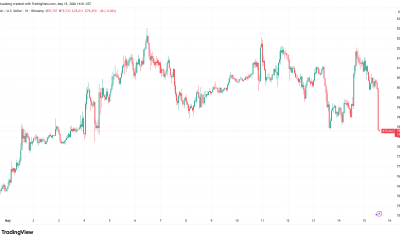
Bitcoin Battles US Bond Nerves With BTC Price Dip Toward New May Lows
-
 Crypto World5 days ago
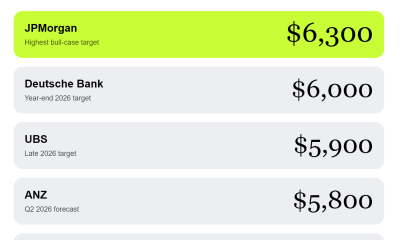
Wall Street’s Boldest Gold Prediction Has Russians Rushing to Buy
-

 Crypto World5 days ago
ICE and CME urge US regulators to curb Hyperliquid energy trading
-

 Fashion4 days ago
Trending Western Style Vests Perfect for Summer
-

 Politics6 days ago
DWP PIP Timms review continues to be an absolute farce
-

 Entertainment5 days ago
David Letterman Returns to Late Show, Blasts Cancellation
-

 Fashion4 days ago
Amazon Sundays: Memorial Day Hosting
-

 Crypto World5 days ago
IREN closes $3 billion convertible notes deal amid AI infrastructure expansion
You must be logged in to post a comment Login