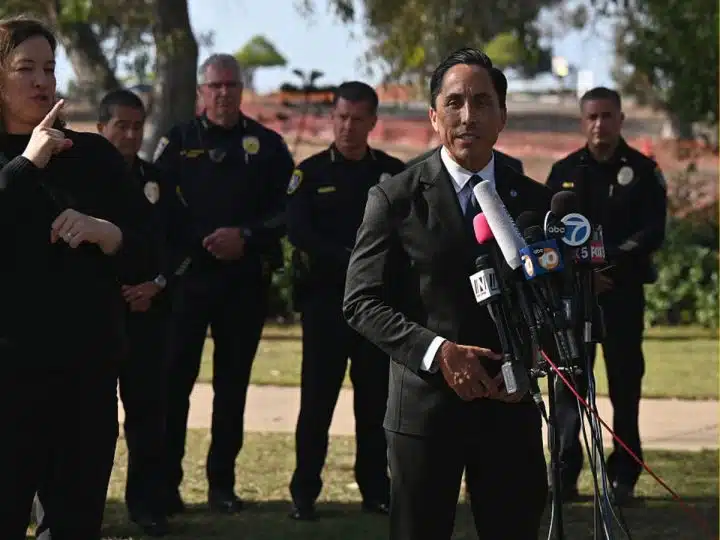
“It’s a f***ing direct result of your leadership!” “You emboldened Zionist propaganda and you’ll keep doing it as long as it lines your pockets!” Those were the words an outraged attendee flung at San Diego mayor Todd Gloria as he stood to dole out supposed sadness. Gloria was speaking after the 18 May 2026 mass shooting at the Islamic Center of San Diego mosque.
Three victims at the mosque were murdered by two local teenagers. Both held white supremacist views. According to a ‘manifesto’ they wrote before the attack, they considered themselves “sons” of Zionist Brenton Tarrant. Tarrant murdered 51 people and wounded 89 in the 2019 Christchurch mosque attacks in New Zealand. According to local reports, one gunman then shot the other in the head before killing himself nearby in their car.
The victims were security guard Amin Abdullah, 51, murdered as he tried to protect other mosque-goers, teacher Mohamed Nader, 57, and Mansour Kaziha, 78, who was known to friends as Abu Ezz.
San Diego mayor is a vocal apartheid supporter
Gloria is a vocal supporter of Israel, and in March 2026 pushed the unfit ‘IHRA definition’ of antisemitism through the city’s council as a means of suppressing criticism of the genocidal state. According to the Reverse Canary Mission site, which highlights the Zionist sympathies, funding and collaboration with the Israel lobby of US political figures, Gloria:
Advertisement
actively shields settler-colonialism by welcoming Israeli advocacy lobbies, illuminating public buildings in solidarity with the occupation, and punishing Palestinian solidarity to sustain Israel’s apartheid and genocide across Palestine. …
… In March 2023, Gloria publicly welcomed the AJC. In October 2023, he lit up the San Diego Convention Center in blue to signal solidarity with Israel, publicly declared that San Diego “stood with Israel,” and condemned the Palestinian resistance group Hamas while framing events through a lens that obscures decades of occupation and the well-documented role of Israel’s Hannibal Directive in contributing to casualties.
In December 2024, Gloria attended the Combat Antisemitism Mayors Summit hosted in partnership with the Israeli Consulate, where he engaged in efforts that equate legitimate criticism of Israel’s actions with hate. In June 2025, he announced he would boycott San Diego Pride events in protest of headliner Kehlani’s condemnation of Israel’s genocide of Palestinians, prioritizing alignment with Zionist pressures over LGBTQ+ solidarity and Palestinian human rights.
And more. It sounds like the fury of Gloria’s heckling was more than deserved:
The Council on American-Islamic Relations (CAIR) says that the shooting came against a backdrop of a record levels of Islamophobic hate driven, no doubt, by US support for Israel and Trump’s illegal war on Iran. CAIR described the attack as the:
Advertisement
deadly consequence of years of anti-Muslim hate, demonization and dangerous rhetoric targeting American Muslims and other marginalized communities.
Keir Starmer’s Labour party is trying to push a bill through Parliament that amounts to legalising bribery.
Hollow corpse stuffed with cash
Clause 60 of the Representation of the People bill will remove caps on political donations and de-couple donations from companies’ UK taxable profits. Starmer has already pulled murky political tricks to mask its passage so far. He is ignoring almost all the recommendations of Labour’s own already-weak ‘Rycroft Review‘ into foreign political interference. UK state-corporate media are ignoring the bill.
World Cup history is awash with politics — and politicians — intruding on the soccer.
For almost a century, leaders ranging from Italian dictator Benito Mussolini to Argentine military junta boss Jorge Videla to French President Jacques Chirac have sought to score political points from the tournament.
This year’s competition is also not the first to be overshadowed by conflict. North Korea tried to upstage the event in 2002 with a bloody naval assault on South Korea, and the Falklands War between Britain and Argentina loomed over the 1982 World Cup.
In 1934, Mussolini viewed a World Cup victory as a way to symbolize Italian might. Brazilian dictator Emílio Médici said that the 1970 triumph was testament to his country’s greatness. Memories of the Falklands provided fraught context to England’s clash with Argentina in 1986, one of the most famous games in the tournament’s history.
Advertisement
In more recent times, Chirac cast himself as a big fan of the all-conquering, racially diverse French national team in 1998. Vladimir Putin exploited the 2018 tournament to project Russian soft power, while Gulf petromonarchy Qatar used the 2022 edition as part of a major nation-building project.
And this year, it’s the the politics of MAGA — an ongoing foreign war and domestic immigration crackdown — that are coming back to bite soccer’s governing body FIFA.
Our first letter was answered/dismissed by “Service Adviser 1989847”, so this reply to our second one, while it doesn’t say much, definitely feels like a step up.
Our KC has offered all possible assistance to the Cyber and Fraud Unit in relation to the matter, and we’ll keep you posted with any developments, readers.
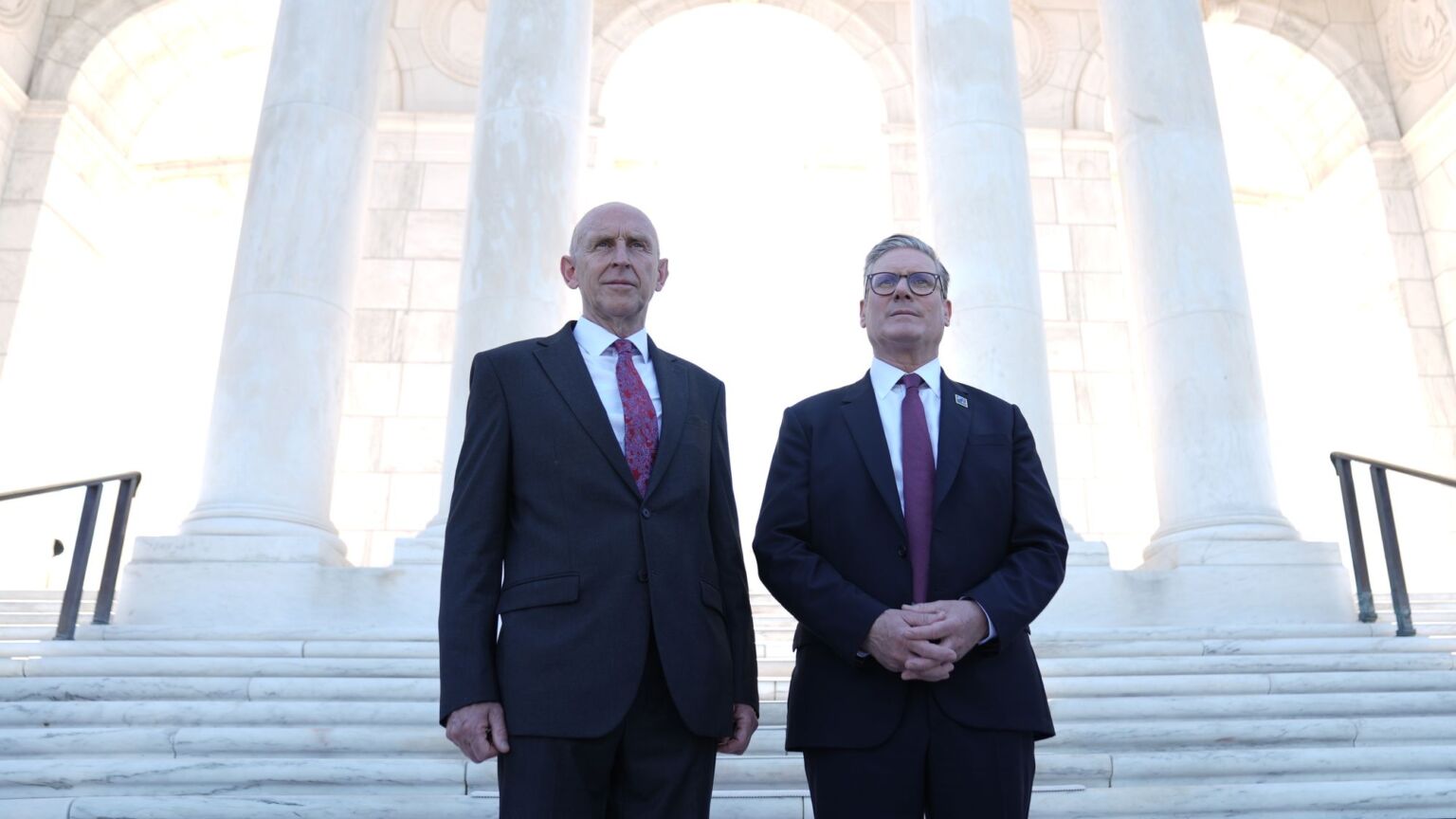
John Healey has done something unfashionable for a politician in our times: he has resigned, not over a sex scandal, a briefing war or a manufactured media row, but over a matter of substance. The now former UK defence secretary says the government will not properly fund the defence of the realm. He is correct, and he deserves commendation for upholding such high principles.
Healey’s resignation is an indictment of Keir Starmer’s government. The Defence Investment Plan (DIP) was meant to be the moment when Starmer’s solemn talk about a dangerous world would be turned into hard commitments: defined funding for ships, missiles, drones, air defence, munitions stockpiles, personnel and industrial capacity. Instead, Healey says he was shown a settlement that would limit spending to just 2.68 per cent of GDP by 2030, short of the three per cent he judged necessary, and a mere 0.08 percentage-point increase over four years.
There is no mystery about why the money is missing. Starmer and chancellor Rachel Reeves bottled welfare reform. Last year, facing a Labour backbench revolt, the government gutted its planned savings from sickness and disability benefits of £5 billion annually. The u-turn meant the reforms would no longer save taxpayers any money and had shredded the margin Reeves needed to meet her fiscal rules.
This is the basic arithmetic of government. You cannot fund a swollen welfare state, an unreformed NHS, Net Zero, debt interestand national defence all at once. In the real world, priorities must be set. Labour has chosen welfare dependency over military readiness. It has chosen to appease backbenchers over the first responsibility of any government – to protect its people.
Advertisement
Starmer is not solely to blame for this sorry state of affairs. Britain’s armed forces have been hollowed out over many years. The Cameron-Osborne austerity settlement began a long era of strategic negligence. The 2010 Strategic Defence and Security Review cut defence spending by eight per cent. A military that cannot sustain combat is nothing more than an advertising campaign masquerading as an army. And that is what we are left with.
The Ajax tank farce is emblematic of the sickness. The programme was supposed to deliver a modern, armoured reconnaissance vehicle. Instead, it has become a monument to defence dysfunction – years late, billions wasted, the tanks plagued by defects so serious soldiers were harmed in training. Ajax was expected to enter service in 2017. The tanks are now expected to be operational – at best – by 2028.
Advertisement
The Ministry of Defence excels at producing acronyms, reviews and procurement frameworks, yet struggles to deliver fighting power at speed and scale. A 2023 Defence Committee report on the procurement system described it as bureaucratic, slow, poorly accountable and in need of comprehensive reform. Britain has talented officials, engineers and service personnel. It lacks a governing class willing to make hard choices, enforce accountability and accept that defence exists to deter enemies and, if necessary, win wars.
The delayed DIP has turned that failure into a national humiliation. The Public Accounts Committee warned this week that the delay had undermined Britain’s credibility with allies and weakened its ability to deter adversaries.
Advertisement
It will take far more than speeches to make forces combat-ready. Defence companies cannot invest on the basis of ministerial mood music – they need hard commitments. Our NATO allies cannot plan around such vagueness, either.
This is why Healey deserves respect for his resignation. He did not fix the system. He did not reverse the hollowing out. He presided over part of the drift. Yet when finally confronted with an underfunded plan, he refused to front it. So too has Al Carns, the armed forces minister. In his resignation statement – made on the same day as Healey’s – Carns said: ‘We ask soldiers to fight for this country. In return, we owe them the kit to do the job.’
The chief of the defence staff and his subordinate generals, admirals and air marshals should follow suit. Leadership demands accountability, and senior leadership in the Ministry of Defence should take Healey’s example as a lesson; otherwise, nothing will change.
Advertisement
Britain’s defence establishment now faces a brutal question: does the state still believe national defence is its first duty? At present, the answer is not good. The armed forces are too small, too thinly resourced and procurement is poor.
John Healey’s departure has exposed the truth. Britain lacks a Ministry of Defence, a Treasury, or a defence policy worthy of the threats we face.
Andrew Fox is a retired Parachute Regiment officer, a senior fellow at the Henry Jackson Society, and co-host of The Brink podcast.
The pioneering British artist David Hockney has died at the age of 88.
On Friday morning, his publicist, Erica Bolton, announced that the legendary painter had died at his home the previous day.
Her statement read: “The celebrated British artist David Hockney, one of the most important figures in contemporary art in both the 20th and 21st centuries, passed away peacefully at home on 11 June 2026, one month short of his 89th birthday.”
Born in Bradford in the July of 1937, David studied as a young man at the Royal College of Art, before making the move to California.
Advertisement
First making a name for himself in the 1960s as a leading figure in the pop art movement, David became synonymous with his brightly-coloured swimming pool paintings in the early years of his professional art career.
David Hockney posing with one of his art pieces in 2015
His other most notable works included portraits using various media of key figures in his personal life – including family members, friends and lovers – many of whom he revisited numerous times over the course of his decades-long career in different works.
During his lifetime, he repeatedly stated that his ethos when it came to art was to “paint the things you love”.
In 2018, he set a new record when his painting Portrait Of An Artist (Pool With Two Figures) sold at an auction for around £70 million, the highest figure ever for a work by a living artist.
David was also appointed to the Order of Merit in 2012, having declined a knighthood years earlier, claiming in the early 1990s that he didn’t “rate prizes”.
Hope said the fact that Reform does not even have a designated defence spokesman showed the party “isn’t serious” about the issue.
At one point in the live interview, Tice even claimed that Nigel Farage, the party’s leader, was also its defence spokesman.
Advertisement
Hope told him: “You don’t take it seriously … you don’t have a defence spokesman. That says everything about your seriousness as a party.
“If you think you are a serious party on defence, who is your spokesman?”
A clearly-flustered Tice insisted that “what matters” is Reform’s pledge to boost defence spending.
“We’ve shown how you do it, that’s what matters,” he said. “That’s why we’re leading in the polls.”
Advertisement
But Hope asked him again: “Can you name your defence spokesman? It’s not an MP, is it? It’s someone else. Who is your defence spokesman?”
Tice said: “Listen, Nigel and I cover foreign and defence, and we know how you get the money. You scrap net zero, you provide at least an extra £10-£20 billion as required in order to keep British citizens safe.”
Hope hit back: “But your party isn’t serious without having a defence spokesman. You can’t come on GB News – it insults our viewers for you to say it’s important.”
Watch the full clash below.
Advertisement
‘Your party isn’t serious without a defence spokesperson, you can’t come onto GB News and insult our viewers!’
GB News’ Political Editor Christopher Hope grills Deputy Leader of Reform UK Richard Tice MP over why his party doesn’t have a defence spokesperson. pic.twitter.com/0a7XPMTAPZ
Subscribe to Commons People, the podcast that makes politics easy. Every week, Kevin Schofield and Kate Nicholson unpack the week’s biggest stories to keep you informed. Join us for straightforward analysis of what’s going on at Westminster.
At first glance, they look like two distinct scandals. Fire and violence on the streets of Belfast following the vicious gouging of a local man’s eyes by a suspect from Sudan. And then the resignation of virtually the entire defence wing of Keir Starmer’s cabinet, including the secretary of state for defence, John Healey. Yet both that riotous fury and the polite but scathing resignations flow from the same toxic source – the almost total withering of our kingdom’s ability to defend itself from external menace.
The defence storm swirling around Sir Keir feels staggering. It is the most serious act yet in the tragicomedy of his government’s slow-motion unravelling. First Healey went, and as he did, he issued a stinging verdict on Starmer. You are ‘unable’, he said in his letter of resignation, ‘to commit the resources that the nation needs to defend the country at this time of rising threats’. He was followed by the armed forces minister, Al Carns. To send men to war without proper funding and equipment is a scandal, Carns said. ‘We ask soldiers to fight for this country. In return, we owe them the kit to do the job.’
This feels existential, not just for Starmer’s knackered administration but for the entire machinery of the state. And for us, the people that machinery is meant to defend. Just like that, Britain lost the minister in charge of securing the realm from foreign threats and the minister who oversees our fighting forces. Who’s protecting the kingdom? The gossip-lovers of the SW1 media class are folding the Healey / Carns walkout into the psychodrama of Starmer’s collapsing authority. It’s true these resignations could bring about the endgame for Sir Keir. But they raise a far more perilous prospect: that we are bearing grim witness to the endgame of British sovereignty.
Advertisement
The immediate cause of the defence establishment’s fury with Sir Keir is the question of funding. Healey lays into the Defence Investment Plan, the government’s 10-year blueprint for financing and modernising the military. The plan ‘falls well short of what is required for defence and the country at this dangerous time’, he says. With Starmer’s scraps, Britain will struggle to meet the target of raising our defence spending to 3.5 per cent of GDP, Healey writes. President Trump won’t be happy: he’s been pressing his European allies to stop feasting at the teat of America’s military prowess and raise their defence spending to four per cent of GDP.
Nothing better captures the fall of Britain than the fact we now spaff more cash on caring for people with ‘long-term health conditions’ than we do on training men and women to defend us from our foes. The Tony Blair Institute for Global Change reckons annual spending on health and disability benefits for working-age adults will rise to £73.4 billion by 2030. Our annual defence budget is currently £62 billion. Yes, a lot of disability spending goes on people who need it. But some doesn’t. A nation that spends more on the upkeep of the lethargic youth of the middle classes who TikTok about their ADHD than it does on men and women who are willing to risk life and limb for their compatriots is a nation in name only.
Advertisement
But this is more than a money problem. It isn’t just flagging cashflow that means our ruling classes can’t get a handle on defending the country. It’s also their own flagging belief in the very virtue of sovereignty, their shameful failure to recognise the people’s longing for security. Carns touches on this in his resignation letter. ‘National resilience’, he says, ‘is about more than defence in the narrow sense’. A ‘strong country’ is also one where ‘working people feel economically secure, public services function, energy is resilient [and] communities are stable’. And right now, he says, we have none of that.
He’s right. Millions of people feel not only that the nation is undefended but that they are, too. Their communities, their beliefs, their way of life – it feels like the fencing around all of it has been wilfully dismantled, exposing their daily existence to cultural and even physical assault. ‘Defence’ means more than a well-armed deterrent against foreign invasion. It’s also a living, breathing virtue in and of itself, the thing that gives citizens the confidence to act freely and authoritatively in their communities. Dismantle defence and you don’t only endanger the nation – you also fracture the foundations of everyday life.
Advertisement
This is why Belfast matters here. It’s reported that the knife-wielding suspect flew from Paris to Dublin and then hopped on a bus to Belfast where he was granted leave to remain. That’s a defence crisis, too. The erosion of our sovereign integrity by a political class drunk on the Kool-Aid of globalism has been disastrous for community life. Untold numbers of unvetted men from regressive cultures have been introduced to working-class communities. The result is tension, crime and atrocities like the gang rape on Brighton beach, the ‘grooming’ of girls in Doncaster and the attempted beheading in Belfast. The state’s failure to defend the realm is being paid for with the suffering of the working class.
This week, a man from Pakistan was sentenced for raping a ‘particularly vulnerable’ 18-year-old woman in a park in Nottinghamshire. He had lived in Italy, Germany and France before coming here and saying he needed asylum. And the state believed him. Not even a year later, he had carried out his vile rape. What are we doing? A nation whose patriotic songs remind us we once ‘ruled the waves’ now can’t even stop dinghies of the wretched from arriving on our shores. The state that helped to defeat the Third Reich takes weeks to get a ship to the Persian Gulf. A country that’s existed for a thousand years can’t protect its women from foreign men with ill intent. The social experiment of a globalist utopia has proven deadly. Time to end it.
Brendan O’Neill is spiked’s chief political writer and host of the spiked podcast, The Brendan O’Neill Show. Subscribe to the podcast here. His latest book – After the Pogrom: 7 October, Israel and the Crisis of Civilisation – is available to order on Amazon UK and Amazon US now. And find Brendan on Instagram: @burntoakboy.
Critics have been weighing in on Disclosure Day, which sees Steven Spielberg returning to his beloved science fiction genre.
In his latest big-screen offering, the legendary filmmaker is once again exploring the idea of extraterrestrial beings coming to earth – only this time he’s taking a close look at the philosophical and religious implications of an alien invasion.
Disclosure Day boasts a star-studded cast that includes Emily Blunt, Josh O’Connor and Colin Firth, and tells the story of a small group of individuals who become involved in a government conspiracy to keep the existence of intelligent alien life a secret.
Early reviews hailed the film as a “gripping” and “thrilling’ masterpiece from the legendary director, earning an 82% score on Rotten Tomatoes.
Advertisement
However, not all reviewers were in love with the new sci-fi blockbuster, with some critics – including several from prominent British outlets – claiming it is “drab” and a “rehash” of Spielberg’s past works.
Here’s a selection of what critics are saying about Disclosure Day…
“Disclosure Day feels not like a repetition but like a thunderclap culmination, the kind of movie you make when, at age 79, you’re not only at the peak of your skills, but you realise time is running out. What, exactly, do you want to say, and how do you find the pictures, the words?
“The pictures and words are all right there in Disclosure Day, an eleventh-hour plea to reconnect with all that makes us human, even if we need to invoke the help of imaginary aliens to do it.”
Advertisement
Emily Blunt and Josh O’Connor as seen in one of Disclosure Day’s most dramatic sequences
“Disclosure Day has many layers, but it is also a crackerjack rip-roaring ride for much of its running time, a movie that essentially centres on two main characters in search of answers to what is happening to them, keeping the audience in the dark as much as they are.”
“What Spielberg has conjured here is some of his vintage boldness in transforming the cinema screen into a magical theatre of childlike wonder.”
“While Spielberg has never lost his sense of fun, Disclosure Day is uniquely fortified by the sense that he’s still searching for new ways to enrapture a jaded audience with his spectacle, and the movie’s ethos becomes that much harder to deny every time its director manages to suspend our disbelief all over again.
“There might not be anything here quite as inventive as the spider robot sequence from Minority Report, but a certain setpiece – the one that starts with a car getting shoved into an oncoming freight train – is as gripping as Hollywood action gets.”
“Disclosure Day is never anything other than entertaining and grade-A fun; rare enough in the movies or anywhere else, rocketing along with barnstorming set-pieces, exhilarating chases, funny lines and a career-topper of a performance from Blunt who may yet be morphing into a female version of Tom Hanks.”
Advertisement
Colin Firth joins fellow Brits Emily Blunt and Josh O’Connor in Disclosure Day
“The movie duly pulls out all the stops, and then a couple more. As if to say, ‘still got it!’, there are big-ticket action sequences and the screwball comic interludes Spielberg always had a knack for. The ride is rarely dull.”
“There are allegories that can be read about fear of the unknown breeding cruelty and exploitation, but Disclosure Day is first and foremost a propulsive yarn with thematic roots in hope, truth, empathy and perhaps even spirituality.”
“The film is, in a lot of ways, vintage Spielberg: He hasn’t lost a step with a camera that sprints from start to finish, there are some fantastic technical sequences, and the performances from the two leads in particular are great.
“And while Disclosure Day stumbles a bit for me at the finish line in a way that makes some of the film’s other nits a little more worth picking, it’s still an original, big-budget science fiction conversation-starter from one of cinema’s all-time greats.”
“While Disclosure Day doesn’t live up to the high standards he’s [Spielberg] set, it’s still a thrill ride, thumbing its nose at authority and begging its audience for more empathy, not less.
Advertisement
“Even if not all the pieces snap flawlessly into place, Disclosure Day is a reminder of how much magic is still left up Spielberg’s sleeve.”
Two-time Oscar nominee Colman Domingo in Disclosure Day
“[Disclosure Day’s] script exaggerates the best and the worst of how humans might respond to such a revelation, and Spielberg struggles to split the difference between paranoid-thriller cynicism and his usual mode of emotional uplift.
“That waffling ultimately strands Disclosure Day on a heartfelt yet fuzzy middle ground, with a generalised plea for cross-species understanding that, even bolstered by the reliable stirrings of a John Williams score, left me dispiritingly dry-eyed.”
“Spielberg, as part of the film’s publicity, has suggested that he believes in alien visitations, and that he’s an advocate for disclosure. But where Close Encounters tapped into the mystery of all this with an innocence that was both starry-eyed and spectacular, Disclosure Day feels like a thriller docudrama that’s too cut-and-dried about what it believes.
“The actors are quite good (especially Blunt, who makes you feel she’s seeing the uncanny), but for all the film’s slow build it doesn’t take us anywhere overly surprising. It just confirms the ‘truth’ that’s been out there for so long it’s starting to feel like a fairy tale for the dispossessed.”
Advertisement
“Essentially, it’s a drab X-Files episode, or a more conventional One Battle After Another, in which some people we don’t care about are hunted by some other people we don’t care about.”
“Sadly, there’s nothing original here, or at least nothing to match, say, Jordan Peele’s vastly superior UFO drama Nope. Instead it’s just Spielberg badly rehashed, poorly reheated, lukewarm and with extra treacle.”
“It is shot and staged with Spielberg’s signature elegance: a central foot-to-car-to-train chase moves with such breathless lucidity it is as if the director is beaming excitement directly into your brain. But the plotting surrounding the action is often woolly and lopsided, while the tone is an awkward mix of solemnity and silliness.”
A data investigation by The House has revealed a rise in violence against women and girls despite Labour’s 2024 pledge to halve it. Cristina Trujillo reports
Advertisement
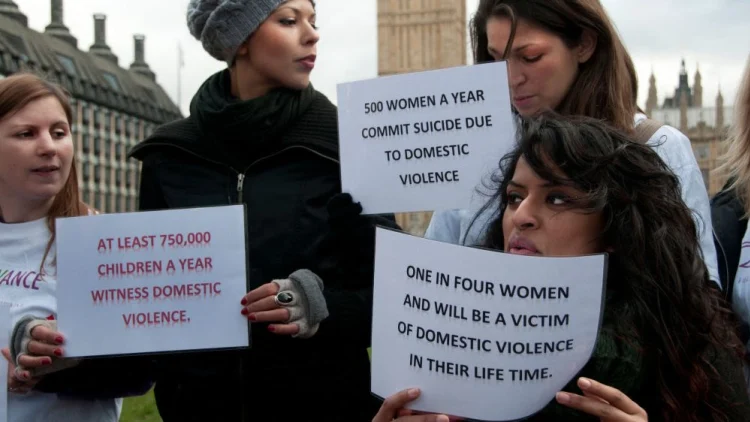
The Labour government is on a mission to halve violence against women and girls (Vawg) in the next 10 years – one of its most ambitious manifesto policies at the last general election. Yet a data investigation by The House has revealed that since 2024 Vawg has actually increased in the UK – despite a downward trend before that.
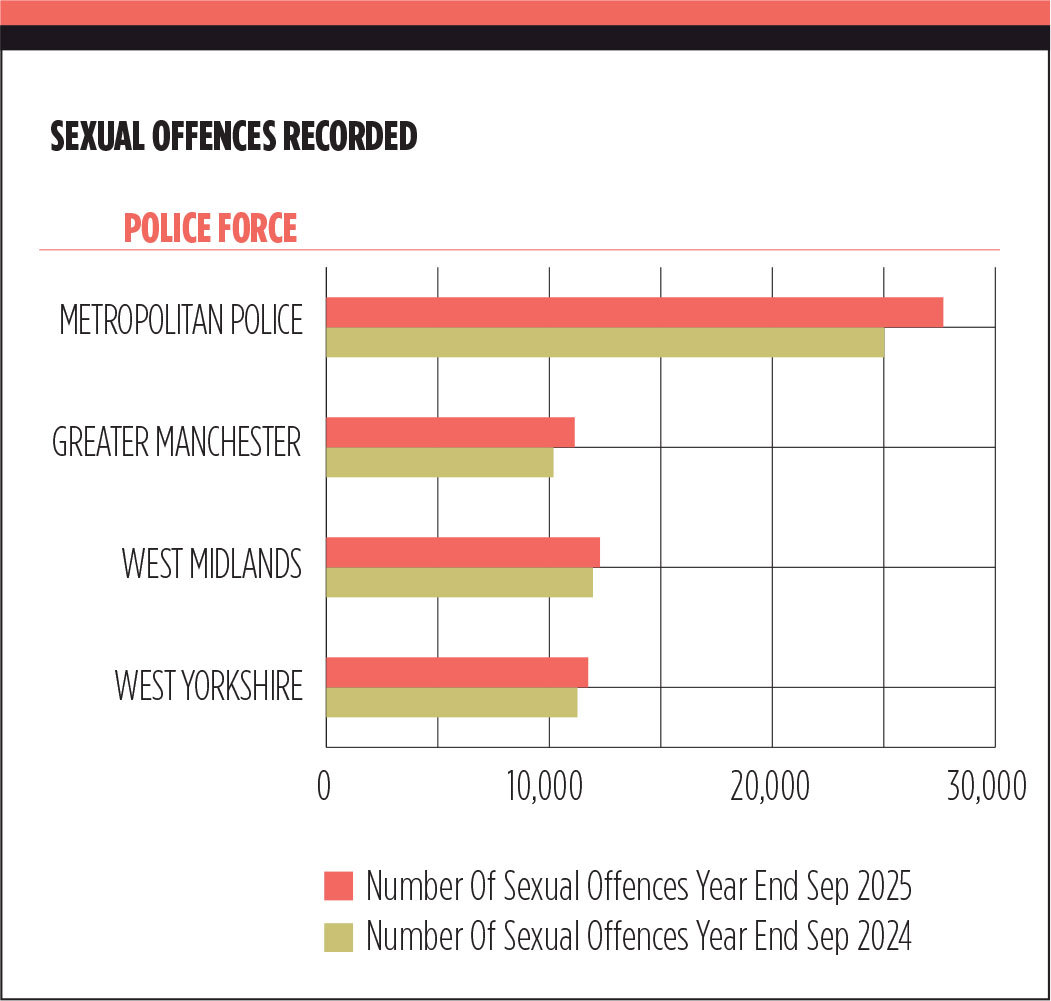
There were eight per cent more sexual offences in the UK in 2025 than in 2024, according to Office for National Statistics (ONS) data, with stalking and harassment and domestic abuse also increasing. Although the Home Office tells The House that an increase in reporting to the police does not necessarily mean that Vawg has also risen, the self-completion Crime Survey for England and Wales (CSEW) also shows some metrics increasing.
The news comes after Jess Phillips resigned as safeguarding minister last month, publishing a scathing letter that laid the blame for inaction over online child sex abuse squarely on Keir Starmer. It is “deeds, not words” that matter, she warned, using the suffragette refrain.
Advertisement
Birmingham City University criminologist Dr Max Hart says the increase in police-recorded offences and growing use of specialist services likely show different systems capturing different parts of an underlying rise.
“Schools, workplaces and online spaces are key sites whereby gendered harms are both produced, recorded and consumed. While we may have seen some formal progress in gender equality, the everyday production of misogynistic harms within these institutions remains,” he says.
“Thus, apparent changes in reporting behaviour, institutional responses and help-seeking can all impact data simultaneously as these underlying harms persist or intensify.”
Advertisement
Kevin Hoffin, a senior criminologist at the same university, adds: “I do believe there to be an increase in Vawg incidents over the last year, and I believe that a contributing factor [to] this is the experiences of immigrant women.”
A recent study by Women’s Aid showed that immigrant women were at an increased risk of domestic violence due to a range of structural factors, from barriers to advice to a national shortage of refuge spaces.
Hoffin points out that 31 per cent of Gen Z men agree that a wife should always obey her husband, according to a King’s College London study of 23,000 people released in March. Among Gen X men, the figure is 21 per cent – a difference of 10 percentage points. Sex offences went up in all of the UK’s Vawg hotspots – London, Greater Manchester, the West Midlands and West Yorkshire – which have seen more sexual offences than anywhere else in the UK consistently since 2022, according to the ONS data.
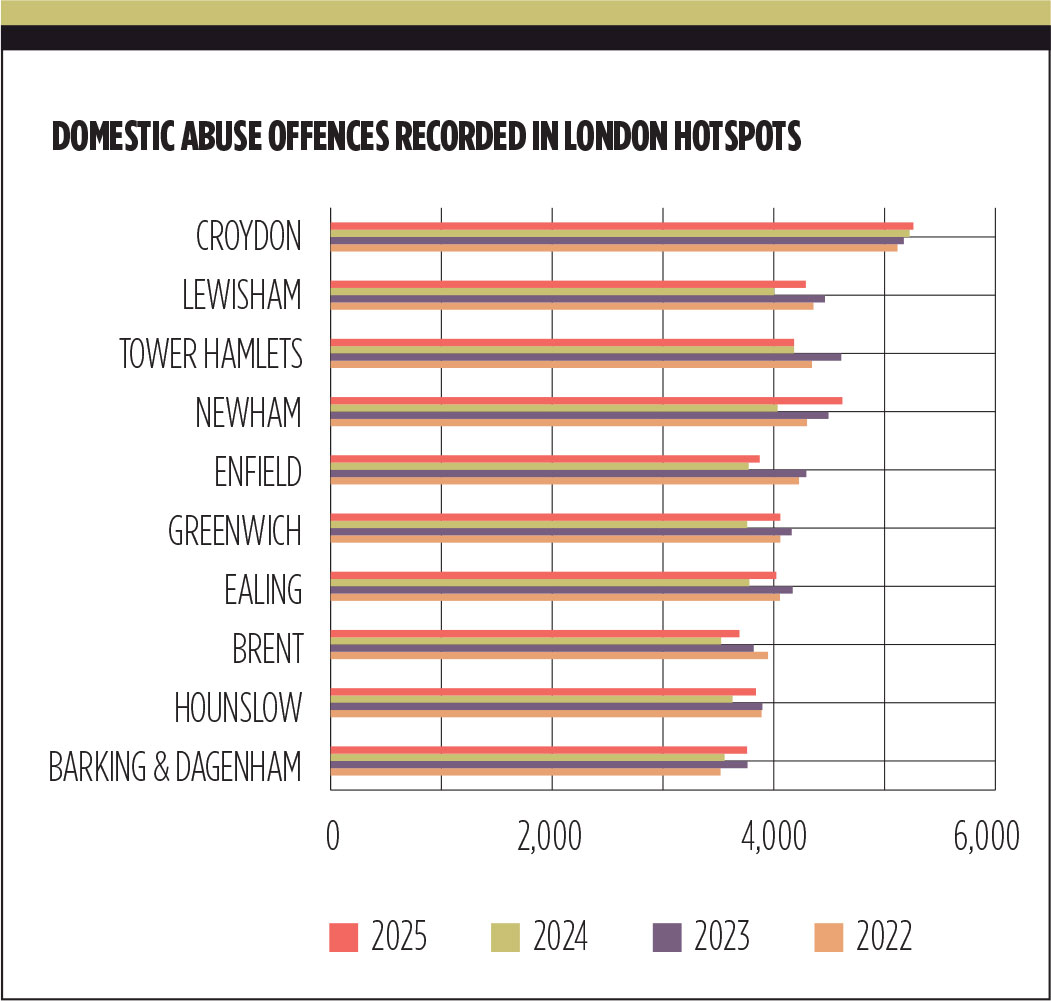
Reports of Vawg crime are highest in London, where domestic abuse rose in problem areas from 2024 to 2025 – 14 per cent in Newham, eight per cent in Greenwich, seven per cent in Lewisham and six per cent in Ealing, Hounslow and Barking and Dagenham.
Advertisement
Figures obtained by The House via the Freedom of Information (FOI) Act show that in Greater Manchester in 2025, there was a reduction in rape and sexual offence crimes with female victims recorded since 2018. However, both have increased in the area since 2024, along with violent crimes against female victims. Another FOI request revealed that femicide, domestic abuse, sexual offences and rape have gone up since 2024 in the West Midlands overall, and Birmingham in particular.
Meanwhile, the CSEW estimates increases of six per cent and 45 per cent in some types of Vawg, while trialling a new survey process and split sample to combine the different types of Vawg, which estimates a decrease in certain areas.
Jo Lovett, senior research fellow at the Child and Woman Abuse Studies Unit of London Metropolitan University, says: “The combined measure for Vawg is very new and still being developed and trialled, and it has a number of limitations, such as excluding certain forms of Vawg.”
While the new process is intended to foster a better understanding of Vawg in the long run, the ONS says the statistics produced are “subject to change as we evaluate future data and finalise methods”. While many ONS stats rose after 2024, domestic abuse, violent attacks against women and stalking and harassment fell between 2023 and 2024 in Vawg hotspots.
Advertisement
If there is a link between Labour’s work on tackling Vawg and an increase in reporting, it could be seen as a testament to the success of initiatives like Raneem’s Law, named after a woman who was murdered by her ex-husband in 2018, which was spearheaded in 2025 by then-home secretary Yvette Cooper. It placed domestic abuse specialists in nearly 1,000 control rooms across five police forces, aiming to increase specialist support for victims and improve emergency responses.
In 2023, Starmer made his promise to halve Vawg in 10 years following the publication of Baroness Casey’s review of policing, commissioned after the murder of Sarah Everard by a Metropolitan Police officer in 2021. Lovett called this “a laudable but ambitious target”.
Confirming its pledge after its landslide 2024 electoral victory, Labour proposed the Crime and Policing Bill in February 2025, which will be the main legislative vehicle in its Vawg strategy and is now undergoing the final stages of approval.
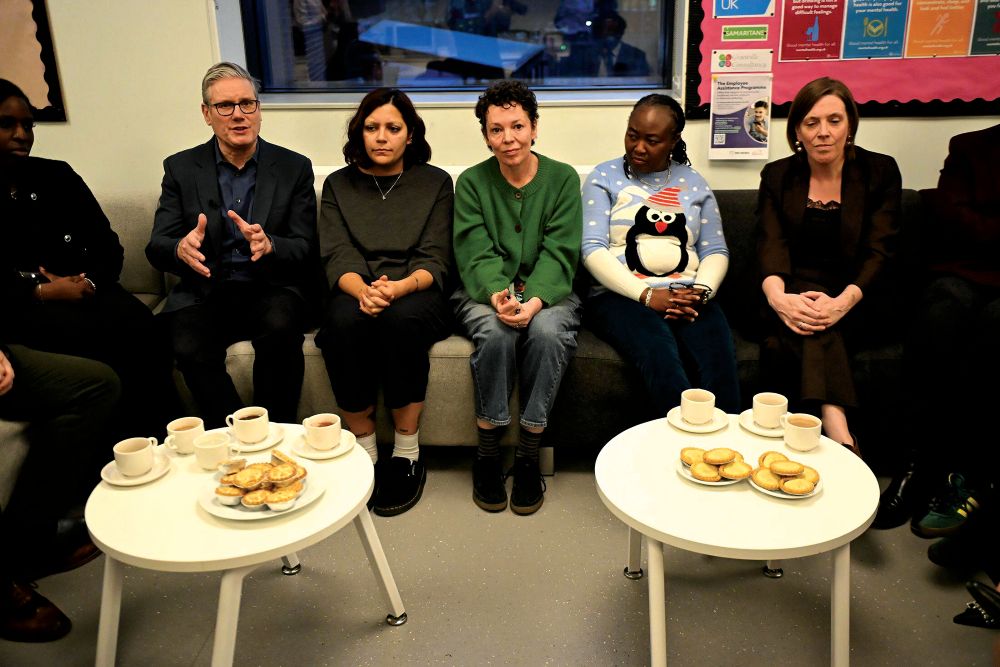
December 2025 Keir Starmer (l), with Olivia Colman (third from left) and Jess Phillips (r) at a school visit to discuss Vawg (Credit: Eddie Mulholland – WPA Pool/Getty Images)
The Online Safety Act 2023 criminalised cyberflashing and intimate image abuse, accounting for about 10,000 new crimes recorded in the year ending March 2025, while March 2026 saw Raneem’s Law finish its one-year pilot.
Labour then launched its Vawg strategy in December 2025, including new legislative proposals and funding and raising awareness around abuse, against the background of the MeToo-style discussion triggered by the Epstein files.
Advertisement
While this focus on Vawg may well be improving reporting rates, by empowering victims to inform authorities or police to respond, experts still cite funding and policy roadblocks.
The Vawg strategy asserts, for example, that “well-lit streets, accessible transport, and thoughtful urban design can deter violence”. But there is no mention of Vawg in the December 2025 amendments proposed to the National Planning Policy Framework, overhauling urban planning, transport and housing.
Solace Women’s Aid CEO Nahar Choudhury says: “While we welcome the fact that the government has committed more funding than ever before, there is still a long way to go to provide the sustainable support this sector needs.
“Unfortunately, the number of survivors isn’t decreasing; last year alone, Solace supported more than 17,000 women and children.” The year before, the organisation supported 14,435.
Advertisement
Women’s Aid CEO Farah Nazeer says: “We welcome the publication of the government’s strategy. It contains many welcome interventions… particularly in health and education, which will be critical for meeting the government’s own goals on prevention. However, the reality [is] that the sector remains in a funding crisis.”
She adds: “Services supporting Black, minoritised and migrant women have faced unacceptable rhetoric by certain politicians, which is further entrenching a hostile environment for migrants, including victims or survivors of abuse.”
Laura Riley, vulnerable victims co-lead for the British Society of Criminology’s Vulnerability Research Network, says: “Countless cases of police misogyny have also been exposed, and this has clearly impacted women’s ability to feel safe and protected.” She also raised cultural threats from “toxic narratives from the likes of Andrew Tate… to a desire to return to a more overtly patriarchal family structure”.
“There is evidence that those who weaponise the idea of ‘protect our girls’ may also be furthering ideas that contribute to keeping women and girls from feeling safe to express their needs and views,” Riley adds.
Advertisement
The Home Office welcomes the increase in reporting of violence against women and girls, saying: “It is vital that victims feel empowered to come forward, knowing that they will be supported and their cases taken seriously.”
It highlights tougher restrictions on registered sex offenders and strengthened protections for victims implemented by Labour, but continues: “Violence against women and girls is a national emergency… We know there is more to do.”
Ben-Gvir is eagerly sharing cheap content online to fan the flames of incendiary views against Palestinians. In his latest cringe-worthy video, he complains that the Islamic call to prayer disrupts his sleep and threatens to “put an end to the noise.”
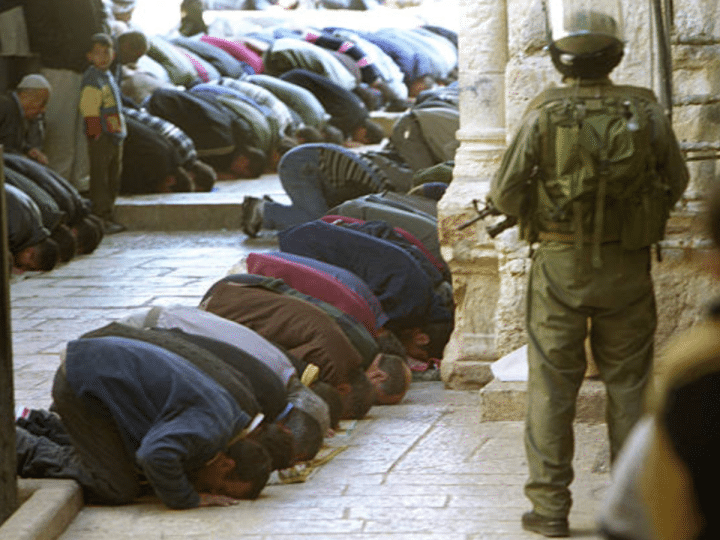
For Muslims worldwide, the call to prayer — also known as adhan — holds a central place in daily life. It not only invites worship but carries profound spiritual significance, and is now the latest target of Israel’s discriminatory policies.
Israeli National Security Minister Itamar Ben-Gvir complaining about the volume of the Islamic call to prayer (Adhan) from mosques.
"Enough! I will work to change this situation and put an end to the noise coming from the mosques." pic.twitter.com/RVDtFOLZ5F
Back in mid-May, his Otzma Yehudit party proposed a parliamentary bill to ban mosque loudspeakers unless a state permit is obtained.
The bill would grant additional powers to the Israeli occupation police, including entering mosques, revoking permits, confiscating equipment, and imposing fines ranging from 50,000 to 10,000 shekels (£2,500-£12,500 Shekels). All mosques across occupied territories, including East Jerusalem, would be subject to these changes.
Advertisement
Ben-Gvir has described the call to prayer as a public health risk. Quoted by Israeli ultra-Orthodox outlet, Charedim 10, he said:
“In many places, the noise of the muezzin [who makes the call to prayer] is an unreasonable noise that harms the quality of life and health of residents. This is a phenomenon that cannot be tolerated. During my tenure, for the first time, the Israel Police began to deal with this unbearable phenomenon. Now we are giving it additional dramatic tools to eradicate the phenomenon.”
Genocide by means of erasure
The prohibition of adhan has never been about noise pollution. The policy is a continuation of genocide by means of religious erasure to remove Palestinians from public life. This is the real reason he wants to silence an ineradicable symbol of Palestine’s Islamic heritage and identity.
There have been numerous legal attempts by the Zionist regime to regulate the adhan, none of which have been voted in. Back in 2024, Ben-Gvir ordered Israeli police officers to enter mosques, confiscate loudspeakers, and issue fines for noise complaints. However, since his directive circumvented parliament, it went nowhere and faced stiff opposition from Arab mayors.
However, the latest proposal goes further than previous attempts and has advanced further in the Knesset. As “national security” minister, Ben-Gvir oversees the police and prison system — by which we mean he consistently abuses these powers to advance apartheid policies against Palestinians.
Advertisement
He frequents illegal settlements and the Al-Aqsa Mosque compound, the third holiest site in Islam, where he has suggested building a synagogue — to quench his sadistic desire to taunt Palestinians.
Ben-Gvir racist policies discriminate against Palestinians
Under Ben-Gvir’s watch, more settlers in the occupied West Bank have illegally acquired firearms. Gun control regulations have been loosened, and dozens of gun permits have been approved.
Thousands of assault rifles have also been distributed to settler “security teams” in the occupied West Bank. These measures have facilitated greater violence towards Palestinian communities and their forced displacement.
Over the past year, Ben-Gvir has also championed the newly approved death penalty law for Palestinian prisoners. His policies have stripped away what little human rights Palestinian prisoners had. The severe overcrowding, medical neglect, starvation and torture are intentional, and have now become the norm.
Advertisement
In 2023, he even ordered the occupation’s police to ban Palestinian flags from public spaces, calling them “terrorist flags.” The proposed prohibition is merely another attempt to outlaw Palestinian national symbols remains in effect today.
Whether this legislation will ultimately pass remains uncertain. One thing remains clear however, the occupation will not rest until Palestinians capitulate — which we know isn’t on the cards.
Lest we forget, the call to prayer has echoed across Palestine for centuries, long before “Israel” was established. No legislative bill can change that.




















































You must be logged in to post a comment Login