






Connect with us
DAPA Banner
DAPA Coin
DAPA
COIN PAYMENT ASSET
PRIVACY · BLOCKDAG · HOMOMORPHIC ENCRYPTION · RUST
ElGamal Encrypted MINE DAPA
🚫 GENESIS SOLD OUT
DAPAPAY COMING

Business

SpaceX files for IPO that could make Elon Musk a trillionaire

Published

on

SpaceX files for IPO that could make Elon Musk a trillionaire
Continue Reading
Click to comment

You must be logged in to post a comment Login

Leave a Reply

Business

New Ram Rumble Bee muscle truck has 777 horsepower, 170 mph top speed

Published

on

2027 Ram 1500 Rumble Bee SRT.

Courtesy: Ram Trucks

DETROIT — Stellantis plans to launch a lineup of what it’s calling “muscle trucks” for its Ram brand despite high U.S. gas prices due to the Iran war.

Advertisement

The automaker on Wednesday said the Rumble Bee pickup trucks will feature V-8 engines, special parts and designs, and a range of performance specifications.

A top-end SRT Hellcat model with a 6.2-liter supercharged Hemi V-8 engine will feature 777 horsepower, a targeted top speed of 170 miles per hour and other metrics that rival some sports cars.

“This is absolutely a ‘hold my beer,’ watch this, push the chips in moment,” Ram boss Tim Kuniskis said before a truck sped by him during a media event at the company’s Chelsea Proving Grounds in Michigan. “Welcome to the era of muscle trucks.”

Despite nationwide average gas prices of $4.56, Kuniskis said he believes it’s a “critical” time to launch the trucks as full-size pickup trucks have expanded into luxury and off-road segments. He also said there’s a lack of traditional muscle car offerings as Stellantis and other automakers have focused on all-electric vehicles.

Advertisement

Ram Rumble Bee launches with the 5.7-liter Hemi V-8 (left), with availability starting late 2026; Rumble
Bee 392 (right) and Rumble Bee SRT (center) arrive in the first half of 2027.

Courtesy: Ram Trucks

“We chased electrification, and that tide changed. This tide will change as well,” he told reporters after the trucks were revealed. “I would like to believe by the time this thing’s sitting on a showroom floor, I would like to believe that the gas prices will be back in line.”

Kuniskis also noted that while the volumes of its highest performance models typically make up a small portion of sales, they’re generally “three times the margin than an average vehicle” and act as halo products to bring attention to the brand.

Advertisement

“It’s still great, great business, but that’s your ultimate halo effect to sell the other ones,” he said.

Halo vehicles are often iconic products that are unique in design and feature high-performance parts. They’re regularly used to attract attention to a car nameplate or brand.

Kuniskis declined to disclose volume expectations but said the company should be able to “easily” recover its investments in the new trucks, which share many components with the brand’s current trucks with specific performance parts added.

Ram Trucks boss Tim Kuniskis, who also oversees Stellantis’ other U.S. brands, during the reveal of the company’s new Hemi V-8 engine-powered Rumble Bee pickup trucks in May 2026.

Advertisement

Michael Wayland / CNBC

Stellantis did not release pricing for the trucks, which are expected to arrive in U.S. dealerships beginning this fall. Kuniskis compared pricing for an “entry-level” 5.7-liter Hemi V-8 muscle truck to a “well-equipped” current Big Horn model that can top $60,000 and said the SRT model could be a new halo alongside the $100,000 TRX off-road performance truck.

The new muscle trucks, which will be quad cabs with smaller backseat doors than most full-size pickups sold in the U.S., will be built at Stellantis’ plant in Saltillo, Mexico.

The lineup will launch with the 5.7-liter Hemi V-8 model later this year, followed by the Rumble Bee 392 and Rumble Bee SRT during the first half of 2027.

Advertisement

S&P Global auto analyst Stephanie Brinley said she doesn’t believe Ram will sell major volumes of the muscle trucks, but she thinks they should be able to bring attention to the brand, specifically in retaining current customers.

“The SRT is kind of a nice counterpoint to the off-road version, but, again, that’s not gonna be high volume,” she said. “The combination of having it all can drive some excitement into the brand.”

2027 Ram 1500 Rumble Bee 392

Courtesy: Ram Trucks

Advertisement

Kuniskis, who also oversees the company’s other U.S.-focused brands, has become well known for using high-performance models as marketing tools to attract attention to brands, like when he introduced Hellcat models to Dodge.

Performance trucks aren’t new to the automotive industry, but they’ve often been short-lived. Ram, formerly a part of Dodge, has off-road performance trucks such as the Rebel and TRX. It also previously offered Rumble Bee models and a pickup roughly 20 years ago that shared a V-10 engine with the company’s then-Dodge Viper sports car.

“There is no market research that’s going to tell you what we’re doing is a good thing. It’s not even a safe bet. … It’s been done before and it has never worked,” Kuniskis said during the event. “But we think the last time it was done the strategy was not right.”

The muscle truck lineup was announced on the eve of Stellantis’ first investor day under CEO Antonio Filosa. It’s also the first investor day for Kuniskis since his return last year to the automaker after a seven-month “retirement.”

Advertisement

Stellantis’ investor day is expected to focus regionally on key brands such as Jeep and Ram in the U.S. and Fiat and Peugeot in Europe, detail how executives plan to reduce costs and lay out how the company aims to return to profitability following a net loss of 22.3 billion euros (US$26.3 billion) last year.

2027 Ram 1500 Rumble Bee.

Courtesy Ram Trucks

Filosa has been touting the return of Ram’s Hemi V-8 engine that was canceled under former CEO Carlos Tavares as a positive catalyst for investors despite high gas prices in the U.S.

Advertisement

Kuniskis said Hemi production continues to increase, but demand is still outpacing supply.

“It’s ramping up; it’s not where we need it to be yet,” he said, adding that the mix is “significantly better” than where it was at the beginning of this year.

Choose CNBC as your preferred source on Google and never miss a moment from the most trusted name in business news.
Continue Reading

Business

PayAdmit Helps Charities Build Modern Donation Payment Infrastructure

Published

on

For the first time in its history, the Federation of Small Businesses (FSB) has reported that more UK small firms expect to shrink, sell up or shut down over the next 12 months than anticipate growth—a worrying signal for the wider economy.

Charitable organisations operate under specific constraints when it comes to payment infrastructure. Every percentage point of donation processing fee reduces the amount reaching the cause.

Every checkout friction point loses donors at the moment of generosity. Every failed recurring donation represents a supporter relationship that needs rebuilding. PayAdmit has supported several charitable organisations through payment infrastructure modernisation, and the operational patterns are specific to this sector.

The charitable sector has historically used generic payment processors built for commercial transactions. PayAdmit treats donation payment flows as a dedicated PayAdmit business segment. The mismatch shows up in several places. Donation payment flows need different optimisations than ecommerce. Recurring donation payments differ from subscription billing. Gift Aid handling adds online payment layers that processors miss. PayAdmit shows charities how to convert this fragmented stack into one white label gateway under their own brand.

Why charitable organisations need specialised donation payment infrastructure

Three operational realities make charity payments fundamentally different from ecommerce. The first is donor psychology. Donors often abandon at the smallest checkout friction. Generic processor flows optimised for online ecommerce introduce steps that lose donors. Specialised payment infrastructure removes friction wherever possible.

The second is recurring donation dynamics. Monthly supporters are the most valuable category for charities. Sustaining these through card expirations and failed transactions is key. Account updater integration, dunning workflows, and clear donor communication during payment issues affect retention.

Advertisement

The third is administrative simplicity. Charity finance teams have fewer payment resources than commercial operations. The payment infrastructure has to handle Gift Aid declarations and tax receipts with minimal manual work. PayAdmit’s white label payment software handles Gift Aid, recurring donations, and tax receipts without manual overhead.

Donation-specific payment capabilities every charity needs in 2026:

  • Frictionless checkout flows optimised for donation psychology
  • QR-based giving for campaigns and physical donation requests
  • Recurring donation infrastructure with account updater integration
  • Gift Aid declarations integrated into the donation flow
  • Tax receipt generation and donor record-keeping automated

How a white label payment gateway supports charitable operations

A white label payment gateway designed for charities handles donation patterns as default capabilities rather than custom development projects. QR-based giving works through the platform. Recurring donations integrate with account updater services. Gift Aid sits alongside the donation amount in checkout. Donor records sync into the charity CRM through webhooks.

PayAdmit operates this online gateway model for charitable organisations across the UK, EU, and forty plus markets. PayAdmit acts as a payment software provider rather than a generic processor. The PayAdmit gateway routes every donation transaction through the optimal acquirer. Each PayAdmit capability is configured per organisation rather than imposed as a default.

The commercial impact for charitable organisations shows up in several places. Donation conversion rates typically rise by three to seven percentage points after switching from generic processors to specialised charitable infrastructure. Recurring donor retention improves transaction by transaction. PayAdmit fits this charity profile cleanly because the same PayAdmit payment service supports SaaS billing, ecommerce checkout, and bank-grade compliance from one PayAdmit gateway. The PayAdmit team helps each charity merchant set up the PayAdmit payment gateway as a white label solution, and the PayAdmit business case stays consistent across every PayAdmit deployment. How to start is a short scoping call about annual donation volume.

Charitable organisations evaluating their payment infrastructure typically review specific deployment configurations for donations workflows, which cover frictionless checkout, recurring giving, and Gift Aid integration.

Advertisement

PayAdmit acts as a payment software provider rather than a generic processor. The PayAdmit gateway covers cards, wallets, and rails through one online integration. The PSP-grade routing inside PayAdmit recovers donations that single-acquirer processors quietly decline. PayAdmit shows merchants how to scope a deployment in one short call about annual donation volume, target geographies, and Gift Aid requirements.

About PayAdmit

PayAdmit is a payment gateway software provider delivering white label payment solutions for charitable organisations alongside online ecommerce merchants, SaaS subscription businesses, banks, and licensed PSPs. The PayAdmit payment gateway combines multi-acquirer routing, tokenisation, fraud screening, and analytics into one business-grade payment service.

Advertisement
Continue Reading

Business

The winning strategies behind 2025’s standout brands

Published

on

Chomps adds chicken sticks

Report finds trust, value and relevance helped growth. 

Continue Reading

Business

Intuit to Cut 17% of Workforce, About 3,000 Jobs, to Streamline Operations and Boost AI Focus

Published

on

Polestar_headquarters_in_Gothenburg,_Sweden

NEW YORK — Intuit Inc. plans to lay off approximately 17% of its global workforce, or about 3,000 employees across seven countries, according to an internal memo reported on May 20, 2026.

The company behind TurboTax, QuickBooks and Mailchimp aims to reduce complexity, streamline operations and sharpen focus on key priorities, including artificial intelligence initiatives, CEO Sasan Goodarzi stated in the memo.

The cuts will affect roles across the organization, with some offices closing. Locations in Reno, Nevada, and Woodland Hills, California, are among those impacted. Affected U.S. employees will receive severance of 16 weeks’ pay plus two weeks for each year of service, with a final employment date of July 31, 2026.

Intuit employed roughly 18,200 people as of the latest available figures. The reductions follow previous workforce adjustments, including a 10% cut announced in 2024.

Advertisement

The company has partnerships with OpenAI and Anthropic to advance AI features across its products. Goodarzi emphasized reallocating resources to high-priority areas such as AI development.

Intuit shares fell nearly 5% on the day of the announcement, trading ahead of the company’s upcoming earnings report. The stock reaction reflected broader market sensitivity to tech sector restructuring.

The layoffs come as Intuit continues investing in AI to enhance products like TurboTax and QuickBooks. The company has highlighted AI as central to future growth amid competitive pressures in financial software.

Intuit operates primarily in the United States but maintains a global presence. The seven countries affected include locations supporting engineering, customer support and other functions.

Advertisement

Previous rounds of restructuring at Intuit focused on performance management and skill alignment. The 2026 cuts target operational efficiency while planning for new hiring in strategic areas such as engineering, product development and customer-facing roles.

The announcement occurred hours before Intuit’s fiscal second-quarter earnings release. Analysts monitor how the workforce reduction will affect near-term expenses and long-term innovation capacity.

Intuit’s products serve millions of consumers and small businesses. TurboTax handles tax preparation, QuickBooks supports accounting, and Mailchimp provides marketing tools. AI integrations aim to automate tasks and improve user experiences.

The company has faced industry-wide pressures, including rising competition and the need to adapt to rapid technological change. Similar workforce reductions have occurred at other major tech firms seeking efficiency gains through AI.

Advertisement

Employee reactions surfaced quickly on internal channels and forums. Some described the cuts as expected amid ongoing reorganization, while others expressed concern over job security. Severance packages were noted as relatively generous compared to industry averages.

Intuit has not publicly detailed exact department-level impacts. The memo indicated a focus on reducing layers of management and simplifying processes. Offices targeted for closure support specific operational functions.

The company plans to communicate directly with affected employees through scheduled meetings. Support resources, including career transition assistance, are expected as part of the separation process.

Intuit’s overall headcount strategy balances reductions with targeted hiring. Previous restructuring cycles included simultaneous layoffs and new positions in growth areas.

Advertisement

The financial software sector continues evolving with AI adoption. Intuit’s partnerships with leading AI developers position it to integrate advanced capabilities into core products.

Broader economic context includes steady demand for tax and accounting software despite inflationary pressures and regulatory changes. Intuit maintains strong market positions in its primary segments.

Investors will assess the restructuring’s impact during upcoming earnings calls. Management is expected to outline how savings will fund AI investments and other priorities.

Intuit has grown significantly over the past decade through acquisitions and organic expansion. Mailchimp’s integration expanded its small-business offerings. The company continues balancing cost management with innovation spending.

Advertisement

The 17% reduction represents one of the larger proportional cuts in the company’s recent history. It follows a pattern seen across technology firms adjusting to post-pandemic operational realities and AI-driven productivity gains.

As details emerge in coming weeks, affected employees and remaining staff will navigate the transition. Intuit has committed to supporting those impacted while maintaining service levels for customers.

The restructuring aligns with CEO Goodarzi’s stated vision for a more agile organization focused on high-impact areas. AI remains a central pillar of long-term strategy.

Intuit will provide regular updates through regulatory filings and earnings communications. The full financial effects will appear in future quarterly reports.

Advertisement
Continue Reading

Business

Disney Confirms Hulu Will Continue as Standalone Service With No Shutdown Plans

Published

on

Hulu Homepage

BURBANK, Calif. — Disney confirmed on May 20, 2026, that Hulu will continue operating as a standalone streaming service in the United States with no current plans to discontinue the Hulu app.

The announcement came amid speculation about Hulu’s future as Disney pushes deeper integration between Hulu and Disney+. The company is developing a unified streaming experience for bundle subscribers expected to launch later in 2026. It is also moving both services onto the same backend technology platform.

Despite these integration efforts, Disney stated there are no plans to shut down the Hulu app or merge it completely into Disney+ at this time. Hulu will maintain its separate identity and interface for users who prefer it.

Starting May 19, 2026, Disney+ and Hulu bundle subscribers gained the ability to sync profiles across the two platforms. The feature transfers watch history, recommendations and saved titles from Hulu directly into Disney+.

Advertisement

After linking accounts once, Hulu content appears in Disney+ “Continue Watching” rows. Titles saved in Hulu’s “My Stuff” automatically move to the Disney+ watchlist. Personalized recommendations based on Hulu viewing habits also appear in Disney+ “For You” sections.

Profile syncing is not available for subscribers to Hulu + Live TV plans, Disney+, Hulu and Max bundles, or Hulu add-on packages. Children’s profiles and accounts for users under 18 cannot be linked at this time.

Disney is also preparing to test a new live guide feature within Disney+. The guide will let subscribers browse livestreaming content currently airing on the platform, including ABC News Live and Disney+ Playtime. ESPN network streams will be included for eligible ESPN Unlimited subscribers.

Hulu, launched in 2008 as a joint venture, became a wholly owned Disney subsidiary after the company acquired full control in 2019. It has grown into a major streaming platform with a large library of television shows, movies and original content.

Advertisement

The service has more than 50 million subscribers in the United States. Many users access it through the popular Disney Bundle, which combines Disney+, Hulu and ESPN+ at a discounted rate.

Disney’s strategy focuses on creating a more seamless experience for bundle subscribers while preserving Hulu’s standalone option. The company has emphasized that both platforms will coexist as users transition toward unified features.

The profile syncing update aims to reduce friction for users who subscribe to both services. It allows them to continue watching Hulu content without switching apps, improving convenience and retention.

Disney has been gradually integrating its streaming services since the full acquisition of Hulu. Earlier steps included shared billing, combined app interfaces for some users and cross-promotion of content.

Advertisement

The 2026 unified experience is expected to further blend the two platforms while keeping Hulu’s brand and library distinct. Technical backend alignment will support smoother operations and future feature development.

Hulu’s content strategy includes a mix of licensed television shows, movies and originals. Popular series such as “The Handmaid’s Tale,” “Only Murders in the Building” and “The Bear” have helped drive subscriber growth and critical acclaim.

Disney+ focuses on family-friendly content from Disney, Pixar, Marvel, Star Wars and National Geographic. The two services complement each other, with Hulu offering more mature programming.

The decision to keep Hulu standalone addresses user preferences. Some subscribers value Hulu’s interface, recommendation engine and specific content curation separate from Disney+.

Advertisement

Analysts have monitored Disney’s streaming business closely as it seeks profitability across all platforms. The company has reported improving financial performance in its direct-to-consumer segment in recent quarters.

Hulu’s continuation as a separate app provides flexibility for users who do not want the full Disney Bundle or prefer its content focus. It also maintains a distinct advertising-supported tier and live TV options.

The live guide feature in testing for Disney+ reflects growing emphasis on linear-style viewing within on-demand platforms. It will help users discover live news, sports and entertainment content more easily.

Disney continues to invest in technology improvements across its streaming portfolio. Backend unification is expected to reduce costs and enable faster rollout of new features for both services.

Advertisement

The company has not provided a specific launch window for the full unified experience beyond 2026. Further details on user interface changes and additional integration features will be announced closer to rollout.

Hulu’s future has been the subject of speculation since Disney gained full control. Some industry observers predicted eventual full absorption into Disney+, but the latest confirmation indicates a longer-term dual-app strategy.

Subscribers can continue using both apps independently or take advantage of the new profile syncing for a more connected experience. Disney encourages bundle users to link accounts to benefit from the update.

The streaming landscape remains competitive, with major players including Netflix, Amazon Prime Video, Max and Peacock. Disney’s approach balances integration efficiencies with brand preservation for its multiple services.

Advertisement

As of May 20, 2026, Hulu remains fully operational with its existing library and features. No changes to pricing, content availability or app functionality were announced beyond the profile syncing rollout.

Disney’s confirmation provides clarity for millions of Hulu subscribers and helps address concerns about potential service discontinuation. The company continues focusing on long-term growth across its direct-to-consumer businesses.

Continue Reading

Business

GameStop Shares Rise 1.13% to $22.35 on May 20 Amid Ongoing Meme Stock Volatility

Published

on

Amateur investors have targeted shares of firms including GameStop that had been "short-sold" by hedge funds

NEW YORK — GameStop Corp. shares climbed 0.25 dollars, or 1.13 percent, to $22.35 in midday trading on Wednesday, May 20, 2026, as the video game retailer continued to experience typical volatility associated with meme stocks.

The stock opened at $21.88 and traded in a daily range between $21.60 and $22.19 during the session. Volume reached above average levels as retail investors and traders monitored developments around the company’s leadership and strategic moves.

GameStop has remained in the spotlight throughout 2026 due to its activist CEO Ryan Cohen and repeated speculation around potential major corporate actions. Earlier in May, the company proposed a $56 billion acquisition of eBay, which eBay’s board rejected, calling the offer neither credible nor attractive.

Cohen has pushed forward with the idea despite the rejection, and analysts have described the situation as a potential prolonged takeover fight. GameStop’s market capitalization stood near $10 billion as of the latest trading.

Advertisement

The company reported fiscal 2025 full-year results in March 2026, showing net sales of $1.104 billion for the fourth quarter compared with higher figures in the prior year. Operating income for the full year reached $232.1 million, a significant improvement from an operating loss in fiscal 2024.

GameStop’s next earnings report is scheduled for early June 2026. Analysts expect continued focus on cash position, inventory management and digital transformation efforts. The company has built a substantial cash reserve in recent years, providing flexibility for potential strategic initiatives.

Short interest in GameStop remains elevated compared with many other stocks, contributing to periodic spikes in volatility. The stock has traded in a 52-week range from $19.93 to $35.81. Year-to-date performance in 2026 has been mixed but showed resilience relative to some other meme stocks.

CEO Ryan Cohen, who took the role in 2024, has emphasized transforming GameStop beyond traditional brick-and-mortar retail. Initiatives include expansion into digital trading cards, collectibles and potential e-commerce enhancements. In April 2026, the company launched Power Packs for digital trading cards.

Advertisement

GameStop operates hundreds of stores across the United States and internationally, selling video game hardware, software and accessories. The company has faced industry-wide challenges from the shift to digital downloads and cloud gaming but maintains a strong position in physical collectibles and console sales.

Retail investor enthusiasm, often coordinated on social media platforms, has repeatedly influenced GME trading patterns since the 2021 short squeeze. The stock remains a favorite among individual traders tracking high short interest and potential catalysts.

Analysts maintain a range of views on GameStop’s long-term prospects. Some see value in its cash holdings and brand recognition, while others question the sustainability of physical retail in an increasingly digital gaming market. Consensus price targets have varied widely in recent months.

The company’s board and leadership continue to navigate activist pressures and shareholder proposals. Cohen’s significant personal stake and vocal strategy have kept investor attention high.

Advertisement

Trading on May 20 reflected ongoing market dynamics. Broader indices showed modest movements while individual stocks like GameStop reacted to sector news and retail momentum. Options activity around GME remained elevated compared with historical averages.

GameStop has not issued new corporate announcements on May 20. Focus remains on execution of existing strategies and preparation for the upcoming quarterly report. The company’s investor relations site provides regular updates on filings and events.

As a former blockbuster in physical video game retail, GameStop has adapted by expanding collectibles, e-sports merchandise and digital offerings. Its transformation efforts aim to stabilize revenue amid industry shifts.

The stock’s performance continues to draw global interest from both institutional and retail participants. Daily price swings often exceed those of more traditional retailers due to its unique shareholder base.

Advertisement

GameStop maintains a strong online presence and loyalty program that supports both in-store and e-commerce sales. Future growth may depend on successful integration of new categories and potential strategic partnerships or acquisitions.

Investors monitor upcoming catalysts including quarterly results, potential updates on strategic initiatives and broader market sentiment toward meme stocks. The company’s cash position provides a buffer for operational changes and possible investments.

As of midday May 20, GameStop shares traded at $22.35 with positive momentum. The session contributed to the stock’s recent trading pattern within its established range. Market participants await further developments in the company’s transformation journey.

Advertisement
Continue Reading

Business

‘Next level’ regeneration: Chancellor backs Liverpool projects Martins Bank Building and Pall Mall Gardens

Published

on

Business Live

Rachel Reeves has announced crucial government funding to help unlock key Liverpool city centre regeneration projects which could create thousands of jobs

The Martins Bank building on Water Street, Liverpool

The Martins Bank building in Water Street, Liverpool(Image: Liverpool Echo/Colin Lane)

Chancellor Rachel Reeves has announced significant funding for several major projects which she says will help propel Liverpool city centre to ‘the next level’, with Metro Mayor Steve Rotheram committing to unlock schemes across the city that could generate over 2,500 jobs.

Advertisement

Addressing delegates at the UK Real Estate Investment and Infrastructure Forum (UKREiiF) in Leeds on Wednesday, the Chancellor promised substantial funding for flagship projects in Liverpool city centre, which she and the mayor believe will deliver a considerable boost to the local economy.

The government investment will feed into the Liverpool City Region Combined Authority’s £2bn investment fund, which is being deployed to unlock vital developments throughout the city.

Our sister publication the Liverpool Echo has confirmed that the schemes include the Pall Mall Gardens development and the transformation of the iconic Grade II* listed Martins Bank Building, both situated in the city’s Central Business District.

Here we examine these projects in closer detail and what they could deliver, alongside other city schemes receiving government backing at UKREiiF.

Advertisement

Pall Mall Gardens

In Lees, Ms Reeves pledged to help bring forward a project that would represent “the first new-build Grade A office, the top tier of commercial office spaces in the country, in Liverpool’s Central Business District for more than 15 years,” in reference to the Pall Mall Gardens development on land off Bixteth Street. The debate over this site has been going on for some time. The council-owned site, which formerly housed a city centre green space, was controversially cordoned off in 2020 when initial proposals were unveiled for new development comprising three blocks of Grade A office accommodation, a hotel and landscaped gardens.

Site remediation work was carried out before the scheme ground to a halt, and the area has remained unused ever since. Last year fresh funding was obtained, raising renewed optimism that phase one of the £60m development could be completed by 2028, delivering the city’s first Grade A office accommodation in 15 years.

Keir Property Developments Ltd continues as the designated developer on the scheme, which has the potential to deliver a total of 400,000 sq ft of office accommodation, alongside retail and leisure facilities and 6,000 sq m of landscaped public realm.

Plans for a major new office development and an urban park in Liverpool city centre are progressing

Plans for the major new office development and urban park in Pall Mall are progressing

In March this year, Kier confirmed that the Pall Mall Gardens scheme had achieved an important milestone, specifically the completion of the updated RIBA Stage 3 design, representing substantial progress in the opening phase of the development.

Advertisement

According to the Liverpool City Region investment guide, Liverpool City Council and Kier Property are “progressing detailed design and contractor procurement of the first three buildings”, with construction able to commence in mid/late 2026.

It adds: “The team are also keen to secure occupiers for this nationally significant development that will transform Liverpool’s CBD.”

Martins Bank Building

In her speech in Leeds, Ms Reeves also unveiled backing for significant heritage regeneration within the Central Business District, delivering an additional 140,000 sq ft of Grade A workspace through the restoration of long-vacant heritage assets.

The ECHO understands this will include funding to help advance the redevelopment of one of the business district’s most architecturally impressive properties, the Grade II* listed Martins Bank Building on Water Street.

Advertisement

Constructed to designs by architect Herbert J. Rowse between 1927 and 1932 as the headquarters for Martins Bank, the building remains an eye-catching seven-storey structure.

Proposals to restore and breathe new life into the building received approval from Liverpool City Council in December 2022. Those proposals, which at the time involved majority-owners Karrev, a London-based property investor, and developer Kinrise, centred on transforming the impressive structure to accommodate 140,000 sq ft of offices, a restaurant and social space situated within the former banking hall.

Images of the proposals depicted the central hall as a “culturally engaging, multifaceted space”, incorporating a café and restaurant alongside meeting, co-working and event facilities. The intention was for the transformation to be finished by 2024, but that deadline has passed.

In 2024 it emerged that Kinrise are no longer part of the project and that the scheme would be pushed back until at least 2026. The aspiration will be that government and Combined Authority funding will accelerate this timeline.

Advertisement
Artist's impressions of the Hemisphere development next to The Spine in Paddington Village

Artist’s impressions of the Hemisphere development next to The Spine in Paddington Village(Image: Sciontec Developments)

Hemisphere One

Alongside the announcements regarding new office space and the restoration of historic buildings, Ms Reeves and the Combined Authority have also unveiled additional funding for more advanced Liverpool schemes, where development is already progressing at pace.

This includes the cutting-edge laboratory and office project known as Hemisphere One, situated in Paddington Village within Liverpool’s rapidly expanding Knowledge Quarter.

The scheme is outlined in the city region investment prospectus as a 110,675 sq ft, purpose-built laboratory and office complex designed for leading commercial and academic pioneers to flourish. Hemisphere One will serve as a “bespoke home for cutting-edge commercial and academic laboratories” and will provide “a unique range of contemporary, high-specification office and write-up spaces to support the needs of innovation businesses of all shapes and sizes.”

The project is now set to receive backing from the city region’s investment fund and central government. It is anticipated the development will generate 500 operational roles and close to 300 positions during the construction phase.

Advertisement
Continue Reading

Business

Pektos Ag expanding presence in North America

Published

on

Pektos Ag expanding presence in North America

Company is planning a location in New Jersey. 

Continue Reading

Business

SpaceX officially files for blockbuster IPO

Published

on

SpaceX officially files for blockbuster IPO

SpaceX on Wednesday submitted documents to move forward with its highly anticipated initial public offering (IPO), as the revolutionary company that’s pursuing the eventual colonization of Mars and deploying space-based AI data centers.

The company, led by CEO Elon Musk, has grown into the world’s largest space business and is expected to become the first U.S. company to go public with a market value of more than $1 trillion at the time of its IPO.

Advertisement

SpaceX plans to offer its shares on the Nasdaq stock exchange using the ticker symbol “SPCX” and will also trade on the recently launched Nasdaq Texas exchange, as the company is headquartered in Starbase, Texas.

Founded by Musk in 2002, SpaceX has seen its business rise in recent years with the deployment of Starlink satellites that provide internet service to consumers, while it also pioneered the use of reusable rockets that can land and be relaunched to make space launches more commercially viable.

MUSK SAYS TESLA, SPACEX TO BUILD ADVANCED CHIP MANUFACTURING FACILITY

SpaceX building

SpaceX’s IPO may be the largest in history by a U.S. company. (Getty Images)

Starlink has become a key driver of its business, accounting for most of its $18.67 billion in revenue last year. However, despite that revenue, there’s a catch – it reported a loss of about $4.9 billion last year as it nearly doubled its capital expenditures to $20.7 billion in 2025. In 2024, SpaceX reported a profit of about $791 million.

Advertisement

SpaceX recently acquired another startup founded by Musk in xAI, which is focused on developing artificial intelligence (AI) technologies. 

The company’s IPO filing notes that the xAI unit still loses money, though AI will be pivotal to the company’s future. SpaceX recently announced that it’s collaborating with another Musk firm, Tesla, on an advanced chip manufacturing facility. 

ELON MUSK MISLED TWITTER INVESTORS AHEAD OF ACQUISITION, JURY SAYS

SpaceX is aiming to list its shares on the Nasdaq as early as June 12 and plans to launch its road show on June 4, with a share sale as soon as June 11, Reuters reported.

Advertisement

The IPO filing indicated that SpaceX will have a dual-class share structure that gives Class B shareholders 10 votes each, which will consolidate control under Musk and other insiders, whereas the Class A shares available to public investors carry one vote apiece. 

Musk will retain 85.1% of the combined voting power of the company, according to SpaceX’s prospectus.

elon musk in wisconsin

SpaceX CEO Elon Musk founded the company in 2002 and will control the majority of the company’s shares, according to the IPO filing. (Robin Legrand/AFP via Getty Images)

The company’s filing with the Securities and Exchange Commission (SEC) outlines a massive addressable market of $28.5 trillion across its business areas.

Of that total, $26.5 trillion is attributed to AI initiatives, including $22.7 trillion in enterprise AI applications, $2.4 trillion in AI infrastructure, plus $760 billion in consumer subscriptions and $600 billion in digital advertising. It also includes $1.6 trillion in connectivity through its Starlink products, plus $370 billion from space-enabled solutions.

Advertisement

MUSK SAYS SPACEX SHIFTING FOCUS TO ‘SELF-GROWING CITY’ ON MOON BEFORE MARS PUSH

SpaceX’s filing with the SEC doesn’t set a stock price, but notes that Goldman Sachs will lead the underwriting. Several other firms, including Morgan Stanley, Bank of America, Citi and JPMorgan, among others, will also be involved with the process.

SpaceX launches Starship on May 27, 2025

SpaceX’s next-generation Starship spacecraft will soon conduct another test flight. (Joe Skipper/Reuters)

Analysts for Wedbush Securities led by Dan Ives, the firm’s managing director and global head of technology research, said that SpaceX’s filing represents “the largest IPO in stock market history as the company remains at the center of two of the largest growth opportunities over the coming decades.”

They also explained that they expect Tesla and SpaceX to proceed with a merger after the IPO is completed, noting that Tesla invested $2 billion in xAI that was converted to SpaceX shares after its acquisition, as well as the companies’ recent announcement to build a joint Terafab chipmaking facility.

Advertisement

GET FOX BUSINESS ON THE GO BY CLICKING HERE

“Musk wants to own and control more of the AI ecosystem and step by step the holy grail could be combining SpaceX and Tesla in some way to give the connected tissue between both disruptive tech stalwarts looking to lead the AI Revolution,” Ives and team wrote.

Reuters contributed to this report.

Advertisement
Continue Reading

Business

Jeff Bezos weighs in on Mamdani’s luxury home tax proposal

Published

on

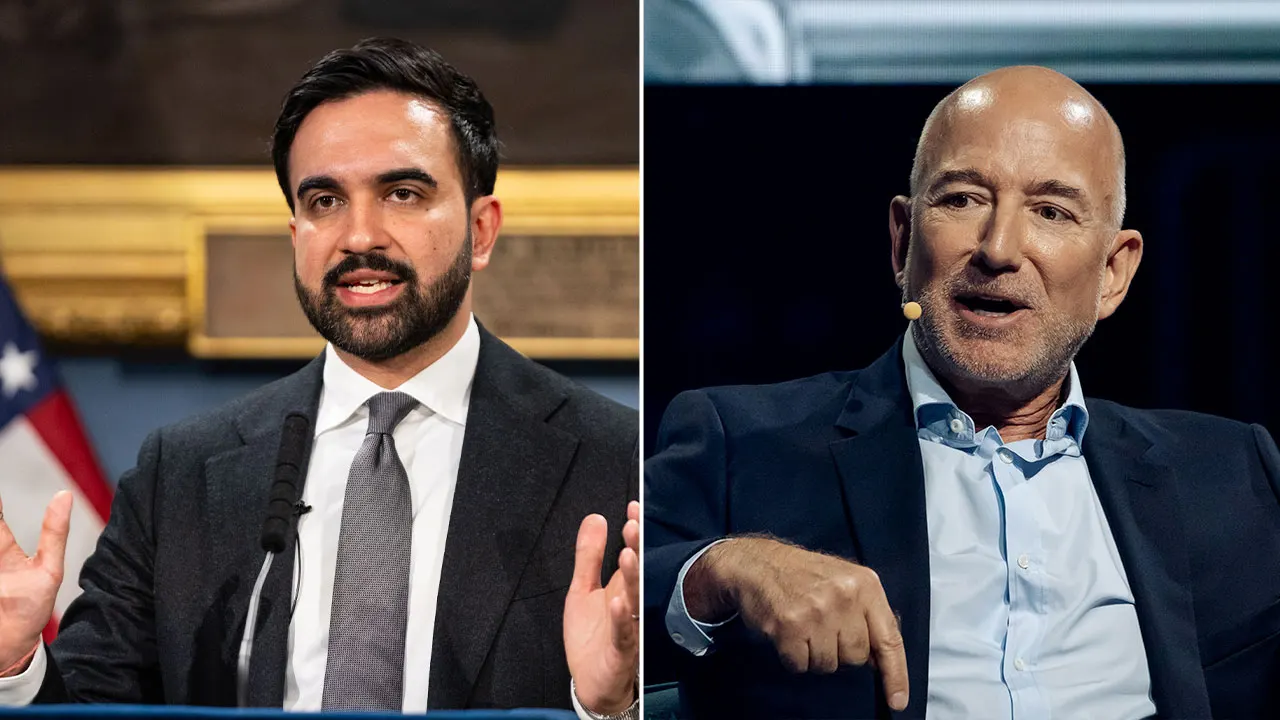
Jeff Bezos weighs in on Mamdani’s luxury home tax proposal

New York City Mayor Zohran Mamdani’s push to tax luxury second homes is drawing reactions from some of the country’s wealthiest business leaders, with Amazon founder Jeff Bezos saying Wednesday that the New York City mayor’s pied-à-terre tax proposal is “fine” while rejecting broader “tax-the-rich” arguments.

Speaking during CNBC’s “Squawk Box,” Bezos weighed in on Mamdani’s proposal to raise taxes on second homes worth more than $5 million — a plan backed by Mamdani and New York Gov. Kathy Hochul as part of a broader affordability push.

Advertisement

“I think that the pied-à-terre tax is a fine thing for New York to do,” Bezos said.

But Bezos pushed back on Mamdani’s recent tactic of publicly targeting wealthy business figures, including Citadel CEO Ken Griffin.

NYC MAYOR ZOHRAN MAMDANI SAYS HE’S TRIED TO MEET WITH BILLIONAIRE CEO AFTER ‘TAX THE RICH’ VIDEO BACKLASH

Split image of Zohran Mamdani and Jeff Bezos

Amazon founder Jeff Bezos (right) weighed in Wednesday on New York City Mayor Zohran Mamdani’s proposed tax on secondary homes. (Getty Images / Getty Images)

“This is an annual fee on luxury properties …. like for this penthouse, which hedge fund CEO Ken Griffin bought for $238 million,” Mamdani said in a recent social media video outside Griffin’s Manhattan residence.

Advertisement

“Ken Griffin isn’t a villain. He hasn’t hurt anybody; he’s not hurting New York. In fact, quite the opposite,” Bezos said Wednesday.

The exchange marks the latest sign that Mamdani’s tax proposals targeting wealthy business leaders are becoming a broader national political flashpoint, drawing attention from Wall Street executives, billionaires and President Donald Trump.

Bezos also used the interview to argue that lower-income Americans should pay no federal income taxes, saying the current tax structure unfairly burdens struggling workers while generating relatively little government revenue.

MAMDANI TAX BREAK PROPOSAL SPARKS FEARS AS BUSINESS LEADERS WARN OF ‘FRAGILE’ NYC ECONOMY

Advertisement
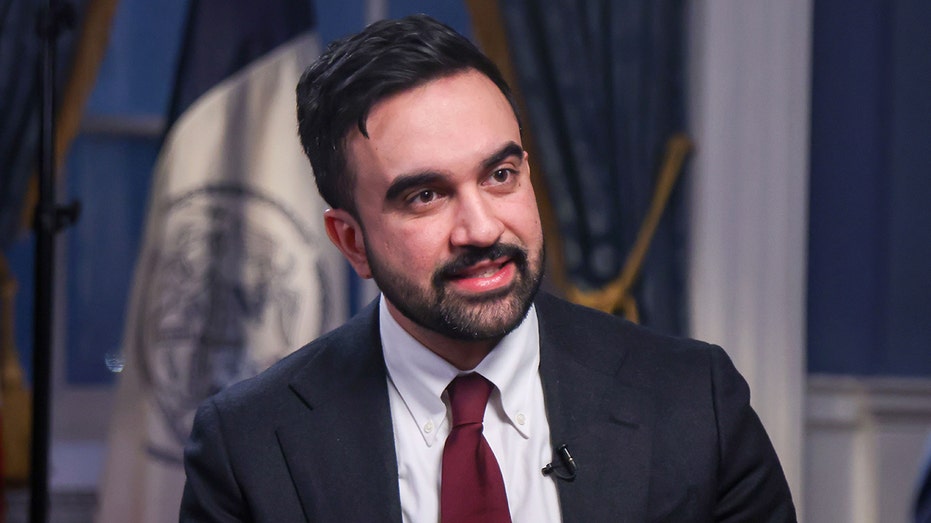
New York City Mayor Zohran Mamdani

New York City Mayor Zohran Mamdani said his team reached out to Citadel CEO Ken Griffin following criticism over a viral tax proposal video. (Michael Nagle/Bloomberg via Getty Images / Getty Images)

“When people are starting out, and they’re struggling, stop taxing them. We don’t need it. We live in the wealthiest country in the world,” Bezos said.

“We shouldn’t be asking this nurse in Queens to send money to Washington,” Bezos added. “They should be sending her an apology. It really makes no sense.”

Ticker Security Last Change Change %
AMZN AMAZON.COM INC. 265.01 +5.67 +2.19%

The billionaire said the top 1% of taxpayers currently pay roughly 40% of federal income taxes while the bottom half contribute about 3%, citing figures consistent with Tax Foundation and IRS analysis.

Still, Bezos argued that simply raising taxes on billionaires would not materially improve conditions for working-class Americans.

Advertisement
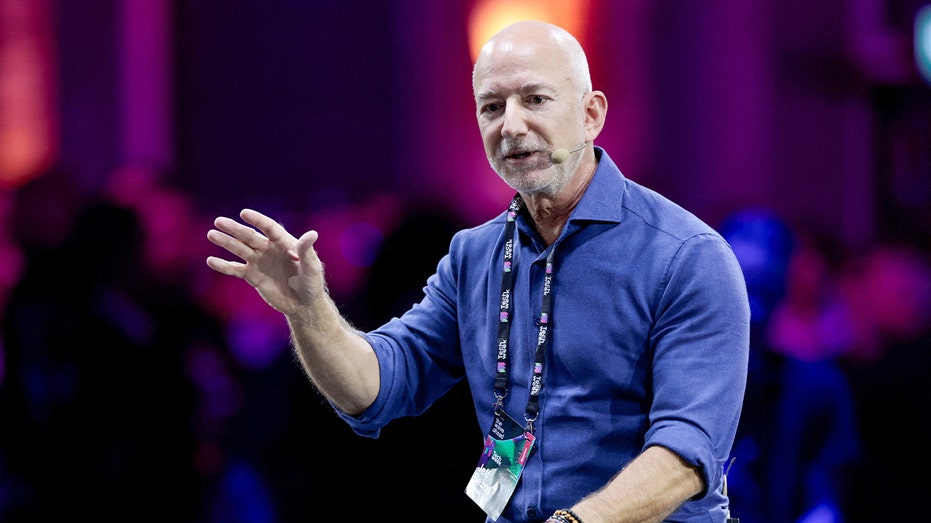
Jeff Bezos speaking on stage while gesturing during a conference discussion.

Amazon founder Jeff Bezos claims the top 1% of taxpayers currently pay roughly 40% of federal income taxes while the bottom half contribute about 3%. (Remo Casilli/Reuters, File / Reuters)

GET FOX BUSINESS ON THE GO 

“You could double the taxes I pay, and it’s not going to help that teacher in Queens. I promise you,” Bezos said.

A representative for Bezos did not immediately respond to FOX Business’ request for comment.

Advertisement
Continue Reading

Trending

Copyright © 2025