

Business
Countries condemn Israeli minister’s treatment of Gaza flotilla activists





Form 8K Old Dominion Freight Line Inc For: 21 May
Earnings call transcript: BingEx Q1 2026 sees revenue drop, stock dips
Business
Elevra Lithium Stock Climbs 8.95% to $12.18 on North American Expansion and Capital Raise Momentum

NEW YORK — Elevra Lithium Limited (NASDAQ: ELVR, ASX: ELV) shares rose 8.95% to $12.18 in midday trading Thursday, May 21, 2026, extending recent gains as the company advances its North American lithium strategy following asset sales and new funding initiatives.
The dual-listed lithium producer and developer, formerly known as Sayona Mining, has refocused operations on North America. It operates North American Lithium (NAL), Canada’s largest producing lithium mine, in joint venture with Piedmont Lithium.

Elevra announced on May 12, 2026, the purchase of Moblan offtake rights and released an updated scoping study for NAL expansion that projects faster growth and lower costs. The company also agreed to sell its interest in the Ewoyaa Lithium Project in Ghana to China’s Zhejiang Huayou Cobalt Co.
On May 13, Elevra raised A$275 million through a placement and convertible notes to fund North American expansion and Moblan work. The company launched a share purchase plan open as of May 18.
The March 2026 quarterly report, released in April, highlighted improved operational performance at NAL and positive cash flow generation. Record revenue figures were reported in prior quarters, with the company delivering strong spodumene production increases.
Elevra’s FY26 half-year results released in February showed revenue of $86 million, up 8% from the prior period. The company generated positive underlying EBITDA of $1 million compared with a prior loss, and operating cash flow of $5 million. Cash balance stood at $81 million at the end of December 2025.
Unit operating costs declined 6% to $814 per dry metric ton. Net profit after tax reached $74 million. Production guidance for FY26 was revised to 180,000-190,000 tons of spodumene concentrate amid operational challenges.
The company’s strategic shift includes divesting non-core African assets to concentrate resources on North American operations. The NAL expansion scoping study outlines accelerated development timelines and cost efficiencies.
Elevra signed a potential spodumene offtake MOU with a North American lithium producer. It continues to pursue partnerships and offtake agreements to secure revenue streams.
Market capitalization stands near $1.39 billion based on recent trading. The stock has shown volatility typical of the lithium sector, influenced by global EV demand, commodity prices and project developments.
Analysts have issued varied ratings. Macquarie downgraded the stock to Hold in mid-May. Other coverage highlights valuation metrics following recent share price movements.
The lithium market faces headwinds from price fluctuations but benefits from long-term demand tied to electric vehicles and energy storage. Elevra positions itself as a key North American supplier amid efforts to reduce reliance on overseas sources.
Headquartered in Brisbane, Australia, Elevra maintains dual listings to access international capital. The name change from Sayona Mining to Elevra Lithium became effective in September 2025.
Recent announcements include changes in substantial holdings and notifications regarding unquoted securities filed on May 18 and 20. The company hosts investor webcasts following quarterly reports.
Production at NAL achieved record quarterly spodumene output in prior periods, with improvements in recovery rates. The operation continues ramp-up efforts under joint-venture management.
Elevra’s capital management includes the recent A$275 million raise, comprising placements, convertible notes and a securities purchase plan. Proceeds target NAL expansion and Moblan project advancement.
The Moblan project in Quebec represents another key asset in the company’s Canadian portfolio. Acquisition of offtake rights strengthens commercial positioning.
Investors monitor lithium price trends, EV adoption rates and government policies supporting critical minerals. Canada Growth Fund has invested in related North American lithium projects.
Elevra reports quarterly activities under ASX and NASDAQ requirements. The March 2026 report advisory preceded detailed operational updates.
Trading volume on May 21 exceeded recent averages amid the price surge. The stock trades within its 52-week range, reflecting sector dynamics and company-specific news flow.
The company emphasizes sustainable practices and community engagement at its operating sites. Expansion plans incorporate environmental considerations aligned with North American regulatory standards.
Broader industry context includes consolidation and strategic realignments among lithium developers. Elevra’s North American focus aligns with supply chain security priorities in the United States and Canada.
No dividends have been declared in recent periods as the company prioritizes growth and debt management. Future capital returns will depend on operational cash flows and market conditions.
Analyst models project revenue growth tied to production ramps and offtake agreements. Valuation discussions center on enterprise value relative to projected output and lithium pricing scenarios.
Elevra continues stakeholder communications through ASX releases, investor presentations and webcasts. The share purchase plan provides existing shareholders participation opportunities in the recent capital raise.
The stock’s performance on May 21 reflects positive sentiment around funding secured for core projects and strategic divestments. Market participants await further updates on expansion timelines and production achievements.

Rachel Reeves has rolled out a package of consumer-facing tax cuts in a bid to put more cash in family pockets and breathe life back into Britain’s battered high streets, with the centrepiece a temporary VAT reduction on summer attractions designed to keep tills ringing through the holidays.
In a statement that drew rare applause from the hospitality lobby, the Chancellor confirmed that VAT on a swathe of family activities will fall from 20 per cent to 5 per cent under a new “Great British Summer Saving Scheme”. The reduced rate will apply to fairs, zoos, museums, cinemas and children’s meals in restaurants, running from the start of the Scottish school holidays on 25 July through to early September.
Reeves also ruled out the long-trailed rise in fuel duty, suspended tariffs on more than 100 supermarket food lines and lifted the tax-free mileage allowance by 10p per mile, backdated to April 2026. Free local bus travel for children aged five to 15 will operate throughout August in England, in what the Treasury framed as a co-ordinated push to ease pressure on households during the school break. Full eligibility criteria for the scheme have been published by the Treasury.
The measures land at a critical moment for the country’s small-business community, particularly the hospitality and leisure operators who have spent the past three years absorbing rising wage bills, energy costs and business rates. As Business Matters has reported, trade bodies have warned of a “tidal wave” of closures unless ministers act, with three pubs and restaurants shutting their doors every day so far this year.
A lifeline for the high street
Michelle Ovens CBE, chief executive and founder of Small Business Britain, welcomed the move as a timely intervention before the all-important summer trading quarter. “It’s encouraging to see the Chancellor’s commitment to a summer of savings with the VAT cut on children’s meals,” she said. “Providing an important boost for small businesses during the summer period, helping to drive footfall and ease pressure on margins at a crucial time of year. As many businesses prepare to enter the most important trading quarter of the year, measures that support both families and local high streets are incredibly welcome.”
Ovens added that the package was “essential in combating the ongoing cost-of-living crisis, particularly during the summer holidays when financial pressures and childcare commitments can intensify without the support schools often provide”.
The Federation of Small Businesses (FSB) echoed the sentiment but with sharper edges. Tina McKenzie, the FSB’s policy chair, said the timing could not be more urgent for an industry running on fumes. “Anything that helps get families out spending this summer is good news for the restaurants, pubs, soft plays and attractions that have spent years fighting rising costs and shrinking margins,” she said. “With 44 per cent of small hospitality firms based on or near the high street, a VAT cut should help put bums on seats and bring life into our town centres this summer.”
McKenzie pointed to a domestic tourism uplift as cash-strapped families switch out of foreign holidays. “Families will make extra purchases, such as drinks and merchandise, which is likely to be the biggest help to small businesses’ bottom lines,” she added.
Confidence in critical condition
The numbers behind the announcement make uncomfortable reading. According to the FSB, 94 per cent of small hospitality firms saw their costs rise in the last three months, with tax cited as one of the biggest drivers by 61 per cent of operators. A further 35 per cent expect to contract over the coming year, a figure that helps explain why this temporary VAT cut, while welcome, is unlikely to satisfy a sector that has long campaigned for a permanent reduction.
Kate Nicholls, chair of UKHospitality, which has lobbied for years for a lower headline rate, said it was “good to see the Government recognise the importance of a lower VAT rate for hospitality as the quickest and simplest way to lower prices and boost consumer confidence”. The trade body has consistently argued that aligning the UK’s rate with European competitors would stimulate jobs and investment well beyond the summer window.
For now, however, ministers have stopped short of that wider reset. The Treasury has costed the scheme at roughly £300 million, a modest sum against the backdrop of the wider Budget arithmetic, but enough, the Chancellor hopes, to keep the lights on in pubs, cafés and family attractions through what one operator described to Business Matters as “make-or-break months”.
The fuel duty freeze and 10p mileage uplift, meanwhile, address a separate but related pressure point. Rising pump prices have been squeezing tradespeople, hauliers and rural firms with no realistic alternative to the van or the car, an issue previously highlighted as a slow-burning crisis for the SME economy.
A summer test
Whether the package delivers will depend on whether smaller operators can pass the VAT saving through to customers quickly and visibly, and whether families respond. “A strong summer could be the difference between staying afloat and shutting up shop for some businesses,” McKenzie warned.
For the Chancellor, the political calculation is straightforward: a summer of cheaper days out, full coach parks and busy seaside arcades is a far easier sell on the doorstep than another quarter of grim closure headlines. For Britain’s small businesses, it is a chance, perhaps the last one this year, to turn footfall into cash flow.
As McKenzie put it, in a line that doubles as a plea: “As people plan summer days out, we’d urge them to back the small local pubs, cafés, attractions and hospitality venues that make our communities special.”

Jamie Young
Jamie is Senior Reporter at Business Matters, bringing over a decade of experience in UK SME business reporting.
Jamie holds a degree in Business Administration and regularly participates in industry conferences and workshops.
When not reporting on the latest business developments, Jamie is passionate about mentoring up-and-coming journalists and entrepreneurs to inspire the next generation of business leaders.


Maintaining relevance, purpose and identity are keys to success.

‘The Big Money Show’ co-hosts discuss Seattle Mayor Katie Wilson’s remarks dismissing millionaires leaving the city as Starbucks moves 2,000 jobs to Nashville.
Seattle Mayor Katie Wilson is walking back earlier comments urging consumers to boycott Starbucks, as tensions grow over Seattle’s relationship with major employers and the coffee giant expands its footprint outside Washington state.
Wilson, a democratic socialist elected last year on a progressive, labor-backed platform, told The New York Times this week that comments she made during a Starbucks worker strike last fall were not productive.
“Those comments were not productive in the sense that they caused more harm than good,” Wilson told the outlet.
The remarks marked a notable shift in tone from comments Wilson made shortly after winning Seattle’s mayoral race in November, when she joined Starbucks workers on a picket line outside the company’s former Reserve Roastery on Capitol Hill and urged residents to boycott the hometown coffee chain.

Seattle Mayor Katie B. Wilson speaks during the Seattle International Film Festival at SIFF Cinema Downtown on May 17, 2026. (Mat Hayward/Getty Images / Getty Images)
“I am not buying Starbucks and you should not either,” Wilson said at the rally, according to KUOW. She later led protesters in chants supporting striking workers.
At the time, several unionized Starbucks workers in Seattle and other cities were striking amid stalled contract negotiations with the company.
Wilson’s comments have resurfaced in recent weeks as concerns mount among some business leaders and local officials about Seattle’s economic climate and whether increasingly progressive politics could drive employers and wealthy residents elsewhere.
JAMIE DIMON SAYS NEW YORK, OTHER CITIES FACE WORKER ‘EXODUS’ AS LAWMAKERS PUSH HIGHER TAXES
Those concerns intensified after Starbucks announced plans to establish a 2,000-employee corporate hub in Nashville, Tennessee, fueling debate over whether the company could gradually shift more operations away from Seattle, where Starbucks was founded in 1971 and still maintains its global headquarters. Tennessee has increasingly attracted corporate expansions from companies seeking lower taxes, lower operating costs and a more business-friendly regulatory environment than many West Coast cities.
A sign embellished with the Starbucks logo hangs near the entrance to the Starbucks coffee shop. (Robert Alexander/Getty Images / Getty Images)
Seattle City Council member Rob Saka told The New York Times he was “gravely concerned” about the potential implications for the city.
“This is real,” Saka told the outlet.
Saka’s concerns mark a notable shift from his tone following Wilson’s election victory, when he praised the mayor’s “energy” and said voters were calling for “change and a renewed focus on affordability.”
MAMDANI MEETS JAMIE DIMON AS WALL STREET OUTREACH INTENSIFIES AMID TAX BACKLASH
Former Starbucks CEO Howard Schultz also weighed in earlier this month in a Wall Street Journal op-ed criticizing Seattle’s political leadership and warning the city risks alienating businesses that helped fuel its economic rise.
“Seattle’s mayor, Katie Wilson, has chosen to cast business as a foil rather than a partner,” Schultz wrote. “Her socialist rhetoric vilifies employers, even while she continues to rely on them for revenue.”
Schultz argued Washington state’s economic success was built on entrepreneurship, innovation and business growth, adding that the ecosystem is now “fractured.”

The Seattle skyline. (Juan Mabromata/AFP via Getty Images / Getty Images)
The debate comes as Seattle and Washington state grapple with rising housing costs, affordability concerns and tax policy disputes. Earlier this spring, Washington lawmakers approved a new 9.9% tax on certain personal income above $1 million, a measure critics have described as the state’s first income tax, while Wilson recently drew criticism for remarks dismissing concerns that wealthy residents could leave the state.
“I think the claims that millionaires are going to leave our state are super overblown,” Wilson said during a Seattle University forum last month. “And the ones that leave? Like, bye.”
Wilson has since indicated she is trying to strike a more balanced tone toward Seattle’s corporate community.
The mayor told The New York Times she now understands her comments will be closely scrutinized for signs of hostility toward businesses and said she hopes to maintain “a multidimensional relationship” with companies like Starbucks.
“I want them here,” Wilson said of Starbucks, “and I believe they want to be here.”
Starbucks has framed its Nashville expansion as part of a broader growth strategy rather than a departure from Seattle. In a letter to employees cited by The New York Times, Starbucks chief partner officer Sara Kelly described the Tennessee expansion as “a complement to our global and North America presence in Seattle.” Starbucks has also continued restructuring portions of its Seattle-based workforce, including reported layoffs tied to its technology division earlier this month.
CLICK HERE TO GET FOX BUSINESS ON THE GO
Fox Business reached out to Starbucks and the Seattle mayor’s office for comment.
Fox News Digital’s Peter Pinedo contributed to this report.

AUBURN HILLS, Mich. — Stellantis said Thursday it plans to invest 60 billion euros (US$69.7 billion) under a new five-year strategic plan by CEO Antonio Filosa that also targets annual cost savings of 6 billion euros by 2028.
The plan includes putting 36 billion euros toward the company’s massive portfolio of automotive brands to launch more than 60 new vehicles as well as major refreshes of 50 other models, including all-electric vehicles, hybrids and traditional internal combustion engines.
The other 24 billion euros will be put toward global vehicle platforms and new technologies for the automaker and its products, according to the company.
Tune in Thursday, May 21, at 10:25 a.m. ET: CNBC’s Phil LeBeau interviews Stellantis CEO Antonio Filosa. Watch in real time on CNBC+ or the CNBC Pro stream.
Stellantis also said it plans to achieve positive free cash flow by 2028 after losing 22.3 billion euros last year that included a 22 billion euro restructuring pulling back from all-electric vehicles.
Shares of Stellantis on the New York Stock Exchange were off 4% during pre-market trading on Thursday.
Under the plan, Stellantis will not eliminate any of its 14 automotive brands, but it will fold operations of its DS and Lancia European units into Citroen and Fiat, respectively, according to the company.
Fiat is one of four designated “global brands” alongside Jeep, Ram Trucks and Peugot. That division also includes the Pro One commercial operations. Its regional brands will include Chrysler, Dodge, Citroen, Opel and Alfa Romeo. It also owns luxury brand Maserati.
To assist in reducing costs, the company plans to launch a new “STLA One” vehicle platform in 2027. The new platform is designed to bring together five different platforms into “one scalable architecture, reducing complexity and expanding coverage.” It targets achieving 20% cost efficiency, the company said.
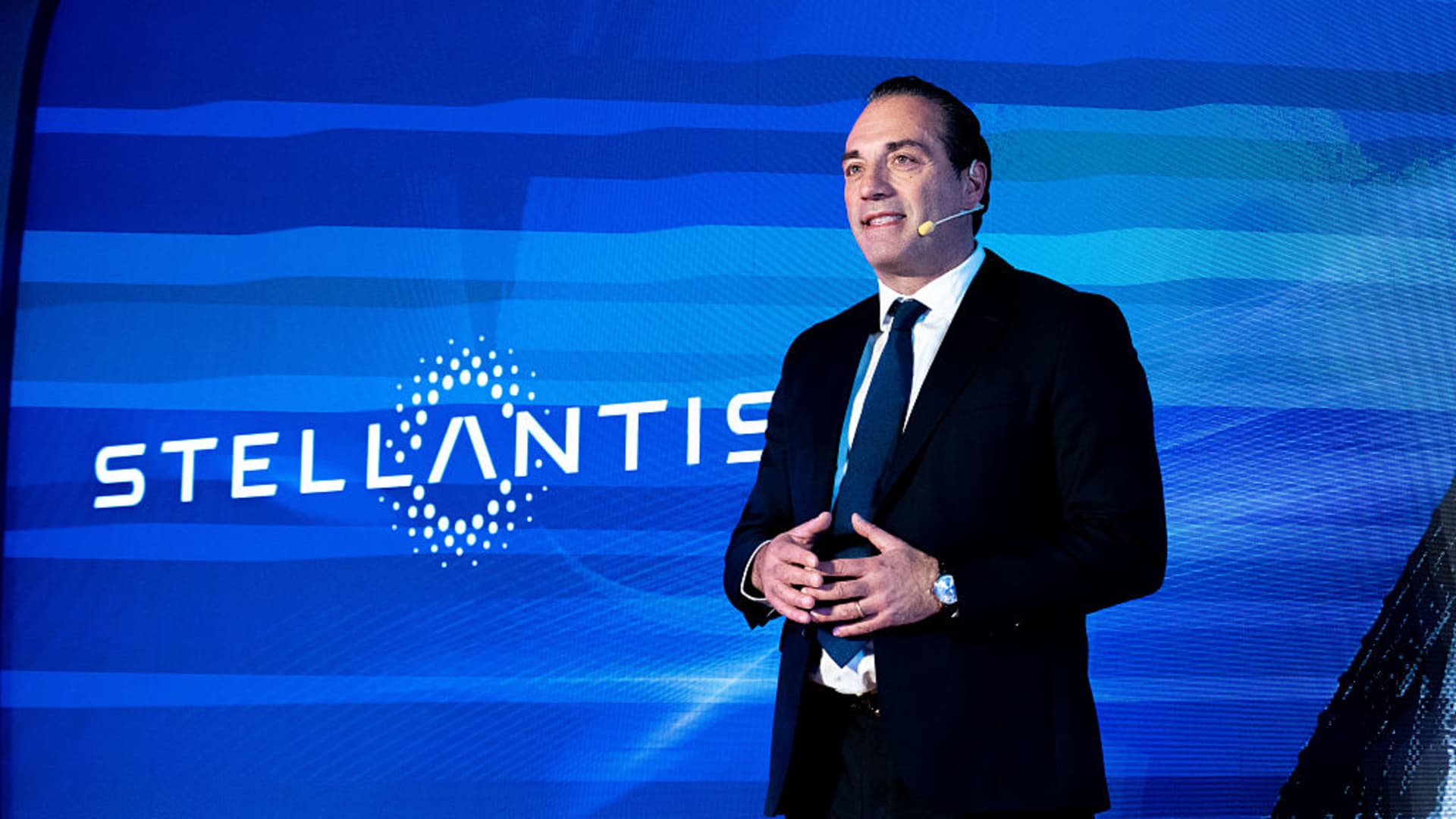
Antonio Filosa attends the presentation of the new Fiat 500 Hybrid at the Stellantis FIAT Mirafiori plant in Turin, Italy, on November 25, 2025.
Nurphoto | Nurphoto | Getty Images
By 2030, Stellantis targets 50% of its volume will be produced on three global platforms, with up to 70% component reuse.
Filosa — who began leading the automaker less than a year ago — and other executives are set to lay out details of the “FaSTLAne 2030” plan throughout the day Thursday during his first investor day as CEO at the company’s North American headquarters near Detroit.
Stellantis Chairman John Elkann, a scion of Fiat’s founder and CEO of Europe’s prominent Exor, on Thursday called the plan “ambitious, but realistic” while outlining industry challenges as well as opportunities for the company under Filosa and his new plan.
The plan’s core pillars include “sharper management” of the brand portfolio, new investments, enhanced partnerships, an optimized manufacturing footprint, “excellence in execution” and empowerment of the company’s regions and local teams.
“What we want you to take away from today is that Stellantis, with all its assets, its capabilities, and its new strategic plan, is well positioned to succeed,” Filosa said to open the event. “You will hear from us today how we leverage our regional roots, our global scale, our partnerships and the new technologies in our journey going forward.”
The company this week announced several new or expanded tie-ups that included Jaguar Land Rover for the U.S. as well as with Chinese automakers Leapmotor and Dongfeng Group, primarily for Europe and China.
As the company partners with Chinese automakers, it’s also competing against them as many of the companies increase sales in Europe.
Amid such competition, Stellantis said it expects to cut European capacity by more than 800,000 units, while repurposing plants and leveraging partnerships as well as “aiming to preserve manufacturing jobs.”
In both Europe and the U.S., Stellantis said it targets 80% plant utilization in 2030.

A company of Manulife Investment Management, John Hancock Investment Management serves investors through a unique multimanager approach, complementing our extensive in-house capabilities with an unrivaled network of specialized asset managers, backed by some of the most rigorous investment oversight in the industry. The result is a diverse lineup of time-tested investments from a premier asset manager with a heritage of financial stewardship. Note: This account is not managed or monitored by John Hancock Investment Management, and any messages sent via Seeking Alpha will not receive a response. For inquiries or communication, please use John Hancock Investment Management’s official channels.
Arecor Therapeutics grants 455,000 stock options to executives
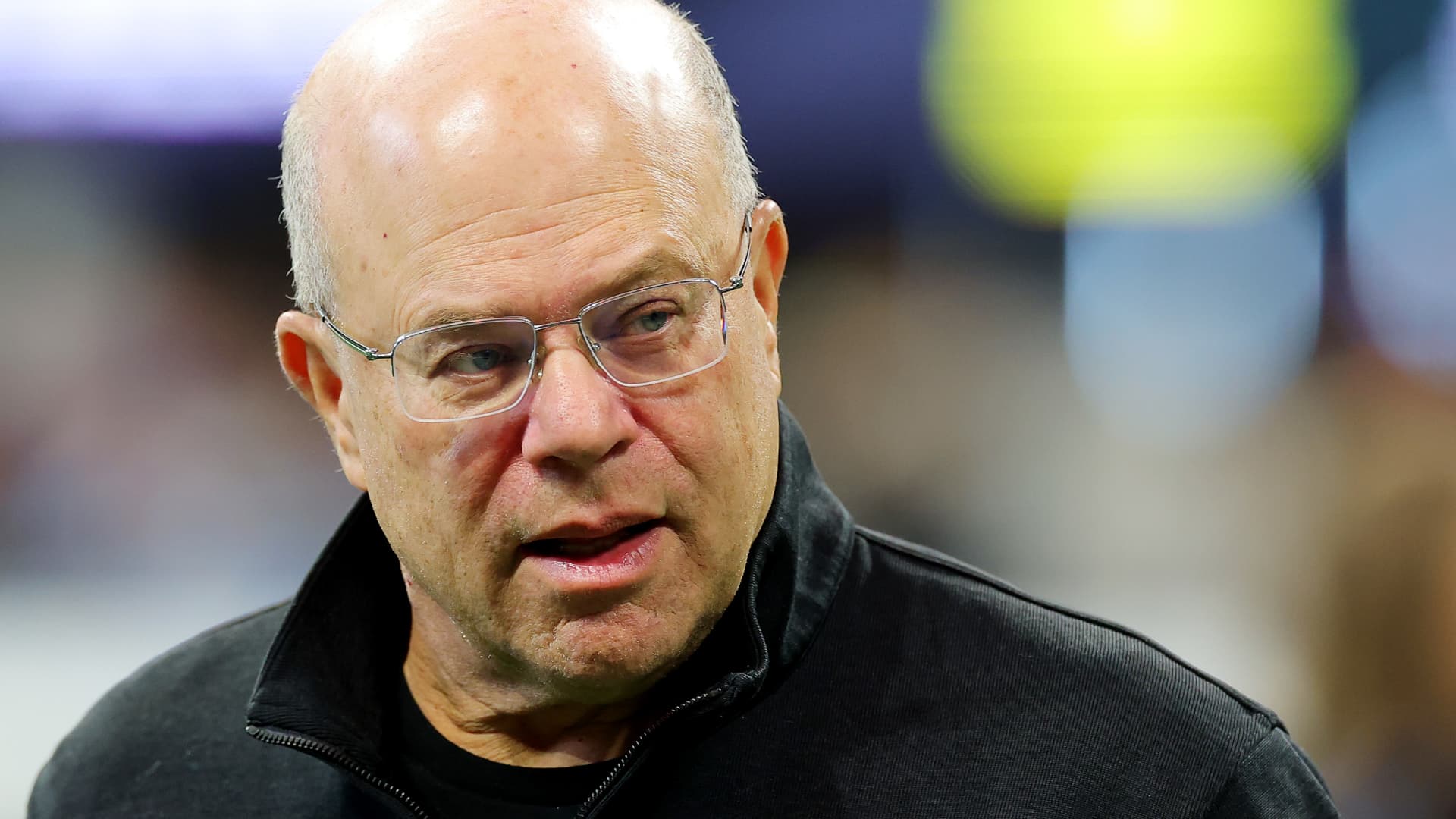
Carolina Panthers owner David Tepper looks on before the game against the Atlanta Falcons at Mercedes-Benz Stadium on January 05, 2025 in Atlanta, Georgia.
Kevin C. Cox | Getty Images Sport | Getty Images
A version of this article first appeared in CNBC’s Inside Wealth newsletter with Robert Frank, a weekly guide to the high net worth investor and consumer. Sign up to receive future editions, straight to your inbox.
Private investment firms of the ultra-wealthy doubled down on chipmakers in the first quarter of 2026 despite pressures from the Iran war, according to securities filings analyzed by CNBC. Several family offices also leaned into energy producers as the Middle East conflict drove oil prices up, though others opted to lock in their gains.
David Tepper’s family office Appaloosa Management raised its stake in Micron Technology by 11%, making the chipmaker its second-largest holding, at $562.5 million, at the end of March. Appaloosa also increased its stake in Taiwan Semiconductor by 18%, to $448.6 million, and disclosed a new $179 million position in Sandisk.
Duquesne Family Office, the personal investment firm of Stanley Druckenmiller, also disclosed a new position in Sandisk valued at $24 million as well as a $161 million position in Broadcom.
Soros Fund Management, the namesake firm of George Soros, raised its Nvidia position by 61%, to $187 million, making it one of the family office’s top 10 holdings.
Some of these moves were fortuitous, with semiconductor stocks skyrocketing in recent months.
Over the past 30 days, shares of Sandisk and Micron have both risen about 50% and 60%, respectively.
Shares of Nvidia, Broadcom and Taiwan Semiconductor gained by smaller percentages in recent weeks but have made substantial gains since last quarter. Broadcom and Taiwan Semiconductor are up about 35% and 19%, respectively, since the end of March, while Nvidia shares have risen by about 28%.
Duquesne locked in gains on two semiconductor firms by exiting positions in Entegris and ON Semiconductor last quarter. Appaloosa also trimmed its Nvidia stake by 13%, but it still ranked as its ninth largest position at $257 million.
Billionaire family offices took diverging approaches to energy stocks as the Iran war has disrupted the market. Appaloosa more than doubled its stake in Vistra Corp to $304 million while BlueCrest Capital Management, the private firm of billionaire hedge funder Michael Platt, exited its $103 million position in the Texas-based electricity and power generation firm.
Duquesne cut its stake in Bloom Energy, a fuel cell manufacturer, by 82% to $89 million, while increasing its position in YPF Sociedad by more than fivefold to $150 million. The family office is the fifth-largest institutional shareholder in the Argentinian oil and gas producer, according to InsiderScore.
With airlines facing a fuel crisis, some family offices chose to exit their positions. In the first quarter, Appaloosa sold its stakes in American Airlines, Delta Air Lines and United Airlines. Duquesne also exited its stake in Delta.

RMT rearranges tube driver strike
NFL.com Predicts Trouble for the 2026 Vikings

Flipper One project needs community help to build open Linux platform


-

 Crypto World5 days ago
BloFin War of Whales 2026 Grand Prix opens registration for $5M trading championship
-

 Fashion6 days ago
Weekend Open Thread: Theory – Corporette.com
-

 Crypto World6 days ago
E-Estate Announces 1 Year Live: Washington DC Summit as Real Estate Tokenization Enters Its Next Phase
-

 Tech6 days ago
Tech Moves: Microsoft AI leader jumps to OpenAI; former AI2 exec joins Meta; and more
-

 Tech6 days ago
Google reimburses Register sources who were victims of API fraud
-

 Crypto World7 days ago
Google’s Gemini AI Predicts Incredible Solana Price by the End of 2026
-

 Business6 days ago
H&R Real Estate Investment Trust (HR.UN:CA) Q1 2026 Earnings Call Transcript
-
 Entertainment7 days ago
Zara Larsson Has Blunt Response To Chris Brown Diss
-

 Sports6 days ago
Napoleonic enters 2026 Doomben 10,000 field via Abounding withdrawal
-
 Crypto World6 days ago
BeInCrypto 100 Institutional Awards Nomination: KAST for Best Digital Assets Neobank and Best Digital Assets Fintech
-
 Crypto World6 days ago
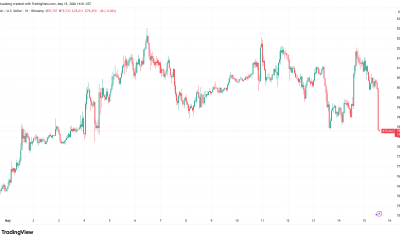
Bitcoin Battles US Bond Nerves With BTC Price Dip Toward New May Lows
-

 Fashion4 days ago
On the Scene at Gucci’s Cruise Show in New York City: Mariah Carey, Kim Kardashian, Lindsay Lohan, Iman, and More!
-
 Crypto World6 days ago
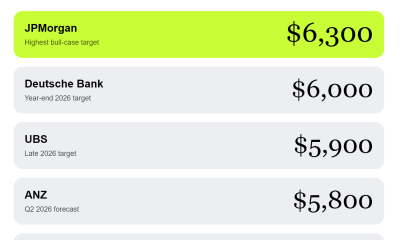
Wall Street’s Boldest Gold Prediction Has Russians Rushing to Buy
-

 Crypto World6 days ago
ICE and CME urge US regulators to curb Hyperliquid energy trading
-

 Politics7 days ago
DWP PIP Timms review continues to be an absolute farce
-

 Crypto World6 days ago
IREN closes $3 billion convertible notes deal amid AI infrastructure expansion
-

 Fashion5 days ago
Trending Western Style Vests Perfect for Summer
-

 Entertainment6 days ago
David Letterman Returns to Late Show, Blasts Cancellation
-
 Crypto World7 days ago
Lido Finance Selects Chainlink CCIP as the Official Cross-Chain Infrastructure for wstETH Security
-

 Fashion4 days ago
Amazon Sundays: Memorial Day Hosting
You must be logged in to post a comment Login