Ram Rumble Bee launches with the 5.7-liter Hemi V-8 (left), with availability starting late 2026; Rumble
Bee 392 (right) and Rumble Bee SRT (center) arrive in the first half of 2027.
Courtesy: Ram Trucks
AUBURN HILLS, Mich. — Stellantis plans to increase its North American sales by 35% by 2030, including by reviving its beleaguered Chrysler brand that has relied on one product for several years.
Advertisement
The expected growth, focused on its traditional U.S. brands, is targeting 60% sales increases for Chrysler and Ram Trucks; 10% for its Dodge performance brand; and 15% for Jeep. It did not disclose targets for Fiat or Alfa Romeo, which are also sold minimally in North America.
Ram CEO Tim Kuniskis, who also oversees its other American brands, said the target is to increase the American brand sales from 1.4 million last year to 1.9 million in 2030, despite expectations of industry volume being flat during that timeframe at 20 million vehicles overall.
Stellantis plans to do so largely through new vehicle introductions that extend the company’s market coverage, Kuniskis said Thursday during an investor event where the company announced a new five-year, 60 billion euros (US$69.7 billion) turnaround plan under CEO Antonio Filosa.
“We’re not choosing between growth and profitability. We will improve both together,” Filosa said Thursday about the company’s North American operations.
Advertisement
The North American sales plan includes increasing models by 50%, with a focus on entry-level and high-performance bookends. The automaker also intends to increase revenue for the region by 25% by 2030, with an adjusted operating margin of between 8% and 10%.
Stellantis expects to increase the number of “affordable” vehicles under $40,000 it offers from two to nine by 2030, while also offering eight new SRT performance models to increase those sales from 3,000 last year to around 50,000 units during that timeframe.
Kuniskis detailed three new crossovers for the company’s Chrysler brand, including some models under $30,000. That storied brand currently only offers a minivan.
He also said the company is planning a new midsize pickup and large SUV for Ram, refreshed models for Jeep’s large lineup and a new crossover for Dodge. The company has plans for eight new SRT models under the five-year plan, he said.
“The SRT products are the essence of ‘halo’ and brand building,” Kuniskis said. “These models don’t just elevate the whole brand, they draw a younger and more affluent customer.”
Advertisement
Halo vehicles such as SRT are often iconic products that are unique in design and feature high-performance parts. They’re regularly used to attract attention to a car nameplate or brand.
Kuniskis said profits of SRT vehicles, which largely share non-performance parts with other models, are three times that of a regular vehicle.
The event comes a day after Kuniskis revealed a new lineup of Ram Rumble Bee “muscle trucks” that include V-8 engines, special parts and designs, and a range of performance specifications.
A top-end SRT Hellcat model with a 6.2-liter supercharged Hemi V-8 engine will feature 777 horsepower, a targeted top speed of 170 miles per hour and other metrics that rival some sports cars.
Sebi proposes changes to pre-open listing session of IPOs for better price discovery Capital markets regulator Sebi has proposed a review of the price discovery mechanism used during the pre-open call auction session for IPOs and relisted stocks, following concerns that existing rules may be artificially suppressing prices and distorting trading activity.
In a consultation paper released on Tuesday, Sebi said it is seeking public comments on proposed changes to the Call Auction Session framework used on the listing or relisting day of stocks.
The regulator said representations received from market participants suggested that the current system of dummy price bands and base price calculations was creating unintended distortions in relisted stocks.
“Representations have been received by Sebi stating that the dummy price band and the mechanism for base price in case of re-listed scrips are leading to situations of artificially suppressed price discovery,” the paper said.
Advertisement
Sebi noted that the issue was resulting in persistent buying pressure once normal trading began, frequently leading to upper circuits and additional surveillance measures.
Live Events
Under the existing framework, IPO and relisted stocks undergo a one-hour pre-open call auction session between 9 am and 10 am on listing day. The session currently allows only limit orders and does not permit market orders. The regulator explained that stock exchanges presently use different methodologies for calculating base prices for relisted stocks depending on factors such as the period of suspension and revocation of trading. For IPOs, the issue price itself acts as the base price.Sebi said one instance showed how the current framework was restricting effective price discovery.
“In one of the instances, it was observed that during the Call Auction Session of the re-listed scrip, 90% of the buy orders were rejected due to being outside the price bands,” the paper said.
The regulator also highlighted concerns around the current dummy price band mechanism. At present, IPO stocks operate within a dummy price range of minus 50% to plus 100% of the base price during the pre-open session, while relisted stocks use a range of minus 85% to plus 50%. For SME IPOs, the range is minus 90% to plus 90%.
Sebi said stock exchanges currently flex these dummy bands in phases depending on equilibrium prices discovered during the session.
Advertisement
The regulator now wants feedback on whether these mechanisms require changes to improve efficiency and reduce price distortions.
The consultation paper also explained how price discovery currently works. According to Sebi, the equilibrium price is determined at the level where maximum executable volume exists during the call auction session.
If equilibrium prices differ significantly across exchanges, a common equilibrium price based on volume-weighted average prices is determined.
Sebi noted that if no equilibrium price is discovered during the IPO pre-open session, the stock moves into normal trading using the issue price as the base price. For relisted stocks, if equilibrium prices are not discovered at any exchange, all orders are cancelled and the stock continues in the call auction mechanism on subsequent trading days until a price is discovered.
Advertisement
The regulator said the objective of the consultation paper is to review whether the current framework remains appropriate amid evolving market conditions and trading behaviour.
Speaking to BBC Wales, ap Iorwerth said the chancellor’s package of measures were a “missed opportunity, because when we see the impact of high energy prices on hard-up families and on businesses too, and the steps that can be taken and should be taken by UK government on energy prices and off-grid energy prices, that’s the further action that we think we need to see from UK government”.
The Thai government seized over 35,000 illegal cosmetic items valued at 22 million baht, targeting networks misusing these products for injections, which pose serious health risks. Authorities urge consumer vigilance.
Key Points
The Thai government has intensified enforcement against illegal cosmetic products used for injections, seizing 35,645 items valued at over 22 million baht. The operation involved the Thai Food and Drug Administration collaborating with the Central Investigation Bureau and consumer protection police.
Raids at three locations uncovered 20,596 cosmetic products, 217 unregistered drugs, and 240 medical devices. Some operators misclassified products to avoid stricter regulations, marketing them as injectables, which poses significant health risks due to lack of safety evaluations.
Authorities will enhance monitoring of both online and offline sales, working with digital platforms to block illegal listings. Consumers are urged to verify product approvals to avoid health hazards and to protect legitimate businesses.
The government has intensified action against networks involved in the production, import, and distribution of cosmetic products illegally used for injection, with authorities seizing 35,645 items worth more than 22 million baht.
The operation was carried out by the Thai Food and Drug Administration in coordination with the Central Investigation Bureau, including Division 4 of the Consumer Protection Police Division, and involved raids at three locations. Seized items included 20,596 cosmetic products, 217 unregistered drugs, 240 medical devices, and 14,592 labels and promotional materials.
According to Deputy Government Spokesperson Ploytalay Laksameesangchan, authorities found that some operators registered products as cosmetics instead of pharmaceuticals to bypass stricter approval processes, then marketed them to aesthetic clinics as injectable products or skin treatments. Such use poses serious health risks, as these products have not been evaluated for injection into the human body. Items intended for injection must undergo strict review for quality, safety, and effectiveness, and cosmetics are not permitted for such use under any circumstances.
Officials have instructed closer monitoring of online and offline sales channels, including coordination with digital platforms to block illegal listings. Provincial public health offices have also been directed to step up inspections. Consumers are advised to verify product approvals through official channels, as unregulated products may pose risks, including contamination, poor quality control, and harm to public health, and may also affect legitimate businesses.
Fintech company One 97 Communications Limited is likely to see a block deal on Friday where existing investors like SAIF Partners and Elevation Capital Entities, according to an ET Now report. Around 8.6 million shares of Paytm are expected to change hands through the transaction and the floor price for the deal has reportedly been fixed at Rs 1,120.65 per share, the report said, citing sources. The floor price implies a discount of nearly 3% to the stock’s previous closing price.
The stake sale through a block deal from existing shareholders is likely to be worth $100 million worth of shares.
Global investment bank Citi has reportedly been appointed as the placement agent for the transaction.
As per the shareholding data available on the BSE, SAIF Partners held shares in One 97 Communications through its affiliates Saif Partners India Iv Limited and Saif Iii Mauritius Company Limited. While the former held over 2.56 crore shares as on March 31, that represented 4% stake, the latter held over 6 crore share accounting for 9.43% equity.
Advertisement
The development comes after a sharp recovery in Paytm shares over the past year, aided by improving operational metrics, narrowing losses and renewed investor confidence in the digital payments ecosystem. The stock has delivered 34% over a one-year period.
Live Events
One 97 Communications reported a net profit of Rs 184 crore in the fourth quarter, compared with a loss of Rs 540 crore in the year-ago quarter. In the year-ago quarter, its results were affected by a one-time expense on charges related to CEO Vijay Shekhar Sharma giving up his employee stock options. Revenue from operations rose 18% YoY to Rs 2264 crore.Paytm’s EBITDA turned positive at Rs 132 crore, against a loss of Rs 88 crore a year ago, although it moderated from Rs 156 crore in the December quarter. EBITDA margin stood at 6%, compared with a negative 5% a year earlier.
The company said its comparable EBITDA, excluding UPI and PIDF incentives, improved by Rs 330 crore YoY, reflecting stronger organic profitability.
(Disclaimer: The recommendations, suggestions, views, and opinions given by the experts are their own. These do not represent the views of The Economic Times.)
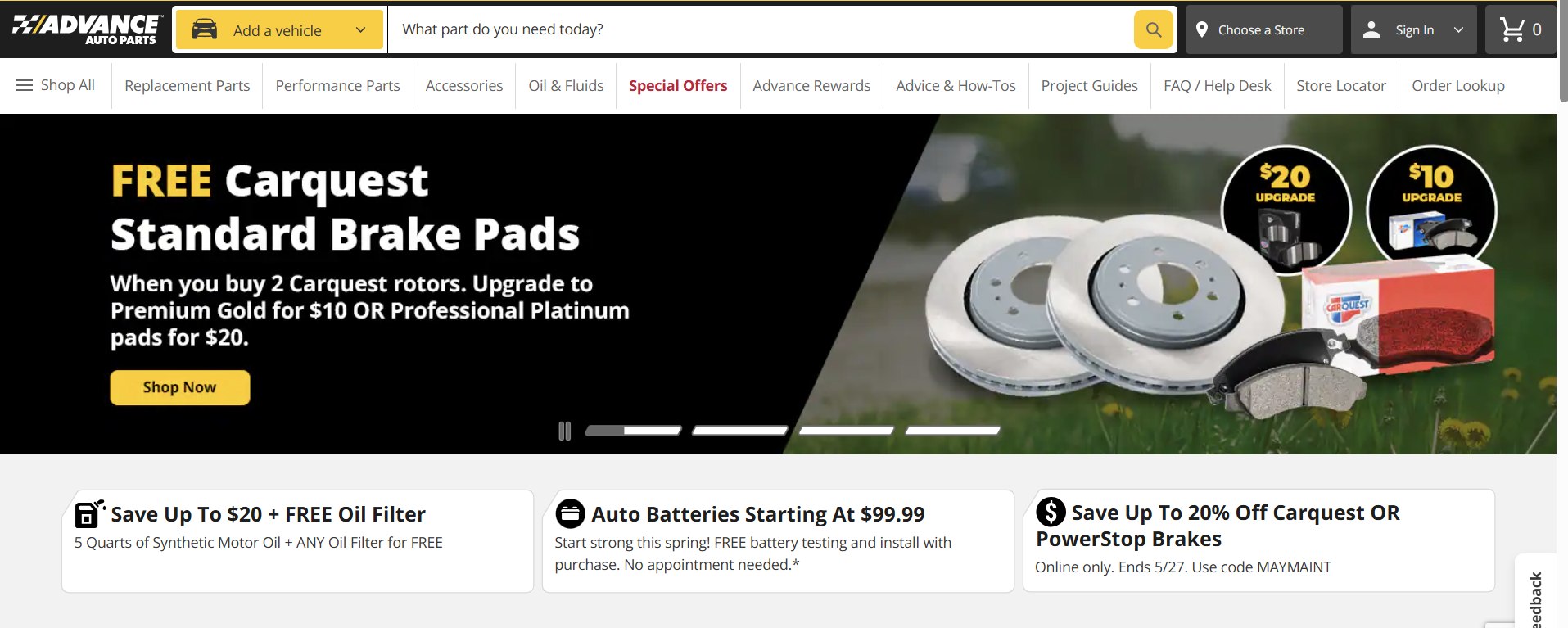
NEW YORK — Advance Auto Parts Inc. (NYSE: AAP) shares jumped 19.63% to $61.30 in midday trading on Thursday, May 21, 2026, after the auto parts retailer reported first-quarter results that significantly exceeded expectations on comparable sales and profitability.
Advance Auto Parts Stock Surges 19.63% to $61.30 After Strong Q1 Earnings Beat
The company released its fiscal first-quarter 2026 financial results before the market open. Net sales totaled $2.6 billion, flat compared to the prior-year period that included sales from stores later closed as part of a restructuring plan. Comparable store sales increased 3.5%, marking the strongest performance in five years.
Adjusted operating income reached $99 million, or 3.8% of net sales, expanding 410 basis points year-over-year from a loss in the prior period. Adjusted diluted earnings per share came in at $0.77, compared to analyst estimates of approximately $0.44.
CEO Jim Greco described the quarter as a solid start. The company reaffirmed its full-year 2026 guidance, targeting comparable sales growth of 1.0% to 2.0% and adjusted operating income margin in the range of 3.8% to 4.5%.
The results reflect progress on Advance Auto Parts’ strategic initiatives, including store optimization, supply chain improvements and enhanced customer experience. The company has been executing a multi-year turnaround plan following challenges in recent years.
Advertisement
Trading volume surged on May 21 as the earnings reaction drew significant investor attention. The stock had been trading near $51 prior to the report, reflecting ongoing pressures in the automotive aftermarket sector amid economic uncertainty.
Advance Auto Parts operates more than 4,300 stores across North America under the Advance Auto Parts, Carquest and other banners. It serves both professional installers and do-it-yourself customers with a broad selection of parts, accessories and maintenance items.
The company has been streamlining operations, including closing underperforming locations as part of its 2024 restructuring plan. First-quarter 2025 net sales had included approximately $51 million from stores later closed.
Analysts had been cautiously optimistic ahead of the report. Evercore ISI raised its price target to $65 from $60 on May 18 while maintaining an In Line rating. Other firms monitored the company’s progress on margin expansion and comparable sales trends.
Advertisement
Advance Auto Parts reaffirmed its full-year 2026 capital expenditure guidance of approximately $300 million and free cash flow target of approximately $100 million. The company ended the quarter with a solid liquidity position.
The automotive aftermarket industry faces headwinds from aging vehicles, supply chain dynamics and consumer spending patterns. Advance Auto Parts has emphasized value offerings and professional customer growth to navigate the environment.
No changes were announced to leadership or strategic direction in the earnings release. The company continues under CEO Jim Greco, who has focused on operational discipline and customer-centric improvements.
The stock’s sharp rise on May 21 reflected relief among investors after several quarters of mixed performance. Market capitalization increased substantially intraday as shares climbed toward recent highs.
Advertisement
Conference call participants included CEO Jim Greco and other executives. The call, scheduled for 8 a.m. ET, provided additional context on performance metrics and outlook.
Advance Auto Parts has maintained its dividend, with a forward yield around 1.95% based on recent levels. The company prioritizes returning capital to shareholders while investing in core operations.
Investors will monitor upcoming quarterly results for continued evidence of turnaround momentum. The next earnings report for the second quarter is expected in late August.
The auto parts sector remains competitive, with players including AutoZone, O’Reilly Automotive and Genuine Parts Company. Advance Auto Parts has differentiated through its professional installer focus and omnichannel capabilities.
Advertisement
No specific second-quarter guidance was provided beyond the full-year outlook. Management highlighted steady demand in key categories and benefits from ongoing initiatives.
The earnings beat and positive comparable sales trend contributed to the strong market reaction. Shares had been under pressure earlier in 2026 amid broader retail sector concerns.
Advance Auto Parts continues to execute its strategic plan aimed at sustainable growth and improved profitability. The Q1 results mark a notable step in that direction.
Lockheed Martin CEO Jim Taiclet joins ‘Mornings with Maria’ to discuss the future of AI-driven warfare and the company’s new 87,000-square-foot Alabama munitions plant.
A top U.S. defense contractor pulled back the curtain on next-generation AI-powered systems designed to hunt down and destroy swarms of enemy drones as the U.S. rapidly expands its next-generation warfighting capabilities.
“We are inserting technology of all types into our systems,” Lockheed Martin CEO Jim Taiclet told FOX Business on Thursday, detailing the company’s AI-powered counter-drone system, Sanctum.
Advertisement
Taiclet said the system uses artificial intelligence to detect incoming drones, determine whether they pose a threat and predict where they are headed before they can be intercepted or disabled.
Jim Taiclet, chairman and chief executive officer of Lockheed Martin Corp., speaks during a visit from then-President Joe Biden, not pictured, at the company’s facility in Troy, Ala. on Tuesday, May 3, 2022. (Andi Rice/Bloomberg via Getty Images / Getty Images)
“This technology alone is fantastic in being able to essentially hit a bullet with a bullet in space and destroy an incoming ballistic missile that’s threatening our people, threatening our bases, threatening our allies,” he said.
“But along with that, we’ve got to match — with technology — other threats, and we want to match the threat to the cost of our counterthreat.”
Advertisement
The company is also focusing on a device called MORFIUS, a system capable of flying close to small enemy drones and “zapping” them with high-powered microwave pulses before moving on to the next target.
“This drone that we’re building with the help of AI will enable us to attack 50 different drones with one mission without firing any weaponry,” he shared.
Lockheed Martin Aeronautics Company facility in Fort Worth, TX, USA. (iStock Editorial/Getty Images Plus / Getty Images)
Taiclet also spoke about the company’s investment in an internal AI center in 2020 and credited a pipeline partnership with chipmaker Nvidia, which supplies the graphics processing units, or GPUs, used to support such national security missions.
Advertisement
He also described how Lockheed is repurposing existing battlefield weaponry to create cheaper, more scalable defenses against drone attacks.
More specifically, the company has modified Hellfire missiles — traditionally used as air-to-ground weapons on Apache helicopters — into lower-cost ground-to-air interceptors capable of taking down enemy drones.
Nvidia founder and CEO Jensen Huang joins ‘Mornings with Maria’ to discuss the U.S. winning the AI race, the role of their technology for national security, the economic impact from the AI build out and more.
Advertisement
“We’re actually showing that we can do that as well,” he said.
“We basically have a four-pack of these Hellfire missiles. We’ve reconfigured them with new technology. We connect it with the Sanctum AI, and we can now use that type of missile to destroy these incoming cheap drones.” he added.
“That’s some ways we’re using technology and Nvidia has been a great partner for us in this.”
Bosses are hoping to grow sales in the Middle East
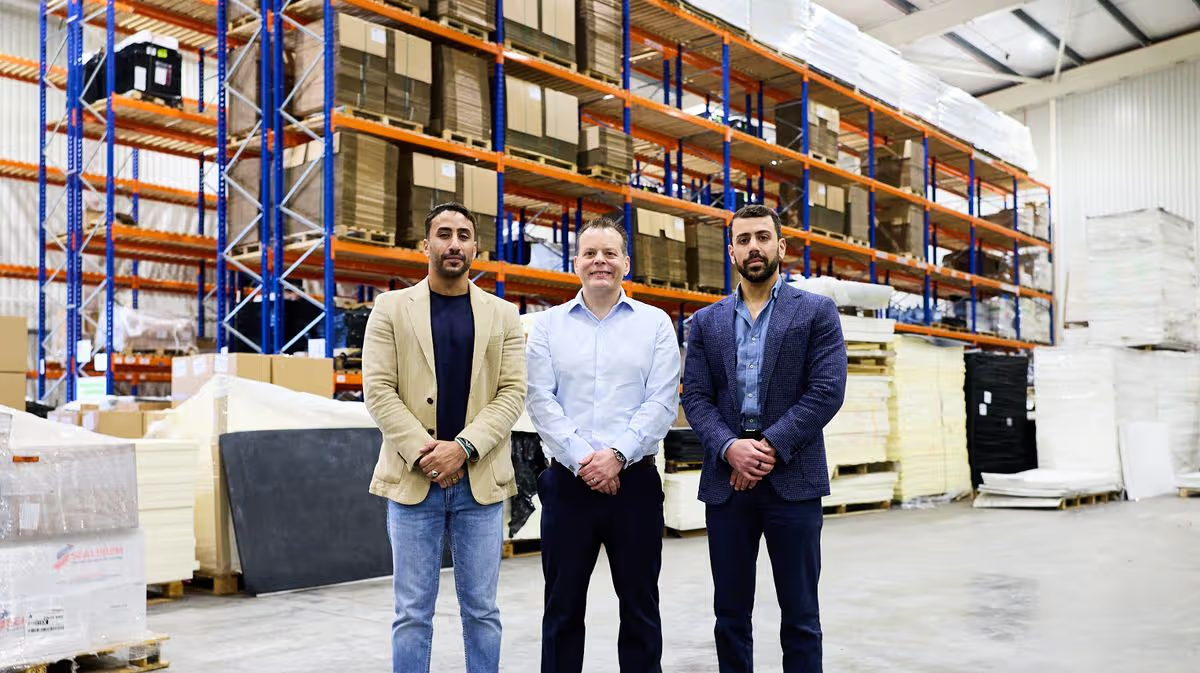
From left: Yossuf AlBanawi of Sealprem; Andy Gray of HSBC UK, and Omar AlBanawi of Sealprem.(Image: David Lindsay)
Sealing products specialist Sealprem has secured a seven-figure funding packaging to help it achieve international growth.
The Park Farm Road business, which supplies the construction and DIY markets, hopes the funding from HSBC can accelerate its plans. It will give capital to Sealprem and its private equity owner Red Coast Industries to pursue organic growth as well as merger and acquisition opportunities and joint venture strategies.
At the same time, Sealprem is also developing its e-commerce capabilities. With the backing of Red Coast, the firm has ambitions to grow sales in the Middle East, particularly Saudi Arabia and the UAE, and customers that operate between there and the UK.
New jobs are expected to be created at the firm, which was founded in 1994 and is now a top manufacturer of foam fillers and a supplier of core sealing products. Red Coast was founded by Omar and Yossuf AlBanawi having been spun off in 2022 from family run investment group Banvest.
Advertisement
It focuses on acquiring lower-middle-market businesses in the building materials sector, with a particular focus on industrial roofing and cladding. Red Coast acquired Sealprem in 2023.
Omar AlBanawi, director of Red Coast Industries, said: “ Securing funding with HSBC UK marks an important milestone for Sealprem, as we expand our offering into a broader one-stop-shop solution for the industrial building envelope sector. This new banking partnership provides us with a supportive long-term funding structure, greater operational flexibility, and a relationship that is aligned with our international growth ambitions.”
Andy Gray, relationship manager at HSBC UK, added: “With strengthened financial footing, Sealprem will be able to continue investing in product innovation, stock availability and customer service. The business is well positioned to accelerate growth across its core manufacturing business, expanding its distribution capabilities and further developing its e-commerce channel. As these offerings expand, the business is well set to serve customers more efficiently across the UK.”




















































You must be logged in to post a comment Login