The Indus app is powered by Sarvam’s locally trained 105-billion-parameter model — a measure of the AI’s scale and sophistication — andlaunched at the AI summit. The app supports 22 Indic languages and mid-sentence code-switching (the ability to fluidly mix languages mid-conversation, like switching between Hindi and English), which helps the assistant better understand the context of a query. Currently, the application doesn’t support offline usage, and it doesn’t have any integrated feature with the device to invoke the AI assistant through a shortcut.
The partnership is a potential testing ground for both companies to gauge the appetite for an India-focused chatbot.
“With this partnership, the first thing we want to do is get the Indus app to consumers,” said Ravi Kunwar, HMD’s CEO and Vice President for India and APAC, in an interview with TechCrunch. “Once they start using it, we will move to phase two to focus on driving more traction and stickiness. Right now, by pre-loading the app, we want to be more accessible to users,” he said.
Advertisement
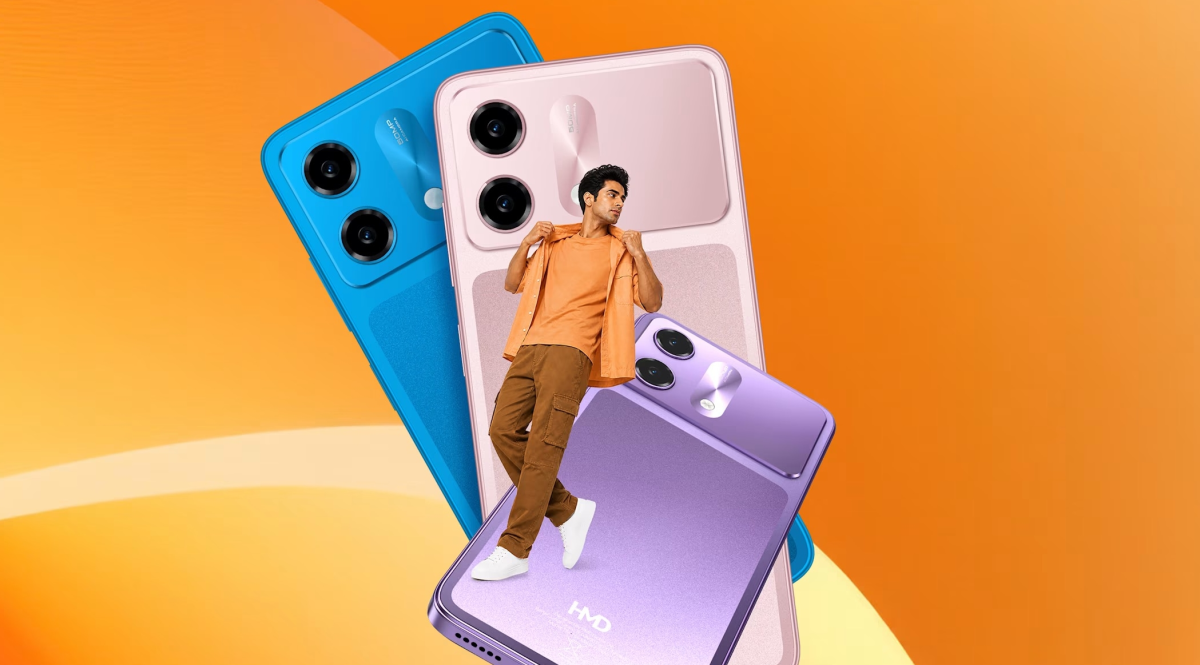
The Vibe 2 5G is a mid-range Android phone with a 6,000mAh battery and a price tag of ₹10,999($114). Kunwar added the devices in the Vibe series of smartphones will also get the chatbot, and the company is also expected to launch a feature phone with Sarvam AI integration in the coming months.
That feature phone integration may ultimately prove more significant for both companies. HMD held a 4% share of India’s feature phone market in 2025, but its smartphone share was negligible — the company doesn’t even appear in the top 15, according to analyst firm IDC.
While it’s early days for Indus, the download numbers reflect that. Nearly three months after its launch, the app has been downloaded just over 293,000 times in India across platforms, according to Appfigures. By comparison, ChatGPT was downloaded 43.9 million times in the country.
It’s a big gap, but the strategy behind the HMD deal may matter more than the early numbers. Bundling a regional AI assistant with affordable hardware — particularly feature phones — is one of the more direct distribution plays available in a market as large and linguistically diverse as India, where English-language AI tools have limited reach. For investors and operators watching how AI adoption gets seeded in emerging markets, this partnership is worth tracking.
Advertisement
Sarvam has been one of India’s marquee AI startups. Beyond the Indus app launch, the company has focused on enterprise partnerships, especially for voice-based solutions. It is on track to become one of the most funded AI startups in the country, with reportssuggesting a funding round of $300 million at a $1.5 billion valuation is in the works.
When you purchase through links in our articles, we may earn a small commission. This doesn’t affect our editorial independence.
Samsung could finally be preparing the compact flagship Galaxy fans have been asking for.
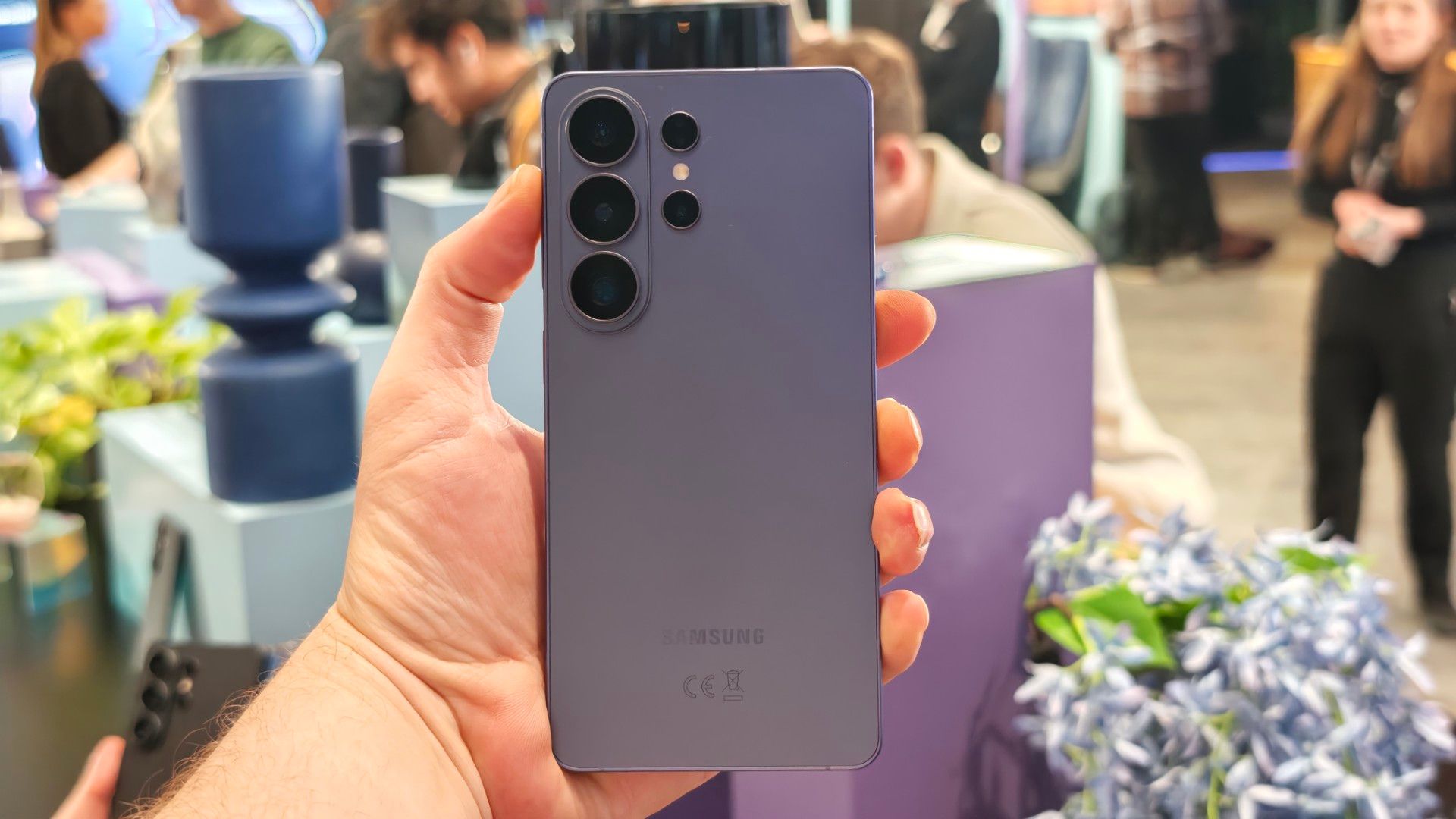
A new leak suggests the company is working on a Galaxy S27 Pro model that would bring some of the Ultra’s premium features into a noticeably smaller phone.
More importantly, though, the Galaxy S27 Pro reportedly won’t just be another mid-tier option with a fancier name. The leak claims it could share “most” of the Galaxy S27 Ultra’s specs. However, it may drop features like the S Pen to keep the device smaller and more manageable.
Advertisement
That would make it a pretty interesting shift for Samsung. Right now, if you want the company’s best cameras, battery tech, and performance upgrades, you’re usually stuck buying the biggest phone in the lineup. The rumoured S27 Pro sounds closer to Google’s recent Pixel strategy. The Pixel 10 Pro offers nearly all the same flagship features as the larger Pro XL. However, it is in a more pocket-friendly size.
Advertisement
The reported 6.47-inch display would still make the S27 Pro larger than the regular Galaxy S26, which sits at 6.3 inches. However, it would be noticeably smaller than the Plus and Ultra models. That could hit a sweet spot for users who want flagship specs without carrying around something that feels tablet-adjacent.
Of course, there will probably be some compromises. A smaller phone usually means less internal space. Unless Samsung adopts newer silicon-carbon battery technology by then, battery capacity could end up being one of the trade-offs compared to the Ultra.
Advertisement
Still, this leak feels more believable than some of the earlier “Pro” rumours surrounding the Galaxy S27 series, largely because the market has shifted. Compact premium phones are quietly making a comeback, and Samsung doesn’t really have a true answer to devices like the Pixel 10 Pro yet.
There’s no official confirmation from Samsung for now. However, if the Galaxy S27 Pro does happen, it could end up being the most interesting model in the lineup — not the Ultra.
Housing costs, public safety concerns and the local political climate have all contributed to Seattle’s struggles. But tax policy influences business decisions too, particularly at the margin where firms decide where future hiring and expansion will occur. (GeekWire File Photo / Kurt Schlosser)
[Editor’s note: Alex Murray is a small business owner who has previously written for GeekWire about taxes in Washington state.]
Washington state’s tax debate has become trapped inside a single question: Who pays?
That question matters. But it is not the only question that matters.
Taxes serve two purposes. They raise revenue for public services, and they shape behavior. Every tax system encourages some activities while discouraging others. A tax on cigarettes is intended to reduce smoking. A carbon tax is intended to reduce emissions. A payroll tax makes hiring more expensive. A capital gains tax reduces the after-tax return on investment.
Yet when Washington’s tax structure is discussed publicly, nearly all of the attention centers on one claim: that Washington has one of the nation’s most regressive tax systems.
Advertisement
The label comes largely from reports by the Institute on Taxation and Economic Policy, or ITEP, which regularly rank Washington near the bottom nationally on tax fairness. Those rankings are widely cited by politicians, advocacy groups and media outlets as proof that Washington’s tax code harms lower-income residents while favoring the wealthy.
But the debate is more complicated than the rankings suggest.
ITEP’s analysis attempts to estimate the effective tax burden paid by households at different income levels. To do that, the model includes not only visible taxes like sales taxes, but also business taxes, payroll taxes, property taxes and other embedded costs. The model then estimates who ultimately bears those taxes economically.
That distinction matters because Washington relies heavily on taxes that are largely invisible to consumers.
Advertisement
Most residents see sales tax on a receipt. They do not see the state’s Business & Occupation tax embedded throughout the economy. They do not see employer payroll taxes, compliance costs or gross receipts taxes layered into supply chains and operating costs.
Washington’s B&O tax is particularly unusual because it taxes gross revenue rather than profit. Businesses owe it regardless of whether they make money. It also compounds through multiple stages of production and distribution.
The critical question in judging Washington’s level of tax regressivity is who ultimately bears those taxes economically, a question that is far more uncertain than many public discussions imply.
ITEP’s regressivity rankings depend heavily on the assumption that businesses can pass much of those costs on to consumers, and that consumers therefore bear the majority of those burdens rather than business owners, investors or workers.
Advertisement
That assumption may hold in some industries. In others, especially globally competitive sectors, it may not.
A Seattle software company competing nationally cannot always raise prices simply because local taxes increase. A cloud computing provider competing globally may absorb part of those costs through lower margins, slower hiring, reduced investment or lower compensation growth.
Small changes to those underlying assumptions can materially alter Washington’s estimated regressivity ranking. That does not make the model illegitimate. But it does mean the conclusions should be treated with more caution and nuance than they often receive in public debate.
Generally, when the outcome of a model depends heavily on a difficult-to-observe economic assumption, policymakers and media outlets should present those conclusions with appropriate humility rather than as settled fact.
Advertisement
That uncertainty matters because Washington’s tax structure differs fundamentally from states that rely primarily on income taxes. Washington historically chose to tax consumption more heavily than productivity, a model built around a specific set of economic incentives.
The logic was straightforward. Taxes on work discourage work. Taxes on investment discourage investment. Taxes on entrepreneurship discourage entrepreneurship.
Whether one agrees with that philosophy or not, it helped shape one of the country’s most successful economic regions. Washington became home to some of the world’s most influential companies, including Microsoft, Amazon, Costco and generations of aerospace and technology firms.
Critics often portray Washington’s reliance on sales taxes as inherently harmful to lower-income residents. But even that discussion lacks nuance.
Advertisement
Washington exempts many necessities from sales tax, including groceries and prescription medications. A household purchasing primarily essential goods pays relatively little direct sales tax compared with one spending heavily on discretionary consumption, travel, entertainment or luxury purchases.
That structure reflects policy choices about incentives. Consumption taxes discourage discretionary consumption while exempting many essentials. Policymakers routinely use taxes to influence behavior in other contexts, including environmental policy, yet that same logic is often ignored in broader tax debates.
In recent years, Washington and especially Seattle have moved away from the state’s traditional tax structure. Policymakers have increased B&O taxes, imposed payroll taxes and enacted a capital gains tax. Those decisions may raise revenue in the short term, but they also change incentives.
And incentives matter.
Advertisement
Seattle now faces office vacancy rates approaching 35% in parts of downtown, among the highest in the country. Across the lake, Bellevue and the broader Eastside market sit materially lower, generally in the low-to-mid 20% range depending on the submarket. The difference cannot be explained by geography alone. Both cities compete for many of the same employers, workers and industries.
Housing costs, public safety concerns and the local political climate have all contributed to Seattle’s struggles. But tax policy influences business decisions too, particularly at the margin where firms decide where future hiring and expansion will occur.
According to the Bureau of Labor Statistics, Seattle’s unemployment rate reached 5.7% as of January 2026, the highest level since the pandemic recovery period. Seattle’s heavy concentration in technology partly explains the increase. But taxes influence business behavior too. Higher payroll and business taxes raise the cost of hiring and expansion at precisely the moment many firms have more flexibility about where growth occurs.
The broader problem is that modern tax debates increasingly confuse progressive taxation with progressive outcomes.
Advertisement
Those are not the same thing.
Some states with highly progressive tax systems continue to struggle with persistent poverty, severe housing affordability problems and widening inequality.
California provides perhaps the clearest example. Despite having one of the nation’s most progressive tax structures, California posts one of the country’s highest Supplemental Poverty Measure rates once housing costs, taxes and cost-of-living adjustments are considered. According to recent Census Bureau data, California’s Supplemental Poverty Measure rate stands at 17.7%.
Washington, despite regularly being labeled one of the nation’s most “regressive” states, performs materially better under the same methodology at 10.8%.
Advertisement
That does not prove progressive taxation causes poverty. But it does challenge the assumption that more progressive taxation automatically solves it.
A state can redistribute wealth progressively while simultaneously becoming less effective at creating broad-based prosperity.
A tax code can appear highly progressive on paper while producing disappointing real-world outcomes for working families.
Likewise, a system that taxes consumption more heavily than productivity may create stronger incentives for investment, hiring and long-term economic growth that ultimately benefit workers over time.
Advertisement
Most regressivity rankings are fundamentally static exercises. They estimate who pays taxes today. They are not designed to fully capture the long-term effects of tax policy on investment, migration, wage growth, business formation or economic dynamism.
Those factors matter. Especially in a state whose prosperity depends heavily on innovation, entrepreneurship and high-skilled industries that can increasingly relocate elsewhere.
Washington should absolutely debate fairness, affordability and inequality. Those are legitimate concerns. But the conversation should also acknowledge that taxes shape behavior, hidden taxes are difficult to model and economic competitiveness matters.
The goal of tax policy should not simply be to optimize a distribution table. It should be to create a prosperous economy that expands opportunity broadly and remains competitive over the long term.
Advertisement
Washington’s future depends not only on how much revenue it raises, but on what kind of economy its policies encourage.
[Editor’s note: GeekWire publishes guest opinion pieces representing a range of perspectives. The views expressed are those of the author.]
Looking for a new flagship smartphone but are torn between iOS and Android? You’ve come to the right place.
With both the iPhone 17 and Pixel 10 Pro sporting plenty of AI features, flagship processors and brilliant cameras, choosing between the two can feel like a challenge. Fortunately, we’ve reviewed both and have compared our experiences below.
Keep reading to see how the iPhone 17 compares to the Pixel 10 Pro. If you’re not sold on either, make sure you visit our best smartphones guide, where we’ve listed our favourite iOS and Android models across all budgets.
Both the iPhone 17 and Pixel 10 Pro are readily available to buy now. The iPhone 17 has a cheaper starting RRP of £799/$799 and comes in a choice of five colours: White, Black, Lavender, Sage and Mist Blue.
SQUIRREL_PLAYLIST_10207955
In comparison, the Pixel 10 Pro starts at £999/$999 although it can be found with solid price cuts. For example, at the time of writing you can pick up the Pixel 10 Pro for just £749 on Amazon. Otherwise, the handset comes in a choice of four colours: Moonstone, Jade, Obsidian and Porcelain.
Advertisement
SQUIRREL_PLAYLIST_10207881
Design
Both the iPhone 17 and Pixel 10 Pro look similar to their respective predecessor – and that’s not necessarily a bad thing
iPhone 17 is fitted with Action and Camera Control buttons
Pixel 10 Pro supports Pixelsnap
The iPhone 17 looks similar to last year’s iPhone 16, and many other entry-level iPhones that came before it. However, this really isn’t a bad thing as the iPhone 17 is a sleek and well-designed handset, with flat edges and rounded corners that many of the best smartphones now sport. Plus, the five colour options give the iPhone that extra bit of personality too.
Advertisement
Much like its predecessor, the iPhone 17 is fitted with Action and Camera Control buttons. The Action button sits just above the volume rockers and can be customised to act as a shortcut to quickly open apps, while Camera Control works as a shortcut to the camera.
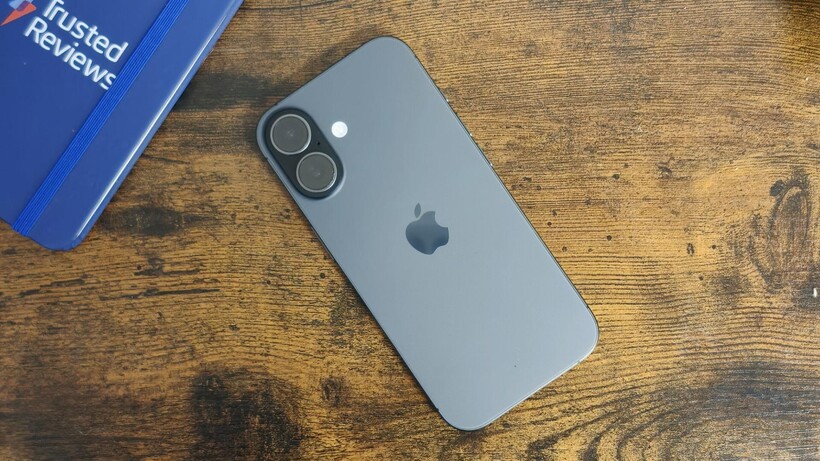
iPhone 17. Image Credit (Trusted Reviews)
Similarly, the Pixel 10 Pro looks remarkably similar to the Pixel 9 Pro, and sports the same pill-shaped camera bar that looks so much sleeker than the Pixel 8 Pro’s own. In fact, the biggest difference between the Pixel 10 Pro and Pixel 9 Pro is the inclusion of Pixelsnap which supports Qi2 wireless charging.
The fact Google kept things similar this year isn’t a bad thing at all, as the handset feels great in hand and looks brilliant too.
Advertisement
Otherwise, both the iPhone 17 and Pixel 10 Pro are equipped with an IP68 rating which protects the handsets from dust and submersion in water.
Winner: Both are well-built and look great, but we’ll give the win to iPhone 17
Advertisement
Screen
Both have 6.3-inch displays
Pixel 10 Pro can get a bit brighter at 3300 nits compared to the iPhone 17’s peak of 3000 nits
Both screens are hard to fault
Ranking the iPhone 17 and Pixel 10 Pro’s respective displays is no easy task as both are packed with plenty of premium screen technologies, including an LTPO 1-120Hz refresh rate (the first for the entry-level iPhone), impressively high peak brightness levels and crisp resolutions too. However, we should note that the Pixel 10 Pro can reach a slightly higher peak brightness of 3300 nits while the iPhone 17’s peak is 3000 nits. Even so, the difference is negligible.
Not only that, but both are fitted with screen protection too which promises to offer scratch and drop resistance too. While the iPhone 17 sports Apple’s own Ceramic Shield 2, the Pixel 10 Pro is covered by Gorilla Glass Victus 2 instead.
Advertisement
Essentially, we’ve concluded that the iPhone 17 boasts the “best screen yet on an entry-level iPhone” while the Pixel 10 Pro has the title of owning “one of the best phone screens around”.
Winner: Tie
Advertisement
Camera
Pixel 10 Pro has a dedicated 48MP telephoto lens
iPhone 17 has an 18MP square selfie camera, which is a huge upgrade from last year
Pixel 10 Pro is fitted with Google’s AI Camera Coach which offers photography advice
The iPhone 17 is fitted with just two rear lenses, including a 48MP main and 48MP ultrawide. While its main lens does have a 2x in-sensor zoom that delivers good quality shots, and can even be pushed to around 4x before detail is lost, if you want a dedicated telephoto lens then you’ll be better off with the Pixel 10 Pro or the iPhone 17 Pro instead.
Having said that, we think the iPhone 17’s dual camera is enough to suit most people. Its main lens delivers sharp, colour-accurate images, even in low-light conditions. While its companion ultrawide lens isn’t quite as reliable in tougher conditions, it also manages to capture the likes of scenic vistas and even macro shots with ease too.
Advertisement
Image captured on iPhone 17. Image Credit (Trusted Reviews)
However, the key upgrade with the iPhone 17’s overall camera set-up is arguably with the new 18MP selfie lens. While the jump from 12MP to 18MP might not sound too exciting, the key difference is the new square sensor that allows you to shoot portrait and landscape shots without needing to rotate the phone.
Otherwise, Google’s phones have earned the title of being among the best camera phones, and fortunately the Pixel 10 Pro continues this trend – albeit with some slight issues that should be kept in mind.
Advertisement
Image captured on Pixel 10 Pro. Image Credit (Trusted Reviews)
With a 50MP main, 48MP ultrawide and 48MP 5x telephoto camera set-up, the Pixel 10 Pro reliably takes a good photo in most lighting conditions. Images look warm and rich during the day, while detail is preserved in night shots. While it does benefit from a dedicated telephoto lens, unlike the iPhone 17, zoom isn’t actually as reliable as we’d like. Push it past the 5x mark and shots feel artificial and too smooth, which suggests Google’s AI processing is at play.
So, although it lacks the telephoto lens, we’d argue the iPhone 17 is more of a reliable camera phone overall.
Winner: iPhone 17
Advertisement
Performance
Apple’s A19 vs Google’s Tensor G5 chips
Both perform well in everyday use, but the iPhone 17 sees better benchmark results
Pixel 10 Pro is built for AI capability rather than sheer power
We should start by saying that if you’re planning on playing demanding AAA titles or editing multiple 4K videos then neither the iPhone 17 nor the Pixel 10 Pro will suit you. Instead, you’re better off looking at more powerful options – perhaps one of the best gaming phones.
Advertisement
Otherwise, powering the iPhone 17 is Apple’s own A19 Bionic chip, while the Pixel 10 Pro runs on Google’s Tensor G5 processor instead. The iPhone 17 especially performs brilliantly in everyday use, with apps opening instantly and more casual titles playing admirably too. Plus, Apple has equipped the iPhone 17 with 256GB storage as a minimum, which is double the starting storage as the Pixel 10 Pro.
Similarly, the Pixel 10 Pro rarely sees any slowdown in day-to-day use, with apps and casual games opening and running quickly, although we did note that the camera has a slight lag to it, especially when shooting at 50MP. However, Tensor G5 is built with AI in mind so tends to prioritise performance in that area instead.
Winner: iPhone 17
Advertisement
AI features
Google AI is easily one of the best AI toolkits, with genuinely useful features
Apple Intelligence still feels like an afterthought
Following on from the above, the Pixel 10 Pro is well-equipped with plenty of Google’s AI features, which makes Apple Intelligence seem more like an afterthought in comparison. While some may go unused, tools like Circle to Search, Call Screening and Gemini are genuinely useful and come in handy. We especially found ourselves using Magic Cue more than we expected to, as it works behind the scenes but pops up when you’re likely to need it, say if you need directions to a restaurant you’ve booked.
Advertisement
Gemini on Pixel 10 Pro. Image Credit (Trusted Reviews)
We also find Google’s photo editing tools to be among the best, with the eraser reliably removing unwanted objects from the background. In comparison, Apple’s competing Clean Up feature often leaves you with pretty obvious signs that the photo has been tampered with.
iPhone 17. Image Credit (Trusted Reviews)
In addition, other Apple Intelligence tools like Image Playground and Siri just don’t feel as smooth or thought through as Google’s own. With this in mind, if you want a phone that is designed to support AI, then the Pixel 10 Pro is a much easier recommendation.
Winner: Google Pixel 10 Pro
Software
iPhone 17 runs on iOS 26 which is polished and easy-to-use
Pixel 10 Pro sports Material 3 Expressive which is one of the nicest phone operating systems to use
Google promises the Pixel 10 Pro will see seven years of updates but Apple doesn’t disclose the exact amount of support the iPhone 17 will see
Advertisement
The iPhone 17 runs on iOS 26 which saw the introduction of Liquid Glass, Apple’s new transparent UI design. While some weren’t keen on the redesign, we think it looks great and adds to the polished overall feel of iOS.
We especially like how well iOS integrates with other Apple devices, and how easy it is to share files between the ecosystem. It’s a level of integration that Androids just can’t quite seem to match.
Advertisement
This isn’t to say the Pixel 10 Pro’s software isn’t great. With Material 3 Expressive, the Pixel 10 Pro is easy-to-use, feels polished and offers plenty of customisation options that iOS doesn’t. Either way, both the iPhone 17 and Pixel 10 Pro boast brilliant software that we think you’ll struggle to fault.
Lastly, Google promises that the Pixel 10 Pro will see up to seven years of software updates, which will take you up to Android 23. While Apple doesn’t publicly disclose how many years of software updates the iPhone 17 will see, looking at previous years reveals it also offers around the seven year mark.
Winner: Pixel 10 Pro (as Google publicly announces its software updates)
Advertisement
Advertisement
Battery
Neither are two-day handsets
iPhone 17 supports faster wired charging at 40W compared to the Pixel 10 Pro’s 30W
Both support Qi2 wireless charging
While many of the best Android phones can comfortably see two-days of battery life, unfortunately the Pixel 10 Pro doesn’t boast this claim. Instead, we found the Pixel 10 Pro can comfortably last one day with three or four hours of screen time while more demanding days with up to six hours would deplete the battery.
Pixel 10 Pro on Pixelsnap. Image Credit (Trusted Reviews)
Fortunately, with support for 30W wired and 25W (Qi2) wireless charging, topping up is that bit more convenient than the Pixel 9 Pro.
In comparison, we found the iPhone 17 could end a day with five hours of screen time with around 20% left in the tank. Finally, though it shares the same 25W (Qi2) wireless speeds, it bests the Pixel 10 Pro with 40W wired speed support instead.
Winner: iPhone 17
Advertisement
Verdict
Of course, deciding between the iPhone 17 and Google Pixel 10 Pro may simply boil down to your existing ecosystem. While it is perfectly possible to use an iPhone with a Windows PC, or a Pixel with a Mac, naturally using either handset with their own ecosystem offers much more of a seamless experience.
Advertisement
However, if you’re open minded then there’s a lot of factors to consider. The iPhone 17 boasts a more reliable camera set-up, despite its lack of telephoto lens, sees higher benchmark scores with its A19 processor and is cheaper than the Pixel 10 Pro. However, the Pixel 10 Pro’s AI toolkit is genuinely useful, and could improve how you use your phone on a day-to-day basis.
AI agents forget. Every time a coding assistant loses track of a debugging thread, or a data analysis agent re-ingests the same context it already processed, the team pays in latency, token costs, and brittle workflows. The fix most teams reach for — expanding the context window or adding more RAG — is increasingly expensive and still doesn’t reliably work.
To address this, researchers from Mind Lab and several universities proposed delta-mem, an efficient technique that compresses the model’s historical information into a dynamically updated matrix without changing the model itself. The resulting module adds just 0.12% of the backbone model’s parameters — compared to 76.40% for one leading alternative — while outperforming it on memory-heavy benchmarks. Delta-mem allows models to continuously accumulate and reuse historical data, reducing the reliance on massive context windows or complex external retrieval modules for behavioral continuity.
The long memory challenge
The conventional solution is to simply dump all the information into the model’s context window.
But as Jingdi Lei, co-author of the paper, told VentureBeat, current systems treat memory merely as a context-management problem. “Either we keep expanding the context window, or we retrieve more documents through RAG,” Lei explained. “These approaches are useful and will remain important, but they become increasingly expensive and brittle when agents need to operate over long-running, multi-step interactions, and they don’t really [work] like human memory since they are more like looking up documents.”
Advertisement
In enterprise settings, the bottleneck is not just whether the model can access history, but whether it can reuse that history efficiently, continuously, and with low latency. Standard attention mechanisms incur a quadratic computational cost as the sequence length increases. Furthermore, expanding the context window does not guarantee the model will actually recall the information effectively. Models often suffer from context degradation or context rot as they become overwhelmed with more (and often conflicting) information, even if they support one million tokens in theory.
The researchers argue for advanced memory mechanisms that can represent historical information compactly and maintain it dynamically across interactions. Existing solutions come with heavy trade-offs and generally fall into three paradigms:
Textual memory: stores history as text injected into context — constrained by window limits and prone to information loss under compression.
Outside-channel (RAG): encodes and retrieves from external modules — adds latency, integration complexity, and potential misalignment with the backbone.
Parametric: encodes memory into model weights via adapters — static after training, can’t adapt to new information during live interactions.
Inside delta-mem
To achieve a compact and dynamically updated memory, delta-mem compresses an agent’s past interactions into an “online state of associative memory” (OSAM). This state is maintained as a fixed-size matrix that preserves historical information while the underlying language model remains frozen.
For enterprise workflows, this translates directly to resolving operational bottlenecks. Lei noted that a persistent coding assistant, for example, “may need to remember project conventions, recent debugging steps, user preferences, or intermediate decisions across a workflow.” Similarly, a data analysis agent might “need to maintain task state, assumptions, and prior observations while iterating over multiple tool calls.”
Advertisement
Delta-mem architecture (source: arXiv)
Rather than repeatedly retrieving and re-inserting all relevant history for these tasks, the delta-mem matrix provides a low-overhead way to carry forward useful interaction states inside the model’s forward computation.
During generation, the system does not retrieve raw text segments to add to the prompt. Instead, the backbone LLM’s current hidden state is projected into the matrix to retrieve old memory. This operation extracts context-relevant associative memory signals from delta-mem. These signals are then transformed into numerical corrections that are applied to the computations of the model. This steers the model’s reasoning at inference time without altering its internal parameters.
Following each interaction, delta-mem updates the online state using “delta-rule learning.” When new information arrives, the previous state makes a prediction about the resulting attention values. It then compares this prediction to the actual value and corrects the memory matrix based on the discrepancy.
Advertisement
This update mechanism relies on a “gated delta-rule.” Basically, the memory module has different knobs that control how much previous memory is kept and how much of the new memory is applied. This error correction with controlled forgetting allows the matrix to evolve over time, holding onto stable historical associations without being derailed by short-term noise.
The researchers explored three strategies for determining when and how the matrix updates:
Token-state write captures fine-grained changes but is vulnerable to short-term noise.
Sequence-state write averages tokens within a message segment, smoothing updates at the cost of some localized detail.
Multi-state write decomposes memory into sub-states for different information types like facts or task progress.
Delta-mem in action
The researchers evaluated delta-mem across three LLM backbones: Qwen3-8B, Qwen3-4B-Instruct, and SmolLM3-3B. They configured the framework with a compact 8×8 matrix. The system was tested on general capability benchmarks, including HotpotQA, GPQA-Diamond, and IFEval. It was also evaluated on memory-heavy tasks such as LoCoMo, which tests long-term conversational memory, and Memory Agent Bench, which assesses retention, retrieval, selective forgetting, and test-time learning over extended interactions.
The framework was compared against representative models from the three existing memory paradigms: textual memory baselines (e.g., BM25 RAG, LLMLingua-2, and MemoryBank), parametric systems (Context2LoRA and MemGen), and the outside-channel approach MLP Memory.
Advertisement
Delta-mem improves performance on key industry benchmarks (source: arXiv)
Across the board, delta-mem outperformed the baselines, according to the researchers. On the Qwen3-4B-Instruct backbone, the token-state write variant achieved an average score of 51.66%, easily surpassing the frozen vanilla backbone at 46.79% and the strongest baseline, Context2LoRA, at 44.90%. On the memory-heavy Memory Agent Bench, the average score jumped from 29.54% to 38.85%. Performance on the specific test-time learning subtask nearly doubled from 26.14 to 50.50.
However, the most compelling takeaways are the system’s operational efficiency. The researchers tested the framework in a no-context setting where the historical text was entirely removed from the context. Even without explicit text replay, delta-mem successfully recovered context-relevant evidence in multi-hop tasks. The researchers argue that the model remembers past interactions without needing to ingest massive amounts of prompt tokens.
The framework also adds only 4.87 million trainable parameters, representing just 0.12% of the Qwen3-4B-Instruct backbone. By comparison, the MLP Memory baseline required 3 billion parameters, scaling up to 76.40% of the backbone’s size while delivering inferior results. When prompt lengths scaled up to 32,000 tokens during inference tests, the framework maintained almost the exact same GPU memory footprint as a standard, unmodified model. It sidesteps the heavy memory bloat that affects other advanced memory systems like MemGen and MLP Memory.
Advertisement
Different update strategies proved beneficial depending on the underlying model capacity. The sequence-state write strategy was the most effective for stronger backbones like Qwen3-8B. These more capable models use the segment-level writing to smooth out updates and mitigate token-level noise. Conversely, the multi-state write strategy drove massive performance leaps for smaller backbones like SmolLM3-3B. For these lower-capacity models, separating memory into multiple states proved critical to minimizing information interference.
Implementing delta-mem in the enterprise stack
The researchers have released the code for delta-mem on GitHub and the weights for their trained adapters on Hugging Face. For AI engineering teams looking to integrate this framework into their existing inference stack, the process requires minimal computing resources.
“In practice, an engineering team would start from an existing instruction-tuned backbone, attach the Delta-Mem adapter modules to selected attention layers, train only the adapter parameters on domain-relevant multi-turn or long-context data… and then run inference with the memory state updated online during interaction,” Lei said. Crucially, teams do not need a massive pretraining corpus. The training data only needs to reflect the target memory behavior, such as multi-turn dialogues, agent traces, or domain workflows where earlier information must influence later decisions.
While compressing interaction history into a fixed-size mathematical matrix creates immense efficiency, it does come with trade-offs. Delta-mem is not a lossless replacement for explicit text logs or document retrieval. Because different pieces of information compete inside the same limited state, there is a risk of memory blending.
Advertisement
“Delta-Mem is useful when the system needs fast, online, continuously updated behavioral state,” Lei said. “RAG is better when the system needs exact factual recall, citation, compliance, auditability, or access to a large external knowledge base.” Remembering a user’s working style or a multi-step reasoning trajectory is a perfect fit for delta-mem, while retrieving a legal contract or a medical guideline should remain in a vector database.
This means the most realistic enterprise architecture moving forward is a hybrid approach. Delta-mem acts as a lightweight internal working memory, reducing the need to retrieve or replay everything all the time, while RAG serves as the explicit, high-capacity memory layer.
“Looking ahead, I do not think vector databases will become obsolete,” Lei said. “Instead, I expect enterprise AI stacks to become more layered. We will likely see short-term working memory inside the model, longer-term explicit memory in retrieval systems, and policy or audit layers that decide what should be stored, retrieved, forgotten, or exposed to the user.”
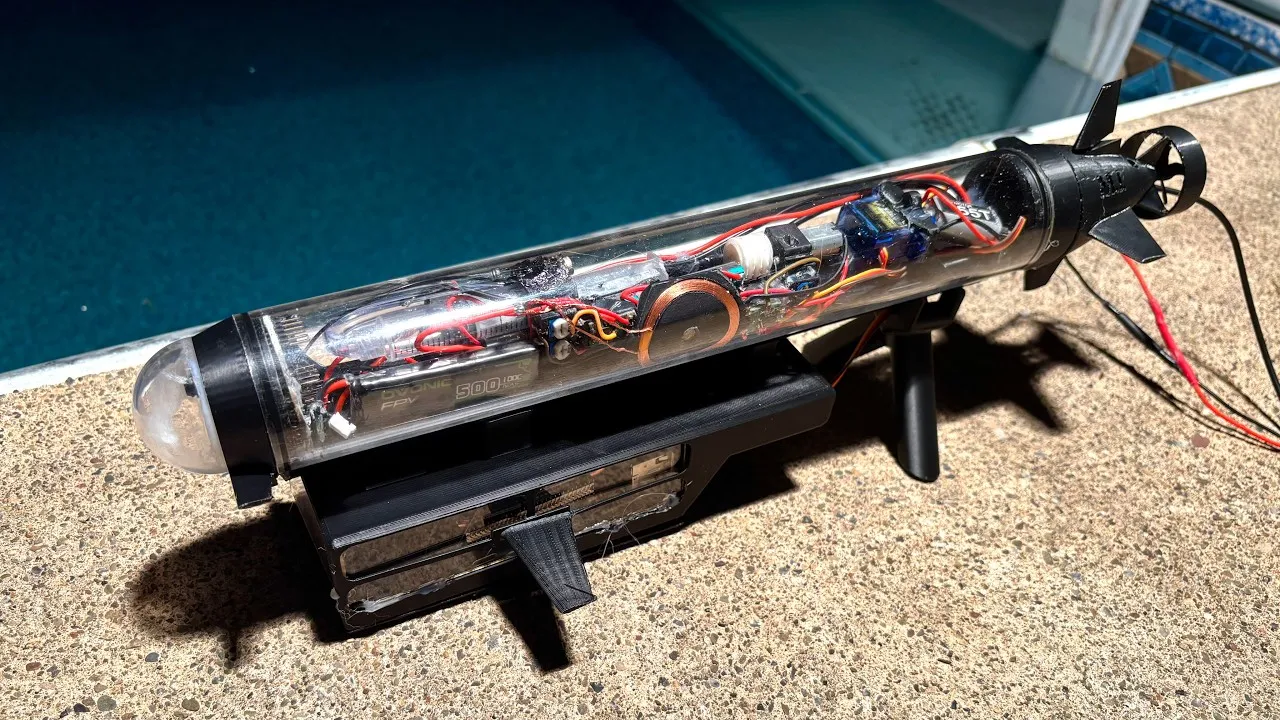
The build uses typical construction techniques for DIY subs of this size, with a clear acrylic tube serving as the body of the craft. It’s carefully sealed to ensure water ingress doesn’t send it to the bottom, using nifty tricks like a magnetic coupling for the prop. Inside, there’s a Raspberry Pi 4, kitted out with an Arducam IMX708 camera with a wide angle lens. It’s joined by a BNO085 inertial measurement unit, along with two BMP280 pressure sensors for keeping track of motion and the sub’s vital signs, while a DRV8833 motor controller runs the main drive motor.
There’s also an ESP32 which helps out with motor and servo control for steering, and ballast control. Sinking and floating the sub is handled with a pair of two ballast tanks constructed out of 5 mL syringes that are driven in and out with high-torque output gear motors. The build uses an antenna buoy so that communication can be maintained with the sub when it’s within a certain range of the surface.
Advertisement
A neat addition to the sub is its autonomous navigation code. [Ayman] whipped up some simple object avoidance routines, which rely on the Raspberry Pi’s camera. The code uses HSV values to track specific colored objects and avoid them, which proves more reliable than RGB as it allows tracking color in a largely brightness-independent manner.
The United States Air Force Special Operations Command (AFSOC) announced that the first 18 of 75 OA-1K Skyraider IIs have been delivered, according to Task and Purpose. The Skyraider, of course, carries on the namesake of the Vietnam War-era A-1 Skyraider.
Looking at the Skyraider II, you might have a lot of questions. What makes it so special? And why does it look like a cropduster? To answer the second question, the Skyraider II is based on the AT-802U from Air Tractor and then modified for combat by L3Harris. Air Tractor also manufactures, you guessed it, cropdusters.
Advertisement
The Skyraider II is a little hard to classify, and Air Tractor very explicitly notes that it is not a light attack plane like the Super Tucano. The Air Force says the Skyraider II is suited for “close air support, precision strike, or armed intelligence, surveillance, and reconnaissance,” which is why it’s sometimes referred to as a “Swiss Army Knife.” It’s also powered by a turboprop engine, rounding out the oddball factor.
Advertisement
Go anywhere, do anything
The OA-1K Skyraider II has only been with the Air Force since last year, making it one of the newest planes to join the fleet. It’s powered by a Pratt and Whitney PT6A-67F turboprop that gives it 1,600 horsepower and a top speed of just over 245 miles per hour. The PT6A is a very common engine that’s been used in dozens of small passenger and cargo planes, making maintenance and service inexpensive and straightforward.
For armaments, it has a total of 10 hard points to carry anything from rocket pods, machine guns, sensors, or surveillance equipment, for a total of 6,000 pounds. It can also be outfitted with a communications suite to interface with other friendly forces.
This week, the OA-1K Skyraider II demonstrated to officials that it can be loaded into other planes like the C-17 Globemaster III or C-5 Galaxy for deployment anywhere that has a runway long enough.
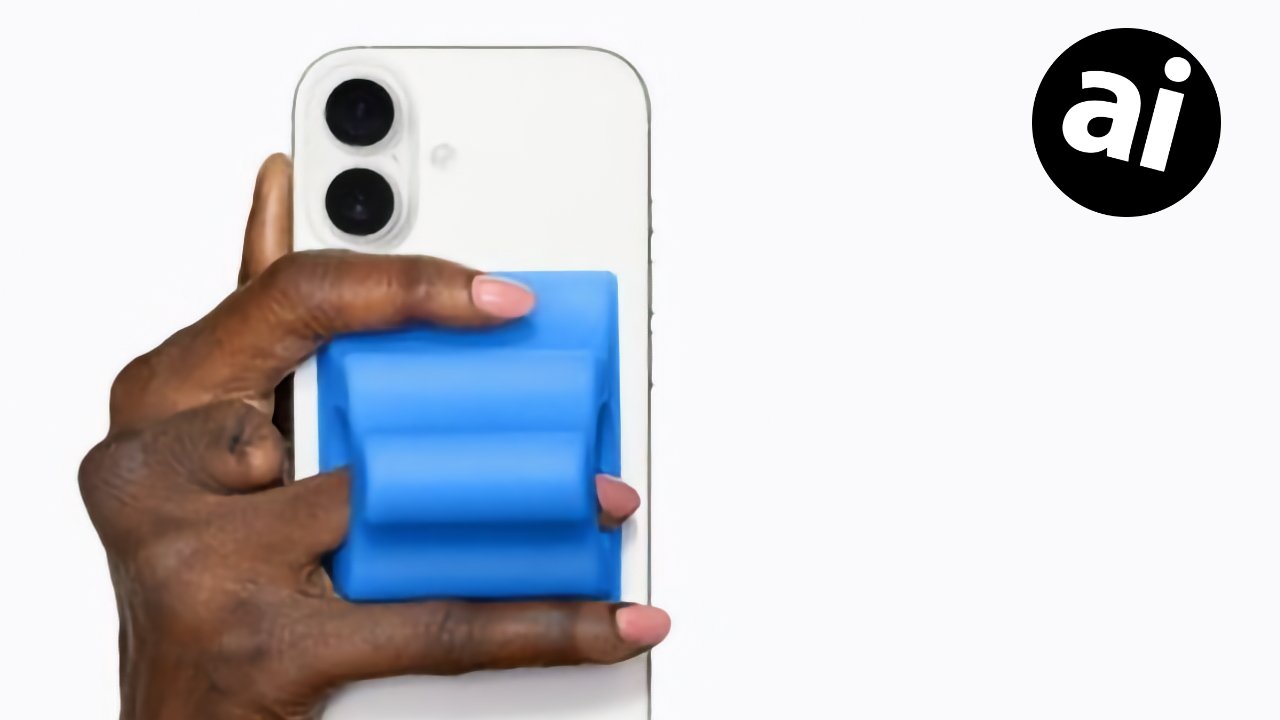
Apple has revealed a new accessibility accessory, plus shown off new features coming to iOS – image credit: Apple
Apple has shown off the new Accessibility features coming in iOS 27, which did nothing to stem the torrent of rumors about what we’ll see in Apple Intelligence, but possibly did steal a little bit of thunder from Google’s peculiar mishmash of an I/O conference, on the AppleInsider Podcast.
It’s surely the only time of the year where Apple actually tells us something in advance about the next version of iOS. No guessing, no rumors, just straight information about the new or improved accessibility features.
Apple does so solely because World Accessibility Day is coming up, and not at all because Google is running its I/O developer conference at this time. Just as it’s entirely coincidental that Apple issued invitations to its own WWDC now as well.
Advertisement
We all use Google, but even if you’re not an Android fan, it used to be interesting to watch Google I/O. You’d always see some features that you wished Apple would adopt, for instance, but not this year.
This year Google I/O was full of sound and fury, signifying nothing, if you spell sound and fury as “AI.” Nothing this year was biting at Apple’s heels, and that’s downright peculiar since Apple is relying on Google Gemini for its forthcoming updates to Apple Intelligence.
BONUS: Subscribe via Patreon or Apple Podcasts to hear AppleInsider+, the extended edition. This time, speaking of developer conferences, we’ve got WWDC on the horizon and just like you, that means we have plenty we want to see launch there.
Links from the show:
More AppleInsider podcasts
Tune in to our Smart Home Insider podcast covering the latest news, products, apps, and everything HomeKit related. Subscribe in Apple Podcasts, Overcast, or just search for HomeKit Insider wherever you get your podcasts.
Those interested in sponsoring the show can reach out to us at: [email protected].
Subscribe to AppleInsider on:
Keep up with everything Apple in the weekly AppleInsider Podcast. Just say, “Hey, Siri,” to your HomePod mini and ask for these podcasts, and our latest HomeKit Insider episode too. If you want an ad-free main AppleInsider Podcast experience, you can support the AppleInsider podcast by subscribing for $5 per month through Apple’s Podcasts app, or via Patreon if you prefer any other podcast player.
Just a few days ago, I wrote a post about how Bill Cassidy had been primaried out of returning as a senator for Louisiana and how all of this bootlicking of the Trump administration obviously didn’t do the job he hoped it would do. As a result, he has been left as a lame duck senator with a legacy that will be primarily about his decision to belay his own moral stances generally and his heavy hand in RFK Jr. leading HHS under Trump 2.0.
The point of that post was two-fold. First, I wanted to highlight just how damning to his legacy the appointment of Kennedy to HHS has become to his legacy. Second, I wanted to highlight that this supposedly serious senator was perfectly willing to give up on his principles the moment he thought, incorrectly as it turns out, that it would be politically expedient to do so.
And if you need a bow to put on that second point, you can get it now that Cassidy has flipped his vote on the Senate bill to end America’s involvement in the war with Iran until the Trump administration gets authorization from Congress.
Sen. Bill Cassidy, R-La., who just lost his primary for renomination over the weekend after he faced opposition from Trump, voted “yes” to advance the measure, the first time he has done so after having repeatedly voted “no.”
“While I support the administration’s efforts to dismantle Iran’s nuclear program, the White House and Pentagon have left Congress in the dark on Operation Epic Fury,” Cassidy said in a statement. “In Louisiana, I’ve heard from people, including President Trump’s supporters, who are concerned about this war. Until the administration provides clarity, no congressional authorization or extension can be justified.”
Advertisement
It’s amazing how post-election-loss clarity can assist someone in rediscovering their own spinal cord. Now, you can read Cassidy’s comments about how Congress has been left in the dark and that he’s hearing from people worried that maybe this whole warlord routine by Trump isn’t so great and believe that Cassidy came to all of these epiphanies in the last couple of days… if you want. But I’m going to point at you and laugh in your face if you do.
Now that Cassidy has nothing to lose, he’s decided to do the right thing. That isn’t some feather in his cap. It’s a self-indictment of all of his actions leading all the way up to his primary loss. If Cassidy thought this vote was the right thing to do today, what made it the wrong thing to do a week ago? The answer is nothing.
Even if a vote is taken and the bill passes, it would still need to get through the Republican House and survive a presidential veto. There is little chance of either happening. But that isn’t the point.
The point is that Bill Cassidy could have been a patriot over the past year and a half since Trump’s reelection, but he chose not to until he didn’t have a Senate seat to defend. And that makes him a coward.
KRAFTON has officially rolled out the BGMI 4.4 update in India as the game celebrates its 5th anniversary in the country. The latest update introduces more than just new gameplay content, as it focuses heavily on creativity, community participation, collaborations, and anniversary celebrations. With features like the BGMI Design Contest Spin, players are now becoming part of the game’s development journey, showing how BGMI is slowly evolving into a larger entertainment and creator platform.
The BGMI Design Contest Spin is a new event that runs from June 16 to July 17, 2026. Through this event, players can collect seven cosmetic items created by members of the BGMI community. One of the special rewards in Spin is Fortune Teller AWM skin. By introducing cosmetics designed by gamers as premium products, BGMI pays closer attention to the creativity of its community.
Glacier Spin and Mummy Crate
The popular Glacier Spin event is set to return to BGMI from May 26 to June 1, 2026. The main attraction of the event is the M416 skin, which has become known as the most famous weapon skin in BGMI over time. Players will also get one final chance to use the UC option during this Spin event. Before BGMI turns 5 in India, KRAFTON will also introduce the AKM Glacier skin in the Classic Crate for a limited time.
As part of the BGMI 4.4 update, the Mummy Crate event is returning with several exclusive cosmetic rewards. The highlight of the event is the new Chaosphage Set and the Chaos Calamity AWM skin. Popular returning skins, including Psychophage and Inferno Fiend, will also make a comeback for players. Apart from this, the Spartan King Gold Spin will feature an upgradeable M1 Garand skin along with other returning Gold skins in BGMI.
Advertisement
Hero’s Crown Theme Mode Explained
Hero’s Crown is the latest themed mode arriving in BGMI through the 4.4 update. The mode draws inspiration from Greek mythology and introduces a floating location called Crown’s Abode. Inside the mode, players can experience both PvP battles against other teams and PvE gameplay through boss encounters. One of the main attractions is the Helios boss fight, where players can earn Glory points by completing various trials and objectives. The update also adds mythology-themed weapons and new gameplay activities.
Furthermore, the Dinoground Theme Mode is expected to launch in BGMI with the 4.4 update for the first time. It has been reported by KRAFTON that the Dinoground Theme Mode will only be available in the Erangel map of the game.
New Brand and Creator Collaborations Arrive in BGMI 4.4
With the recent update, KRAFTON is enhancing its collaborations with BGMI and international and local companies. Players will be able to ride unique vehicles created in collaboration with Ford Motor Company and Harley-Davidson.
Alongside the vehicle collaborations, BGMI is also adding creator voice packs to the game. Bhuvan Bam’s voice pack will launch through a Spin event, while Ravi Gupta will receive his own QV Spin event later in the update cycle. These additions highlight BGMI’s growing focus on entertainment and creator-driven content.
BGMI 4.4 Update: Key Dates and Events
May 20: Ford Collaboration and Hellenistic Theme Mode launch; Eid Mubarak Login Event begins
May 22: Blue Lock Collaboration launches
May 26: Glacier Spin launches with UC option (through June 1)
May 27: Spartan King Gold Spin launches; Festival Special DSB begins
May 28: Toxic Exchange Event begins
May 29: Harley-Davidson Special Crate and Buddy Spin launch
Jun 2: Toxic Voice Pack Crate launches
Jun 5: Gemini’s Favor Blessing Gold Spin launches (through September 1)
Jun 8: Dinoground Theme Mode – first-ever BGMI release on Erangel
Jun 25: 5th Anniversary Exchange Event begins on Erangel and Livik
Jun 28: AKM Glacier in Classic Crate (through July 2)
Jul 1 & 5: 5th Anniversary Fireworks Display – 8:00 PM to 10:00 PM IST
Jul 2: BGMI 5th Anniversary
Jul 3: Mummy Crate launches (through September 1)
As BGMI completes five years in India on July 2, 2026, KRAFTON is preparing several anniversary-themed activities for players. The company stated that the game has surpassed 260 million downloads in India over the past five years. Players will be able to join the 5th Anniversary Exchange Event to collect rewards and special anniversary items. Fireworks celebrations scheduled for July 1 and July 5 will further add to the in-game festivities.
The US is betting big on quantum, committing $2bn in federal funding to nine companies as it races to build a domestic quantum computing industry.
The US Department of Commerce announced yesterday it is proposing $bn in federal incentives under the CHIPS and Science Act, targeting two domestic quantum foundry companies and seven quantum computing firms. The funds are aimed at solving the most critical technology challenges in the race to develop utility-scale, fault-tolerant quantum computers.
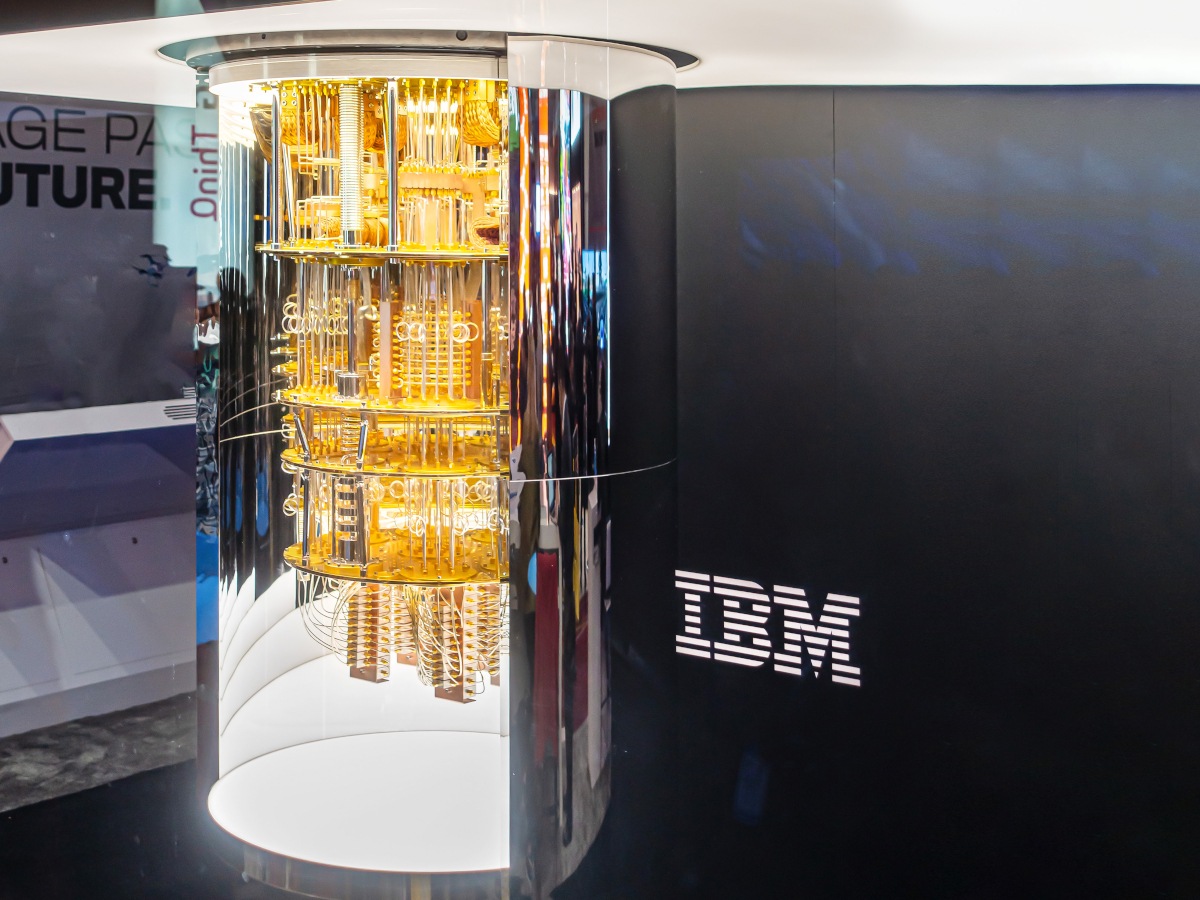
The largest single allocation goes to IBM, which is using the $1bn CHIPS award to launch Anderon, a standalone company and what it says will be the first pure-play US quantum chip foundry. Headquartered in Albany, New York, Anderon will operate as a 300-millimetre quantum wafer foundry serving multiple quantum hardware vendors.
IBM will match the government’s contribution with $1bn of its own cash, along with significant intellectual property, assets, and its skilled workforce, with additional investors expected as Anderon grows.
Advertisement
GlobalFoundries is receiving $375m to launch Quantum Technology Solutions, a new quantum business built on its decade-long cryogenic CMOS, advanced packaging, and materials science investment. The Malta, New York-based foundry will manufacture the full quantum hardware stack, from quantum processor units to cryogenic readout and control chips, serving multiple qubit architectures including superconducting, trapped ion, photonic, topological, and silicon spin. The new business launches with existing customers that include Diraq, PsiQuantum, Quantinuum, Google, Microsoft, and Nvidia.
Among the seven quantum computing companies receiving funding is Quantinuum, which has signed a letter of intent for $100m to fabricate low-loss integrated photonics and specialised optical components tuned to trapped-ion critical wavelengths. The company plans to partner with GlobalFoundries for critical semiconductor components, and Monarch Quantum for integrated photonics.
“These strategic quantum technology investments will build on our domestic industry, creating thousands of high-paying American jobs while advancing American quantum capabilities,” said US Commerce Secretary Howard Lutnick.
The CHIPS R&D Office said it is taking a portfolio approach to strengthen US leadership across multiple quantum modalities simultaneously, while focusing each award on discrete technological problems of real consequence. The remaining $538m in funding is distributed among Atom Computing, Diraq, D-Wave, Infleqtion, PsiQuantum, and Rigetti Computing.
Advertisement
Quantum computing, the department said, has significant implications for national defence, advanced materials and biopharmaceutical discovery, financial modelling, and energy systems. The announcement comes as Quantinuum is also preparing for a Nasdaq IPO.
Don’t miss out on the knowledge you need to succeed. Sign up for the Daily Brief, Silicon Republic’s digest of need-to-know sci-tech news.






















































You must be logged in to post a comment Login