

Business
Energy Transfer's Valuation Can't Be Justified In Light Of Its Surging NGL Exposure



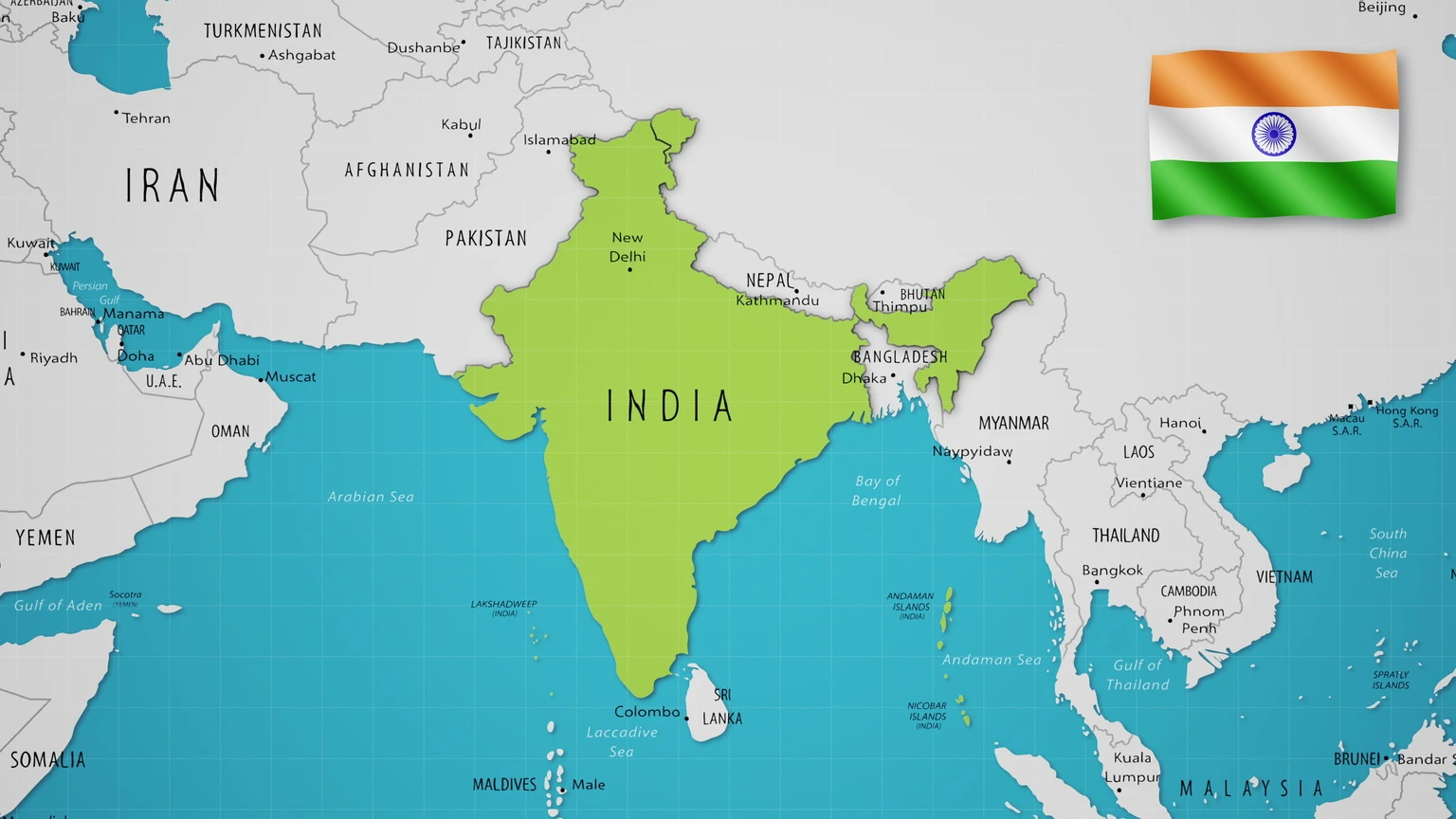
India: The Long-Duration Case


Here at PropNotes, I focus on uncovering high-yield investment opportunities for individual investors.With a background in professional prop trading, my goal is to break down complex concepts into clear, actionable insights that help you achieve better returns.Follow me today and take control of your portfolio.
Analyst’s Disclosure: I/we have a beneficial long position in the shares of VICI either through stock ownership, options, or other derivatives. I wrote this article myself, and it expresses my own opinions. I am not receiving compensation for it (other than from Seeking Alpha). I have no business relationship with any company whose stock is mentioned in this article.
Seeking Alpha’s Disclosure: Past performance is no guarantee of future results. No recommendation or advice is being given as to whether any investment is suitable for a particular investor. Any views or opinions expressed above may not reflect those of Seeking Alpha as a whole. Seeking Alpha is not a licensed securities dealer, broker or US investment adviser or investment bank. Our analysts are third party authors that include both professional investors and individual investors who may not be licensed or certified by any institute or regulatory body.

The rupee closed at 95.69 per dollar on Friday, versus its previous close of 96.20. It traded between 95.67 and 96.31, giving importers an opportunity to hedge their exposure, traders said.
“We saw public sector banks offering dollars throughout the day today and yesterday (Friday and Thursday). Such massive intervention is seen after a long time, and it seems the RBI wants to cut back rupee-negative positions that were in the market,” a trader from a PSU bank said.
Dealers expect the rupee to trade between 95 and 96 on Monday.
Meanwhile, Asian currencies were mostly weaker, with losses led by a 0.6% fall in the Korean won, Reuters data showed.

“India has entered this phase from a position of macroeconomic strength. Domestic demand continues to be the key driver of growth. However, the near-term outlook is somewhat clouded by supply-side pressures,” the report prepared by the central bank researchers observed.
They expressed caution on the likelihood of the pass-through to domestic prices. “Although headline inflation remains firmly within the tolerance band, the pass-through to domestic prices needs to be monitored,” they said.
The April inflation measured by the Consumer Price Index (CPI) rose to 3.5% from 3.4% in March, largely driven by food inflation, while core inflation remained steady.
The Wholesale Price Index (WPI) inflation, however, rose to 8.3% in April from 3.9% in March, recording a 42-month high, indicating “incipient price pressures in India”, the report observed.

RBI maintains that the views expressed in the report are of the researchers, who were guided by Deputy Governor Poonam Gupta.
“The financial conditions, crude oil prices and capital flows continue to pose challenges to the external sector outlook. Nevertheless, robust services exports, positive net FDI flows, foreign exchange reserve buffers and a number of proactive policy measures undertaken by the government and the RBI are likely to cushion the Indian economy against external headwinds,” they said.Economic activity showed a mixed trend in April. Industrial and services activity stayed strong in many segments, with most listed private non-financial companies showing quarter-on-quarter improvement in business performance in the fourth quarter. On the other hand, the merchandise trade deficit widened month-on-month in April on a rising import bill, primarily due to crude oil and gold.
In the agriculture sector, rapid progress of summer sowing was supported by above-normal pre-monsoon rainfall. However, a higher probability of above-normal minimum temperatures and unseasonal rains in some parts of the country pose risks to the harvesting of remaining rabi crops, the authors warned.


Long-only investment, evaluating companies from an operational, buy-and-hold perspective.Quipus Capital does not focus on market-driven dynamics and future price action. Instead, our articles focus on operational aspects, understanding the long-term earnings power of companies, the competitive dynamics of the industries where they participate, and buying companies that we would like to hold independently of how the price moves in the future. Most QC calls will be holds, and that is by design. Only a very small fraction of companies should be a buy at any point in time. However, hold articles provide important information for future investors and a healthy dose of skepticism to a relatively bullish-biased market.Disclaimer: All of the author’s articles are written on an “as is” basis and without warranty. They represent the author’s opinion only and in no way constitute professional investment advice. It is the responsibility of the reader to conduct their due diligence and seek investment advice from a licensed professional before making any investment decisions. The author disclaims all liability for any actions taken based on the information contained in any articles published.
Analyst’s Disclosure: I/we have no stock, option or similar derivative position in any of the companies mentioned, and no plans to initiate any such positions within the next 72 hours. I wrote this article myself, and it expresses my own opinions. I am not receiving compensation for it (other than from Seeking Alpha). I have no business relationship with any company whose stock is mentioned in this article.
Seeking Alpha’s Disclosure: Past performance is no guarantee of future results. No recommendation or advice is being given as to whether any investment is suitable for a particular investor. Any views or opinions expressed above may not reflect those of Seeking Alpha as a whole. Seeking Alpha is not a licensed securities dealer, broker or US investment adviser or investment bank. Our analysts are third party authors that include both professional investors and individual investors who may not be licensed or certified by any institute or regulatory body.

Operator
Good day, ladies and gentlemen, and welcome to the Sanlam 2026 3-month Operational Update. [Operator Instructions] Please note that this event is being recorded. I will now hand the conference over to Paul Hanratty. Please go ahead, sir.
Paul Hanratty
Group CEO & Executive Director
Irene, thank you very much, and good afternoon, ladies and gentlemen, and thank you very much for joining us on this call today. I am joined on the call today by our Group Finance Director, Abigail Mukhuba; our Group Chief Risk Officer and Chief Actuary, Mlondolozi Mahlangeni; and our Head of Investor Relations, Tokelo Mulaudzi.
Earlier today, we released our operational update for the first 3 months of 2026. I’ll provide a very brief overview of our strategic progress and operational performance before we’ll open the line for questions.
The group is investing in organic growth. And while this puts some short-term pressure on earnings, it underpins future growth. Against this backdrop, I’m going to cover 5 points briefly in order, I hope, to assist you in making some sense of the quarter’s performance.
First off, the group continued to make excellent progress in the execution of strategic priorities in the quarter. We closed the Ninety One transaction in early


Analysis-Three months in, is Trump losing the Iran war?

Travel remained the single largest category of outward remittances, accounting for $1.09 billion in March, and lower than the $1.31 billion in February and $1.66 billion in January, suggesting a seasonal moderation after the peak travel months.
Investment in equity and debt saw a sharp uptick, rising by 65.5% to $440 million in March 2026 from $266 million in February. Deposits abroad recovered sharply to $176 million in March 2026, up from $56.9 million in February and $48.6 million in January.
Remittances for studies abroad moderated to $151.7 million in March from $267.4 million in January, the latter number likely reflecting the January semester commencement cycle when fee payments are typically concentrated.
Business
Multibagger Opportunity? REITs may be the next big wealth creation avenue for India’s retail investors

Industry experts believe the next phase of growth for India’s REIT market could significantly broaden retail participation as the ecosystem expands beyond office assets into sectors such as warehousing, logistics, hospitality, retail, and data centres.
REITs, or Real Estate Investment Trusts, were originally introduced in the US during the 1960s to enable retail investors to participate in income-generating commercial real estate through stock exchanges.
In India, REIT units are listed on the NSE and BSE and are regulated by the Securities and Exchange Board of India (SEBI), offering high levels of disclosure, governance, and transparency.
According to data from the Indian REIT Association, India currently has five listed REITs with a combined market capitalisation of nearly Rs 1.7 lakh crore as of May 15, 2026.
Cushman & Wakefield’s Q1 2026 Capital MarketBeat report also highlighted that REITs accounted for 26% of institutional real estate inflows during the quarter, underscoring their growing relevance in the investment ecosystem.
REITs Becoming a Bridge Between Real Estate and Financial Markets
Pratik Tibrewala- Senior-Vice President & Head Corporate Finance – M3M said REITs have emerged as a critical mechanism to address India’s high cost of capital while supporting the country’s long-term urbanisation and infrastructure needs.
According to Tibrewala, REITs have evolved into a preferred monetisation route for stable income-generating office and retail assets over the last eight years and are now expanding into new-economy sectors such as logistics and data centres. He noted that predictable quarterly yields have attracted increasing participation from family offices, mutual funds, and debt investors.
Tibrewala added that India remains at an early stage of REIT penetration despite being one of Asia’s largest real estate markets across office, retail, warehousing, and data centres. He expects the ecosystem to grow significantly in terms of scale, value, and asset diversity in the coming years.
Importantly, he pointed out that REITs are accelerating the financialisation of Indian real estate by channeling domestic savings into infrastructure-linked income assets, while also opening monetisation opportunities for regional developers through acquisition of third-party assets.
Retail Participation Expected to Rise Sharply
Raunaq Arora & Maanu Dewan (Founders Ace Consulting – Real Estate Consultancy Firm based out of Gurugram) said, India’s REIT ecosystem is rapidly transitioning from an early-stage product into a mainstream investment category.
The founders noted that listed REITs in India have already distributed more than Rs 22,000 crore to unitholders since inception, reflecting stable income generation and rising investor confidence. They believe growing domestic participation is helping widen the capital base of the sector.
Arora and Dewan expect three major trends to shape the next phase of REIT growth in India — expansion beyond office assets into retail, warehousing, hospitality, and mixed-use developments; greater retail investor participation due to predictable yields and lower ticket sizes; and stronger institutional participation as REITs increasingly become part of core investment portfolios.
They added that as India’s Grade A office stock and income-generating assets continue to expand, REITs could play a role similar to mature global markets by improving liquidity, transparency, and long-term capital formation in the real estate sector.
Democratising Access to Real Estate Investments
Pushpender Singh, Managing Director, JMS Group said REITs have significantly changed the nature of real estate investing in India by making the sector more accessible and transparent for investors who may not have the ability or desire to buy physical real estate assets directly.
He believes that as regulations strengthen and the market matures further, REITs will increasingly become an integral part of investment portfolios while helping bridge the gap between real estate and traditional financial investments.
Meanwhile, Manik Malik, CEO and President, BPTP said India’s REIT market still remains at an early stage compared to mature global economies, suggesting substantial room for future growth.
According to Malik, REITs are gradually transforming real estate from a traditionally illiquid and ownership-driven asset class into a transparent, yield-oriented financial product. He also highlighted that REITs are democratising access to institutional-quality real estate assets for both retail and institutional investors.
Malik added that regulatory developments such as the introduction of SM-REITs could further deepen retail participation in the sector. He expects the next phase of REIT growth to be driven by diversification into sectors including hospitality, logistics, warehousing, retail, and data centres.
A Long-Term Wealth Creation Opportunity?
Industry experts believe India’s REIT ecosystem is approaching an important inflection point as rising investor awareness, stable yield expectations, and improving market depth continue to attract both retail and institutional capital.
With lower ticket sizes, predictable distributions, and exposure to premium commercial assets, REITs are increasingly being viewed as a potential long-term wealth creation avenue for retail investors looking beyond traditional options such as fixed deposits, equities, or direct property ownership.
As India’s commercial real estate market expands and becomes more institutionalised, REITs could emerge as one of the most important investment categories in the country’s evolving financial landscape.
(Disclaimer: Recommendations, suggestions, views and opinions given by the experts are their own. These do not represent the views of The Economic Times)

Choosing PEZA favors export-focused operations with zone controls; BOI suits domestic or mixed markets, offering broader site flexibility and simplified compliance, influencing incentives, operations, and supply chain setup.
Choosing Between PEZA and BOI
Deciding between the Philippine Economic Zone Authority (PEZA) and the Board of Investments (BOI) hinges on whether a business focuses on export compliance or domestic market access. PEZA is tailored for export-driven operations, offering benefits for companies that generate approximately 70% or more from exports. Conversely, BOI caters to domestic market activities, including local distribution, retail, wholesale, and e-commerce, suitable for businesses with a primarily internal sales focus. This choice impacts revenue eligibility, tax incentives, and supply chain design.
Operational and Location Considerations
PEZA requires physical presence within designated economic zones, providing customs supervision and duty facilitation but limiting operational flexibility. BOI allows companies to set up anywhere nationwide, such as Metro Manila, Cebu, or Davao, enhancing distribution efficiency. While BOI offers greater location freedom, it lacks automatic access to bonded systems available within PEZA zones, influencing logistics and import/export processes.
Eligibility, Compliance, and Transition
PEZA registration demands continuous export performance monitoring within a controlled environment, favoring companies committed to export growth. BOI emphasizes performance-based reporting aligned with registered activities, offering more operational flexibility but requiring diligent compliance. Transitioning between PEZA and BOI involves restructuring, often costly and disruptive, underscoring the importance of choosing the appropriate registration pathway during the initial setup.
Read the original article : PEZA vs BOI in the Philippines: Which Incentive Structure Fits Your Manufacturing or Logistics Model?
Other People are Reading

Coronation Street legend returning to ITV show after 23 years

India: The Long-Duration Case
DOGE Price Dumps to Monthly Lows but Dogecoin Whales Load Up


-

 Crypto World1 day ago
Blockchain.com files with SEC for U.S. IPO
-

 Fashion12 hours ago
Holiday Weekend Open Thread – Corporette.com
-

 Crypto World6 days ago
Intesa Sanpaolo’s crypto holdings jump to $235M as XRP enters
-

 Crypto World15 hours ago
Space X IPO Is ‘Bad News’ for Tech Stocks: But What About Bitcoin?
-

 Fashion6 days ago
On the Scene at Gucci’s Cruise Show in New York City: Mariah Carey, Kim Kardashian, Lindsay Lohan, Iman, and More!
-

 Politics7 days ago
Watch: far-right flag-fanatics run over victim, attack locals – Setup By the Left wing for your entertainment
-

 Fashion7 days ago
Trending Western Style Vests Perfect for Summer
-

 Business16 hours ago
Dell Technologies DELL Stock Surges 15% on AI Server Momentum and Analyst Upgrades in 2026
-

 Fashion6 days ago
Amazon Sundays: Memorial Day Hosting
-

 Entertainment6 days ago
Off Campus Easter Eggs Explained: Characters, Stories, More
-
 Tech17 hours ago
A 0.12% parameter add-on gives AI agents the working memory RAG can’t
-

 Politics11 hours ago
Makerfield: a tale of two social-media histories
-
 Crypto World4 days ago
Revolut Launches Dogecoin Debit Card Across UK and EU
-

 Crypto World16 hours ago
AI infrastructure race heats up as IREN pitches full-stack strategy, WhiteFiber lands $160M deal
-
Business6 days ago
Australia defends property tax changes designed to fix ‘broken’ housing
-
 NewsBeat2 days ago
Charity run by Reform leader Malcolm Offord accused of ‘law breaking’ over Scottish registration
-

 Sports1 day ago
2026 CJ Cup Byron Nelson leaderboard: Brooks Koepka finds putting stroke in Round 1
-

 Crypto World24 hours ago
Bitcoin Accumulation Weakens as BTC Realized Losses Hit $600M
-

 Politics7 days ago
Anti-Zionists attacked in Jerusalem as ethnofascists chant race-hate
-

 Tech1 day ago
WhatsApp ads could make Irish debut after discussions with DPC
You must be logged in to post a comment Login