Connect with us
DAPA Banner
DAPA Coin
DAPA
COIN PAYMENT ASSET
PRIVACY · BLOCKDAG · HOMOMORPHIC ENCRYPTION · RUST
ElGamal Encrypted MINE DAPA
🚫 GENESIS SOLD OUT
DAPAPAY COMING

Tech

Moto Edge 70 Pro+ will arrive with the camera setup Motorola skipped earlier

Published

on

Motorola appears to be getting ready to bring a more capable version of its Edge 70 series to India. A new phone, called the Edge 70 Pro+, is now listed as “coming soon” on Flipkart, and the teaser already points to a major camera upgrade over the Edge 70 Pro model recently launched in the country.

What camera features has Motorola confirmed?

According to the promotional page, the phone will feature a 50MP primary camera and a 50MP telephoto lens. The main camera uses a Sony Lytia 710 sensor with optical image stabilization.

The more interesting addition is the 50MP 3.5x periscope telephoto camera, which supports 24mm, 35mm, 50mm, and 85mm portrait modes. Motorola is also advertising up to 50x AI-powered zoom.

This could be an important upgrade for buyers who were disappointed by the regular Edge 70 Pro launched in India, as that model skipped the telephoto camera entirely.

Is this just the global Edge 70 Pro under a new name?

This camera setup closely matches the global Motorola Edge 70 Pro, which debuted in Europe last month. Two of the promoted color options, Pantone Zinfandel and Pantone Chicory Coffee, are also the same shades offered on the global model. That strongly suggests the Edge 70 Pro+ could simply be a rebranded version of the international Edge 70 Pro for India.

Advertisement

This would not be unusual for Motorola. The company has previously brought global models to India under slightly different names, and the regular Edge 70 Pro already arrived here in a cut-down form without the telephoto camera.

There may still be one India-specific touch. Pantone Stormy Sea appears to be a new colorway for the market, with Motorola describing it as “a soothing green-grey tone that channels calm amid chaos.”

Motorola has not confirmed the rest of the specifications yet. However, if the Edge 70 Pro+ is based on the global Edge 70 Pro, it could feature a 6.8-inch 144Hz AMOLED display, 90W wired fast charging, wireless charging, and more RAM than the Indian Edge 70 Pro. The official launch date is still under wraps, so these details should be treated as likely rather than confirmed.

Source link

Advertisement
Continue Reading
Click to comment

You must be logged in to post a comment Login

Leave a Reply

Tech

Jailbroken Gemini helped Russian-speaking fraudster target MAGA crypto users

Published

on

A solo Russian-speaking threat actor used a jailbroken Google Gemini in a fraud and credential-theft campaign targeting hardcore Trump supporters and conspiracy theorists.

Between September 2025 and May 2026, the “low-skilled” scumbag using the handle bandcampro partnered with the LLM to impersonate an American veteran, run a Telegram channel (@americanpatriotus), hack admin credentials, and steal cryptocurrency, according to a threat report from TrendAI. His only “real cost” in the operation was stolen API keys.

Bandcampro ultimately reached about 17,000 subscribers, used 73 likely-stolen Gemini API keys, hacked 29 WordPress admin credentials, infiltrated at least one company, and emptied at least one victim’s cryptocurrency wallets, according to TrendAI researchers Philippe Lin, Joseph C Chen, Fyodor Yarochkin, and Vladimir Kropotov. 

The threat-hunters detailed the campaign in a Thursday report, and said while the Telegram channel dates back five years, bandcampro’s success skyrocketed once he started using AI-generated content last fall.

Advertisement

“We have reached an inflection point for cybercrime conspiracies,” Tom Kellermann, TrendAI’s VP of AI security and threat research, told The Register, adding that “bandcampro’s conspiracy underscores the sophistication of the Russian cybercriminal community and how weaponized jailbroken LLMs are manipulated to orchestrate a systemic cybercrime campaign.”

Kellermann said the attack “highlights LLMs’ Achilles heel, which is the tremendous exposure to API attacks.” 

TrendAI researchers discovered the scammer’s infrastructure in May, which exposed the full contents of the individual’s operational environment. 

He used Google Gemini to generate the Telegram channel text and Venice.ai to power an interactive chatbot designed to simulate a Quantum Financial System (QFS) terminal. 

Advertisement

Neither Google nor Venice responded to The Register’s requests for comment.

The campaign targeted the QAnon and MAGA communities, mimicking the cryptic, anonymous “Q drop” messages at the heart of the QAnon conspiracy, but the researchers say his “use of information operation techniques was more likely for cryptocurrency fraud instead of political motives,” based on the content posted, and the stock remote access trojan (RAT) used alongside other commercial malware.

On September 9, 2025, the actor posted a fake “freedom-first, self-custody wallet” called StellarMonster, with a welcome bonus of up to 1,000 XLM (about $380) on the Telegram channel.

It was an executable named StellarMonSetup.exe. Malware analysis determined that in reality, StellarMonSetup.exe is a legitimate remote access tool called GoToResolve, which gives the operator a persistent remote desktop session with file access, command execution, and clipboard capture. 

Advertisement

Plus, any subscribers who used the “import your wallet” function and typed their seed phrase into the fake import screen gave the attacker their wallet keys.

“At least one victim’s crypto-wallet was fully compromised: password cracked, 12-word mnemonic stolen, and the owner’s 40+ wallet addresses harvested across all major chains,” the researchers noted.

The attacker also used an AI-powered brute-forcing tool to hack WordPress accounts, we’re told. “The script is built on the premise that people mutate familiar base passwords in predictable ways, and Gemini 2.5 Flash can model the mutations when supplied with static wordlists,” Trend wrote.

In total, the AI-assisted WordPress hacking operation cracked 29 WordPress administrator accounts, including those belonging to weapons retailers, legal offices, medical practices, and small commercial sites.

Advertisement

During his conversations with Gemini, bandcampro asked questions like: “When the bot accumulates 5,000 active users, how much can we earn from one pump-and-dump cycle?” The criminal also asked how professional crypto call centers scam North American victims and Gemini suggested Medicare and/or Health Canada fraud targeting the elderly.

The Russian speaker also automated his content campaign through a pipeline he named “Quantum Patriot,” a set of Python scripts that called Gemini to role-play as an American veteran patriot. The pipeline fed a preset list of newsfeeds into the LLM and Gemini rewrote them, prompted to act as an admin of an “American Patriot” channel looking for “hidden angles.”

The crypto- and credential-thief also used Gemini to help him hack, set up a command-and-control framework – including a mail-testing tool, a Gmail aggregator, and an anonymous proxy on a VM in the Netherlands – steal and validate credentials, and run the chatbot.

“In the anatomy of one busy working day, Gemini deployed servers, helped debug code, automated workflows, wrote a script to rotate API keys, and managed the actor’s Cloudflare tunnels,” the TrendAI researchers wrote. “The actor prompted in Russian, while the LLM reasoned and replied in English. Over one 16-hour session, the actor co-worked with Gemini end-to-end.”

Advertisement

At one point, after a nine-hour pause from the human partner, which the authors say “was likely a 9-hour sleep,” bandcampro found the bot posting every 20 minutes without a break – but with Russian slang appearing in the English posts. So he opened another session to fix it.

“What previously required a team of writers, social media managers, IT workers, and malware programmers can now be automated by a single actor using a VPS, a Telegram bot, and API access to frontier models,” Trend’s team warned. ®

Source link

Advertisement
Continue Reading

Tech

T-Mobile Promo Codes: 25% Off | May

Published

on

T-Mobile for Business is the upgrade a small business owner will find useful, boasting unlimited plans, a super-fast 5G network, and customer service support whenever you need it. With no data overages, surprise fees, or annual service contracts, there’s an affordable plan for any type of business. Plus, without an annual contract, you’re never locked into anything long term, and as your business changes and grows, your plan can too.

With T-Mobile for Business, you can just focus on your growing business, knowing that you’ll have unlimited data and texting in over 215 countries, four full-flight Wi-Fi sessions per year, and unlimited one hour Wi-Fi sessions with streaming on flights, so wherever your business takes you, T-Mobile Business will be there. And we at WIRED have a T-Mobile promo code and other deals to help you save on essential plans so you can stay connected.

Lock in a Big Sign-Up Bonus for Business Internet

If T-Mobile Business is right for you (and your business), be sure to check business internet eligibility in your area. All you’ll need to do is enter your business address on T-Mobile’s site to see the plans available near you. And as an added bonus, you can get a Virtual Prepaid Mastercard when you activate (allow 10 weeks). But this deal isn’t going to be around forever, so act soon to get big rewards on the internet service you already need.

Switch to T-Mobile Business and Score a Prepaid Card Reward

No matter how your small business changes and grows, you can feel secure knowing that your 5G Business Internet rate will be locked in for five years, guaranteed. Plus, T-Mobile has business experts available to assist in finding the perfect plan and hardware to support any and all of your business needs. And (perhaps best of all) for a limited time, you can receive cash via a Virtual Prepaid Mastercard when you sign up (allow 10 weeks).

Advertisement

Bundle and Save on Your T-Mobile Business Plan

You can get business internet at an even lower price when you bundle it with other T-Mobile plans. You’ll get huge discounts when you pair your business internet with any voice line. Plus, the offer is backed by the five year price guarantee, meaning your rate won’t change for five years. There’s also no annual contracts, with flexible month-to-month services on T-Mobile’s fast 5G network.

Pick the Right T-Mobile Business Phone Plan for Your Team

There are a few T-Mobile Business phone plans to choose from, so you’ll want to make sure you’re choosing the right plan for your small business and its needs. The first plan is the basic CoreMobile plan, which has unlimited hotspots with 5GB high-speed data, 50GB of premium data, and unlimited talk and text. Next is ProMobile, which has all the above benefits, as well as enhanced security, premium and hotspot data, and in-flight Wi-Fi. The top tier is SuperMobile, which also includes all previous perks, as well as intelligent network performance, satellite coverage, unlimited premium data, and more mobile hotspot data.

Upgrade to iPhone 17 for Less With T-Mobile

The WIRED Gear team loves the iPhone 17. We even have a guide to which iPhone 17 is best for you, including a long list of our favorite iPhone 17 accessories and cases so that you can make sure your phone is fitted with all the right gear. Right now, you can get the iPhone 17 Pro for under $100 at T-Mobile. All you need to do to score this deal is switch to T-Mobile and bring your number on either an Experience Beyond or Better Value plan.

Get a Third Line Free When You Activate a New Business Plan

Right now, if you’re a new customer and you activate a new business plan, you’ll get a third line for free! This T-Mobile discount is for any new customer activating two new lines on a new eligible voice plan, which includes: SuperMobile, ProMobile, CoreMobile, Business Unlimited Ultimate+, Experience More for Business, and Experience Beyond for Business plans.

Advertisement

Source link

Continue Reading

Tech

Trend Micro warns of Apex One zero-day exploited in the wild

Published

on

Trend Micro

Japanese cybersecurity software company Trend Micro has addressed an Apex One zero-day vulnerability exploited in attacks targeting Windows systems.

Apex One is Trend Micro’s enterprise-grade endpoint security platform that protects corporate networks from a wide range of security threats, including malware, ransomware, fileless attacks, and web-based threats.

Tracked as CVE-2026-34926, this directory traversal vulnerability in the Apex One (on-premises) server allows local attackers with admin privileges to inject malicious code.

“A directory traversal vulnerability in the Apex One (on-premise) server could allow a pre-authenticated local attacker to modify a key table on the server to inject malicious code to deploy to agents on affected installations,” Trend Micro saidon Thursday.

Advertisement

“This vulnerability is only exploitable on the on-premise version of Apex One and a potential attacker must have access to the Apex One Server and already obtained administrative credentials to the server via some other method to exploit this vulnerability.”

However, despite the restrictive requirements for successful exploitation, the company warned that “TrendAI has observed at least one attempt to exploit this vulnerability in the wild.”

Federal agencies ordered to patch within three weeks

Yesterday, the U.S. Cybersecurity and Infrastructure Security Agency (CISA) also added CVE-2026-34926 to its list of actively exploited vulnerabilities and ordered federal agencies to patch their devices by June 4.

“These types of vulnerabilities are frequent attack vectors for malicious cyber actors and pose significant risks to the federal enterprise,” CISA warned. “Apply mitigations per vendor instructions, follow applicable BOD 22-01 guidance for cloud services, or discontinue use of the product if mitigations are unavailable.”

Advertisement

On Thursday, Trend Micro also released security updates to address seven local privilege escalation vulnerabilities in the Apex One Standard Endpoint Protection (SEP) agent that attackers can exploit if they have permission to execute low-privileged code on the target system.

Threat actors have frequently targeted flaws in Trend Micro Apex One over the last several years, often in zero-day attacks.

For instance, Trend Micro warned of an actively exploited Apex One RCE bug (CVE-2025-54948) in August 2025 and addressed two other Apex One zero-days exploited in the wild in September 2022 (CVE-2022-40139) and September 2023 (CVE-2023-41179).

CISA currently tracks 12 Trend Micro Apex vulnerabilities that have either been or are still being abused in attacks.

Advertisement

article image

Automated pentesting tools deliver real value, but they were built to answer one question: can an attacker move through the network? They were not built to test whether your controls block threats, your detection rules fire, or your cloud configs hold.

This guide covers the 6 surfaces you actually need to validate.

Download Now

Source link

Continue Reading

Tech

Trdo Download | TechSpot

Published

on

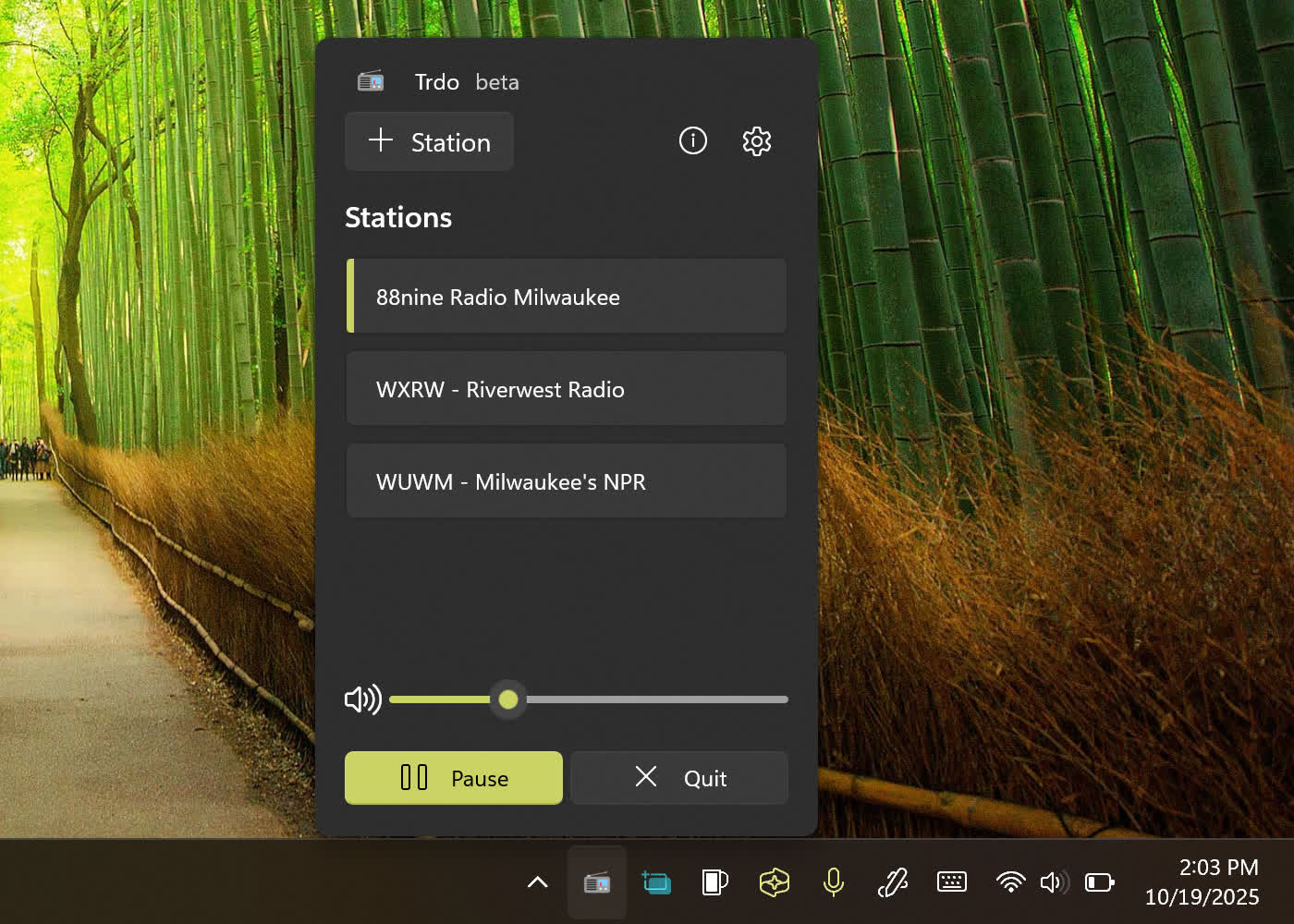
Trdo is a modern internet radio player built for Windows with a focus on simplicity and elegance. Stream your favorite radio stations with a beautiful, intuitive interface designed for Windows 11.

Built with .NET 9, WinUI 3, and the Windows App SDK, Trdo provides a native Windows experience with smooth animations and responsive controls.

Features

  • Stream internet radio stations from around the world
  • Modern, clean user interface with Fluent Design
  • Customizable settings
  • High-quality audio playback
  • Save and organize your favorite stations
  • Now playing information display
  • Support for Windows 11 themes

Trdo is designed to be simple and elegant, focusing on what matters most: enjoying your favorite radio stations. By leveraging modern Windows technologies, Trdo provides a smooth, native experience that feels at home on Windows 11. The interface is designed to be intuitive and uncluttered, letting you focus on discovering and listening to great content.

Source link

Advertisement
Continue Reading

Tech

Galway adtech Buymedia plans 30 jobs at new Belfast office

Published

on

Buymedia is ranked as one of Deloitte’s fastest growing EMEA technology companies.

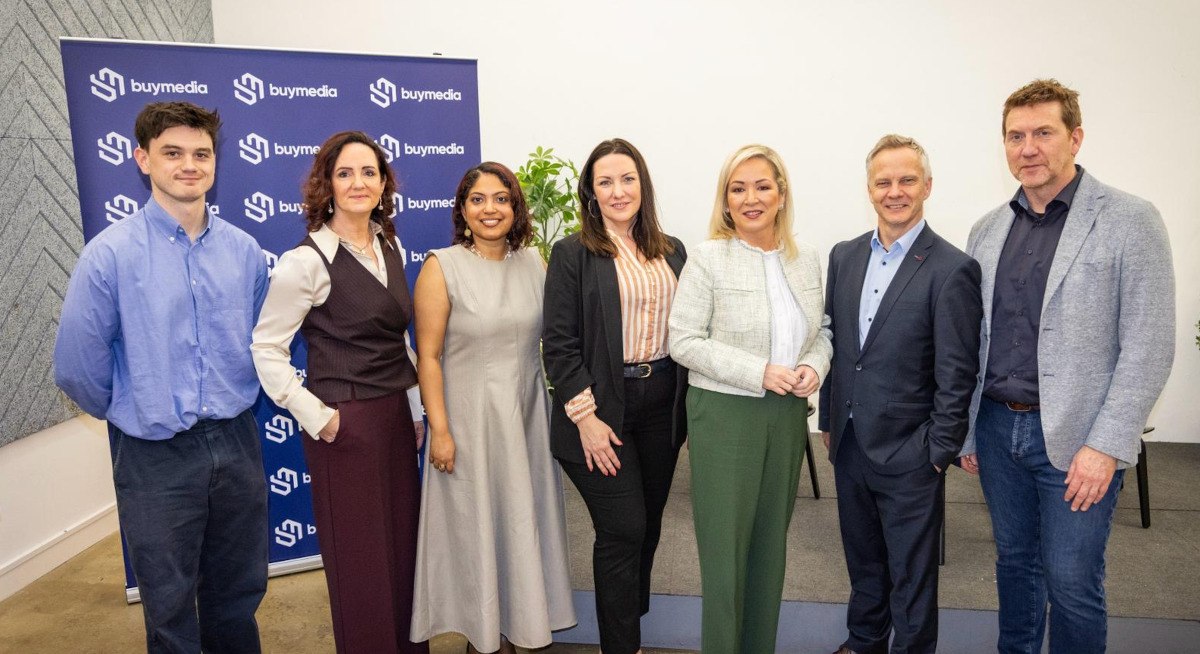
Galway adtech player Buymedia is investing £1.5m and has opened a new Belfast office with plans to create 30 jobs in Ireland and the UK over the next three years.

Founded in Galway, with offices in Dublin and Manchester, Buymedia ranked 73rd in Deloitte’s Technology Fast 500 list for Europe, Middle East and Africa – one of four Irish companies in the top 100 – and fourth in the Irish Technology Fast 50 Awards in 2024.

2015-founded Buymedia’s AI-powered platform aims to simplify the way businesses and agencies plan, manage, purchase and measure advertising across multiple channels. The company’s clientele includes the likes of E45, Bio Oil, Eir and Jysk.

Advertisement

“This investment will create new jobs, support skills development and strengthen our economy, and it shows that the North is a place where businesses want to be and that’s something we should all be proud of,” said Northern Irish first minister Michelle O’Neill.

The Belfast launch is supported by InterTradeIreland, Enterprise Ireland, Belfast City Council, Belfast Chamber of Commerce and Ormeau Labs.

Deputy first minister Emma Little-Pengelly added that the investment “further cements [Northern Ireland’s] reputation as a growing centre for innovation and digital enterprise as we continue to play our part on the world stage in this exciting sector”.

In 2024, the company announced plans to create 100 new jobs in a bid to expand its Galway-based workforce.

Advertisement

The new jobs are rolling out over four years and will span engineering, software development and data science, as well as sales, marketing, media and operations.

CEO and founder Fergal O’Connor said: “Buymedia’s expansion into Belfast is an exciting step for the company and also for our clients, so we can help them plan and purchase media better, using data-driven AI to understand what really works, where to best spend their advertising budget and gain the best efficiencies and effectiveness for a better overall return on their investment.

“Our mission is simple. It’s about democratising advertising, giving every business, regardless of its size, the tools to compete on strategy and performance, not just budget.” Buymedia launched its UK headquarters in Manchester in October 2025.

Don’t miss out on the knowledge you need to succeed. Sign up for the Daily Brief, Silicon Republic’s digest of need-to-know sci-tech news.

Advertisement

Source link

Continue Reading

Tech

Former US execs plead guilty to aiding tech support scammers

Published

on

Hackers

Two former executives of a call-tracking and analytics company pleaded guilty to concealing a years-long tech support fraud scheme that victimized individuals worldwide.

Former CEO Adam Young (from Miami, Florida) and former CSO Harrison Gevirtz (from Las Vegas, Nevada) admitted to a misprision of a felony charge, which carries a maximum penalty of three years in federal prison, a fine of up to $250,000, or both, and are scheduled for sentencing on June 16.

According to court documents, they operated the C.A. Cloud Attribution, Ltd. business (using the C.A. Cloud tradename) between early 2017 and April 2022, providing telephone numbers, call recordings, call forwarding, and call-tracking services to many customers they knew were also engaged in telemarketing and tech support fraud scams.

The fraudsters behind these schemes placed deceptive pop-up ads on users’ computers, falsely claiming the systems were infected with malware, and directing victims to call center agents who asked for hundreds of dollars for fictitious technical services, while impersonating Microsoft and Apple in some cases.

Advertisement

Some scammers also allegedly remotely accessed their victims’ computers and, in some instances, stole personal and financial information to withdraw funds without authorization.

While Young and Gevirtz knew some of their customers were involved in fraud schemes, they did not report it to law enforcement authorities. Instead, the prosecutors alleged that the two defendants advised customers to use large pools of rotating telephone numbers to reduce complaints and prevent account terminations.

They also directed their company’s sales staff to market services to businesses they knew were engaged in fraud and, on occasion, introduced fraudsters to one another to buy and sell calls.

“What the CEO and CSO of this well-known call tracking and analytics company did was downright despicable,” said Ted E. Docks, special agent in charge of the FBI’s Boston Division.

Advertisement

“By their own admission, they willfully profited from telemarketing and tech support scammers, here and abroad, who preyed on the elderly, exploited the vulnerable, and drained victims of their life savings and peace of mind. Behind every fraudulent call was a real person left frightened, humiliated, or financially shattered.”

Young and Gevirtz also owned and operated a call center in Tunisia from 2016 through April 2022, where some of their employees engaged in tech support fraud, which involved fraudulently accessing victims’ computers via compromised links, posing as an official technical support service, and sending false invoices.

In August 2024, the leader of a tech support fraud scheme was sentenced to seven years in prison after collecting more than $6 million from at least 6,500 elderly victims in the United States and Canada.

According to the FBI’s 2025 Internet Crime Report, Americans lost at least $2.1 billion to tech support fraud last year based on data collected from nearly 48,000 complaints received by the FBI’s Internet Crime Complaint Center (IC3) in 2025.

Advertisement

article image

Automated pentesting tools deliver real value, but they were built to answer one question: can an attacker move through the network? They were not built to test whether your controls block threats, your detection rules fire, or your cloud configs hold.

This guide covers the 6 surfaces you actually need to validate.

Download Now

Source link

Continue Reading

Tech

iPhone 18 color ‘leak’ from fake account appears to be accessory

Published

on

iPhone 17 Pro Max has a unibody rear case. Note the design of the plateau here.

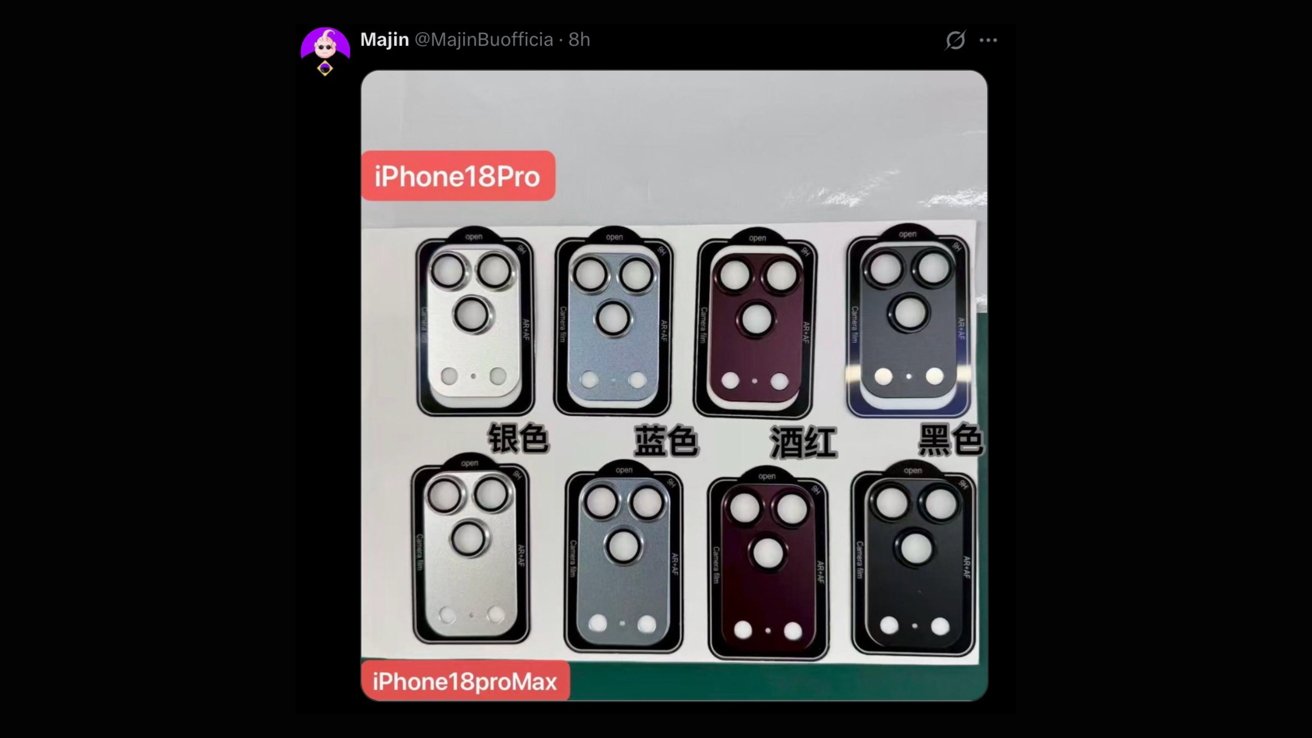
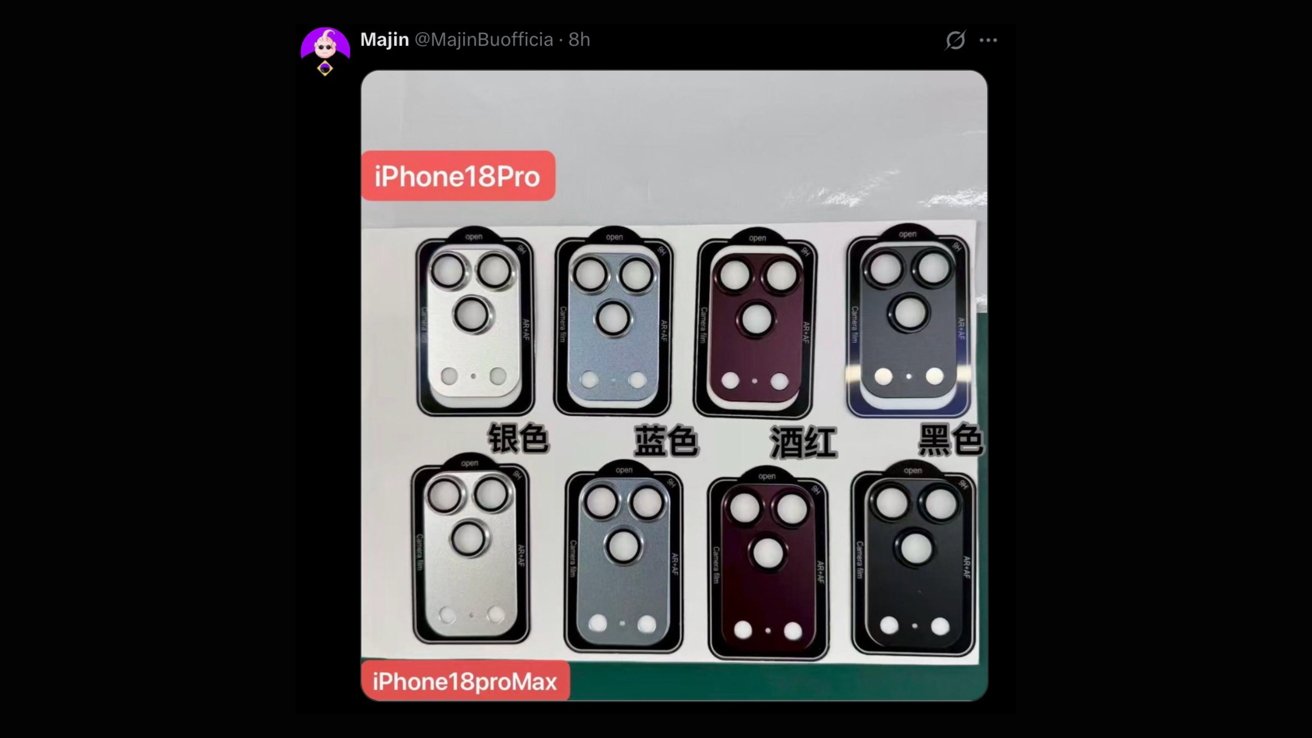
The latest “leak” from someone impersonating a now-defunct leaker appears to be nothing more than painted lens covers, especially considering the modern iPhone design has a unibody case.

Majin Bu was once a prominent Apple leaker who had some accurate leaks. After attempting to sell cases for an unreleased iPhone, the leaker disappeared, and a copycat has risen in its stead.

It still isn’t clear to me why anyone is covering the clearly fake account, but 9to5Mac shared the latest post about iPhone colors. The publication did call out the potential of the account being fake, but it did serve the post as possible thanks to corroborating previous color rumors.

Advertisement

However, something seemed wrong about this photo. I wanted to ignore the clearly fake account, but then it hit me.

The iPhone 17 Pro design uses a unibody back case with a cutout for MagSafe that’s covered by glass. The camera plateau isn’t a separate component.

A two-second reverse image search revealed my suspicion — these appear to be identical to camera protectors that stick onto the existing camera plateau. Wherever the image originated from, likely Weibo, the fake leaker posted it as an iPhone 18 Pro color leak.

Photo showing eight iPhone camera covers in different colors, arranged in two rows, with Chinese text labels that say each color white, blue, wine red, and gray

This image is being passed as an iPhone component leak by a fake account we’re deliberately not linking to here.

Advertisement

Looking back, AppleInsider also pointed out the potential of leaked components being third-party accessories. Perhaps these are color samples, but they seem absurdly detailed versus making a simple blank.

Ignore the fakes

AppleInsider has the rumor rating system for this explicit purpose. We’d love to not have to cover such blatantly fake impersonation accounts, but when the rest of the industry runs to cover even the most ambiguous of rumors, we have to tag along for the ride.

At the least, we do get the chance to call “bs” when we see it.

The fake account has posted stolen content from other leakers, usually ones originating from Weibo. While the original Majin Bu had similar problems, this one is much more blatant in their actions.

Advertisement
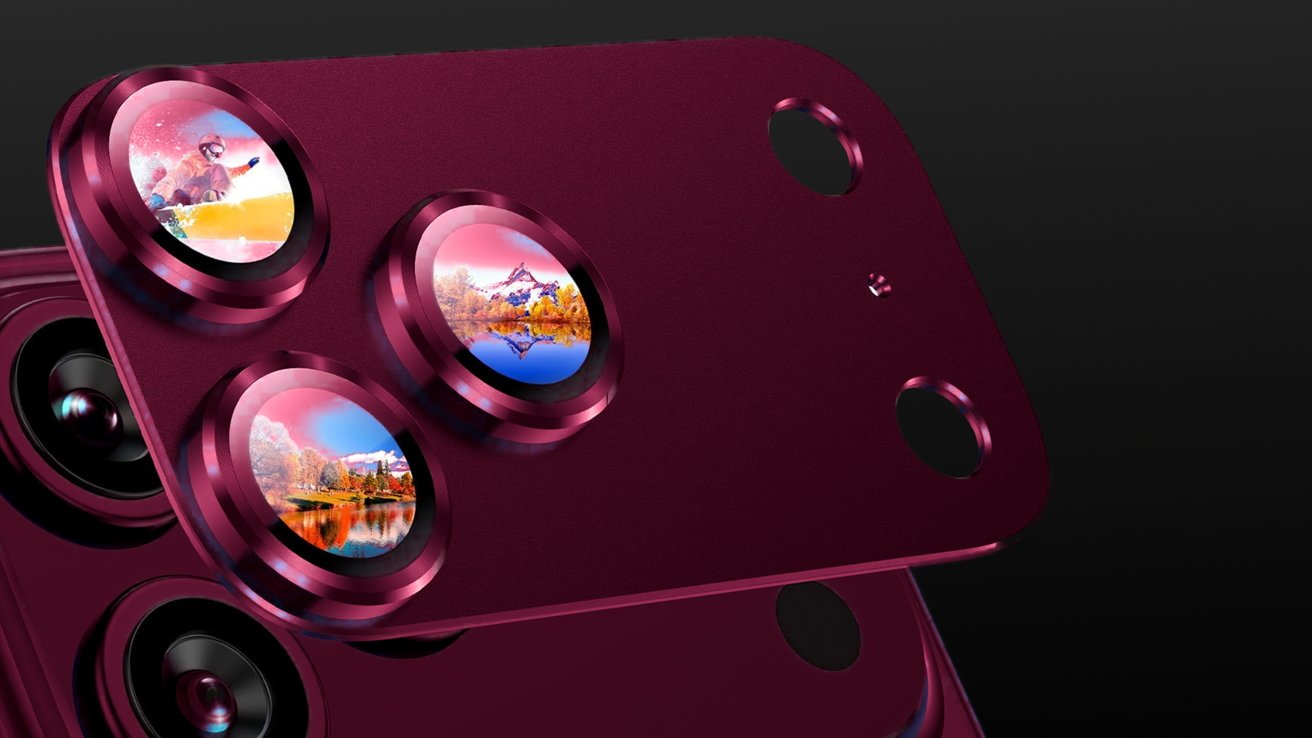
Close-up of a maroon smartphone camera module, with three raised lenses reflecting colorful landscape scenes, set against a dark gradient background for a sleek, modern technology look

Accessories like this from Uyiton on Amazon exist, though we’ve colored it deep wine for illustration

They have posted clearly manipulated or even AI-generated images of fake products, like an iPhone Air with two camera lenses. I don’t know why publications feel like they should ignore those while still giving air to what could be considered “more reasonable” leaks.

The iPhone 18 Pro will likely have new colors, and one of the rumored colors is a deep wine red. We’ll see if that turns out to be true, but one thing we do know today is that we shouldn’t be paying attention to fake accounts.

Advertisement

Source link

Continue Reading

Tech

Molding a Rubik’s Cube from Scratch is Harder Than You Think

Published

on

Homemade DIY Rubik's Cube
EngBroken started with an ordinary cheap Rubik’s Cube and a question. What would happen if someone tried to build one completely on their own, without relying on factory parts or store shelves? That simple curiosity stretched into an eight-month project centered on injection molding every single piece.


The cube was disassembled first, showing the critical components inside: the core mechanism that held everything together, as well as the edge and corner parts that interlocked and turned against one another. Each had a distinct shape, angle, and tolerance that allowed the puzzle to rotate and turn smoothly, without sticking or breaking apart. At this time, he also made precise measurements to ensure that the pieces did not bind when reassembled.

Sale


Rubik’s Cube, The Original 3×3 Cube, Problem-Solving Brain Teaser, Color-Matching Puzzle, Fidget Toy…
  • The Original Rubik’s Cube: A combination of math, art, & science- the iconic Rubik’s Cube is here to challenge your mind; the 3×3 has fascinated…
  • Twist, Turn, Learn: The Rubik’s Cube features 6 colored sides, each made up of 9 squares; once the sides are jumbled up, you twist, turn, & rotate…
  • Great For Anxiety Relief: This fidget toy pack is not only a fun brain puzzle, this puzzle toy is great to keep your hands moving in stressful moments…

The details were then transferred to CAD software. He developed a digital model of every edge, corner, and center, with precise proportions down to the millimeter. As the project progressed, he realized he needed to make a few changes because, let’s face it, real-world plastic acts very differently than it does on a screen. The digital files then serve as the pattern for the molds used.

Advertisement

Homemade DIY Rubik's Cube
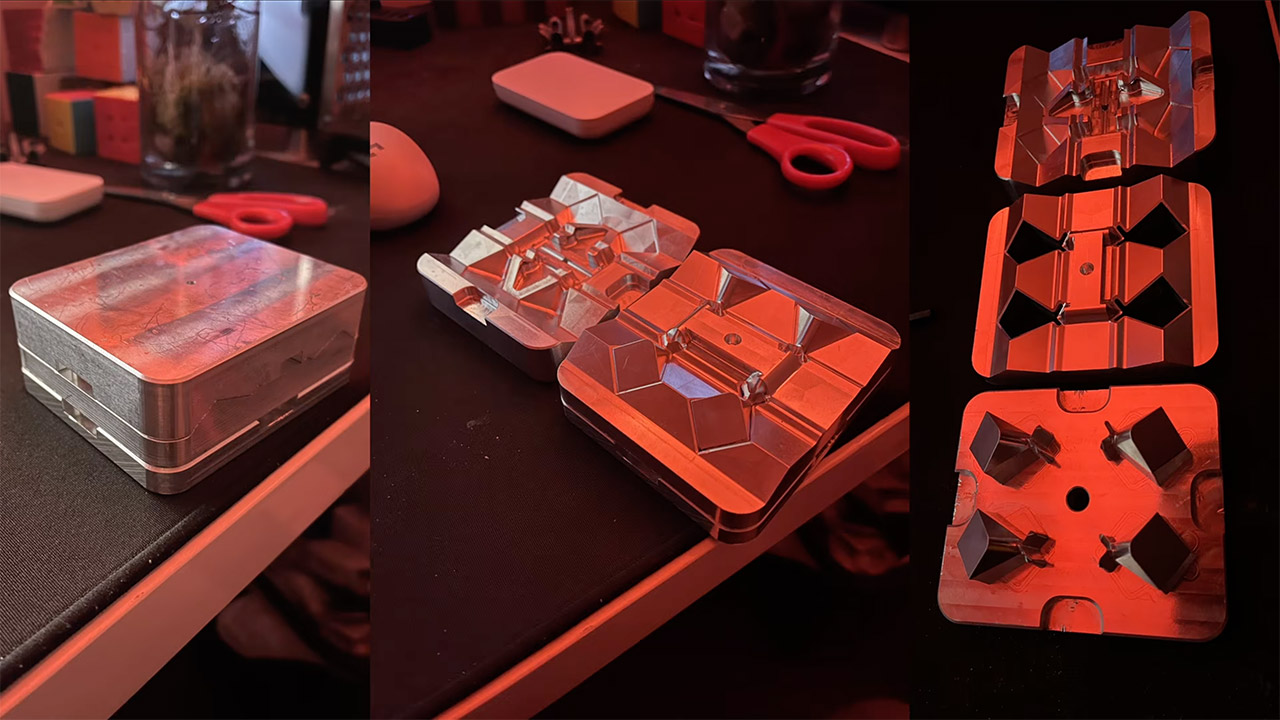
To create those molds, he used 6061 aluminum blocks cut out using a CNC machine, essentially carving out the precise cavity of the CAD model. Injection molding requires the molds to be able to take heat and pressure while still popping out the pieces neatly, so he paid great attention to all of the minutiae, including draft angles and ejector pins. In the end, he created three separate moulds: one for the corners, one for the edges, and one for the core components.

Homemade DIY Rubik's Cube
The following phase was plastic prep, which involved loading clear ABS pellets into the hopper. But here’s the thing: we didn’t only acquire our colors from the pellets. He cut up some colored 3D printer filament into little bits, blended them in, and voila, we had our color. The plastic to filament ratios were difficult to get correct, but he eventually figured it out, and our trial runs helped us get it perfect, consistent across batches.

Homemade DIY Rubik's Cube
The actual molding procedure needed the crew to have extremely stable hands and a great deal of patience. He’d heat the plastic and press it into the molds under pressure, then cool it at a predetermined rate so it didn’t bend or anything. At that point, it would pop out, and he’d have to smooth up the borders and remove any minor flashes. To be honest, there were a few batches where he discovered microscopic faults in the molds that required tuning or temperature adjustments.

Homemade DIY Rubik's Cube
Finally, he began assembling all of the pieces in the typical layered pattern, beginning with the central core and progressing to the edges and corners. He used UV-curing adhesive to hold everything together without adding bulk or interfering with the moving parts. Because he had the molds, creating extra cubes was simple. He ended up with several finished puzzles, all made from raw pellets and machined aluminum. If you can believe it, the total labor hours came to about $56,000 if he had been paying the minimum wage… and it doesn’t even include the aluminum or plastic supplies.
[Source]

Source link

Continue Reading

Tech

Feds unwittingly leak pilots’ pre-crash conversation

Published

on

science

Release of spectrogram of cockpit recorder audio allows conversation recovery with ’emerging’ decades-old tech

The US National Transportation Safety Board, which investigates plane crashes, has a policy of not releasing cockpit audio recordings.

Nonetheless, earlier this week, the NTSB released a spectrographic image derived from the cockpit audio recording that captured the last words of two UPS pilots before their plane crashed in Louisville, Kentucky, last year. 

Advertisement

Scott Manley, a scientist, developer, and gaming influencer, warned the agency about doing so.

“NTSB doesn’t release cockpit voice recorders from crashes, except in this case they’ve released an image of a spectrogram,” he wrote in a social media post on May 20, 2026. “I’m not sure that’s a good idea since you can probably reconstruct a lot of audio from the megabytes of data encoded in this image.”

Technically savvy individuals promptly turned the soundwave graph back into audio and posted it on the internet, prompting the NTSB to acknowledge it is now aware that advances in image processing and computation allow graphs to be turned back into approximate audio.

“Federal law prohibits such public release due to the highly sensitive nature of verbal communications inside the cockpit,” the board said on Thursday. “The NTSB takes these privacy restrictions seriously.”

Advertisement

The spectrogram was released on May 19, 2026, in conjunction with the NTSB investigative hearing into the November 4, 2025 crash of a United Parcel Service MD-11F cargo plane (flight 2976), which occurred shortly after takeoff from Louisville Muhammad Ali International Airport.

Three crew members on board and 12 people on the ground were killed. Twenty-three others were injured.

The accident has also been reconstructed using a flight simulator and the text transcript of the cockpit voice recorder.

In a post on social media network X, Jennifer Homendy, chairwoman of the NTSB, said, “It’s deeply troubling that emerging technology can be used to extract [cockpit voice recorder] audio from visualized data we share to help the public understand the circumstances of an accident.”

Advertisement

“Emerging” here means at least forty-two years ago. Relevant techniques involving a magnitude spectrum are discussed in a 1984 research paper, “Signal estimation from modified short-time Fourier transform,” by Daniel W. Griffin and Jae S. Lim. Their work builds upon a long established signal processing algorithm, the Fast Fourier Transform. But the availability of machine learning models has undoubtedly lowered the technical barriers to signal transformation.

Coincidentally, “federal science agencies lost about 20 percent of their staff in 2025 relative to the previous year,” according to Nature.

Homendy continued by noting that the laws disallowing the release of cockpit voice recorder audio exist to protect privacy, to preserve investigative integrity, to demonstrate respect for accident victims and their families.

“NTSB is taking steps to address this issue,” she said. “The public docket is offline for now, and we are urging X, Reddit, and others to take such disgusting, manipulated posts down.”

Advertisement

At the time this article was filed, audio reconstructions of the pilots’ last words remained available on X. ®

Source link

Continue Reading

Tech

Which programming languages can aid a medtech career?

Published

on

Programming and coding skills are crucial to a range of STEM careers, including those dealing with future health challenges.

For professionals working in the medtech space, useful soft skills include the ability to communicate complex information, a strong style of leadership, problem-solving and an adaptable mindset, among others. On the technical side, experts should have an understanding of regulatory processes, be able to generate and analyse data, have knowledge of lab procedures and have awareness of topics related to AI and automation.

The list of skills that medtech professionals in 2026 should prioritise could go on and on, as it is a complex, rapidly changing and highly innovative space that demands consistent upskilling and learning. 

However, there are several skills, such as the ones previously listed, that are evergreen, in a sense, as they likely will always be in high demand. Among them is the ability to code, so in this day and age, which programming languages are best suited to one of many possible careers in medtech?

Advertisement

Imaging and analytics

If you envision a career as the brain behind the latest advancements in medical imaging technology, then a knowledge of programming language Python is absolutely critical. Popular and widely used across the STEM space, medtech professionals skilled in Python can use it to gain insight from data and build the machine learning (ML) models that drive innovation in medtech. ML applications can be used to perform medical diagnostics, advance drug discovery and generate predictive analytics, among other capabilities.  

Research suggests that one of the more promising applications of Python as a programming language in the medtech space is in how it enables ML models to analyse images, such as MRIs, CTs and diffusion tensor imaging scans. Python can also be used to automate the detection of cardiac abnormalities in imaging, enable the detection of certain cancers, and identify fractures and other injuries, thus improving decision making and reducing the risk of diagnostic errors.

Secure device delivery 

The medtech space, like many industries globally, is incredibly vulnerable to attacks from hackers and other malicious actors, as the information and technologies held within are often of a sensitive and critical nature. With that in mind, there are a growing number of professionals whose role it is to protect and bolster these systems, in an often hostile ecosystem. If your goal is to enable greater security in the development of medical devices, then consider learning Python, or if you want something a little more modern, Swift

This general purpose programming language, which was created by tech giant Apple, is a multi-paradigm, compiled programming language that is known for its easy-to-read syntax and grammar, and the scalability of its applications. It is also recognised for its speed, performance and safety. The language is emboldened by multiple security layers, improved data encryption and simplified coding, making it an ideal platform when developing security-conscious medical devices. 

Advertisement

Data visualisation

If your role in the medtech space requires you to deal with significant amounts of data, then R is definitely the language for you. As clinical laboratories become more and more dependent on data and analytics, R, as a comprehensive, open source, platform-independent, freely available programming language, can enable users to transform data, analyse it and properly communicate often critical results. 

Widely used and supported within statistical communities and data-driven industries, R skills can give those looking to move into the medtech space the upper hand. Typically, it is used for tasks and activities within hospitals, research labs, pharmaceutical companies and public health, by those who work with patient data, clinical trials and large biomedical datasets.

Notably, like in other career routes mentioned, Python is a handy language to know for a career driven by data visualisation. Just take it as a given that your skillset should always include Python, alongside whichever other language or languages you feel might aid you. 

How to get started

There are so many programming languages that are well-suited to medtech professionals. C++ is noted for its high-performance and reliability, Java integrates well and C# offers a mature ecosystem and community support. The list goes on and on, so where should you start?

Advertisement

Well, once you have identified the area of the medtech space that most appeals to you, make sure to do some research and learn the language pros and cons so you can make an informed decision. After that, consider online courses, third-level opportunities and networking events. The internet and indeed the real-world are full to the brim with opportunities to expand your knowledge, so engage and get going. 

Don’t miss out on the knowledge you need to succeed. Sign up for the Daily Brief, Silicon Republic’s digest of need-to-know sci-tech news.

Source link

Advertisement
Continue Reading

Trending

Copyright © 2025