

Business
Williams Companies’ SWOT analysis: midstream stock eyes power growth


ESPOO, Finland — Nokia Oyj shares rose 9.55% to 13.26 euros on the Helsinki Stock Exchange on May 22, 2026, as the company benefited from positive analyst actions and continued momentum in its artificial intelligence and optical networking business.
The Finnish telecommunications equipment maker closed the session with significant gains, aligning with strength in its U.S.-listed American Depositary Receipts, which climbed over 9% to around $15.47.
Morgan Stanley raised its price target on Nokia to 14 euros from 11 euros while maintaining a Buy rating, according to reports on May 22.
AI Networking Innovation Lab
Nokia launched its AI Networking Innovation Lab in California on May 21, 2026. The facility focuses on advancing AI-driven networking solutions for data centers and telecommunications operators.
The lab supports development of technologies that integrate artificial intelligence into network infrastructure, building on the company’s recent growth in optical networks and AI-related orders.
Q1 2026 Financial Results
Nokia reported first-quarter 2026 net sales of 4.5 billion euros, up 2% reported and 4% on a constant currency and portfolio basis compared to the prior year.
Comparable gross margin expanded 320 basis points year-over-year to 45.5%. Comparable operating margin rose 200 basis points to 6.2%. The company posted comparable diluted earnings per share of 0.05 euros.
Free cash flow reached 0.6 billion euros in the quarter. Network Infrastructure net sales grew 6%, driven by a 20% increase in Optical Networks.
AI and cloud net sales grew 49% year-over-year, with the company securing around 1 billion euros in new AI-related orders during the period.
Nokia raised its full-year guidance for Network Infrastructure sales growth to 12-14% on a constant currency basis following the strong Optical Networks performance.
Analyst and Market Response
Multiple analysts adjusted targets upward in recent weeks. Deutsche Bank raised its price target to 8.50 euros from 7.50 euros in mid-May. Other firms including Argus Research have set higher targets around 15 dollars for the ADR.
Consensus ratings stood at Moderate Buy with an average 12-month price target near 9.71 dollars to 14.54 dollars across various analyst groups, though some forecasts reached as high as 17.43 dollars.
The stock has shown strong performance in 2026, reaching levels not seen in over 15 years amid AI infrastructure demand. Year-to-date gains exceeded 100% at points in May.
Strategic Developments
Nokia has pursued partnerships in AI and defense sectors. The company collaborated with Lockheed Martin on 5G solutions for military applications. It also announced new agentic AI capabilities for fixed networks in May.
The Infinera acquisition has contributed to synergy benefits in optical networking, supporting growth in data center connectivity for AI workloads.
Business Segments
Network Infrastructure remains the primary growth driver. Mobile Networks and other segments showed mixed results amid softer 5G deployment cycles in some markets. The company continues to focus on cost management and portfolio optimization.
Nokia maintains a solid balance sheet with net cash of 3.8 billion euros at the end of Q1 2026.
Industry Context
Demand for high-speed optical transport and AI-optimized networking equipment has accelerated as hyperscalers and telecom operators invest in data center expansion. Nokia competes in this space with firms addressing similar AI infrastructure needs.
The company has highlighted its position in providing end-to-end solutions from fixed and mobile networks to cloud and AI applications.
Outlook
Nokia has guided for continued growth in its key infrastructure segments for the remainder of 2026. Management cited strong order intake and margin expansion as supportive factors.
Upcoming quarterly results are scheduled for July 2026. Analysts will monitor execution on AI orders and margin trends.
Trading volume on May 22 was elevated as investors reacted to the analyst upgrade and lab announcement. The stock has exhibited volatility but maintained an upward trajectory through mid-2026.
Nokia operates globally with significant presence in Europe, North America and Asia. Its research and development efforts focus on 5G, 6G, AI and optical technologies.

SAN ANTONIO — The Oklahoma City Thunder used a record-setting bench performance to overcome an early 15-point deficit and defeat the San Antonio Spurs 123-108 on May 22, 2026, at Frost Bank Center to take a 2-1 lead in the Western Conference Finals.
Oklahoma City’s reserves scored 76 points, the most by a team in a conference finals game since the NBA adopted the 16-team playoff format in 1984. The previous high was 69 points by the Los Angeles Lakers in 1985.
The bench contributed 62% of the Thunder’s total scoring in the victory. Only two Oklahoma City starters reached double figures, with Shai Gilgeous-Alexander scoring 26 points and Chet Holmgren adding 14.
Bench Standouts
Jared McCain led the reserves with a playoff career-high 24 points. Jaylin Williams scored a playoff career-high 18 points, making five three-pointers. Alex Caruso added 15 points, giving him 63 points through the first three games of the series.
McCain, acquired midseason in a trade with the Philadelphia 76ers, said, “I like proving my support system right. The people who really believe in me, I like proving them right.”
He also stated, “We talk about it a lot, in practice and throughout the whole playoffs: Be ready and stay ready. Coaches have done a great job of that. … We all are hoopers and we all know what to do out there, especially this team. It’s a very mature team. Coming in, I just want to be as ready as I can, no matter what it is.”
Early Game Struggles and Response
The Spurs opened the game with a 15-0 lead, the longest run to start a conference finals game since the play-by-play era began in 1997. De’Aaron Fox started the run with a driving layup, Victor Wembanyama hit a three-pointer, and Devin Vassell added another three.
Thunder coach Mark Daigneault called timeout early and turned to his bench. Oklahoma City responded with a 13-2 run while Wembanyama was on the bench and closed the first quarter trailing 31-26.
The Thunder outscored the Spurs 97-77 after the first period. Daigneault said, “We assume the opponent’s always at their best and we need to be at ours and depth is a part of that. … It just needs to be one of our strengths that we rely on, regardless of circumstance.”
Injury and Availability Notes
Jalen Williams missed the game for Oklahoma City due to a right hamstring strain. For the Spurs, De’Aaron Fox made his series debut after missing Game 2 and scored 15 points. Dylan Harper remained sidelined with a right adductor injury.
Victor Wembanyama led the Spurs with 24 points. Devin Vassell added 20 points. The Spurs’ bench scored only 23 points.
Series Context
The Spurs won Game 1 in double overtime 122-115 in Oklahoma City. The Thunder responded with a 122-113 victory in Game 2 at home. Oklahoma City has now won two straight games to take the series lead.
Gilgeous-Alexander addressed the slow start, saying, “We just went out there and competed. They obviously jumped on us early. First game in their building, their crowd behind them, they were excited to play. We just wanted to make sure we competed from that point on. We obviously didn’t give our best effort to start that game but can’t do nothing about it. It’s behind us. All we can do is focus on the next possession, and we did that.”
Game Incidents
The contest remained physical. In the second half, Stephon Castle was fouled hard on back-to-back dunk attempts. Ajay Mitchell received a flagrant foul 1 on the second play, and technical fouls were issued to Mitchell and Vassell after they exchanged words.
Back-to-back three-pointers by Gilgeous-Alexander and Williams helped Oklahoma City establish its first lead at 35-31. The Thunder maintained control through strong bench rotations and defensive pressure.
Historical Bench Performance
The 76 bench points marked an outlier performance. No team had achieved 62% of its scoring from reserves in a winning conference finals effort in the past four decades. The Thunder’s depth has been a consistent factor, with 50 bench points in Game 1 and 57 in Game 2.
Coaching and Strategy
Daigneault utilized deep rotations throughout the game. The strategy allowed the Thunder to maintain intensity despite the early deficit and the absence of Jalen Williams. Oklahoma City improved to 2-1 in the series with the road victory.
The Spurs leaned heavily on Wembanyama and their starting lineup due to guard injuries. Harrison Barnes and Jordan McLaughlin saw expanded minutes in the backcourt.
Broader Playoff Picture
Oklahoma City, the defending NBA champions, demonstrated resilience through injuries and early-game adversity. The Spurs showed fight with a strong opening but could not sustain momentum against the Thunder’s depth.
Game 4 is scheduled for Sunday, May 24, 2026, at Frost Bank Center. The series could return to Oklahoma City for Game 5 if the Thunder win again in San Antonio.
Attendance at Frost Bank Center included former Spurs legends David Robinson and Tim Duncan. The crowd provided strong support early but witnessed the Thunder’s comeback.
Statistical Highlights
The Thunder shot efficiently in the second half and dominated in transition opportunities created by their bench. Rebounding and assist numbers favored Oklahoma City as the game progressed. The 123-108 final margin reflected control after the initial Spurs surge.
This performance added to the narrative of the Thunder’s bench as a championship-level strength. McCain and Williams delivered career playoff highs at a critical juncture in the Western Conference Finals.
The game marked another chapter in a competitive series between two young Western Conference teams. Further updates on player availability and adjustments will come ahead of Game 4.


Climate change threatens global plant species as habitats shrink
Zoom Stock Jumps After Earnings. Is the Video Calling Company Turning Into an AI Stock?

Pebblebrook Hotel Trust: Series G – A Prime Value Investing Candidate
Business
FIIs sell over Rs 30K crore worth of Indian equities in May as outflows swell to Rs 2.22 lakh crore. What lies ahead?

On Friday, FIIs sold domestic shares to the tune of Rs 4,440.47 crore while domestic institutional investors (DIIs) were net buyers at Rs 6,003.53 crore.
DIIs throwing around their weight on Friday, helped the benchmark indices end with gains though they were capped amid strong selling pressure in pharma & health stocks while financials helped bulls to ride the tide. While Nifty gained 64.60 points or 0.27% to close at 23,719.30, the BSE Sensex settled at 75,415.35, up 231.99 points or 0.31%.
Commenting on the current FII trends, Pabitro Mukherjee, Associate Vice President – Research at Bajaj Broking said the investor sentiment remains cautious due to persistent geo-political tensions, which continued to keep crude oil prices elevated.
“The Indian Rupee further weakened during the week, slipping to a fresh all-time low against the US Dollar. Meanwhile, a sharp rise in bond yields, driven by concerns over rising inflation and the possibility of prolonged higher interest rates, kept investors on edge. Overall, global uncertainty and macroeconomic headwinds led to cautious trading activity across the markets. Looking ahead, institutional flows are likely to remain sensitive to developments around US–Iran tensions, oil-price movement,” he said.

Outlook
Bajaj Broking has said institutional activity is expected to be largely driven by global developments, going forward. The progress or deterioration of the U.S.–Iran negotiations will remain a key factor to monitor, he said, outlining significant implications for geopolitical stability and the potential impact on crude oil price volatility.
FIIs in 2026
War-induced sell-off in March made it the worst month this year, witnessing an exodus worth Rs 1,17,775 crore. April was not kind too, with outflows of Rs 60,847 crore. Foreign investors turned net buyers in February, buying shares worth Rs 22,615 crore in the domestic markets so far. In January, they sold Rs 35,962 crore worth of shares.
In 2025, the FIIs buying trends remained patchy, but the overall trend was bearish. They took Rs 1,66,286 crore from Indian markets as trade deal delay and premium valuations weighed on the sentiments.
(Disclaimer: Recommendations, suggestions, views and opinions given by the experts are their own. These do not represent the views of Economic Times)
Business
Navitas Semiconductor NVTS Stock Jumps Nearly 20% on AI Power Demand and Analyst Upgrades in 2026
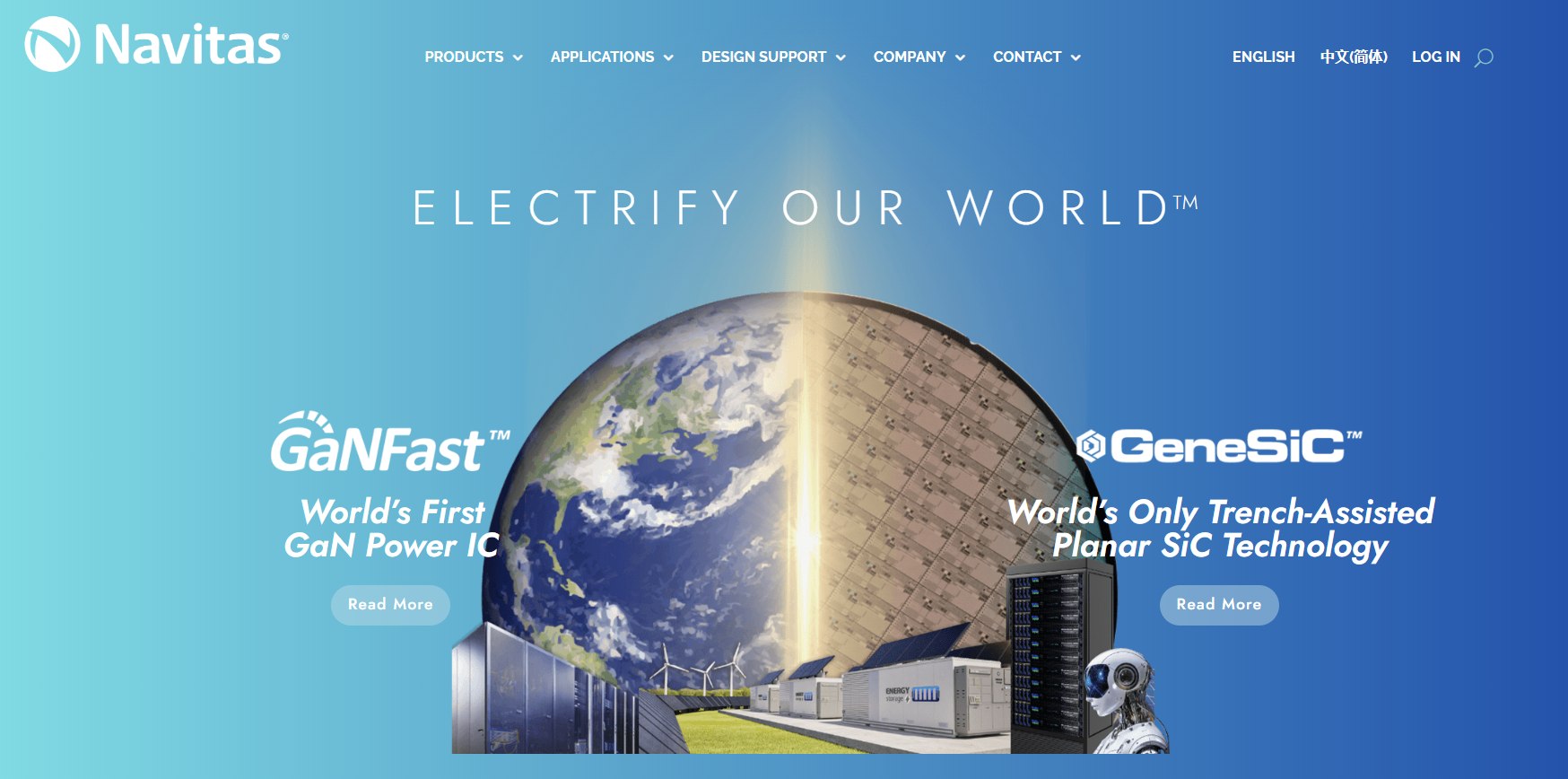
TORRANCE, Calif. — Navitas Semiconductor Corporation shares surged 19.98% to close at $29.25 on May 22, 2026, as the gallium nitride and silicon carbide power semiconductor specialist continued to benefit from momentum in artificial intelligence infrastructure and multiple analyst price target increases.
The stock traded as high as $29.54 during the session before pulling back slightly in after-hours trading to around $29.01. The move extended recent gains tied to the company’s pivot toward high-power markets.
Recent Analyst Actions
Several firms raised price targets in early May 2026. Needham increased its target to $21 from $13. Baird raised its target to $20 from $9. Morgan Stanley lifted its target to $12.50 from $4.20, and Rosenblatt moved to $13 from $7.
The company is scheduled to participate in upcoming investor conferences, contributing to positive sentiment.
Q1 2026 Financial Results
Navitas reported first-quarter 2026 revenue of $8.6 million on May 5, up 18% sequentially from $7.3 million in the fourth quarter of 2025 but down from $14.0 million in the year-ago period. The sequential increase was driven by higher contributions from high-power markets, including AI data centers, grid and energy infrastructure, and industrial electrification.
Non-GAAP gross margin expanded to 39.0%. The company reported a GAAP net loss of $33.8 million, or $0.15 per share, compared with a $16.8 million loss, or $0.09 per share, in the prior-year quarter. On a non-GAAP basis, the loss per share was $0.04, beating consensus estimates of $0.05.
For the second quarter of 2026, Navitas guided revenue to $10.0 million, plus or minus $0.5 million, representing sequential growth of over 16% at the midpoint. Non-GAAP gross margin is expected at 39.25%, plus or minus 75 basis points.
Strategic Shift to High-Power Markets
Navitas has focused on its “Navitas 2.0” strategy, emphasizing high-power GaN and SiC solutions for AI data centers and energy infrastructure while reducing exposure to lower-margin consumer and mobile segments. High-power markets represented a larger portion of revenue in the first quarter.
The company highlighted new 800V solutions for AI data centers and grid infrastructure at PCIM 2026. These include SST solutions for medium-voltage to high-voltage DC conversion and power delivery boards.
Partnerships and Product Developments
Navitas has secured design wins and partnerships supporting AI power efficiency. A partnership with Cyrient in India for GaN-based products targeted next-generation power applications, including AI infrastructure and industrial systems.
The company continues to advance its GeneSiC silicon carbide platform alongside GaNFast gallium nitride technology for data center and electrification needs.
Capital Markets Activity
In May 2026, Navitas completed a $122 million ATM equity offering and launched a new $125 million ATM program. It also filed a $250 million mixed securities shelf.
The company ended the first quarter with approximately $223.4 million in cash, cash equivalents and restricted cash.
Market Position
Navitas operates in the power semiconductor sector, competing in high-growth areas driven by AI power demands. The company’s technology focuses on efficiency improvements critical for data centers and renewable energy applications.
Shares have shown significant volatility in 2026, with strong year-to-date performance reflecting investor interest in AI-related power solutions. The stock has traded well above prior-year levels amid sector tailwinds.
Analyst Consensus
As of mid-May 2026, analysts maintained a range of ratings with upward revisions. Price targets varied widely, reflecting differing views on execution of the high-power strategy and revenue ramp.
Revenue forecasts for 2026 were upgraded by an average of 12% in recent weeks, according to some tracking services.
Broader Industry Context
Demand for efficient power semiconductors has risen with AI data center expansion. Navitas has positioned itself through product launches and customer engagements in energy infrastructure and performance computing.
The company added Gregory M. as a veteran independent director in early May to support its transformation.
Navitas plans to report second-quarter 2026 results in early August. Management has emphasized disciplined spending and R&D investment in high-power initiatives.
This report compiles information from company announcements, financial filings and market data available through May 22, 2026. Stock prices and projections remain subject to market conditions and future results.
NEW YORK — Intel Corp. and International Business Machines Corp. showed contrasting performances through mid-2026 as investors compared Intel’s semiconductor recovery efforts against IBM’s steady software, infrastructure and quantum computing progress.
As of May 22, 2026, Intel shares closed at $118.50. IBM shares closed at $252.97.
Intel reported first-quarter 2026 revenue of $13.6 billion, up 7% year-over-year. The Data Center and AI segment grew 22% to $5.1 billion. The company posted a GAAP net loss of $3.7 billion, or $0.73 per share, due to restructuring charges. Non-GAAP earnings per share were $0.29.
Intel guided second-quarter 2026 revenue between $13.8 billion and $14.8 billion. The company highlighted progress on its 18A process and AI CPU sales.
IBM posted first-quarter 2026 revenue of $15.9 billion, up 9% year-over-year, or 6% at constant currency. Software revenue reached $7.05 billion, up 11%. Infrastructure revenue increased 15% to $3.33 billion. Consulting revenue grew 4% to $5.27 billion.
IBM reported GAAP net income of $1.2 billion, or $1.28 per share. Operating non-GAAP earnings per share were $1.91. Free cash flow reached $2.2 billion. The company reiterated full-year 2026 expectations for more than 5% revenue growth at constant currency.
Valuation and Analyst Consensus
Analysts assigned Intel a consensus Hold rating with average price targets in the $70 to $81 range in some reports, though recent momentum pushed shares higher. Intel shares showed strong recovery from 2025 lows.
IBM carried a Moderate Buy consensus with an average 12-month price target near $294, suggesting potential upside. Some targets reached $360.
IBM showed higher revenue, earnings and net margins than Intel in the most recent quarter. IBM’s net margin was 15.61% compared to Intel’s negative figures in the period.
Business Strategies
Intel focused on regaining AI server share and advancing its foundry business under CEO Lip-Bu Tan. The company reported sold-out AI CPU capacity and explored partnerships, including with Tenstorrent. Challenges persisted in foundry profitability.
IBM emphasized hybrid cloud, Watsonx AI tools and quantum computing. The company announced plans for a U.S. quantum chip foundry and reported strong mainframe performance with the z17 model. Software and infrastructure drove growth.
Financial Metrics
Intel’s stock exhibited high volatility with a significant rebound in 2026. Operating cash flow in Q1 was $1.1 billion, with adjusted free cash flow negative due to capital expenditures.
IBM maintained stable financials with consistent profitability. Operating gross profit margin reached 57.7% in Q1 2026, up 110 basis points year-over-year.
Dividend and Returns
Both companies maintained dividends. IBM offered a yield around 3% with a history of consistent payments. Intel’s dividend faced scrutiny amid earlier losses but continued.
Risks and Outlook
Intel projected sequential revenue growth in client and data center segments for Q2, driven by supply and pricing. Risks included foundry execution and AI chip competition.
IBM projected continued software acceleration and free cash flow growth. Risks involved consulting execution and broader AI commercialization timelines.
Intel showed higher cyclical exposure compared to IBM’s enterprise focus. Stock movements in 2026 reflected these differences, with Intel displaying sharper rebounds.
Upcoming earnings include Intel in late July 2026 and IBM around July 22, 2026. Supply chain developments, AI adoption and quantum initiatives will influence both stocks through the remainder of 2026.
This comparison draws from company reports, analyst consensus and market data available through May 23, 2026. Investment decisions require individual assessment and professional advice. Actual results may vary based on economic conditions and execution.

A rebrand of the junction 32 retail park off the M62 has gone down poorly with some locals in Castleford.


Death toll in student dorm strike rises to 10, Russian-installed official says

BlackBerry (BB) Stock Surges 19% to New 52-Week Peak on Bullish Outlook

Jodie Foster’s R-Rated Home Invasion Thriller Is A Masterclass Of Tension And Escalation

Nokia Stock Surges 9.55% on AI Lab Launch and Analyst Price Target Hike in May 2026


-

 Crypto World2 days ago
Blockchain.com files with SEC for U.S. IPO
-

 Fashion16 hours ago
Holiday Weekend Open Thread – Corporette.com
-

 Crypto World6 days ago
Intesa Sanpaolo’s crypto holdings jump to $235M as XRP enters
-

 Business20 hours ago
Dell Technologies DELL Stock Surges 15% on AI Server Momentum and Analyst Upgrades in 2026
-

 Crypto World20 hours ago
Space X IPO Is ‘Bad News’ for Tech Stocks: But What About Bitcoin?
-

 Fashion6 days ago
On the Scene at Gucci’s Cruise Show in New York City: Mariah Carey, Kim Kardashian, Lindsay Lohan, Iman, and More!
-

 Politics7 days ago
Watch: far-right flag-fanatics run over victim, attack locals – Setup By the Left wing for your entertainment
-

 Fashion7 days ago
Trending Western Style Vests Perfect for Summer
-

 Politics16 hours ago
Makerfield: a tale of two social-media histories
-

 Crypto World37 minutes ago
Robinhood crypto COO Tanya Denisova exits
-

 Fashion6 days ago
Amazon Sundays: Memorial Day Hosting
-

 Entertainment6 days ago
Off Campus Easter Eggs Explained: Characters, Stories, More
-
 Tech22 hours ago
A 0.12% parameter add-on gives AI agents the working memory RAG can’t
-
 Crypto World5 days ago
Revolut Launches Dogecoin Debit Card Across UK and EU
-

 Crypto World1 day ago
Bitcoin Accumulation Weakens as BTC Realized Losses Hit $600M
-

 Crypto World21 hours ago
AI infrastructure race heats up as IREN pitches full-stack strategy, WhiteFiber lands $160M deal
-
 NewsBeat2 days ago
Charity run by Reform leader Malcolm Offord accused of ‘law breaking’ over Scottish registration
-

 Sports1 day ago
2026 CJ Cup Byron Nelson leaderboard: Brooks Koepka finds putting stroke in Round 1
-
Business6 days ago
Australia defends property tax changes designed to fix ‘broken’ housing
-

 Crypto World1 day ago
Trump Media’s Bitcoin Stash Shrinks Again as 2,650 BTC Lands on Crypto.com
You must be logged in to post a comment Login