

Crypto World
Altcoin Rotation Speculations Surge as Bitcoin Dominance Fades During Crypto Recovery


Key Insights
- BTC dominance is now near a major resistance level of 64% to 70%
- Analysts note that prior times when BTC dominance fell were followed by strong early-season rallies in the crypto market
- Crypto market capitalization remains on a recovery trend
Altcoin Rotation Theme Re-emerges in the Crypto Sphere
Expectations about the possibility of altcoin rotation have increased amid Bitcoin dominance nearing historic resistance zones within the macro context. Participants are watching for signals indicating a rotation of capital from Bitcoin to other cryptocurrencies as the digital-asset ecosystem progresses toward recovery.
Bitcoin dominance, calculated as Bitcoin’s share of the overall cryptocurrency market cap, rose toward the end of last year. The increase indicated investors’ inclination toward Bitcoin amid the current uncertain macro environment.
Nonetheless, the trend may be nearing exhaustion after hitting an important historical resistance level. Similar instances occurred in previous cycles of the crypto market.
BTC Dominance Heads Towards Historical Resistance Zone
The crypto market analysis firm Crypto Patel shared a BTC dominance macro chart showing significant resistance in the 64% to 70% range. Previous times when Bitcoin dominance reached those levels saw sharp reversals in past market cycles.
On weekly charts, BTC dominance has shown an impressive ascending pattern over the years, mainly because investors allocated a large portion of funds to BTC as markets emerged from the bear-market phase.
The current rejection near the upper end of the resistance zone is drawing attention. Failed breakouts around macro resistance levels often signal that market conditions may shift.
Historically, falling Bitcoin dominance has coincided with rising demand for higher-risk cryptocurrencies. Improved market conditions usually lead to capital flows away from Bitcoin and toward other blockchain networks.
Altcoin Bullish Buildup Picks Up Steam
Based on Crypto Patel’s expected market structure, BTC dominance could drop to the 40% to 43% level. Patel described this as a possible “mega altseason,” similar to prior phases of strong altcoin growth.
The chart also pointed out a “Best Alts Accumulation Zone” below the current macro resistance. Traders often use such indicators because altcoin buildups have previously formed in these areas.
Traditionally, Bitcoin leads during the early stages of cryptocurrency recoveries because institutional money often enters the market via Bitcoin, which is more liquid and perceived as more stable.
Once sentiment improves further, institutions typically begin entering altcoins. This rotation of capital into altcoins in pursuit of greater gains has historically driven explosive moves in Ethereum, Solana, Cardano, Chainlink, and other tokens.
Additionally, shorter cryptocurrency market cycles may accelerate future altcoin rotations. Institutional participation has resulted in faster liquidity inflows, producing rapid rises and falls in recent years.
Crypto Market as a Whole Preserves Structure of Recovery
Although the market is currently consolidating, the overall structure remains constructive and retains a recovery profile. The crypto market cap rose above $1.5 trillion following Bitcoin’s recovery in the first months of this year.
There is evidence of a correlation between Bitcoin price movements and overall market capitalization. For example, during the 2020–2021 bull run, the crypto market cap exceeded $2 trillion due to bullish price action in Bitcoin.
After reaching highs, most parts of the market faced sharp corrections in response to liquidity constraints and increased macroeconomic uncertainty. Nevertheless, Bitcoin preserved its leadership through the recovery period.
The current dynamics imply a gradual recovery cycle formation. Bitcoin has consolidated significant gains, and altcoins are attempting to gain momentum below resistance levels.
Bitcoin market dominance remains one of the most relevant indicators for traders analyzing future market development. Experts say that if dominance weakens further, it would signal increased participation by altcoins.

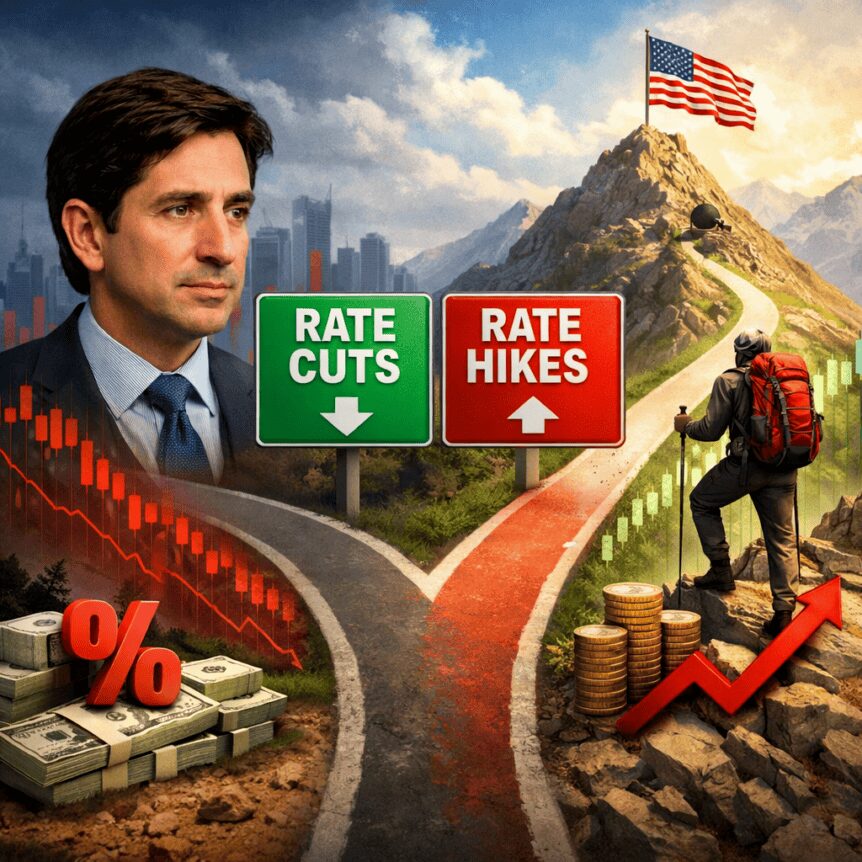
Kevin Warsh was sworn in as the chair of the United States Federal Reserve on Friday, launching a tenure that market participants are watching for signs of a policy tilt that could redefine the rate path for 2026. While a number of observers expect a traditional hawkish stance to persist, some prominent voices in the crypto and macro communities argue Warsh could pivot toward cuts as inflation cools and productivity advances via AI rhetoric take center stage.
Leading that line of thinking, Lawrence Lepard, a veteran Bitcoin investor and author, contends that Warsh’s leadership will eventually translate into rate reductions. In a post on X, Lepard noted that comments from other senior U.S. policymakers—specifically Kevin Hassett, former director of the White House National Economic Council, and Treasury Secretary Scott Bessent—support a shift toward lower rates in 2026. Lepard added that two data points highlighted in The Wall Street Journal are consistent with a narrative in which inflation proves more durable than initially assumed, yet ultimately transitory enough to justify rate cuts as productivity improves.
At Warsh’s swearing-in ceremony, President Donald Trump framed the debt challenge through a growth-centric lens, signaling an expansion of the monetary supply and a potentially looser regime on rates. His remarks fed a broader debate about whether the new Fed chair will resist executive-branch pressure to loosen policy, a topic that has also drawn scrutiny from lawmakers and market watchers.
Traders and analysts remain divided on Warsh’s likely impact on the trajectory of interest rates. While some anticipate a path that maintains or even tightens policy in the near term, others point to a longer horizon in which inflation cools more quickly than markets expect, inviting rate relief. The tension is part of a broader debate about how much independence the central bank can preserve as political and fiscal considerations interact with monetary policy.
For crypto markets, the policy question matters because a shift toward rate cuts could boost risk-on assets, including Bitcoin and a broader array of tokens. The degree to which Warsh’s tenure will align with or diverge from the prior Fed regime remains a live question for traders who have grown used to a complex, data-driven approach to inflation and growth signals.
Earlier coverage from Cointelegraph noted the nuance in expectations surrounding Warsh’s swearing-in and the challenges of predicting the policy path under a new chair. The discussion has repeatedly underscored that the path of rates in 2026 will depend heavily on evolving inflation data, labor market dynamics, and the administration’s broader fiscal stance.
Key takeaways
- Markets remain split on the Fed’s 2026 trajectory: a subset expect rate cuts, while others anticipate higher-for-longer policy depending on inflation and growth signals.
- The CME FedWatch tool estimated that roughly 68% of traders priced in a 25-basis-point or larger rate move by December 2026, underscoring persistent uncertainty in the policy outlook.
- Warsh’s appointment has intensified questions about Fed independence versus executive influence, a dynamic that lawmakers have highlighted during confirmation debates.
- Crypto markets are watching policy signals closely, as a lower-rate regime could provide a marginal tailwind for risk assets, though the magnitude of any impact remains uncertain.
Policy direction under a new Fed chair: what changes—and what stays the same
The central question surrounding Warsh’s tenure is whether the new chair will push for a more expansionary stance in the face of fiscal stimulus and a shifting inflation narrative. Lepard’s interpretation, rooted in public signals from other senior policymakers, suggests room for a future pivot toward easier policy, even as near-term rate hikes remain a plausible response to inflation pressures. The contrast between a long-run objective of price stability and the short-run demands of political leadership creates a delicate balance for the Fed, and one that markets will parse as more data arrive.
Lawmakers have not been silent on the issue. In April, U.S. lawmakers scrutinized Warsh’s commitment to preserving Fed independence, raising concerns about the potential for political interference to compromise the central bank’s mandate. Senator Elizabeth Warren highlighted the possibility of conflicts of interest that could arise if the administration’s policies intersect with business interests in the crypto space. This tension matters because it shapes perceptions of credibility and the speed with which policy signals translate into market moves.
Against this backdrop, investors should monitor how Warsh weighs inflation progress against growth momentum. If inflation cools and growth remains solid, the case for gradual normalization or even a measured easing could gain traction. Conversely, any persistent price pressures could push the Fed toward a more restrictive path. The debate hinges on a delicate mix of data points, expectations, and political signals that will evolve over the coming quarters.
Crypto markets and the policy environment: a potential ripple effect
Bitcoin and other digital assets have historically shown sensitivity to U.S. monetary policy expectations. A potential shift toward rate cuts could lift risk-on appetite, supporting higher valuations for crypto assets in the medium term. However, the fundamental drivers for crypto—decentralization, innovation, and use cases—remain distinct from traditional macro cycles. Traders will evaluate policy signals in conjunction with crypto-specific developments, such as liquidity conditions, on-chain activity, and regulatory clarity.
The broader macro narrative remains a mosaic of competing forces: inflation dynamics, productivity improvements tied to technology adoption, fiscal policy signals, and geopolitical considerations. The Fed’s path under Warsh will interact with these forces, influencing not only asset prices but the funding environment for blockchain projects, venture funding, and the pace of institutional participation in crypto markets.
As Warsh settles into the chair, market participants should watch a few key indicators: the inflation trajectory relative to expectations, the pace of wage growth and job openings, and the evolving view of 2026 rate moves reflected in futures markets. Additionally, how the administration and Congress frame growth and debt management will influence market sentiment and the degree to which policy signals translate into real-world macro effects.
The policy narrative also touches on the broader question of central-bank independence in a highly politicized environment. While the Fed’s mandate remains price stability and economic resilience, the perception of independence—and how it is tested by political and fiscal pressures—will continue to shape investor confidence in the central bank’s ability to navigate a complex economic landscape.
Alongside these considerations, investors should note the ongoing discourse about inflation as a “transitory” phenomenon, balanced against longer-term factors such as productivity and demographic trends. The balance of these forces will inform the ultimate stance Warsh adopts and how decisively the Fed communicates its future path to markets.
In the meantime, observers can look to official communications, minutes from meetings, and the evolving commentary from policymakers to gauge where rate expectations are headed. The next wave of data releases—starting with inflation reports, employment figures, and productivity metrics—will help clarify whether the 2026 trajectory tilts toward tighter policy, easier policy, or a more data-dependent stance that keeps traders in a state of cautious anticipation.
For readers tracking the crypto implications, the key takeaway is that any shift in the Fed’s stance—whether toward cuts or continued restraint—will likely influence risk tolerance in the near term. This environment could shape fundraising, liquidity, and price dynamics across digital assets as traders calibrate their positions to evolving macro signals. As always, the implicit takeaway is to balance macro expectations with the specific drivers of crypto adoption and innovation that continue to shape the sector’s long-run trajectory.
Specific references to Warsh’s ceremony and related debate can be found in contemporary coverage from Cointelegraph, including discussions on the odds of rate cuts and the political dynamics surrounding the appointment. For context on the broader public discourse, see the coverage of Warsh’s swearing-in and related policy debates as well as statements from lawmakers concerned with independence and potential conflicts of interest.

TLDR:
- U.S. banks are carrying $306 billion in unrealized losses tied to long-term bonds bought during low-rate years.
- Rising interest rates caused bond prices to collapse, leaving bank balance sheets significantly weaker than reported.
- Depositors are shifting cash to money markets and Treasuries, draining traditional banks of a key funding source.
- Commercial real estate stress is compounding bond losses, putting additional strain on already pressured bank portfolios.
U.S. banks are currently sitting on $306 billion in unrealized losses, raising fresh concerns about the stability of the country’s financial system.
The losses stem from a sharp rise in interest rates, which eroded the value of long-term bonds purchased during the near-zero rate era.
While the broader market appears calm, analysts and observers are watching balance sheet pressures build quietly across the banking sector.
Bond Portfolios Take the Hit as Rates Climb
During the low-rate years, banks moved heavily into long-term bonds to generate returns. However, when the Federal Reserve began raising rates aggressively, bond prices dropped in response. This left banks holding assets worth far less than their original purchase price.
Crypto analyst Lucky, posting on X, pointed out the core issue. He wrote that banks “loaded up on long-term bonds during the near-zero interest rate era,” and when rates surged, “bond prices collapsed” and “balance sheets got hit.” The pattern mirrors stress seen during the Silicon Valley Bank collapse in 2023.
Beyond bond losses, depositors have also been pulling funds toward higher-yielding alternatives. Money market funds and short-term Treasuries are drawing cash away from traditional bank accounts. This deposit migration adds another layer of pressure to already strained balance sheets.
Commercial Real Estate Adds to an Already Fragile Picture
Commercial real estate is emerging as a second fault line for U.S. banks. Property values in the sector have declined sharply since the pandemic, and loan delinquencies are ticking upward. Banks with heavy exposure to office and retail properties are now absorbing losses on multiple fronts.
Lucky also flagged that “commercial real estate stress is adding more pressure to bank balance sheets,” alongside the bond losses.
Together, these two forces are compressing bank margins and limiting their ability to absorb further shocks. The combination makes the overall system more vulnerable than headline figures suggest.
Confidence, however, remains the central variable. Modern banking depends on depositors and investors trusting that institutions remain solvent. As Lucky noted, “the entire system now relies heavily on confidence staying intact.”
That confidence, once shaken, can shift conditions rapidly. Consumer debt is also rising while household savings continue to shrink, narrowing the buffer that has historically cushioned financial stress.
The numbers, taken together, paint a more cautious picture than official narratives have conveyed.


Market Overview
A broad downturn signal emerges across digital assets as Bitcoin, Ethereum, and XRP face pressure from options expiry cycles, ETF flows, and macro policy uncertainty. Market activity shows shifting derivatives positioning alongside rising hedging demand and uneven institutional allocation across major tokens. Analysts link the current setup to Bitcoin weakness risk toward $75,000 and potential spillover into altcoins.
Bitcoin Faces Derivatives Pressure Amid Options Expiry and Policy Uncertainty
Bitcoin trades under pressure as $1.57 billion in options expire on May 22. Deribit data shows changing put-call ratios across short-term contracts with uneven sentiment shifts. Max pain levels near $78,500 guide positioning across derivatives desks.
Traders expand bearish exposure and target downside levels around $75,000 and $73,000. Put activity increases faster than call positioning during the latest 24-hour trading cycle. Hedging strategies dominate market behavior as risk exposure adjusts across leveraged positions.
Monthly expiry clusters reinforce pressure near the $75,000 strike region. Liquidation sensitivity increases as price action approaches concentrated derivatives zones. Volatility expectations rise as spot markets react to derivatives-driven price alignment.
Ethereum Sees Outflows and Weak Derivatives Signals Across Market Structure
Ethereum records $274 million in options expiry with weaker sentiment signals across contracts. Put-call ratios shift above neutral levels while max pain centers near $2,200. Price action remains below key derivative benchmarks across multiple trading sessions.
Put volumes exceed call volumes as downside hedging expands across trading desks. Strike focus concentrates around $2,150 and $2,100 in short-term positioning. Derivatives activity reflects defensive structures across institutional Ethereum exposure.
ETF outflows continue while on-chain growth slows across network activity metrics. Financial institutions reduce exposure as market signals turn less supportive. Price pressure builds in line with broader weakness across digital assets.
XRP Records ETF Inflows While Derivatives and Network Activity Expand
XRP options worth $29 million approach expiry with shifting derivatives positioning. Put-call ratios rise as hedging activity increases across short-term contracts. Max pain levels settle near $1.40 across the current expiry cycle.
ETF inflows support XRP demand as capital rotation appears across crypto products. Wallet creation rises with increased network participation across recent trading days. An XRPL upgrade scheduled for May 27 strengthens development focus across the ecosystem.
Capital rotation continues as ETF flows diverge between Bitcoin and XRP products. Competing asset flows influence relative performance across major cryptocurrencies. Market positioning adjusts as participants respond to policy uncertainty and rate expectations.
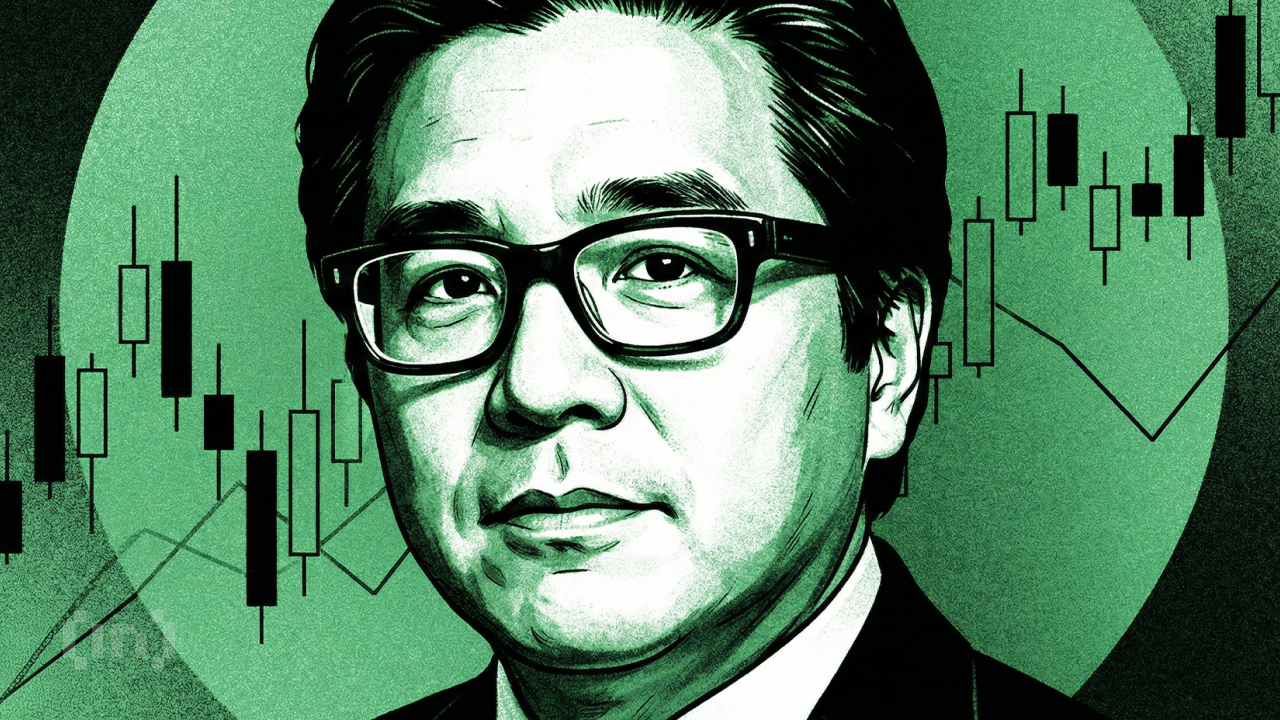

BitMine Immersion Technologies could enter the Russell 3000 Index despite massive Ethereum losses, while Michael Saylor now signals Strategy (formerly MicroStrategy) may sell some Bitcoin during 2026 to manage its obligations.
We break down both corporate moves and what they reveal about the evolving battle between Ethereum and Bitcoin treasuries.
BitMine’s Push Toward the Russell 3000 Index
The Russell 3000 Index tracks the 3,000 largest United States companies by market capitalization. BitMine Immersion Technologies, chaired by Fundstrat’s Tom Lee, appears on the FTSE Russell preliminary list for inclusion in June 2026.
On another hand, Russell 1000 component sets a minimum threshold near $5,7 billion in market cap. BitMine comfortably exceeds that level, raising expectations of significant passive inflows from index-tracking funds once the reconstitution is finalized.
Follow us on X to get the latest news as it happens
The company pivoted aggressively from Bitcoin mining toward building what it calls the world’s largest corporate Ethereum holding. According to CoinGecko data, BitMine now holds roughly 5,28 million ETH, equal to about 4.4% of the total Ethereum supply.
A large portion of those holdings sits staked through its MAVAN platform, generating meaningful annual yields. Lee continues to describe Ethereum as a wartime store of value and projects a long-term target near 12,000 dollars per ETH by year-end.
The strategy carries a steep short-term cost. BitMine currently sits on roughly $7,84 billion in unrealized losses, having bought ETH at an average price close to $3,500 across an $18,5 billion dollar investment.
The current valuation of its stash stands near $10,7 billion. These paper losses have weighed on quarterly results and sparked active debate about the risks of such concentrated exposure to a single digital asset.
Critics question doubling down during heavy drawdowns. Yet Lee and BitMine continue opportunistic purchases, treating volatility as a buying opportunity rather than a warning signal about Ethereum’s near-term outlook.
Why Michael Saylor Is Opening the Door to Bitcoin Sales?
Strategy, led by Michael Saylor, has built its identity around an uncompromising ‘never sell Bitcoin’ policy. That stance now appears slightly more flexible than at any previous point in the company’s accumulation history.
During a recent interview with Natalie Brunell, Saylor said it is not unlikely that MicroStrategy will sell some Bitcoin between now and the end of 2026. The goal would be to help manage financial obligations such as funding dividends on preferred shares.
“I think it’s not unlikely that we’ll sell some Bitcoin between now and the end of the year. […] We do it in a very thoughtful programmatic fashion where we’re running our multivariate models, and we’re literally running them,” Saylor said
The shift in tone matters because Strategy now holds over 840,000 BTC. Saylor framed any potential sales as minimal relative to holdings, and paired with continued buying within an optimized capital management model.
The contrast between the two firms feels striking. BitMine chases Russell inclusion and staking yields while sitting on heavy ETH losses, while Strategy leverages its Bitcoin fortress for capital innovation and opens the door to tactical sales.
Market participants will closely watch June’s final Russell reconstitution. Inclusion could bring new liquidity and clear institutional legitimacy to Ethereum-focused treasury plays across the broader corporate space.
For Bitcoin, Saylor’s comments add nuance to what had been an absolute accumulation narrative. Any actual sales would test the resilience of Bitcoin’s corporate holder base and influence sentiment around both MSTR shares and BTC.
The post BitMine Could Enter Russell 3000 Index With Ethereum Treasury appeared first on BeInCrypto.
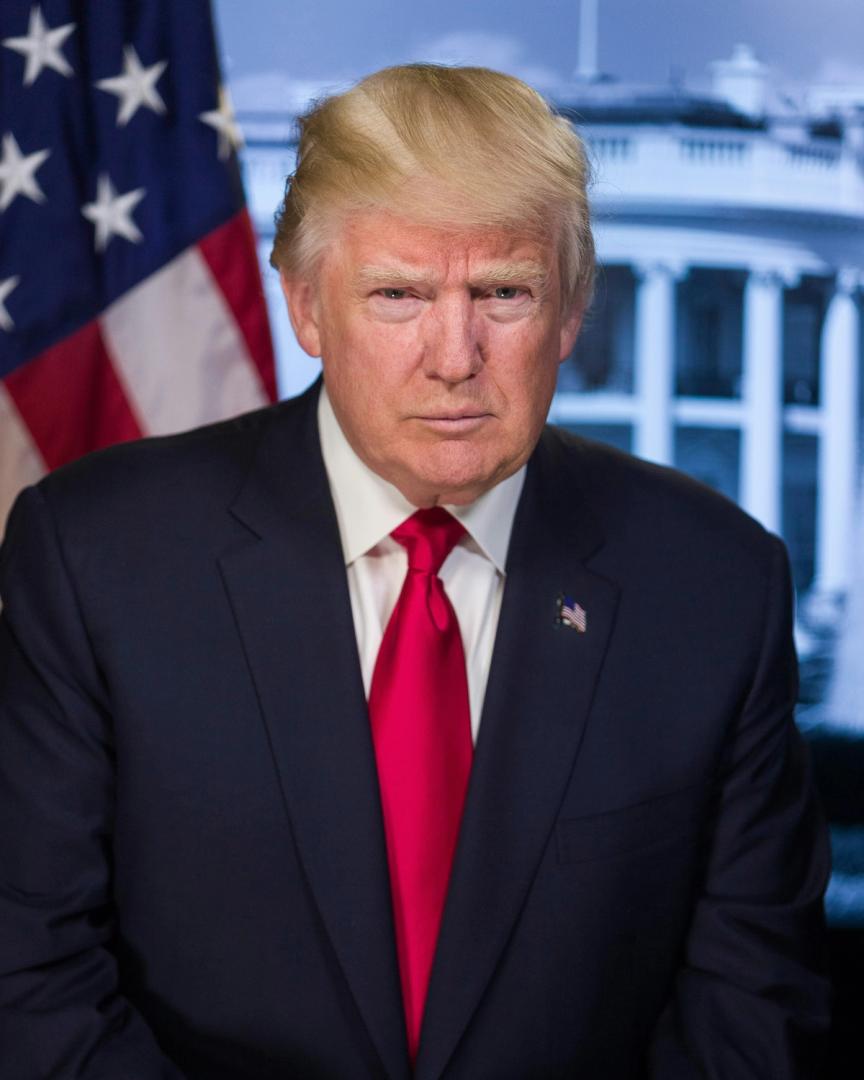
After crumbling about 4% late Friday into early Saturday, bitcoin has more than retraced those losses in the past few minutes after President Trump announced a coming agreement with Iran and other Middle Eastern countries.
“An Agreement has been largely negotiated, subject to finalization between the United States of America, the Islamic Republic of Iran, and the various other Countries,” wrote Trump in a Truth Social post.
“In addition to many other elements of the Agreement, the Strait of Hormuz will be opened,” the president continued.
The news sent bitcoin sharply higher to $76,700 after having fallen to nearly $74,000 earlier on Saturday.
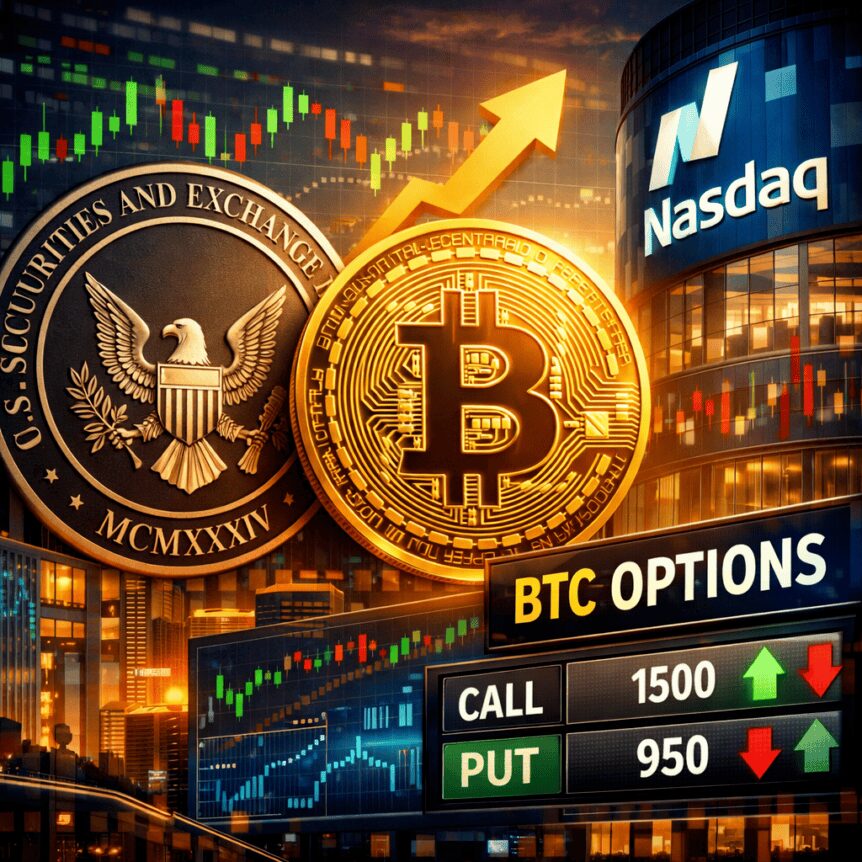
The U.S. Securities and Exchange Commission has approved Nasdaq’s plan to list cash-settled Bitcoin index options on the Philadelphia Stock Exchange (PHLX). The European-style contracts are tied to the Nasdaq Bitcoin Index, a benchmark that tracks one-hundredth of the CME CF Bitcoin Real Time Index, which aggregates data from major crypto venues roughly every 200 milliseconds. The approval, issued on an accelerated basis, was published by the SEC this week.
Under the new framework, the options will be cash-settled—holders receive the difference between the Bitcoin spot price and the strike price at expiration. There is no physical delivery of Bitcoin and no risk of early assignment, offering traders a distinct avenue to express views on Bitcoin’s price without holding actual BTC. The contracts will trade under the ticker QBTC on PHLX, with a minimum price increment of $0.01 and a per-side position limit of 24,000 contracts, which the SEC noted equates to roughly 0.12% of Bitcoin’s outstanding supply.
Key takeaways
- Nasdaq’s cash-settled Bitcoin index options cleared by the SEC enable European-style exposure on the Nasdaq Bitcoin Index (1/100 of CME CF Bitcoin Real Time Index) with rapid market data inputs from major exchanges.
- Trading remains contingent on the Commodity Futures Trading Commission granting exemptive relief due to Bitcoin’s commodity classification, creating a potential delay before QBTC contracts hit the market.
- The SEC framework specifies a 24,000-contract-per-side limit and a $0.01 tick, aligning the product with a measured, risk-managed derivative instrument rather than a leveraged bet.
- The move reflects a broader shift in the agency’s crypto posture, as regulators consider innovation-friendly paths while balancing investor protection.
What the QBTC contract covers
The QBTC options represent a cash-settled approach to gaining exposure to Bitcoin’s price movement through an index rather than holding the asset itself. The underlying Nasdaq Bitcoin Index is designed to reflect Bitcoin price action with reference to the CME CF Bitcoin Real Time Index, a widely watched benchmark that aggregates data from leading crypto venues. Because settlement is based on the index at expiration, there is no delivery of BTC, reducing the operational complexities and custody considerations often associated with cryptocurrency derivatives.
Nasdaq and its partners are positioning QBTC as a way for institutions and sophisticated traders to hedge or speculate on Bitcoin with the familiar framework of listed options. The European-style design means the contracts can be exercised only at expiration, which contrasts with American-style options that can be exercised any time before expiration. The securities exchange notes that the contract size and settlement method are designed to provide a transparent, regulated mechanism for price discovery and risk management in the Bitcoin market.
Regulatory hurdles and the jurisdiction question
The SEC’s approval comes with a caveat: the QBTC options cannot commence trading until the CFTC grants exemptive relief. Bitcoin’s classification as a commodity places futures and related products under the CFTC’s purview, creating a potential jurisdictional overlap when products are listed on a national securities exchange in partnership with a designated options market.
CME Group, which has offered Bitcoin futures options since 2020, submitted a comment letter in October last year arguing that these contracts fall under the CFTC’s exclusive jurisdiction. In its order, the SEC emphasized that Section 717 of the Dodd-Frank Act is not limited to novel products and can permit concurrent jurisdiction when the CFTC provides exemptive relief. The commission pointed to existing precedents where such shared authority has been recognized, including mixed swaps and security futures.
The practical upshot: while the SEC greenlights the instrument from a securities-regulatory perspective, the final green light rests with the CFTC’s approval. Investors should monitor how this dual-regulatory dance unfolds and the timeline for exemptive relief to be granted.
A signal of a friendlier crypto regulatory posture
Beyond this specific product, the SEC appears to be recalibrating its stance toward crypto-market innovation. Under Chairman Paul Atkins, the agency has moved to depoliticize and de-risk certain enforcement actions that had marked the prior administration, while signaling an appetite for clearer, innovation-friendly frameworks. In related discussions, the SEC has talked about concepts like an “innovation exemption” to accommodate tokenized trading of public company shares on decentralized platforms, even without direct company consent, a proposal Cointelegraph highlighted as part of a broader effort to reconcile regulation with technological progress.
These themes matter because they shape how traditional financial markets might adapt to cryptos and tokenized assets. If the SEC and CFTC can harmonize their approaches—balancing investor protection with practical pathways for market access—new derivatives and tokenized products could proliferate, potentially expanding liquidity and hedging opportunities for participants who want regulated, familiar venues for exposure to digital assets.
For context, Cointelegraph has followed related developments that hint at a regulatory ecosystem evolving toward clarity and experimentation, such as discussions around tokenized trading and other innovation-friendly measures designed to reduce friction for legitimate crypto activity while maintaining safeguards for investors.
As the QBTC proposal moves through the final phase of regulatory clearance, market participants should watch for two key developments: the CFTC’s decision on exemptive relief and any accompanying guidance that clarifies how these instruments will be treated within broader market structure rules. The outcome will influence not only the timing of QBTC’s launch but also the appetite for additional crypto-linked options and other index-based derivatives in U.S. markets.
Readers should keep an eye on how liquidity and open interest evolve once the contract is live, and on whether other exchanges and index providers pursue similarly structured, cash-settled products. The interplay between SEC approvals and CFTC relief will likely shape the cadence of similar listings and the pace at which investors gain regulated, familiar tools to trade Bitcoin risk.
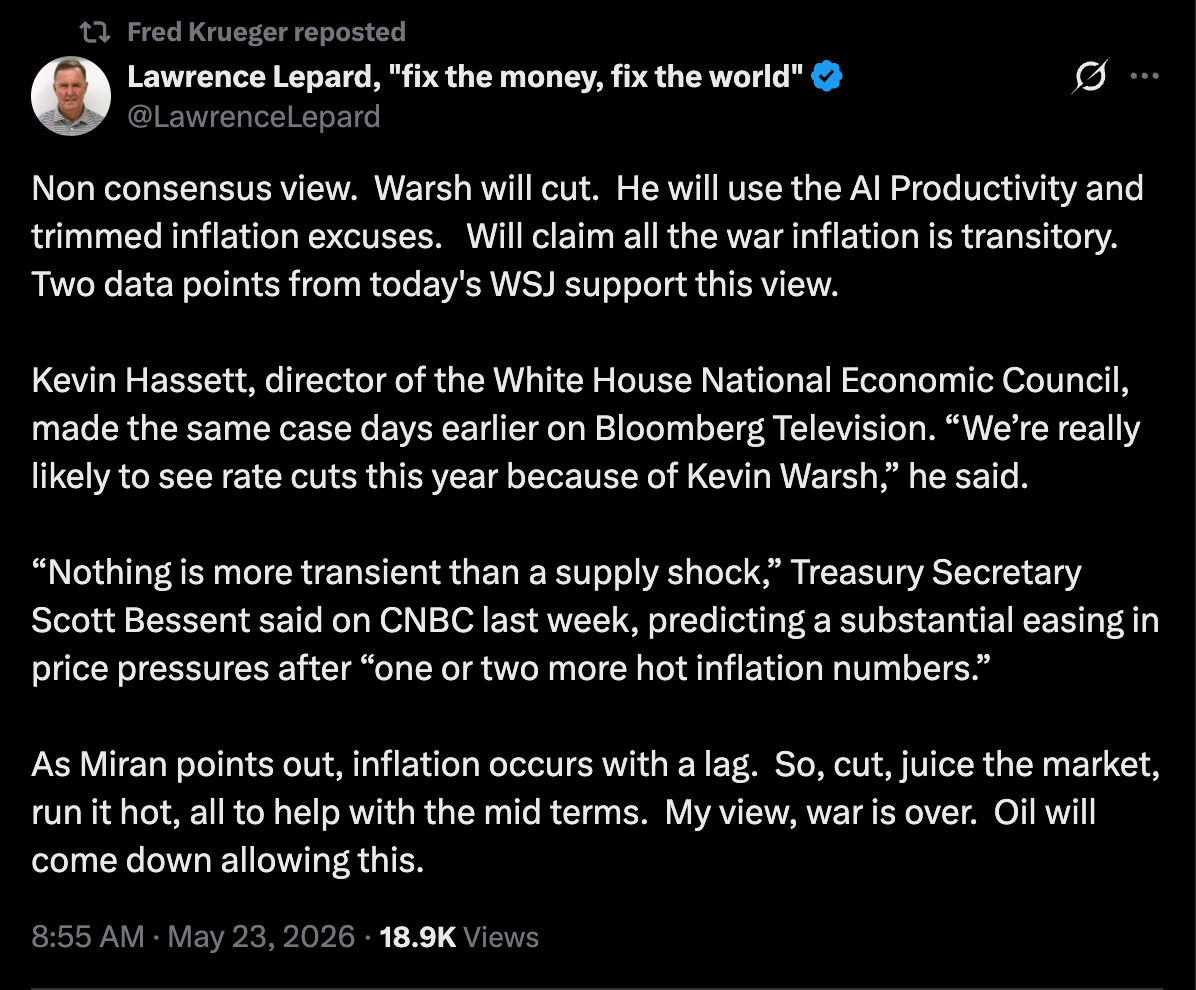
Kevin Warsh, who was sworn in as the chairman of the United States Federal Reserve on Friday, will likely slash interest rates, despite the “consensus” view that he will raise interest rates, according to author, Bitcoin investor and market analyst Lawrence Lepard.
Lepard said that comments from other US officials, including Kevin Hassett, the director of the White House National Economic Council, and Treasury Secretary Scott Bessent, support the likelihood of rate cuts in 2026. He added:
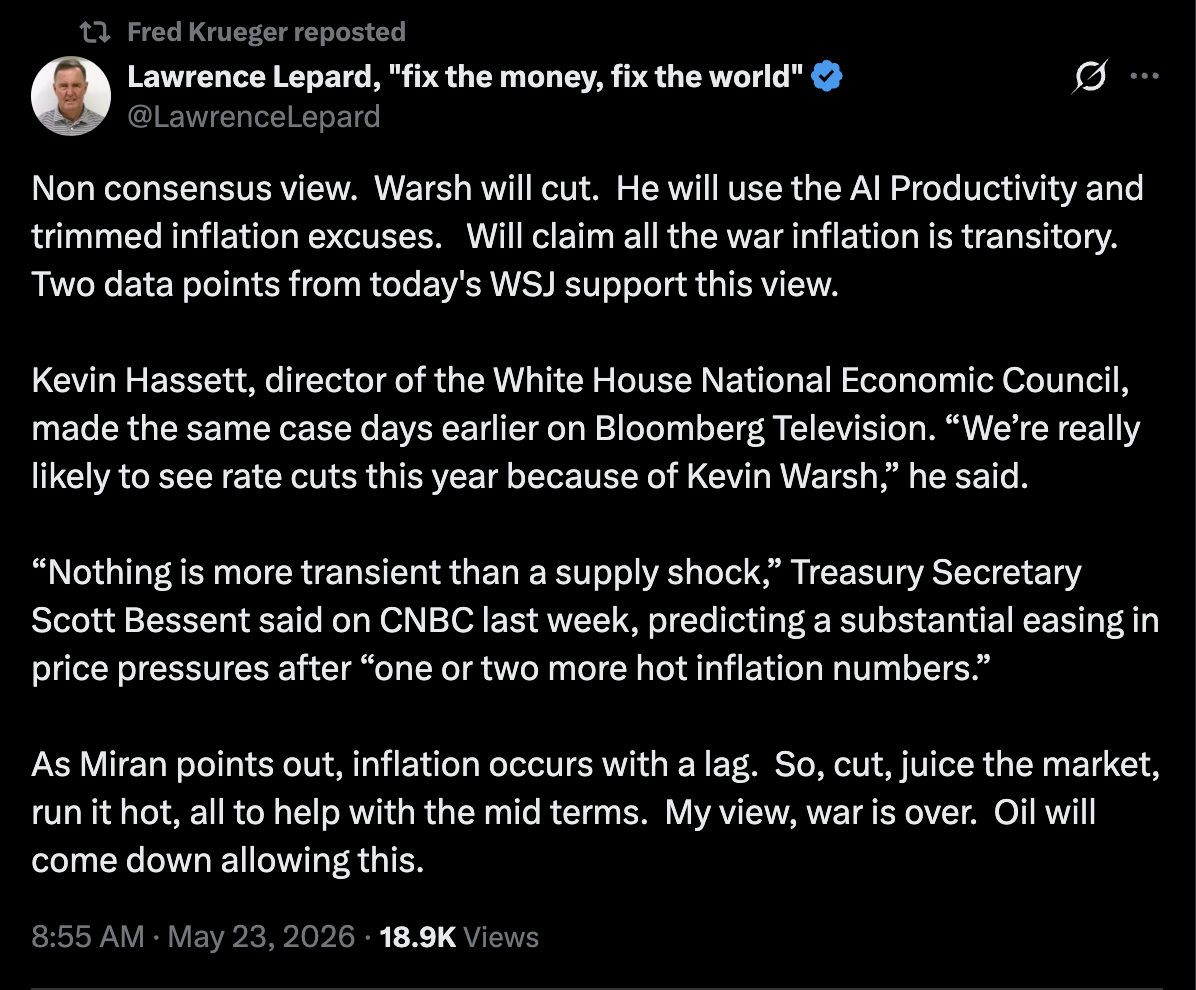
“Warsh will cut. He will use the AI productivity and trimmed inflation excuses and will claim that all the war inflation is transitory. Two data points from today’s Wall Street Journal support this view.”
Source: Lawrence Lepard
During Warsh’s swearing-in ceremony on Friday, US President Donald Trump said that the US would tackle its rising national debt through “growth,” signaling an expansion of the monetary supply and a lower interest rate regime.
Investors, traders, and analysts continue to debate about Warsh’s impact on interest rate policy and whether he will cut interest rates, which would boost risk-on asset prices, including Bitcoin and crypto.
Related: Odds against rate cuts high as new US Fed chair set for swearing in
Traders forecast rate hikes in 2026, as uncertainty mounts over new Fed chair
Nearly 68% of traders have priced in an interest rate hike of 25 basis points (BPS) or more by December 2026, according to the Chicago Mercantile Exchange (CME) Group’s FedWatch tool.
“We want to stop inflation, but we don’t want to stop greatness,” Trump said on Friday, which was met with skepticism from investors, economists and market analysts.
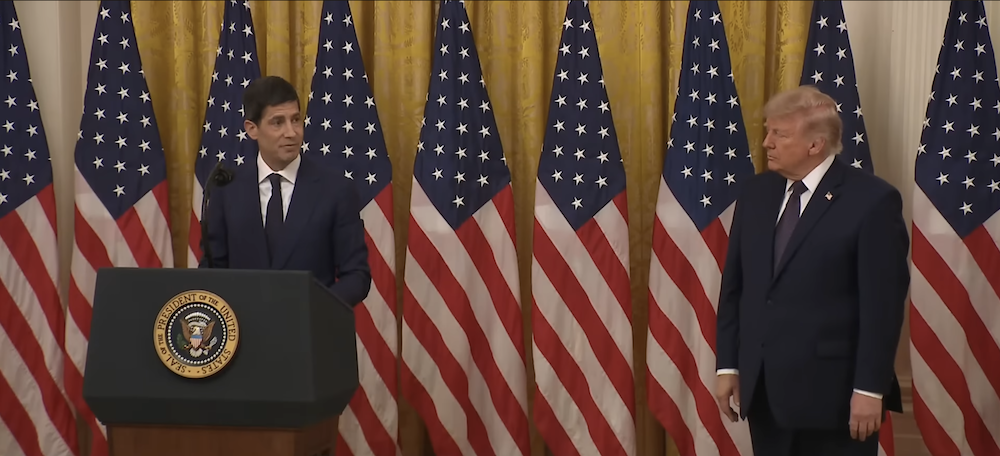
Kevin Warsh gives his acceptance speech at his swearing-in ceremony on Friday. Source: The White House
In April, US lawmakers scrutinized Warsh’s commitment to preserving Federal Reserve independence, casting doubt on whether Warsh would resist pressure from the Executive Branch to loosen monetary policy.
Senator Elizabeth Warren said that Warsh’s appointment could create potential conflicts of interest, in which the Trump family’s crypto businesses benefit from policies enacted by the new Fed chair.
Meanwhile, Bitcoin, crypto and stock investors could face several months of declining asset prices following the Fed’s leadership transition, as uncertainty over interest rate policy grows.
Magazine: Is China hoarding gold so yuan becomes global reserve instead of USD?

Coinbase reportedly spent approximately $7.6 million on personal security for CEO Brian Armstrong in 2025, a more than 20% increase from the year before.
This is according to the company’s proxy filings cited in a report by Bloomberg, with the spending coming after physical attacks on crypto holders rose 75% last year. Per data from blockchain security firm CertiK, there have been 72 confirmed incidents and $41 million in known losses.
Crypto Firms Tighten Security After Wave of Violent Attacks
That $7.6 million figure stated in the Bloomberg piece exceeds what major Wall Street banks typically disclose for CEO protection. For context, Gemini reportedly spent around $2.5 million on security for the two co-founders, Cameron and Tyler Winklevoss, in 2025 and has since signed a deal to protect the twins and their families for $400,000 per month.
Circle spent nearly $800,000 on its CEO, Jeremy Allaire, in 2024, while Robinhood spent approximately $1.6 million on Vlad Tenev. The rest of the industry reaction can be observed in other places as well. For example, during the Bitcoin 2026 conference in Las Vegas just last month, high-profile speakers could be seen walking around with personal bodyguards.
And to show how seriously the community is taking security, a workshop led by Bitcoin security expert Ben Perrin that taught attendees how to protect their digital assets under physical coercion, as well as how to use decoy wallets, time-lock mechanisms, and duress features on hardware wallets, was one of the most heavily attended at the conference.
It was the same a few weeks earlier at Paris Blockchain Week, where guests were escorted by a police motorcade to a VIP dinner while organizers doubled security around the event.
The threat is very real, as seen when a crypto holder known online as Sillytuna reported in March that armed attackers stole around $24 million in tokens after physically intimidating him and threatening him with kidnapping and sexual assault.
The Structural Problem Beneath the Headlines
The reason why crypto owners are so vulnerable boils down to the technology itself. As we know, public blockchains are pseudonymous and not anonymous, thus revealing ownership information for anyone with proper analytical tools to view. As such, leaked exchange data and chain analytics have together created, as Bloomberg put it, “a legible map of who holds what.”
For that reason, demand for protection services has responded accordingly. Executive Risk Services, a firm focused on the digital-asset industry, went from receiving client inquiries roughly once per quarter two years ago to about once a week now.
Meanwhile, Amsterdam-based Infinite Risks International, which provides bodyguards, armored vehicles, and social media monitoring to crypto holders, has seen more inquiries, more long-term clients, and more proactive requests, according to managing director Jethro Pijlman. According to the report, France has become a hotspot for crypto crime after a string of attacks on crypto entrepreneurs and their families.
Things have gotten so bad that last year, the country’s Interior Minister promised to establish a priority emergency number for the industry, with elite police units offering security briefings for crypto executives and their families.
The post Crypto CEO Security Costs Surge as Physical Attacks Rise 75% appeared first on CryptoPotato.
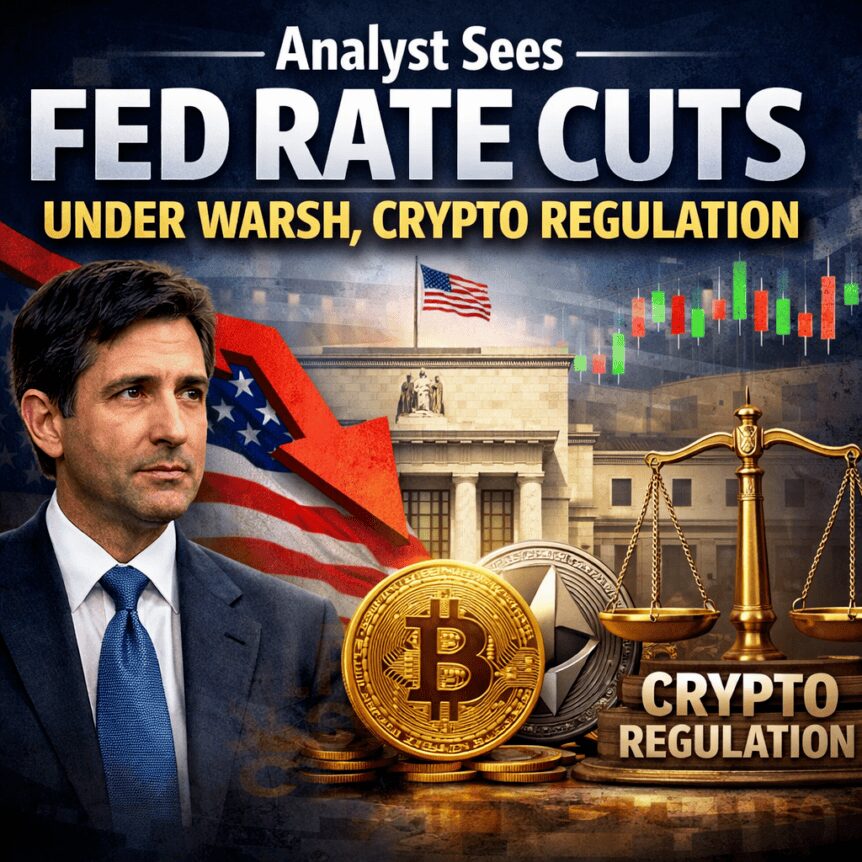
Kevin Warsh’s inauguration as chair of the U.S. Federal Reserve places monetary policy at the forefront of institutional scrutiny, with crypto markets and traditional finance alike watching for a potential shift in the policy stance. While a segment of market commentary has anticipated continued tightening, a notable faction—advocates of looser policy—argues for rate reductions in 2026. The new chair inherits a delicate mandate: manage inflation, preserve central-bank independence, and navigate a fiscal posture that could influence liquidity, risk appetite, and regulatory expectations across the crypto and broader financial ecosystems.
According to Cointelegraph, Warsh’s appointment arrives at a juncture where policy direction remains unsettled and market participants seek clarity on the Fed’s preferred balance between inflation control and growth support. The debate carries practical significance for crypto firms, exchanges, and banks as policy signals interact with licensing, AML/KYC obligations, and cross-border operations.
“Warsh will cut. He will use the AI productivity and trimmed inflation excuses and will claim that all the war inflation is transitory. Two data points from today’s Wall Street Journal support this view.”
Source: Lawrence Lepard
During Warsh’s swearing-in ceremony, U.S. President Donald Trump framed the debt challenge as one that could be addressed through “growth,” a stance that market observers interpret as signaling an expansionary tilt in monetary conditions. The commentary underscores how political signals may influence expectations for the tempo of liquidity provision and the regulatory environment that crypto firms must navigate.
Investors, traders, and analysts continue to weigh Warsh’s potential impact on interest-rate policy and whether a shift toward easing would bend risk appetite higher for crypto assets. While some voices anticipate rate cuts, others warn that inflation dynamics and policy discipline could keep the Fed on a cautious path. In the near term, the crypto complex—Bitcoin, altcoins, and related equities—faces a period of heightened uncertainty as the policy framework and enforcement priorities adapt to the new leadership.
Related market commentary has highlighted the broader policy context. For instance, the CME Group’s FedWatch tool indicates that roughly two-thirds of traders expect a 25 basis-point or larger move by December 2026, underscoring persistent dispersion in the pricing of future policy moves. Against this backdrop, observers stress that any policy shift will interact with ongoing regulatory developments and cross-border considerations that affect crypto firms’ operating models and capital requirements.
Key takeaways
- The Warsh era introduces renewed questions about Federal Reserve independence and the policy path, with implications for the pace of rate adjustments and the signaling environment facing crypto markets.
- Market pricing remains uncertain: about 68% of traders, per the CME FedWatch tool, anticipate a rate increase of 25 basis points or more by December 2026, highlighting a broad range of possible trajectories.
- Crypto markets are sensitive to shifts in U.S. monetary policy, with potential impacts on liquidity, risk appetite, and cross-border licensing and compliance considerations for exchanges and stablecoins.
- Lawmakers have raised concerns about independence and potential conflicts of interest that could influence regulatory outcomes affecting crypto firms and related industries.
- The policy environment extends beyond the United States, with regulatory developments such as MiCA and ongoing oversight by the SEC, CFTC, and DOJ shaping compliance strategies and licensing requirements for crypto participants worldwide.
Fed leadership and policy trajectory under Warsh
The confirmation of Warsh underscores a critical moment for the Federal Reserve’s governance framework amid a climate of inflation uncertainty and fiscal signals. Questions regarding the degree of independence the Fed can retain amid political and administrative pressure have resurfaced in congressional discussions. In April, lawmakers scrutinized Warsh’s commitment to preserving the central bank’s autonomy, raising concerns about the potential for policy choices influenced by the Executive Branch to affect monetary conditions and, by extension, the financial system and digital-asset sector.
Senator Elizabeth Warren explicitly highlighted the risk of conflicts of interest, noting that policy decisions could inadvertently align with the interests of political actors or linked financial interests. The discourse reflects a broader historical debate about the Fed’s independence in the face of fiscal policy objectives and market expectations, a dynamic with direct implications for crypto firms that rely on stable liquidity conditions and predictable enforcement approaches.
For market participants, the independence question translates into practical considerations about how quickly the Fed will respond to evolving inflation readings, labor market data, and financial stability concerns. A central question is whether policy normalization—if pursued—will occur at a pace that preserves market functioning and minimizes abrupt shifts in risk premia across crypto markets and related financial instruments.
Market expectations and rate path uncertainty
With Warsh at the helm, the policy outlook is characterized by competing narratives. A segment of market observers argues that the chair will embrace a gradual tightening or at least a longer persistence of higher rates to anchor inflation, while others anticipate a shift toward easing if inflation proves more transitory or if productivity gains from technology investment mitigate price pressures.
The current pricing signals, as reflected by the CME Group’s FedWatch tool, show a substantial portion of traders pricing in a 25 basis-point or larger move by December 2026. This dynamic underscores the challenge of achieving a stable consensus on the trajectory of interest rates and the accompanying risk-on or risk-off environment for crypto assets. The potential for a policy shift—whether toward normalization, stabilization, or easing—has meaningful implications for funding markets, exchange deposits, and the ability of crypto businesses to manage liquidity and capital adequacy in a regulated environment.
In parallel, public commentary from political leadership has added another layer of ambiguity. President Trump’s framing of debt reduction through growth—interpreted by some market participants as an endorsement of looser monetary conditions—adds to the complexity of forecasting policy moves. For crypto participants, the interplay between fiscal signals and monetary policy will influence impacts on stablecoin liquidity, bank access, and regulatory scrutiny, particularly as financial institutions reassess risk management and onboarding processes for digital-asset activities in light of evolving enforcement priorities.
Analysts warn that the combination of policy uncertainty and regulatory realignment could lead to a period of softness in asset prices across crypto and technology equities, at least until policy direction is clarified and enforcement priorities become more predictable. The prospect of a multi-quarter window of adjustment accentuates the importance of robust risk-management frameworks, including AML/KYC compliance, licensing obligations, and cross-border operational controls for crypto firms seeking to navigate an increasingly interconnected financial landscape.
Crypto policy implications within a regulatory framework
The policy shifts associated with a new Fed chair occur within a broader regulatory ecosystem that governs crypto markets. While the U.S. regime continues to evolve, international frameworks—such as the European Union’s MiCA—illustrate a growing trend toward formalized licensing, consumer protection, and market integrity standards for digital assets. For crypto firms operating globally or seeking cross-border service models, alignment with these standards is essential to maintain banking relationships, access liquidity, and meet ongoing AML/KYC obligations.
From a compliance perspective, the Fed’s policy stance interacts with the regulatory posture of the SEC, CFTC, and DOJ, particularly in areas such as classification of crypto assets, securities-law considerations, and enforcement priorities. A policy environment that leans toward stricter oversight or more explicit clarity on asset classification could drive a realignment of product offerings, custody arrangements, and stablecoin arrangements, influencing licensing decisions and capital requirements for exchanges and custodians.
In practice, the development matters for regulators and market participants for several reasons. First, policy clarity helps crypto firms plan liquidity strategies, funding lines, and collateral management in a way that aligns with prudential standards. Second, it informs risk-based supervision and the allocation of supervisory resources to areas such as AML/KYC controls, transaction monitoring, and cross-border transfers. Third, it frames a broader policy narrative about the financial system’s resilience and the role of digital assets within it, a narrative that regulators may reference when considering upcoming policy proposals or enforcement actions.
Looking ahead, the regulatory trajectory will hinge on how the Fed balance inflation dynamics with economic growth signals, how it coordinates with fiscal policy, and how U.S. authorities align with international standards. For crypto market participants, monitoring statements from the Fed, the administration, and relevant regulators will be essential for anticipating licensing shifts, enforcement emphasis, and cross-border operational strategies tied to MiCA compatibility, U.S. licensing regimes, and the evolving AML/KYC compliances.
Closing perspective: The policy environment remains dynamic, with the Fed’s leadership under Warsh likely to influence liquidity conditions and risk appetites for years to come. Crypto firms, exchanges, banks, and institutional investors should watch for emerging signals on independence, rate path, and enforcement priorities, as these factors will shape compliance requirements, licensing strategies, and cross-border operations in a rapidly evolving market structure.


Bitcoin may be entering a new period of outperformance against traditional assets as inflation pressures persist and bond markets weaken, according to Risk Dimensions chief investment officer Mark Connors.
Connors, who spent years as the global head of portfolio management at Credit Suisse, said bitcoin recently broke out of what had been its longest stretch of underperformance against the S&P 500 in history, a 142-day period that ended in early May.
“I think bitcoin’s underperformance versus markets is over,” Connors said in an interview. “It’s in the consolidation phase [that] has shifted into an outperformance phase.”
The shift comes as investors grapple with stubborn inflation, rising oil prices and uncertainty around interest rates. Connors argued that bonds, traditionally viewed as defensive assets, are increasingly under pressure as markets adjust to a “higher-for-longer” rate environment.
“Bitcoin, as it always does, takes it on the chin early, but then it always comes out first,” he said, adding that bitcoin could continue outperforming both equities and fixed income “as we grind through the straits of poor news and oil persistently being high.”
Connors tied much of the current macro environment to persistent geopolitical tensions and elevated energy prices. Oil has remained structurally high this year, he said, fueling inflation concerns while forcing markets to look toward technology and productivity gains as a counterweight.
He argued that AI and blockchain are becoming increasingly linked as businesses look for decentralized systems to support machine-driven transactions and automation.
“The only way to punch through that inflationary pressure is through technology,” Connors said.
He also pointed to shifting investor preferences between gold and bitcoin. Connors compared the current environment to 2020, when gold initially outperformed during the early stages of the pandemic before bitcoin began a strong resurgence.
“Gold has had its run,” he said. “Bitcoin is now on its resurgence.”

17 Resort-Style Dresses That Look Out of a Luxe Beach Boutique

UK-bound Jet2 flight makes emergency landing as pilot ‘has heart attack mid-air’

US conducts military drill over Venezuelan capital Caracas


-

 Crypto World2 days ago
Blockchain.com files with SEC for U.S. IPO
-

 Fashion1 day ago
Holiday Weekend Open Thread – Corporette.com
-

 Crypto World6 days ago
Intesa Sanpaolo’s crypto holdings jump to $235M as XRP enters
-

 Business1 day ago
Dell Technologies DELL Stock Surges 15% on AI Server Momentum and Analyst Upgrades in 2026
-

 Crypto World1 day ago
Space X IPO Is ‘Bad News’ for Tech Stocks: But What About Bitcoin?
-

 Crypto World11 hours ago
Robinhood crypto COO Tanya Denisova exits
-

 Fashion7 days ago
On the Scene at Gucci’s Cruise Show in New York City: Mariah Carey, Kim Kardashian, Lindsay Lohan, Iman, and More!
-

 Politics1 day ago
Makerfield: a tale of two social-media histories
-

 Crypto World1 day ago
AI infrastructure race heats up as IREN pitches full-stack strategy, WhiteFiber lands $160M deal
-
 Tech1 day ago
A 0.12% parameter add-on gives AI agents the working memory RAG can’t
-

 Tech2 days ago
WhatsApp ads could make Irish debut after discussions with DPC
-

 Fashion7 days ago
Amazon Sundays: Memorial Day Hosting
-

 Entertainment7 days ago
Off Campus Easter Eggs Explained: Characters, Stories, More
-
Crypto World5 days ago
Revolut Launches Dogecoin Debit Card Across UK and EU
-

 Crypto World2 days ago
Bitcoin Accumulation Weakens as BTC Realized Losses Hit $600M
-

 Sports2 days ago
2026 CJ Cup Byron Nelson leaderboard: Brooks Koepka finds putting stroke in Round 1
-
 NewsBeat2 days ago
Charity run by Reform leader Malcolm Offord accused of ‘law breaking’ over Scottish registration
-

 Business2 days ago
Trump Invests $1M-$5M in Kura Sushi USA Chain With 27 California Locations
-

 Crypto World2 days ago
Trump Media’s Bitcoin Stash Shrinks Again as 2,650 BTC Lands on Crypto.com
-
Business7 days ago
Australia defends property tax changes designed to fix ‘broken’ housing
You must be logged in to post a comment Login