

Business
T. Rowe Price: The 5% Yield Is Attractive But Challenges Exist (Rating Downgrade)




AoZaaStudio/iStock via Getty Images

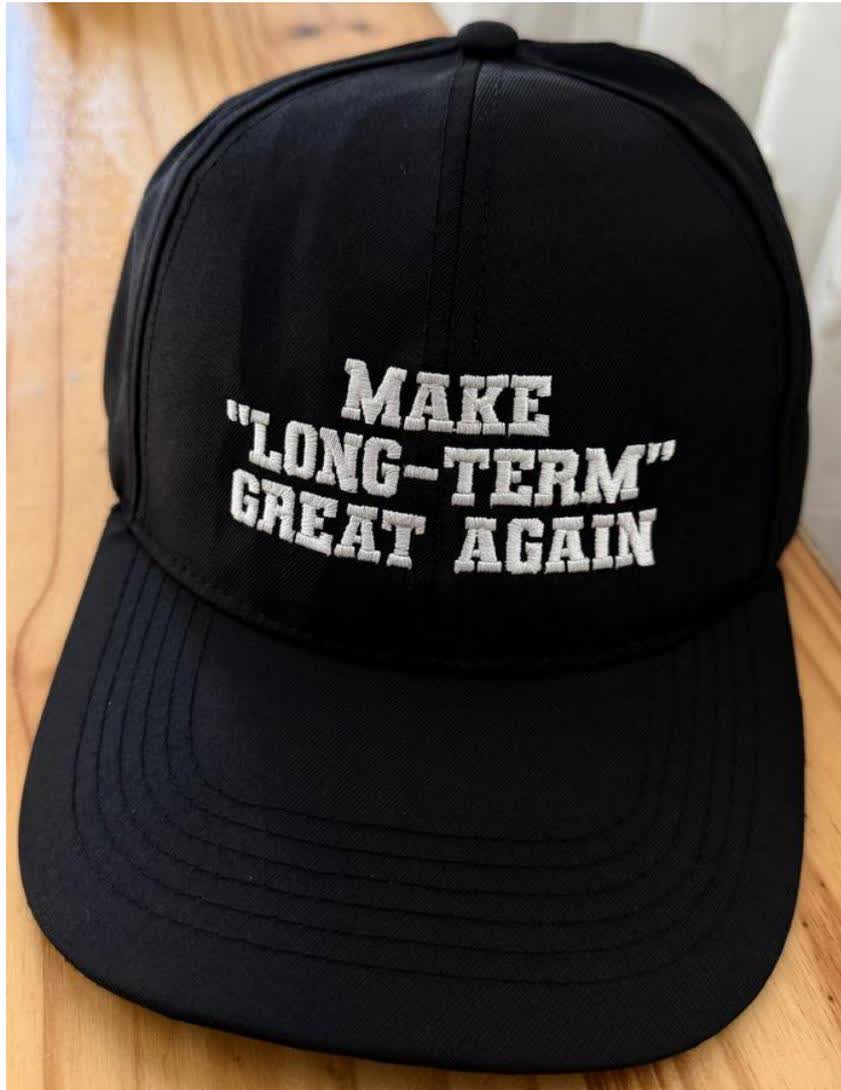
Make “Long-Term” Great Again
At a recent investment conference, we made some baseball caps that bashfully shouted on the front: ‘ Make “Long-Term” Great Again ’. This was our brief dalliance with Trumpian ‘merch’ culture, mercifully without the red caps, rallies, or promise of instant results. Its purpose was to be an icebreaker, but at its heart, a statement of principle.
Meanwhile, another attendee at one of the snack tables had a similar idea and wore a cap that said: “Make Volatility Great Again. ” We guessed that he was working for a brokerage firm.
We can already feel your scepticism. “Long-term” is one of the oldest cards in the fund manager’s deck, usually pulled from the inside pocket as soon as performance goes awry. Sometimes it’s a philosophy; sometimes it’s just a way to launder underperformance.
We hope that by the end of this letter, you will believe that our intention was the former.
What Has Been Going On?
This was the second negative quarter since 2022 for the SaltLight BCI Worldwide Flexible Fund. Over the last six months, we have been deliberately harvesting profits in parts of the portfolio, particularly in AI infrastructure, and reallocating capital to better expected-value opportunities.
As fate would have it, at the same time we have experienced meaningful declines in companies such as Blu Label Unlimited, Sea Ltd (SE), and MercadoLibre. We think this sell-off has been an absolute gift, especially with a little cash on hand. In the short term, for these companies, the market has decided that we are either wrong or. . . early. For a time, those two things could look identical.
Back in the US, fast capital has flowed into what we would opine are mediocre AI infrastructure businesses, with revenue surges driven by short-term AI bottlenecks. Time will tell if great businesses are born from these shortages, but our job is not to chase every price move. We must distinguish between temporary scarcity and focus our attention on enduring advantage.
What Is the Game that SaltLight is Playing
The most important question about an investment manager is not what they own today or what they think will happen next quarter. It is what game they are playing.
Some managers play the very difficult event game . They try to predict quarterly earnings, elections, wars, tariffs, interest rates, currencies, and the next macro surprise.
Others play the safer benchmark game : stay close enough to the index to avoid embarrassment, but far away enough to justify a fee.
Meanwhile, SaltLight is trying to play a different game: the waiting-and-building game. . . And at times, despite our best intentions, it can become a building-and-waiting game.
S-Curves: Do Shareholders Have What It Takes?
When we communicate to potential investors what we plan to do with their hard-earned capital, our goal is to convey a fairly simple idea that is hard to execute.
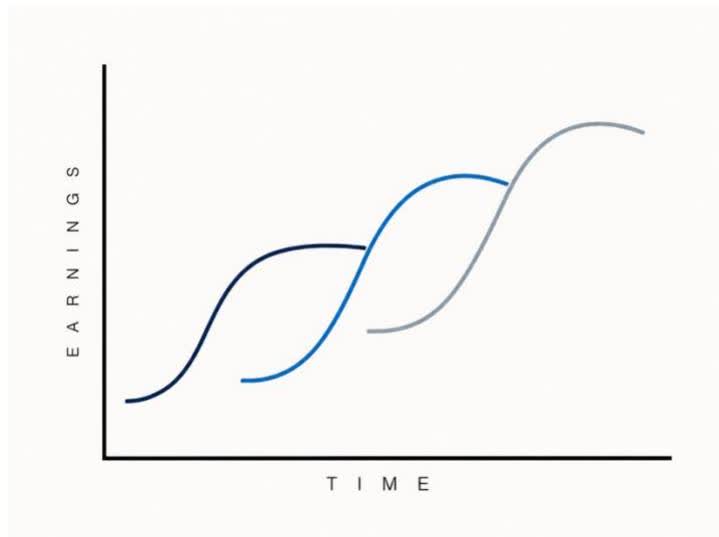
We are curating a portfolio of exceptional global businesses that can become materially more valuable over many years by adapting, innovating, serving customers better, expanding their opportunity set, and reinvesting intelligently.
What *Should* Happen
Ideally, the best of these companies does not rely on a single product, a single market, or a short growth curve. They stack new S-curves on top of existing ones and press their differential and durable advantages. Yet few second-, third-, or tenth-act businesses succeed. Almost all companies fail to build the “next thing”, and so market participants tend to shoot first and ask questions later.
Why Do ‘Long-Term’ and ‘Great’ Not Happen?
1) Culture
Most businesses lack the culture of innovation and management ambition required to invest in a future not yet visible in this quarter’s numbers. Pair that institutional timidity with the incentive structure of a hired CEO on a five-year contract: protect current margins, defer tomorrow’s opportunity, collect the bonus, and let someone else explain the missing growth. Before long, Long-Term and Great are no longer guiding principles. They survive as corporate folklore, stories told about a company that once knew how to build.
2) Shareholders and Investment Industry
Here the lunacy reaches its full bloom. Shareholders say they want growth. They wail and gnash their teeth at the cost of producing it. Their pressure flows downhill from clients, consultants, ratings tables, quarterly league tables, and the endless industry of measurement that surrounds them. The result is a negative feedback loop of mutually reinforcing mediocrity, in which managers stop investing in the future, and shareholders later wonder where greatness disappeared.
3) Accounting in the Technology Age
Another quirk is accounting. In the industrial era, if a company built a factory to support growth, the cost was capitalised and then depreciated over many years through the income statement.
Technology businesses are different. Building a consumer habit, subsidising logistics, hiring engineers, or acquiring customers often hits the income statement immediately. Long-term investment is often conflated with an “expense” and can easily be mistaken for deteriorating economics.
How Have We Found Success Over the Years? How Do We Wake Up ‘Long Term’ and ‘Great’ Again?
But a treasured few companies get Long-Term right; and when they do, they generate incredible value for shareholders. NVIDIA (NVDA), AppLovin (APP), Sea Ltd, and Blu Label have materially grown our capital. One pattern is that, more often than not, companies run by founders tend to have a different license to operate than those run by hired guns do.
Part of the reason we chose the harder path of building SaltLight from scratch a decade ago was shaped by our own experience as entrepreneurs. We wanted to be a different kind of shareholder. We project ourselves sitting on the same side of the table as the builders in our portfolio companies. We make a concerted effort to understand their ambition behind their investments, judge whether the opportunity is real, and back those with the courage, competence, and staying power to build what comes next.
A Portfolio of Builders
Back to what has been going on with our portfolio. Over the last six months, we have deliberately reoriented the portfolio toward a quasi-building mode again. By our estimate, roughly 46% of the portfolio’s exposure is in businesses that are either already undertaking or about to enter a multi-year investment cycle . We have chosen the lonely path to Long-Term martyrdom. It is likely to be choppy, but this is how we play our part in making Long-Term Great again.
Before you flee to the comforting arms of near-term certainty, in this letter, we want to walk through how several of our portfolio companies are investing for the future. MercadoLibre is building the financial ecosystem for Latin America. Tencent (TCEHY) is building AI services on top of one of the world’s most valuable consumer and enterprise ecosystems. AppLovin is extending its advertising engine across more than one billion users. WeBuyCars is building a national scale in South Africa’s fragmented second-hand vehicle market.
Let’s delve into the details on MercadoLibre that demonstrate our thinking and where we differ from the market.
MercadoLibre – Torne o Longo Prazo Grande Novamente ¹
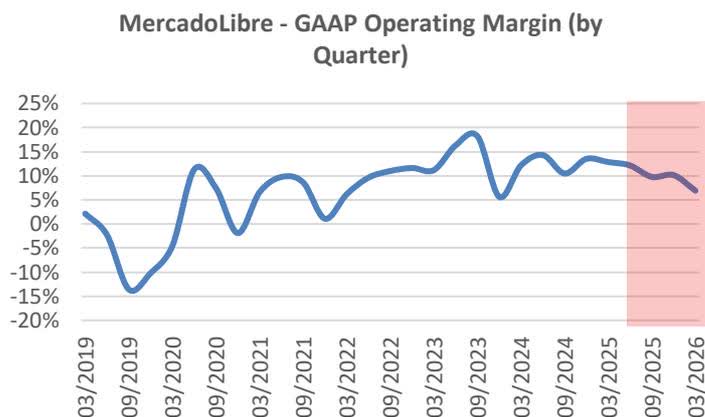
MercadoLibre (MELI) has recently made several decisions that have put pressure on short-term margins. History shows that MELI has gone through this investment cycle before and emerged significantly stronger as a result. We think that the market reaction misses some key points. It has (1) lowered free-shipping thresholds, (2) expanded its credit card offering, and (3) pushed further into cross-border commerce. Investors, without mincing words, have punished its share price.
Figure 1- Source: Company (red is when shipping threshold was reduced)
Lowering Free Shipping Thresholds
The last time MELI cut free-shipping thresholds by a mere 20%, commerce revenues subsequently increased 3.3x over the following years. In a network-effect business like 3P e-commerce, this creates multiple layers of opportunity. The first-order benefit is that more buyers attract more sellers due to the larger customer base. The second-order benefits are the more profitable ones: MELI sells more high-margin advertising and financial services to both sides of the network.
The 2025 Brazil threshold reduction is far more aggressive (~75%) and has resulted in a halving of contribution margins in the last year. But we already see early signs of a substantial increase in contribution margin dollars in the graph below ² .
Figure 2 – Source: Company (red is when shipping threshold was reduced)
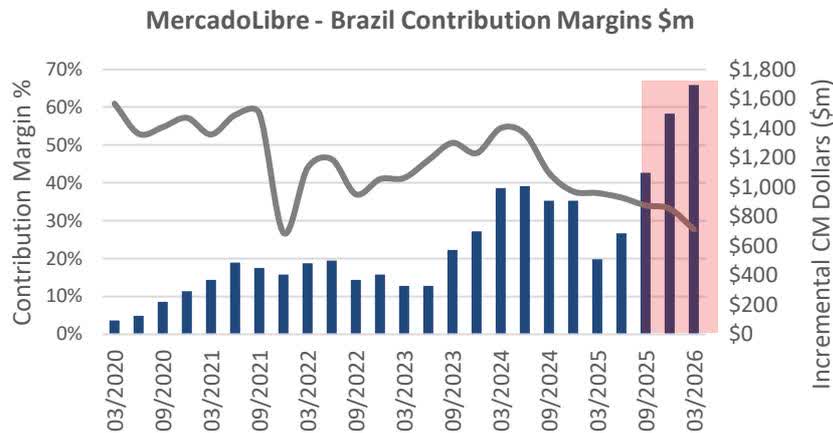
Now, investors tend to focus too much on margin percentages rather than on incremental margin dollars. The truth is that we do not mind lower margin percentages when margin dollars increase, provided that fixed capital investments, such as logistics, are leveraged. Jeff Bezos understood this dynamic well when building Amazon (AMZN)’s unassailable position, because the other side of the equation is that a competitor must operate at similar gross margins, resulting in much smaller gross profit dollars – but at a lower scale. The most-scaled player (MELI, in this case) is usually the winner in the long term. We think this will play out again.
Building a Latam Consumer Bank
The second initiative is MELI’s rapidly expanding credit card portfolio. Over the years, MELI initially focused on short-duration loans for the underbanked. More recently, it has moved upmarket, serving a higher-quality middle-income customer base and steadily laying the foundations for a broader Latin American bank.
Fast-growing loan books are a double-edged sword. When any loan is extended, MELI (or any bank in that manner) prudently recognises an upfront provision for expected credit losses rather than waiting for the default to occur. Faster growth, therefore, mechanically creates higher upfront provisions which hit the income statement immediately. With the credit book growing at roughly 87% YoY ³ , this depresses current reported profitability.
Mercado Pago – New Cards Issued ((est. ))
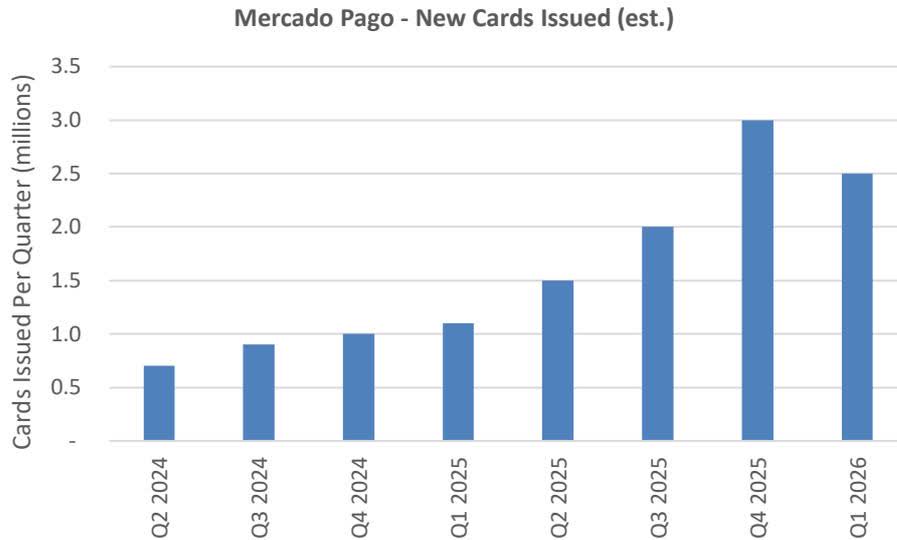
The obvious risk is that the book proves to be of poor credit quality and today’s growth becomes tomorrow’s credit problem. That is the right question to ask. However, based on our analysis today, provisioning appears adequate.
Cross-Border Trade
The third initiative is cross-border trade, which links MELI’s consumers directly to Chinese and US suppliers. We think this is another S-curve that demonstrates the strength and optionality of the MercadoLibre ecosystem.
Consider the challenge from a supplier’s perspective. A Chinese manufacturer trying to sell into Brazil, Mexico, Argentina, or Chile faces a market on the other side of the world, with different languages, payment systems, logistics infrastructure, tax regimes, customer service expectations, and returns processes.
That is a hard problem to solve alone, and so MercadoLibre is turning those multiple friction points into a product. Borrowing from models pioneered by companies such as Pinduoduo (PDD), it now offers semi-managed and fully-managed cross-border solutions. In the semi-managed model, the supplier can drop product into a MercadoLibre warehouse in China. In the fully-managed model, MercadoLibre can handle pricing, shipping, marketing, and customer fulfilment on behalf of the supplier.
This is the pattern we like to see, where it leverages existing infrastructure (an investment cycle from a decade ago) to attack adjacent opportunities. Logistics, payments, credit, advertising, and merchant services are not separate businesses bolted on. They are mutually reinforcing layers of the same ecosystem.
That is why we are less concerned by near-term margin pressure than the market appears to be. MercadoLibre is not simply spending to defend its current business. It is investing to make the next version of the business larger, harder to replicate, and more valuable.
So, where else in our portfolio are companies going into ‘building mode’?
Tencent: Sacrificing 4.5 percentage points of operating margin to invest in new AI initiatives that sit atop one of the most formidable distribution systems in China.
We Buy Cars: Increased its footprint by 23% over the last two years. The investment is impacting margins and free cash flow today, but if returns on capital follow previous locations, we anticipate a substantial earnings lift next year as these new locations mature.
Roblox (RBLX): Took the difficult but welcome decision to improve age identification using AI. Predictably, bookings have suffered, but we believe this will vastly improve network effects and safety for all users.
Karooooo (KARO): has invested significantly in its sales organisation to accelerate its business in South-East Asia. Cartrack has one of the most enviable unit economics in the sector and is unlikely to be disrupted by AI.
Blu Label Unlimited (BLU): Restructuring and simplification are ongoing, and we anticipate this process will take about 18 more months. We remain hopeful for a repurchase announcement with the 2H26 results. Additionally, BLU plans to launch a unified voucher within the next six months, which will significantly change the company’s working capital dynamics.
2022 Vintage
2022 was an exceptionally tough year for us, and yet it was the most fruitful time to deploy capital. That sounds odd, but it is often how long-term investing works. The best sowing rarely feels good at the time. It happens when prices are falling, confidence is scarce, and the temptation to optimise for reported comfort is strongest.
Since then, market participants have had to contend with sharply higher interest rates, the Russia-Ukraine war, Trump 2.0, tariffs, China decoupling, and now the war in Iran. The headlines have not lacked for drama.
The more important question is: what did the companies do?
A few examples from that 2022 vintage:
- • SEA Ltd: emerged from the post-2021 reset as the leading e-commerce platform in Southeast Asia. Revenue grew roughly 80% from 2022 to 2025, while net profit moved from a loss of $1.6 billion to a profit of $2.2 billion.
- • AppLovin: positioned itself as a serious force in performance advertising, increasingly competing in a market long dominated by Google (GOOGL) and Meta (META). Revenue grew 104% from 2022 to 2025, while net profit moved from a loss of $0.2 billion to a profit of $3.6 billion.
- • Pinduoduo: built Temu into a global e-commerce platform, demonstrating an extraordinary ability to adapt, scale and compete internationally. Revenue grew 231% from 2022 to 2025, while net profit rose from $4.5 billion to $16 billion.
- • NVIDIA became the de facto compute provider for the AI epoch. What the market once largely treated as a gaming hardware company became the world’s largest company by market cap. Revenue grew 380% from 2022 to 2025, while net profit increased from $10 billion to $73 billion.
The common thread is that these companies had to go through an investment cycle, and the market hated it. Their management teams played the right game. They invested, adapted, endured, and compounded through a period when the market was far more interested in near-term discomfort than long-term potential.
Over time, investment returns are ultimately driven by revenue growth, earnings growth, and the durability of the opportunity set. Narratives matter in the short run. Fundamentals matter in the end.
In aggregate, we believe our portfolio of builders is now available at attractive valuations. Individually, they are not all the same bet. They have different risks, different time horizons, and different failure modes. Some will work, and a few, where we are wrong, will not.
But this is the game we are playing.
Let’s Make “Long-Term” Great Again! (Thank you for your attention to this matter).
Once again, we remind co-investors that our personal and family wealth is in the very same funds as yours. We inherently have a multi-decade perspective on how to grow our capital alongside yours.
P. S. The SaltLight Global Opportunity Fund , our USD-denominated global portfolio, is now operational and is approved under section 65 of the Collective Investment Schemes Control Act, 2002, for solicitation of South African investors. Please reach out if you are interested in learning more*.
David Eborall
Portfolio Manager
References
- 1 Translated as Make Investing Great Again in Portuguese
- 2 MercadoLibre introduced the reduce shipping threshold from R$80 to $19 in June 2025.
- 3 Company: Net loan book growth at 1Q26
Editor’s Note: The summary bullets for this article were chosen by Seeking Alpha editors.

John Scott
Executive Chair
Good morning, guys. My name is John Scott. I’m the Executive Chair of EROAD. Welcome you to the EROAD financial results for the financial year 2026. With me, I have Ciara, our CFO; and Ryan, our Chief Transformation Officer. So we’ll get into it.
So today, we’ve got about 30 minutes of us talking and hopefully 15 minutes of you guys asking questions, and we’ll try and get you back to your day in about 45 minutes. So in a slightly unusual term, we’ll start a financial report with an overview of all of the strategy. The reason we’re doing this is because of just how much of this is actually has our financials, and it’s important for you to understand. So I took over or joined the company in March, and I took over as Executive Chair in October. Over the 8 months, I’ve got to meet a lot of our customers and realize what just a wonderful little business we have here. We have unbelievable product market fit in New Zealand, a really, really easy-to-understand value proposition. But the thing I’ve learned most of all is you have to talk about our business by country because the dynamics are completely different. You’ll see there across the top, the revenue has been stable. We’ve undertaken a whole bunch of initiatives to get back to basics and Ryan will talk to them. We’re clearly focused on the Australia and New Zealand region. We have this back to basics or customer-focused program around just restoring our key metrics. And — there is a headline which a lot of people joined during the year for EROAD, which is the eRUC opportunity. And we just want to sort of signal that it’s a significant opportunity, but
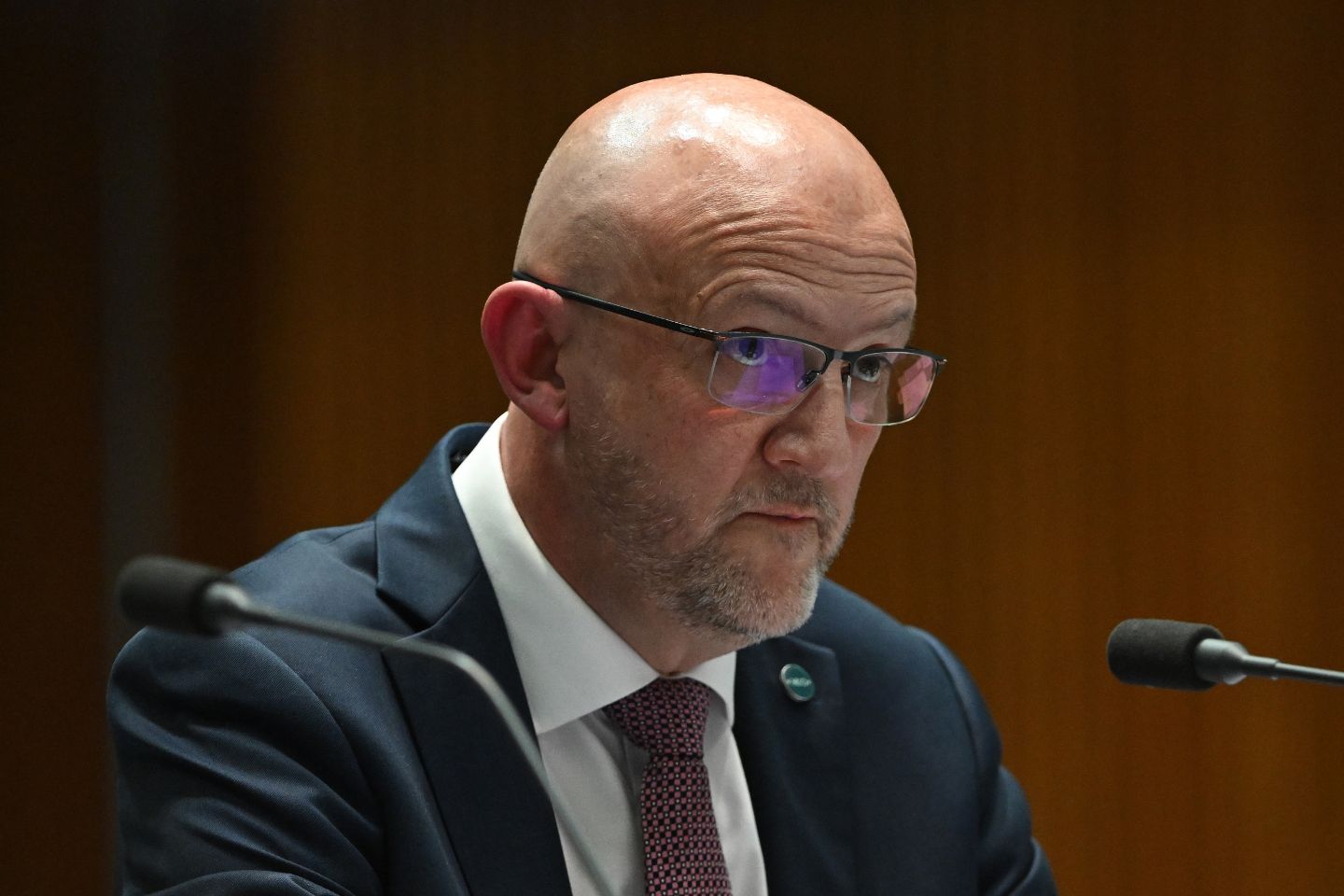
Australia’s spy agency had noted the prospect of terror attacks carried out by lone actors with readily acquired weapons after an anti-Semitic attack in the UK.

SYDNEY — The S&P/ASX 200 index climbed 46.8 points, or 0.54 percent, to 8,703.8 in midday trading on Monday, May 25, 2026, as strength in mining and financial stocks lifted the benchmark.
The Australian sharemarket opened higher and maintained gains through the morning session. At 12:32 p.m. AEST, the index showed solid buying interest amid mixed global cues and positive domestic corporate updates.
Mining stocks led the advance, supported by firmer iron ore and copper prices on international markets. Major companies including BHP Group and Rio Tinto contributed to the upward movement. Financial stocks also provided support, with the big four banks trading mostly higher.
Sector Performance
The materials sector recorded strong gains, reflecting the heavy weighting of resource companies in the Australian market. The financials sector posted modest advances. In contrast, information technology and consumer discretionary stocks showed mixed results, with selected individual company movements influencing performance.
The Australian dollar traded around $0.64 against the U.S. dollar in early afternoon trading. Bond yields edged lower, with the 10-year government bond yield declining slightly from recent levels.
Economic Context
The Reserve Bank of Australia has held its cash rate at 4.10 percent in recent months. Market participants continue to watch inflation data and global central bank policies for signals on future rate decisions.
Recent employment figures have shown resilience in the Australian economy. Retail sales data have remained steady, though concerns about slowing growth in China continue to influence resource companies. Iron ore prices have stabilized in response to Chinese steel production trends.
Company News
Several individual stocks moved on corporate developments. Commonwealth Bank of Australia reported steady lending growth in its latest update. Mining services companies benefited from improved commodity prices.
Technology firms with exposure to artificial intelligence attracted selective buyer interest. Selected healthcare and consumer staple stocks traded mixed during the session.
Global Influences
Wall Street closed mixed on Friday. European markets showed varied performance on Monday morning. Asian markets were mostly lower, with the Nikkei 225 and Hang Seng indices recording declines.
Oil prices traded in a narrow range, providing limited direction for energy stocks listed in Australia. Gold prices remained relatively firm, supporting related mining companies.
Market Breadth
Advancing stocks outnumbered decliners by a comfortable margin in early trading. Trading volume was slightly above average levels for a Monday session. The small-cap S&P/ASX Small Ordinaries index outperformed the broader market.
Analyst Commentary
Market strategists noted that the Australian sharemarket has displayed resilience in 2026 despite external pressures. Resource companies have benefited from stable commodity prices, particularly from major trading partners.
The banking sector has maintained stable interest margins and cautious lending standards. Technology and healthcare stocks have provided diversification for investors seeking growth opportunities.
Broader Economic Indicators
Australia’s economy has continued to expand at a moderate pace. Inflation has moderated but remains above the Reserve Bank of Australia’s target band. Unemployment has stayed relatively low, supporting consumer spending.
The housing market has shown signs of stabilization in major cities. Business investment in the resources sector remains a key driver of economic activity. New project approvals have been steady in recent months.
Outlook
Market participants will watch upcoming data releases, including inflation figures and trade balance numbers, for further direction. Corporate earnings season continues, with several major companies scheduled to report results in coming weeks.
The S&P/ASX 200 has traded within a defined range for much of 2026, reflecting balanced domestic conditions and global uncertainties. Analysts expect continued volatility as investors assess the impact of commodity prices, interest rates and geopolitical developments.
The Australian sharemarket’s performance remains closely tied to global growth expectations and commodity demand. Resource stocks, which form a significant portion of the index, continue to respond to developments in China and other major economies.
Financial stocks have provided stability amid changing interest rate expectations. Technology companies have offered growth exposure as artificial intelligence adoption increases across industries.
The S&P/ASX 200 index movement reflects real-time market conditions and is subject to change throughout the trading session. Investors continue to monitor both domestic economic indicators and international developments for direction.

The operator of Naukri and Jeevansathi posted consolidated revenue of Rs 869 crore in Q4FY26, up 16% from Rs 750 crore in the corresponding quarter of the previous financial year.
The company’s board recommended a final dividend of Rs 3.60 per equity share for FY26. The proposal is subject to shareholder approval at the 31st Annual General Meeting scheduled for August 25, 2026. Info Edge has fixed July 24, 2026, as the record date to determine eligible shareholders.
On a standalone basis, revenue from operations rose 17.2% year-on-year to Rs 805 crore during the March quarter. Operating profit climbed 39.4% to Rs 323 crore, while operating profit margin stood at 40% of revenue in Q4FY26.
The standalone business generated cash from operations, before taxes, of Rs 621.1 crore during the quarter.

For the full year FY26, standalone revenue from operations increased 15% year-on-year to Rs 3,052 crore, while operating profit grew 16.9% to Rs 1,138 crore.
Cash generated from operations before taxes for the full year stood at Rs 1,469 crore. Revenue from the recruitment business rose 13.8% year-on-year, while combined revenue from non-recruitment businesses grew 18.6% during FY26.Commenting on the performance, Managing Director and Chief Executive Officer Hitesh Oberoi said FY26 was a steady year for the company. He noted that revenue growth remained measured while operating margins improved through the year, particularly in the recruitment business. He also said that 99acres and Jeevansathi continued to strengthen their market positions and gain market share.
Oberoi added that the company made significant progress in deploying artificial intelligence across its businesses, increasing its use in matching and recommendation engines while also developing new AI-native products and features aimed at improving user and customer experience.
(Disclaimer: Recommendations, suggestions, views and opinions given by the experts are their own. These do not represent the views of The Economic Times)

NEW YORK — The New York Times Connections puzzle for May 25, 2026, numbered 1079, featured four categories with the following groupings according to official solutions published by the newspaper and multiple review sites.

The yellow category, rated easiest, was “summer fruits.” The words were apple, peach, mango and berry.
The green category was “NBA teams.” The words were Lakers, Celtics, Knicks and Spurs.
The blue category was “types of clouds.” The words were cumulus, stratus, cirrus and nimbus.
The purple category was “words that can follow ‘black’.” The words were hole, jack, widow and sheep.
The 16 words presented in the grid were: apple, peach, mango, berry, Lakers, Celtics, Knicks, Spurs, cumulus, stratus, cirrus, nimbus, hole, jack, widow and sheep.
Game Mechanics
Connections presents players with 16 words that must be sorted into four groups of four based on shared themes. Players select four words at a time and submit their guess. The game provides color-coded feedback: yellow for the easiest category, green for the next, blue for the third and purple for the most difficult.
Mistakes are limited to four before the puzzle ends. The May 25 puzzle allowed solvers to connect seasonal produce, professional basketball franchises, meteorological formations and common compound words or phrases associated with “black.”
Many solvers identified the NBA teams category early due to its cultural prominence. The summer fruits group was accessible for players familiar with seasonal vocabulary. The clouds and “black” words required more lateral thinking for some.
Previous Day Comparison
The May 24, 2026, puzzle No. 1078 had categories for types of bags, famous duos, things that spin and words that can follow “black.”
Popularity and Community
Connections has grown steadily as part of The New York Times Games portfolio. Millions of players engage daily, sharing results on social media using emoji grids that preserve the color sequence without spoiling specific words. The game resets at midnight in each time zone.
The May 25 edition fell on a Monday. Community discussions noted the puzzle offered a good balance of accessibility and challenge, with the purple category proving most difficult for many due to the abstract nature of “black” phrases.
Strategies Reported by Solvers
Common approaches included scanning for obvious clusters such as proper nouns or repeated themes. In the May 25 puzzle, the NBA teams and summer fruits provided clear starting points for many. Players often start with words that have multiple potential meanings before tackling harder categories.
Companion Resources
The New York Times publishes a Connections Companion article with hints and discussion for each daily puzzle. Third-party sites provided additional pre-solve hints and post-solve confirmations.
Broader NYT Games Ecosystem
Connections runs parallel to Wordle, which on May 25, 2026, had its own daily solution. Other daily games include Spelling Bee, Strands and the Mini Crossword. Basic daily play is free, with subscriptions providing archives and ad-free experience.
In 2026, The New York Times has maintained steady updates to its games without major rule changes to Connections. The puzzle format encourages vocabulary building and lateral thinking. Monday puzzles often feature a mix of everyday items and cultural references.
Community Engagement
Solvers discussed the puzzle on forums and social platforms. The NBA category resonated with basketball fans during the ongoing playoffs, while the clouds group required basic science knowledge. Performance statistics shared by users include streak lengths and perfect solve rates.
Historical Context
Connections was integrated into The New York Times offerings in recent years. Puzzle numbering reached the 1070s by mid-2026, reflecting consistent daily releases. Each edition contributes to an expanding archive of thematic word groups.
The May 25 solution highlighted diverse knowledge areas — seasonal items, sports leagues, science and language nuances — typical of the game’s appeal. Official answers are confirmed directly from The New York Times after the daily reset.
Tips for Players
Effective strategies include grouping obvious themes first and eliminating confirmed categories. Knowledge of common phrases, cultural references and everyday objects aids solving. New players can use practice modes on helper sites.
The game encourages engagement with language and culture while building pattern recognition skills. Difficulty varies, with purple categories often requiring deeper insight.

More than a dozen manufacturers will share a $49 million funding pool to boost homes supply in the state, including advancing Pique’s modular housing facility in Perth’s north.

NEW YORK — The New York Times Wordle puzzle for May 25, 2026, numbered 1801, had the solution BLAZE, according to multiple outlets that publish daily answers after the puzzle resets at midnight.
Wordle players who completed the game on Monday saw the five-letter word BLAZE as the correct answer. The puzzle is the daily word game owned by The New York Times where participants have six attempts to guess a hidden five-letter word with feedback on correct letters and positions.
BLAZE is defined as a bright flame or fire, according to standard dictionary references cited in official Wordle reviews. It can also function as a verb meaning to burn brightly or to move quickly.
Previous Day’s Answer
The previous day’s Wordle on May 24, 2026, puzzle No. 1800, was STORM. This followed recent solutions that included a mix of common and moderately challenging words throughout May.
Players who maintain streaks track their consecutive successful completions. The May 25 solution marked another entry in the ongoing daily series that began in 2021 and was acquired by The New York Times in 2022.
Hints and Solving Strategies
Several sites provided pre-answer hints for puzzle No. 1801. Common starting words recommended included SLATE, CRANE and TRACE. One solver reported using SLATE as an opener, which narrowed possibilities before landing on BLAZE after testing words with the letter Z.
The word begins with B and contains the letters L, A, Z and E. It features common English letter patterns with a consonant at the start and a relatively uncommon Z. Reports indicated it relates to fire and intense light, and can also describe moving quickly or marking a trail.
Gameplay Mechanics
Wordle resets at midnight local time for each player. Green tiles indicate correct letters in the correct position, yellow tiles show correct letters in the wrong position, and gray tiles mean the letter is not in the word. The game limits guesses to six per day.
The New York Times publishes an official review page with the answer and definition after the daily cutoff. Sites such as CNET, Mashable, Forbes and Rock Paper Shotgun provide hints, strategies and post-solution analysis.
Popularity and Community
Wordle has maintained a dedicated following into 2026. Millions of players participate daily, sharing results on social media with emoji grids that avoid spoilers. The game’s simple interface and once-per-day format contribute to its staying power.
Related games from The New York Times include Connections, Spelling Bee and Strands. Players often complete multiple puzzles in the same session. The May 25 Wordle coincided with Monday routines for many users.
Recent Wordle Trends
In May 2026, answers have included a mix of common and less frequent words. Puzzle difficulty varies, with some solutions solved by large percentages of players in fewer attempts while others challenge broader vocabularies.
Analyses of past puzzles show patterns in letter frequency. Vowels such as A, E and O appear often, while words with repeated letters or uncommon consonants increase challenge. BLAZE features distinct letters with no repeats.
Tips for Future Puzzles
Recommended starting words for efficient solving include those with multiple vowels and common consonants like SLATE, CRANE or TRACE. Players track remaining possibilities after each guess using process of elimination.
Community resources provide statistical data on answer distributions and solver performance. Some players maintain personal statistics on average attempts and streak lengths. The official Wordle bot and community solvers analyze optimal strategies.
Broader Context in 2026
Wordle continues as part of The New York Times’ games portfolio. The company has introduced minor updates over the years while preserving core gameplay. No major rule changes were reported for 2026.
The puzzle for May 25 fell on a Monday, a day when many players engage with daily games during work breaks or commutes. International players adjust for time zone differences in puzzle availability.
Historical Wordle Milestones
Since its viral rise in late 2021, Wordle has inspired variants and clones. The original version by Josh Wardle was designed as a gift for his partner. The New York Times maintains editorial control over the answer list to ensure appropriateness and variety.
Daily solutions are archived by multiple websites. Players who miss a day can catch up through these records, though streaks reset without consecutive play. The May 25 answer BLAZE added to the cumulative list of over 1,801 official puzzles.
Player Resources
Official access is available through the New York Times website and mobile app. Free daily play requires no subscription, though full access to archives and other games may. Third-party hint sites update shortly after midnight.
For those seeking to improve, resources include letter frequency charts, word lists and practice modes in some companion apps. Community forums discuss tough puzzles and share solving stories.
The Wordle answer for May 25, 2026, was confirmed across major outlets as BLAZE. Players who solved it in fewer attempts achieved better daily scores in the game’s internal metrics.

TUCSON, Ariz. — Former FBI officials and investigators have outlined several possible scenarios in the disappearance of Nancy Guthrie as the case remains unsolved more than three months after the 84-year-old vanished from her home in the Catalina Foothills area near Tucson.
Nancy Guthrie was last seen on Jan. 31, 2026. Her family reported her missing the following day. Authorities believe she was taken from her residence during the night. The FBI and Pima County Sheriff’s Department continue to investigate, analyzing DNA evidence, surveillance footage and thousands of public tips.
Former FBI Deputy Director Dan Bongino suggested the possibility of a planned abduction tied to ransom demands. He said investigators cannot rule out that the perpetrators targeted her specifically because of her family’s public profile.
Bongino also raised the theory that the case may have begun as a burglary or home invasion that escalated. He noted it is possible criminals entered the home for another reason before events spiraled out of control.
Retired homicide detective Kurt Dabb told Newsweek that the logistics of the alleged kidnapping appeared too complex for one person to manage alone. Dabb estimated there could have been “two to four accomplices.”
Former FBI agent Jennifer Coffindaffer suggested investigators are closely analyzing clothing, equipment and possible communication devices seen in surveillance footage of a masked suspect outside Guthrie’s home. She previously theorized that the suspect may have used a walkie-talkie to coordinate with accomplices while avoiding digital tracking.
Authorities have said evidence at the scene strongly indicated Nancy Guthrie “did not leave on her own.” Early considerations of a medical emergency unrelated to a crime were later set aside.
The FBI released surveillance footage showing a masked man wearing gloves at her door on the night she is believed to have been taken. The suspect has been referred to by some as “porch guy.”
Investigation Status
No suspects have been publicly identified. The family has offered rewards totaling more than $1 million for information leading to her safe return or the arrest of anyone involved. Civilian searches have been conducted in the Tucson area, including one that led to the discovery of an ancient human bone unrelated to the case.
Savannah Guthrie, Nancy Guthrie’s daughter and co-anchor of the “Today” show, along with siblings Camron and Annie, have made public appeals for information. The case has generated widespread national attention.
Pima County Sheriff Chris Nanos has said DNA analysis from blood found on Guthrie’s property is progressing. He told People magazine, “I know we have DNA that is unknown, who the contributor or depositor is, but I think they’re getting closer to finding out who that was.”
Retired Detective’s Assessment
Robbie Mayer, a former detective with the Pima County Sheriff’s Department who solved Tucson’s “Prime Time Rapist” case in 1986, shared his assessment in an interview with News 4 Tucson. Mayer recalled the Prime Time Rapist investigation, saying, “We ended up with more than 4,000 leads. One of the detectives had Larriva’s name as a lead, but he hadn’t gotten to it yet because he had so many leads in front of that.”
He applied similar reasoning to the Guthrie case. “I believe the suspect’s names are in those 50,000. The question is if they can recognize it when they see it. Being in a case like this is like being in a field with rocks and what you’re looking for is under one rock. You just have to keep turning.”
Mayer theorized that more than one person was likely involved. He suggested it could be connected to a theft group active in Phoenix two years ago that targeted elderly people with money. He noted, “This case is so unique. Most of the time we try and find patterns. We can’t in this case. These guys came prepared not to leave hair or DNA. Look at how that guy was clothed. They turned off their cell phones.”
Mayer expressed confidence in the ongoing investigation. “This is a very high-caliber investigation, and I think the FBI is gonna crack the case,” he said.
Background on the Case
Nancy Guthrie is the mother of Savannah Guthrie. The family has cooperated with law enforcement while making public appeals. The disappearance has drawn comparisons to other high-profile missing persons cases due to the public profile of her daughter.
The masked suspect captured on doorbell camera footage has been a focal point of public discussion. Authorities have urged anyone with information to come forward. The rugged desert terrain around Tucson has complicated search efforts.
Broader Context
The case has raised awareness about elder safety and home security in the Tucson area. Local authorities have reminded residents to review home surveillance systems and report suspicious activity. The investigation continues to generate tips from the public.
Former officials have emphasized the importance of patience in complex cases involving large volumes of leads. The FBI and local agencies continue to process evidence and coordinate efforts.
Business
(VIDEO) Gilgeous-Alexander, Jokic, Wembanyama, Doncic, Cunningham Named to All-NBA First Team
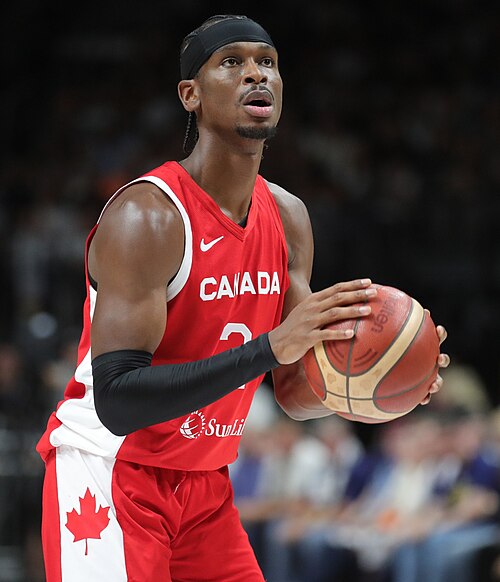
NEW YORK — Oklahoma City Thunder guard Shai Gilgeous-Alexander, Denver Nuggets center Nikola Jokic, San Antonio Spurs forward Victor Wembanyama, Los Angeles Lakers guard Luka Doncic and Detroit Pistons guard Cade Cunningham were named to the 2026 All-NBA First Team on May 24.
Gilgeous-Alexander, the back-to-back NBA Most Valuable Player, and Wembanyama, the first unanimous Defensive Player of the Year in league history, headlined the first team. They were joined by the three other players who finished in the top five in MVP voting: Jokic, Doncic and Cunningham.
It is the first All-NBA selection for Wembanyama. Gilgeous-Alexander has been named to four straight All-NBA first teams. Wembanyama is the first Spurs player to make the first team since Kawhi Leonard in the 2016-17 season.
Jokic earned his sixth first-team nod and eighth All-NBA selection overall. Doncic was named to the All-NBA team for the sixth time in his eight-year career. It was the second All-NBA selection for Cunningham after being named to the third team last season.
Both Doncic and Cunningham played 64 games during the regular season and were granted special exceptions to be eligible for All-NBA consideration after failing to reach the required 65-game threshold.
Gilgeous-Alexander and Jokic were unanimous selections, with Wembanyama missing by one vote. Jokic now has twice as many All-NBA honors as any other player in Nuggets history.
Second and Third Teams
The second team comprised Boston Celtics forward Jaylen Brown, New York Knicks guard Jalen Brunson, Houston Rockets forward Kevin Durant, Cleveland Cavaliers guard Donovan Mitchell and Los Angeles Clippers forward Kawhi Leonard.
Brunson earned his third All-NBA distinction. It was Durant’s 12th time being named to an All-NBA team. Leonard has now made six All-NBA teams.
The third team featured five newcomers: Atlanta Hawks forward Jalen Johnson, Pistons center Jalen Duren, Philadelphia 76ers guard Tyrese Maxey, Thunder big man Chet Holmgren and Nuggets guard Jamal Murray.
Duren and Cunningham are the first pair of Pistons to be named to the All-NBA team in the same season since Chauncey Billups and Ben Wallace in 2005-06.
LeBron James was among those ineligible because he did not play in enough games. This became just the second time in his 23-season career that he was not an All-NBA pick. Stephen Curry and Giannis Antetokounmpo were also ineligible due to the 65-game rule.
All-NBA Voting Results
First Team Shai Gilgeous-Alexander, Thunder — 500 points Nikola Jokic, Nuggets — 500 points Victor Wembanyama, Spurs — 498 points Luka Doncic, Lakers — 482 points Cade Cunningham, Pistons — 414 points
Second Team Jaylen Brown, Celtics — 384 points Kawhi Leonard, Clippers — 277 points Donovan Mitchell, Cavaliers — 276 points Kevin Durant, Rockets — 241 points Jalen Brunson, Knicks — 197 points
Third Team Tyrese Maxey, 76ers — 168 points Jamal Murray, Nuggets — 149 points Jalen Johnson, Hawks — 125 points Jalen Duren, Pistons — 121 points Chet Holmgren, Thunder — 87 points
The All-NBA teams capped the league’s annual end-of-season awards announcements. Gilgeous-Alexander was named Clutch Player of the Year. Nickeil Alexander-Walker of the Atlanta Hawks was named Most Improved Player. Keldon Johnson of the Spurs was named Sixth Man of the Year. J.B. Bickerstaff of the Pistons was named Coach of the Year. Cooper Flagg of the Dallas Mavericks was named Rookie of the Year.
The All-NBA teams recognize the league’s top performers based on voting by a global panel of sportswriters and broadcasters. Players receive points for first, second and third team selections.

Today’s NYT Strands Hints, Answer and Help for May 25 #813
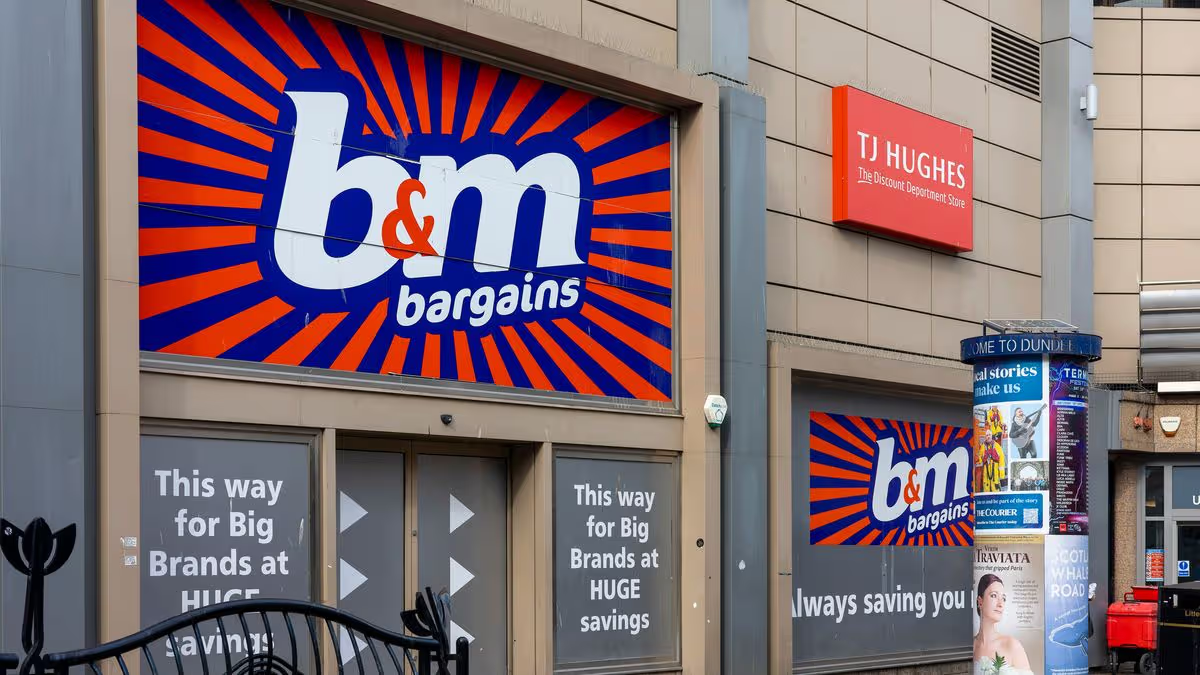
Spring bank holiday opening times at Wickes, B&Q, Dunelm, Home Bargains, B&M and The Range

SaltLight Capital Q1 2026 Co-Investor Letter


-

 Crypto World3 days ago
Blockchain.com files with SEC for U.S. IPO
-

 Fashion2 days ago
Holiday Weekend Open Thread – Corporette.com
-

 Crypto World3 days ago
Bitcoin Accumulation Weakens as BTC Realized Losses Hit $600M
-

 Business3 days ago
Dell Technologies DELL Stock Surges 15% on AI Server Momentum and Analyst Upgrades in 2026
-

 Crypto World3 days ago
Space X IPO Is ‘Bad News’ for Tech Stocks: But What About Bitcoin?
-

 Politics2 days ago
Makerfield: a tale of two social-media histories
-

 Crypto World3 days ago
MicroStrategy’s Saylor Says Miners No Longer Set Bitcoin Price, Another Force Has Taken Over
-

 Crypto World2 days ago
Robinhood crypto COO Tanya Denisova exits
-

 Business11 hours ago
NYT Strands Answers May 24 2026 Revealed for Puzzle No. 812 Theme Summer Essentials
-

 Tech3 days ago
WhatsApp ads could make Irish debut after discussions with DPC
-
 Tech3 days ago
A 0.12% parameter add-on gives AI agents the working memory RAG can’t
-

 Crypto World3 days ago
AI infrastructure race heats up as IREN pitches full-stack strategy, WhiteFiber lands $160M deal
-

 Business3 days ago
Trump Invests $1M-$5M in Kura Sushi USA Chain With 27 California Locations
-

 Tech3 days ago
You Can Now Add ChatGPT To PowerPoint
-
 Crypto World6 days ago
Revolut Launches Dogecoin Debit Card Across UK and EU
-
 NewsBeat4 days ago
Charity run by Reform leader Malcolm Offord accused of ‘law breaking’ over Scottish registration
-

 Sports3 days ago
2026 CJ Cup Byron Nelson leaderboard: Brooks Koepka finds putting stroke in Round 1
-

 Crypto World3 days ago
Trump Media’s Bitcoin Stash Shrinks Again as 2,650 BTC Lands on Crypto.com
-
Business3 days ago
Goldman Sachs reinstates Ageas stock coverage with neutral rating
-

 Crypto World4 days ago
Exa Labs raises $250 million in funding led by a16z
You must be logged in to post a comment Login