



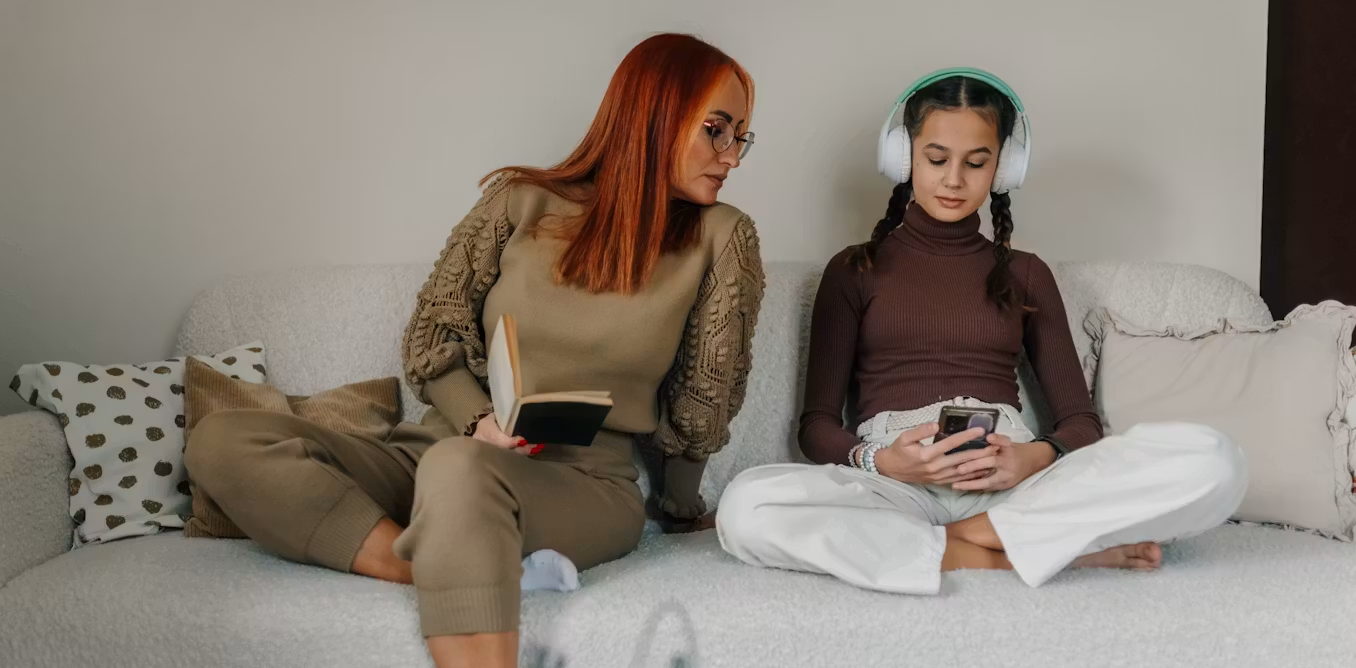
The UK government has announced plans to introduce a ban on social media use for children under the age of 16. This follows a consultation on the impact of social media on young people’s mental health, wellbeing and safety. It represents one of the most significant interventions in children’s online lives since the Online Safety Act.
The announcement has generated strong reactions. Many parents welcome the idea, arguing that social media companies have failed to create safe environments for children. Others question whether a ban will work in practice, or whether it risks oversimplifying a much more complex issue.
Perhaps most significantly, Ian Russell – one of the most influential and respected campaigners in the UK online safety debate – has questioned whether a blanket social media ban for under-16s is the right solution. Russell, whose daughter Molly died after being exposed to harmful online content, is strongly critical of social media companies. But he argues that the focus should be on making platforms safer by design and enforcing stronger regulation, rather than relying on a ban that many young people may simply find ways to circumvent.
Here are some key questions answered for parents trying to make sense of the headlines.
What is actually being announced?
The government’s intention is to prevent children under 16 from accessing mainstream social media platforms. This would be likely to include services such as Instagram, TikTok, Snapchat and X, although the final list has yet to be confirmed. However, it seems messaging platforms such as WhatsApp are not included the scope of the ban.
The proposal would require platforms to verify users’ ages and prevent underage access. This means the success of any ban will depend heavily on age-assurance technology. Such systems range from simple self-declaration to more sophisticated approaches such as facial age estimation or identity verification.
There are also proposals to restrict engagement with strangers on gaming platforms, such as limiting unsolicited contact. Livestreaming and endless scrolling on platforms will be banned for young people.
The prime minister, Keir Starmer, has said that the ban could come into effect in spring 2027.
SeventyFour/Shutterstock
However, importantly, this is not simply a question of passing a law. The practical challenge is enforcement. Millions of children already have social media accounts, and many young people are highly skilled at navigating online restrictions. Experience from other countries suggests that some children will inevitably find ways around any barriers that are introduced.
À lire aussi :
Australia has already banned social media for under 16s – here’s what the UK can learn from the experience
The government has acknowledged this reality. The argument being made is not that a ban will be perfect, but that reducing access and raising the barriers to entry will reduce overall exposure to potential harms.
Why is the government doing this?
The proposal reflects growing political concern about children’s online experiences. In recent years there has been increasing attention on issues such as cyberbullying, exposure to harmful content, online exploitation, algorithmic recommendation systems, endless scrolling and excessive screen time.
Many parents will recognise these concerns. Stories about harmful content reaching children and social media-related anxiety regularly attract media attention. Campaign groups raised concerns about the “addictive” design of social media.
À lire aussi :
Ban on phones in schools: support for headteachers or unnecessary legislation?
At the same time, concerns about children’s mental health have become increasingly linked to debates about smartphones and social media. While researchers continue to argue that the evidence for this is not clear, the perception that social media is contributing to a wider wellbeing crisis has become influential in public and political discussions.
The government’s proposal reflects a broader international trend. Australia has already introduced legislation to restrict social media access for younger users, while policymakers in several other countries are considering similar measures.
Will it work?
This is where the debate becomes more complicated.
Supporters argue that society already accepts age restrictions in many areas. Children cannot legally buy alcohol, cigarettes or gambling products. From this perspective, introducing age limits for social media is a reasonable response to evidence of harm.
Critics, however, point out that social media differs from many other age-restricted activities. Young people use these platforms not only for entertainment but also for communication, social connection, creativity and access to information. For many teenagers, social media is woven into everyday social life.
À lire aussi :
The online world comes with risks – but also friendships and independence for young people with disabilities
There are also questions about whether bans address the root causes of concern. Some researchers argue that platform design may be more important than access itself. Engagement-driven business models can affect users of all ages. Restricting younger users’ access may reduce their exposure to these features, but it does not necessarily address the systems that created concern in the first place.
There is also the possibility of unintended consequences. Some young people may simply migrate to less regulated platforms, use VPNs, create false accounts or access services through older friends and family members. Others may become less willing to discuss their online experiences if they fear losing access altogether.
What does this mean for parents?
Perhaps the most important point is that legislation cannot replace parenting, education and support.
Even if a ban is introduced, young people will continue to encounter digital technology, online communities and social platforms throughout their lives. The skills they need to navigate these spaces safely will remain important regardless of what the law says.
The government’s proposal represents a significant shift in online safety policy and reflects genuine public concern about children’s digital lives. Whether it becomes a transformative intervention or another chapter in a long-running debate about technology and childhood remains to be seen.
What is certain is that the challenge facing parents, educators and policymakers extends beyond social media itself. The real question is not simply how to keep children away from online risks, but how to help them develop the skills, confidence and resilience they need to navigate an increasingly digital world.

















































You must be logged in to post a comment Login