

Business
Why Finance Teams Are Quietly Automating the Admin Out of Their Working Week


Ask anyone who runs a finance function in a small or medium-sized business how much of the week is genuinely strategic, and you tend to get a wry answer.
The forecasting, the cash-flow planning, the conversations with the board: that is the work that matters. But it sits behind a wall of admin. There are invoices to raise, statements to reconcile, supplier bills to key in, and month-end reports to assemble by hand.
For years that admin was simply the cost of doing business, and someone usually typed the numbers in. What has changed is not the work itself but the tools available to absorb it. A finance team in 2026 has practical, affordable ways to take the most repetitive tasks off the desk entirely, and a growing number are doing exactly that.
The admin tax that finance teams have stopped accepting
Every finance function pays what you might call an admin tax. It is the slice of each week that goes on tasks that are necessary but add no insight. Re-keying a supplier invoice does not make the business better informed, and matching bank-feed lines against the ledger does not change the cash position. The work has to happen, but it generates no advantage.
The reason teams have started to push back is partly cost and partly risk. Manual processes are slow, but they are also where errors creep in. A transposed figure, a missed invoice or a duplicate payment each costs time to find and credibility to explain. So automating the routine layer is as much about accuracy and control as it is about speed. There is also a quieter motivation, which is retention. Finance staff who spend their days on data entry tend not to stay, but give them genuinely analytical work and the role becomes one people want to keep.
Invoicing and accounts payable: the obvious place to begin
If you are choosing one process to automate first, start where the volume is highest and the rules are clearest. For most SMEs that means invoicing on the way out and accounts payable on the way in. On the sales side, the well-trodden ground includes raising and sending invoices straight from your accounting system, chasing overdue payments with automatic reminders, and reconciling receipts against the bank feed. The software is mature and the payback is immediate.
Accounts payable is the higher-value target. Supplier bills arrive as PDFs and email attachments in no consistent format, so keying them in by hand is slow and error-prone. Modern tools can read an incoming invoice, extract the supplier, amount, date and line items, and post it to the ledger for a human to approve rather than to type. The person stays in the loop where judgement is needed and is removed from the part that is pure transcription.
Reconciliation, the task nobody volunteers for
Bank reconciliation is the work finance teams most want to hand over, and with good reason. It is repetitive, it is unforgiving of small errors, and it expands to fill whatever time month-end allows. Reconciliation is also unusually well suited to automation, because most of it follows consistent patterns. A large share of transactions match cleanly against the ledger and can be cleared automatically, so only the genuine exceptions need a human eye.
A sensible setup does precisely that. It surfaces the handful of items that do not reconcile so the team spends its attention on the discrepancies that actually matter. Done well, the value is twofold. Month-end gets faster, and the numbers become more current. When reconciliation is continuous rather than a monthly scramble, the business is always working from a near-live picture of its cash position.
Reporting that assembles itself
The monthly reporting pack is where a great deal of skilled time quietly disappears. Someone exports figures, pastes them into a spreadsheet, formats the tables, builds the commentary and circulates the result. By the time the board reads it, the data is weeks old.
Automating the assembly of routine reports changes the rhythm. Management accounts, cash-flow summaries and the standard board pack can be generated on a schedule, pulling from live data so the figures are current the moment they land. The finance team’s role shifts from building the report to interpreting it, explaining what the numbers mean and what should happen next.
This is where automation pays its most strategic dividend. The bottleneck in most finance functions is not the analysis; it is getting to the point where analysis can begin. For organisations weighing up where to start, a clear-eyed assessment of AI finance automation and how it fits an existing accounting system is a more useful first step than chasing the longest feature list.
What good automation actually looks like
What separates a sound finance-automation project from an expensive one is worth being precise about, because the difference is not the technology.
It works with your accounting platform, not around it. If you run Xero or a comparable system, automation should connect to it directly rather than bolting on a parallel process people have to remember to maintain.
- It keeps a human at every decision point. Software should handle transcription and matching; people should approve payments. Approval is a control, not a delay to engineer away.
- It leaves a clear audit trail. Every automated action should be logged and reviewable. Your auditors, and your own peace of mind, depend on seeing what happened and why.
- It starts narrow. The most successful projects automate one well-understood process, prove it, then expand. Trying to transform everything at once is how budgets and patience both run out.
- It is honest about exceptions. No process is fully predictable. Good automation handles routine cases confidently and routes the unusual ones to a person, rather than forcing every case through the same template.
A project that meets these tests tends to deliver. One that ignores them tends to become the thing the team works around.
Turning a cost centre into a thinking function
The finance teams getting the most from automation are not the ones with the biggest software budgets. They are the ones who looked honestly at their week, identified the tasks that consumed time without producing insight, and removed those tasks deliberately, one at a time, starting with the highest-volume work. The destination is worth being clear about. It is not a finance function with fewer people, but one where the people spend their hours on the work only they can do: understanding the numbers, spotting the risks, and helping the business decide where to go next. The admin tax was always optional, and more and more finance teams have simply decided to stop paying it.

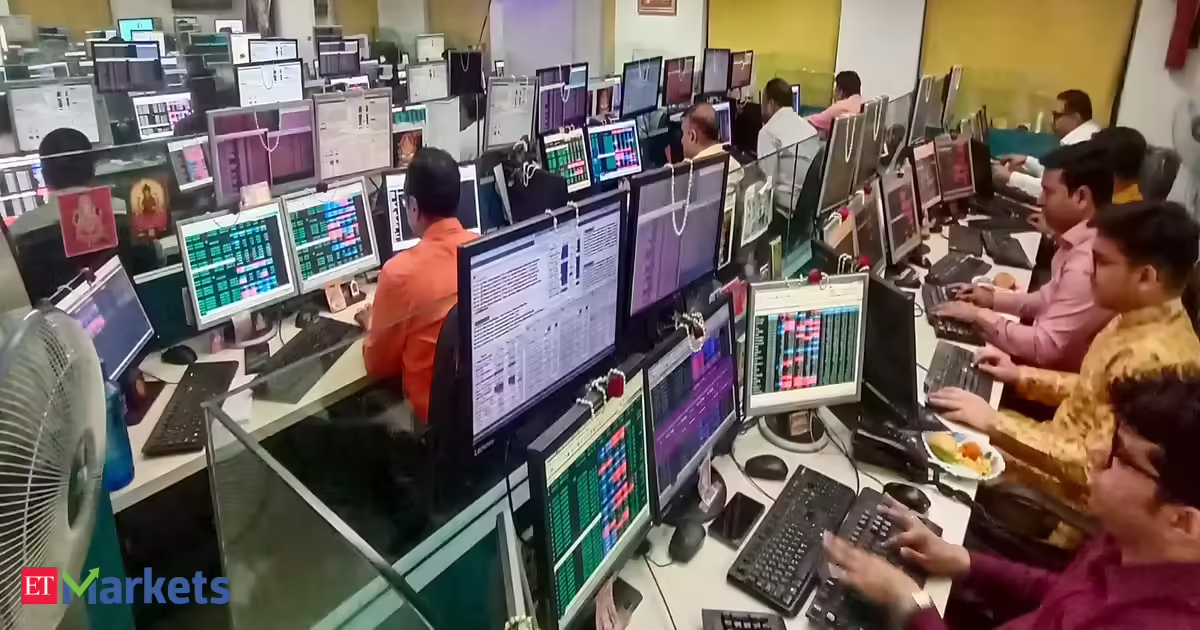
The NSE Nifty 50 advanced 1.3%, or 312.40 points, to close at 24,031.70, reclaiming the 24,000 mark after about two weeks, while the S&P BSE Sensex climbed 1.4%, or 1,073.61 points, to 76,488.96.
Sentiment was buoyed after reports the US and Iran were nearing an agreement that could ease tensions and restore energy flows. US President Donald Trump said over the weekend that both sides had largely negotiated a memorandum of understanding, according to Reuters.
Brent crude declined more than 5% to around $98 a barrel, easing concerns over inflation.
Asian markets rallied in tandem, with Taiwan gaining 3.3%, Japan 2.9%, and China 1%, while Hong Kong and South Korea were shut.

“With every day of delayed truce, there is a chance that the inflation can be higher, so the earlier we have a solution, the better,” said George Thomas, equity fund manager, Quantum AMC.
 Agencies
Lower Risk Outlook
“Even if there was to be a resolution immediately, it would take some time for things to normalise,” said Thomas of Quantum. “While a resolution may not be immediate, incrementally, things will be positive.”
Volatility eased, with the India VIX declining 6.7% to 16.7, signalling that risk expectations are easing. The rupee climbed to 95.23 per dollar Monday, its highest in more than two weeks, versus its previous close of 95.69. Benchmark 10-year bond yields fell to 7.025% Monday, from 7.088% Friday, according to investing.com data. Technically, the rally was aided by short covering, with the index breaking key levels. “Nifty witnessed a decisive breakout and closed strong- driven by short covering,” said Rajesh Palviya, Head of Research, Axis Securities. “Call writers are on the backfoot and if Nifty sustains over 24,000 levels, gains of 200-300 points are expected on an immediate basis.”
Palviya said further gains toward 24,800 levels could materialise if positive triggers emerge on the geopolitical or domestic front. Sectorally, the gains were broad-based, with financial stocks leading the rally as improving macro sentiment supported the space. The Bank Nifty and Nifty Financial Services indices rose 2.3% and 2.2%, respectively, while PSU banks gained 2.9% and private banks 2.1%. Auto and realty indices also advanced. “Banking stocks are available at decadal low valuation which is lending comfort to investors,” said Thomas. “But if this crisis prolongs for a longer time, then there could be an impact on credit cost.”

In the Nifty500 pack, 11 stocks’ closing prices crossed above their 200 DMA (Daily Moving Averages) on May 25, 2026, according to stockedge.com’s technical scan data. Traders use the 200-day daily moving average (DMA) as a key indicator for determining the overall trend in a particular stock. As long as the stock is priced above the 200-day SMA on the daily timeframe, it is generally considered to be in an overall uptrend. Take a look:


BTS takes top award at fan-voted American Music Awards
The island’s market capitalization climbed to $4.95 trillion as of Monday, according to data compiled by Bloomberg. India’s value has dropped to $4.92 trillion. Taiwan’s stock market is now the fifth largest in the world, behind only the US, mainland China, Japan and Hong Kong.
Taiwan’s ascent up the global equity rankings is largely driven by TSMC, which now accounts for about 42% of the benchmark index, representing intense market concentration. The chipmaker’s shares have rallied 49% this year as it has benefited from the artificial intelligence trade, in which its semiconductors have a dominant market position.
The surge in the island’s market value highlights intense optimism in AI that is triggering a global rally in tech shares, disproportionately benefiting manufacturing hubs such as Taiwan and South Korea. India, on the other hand, is grappling with surging energy cost, slowing corporate earnings growth and the lack of companies directly linked to the AI buildout.
Bloomberg“Taiwan’s rising market capitalization is fundamentally a reflection of its heavy concentration in tech hardware, which is currently at the center of the AI investment cycle,” said Yi Ping Liao, a fund manager at Franklin Templeton. “Markets with limited exposure to tech hardware are increasingly being overshadowed by tech hardware–heavy markets such as Taiwan and Korea.”
New regulations are also in TSMC’s favor. Taiwan’s financial regulator last month increased the limit that domestic funds can invest in a single stock. Under the new guideline, funds that invest solely in Taiwanese stocks can hold up to 25% of their net assets in any listed company whose weighting exceeds 10% in the Taiwan Stock Exchange, up from a previous limit of 10%. Currently, only TSMC meets the criterion.
The change may help lure in more than $6 billion of inflows to Taiwan, JPMorgan Chase & Co. said in a research note.While Taiwan has overtaken in market value, India’s $4.15 trillion-dollar economy — among the fastest growing in the world — still trumps the island’s $977 billion gross domestic product, according to International Monetary Fund estimates.
BloombergIndian stocks have fallen this year amid record foreign outflows, driven by elevated valuations and a weakening rupee. Higher energy costs have also stoked inflation concerns and clouded growth prospects.
Global funds have sold nearly $24 billion of local equities so far this year as they chased the AI boom in Taiwan and Korea. India’s gauge is down 8%, heading for its first annual drop after a decade of gains. India’s weight in the MSCI emerging markets index has also fallen to about 12% from 19% last year.
“India has been quite ignored for the better part of two years,” Alison Shimada, portfolio manager at Allspring Global Investments, told Bloomberg TV on Monday. “It is an expensive market so one has to be selective, but I think in terms of financialization of savings, it is very prominent in India and people are moving into financial assets,” she said.
Bank of Japan to monitor Middle East developments for rate decisions- Deputy Gov Himino


Rubio says Strait of Hormuz has to be open ’one way or the other’
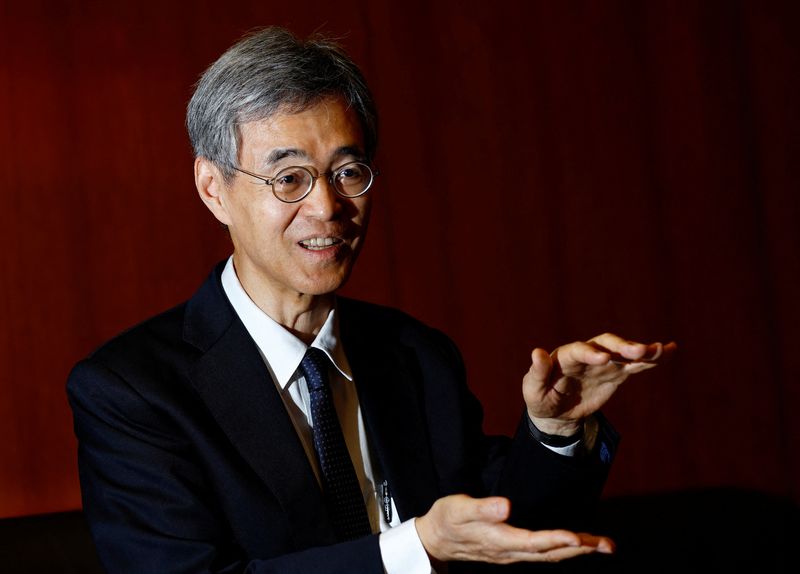

BOJ’s Himino says Mideast developments to factor into rate-hike timing decision
Business
Tenaga Nasional Berhad 2026 Q1 – Results – Earnings Call Presentation (OTCMKTS:TNABY) 2026-05-25


Seeking Alpha’s transcripts team is responsible for the development of all of our transcript-related projects. We currently publish thousands of quarterly earnings calls per quarter on our site and are continuing to grow and expand our coverage. The purpose of this profile is to allow us to share with our readers new transcript-related developments. Thanks, SA Transcripts Team

Stocks have surged, while the US dollar and oil prices slid as the prospect of a deal to end the Iran war buoyed risk appetite.

Wind farms and solar panels are producing more of Australia’s electricity than ever, but slow approvals and investment commitments could stall progress.

Houston Astros throw combined no-hitter in 9-0 blowout over Texas Rangers

Through-Glass Vias And The Long Road To Glass Substrates

Ripple XRP: XRP Price Will Eventually Catch Up To Fundamentals Says Oliver Michel

US brings back mandatory military draft registration

Steven Gerrard disagrees with Gary Neville over ‘shock’ Chelsea and Arsenal claim | Football

Register Renaming | Hackaday
Ripple XRP: XRP Price Will Eventually Catch Up To Fundamentals Says Oliver Michel

How To Make Money By Selling AI Websites To Businesses In 2026

BLACK SWAN THEN RISE OF XRP! – XRP KEEPS LEAVING EXCHANGES? – TOKENIZATION BOOM WILL SKYROCKET XRP!
-

 Crypto World4 days ago
Blockchain.com files with SEC for U.S. IPO
-

 Fashion3 days ago
Holiday Weekend Open Thread – Corporette.com
-

 Business4 days ago
Dell Technologies DELL Stock Surges 15% on AI Server Momentum and Analyst Upgrades in 2026
-

 Crypto World4 days ago
Bitcoin Accumulation Weakens as BTC Realized Losses Hit $600M
-

 Crypto World4 days ago
Space X IPO Is ‘Bad News’ for Tech Stocks: But What About Bitcoin?
-

 Politics3 days ago
Makerfield: a tale of two social-media histories
-

 Crypto World3 days ago
Robinhood crypto COO Tanya Denisova exits
-
 Crypto World4 days ago
MicroStrategy’s Saylor Says Miners No Longer Set Bitcoin Price, Another Force Has Taken Over
-

 Business1 day ago
NYT Strands Answers May 24 2026 Revealed for Puzzle No. 812 Theme Summer Essentials
-
 Tech4 days ago
A 0.12% parameter add-on gives AI agents the working memory RAG can’t
-

 Crypto World4 days ago
AI infrastructure race heats up as IREN pitches full-stack strategy, WhiteFiber lands $160M deal
-

 Tech4 days ago
WhatsApp ads could make Irish debut after discussions with DPC
-

 Tech4 days ago
You Can Now Add ChatGPT To PowerPoint
-

 Business4 days ago
Trump Invests $1M-$5M in Kura Sushi USA Chain With 27 California Locations
-
 NewsBeat5 days ago
Charity run by Reform leader Malcolm Offord accused of ‘law breaking’ over Scottish registration
-

 Sports4 days ago
2026 CJ Cup Byron Nelson leaderboard: Brooks Koepka finds putting stroke in Round 1
-

 Crypto World5 days ago
Exa Labs raises $250 million in funding led by a16z
-
Business4 days ago
Goldman Sachs reinstates Ageas stock coverage with neutral rating
-

 Crypto World4 days ago
Trump Media’s Bitcoin Stash Shrinks Again as 2,650 BTC Lands on Crypto.com
-
 Business4 days ago
Marine engineering firm Avantis eyeing expansion on equity boost
You must be logged in to post a comment Login