

Business
QSR chains face margin pressure, not demand shock: Karan Taurani on fuel and LPG impact


At the heart of the concern is the second-order impact of geopolitical tensions in West Asia, which has filtered into fuel costs and supply chains, especially LPG availability and pricing.
LPG shock hits QSR margins hardest
Consumer discretionary segments are experiencing sharply different outcomes depending on their dependence on fuel-linked inputs.Karan Taurani explained: “So, if you look at the impact on consumer discretionary as a segment, it is different for each of the segments. So, certain segments are seeing a severe negative impact of this LPG crisis and the fuel crisis. One stock to name for that is Jubilant FoodWorks. They have got a high dependence on LPG, close to 80% of their outlets are LPG dependent and with the 50% inflation that we saw in LPG, there is a negative impact of 120 bps on their margin.”

While price hikes have been taken to offset pressure, Taurani cautioned that food inflation may still weigh on profitability going ahead.
He added that other QSR players are relatively better placed due to lower LPG dependence in the 20–40% range, limiting margin damage.
Alco-bev: glass costs and input divergence drive performance split
In the alco-beverage space, cost structures are creating a sharp divergence between companies. Taurani noted that beer companies face significant pressure due to glass and crude-linked inputs:
“In the case of beer, the impact is quite a big negative because 50% of their cogs is from glass, which is crude linked and CNG linked. There are inflationary pressures of 20% on glass.”
This, he said, could lead to continued margin disappointment for United Breweries. However, the outlook is more favourable for select spirits players:
“UNSP on the other hand there is a tailwind in the form of ENA, so because of ENA deflation which is a large chunk of their COGS is coming off and their contribution from glass in terms of cogs is only 15 odd percent.”
Retail: limited fuel impact, but fabric costs matter
Retail players such as Trent are relatively insulated from fuel shocks, but input costs in apparel remain a concern.
“If you look at companies like Trent, their impact because of fuel that way is not very big. The bigger impact there is apparel. The fabric cost. So, fabric cost will have close to 100-200 bps negative impact after offsetting the margin levers that the company has.”
Platforms and quick commerce: partial insulation, ad revenue key monitorable
Platform-based businesses such as food delivery and quick commerce operators are relatively protected from direct fuel shocks due to fee adjustments.
However, the indirect impact on restaurant partners and ad revenues remains a key risk.
Taurani explained: “If you look at the platform companies, fuel cost is not a big headwind for them. They have taken hikes in the form of platform fee, they have taken hike in the form of the handling charges in the last couple of quarters or last couple of months rather, so they are well protected as far as margins is concerned.”
But he flagged a secondary risk: “If restaurants are not expanding aggressively, if they are seeing a struggle in terms of their business on ground, there is a potential for lower ad revenue spends coming from that perspective because ad revenue drives 80-90% of EBITDA for most of the platform companies.”
Electrification in QSR: possible, but structural limits remain
On whether rising LPG costs could accelerate electrification in QSR operations, Taurani believes transition is possible but limited.
“So, first point of electrification, in the past QSR companies have not gone for electrification because there are certain equipments which require LPG… But after this LPG hike, the costs have largely come on par or maybe at a slight higher premium.”
However, he added structural constraints:
“But can it go down to 30%, it seems highly unlikely as of now.”
Pricing power vs margins: demand stable, profitability under pressure
Despite cost inflation, pricing transmission may not be the biggest challenge for global QSR chains. Instead, margins remain the pressure point.
“In terms of passing on the price, I think that should not be a big issue as such because if you look at the global QSR chains, they have been cutting prices since the last two years.”
He added that competitive dynamics actually support demand for large chains, but margin expansion remains difficult.
Near-term margin ceiling likely for QSR
Looking ahead, Taurani sees limited margin upside in the near term.
“Yes, absolutely. At least for the next coming two or three quarters because of food inflation pressures, cheese, oil all these will start to come on the food companies, the QSR companies.”
Impact on Zomato, Swiggy and Eternal remains muted
Fuel hikes are expected to have a limited direct impact on food delivery platforms, with most of the burden shared across stakeholders.
“So, as I said, the fuel price hike on Zomato, Swiggy is not a huge negative impact.”
Even under a worst-case scenario, the impact is relatively contained: “The negative impact for someone like Eternal is only about 5% of their EBITDA.”
Quick commerce: Discount wars cooling, but Zepto burn remains high
On quick commerce, competitive intensity is the key variable driving discount trends and profitability outlook. “Zepto as per our assessment is burning close to 4000 crores EBITDA in the QC business on an annualised basis.”
While larger players are shifting toward profitability, Zepto’s aggressive expansion strategy could keep pressure elevated in the near term.
Taurani added that eventual rationalisation is likely: “But yes, even a lower number in terms of discounts or in terms of the losses could be a very big positive trigger for the quick commerce business.”
Swiggy QC valuation pressure rises amid execution concerns
A key concern emerging in the market is valuation pressure in Swiggy’s quick commerce business, driven by execution gaps and slowing growth clarity.
“So obviously, their Q1 FY27 contribution breakeven guidance is maintained, but the confidence of street on that seems to be quite low for now.”
He further highlighted the growth-profitability trade-off:
“They are not able to blend growth and profitability which is why they have guided for no store additions in the next two to three quarters and their growth rates in the QC business could even fall towards 30-35 odd percent which means they will lose market share.”
Outlook: selective resilience amid broad cost pressure
Overall, the consumption sector is navigating a complex mix of fuel inflation, input cost pressure, and competitive intensity. While some players retain resilience through pricing power and cost diversification, margin pressure appears to be the dominant near-term theme.
Selective stock preferences remain in focus, with Taurani highlighting names such as Trent, Eternal, and Nykaa as preferred plays in the current environment.


OPINION: Disruption of the US car sales sector by an e-commerce interloper sends a warning to Australia.
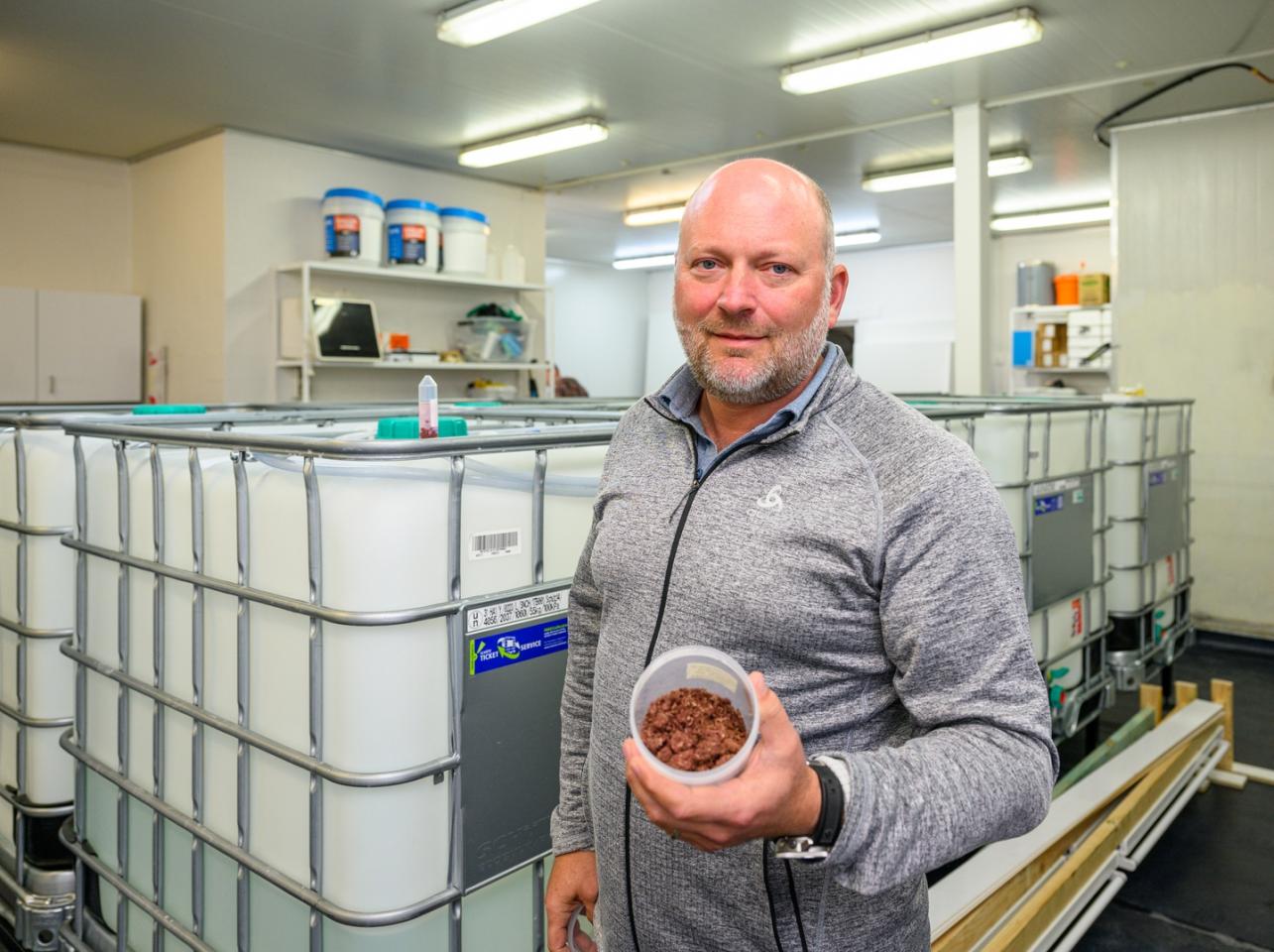
Fremantle-based SeaStock has been granted an aquaculture licence to establish WA’s first commercial scale, land-based seaweed production facility in Oakford.
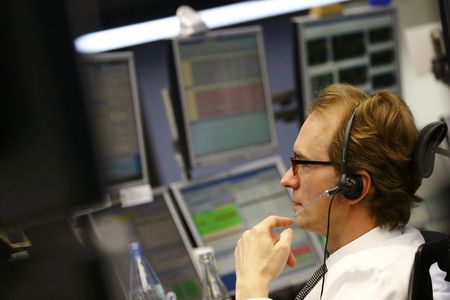
Novo Nordisk stock rises after UK approves Wegovy pill

The North Fremantle apartments are finished after years of battling with rising construction costs, with developer Megara saying attempting the same luxury project now would not be possible.
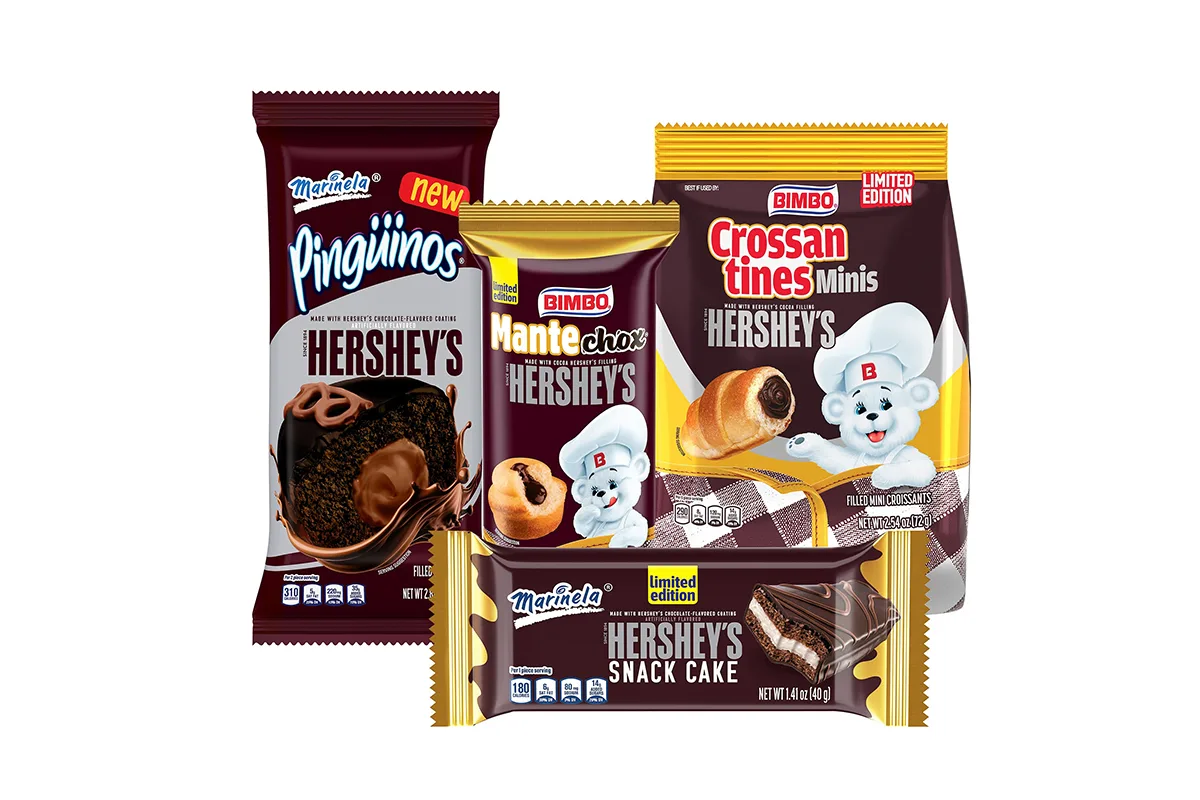

Marks first collaboration between two companies.
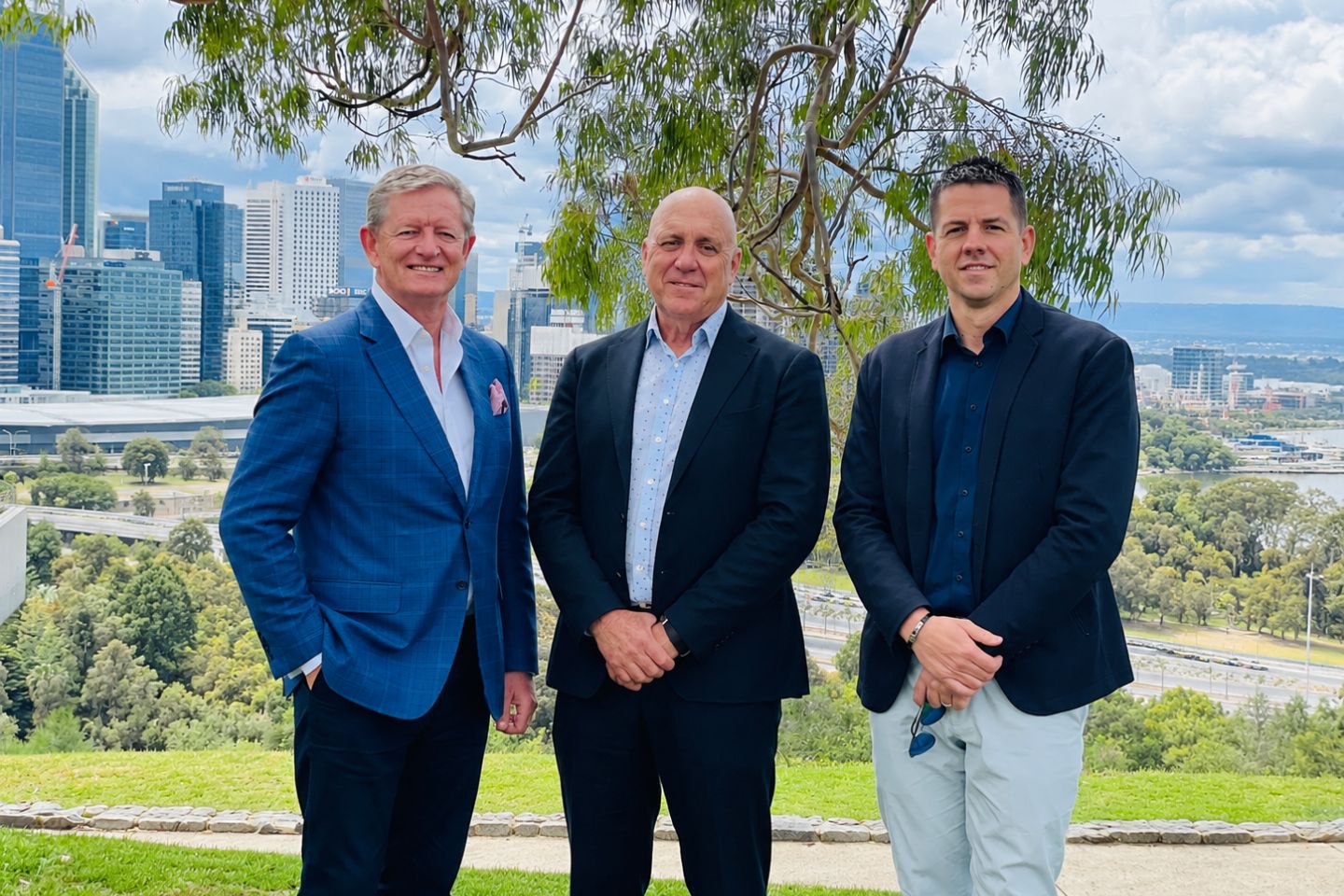
Gerard Daniels’ founders believe the firm’s formula is durable as they step back from control after 40 years in charge.

Workers and families held a demonstration with 167 jobs at risk at the site in Launceston.


Darci Vetter explains how shifting trade policy and tariffs are shaping global commerce and what food businesses should monitor.

South Korea’s finance ministry said on Sunday it will step up oversight of offshore currency derivatives. The Philippines has asked banks to ensure non-deliverable forward contracts are limited to economic purposes, while India has tightened limits on banks’ net open position to $100 million.
Indonesia, which unexpectedly raised interest rates on Tuesday, has said its central bank is active in currency markets “around the world, around the clock” to support the rupiah.
The warnings underscore concerns among Asian policymakers that offshore trading is adding to pressure on currencies. The oil-price shock from the US-Iran conflict has worsened the problem, hitting the region’s energy-importing nations. Indonesia’s rupiah breached the closely watched 18,000-per-dollar level, the Korean won has fallen to its lowest since the global financial crisis, while the Indian rupee and Philippine peso have hit record lows.
The efforts to curb offshore forex trading may help ease some pressure, but analysts doubt they can reverse the trend on their own.
“It may have some impact, but ultimately for the measure to be successful there needs to be a shift in the fundamentals as well,” said Michael Wan, senior currency analyst at MUFG Bank Ltd.
 Bloomberg
Non-deliverable forwards are cash-settled derivative contracts that allow investors to hedge or speculate on currencies outside local markets. They make up for about 4% of the global $10 trillion a day FX market, according to Deutsche Bank AG, though they can play an outsized role in Asia where restrictions on convertibility are common.
That means activity driven out of global financial hubs such as Singapore, London and New York can sway local markets.
Authorities across the region have tried to reduce this influence during periods of currency stress.
India allowed local banks to participate in the NDF market in 2020 and has since tried to attract activity onshore to its finance hub at Gujarat International Finance Tec-City, or GIFT City. South Korea has opened its forex market to overseas investors and extended trading hours, while Thailand has allowed non-resident corporates to access onshore baht liquidity and hedge freely.
“The reason the NDF market exists is due to restrictions in the onshore market,” said Khoon Goh, head of Asia research at Australia & New Zealand Banking Group. If those restrictions are eased and there is enough liquidity, the need for NDFs will gradually fade, as seen in the case of the Singapore dollar and Thai baht, he said.
Short-Dollar Book
Yet, the war-induced crisis has left some central banks with little choice but to intervene in those very markets they’ve been warning against. That defense has contributed to the drop in foreign-exchange reserves in the region.
The Reserve Bank of India has been particularly active, selling dollars primarily in shorter maturities, traders say. The central bank’s short dollar book, which includes offshore derivative positions, has likely surged to around $115 billion. Bank Indonesia has also sold dollars overseas to stabilize the currency.
The interventions have helped reduce outsized spillovers from offshore to local markets. In India’s case, the central bank has often been seen intervening just before onshore open to ease pressure on the rupee.
Some investors say currency weakness is the result of economic problems in individual countries rather than offshore trading.
India is facing persistent capital outflows, with global funds pulling a record $30 billion from stocks this year, spurring recent efforts to attract overseas capital. In Indonesia, investors are growing wary of the economic outlook and fiscal trajectory under President Prabowo Subianto.
The Philippines is facing a renewed inflation shock from high oil prices, while South Korea has seen over $78 billion of net foreign investment exit its stock market so far in 2026 despite a rally to record highs earlier this month fueled by retail craze for artificial-intelligence stocks.
The steps central banks have taken, including intervening in offshore markets, are aimed at curbing sharper market moves, said Lavanya Venkateswaran, senior economist at Oversea-Chinese Banking Corp. “We still think that policy rate hikes are on the cards” for India, the Philippines and Indonesia, she said.
Business
Good news for Indian mutual fund investors: SpaceX could join Nasdaq 100 after 15 trading days

According to Jefferies strategist Chris Wood, recent rule changes by Nasdaq could allow SpaceX to enter the Nasdaq-100 index after just 15 trading days, compared with the earlier requirement of a three-month waiting period.
The change could create sharp demand for the stock, as passive funds that track the Nasdaq-100 would be required to buy SpaceX shares once it becomes part of the benchmark.
In his latest GREED & fear note, Wood said Nasdaq has removed minimum free-float requirements for large IPOs and introduced a “fast index inclusion” framework. Under the new rules, mega-cap listings such as SpaceX can enter the Nasdaq-100 shortly after listing.
What makes the situation unusual is that only about 4.2% of SpaceX shares will be freely tradable after the IPO. Despite this, the company will reportedly be treated as having a 12.7% free float for index-weight calculation purposes.
Wood noted that such fast-tracking of a mega IPO into major indices is unprecedented in the US market and could force passive funds to accumulate the stock regardless of valuation concerns.
The development is also relevant for Indian investors.The Nasdaq-100 includes some of the world’s largest technology companies, such as Apple, Microsoft, Nvidia, Amazon, Alphabet and Meta. If SpaceX joins the benchmark, Indian investors holding Nasdaq-100-linked mutual funds could gain indirect exposure to the aerospace and satellite communications giant.
India currently has five mutual fund schemes tracking the Nasdaq-100 Total Return Index, including offerings from Axis Mutual Fund, ICICI Prudential Mutual Fund, Motilal Oswal Mutual Fund and Navi Mutual Fund.
However, fresh investments into several overseas index funds remain restricted after fund houses approached regulatory overseas investment limits.
SpaceX has already generated strong investor interest ahead of its listing. Reports suggest demand has exceeded the number of shares on offer, while the company is expected to rank among the 10 most valuable listed firms in the US from day one.
For investors, the combination of a record IPO and potential early index inclusion means the stock could see a second wave of demand soon after listing, driven not by active investors but by passive funds mandated to replicate benchmark weights.

Best Budget Bluetooth Speakers Under $150: Editors’ Choice 2026

Lionel Messi’s Argentina beat England to the best training camp in Kansas City

Opinion: It’s a jungle out there as car sales go ‘e’



-

 Fashion6 days ago
Weekend Open Thread: Evereve – Corporette.com
-
 Crypto World6 days ago
Jensen Huang Approves Samsung, SK Hynix, and Micron for NVIDIA (NVDA) HBM4 Memory Supply
-
 Entertainment5 days ago
The Best Mystery Series of All Time Is Surging on Streaming 30 Years After It Ended
-

 Crypto World3 days ago
Anatomy of the June crypto crash: Fed, Iran, Saylor
-

 NewsBeat4 days ago
Alexander Zverev wins the French Open to finally earn a 1st Grand Slam title
-

 Tech6 days ago
Suspicious Polyfill login prompts pop up on Toshiba, Muji websites
-
 Crypto World5 days ago
Senator Cynthia Lummis Calls CLARITY Act the Most Consequential Financial Legislation of This Generation
-

 Tech4 days ago
Microsoft unveils seven homegrown AI models in new bid for ‘long term self-sufficiency’
-

 Tech6 days ago
Microsoft launches MXC, an OS-level sandbox for AI agents, with OpenAI and Nvidia already on board
-

 Business6 days ago
(VIDEO) Justin Bieber Delivers Surprise Happy Birthday Serenade to Diners at Los Angeles Mexican Restaurant
-
 Business5 days ago
The Pain Points Taking a Fragile Tech Rally Down a Notch
-

 Business3 days ago
High Stakes for Wembanyama as New York Pushes for 3-0 Lead
-
 Crypto World3 days ago
Eli Lilly (LLY) Stock Surges 4% Following Breakthrough Sleep Apnea Trial Results
-

 Tech6 days ago
Von der Leyen’s AI envoy pick draws conflict-of-interest fire
-

 Tech6 days ago
Meta steals a tactic from Tesla and builds data centers in tents
-
Crypto World6 days ago
LBank Surpasses 25 Million Users Worldwide as AFA Partnership Continues to Drive Global Growth
-

 Tech5 days ago
Hackers now exploit SolarWinds Serv-U flaw to crash servers
-
 NewsBeat4 days ago
Alexander Zverev conquers demons and outlasts Flavio Cobolli to win French Open for first major title
-

 Crypto World4 days ago
Trump’s AI Ownership Plan Could Benefit Anthropic at OpenAI’s Expense
-
 Sports2 days ago
Bangladesh beat Australia after 20 years in ODIs, register only their second win over six-time world champions | Cricket News
You must be logged in to post a comment Login