

Business
Long-Term Unemployment Hits 10-Year High as Reeves’s Tax Rises Bite


The number of Britons stuck out of work for more than a year has surged to its highest level since 2016, with small employers warning that successive tax rises and the looming Employment Rights Act are quietly choking off the next generation of hires.
Fresh figures from the Office for National Statistics show that 474,000 people are now classified as long-term unemployed — meaning they have spent more than twelve months out of work. It is the highest tally since January 2016 and an unwelcome milestone for a labour market that, until recently, had been a rare bright spot in Britain’s stuttering recovery.
The deterioration has been sharp. Since Labour swept to power in July 2024, an additional 129,000 people have tipped into long-term joblessness, a sobering measure of how Chancellor Rachel Reeves’s £26bn raid on employer National Insurance has rippled through payrolls, particularly in the SME-heavy retail and hospitality sectors that are the backbone of high streets up and down the country.
A cooling labour market with a long tail
For owner-managers, the headline statistic is alarming because of what economists call “scarring”. The longer a candidate is out of work, the steeper the climb back becomes — skills atrophy, networks fray and confidence drains. That, in turn, blunts productivity, erodes the tax base and dulls consumer spending, the very engine many small firms rely on.
Stephen Evans, chief executive of the Learning and Work Institute, did not mince his words. “Even if some of the rise is cyclical because of the weak economy, the risk is that should the economy pick up they’ll find it more difficult to get back to work,” he said. “Nipping long-term unemployment in the bud really is massively important for the prospects of the economy, as well as for those individuals.”
Evans was particularly exercised about the under-25s, where, he argued, even brief spells of unemployment can leave a lasting dent on lifetime earnings and career prospects, a concern echoed in our earlier reporting on how Reeves’s tax rise has stalled hiring across the SME economy.
Young workers bear the brunt
The figures bear him out. The unemployment rate for 16-to-24-year-olds has climbed to 16.2 per cent, its highest level since January 2015, and the number of 18-to-24-year-olds in long-term unemployment has more than doubled since 2016. The Institute for Fiscal Studies estimates that almost 640,000 people in that age band are now claiming out-of-work benefits, up from 556,000 at the end of 2022.
Fergus Jimenez-England, an economist at the National Institute of Economic and Social Research, said young people were bearing the brunt of the chill. “There is a risk that labour market entrants become discouraged should they fail to find work quickly enough,” he warned, raising the spectre of a fresh wave of economic inactivity as discouraged jobseekers retreat to the benefits system.
The warning chimes with mounting evidence that Britain’s youth jobless crisis is deepening as AI and higher taxes hit hiring, with entry-level roles among the first to be axed when employers tighten the purse strings.
SME hiring budgets squeezed from every angle
For small businesses, the maths has rarely been more punishing. Employer National Insurance contributions have been ratcheted up, the National Living Wage has climbed again, and the Employment Rights Act has piled fresh compliance costs onto firms that often lack a dedicated HR function.
Andrew Wishart, an economist at Berenberg, summed up the corporate mood with characteristic bluntness. “By making companies more cautious about hiring, higher employer National Insurance, minimum wage and the strengthening of worker protections in the Employment Rights Act have probably raised the structural rate of unemployment.”
The result is plain to see in the official data: vacancies recently slumped to a five-year low and UK unemployment hit a 12-month high as job vacancies declined. Retail and hospitality — sectors that traditionally absorb school-leavers and second-jobbers — have shed more than 150,000 roles in the year to April 2026, according to ONS payroll data.
A political headache and a policy puzzle
The figures landed awkwardly in Westminster. Helen Whately, the shadow work and pensions secretary, accused ministers of allowing welfare to become “a long-term alternative to work”, arguing that prolonged spells out of employment exact a toll “not just on the unemployed and their families, but also on the taxpayer”.
Pat McFadden, the Work and Pensions Secretary, pointed to the ongoing fallout from the Iran conflict as “casting a shadow on the labour market”, while insisting that 416,000 more people are now in work compared with a year ago. “Boosting opportunity and tackling youth unemployment in every area remains our priority,” he said.
For Britain’s 5.5 million small and medium-sized businesses, however, the political back-and-forth offers cold comfort. With margins compressed by higher wage and tax costs, and with the structural rate of unemployment apparently drifting upwards, the prospect of a meaningful rebound in hiring before the next Budget looks slim.
The danger, as Evans put it, is that today’s cyclical squeeze hardens into tomorrow’s structural problem — and that a generation of young workers ends up paying the price long after the current economic chill has lifted.

Jamie Young
Jamie is Senior Reporter at Business Matters, bringing over a decade of experience in UK SME business reporting.
Jamie holds a degree in Business Administration and regularly participates in industry conferences and workshops.
When not reporting on the latest business developments, Jamie is passionate about mentoring up-and-coming journalists and entrepreneurs to inspire the next generation of business leaders.


Canaccord raises Datadog stock price target on AI product growth
Why is Alibaba ADR stock sliding today?

According to the company, the approval covers Tofacitinib Tablets indicated for the treatment of adult patients with moderately to severely active rheumatoid arthritis (RA), active psoriatic arthritis (PsA), active ankylosing spondylitis (AS), moderately to severely active ulcerative colitis (UC), active PsA, and active polyarticular course juvenile idiopathic arthritis (pcJIA).
The regulatory approval has been granted by the U.S. Food and Drug Administration, the company said in its filing. Concord Biotech stated that the approval aligns with its growth strategy and is expected to strengthen its position in the U.S. market. The company added that the clearance allows it to expand its product portfolio and pursue opportunities in the U.S. and international markets.
According to market estimates cited by the company, the U.S. market opportunity for Tofacitinib Tablets across the 5 mg and 10 mg strengths is approximately $500 million. The approval pertains specifically to the company’s ANDA for Tofacitinib Tablets in the two approved dosage strengths. The company said the development supports its long-term growth plans and enhances its ability to participate in the relevant therapeutic segments in the United States.
The company noted that the approval for Tofacitinib Tablets, 5 mg and 10 mg, is expected to strengthen its presence in the U.S. market while broadening its range of offerings. The approval also provides access to a market that the company estimates at approximately $500 million for the two strengths combined.

Concord Q4 snapshot
The R&D-focused biopharmaceutical company reported a 36.8% year-on-year decline in fourth-quarter net profit at Rs 88.8 crore, compared with Rs 140.4 crore in the corresponding period last year, as lower revenue and margin compression weighed on earnings.
Revenue from operations fell 24.1% to Rs 326.1 crore from Rs 429.9 crore a year earlier. EBITDA for the quarter declined 37.8% year-on-year to Rs 118.5 crore, while the EBITDA margin contracted to 36.4% from 44.3% in the year-ago quarter.
Concord share price is down 36% in the last 1 year. (Disclaimer: Recommendations, suggestions, views and opinions given by the experts are their own. These do not represent the views of The Economic Times)
Oppenheimer reiterates ServiceNow stock rating on AI growth outlook

OPINION: Caution about AI is understandable but must not become an excuse for delay.

Investors seeking exposure to the artificial intelligence surge in 2026 are focusing on companies leading advancements in chips, cloud computing, software and data infrastructure, with Nvidia, Microsoft and Alphabet frequently cited among the strongest positioned players as capital spending on AI remains robust.
The AI sector continues to drive significant market gains, with infrastructure buildouts by hyperscalers fueling demand for semiconductors, enterprise tools and applications. While volatility persists amid high valuations and execution risks, analysts highlight a core group of stocks benefiting from secular tailwinds in data centers, generative AI and automation.
1. Nvidia (NVDA) Nvidia dominates AI accelerators with an estimated 80-90% market share in high-end GPUs. Its Blackwell platform and upcoming architectures underpin massive data center demand, with revenue growth exceeding 60% in recent periods. The company’s CUDA ecosystem creates strong competitive moats, making it a foundational pick for AI infrastructure exposure.
2. Microsoft (MSFT) Microsoft integrates AI across Azure, Copilot tools and Office suite, partnering closely with OpenAI. Cloud revenue acceleration and enterprise adoption position it for sustained growth, balancing high-margin software with infrastructure investments.
3. Alphabet (GOOGL) Google’s parent leverages Gemini models, custom TPUs and cloud services while maintaining advertising dominance. AI enhancements across search and YouTube, combined with growing cloud backlog, support optimistic outlooks for 2026 performance.
4. Broadcom (AVGO) Broadcom excels in custom AI accelerators and networking chips, supplying major hyperscalers. Strong order momentum and diversification beyond consumer markets have driven outperformance, with analysts noting its role in AI hardware ecosystems.
5. Meta Platforms (META) Meta invests heavily in AI for content recommendation, advertising efficiency and metaverse initiatives. Robust user growth and high-margin ad revenue provide funding for infrastructure, with efficiency gains from AI already visible in results.
6. Advanced Micro Devices (AMD) AMD challenges Nvidia in GPUs and leads in certain CPU segments with EPYC processors. Its Instinct accelerators gain traction as companies diversify suppliers, offering investors a growth story at relatively more accessible valuations.
7. Amazon (AMZN) Amazon Web Services leads cloud computing with extensive AI services and custom Trainium/Inferentia chips. E-commerce scale and advertising further bolster the company’s diversified AI exposure.
8. Taiwan Semiconductor Manufacturing (TSM) As the world’s leading chip foundry, TSMC manufactures advanced processors for Nvidia, Apple and others. Its process technology leadership remains critical to the AI supply chain.
9. Palantir Technologies (PLTR) Palantir delivers AI-powered data analytics platforms to governments and enterprises. Commercial momentum and platform adoption have accelerated, positioning it as a software beneficiary of AI deployment.
10. Micron Technology (MU) Micron provides high-bandwidth memory essential for AI training and inference. Strong demand for its DRAM and NAND products has driven exceptional performance, with analysts projecting continued growth as AI workloads expand.
Market Context and Investment Considerations
AI-related capital expenditures by major tech firms are projected to remain elevated in 2026, supporting the entire ecosystem from chips to applications. Morningstar and other analysts identified several of these names as undervalued or fairly priced with strong moats as of early June.
Risks include potential slowdowns in AI hype cycles, geopolitical tensions affecting supply chains, regulatory scrutiny and high valuations leaving limited room for error. Diversification across hardware, software and services mitigates single-company exposure.
Analysts emphasize long-term horizons. Companies demonstrating clear paths to monetization, strong balance sheets and technological leadership are best positioned. Quarterly results, product roadmaps and hyperscaler spending updates will provide key signals throughout the year.
Broader AI Investment Landscape
Beyond the top 10, names like Accenture, Arista Networks, Adobe and Dell also feature in many lists for their roles in implementation, networking and services. The sector’s expansion into edge AI, autonomous systems and industry-specific applications creates additional opportunities.
Investors should conduct thorough due diligence, considering individual risk tolerance and portfolio allocation. Many experts recommend a balanced approach rather than concentrating solely in a few high-profile names. Professional financial advice is essential, as past performance does not guarantee future results.
The AI transformation is reshaping industries from healthcare and finance to manufacturing and entertainment. Stocks with deep technical expertise and scalable business models are viewed as long-term winners in this shift. As 2026 unfolds, execution on massive infrastructure investments and innovation pipelines will differentiate leaders.
Market participants remain optimistic about AI’s productivity benefits, though debates continue over near-term returns on investment. The selected companies represent a cross-section of the value chain, offering investors varied ways to participate in what many consider a multi-decade opportunity.
Careful monitoring of macroeconomic conditions, interest rates and competitive dynamics will be crucial. With AI adoption accelerating, these stocks are expected to remain in focus for growth-oriented portfolios throughout 2026 and beyond.
Available for over a year
“I do want to make money, but I want to make money in the right way, ethically. But more importantly, I want use this money to be able to give back.”
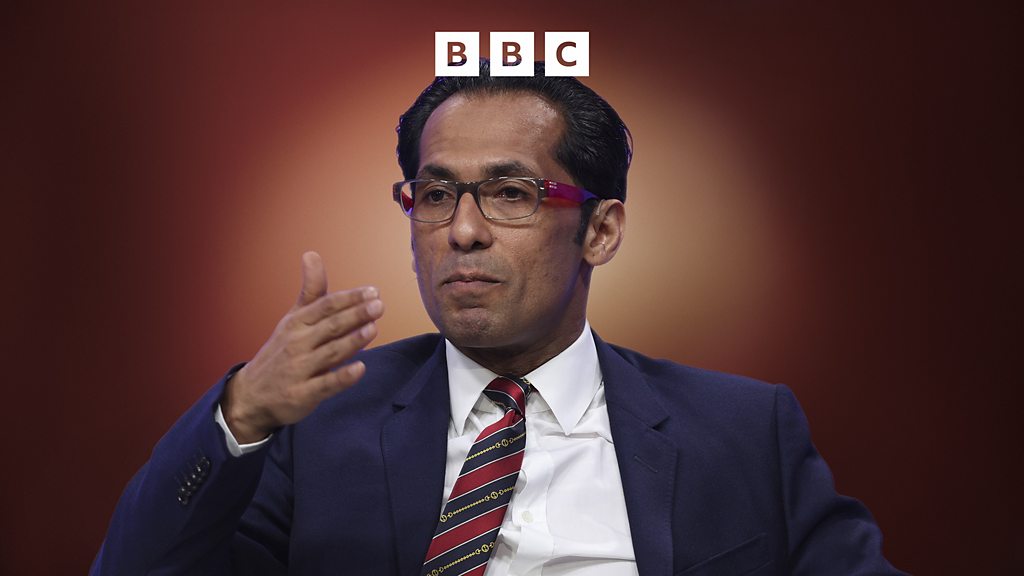
Charles Gitonga speaks to entrepreneur and businessman Mohammed Dewji about becoming one of Africa’s youngest billionaires and how he wants to use his wealth.
Mohammed Dewji is a Tanzanian businessman, entrepreneur and philanthropist who has primarily accumulated his wealth from his family business, an East African conglomerate founded by his grandparents and expanded by his father in the 1970s. It deals with textile manufacturing, flour milling, beverages and edible oils.
About twenty-five years ago, Africa had no dollar billionaires. Today, there are still only 23, not a huge number for a continent rich in mineral wealth and an abundance of relatively cheap labour. Their combined wealth has grown to more than 100 billion US dollars.
Dewji signed the Giving Pledge in 2016 promising to donate at least half his fortune to philanthropic causes. He explains why he believes billionaires have a responsibility to give back.
Thank you to the Focus on Africa team for its help in making this programme.
The Interview brings you conversations with people shaping our world, from all over the world. The best interviews from the BBC, including episodes with Sierra Leone’s first lady Fatima Bio, former Sudanese leader Aisha Musa, and SungAh Lee from the International Organisation for Migration. You can listen on the BBC World Service on Mondays, Wednesdays and Fridays at 0800 GMT. Or you can listen to The Interview as a podcast, out three times a week on BBC Sounds or wherever you get your podcasts.
Presenter: Charles Gitonga
Producer: Cordelia Hemming
Editor: Justine Lang
Get in touch with us on email TheInterview@bbc.co.uk and use the hashtag #TheInterviewBBC on social media.
(Image: Mohammed Dewji. Credit: Getty)

Dan Finley has overseen the successful turnaround of Debenhams department store. He shares the best advice he’s received and some of the keys to his success.


The shockwaves of the Covid-19 pandemic are still hitting the U.S. car market and pushing prices up, even for exceptionally old cars.
The pandemic dealt a severe blow to the total supply of new cars, which has rippled down to the used market.
About 8 million vehicles that would have been made for U.S. buyers during those years never were, largely due to production shutdowns and supply shortages, said Jeremy Robb, chief economist for Cox Automotive. Automakers faced with curtailed production weighted their lineups toward money-making high-end vehicles, a strategy they have largely continued.
These factors have been pushing up prices for everyone — even customers buying decade-old used vehicles.
“I think it’s kind of the new normal outside of a big economic impact,” Robb said. “Supply is not getting a lot better over the next three to four years.”
About 16.2 million cars were sold in 2025, up from the pandemic-era low of 13.8 million in 2022, according to the U.S. Bureau of Economic Analysis. Cox is forecasting about 15.8 million vehicles will be sold in 2026, while JD Power is predicting 16.3 million.
That’s a significant drop from the record 17.55 million vehicles sold in 2016.
Volumes were already dropping before the pandemic set in. The auto market is historically cyclical, so sales go up and down.
But JD Power Senior Vice President Tyson Jominy said the U.S. auto industry has sold roughly 16 million fewer vehicles than it would have if annual sales had held at the 2016 record of 17.5 million. That is about a year’s worth of volume gone — about half of it since the pandemic.
Fewer vehicles coming to the new market have constrained supply in the used one.
“A new vehicle sale is the marble at the top of the mousetrap game,” Jominy said. “And when you drop that marble, it’s going to go through all the chutes and ladders all the way down to the bottom.”
Leasing and incentives
In addition to tighter supply, automakers and dealers have also cut back on industry practices like leasing and incentives because supply was so short.
“Leasing is really expensive for an OEM,” Robb said, referring to the acronym that stands for original equipment manufacturer, another name for automakers.
Typically, payments are lower for leases, there can be lots of upfront costs for the manufacturer and when the car comes back it has to be flipped into the used market, among other things, he said.
“The OEMs really leaned into building more profitable cars like trim levels, trucks, SUVs, things like that,” Robb said. “And those, they’re more expensive. They tend not to get leased as much.”
Off-lease vehicles are a big pipeline for the used market. Prior to the pandemic, leasing was roughly 30% of the new vehicle market, Robb said. In 2022, it hit a low of 18%.
Because most leases are for three years, it has taken that long for the used market to feel the wave.
Automakers also don’t want to have to discount vehicles if they don’t have to. During the pandemic, they didn’t need to.
Incentives — essentially discounts on new cars — averaged about 9.5% of vehicle prices across the new car market before the pandemic, according to Cox Automotive. During the pandemic, they fell to a fraction of that. They’ve climbed back up, averaging about 6.5% to 7% in 2026, Cox’s Robb said. But that is still low compared with prepandemic levels, and they aren’t represented evenly across the industry.
All this means that used car prices have stayed relatively high.
Meanwhile, consumers are facing high gas prices, inflation and increased expenses across the board.
“Prices have gone up about a third and yet salaries and income have not nearly matched those increases,” JD Power’s Jominy said. “There’s a smaller group of buyers that can afford new vehicles. The average new vehicle household income is over $150,000 a year versus about $80,000 for the U.S. economy as a whole.”
Data from Cox Automotive shows that demand for even 9- and 10-year-old used vehicles is much higher than it has historically been. That indicates that more consumers are trading down and seeking out ever-older and cheaper cars as prices rise.
“We don’t normally see this kind of pricing pressure in the lower end of the market,” Robb said.

Defending champion Argentina delivered a confident performance in its final tune-up before the 2026 FIFA World Cup, defeating Iceland 3-0 in an international friendly at Jordan-Hare Stadium on Tuesday night. Goals from Valentín Barco, Lionel Messi and Thiago Almada highlighted a dominant display in front of a passionate crowd dominated by Argentine supporters.
The match served as Argentina’s last major test ahead of its Group stage opener against Algeria in Kansas City. Coach Lionel Scaloni used the opportunity to evaluate squad depth while carefully managing minutes for key players, particularly captain Messi, who entered as a substitute and converted a second-half penalty.
Early Breakthrough and Control
Argentina took the lead in the eighth minute through young left back Valentín Barco. The Boca Juniors talent capitalized on hesitant Icelandic defending, firing a low shot through a crowded box that goalkeeper Ólafur Ólafsson could not fully stop. Barco’s energetic performance throughout the night suggested he is pushing for a larger role in the tournament squad.
The Albiceleste maintained territorial dominance, creating several chances through fluid midfield play. Iceland, missing several regulars and fielding a younger lineup, struggled to contain Argentina’s movement but showed occasional counter-attacking threat, particularly through forward Albert Guðmundsson.
Messi, who did not start as part of a rotation plan, entered in the second half to a thunderous ovation. The 41-year-old superstar added the second goal from the penalty spot in the 71st minute after a foul in the area, showcasing his trademark composure. Thiago Almada sealed the result with a late strike in the 86th minute, rounding out a comfortable victory.
Squad Rotation and Preparation Focus
Scaloni fielded a mix of starters and fringe players, allowing several squad members to stake their claims for World Cup minutes. The absence of some regulars, including goalkeeper Emiliano Martínez due to fitness management, highlighted the depth Argentina has built since its 2022 triumph.
Defenders like Nicolás Otamendi and midfielders including Rodrigo De Paul provided stability, while attackers such as Julián Álvarez and Lautaro Martínez offered constant threat. The friendly marked another strong showing on U.S. soil, following a recent win over Honduras, as Argentina builds momentum heading into the expanded 48-team tournament.
Iceland, ranked outside the top 70 in recent FIFA listings, used the match for valuable experience against elite opposition. Despite the loss, the Nordic side displayed moments of organization and resilience, though they were ultimately outclassed by Argentina’s technical superiority and tactical discipline.
Atmosphere and Significance
The venue in Auburn, Alabama, created an electric atmosphere with an estimated near sellout crowd of around 87,000, the vast majority cheering for Argentina. Fans waved flags, chanted and created a home-like environment for the visitors, echoing the massive support seen during the 2022 World Cup in Qatar.
This friendly caps a series of preparatory matches for Argentina as it aims for a historic back-to-back title. Only Brazil has successfully defended a World Cup in the modern era, adding extra motivation for Scaloni’s side. Messi, in what may be his final World Cup, continues to lead by example both on and off the pitch.
Broader Context for World Cup Contenders
The result reinforces Argentina’s status among the top favorites for 2026 glory. With a favorable group draw and strong squad cohesion, the defending champions appear well-prepared for the challenges ahead, including travel across the three host nations.
For Iceland, the encounter provided insight into gaps against top-tier teams, offering lessons as they continue development programs. Matches like these highlight the global appeal of friendlies in the lead-up to major tournaments, drawing large crowds and international attention even outside traditional football hotspots.
Looking Ahead
Argentina now shifts full focus to its World Cup campaign, with training sessions and final squad refinements planned. Scaloni has emphasized continuity and experience, banking on the core group that delivered in Qatar while integrating promising talents like Barco.
The victory extends Argentina’s strong form in recent friendlies, boosting confidence as the tournament opener approaches. Fans and analysts alike will watch closely to see if the defending champions can replicate or surpass their 2022 success on North American soil.
Iceland returns home to continue its own preparations for future competitions, using the exposure gained against world-class opposition to inform its development strategy. The friendly served its purpose for both sides, delivering competitive action and valuable minutes in a high-profile setting.
As the 2026 World Cup draws near, performances like Argentina’s signal the high level of competition fans can expect. The blend of established stars and emerging players across national teams promises an exciting tournament, with defending champions setting an early benchmark in their final preparations.
The result underscores Argentina’s readiness and the continued global draw of Lionel Messi, whose every appearance generates massive interest. With the tournament kickoff just days away, all eyes turn to the group stage battles that will define the next world champion.

Kaftans for Every Hour of Summer

Tony Livesey ‘steps back’ from BBC role after David Sullivan Panorama investigation

Metaplanet pitches stock buybacks after 96% mNAV decline



-

 Fashion5 days ago
Weekend Open Thread: Evereve – Corporette.com
-
 Crypto World5 days ago
Jensen Huang Approves Samsung, SK Hynix, and Micron for NVIDIA (NVDA) HBM4 Memory Supply
-

 Crypto World2 days ago
Anatomy of the June crypto crash: Fed, Iran, Saylor
-
 Entertainment3 days ago
The Best Mystery Series of All Time Is Surging on Streaming 30 Years After It Ended
-

 NewsBeat2 days ago
Alexander Zverev wins the French Open to finally earn a 1st Grand Slam title
-

 Tech4 days ago
Suspicious Polyfill login prompts pop up on Toshiba, Muji websites
-
 Crypto World4 days ago
Senator Cynthia Lummis Calls CLARITY Act the Most Consequential Financial Legislation of This Generation
-

 Tech3 days ago
Microsoft unveils seven homegrown AI models in new bid for ‘long term self-sufficiency’
-

 Tech5 days ago
Microsoft launches MXC, an OS-level sandbox for AI agents, with OpenAI and Nvidia already on board
-

 Business5 days ago
(VIDEO) Justin Bieber Delivers Surprise Happy Birthday Serenade to Diners at Los Angeles Mexican Restaurant
-
 Business3 days ago
The Pain Points Taking a Fragile Tech Rally Down a Notch
-
Crypto World5 days ago
LBank Surpasses 25 Million Users Worldwide as AFA Partnership Continues to Drive Global Growth
-

 Crypto World3 days ago
Trump’s AI Ownership Plan Could Benefit Anthropic at OpenAI’s Expense
-

 Tech5 days ago
Meta steals a tactic from Tesla and builds data centers in tents
-

 Tech4 days ago
Von der Leyen’s AI envoy pick draws conflict-of-interest fire
-
 Sports20 hours ago
Bangladesh beat Australia after 20 years in ODIs, register only their second win over six-time world champions | Cricket News
-

 Business2 days ago
High Stakes for Wembanyama as New York Pushes for 3-0 Lead
-
 Crypto World2 days ago
Eli Lilly (LLY) Stock Surges 4% Following Breakthrough Sleep Apnea Trial Results
-

 Tech4 days ago
Hackers now exploit SolarWinds Serv-U flaw to crash servers
-

 Tech2 days ago
Notion restores access to Anthropic after service disruption
You must be logged in to post a comment Login