Avoid pointing the air vents directly towards you, because this stops air from being evenly distributed around the car. “It isn’t a matter of temperature, but in which direction the air is flowing inside the car,” said Ángel Suárez from Seat’s Technical Centre.
“The nozzles should be pointing upwards, not towards people’s faces. Then the air flows all around the interior of the car and reaches every passenger consistently.”
If your car has climate control, rather than a more basic air-conditioning system, Seat also recommends using the Auto setting. This not only controls the fan speed but also whether the air is recirculated in the cabin or drawn from outside, helping to cool the car more quickly and minimising fogging.
Advertisement
Use it or lose it
In addition to the advice above, it is good practice to use your car’s air-conditioning on a regular basis, even throughout the winter, to help ensure long-term reliability, while regular maintenance such as replacing filters every year or two will keep it operating at its maximum efficiency.
Be aware too that over time dirt and bacteria can build up in an air-conditioning system, particularly one that is rarely used. If you find there’s a strange odour when the air-conditioning is running it is important to have the system checked and cleaned by a specialist.
The person was confirmed as having tested positive by the World Health Organisation on May 7.
A Brit who was taken to hospital in the Netherlands with hantavirus has returned to the UK, health bosses said.
Advertisement
The person was medically evacuated from the Netherlands to England and will now follow strict infection prevention and control measures, the Health Security Agency (HSA) confirmed.
The HSA said it is the same person who was confirmed as a hantavirus case by the World Health Organisation on May 7.
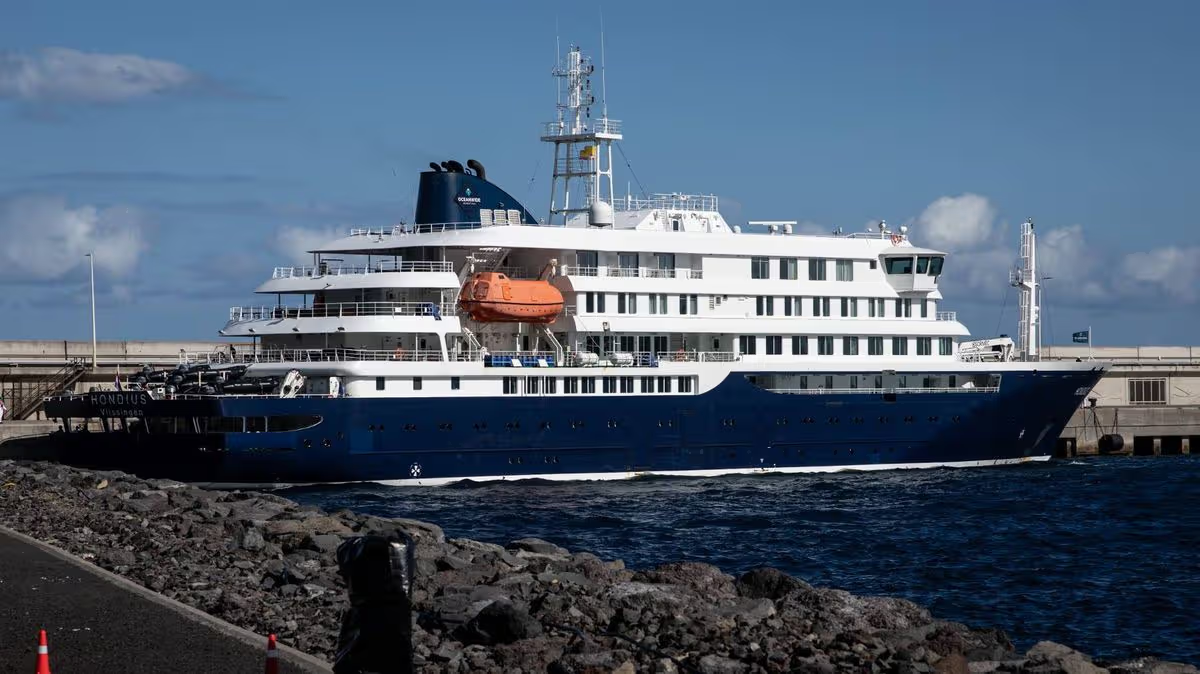
An outbreak on the cruise ship MV Hondius has led to at least 11 reported cases among passengers, with three deaths reported. British crew member Martin Anstee, 56, was among those evacuated from the ship.
The expedition guide and former cop was flown to receive specialist medical care in the Netherlands after being airlifted off the vessel.
Advertisement
Dr Meera Chand, deputy director at UKHSA, said: “We have worked closely with FCDO and the Dutch authorities to ensure the safe return of a British national who was previously confirmed to have hantavirus and has been receiving care in the Netherlands.
“It’s important to stress that this is an existing case and the wider risk to the general public remains very low.
“As people continue with their isolation period, UKHSA will continue to work with our partners locally, nationally and internationally to ensure everyone has the necessary support in place.”
This comes as six more people linked to the hantavirus outbreak have left hospital to continue their isolation at home, health officials have said.
Advertisement
Passengers from the cruise ship were taken to Arrowe Park Hospital on the Wirral for checks and an initial isolation period earlier this month.
The people isolating at home and those who remain in hospital are being closely monitored, it added.
Dr Chand added: “We would like to again stress our thanks and gratitude to everyone at Arrowe Park who has worked so hard during this challenging time.”
Advertisement
The site at Arrowe Park Hospital was last used as an isolation facility at the start of the coronavirus pandemic in 2020.
Some 19 British nationals were listed as passengers on the MV Hondius, which was sailing from Argentina to Cape Verde, with four British crew members.
Public Health Scotland warned that a small number of people in Scotland have potentially had contact with the virus and that it was working to get in touch with “a small number of individuals” who could be affected.
Oceanwide Expeditions, which operates MV Hondius, said on Tuesday that the ship is undergoing further cleaning in Rotterdam, on the advice of the GGD local health authority. before it returns to its home port in nearby Vlissingen in the southern Netherlands.
Advertisement
Get more Daily Record exclusives by signing up for free to Google’s preferred sources. Click HERE.
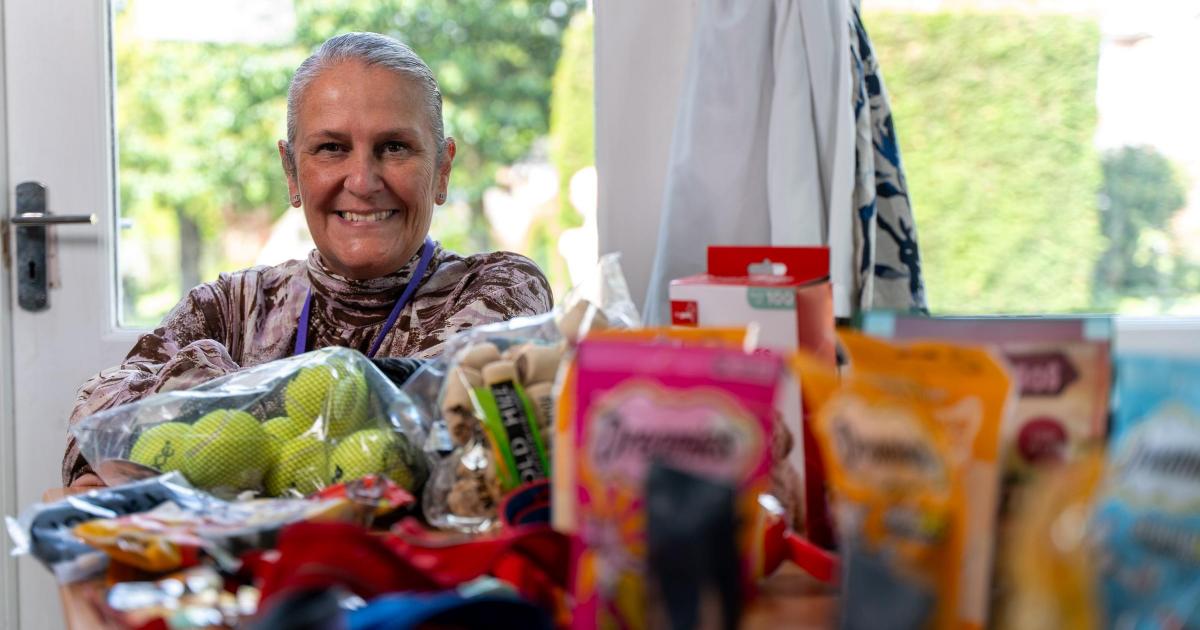
Wilton House is collecting donations for Saving the Beautiful Dogs and Cats of Cape Verde, a charity that supports injured, lost, malnourished, and abused animals on the island of Sal.
Emma Hardy, manager of Wilton House, will deliver the donations in person during an upcoming holiday to the island.
Ms Hardy said: “When I found out we could take an additional suitcase filled with donations, I thought it was a brilliant opportunity to help.
Advertisement
“The charity does incredible work caring for stray and vulnerable animals on the island and every donation, no matter how small, will make a difference.
“We know people are incredibly generous and we would be so grateful for any items people can spare.
“It would mean a great deal to be able to arrive with a suitcase full of supplies to support the charity and the animals they care for.”
She will be travelling with former Wilton House administrator Karen, and thanks to a scheme with TUI, can take an extra suitcase free of charge filled with donations for the charity.
Advertisement
Requested items include flea and worming medications, blankets, towels, leads, collars and wet or dry pet food.
Tinned food cannot be accepted due to luggage weight restrictions.
Donations can be dropped off at Wilton House Care Home, Wilton Close, Darlington.
The care home and charity are encouraging the community to contribute to the appeal and support the animal welfare project.
The Finance Minister confirmed the funding on Tuesday
Paper prescriptions are to be scrapped under the latest public service transformation announced by Stormont’s Finance Minister.
Advertisement
John O’Dowd announced £102.6million for six projects to continue to drive forward the transformation of public services in Northern Ireland. The Transformation Fund is part of the £235million provided by the UK Government for public sector transformation as part of the financial package to restore the Executive.
£42million of that funding will be allocated to the Department of Health for the ePharmacy Primary Care Digital Reform Programme, which will deliver electronic prescription transfer and a new digital platform for community pharmacy clinical services, expanding access to care and bringing treatment closer to patients’ homes.
The ePharmacy Primary Care Digital Reform Programme will deliver an electronic prescription transfer programme, making paper prescriptions a thing of the past. Prescriptions will be digitally transferred from prescribers, GPs, or Out of Hours to community pharmacies, streamlining the process for patients.
In addition, a new digital platform will manage the delivery of clinical services to the public through community pharmacies, improving patient safety, expanding access to care for patients and bringing treatment closer to people’s homes.
Advertisement
On the ePharmacy project, Health Minister Mike Nesbitt said: “With over 45 million items prescribed and dispensed annually across Primary Care in Northern Ireland, transitioning from paper prescriptions to a digital system will genuinely transform patient experience.
“This project and the new digital platform will help to make Health and Social Care as safe as possible, accelerate primary care reform and help support our move towards a Neighbourhood model of care for primary, community and social care.”
£29.2million has also been earmarked for the Together for Families project, a new partnership between the Department of Health, The National Lottery Community Fund and the Voluntary and Community sector, which will establish a regionwide, tiered model of early help to ensure families can access the right help, at the right time and in the right place.
The National Lottery Community Fund will contribute an additional £30million to the project – its first strategic investment of this kind in Northern Ireland.
Advertisement
The Department for Communities will receive £16million for their Pathways to Work and Wellbeing proposal. The Department for Communities has established a Commission on Work and Wellbeing as part of a wider initiative to support more people with ill health and disabilities to enter and remain in employment. Delivered in partnership with the Department of Health and the Department for the Economy, the funding will help build stronger integration between employability and health services to support more people to find and sustain employment.
The Minister also confirmed £6million for his own department’s Digital Workplace programme to modernise records and information management across the Civil Service, to reduce duplication and manual handling, helping to support faster access to information and freeing up staff time for citizen-facing activity.
£4million was allocated to the Department of Agriculture, Environment and Rural Affairs’ Bovine Tuberculosis Research Project to deliver a first-of-its-kind regionalised pilot, working with partners across Ireland to redesign bovine tuberculosis control, which will be accompanied by approximately £5.6million of funding from the Irish Government’s Shared Island Fund.
The Department of Finance also received £5.3million for the NISRA Data Linkage Office to deliver two pathfinder projects to examine the capability to safely link data across departments in support of evidence-based policy making, improving outcomes, and better targeting of public services.
Advertisement
Announcing the funding, Minister O’Dowd said: “ The Executive is committed to changing how we deliver services to improve lives, strengthen communities, and achieve better outcomes, as set out in the Programme for Government.
“At its heart, transformation is about working differently to make services more effective, resilient, and sustainable, especially in a time of constrained public finances.
“Last year, I announced £129million from the Transformation Fund for six public sector projects across healthcare, special educational needs, justice and infrastructure.
“I am now pleased to announce the second tranche of funding and a further £102.6 million for an additional six projects to support the continued transformation of our services. This is complemented by a further £30 million from the National Lottery Community Fund and £5.6million from the Shared Island Fund.”
Advertisement
He added: “The Transformation Fund is a key step in improving public services and delivering the reforms people need and deserve.
“This investment will not only deliver greater efficiency and long-term savings across government, but will also strengthen healthcare, support families, help our farmers and the agri-food sector, and lay the groundwork for bold, system-wide change in the years ahead.”
Speaking as the funding was announced, the Secretary of State said: “This £102.6 million investment is a significant milestone for Northern Ireland, and a clear signal of this Government’s commitment to supporting the Executive to deliver better public services for the people of Northern Ireland.
“At the heart of this funding is a simple goal: making public services work better for the people who rely on them every day.
Advertisement
“The full allocation of the £235million transformation fund is supporting the framework to transform service delivery for the long term.
“I look forward to seeing the results of all successful projects in the months ahead.”
Tup Tup Palace in Newcastle will open its doors to babies, toddlers, and young children for a special daytime event on May 30.
The club will be transformed into a family-friendly, pram-accessible venue from 3pm to 5pm.
Matt Smythe from Tup Tup Palace said: “This is going to be a fantastic afternoon and a great opportunity for families to have a unique day out.
Advertisement
“It’s often difficult for parents to go out and relive their clubbing days so we’ve given them the opportunity to do just that – with the kids in tow.”
To ensure the event is comfortable for all guests, organisers will provide dedicated feeding and changing areas.
Families can expect three rooms of music, with pop in the main area and R&B in the upstairs Loja room.
Entertainment will include a face painter, glow sticks, bubbles, and a craft corner to keep little ones engaged.
Advertisement
Organisers have even suggested a themed playlist for the day, featuring tracks such as Sweet Child of Mine, Shake, Rattle and Roll, Baby One More Time, and Kids in America.
Other songs on the potential playlist include Baby Love, Young Hearts Run Free, Message in a Bottle, Father and Son, Rock the Cradle, and Crawling Back to You.
Tickets are priced at £10 for adults and £6 for children.
Babies aged zero to three can attend free of charge. Tickets are available from Fatsoma.
Advertisement
Tup Tup Palace has long been a go-to nightlife destination in the city, known for attracting visiting celebrities.
More drama as a potential poisoning strikes ‘The Night That Changes Everything’ (Picture:BBC/Jack Barnes/Kieron McCarron)
Kat and Alfie Moon are left fearing the worst in next week’s EastEnders as chaos erupts following Vicki and Ross’ wedding celebration, and the pair become convinced they may have accidentally poisoned half of Walford.
The dramatic scenes form part of a special run of episodes that all unfold across one intense night, teasing major fallout for several Square residents as ‘The Night that Changes Everything’ continues.
After catering the wedding festivities, Kat and Alfie are horrified when they begin to suspect they may have accidentally poisoned their customers, leaving them terrified that the food they served is to blame. As panic spreads around Walford, the couple are left desperately trying to work out what went wrong and whether they could really be responsible for making their friends and neighbours sick.
Will Kat and Alfie destroy their reputation? (Picture: BBC/Jack Barnes/Kieron McCarron)
For Kat especially, the situation threatens to spiral quickly. Never one to keep calm under pressure, she fears the disaster could completely ruin their reputation and turn the Square against them. Alfie, meanwhile, attempts to reassure her, but he’s equally shaken as the drama unfolds around them.
The wedding itself is already packed with tension before the health scares even begin, with emotions running high among several residents. Concern also grows for Denise Fox after she suddenly disappears from the chaos surrounding the reception.
Advertisement
Yolande soon becomes worried when Denise fails to return, prompting fears that something more serious may be going on behind the scenes. Elsewhere, Denise heads to the hospital where she receives shocking news from a doctor regarding her diagnosis.
Clearly overwhelmed by what she’s been told, Denise later makes her way back to Fox and Hair where Yolande finds her visibly emotional. Unable to hold everything in any longer, Denise finally breaks down and reveals the truth about what she’s facing.
Denises world has turned upside down (Picture: BBC/Jack Barnes/Kieron McCarron)
The emotional scenes are expected to form a major part of next week’s episodes, with Denise leaning on Yolande for support while the rest of Walford remains distracted by the unfolding wedding drama.
Elsewhere, the wedding night takes an unexpected turn when Max, fed up with the constant criticism over his relationship with Cindy, grabs the microphone and publicly declares his love for her in front of shocked guests.
Advertisement
In scenes set to leave Walford stunned, Max then gets down on one knee and asks Cindy to marry him.
Max shocks everyone (Picture: BBC/Jack Barnes/Kieron McCarron)
Don’t miss a Soaps scoop! Add us as a Preferred Source
As a loyal Metro Soaps reader, we want to make sure you never miss our articles when searching for stories. We have all the latest soaps news, spoilers, videos, and interviews, with a vibrant community of highly engaged readers.
Click the button below and tick Metro.co.uk to ensure you see stories from us first in Google Search.
Now you can ensure you never miss a story from the Soaps team
Advertisement
Cindy is left speechless by the proposal as party guests watch on in disbelief, but with emotions running high and residents behaving unusually, Kat and Alfie can’t help but fear their potential slip-up may somehow be linked to the night’s madness.
Kat and Alfie’s food poisoning fears could really leave them facing some awkward questions from angry guests. With tensions already running high on the Square, it may not take much for accusations to start flying.
But are Kat and Alfie actually responsible, or is there more to the mystery than first meets the eye?
Viewers will have to tune in to see how the dramatic night unfolds.
A major search was carried out before a body was recovered by rescue crews
The body of a 12-year-old boy has been found in a Lancashire river after swimming with friends. A major search was carried out of the River Ribble on Tuesday (May 26) after the boy was reported as missing.
Advertisement
Fire crews, police and paramedics, along with underwater search teams, scoured the river in the Ribchester area throughout the evening after the alarm was raised shortly after 2pm. An air ambulance was also called to the scene.
A body was then recovered hours later, at around 7.50pm. Lancashire Police say it is believed to be that of the missing boy, with formal identification still due to take place.
Click here to get the biggest stories straight to your inbox in our Daily Newsletter
The death is not being treated as suspicious. The family of the young boy is being supported by specialist officers, Lancashire Police added.
Advertisement
A force spokesperson said: “At 2.06pm today (26th May) Lancashire Police received a report of a concern for safety after a boy had gone into the River Ribble at Ribchester. The boy, aged 12, had got into difficulty while swimming with friends in the river.
“A large-scale search involving officers from Lancashire Police’s underwater search unit and colleagues from Lancashire Fire and Rescue Service was launched, with colleagues from North-West Ambulance Service providing support.
“Very sadly, a body was recovered from the river around 7.50pm. While formal identification has not yet taken place, we believe it to be the body of the missing boy.
Advertisement
“His family are being supported by specially trained family liaison officers, and our thoughts are very much with his loved ones at this extremely distressing time. The death is not being treated as suspicious, and a file will be passed in due course to HM Coroner.”
The war between Iran, the US and Israel has escalated into a major global crisis, with consequences that are reaching far beyond the Middle East. The closure of the Strait of Hormuz, through which around 25% of the world’s oil ordinarily passes, has rattled global energy markets.
This has only been worsened by the US naval blockade of Iranian ports, which was imposed on April 13 in an attempt to restrict Iran’s ability to export its oil. In early May, the US Defense Department estimated that Iran had been denied nearly US$5 billion (£3.7 billion) in oil revenue due to the blockade.
But Iran’s role in the global economy is not merely centred on oil, as the conflict has shown. From methanol to pistachios and cement, the war is choking trade in a range of Iranian exports that underpin supply chains across Asia and the Middle East.
Methanol
Methanol is one of the war’s most consequential commodity stories. It is used in a variety of industrial and household products, including windshield cleaning fluids, antifreeze, plywood, plastic and fuel. Iran produces roughly 10 million tonnes of methanol a year, manufactured from its vast natural gas reserves, making it the world’s second-largest supplier after China.
Advertisement
But since hostilities began in February, Iranian methanol exports have effectively ceased. Strikes on Iran’s gas infrastructure have cut off both the feedstock and energy needed to run the country’s methanol plants. Combined with the closure of Hormuz and suspension of operations at Qatar’s Ras Laffan and Mesaieed natural gas complexes, over 30% of global seaborne methanol supply has been removed from the market.
Liquefied natural gas facilities in Ras Laffan Industrial City, Qatar, in February 2026. Hannibal Hanschke / EPA
China is being affected by the disruption most severely. It imported around 14 million tonnes of methanol in 2025, with much of it entering the country through coastal ports. For China, importing methanol has historically been more cost effective than hauling domestic production overland from its remote western regions to demand centres in the east.
Domestic producers have lifted output to offset part of the shortfall. But this alternative supply comes at a substantial cost for eastern industrial users, who are now paying up to 500 yuan (£55) per tonne more for methanol produced domestically than methanol sourced from overseas.
Pistachios
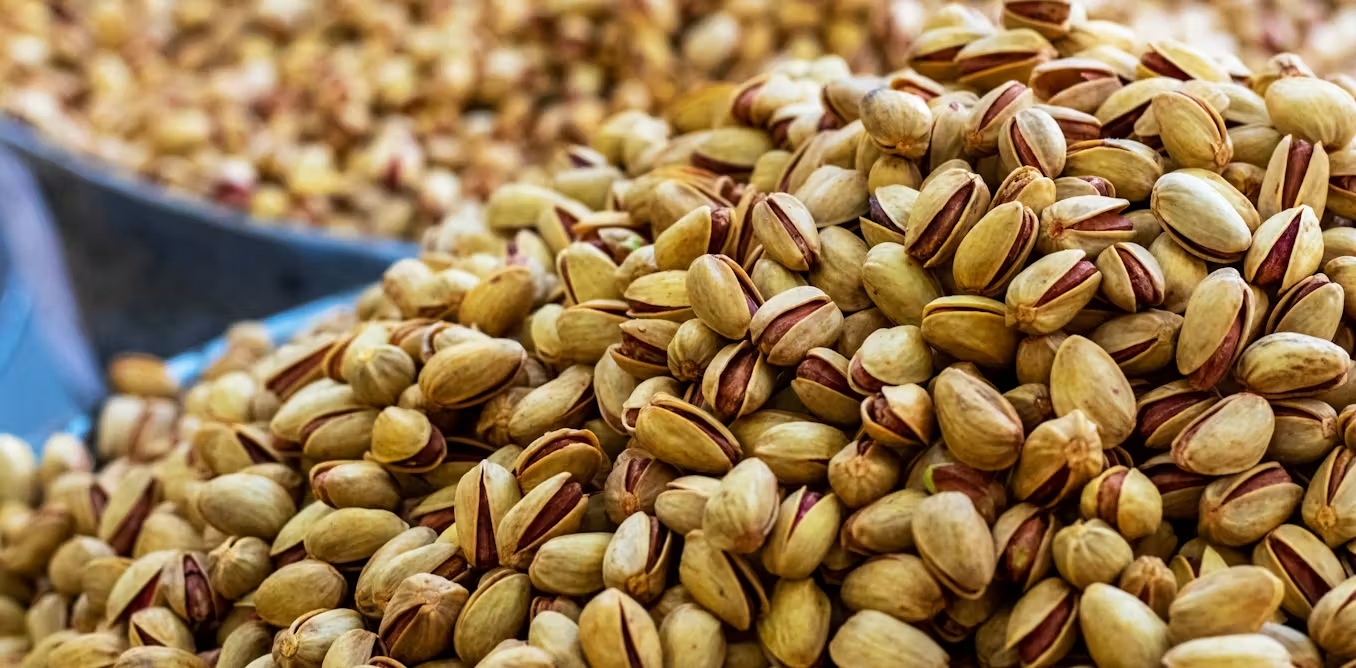
Iran is the second-largest producer of pistachio nuts globally, sandwiched between the US in first and Turkey in third. Pistachio prices reached US$4.57 (£6.10) a pound in March, their highest level since 2018.
Advertisement
Iran’s pistachio orchards are concentrated in the north-eastern province of Khorasan, where US and Israeli strikes have been less intense than in the west and south. But key ports near the Strait of Hormuz have been severely disrupted, with reports suggesting that Iranian pistachio exports have fallen by around 30% on the year.
The war has added pressure to a market that was already under strain. Harvests among the three major producers fell short of expectations in 2025 due to drought. Iranian exports were further constrained from January 2026, when the government in Tehran responded to internal unrest by shutting down the internet. This limited contact between exporters and foreign buyers.
The clearest beneficiary of constrained Iranian supply is the US. A 40-year-old US tariff on Iranian in-shell pistachios, introduced after the 1979 revolution, gradually helped California’s domestic industry develop into a global leader. The vast majority of the pistachios consumed in the US are now grown there.
The impact is instead falling on south Asian retailers in places like Kashmir and on the Gulf-driven “Dubai chocolate” boom, which relies heavily on Iranian kernels for the pistachio cream filling. In the six months to March 2025 alone, Iranian pistachio exports to the United Arab Emirates (UAE) rose by 40% compared with the previous year as confectioners scrambled to meet rising consumer demand for Dubai chocolate.
Advertisement
Cement
Iran also ranks as one of the world’s largest cement producers. Its annual output of 70 million tonnes is largely exported to neighbouring countries. Iraq has historically been the main buyer of Iranian cement. Next in line are Kuwait, Afghanistan and Syria.
Iranian cement output was already constrained before the conflict by domestic gas shortages and electricity rationing. Exports of clinker, the main constituent of cement, were down 17% in 2024 compared with the previous year. During the 2024 summer power crisis, 70% of cement kilns also halted operations.
Reliable wartime figures are not yet available, but the strikes on Iran’s gas infrastructure have worsened the feedstock problem. Temporary suspensions of port operations, as happened in the southern Iraqi city of Basra in March following attacks on two tankers off the coast, have further hampered Iran’s ability to export cement.
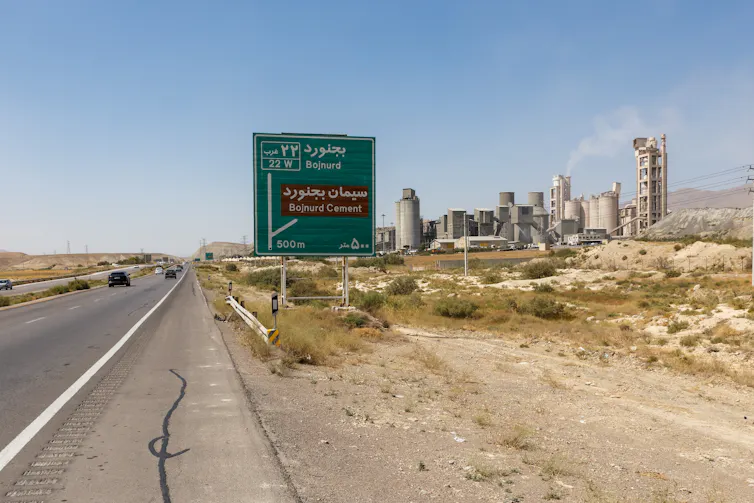
A cement production facility in the Khorasan province of north-eastern Iran. Mieszko9 / Shutterstock
Meanwhile, Iraq and Kuwait face a double bind. As Iranian cement supplies tighten, both countries are losing the means to compensate. Iraq ships 97% of its energy exports through the Strait of Hormuz and Kuwait 100%. Both have shut down production.
The collapse in state revenue is straining infrastructure budgets in these countries. So even where alternative supply exists – from Turkey, Pakistan, Saudi Arabia and the UAE – Iraq and Kuwait lack the fiscal capacity to absorb the higher costs.
Advertisement
For years, much analysis of Iran has focused on the country’s isolation. But, in reality, Iran is involved in supply chains all over the world – from food to chemicals and building materials. The war has made this abundantly clear.
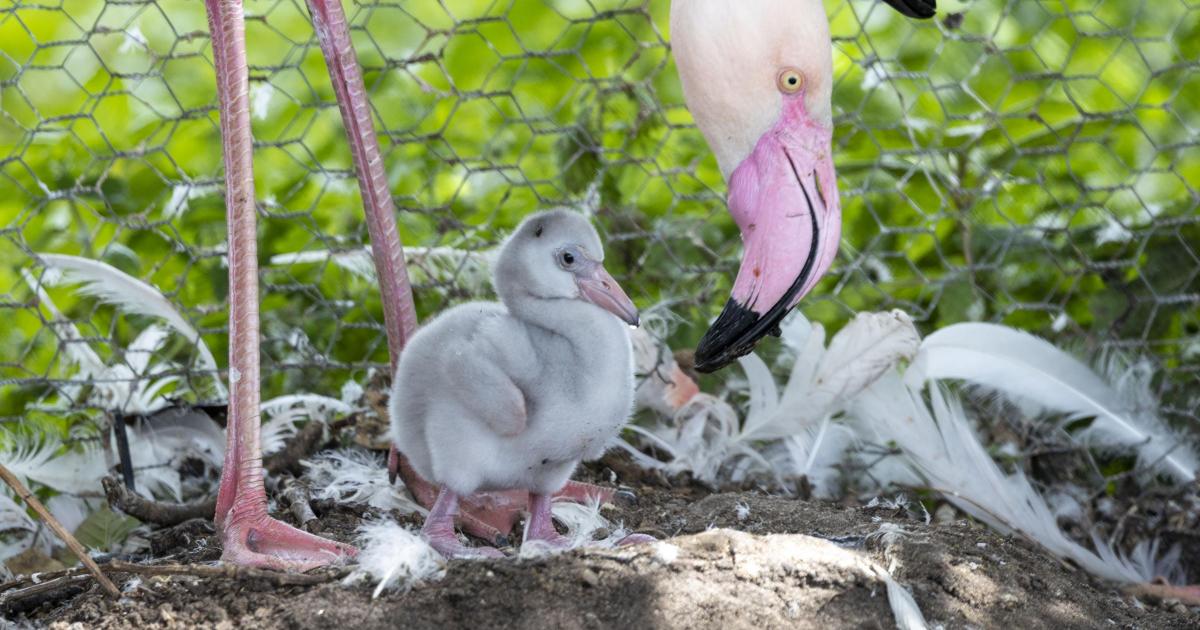
The greater flamingo chicks emerged between late April and early May and have quickly begun exploring their surroundings, typically venturing from their nests within a week of hatching.
Covered in soft grey down, the young flamingos will gradually turn pink over the next two years as they mature, a transformation caused by carotenoids in their diet.
The new arrivals remain with the flamingo flock and are being looked after by the adult birds (Image: Lisa Wilkinson-Gamble)
The chicks remain with the main flock and are cared for by both adult flamingos and the centre’s living collection team.
Visitors may notice the chicks gathered in a “crèche,” a form of flamingo day care where a small group of adults act as babysitters while the chicks stay close by.
Advertisement
Chicks are fed “crop milk,” a nutrient-rich substance regurgitated directly into the chick’s beak from the parents.
This milk is high in fat, protein, and carotenoid pigments.
Adult flamingos caring for chicks can often be identified by their paler pink colouring, a result of nutrient loss while feeding their young.
As the chicks grow, their beaks will begin to develop the characteristic downward curve of adult flamingos, allowing them to filter-feed on brine shrimp, insect larvae, and algae.
Advertisement
The arrival of the chicks is just in time for the May half-term, with visitors able to spot them at the Greater Flamingo habitat throughout the break.
READ MORE:
Victoria Fellowes, Visitor Experience Manager at Martin Mere, said: “Flamingos at Martin Mere have been wowing visitors since not long after opening in 1975.
“Some of the flamingos in the flock are even around 50 years in age.
Advertisement
“We’ve seen generations of chicks successfully hatch into the flock, and we’re hopeful for many more years of adorable chicks to come.”
Dorset Police were responding to a large group of people near Bournemouth pier
Abigail Hunt Content Editor and Husna Anjum Senior Reporter
21:49, 26 May 2026Updated 21:49, 26 May 2026
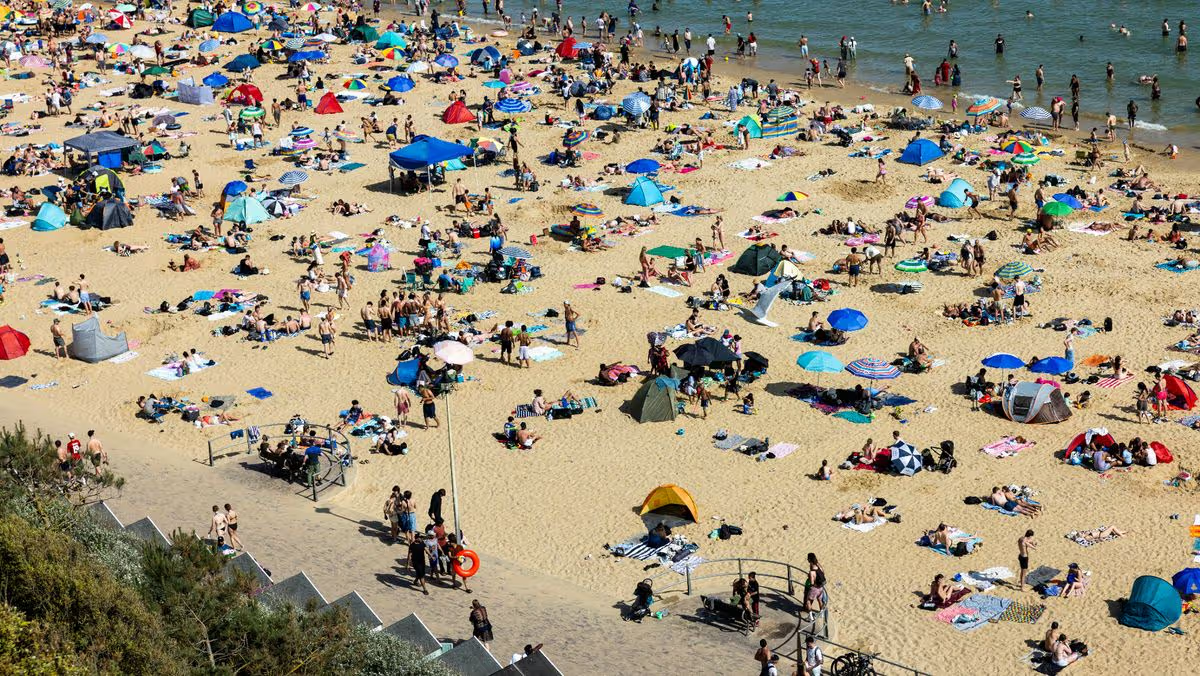
Police have slammed ‘violence’ after officers were allegedly attacked in a ‘brawl’ on a popular UK beach. Parts of the holiday hotspot have been shut down as a result, the incident also happened on the ‘hottest day of the year’.
DailyStar reports Dorset Police said officers had been “assaulted” while responding to a large group of people near Bournemouth pier on Tuesday (May 26) afternoon. Despite the heavy police presence, there are still crowds of people in the area.
Advertisement
Witnesses have said that emergency services are trying to get people away from the the incident. Flight trackers also show a police helicopter circling the area and a police dog has also been spotted.
Around 35 officers have descended upon the area and are policing a cordon around Pier Approach. Paramedics from Southwest Ambulance Service have also arrived.
Police have revealed they are dealing with “disorder involving a large number of people”, and that a number of their officers had been assaulted.
Assistant Chief Constable Mark Callaghan of Dorset Police said: “I would like to thank the law-abiding members of the public for their support, but I am sending a clear message to those who are intent on causing harm or using violence to leave the vicinity. There will be a large police presence in the area while we seek to keep the public and our officers safe.
“We have commenced an investigation into the disorder and we will continue to identify those responsible and bring them to justice. I would also like to thank our officers for their professional and courageous actions during this incident.”
It’s not yet known how many, if any at all, members of the public have been hurt in the incident.
Dorset’s police and crime commissioner David Sidwick has also issued a comment regarding tonight’s incident. He said: “I have been in contact with senior officers regarding the disorder in Bournemouth this evening and I want to make clear that those involved in violence and criminality will be dealt with robustly.
Advertisement
“I will ensure our officers have the support and resources they need to respond effectively to this situation and keep the public safe. I would also like to thank all officers and emergency services personnel for their professionalism and dedication during this incident.”
Bournemouth, Christchurch and Poole Council added: “We are aware of the incident on Bournemouth beach this evening and are working closely with Dorset Police to support their response.
“Incidents like this are taken extremely seriously, and we take a joined-up approach to antisocial behaviour and criminality, working alongside agencies to share intelligence, act quickly and target issues when they arise.
“While the overwhelming majority of people enjoy our coastline responsibly, incidents do occur. We’re grateful to the police for their swift action this evening and their dedication to keep residents, businesses and visitors safe.”
Advertisement
Ensure our latest stories always appear at the top of your Google Search by making us a Preferred Source. Click here to activate or add us as your Preferred Source in your Google search settings.
WASHINGTON (AP) — The Trump administration said Tuesday that it will admit an additional 10,000 white South Africans into the U.S. as refugees this year, increasing its historically low annual cap but still blocking people from other countries from entering through the program.
Trump suspended the refugee program on his first day in office and, since then, has turned it into a vehicle to allow Afrikaners — a group of white South Africans descended mainly from Dutch settlers — into the U.S. Advocates say the decision to focus a decades-old program on one group has left people around the world fleeing war and strife stranded and with few options.
The administration says Afrikaners are subject to persecution in their home country, a charge the government in South Africa denies.
In the Tuesday announcement on the Federal Register, President Donald Trump said that because of “an unforeseen emergency refugee situation” he was raising the refugee cap. He blamed the South African government for “recent increases in the incitement of racially motivated violence” but gave no specific information.
Advertisement
“I hereby determine that the admission to the United States of Afrikaners from South Africa in response to this emergency is justified by the grave humanitarian concerns and is otherwise in the national interest,” Trump said in the announcement.
Democrats criticize refugee cap
The administration indicated last year that it would approve up to 7,500, mostly Afrikaners, during the fiscal year stretching from October 2025 through September 2026, but last week, in a notice to Congress informing it of the increase, the administration said that “unforeseen developments in South Africa created an emergency refugee situation.” The change raises the limit to 17,500.
Christopher Landau, the deputy secretary of state, and Troy Edgar, the deputy secretary of Homeland Security, met with key congressional committees on Thursday as part of the legally required consultation process with lawmakers, according to two people who were granted anonymity to discuss a private meeting.
During the hour-long session, Landau told lawmakers that one of the ways that Afrikaners had faced persecution at home was the erasure of their history in school textbooks, according to the people with knowledge of the meeting. The discussion infuriated Democrats, who called the approach and the consultation “indefensible.”
Advertisement
The State Department did not return a request for comment on the interaction.
“The administration’s shameful approach to refugee resettlement is organized around prioritizing white-only Afrikaners and betraying everyone else, including thousands of Afghan allies who risked their lives for our nation, and thousands of other approved and vetted refugees twisting in the wind,” said Democratic Sens. Dick Durbin of Illinois and Alex Padilla of California, and Democratic Reps. Jamie Raskin of Maryland and Pramila Jayapal of Washington in a statement.
Inside the meeting, Democrats also pressed the administration on religious minorities in other nations, particularly in Iran, and House Judiciary Committee Chairman Jim Jordan indicated that it was an issue the administration should look at, the people said. Jordan raised the case of Saleh Mohammadi, a 19-year-old star wrestler who was hanged in Iran with two other young men in March after being sentenced on charges of “moharabeh,” or “waging war against God,” another person with knowledge of the meeting said.
Thousands of mostly white South Africans already admitted
The State Department has already approved more than 6,000 people through the refugee program since the beginning of the fiscal year in October, according to official data. All of those were from South Africa except for three people from Afghanistan.
Advertisement
Presidents set the cap on how many refugees the U.S. will approve through the program each year, and historically, they’ve allocated those numbers across various geographic regions while factoring in wars or conflicts that spark humanitarian needs around the globe.
The refugee program, administered by the State Department and the Department of Homeland Security, is distinct from asylum. People hoping to come through the refugee program must be living abroad and undergo vetting and other checks before being admitted to the U.S., whereas those seeking asylum are already on U.S. soil. A visa, however, is not a guarantee that the holder will be allowed to enter the U.S.
During his first administration, Trump slashed the number of refugees approved every year. Then the Biden administration built the system back up, setting a goal of admitting 125,000 refugees in his last year in office.
Groups that have for decades helped resettle refugees in the U.S. have sued to allow people who were in the refugee application process but are now stranded to be allowed to come to the U.S.
Advertisement
“For nearly half a century, the U.S. Refugee Admissions Program embodied a simple but powerful, bipartisan idea: that the United States would offer safety to the world’s most vulnerable refugees,” said Beth Oppenheim, President & CEO of HIAS, in a statement. “This administration is now dismantling that legacy in plain sight.”




















































You must be logged in to post a comment Login