

Crypto World
Crypto Advocacy Group Pushes Back Against US Senator’s Claims on Companies’ OCC Charters

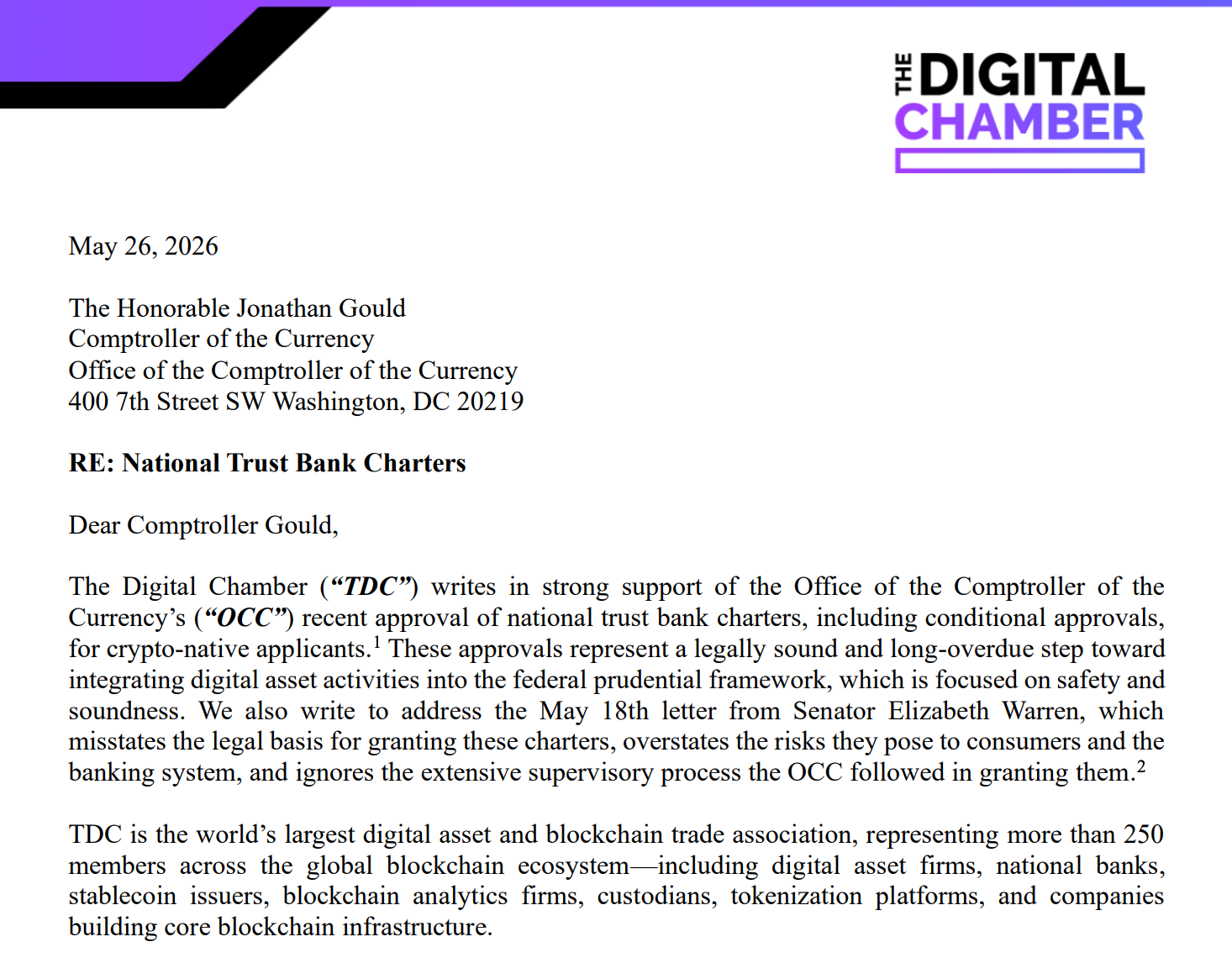
Update (May 26 at 9:30 pm UTC): This article has been updated to include statements from The Digital Chamber.
The Digital Chamber, a cryptocurrency advocacy group that has been closely involved in negotiations with US lawmakers over digital asset-related legislation, questioned three-term Massachusetts Senator Elizabeth Warren’s understanding of banking laws as applied to crypto companies.
In a Tuesday letter to the US Comptroller of the Currency (OCC) Jonathan Gould, Digital Chamber CEO Cody Carbone challenged many of the claims in the Massachusetts lawmaker’s May 18 letter. In that letter, Warren said that the OCC may have violated the National Bank Act by approving national trust charters for nine crypto companies “that intend to engage in activities that appear to go far beyond the narrow set of activities permitted by law.”
“The claim that these firms seek to ‘evade’ regulations […] or pose risks to the safety and soundness of the banking system is contradicted by their own conduct,” Carbone said in his Tuesday letter. “These companies voluntarily sought federal oversight: each applied for a national trust bank charter, submitted to OCC examination authority, and accepted the compliance obligations that come with federal supervision.”
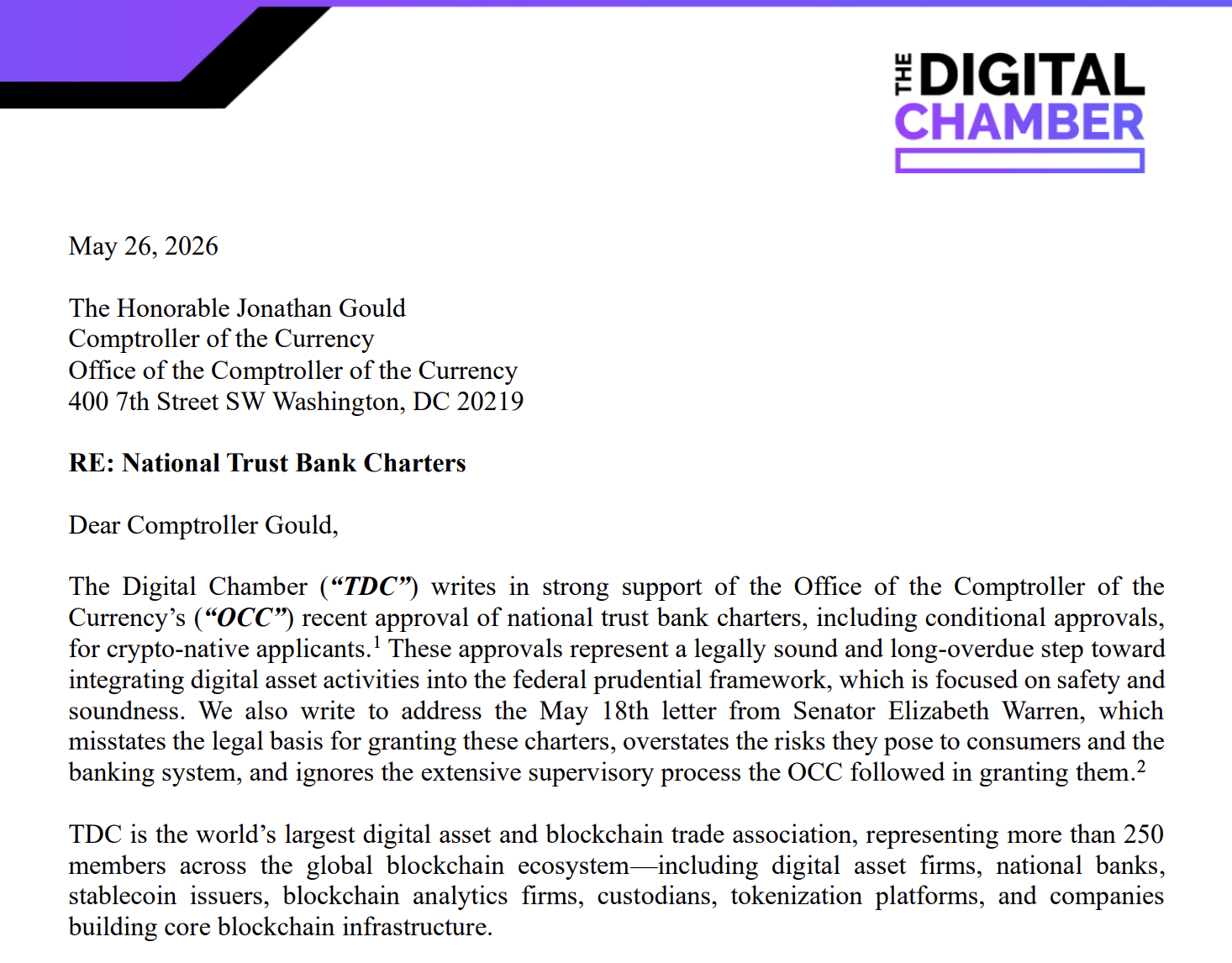
Source: The Digital Chamber
Warren’s concerns stemmed from OCC’s approving or conditionally approving charter applications from Coinbase, Crypto.com’s parent company, Ripple, Stripe, BitGo, Circle, Fidelity Digital Assets, Protego Holdings and Paxos. She said that the companies “want to evade the fundamental safeguards and obligations that come with being a bank” and questioned what led to the approvals, implying influence from the White House.
Related: Crypto PAC money pours into Texas primary runoffs, as prediction markets favor challengers
As the ranking member of the US Senate Banking Committee, Warren has repeatedly criticized lawmakers and regulators for supporting policies with potential conflicts of interest related to US President Donald Trump’s ties to the crypto industry. Cointelegraph sought comment from Warren’s office but did not receive an immediate response.
“If Senator Warren believes the OCC exceeded its authority, the appropriate response is to identify where the statute draws the line she says was crossed,” Carbone said in response to a request for clarification from Cointelegraph. “We’d welcome that debate. But ‘this seems wrong’ from a member of the Banking Committee isn’t a legal argument. And the OCC shouldn’t retreat from a legally sound decision because of political pressure, regardless of who’s applying it.”
Other crypto companies’ OCC applications are pending review
Warren’s concerns about the OCC approvals came as the banking regulator is considering applications from the Trump family-backed crypto business World Liberty Financial as well as Payward, the parent company of cryptocurrency exchange Kraken.
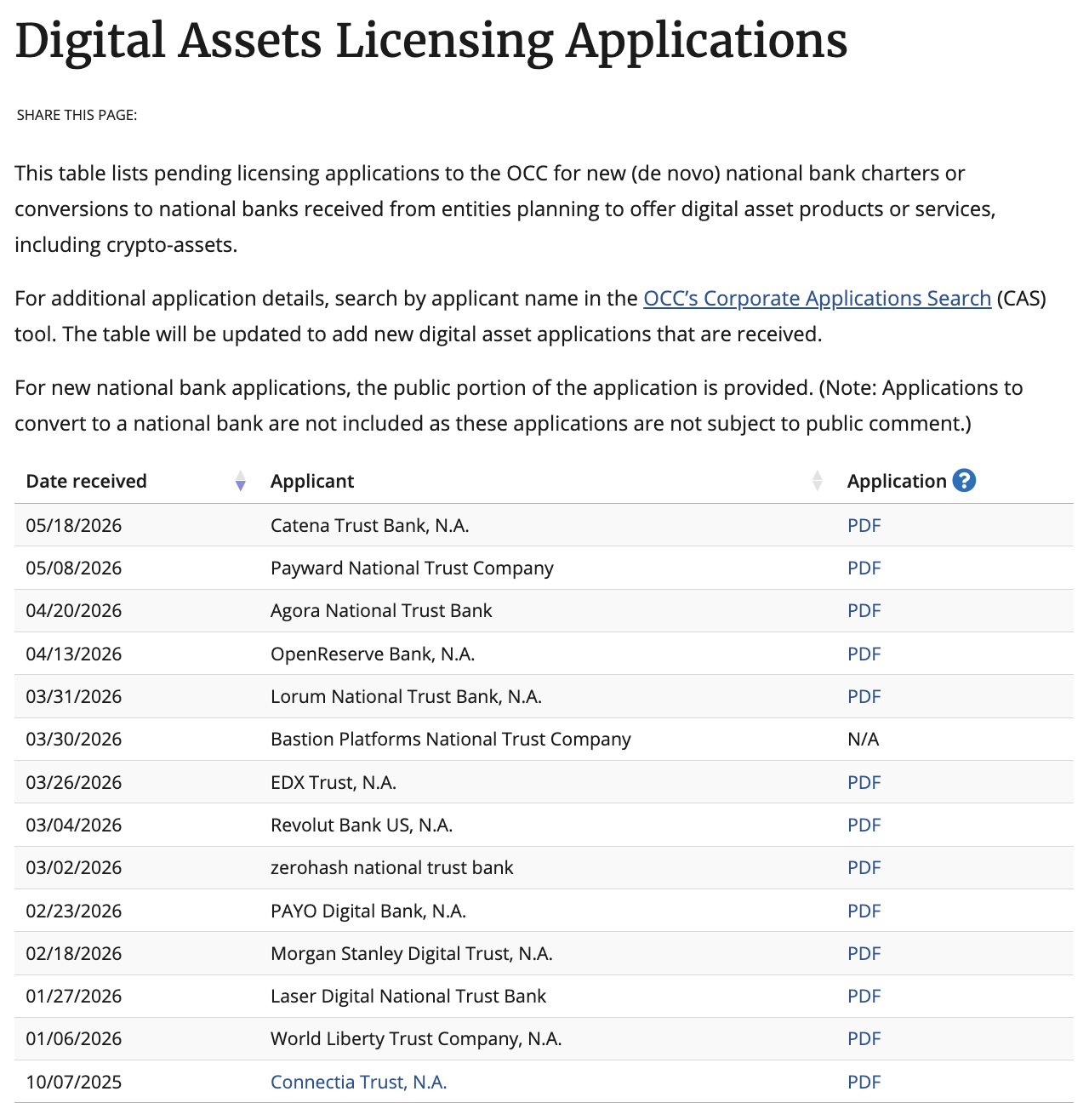
Source: OCC
Payward said it intended to “provide fiduciary custody and other services primarily for digital assets” if approved. In January, Warren called on Gould to delay consideration of World Liberty’s application until Trump divested from the platform, citing financial conflicts of interest.
As of Tuesday, the OCC listed 14 digital asset companies that had submitted licensing applications.
Magazine: 50K investors fight Korean crypto tax, Singapore cancels Bsquared: Asia Express

Steam cracker units at the BASF Zhanjiang Verbund site in Zhanjiang, Guangdong province, China, on Thursday, March 26, 2026.
Bloomberg | Bloomberg | Getty Images
BEIJING — More European companies are maintaining or expanding their supply chains in mainland China to remain competitive globally, according to a survey released Wednesday by the European Union Chamber of Commerce in China.
Nearly one-third of respondents said they were onshoring further in China, while 37% said they had not changed their supply chain strategy over the last two years, the report said.
The survey was based on responses from nearly 300 members collected from January to February who were familiar with their companies’ mainland China supply chain strategies.
In total, 68% of respondents said they were either staying or expanding operations in China. By comparison, only 7% said they were moving factory sourcing outside the country or setting up alternative manufacturing bases elsewhere, the report said.
“We don’t see sort of de-risking becoming a theme,” said Jens Eskelund, President of the EU Chamber of Commerce in China.
“If anything it would indicate that European companies continue to be more dependent on China as a sourcing and manufacturing location for their products,” he said.

Automation lowers costs
Cost is one of the main reasons European companies are increasing production in China, the EU Chamber survey found.
Relatively low labor costs in China have helped power its role as a global manufacturing hub. But as factories face labor shortages, many have embraced automation — quickly.
“The cost of labor, which might be lower anyway, is becoming irrelevant itself, because [of] automation,” said Denis Depoux, senior partner, global managing director at Roland Berger, a consulting firm that helped the EU Chamber assemble the survey.
“The difference in the level of automation [versus] two years ago is mind-boggling. You don’t see anybody anymore,” he said, referring to his visit this week to a privately-owned Chinese copper manufacturing company.
Depoux added that while automation can initially cost more than human labor, factories can ultimately produce products more quickly.
For example, Chinese electric vehicle maker Nio, which has expanded into Europe, said one of its factories in China operates with 941 robots that can work fully autonomously across multiple vehicle models simultaneously — without workers on the production floor. That setup allows the factory to operate around the clock.
It’s all part of a local manufacturing ecosystem with access to lower industrial energy prices and raw material costs, Roland Berger pointed out in a March report titled “China’s cost and speed advantage: A wake-up call for Western companies.”
The report added that quarterly negotiations with suppliers on price and selective state subsidies often help Chinese products reach global markets earlier and at far lower costs.
About three-fourths of EU companies in China said their production facilities in the country were more efficient than operations elsewhere, the chamber’s survey found.
“In most industries today, you have at least one Chinese competitor, or an international competitor, that are leveraging Chinese supply chains,” Eskelund said.
“So I think in many industries, if you are able to compete on price and quality, you simply need to become a part of Chinese supply chains,” he said. “It’s not necessarily because you want to onshore on [to] China.”
Crypto World
The Hashgraph Group Launches BrandBoost to Transform Enterprise Loyalty Through Real-Time Gamification

TLDR:
- BrandBoost uses Hedera’s DLT and no-code gamification to deliver real-time, personalized consumer loyalty experiences.
- Deloitte’s 2025 research shows 72% of consumers spend more with brands that offer active loyalty programs.
- Truesense’s UWB integration gives BrandBoost centimetre-level location accuracy to verify consumer presence at live events.
- THG’s HashCare helpdesk provides 24/7 human-agentic support, backed by an enterprise-grade service level agreement.
The Hashgraph Group (THG), a Swiss-based Web3 and AI technology company, has launched BrandBoost — a SaaS gamification platform.
Built on Hedera’s distributed ledger technology, BrandBoost enables brands to engage consumers through real-time incentives, tokenized rewards, and no-code gamification.
The platform targets enterprise clients across sports, media, entertainment, and telecom sectors aiming to modernize loyalty programs.
BrandBoost Redefines Consumer Loyalty Through Real-Time Engagement
Traditional loyalty programs built on static points and member cards are losing their effectiveness. Consumers today expect immediate, personalized, and interactive digital experiences from the brands they support.
BrandBoost directly addresses that gap by enabling live interactions across multiple touchpoints.
According to Deloitte’s 2025 customer loyalty research, 72% of consumers said loyalty programs make them more likely to spend with a brand.
Additionally, 56% reported spending more because of loyalty programs, and 80% said they get greater value through them. These figures show how loyalty programs still carry meaningful weight among consumers.
However, the same research revealed a critical gap: only 51% of consumers actively engage with even one loyalty program. That finding places pressure on brands to deliver relevance, personalization, and sustained value. BrandBoost responds to this by turning passive brand interaction into a live, two-way engagement experience.
Stefan Deiss, Co-Founder and CEO of THG, stated: “Loyalty programs are no longer just about points and rewards, but about creating live engagement ecosystems where consumers interact with brands in ways that feel immediate, relevant, and personalised.”
The platform also includes integrated token studios, allowing brands to create their own loyalty tokens consumers can earn, trade, and redeem.
UWB Technology and Blockchain Infrastructure Power the Platform
BrandBoost is built on Hedera’s distributed ledger and integrates THG’s digital wallet AssetGuard and identity platform IDTrust.
Together, these components create a secure and verifiable consumer engagement layer. The combination supports trusted micro-transactions within self-custody wallets.
In collaboration with Truesense, BrandBoost also incorporates ultra-wideband (UWB) technology for centimetre-level location accuracy.
This feature establishes a physical trust layer by confirming a consumer’s exact presence during events or gamified experiences. It also reduces fraud and verifies real-time participation at live venues.
Armando Caltabiano, Co-Founder and CEO of Truesense, noted: “We are excited to integrate our UWB technology within THG’s enterprise-grade BrandBoost platform, helping to trigger new disruptive monetisation streams related to consumer engagement.”
THG and Truesense recently completed a joint proof-of-concept for a satellite TV provider in Latin America, connecting DLT and UWB technology via a USB-TV Dongle.
BrandBoost also includes THG’s HashCare helpdesk, offering 24/7 human-agentic support with enterprise-grade service agreements.
The platform is part of THG’s broader Hashgraph for Enterprise product suite, supporting audience segmentation, leaderboards, and personalized consumer challenges.

Crypto exchange Binance is partnering with fintech company BlockShoals Technologies in what the platform described as its first formal market-entry approach in the Philippines, through local partnerships and regulatory engagement.
On Tuesday, Binance announced the partnership, highlighting that BlockShoals is an approved participant under the Philippine Securities and Exchange Commission’s (SEC) Strategic Sandbox, or StratBox, framework. Binance said BlockShoals will serve as the approved local intermediary, while the exchange will provide technology, security, operational and compliance support.
A Binance spokesperson told Cointelegraph that the company is pursuing a compliance-oriented market approach in collaboration with local stakeholders. “This represents Binance’s first formal market entry approach in the Philippines through local partnerships and regulatory engagement,” the spokesperson said.
The arrangement marks Binance’s latest attempt to establish a regulated presence in the Philippines after access to the exchange was previously restricted in the country. Binance said the sandbox phase is expected to begin in the second half of 2026 and continue for at least two years under the SEC framework.
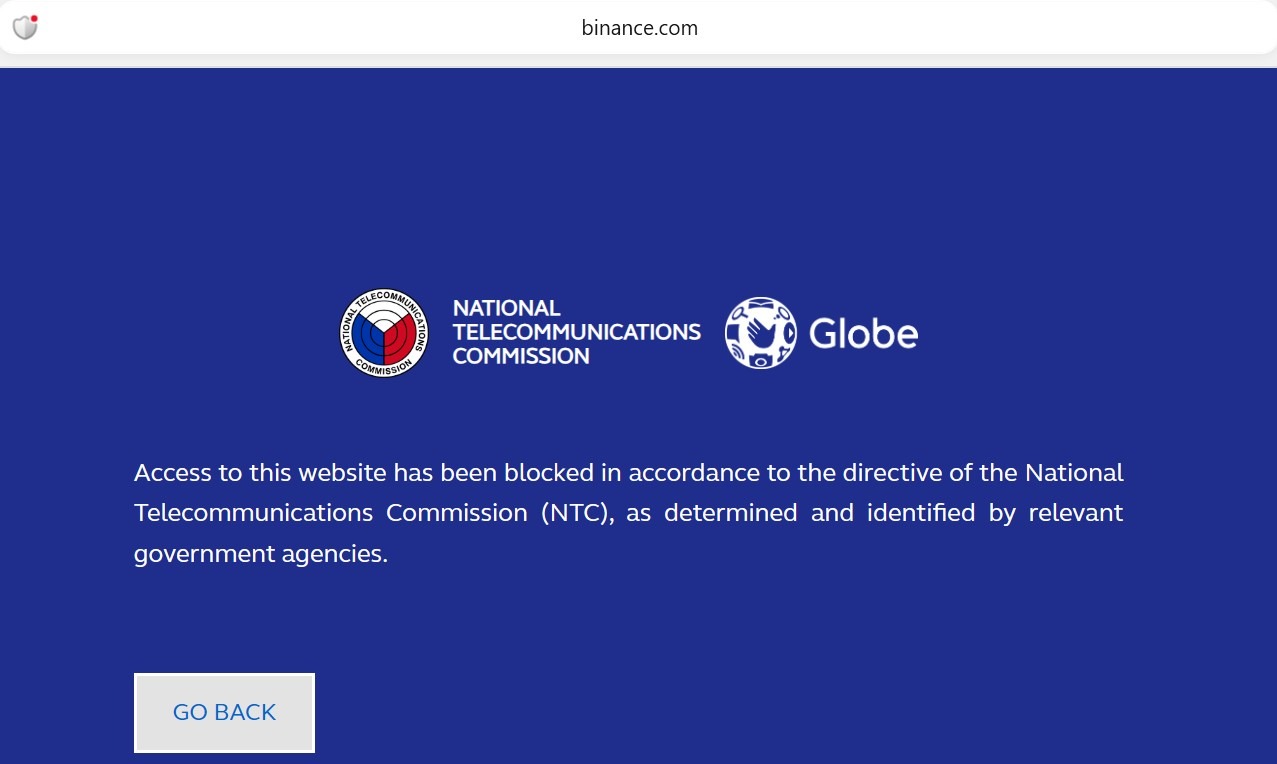
At the time of writing, Binance remains blocked, following a directive from the National Telecommunications Commission (NTC), the country’s telecommunications regulator.
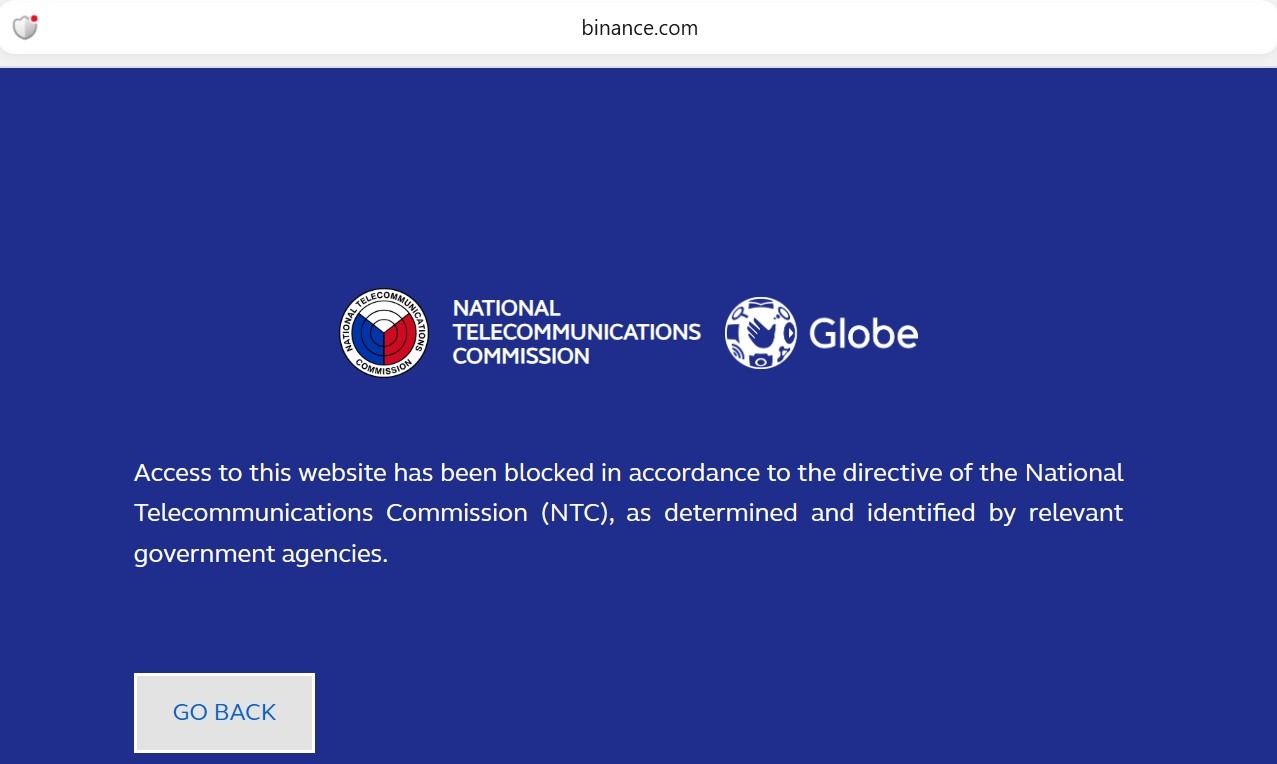
Binance remains blocked in the Philippines. Source: Cointelegraph
Binance was blocked in the Philippines over licensing concerns
The Philippine SEC first warned the public against Binance in November 2023, saying that the platform was not authorized to sell or offer securities in the country because it had not secured the necessary registration and license from the regulator.
In March 2024, the SEC said that it had asked the NTC to block access to the platform and its related webpages, citing the lack of a license to operate in the Philippines. Local internet service providers later started restricting access to Binance following the NTC order.
Related: Binance launches SpaceX-linked perpetual futures ahead of IPO
The crackdown on unlicensed operators later expanded to other major platforms. In August 2025, the SEC issued an advisory against 10 exchanges, including OKX, Bybit, KuCoin and Kraken, warning that their activities expose Filipino investors to risks.
On April 21, the regulator named crypto platforms dYdX, Aevo, gTrade, Pacifica, Orderly, Deriv, and Ostium in an investor alert, saying that the entities are not registered with the SEC but appear to be offering investments to the public.
Magazine: 50K investors fight Korean crypto tax, Singapore cancels Bsquared: Asia Express

TeraWulf is broadening its footprint beyond Bitcoin mining with the acquisition of a large Kentucky data center development site that could support more than 1 gigawatt of AI and high-performance computing (HPC) capacity. The company said the initial phase would bring online 500 megawatts by 2028, followed by another 500 megawatts by 2030, signaling a deliberate pivot toward AI hosting alongside its traditional mining operations.
The Kentucky project includes planned grid infrastructure and long-term power agreements, underscoring a broader push to secure reliable energy for AI workloads while continuing to mine Bitcoin. The development arrives as TeraWulf expands its HPC portfolio and positions itself within a growing ecosystem of crypto miners diversifying into AI and data-center capacity.
Key takeaways
- TeraWulf acquires a Kentucky data-center site with potential capacity exceeding 1 GW for AI and HPC, targeting 500 MW online by 2028 and another 500 MW by 2030.
- The project is backed by long-term power agreements and grid infrastructure plans, reflecting a strategic shift toward AI hosting alongside Bitcoin mining.
- HPC-related revenue jumped 117% in the most recent quarter, led by the Western New York Lake Mariner facility, according to Cointelegraph reporting.
- The AI strategy is underpinned by a $3 billion financing package arranged through Morgan Stanley, with Google helping backstop the debt financing.
- TeraWulf is among a cohort of Bitcoin miners expanding into AI/HPC, including Hut 8, HIVE Digital, MARA, and IREN; market reaction has been favorable, with the stock and related ETF showing gains.
A Kentucky pivot: from mining to AI data-center hosting
The Kentucky site represents a potentially transformative addition to TeraWulf’s portfolio, designed to scale AI and HPC hosting capacity in phases that align with grid readiness and power supply commitments. By tying the project to planned grid infrastructure and long-term power arrangements, the company aims to create a reliable backbone for AI workloads that require significant energy throughput and cooling capacity—conditions that can differ markedly from those of high-volume Bitcoin mining.
Executive commentary around the timing and sequencing of capacity additions suggests a deliberate strategy to balance the economics of AI infrastructure with the company’s existing mining operations. The capacity targets, if realized, would place TeraWulf among the more ambitious miners pivoting to data center and AI workloads, potentially unlocking new revenue streams beyond the cyclicality of cryptocurrency mining margins.
Financing backbone and strategic partnerships
At the heart of the expansion is a substantial financing framework. TeraWulf’s AI/HPC push is backed by a $3 billion financing package arranged through Morgan Stanley, announced last September to support data-center expansion. Google is reported to be helping backstop the debt financing, underscoring the involvement of major institutional and tech-partner support in the project.
The arrangement signals a broader industry pattern: several Bitcoin-mining operators are pursuing AI and HPC data-center opportunities to diversify revenue and leverage existing energy and colocation capabilities. The financing backdrop also indicates investor confidence in the viability of large-scale AI infrastructure within crypto mining companies, even as the sector contends with fluctuating mining margins.
Industry context: a shift in the mining narrative
TeraWulf’s move mirrors a larger trend among crypto miners expanding into AI and HPC hosting. Other players cited as pursuing similar strategies include Hut 8, HIVE Digital, MARA Holdings, and IREN. The strategy rests on the premise that AI workloads require substantial power, cooling, and data-center capacity—areas where mining firms with existing energy partnerships and scalable facilities can compete for collocation and managed services contracts.
Financial performance surrounding this pivot has been mixed. In the most recent quarter, HPC-related revenue rose significantly, driven by Lake Mariner in Western New York, yet the company also reported a wider quarterly loss as it continued investing heavily in AI infrastructure. The contrast between rising HPC revenue and ongoing investment activity highlights the ongoing trade-off between top-line growth in new verticals and the near-term profitability of core mining operations. The company’s broader earnings trajectory has been a point of focus for investors evaluating the AI/HPC expansion’s long-term viability.
Market implications of the Kentucky project were evident in early trading. TeraWulf shares rose as much as 13.6% to near $26, marking a strong intraday move and signaling investor optimism about the company’s ability to execute on its AI/HPC ambitions. The sector-wide Bitcoin mining tracker ETF, CoinShares Bitcoin Mining ETF (WGMI), also ticked higher in tandem, up roughly 4.5% at the time. Within the WGMI fund, TeraWulf represents a sizable weight, contributing about 10.86% of the portfolio, underscoring the market’s differentiated view of TeraWulf’s diversification prospects.
Through the year, the stock has outpaced much of the broader crypto mining sector and the tech-heavy market benchmarks, reflecting investor enthusiasm for AI-enabled data-center capacity and the potential for diversified revenue streams beyond volatile mining rewards. The Kentucky expansion adds a new dimension to that narrative, positioning TeraWulf as a case study in how traditional miners might adapt to the AI era.
Related coverage from Cointelegraph notes the broader context of TeraWulf’s AI expansion and its quarterly earnings trajectory, including the Q4 2025 results that highlighted a mining-revenue decline amid ongoing investments in AI infrastructure.
Source reference: Rittenhouse Research and public statements cited by Cointelegraph in coverage of TeraWulf’s AI strategy, with details on capacity targets and financing structures.
What to watch next: if Kentucky’s 500 MW phases come online as scheduled, the project will begin to contribute meaningfully to TeraWulf’s revenue mix while testing the economics of AI/HPC hosting alongside Bitcoin mining. Key uncertainties include grid-connection timelines, actual drawdown of power agreements, and the pace at which AI workloads translate into steady, sizable revenue against continuing capex and operating costs.
Ethereum treasury companies are under pressure to generate revenue from staking and other yield strategies as spot crypto exchange-traded funds (ETFs) weaken the appeal of public companies that simply hold Ether (ETH), according to a new Everstake report.
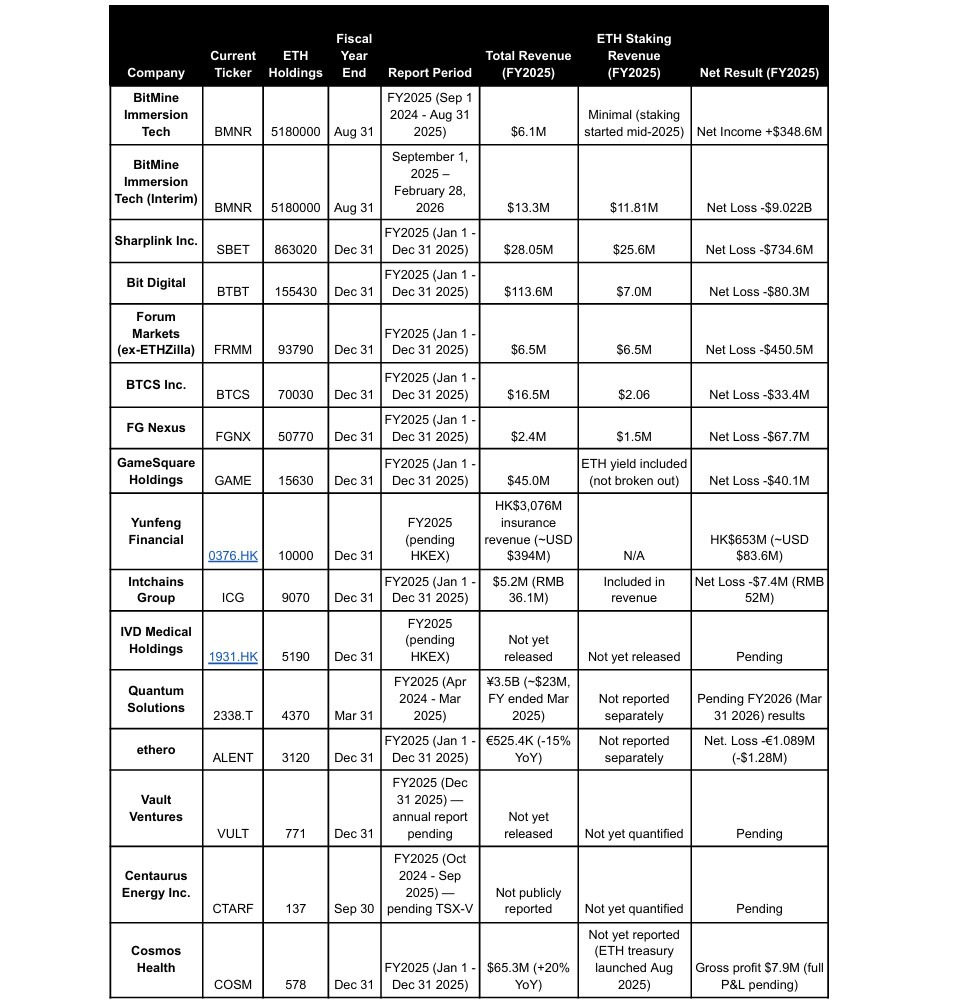
Staking accounted for an average of 60% of reported revenue among six ETH treasury firms that separately disclosed staking-related income, the staking infrastructure provider said.
Everstake reviewed 15 publicly listed companies with ETH treasury strategies and found that the firms in its sample that reported 2025 losses posted about $1.41 billion in combined net losses. Separately, BitMine Immersion Technologies reported a $9.02 billion net loss for the six months ended Feb. 28, though the figure was driven largely by unrealized losses on digital assets rather than operating losses, according to the report.
The 60% staking-revenue figure was based on six companies that separately disclosed staking-related income: BitMine Immersion Technologies, SharpLink, Bit Digital, Forum Markets, BTCS and FG Nexus. Companies that did not break out stakeholder-related rewards or had pending annual results were excluded from the calculation.
The report frames the shift as part of a broader repricing of digital asset treasury companies (DATs), which previously offered one of the few regulated ways for public-market investors to gain crypto exposure. Everstake argued that spot ETFs have weakened DATs’ passive-exposure premium, pushing treasury firms to justify valuations through staking, DeFi lending, MEV capture and other yield strategies.
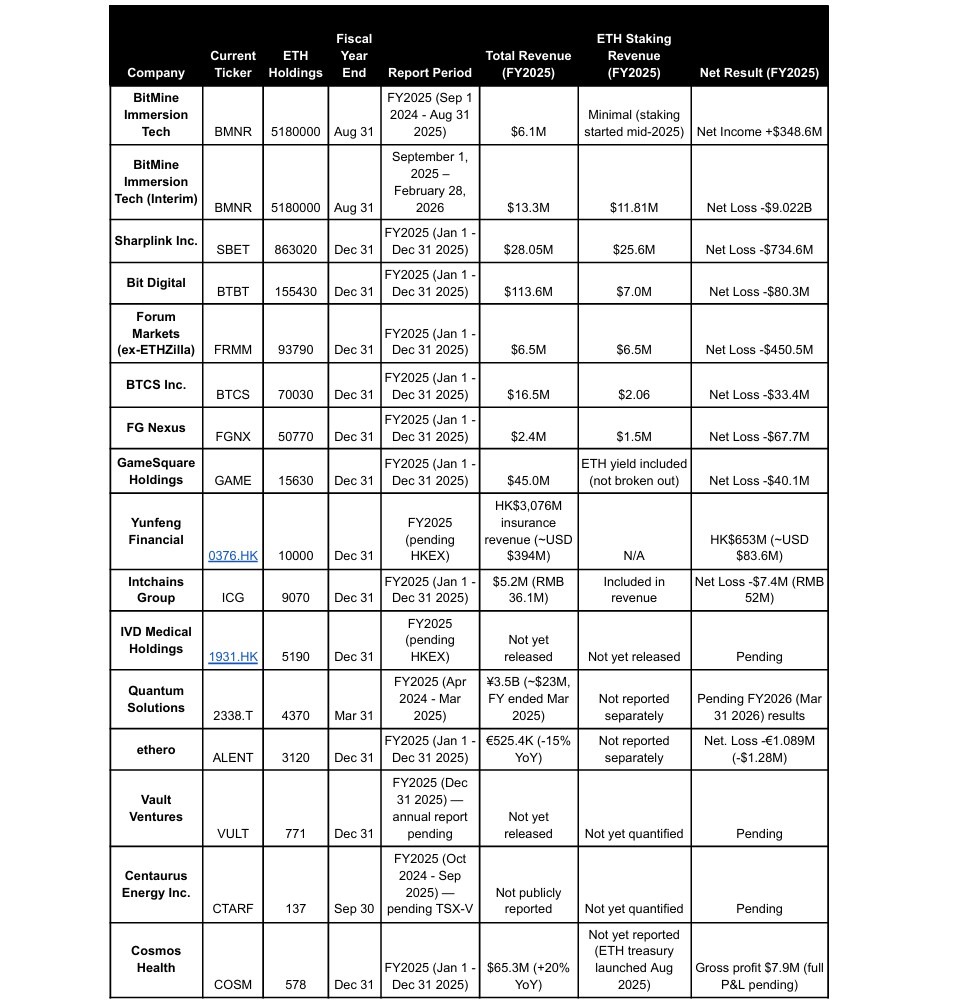
ETH treasury company data compiled by Everstake. Source: Everstake
“DATs that rely on passive exposure are being structurally repriced,” Everstake co-founder Bohdan Opryshko said in the report. He added that deployment is “no longer limited to standard protocol staking” and now includes liquid staking, DeFi lending and validator-level strategies.
Opryshko told Cointelegraph the study does not argue that staking revenue alone can support every ETH treasury model or offset all risks. ETH price volatility, dilution, net asset value discounts, financing costs and operating expenses can still outweigh staking yield, particularly for companies with weak capital structures or inefficient treasury management, he said.
He said the report’s point is narrower: “Passive ETH accumulation is becoming harder to justify as a standalone public-market strategy, particularly after spot crypto ETFs gave investors cleaner access to passive exposure.”
In that environment, staking and other forms of active asset deployment may become “necessary, though not sufficient,” for ETH treasury companies to sustain their models, he added.
ETFs matter, but may not be the only pressure point
Ignacio Aguirre, the chief marketing officer at crypto exchange Bitget, said spot ETFs have made it harder for ETH treasury companies to justify a premium based on ETH exposure alone. However, he cautioned against attributing the repricing entirely to ETFs.
“I would not over-attribute it to spot ETFs alone,” Aguirre told Cointelegraph. He said ETH treasury companies are still equity vehicles, meaning investors also weigh ETH price performance, balance sheet quality, dilution risk, treasury strategy, execution and broader market sentiment.
Related: Bitmine’s Tom Lee hints at stock tailwinds after firm considered for Russell 3000
Aguirre said staking can improve the ETH treasury model by creating a recurring revenue stream, though its impact depends on whether the yield is large enough to offset operating costs, dilution and volatility.
He added that staking-enabled ETH ETFs could become a future pressure point for treasury companies, but described them as “more complementary than existential threats.”
Magazine: ETH bears growling, Tom Lee’s buying, XRP to ‘explode’: Market Moves
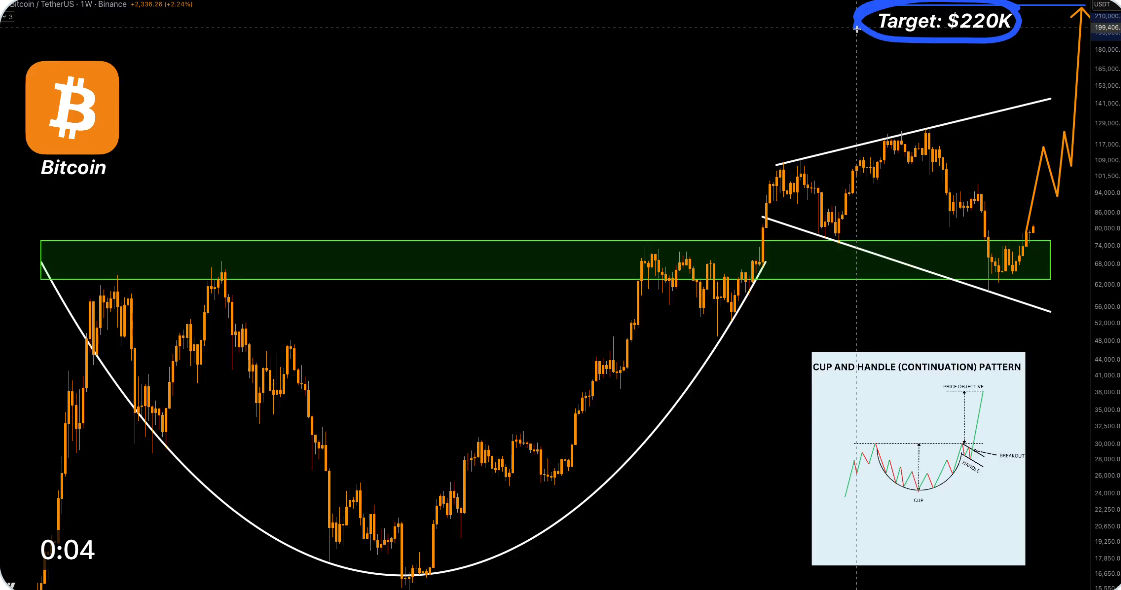
Bitcoin (BTC) is up roughly 30% from its Feb. 6 low below $60,000 as a multi-year bullish chart pattern suggests BTC price could rise to as high as $220,000 in the coming months.
Key takeaways:
- Bitcoin’s cup-and-handle pattern puts BTC’s minimum target at $220,000, but $74,000 must hold.
- Bitcoin spot volume has collapsed 81% since October 2025, a precursor to the end of every bear market.
Bitcoin’s cup-and-handle pattern targets $220,000 and above
Bitcoin price has formed a cup-and-handle (C&H) pattern on the weekly chart, suggesting that a massive upward move is still in the cards for BTC.
A cup-and-handle is a bullish continuation pattern where a rounded price recovery forms the “cup,” followed by a short consolidation inside a “handle” before a breakout.
It is resolved after a breakout above the handle’s resistance line, typically signalling a strong upward move, with the price target equal to the cup’s depth added to the breakout level.
“Bitcoin has just completed a multi-year cup-and-handle pattern,” technical analyst Crypto Tice said in a Monday post on X.
The analyst explained that C&H breakouts don’t result in small price movements, adding that “they move hundreds of percent.”
Bitcoin price has retested the cup’s $65,000-$74,000 neckline, which must be held to complete the breakout.
“The retest just finished. The launch is next,” the analyst said, adding:
“$220K is the minimum target.”
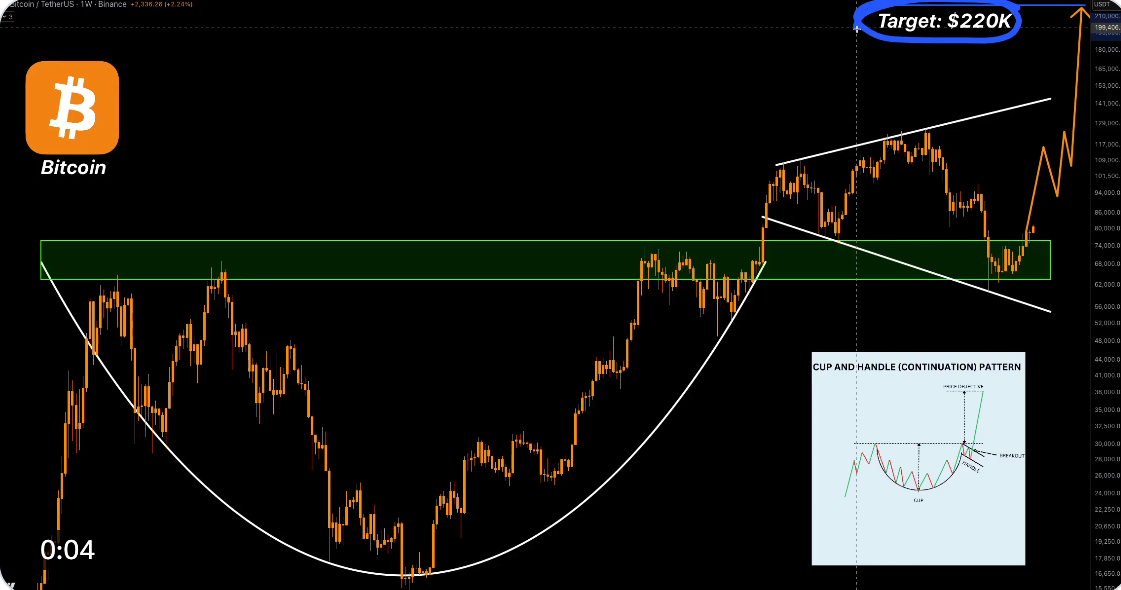
BTC/USD weekly chart. Source: X/Crypto Tice
Data from TradingView shows the measured target of the C&H pattern is $295,000, roughly 280% above the current price.
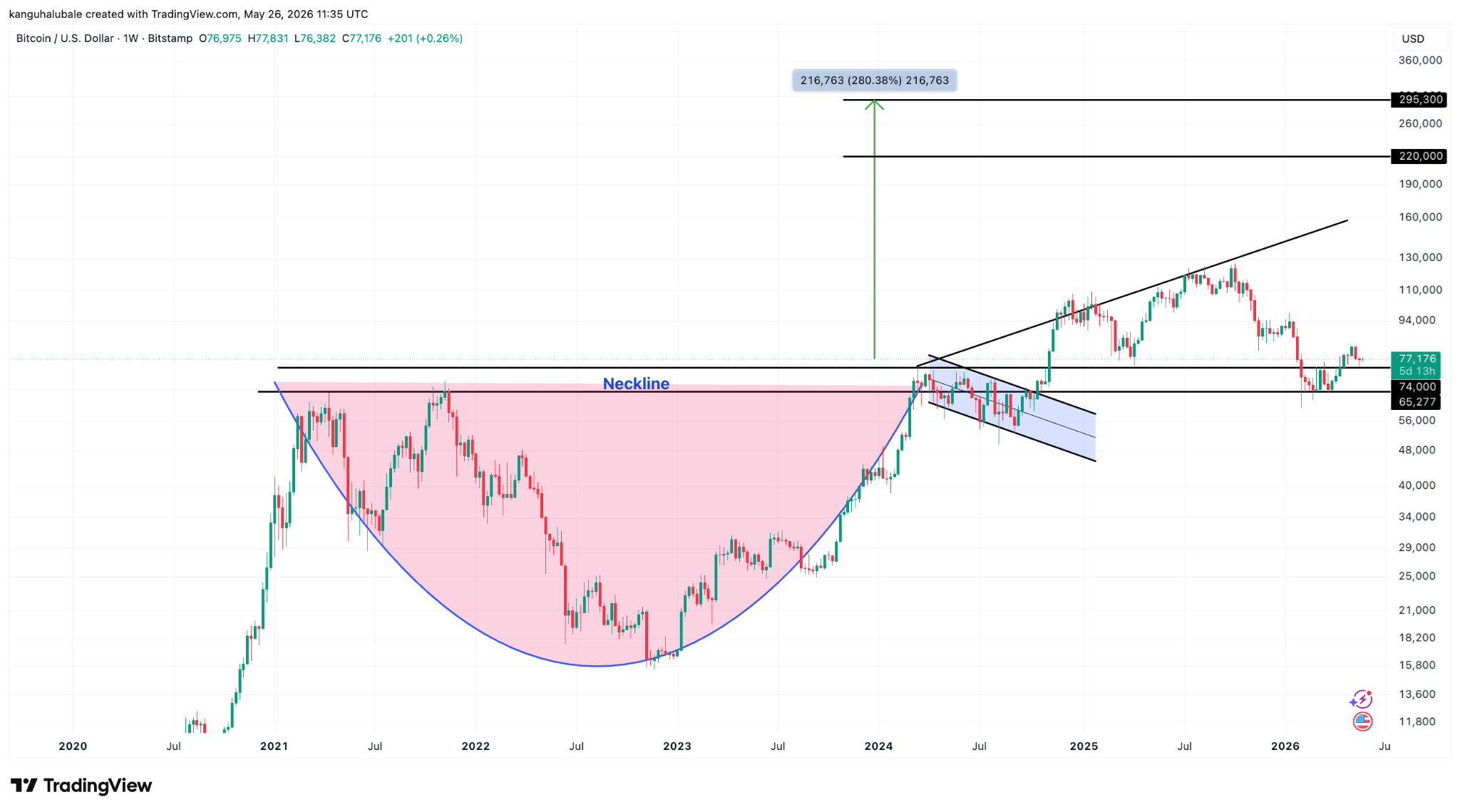
BTC/USD weekly chart. Source: Cointelegraph/TradingView
Earlier, Cointelegraph reported that Bitcoin’s Decay Channel—a logarithmic price model—suggested that BTC could rally as high as $255,000 by year-end, with its 2027 target extending to $308,000.
Trader VeLLa Crypto says the BTC/USD pair “must hold” the $74,000 support area first, to boost its bullish outlook.
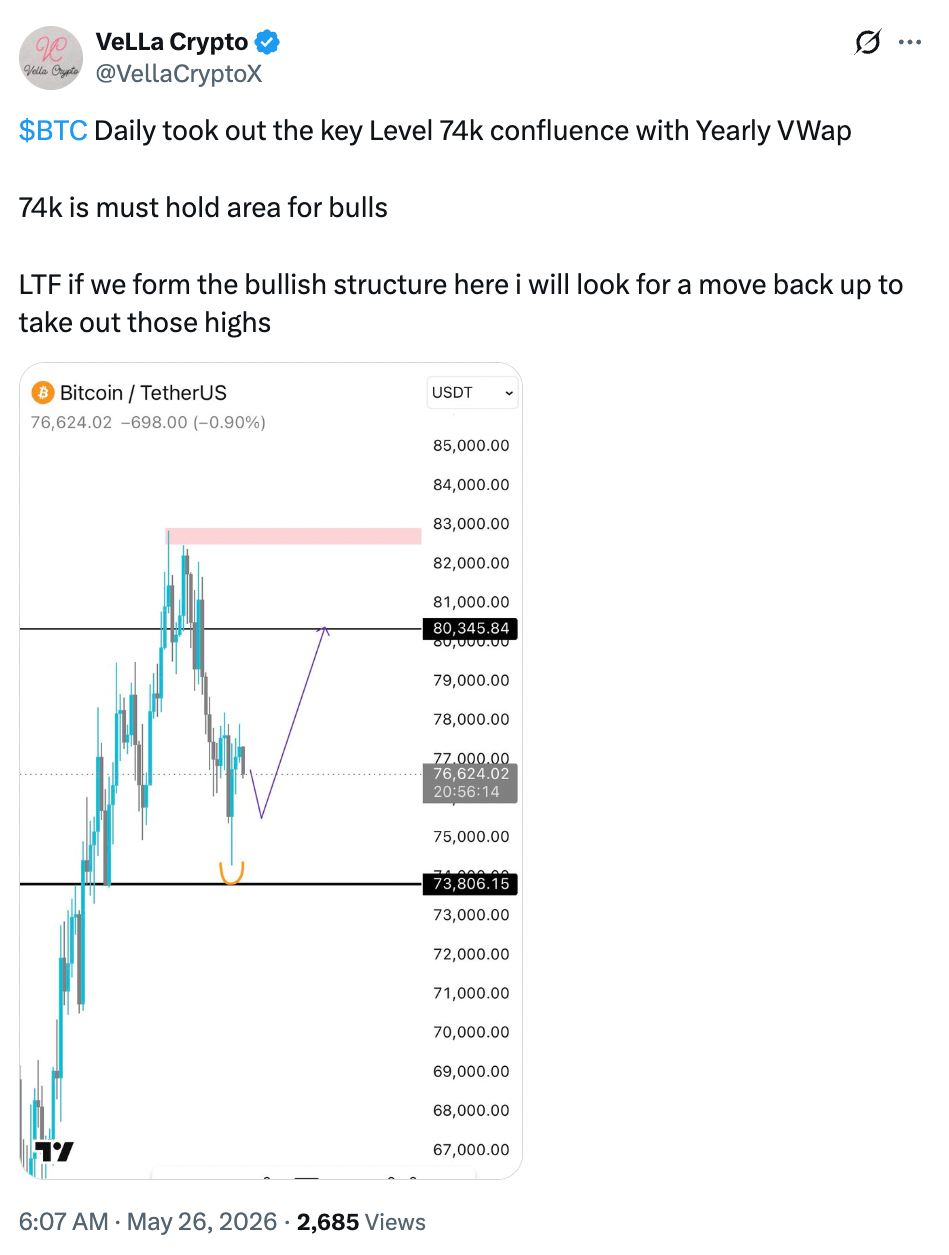
BTC/USD daily chart. Source: X/VeLLa Crypto
As Cointelegraph reported, a break below $74,000 would suggest the bears are back in control, invalidating the medium-term bullish outlook for Bitcoin.
Bitcoin spot volume collapses 81% on Binance
Bitcoin’s spot volume has now fallen to levels typically seen during bear markets, data from CryptoQuant shows.
The chart below shows that the trading volume on Binance has dropped to $36.4 billion, 81% below the $198.6 billion recorded in October 2025. Gate.io has also seen a massive 79.6% drop in volumes, while Bybit is down 66%.
“This development primarily reflects a macro environment that has been unfavorable for risk assets, CryptoQuant analyst Darkfost said in a Tuesday QuickTake post.
The decline in trading activity can also be “interpreted constructively” as it suggests that the” selling pressure behind the current retracement is gradually losing momentum.”
Darkfost added:
“It was precisely after spot volumes collapsed that the 2023 bear market came to an end, followed by the return of volatility and the recovery of the bullish trend.”
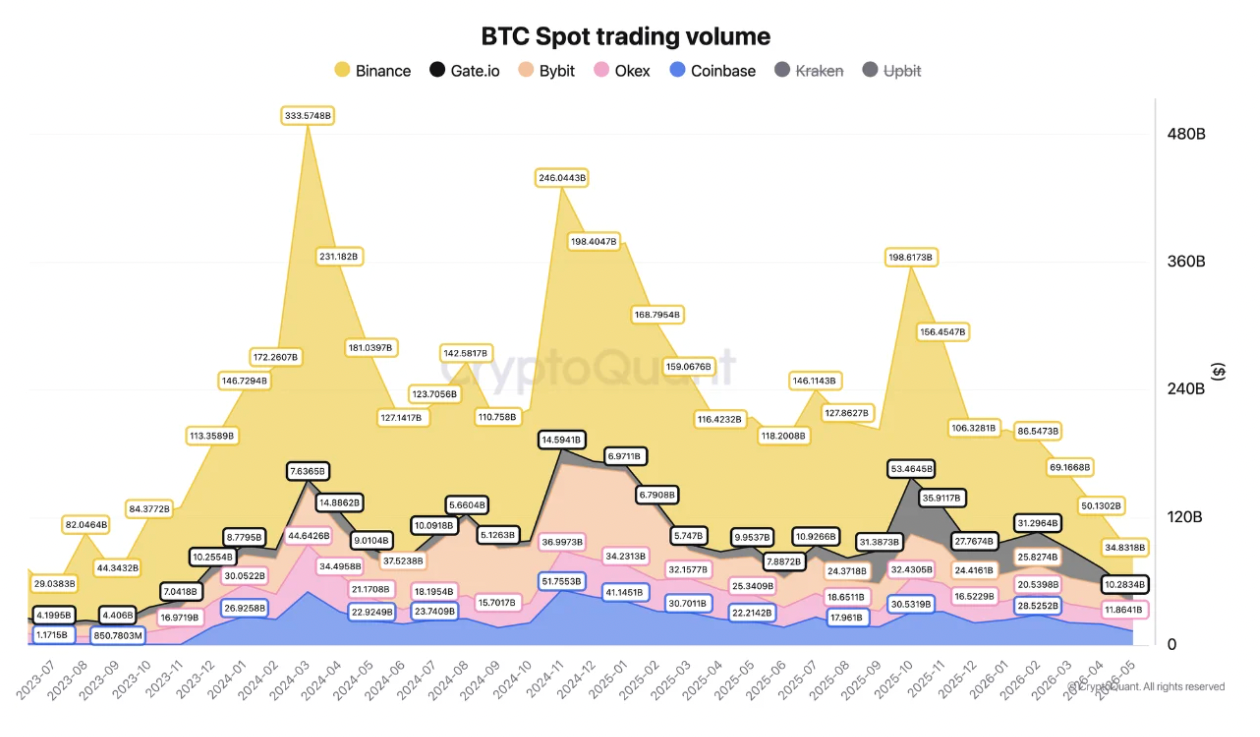
Bitcoin spot trading volume. Source: CryptoQuant
As Cointelegraph also reported, heavy outflows from spot Bitcoin ETFs have been correlated with great buying opportunities for BTC.
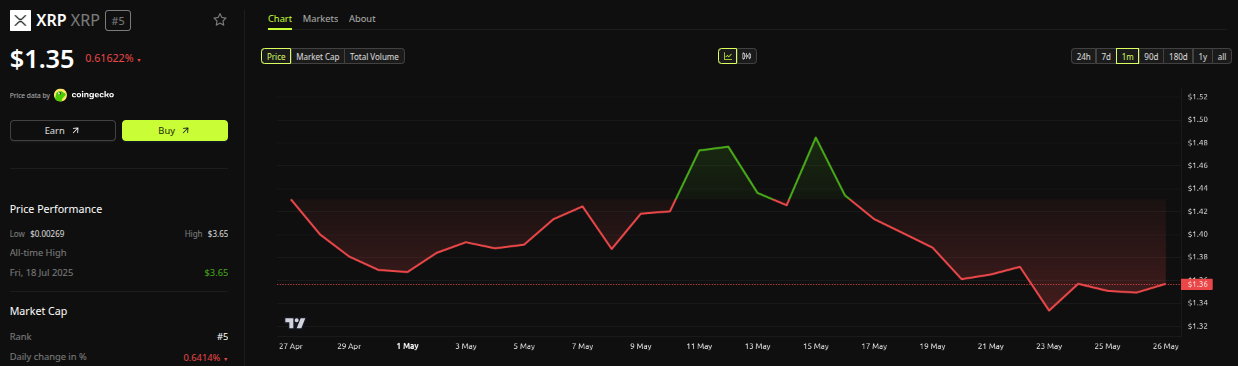
XRP Ledger activates the fixCleanup3_1_3 amendment this Wednesday, May 27, 2026. The technical upgrade, included in version 3.1.3 of the rippled software, improves the network’s infrastructure.
Despite its significance, the XRP price has barely reacted in the last few hours.
What the fixCleanup3_1_3 Amendment Changes
The upgrade focuses on essential technical fixes to ensure long-term stability. It does not introduce flashy new features, but cleans up accumulated junk data and corrects critical issues across several modules of the protocol that have grown over time.
The changes target four main areas. NFTs receive a fix in the handling of expired offers. Permissioned Domains gain new security invariants. Vaults improve withdrawals and Single Asset Vaults. The Lending Protocol corrects trust line limits and other key aspects.
Follow us on X to get the latest news as it happens
Nodes and validators that fail to update before the deadline will become amendment-blocked. This means full disconnection from the network, with no ability to participate in consensus, process transactions or communicate with the rest of the ledger.
Concern remains around adoption. Only 40-46% of nodes had completed the update by mid-May. The XRP Ledger Foundation and developers have repeatedly urged operators to migrate quickly to avoid network-wide availability issues.
Does XRP Price Care About This Upgrade?
XRP Ledger remains highly active on-chain. The last 24 hours processed close to 1,76 million transactions, nearly one million payments, and over 18,000 active accounts, according to CoinGecko data. Block close times stay below four seconds across the network.
The DEX shows strong liquidity. Tens of thousands of AMM pools are active, with the XRP/RLUSD pair among the main trading pairs. The ecosystem continues expanding into DeFi, real-world assets, and NFTs at a steady pace.
XRP trades near $1.35 at the time of writing. Its market cap stays above $83 billion, with a slight 0.4% decline in the last 24 hours. Daily trading volume holds firm above $1,2 billion across exchanges.

Analysts attribute the muted reaction to the nature of the upgrade itself. The amendment focuses on maintenance rather than disruptive innovation. Investors appear to be waiting for stronger catalysts, such as deeper institutional adoption or major regulatory advances.
For ordinary holders, no action is required. Wallets do not need to be connected, transactions do not need to be signed, and tokens do not require migration. The network continues to operate normally during the activation process.
The upgrade reinforces a broader narrative. The real value of the XRP Ledger lies in long-term utility rather than short-term speculation. Silent technical solidity often becomes the strongest predictor of resilience in blockchain networks.
Subscribe to our YouTube channel to watch leaders and journalists provide expert insights
The post XRP Ledger Update Sparks Hype, but Price Remains Unchanged appeared first on BeInCrypto.
Disclosure: This article does not represent investment advice. The content and materials featured on this page are for educational purposes only.
XRP and DOGE price action contrasts with rising demand for reward-based presales like BlockDAG TURBO in 2026.
Summary
- BlockDAG TURBO launches at $0.0005 with weekly on-chain holder rewards funded by Foundation allocations.
- XRP trades near $1.36 as investors shift focus toward crypto presales with recurring reward mechanics.
- BlockDAG TURBO combines staged pricing, transparent reward distribution, and long-term holder incentives.
XRP is trading near $1.36 with futures open interest hitting a two-month high, while Dogecoin sits around $0.10 with no recurring holder rewards mechanic in either ecosystem. As of May 2026, buyers searching for the best crypto presale to buy now are looking past pure speculation toward tokens with structural reward loops.
BlockDAG TURBO opens Stage 1 at $0.0005, with a $0.04 launch price and a weekly prize pool funded by 10% of the Foundation’s allocation, distributed on-chain to randomly selected holders. With XRP price analysis focused on a technical breakdown and Dogecoin price prediction stuck on macro hopes, recurring rewards are becoming the new buyer filter.
XRP price analysis: Triangle breakdown tests $1.31 support
The latest XRP price analysis shows XRP at $1.36 in May 2026, after breaking below a multi-month symmetrical triangle pattern. The token is testing the critical $1.31 to $1.33 support zone, which aligns with a recent swing low and a Fibonacci retracement level. Futures exposure on Binance neared $500 million on May 23, signaling elevated leverage and rising volatility risk.
Spot XRP ETFs attracted $12.57 million in the most recent week, marking 12 consecutive days of positive institutional inflows even as the price moved lower. Analysts are watching whether XRP holds $1.31 or breaks down toward $1.17, with the broader CLARITY Act legislation cited as the biggest pending catalyst. What XRP does not offer is a recurring on-chain reward mechanic for simply holding the token.
Dogecoin price prediction: Range-bound Around $0.10
Current Dogecoin price prediction models place DOGE near $0.10, down approximately 0.14% in the recent 24-hour window. Dogecoin remains a community and sentiment-driven asset without a published utility roadmap or holder reward distribution mechanic. The token continues to inflate through ongoing block emissions, and there is no Foundation-funded reward program tied to holding duration.
Speculative price targets remain tied to broader risk appetite, US-China trade headlines, and Bitcoin’s directional cues. For holders, the return profile depends entirely on price appreciation rather than any structural reward loop. This contrasts sharply with newer tokens building recurring distribution mechanics into the base architecture.
BlockDAG TURBO: A recurring reward loop built into the token
BlockDAG TURBO is structured around a different holder thesis. Every week, 10% of the Foundation’s weekly allocation funds a prize pool that is distributed to randomly selected eligible holders. The selection is snapshot-based, the distribution is on-chain, and the rules (eligibility criteria, snapshot timing, minimum holding requirements, distribution method) are published through official channels before each cycle begins.
This is not a one-time airdrop. It is not a staking-locked yield product. It is a recurring distribution to holders who simply hold BlockDAG TURBO. The transparency layer is built into every cycle: each weekly report publishes the reporting period, total allocation, the 90% burn amount, the 10% prize pool amount, burn transaction hash, prize pool transaction hashes, number of winners, updated Foundation balance, and updated supply position.
Stage 1 buyers enter at $0.0005, the lowest published cost basis in the 10-stage ladder. The launch price is set at $0.04, an 80x structural gap from Stage 1 entry. Because buyer balances are never reduced or clawed back, every Stage 1 holder retains 100% of the purchased allocation on the published unlock schedule (25% at TGE, 10% Month 1, 25% Month 2, 40% Month 3). Holders are eligible for the weekly prize pool throughout the unlock period, not just after full release.
For buyers researching the best crypto presale to buy now, the combination of front-loaded Stage 1 pricing, an on-chain reward loop, and verifiable distribution mechanics sets BlockDAG TURBO apart from incumbents whose value is tied purely to price action.
To conclude
The latest XRP price analysis highlights a technical breakdown testing $1.31 support with the CLARITY Act as the only near-term catalyst, while Dogecoin price prediction models keep DOGE range-bound around $0.10 with no structural reward mechanic. BlockDAG TURBO sits in a different category: Stage 1 live at $0.0005, launch set at $0.04, and a weekly 10% prize pool distributed on-chain to randomly selected holders.
For buyers evaluating the best crypto presale to buy now, recurring rewards are becoming the structural feature separating new launches from legacy speculation plays.
For more information, visit the official website, presale, Telegram, and Discord.
Disclosure: This content is provided by a third party. Neither crypto.news nor the author of this article endorses any product mentioned on this page. Users should conduct their own research before taking any action related to the company.


The United Kingdom has sanctioned Huobi Global S.A., now linked to HTX, in a Russia-focused action targeting crypto channels accused of helping sanctioned networks move funds.
Summary
- The UK has sanctioned Huobi Global S.A., linked to HTX, over alleged support for Russia-connected financial networks.
- The action freezes assets tied to the A7 network and blocks British firms from processing payments involving targeted entities.
- The move adds fresh pressure on HTX, which already faces UK legal action over alleged unlawful crypto promotions.
According to the UK government, the latest sanctions package freezes assets connected to the Kremlin-backed A7 network and blocks British firms from maintaining correspondent banking relationships or processing payments involving the targeted entities.
UK names Huobi global in Russia sanctions notice
The sanctions notice lists Huobi Global S.A. as a Panama-registered entity and names HTX and HTX Exchange as related names. The UK said the exchange is subject to an asset freeze, trust services restrictions, director disqualification sanctions, internet services sanctions, and payment-processing bans.
The government said there are “reasonable grounds to suspect” that Huobi Global S.A. has supported the Government of Russia. The notice said the company allegedly provided financial services, funds, economic resources, goods, or technology to A7 Limited Liability Company.
A7 is described by the UK as a company operating in a sector of strategic importance to Russia. Garantex Europe OU was also named in the same action, placing crypto exchanges and payment networks under fresh Russia-related restrictions.
Regulation 17A extends to crypto exchanges
Elliptic said the action is the first time the UK has applied Regulation 17A to cryptoasset exchanges. The rule restricts correspondent banking relationships and payment processing involving designated persons.
Under the measure, UK financial firms cannot process payments to, from, or through listed entities where the prohibition applies. Elliptic said the rule can also capture indirect exposure when a designated exchange appears in the payment chain.
The sanctions package also covers Aifory Pro, Arvix LLC, Rapira Group LLC, Nueva Cryptologia SAS de CV, Bitpapa, OJSC Virtual Asset Issuer, and Alistera Limited. UK authorities linked several of these entities to Russian financial services, Garantex-related networks, or the A7 network.
HTX faces added UK regulatory Pressure
HTX was already under UK scrutiny before the sanctions action. In February, the Financial Conduct Authority said it had started legal proceedings against HTX over alleged unlawful crypto promotions to UK consumers.
The FCA said the promotions appeared on HTX’s website and social media platforms, including TikTok, X, Facebook, Instagram, and YouTube. HTX did not immediately respond to a request for comment on the sanctions report.
Justin Sun, a well-known figure in the crypto industry, is listed as a global advisory board member at HTX. His role has kept market attention on the exchange during earlier regulatory and on-chain developments.
A7 network and related crypto flows draw scrutiny
The UK action places the A7 network at the center of the sanctions package. Authorities also named OJSC State Brokerage Company, Diamond Estate LLC, Trace Road LLC, Liran Cohen, Igor Gorin, and Irina Akopyan.
TRM Labs-linked reporting has said Russia-linked illicit wallet inflows reached a five-year high in 2025. The reporting named A7A5, A7, and Garantex-related flows among the main contributors.
As previously reported by crypto.news, Justin Sun resumed large Spark withdrawals and moved 41.99 million Spark tokens worth about $1.23 million to HTX. The report cited on-chain data flagged by pseudonymous analyst ai_9684xtpa and relayed by ChainCatcher.
The transfer came after roughly two weeks of limited activity. The report said the movement raised attention because the tokens went to a centralized exchange rather than staying on-chain.
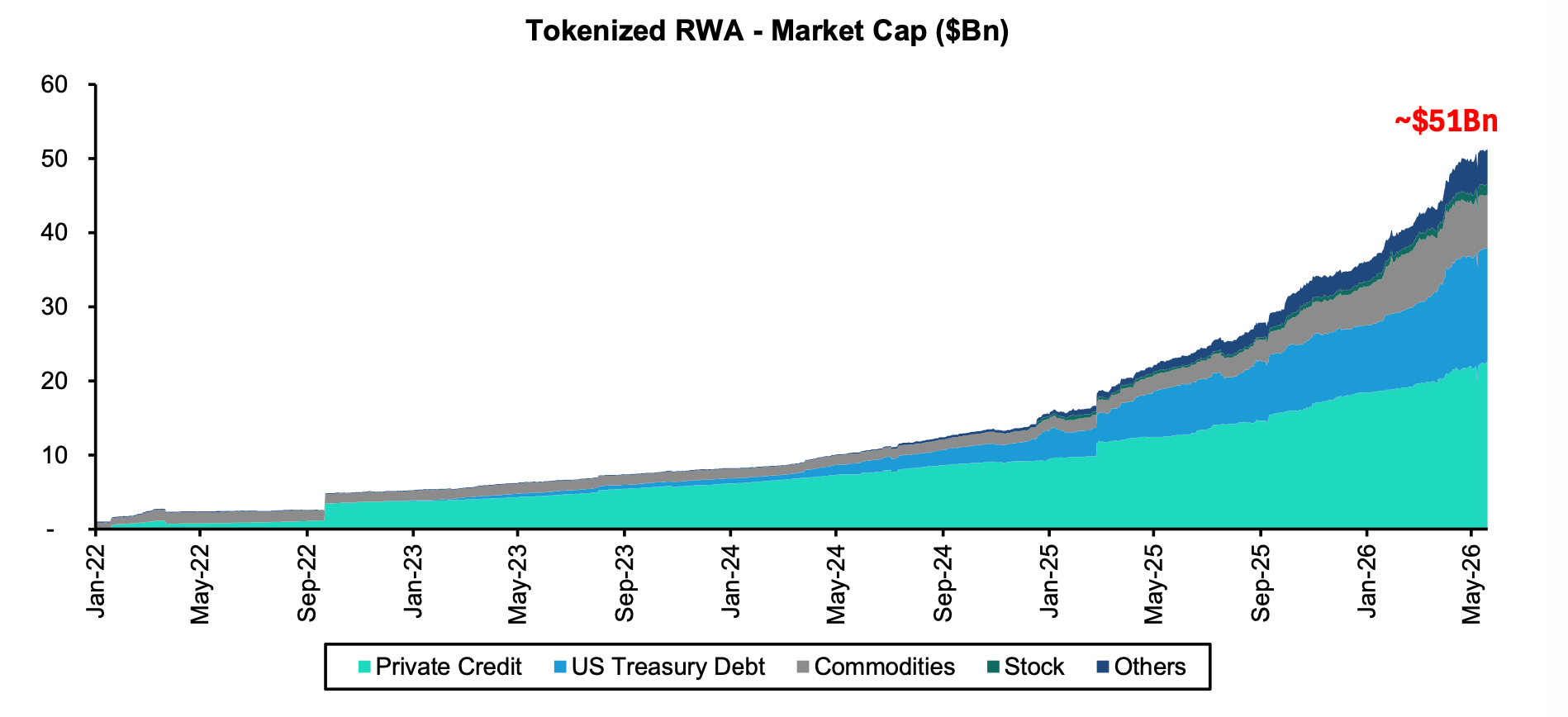
The tokenized real-world asset (RWA) market has grown to $51 billion, up 42% this year, as private credit becomes the largest segment of the market, according to a Bernstein Research report seen by Cointelegraph.
Private credit accounted for roughly 44% of total RWA value, Bernstein said, reflecting growing use of blockchain-based infrastructure for lending and fund structures.
The $51 billion valuation sits well above other industry estimates, such as RWA.xyz’s $34 billion figure, highlighting how different analytics providers count tokenized assets.
Institutional players are increasingly entering the market through tokenized lending and fund structures, including BlackRock’s tokenized money market fund BUIDL, which has surpassed $2.5 billion in assets, Bernstein said.
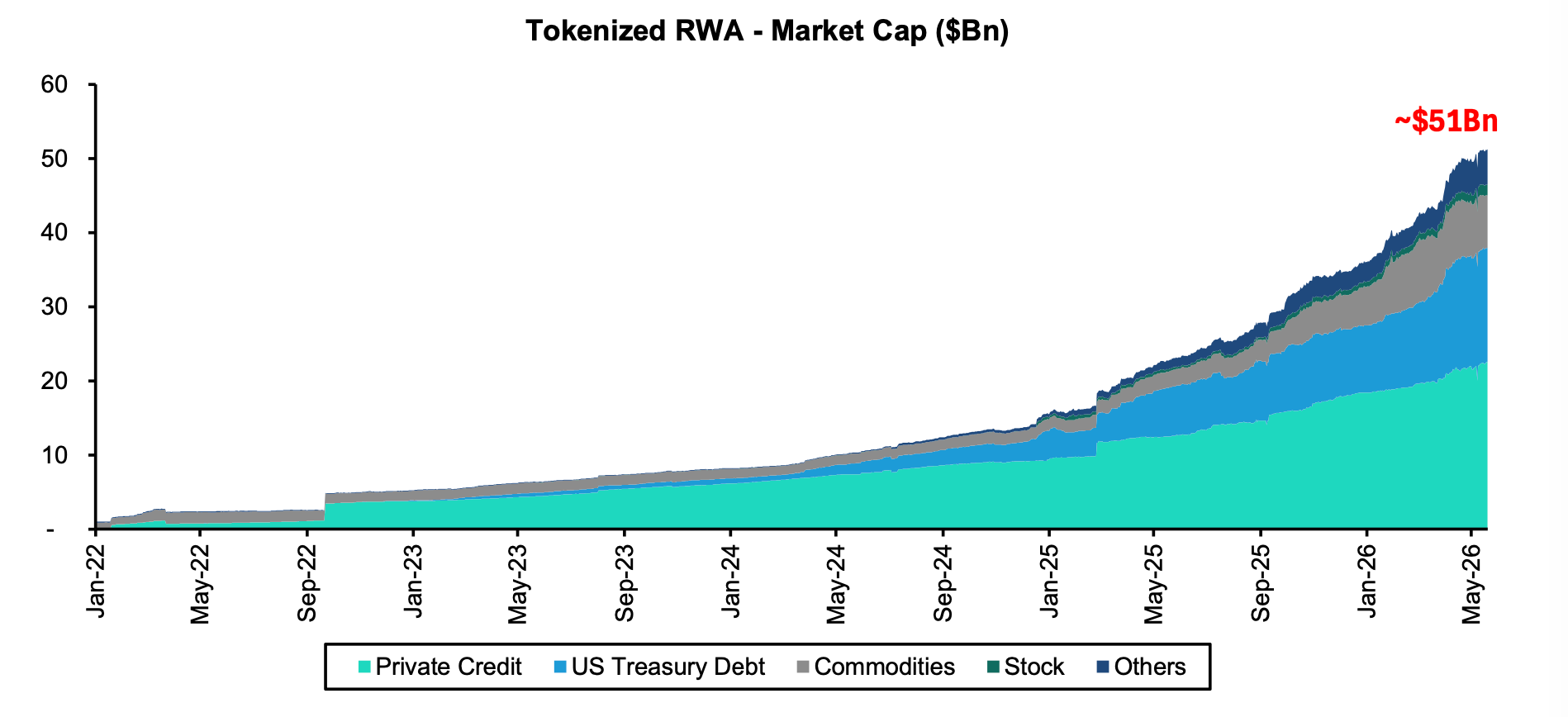
Tokenized RWA market cap. Source: Bernstein Research
Figure tops tokenized RWA platforms with $18 billion
Tokenized private credit has emerged as a major RWA segment, providing a way to record loans on blockchain networks instead of traditional banking systems. These loans are issued outside banks, with investors funding them directly in exchange for interest payments.
According to Bernstein, much of the growth in onchain private credit assets has been driven by Figure Technology Solutions (FIGR), a financial technology company that uses blockchain infrastructure for loan origination and settlement.
Figure ranked first among tokenized RWA platforms with $18 billion in assets, largely tied to private credit, according to Bernstein. Securitize and Paxos followed with about $4.2 billion each across different underlying asset classes, including treasuries, commodities and stocks.
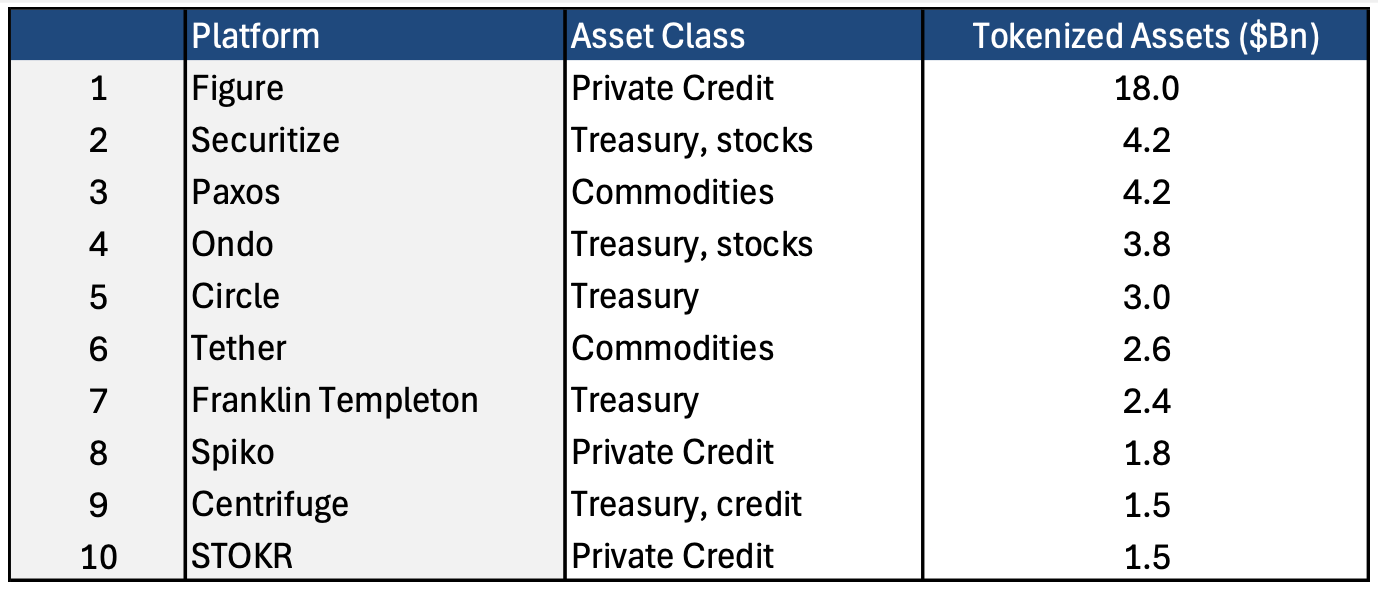
Figure leads tokenized RWA platforms by assets. Source: Bernstein Research
The report said Figure has tokenized $5 billion in consumer loans so far in 2026, while monthly loan volume reached a record $1.3 billion in April 2026. It also noted that Connect, Figure’s blockchain marketplace for credit, contributed 56% of total loan volumes in the first quarter of 2026.
Blockchain becomes infrastructure layer for global capital markets
“Private credit is becoming one of the fastest-growing sectors in real-world assets because it solves two major problems at once: investors want yield, and businesses need capital,” Stobox co-founder Ross Shemeliak told Cointelegraph.
Shemeliak said tokenized US Treasurys were the first major institutional success in the RWA market, but private credit offers higher potential returns and more direct exposure to the real economy.
Related: Tokenized RWA market grows 420% since 2025 on regulatory clarity, access
He also noted that tracking of the real-world asset market has changed significantly since last year, as many analytics platforms previously undercounted private credit because these structures often operate through special purpose vehicles, custodians or hybrid onchain and offchain models.
“The bigger story is not whether private credit is number one today,” Shemeliak said, adding: “The real story is that blockchain is quietly becoming the infrastructure layer for global capital markets.”
Tokenized treasuries and derivatives drive broader RWA adoption
Among other RWA segments, US Treasury debt remains the second-largest RWA category after private credit, accounting for roughly 30% of the market, while commodities make up another 14%, according to Bernstein.
The report also pointed to growing activity in onchain RWA derivatives through the decentralized derivatives exchange Hyperliquid, which it described as a “leading venue for onchain RWA derivatives.”
Related: Wall Street’s tokenization boom has a liquidity problem: Axis CEO
Bernstein said RWA-related open interest on Hyperliquid reached $2.6 billion in May, while trading volumes totaled $65 billion in April 2026.
Cointelegraph reached out to Bernstein for comment, but had not received a response by publication.
Magazine: ETH bears growling, Tom Lee’s buying, XRP to ‘explode’: Market Moves

Why the Cavaliers Are Sticking With Their Core Despite NBA Playoff Failure

Windows’ Classic 3D Space Cadet Pinball Is Getting a Physical Re-Creation

HIGH ALERT! Global Financial Crisis Sentiment EXPLODING – Trump’s Midterm Nightmare


-

 Crypto World5 days ago
Blockchain.com files with SEC for U.S. IPO
-

 Fashion4 days ago
Holiday Weekend Open Thread – Corporette.com
-

 Business4 days ago
Dell Technologies DELL Stock Surges 15% on AI Server Momentum and Analyst Upgrades in 2026
-

 Crypto World5 days ago
Bitcoin Accumulation Weakens as BTC Realized Losses Hit $600M
-

 Crypto World4 days ago
Robinhood crypto COO Tanya Denisova exits
-

 Crypto World4 days ago
Space X IPO Is ‘Bad News’ for Tech Stocks: But What About Bitcoin?
-

 Politics4 days ago
Makerfield: a tale of two social-media histories
-

 Business2 days ago
NYT Strands Answers May 24 2026 Revealed for Puzzle No. 812 Theme Summer Essentials
-

 Tech2 days ago
Microsoft’s quiet Claude Code retreat and the real cost of enterprise AI
-

 Crypto World5 days ago
MicroStrategy’s Saylor Says Miners No Longer Set Bitcoin Price, Another Force Has Taken Over
-

 Tech5 days ago
WhatsApp ads could make Irish debut after discussions with DPC
-

 Crypto World4 days ago
AI infrastructure race heats up as IREN pitches full-stack strategy, WhiteFiber lands $160M deal
-
 Tech5 days ago
A 0.12% parameter add-on gives AI agents the working memory RAG can’t
-

 Tech5 days ago
You Can Now Add ChatGPT To PowerPoint
-
 NewsBeat6 days ago
Charity run by Reform leader Malcolm Offord accused of ‘law breaking’ over Scottish registration
-
 Crypto World2 days ago
Nvidia (NVDA) CEO Calls on Super Micro to Strengthen Export Controls Amid Smuggling Probe
-

 Business5 days ago
Trump Invests $1M-$5M in Kura Sushi USA Chain With 27 California Locations
-

 Tech1 day ago
Westone Audio and Etymotic Acquired by Fidelity Collective in Major IEM Market Move
-

 Sports5 days ago
2026 CJ Cup Byron Nelson leaderboard: Brooks Koepka finds putting stroke in Round 1
-

 Crypto World6 days ago
Exa Labs raises $250 million in funding led by a16z
You must be logged in to post a comment Login