

Business
Why Runners Who Find the Right Shoe Never Look Back


Ask any experienced runner about the moment they found their shoe, and the answer is often the same: everything changed. Not dramatically, not overnight, but in the accumulating way that the right equipment quietly removes friction from something you do repeatedly.
Running is a sport of repetition. A recreational runner covering forty kilometres per week takes roughly forty thousand strides in that time. Each stride involves a loading event – the foot contacting the ground and the body absorbing that force before redirecting it forward. Multiply forty thousand by the number of weeks in a year, and the cumulative load the foot and lower limb manages becomes a number that makes the case for shoe selection more clearly than any product description ever could.
Against that backdrop, the difference between a shoe that suits a runner’s biomechanics, training volume, and surface type and one that does not is not a marginal performance variable. It is a meaningful determinant of whether the runner stays healthy, trains consistently, and continues to improve or cycles through a familiar pattern of overuse injuries, forced rest, and frustrated restarts.
Finding the right shoe does not guarantee a runner will never get injured or that every session will feel effortless. But it removes one of the most consistently cited variables in running-related injury and fatigue from the equation – and for most runners, that is enough to change the experience of the sport entirely.
The Problem With Getting It Wrong
Most runners who have been in the sport for any length of time have experienced the wrong shoe. It may have been a pair that felt fine in the store but produced a specific hot spot by kilometre five. A shoe that looked right on paper but created knee pain on downhill sections. A style that felt comfortable for short efforts but became increasingly punishing on longer runs as the midsole failed to support the foot through accumulated fatigue.
The wrong shoe does not always announce itself immediately. Some problems develop gradually, the foot adapting to compensate for inadequate support or cushioning in ways that build strain in the Achilles, the plantar fascia, the iliotibial band, or the knee. By the time the injury presents, its origin is two or three months in the past, and the connection to footwear is not always obvious.
This delayed feedback loop is one of the reasons shoe selection is persistently underestimated by newer runners. The discomfort from a poorly chosen shoe rarely feels catastrophic in the moment of purchase. It compounds quietly across sessions until it becomes something that cannot be ignored.
What the Right Shoe Actually Does
The right running shoe does not fix poor biomechanics, compensate for inadequate training load management, or substitute for the strength work that keeps a runner’s joints healthy. Physiotherapy clinics that work with injured runners are consistent on this point: Runner’s Edge Physio notes that shoes are one piece of the puzzle, and that training load, running form, and strength play larger roles in injury risk than footwear alone.
What the right shoe does is provide an appropriate environment for the foot’s natural mechanics to function without additional stress. It cushions the loading event in proportion to the runner’s weight, gait, and surface type. It supports the foot’s arch and rearfoot in a way that reduces the compensatory loading that misalignment creates. It fits the foot’s actual dimensions closely enough that friction, slippage, and forefoot compression are not contributing factors to the session’s accumulated discomfort.
When a runner finds a shoe that delivers all of these things for their specific combination of foot type, gait mechanics, and training context, the experience of running changes. Not because the shoe is doing the running, but because it has stopped working against it.
The Role of Consistency in Shoe Selection
One of the less discussed aspects of running shoe selection is the value of consistency. A runner who changes shoes frequently, testing new models with each purchase, never fully establishes the baseline from which meaningful assessments of performance and comfort can be made. The body is constantly adapting to new loading inputs, which creates noise in the feedback loop that makes it difficult to distinguish what is working from what is not.
Experienced runners who have found their shoe tend to stay with it. Not out of brand loyalty or inertia, but because consistency in footwear is itself a training variable. When the shoe is known and stable, changes in comfort, fatigue, and injury risk can be attributed more reliably to training load, recovery, and form rather than to equipment variation.
This principle has a practical implication: finding the right shoe is worth the investment of time and attention it requires, because the return on that investment compounds across every training cycle that follows.
Understanding What Makes a Shoe Right
The question of what makes a shoe right for a specific runner cannot be answered generically. It depends on a combination of factors that are individual rather than universal.
Foot type and pronation pattern determine whether a neutral, stability, or motion control shoe provides the appropriate level of support. A runner with a neutral gait in a motion control shoe is being overcorrected. A runner with significant overpronation in a neutral shoe is receiving insufficient support. Neither outcome is neutral in its effect on the body across thousands of strides per week.
Training volume and surface influence the appropriate midsole cushioning and outsole construction. A runner covering high weekly mileage on hard road surfaces needs a different cushioning specification than one doing the same distance on soft trail terrain. Chelsea Foot and Ankle’s guide to the five key factors in running shoe selection identifies terrain as a critical but frequently overlooked dimension of shoe choice – one that can invalidate an otherwise well-matched specification.
Foot dimensions – width, volume, arch height, and toe length distribution – determine whether the shoe’s last shape accommodates the foot correctly. A shoe that fits in length but is too narrow across the ball of the foot will create forefoot compression that worsens with every kilometre of a long run. A shoe with insufficient toe box depth will cause nail pressure on downhill sections that accumulates into bruising over time.
Heel-to-toe drop affects the loading distribution between the forefoot and the rearfoot and influences how much work the Achilles and calf complex are required to do. A runner transitioning from a high-drop shoe to a low-drop shoe without a gradual adjustment period is at elevated risk of Achilles strain, regardless of how well the shoe fits in other respects.
Getting these variables right simultaneously is what distinguishes a shoe selection process from a shoe purchase.
Why Some Brands Build Loyalty More Than Others
The running shoe market is crowded, and most reputable brands produce competent footwear across the major categories. Yet within that field, certain brands develop loyalty among runners that goes beyond preference. These are brands whose shoes runners return to not because they cannot find alternatives, but because they have found something that works and see no compelling reason to introduce variation.
Mizuno occupies this position for a specific and consistent segment of the running population. The brand, founded in Japan in 1906, has built its running shoe range around the Wave plate technology it developed decades ago – a midsole component made from two sheets of thermoplastic rubber fused in a wave formation that distributes impact forces laterally across the midsole rather than concentrating them at the point of foot strike.
The result is a ride quality that is distinctively different from foam-dominant alternatives. Firmer, more responsive, and with a ground-feel that runners who prefer a connected, controlled sensation consistently describe as exactly what they were looking for. The Wave Rider series, now well into its third decade of continuous development, has become one of the most reliable daily trainers in the market precisely because Mizuno has refined the technology without abandoning the characteristics that built its following.
Fleet Feet’s review of the Wave Rider 28 captures this dynamic directly: one of their testers notes having run in Mizuno shoes since 2011 after being fitted at a running store, and describes the experience of wearing the Wave Rider as one that simply works – consistently, across sessions, year after year.
The Wave Inspire, Mizuno’s primary stability offering, applies the same Wave plate technology in an asymmetric configuration that provides medial support for overpronating runners without the rigidity associated with traditional motion control construction. It has developed its own loyal following among runners managing mild to moderate overpronation who want consistent support without sacrificing the responsive ride that makes Mizuno’s neutral range distinctive.
The Compounding Return of the Right Choice
A runner who finds their shoe early in their running life and maintains consistency in their selection accumulates a compounding return across years of training. Sessions are not interrupted by the adjustment period that comes with testing new models. The body’s loading patterns remain stable, which makes it easier to manage training volume without accumulating injury risk at transitions. And the mental overhead of shoe selection – the research, the testing, the uncertainty – is resolved, leaving attention for the training itself.
This is not an argument against trying new shoes or against innovation in footwear technology. It is an argument for understanding that finding the right shoe is a meaningful investment with a long-term return, and that the process of finding it deserves more rigour than most runners initially bring to it.
For Australian runners evaluating Mizuno’s range, the Wave Rider, Wave Inspire, and Wave Sky can all be explored and compared across neutral and stability options by browsing running shoes by Mizuno.
How to Find Your Shoe
The most reliable path to finding the right running shoe combines three elements: an understanding of one’s own foot type and gait mechanics, a clear picture of the training context the shoe will serve, and an honest trial period across multiple sessions before the choice is committed to.
A gait analysis from a specialist running retailer or sports podiatrist provides the foot type and pronation data that makes the stability category decision straightforward. Trying shoes in the afternoon, when feet are at their maximum daily volume, ensures the fit assessment reflects real-world conditions. And wearing a new shoe for progressively longer sessions before committing it to high-volume training weeks identifies any fit issues while there is still time to resolve them.
The runners who find their shoe and never look back are not particularly lucky or uniquely biomechanically favoured. They are runners who took the selection process seriously enough to find what works, and who had the discipline to stay with it once they did.
Runners with a history of recurring lower limb injuries or those beginning a running programme for the first time are advised to consult a sports podiatrist or physiotherapist for a gait assessment before selecting footwear.

Business
SpaceX wants regular investors to help its stock launch. Here’s what to know before clicking ‘buy’

Elon Musk’s rocket company, formally known as Space Exploration Technologies Corp., is steering some of its initial public offering of stock directly to what are called “retail” investors. These are people who buy stocks in a brokerage account on their phone, not pension funds or other big “institutional” investors routing orders to their professional trading desks.
Here are some things to keep in mind as the IPO approaches:
A chunk of SpaceX stock will go to regular investors
Most IPOs offer only 5% to 10% of the total offering to retail investors, according to Fidelity. In this case, though, it could be up to 30%. SpaceX expects retail investors to participate in its IPO through Charles Schwab, Fidelity, Robinhood, SoFi and E-Trade by Morgan Stanley.

At Fidelity, investors with as little as $2,000 in their accounts could potentially snag SpaceX shares in the IPO. That’s down from account minimums of $100,000 or even $500,000 that Fidelity has for other equity offerings.
Demand from investors may be so high in this IPO that not everyone indicating interest will actually get a share.Trying for a short-term flip has risks
Given all the hype around SpaceX, temptation could be high to grab shares in the IPO and sell them quickly if a frenzy sends its price spiking. But brokerages have policies to block investors from future offerings if they dump shares bought in an IPO quickly, like within a couple weeks.
Big swings in price may be possible
Potentially high interest from retail investors following the IPO is one reason SpaceX is warning that its stock price could be volatile. These investors aren’t known for moving as meticulously as a pension fund, which is trying to build money for payments it must make years or decades in the future.
It’s retail investors, after all, who helped drive GameStop and other “meme stocks” to market-bending heights in 2021 that professional investors called irrational.
IPOs can see a big first-day bounce, but that may not last
The typical IPO has seen a 7% jump in its first day of trading, from 1980 through 2025, according to Jay Ritter, an IPO expert and a professor at the University of Florida‘s Warrington College of Business.
But IPOs tend to lag similar-sized peers in the ensuing five years, not including their first day of trading. They do so by an average of 3.6% per year, according to Ritter.
SpaceX has debt and has been losing money
It’s very expensive to launch things out of the earth’s atmosphere and to construct huge AI data centers, and SpaceX has built up $29.1 billion in debt, as of the end of March.
The company also lost $4.9 billion last year and another $4.3 billion through the first three months of 2026. It acknowledges that it “may not achieve profitability in the future.”
Over the long term, a stock’s price tends to track with how much profit the company is making.
You don’t have to buy SpaceX to own it
You could end up owning some of SpaceX even if you never intended to. Consider the many people who own shares of the popular QQQ exchange-traded fund, which tracks the Nasdaq 100 index and has roughly $460 billion in total assets.
Historically, the Nasdaq 100 index would wait until each December to add new members in an annual reconstitution to make sure it includes the 100 largest non-financial companies on the Nasdaq. But Nasdaq recently made changes to allow some big companies to enter the Nasdaq 100 index after just 15 trading days.
That means if SpaceX’s IPO is as successful as expected, it could quickly join both the Nasdaq 100 and QQQ fund, all while QQQ holders do nothing on their own.
The company behind the more popular S&P 500 index, though, is not making changes that would allow SpaceX faster entry.
Any shares bought would take a back seat to Musk’s in influence
In its IPO, SpaceX is offering 555.6 million shares of its “Class A” stock. Each of these shares gives an investor one vote on matters that shareholders decide. That includes such weighty things as who is on the board of directors overseeing the CEO.
This IPO is not offering what are called “Class B” shares, each of which give its holder 10 votes. Musk, meanwhile, owns so many of those shares that he by himself could control more than 82% of all the stock’s voting power following the IPO.
In filings with U.S. securities regulators, SpaceX acknowledges the potential for conflicts of interest between it and Musk, along with other companies he owns, such as Tesla.
Some big investors really disagree with the ownership structure
Officials from pension funds for firefighters, teachers and other workers in California and New York sent a letter to SpaceX last month decrying some of the provisions in its IPO, including “super voting shares,” mandatory arbitration of shareholder claims instead of the possibility of lawsuits and how much power Musk will hold over the company.
They said they could become owners of SpaceX stock because they hold index funds, which automatically buy stocks after they get included in certain indexes.
If Musk is able to control so much of the voting power on the board of directors, it would make him tremendously powerful atop SpaceX, “essentially making him unfireable without his own consent,” the CEO of California Public Employees’ Retirement System, the New York state comptroller and the New York City comptroller wrote in their letter.
“This level of insulation from accountability is virtually unheard of among any other large U.S. issuer whose governing documents foreclose accountability to public owners on these terms.”
Don’t confuse SpaceX with other companies with similar names
SpaceX plans to trade under the ticker symbol “SPCX.” That’s very close to “SPCE,” which is the symbol for Richard Branson’s Virgin Galactic Holdings.

TUCSON, Ariz. — The disappearance of Nancy Guthrie, the 84-year-old mother of NBC “Today” show co-anchor Savannah Guthrie, has entered a somber new phase as authorities have reclassified the case as a “no-body” murder investigation more than four months after she vanished from her home on Feb. 1, 2026.
Pima County Sheriff’s Department officials and federal partners have shifted focus from a missing person or potential kidnapping recovery to building a homicide case based on forensic evidence and circumstantial indicators suggesting a violent crime occurred at the residence. No remains have been recovered despite extensive searches of the surrounding desert area, prompting prosecutors to prepare for potential charges without a body.
The development marks a significant turn in one of the highest-profile missing persons cases in recent Arizona history. Investigators continue to describe the probe as active, with every available resource dedicated to determining exactly what happened during the early morning hours when Guthrie was last seen.
Timeline and Evidence Shift
Guthrie vanished from her Tucson-area home under suspicious circumstances. Security footage captured a masked individual at the property around the time of her disappearance. Blood evidence was reportedly found near the scene, and she left behind essential heart medication, raising immediate concerns for her well-being.
For the first several months, authorities treated the case primarily as an abduction. Thousands of tips flooded in, and large-scale searches involving deputies, volunteers and specialized teams combed the region. Despite these efforts, no definitive trace of Guthrie has emerged, leading investigators to conclude that the likelihood of a safe recovery has diminished substantially.
Legal experts note that “no-body” murder prosecutions, while challenging, have succeeded in numerous jurisdictions when strong circumstantial and forensic evidence establishes both the fact of death and the identity of the perpetrator. In this instance, prosecutors appear confident that accumulated evidence meets the threshold for pursuing homicide charges.
Family Impact and Public Statements
Savannah Guthrie has continued her professional responsibilities while navigating profound personal loss. Colleagues have described her arriving at the studio in visible emotional distress, with reports indicating she often breaks down during her morning commute as the agonizing wait persists.
The family has maintained a public appeal for information while offering a $1 million reward for details leading to Nancy Guthrie’s recovery. Their statements have reflected a measured balance of hope and realism as the investigation evolves.
Ongoing Law Enforcement Efforts
The Pima County Sheriff’s Department, in coordination with the FBI, continues processing technical evidence and pursuing leads. Recent enforcement actions in the neighborhood, including arrests of individuals disrupting the area with unauthorized filming and camping, aimed to restore order and protect the integrity of the investigation.
A memorial near the home was removed, reportedly by the homeowners association. Officials have stressed that the case has not gone cold, with tens of thousands of tips still under review. Anyone with information is urged to contact the FBI at 1-800-CALL-FBI or the Pima County Sheriff’s Department.
Legal and Investigative Challenges
Building a no-body murder case requires meticulous documentation of evidence showing that a crime occurred and that the victim is deceased. Forensic analysis, digital records, witness statements and behavioral patterns all contribute to the evidentiary foundation. Prosecutors must convince a jury beyond reasonable doubt without the benefit of direct physical remains.
Legal analysts following the case indicate that the reclassification signals sufficient progress in these areas to justify the shift. However, the absence of a body inherently raises the burden of proof, making successful prosecution dependent on comprehensive circumstantial narratives.
Community and Media Attention
The case has drawn sustained national interest due to Savannah Guthrie’s prominent role in morning television. Public fascination has led to an influx of amateur sleuths and true crime content creators to the neighborhood, prompting law enforcement to issue repeated warnings against interference and trespassing.
Recent arrests of YouTubers for public nuisance and trespassing underscored authorities’ determination to maintain focus on professional investigation rather than spectacle. Officials established designated media areas early on to balance transparency with operational needs.
Broader Context of Missing Persons Cases
Nancy Guthrie’s disappearance highlights challenges in long-term missing persons investigations, particularly those involving vulnerable adults. Statistics from the National Missing and Unidentified Persons System indicate thousands of similar cases nationwide, with resolution rates varying based on initial evidence quality and community cooperation.
In Arizona’s desert environment, factors such as extreme temperatures and vast terrain complicate searches. The transition to a homicide framework often occurs when all reasonable explanations for a voluntary disappearance have been exhausted.
Family’s Ongoing Ordeal
For the Guthrie family, the reclassification brings a painful acknowledgment of likely outcomes while maintaining determination to seek justice. Savannah Guthrie’s public platform has helped keep attention on the case, potentially generating new leads even as the focus shifts toward prosecution.
The emotional toll on families in such situations is well-documented by victim advocates, who note prolonged uncertainty can be particularly devastating. Support networks and counseling resources remain crucial during these transitions.
Investigation Status and Next Steps
Authorities emphasize that the case remains highly active despite the classification change. Digital forensics, financial records, neighborhood canvassing and potential suspect analysis continue unabated. The $1 million family reward stands as a significant incentive for information.
Prosecutors are expected to move deliberately, ensuring all evidentiary elements align before any formal charges. The timeline for potential court proceedings remains unclear, as building a robust no-body case often requires additional months of preparation.
Public Cooperation Still Sought
Law enforcement continues to appeal to the public for any information, no matter how seemingly minor. Tips can be submitted anonymously through multiple channels. Officials stress that even small details could prove pivotal in connecting disparate pieces of evidence.
The neighborhood around the Guthrie residence has seen increased security measures to deter interference while the investigation proceeds. Residents have expressed hope for resolution and a return to normalcy after months of intense scrutiny.
As the case enters this new phase, the focus remains on uncovering the truth about what happened to Nancy Guthrie. The reclassification to a no-body murder investigation represents a somber acknowledgment of the evidence gathered thus far, even as authorities maintain commitment to a thorough and professional inquiry.
For the family and the broader community, the coming months will test resilience as the search for answers continues through legal and investigative channels. The Nancy Guthrie case serves as a reminder of the complexities surrounding missing persons investigations and the enduring hope for closure in the face of profound uncertainty.
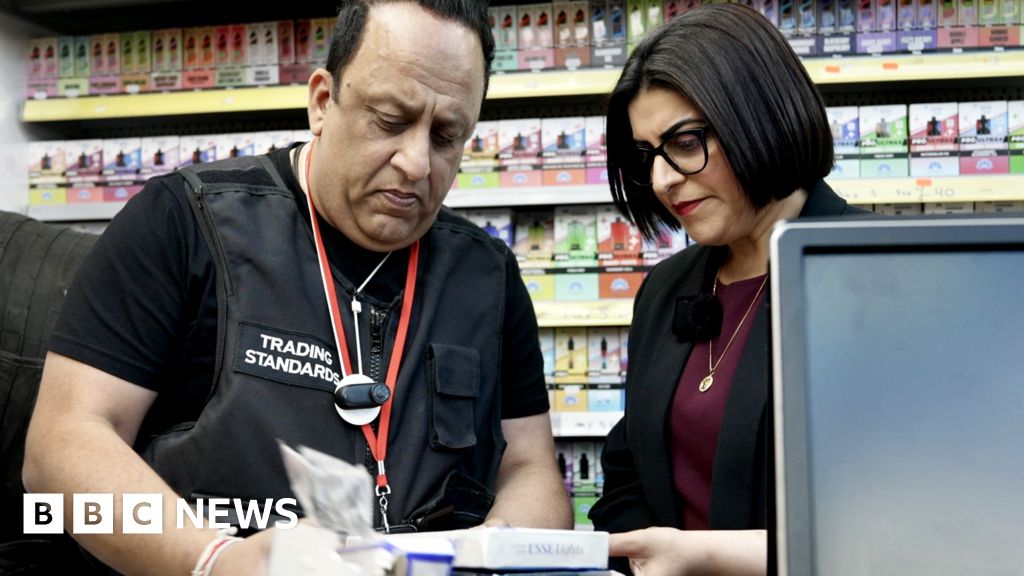
Under current rules, shops breaking the law can only be closed for up to six months in England and Wales.

The Securities and Exchange Broad of India proposed that AMCs may disclose consolidated remuneration of executive level employees and the total number of such employees.
SEBI said the proposed approach would give investors in the funds of AMCs a broader view of senior management compensation.
The regulator said the proportion of employees covered under the current framework is limited, ranging from about 2% to 10% of total employee base in 36 of 51 AMCs analysed.
It said public disclosure of individual remuneration could expose employees to privacy risks and misuse of personal information.
The regulator also proposed allowing investors to seek scheme-level disclosure of the total remuneration paid to fund managers of schemes they are invested in.
SEBI has sought comments from the public by June 30.

Consumer Brands Association responds with its own findings.

Consumers are increasingly feeling the strain of the US Israel war in Iran.

Figure to acquire Kiavi for $717 million in blockchain push

10x Genomics: Temporary Pain, Long-Term Gain As Atera Rollout Approaches

NEW YORK — The 2026 NBA Finals shift back to Madison Square Garden on Wednesday night for Game 4, with the New York Knicks holding a 2-1 series lead over the San Antonio Spurs after a thrilling 115-111 Spurs victory in Game 3. Victor Wembanyama’s dominant performance has San Antonio believing it can even the series on the road, while the Knicks aim to reclaim momentum and move within one win of their first championship since 1973.
Tipoff is scheduled for 8:30 p.m. ET. The Knicks enter as 2.5-point favorites, with the over/under set at 216.5 points. After dropping the first two games in San Antonio, the Spurs stole Game 3 in New York behind Wembanyama’s explosive 32-point, eight-rebound, six-assist, three-block, two-steal masterpiece and strong contributions from rookie Stephon Castle.
Wembanyama’s Emergence as the Focal Point
The 7-foot-4 phenom has elevated his play as the series progresses. In Game 3, Wembanyama delivered a full 48-minute effort that turned the tide in the fourth quarter. His ability to dominate both ends of the floor has become the Spurs’ clearest path to victory. Analysts highlight his improved low-post scoring and defensive versatility as keys to sustaining pressure against New York’s physical frontcourt.
For San Antonio to force a Game 5 back home, Wembanyama must continue anchoring the offense while disrupting the Knicks’ rhythm. His presence forces constant adjustments from New York coach Tom Thibodeau, who must decide between double-teaming the big man or living with his scoring outbursts.
Knicks’ Response and Home Advantage
The Knicks, led by Jalen Brunson, have shown resilience throughout the playoffs. Brunson delivered 32 points in Game 3 but could not overcome the Spurs’ late surge. At Madison Square Garden, the Knicks will lean on their raucous home crowd and defensive identity to reassert control.
New York’s strength lies in its balanced attack and ability to grind out possessions. Players like Karl-Anthony Towns and Mikal Bridges provide secondary scoring and defensive versatility that can counter San Antonio’s length. The Knicks’ 13-game playoff winning streak ended in Game 3, adding urgency to avoid falling into a 2-2 tie.
Tactical Keys and Adjustments
Coaches on both sides face critical decisions. For the Spurs, maintaining defensive intensity while feeding Wembanyama in advantageous spots will be paramount. San Antonio’s bench, including Castle’s fourth-quarter impact, must provide consistent energy on the road.
The Knicks will likely emphasize containing Wembanyama through help defense and forcing the ball out of his hands. Brunson’s pick-and-roll mastery and New York’s transition game could exploit any lapses in Spurs’ rotations. Rebounding and three-point efficiency are expected to be decisive factors in a series defined by half-court execution.
Series Context and Stakes
The Finals matchup pits two franchises with storied histories but very different recent paths. The Knicks have built a contender through smart drafting and free agency, while the Spurs have ridden Wembanyama’s meteoric rise following years of rebuilding. A Spurs victory in Game 4 would send the series back to San Antonio with renewed belief, while a Knicks win would put them firmly in the driver’s seat.
Injuries and fatigue could play roles as the series reaches its midpoint. Both teams have managed minutes carefully, but the physical toll of playoff basketball intensifies with each game. Wembanyama’s durability after a strong Game 3 performance will be closely monitored.
Broader Implications
A prolonged series benefits the NBA’s global audience, with stars like Wembanyama and Brunson showcasing the league’s future. Wembanyama’s ability to “bring victory once again” could cement his status as a generational talent capable of leading a championship charge in only his third season.
For the Knicks, closing out games at home remains a point of emphasis after letting Game 3 slip away. Thibodeau’s defensive schemes have been a hallmark of their success, and adjustments to counter San Antonio’s length will define the remainder of the series.
What to Watch in Game 4
Expect high-intensity basketball from the opening tip. Early foul trouble on either star could shift momentum quickly. Three-point shooting, particularly from the Spurs’ supporting cast, may determine if they can stretch the floor effectively against New York’s pack-line defense.
Fan atmosphere at Madison Square Garden is expected to be electric, providing the Knicks with a tangible home-court edge. The Spurs must withstand the pressure and execute their game plan to force the series back to Texas.
Analysts project a competitive contest, with models favoring the under on total points due to strong defensive showings in prior games. Individual performances from Wembanyama and Brunson will likely dictate the outcome, as both have shouldered heavy scoring loads.
Historical Parallels and Outlook
The series echoes past Finals battles where young superstars faced veteran-led squads. Wembanyama’s poise under pressure has drawn comparisons to legendary big men, while the Knicks embody a gritty, team-first approach reminiscent of championship clubs from previous eras.
Regardless of Game 4’s result, the matchup has delivered compelling basketball and highlighted the league’s parity at the highest level. As the series continues, focus will remain on execution in critical moments and the ability of star players to elevate their teams.
The Knicks hold the series advantage and home-court momentum, but Wembanyama’s Game 3 heroics have proven the Spurs are far from finished. Wednesday night’s contest promises another chapter in what has become a hard-fought, entertaining NBA Finals.
Both sides possess the talent and coaching to compete at an elite level. The outcome of Game 4 could shift the narrative dramatically, setting the stage for a memorable conclusion to the 2026 postseason. Fans and analysts alike will be watching to see if Wembanyama can once again deliver a victory that keeps San Antonio’s championship hopes alive.

Needham raises CECO Environmental stock price target on Thermon deal
World Cup 2026 Prediction Markets Now Live on Whale.io with $90K in Prizes

It’s Carers Week, but the government doesn’t care

White Sox rookie Braden Montgomery will try for encore vs. Braves



-

 Fashion5 days ago
Weekend Open Thread: Evereve – Corporette.com
-
 Crypto World5 days ago
Jensen Huang Approves Samsung, SK Hynix, and Micron for NVIDIA (NVDA) HBM4 Memory Supply
-

 Crypto World2 days ago
Anatomy of the June crypto crash: Fed, Iran, Saylor
-
 Entertainment3 days ago
The Best Mystery Series of All Time Is Surging on Streaming 30 Years After It Ended
-

 NewsBeat3 days ago
Alexander Zverev wins the French Open to finally earn a 1st Grand Slam title
-

 Tech4 days ago
Suspicious Polyfill login prompts pop up on Toshiba, Muji websites
-
 Crypto World4 days ago
Senator Cynthia Lummis Calls CLARITY Act the Most Consequential Financial Legislation of This Generation
-

 Tech3 days ago
Microsoft unveils seven homegrown AI models in new bid for ‘long term self-sufficiency’
-

 Tech5 days ago
Microsoft launches MXC, an OS-level sandbox for AI agents, with OpenAI and Nvidia already on board
-

 Business5 days ago
(VIDEO) Justin Bieber Delivers Surprise Happy Birthday Serenade to Diners at Los Angeles Mexican Restaurant
-
 Business3 days ago
The Pain Points Taking a Fragile Tech Rally Down a Notch
-
Crypto World5 days ago
LBank Surpasses 25 Million Users Worldwide as AFA Partnership Continues to Drive Global Growth
-

 Crypto World3 days ago
Trump’s AI Ownership Plan Could Benefit Anthropic at OpenAI’s Expense
-

 Tech5 days ago
Meta steals a tactic from Tesla and builds data centers in tents
-

 Tech4 days ago
Von der Leyen’s AI envoy pick draws conflict-of-interest fire
-
 Sports21 hours ago
Bangladesh beat Australia after 20 years in ODIs, register only their second win over six-time world champions | Cricket News
-
 Crypto World2 days ago
Eli Lilly (LLY) Stock Surges 4% Following Breakthrough Sleep Apnea Trial Results
-

 Business2 days ago
High Stakes for Wembanyama as New York Pushes for 3-0 Lead
-

 Tech4 days ago
Hackers now exploit SolarWinds Serv-U flaw to crash servers
-

 Tech3 days ago
Notion restores access to Anthropic after service disruption
You must be logged in to post a comment Login